
Best Time Visit Mykonos 2026: Seasonal Planning Guide
Mykonos rewards strategic timing more than nearly any Greek island, with dramatic shifts in crowds, pricing, weather conditions, and operational status defining distinct visiting windows throughout 2026. The island transforms from a near-deserted winter retreat where most establishments close entirely to a global party capital hosting 15,000 daily cruise visitors and some of the Mediterranean’s most exclusive beach clubs during peak summer months. Understanding these seasonal patterns enables travelers to align their visit with specific priorities—whether that’s accessing the legendary nightlife scene, securing lower accommodation rates, enjoying warm swimming conditions without overwhelming crowds, or experiencing the island’s traditional character during quieter periods.
Key Takeaways for Visiting Mykonos in 2026
- September offers optimal conditions for most travelers in 2026 — warmest sea temperatures after summer heat absorption, reduced Meltemi winds, full operational status for beach clubs and restaurants, and slightly lower crowds than July-August while maintaining vibrant nightlife atmosphere.
- Peak season July-August 2026 delivers maximum energy but requires advance planning — hotels book 3-4 months ahead, daily budgets reach €285-780 per person, strong Meltemi winds create choppy seas affecting boat excursions, and crushing crowds intensify in town and at popular beaches.
- Shoulder seasons (May-June, September-October 2026) provide 20-40% cost savings — hotel rates drop significantly outside peak months, ferry schedules remain frequent through October, restaurant reservations become easier to secure, and weather stays suitable for beach activities.
- Winter closure November-April 2026 makes off-season visits impractical for most — unlike Santorini which maintains winter operations, Mykonos sees beach clubs, most hotels, and many restaurants completely shuttered with ferry service reduced to one daily Athens connection.
- XLSIOR Festival August 20-25, 2026 impacts availability island-wide — this major international event draws 30,000 attendees, causing accommodation sellouts, price spikes across all categories, and transformation of the island into a dedicated festival venue for nearly a week.
- Ferry frequency varies dramatically by season in 2026 — summer brings 10+ daily Athens departures and extensive island-hopping options, while winter sees minimal connections; book peak-season ferries 2-3 months ahead for guaranteed seats on popular routes.
People Also Ask About Visiting Mykonos in 2026
What is the best month to visit Mykonos in 2026?
September stands out as the single best month to visit Mykonos in 2026 for most travelers. The sea reaches its warmest temperatures of the year (23-24°C / 73-75°F) after absorbing summer heat, while the notorious Meltemi winds that plague July and August significantly diminish, creating calmer conditions for swimming and boat excursions. All beach clubs, restaurants, and nightlife venues operate at full capacity, delivering the complete Mykonos experience without the overwhelming crowds and inflated prices of peak August. Hotel rates drop 15-25% compared to July-August while remaining higher than shoulder season, and ferry schedules maintain frequent service with 8-10 daily Athens connections. The first half of September now rivals August for activity levels, so travelers seeking maximum tranquility should target the final two weeks of the month. June represents the best alternative for those prioritizing lower prices and fewer crowds, though swimming conditions prove less comfortable with cooler water temperatures (20-22°C / 68-72°F) and the island still “waking up” from winter closure.
How is the weather in Mykonos during peak season 2026?
Peak season weather in Mykonos from June through August 2026 delivers consistently hot, sunny conditions with daily temperatures reaching 25-28°C (77-83°F) and minimal rainfall—typically just 2-5mm across the entire three-month period. However, the defining characteristic is the powerful Meltemi wind that blows from the north throughout summer months, intensifying particularly in July and August when gusts regularly exceed 70 kph (45 mph). These winds provide welcome cooling relief from intense heat but create choppy sea conditions that can ruin planned boat excursions, cause ferry delays or cancellations, and make swimming uncomfortable at exposed beaches. The Meltemi blows strongest in afternoons but can persist into evenings, affecting outdoor dining at waterfront restaurants. Despite these winds, actual rain remains extremely rare with July and August each averaging just 2mm of precipitation, and sunshine duration reaches maximum annual levels at 11-13 hours daily. Cloudless skies dominate, with overcast days virtually nonexistent during peak months. Travelers prone to seasickness should consider the Meltemi’s impact when booking high-speed ferries and island-hopping excursions during July-August 2026.
Is Mykonos crowded in September 2026?
September 2026 sees significant crowds on Mykonos, particularly during the first two weeks when visitor numbers nearly match peak August levels as travelers seeking to avoid maximum summer chaos discover the month’s appeal. The island remains decidedly busy rather than peaceful, with popular beach clubs like Scorpios and Nammos maintaining full operations and requiring advance reservations for sunbeds and dining. Mykonos Town’s narrow streets still fill with cruise ship passengers and independent travelers throughout the day, and parking challenges persist at major beaches. However, September crowds feel more manageable compared to the crushing intensity of July-August when hotels operate at absolute capacity and infrastructure strains under pressure. Ferry ports and bus stops become less chaotic, restaurant reservations easier to secure with 1-2 days notice rather than requiring weekly advance booking, and beach access improves as daily visitor numbers drop from peak season’s 15,000+ cruise passengers to more moderate levels. The final two weeks of September offer noticeably reduced crowds as families return for school year starts and some seasonal workers depart, though the island maintains vibrant energy through month’s end. October delivers genuinely quiet conditions for travelers prioritizing solitude, though operational closures begin accelerating by mid-month.
When is the cheapest time to visit Mykonos in 2026?
November through February 2026 offers the absolute cheapest Mykonos rates with hotel prices dropping 60-80% below peak season and averaging €65-155 per night compared to €300-780 in summer, but practical limitations make these months unsuitable for most travelers. The island essentially shuts down during winter—beach clubs close completely, most hotels cease operations, many restaurants and shops shutter, and ferry service reduces to a single daily Athens connection. Swimming proves impossible with sea temperatures of 15-16°C (59-61°F), weather turns wet and windy with January receiving 100mm of rain across 10 days, and the famous party atmosphere disappears entirely. For travelers seeking value while maintaining a functional vacation, October and May represent the true budget sweet spots in 2026. October sees hotel rates averaging €245-290 per night (40-50% below peak) while most establishments remain open through mid-month, ferry schedules stay frequent, sea temperatures hover at swimmable 20-22°C (68-72°F), and nightlife maintains energy though reduced from summer intensity. May offers similar pricing advantages at €180-260 per night as the island awakens from winter, though cooler water temperatures (18-20°C / 64-68°F) deter many swimmers and nightlife runs quieter with venues still ramping up operations. Both months deliver authentic Mykonos experiences at significantly reduced costs without the operational shutdowns that render winter visits impractical.
Extended multi-day tours – 5+ days
Featured Mykonos Multi-Day Tour Packages
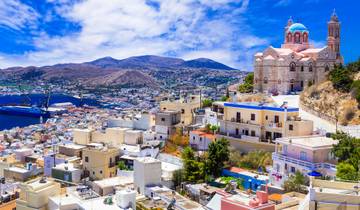
7 days
Athens, Mykonos & Syros with 2 Guided Tours – Premium
- ✓ Comprehensive Mykonos tour
- ✓ Expert local guides included
- ✓ All accommodation arranged
- ✓ Transportation provided
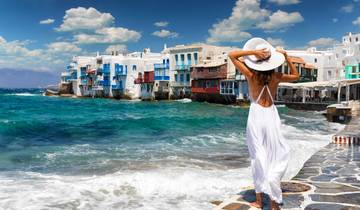
7 days
Athens, Syros & Mykonos Tour – 7 Days – Premium
- ✓ Comprehensive Mykonos tour
- ✓ Expert local guides included
- ✓ All accommodation arranged
- ✓ Transportation provided

7 days
Syros, Tinos & Mykonos Island Hopping 7D/6N
- ✓ Comprehensive Mykonos tour
- ✓ Expert local guides included
- ✓ All accommodation arranged
- ✓ Transportation provided
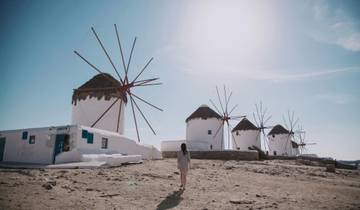
2 days
MINI MYKONOS FROM ATHENS (+transfers & ferries)
- ✓ Comprehensive Mykonos tour
- ✓ Expert local guides included
- ✓ All accommodation arranged
- ✓ Transportation provided
Multi-day tour packages powered by TourRadar. Prices and availability subject to change.
Introduction: Understanding Mykonos Seasonal Patterns in 2026
Mykonos operates on a dramatically compressed annual cycle that distinguishes it from many Greek islands, with a concentrated five-month high season from May through September supporting the island’s tourism infrastructure and a near-complete winter shutdown from November through March when most businesses cease operations. This extreme seasonal variation stems from the island’s positioning as a premium party destination rather than a year-round cultural or historical site—unlike Athens or even Santorini, which maintain winter tourist populations, Mykonos lacks compelling winter attractions to sustain operations when weather turns cold and seas become rough. The island’s legendary beach clubs represent a key driver of this pattern, as these establishments rely on consistent sunny weather and calm seas that exist only during summer months.
The 2026 calendar presents several strategic considerations for trip planning. Easter falls on April 20, creating an early-season opportunity for Greek Orthodox celebrations before summer crowds arrive, though cooler temperatures and limited operational status constrain activities. The XLSIOR Festival, scheduled for August 20-25, represents a major planning factor—this six-day international event draws 30,000 attendees and transforms the island into a festival venue, causing accommodation sellouts and price spikes that affect even travelers not attending festival events. Club opening parties in May mark the season’s official start, with major venues like Cavo Paradiso and SantAnna announcing their DJ lineups and launching operations that signal full tourist season commencement.
Ferry connectivity shapes seasonal viability significantly. Summer 2026 brings frequent service with 10+ daily Athens departures from both Piraeus and Rafina ports, extensive Cyclades island-hopping routes to Santorini (multiple daily crossings), Paros, Naxos, and Tinos, and operational flexibility that makes spontaneous travel feasible. This connectivity collapses in winter when service reduces to a single daily Athens route, island-hopping options disappear almost entirely, and weather-related cancellations become common. Travelers planning 2026 visits must understand these operational realities—a February trip to Mykonos proves fundamentally different from a September visit, not merely in weather but in the island’s essential functionality and character.
Accommodation pricing exhibits extreme seasonal volatility, with luxury beachfront suites commanding €800-2,500+ per night in July-August 2026 dropping to €200-400 in May or October for identical properties. Budget hostels follow similar patterns—a dormitory bed at Mycocoon Hostel costs €24-35 in low season but often unavailable during peak months when even basic accommodations sell out months ahead. This pricing spread creates opportunities for strategic travelers who can align visits with shoulder seasons, capturing 30-50% savings while accessing most of the Mykonos experience. Understanding these patterns enables effective budget allocation and realistic trip planning for different traveler profiles and priorities across the 2026 calendar.
Understanding Mykonos Climate and Seasons 2026
Mykonos experiences a Mediterranean climate characterized by hot, arid summers and mild, relatively wet winters, with wind patterns playing a defining role in shaping the island’s seasonal character. The famous Meltemi wind system dominates summer months, blowing from the north with particular intensity from July through August when sustained speeds reach 20-30 kph (12-18 mph) with gusts exceeding 70 kph (45 mph). These winds provided power for centuries to the island’s iconic windmills and continue to shape modern tourism patterns—while offering welcome relief from intense heat, they create choppy seas that disrupt ferry schedules, make high-speed catamaran crossings uncomfortable for seasickness-prone travelers, and render exposed beaches less pleasant for swimming and sunbathing.
The wind’s cooling effect keeps Mykonos slightly cooler than other Greek islands during summer, with maximum temperatures typically remaining below 30°C (86°F) even in August compared to 35°C+ (95°F+ common in Athens or Rhodes. This natural air conditioning represents a significant advantage for travelers sensitive to extreme heat, though the trade-off comes in rougher sea conditions and occasional ferry delays. The Meltemi blows strongest in afternoons, creating predictable daily patterns—mornings offer calmer conditions for beach activities and boat excursions, while late afternoons see intensifying winds that can make waterfront dining challenging and beach club experiences less comfortable.
Rainfall follows classic Mediterranean patterns with 80% of annual precipitation concentrated between October and March. The wettest months are December and January, each receiving approximately 100mm of rain across 10 days, while July and August average just 2mm across the entire month with rain virtually nonexistent. This extreme dry-wet cycle creates landscape transformations—May brings lush green hillsides dotted with wildflowers as winter rains nurture vegetation, while August reveals an arid, brown landscape where the island relies on tanker ships to supply water for residents and tourists. Summer’s reliable sunshine delivers 2,900 annual hours, with July offering 14 hours of sunshine daily compared to just 3.5 hours in January.
Sea temperature patterns prove crucial for planning 2026 swimming activities. The Aegean surrounding Mykonos reaches minimum temperatures of 15.5°C (60°F) in February-March, warming gradually through spring to 20-22°C (68-72°F) in June, hitting peak warmth of 24°C (75°F) in August-September, then cooling to 17-18°C (63-64°F) by November. Most travelers find temperatures below 20°C (68°F) uncomfortably cold for extended swimming, limiting practical beach season to June-October for the majority of visitors. September’s sea proves notably warmer than June’s despite similar air temperatures, as summer heat progressively warms the water throughout the season.
Humidity levels remain moderate year-round, ranging from 62% in drier summer months to 77% during wetter winter periods, with the sea’s proximity preventing the extreme humidity spikes common in continental climates. This moderate humidity makes Mykonos’ summer heat more bearable than equivalent temperatures in humid regions, though the combination of sun exposure, wind, and reflective white architecture can still create intense conditions requiring sun protection and hydration attention. Understanding these climate fundamentals enables travelers to set realistic expectations for different 2026 visiting windows and pack appropriately for expected conditions.
Peak Season in Mykonos 2026 (June-August)
Peak season Mykonos from June through August 2026 delivers the island’s legendary party atmosphere at maximum intensity, with world-famous DJs performing nightly at beach clubs like Cavo Paradiso, Scorpios, and Nammos, celebrity sightings common at premium venues, and a vibrant international crowd creating non-stop energy that defines the Mykonos brand. This period represents the island operating at full capacity—every beach club, restaurant, hotel, and entertainment venue functions with complete staff and extended hours, ferry schedules reach maximum frequency with 10+ daily Athens departures, and the famous nightlife scene that made Mykonos globally renowned hits peak form with parties running until sunrise.
However, this intensity comes with significant trade-offs that travelers must weigh carefully. Accommodation costs reach annual maximums with mid-range hotels charging €300-450 per night compared to €180-280 in shoulder seasons, luxury beachfront suites commanding €800-2,500+ nightly, and even basic hostel dormitories selling out months in advance. Daily budgets average €285-780 per person depending on travel style, with beach club sunbed rentals alone costing €50-150 before food and drinks, cocktails priced at €18-25, and restaurant meals reaching €40-80 per person at popular venues. These costs eclipse most other Greek islands and rival luxury destinations globally.
Crowds during July-August 2026 reach overwhelming levels that fundamentally alter the Mykonos experience. Cruise ships disgorge 15,000+ daily passengers into Mykonos Town’s narrow streets, creating congestion that makes simple tasks like walking from Little Venice to the windmills take 20+ minutes through packed lanes. Popular beaches like Paradise and Super Paradise fill to capacity by mid-morning with sunbeds fully reserved, parking becomes nearly impossible at beach areas, and restaurant reservations require 5-7 days advance notice even for non-premium establishments. The town’s infrastructure strains under pressure—taxis become scarce with 30+ minute waits common, public buses run packed to capacity, and even the Sea Bus from the port operates at crowded levels.
Weather conditions prove generally excellent but not without challenges. Temperatures reach 25-28°C (77-83°F) with abundant sunshine—11-13 hours daily—and virtually no rainfall. However, the Meltemi wind system creates complications from mid-June through August, particularly intensifying in late July and August when sustained winds of 20-30 kph (12-18 mph) with gusts to 70 kph (45 mph) create choppy seas. These conditions make high-speed ferry crossings uncomfortable for seasickness-prone travelers, cause periodic ferry delays or cancellations affecting island-hopping plans, and create rough swimming conditions at north-facing beaches. The wind provides cooling relief from heat but can make beach club experiences less comfortable and disrupt outdoor waterfront dining.
Ferry connectivity reaches maximum capacity during peak 2026 season with frequent departures across all major routes. Athens service from Piraeus operates 8-10 daily crossings taking 2.5-5 hours depending on vessel type, while Rafina offers 6-9 daily departures with the shortest transit times at 2.5-3.5 hours. Island-hopping connections run multiple times daily to Santorini (30 minutes-2 hours depending on ferry), Paros (40 minutes), Naxos (35 minutes-1.5 hours), and Tinos (15-30 minutes). However, this popular route requires advance booking—travelers should secure tickets 2-3 months ahead for July-August travel, particularly for high-speed ferries and Business/VIP seating that sells out earliest. Ferry companies including Seajets, Blue Star Ferries, Golden Star Ferries, and Fast Ferries operate routes with both high-speed catamarans and conventional vessels.
The peak season 2026 represents ideal timing for specific traveler profiles: those prioritizing Mykonos’ legendary nightlife scene and seeking the full party experience, travelers comfortable with crowds and premium pricing in exchange for maximum energy, visitors with flexible budgets able to absorb €285-780 daily costs, and those who secured accommodations and ferry tickets months in advance. However, travelers seeking value, preferring calmer beach experiences, prone to seasickness in choppy conditions, or visiting with families and young children should strongly consider shoulder season alternatives that deliver most peak season benefits at significantly lower costs and crowd levels.
Shoulder Season Spring 2026 (April-May)
Spring shoulder season from April through May 2026 presents a Mykonos awakening from winter dormancy, with establishments progressively opening throughout the period and the island transitioning from quiet retreat to bustling destination. April sees limited operations with many hotels, restaurants, and beach clubs still closed, ferry schedules running reduced frequencies, and cooler temperatures constraining beach activities. May represents the true shoulder season sweet spot when most establishments have opened for summer operations but crowds and prices remain well below peak levels, creating opportunities for budget-conscious travelers willing to accept cooler water temperatures and quieter nightlife.
Weather conditions improve dramatically between April and May but don’t yet reach comfortable swimming standards for most visitors. April brings average temperatures of 17°C (63°F) with cooler nights and occasional rainfall as winter weather patterns persist, while May warms to 20°C (68°F) with increasing sunshine hours and drying conditions. Sea temperatures prove the limiting factor—April’s 17°C (63°F) waters deter all but hardy swimmers, while May’s 18-20°C (64-68°F) remains uncomfortably cold for extended beach sessions though tolerable for brief swims. The landscape displays peak beauty in May with lush green hillsides and wildflower blooms resulting from winter rains, a stark contrast to summer’s arid brown terrain.
Accommodation pricing in May 2026 offers substantial savings with mid-range hotels charging €180-260 per night compared to €300-450 in July-August, luxury properties at €400-800 versus €1,200-2,500 peak rates, and budget options like guesthouses available from €60-120 per night. Daily budgets drop to €150-245 per person compared to €285-780 in peak season, with restaurant prices 20-30% lower, beach clubs offering reduced sunbed rates or free access during early-season promotions, and activity costs substantially cheaper. These savings make May particularly attractive for budget travelers, though the trade-off comes in limited nightlife energy and cooler swimming conditions.
Operational status varies significantly across the April-May window. Early April sees perhaps 30-40% of establishments open, with many restaurants, beach clubs, and hotels still closed from winter. By late May, 80-90% of venues operate on full summer schedules, though some premium beach clubs and restaurants delay openings until June to avoid slow early-season periods. Ferry schedules increase progressively—April offers 4-6 daily Athens connections compared to 10+ in summer, while May reaches 6-8 daily departures with expanding island-hopping routes. Travelers should verify specific venue opening dates before booking spring visits to ensure desired restaurants and beach clubs operate during planned travel dates.
May events include club opening parties that mark the official summer season start. Major venues like Cavo Paradiso and SantAnna announce DJ lineups and host launch events drawing locals and early-season visitors, creating pockets of party atmosphere though nothing approaching summer intensity. These opening parties offer opportunities to experience famous venues without overwhelming crowds and at lower costs, appealing to clubbing enthusiasts who prioritize access to venues over maximum party energy. Greek Orthodox Easter, falling April 20 in 2026, creates a brief surge in domestic tourism with Greek families visiting for holiday observances, causing temporary accommodation sellouts and restaurant crowding in select areas.
The Meltemi wind system remains largely absent during spring 2026, creating calmer sea conditions ideal for boat excursions and island-hopping plans that prove more reliable without summer’s wind-driven ferry delays. This advantage particularly benefits travelers planning multi-island itineraries, as ferry schedules run on time more consistently and sea conditions prove more comfortable for seasickness-prone individuals. However, cooler air temperatures and water conditions mean many boat tour operators run limited schedules or haven’t yet started season operations, constraining excursion options compared to summer availability.
Spring 2026 shoulder season suits specific traveler profiles ideally: budget-conscious visitors prioritizing cost savings over peak beach conditions, couples seeking romantic getaways without summer crowds, photographers wanting to capture the island’s lush spring landscape and iconic architecture without tourist masses, and travelers with flexible swimming preferences who can enjoy the island’s non-beach attractions like Mykonos Town exploration, archaeological sites, and cultural experiences. Families with young children may find May appealing for lower costs and reduced crowds, though cooler water temperatures limit beach play that typically appeals to kids.
Shoulder Season Fall 2026 (September-October)
Fall shoulder season from September through October 2026 represents peak value timing for Mykonos visits, delivering warm swimming conditions, reduced crowds compared to summer, lower accommodation costs, and full operational status through early October before progressive closures begin. September stands out as the optimal month for most travelers—combining summer’s full energy and amenities with slightly moderated prices and crowds, plus the warmest sea temperatures of the year as water reaches 23-24°C (73-75°F) after absorbing heat throughout summer months. October offers deeper discounts and genuine tranquility but accepts increasing operational limitations as establishments close for winter.
September weather conditions in 2026 prove nearly ideal for beach activities with air temperatures averaging 23°C (73°F), abundant sunshine at 9-10 hours daily, minimal rainfall under 20mm for the entire month, and critically, significantly reduced Meltemi winds compared to July-August. This wind reduction creates calmer seas perfect for swimming, makes boat excursions more reliable and comfortable, and improves beach club experiences where late summer’s strong winds can prove disruptive. The first half of September maintains summer’s heat and energy while the latter half sees gradual cooling and crowd reduction as families return for school year starts.
Accommodation pricing drops 15-25% from peak August levels in September 2026, with mid-range hotels charging €245-350 per night versus €300-450 in summer, luxury beachfront properties at €650-1,800 compared to €1,200-2,500 peak rates, and budget guesthouses available from €90-150 nightly. October sees more dramatic decreases at 40-50% below peak with mid-range hotels at €180-260 and luxury options at €400-800, though increasing closures limit availability. Daily budgets for September average €220-380 per person compared to €285-780 in July-August, with restaurant prices moderating, beach club costs decreasing, and activity pricing returning to shoulder season levels.
Operational status remains excellent through early September 2026 with all beach clubs, restaurants, nightlife venues, and hotels functioning at full capacity. Mid-September sees the first closures as seasonal workers depart and establishments targeting purely summer operations shut down, though 80-85% of venues continue through month end. October accelerates closures with perhaps 60% operational by mid-month and 30-40% by late October as the island transitions toward winter dormancy. Travelers planning October visits should verify specific venue opening status and book accommodations that guarantee operations through planned dates—many hotels maintain uncertain closing dates dependent on booking levels and weather conditions.
Ferry connectivity remains strong through October 2026 with 8-10 daily Athens departures in September dropping to 6-8 by October, and island-hopping routes maintaining frequent service to Santorini, Paros, Naxos, and other Cyclades destinations through early October before progressively reducing frequencies. This sustained connectivity enables flexible travel planning and spontaneous island-hopping that becomes impossible during winter’s minimal service. Ferry companies transition from peak-season pricing to shoulder season rates by late September, offering modest savings on tickets though not as dramatic as accommodation discounts.
Crowd levels decrease notably through September-October 2026 as summer’s overwhelming masses thin out but the island maintains viable visitor populations supporting full business operations. September’s first half still sees busy conditions with popular beach clubs requiring advance reservations and Mykonos Town experiencing moderate congestion, but nothing approaching July-August’s crushing intensity. Late September and early October deliver genuinely peaceful conditions where securing restaurant reservations becomes easy even same-day, beaches offer ample space, and the town’s streets return to manageable pedestrian flow. This reduction proves particularly appealing for travelers who found peak season’s crowds overwhelming or stressful.
Nightlife energy moderates through the fall 2026 period but doesn’t disappear entirely. September maintains vibrant club scenes with Cavo Paradiso, Scorpios, and other major venues operating full DJ schedules and party atmospheres, though slightly less intense than July-August peaks. October sees progressive quieting as clubs reduce operating days, scale back DJ lineups, and eventually close for winter by month end. Travelers prioritizing Mykonos’ party reputation should target September, while those seeking quieter evenings may prefer October’s mellower atmosphere. Beach clubs follow similar patterns with full operations through September but accelerating closures in October.
Fall shoulder season 2026 suits the broadest range of traveler profiles: budget-conscious visitors seeking value without sacrificing experience, swimmers prioritizing warm water temperatures over maximum nightlife energy, couples and honeymooners wanting romantic atmosphere without summer crowds, families with school-age children taking advantage of late-season travel, and anyone seeking the “sweet spot” balance of good weather, operational venues, moderate crowds, and reasonable pricing. September specifically emerges as the single best month for travelers wanting the complete Mykonos experience at optimized conditions across all variables.
Off-Season Mykonos 2026 (November-March)
Winter off-season from November through March 2026 sees Mykonos essentially close for business, with the island transforming from international party destination to quiet local community experiencing its traditional character. Unlike Santorini or Athens which maintain winter tourist populations and operational hotels and restaurants, Mykonos lacks compelling off-season attractions to sustain tourism infrastructure when weather turns cold, seas become rough, and the beach club culture that defines the island disappears entirely. This complete shutdown makes winter visits impractical for conventional tourists, though the period offers unique appeal for travelers seeking total solitude and authentic local life.
Weather conditions from November through March 2026 prove decidedly unpleasant for beach-oriented tourism with average temperatures ranging 10-14°C (50-57°F), frequent rainfall particularly in December-January when each month receives 100mm across 10 rainy days, strong winds that intensify the cold, and short daylight hours with just 9-10 hours of daylight in January compared to 14 hours in summer. Sea temperatures drop to 15-16°C (59-61°F) making swimming impossible except for extreme cold-water enthusiasts, and rough seas create dangerous conditions for any water activities. The landscape appears brown and barren after summer’s drought, sunshine duration drops to just 3.5 hours daily in January, and humidity reaches annual maximums at 71-75% creating damp, chilly conditions.
Operational closures affect 80-90% of establishments during the November-March 2026 period. Beach clubs shut down completely with venues like Scorpios, Nammos, and Cavo Paradiso closing from November through April or May, most hotels cease operations with only a handful of year-round properties remaining open primarily serving business travelers or locals, restaurants reduce to perhaps 10-15% of summer capacity with many traditional tavernas closing and only a few establishments in Mykonos Town maintaining winter hours, and shops shutter beyond basic necessities like supermarkets and pharmacies. This closure affects even basic tourism infrastructure—car rental agencies operate limited hours, tour operators disappear entirely, and visitor services essentially vanish.
Ferry connectivity collapses to minimal levels with just one daily Athens connection from Piraeus operating year-round, typically departing morning hours and offering 4-6 hour crossings on conventional ferries rather than high-speed catamarans which reduce winter schedules. Island-hopping routes cease almost entirely with no regular service to Santorini, Paros, or other Cyclades destinations, forcing travelers to route through Athens for connections to other islands. Weather-related cancellations become common when winter storms create unsafe sea conditions, potentially stranding visitors for days when scheduled ferries can’t operate. This isolation proves particularly problematic for travelers on tight schedules or those uncomfortable with uncertain transportation reliability.
Accommodation costs drop to annual minimums with the few operating hotels charging €65-155 per night for rooms that cost €300-780 in summer, representing 60-80% discounts. However, these savings prove largely theoretical as limited hotel availability, complete closure of tourist infrastructure, impossible swimming conditions, and frequent rainy weather make conventional tourism unviable. The properties that do operate cater primarily to business travelers, workers on island contracts, or Greeks visiting family rather than leisure tourists. Budget hostels close entirely during winter months, and luxury beachfront resorts shutter completely rather than operate at minimal capacity.
The winter period holds appeal for extremely niche traveler segments: photographers seeking dramatic storm conditions and empty landscapes without tourists, writers or artists wanting isolated retreat environments for creative work, Greeks visiting family who happen to have Mykonos connections, and extreme budget travelers willing to accept severe limitations in exchange for rock-bottom accommodation costs. For the 95%+ of travelers considering Mykonos for its beaches, nightlife, dining scene, and sunny weather, the November-March 2026 window proves completely unsuitable and should be avoided entirely in favor of shoulder season visits that deliver authentic experiences at lower costs while maintaining functional tourism infrastructure.
The winter closure pattern reflects Mykonos’ fundamental character as a seasonal party destination rather than a year-round cultural site. Without the beaches, clubs, and vibrant social scene that define the island’s appeal, winter Mykonos offers little to compete with Athens’ museums, Santorini’s caldera views, or Crete’s archaeological sites that function effectively year-round. Travelers expecting to visit Mykonos in winter 2026 should reconsider timing or select alternative Greek destinations better suited to off-season tourism.
Monthly Weather Breakdown Mykonos 2026
January 2026 represents Mykonos’ coldest month with average temperatures of 11°C (52°F), ranging from nighttime lows of 9°C (48°F) to daytime highs of 13°C (55°F). The coldest nights can drop to 4°C (39°F) while warmest days may reach 17°C (63°F), creating significant daily temperature swings. Rainfall totals 100mm distributed across 10 days, making it one of the wettest months alongside December. Sunshine duration averages just 3.5 hours daily with approximately 10-hour daylight periods. Humidity reaches 71% and winds average 22 kph (14 mph) with strong gusts common. Sea temperature sits at 16°C (61°F), far too cold for swimming. The day lasts approximately 10 hours from sunrise to sunset.
February 2026 shows minimal improvement from January with average temperatures of 11°C (52°F), slightly warming to highs of 13°C (55°F) and lows of 10°C (50°F). The coldest nights may drop to 4°C (39°F) or occasionally below freezing, while warmest days reach 17°C (63°F). Rainfall decreases slightly to 80mm across 8-9 days. Sunshine increases marginally to 4 hours daily with daylight extending to 10.5 hours as days lengthen. Humidity remains elevated at 70% and winds continue strong at 21 kph (13 mph). Sea temperature drops to its annual minimum of 15.5°C (60°F), making February the coldest month for water temperature. Most hotels and tourist facilities remain closed.
March 2026 marks the beginning of gradual warming with average temperatures rising to 13°C (55°F), reaching daytime highs of 15°C (59°F) and nighttime lows of 11°C (52°F). The coldest nights still drop to 6°C (43°F) while warmest days approach 19°C (66°F). Rainfall continues at moderate levels with 65mm across 7-8 days. Sunshine increases to 5.5 hours daily with daylight reaching 12 hours as spring approaches. Humidity decreases slightly to 68% and winds maintain 20 kph (12 mph) speeds. Sea temperature remains at 15.5°C (60°F), still prohibitively cold for swimming. The island begins preparing for tourist season though most establishments remain closed through month end.
April 2026 brings noticeable spring warmth with average temperatures of 17°C (63°F), climbing to pleasant 18°C (64°F) highs and moderate 15°C (59°F) lows. The coldest nights may drop to 10°C (50°F) while warmest days reach 22°C (72°F). Rainfall decreases substantially to 30mm across 5-6 days as Mediterranean dry season approaches. Sunshine jumps to 8 hours daily with 13-hour daylight periods. Humidity drops to 66% and winds decrease to 18 kph (11 mph). Sea temperature warms to 17°C (63°F), still too cold for most swimmers though tolerable for hardy individuals. Early hotels and restaurants begin opening, particularly after Greek Orthodox Easter on April 20, though many establishments wait until May.
May 2026 delivers proper spring conditions with average temperatures of 20°C (68°F), reaching comfortable 23°C (73°F) daytime highs and mild 18°C (64°F) nighttime lows. The coldest nights may drop to 14°C (57°F) while warmest days hit 27°C (81°F). Rainfall drops dramatically to just 15mm across 3-4 days as summer’s dry period begins. Sunshine increases to 10 hours daily with 14-hour daylight periods approaching summer levels. Humidity falls to 64% and winds moderate to 17 kph (11 mph). Sea temperature warms to 18-20°C (64-68°F), entering the threshold where swimming becomes tolerable though still cool for extended sessions. The island displays peak green beauty with wildflowers blooming, and 70-80% of establishments open by month end, marking the true start of tourist season.
June 2026 transitions into full summer with average temperatures of 24°C (75°F), climbing to warm 27°C (81°F) highs and pleasant 21°C (70°F) lows. The coldest nights may drop to 18°C (64°F) while warmest days reach 31°C (88°F). Rainfall becomes negligible at 5mm across 1-2 days as summer drought conditions establish. Sunshine reaches 12 hours daily with maximum 14.5-hour daylight periods. Humidity decreases to 62% and winds begin increasing as Meltemi patterns emerge, averaging 19 kph (12 mph). Sea temperature warms to 20-22°C (68-72°F), finally reaching comfortable swimming conditions for most visitors. All establishments operate at full capacity and ferry schedules reach maximum frequency. Beach clubs launch full operations and nightlife intensifies to summer levels.
July 2026 brings peak summer heat with average temperatures of 26°C (79°F), reaching hot 29°C (84°F) daytime highs and warm 23°C (73°F) nighttime lows. The coolest nights rarely drop below 20°C (68°F) while warmest days hit 33°C (91°F). Rainfall virtually disappears with just 2mm expected across the entire month. Sunshine peaks at 13 hours daily with maximum 14-hour daylight. Humidity remains low at 60% and winds intensify significantly as Meltemi system strengthens, averaging 24 kph (15 mph) with gusts to 70 kph (45 mph). Sea temperature reaches 23°C (73°F), providing ideal swimming conditions. July represents maximum tourist season with crushing crowds, highest prices, full operational capacity, and most intense party atmosphere. Advance booking essential for all accommodations and popular restaurants.
August 2026 maintains peak heat as the hottest month with average temperatures of 26°C (79°F), climbing to scorching 28°C (83°F) daytime highs and warm 23°C (73°F) nighttime lows. The coolest nights stay around 21°C (70°F) while hottest days reach 33°C (91°F) or occasionally higher. Rainfall remains minimal at 2mm for the entire month with essentially zero precipitation expected. Sunshine continues at 11.5 hours daily with gradually decreasing 13.5-hour daylight as summer progresses. Humidity stays low at 62% and Meltemi winds reach maximum intensity averaging 29 kph (18 mph) with frequent 70+ kph (45+ mph) gusts creating choppy seas. Sea temperature peaks at 24°C (75°F), the warmest of the year. August represents absolute peak season with maximum crowds, highest prices, and most intense nightlife including the XLSIOR Festival August 20-25 drawing 30,000 attendees.
September 2026 delivers ideal conditions for most travelers with average temperatures of 23°C (74°F), reaching pleasant 26°C (79°F) highs and comfortable 21°C (70°F) lows. The coolest nights may drop to 17.5°C (63.5°F) while warmest days still hit 30.5°C (87°F). Rainfall increases slightly to 20mm across 2-3 days but remains minimal. Sunshine decreases to 9.5 hours daily with 12.5-hour daylight periods. Humidity rises moderately to 65% and critically, Meltemi winds significantly decrease to 23 kph (15 mph) creating much calmer seas perfect for swimming and boat excursions. Sea temperature reaches peak warmth at 23.5°C (74°F) as summer heat absorption maximizes, providing the year’s best swimming conditions. September combines summer’s full operational capacity with reduced crowds, lower prices, better sea conditions, and optimal weather.
October 2026 marks autumn transition with average temperatures cooling to 20°C (68°F), dropping to mild 22°C (72°F) highs and moderate 18°C (64°F) lows. The coldest nights may fall to 14°C (57°F) while warmest days still reach 26°C (79°F). Rainfall increases significantly to 60mm across 5-6 days as autumn storm patterns emerge. Sunshine decreases to 7 hours daily with shortening 11-hour daylight periods. Humidity climbs to 68% and winds remain moderate at 21 kph (13 mph) though autumn depressions can bring stronger gusts. Sea temperature cools to 21°C (70°F), still comfortable for swimming in early October but feeling cooler by month end. Progressive establishment closures begin mid-month with perhaps 60% operational by mid-October and 30-40% by month end as the island transitions toward winter dormancy.
November 2026 brings winter conditions with average temperatures dropping to 16°C (61°F), falling to cool 18°C (64°F) highs and chilly 14°C (57°F) lows. The coldest nights may drop to 9°C (48°F) while warmest days reach 22°C (72°F). Rainfall increases substantially to 80mm across 8 days as winter storm season begins. Sunshine decreases to 5 hours daily with short 10-hour daylight periods. Humidity rises to 70% and winds intensify to 23 kph (14 mph) with frequent strong gusts. Sea temperature cools to 19°C (66°F), too cold for most swimmers. Tourist infrastructure closes rapidly with 80-90% of establishments shuttered by month end including all beach clubs, most hotels, and many restaurants.
December 2026 completes the year as one of the wettest and coldest months with average temperatures of 13°C (55°F), dropping to chilly 14°C (57°F) highs and cold 11°C (52°F) lows. The coldest nights may fall to 6°C (43°F) while warmest days reach 19°C (66°F). Rainfall peaks at 100mm across 10 days, matching January as the wettest month. Sunshine drops to just 3.5 hours daily with minimum 9.5-hour daylight periods around winter solstice. Humidity reaches 72% and winds blow strongly at 22 kph (14 mph) with violent gusts common during storms. Sea temperature cools to 17°C (63°F), prohibitively cold for swimming. The island operates at minimal capacity with just a handful of hotels and restaurants open, serving primarily locals rather than tourists.
Events and Festivals Calendar 2026
XLSIOR Festival, scheduled August 20-25, 2026, represents Mykonos’ single largest event and most significant planning factor for summer visitors. This international LGBT circuit party draws approximately 30,000 attendees from around the world for six days of parties rotating between the island’s premier venues including Cavo Paradiso, Super Paradise Beach, Jackie O’ Beach Club, and various private villas. The festival features world-renowned DJs and performers, elaborate stage productions, themed events from daytime pool parties to sunset gatherings to all-night club events, and a well-heeled international crowd known for fitness-focused aesthetics. Ticket packages range from €300-400 for standard all-event passes to €1,000+ for VIP/Platinum options including table service, expedited entry, and exclusive areas.
The XLSIOR Festival’s impact extends far beyond attendees to affect all island visitors during the August 20-25 window. Accommodation books solid 6-8 months in advance with hotels implementing festival pricing that spikes 50-100% above standard peak rates, making even basic rooms €400-800+ per night. Restaurants throughout the island increase prices and extend minimum spending requirements, beach clubs operate at absolute capacity with table reservations requiring months of advance booking, and transportation becomes extremely constrained with taxis nearly impossible to secure and rental vehicles booked out entirely. Non-festival visitors should either plan trips around this window or book accommodations and transportation 4-6 months ahead while accepting significantly elevated costs and intense crowds.
Club opening parties in May 2026 mark the official summer season launch, with major venues like Cavo Paradiso, SantAnna, Scorpios, and Nammos announcing DJ lineups and hosting inaugural events. These opening parties typically occur mid-to-late May on weekends, drawing locals, seasonal workers returning to the island, and early-season tourists for festive atmospheres that preview summer’s party scene. While lacking peak season’s intensity, opening parties offer opportunities to experience famous venues at lower costs without overwhelming crowds, appealing particularly to clubbing enthusiasts who prioritize venue access over maximum energy. Specific opening dates vary by venue and aren’t typically announced until 4-6 weeks beforehand, requiring flexibility from travelers targeting these events.
Greek Orthodox Easter, falling April 20, 2026, creates a brief surge in domestic tourism as Greeks visit Mykonos for holiday observances. The celebration includes traditional midnight services, lamb roasting on spits, families gathering for festive meals, and local churches conducting special ceremonies. While Easter brings temporary accommodation sellouts in select properties and restaurant crowding particularly on Easter Sunday, the impact proves far less dramatic than summer peak season. International visitors may find Easter an interesting cultural experience showcasing Greek traditions, though cooler April weather and limited operational status constrain overall trip appeal compared to later spring or summer visits.
Music festivals beyond XLSIOR include smaller electronic music events throughout summer 2026, though specific dates and lineups typically aren’t announced until late spring. Venues like Cavo Paradiso host regular DJ events featuring international artists, SantAnna runs themed party nights, and various beach clubs schedule special events with notable performers. These events rarely require advance tickets like XLSIOR but may implement cover charges €30-80 depending on artist prominence. Travelers interested in specific DJ performances should monitor venue social media and event calendars from April through June when summer schedules finalize.
Cultural festivals and traditional celebrations prove limited on Mykonos compared to larger Greek islands or mainland destinations. The island’s identity centers on beach clubs and nightlife rather than folk festivals or historical commemorations, with most local celebrations occurring in winter when tourist infrastructure closes. Summer visitors seeking authentic Greek cultural experiences should consider adding Santorini, Crete, or Athens to their itineraries where museums, archaeological sites, and cultural programming operate year-round. Mykonos delivers unparalleled party atmosphere and beach club culture but ranks lower for travelers prioritizing cultural depth and historical engagement.
Planning around 2026 events requires understanding how they affect overall island dynamics. XLSIOR Festival demands either active participation or complete avoidance—the middle ground of visiting Mykonos during festival dates without engaging proves expensive and crowded without benefits. Club opening parties in May offer value opportunities for early-season visitors but shouldn’t drive trip timing unless nightlife represents top priority. Greek Orthodox Easter provides cultural flavor without overwhelming impact, functioning as a neutral factor rather than a must-see event or period to avoid. Understanding these event patterns enables strategic planning that aligns visits with personal priorities and budget constraints.
Transportation Considerations by Season 2026
Ferry service to Mykonos varies dramatically across 2026 seasons, fundamentally affecting trip planning and island accessibility. Peak summer months from June through August bring maximum connectivity with 10+ daily Athens departures split between Piraeus and Rafina ports, extensive island-hopping routes to Santorini operating multiple times daily, and frequent connections to Paros, Naxos, Tinos, and other Cyclades islands. This robust service enables spontaneous travel with same-day booking feasible for most routes outside extremely popular Mykonos-Santorini crossings. High-speed ferries complete Athens-Mykonos in 2.5-3.5 hours while conventional ferries take 4-6 hours, with pricing ranging €45-90 for economy seating and €70-140 for Business/VIP classes.
Shoulder seasons in May-June and September-October 2026 maintain strong connectivity though reduced from peak frequencies. May offers 6-8 daily Athens departures increasing toward 10+ by month end as summer schedules launch, while September begins with full summer service that gradually decreases to 6-8 daily crossings by October. Island-hopping routes operate reliably through October with daily Santorini connections, multiple Paros and Naxos options, and regular Tinos service. This sustained connectivity makes shoulder seasons practical for multi-island itineraries without the advance booking pressures of peak summer. Ferry pricing in shoulder periods runs 10-15% below peak rates though not as dramatically discounted as accommodation costs.
Winter ferry service from November through April 2026 collapses to minimal levels with just one daily Athens connection operating year-round from Piraeus, typically departing morning hours around 7-8 AM and returning from Mykonos in early afternoon. This single route uses conventional ferries taking 4-6 hours rather than high-speed catamarans which reduce winter schedules significantly. Island-hopping becomes nearly impossible with no regular Santorini service, no direct Paros or Naxos routes, and travelers forced to route through Athens for any Cyclades connections. Weather-related cancellations occur frequently when winter storms create unsafe sea conditions, potentially stranding travelers for 1-3 days until seas calm sufficiently for ferry operations.
Booking strategies differ substantially by season. Summer travelers should secure ferry tickets 2-3 months ahead for July-August travel, particularly for popular routes like Mykonos-Santorini where high-speed ferries sell out earliest and Business/VIP seating disappears months before economy class fills. The XLSIOR Festival period August 20-25 demands even earlier booking at 4-6 months ahead as festival attendees and general tourists compete for limited ferry capacity. Shoulder season travelers can book 2-4 weeks ahead comfortably for most routes, while winter’s minimal service runs rarely at capacity though weather reliability concerns suggest booking with flexible cancellation policies.
Ferry operators serving Mykonos 2026 routes include Seajets operating high-speed catamarans like Worldchampion Jet and Superjet taking 2.5-3 hours Athens-Mykonos, Blue Star Ferries running conventional vessels like Blue Star Paros taking 4-5 hours, Golden Star Ferries operating mid-speed vessels at 3-3.5 hours, and Fast Ferries with conventional ships at 4-6 hours. High-speed ferries offer airplane-style seating, air conditioning, snack bars, and modern amenities but can prove uncomfortable in choppy seas particularly when Meltemi winds blow strongly in July-August. Conventional ferries provide more stable rides, outdoor deck access, and often lower pricing but take significantly longer.
Alternative transportation options include flying to Mykonos Airport (JMK) from Athens with daily flights year-round taking 35-45 minutes, though this option typically costs €80-200 compared to €45-90 for ferries and eliminates the scenic water approach that forms part of the Mykonos experience. Summer brings international direct flights from major European cities reducing Athens connection requirements. Private boat charters offer luxury alternatives for groups willing to spend €2,000-5,000+ for direct transfers from Athens or island-hopping flexibility, particularly appealing during peak season when ferries run packed and schedules prove less convenient.
Transportation within Mykonos itself involves public KTEL buses operating routes from Fabrika station to major beaches and towns, costing €2.50 per ride and running frequent schedules during summer but reduced service in shoulder seasons and minimal winter operations. The Sea Bus connects Mykonos Town’s Old Port to the New Port (Tourlos) where ferries dock, operating every 30 minutes in summer and costing €2. Taxis prove scarce particularly in peak season with waits of 30+ minutes common and fares starting €30 even for short trips—the Uber app functions in Mykonos but simply hails local taxis rather than operating as separate service. Rental cars, scooters, and ATVs provide flexibility for beach access and exploration, typically costing €40-80 daily for cars and €25-40 for two-wheeled vehicles, though summer availability requires advance booking and traffic/parking challenges increase in peak months.
Accommodation Availability and Pricing 2026
Accommodation costs on Mykonos exhibit extreme seasonal volatility with pricing variations of 60-80% between winter lows and summer peaks, reflecting the island’s compressed tourist season and luxury positioning. Peak summer months from July through August 2026 see mid-range hotels charging €300-450 per night for standard doubles, luxury beachfront properties commanding €800-2,500+ for suites with sea views and private pools, boutique hotels in Mykonos Town at €400-900, and budget guesthouses reaching €180-280 when available. Even basic hostel dormitory beds at properties like Mycocoon Hostel sell out months ahead at €80-120 per bed during peak weeks, particularly around the XLSIOR Festival August 20-25 when prices spike an additional 50-100%.
Shoulder season rates from May-June and September-October 2026 drop 20-40% below peak levels while maintaining full hotel operations and amenities. Mid-range properties charge €180-320 per night, luxury beachfront hotels at €500-1,400, boutique Mykonos Town accommodations at €250-550, and budget guesthouses from €90-180. These substantial savings make shoulder seasons particularly attractive for travelers seeking the Mykonos experience without peak season’s financial strain, though early May and late October face increasing operational uncertainties as hotels decide closing dates based on booking levels. September represents optimal value with near-peak weather and full operations but 15-25% lower costs than July-August.
Off-season winter pricing from November through March 2026 plummets to €65-155 per night for the handful of hotels maintaining year-round operations, representing 60-80% discounts from summer rates. However, these savings prove largely theoretical as limited availability, closed tourist infrastructure, impossible swimming conditions, and frequent rainy weather make conventional tourism unviable. The few operating properties cater primarily to business travelers, workers on island contracts, or Greeks visiting family rather than leisure tourists. Budget hostels close entirely during winter months, and luxury beachfront resorts shutter completely rather than operate at minimal capacity.
Booking timelines vary dramatically by season. Peak summer July-August 2026 requires reservations 3-4 months ahead for mid-range and luxury properties, with popular beachfront hotels and Mykonos Town boutiques selling out 4-6 months in advance. The XLSIOR Festival period August 20-25 demands even earlier booking at 5-7 months ahead as festival attendees and general tourists compete for limited accommodation. Shoulder season May-June and September-October allows 6-8 week advance booking comfortably, while winter’s minimal operations make reservations necessary primarily to ensure hotels remain open during planned visit dates rather than availability concerns.
Accommodation types span a wide range matching the island’s diverse visitor demographics. Luxury beachfront resorts like Santa Marina Resort and Mykonos Blu offer private beach access, infinity pools, multiple restaurants, spa facilities, and premium services with rates from €1,200-3,500+ per night in summer. Boutique hotels in Mykonos Town provide central locations near nightlife and dining, typically featuring traditional Cycladic architecture with white-washed buildings, blue accents, and 10-20 rooms, charging €400-900 summer rates. Mid-range hotels in areas like Ornos and Platis Gialos balance beach proximity with more affordable €250-400 pricing. Budget guesthouses, primarily in residential areas 2-5km from town, offer basic rooms at €120-250, while hostels like Mycocoon provide dormitories €50-120 and private rooms €100-200.
Luxury villa rentals represent an increasingly popular segment, particularly for groups, families, and high-end travelers seeking privacy and exclusive amenities. These properties range from 3-bedroom hillside villas at €1,500-3,000 per night to 8-10 bedroom beachfront estates commanding €8,000-15,000+ nightly during peak season. Villas typically include private infinity pools, fully equipped kitchens, multiple terraces with Aegean views, daily housekeeping, and optional services like private chefs, transfers, and concierge assistance. While expensive per night, villa costs divided among groups can prove competitive with luxury hotel rates while offering superior space, privacy, and amenities.
Location considerations significantly affect both pricing and experience quality. Mykonos Town (Chora) offers maximum convenience for nightlife, dining, and cultural attractions but commands premium pricing, faces noise from clubs and crowds, and provides minimal beach access requiring buses or taxis. Beachfront areas like Psarou, Ornos, and Platis Gialos deliver immediate beach access, calmer atmospheres, and beautiful views but require transportation to town for evening activities and dining beyond hotel restaurants. Northern areas like Agios Stefanos offer tranquility and lower prices but feel removed from the island’s energy and require rental vehicles for mobility. Hillside properties provide spectacular views and privacy but involve steep access roads that prove challenging without cars.
Value optimization strategies for 2026 Mykonos accommodation include targeting September for optimal balance of good weather and 15-25% lower costs than peak summer, booking 6-8 weeks ahead for shoulder seasons to secure good properties before sellouts without months-early commitment, considering late May or early October for 40-50% savings while accepting cooler weather and reduced nightlife, investigating area alternatives like Ornos rather than premium Mykonos Town for similar beach access at lower prices, and using villa rentals for groups where per-person costs often undercut hotel rates while providing superior amenities and space.
Crowd Levels Throughout the Year 2026
Mykonos crowd patterns in 2026 follow dramatic seasonal swings from near-empty winter months to overwhelming summer congestion that tests the island’s infrastructure capacity. Peak summer crowds from July through August reach extreme levels with 15,000+ daily cruise ship passengers arriving in addition to hotel guests, creating crushing congestion in Mykonos Town’s narrow streets where simple navigation from Little Venice to the windmills can take 20+ minutes through packed pedestrian lanes. Popular beaches like Paradise and Super Paradise fill to capacity by mid-morning with sunbed reservations required days ahead, beach clubs operating at maximum occupancy, and parking impossible at beach areas forcing visitors to arrive via bus or taxi.
The XLSIOR Festival period August 20-25, 2026 represents absolute peak crowding with 30,000 festival attendees joining regular tourists to create the year’s most congested conditions. During these six days, the island operates beyond normal capacity with restaurants requiring 7-10 day advance reservations, taxis nearly impossible to secure even with long waits, rental vehicles booked solid months ahead, and even basic services like supermarkets and pharmacies experiencing long queues. Non-festival visitors should avoid this window entirely unless willing to accept these constraints or actively participating in festival events that justify the logistical challenges.
Shoulder season crowds in June and September 2026 prove significantly more manageable while maintaining vibrant atmosphere. June sees moderate congestion as summer season builds, with beaches accessible without extreme crowding, restaurant reservations needed 2-3 days ahead for popular venues, and Mykonos Town walkable without the crushing masses of July-August. September delivers similar moderate crowds, particularly in the month’s second half as families return for school year starts and seasonal workers begin departing. Beach clubs maintain lively scenes without the overwhelming capacity of peak weeks, and spontaneous dining and activities become feasible without week-ahead planning.
May and October 2026 offer genuinely peaceful conditions for travelers prioritizing tranquility. May sees the island still “waking up” from winter with perhaps 30-40% of peak season visitor levels in early May increasing to 50-60% by month end as operations fully launch. Restaurant reservations prove unnecessary except at the few extremely popular venues, beaches provide ample space, and Mykonos Town returns to manageable pedestrian flow. October reverses this pattern with crowds thinning progressively as the month advances—early October maintains moderate visitor numbers while late October approaches off-season quietness as establishments close and tourists depart.
Winter months from November through March 2026 see the island return to local population levels with tourists essentially absent. The few visitors during this period encounter a completely different Mykonos—quiet streets, closed shops and restaurants, locals going about daily life without tourism’s influence, and a peaceful atmosphere that contrasts starkly with summer’s energy. This emptiness appeals to very specific travelers seeking solitude and authentic local experience but proves unsuitable for conventional tourists expecting services, activities, and the vibrant scene that defines the island’s reputation.
Cruise ship impact proves particularly significant in shaping daily crowd patterns during summer 2026. Ships typically arrive morning hours around 8-10 AM and depart by late afternoon or early evening, creating predictable congestion windows. Mykonos Town experiences maximum crowding from 10 AM-5 PM when cruise passengers explore the compact historic center, visit shops and cafes, and photograph iconic windmills and Little Venice. Travelers staying on the island can optimize experiences by visiting town early morning before cruise arrivals or evening after departures when streets return to relative calm and restaurants can accommodate walk-in diners.
Beach crowd management strategies include targeting less-famous beaches like Agios Sostis, Fokos, or Kalo Livadi that offer beautiful settings without the scene-focused masses of Paradise, Super Paradise, or Psarou. These quieter beaches lack beach club infrastructure and DJ entertainment but provide peaceful swimming and sunbathing even during peak season. Alternatively, arriving at popular beaches by 9-10 AM secures good positions before peak crowding, while late afternoon after 5 PM sees crowds thinning as beach clubs wind down and visitors return to hotels for evening preparations.
Understanding crowd dynamics enables strategic planning that aligns with personal priorities. Travelers seeking the full Mykonos party experience must accept peak season crowds as inherent to accessing maximum nightlife energy and beach club scenes that define the island’s appeal. Those prioritizing peaceful beach time and relaxation should target shoulder seasons when reduced crowds enable tranquil experiences while maintaining operational venues and good weather. Budget travelers benefiting from off-season pricing must accept near-empty conditions and closed infrastructure as trade-offs for rock-bottom rates.
Money-Saving Strategies for 2026 Visits
Timing represents the single most effective money-saving strategy for Mykonos 2026 visits, with shoulder season targeting delivering 30-50% savings across all cost categories compared to peak July-August rates. September emerges as the optimal value month, offering 15-25% lower accommodation costs at €245-350 per night versus €300-450 peak rates, reduced restaurant pricing with set menus and daily specials reappearing after summer’s à la carte-only premium pricing, lower beach club costs as venues offer promotional rates to extend seasons, and better ferry pricing particularly on less-popular mid-week departures. Late May and early October provide even deeper discounts at 40-50% below peak but accept cooler weather and reduced operational status.
Accommodation cost reduction strategies include booking guesthouses in residential areas 2-5km from Mykonos Town rather than premium central locations, saving €100-200 per night while accessing identical beaches and activities via short bus rides or modest taxi fares. Villa rentals for groups of 6-10 people often prove cheaper per person than mid-range hotel rooms when total villa cost divides among travelers—a €2,500 per night 6-bedroom villa costs €417 per room compared to €350-450 for equivalent hotel doubles, while providing full kitchen, private pool, and spacious living areas. Apartments with kitchenettes enable self-catering for some meals, substantially reducing dining expenses that represent major budget drains on an island where restaurant meals average €40-80 per person.
Transportation savings come from maximizing KTEL public bus usage rather than relying on taxis. Buses cost €2.50 per ride compared to €30-60 taxi fares for equivalent routes, with frequent service to major beaches like Paradise, Ornos, and Platis Gialos during summer season. The Sea Bus from Mykonos Town’s Old Port to New Port costs just €2 versus €25-30 taxi fares for the short 2.5km distance. Renting scooters or ATVs at €25-40 daily provides flexible beach access at lower costs than €40-80 daily car rentals, though requires comfort with two-wheeled transport and navigating sometimes challenging terrain.
Dining cost management involves strategic venue selection and meal timing. Breakfast at accommodations rather than cafes saves €12-18 daily, lunch from gyros shops like Jimmy’s or Sakis Grill House costs €7-12 for filling meals versus €25-45 at sit-down restaurants, and dinner at traditional tavernas in residential areas charges €20-35 per person compared to €40-80 at waterfront premium venues. Purchasing water, snacks, and alcohol from supermarkets for beach days avoids €15-25 beach club cocktails and €8-12 water bottles. Happy hour timing at bars delivers €8-12 drinks instead of €18-25 standard rates, typically running 6-8 PM before dinner hours.
Beach club cost reduction involves arriving early to secure free public beach areas rather than paying €50-150 sunbed rentals at premium clubs like Scorpios or Nammos. Beaches like Ornos, Platis Gialos, and even Paradise offer free public sections with excellent swimming conditions identical to club areas. Bringing own umbrellas and beach mats adds minimal luggage bulk while saving €30-80 daily sunbed fees. Alternatively, targeting smaller beach clubs or “beach bars” rather than scene-focused megaclubs delivers similar beach access with sunbeds at €20-40 versus €80-150 at top venues.
Ferry cost management includes booking conventional ferries rather than high-speed catamarans when time permits—a 4-5 hour Blue Star conventional crossing costs €45-55 versus €70-90 for 2.5-3 hour Seajets high-speed service, saving €25-35 per person while providing more stable rides and outdoor deck access. Mid-week departures often run €10-15 cheaper than weekend sailings when demand peaks. Booking 6-8 weeks ahead for shoulder seasons captures early-bird rates before prices increase closer to departure dates.
Activity cost reduction involves free or low-cost alternatives to premium tours and experiences. Mykonos Town exploration costs nothing while delivering iconic windmill views, Little Venice waterfront, maze-like streets, and archaeological museum access at just €4 entry. Free beaches like Agios Sostis and Fokos provide pristine swimming and natural beauty without commercial development. Sunset watching from Little Venice or Armenistis Lighthouse offers spectacular views without €80-150 sunset cruise costs. Archaeological site Delos, reached by €20 round-trip ferry, delivers world-class historical experience at €12 entry versus €100-150 guided tours.
Budget allocation for different traveler profiles in 2026 ranges from €65-155 daily for extreme budget travelers using hostels, cooking own meals, taking buses, and avoiding paid beach clubs, to €220-380 daily for mid-range travelers staying in modest hotels, eating mainly at tavernas, using occasional taxis, and enjoying some beach club experiences, to €450-780+ daily for luxury travelers in premium accommodations, dining at top restaurants, hiring private transport, and accessing exclusive venues. Understanding these ranges enables realistic budget planning and prevents financial stress that can diminish trip enjoyment.
When to Avoid Visiting Mykonos 2026
The XLSIOR Festival period August 20-25, 2026 tops the list of dates to avoid for travelers not participating in or interested in the festival events. This six-day window sees accommodation costs spike 50-100% above standard peak rates with basic rooms reaching €400-800+ nightly, complete sellouts requiring 5-7 months advance booking, restaurant pricing increases and minimum spending requirements across the island, beach clubs operating at absolute capacity with table reservations impossible without months of advance planning, and transportation severely constrained with taxis unavailable and rental vehicles booked solid. The island transforms into a dedicated festival venue during these dates, making conventional tourism impractical without extreme advance planning and willingness to accept dramatically inflated costs.
November through March 2026 represents a complete avoid period for conventional tourists, as the island essentially shuts down with 80-90% of establishments closed including all beach clubs, most hotels, and many restaurants. Ferry service collapses to a single daily Athens connection with frequent weather cancellations, sea temperatures drop to 15-17°C (59-63°F) making swimming impossible, average temperatures fall to 10-14°C (50-57°F) with frequent rain particularly in December-January receiving 100mm across 10 days each month, and the vibrant party atmosphere disappears entirely. The handful of year-round hotels serve primarily business travelers and locals rather than tourists, and activities reduce to essentially walking through the empty town and experiencing harsh winter weather without the beaches, nightlife, or dining that define Mykonos’ appeal.
Late July through mid-August beyond the XLSIOR dates still presents challenges for certain traveler profiles despite technically offering the “full Mykonos experience.” Crowds reach overwhelming levels with 15,000+ daily cruise passengers creating severe congestion in Mykonos Town, beach clubs operating at maximum capacity requiring advance reservations for all services, hotel prices at annual peaks, Meltemi winds reaching maximum intensity with gusts to 70+ kph (45+ mph) creating choppy seas and frequent ferry delays, and heat combined with crowds creating stressful conditions. Travelers with limited budgets, those seeking peaceful beach relaxation, families with young children, or anyone uncomfortable with intense crowds should avoid late July and August entirely in favor of shoulder season alternatives.
Early April proves problematic for different reasons—while avoiding summer crowds and high prices, this period sees the island still largely closed from winter with perhaps only 30-40% of establishments operational. Many desired restaurants and beach clubs haven’t yet opened, ferry schedules run at reduced frequencies limiting island-hopping flexibility, weather remains cool and unsettled with average temperatures just 17°C (63°F) and sea temperatures at 17°C (63°F) too cold for swimming, and the party atmosphere hasn’t yet materialized as seasonal workers haven’t returned and venues operate tentatively. Travelers targeting spring visits should delay until May when operations reach 70-80% capacity and weather improves substantially.
Mid-to-late October presents increasing challenges as the month progresses, with progressive establishment closures accelerating from 60% operational mid-month to just 30-40% by late October. Ferry schedules reduce frequencies, weather becomes increasingly unpredictable with October receiving 60mm rain across 5-6 days and occasional strong storms, and the social atmosphere diminishes as seasonal workers depart and businesses wind down operations. Early October proves viable for peaceful beach time and substantial savings, but late October crosses into impractical territory approaching winter’s complete closure. Travelers planning October visits should target the first two weeks maximum and verify specific venue opening status before finalizing bookings.
Certain Mykonos experiences prove incompatible with specific travel periods regardless of personal preferences. Beach club culture requires May-October visits when venues operate, though peak July-August delivers maximum energy and crowds. Authentic party atmosphere demands June-September, with July-August offering absolute peak intensity. Peaceful beach relaxation suits May-June or September-October when crowds moderate but swimming conditions remain good. Budget travel optimizes in May or October when accommodation and dining costs drop 40-50% while maintaining functional tourism infrastructure. Understanding these period-specific characteristics enables travelers to avoid timing mismatches between desired experiences and practical seasonal realities.
Frequently Asked Questions About Visiting Mykonos in 2026
How far in advance should I book accommodations for Mykonos 2026?
Peak summer July-August 2026 requires booking 3-4 months ahead for mid-range hotels and 4-6 months for luxury beachfront properties and popular Mykonos Town boutiques, with the XLSIOR Festival period August 20-25 demanding 5-7 months advance reservations as festival attendees and regular tourists compete for limited availability. Shoulder seasons May-June and September-October allow more relaxed 6-8 week advance booking while still securing quality properties at good prices, though September’s popularity as the “smart choice” month means waiting until 3-4 weeks before travel risks losing preferred accommodations. Winter off-season requires reservations primarily to confirm hotels remain open during visit dates rather than availability concerns, with 2-4 week advance booking sufficient for the handful of year-round properties. Travelers seeking specific luxury villas or extremely popular boutique hotels should add 4-8 weeks to these timelines regardless of season, as premier properties with limited rooms sell out earliest.
What is the water temperature in Mykonos throughout 2026?
Mykonos sea temperatures range from winter minimums of 15.5°C (60°F) in February-March to summer peaks of 24°C (75°F) in August-September, following Mediterranean patterns where water warms progressively through spring and summer then cools in autumn and winter. April brings 17°C (63°F) waters still too cold for most swimmers, May warms to 18-20°C (64-68°F) entering barely tolerable range for hardy individuals, June reaches 20-22°C (68-72°F) where swimming becomes comfortable for the majority of visitors, July climbs to 23°C (73°F) providing pleasant conditions, August hits annual maximum at 24°C (75°F), and critically September maintains 23.5°C (74°F) as summer heat absorption keeps water warm despite cooling air temperatures. October cools to 21°C (70°F) remaining swimmable through early month but feeling chilly by late October, November drops to 19°C (66°F) where swimming becomes unpleasant for most people, and December-February reach minimums at 15-17°C (59-63°F) making water activities impossible except for extreme cold-water enthusiasts. These patterns mean practical beach season extends June-October with optimal swimming conditions July-September, while May and late October prove marginal depending on individual cold tolerance.
Can I island hop from Mykonos easily in 2026?
Island-hopping from Mykonos proves exceptionally easy during summer 2026 from late May through early October when ferry schedules operate at maximum frequency with multiple daily connections to major Cyclades destinations. Santorini receives the most service with 3-5 daily high-speed ferry departures taking 30 minutes to 2 hours depending on vessel and stops, though this popular route requires 2-3 months advance booking during July-August peak season to guarantee seats. Paros offers 3-4 daily crossings at approximately 40 minutes, Naxos provides similar frequencies at 35 minutes to 1.5 hours, Tinos connects with 4-6 daily ferries taking just 15-30 minutes making it an ideal quick day trip, and longer routes reach destinations like Milos, Sifnos, and Ios with 1-2 daily options. This connectivity enables flexible multi-island itineraries where travelers can hop between destinations spontaneously or with just days of advance planning. However, island-hopping becomes dramatically more difficult outside summer season—April-May and October-November see reduced frequencies with some routes disappearing entirely, while winter November-March offers virtually no direct island connections forcing travelers to route through Athens for any inter-island movement. The Meltemi wind patterns in July-August can cause ferry delays and occasional cancellations affecting tight island-hopping schedules, so building buffer days into summer itineraries prevents missed connections when weather disrupts timetables.
Is Mykonos suitable for families with children in 2026?
Mykonos functions well for families with children during shoulder seasons May-June and September-October 2026 when reduced crowds, more manageable pricing, calmer beaches without overwhelming party atmospheres, and family-friendly accommodations create suitable environments for kids. Beaches like Ornos, Platis Gialos, and Agios Stefanos offer shallow waters perfect for young swimmers, sandy shores for castle building, and nearby restaurants and facilities convenient for families. Many hotels provide family rooms or connecting suites, some include kids’ clubs or children’s pools, and restaurants welcome families particularly during earlier dinner hours before adult nightlife intensifies. However, several factors constrain Mykonos’ family appeal compared to other Greek islands—the island’s identity centers on beach clubs and nightlife creating party-focused atmospheres less suited to children, limited family-specific attractions or activities beyond beaches mean kids may find fewer engaging options than destinations with water parks or interactive museums, high costs prove challenging for families managing budgets for multiple people with accommodation and dining expenses adding quickly, and peak summer crowds create stressful environments for managing children in congested spaces. Families should absolutely avoid July-August when overwhelming crowds, extreme prices, and intense party focus make the island unsuitable for children, while winter closure November-March offers nothing for family tourism. Spring shoulder season May-June provides better value and weather than September-October but cooler water temperatures at 18-22°C (64-72°F) versus September’s warmer 23-24°C (73-75°F) may disappoint children expecting comfortable swimming conditions. Overall, families seeking Greek island vacations find better value and more appropriate atmospheres in destinations like Crete, Naxos, or Paros that offer similar beaches with lower costs, fewer crowds, and more family-oriented tourism infrastructure.
What should I pack for Mykonos in different seasons 2026?
Summer packing for June-August 2026 Mykonos visits requires lightweight clothing including swimsuits, cover-ups, shorts, t-shirts, sundresses, and sandals for daytime beach activities, with one nicer outfit for upscale restaurant dining or beach club evening events where dress codes sometimes apply. Critical items include strong sunscreen SPF 30+ as intense sun combined with reflective white architecture creates severe burn risk, sunglasses and wide-brimmed hats for protection, light cardigan or wrap for evening breezes particularly when Meltemi winds blow, and comfortable walking shoes for navigating Mykonos Town’s cobblestone streets and hills. Beach essentials should include your own towel as many accommodations charge towel fees, portable phone charger for photo-heavy days, and waterproof bag for protecting valuables at beach clubs. Evening activities may require dressier clothes—many upscale restaurants and clubs enforce smart-casual dress codes prohibiting beachwear, athletic clothing, or overly casual attire, with men expected to wear collared shirts and closed-toe shoes at premium venues. Pack light as accommodation storage proves limited and heat makes carrying heavy bags uncomfortable, but don’t forget prescription medications as pharmacies may not stock specific brands.
Shoulder season packing for May-June and September-October 2026 adds layers for temperature variations with evenings cooling substantially compared to summer’s consistent warmth. Include light sweater or jacket for 15-18°C (59-64°F) evenings particularly in May and late October, long pants and long-sleeve shirts for cooler days, and closed-toe shoes for walking comfort when temperatures don’t demand sandals constantly. Swimming gear remains essential as water temperatures stay comfortable June-September, though May visitors should verify personal cold tolerance matches 18-20°C (64-68°F) seas before packing extensive beach items. Light rain jacket proves useful for October when 60mm monthly rainfall across 5-6 days means occasional showers, while May’s minimal 15mm precipitation makes rain gear optional. The reduced party intensity during shoulder seasons means less pressure for dressy evening wear, though one nicer outfit remains advisable for special dinners or if planning to visit premium venues that maintain dress codes year-round.
Winter packing for the rare November-March 2026 visits requires completely different wardrobe focusing on warmth and weather protection rather than beach activities. Bring warm jacket or coat for 10-14°C (50-57°F) temperatures, waterproof outerwear for frequent rain particularly December-January, sturdy closed-toe shoes for wet conditions and cooler temperatures, long pants and sweaters as daily wear, and layers to adjust for indoor heating versus outdoor chill. Swimming gear proves unnecessary given 15-17°C (59-63°F) sea temperatures, and beach items like sunscreen and hats have minimal relevance during winter’s limited sunshine. The complete tourism closure means no need for dressy restaurant attire as few upscale venues operate, with practical warmth and weather protection taking priority over style considerations. However, given winter’s impracticality for conventional tourism, most travelers should avoid these months entirely rather than planning packing strategies for unsuitable visiting conditions.
How does the Meltemi wind affect Mykonos visits in 2026?
The Meltemi wind system dominates Mykonos summer weather from late June through August 2026, blowing from the north with sustained speeds of 20-30 kph (12-18 mph) and frequent gusts exceeding 70 kph (45 mph) particularly in July-August when the pattern reaches maximum intensity. This powerful wind creates both benefits and challenges that significantly shape summer experiences—on the positive side, Meltemi provides natural cooling that keeps Mykonos temperatures slightly lower than other Greek islands, preventing the extreme 35-40°C (95-104°F) heat common in Athens or Rhodes and making summer days more comfortable for beach activities and town exploration. The consistent breeze reduces humidity and creates pleasant conditions for outdoor dining and walking when heat might otherwise prove oppressive. However, the wind creates substantial negative impacts that travelers must consider when planning July-August visits. Choppy seas result from sustained strong winds, making swimming uncomfortable at exposed north-facing beaches where waves can reach 1-2 meters, disrupting planned boat excursions and island-hopping tours that may cancel or run in rough conditions causing seasickness, and creating unstable ferry schedules with frequent delays and occasional cancellations affecting travel logistics. High-speed catamarans prove particularly affected with Seajets ferries experiencing the roughest rides that become genuinely unpleasant for seasickness-prone travelers—the small, fast vessels bounce violently in choppy conditions compared to larger conventional ferries that handle winds more stably. Beach club experiences suffer when wind reaches peak intensity, as flying sand, unstable umbrellas, difficult conversation over wind noise, and rough sea conditions diminish the relaxing atmosphere these venues cultivate. Waterfront restaurants see similar impacts with blown napkins, difficult outdoor dining, and sometimes uncomfortable seating when wind gusts particularly strongly. Photographers find wind challenging for stable camera work, drone flights become impossible during strong gusts, and even simple activities like reading at the beach prove difficult when pages won’t stay still and sand blows constantly.
The Meltemi follows predictable daily patterns that enable some strategic planning to minimize negative impacts. Mornings typically see calmer conditions with winds building through late morning and early afternoon, reaching maximum intensity from 2-6 PM, then moderating somewhat in evenings though still remaining present. This pattern suggests scheduling boat excursions and swimming for morning hours before winds intensify, planning beach time for early day rather than afternoon when conditions deteriorate, and selecting indoor or sheltered activities for peak afternoon wind periods when outdoor experiences prove most challenging. Certain beaches suffer more from Meltemi than others—north-facing beaches like Panormos and Ftelia experience full force wind and wave action, while south-facing beaches like Ornos and Psarou gain partial shelter from the island’s topography and remain somewhat more comfortable during strong wind days. Travelers particularly bothered by wind should prioritize protected southern beaches and avoid exposed northern shores during July-August visits. September brings dramatic Meltemi reduction as the wind pattern breaks down with autumn’s arrival, creating notably calmer conditions for swimming and boat activities compared to just weeks earlier in August—this wind decrease represents one of September’s major advantages over peak summer months beyond reduced crowds and lower prices.
What is Mykonos nightlife like across different 2026 seasons?
Mykonos nightlife operates at absolute peak intensity during July-August 2026 when the island lives up to its global party reputation with world-famous DJs performing nightly at venues like Cavo Paradiso perched on cliffs with spectacular Aegean views, Scorpios beach club hosting sunset gatherings that transition to all-night dance parties, Nammos running high-energy scenes with champagne service and celebrity clientele, and Paradise Beach transforming into outdoor party venues where celebrations continue until sunrise. The scene spans multiple venues and atmospheres from upscale cocktail lounges in Mykonos Town’s Little Venice offering sophisticated sunset viewing to massive dance clubs in the hills playing electronic music for crowds of 2,000+ people, with party progression typically flowing from late afternoon beach club gatherings starting 6-8 PM, to dinner at trendy restaurants 9-11 PM, to bar hopping in Mykonos Town 11 PM-1 AM, to club arrivals 1-3 AM when main events hit peak energy, and finally ending 6-8 AM when hardcore partiers watch sunrise from cliff-top venues. This legendary scene attracts a distinctly international and upscale crowd with particularly strong representation from Americans, Brazilians, Western Europeans, Australians, and Middle Eastern visitors, often skewing toward ages 25-45 though certainly including both younger and older participants. Cover charges range €30-80 depending on DJ prominence and venue exclusivity, drinks run €18-25 for cocktails and €15-20 for beers, and table service at premium clubs can reach €2,000-10,000+ for groups reserving VIP areas with bottle service.
Shoulder season nightlife in June and September 2026 maintains substantial energy though moderately reduced from peak July-August intensity. All major venues operate full DJ schedules in June with near-peak crowds and atmosphere, while September sees slightly thinner crowds particularly in the month’s second half as some seasonal workers depart and fall transitions begin. However, September still delivers vibrant party scenes far exceeding most other Greek islands—clubs run full operations through month end, beach clubs host sunset parties with quality DJs, and Mykonos Town bars maintain lively atmospheres. The difference from peak season proves more quantitative than qualitative: cover charges may drop €5-15, drinks cost €2-5 less, crowds thin enough that moving between venues becomes easier, and spontaneous entry to clubs proves feasible without the week-ahead table reservations peak season demands. May sees progressive energy building as the season launches, with club opening parties creating festive atmospheres and early-season visitors enjoying venues without overwhelming crowds, though overall intensity runs considerably quieter than full summer levels as venues ramp up operations gradually.
October nightlife begins strongly in early month maintaining September’s energy levels but accelerates toward closure as the month progresses. By mid-October, many clubs reduce operating days from 7 nights weekly to 4-5 nights, DJ lineups shift from international headliners to local performers, and crowds thin substantially as tourist numbers drop. Late October sees major venues closing entirely for winter with perhaps just 30-40% of nightlife establishments remaining open, and those that continue operate at minimal intensity serving primarily locals rather than creating party atmospheres. November closure affects nightlife first and most completely—beach clubs shut down entirely, major dance venues close, and Mykonos Town’s limited remaining bars serve quiet drink crowds rather than hosting energetic scenes. This progressive shutdown means travelers planning October visits should target early month for nightlife experiences while understanding that late October approaches winter dormancy across entertainment venues. Winter November-March sees nightlife essentially disappear with the handful of operating bars serving primarily locals in quiet, neighborhood pub atmospheres completely divorced from summer’s party intensity—the transformation proves so complete that winter Mykonos bears virtually no resemblance to its legendary reputation, functioning as a quiet island community rather than global entertainment destination.
Are there mosquitoes in Mykonos and when are they worst in 2026?
Mykonos experiences relatively low mosquito populations compared to mainland Greece or wetter Greek islands thanks to the island’s arid climate, limited standing water sources, and constant wind that disrupts mosquito flight patterns. The Meltemi wind system that dominates July-August provides natural mosquito control as sustained 20-30 kph (12-18 mph) winds make it difficult for these weak flyers to navigate, keeping populations minimal during peak tourist season when they might otherwise prove problematic. However, mosquitoes do appear during specific 2026 windows that travelers should consider when planning visits and packing appropriate protection. May represents the highest-risk month as spring rains create temporary standing water pools that serve as breeding sites, temperatures warm sufficiently to support mosquito activity, and Meltemi winds haven’t yet begun their summer pattern—these conditions combine to produce the year’s peak mosquito populations particularly in inland areas and near any water sources. Early June maintains elevated mosquito presence as May’s breeding populations persist, though numbers decrease as the island dries out and winds strengthen. Late April shows some mosquito activity as spring weather patterns enable breeding, though cooler temperatures keep populations lower than May peaks. September and early October bring secondary mosquito presence as Meltemi winds decrease and any autumn rains create new breeding sites, though populations remain significantly lower than May levels. Winter November-March eliminates mosquito concerns entirely as cold temperatures prevent activity even in the absence of wind.
Mykonos Town and beachfront areas suffer less from mosquitoes than inland regions thanks to constant sea breezes that disrupt mosquito flight and fewer standing water sources in developed tourist zones. Accommodations in hillside or agricultural areas inland from coasts experience higher mosquito populations particularly during May when breeding peaks. Air-conditioned rooms with sealed windows eliminate mosquito issues entirely regardless of exterior populations, while properties with open-air designs or outdoor sleeping areas prove more susceptible to nighttime mosquito intrusion during high-activity months. Strategic protection measures for May visits include packing DEET-based repellent 20-30% concentration for effective outdoor protection during evening hours when mosquitoes feed most actively, bringing lightweight long sleeves and pants for evening wear when sitting outdoors at restaurants or bars in mosquito-prone areas, requesting accommodations with air conditioning and sealed windows rather than open-air traditional designs, using plug-in mosquito repellent devices in rooms if staying in properties without air conditioning, and considering antihistamine medication for travelers with severe reactions to mosquito bites. June-August travelers can largely skip mosquito concerns thanks to wind and dry conditions, while September-October visitors should bring basic repellent as precaution though serious mosquito issues prove unlikely. The overall mosquito risk on Mykonos rates low compared to tropical destinations or even mainland Greece, with proper precautions during May visits and minimal concern during other months making mosquitoes a minor consideration rather than major planning factor for 2026 trips.
How expensive is eating out in Mykonos 2026?
Restaurant dining costs in Mykonos 2026 range from budget-friendly €7-12 gyros and souvlaki at casual spots to premium €80-150+ per person multi-course meals at upscale establishments, with dramatic pricing variations based on venue type, location, and season creating opportunities for strategic budget management. Traditional Greek tavernas in residential areas away from waterfront tourist zones charge €20-35 per person for complete dinners including appetizers, main courses with generous portions, side dishes, and house wine, offering authentic cuisine at reasonable rates. Mid-range restaurants in Mykonos Town or near popular beaches run €35-55 per person for dinner with similar meal components but upgraded ambiance, better wine selections, and more refined presentations. Waterfront premium venues particularly along Little Venice command €60-100+ per person as location and views justify substantial markups over identical food served blocks inland. Ultra-premium beach clubs like Scorpios and Nammos charge €80-150+ per person for lunch including mandatory minimum spending requirements, with dinner reaching €150-250+ when factoring cocktails at €18-25 each, premium wine lists starting €60+ per bottle, and sophisticated Mediterranean fusion menus at higher price points than traditional Greek fare.
Breakfast options span from budget self-catering at €3-8 purchasing yogurt, fruit, and pastries from supermarkets to €12-25 cafe breakfasts for eggs, coffee, and juice combinations to €30-45 hotel breakfast buffets offering extensive spreads with hot items, fresh juices, and table service. Lunch provides the best value opportunity with casual venues offering substantial meals at lower prices than dinner—gyros shops charge €7-12 for filling plates, beach tavernas run €15-25 for fresh fish and salads, and even upscale restaurants frequently offer lunch specials €20-35 substantially cheaper than evening à la carte menus. Dinner represents maximum expense across all dining categories as restaurants target peak pricing when tourists seek complete dining experiences rather than quick meals. Alcohol significantly impacts final bills with house wine running €5-8 per glass or €18-28 per bottle at casual venues but jumping to €12-20 per glass and €45-150+ per bottle at premium establishments, cocktails averaging €18-25 at upscale bars and beach clubs versus €8-12 at neighborhood spots, and beer costing €6-10 at restaurants compared to €3-5 purchased from supermarkets for self-consumption.
Seasonal pricing variation affects dining costs with premium venues raising prices 15-25% during July-August peak season compared to May-June and September-October shoulder periods, though budget tavernas and casual spots maintain relatively stable year-round pricing. The XLSIOR Festival period August 20-25 sees additional surcharges at many restaurants with some implementing minimum spending requirements €50-100 per person for access during the festival’s intensive demand. Menu pricing reflects Mykonos’ luxury positioning with dishes averaging 20-40% higher than identical items in Athens or less touristy Greek islands—a Greek salad costing €8-10 in Mykonos runs €5-7 elsewhere, grilled octopus at €35-45 in Mykonos prices at €20-28 on Naxos or Paros, and fresh fish charged by weight reaches €65-95 per kilogram in Mykonos versus €45-65 per kilogram on other islands. This premium reflects captive tourist demand, limited competition given the island’s small size, and Mykonos’ global reputation justifying luxury pricing across all categories. Strategic diners minimize costs by eating one substantial taverna meal daily at €20-35 and covering other meals through self-catering from supermarkets, targeting lunch for sit-down restaurant experiences when prices run 30-40% lower than dinner, avoiding waterfront tourist zone venues in favor of residential area tavernas serving identical food at half the cost, limiting alcohol consumption to supermarket purchases for accommodation consumption rather than restaurant markups, and reserving premium dining experiences for one special meal rather than expecting upscale quality throughout stays. These strategies enable satisfying Greek cuisine experiences while controlling daily food budgets to €40-80 per person compared to €100-200+ for unrestricted premium dining across all meals.
What is the best way to get from Athens to Mykonos in 2026?
Ferry represents the standard and most economical transportation method from Athens to Mykonos in 2026 with multiple daily departures from two ports—Piraeus, Athens’ main port located 30 minutes from city center via Metro or taxi, and Rafina, positioned just 25 minutes from Athens International Airport making it ideal for arriving flight connections. Piraeus offers 8-10 daily ferry departures during summer season with 2-3 sailings in winter, operating both high-speed catamarans taking 2.5-3.5 hours at €70-90 for economy seating and conventional ferries requiring 4-6 hours but costing just €45-60 with more stable rides and outdoor deck access. Rafina runs 6-9 daily summer departures with frequencies dropping to 3-4 in shoulder seasons, specializing in high-speed routes that complete the journey in 2.5-3 hours though with slightly higher pricing at €75-95 for standard tickets. The Rafina route proves particularly advantageous for travelers arriving at Athens Airport who can reach the port via 25-minute €35-40 taxi rides or €4 KTEL bus service running hourly, avoiding the longer 60+ minute transfer to Piraeus through Athens traffic. Ferry booking should occur 2-3 months ahead for July-August travel when popular routes sell out, particularly for Seajets high-speed vessels and Business/VIP seating that disappears earliest, while shoulder season allows 2-4 week advance reservations comfortably.
Flying from Athens to Mykonos provides the fastest but most expensive option with daily year-round service operating from Athens International Airport to Mykonos Airport on short 35-45 minute flights. Olympic Air, Aegean Airlines, and Sky Express operate this route with typical pricing €80-200 for economy seats depending on booking timing and season, though advance purchases sometimes match ferry costs while last-minute or peak-season tickets can reach €250-300. The primary advantage lies in time savings—total travel time including airport arrival, check-in, security, flight, and baggage claim runs approximately 3-4 hours compared to 5-8 hours for the ferry journey including port transfers. However, flying eliminates the scenic water approach that forms part of the Greek island experience, provides no opportunity to bring rental vehicles from Athens to Mykonos unlike car ferries, and concentrates costs as flights rarely drop below €80 while ferries maintain stable €45-90 pricing. Budget travelers and those valuing the journey itself as part of the experience favor ferries, while time-pressed visitors willing to pay premiums for convenience choose flights. Summer 2026 brings direct international flights to Mykonos from major European cities including London, Paris, Rome, Munich, and others, eliminating Athens connections entirely for visitors arriving from these origins and making Athens-Mykonos transfers unnecessary.
Private boat charters represent the ultimate luxury option for groups or travelers seeking exclusive transfers from Athens to Mykonos with pricing typically ranging €2,000-5,000+ depending on vessel size, speed, and amenities. These charters eliminate ferry schedules and crowds, provide flexible departure timing, allow stops at additional islands en route for swimming or sightseeing, and deliver VIP experiences with dedicated crews, premium onboard service, and direct transfers between preferred Athens marinas and Mykonos locations. However, prohibitive costs make this option viable only for luxury travelers or larger groups where per-person expenses become reasonable when divided among 8-12 passengers. Helicopter transfers exist at even higher price points €3,000-6,000+ for the route, completing the journey in just 35-40 minutes but restricting luggage severely and providing minimal capacity of 4-6 passengers maximum. These ultra-premium options appeal to specific niches seeking maximum convenience and exclusivity while accepting dramatic cost premiums over standard ferry or flight alternatives.