
Best Time to Visit Victoria Falls 2026: Month-by-Month Water & Weather Guide
Key Takeaways for Timing Your 2026 Victoria Falls Visit
- Peak water flow (March-May 2026) delivers maximum drama with spray visible from 50km away, but heavy mist limits clear photography—ideal for experiencing raw power
- September-November 2026 offers the optimal balance of good water levels, clear visibility, excellent wildlife viewing, and comfortable dry-season weather
- Devil’s Pool swimming operates only during low water season (mid-August through December 2026)—plan specifically for this unique experience
- Green season (December-February 2026) provides 30-50% lower accommodation prices, fewer crowds, and lush landscapes despite afternoon thunderstorms
- July-August 2026 brings peak tourist season with highest prices but dry, comfortable weather and excellent conditions on both Zimbabwe and Zambia sides
- Lunar rainbow viewing requires full moon periods with sufficient spray (February-July 2026)—check lunar calendars for optimal 2026 dates
Introduction to Victoria Falls Seasonal Planning 2026
Victoria Falls transforms dramatically throughout the year, creating distinctly different experiences depending on when you visit. The Zambezi River’s seasonal fluctuations—from trickle to torrent—determine whether you’ll witness a thundering wall of water generating constant rainfall on viewing paths, or a geological exhibition revealing the falls’ structure with crystal-clear photography conditions. Understanding these patterns is essential for planning your perfect 2026 Victoria Falls experience.
The “best” time to visit Victoria Falls depends entirely on your priorities. Photographers seeking iconic mist-and-rainbow shots may prefer shoulder season when water levels balance drama with visibility. Adventure seekers targeting Devil’s Pool swimming must visit during low water when the natural rock pool becomes accessible. Budget travelers find green season’s 30-50% discounts compelling despite afternoon showers. First-time visitors often find September-November optimal, when water levels remain impressive, visibility is excellent, and wildlife viewing peaks as animals concentrate around remaining water sources.
The 2026 season follows established patterns while offering specific opportunities throughout the year. This month-by-month guide examines water levels, weather conditions, crowd dynamics, and activity availability for each period, enabling informed decisions that align your visit with optimal conditions for your priorities. Whether you’re planning around photography, adventure activities, wildlife, budget, or simply witnessing one of Earth’s greatest natural spectacles, understanding Victoria Falls’ seasonal rhythms ensures you arrive at precisely the right moment.
People Also Ask About Visiting Victoria Falls 2026
What is the best month to visit Victoria Falls in 2026?
September and October 2026 offer the best overall experience for most visitors. Water levels remain impressive (particularly on the Zimbabwe side), visibility is excellent for photography, wildlife viewing peaks as dry season concentrates animals at water sources, and comfortable weather (25-32°C) makes extended exploration pleasant. These months balance all factors—drama, visibility, wildlife, weather—without the extreme spray of peak flow or reduced water of late dry season. Book accommodation 2-3 months ahead as these months draw peak visitor numbers.
When is Victoria Falls at its fullest in 2026?
Victoria Falls reaches peak flow in April 2026, following the rainy season that runs November through March. The Zambezi River swells to over 500 million liters per second, creating a spray column visible from 50 kilometers away. The falls’ entire 1.7-kilometer width flows at maximum capacity, generating thunderous sound audible from several kilometers. However, this peak flow creates such intense spray that clear viewing is impossible from many viewpoints—you experience the falls more through sound and sensation than sight during this period.
When can you swim in Devil’s Pool at Victoria Falls in 2026?
Devil’s Pool swimming operates from mid-August through December 2026, with exact opening dates dependent on water levels. The natural rock pool at the falls’ edge becomes accessible only when flow reduces sufficiently for safe swimming—typically when the eastern cataract decreases significantly. September-November 2026 offers the most reliable Devil’s Pool access, though late August and early December may be possible depending on seasonal variations. Book through licensed operators in Livingstone at least 2 weeks ahead during peak demand (September-October).
Is dry season or wet season better for Victoria Falls in 2026?
Dry season (May-October 2026) provides more comfortable conditions with no rainfall, cooler temperatures, and better wildlife viewing as animals gather at remaining water sources. Wet season (November-April 2026) offers fuller waterfalls, lush green landscapes, fewer tourists, and significantly lower prices. First-time visitors typically prefer dry season, particularly September-October when water levels balance impressiveness with visibility. Budget travelers and returning visitors often choose wet season for lower costs and different perspectives.
Extended multi-day tours – 5+ days
Featured Park Victoria Falls Multi-Day Tour Packages

22 days
Cape Town to Vic Falls (19 destinations)
- ✓ Comprehensive Park Victoria Falls tour
- ✓ Expert local guides included
- ✓ All accommodation arranged
- ✓ Transportation provided

8 days
Premium Southern Africa (from Johannesburg to Chobe National Park)
- ✓ Comprehensive Park Victoria Falls tour
- ✓ Expert local guides included
- ✓ All accommodation arranged
- ✓ Transportation provided

9 days
Cape Town, Kruger & Victoria Falls ( Luxurious accommodation )
- ✓ Comprehensive Park Victoria Falls tour
- ✓ Expert local guides included
- ✓ All accommodation arranged
- ✓ Transportation provided
7 days
Ultimate Bumi Hills, Victoria Falls and Livingstone Safari
- ✓ Booking needs min. 2 travelers
Multi-day tour packages powered by TourRadar. Prices and availability subject to change.
Understanding Victoria Falls Water Cycles 2026
How Zambezi River Flow Affects Victoria Falls 2026
The Zambezi River’s flow rate determines virtually every aspect of the Victoria Falls experience. During peak flow (April-May 2026), the river moves over 500 million liters per second over the falls, creating the “smoke that thunders” visible from 50 kilometers away. This volume generates such intense spray that visitors on the Zimbabwe viewing path experience constant rainfall, requiring full waterproof gear and protected cameras. The falls’ raw power during this period is unmatched—but seeing the actual water through the mist becomes challenging.
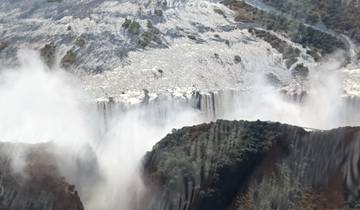
As dry season progresses, flow decreases gradually. By September 2026, rates drop to approximately one-tenth of peak levels, revealing the geological structure of the basalt gorge and individual cataracts. The Zambian side experiences the most dramatic reduction, with the eastern cataract sometimes diminishing to a trickle by November. However, Zimbabwe’s main falls, fed by the deeper central channel, maintain impressive flow throughout the year—first-time visitors in October still witness spectacular water volumes.
The transition periods (May-June and November-December 2026) offer interesting hybrid conditions. Late May provides still-impressive water levels with gradually improving visibility as spray reduces. Early December sees the first rainfalls beginning to replenish the system, though noticeable increases in flow typically don’t occur until late January.
Rainfall Patterns and Their Impact 2026
Victoria Falls receives approximately 700mm of annual rainfall, concentrated heavily in the November-March wet season. However, the falls’ water levels lag significantly behind local rainfall—the Zambezi’s catchment area extends hundreds of kilometers upstream in Angola, Zambia, and Botswana, meaning peak flow arrives 2-3 months after peak rainfall in those regions.
Local rainfall affects daily conditions rather than overall falls volume. During wet season (November-March 2026), afternoon thunderstorms build predictably, typically clearing by evening. Morning activities remain dry, with storms usually developing after 2:00-3:00 PM. These patterns allow effective planning—schedule falls viewing and activities for mornings, reserve afternoons for indoor activities or embrace the dramatic storm displays.
Humidity increases significantly during wet season, with January-February 2026 representing peak humidity alongside peak temperatures. The combination can be uncomfortable for extended outdoor activities, though early morning and late afternoon remain pleasant. Air-conditioned accommodation becomes more valuable during this period.
Month-by-Month Victoria Falls Conditions 2026
January 2026: Peak Green Season Conditions
Water Levels: Moderate and rising. The Zambezi begins responding to upstream rainfall, with visible increases in flow throughout the month. All cataracts flow impressively, though not yet at peak volumes. Visibility remains good with periodic spray on Zimbabwe viewpoints.
Weather: Hot and humid with daily afternoon thunderstorms. Daytime temperatures reach 30-35°C with high humidity. Mornings begin clear but clouds build through the day, with storms typical between 3:00-6:00 PM. Nights remain warm (18-22°C).
Crowds and Pricing: Low season continues with 30-40% reduced accommodation rates. Tourist numbers remain low, creating intimate experiences at viewpoints and easy activity bookings. Excellent value for budget-conscious 2026 visitors willing to work around afternoon weather.
Best For: Budget travelers, photographers seeking green landscapes, visitors comfortable with afternoon rain. The falls are impressive without peak-flow spray, creating good photography conditions in morning light.
February 2026: Rising Waters and Storm Season
Water Levels: Notably increasing throughout the month. By late February, spray increases significantly on Zimbabwe viewpoints. All cataracts flow strongly, and the characteristic mist column begins developing. Zambian side remains fully viewable with moderate spray.
Weather: Wettest month with afternoon thunderstorms most days. Temperatures peak at 32-36°C with maximum humidity. Mornings offer 3-4 hours of dry conditions before storms develop. Dramatic lightning displays common during evening storms.
Crowds and Pricing: Lowest visitor numbers of the year with maximum discounts (40-50% off peak rates). Activity operators run with minimal bookings, providing essentially private experiences. Excellent for visitors prioritizing value and solitude.
Best For: Budget-maximizing visitors, storm photography enthusiasts, travelers seeking minimal crowds. Falls photography requires early morning starts to capture good light before cloud buildup.
March 2026: Building Toward Peak Flow
Water Levels: Rising rapidly toward peak. Spray intensifies significantly, creating constant mist on Zimbabwe viewpoints 7-11. Clear photography becomes challenging on high-spray days, but the falls’ power impresses. Zambian side receives increasing spray as eastern cataract strengthens.
Weather: Rains beginning to taper but still common. Temperatures remain high (30-34°C) with humidity slowly decreasing. Afternoon storms less predictable than January-February—some days remain clear, others produce significant rainfall.
Crowds and Pricing: Transitional pricing begins—still 20-30% below peak rates. Tourist numbers increase slightly as some visitors target pre-peak conditions. Booking flexibility remains high for activities.
Best For: Visitors seeking powerful falls without peak-season prices or maximum spray. The balance of impressive water levels with somewhat lower spray than April-May creates compelling conditions for experiencing the falls’ power while maintaining some visibility.
April 2026: Peak Water Flow Begins
Water Levels: Maximum or near-maximum flow. The falls reach their most dramatic state with all 1.7 kilometers flowing at peak capacity. Spray column rises 400+ meters, visible from 50 kilometers away. Zimbabwe viewpoints 6-12 receive constant heavy spray—essentially standing in rain. Zambian side becomes extremely wet with limited visibility from closer viewpoints.
Weather: Rains ending, transitioning to dry season. Temperatures moderate (26-30°C daytime) with decreasing humidity. Clear mornings become the norm, with any rain typically light and brief.
Crowds and Pricing: Shoulder season pricing (10-20% below peak). Visitor numbers increase as dry weather returns, but haven’t reached peak levels. Good availability for most activities and accommodation.
Best For: Visitors prioritizing raw power over clear viewing. The falls’ sound during peak flow is unforgettable—a constant thunder that vibrates through your chest. Photographers can capture dramatic spray columns and rainbows in clear morning light, even if detailed falls photos remain challenging.
May 2026: Peak Flow Continues
Water Levels: Peak or slightly decreasing from April maximum. Full spray conditions continue throughout most of the month, with gradual reduction noticeable by late May. Zimbabwe viewpoints remain very wet; Zambia experiences peak spray conditions. Clear viewing improves slightly toward month’s end.
Weather: Dry season established. Temperatures comfortable (22-28°C daytime) with cool mornings (12-16°C). Zero rainfall expected, clear skies daily. Pleasant conditions for extended outdoor activities.
Crowds and Pricing: Transitional to peak season. Early May maintains shoulder pricing; late May approaches peak rates. Tourist numbers increasing but not yet at maximum. Good balance of reasonable prices and pleasant conditions.
Best For: Visitors wanting powerful falls with dry weather. Late May offers gradually improving visibility while maintaining impressive water levels—an excellent compromise period for first-time visitors.
June 2026: Post-Peak Transition
Water Levels: Decreasing noticeably from peak. Spray reduces significantly, improving visibility on both sides. All cataracts remain impressive, but the mist curtain thins enough for clear photography. Zambian viewpoints become more accessible as spray moderates.
Weather: Peak dry season begins. Comfortable daytime temperatures (20-26°C) with cool to cold mornings (8-14°C). Clear skies throughout, zero rainfall. Bring layers for early morning activities.
Crowds and Pricing: Peak season pricing begins in earnest. Tourist numbers increase significantly, though not yet at July-August maximum. Activities require advance booking, especially helicopter flights and popular tours.
Best For: Photographers seeking impressive water with clear visibility. The balance of strong flow and reduced spray creates optimal conditions for capturing the falls’ detail and scale. Wildlife begins concentrating at water sources, improving game drive success.
July 2026: Peak Tourist Season Begins
Water Levels: Good and steady. Zimbabwe viewpoints maintain impressive flow, while Zambian side shows noticeable reduction on the eastern cataract. Clear viewing conditions on both sides. Rainbows form reliably in morning light with spray fine enough for photography but sufficient for rainbow formation.
Weather: Coolest month of the year. Daytime temperatures 18-24°C, mornings cold (6-12°C). Excellent conditions for extended walking and outdoor activities. Clear skies daily with possible light morning mist in gorge areas.
Crowds and Pricing: Peak season with maximum prices. July school holidays (UK, Europe, South Africa) drive high visitor numbers. Advance booking essential for premium accommodation and popular activities. Viewpoints busiest between 9:00 AM – 4:00 PM.
Best For: First-time visitors wanting reliable conditions and full service availability. Despite peak pricing and crowds, July delivers consistent quality—excellent falls views, comfortable weather, and all activities operating. Wildlife viewing improves as dry season concentrates animals.
August 2026: Continued Peak Season
Water Levels: Moderate and decreasing. Zimbabwe maintains good viewing on main cataracts while outer sections begin showing reduced flow. Zambian eastern cataract reduces noticeably—consider this when deciding which side to prioritize. Devil’s Pool potentially opens mid-to-late August depending on specific water levels.
Weather: Warming from July’s lows. Daytime temperatures 22-28°C, mornings warming (10-15°C). Clear conditions continue throughout. Pleasant for all outdoor activities without extreme heat.
Crowds and Pricing: Continued peak pricing with high visitor numbers. European summer holidays maintain demand. Devil’s Pool opening (if conditions permit) adds Zambia-specific draw. Booking remains essential for popular activities.
Best For: Visitors targeting Devil’s Pool swimming combined with impressive falls viewing. Late August may offer the season’s earliest Devil’s Pool access while Zimbabwe viewpoints remain compelling. Best wildlife viewing as dry conditions concentrate animals.
September 2026: Optimal Overall Conditions
Water Levels: Low to moderate. Zimbabwe main falls maintain impressive flow while outer sections reduce. Zambian eastern cataract decreases significantly, but Knife Edge Bridge and closer viewpoints reveal geological detail. Devil’s Pool operates reliably throughout September. Clear viewing conditions throughout.
Weather: Warming toward summer heat. Daytime temperatures 28-34°C, mornings comfortable (14-18°C). Zero rainfall expected. Increasing heat by late afternoon makes early morning activities preferable.
Crowds and Pricing: Peak season pricing continues but crowds begin thinning. Families return to school, reducing European visitor numbers. Excellent period for experiencing peak-season conditions with slightly fewer tourists. Activity booking still advisable but easier than July-August.
Best For: Balanced experience across all factors. September combines good falls viewing (Zimbabwe particularly), reliable Devil’s Pool access, peak wildlife viewing, pleasant morning weather, and slightly reduced crowds from July-August maximum. Our recommendation for first-time 2026 visitors with flexible timing.
October 2026: Low Water, High Temperatures
Water Levels: Low season begins. Zimbabwe main falls remain visible but significantly reduced from peak. Zambian eastern cataract often reduced to minimal flow or dry in places. Devil’s Pool operates with excellent conditions. The falls’ geological structure is fully revealed, showing the basalt formations normally hidden by water.
Weather: Hot build-up to rains. Daytime temperatures 32-38°C, making midday activities uncomfortable. Mornings remain manageable (16-22°C). First tentative storms may appear late October, though extended rain unlikely.
Crowds and Pricing: Shoulder season begins with 10-20% price reductions. Visitor numbers decrease from September peak. Good availability for activities and accommodation. Early booking less critical.
Best For: Devil’s Pool enthusiasts, geological interest, budget-conscious travelers. Lower prices combined with reliable Devil’s Pool access create good value. Wildlife viewing remains excellent. Photography reveals structural details invisible during high water.
November 2026: Season Transition
Water Levels: Minimum levels early month, first increases late November. Zimbabwe maintains some flow on main cataracts while outer sections may be dry. Zambian eastern cataract often minimal or dry. Devil’s Pool season extends through early-mid November depending on first significant rains.
Weather: Hot with building humidity. Daytime temperatures 32-38°C with increasing afternoon storm potential. First proper rains typically arrive mid-to-late November, transforming dry landscapes toward green season lushness.
Crowds and Pricing: Green season pricing begins (30-40% discounts). Tourist numbers decrease significantly. Accommodation offers excellent value with easy availability. Last opportunity for Devil’s Pool before water rises.
Best For: Budget travelers targeting Devil’s Pool (early November only), visitors welcoming seasonal transition, photographers seeking dramatic storm light. Final weeks of prime wildlife viewing before rains disperse animals from concentrated dry-season locations.
December 2026: Green Season Returns
Water Levels: Rising from November lows. First rainfall begins replenishing the system, though significant increases lag by 6-8 weeks. All cataracts begin rebuilding flow. No Devil’s Pool access—water rising too much for safe swimming. Clear viewing conditions despite rising water.
Weather: Hot with regular afternoon storms. Daytime temperatures 30-35°C with high humidity. Morning activities remain dry with storms building 2:00-5:00 PM typically. Landscapes rapidly green following rains.
Crowds and Pricing: Holiday period brings temporary crowd increase but green-season pricing continues for most properties. Christmas-New Year week sees elevated rates at some establishments. January returns to minimum pricing.
Best For: Holiday visitors wanting Victoria Falls experience with reasonable pricing. Falls are impressive and building, weather is manageable with morning planning, and green landscapes create beautiful settings. Family-friendly period with school holidays.
Activity Availability by Season 2026
Year-Round Activities 2026
Victoria Falls National Park (Zimbabwe) and Mosi-oa-Tunya National Park (Zambia) operate year-round with daily opening hours 6:00 AM – 6:00 PM. Viewing experiences vary dramatically by season, but both parks welcome visitors throughout 2026. The Zimbabwe side maintains impressive views even during low water due to the main falls’ deeper channel.
Helicopter and microlight flights operate year-round, with flight paths adjusted based on conditions. Peak flow months (March-May 2026) provide dramatic spray column photography, while low water (September-December 2026) reveals gorge structure normally obscured by mist. Flights run weather-dependent, with afternoon storms in wet season occasionally causing delays or rescheduling.
Sunset cruises on the Zambezi River operate throughout 2026, with wildlife sightings varying seasonally. Dry season (May-October) concentrates elephants, hippos, and crocodiles along the river, providing reliable encounters. Wet season cruises offer lush green settings and bird diversity but more dispersed wildlife.
Game drives in Zambezi National Park (Zimbabwe) and Mosi-oa-Tunya National Park (Zambia) operate year-round. Dry season (June-October 2026) provides significantly better wildlife viewing as animals concentrate at remaining water sources. Wet season offers green landscapes and newborn animals but more challenging sightings as wildlife disperses.
Seasonal Activities 2026
Devil’s Pool Swimming: Mid-August through December 2026 (water-level dependent). September-November offers most reliable access. Book through licensed Livingstone operators—Livingstone Island tours provide the only legitimate access. Not available during high water season when currents are dangerously strong.
White-Water Rafting: Year-round operation with significant seasonal variation. Low water (August-December 2026) provides the most consistent Class 5 rapids with commercial operations running full schedules. High water (February-June 2026) creates more powerful hydraulics rated Class 5+, suitable for experienced rafters only. Some operators reduce offerings during peak flood (April-May) when rapids become extreme.
Lunar Rainbow (Moonbow) Viewing: Full moon periods during high spray months (February-July 2026). Requires sufficient spray to create rainbow effects in moonlight, limiting opportunities to wetter months. Check 2026 lunar calendar for specific dates; several operators offer moonbow tours during optimal periods.
Bungee Jumping and Bridge Activities: Year-round operation from Victoria Falls Bridge. Conditions remain consistent regardless of water levels since the jump occurs over the gorge rather than the falls. Morning light provides best photography of jumpers against the spray backdrop.
Planning Strategies for 2026
Photography-Focused Timing 2026
Serious photographers should consider multiple factors when timing their 2026 visit. For iconic spray-and-rainbow images capturing the falls’ full power, target April-May when peak flow creates dramatic mist columns—but accept that detailed falls photography will be challenging. For clear, detailed images revealing the falls’ structure and individual cataracts, September-November offers optimal visibility with sufficient water for impressive photographs.
Rainbow formation peaks mid-morning (9:00-11:00 AM) from Zimbabwe viewpoints when the sun angle creates optimal conditions. This timing remains consistent throughout the year, though rainbow intensity varies with spray density—more spray creates more vivid rainbows but obscures the falls themselves. June-August typically provides the best balance of rainbow visibility and falls detail.
Aerial photography from helicopters and microlights produces different results seasonally. High water creates dramatic spray columns photographed well from above, while low water reveals the gorge system’s geological structure invisible during wetter months. Consider booking flights during both high and low water if photography is a priority.
Budget Optimization Timing 2026
Green season (December-February 2026) delivers maximum savings with accommodation discounts of 30-50% below peak rates. These months suit budget travelers comfortable working around afternoon thunderstorms—morning activities proceed normally, with storms typically clearing by evening. The falls are impressive (especially January-February as water rises), crowds minimal, and experiences essentially private.
November 2026 offers transitional value with green-season pricing, minimal crowds, and still-dry weather through early November. Late November sees first rains but maintains good value. This period suits budget travelers seeking lower prices without guaranteed afternoon storms.
Shoulder seasons (April-early May and late October-November 2026) provide 10-20% savings while maintaining reliable conditions. These periods offer good falls viewing, comfortable weather, and easier booking than peak season without green season’s weather uncertainty.
Wildlife-Focused Timing 2026
Dry season (June-October 2026) provides optimal wildlife viewing throughout the Victoria Falls region. Animals concentrate at remaining water sources, making sightings reliable and predictable. The Zambezi River becomes the primary drinking point for elephants, buffalo, and various antelope species, with game drives and river cruises benefiting from concentrated populations.
September-October 2026 represents peak wildlife opportunity before the rains disperse animals across the landscape. This period combines excellent game viewing with good falls conditions, comfortable weather, and reasonable (shoulder-transitioning) prices. Rhino tracking in Mosi-oa-Tunya National Park maintains high success rates throughout dry season.
Wet season wildlife differs rather than disappears. Migratory birds arrive November-March, creating excellent birding opportunities. Baby animals appear in December-February, providing different photographic subjects. However, dispersed populations and dense vegetation make general game viewing more challenging than dry season.
Booking Recommendations for 2026
Peak Season Booking Lead Times 2026
July-September 2026 requires advance planning for optimal results. Premium accommodation (Victoria Falls Hotel, Royal Livingstone, Victoria Falls Safari Lodge) should be booked 3-4 months ahead for guaranteed availability. Standard mid-range properties book up 6-8 weeks ahead during peak months.
Activities during July-September 2026 benefit from 48-72 hour advance booking. Helicopter flights particularly face capacity constraints during peak season—book upon arrival or ideally before departure. Devil’s Pool tours during September require 1-2 week advance booking to secure preferred timing.
Border crossing during peak season involves longer queues—allow 30-45 minutes rather than the typical 15-20 minutes. Crossing before 8:00 AM or after 4:00 PM avoids maximum congestion.
Green Season Flexibility 2026
December-February 2026 offers maximum flexibility with minimal advance booking required. Accommodation can often be secured at arrival with walk-in rates competitive with online booking. Activities typically run below capacity, enabling same-day booking for most experiences.
Weather monitoring becomes important during green season. Check forecasts the evening before planned activities—heavy overnight rain may impact morning conditions, though the falls themselves are unaffected by local rainfall. Activity operators sometimes adjust timing around predicted storms.
The low tourist numbers during green season create opportunities for negotiation on activities and accommodation. Multi-night stays, activity combinations, and last-minute bookings often secure discounts beyond posted green-season rates.
Frequently Asked Questions About Timing Your 2026 Visit
What month has the least crowds at Victoria Falls in 2026?
February 2026 sees minimum visitor numbers, combining wet season weather with post-holiday lulls. Tourist infrastructure operates near minimum capacity, providing essentially private experiences at viewpoints and activities. January and late November also offer very low crowds. Budget travelers seeking solitude should target these months.
Can you see Victoria Falls clearly during peak flow in 2026?
Clear viewing is challenging during peak flow (April-May 2026). Heavy spray creates constant mist on Zimbabwe viewpoints, obscuring detailed views while creating dramatic atmospheric experiences. The falls’ power impresses through sound and sensation more than sight. Photography of the falls through spray yields artistic results rather than clear documentation. Aerial views from helicopters remain clear above the spray column.
When do prices drop at Victoria Falls in 2026?
Green season pricing (30-50% discounts) begins in late November and continues through February 2026. Shoulder season discounts (10-20%) apply in April-early May and late October-November. Peak pricing runs June-September. December holiday weeks may see temporary premium pricing at some properties despite green season timing.
Is April or May better for visiting Victoria Falls in 2026?
May 2026 offers better conditions than April for most visitors. Both months feature peak water, but May provides dry weather (versus April’s final rains) and gradually improving visibility by late month. April captures absolute peak flow for power seekers, while May balances impressive water with more comfortable exploration conditions.
What is the wettest month at Victoria Falls?
February receives the most rainfall at Victoria Falls, with afternoon thunderstorms occurring most days. However, these storms are predictable (typically 2:00-6:00 PM) and intense but brief. Mornings remain dry, allowing 4-5 hours of rain-free activity before clouds build. January and early March experience similar patterns with slightly less frequency.
When is Victoria Falls most crowded in 2026?
July-August 2026 brings peak visitor numbers, driven by European and South African school holidays coinciding with optimal viewing conditions. Late December-early January sees a secondary crowd spike for holiday travel. September maintains high numbers but slightly reduced from July-August peak. Viewpoints are busiest 9:00 AM – 4:00 PM during these periods.
Can you swim at Victoria Falls year-round in 2026?
No—Devil’s Pool swimming operates only during low water season (mid-August through December 2026, water-dependent). High water creates dangerous currents that make edge-swimming impossible. The exact opening and closing dates vary annually based on water levels. Livingstone Island tours (which provide Devil’s Pool access) operate only when conditions are safe.
What are the best months to avoid at Victoria Falls?
No month is truly bad, but some periods may not match certain expectations. April-early May disappoints visitors expecting clear photography due to heavy spray. Late October-November disappoints those wanting powerful falls due to low water. February may frustrate those uncomfortable with daily storms and high heat/humidity. Match your visit to priorities rather than avoiding specific months.
When should I book my 2026 Victoria Falls trip?
For July-September 2026 visits, book accommodation 3-4 months ahead and activities upon arrival (or 2-4 weeks ahead for helicopter flights during peak weeks). For green season (December-February), 2-4 weeks advance booking suffices for accommodation, with activities bookable on arrival. Shoulder seasons benefit from 6-8 weeks advance planning.