
Best Time to Visit Siena 2026: Seasonal Planning Guide
Siena’s medieval streets and UNESCO World Heritage center welcome visitors year-round, yet each season delivers distinctly different experiences shaped by weather, crowds, and the city’s legendary events. Understanding these patterns transforms your 2026 visit from good to exceptional.
Key Takeaways
- Optimal weather windows: Late April through early June and mid-September through October offer comfortable temperatures between 18°C-25°C with manageable crowds and lower accommodation costs
- Palio race dates 2026: July 2 (Palio di Provenzano) and August 16 (Palio dell’Assunta) represent peak tourist periods requiring advance bookings 6-12 months ahead, with hotel prices doubling during race weeks
- Significant seasonal price variations: Winter months (January-February) offer hotel rates 40-50% lower than summer peaks, while maintaining full access to Siena’s monuments and museums
- Strategic crowd avoidance: Early mornings throughout the year and November through March provide intimate experiences of the Piazza del Campo and Duomo without summer’s overwhelming tourist density
- Regional event timing: Tuscan harvest season (September-October) adds wine tasting and truffle hunting opportunities unavailable during other months
- Climate considerations: Summer temperatures regularly exceed 30°C with July-August heat waves reaching 35°C, while winter rarely drops below freezing despite occasional snow
People Also Ask About Best Time to Visit Siena 2026
What is the best month to visit Siena in 2026?
May and September rank as Siena’s optimal months in 2026 for balancing pleasant weather, manageable crowds, and reasonable accommodation prices. May brings temperatures averaging 18°C-22°C with the Tuscan countryside in full spring bloom, while September offers similar comfort at 20°C-26°C combined with harvest season wine experiences and post-summer crowd reductions. Both months provide 10-12 hours of daily sunshine and minimal rainfall, creating ideal conditions for exploring Siena’s steep medieval streets and outdoor monuments like the Torre del Mangia. Hotel rates during these shoulder months remain 30-40% below July-August peaks while maintaining full availability of tours, restaurants, and cultural experiences. Early June and late October serve as secondary alternatives when May and September dates prove unavailable.
Should I visit Siena during the Palio in 2026?
Visiting Siena during the 2026 Palio races (July 2 or August 16) delivers an unparalleled cultural spectacle but requires extensive advance planning and acceptance of premium pricing and maximum crowds. The Palio transforms Siena into a vibrant celebration with contrada flags decorating every street, traditional dinners filling the squares, and the historic horse race creating electric atmosphere in Piazza del Campo. Balcony seats range from €460-€690 while standing in the Campo remains free for those arriving 90 minutes before the 7:00-7:30 PM race start. Hotels book 6-12 months ahead for Palio weekends with rates typically doubling standard summer prices. The complete four-day festival experience (June 29-July 2 or August 13-16) includes trial races, horse blessings, the Corteo Storico pageant, and contrada celebrations that provide cultural immersion impossible to replicate at other times. However, travelers seeking tranquil exploration of Siena’s monuments should avoid Palio weeks when the city’s focus shifts entirely to the races.
How bad are crowds in Siena during summer 2026?
Summer crowds in Siena 2026, particularly during July and August, reach peak density with the Piazza del Campo and Duomo experiencing significant congestion throughout daylight hours. Visitor numbers spike dramatically around the two Palio races (July 2 and August 16) when the historic center accommodates tens of thousands of spectators alongside regular tourists. The UNESCO-listed medieval streets, already narrow by design, feel especially compressed during summer midday periods when cruise ship day-trippers from Florence and Rome converge with overnight guests. Queue times at major attractions like the Duomo complex and Torre del Mangia extend to 45-90 minutes during peak summer afternoons, compared to 15-20 minutes during shoulder seasons. Restaurant reservations become essential for dinner service, and popular cafes ringing the Campo fill completely by mid-morning. Strategic crowd management includes starting sightseeing by 8:00 AM before tour groups arrive, scheduling indoor museum visits during the hottest afternoon hours (2:00-5:00 PM), and booking tickets online in advance for timed entry at major monuments. June and early September offer marginally better conditions than the July-August peak while maintaining summer’s warm weather and extended daylight hours.
Is Siena worth visiting in winter 2026?
Winter visits to Siena in 2026 (December through February) offer exceptional value and authentic local atmosphere for travelers prioritizing cultural immersion over optimal weather conditions. Hotel rates drop 40-50% compared to summer peaks, with quality 3-star properties available from €60-€90 per night versus €140-€200 in July-August. The historic center operates at reduced tourist density, allowing unhurried exploration of the Piazza del Campo, Duomo, and museums without queues or crowds. January and February represent the quietest months when you’ll encounter primarily local residents rather than international tour groups. Winter temperatures average 5°C-10°C daytime highs with occasional overnight frost, requiring layered clothing but rarely reaching uncomfortable extremes. While December brings festive Christmas markets and New Year celebrations, January-February offer the most affordable rates and smallest crowds. Rain occurs on approximately 8-10 days monthly during winter, suggesting flexible daily itineraries that can shift between outdoor exploration and Siena’s numerous indoor attractions including the Duomo, Civic Museum, Santa Maria della Scala complex, and contrada museums. The tradeoff involves shorter daylight hours (9 hours in December versus 15 in June) and cooler temperatures unsuitable for extended outdoor dining, but winter’s intimate scale and authentic character appeal to cultural travelers seeking Siena beyond its tourist-season persona.
Bookable tours via Viator · live prices
Extended multi-day tours – 5+ days
Featured Siena Multi-Day Tour Packages

3 days
Siena 3-Day Discovery Tour
- ✓ Comprehensive Siena experience
- ✓ Expert local guides included
- ✓ All accommodation included
- ✓ Transportation provided

5 days
Siena 5-Day Highlights Experience
- ✓ Comprehensive Siena experience
- ✓ Expert local guides included
- ✓ All accommodation included
- ✓ Transportation provided
7 days
Siena 7-Day Cultural Journey
- ✓ Comprehensive Siena experience
- ✓ Expert local guides included
- ✓ All accommodation included
- ✓ Transportation provided

10 days
Siena 10-Day Complete Adventure
- ✓ Comprehensive Siena experience
- ✓ Expert local guides included
- ✓ All accommodation included
- ✓ Transportation provided
Multi-day tour packages powered by TourRadar. Prices and availability subject to change.
Featured Siena Multi-Day Tour Packages
3 days
Siena 3-Day Discovery Tour
- ✓ Comprehensive Siena experience
- ✓ Expert local guides included
- ✓ All accommodation included
- ✓ Transportation provided
5 days
Siena 5-Day Highlights Experience
- ✓ Comprehensive Siena experience
- ✓ Expert local guides included
- ✓ All accommodation included
- ✓ Transportation provided
7 days
Siena 7-Day Cultural Journey
- ✓ Comprehensive Siena experience
- ✓ Expert local guides included
- ✓ All accommodation included
- ✓ Transportation provided
10 days
Siena 10-Day Complete Adventure
- ✓ Comprehensive Siena experience
- ✓ Expert local guides included
- ✓ All accommodation included
- ✓ Transportation provided
Multi-day tour packages powered by TourRadar. Prices and availability subject to change.
Introduction
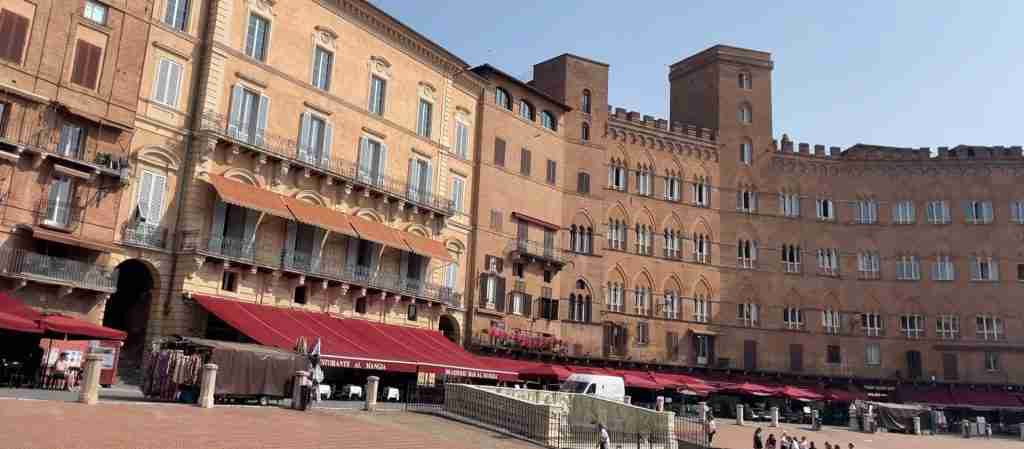
Siena’s UNESCO World Heritage historic center, inscribed in 1995, stands as Italy’s finest preserved medieval city, maintaining its Gothic character unchanged since the 12th-15th centuries when rivalries with Florence drove architectural and artistic innovation. The shell-shaped Piazza del Campo, Gothic Duomo with its striped marble facade, and 102-meter Torre del Mangia define a cityscape that appears frozen in the medieval era. Yet this static architectural beauty contrasts sharply with Siena’s dramatically shifting seasonal character, where timing fundamentally alters the visitor experience more profoundly than in most Italian destinations.
The twice-yearly Palio horse races transform Siena from serene medieval museum into passionate sporting theater, while seasonal weather swings from winter’s 5°C chill to summer’s 32°C heat create entirely different contexts for navigating the city’s steep, car-free streets. Tourist density varies by factors of five between tranquil February and overwhelming August, hotel prices double around Palio dates, and autumn’s harvest season adds wine and truffle experiences unavailable other months. Understanding these variations enables strategic timing that aligns Siena’s offerings with your priorities whether those involve comfortable weather, minimal crowds, budget optimization, specific cultural events, or combinations thereof.
Siena’s location in central Tuscany, 320 meters above sea level amid rolling hills, creates a transitional Mediterranean climate with relatively mild winters and hot, sunny summers. The city experiences approximately 825mm annual rainfall distributed unevenly across seasons, with November’s wet conditions contrasting against July’s dry heat. This climatic variability combines with Siena’s event calendar and tourism patterns to create distinct planning windows throughout 2026. The following analysis examines weather data, crowd statistics, accommodation pricing, and event timing to identify optimal visit periods for different traveler profiles and priorities.
Planning Siena for 2026 requires balancing multiple factors that shift monthly and sometimes weekly. The Palio races anchor the calendar with fixed July 2 and August 16 dates that have remained unchanged for centuries, drawing maximum crowds and premium pricing. Between these peaks lie spring and autumn shoulder seasons offering weather nearly as pleasant as summer with significantly fewer tourists and lower costs. Winter presents a calculated tradeoff of reduced services and cooler temperatures against authentic local atmosphere and exceptional value. Each season delivers a legitimate Siena experience, but the differences between them prove substantial enough to merit careful consideration of your visit timing based on the specific experience you seek in this remarkable Tuscan city.
Understanding Siena’s Climate and Seasons 2026
Siena experiences a humid subtropical climate classified as Cfa under the Köppen system, characterized by absence of a true dry season and hot summers moderated by the city’s 320-meter elevation and distance from the coast. This positioning creates more pronounced seasonal temperature variations than coastal Tuscan cities while maintaining the region’s fundamentally Mediterranean warmth and sunshine. Average temperatures range from January’s 6.4°C to August’s 24.4°C, with daily maximums spanning from winter’s 8°C-10°C to summer’s 28°C-32°C.
Annual rainfall totaling 825mm falls unevenly across the calendar, with November’s 125mm representing peak precipitation while July’s 30mm marks the driest period. This Mediterranean rainfall pattern concentrates moisture during autumn and winter months (October through February) when Atlantic weather systems penetrate inland, while summer (June through August) remains predominantly dry with occasional brief afternoon thunderstorms. Rainfall during spring (March-May) and autumn (September-October) occurs at moderate levels of 50-70mm monthly, creating pleasant conditions where brief showers alternate with sunny periods rather than persistent wet weather.
Sunshine hours vary dramatically by season, from June’s daily average of 11.7 hours to November’s mere 3.3 hours. This solar variation affects not only warmth and visibility for photography but also the practical duration of outdoor sightseeing. Summer’s 15-hour daylight extends useful exploration time into evening hours, while winter’s 9-hour December days compress activities into shorter windows. Spring and autumn offer balanced 11-13 hour daylight periods that provide ample sightseeing time without summer’s intensity or winter’s limitations.
Temperature patterns in 2026 will follow established norms with winter months (December-February) maintaining daytime highs of 8°C-12°C and nighttime lows of 1°C-4°C, requiring warm layers and waterproof outerwear. Spring (March-May) sees steady warming from 13°C average in March to 20°C by May, with increasingly stable weather as the season progresses. Summer (June-August) delivers Siena’s highest temperatures with July-August averages of 30°C that regularly spike to 35°C during heat waves, creating conditions where afternoon shade becomes essential. Autumn (September-November) reverses spring’s pattern, cooling from September’s pleasant 24°C-26°C to November’s chilly 13°C-14°C as winter approaches.
Humidity levels fluctuate from summer’s comfortable 63% to winter’s damp 85%, affecting perceived temperature significantly. Summer’s dry heat feels more tolerable than raw temperature readings suggest, while winter’s high humidity makes 5°C feel colder than similar temperatures in drier climates. Wind patterns remain generally light throughout the year, though occasional winter tramontana winds from the north can create biting conditions despite moderate temperatures, and summer breezes provide welcome relief during afternoon heat.
Snow occurs rarely in Siena, averaging one to three events per winter with typical accumulations of 15-20cm during the heaviest snowfalls. February 1991’s 40cm snowfall remains exceptional rather than representative. When snow does fall, the medieval city’s steep streets become treacherous for walking, though the visual spectacle of Gothic architecture dusted white creates memorable photography opportunities. More commonly, winter brings frost on clear nights with temperatures briefly dipping below freezing before warming above zero by midday.
Peak Season vs Shoulder Season vs Off-Season Timing 2026
Siena’s tourism calendar divides into clearly defined periods with distinct crowd levels, pricing structures, and atmospheric character. Understanding these divisions enables strategic timing aligned with your tolerance for crowds, budget constraints, and desired experience intensity.
Peak season in Siena 2026 spans July, August, and September, with the two Palio race dates (July 2 and August 16) representing absolute peak moments when visitor density reaches maximum levels. During these months, the historic center accommodates not only overnight tourists but also significant day-tripper traffic from Florence (80km north) and Rome (230km south), creating congestion throughout the UNESCO core. The Piazza del Campo fills with visitors from mid-morning through evening, major monuments maintain queues throughout operating hours, and restaurants require advance reservations for dinner service. July and August attract families during school holidays, while September draws retired travelers and couples seeking slightly cooler temperatures than midsummer’s heat.
High season extends peak conditions into April, May, June, and October, representing periods with elevated tourist numbers but below the July-August-September maximum. These months attract visitors seeking optimal weather without extreme summer heat, with April-May particularly popular among spring travelers and garden enthusiasts drawn to Tuscany’s blooming countryside. June serves as shoulder to peak season, building toward the July 2 Palio, while October represents the tail end of comfortable weather before winter’s chill. During high season months, major attractions experience moderate queues averaging 20-40 minutes at peak times, accommodations maintain elevated pricing without reaching Palio-week extremes, and the city feels busy without becoming overwhelmed.
Low season encompasses March, November, and December, marking transitional periods when tourist numbers drop significantly below warm-weather peaks. March sees early spring visitors willing to accept variable weather for reduced crowds, November attracts budget-conscious travelers after autumn’s pleasant October conditions, and December draws visitors for Christmas markets and New Year celebrations despite winter chill. During low season months, major monuments experience minimal queues, restaurants welcome walk-in diners except during Christmas week, and hotel rates drop 25-35% below high season levels. The tradeoff involves shorter daylight hours, increased rainfall likelihood, and reduced tourist services compared to peak periods.
Off-season covers January and February 2026, representing Siena’s quietest tourist months when international visitor numbers reach annual minimums. These winter months attract primarily culture-focused travelers prioritizing authentic local atmosphere over optimal weather or maximum service availability. The historic center operates at reduced tourist density with the Piazza del Campo populated mainly by local residents, monuments accessible without waits, and restaurants maintaining local rather than tourist clientele. Hotel rates during off-season reach annual lows with quality 3-star properties available from €60-€90 per night, representing savings of 40-50% versus peak summer pricing. January proves particularly quiet following New Year crowds, while February’s slightly warmer temperatures and occasional pre-Lenten carnival activities provide modest uptick in atmosphere.
The distinction between these seasonal categories affects not only crowd levels and pricing but also the fundamental character of your Siena experience. Peak season delivers maximum energy with fully operational tourist infrastructure, extensive tour options, and vibrant international atmosphere but sacrifices intimacy and value. Off-season provides authentic immersion in local life with exceptional value but requires acceptance of weather limitations and reduced services. Shoulder seasons in spring and autumn represent compromises that balance most factors favorably for travelers without extreme preferences toward either peak energy or off-season tranquility.
Spring in Siena 2026 (March-May)
Spring in Siena 2026 unfolds gradually from March’s unpredictable beginning through May’s stable warmth, creating a three-month window where conditions improve progressively as the season advances. This period represents one of two optimal visiting windows for travelers prioritizing weather-crowd balance over specific events like the Palio.
March in Siena maintains transitional character between winter’s chill and spring’s warmth, with average temperatures of 10°C-15°C and variable weather patterns. Early March still carries winter’s damp quality with approximately 60mm rainfall spread across 9-10 rainy days, while late March shows increasing stability as Mediterranean high pressure systems begin dominating. The Tuscan countryside surrounding Siena starts greening during March with early wildflowers appearing in valleys, though hilltop locations maintain brown winter coloration through mid-month. Tourist numbers remain moderate in March with primarily European visitors and minimal North American traffic before Easter holidays. Hotel rates stay 25-30% below summer peaks with good availability across all categories. March’s shorter daylight hours (11 hours by month’s end) limit extended sightseeing but prove adequate for core monument visits and medieval street exploration.
April transforms Siena’s conditions markedly with average temperatures rising to 15°C-18°C and increasingly sunny weather. Rainfall drops to approximately 55mm across 8-9 days with showers becoming briefer and less frequent than March. The surrounding countryside bursts into vibrant spring color during April with flowering trees, blooming wildflowers, and brilliant green hills creating the quintessential Tuscan landscape celebrated in Renaissance paintings. Easter holidays (April 20 in 2026) bring increased tourist traffic for 7-10 days surrounding the holiday, with Italian and European families creating temporary crowding before quieter conditions return. The historic center becomes comfortably busy during April rather than overcrowded, with the Piazza del Campo showing good mix of tourists and local residents. April’s 13-hour daylight provides ample time for extensive daily sightseeing including morning monument visits and afternoon countryside excursions to nearby hilltowns. Hotel rates increase to moderate levels during April, remaining 20-25% below peak summer pricing except during Easter week when rates approach summer levels.
May represents spring’s peak in Siena with optimal weather conditions, vibrant landscapes, and manageable tourist density before summer’s crowds arrive. Temperatures average 18°C-22°C with warm afternoons perfect for outdoor exploration and cool evenings requiring light layers. Rainfall decreases further to approximately 50mm across 7-8 days, with extended sunny periods and minimal precipitation disruption. The Tuscan countryside reaches maximum beauty during May with lush greenery, late spring blooms, and comfortable temperatures ideal for wine country day trips to Chianti or Montalcino. Tourist numbers build throughout May as North American and Asian visitors join European traffic, creating busy but not overwhelming conditions. The Piazza del Campo fills during midday and evening hours but clears sufficiently for comfortable exploration during early mornings and mid-afternoons. May’s 14-hour daylight matches summer’s extended exploration windows without extreme heat. Hotel rates reach moderate-high levels during May at 15-20% below peak summer pricing, representing good value for optimal weather conditions. May proves particularly appealing for photographers seeking perfect light, hikers wanting comfortable temperatures for countryside trails, and cultural travelers balancing weather and crowd factors.
Spring’s progressive improvement from March through May creates three distinct planning windows within the season. Budget-conscious travelers willing to accept variable weather target March for lowest spring prices and smallest crowds. Balanced planners seeking optimal conditions choose May for near-perfect weather despite moderate pricing. April serves as compromise between March’s value and May’s reliability. All three months avoid summer’s oppressive heat while providing full access to Siena’s monuments, museums, restaurants, and cultural offerings.
Summer in Siena 2026 (June-August)
Summer in Siena 2026 delivers maximum heat, largest crowds, and peak cultural energy centered on the two Palio horse races that define the city’s annual calendar. This three-month window represents Siena at its most vibrant and most challenging, requiring strategic planning to maximize rewards while minimizing heat and congestion difficulties.
June initiates summer with temperatures rising from pleasant early-month 22°C-25°C to hot late-June 27°C-30°C as the first Palio approaches. Early June maintains manageable conditions with warm but not extreme temperatures and tourist levels building but not yet reaching July-August peaks. Rainfall drops to minimal 35mm across just 5-6 days monthly, creating predominantly dry conditions ideal for outdoor activities. The four-day Palio di Provenzano festival (June 29-July 2) transforms Siena completely with contrada flags decorating every street, trial races filling the Campo, traditional dinners occupying squares, and visitor numbers spiking dramatically. The June 29 horse lottery and initial trial races begin the celebration, while June 30-July 1 feature additional trials and the crucial Prova Generale rehearsal followed by massive outdoor contrada dinners. July 2 culminates with the Corteo Storico pageant and the 7:30 PM race itself. June hotel rates increase progressively from moderate early-month levels to peak pricing during Palio week when quality hotels command €200-€300 per night with minimum 3-4 night stays required.
July represents Siena’s hottest month with average temperatures of 28°C-32°C and frequent heat waves pushing afternoon readings to 35°C or higher. These extreme temperatures concentrate between 1:00-5:00 PM when exploring Siena’s sun-exposed medieval streets becomes genuinely uncomfortable without strategic shade-seeking and hydration. The post-Palio week (July 3-10) maintains heavy tourist traffic as visitors who missed race tickets explore the city, while mid-to-late July fills with European holiday travelers. July’s minimal 30mm rainfall across just 4-5 days creates reliably dry conditions but offers little relief from heat. The city’s hilltop position provides marginally cooler conditions than valley locations, and evening temperatures dropping to 18°C-20°C make outdoor dining pleasant after brutal afternoon heat. July’s extended 15-hour daylight enables early morning starts (6:00-7:00 AM) when temperatures remain tolerable for sightseeing, afternoon retreat to air-conditioned museums or hotel pools, and evening returns for dining and atmosphere. Hotel rates maintain peak levels throughout July at €180-€250 per night for quality 3-4 star properties, with advance booking essential as occupancy approaches 95% capacity.
August extends July’s heat with average temperatures of 28°C-31°C and similarly oppressive afternoon conditions. The Palio dell’Assunta festival (August 13-16) repeats June’s celebration pattern with four days of trials, contrada activities, and the August 16 race starting at 7:00 PM. August’s positioning during peak European vacation season creates maximum tourist density with Italian, German, French, and British holiday travelers converging on Siena. The combination of extreme heat and maximum crowds makes August objectively Siena’s most challenging month for comfortable sightseeing, though the Palio’s cultural significance and summer’s extended hours maintain appeal for travelers prioritizing events over conditions. August’s minimal 30mm rainfall provides reliable sunshine but zero cooling relief. Hotel rates peak during Palio week (August 13-16) at €250-€350 per night with the remainder of August maintaining elevated €180-€280 pricing. Late August (August 20-31) shows slight crowd reduction as European vacations end, creating marginally better conditions while maintaining summer heat.
Summer’s appeal centers primarily on the Palio races which represent Italy’s most authentic medieval festival, entirely local in origin and maintaining centuries-old traditions without tourist-oriented modifications. The passion displayed by contrada members during race week proves unmatched in Italian cultural calendar, creating atmosphere impossible to experience at other times. Beyond the Palio, summer’s extended daylight hours enable ambitious sightseeing schedules, full restaurant and cultural service availability, and vibrant evening atmosphere in the Piazza del Campo. However, these advantages come packaged with oppressive heat requiring afternoon breaks, overwhelming crowds necessitating early arrival at major monuments, and premium pricing across all services. Summer suits travelers specifically targeting Palio attendance, families constrained by school calendars, or visitors willing to accept challenging conditions for maximum cultural programming and guaranteed sunshine.
Autumn in Siena 2026 (September-November)
Autumn in Siena 2026 provides the year’s second optimal visiting window, combining pleasant weather, reduced crowds, harvest-season experiences, and moderate pricing in a three-month span that many seasoned Italy travelers consider superior to more popular spring months.
September maintains summer warmth without extreme heat, with temperatures averaging 20°C-26°C that prove ideal for all-day sightseeing without afternoon retreat requirements. Early September (September 1-15) carries residual peak-season crowds as European vacations conclude gradually, while mid-to-late September shows marked tourist reduction. Rainfall remains moderate at approximately 55mm across 6-7 days, typically arriving as brief showers rather than all-day events. September’s 12-hour daylight provides ample exploration time without summer’s 15-hour excess or winter’s 9-hour limitation. The Tuscan countryside begins autumn transformation during late September with vineyard leaves starting color changes and harvest activity visible throughout wine regions. Tourist density in September ranks as high-season level early month, transitioning to shoulder-season character by month’s end. Hotel rates follow similar pattern, starting September at €150-€220 per night and declining to €110-€180 by month’s end as demand eases. September proves particularly appealing for travelers seeking summer-quality weather without peak crowds and pricing, though early booking remains advisable for optimal accommodation selection.
October delivers autumn’s peak conditions with comfortable temperatures averaging 15°C-20°C, stable weather, vibrant fall foliage, and harvest season experiences at maximum accessibility. Daytime warmth enables outdoor dining and extended sightseeing while cool evenings create pleasant sleeping conditions. Rainfall increases to approximately 75mm across 8-9 days as autumn weather systems strengthen, but October maintains more dry than wet days and clear periods between showers. The surrounding Tuscan landscape transforms during October with vineyard reds and golds, olive harvest activity, and truffle hunting season beginning in Crete Senesi hills southeast of Siena. Numerous harvest festivals and wine events occur throughout October in nearby Chianti, Montalcino, and Montepulciano regions, adding experiences unavailable during other months. Tourist crowds drop substantially during October with primarily European couples and retired travelers replacing summer’s families and tour groups. The Piazza del Campo regains comfortable scale with easy access to outdoor cafes and photograph vantage points. October’s 11-hour daylight proves adequate for full daily itineraries without rushed pacing. Hotel rates settle to moderate levels at €90-€150 per night, representing excellent value for optimal autumn conditions. October appeals particularly to wine enthusiasts timing visits for harvest experiences, couples seeking romantic autumn atmosphere, and budget-conscious travelers wanting quality weather at reasonable cost.
November transitions toward winter with temperatures cooling to 10°C-14°C and weather becoming increasingly variable. Early November maintains mild conditions and autumn colors through approximately November 10, while late November shows definite winter character with bare trees, gray skies, and damp conditions. Rainfall peaks during November at 125mm across 10-12 days, representing Siena’s wettest month when rain gear proves essential daily. Despite increased precipitation, November delivers primarily light-to-moderate rain rather than severe storms, maintaining sightseeing feasibility with flexible scheduling. Tourist crowds drop to low-season levels during November with primarily Italian weekend visitors and minimal international traffic. The historic center regains authentic local character with residents outnumbering tourists in the Campo. November’s 9.5-hour daylight constrains full-day excursions but proves adequate for core monument exploration and medieval quarter wandering. Hotel rates decline significantly during November to €70-€110 per night, approaching winter’s low-season pricing. November suits travelers prioritizing value and authenticity over optimal weather, those with schedule flexibility to work around rain, and visitors content with Siena’s indoor offerings including museums, churches, restaurants, and wine bars during inclement periods.
Autumn’s three-month span offers progressive trade-offs between conditions and value. September provides summer-quality weather at slightly reduced prices and crowds. October delivers optimal balance of pleasant weather, manageable tourists, and moderate costs. November sacrifices weather reliability for exceptional value and authentic atmosphere. All three months maintain full monument access, complete restaurant service, and active cultural programming while avoiding summer’s heat and winter’s chill.
Winter in Siena 2026 (December-February)
Winter in Siena 2026 presents the year’s most polarizing season, offering exceptional value and authentic local immersion while requiring acceptance of cool temperatures, reduced daylight, and elevated rainfall compared to warm-weather months. This three-month window attracts specific traveler profiles while deterring others based on clear trade-offs.
December bridges autumn and winter with temperatures averaging 5°C-10°C and variable conditions reflecting Siena’s transitional climate. Early December maintains mild character with occasional pleasant days reaching 12°C-14°C, while late December shows definite winter chill with nighttime temperatures near freezing. December receives approximately 70mm rainfall across 9-10 days, creating damp conditions requiring waterproof layers. Christmas markets appear in the Piazza del Campo and surrounding streets during early-to-mid December, adding festive atmosphere and temporary tourist uptick around December 8-22. New Year week (December 27-January 3) brings Italian holiday travelers creating brief crowding before January’s quiet. December’s 9-hour daylight represents the year’s shortest useful sightseeing window, though Siena’s compact historic core remains fully explorable within these constraints. Hotel rates fluctuate during December from low-season €65-€95 per night during early month to moderate €110-€160 during Christmas week before returning to winter levels by month’s end. December appeals to travelers seeking festive atmosphere without northern Europe’s extreme cold, those with holiday-period schedules, and visitors content with winter’s intimate scale.
January represents Siena’s quietest month with minimal tourist traffic, lowest hotel rates, and most authentic local atmosphere. Temperatures average 4°C-9°C with daytime highs rarely exceeding 10°C and nighttime lows occasionally dipping to -2°C to 0°C. While freezing temperatures occur, extended sub-zero periods remain rare with most winter days staying above freezing during daylight hours. Snow falls occasionally during January with typical events producing 5-15cm accumulation that melts within days, though heavier snowfalls reaching 20-30cm occur several times per decade. January receives approximately 60mm rainfall across 9 days, maintaining December’s damp character. The historic center operates at reduced tourist density with the Piazza del Campo populated primarily by local residents, monument queues nonexistent, and restaurants serving predominantly Italian clientele. January’s 9.5-hour daylight matches December’s constraints while slowly lengthening through month’s end. Hotel rates reach annual minimums during January at €60-€85 per night for quality 3-star properties, representing extraordinary value for travelers accepting winter conditions. January suits culture-focused visitors prioritizing authentic experience over comfort, budget-conscious planners seeking maximum savings, and photographers wanting dramatic winter light without tourist interference.
February maintains winter character while showing gradual warming toward spring with temperatures averaging 5°C-11°C. Early February continues January’s chill with similar freezing risk, while late February begins hinting at spring with occasional mild days reaching 14°C-16°C. February’s slightly warmer profile makes it marginally more comfortable than January for extended outdoor exploration. Rainfall decreases to approximately 55mm across 8 days, creating drier conditions than November-January’s peak precipitation. February’s increasing daylight reaching 10.5 hours by month’s end provides noticeably extended sightseeing time compared to December-January. Occasional pre-Lenten carnival activities occur during February in nearby towns, adding cultural programming absent during January’s quiet. Tourist numbers remain minimal during February with marginal increase over January’s annual low. Hotel rates stay at low-season levels around €65-€90 per night through mid-February before beginning gradual spring increases during late month. February suits travelers seeking winter value with slightly improved conditions over January, those timing visits between January’s extreme quiet and March’s spring crowds, and visitors wanting authentic local atmosphere with marginally better weather than deep winter.
Winter’s appeal centers on authenticity and value rather than optimal conditions. The historic center operates at neighborhood scale with residents visible in daily routines, restaurants serving traditional Tuscan cuisine to local regulars, and monuments accessible without queues or crowds. Hotel rates during winter enable budget allocation toward superior accommodation categories, extended stays, or premium dining experiences that would prove unaffordable during peak season. However, winter requires realistic expectations about cool temperatures necessitating warm layers, rain gear essential for daily carry, reduced daylight constraining itinerary ambition, and some services operating on limited winter schedules. Winter suits experienced Italy travelers comfortable with off-season trade-offs, budget-focused visitors prioritizing value, and cultural enthusiasts seeking authentic immersion over picture-perfect conditions.
The Palio di Siena 2026: Planning Around Italy’s Greatest Horse Race
The Palio di Siena represents Italy’s most authentic medieval festival, maintaining centuries-old traditions without tourist-oriented modifications while creating the calendar year’s most intense visitor periods. Understanding the Palio’s structure, timing, and logistics proves essential for travelers either targeting attendance or strategically avoiding the races.
The 2026 Palio calendar features two races maintaining fixed annual dates unchanged since the 17th century. The Palio di Provenzano honors the Madonna di Provenzano on July 2, while the Palio dell’Assunta celebrates the Assumption on August 16. Each race constitutes the culmination of a four-day festival beginning three days prior: June 29-July 2 for the July Palio, August 13-16 for the August race. These festival periods transform Siena completely with contrada flags, trial races, traditional dinners, pageantry, and the climactic bareback horse race around the Piazza del Campo.
The Palio schedule follows identical patterns for both July and August races. Day One (June 29 or August 13) begins with la tratta, the public lottery assigning horses to the ten competing contrade, followed by the first trial race in the Campo during early evening. Day Two (June 30 or August 14) features morning and evening trial races as contrade assess their horses and jockeys develop race strategies. Day Three (July 1 or August 15) includes the crucial Prova Generale (general rehearsal) representing the most important trial, followed by evening contrada dinners where thousands gather at long tables filling streets throughout the historic center. Day Four (July 2 or August 16) culminates with afternoon horse blessings in contrada churches, the spectacular Corteo Storico pageant featuring hundreds in Renaissance costume, and the race itself starting at 7:30 PM (July) or 7:00 PM (August).
The race itself lasts merely 90 seconds as ten horses complete three laps of the Campo’s dirt track in a chaotic scramble where jockeys employ any tactic including striking opponents, horses can win without riders, and the winning contrada celebrates for months. However, the race represents only the visible climax of intense rivalries and preparations extending throughout the year. Understanding the Palio requires recognizing it as fundamentally a competition among Siena’s 17 contrade (neighborhood districts), not a tourist spectacle. Each contrada maintains its own territory, church, museum, social club, and centuries-old identity represented by animals including the Wolf, Dragon, Giraffe, Porcupine, and others. Contrada membership proves hereditary with baptism ceremonies inducting newborns, creating lifelong allegiances that transcend family or professional connections.
Viewing options for the Palio divide sharply between free standing in the Campo center and paid seating along the perimeter. Standing admission remains free but requires arriving 90-120 minutes before race start to secure position, accepting hours of standing in dense crowds, and understanding that facilities (restrooms, food, water) prove unavailable once inside the packed Campo. The center fills with 30,000-40,000 spectators creating intense conditions unsuitable for young children, those with mobility limitations, or anyone uncomfortable with extreme crowds. However, standing provides authentic atmosphere, costs nothing, and places you among passionate local supporters creating electric energy.
Paid seating options include grandstand seats, balcony positions, and apartment windows ringing the Campo. Balcony seats range from €460-€690 depending on location and view quality, with premium positions near the start/finish line (Mossa area) commanding highest prices. Grandstand seats in shaded sections cost similar amounts while standing balcony positions average €460. These seated options provide comfort, guaranteed views, restroom access, and arrival flexibility while sacrificing the standing crowd’s raw intensity. Tickets require booking 6-12 months in advance through specialized agencies as no centralized box office exists, with actual tickets distributed in Siena during race week to prevent loss or fraud.
Hotel accommodation during Palio weeks demands extreme advance planning with rates typically doubling standard summer levels and minimum 3-4 night stays required. Quality 3-4 star hotels within the historic center command €250-€400 per night during Palio weeks versus €120-€200 during non-Palio summer periods. Properties outside the walls in surrounding countryside offer marginally lower rates at €180-€280 per night but require transportation into the ZTL (limited traffic zone) historic center. Many hotels book entirely for Palio weeks 6-12 months ahead, making late planning nearly impossible for desirable properties.
The complete Palio experience extends beyond race day to include trial race viewing (free admission, minimal crowds), contrada museum visits showing historical banners and costumes, the dramatic Cena della Prova Generale outdoor dinners filling streets on July 1 and August 15, and participation in contrada celebrations if you’ve established local connections. These ancillary experiences provide cultural immersion impossible during non-Palio periods, revealing Siena’s authentic character beneath its tourist-season surface.
Travelers should target Palio attendance only if genuinely interested in experiencing Italy’s most passionate sporting tradition and willing to accept premium pricing, maximum crowds, and logistical complexity. The races deliver unmatched cultural spectacle but prove overwhelming for visitors seeking tranquil exploration of Siena’s monuments. Those attending should arrive 2-3 days before race day to experience trial races and pageantry buildup, book all services months in advance, and prepare for intense crowds and heat (July-August temperatures regularly exceed 30°C). Conversely, travelers prioritizing comfortable monument visits and relaxed atmosphere should avoid Palio weeks entirely, timing visits for the windows immediately before June 29 or after July 2, or between August 16 and September.
Month-by-Month Planning Guide for Siena 2026
January 2026 delivers Siena’s quietest month with minimal tourist traffic, lowest hotel rates at €60-€85 per night, and most authentic local atmosphere. Temperatures average 4°C-9°C requiring warm layers, while 60mm rainfall across 9 days necessitates waterproof outerwear. The 9.5-hour daylight constrains extended excursions but proves adequate for core monument exploration. January suits culture-focused travelers prioritizing authenticity over comfort, budget planners seeking maximum value, and photographers wanting dramatic winter light without tourist interference. Occasional snow creates picturesque medieval scenes though streets become slippery. All major monuments, museums, and restaurants maintain normal winter schedules with reduced hours compared to summer.
February 2026 maintains winter character while showing gradual warming toward spring with temperatures averaging 5°C-11°C. Rainfall decreases to 55mm across 8 days creating drier conditions than January, while daylight extends to 10.5 hours by month’s end. Tourist numbers remain minimal with marginal increase over January. Hotel rates stay at €65-€90 per night through mid-February before beginning spring increases late month. February suits travelers seeking winter value with slightly improved conditions over January, those timing visits between winter’s extreme quiet and spring’s crowds, and visitors wanting authentic atmosphere with marginally better weather than deep winter. Pre-Lenten carnival activities occur in nearby towns during late February.
March 2026 transitions from winter to spring with variable conditions reflecting the seasonal shift. Early March maintains winter’s 8°C-12°C chill while late March reaches pleasant 13°C-16°C warmth. Approximately 60mm rainfall across 9-10 days creates unpredictable weather requiring flexible daily planning. The Tuscan countryside begins greening with early wildflowers appearing in valleys. Tourist numbers increase moderately during March with primarily European visitors. Hotel rates rise to €75-€120 per night, staying 25-30% below summer peaks. March’s 11-hour daylight enables full daily itineraries. The Sienese New Year celebration on March 25 features historical processions and festivities unique to Siena’s traditional calendar. March suits budget-conscious spring travelers accepting weather variability for lower costs and smaller crowds than April-May.
April 2026 delivers spring’s arrival with temperatures rising to 15°C-18°C and increasingly sunny weather. Rainfall drops to 55mm across 8-9 days with briefer showers than March. The surrounding countryside bursts into vibrant color with flowering trees and blooming wildflowers creating quintessential Tuscan landscapes. Easter falls on April 20 bringing temporary tourist surge during the surrounding week before quieter conditions return. April’s 13-hour daylight provides ample sightseeing time. Hotel rates increase to €90-€150 per night (€140-€200 during Easter week). April represents balanced choice between March’s value and May’s reliability, appealing to travelers wanting spring beauty with moderate crowds and pricing.
May 2026 represents spring’s peak with optimal weather averaging 18°C-22°C, vibrant landscapes, and manageable tourist density. Rainfall decreases to 50mm across 7-8 days creating extended sunny periods. The Tuscan countryside reaches maximum beauty with lush greenery ideal for wine country excursions. Tourist numbers build throughout May but remain below summer peaks. May’s 14-hour daylight matches summer’s extended hours without extreme heat. Hotel rates reach €110-€180 per night, representing excellent value for near-perfect conditions. May proves particularly appealing for photographers seeking ideal light, hikers wanting comfortable temperatures, and cultural travelers balancing all factors. May ranks as one of two optimal annual visit windows alongside September-October.
June 2026 initiates summer with temperatures rising from pleasant early-month 22°C-25°C to hot late-June 27°C-30°C. Rainfall drops to minimal 35mm creating reliably dry conditions. The Palio di Provenzano festival June 29-July 2 transforms Siena with trial races, contrada celebrations, and the July 2 race climax. Early June maintains manageable tourist levels while late June builds toward Palio crowds. Hotel rates increase progressively from €120-€180 early month to €200-€300 during Palio week. June’s 15-hour daylight enables ambitious itineraries. Early June appeals to travelers seeking summer weather without peak crowds, while late June attracts Palio attendees willing to accept premium pricing and maximum density.
July 2026 delivers Siena’s hottest weather with temperatures averaging 28°C-32°C and frequent afternoon heat waves reaching 35°C. Minimal 30mm rainfall creates reliably dry but oppressively hot conditions requiring strategic afternoon retreat to air-conditioned spaces. Post-Palio week (July 3-10) maintains heavy tourist traffic while mid-to-late July fills with European holiday travelers. Hotel rates remain at peak €180-€250 per night throughout the month with 95% occupancy requiring advance booking. July’s 15-hour daylight enables early morning starts before heat becomes extreme. July suits families constrained by school calendars, Palio attendees, and visitors prioritizing maximum cultural programming over comfort. July ranks as Siena’s most challenging month for comfortable sightseeing due to combined heat and crowds.
August 2026 extends July’s heat with similar 28°C-31°C temperatures and oppressive afternoon conditions. The Palio dell’Assunta festival August 13-16 repeats June’s celebration pattern with the August 16 race climax. August combines extreme heat with maximum tourist density as European vacation season peaks. Hotel rates peak at €250-€350 during Palio week with remainder of August at €180-€280. Late August shows slight crowd reduction after August 20 while maintaining summer heat. August suits Palio attendees, families with fixed vacation periods, and visitors accepting challenging conditions for guaranteed sunshine and vibrant atmosphere. August rivals July as Siena’s most difficult month for comfortable exploration.
September 2026 maintains summer warmth without extreme heat, with temperatures averaging 20°C-26°C ideal for all-day sightseeing. Rainfall remains moderate at 55mm across 6-7 days. Early September carries residual peak-season crowds while mid-to-late September shows marked tourist reduction. The countryside begins autumn transformation with vineyard color changes and harvest activity. Hotel rates decline from €150-€220 early month to €110-€180 by month’s end. September’s 12-hour daylight provides ample exploration time. September ranks as one of two optimal annual visit windows, offering summer-quality weather at reduced crowds and pricing. September particularly appeals to travelers seeking balance between all factors.
October 2026 delivers autumn’s peak conditions with comfortable 15°C-20°C temperatures, stable weather, and harvest season experiences. Rainfall increases to 75mm across 8-9 days but maintains more dry than wet days. The Tuscan landscape transforms with vineyard reds and golds, while truffle hunting season begins. Numerous harvest festivals occur in nearby wine regions. Tourist crowds drop substantially with primarily couples and retired travelers. Hotel rates settle to moderate €90-€150 per night representing excellent value. October’s 11-hour daylight proves adequate for full daily itineraries. October appeals particularly to wine enthusiasts, couples seeking romantic atmosphere, and budget-conscious travelers wanting quality weather at reasonable cost. October rivals May and September as an optimal visit window.
November 2026 transitions toward winter with temperatures cooling to 10°C-14°C and increasingly variable weather. Rainfall peaks at 125mm across 10-12 days representing Siena’s wettest month requiring daily rain gear. Early November maintains mild conditions through approximately November 10 while late November shows definite winter character. Tourist crowds drop to low-season levels with authentic local atmosphere returning. Hotel rates decline to €70-€110 per night approaching winter pricing. November’s 9.5-hour daylight constrains full-day excursions but proves adequate for core exploration. November suits travelers prioritizing value and authenticity over optimal weather, those with schedule flexibility for rain, and visitors content with indoor offerings during inclement periods.
December 2026 bridges autumn and winter with temperatures averaging 5°C-10°C and variable conditions. Christmas markets appear during early-to-mid December adding festive atmosphere, while New Year week brings Italian holiday travelers creating brief crowding. December receives 70mm rainfall across 9-10 days maintaining damp conditions. Hotel rates fluctuate from low-season €65-€95 early month to moderate €110-€160 during Christmas week. December’s 9-hour daylight represents the year’s shortest sightseeing window. December appeals to travelers seeking festive atmosphere, those with holiday-period schedules, and visitors content with winter’s intimate scale.
Accommodation Pricing and Availability by Season 2026
Hotel pricing in Siena 2026 fluctuates dramatically by season, with rate variations exceeding 200% between winter lows and Palio peaks. Understanding these patterns enables strategic booking that maximizes value while ensuring availability during your preferred dates.
Off-season rates during January-February represent the year’s absolute minimums with quality 3-star hotels in the historic center available from €60-€90 per night. These winter rates include properties like Hotel Chiusarelli, Piccolo Hotel Etruria, and similar well-located options offering comfortable rooms, breakfast, and central positions within walking distance of the Campo. Four-star properties during winter drop to €90-€140 per night compared to €180-€280 during peak summer, enabling budget travelers to access superior categories impossible during high season. Luxury 5-star options like Grand Hotel Continental Siena maintain rates around €200-€300 per night in winter versus €400-€600 during summer peaks.
Low-season pricing during March, November, and early December ranges €70-€120 per night for 3-star properties and €100-€180 for 4-star hotels. These transitional months offer value approaching winter minimums while providing marginally better weather than deep winter. Late December during Christmas week shows temporary rate increases to €110-€160 (3-star) and €160-€240 (4-star) before returning to winter levels in early January.
Shoulder-season rates during April-May and September-October reach moderate levels of €90-€180 per night for 3-star properties and €140-€250 for 4-star hotels. These periods represent optimal value-condition balance, providing pleasant weather and manageable crowds at costs 30-40% below peak summer. Early April and late October occupy the lower end of shoulder-season pricing, while May and early October command premium shoulder rates approaching summer levels. Easter week in April shows temporary spike to near-summer rates at €140-€200 (3-star) and €200-€320 (4-star).
High-season pricing during June (excluding Palio week) and early September ranges €120-€220 per night for 3-star properties and €180-€320 for 4-star hotels. These summer months without Palio complications maintain elevated rates while staying below absolute peaks, enabling comfortable summer visits at moderate premiums.
Peak-season rates during July-August (excluding Palio weeks) reach €140-€250 per night for 3-star properties and €200-€350 for 4-star hotels. Summer’s combination of maximum heat, largest crowds, and extended tourist season drives premium pricing despite challenging conditions. Properties maintain near-capacity occupancy throughout July-August requiring advance booking 2-4 months ahead for optimal selection.
Palio week pricing during June 29-July 2 and August 13-16 represents absolute annual peaks with 3-star properties commanding €200-€350 per night and 4-star hotels reaching €300-€500 per night. Luxury properties during Palio weeks can exceed €600-€800 per night with minimum 3-4 night stays required. These extreme rates reflect limited supply during maximum demand periods when hotels book 6-12 months in advance. Properties directly overlooking the Campo or with Palio-viewing terraces command additional premiums of 50-100% above standard Palio rates.
Booking strategy for 2026 varies by target dates. Palio attendance requires reservations 6-12 months ahead with full prepayment and strict cancellation policies. Summer visits (July-August) benefit from 3-6 month advance booking ensuring optimal property selection and rate locks before late demand spikes. Shoulder seasons (April-May, September-October) prove manageable with 1-3 month advance reservations, though May and October’s popularity suggests earlier booking for best options. Winter and low-season periods (November-March) accommodate last-minute booking within days or weeks of arrival, enabling flexible travel planning and opportunistic rate monitoring.
Alternative accommodation types including vacation rentals, agriturismi (farm stays), and properties outside the historic center walls provide pricing relief during all seasons. Vacation apartments in the historic center typically cost 20-30% less than equivalent hotel rooms while providing kitchen facilities enabling dining cost savings. Agriturismi properties in surrounding countryside range €80-€150 per night during peak season, offering pools, parking, and rural atmosphere while requiring 15-30 minute drives into Siena. Properties just outside the ZTL walls but within walking distance cost 15-25% less than identical quality hotels inside the historic core.
Transportation and Getting Around Siena 2026
Reaching Siena and navigating its historic center requires understanding the city’s geographic position, transportation connections, and strict vehicle restrictions protecting the medieval core. Strategic planning ensures smooth arrival and efficient exploration once you’ve reached this Tuscan hilltop city.
Air travelers typically arrive via Florence Airport (Aeroporto di Firenze) located 80km north or Pisa International Airport (Galileo Galilei) 110km northwest, as Siena lacks commercial air service. Florence Airport provides closest access with regular bus connections operated by Autolinee Toscane departing approximately every 1-2 hours for the 75-minute journey costing €14 one-way. Pisa Airport offers similar bus service requiring 2 hours for the 110km distance at €14 per person. Both airports provide rental car options for travelers wanting independent mobility, though driving in Siena’s historic center proves complicated by ZTL restrictions discussed below.
Train service connects Siena to major Italian cities through the national rail network, though the city’s hilltop position off main trunk lines requires connections. Florence to Siena trains operate hourly requiring 90 minutes for the 70km journey at €9-€14 depending on service class. Rome to Siena requires changing trains in either Florence or Chiusi, with total journey times of 3-4 hours for the 230km distance costing €20-€35. The Siena train station sits approximately 2km north of the historic center, connected by frequent city buses (€1.50 per ride) or 25-minute uphill walks unsuitable for heavy luggage.
Bus service provides efficient connections to Florence, San Gimignano, and other Tuscan destinations through Autolinee Toscane (formerly Tiemme). Florence to Siena buses depart every 30-60 minutes requiring 75-90 minutes for the direct journey at €7-€9, often proving faster and more convenient than trains. Buses terminate at Piazza Gramsci on the northern edge of the historic center, providing easier access than the train station. Regional buses serve Montepulciano, Montalcino, Pienza, and other hilltowns, though frequencies remain limited (3-5 daily services) requiring careful schedule coordination.
Driving to Siena offers flexibility for countryside exploration but creates complications within the city itself. The historic center operates as a ZTL (Zona a Traffico Limitato – Limited Traffic Zone) restricting vehicle access to residents and authorized hotels. Unauthorized entry triggers automatic cameras issuing €100+ fines mailed to vehicle owners weeks or months later. Hotels within the ZTL can register guest license plates for temporary access, but travelers must provide registration details (license plate number, arrival dates) 24-48 hours in advance. Parking within the historic center remains extremely limited with hotel garages charging €25-€40 per night where available.
Public parking facilities ring the historic center walls providing affordable alternatives to hotel garages. Il Campo parking area north of the center offers covered spaces at €2 per hour or €20-€25 daily, connected to the Campo via 10-minute walk or escalator/elevator system. Fortezza parking near the Medici fortress provides similar rates with slightly longer walk to the center. Stadium parking (Parcheggio dello Stadio) southeast of the walls charges lower rates of €1.50 per hour serving visitors comfortable with 15-minute uphill walks. All public lots accept credit cards and operate 24/7, though spaces fill during peak summer periods requiring arrival before 10:00 AM for guaranteed availability.
Walking represents the only practical transportation within Siena’s car-free historic center, where medieval streets climb the city’s three hills creating steep gradients that prove challenging for those with mobility limitations. The compact core enables crossing from one side to the other in 15-20 minutes, though Siena’s hilly topography makes these walks more strenuous than flat distance suggests. Comfortable walking shoes with good traction prove essential for navigating cobblestone streets and staircases connecting different levels. The city provides some mechanical assistance with escalators and elevators in the Fontebranda area lifting visitors from lower parking lots to the Campo level, though most movement requires actual walking.
Taxis operate in Siena but cannot enter the ZTL historic center, instead dropping passengers at designated points along the walls. Taxi stands appear at the train station, Piazza Gramsci bus terminal, and several points around the historic perimeter. Fares within Siena range €8-€15 for typical trips, with higher rates after 10:00 PM and on Sundays. Taxi availability proves limited compared to larger Italian cities, making advance booking advisable via hotel concierge services or taxi company apps.
Day trip transportation from Siena to surrounding Tuscan destinations requires either rental car or regional bus services. San Gimignano sits 40km northwest connected by 4-5 daily buses requiring 70 minutes at €6 each way. Montalcino lies 45km south served by 3-4 daily buses needing 70-80 minutes at €5 one-way. Pienza requires changing buses in Buonconvento with 2-3 daily connections totaling 90-120 minutes. Rental cars enable flexible countryside exploration with rates averaging €40-€70 per day for economy models, though returning to Siena each evening requires navigating parking complications discussed above.
Money-Saving Strategies for Siena 2026
Strategic planning reduces Siena costs substantially while maintaining quality experiences, as timing decisions and tactical choices affect total trip expenses more significantly than daily spending discipline. The following approaches enable budget optimization across accommodation, dining, activities, and transportation categories.
Seasonal timing represents the single most impactful cost factor with winter visits (January-February) delivering total savings of 40-50% versus summer peaks across accommodation, dining, and activity costs combined. A quality 3-star hotel costing €200 per night during Palio week drops to €70 in January, while equivalent restaurant meals show 15-20% lower menu pricing during quiet winter months when businesses compete for limited local clientele. Shoulder seasons (April-May, September-October) provide balanced approach offering 25-35% savings versus peak summer while maintaining pleasant weather. Budget-focused travelers should target January-February for maximum savings or October for optimal weather-value balance.
Accommodation timing within each season creates additional opportunities. Booking winter and shoulder season hotels just 1-2 weeks before arrival often reveals last-minute rate reductions as properties discount unsold inventory. Conversely, peak summer and Palio periods require 3-6 month advance booking to secure reasonable rates before late demand drives prices higher. Mid-week stays (Tuesday-Thursday nights) cost 10-20% less than weekend periods (Friday-Saturday) during most months except Palio weeks when demand overwhelms weekly patterns. Booking directly with hotels via phone or email rather than third-party platforms sometimes yields 5-10% discounts or complimentary upgrades unavailable through booking sites.
Alternative accommodation types reduce costs substantially. Vacation rental apartments in the historic center cost 20-30% less than equivalent hotel rooms while providing kitchen facilities enabling breakfast and some meal preparation. A two-bedroom apartment sleeping four people typically costs €100-€150 per night during shoulder seasons versus €200-€300 for two hotel rooms of similar quality. Agriturismi properties in surrounding countryside offer €80-€150 nightly rates during peak season including breakfast, pools, and parking while requiring 15-30 minute drives. Hostels in Siena provide dormitory beds from €25-€40 per night and private rooms from €60-€90, appealing to budget travelers comfortable with hostel environments.
Dining costs decrease significantly through strategic choices. Lunch menus at quality restaurants offer identical dishes at 30-40% lower prices than dinner menus, making pranzo (lunch) the optimal time for upscale dining. Aperitivo hour (6:00-8:00 PM) provides complimentary buffet food with drink purchases, enabling light dinner alternatives at €8-€12 versus €25-€40 for full restaurant meals. Alimentari (grocery shops) and neighborhood markets supply picnic components including local cheeses, cured meats, bread, and wine at total costs of €15-€25 for two people versus €50-€80 for equivalent restaurant meals. The weekly Saturday morning market at La Lizza offers fresh produce, cheeses, and prepared foods at excellent values.
Monument admission costs reduce through combined tickets. The OPA Si Pass covers the Duomo complex including cathedral, library, baptistery, crypt, and museum for €15 versus €25+ purchasing individually, remaining valid three consecutive days. The Acropoli Pass includes the Civic Museum, Torre del Mangia, and Santa Maria della Scala for €20 versus €28 separately. Free admission occurs at many churches including San Domenico, San Francesco, and smaller parish churches containing significant artworks. Walking the historic center, climbing to panoramic viewpoints, and exploring contrada territories costs nothing while providing authentic Siena experiences.
Transportation savings emerge from strategic choices. Regional buses between Siena and Florence cost €7-€9 versus €9-€14 for slower trains, while advance-purchase bus tickets enable additional small discounts. Walking from Siena’s train station to the historic center (25 minutes uphill) saves €1.50 bus fare each direction, though luggage complications make this practical only for light packers. Public parking lots at €20-€25 daily significantly undercut hotel garage rates of €35-€40 nightly for travelers with rental cars. City buses within Siena cost €1.50 per ride purchased from tobacco shops versus €2.50 onboard from drivers.
Free and low-cost activities fill itineraries without sacrificing quality. Walking tours following online guides or printed maps cost nothing versus €20-€30 for commercial guided tours. Sunset from the Fontebranda terrace or Fortezza Medicea walls provides spectacular photography at zero cost. Attending trial races during Palio weeks (free admission) offers authentic atmosphere without purchasing race-day tickets. Exploring individual contrada territories including neighborhood fountains, museums, and social clubs reveals local culture at minimal cost. The Botanical Garden and Orto de’ Pecci parks offer peaceful escapes for €3-€4 admission versus €10-€15 for commercial attractions.
Day trip costs reduce through strategic timing and transportation. Visiting San Gimignano, Montepulciano, or Montalcino via regional buses at €5-€8 one-way significantly undercuts organized tours at €60-€90 per person, though requiring schedule flexibility and accepting limited daily frequencies. Renting cars enables shared costs when traveling with companions, dividing €50-€70 daily rental among 2-4 people versus individual bus fares. Wine tastings in countryside agriturismi average €10-€20 versus €30-€50 at famous estates, providing equivalent quality without prestige estate markups.
The cumulative impact of strategic choices proves substantial. A winter week in Siena using 3-star hotels (€70 per night), lunch-focused dining, combined monument tickets, bus transportation, and free activities totals approximately €600-€800 per person compared to €1,800-€2,400 for equivalent summer peak stays using full-service hotels, dinner restaurants, individual admissions, taxis, and commercial tours. Even modest optimization during shoulder seasons through apartment rentals, lunch dining emphasis, and selective activity choices reduces typical costs by 25-35% while maintaining quality experiences.
Special Events and Festivals Beyond the Palio 2026
While the Palio dominates Siena’s event calendar, the city and surrounding region host numerous additional festivals and cultural programs throughout 2026 that enhance timing decisions for travelers interested in specific themes or local traditions.
The Sienese New Year on March 25 represents Siena’s historical calendar start, celebrated since medieval times when the city operated on the Annunciation calendar beginning the year on Lady Day. This unique tradition features historical processions, flag throwing demonstrations in contrada territories, and community gatherings maintaining ancient customs. The March 25 date makes little sense to modern visitors unfamiliar with medieval timekeeping but provides authentic cultural experience for those timing spring visits accordingly.
Easter week celebrations during April 17-20, 2026 bring special services at the Duomo, religious processions through medieval streets, and traditional foods including colomba pasquale (Easter dove cake) appearing in bakeries and restaurants. While primarily religious observances for local residents, Easter provides cultural atmosphere and special programming unavailable during secular periods. Easter Monday (April 21) brings Italian holiday crowds for family gatherings and countryside picnics.
The Feast of Santa Caterina on April 29 honors Siena’s patron saint with special masses at the Basilica di San Domenico where Saint Catherine’s head remains preserved as a relic, religious processions, and community celebrations. This local feast day attracts primarily Italian pilgrims rather than international tourists, providing authentic religious atmosphere.
Summer music festivals during June-August include Siena Jazz International Summer Workshop bringing world-class musicians for concerts, workshops, and performances throughout late July and early August. The Accademia Musicale Chigiana presents classical music concerts featuring renowned performers during summer months. These musical programs add cultural depth beyond Siena’s visual and architectural attractions, though requiring advance ticket purchases for popular performances.
The Feast of the Tabernacles (Festa dei Tabernacoli) on September 8 features children decorating street shrines with flowers and lights while processions wind through contrada territories. This charming local tradition provides neighborhood-scale celebration contrasting with the Palio’s city-wide intensity.
Autumn harvest festivals during September-October occur throughout surrounding wine regions rather than in Siena itself, but proximity enables easy day trips to celebrations. The Montalcino Brunello Wine Festival during late October showcases the region’s famous wine with tastings, vineyard tours, and traditional foods. Chianti Classico Wine Festival in early September features tastings from dozens of producers in the medieval town of Greve in Chianti. Truffle festivals begin in October across southern Tuscany celebrating the prized tuber with markets, tastings, and truffle hunting demonstrations.
Christmas markets appear in Piazza del Campo during early-to-mid December featuring wooden stalls selling crafts, foods, and seasonal items. While modest compared to northern European Christmas markets, Siena’s market provides festive atmosphere and local shopping opportunities. New Year’s Eve celebrations on December 31 bring live music, midnight fireworks, and gatherings in the Campo, though temperatures averaging 5°C-8°C require warm outerwear for outdoor festivities.
These secondary events prove most relevant for travelers with schedule flexibility allowing visits to coincide with specific interests whether music, wine, religious celebrations, or seasonal traditions. None match the Palio’s cultural significance or visitor impact, but each adds distinctive character to particular dates throughout 2026.
Weather Variations and Microclimates 2026
Siena’s weather operates within broader Tuscan climatic patterns while showing specific variations due to the city’s 320-meter hilltop elevation and geographic position inland from the coast. Understanding these nuances enables more accurate expectations than general Tuscany forecasts provide.
Temperature patterns in Siena run approximately 2°C-4°C cooler than coastal Tuscan cities like Livorno or Grosseto due to elevation and distance from maritime moderating influences. Summer heat peaks reach similar absolute maximums (32°C-35°C) but evening cooling proves more pronounced with nighttime lows dropping to 16°C-18°C versus coastal areas maintaining 20°C-22°C overnight. This diurnal temperature range creates more comfortable sleeping conditions during summer compared to seaside locations, though daytime heat remains equally intense.
Winter temperatures in Siena average 1°C-2°C colder than Florence despite only 50km separation, with Siena’s hilltop position exposing the city to colder air drainage and reduced urban heat island effects compared to Florence’s denser metropolitan area. Frost occurs more frequently in Siena than Florence, and snow accumulations tend slightly higher when winter storms arrive. However, Siena rarely experiences extended freezing periods with most winter days climbing above zero by midday.
Rainfall distribution shows relative consistency across the historic center’s compact area, though the surrounding valleys experience marginally higher precipitation than hilltop locations. Siena’s annual 825mm total represents moderate levels neither particularly wet nor dry, with November’s 125mm peak and July’s 30mm minimum creating seasonal variation more significant than geographic microclimates.
Wind patterns remain generally light throughout the year, though Siena’s hilltop exposure creates marginally breezier conditions than valley locations. Winter tramontana winds from the north occasionally bring cold, clear conditions that feel colder than temperature readings suggest, while summer breezes provide welcome relief during afternoon heat. The medieval streets create wind tunnels in certain corridors where air accelerates between tall buildings, particularly along Via di Città and Via Banchi di Sopra.
Fog occurs occasionally during autumn and winter mornings when temperature inversions trap moisture in valleys while Siena’s hilltop position remains clear. These fog events prove relatively rare compared to Po Valley cities but can create atmospheric photography conditions when they occur. Fog typically burns off by late morning as temperatures rise.
Humidity levels show seasonal variation from summer’s comfortable 63% to winter’s damp 85%, affecting perceived temperature more significantly than microclimate variations. Summer’s dry heat combined with Siena’s breezy hilltop position creates more tolerable conditions than inland valley cities, while winter’s high humidity makes cold temperatures feel more penetrating than similar readings in drier climates.
Sunshine duration varies primarily by season rather than location within the compact historic center, though some medieval streets receive limited direct sun during winter months when the low solar angle creates extended shadows. South-facing locations including the Campo’s curved facade enjoy maximum winter sunshine, while north-facing streets remain shaded throughout short December days. Summer’s high solar angle provides sunshine throughout the city during midday hours.
Packing Recommendations by Season 2026
Strategic packing aligned with Siena’s seasonal conditions, medieval terrain, and specific activities ensures comfort while avoiding unnecessary luggage weight and volume.
Winter packing (December-February) requires layered warmth for 4°C-10°C temperatures with occasional colder periods. Base layers including thermal underwear, medium-weight sweaters or fleeces, and warm outer jackets prove essential. Waterproof outer shells handle frequent rain while insulated jackets provide warmth during dry cold spells. Warm accessories including hats, gloves, and scarves protect against wind and cold during outdoor exploration. Waterproof walking shoes or boots with good traction navigate wet cobblestones safely, while lightweight packable umbrellas prove more practical than large models for navigating narrow medieval streets. Indoor spaces including hotels, restaurants, and museums maintain comfortable heating, making removable layers essential for transitioning between outdoor cold and indoor warmth.
Spring packing (March-May) emphasizes layering flexibility for variable 10°C-22°C temperatures and occasional rain. Light-to-medium weight jackets, long-sleeve shirts, and sweaters enable adjustment to changing conditions throughout days when morning chill (8°C-12°C) warms to afternoon comfort (18°C-22°C). Lightweight waterproof jackets or packable rain shells handle spring showers without excessive bulk. Long pants prove most practical for March-April while May enables shorts during warm afternoons. Comfortable walking shoes with good support handle extensive cobblestone navigation, while light scarves provide sun protection and warmth adjustment. Late spring (mid-May onward) transitions toward summer packing with lighter fabrics and reduced layers.
Summer packing (June-August) prioritizes heat management for 27°C-32°C temperatures with frequent spikes to 35°C. Very lightweight, breathable clothing in natural fabrics like cotton or linen proves essential, with light colors reflecting heat better than dark shades. Shorts, short-sleeve shirts, sundresses, and light pants create comfortable options for different settings. Wide-brimmed hats or caps provide essential sun protection during midday exploration, while quality sunglasses protect eyes from intense Mediterranean sun. High-factor sunscreen (SPF 30+) prevents burns during extended outdoor time. Light evening layers including thin sweaters or shawls handle 18°C-20°C nighttime temperatures during outdoor dining. Comfortable walking sandals with good arch support navigate cobblestones while allowing feet to breathe, though closed shoes prove more appropriate for church visits and upscale restaurants. Small water bottles enable constant hydration during hot afternoon exploration.
Autumn packing (September-November) mirrors spring’s layered approach for 10°C-26°C range while trending gradually cooler as season progresses. Early autumn (September-early October) resembles summer packing with addition of light jackets for cooler evenings. Mid-autumn (mid-October-early November) requires spring-weight layers for 15°C-20°C temperatures. Late autumn (mid-November onward) transitions toward winter packing as temperatures drop to 10°C-14°C. Waterproof layers prove increasingly important as rainfall builds from September’s 55mm to November’s 125mm peak. Comfortable waterproof walking shoes replace summer sandals by October.
Year-round essentials regardless of season include comfortable walking shoes with excellent support for navigating Siena’s steep cobblestone streets, small daypack for carrying water, cameras, and purchases during daily exploration, power adapters for Italian Type L outlets (220V), and photocopies of important documents separated from originals. Modest clothing covering shoulders and knees enables church entry at the Duomo and other religious sites enforcing dress codes. Small flashlights or headlamps prove useful for navigating poorly lit medieval streets during evening hours. Reusable water bottles reduce plastic waste while enabling refills at public fountains throughout the city.
Activity-specific additions include binoculars for appreciating architectural details and Torre del Mangia views, lightweight tripods for photography enthusiasts, and small wine carriers for transporting countryside winery purchases. Palio attendees require sun protection, water bottles, and compact seating cushions for hours of standing or bleacher sitting. Winter visitors benefit from hand warmers and thermal socks for extended outdoor exploration during cold periods.
Frequently Asked Questions
How many days should I spend in Siena in 2026?
Two to three full days prove optimal for experiencing Siena’s major monuments, medieval atmosphere, and surrounding attractions without rushing. Day one covers the Duomo complex, Piazza del Campo, Torre del Mangia, and initial medieval quarter exploration. Day two explores the Civic Museum, Palazzo Pubblico, Santa Maria della Scala complex, and additional contrada neighborhoods. Day three enables countryside excursions to San Gimignano, Chianti vineyards, or other nearby UNESCO sites in the Val d’Orcia. Travelers with limited time can experience core highlights in one intensive day, while those seeking deeper immersion find four to five days rewarding for including wine tastings, cooking classes, and thorough exploration of lesser-known churches and museums. During Palio weeks, add one to two extra days to experience trial races and festival atmosphere beyond race day itself.
Is Siena better than Florence for visiting in 2026?
Siena and Florence serve different purposes within Tuscan itineraries rather than competing directly. Florence delivers world-class Renaissance art at the Uffizi, Accademia, and Pitti Palace alongside architectural masterpieces like Brunelleschi’s Duomo, making it essential for art and architecture enthusiasts. Siena provides superior medieval atmosphere in a more intimate scale where the entire UNESCO historic center functions as living medieval city rather than museum district. Florence’s larger size (380,000 population versus Siena’s 50,000) creates urban energy alongside corresponding crowds, traffic, and tourist density. Siena’s compact medieval core enables complete car-free exploration while Florence requires navigating vehicular traffic outside pedestrian zones. Most visitors combine both cities, allocating three to four days in Florence for major museums and two to three days in Siena for medieval immersion. Travelers prioritizing authentic small-city atmosphere over museum collections often prefer Siena, while art lovers requiring comprehensive Renaissance exposure choose Florence. The 80km separation enables easy day trips in either direction via frequent buses and trains.
Can I visit Siena as a day trip from Florence in 2026?
Day trips from Florence to Siena prove feasible but sacrifice the medieval city’s evening atmosphere and require rushed pacing to cover major sights. Buses depart Florence’s Santa Maria Novella station every 30-60 minutes requiring 75-90 minutes for the 80km journey at €7-€9 one-way, arriving at Siena’s Piazza Gramsci on the historic center’s edge. Morning departures around 8:00-9:00 AM enable arrival by 10:00-11:00 AM with return buses departing Siena around 5:00-7:00 PM for Florence arrival by 7:00-9:00 PM. This schedule allows five to seven hours in Siena, adequate for visiting the Duomo, climbing the Torre del Mangia, exploring the Campo, and basic medieval quarter wandering. However, day-trippers miss evening atmosphere when the Campo fills with locals, restaurants shift from tourist lunches to authentic dinners, and the city’s medieval character emerges fully. Staying overnight enables experiencing Siena’s transformation from daytime tourist destination to evening local gathering place. Day trips suit travelers with limited time or those sampling Siena to determine interest in extended future visits, while overnight stays prove essential for authentic immersion.
What is the Palio and do I need tickets for 2026?
The Palio di Siena represents Italy’s most authentic medieval festival, a bareback horse race held twice annually (July 2 and August 16 in 2026) in the shell-shaped Piazza del Campo. Ten horses representing different neighborhood contrade (districts) race three laps around the Campo’s dirt track in a 90-second spectacle where horses can win without riders, jockeys employ any tactics including striking opponents, and winning contrade celebrate for months. The race represents climax of four-day festivals (June 29-July 2 and August 13-16) including trial races, contrada dinners, pageantry, and horse blessings. Standing in the Campo center remains free but requires arrival 90-120 minutes before the 7:00-7:30 PM race start, accepting hours of standing in dense crowds of 30,000-40,000 spectators without facilities. This free standing provides authentic atmosphere among passionate local supporters but proves unsuitable for young children, those with mobility limitations, or anyone uncomfortable with extreme crowds. Paid seating includes grandstand seats and balcony positions ringing the Campo at €460-€690 depending on location, providing comfort, guaranteed views, restroom access, and arrival flexibility while sacrificing the standing crowd’s intensity. Tickets require booking 6-12 months in advance through specialized agencies with no centralized box office, and hotels during Palio weeks book similarly far ahead with rates doubling standard summer levels.
Is Siena safe for solo travelers in 2026?
Siena ranks among Italy’s safest cities for solo travelers with minimal violent crime, limited pickpocketing compared to major tourist centers, and welcoming local attitudes toward visitors. The car-free historic center eliminates traffic concerns while compact scale enables navigation without isolated areas. Standard urban precautions prove adequate including securing valuables, avoiding deserted streets late at night, and monitoring drinks in bars. Solo female travelers report comfortable experiences walking alone during evening hours when restaurants and cafes maintain active street life. The main safety concerns involve navigating steep cobblestone streets where uneven surfaces create trip hazards, particularly after rain when stones become slippery. Solo travelers benefit from Siena’s intimate scale where repeated daily routes create familiarity, locals recognize regular visitors, and navigation proves straightforward without complex public transport systems. Dining alone presents no social stigma in Italian culture where single diners receive equal service at restaurants, though busy summer periods may require reservations even for solo seats. Language barriers remain modest as tourism-oriented businesses maintain English-speaking staff, though learning basic Italian phrases enhances local interactions. The Palio creates extreme crowds requiring heightened awareness during race weeks, but general Siena operations maintain safe, welcoming character for independent travelers throughout 2026.
How do I avoid crowds at Siena’s major attractions in 2026?
Strategic timing proves more effective than route planning for avoiding Siena crowds, as the compact historic center concentrates all major monuments within small area impossible to separate geographically. Early morning arrival at major attractions before 9:00 AM provides relatively empty conditions before tour groups and day-trippers arrive from Florence. The Duomo opens at 10:00 AM Monday-Saturday with first 30-60 minutes showing minimal queues, while the Torre del Mangia (opening 10:00 AM) maintains lightest traffic during first morning hour. Late afternoon periods after 4:00 PM show reduced crowds as day-trippers depart for return buses and tours conclude, though some attractions close by 5:00-6:00 PM limiting this window. Visiting during January-February delivers year-round minimum crowds with monuments accessible without queues, restaurants serving primarily locals, and the Campo showing comfortable population levels. Shoulder seasons (April-May, September-October) provide moderate crowds avoiding both summer peaks and winter extremes. Within each season, weekdays (Tuesday-Thursday) maintain lighter traffic than weekends (Friday-Sunday) when regional Italian visitors supplement international tourists. Avoiding Palio weeks (June 29-July 2 and August 13-16) proves essential for travelers prioritizing comfortable exploration, as these periods bring overwhelming crowds focused on races rather than monuments. Booking online timed-entry tickets for the Duomo complex and Torre del Mangia enables priority access bypassing general admission queues. Exploring secondary attractions including contrada museums, smaller churches like San Domenico and San Francesco, and neighborhood territories provides authentic experiences with minimal tourist presence regardless of season.
What are the best day trips from Siena in 2026?
San Gimignano ranks as Siena’s most popular day trip, located 40km northwest with distinctive medieval towers visible from kilometers away. This UNESCO World Heritage hilltop town maintains exceptional medieval character with 14 remaining towers, Romanesque cathedral featuring important frescoes, and panoramic Tuscan views. Buses connect Siena and San Gimignano in 70 minutes (4-5 daily departures at €6 each way) enabling morning departure and evening return. The town requires three to four hours for thorough exploration including towers, cathedral, museums, and medieval quarter. Montalcino sits 45km south in rolling vineyard landscape, famous for Brunello di Montalcino wine and imposing fortress dominating the hilltop village. Regional buses connect Siena-Montalcino in 70-80 minutes (3-4 daily at €5 one-way) while rental cars enable countryside winery stops between towns. Montalcino requires two to three hours for fortress exploration, wine tastings, and village wandering. Pienza lies 53km southeast, representing Renaissance urban planning ideals with harmonious central piazza and pecorino cheese production. Reaching Pienza via bus requires changing in Buonconvento with limited daily connections making rental cars more practical. Pienza needs two to three hours for Palazzo Piccolomini, cathedral, and Renaissance streets. The Val d’Orcia surrounding Pienza provides spectacular Tuscan landscapes with rolling hills, cypress lines, and medieval hilltowns creating quintessential postcard scenery. Montepulciano occupies hilltop position 65km southeast, producing Vino Nobile wine and maintaining Renaissance-medieval architecture. Limited bus connections make rental cars advisable for Montepulciano visits enabling three to four hours for wine cellars, Piazza Grande, and architectural monuments. Chianti wine region spreads north between Siena and Florence with numerous vineyard estates offering tastings. Rental cars prove essential for Chianti exploration as estates scatter across countryside without public transport. Full-day Chianti circuits typically include three to four winery visits, medieval villages like Castellina or Radda, and countryside drives through vineyard landscapes.
Do I need to speak Italian to visit Siena in 2026?
English suffices for basic tourism needs in Siena though Italian knowledge enhances experiences significantly, particularly outside major tourist zones and during interactions with local residents. Hotels, restaurants in the historic center, major monuments, and tourism offices maintain English-speaking staff capable of handling reservations, directions, and basic assistance. Menus at tourist-oriented restaurants include English translations or visual aids enabling ordering without Italian language skills. Museums and monuments provide English signage, audio guides, and printed materials explaining exhibits and historical context. However, neighborhood restaurants, small shops, markets, and local residents often operate primarily in Italian with limited English capability. Basic Italian phrases covering greetings (buongiorno, buonasera, grazie), numbers for pricing, and simple questions (dov’è, quanto costa) prove valuable daily. Restaurant Italian including menu terminology (antipasti, primi, secondi, dolci, contorni) and common dishes enables better ordering choices beyond pointing at menu items. Translation apps on smartphones provide real-time assistance for complex interactions, menu reading, and signage comprehension. The Palio creates language challenges as trial races, contrada activities, and local celebrations operate entirely in Italian without tourist accommodations, though visual spectacle transcends language barriers. Many young Italians and service industry workers speak functional English while older residents and traditional establishments maintain Italian-only operations. Travelers investing time learning basic Italian phrases and food vocabulary enhance dining experiences, shopping interactions, and cultural understanding while demonstrating respect for local culture. Complete Italian fluency proves unnecessary for comfortable Siena tourism, but minimal phrase knowledge transforms interactions from transactional exchanges to genuine cultural connections.
Can I use credit cards everywhere in Siena in 2026?
Credit card acceptance in Siena proves widespread but not universal, with strategic cash carrying remaining advisable despite Italy’s increasing digital payment adoption. Major hotels, established restaurants, monuments, museums, and chain stores accept Visa and Mastercard reliably with contactless payment increasingly common. American Express maintains more limited acceptance concentrated at upscale establishments and international hotel chains. However, small family restaurants, neighborhood cafes, street markets, some shops, and rural agriturismi outside the historic center operate cash-only or maintain credit minimums (often €10-€20) making debit or credit card use impractical for small purchases. Italian law requires businesses to accept card payments above certain thresholds, but practical implementation varies with smaller establishments sometimes claiming card machines “broken” during busy periods to avoid processing fees. ATMs distribute throughout the historic center with machines at major banks along Via di Città and near Piazza del Campo providing 24-hour cash access. Withdrawal fees typically include €3-€6 bank charges plus foreign transaction fees imposed by home banks, suggesting larger withdrawals (€200-€300) to minimize per-transaction costs versus frequent small withdrawals. Notify credit card issuers of Italy travel plans preventing fraud blocks on legitimate European charges. Carry €50-€100 cash daily for small purchases, tips, and businesses declining cards, while using credit cards for larger purchases, hotels, and advance bookings to maintain fraud protection and avoid carrying excessive cash. Some establishments add 2-3% surcharges for credit card use though this practice violates merchant agreements. Splitting bills among multiple credit cards remains uncommon in Italy with restaurants generally accepting single payment methods per table, requiring cash settlement among travel companions who wish to divide costs.
What should I know about dining customs in Siena for 2026?
Italian dining customs in Siena follow traditional Tuscan patterns with specific timing, course structures, and service expectations differing from Anglo-American norms. Restaurants operate distinct lunch (pranzo) and dinner (cena) services with afternoon closures between approximately 2:30-7:00 PM when establishments shut completely for riposo. Lunch service runs 12:30-2:30 PM with peak seating around 1:00 PM, while dinner begins 7:30-8:00 PM with peak traffic after 8:30 PM. Arriving for dinner before 7:30 PM marks you as tourist as Italians rarely dine before 8:00 PM. Traditional Italian meals follow structured courses: antipasti (appetizers), primi (pasta, risotto, soup), secondi (meat or fish main courses), contorni (vegetable sides ordered separately), and dolci (desserts). Restaurants expect each diner to order at minimum primi or secondi rather than sharing single dishes, though splitting antipasti proves acceptable. Coperto (cover charge) of €2-€4 per person appears on bills covering bread and table service. Service charges (servizio) typically include in listed prices with separate tipping uncommon, though rounding up bills or leaving small change (5-10%) for exceptional service proves appreciated. Water arrives as bottled (naturale or frizzante) rather than complimentary tap water, costing €2-€4 per bottle. Coffee means espresso served in small cups, with cappuccino considered breakfast beverage never ordered after 11:00 AM by Italians. Requesting cappuccino after dinner marks obvious tourist status though servers comply without comment. Servers provide less frequent table checks than American service patterns, requiring explicit requests (il conto, per favore) to receive bills rather than automatic delivery. Lingering over meals for extended periods proves culturally normal with restaurants rarely pressuring table turns. Dress codes remain casual in most Siena restaurants excluding upscale establishments expecting neat casual attire (no shorts or athletic wear at dinner). Reservations prove essential during peak summer months and around Palio weeks, advisable during shoulder seasons, and generally unnecessary during winter except weekends. Many traditional Tuscan dishes including pici pasta, pappa al pomodoro soup, bistecca alla fiorentina steak, and local pecorino cheese appear on Sienese menus representing authentic regional cuisine.