Best Time to Visit Edinburgh 2026: Festivals, Weather & Seasonal Planning
Edinburgh transforms dramatically across the seasons, from winter’s atmospheric Hogmanay celebrations through spring’s blooming gardens to summer’s world-renowned August festivals. Each season offers distinct advantages for different traveler priorities, with weather patterns, cultural events, crowd levels, and accommodation costs varying significantly throughout 2026.
Key Takeaways: Planning Your Edinburgh Visit 2026
- August Festival Season 2026: The Edinburgh Festival Fringe, International Festival, Royal Military Tattoo, Art Festival, Book Festival, and Film Festival run concurrently August 7-31, creating the world’s largest cultural celebration but also the city’s highest prices and largest crowds
- Weather Sweet Spot: May through September offers the most pleasant temperatures (11-19°C / 52-66°F) with longest daylight hours, though rain remains possible year-round with Edinburgh’s oceanic climate averaging 730-950mm annual precipitation
- Budget-Friendly Windows 2026: January-March and November-December feature accommodation costs 40-60% below August peaks, with hotel rates dropping from $300-450 per night in August to $180-280 in winter months
- Shoulder Season Advantages: April-May and September-October provide excellent weather-festival balance, with September particularly attractive after August crowds depart while warm days and autumn colors emerge
- Winter Cultural Highlights: Edinburgh’s Hogmanay (December 29, 2026-January 1, 2027) ranks among the world’s premier New Year celebrations, while December’s Christmas markets and atmospheric winter setting compensate for short daylight hours (7-8 hours daily)
- Spring Festival Season: Edinburgh Science Festival (April 4-19, 2026) and Edinburgh Jazz & Blues Festival (July 17-26, 2026) offer world-class events without August’s overwhelming crowds, with spring also bringing blooming gardens and rapidly increasing daylight
People Also Ask About Best Time to Visit Edinburgh 2026
What is the best month to visit Edinburgh in 2026?
May and September emerge as the optimal months for visiting Edinburgh in 2026, offering the best balance of favorable weather, manageable crowds, and reasonable accommodation costs. May provides temperatures of 8-15°C (46-59°F), blooming gardens throughout Princes Street Gardens and the Meadows, and rapidly increasing daylight hours from 11 to 17 hours through the month. Accommodation averages $200-320 per night compared to August’s $300-450 range. September delivers similar temperatures of 9-16°C (48-61°F) with spectacular autumn foliage, significantly fewer tourists after the August festival exodus, and hotel rates dropping 30-40% from peak season while weather remains pleasant for sightseeing.
Is Edinburgh better to visit in summer or winter 2026?
Summer 2026 (June-August) suits visitors prioritizing festivals, longest daylight, and warmest weather, while winter 2026 (December-February) appeals to budget travelers and those seeking atmospheric experiences without crowds. Summer offers temperatures of 11-19°C (52-66°F), up to 18 hours of daylight at midsummer, and access to all major August festivals, but accommodation costs peak at $300-450 per night with crowds overwhelming popular sites. Winter provides dramatic savings with hotels at $180-280 per night, virtually no queues at Edinburgh Castle or Royal Mile attractions, and unique experiences like Hogmanay celebrations and cozy pub culture, though daylight shrinks to 7-8 hours daily with temperatures of 1-7°C (34-45°F) requiring warm layered clothing.
How many days should I spend in Edinburgh in 2026?
Four to five days represents the ideal duration for experiencing Edinburgh’s essential attractions and atmosphere in 2026. A four-day visit allows comprehensive coverage of Edinburgh Castle (half day), Royal Mile and Old Town exploration (full day), Holyrood Palace and Arthur’s Seat climb (full day), and New Town Georgian architecture plus National Galleries (half day), with evening pub experiences and potential day trip to nearby destinations. During August Festival season, extending to six or seven days enables experiencing multiple Fringe shows, International Festival performances, and the Royal Military Tattoo while still covering major historical sites. First-time visitors focusing solely on top attractions can manage essentials in three days, while those interested in deeper cultural immersion, multiple museums, or attending festival events should plan five to seven days.
What should I pack for Edinburgh weather in 2026?
Edinburgh’s changeable weather requires layered clothing regardless of season, with waterproof outerwear essential year-round given the city’s oceanic climate. For spring and autumn visits (March-May, September-November), pack medium-weight layers including sweaters or fleeces, waterproof jacket with hood, comfortable walking shoes with good grip for cobblestones, lightweight scarf, and compact umbrella. Summer travel (June-August) needs similar waterproofing despite warmer temperatures of 11-19°C (52-66°F), as rain remains frequent with the city experiencing 70-87mm monthly precipitation even during warmest months. Winter visits (December-February) demand warm base layers, insulated coat, gloves, hat covering ears, waterproof boots, and thermal socks for temperatures averaging 1-7°C (34-45°F). Edinburgh’s elevation changes and wind exposure on sites like Calton Hill and Arthur’s Seat intensify weather conditions beyond temperature readings, making windproof outer layers valuable in all seasons.
Extended multi-day tours – 5+ days
Featured Edinburgh Multi-Day Tour Packages

3 days
Edinburgh 3-Day Discovery Tour
- ✓ Comprehensive Edinburgh experience
- ✓ Expert local guides included
- ✓ All accommodation included
- ✓ Transportation provided

5 days
Edinburgh 5-Day Highlights Experience
- ✓ Comprehensive Edinburgh experience
- ✓ Expert local guides included
- ✓ All accommodation included
- ✓ Transportation provided
7 days
Edinburgh 7-Day Cultural Journey
- ✓ Comprehensive Edinburgh experience
- ✓ Expert local guides included
- ✓ All accommodation included
- ✓ Transportation provided

10 days
Edinburgh 10-Day Complete Adventure
- ✓ Comprehensive Edinburgh experience
- ✓ Expert local guides included
- ✓ All accommodation included
- ✓ Transportation provided
Multi-day tour packages powered by TourRadar. Prices and availability subject to change.
Introduction: Understanding Edinburgh’s Seasonal Patterns in 2026
Edinburgh’s position at 55°57’N latitude on Scotland’s east coast creates distinctive seasonal patterns that fundamentally shape the visitor experience throughout 2026. The city’s oceanic climate delivers year-round precipitation, frequent Atlantic weather systems, and dramatic daylight variations between winter’s brief 7-hour days and summer’s extended 18-hour twilights. Unlike Mediterranean destinations with predictable summer dry seasons, Edinburgh requires rain preparation every month, with October’s 75-90mm representing the wettest period while April’s 40-66mm marks the driest interval.
The city’s cultural calendar amplifies these natural seasonal variations, with Edinburgh hosting eleven major festivals annually that concentrate overwhelmingly in the July-August period. The Edinburgh Festival Fringe alone transforms the city with over 3,300 shows in 2025, a scale expected to expand further in 2026. This August convergence of multiple world-class festivals creates exceptional cultural opportunities but also generates extreme accommodation pressure, with hotel availability disappearing months in advance and prices doubling or tripling compared to quieter periods.
Temperature ranges remain relatively modest year-round, with July’s 15°C (59°F) average representing the annual peak and January’s 3°C (37°F) marking the low point. This 12-degree Celsius annual variation means Edinburgh never experiences extreme heat or severe cold, but the persistent wind, humidity, and rapid weather changes create conditions that feel notably colder than thermometer readings suggest. Visitors frequently report experiencing “four seasons in one day,” with morning rain giving way to afternoon sunshine before evening clouds return, making adaptable clothing essential regardless of travel dates.
Edinburgh’s tourism patterns have evolved significantly, with the traditional August peak now extending into shoulder months as visitors seek festival experiences without overwhelming crowds. September has emerged as an increasingly popular alternative, offering pleasant weather, autumn colors, and dramatically lower accommodation costs just days after the festival season concludes. Similarly, December’s Hogmanay celebrations now attract substantial winter visitors despite short daylight hours and cold temperatures, demonstrating how major events can override weather considerations for many travelers.
Edinburgh Seasons Overview 2026: Climate and Character
Spring in Edinburgh 2026 (March-May)
Spring brings gradually warming temperatures and Edinburgh’s most dramatic transformation as the city awakens from winter dormancy. March begins with averages of 2-9°C (36-48°F), still requiring winter clothing, but by May temperatures reach 8-15°C (46-59°F) with occasional warm days approaching 20°C (68°F). Daylight hours increase rapidly from 11 hours in early March to 17 hours by late May, creating extended evening light that allows full sightseeing days without the persistent darkness of winter months.
Precipitation remains moderate at 40-61mm monthly, making spring Edinburgh’s driest season alongside relatively stable weather patterns compared to autumn and winter’s frequent Atlantic storms. Cherry blossoms emerge in the Meadows during late April, daffodils blanket Princes Street Gardens from mid-March, and the Royal Botanic Garden displays spectacular spring bulb collections. The combination of blooming gardens, increasing warmth, and fewer crowds than summer makes late April and May particularly attractive for photography and outdoor exploration.
The Edinburgh Science Festival (April 4-19, 2026) anchors spring’s cultural calendar, transforming the city into a hands-on learning environment with over 250 events spanning interactive exhibitions, workshops, and discussions with leading scientists. This family-oriented festival concentrates around Easter school holidays, creating lively atmosphere without August’s overwhelming visitor numbers. Accommodation remains reasonably priced at $200-320 per night for mid-range hotels, roughly 30% below summer peaks.
Spring weather variability requires preparation for sudden changes, as warm sunny mornings can deteriorate into cold afternoon rain. Wind remains significant, particularly on elevated sites like Calton Hill and Arthur’s Seat where temperatures feel notably colder than sheltered city center locations. Layered clothing with waterproof outer shell provides necessary adaptability, while comfortable walking shoes prove essential for navigating potentially wet cobblestones throughout the Old Town.
Summer in Edinburgh 2026 (June-August)
Summer delivers Edinburgh’s warmest temperatures and longest daylight, with June-August averaging 11-19°C (52-66°F) and midsummer providing up to 18 hours of daylight that creates extended golden-hour photography opportunities. July and August represent the statistical warmest months at 15°C (59°F) average, though heat waves occasionally push temperatures toward 25-31°C (77-88°F) for brief periods. The extended daylight allows comprehensive sightseeing schedules, with attractions remaining accessible until 21:00-22:00 while natural evening light persists.
August 2026 represents Edinburgh’s absolute peak season, hosting six major simultaneous festivals that collectively attract over 4.5 million visitors. The Edinburgh Festival Fringe (August 7-31) dominates with thousands of performances daily across hundreds of venues from established theaters to pop-up spaces in bars, buses, and shipping containers. The Edinburgh International Festival (August 7-30) presents world-class opera, classical music, ballet, and theater with the 2026 theme “All Rise” celebrating American Independence’s 250th anniversary through performances by Berliner Philharmoniker and LA Philharmonic.
The Royal Edinburgh Military Tattoo (August 7-29, 2026) stages nightly spectacular performances on Edinburgh Castle Esplanade featuring military bands, precision drill teams, and highland dancers from international participants, with the 2026 theme “A Call to Gather” emphasizing cultural unity. Edinburgh Art Festival (August 14-30), Edinburgh International Book Festival (August 15-30), and Edinburgh International Film Festival (August 13-19) add visual arts, literary events, and cinema screenings, creating unprecedented cultural density.
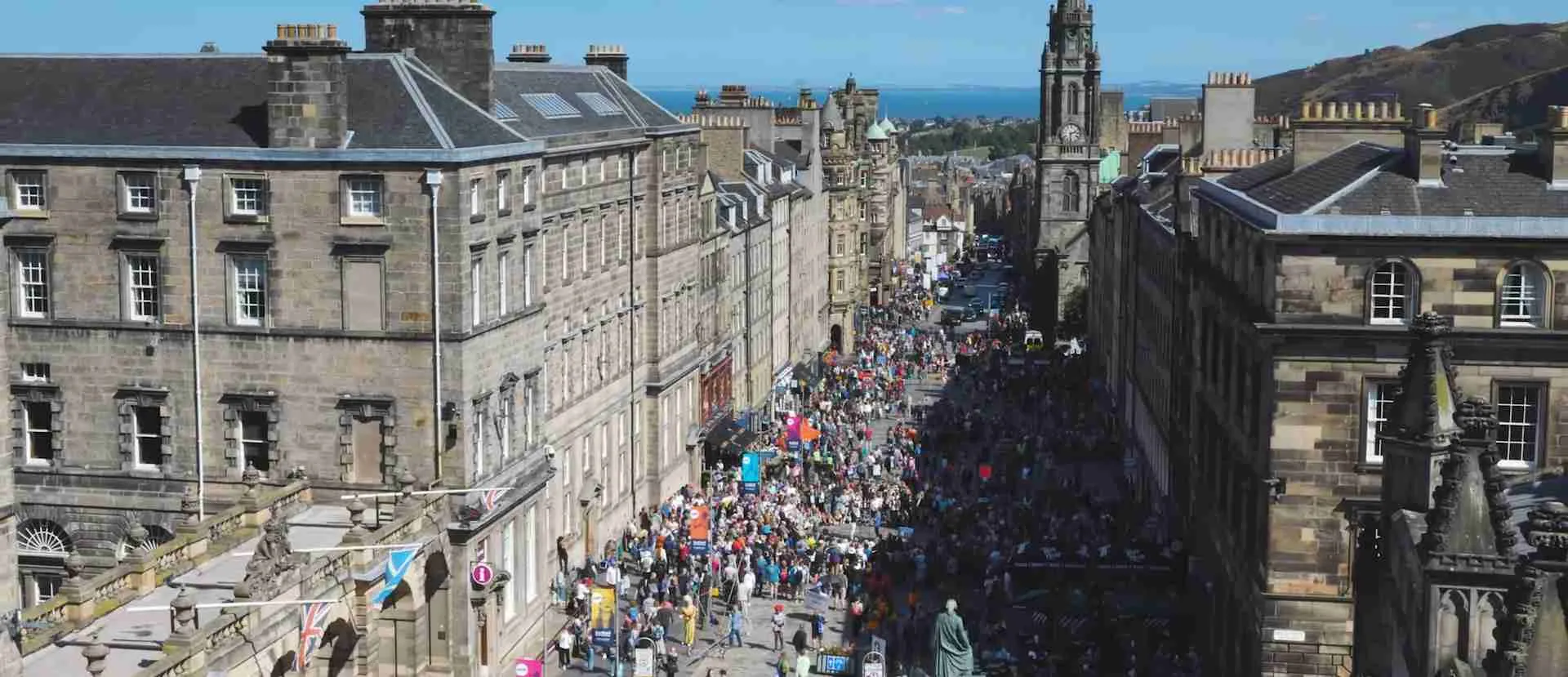
This festival convergence creates extraordinary opportunities but serious practical challenges. Accommodation costs peak at $300-450 per night for mid-range hotels, with popular properties selling out 6-8 months advance. The city center becomes exceptionally crowded, with Royal Mile foot traffic often gridlocked and popular restaurants requiring reservations weeks ahead. Street performers, festival promoters, and crowds create constant activity that some visitors find exhilarating while others experience as overwhelming.
Precipitation continues at 70-87mm monthly even during summer, with rain possible on roughly 18-21 days per month. The combination of crowds and wet weather can test patience at outdoor attractions like Edinburgh Castle, where queues extend regardless of conditions. Early morning visits (before 10:00) and evening sessions provide relative relief from peak crowds, while booking major attractions and popular restaurants well in advance proves essential for August visitors.
Autumn in Edinburgh 2026 (September-November)
Autumn emerges as Edinburgh’s most underrated season, combining pleasant September weather with spectacular fall colors and the dramatic crowd reduction after August’s festival exodus. September maintains summer-like temperatures of 9-16°C (48-61°F) while hotel rates drop 30-40% within days of the Fringe closing on August 31. The Royal Botanic Garden, Holyrood Park, and Dean Village display stunning autumn foliage from mid-September through October, creating exceptional photography conditions enhanced by softer autumn light.
Daylight decreases noticeably from 14 hours in early September to 8 hours by late November, but September and early October still provide ample sightseeing time with comfortable temperatures and generally stable weather. Precipitation increases toward autumn’s end, with October receiving 75-90mm across roughly 18 rainy days, making waterproof clothing essential. Wind intensifies during November as Atlantic storm systems increase in frequency and strength.
Cultural offerings continue beyond the summer festivals, with the Scottish International Storytelling Festival (October 21-31, 2026) presenting traditional and contemporary storytelling, music, and performance art during autumn’s atmospheric conditions. Theater season intensifies as Edinburgh’s year-round venues host touring productions and new works, while museums and galleries refresh exhibitions after summer’s festival-focused programming.
Autumn provides excellent value for visitors seeking Edinburgh’s essential attractions without summer’s overwhelming crowds. Edinburgh Castle, Holyrood Palace, and Royal Mile shops become genuinely accessible again, with minimal queuing and opportunity for unhurried exploration. Restaurant reservations become available with just days’ notice rather than weeks, and accommodation averages $220-300 per night in September, dropping to $200-260 in October and November.
November represents autumn’s challenging endpoint, with temperatures dropping to 3-10°C (37-50°F), daylight shrinking to 8-9 hours, and frequent rain accompanied by strengthening winds. Early November retains reasonable visiting conditions, but late November’s short dark days and deteriorating weather mark the transition into winter’s atmospheric but demanding period.
Winter in Edinburgh 2026-2027 (December-February)
Winter transforms Edinburgh into an atmospheric medieval cityscape, with short daylight hours creating extended twilight that enhances the Old Town’s architectural drama. Temperatures average 1-7°C (34-45°F), requiring warm layered clothing, though extreme cold rarely occurs with temperatures seldom dropping below -5°C (23°F) even during coldest snaps. Wind and humidity create conditions that feel significantly colder than thermometer readings, particularly on exposed sites like Calton Hill where wind chill intensifies perceived temperatures.
Daylight reaches its annual minimum in December with just 7-8 hours daily, creating 16-hour nights but also dramatic lighting conditions for photography. The city compensates with extensive Christmas lighting displays along Princes Street and George Street, while Edinburgh Castle’s floodlit ramparts create spectacular evening views. Snow remains relatively uncommon in the city center, with Edinburgh receiving roughly 9-12 snow days annually that typically produce light dustings rather than significant accumulation, though Arthur’s Seat and surrounding hills receive heavier snow.
Edinburgh’s Hogmanay (December 29, 2026-January 1, 2027) represents winter’s cultural highlight and one of the world’s premier New Year celebrations. The four-day festival opens with the Torchlight Procession (December 29) featuring 20,000 participants creating a “river of fire” through the Old Town. The Street Party (December 31) welcomes 45,000 revelers into Princes Street for the Midnight Moment fireworks display over Edinburgh Castle, while Concert in the Gardens presents headline performances in West Princes Street Gardens with Wet Leg headlining the 2025-2026 transition.
Hogmanay accommodation requires 6-12 months advance booking, with hotels charging $450-950 per night for premium properties like The Balmoral and Waldorf Astoria Caledonian, and mid-range options reaching $300-500. The Street Party alone requires ticket purchase at approximately $30-35, with concert tickets adding $75-125 for premium viewing positions. Despite costs, Hogmanay delivers unique cultural immersion, with the world’s largest rendition of “Auld Lang Syne” at midnight representing an unforgettable experience.
January and February offer Edinburgh’s lowest accommodation costs, with mid-range hotels averaging $180-280 per night and luxury properties discounting to $350-550 compared to summer’s $600-950 rates. Cultural offerings continue strong with theater season, museum exhibitions, and Edinburgh’s renowned pub culture providing indoor entertainment during short daylight hours. The combination of minimal crowds, significant savings, and atmospheric winter setting appeals to budget travelers and those seeking authentic local experience without tourist masses.
Month-by-Month Guide to Edinburgh 2026
January 2026: Winter Quiet and New Year Aftermath
January represents Edinburgh’s quietest tourism month, with accommodation averaging $180-260 per night as visitors depart after Hogmanay celebrations. Temperatures average 1-7°C (34-45°F) with frequent rain totaling 60-70mm across 14-15 rainy days, while daylight remains limited at 7-8 hours creating extended darkness. Museums, galleries, and indoor attractions operate on winter schedules with reduced hours but minimal crowds, allowing unhurried exploration of National Museum of Scotland, National Galleries, and Scottish National Portrait Gallery.
Edinburgh Castle, Holyrood Palace, and other major outdoor sites experience virtually no queues, creating ideal conditions for visitors prioritizing thorough historical exploration over weather comfort. The Royal Mile’s shops and restaurants operate normally with locals significantly outnumbering tourists, providing authentic glimpses of daily Edinburgh life. Pub culture thrives during winter months, with traditional establishments offering refuge from cold weather alongside hearty Scottish cuisine and extensive whisky selections.
January weather requires full winter clothing including insulated coat, waterproof outer layer, gloves, warm hat, and waterproof boots. Wind chill intensifies perceived cold, particularly on exposed sites, making indoor-focused itineraries more comfortable. The combination of short daylight and frequent rain creates atmospheric conditions that enhance Edinburgh’s medieval architecture and Gothic aesthetic, appealing to photographers seeking moody urban landscapes.
February 2026: Continued Winter Savings
February maintains January’s quiet atmosphere and similar accommodation costs of $180-270 per night, with temperatures averaging 1-7°C (34-45°F) and precipitation at 45-60mm across 12-13 rainy days. Daylight increases noticeably from 8 hours in early February to 10.5 hours by month’s end, providing expanding sightseeing windows. Hotels and attractions remain crowd-free, creating excellent touring conditions for cold-tolerant visitors seeking maximum value.
Valentine’s Day (February 14) brings limited special events and restaurant promotions without significantly impacting overall visitor numbers or accommodation costs. Winter theater season continues strong, with Edinburgh’s Playhouse, Festival Theatre, and Traverse Theatre hosting diverse productions. The Royal Botanic Garden maintains winter hours showcasing glasshouse collections including tropical palms and orchids that provide warm refuges from outdoor cold.
March 2026: Early Spring Transition
March marks winter’s gradual transition toward spring, with temperatures rising from 2°C (36°F) in early March to 9°C (48°F) by month’s end. Daylight increases dramatically from 10.5 to 13 hours, while precipitation drops to 40-55mm making March one of Edinburgh’s drier months. Early spring flowers begin emerging in Princes Street Gardens and the Meadows, though full blooming awaits April’s warmer temperatures.
Accommodation costs remain winter-level at $190-280 per night through mid-March, then begin gradual increases toward Easter and spring tourism season. Weather variability intensifies during March, with sunny spring days alternating with winter-like cold snaps and occasional snow showers. Layered clothing with waterproof outer shell remains essential, as March can deliver genuine spring warmth one day and near-freezing temperatures the next.
St. Patrick’s Day (March 17) brings increased activity to Edinburgh’s Irish pubs and some street festivities, though celebrations remain modest compared to Dublin or Glasgow. The month’s expanding daylight and emerging spring atmosphere create optimism after winter’s darkness, making late March increasingly attractive for visitors willing to accept weather uncertainty in exchange for lower costs and minimal crowds.
April 2026: Spring Blooms and Science Festival
April delivers Edinburgh’s spring transformation with temperatures of 5-12°C (41-54°F), extended daylight of 13-15.5 hours, and the city’s lowest annual precipitation at 40-66mm across just 14 rainy days. Cherry blossoms emerge in the Meadows during mid-to-late April, daffodils blanket Princes Street Gardens, and the Royal Botanic Garden showcases spring bulb collections. The combination of blooming gardens, increasing warmth, and dry weather creates Edinburgh’s most pleasant conditions for outdoor exploration and photography.
The Edinburgh Science Festival (April 4-19, 2026) transforms the city with over 250 hands-on events, workshops, and exhibitions exploring the 2026 theme “Going Global.” Venues across Edinburgh host interactive displays, scientific demonstrations, and discussions with leading researchers, creating family-oriented atmosphere without summer’s overwhelming crowds. The festival concentrates around Easter school holidays (exact dates vary), bringing increased visitor numbers but nothing approaching August levels.
Accommodation costs rise to $220-340 per night during the Science Festival period, particularly during Easter weekend when families dominate bookings. Pre-festival and post-festival weeks offer better value at $200-300 per night. The extended daylight allows full sightseeing days from morning through evening, with sunset occurring around 20:00 by late April providing golden-hour photography opportunities at Edinburgh Castle, Calton Hill, and Arthur’s Seat.
April weather remains variable despite being the driest month, with occasional cold snaps bringing temperatures back toward single digits. Waterproof layers remain necessary, though heavy winter clothing can generally be replaced with lighter spring jackets. The Royal Botanic Garden, Dean Village, and Water of Leith walkway showcase spring at its finest, offering peaceful alternatives to busier central attractions.
May 2026: Late Spring Peak Conditions
May represents Edinburgh’s weather sweet spot, combining temperatures of 8-15°C (46-59°F), extended daylight of 15.5-17 hours, and moderate precipitation of 50-70mm with the spring bloom’s continuation. Late May occasionally produces genuinely warm days reaching 20-25°C (68-77°F), though cooler conditions remain more typical. The Meadows, Princes Street Gardens, and Holyrood Park display peak spring colors, while Arthur’s Seat climbs become increasingly popular as warmer weather arrives.
Tourism increases noticeably during May, particularly around UK bank holiday weekends (early May and late May), when accommodation costs peak at $240-360 per night with advance booking essential. Mid-May weekdays offer relatively better value at $220-320 per night. Crowds remain manageable compared to summer, with Edinburgh Castle, Royal Mile, and Holyrood Palace accessible without excessive queuing though advance ticket booking becomes advisable.
May’s extended twilight creates exceptional evening atmosphere, with natural light persisting until nearly 22:00 by month’s end. This allows unhurried dinner experiences followed by evening walks through illuminated streets, or sunset photography sessions at Calton Hill and Carlton Hill viewpoints. Restaurant terraces and beer gardens open for the season, taking advantage of warmer temperatures and long daylight hours.
Weather remains changeable despite increasingly pleasant averages, requiring continued preparation for rain and temperature fluctuations. Lightweight waterproof jacket, comfortable walking shoes, and layered clothing provide necessary adaptability. May combines excellent weather, manageable crowds, blooming gardens, and extended daylight, making it arguably Edinburgh’s single best month for first-time visitors seeking optimal conditions across all factors.
June 2026: Early Summer Before Festival Season
June delivers summer temperatures of 11-18°C (52-64°F) with the year’s longest daylight reaching 17.5 hours at summer solstice (June 21), when twilight extends until nearly 23:00. Precipitation increases slightly to 60-75mm across 16-17 rainy days, but warm temperatures make occasional showers more tolerable than during cooler months. Gardens throughout Edinburgh reach peak bloom, while extended daylight encourages outdoor activities from morning through late evening.
Tourism intensifies during June as European and North American summer vacation season begins, with accommodation costs rising to $260-380 per night. Edinburgh Castle, Arthur’s Seat, and Royal Mile experience growing crowds, though nothing approaching August’s density. Major attractions benefit from extended summer hours, with Edinburgh Castle remaining open until 18:00 and some venues offering special evening access taking advantage of late sunset.
June represents the calm before August’s festival storm, offering excellent weather and full summer daylight without overwhelming visitor numbers. Restaurants, pubs, and cafes operate at summer capacity with terrace seating fully available, while cultural venues present regular programming before August’s festival season begins. The combination of longest daylight, warm temperatures, and pre-festival atmosphere makes June attractive for visitors seeking summer conditions without extreme crowds or costs.
July 2026: Festival Season Begins
July maintains June’s temperatures at 11-19°C (52-66°F) with slightly decreasing daylight dropping from 17.5 to 16 hours through the month. Precipitation averages 70mm across 18 rainy days, requiring continued rain preparation despite summer season. July marks Edinburgh’s cultural calendar acceleration, with the Edinburgh Jazz & Blues Festival (July 17-26, 2026) presenting over 170 performances across ten days at venues from intimate jazz clubs to grand concert halls.
The Jazz Festival’s Mardi Gras in the Grassmarket and free outdoor concerts create festive atmosphere without August’s overwhelming scale, while international jazz and blues artists perform alongside Scottish contemporary musicians. Accommodation costs during festival dates reach $280-400 per night, particularly during festival weekends, though pre-festival and post-festival periods remain at June’s $260-380 range.
Late July sees preparations intensify for August festivals, with Royal Mile street performers arriving, temporary venues constructing throughout the city center, and festival anticipation building. Tourism continues increasing toward summer peak, making advance booking for restaurants and popular attractions increasingly important. Weather remains pleasant though variable, with warm sunny days alternating with cooler rainy periods typical of Edinburgh’s oceanic climate.
August 2026: Peak Festival Season
August represents Edinburgh’s absolute zenith, hosting six simultaneous world-class festivals that transform the city into the planet’s premier cultural destination. The Edinburgh Festival Fringe (August 7-31) dominates with over 3,300 shows anticipated in 2026, spanning comedy, theater, dance, circus, cabaret, music, and spoken word across 260-300 venues from established theaters to pop-up spaces. Street performers blanket the Royal Mile, flyer distributors promote shows continuously, and cultural energy saturates every corner of the city center.
The Edinburgh International Festival (August 7-30) presents curated programming featuring world-leading opera, classical music, ballet, and theater companies. The 2026 theme “All Rise” celebrates American Independence’s 250th anniversary with performances by Berliner Philharmoniker, Los Angeles Philharmonic, Zurich Opera House performing Verdi’s “A Masked Ball,” and San Francisco Ballet with Floating Points and Royal Scottish National Orchestra. Opening concert “All Rise” combines African chant, Gospel, New Orleans parade music, and Latin American styles with 200 performers.
The Royal Edinburgh Military Tattoo (August 7-29) stages nightly performances on Edinburgh Castle Esplanade with military bands, precision drill teams, Highland dancers, and international participants performing the 2026 theme “A Call to Gather” with Royal Air Force as lead service. Shows include massed pipes and drums, spectacular lighting projections on the Castle, and fireworks finales (particularly extensive on Friday and Saturday performances). Tickets range from $95-145 for standard seating to $450-1,150 for Royal Gallery hospitality packages.
Edinburgh Art Festival (August 14-30) presents exhibitions across the city’s leading galleries and museums featuring over 200 artists, while Edinburgh International Book Festival (August 15-30) hosts 500+ events with authors, writers, and thinkers from 40+ countries. Edinburgh International Film Festival (August 13-19) screens international cinema from short films to feature productions, creating comprehensive cultural coverage across all artistic disciplines.
August accommodation represents Edinburgh’s ultimate challenge and expense, with mid-range hotels reaching $300-450 per night and luxury properties at $600-950. Popular accommodations sell out 6-8 months in advance, particularly for festival weekends. Alternative accommodation in Edinburgh suburbs, Leith, or even neighboring cities like Glasgow (45 minutes by train) becomes necessary for late bookers. Advance booking 8-12 months ahead provides best selection and rates, though still expect significant premiums over other months.
Weather during August averages 12-19°C (54-66°F) with approximately 70-87mm precipitation across 19-21 rainy days, meaning outdoor festival activities and queue experiences at major attractions occur in all conditions. The combination of crowds, rain, and queuing tests patience, making early morning visits (before 10:00) to Edinburgh Castle and other major sites essential. Festival show tickets range from free street performances to $75-145 for major productions, with popular shows selling out weeks in advance.
August delivers unmatched cultural intensity and unique festival atmosphere worth experiencing once, but the combination of overwhelming crowds, extreme costs, constant stimulation, and practical challenges makes it unsuitable for visitors seeking relaxed sightseeing or budget travel. Those attending should embrace the chaos as part of the experience, book everything possible in advance, and accept that spontaneity becomes limited when 4.5 million festival visitors converge on a city of 500,000 residents.
September 2026: Post-Festival Autumn Excellence
September emerges as Edinburgh’s secret weapon, combining excellent weather with dramatic crowd reduction and significant cost savings immediately after August’s festival season concludes. Temperatures remain summer-like at 9-16°C (48-61°F) through most of September, while accommodation costs plummet 30-40% within days of the Fringe closing on August 31. Mid-range hotels drop from August’s $300-450 to September’s $220-300 per night, with availability improving dramatically.
Edinburgh transforms from festival frenzy back to manageable city, with Royal Mile returning to normal pedestrian flow, restaurants accepting walk-in diners, and Edinburgh Castle queues disappearing. The combination of pleasant weather, autumn colors emerging in parks and gardens, and absence of crowds creates Edinburgh’s most balanced visitor experience. Early September particularly shines, maintaining summer warmth while delivering autumn tranquility.
Precipitation averages 70mm across 16-17 rainy days, similar to summer levels, while daylight decreases from 14 hours in early September to 11.5 hours by month’s end. The Royal Botanic Garden, Holyrood Park, and Dean Village display early autumn foliage, with golden colors intensifying through the month. September sunset occurring around 19:30 in early month and 18:00 by late September still allows evening sightseeing and photography.
Cultural offerings continue beyond festivals, with Edinburgh’s year-round theaters presenting new seasons, museums refreshing exhibitions, and restaurants operating at full capacity without August’s overwhelming demand. September provides arguably Edinburgh’s best overall value proposition, offering summer weather quality at shoulder season prices with manageable crowds and full operational capacity.
October 2026: Peak Autumn Colors and Storytelling Festival
October showcases Edinburgh’s autumn splendor, with temperatures of 6-13°C (43-55°F) and spectacular fall foliage throughout the Royal Botanic Garden, Holyrood Park, Princes Street Gardens, and Dean Village. Precipitation increases to the year’s highest at 75-90mm across 18 rainy days, making waterproof clothing essential, while daylight shrinks from 11.5 to 9 hours creating noticeably shorter days.
The Scottish International Storytelling Festival (October 21-31, 2026) presents traditional and contemporary storytelling, music, and performance art during autumn’s atmospheric conditions, creating intimate cultural experiences in venues from historic churches to contemporary theaters. Accommodation costs remain moderate at $200-280 per night, with crowd levels well below summer peaks allowing comfortable exploration of major attractions.
October weather becomes increasingly variable, with warm Indian summer days reaching 15-18°C (59-64°F) alternating with cold rainy periods below 10°C (50°F). The combination of autumn colors, atmospheric lighting, and medieval architecture creates exceptional photography conditions, particularly during late afternoon golden hour around 16:00-17:00. Halloween (October 31) brings themed events, ghost tours intensify in frequency, and Edinburgh’s Gothic architecture enhances spooky atmosphere.
Wind increases during October as Atlantic storm systems gain strength, making exposed locations like Calton Hill and Arthur’s Seat summit noticeably colder than city center. Layered clothing with windproof and waterproof outer layers becomes essential. October appeals to visitors prioritizing autumn aesthetics, cultural events, and value over guaranteed weather, with significant savings compared to summer balanced against shortened daylight and increased precipitation.
November 2026: Late Autumn Transition to Winter
November marks autumn’s deterioration toward winter, with temperatures dropping to 3-10°C (37-50°F), daylight shrinking to 8-9 hours, and precipitation averaging 65-75mm across 15-16 rainy days. Wind intensifies as Atlantic storms increase in frequency, creating conditions that feel significantly colder than thermometer readings. Late autumn foliage persists through early November, but by mid-month most deciduous trees have shed leaves and winter atmosphere dominates.
Accommodation costs drop to winter levels at $200-260 per night, with minimal tourism creating quiet conditions at all attractions. Edinburgh Castle, Holyrood Palace, and museums operate on winter schedules with reduced hours but virtually no crowds. The combination of short dark days, cold temperatures, and frequent rain makes November Edinburgh’s least attractive month for most visitors, though budget travelers and those seeking authentic local experience find value.
St. Andrew’s Day (November 30) celebrates Scotland’s patron saint with limited events and some restaurant specials, but festivities remain modest compared to summer festivals or Hogmanay. November’s atmospheric conditions enhance Edinburgh’s medieval architecture and Gothic aesthetic, creating moody urban landscapes that appeal to photographers seeking dramatic lighting and weather effects. Pub culture provides welcome refuge from outdoor conditions, with traditional establishments offering hearty food and extensive whisky selections.
December 2026: Christmas Markets and Hogmanay Preparation
December transforms Edinburgh with Christmas markets, festive lighting displays, and building anticipation toward Hogmanay celebrations. Temperatures average 1-7°C (34-45°F) with daylight at the year’s minimum of 7-8 hours, creating extended darkness balanced by extensive Christmas illuminations along Princes Street and George Street. Edinburgh’s Christmas market in Princes Street Gardens operates throughout December, featuring European-style wooden chalets selling crafts, food, and seasonal goods, with ice skating rink, Ferris wheel, and festive attractions.
Accommodation costs remain moderate at $220-300 per night through mid-December, then spike dramatically for Hogmanay week (December 27-January 2) when rates reach $450-950 per night for properties near festival events. Early December visitors enjoy Christmas atmosphere and decorations without Hogmanay’s extreme costs and crowds, making the first three weeks attractive for winter atmosphere seekers.
Edinburgh’s Hogmanay (December 29, 2026-January 1, 2027) preparations intensify through late December, with security barriers installing around Princes Street and festival infrastructure appearing throughout the city center. The Torchlight Procession (December 29) begins the four-day celebration, followed by December 30 events including ceilidh dancing at multiple venues. New Year’s Eve (December 31) features the massive Street Party requiring ticket purchase at approximately $30-35, plus Concert in the Gardens with headline performances requiring separate tickets at $75-125.
December weather requires full winter clothing including insulated coat, waterproof layers, gloves, warm hat covering ears, and waterproof boots. Wind chill intensifies cold, particularly during evening hours when temperatures drop toward freezing. Edinburgh Castle’s floodlit ramparts create spectacular evening views, while Christmas markets and pub culture provide indoor refuge from outdoor conditions. December appeals to visitors seeking festive atmosphere, winter aesthetics, or Hogmanay celebrations willing to accept short daylight and cold temperatures.
Edinburgh Weather Patterns 2026: Detailed Analysis
Temperature Variations and Comfort Levels Throughout 2026
Edinburgh’s oceanic climate produces modest temperature ranges with July’s 15°C (59°F) average representing the annual peak and January’s 3°C (37°F) marking the low point. This 12-degree Celsius variation means the city never experiences extreme heat or severe cold, but persistent wind and humidity create perceived temperatures notably lower than thermometer readings. Summer rarely exceeds 25°C (77°F), with temperatures above 30°C (86°F) occurring only during exceptional heat waves that last just days rather than weeks.
Winter cold remains moderate by northern European standards, with temperatures seldom dropping below -5°C (23°F) even during coldest periods. Snow falls on approximately 9-12 days annually but typically produces light dustings rather than significant accumulation, with Arthur’s Seat and surrounding hills receiving heavier snow than the city center. The combination of wind exposure and humidity creates damp cold that penetrates clothing more effectively than dry continental cold, making proper layering essential.
Spring and autumn demonstrate the most dramatic temperature fluctuations, with March and October capable of delivering 20-degree temperature swings within single weeks. March can produce genuine spring warmth of 15°C (59°F) one day followed by near-freezing temperatures and snow showers the next, requiring adaptable clothing strategies. October similarly oscillates between Indian summer conditions reaching 18°C (64°F) and cold rainy periods below 10°C (50°F).
Edinburgh’s elevation changes intensify temperature variations within the city, with Arthur’s Seat summit experiencing conditions 3-5 degrees Celsius cooler than Princes Street due to 250-meter elevation gain and wind exposure. Calton Hill, Carlton Hill, and other viewpoints similarly feel noticeably colder than sheltered city center locations, making additional layers advisable for hilltop visits even during apparently mild weather.
Precipitation Patterns and Rain Preparation Strategies
Edinburgh receives 730-950mm annual precipitation (sources vary based on measurement locations and timeframes), with rainfall distributed relatively evenly across all months. October represents the wettest period at 75-90mm across 18 rainy days, while April marks the driest interval at 40-66mm across 14 rainy days. This moderate variation means visitors require rain preparation regardless of travel dates, as no true dry season exists.
Edinburgh’s oceanic position subjects the city to frequent Atlantic weather systems that produce persistent drizzle and passing showers rather than prolonged heavy rainfall. Typical rain events last 30 minutes to several hours before clearing, creating the characteristic “four seasons in one day” pattern as weather systems move rapidly across Scotland. Heavy downpours occur but remain less common than gentle persistent precipitation.
Rain preparation requires waterproof outer layers rather than umbrellas as primary defense, as Edinburgh’s frequent wind renders umbrellas ineffective and occasionally dangerous on exposed locations. Quality waterproof jacket with hood, waterproof trousers for extended outdoor activities, and waterproof footwear with good grip on wet cobblestones provide necessary protection. Many attractions including Edinburgh Castle, Holyrood Palace, and Arthur’s Seat involve outdoor walking where umbrellas prove impractical.
Indoor alternatives exist throughout Edinburgh for rainy days, with National Museum of Scotland offering free admission and comprehensive collections spanning Scottish history, science, technology, and world cultures. National Galleries of Scotland (National Gallery, Scottish National Portrait Gallery, Scottish National Gallery of Modern Art) provide extensive art collections with free general admission. The Royal Yacht Britannia in Leith, Dynamic Earth, and various whisky experience venues offer sheltered activities when outdoor sightseeing becomes uncomfortable.
Daylight Hours and Golden Hour Photography Opportunities 2026
Edinburgh’s northern latitude creates extreme daylight variations, with summer solstice (June 21) providing approximately 17.5 hours of daylight when twilight extends until nearly 23:00, while winter solstice (December 21) delivers just 7 hours with darkness dominating from 16:00 to 09:00. This dramatic range fundamentally shapes sightseeing possibilities, with summer allowing extended exploration while winter requires efficient daylight use.
Spring and autumn demonstrate the most rapid daylight changes, with March gaining roughly 3 minutes daily as spring advances, while September loses similar amounts heading toward winter. May and June provide extended golden hours from 20:00-21:30 when low-angle sunlight enhances Edinburgh’s sandstone architecture, creating exceptional photography conditions at Edinburgh Castle, Calton Hill, and Dean Village.
Winter’s short daylight creates atmospheric photography opportunities despite practical limitations, with low sun angles throughout short days producing dramatic shadows and warm lighting on Edinburgh’s medieval buildings. Edinburgh Castle illuminated against twilight sky from 16:00 onward creates spectacular evening photography, while Christmas lights and festive decorations enhance winter evening scenes.
Arthur’s Seat sunrise represents a popular photography target during summer months when 05:00-06:00 sunrise makes early morning climbs feasible, offering 360-degree views across Edinburgh with morning light illuminating the city. Winter sunrise occurs around 08:30-09:00, making morning photography more accessible though weather conditions remain less predictable than summer months.
Festival Planning Guide 2026: Maximizing Edinburgh’s Cultural Calendar
Edinburgh Festival Fringe 2026 (August 7-31): Navigating the World’s Largest Arts Festival
The Edinburgh Festival Fringe transforms the city with over 3,300 shows anticipated in 2026 across 260-300 venues, from established theaters to pop-up spaces in bars, churches, buses, and shipping containers. The Fringe operates on an open-access model where any performer with a venue can participate without selection committee approval, creating extraordinary diversity from unknown artists building careers to established performers testing new material. Show reveal dates occur in batches (February 11, April 1, May 6) with full program launch June 4, 2026.
Fringe navigation requires strategic planning as comprehensive coverage proves impossible, with visitors typically attending 5-15 shows during week-long stays. The festival program categorizes shows into theatre, comedy, dance, physical theatre, circus, cabaret, children’s shows, musicals, opera, music, spoken word, exhibitions, and events, with comedy representing over one-third of programming and highest public profile thanks to Edinburgh Comedy Awards. Free street performances on Royal Mile provide constant entertainment without ticket costs.
Ticket prices range from free shows to $30-45 for established venues, with most productions charging $15-25 for hour-long performances. Popular shows sell out weeks in advance, making early booking advisable for specific targets, though last-minute half-price tickets become available through various discount schemes. The “one-hour show” format dominates Fringe programming, allowing visitors to attend multiple performances daily without exhaustion.
Accommodation during Fringe requires booking 6-12 months advance, with August rates reaching $300-450 per night for mid-range hotels and budget options selling out entirely. Alternative strategies include staying in Leith (2-3km from city center with tram access), Edinburgh suburbs with bus connections, or Glasgow (45 minutes by train) with day trips to Edinburgh. Booking early August (first 10 days) provides slightly better availability than late August though crowds and prices remain elevated throughout festival period.
Edinburgh International Festival 2026 (August 7-30): Curated Excellence
The Edinburgh International Festival presents curated world-class opera, classical music, ballet, and theater compared to the Fringe’s open-access model, with the 2026 theme “All Rise” celebrating American Independence’s 250th anniversary. Highlights include Berliner Philharmoniker and Los Angeles Philharmonic concerts, Zurich Opera House staging Verdi’s “A Masked Ball,” San Francisco Ballet performing with Floating Points and Royal Scottish National Orchestra, and theatre-maker Christiane Jatahy with Wagner Moura (Netflix’s Narcos).
Opening concert “All Rise” features 200 performers combining African chant, Gospel, New Orleans parade music, and Latin American styles, setting the festival’s celebratory tone. International Festival venues include Usher Hall for orchestral concerts, Festival Theatre for opera and ballet, Royal Lyceum Theatre for drama, and various other established Edinburgh theaters and concert halls. Ticket prices range from $40-75 for standard seating to $125-180 for premium positions.
International Festival programming emphasizes artistic excellence and cultural significance over commercial appeal, attracting audiences seeking highest-quality classical arts experiences. Advanced booking becomes essential for headline performances, with popular concerts and opera productions selling out months ahead. The festival’s concentrated August 7-30 dates coincide with Fringe, Tattoo, and other festivals, creating comprehensive cultural saturation.
Royal Edinburgh Military Tattoo 2026 (August 7-29): Spectacular Military Performance
The Royal Edinburgh Military Tattoo stages nightly performances (except Sundays) on Edinburgh Castle Esplanade with over 220,000 live attendees annually and 100 million television viewers globally. The 2026 show “A Call to Gather” features Royal Air Force as lead service with military bands, precision drill teams, Highland dancers, massed pipes and drums, and international participants performing traditional Scottish clan gathering theme emphasizing unity and cultural connection.
Performances run approximately 90 minutes with spectacular lighting projections on Edinburgh Castle, pyrotechnic effects throughout, and fireworks finale (particularly extensive Friday and Saturday shows). The iconic lone piper performing from castle ramparts and massed pipes and drums marching down the High Street conclude each evening. Shows begin around 21:00 (9:00 PM) in early August, moving to 20:30 later in month as daylight decreases.
Ticket prices range from $95-145 for standard seating on either side of the arena to $450-1,150 for Royal Gallery hospitality packages including premium seating directly opposite the castle, elevated viewing, and dining or whisky tasting experiences. Standard seating provides excellent views given the rectangular stage layout, with east-side seats (facing castle) commanding premium due to iconic backdrop. Booking 6-12 months advance essential for preferred dates and seating positions.
Weather protection proves critical as performances proceed regardless of conditions, with rain occurring frequently during Edinburgh’s August. Waterproof clothing, warm layers, and weatherproof seating cushions enhance comfort during 90-minute outdoor exposure. Early August dates risk cooler evening temperatures around 12-14°C (54-57°F), while late August can feel notably colder as nights lengthen.
Edinburgh Jazz & Blues Festival 2026 (July 17-26): Pre-August Cultural Alternative
Edinburgh Jazz & Blues Festival presents 170+ performances across ten days at venues from intimate jazz clubs like The Jazz Bar on Chambers Street to grand concert halls including Usher Hall and Festival Theatre. The 2026 festival features SPARK: Jazz from the Netherlands as flagship international showcase celebrating Dutch jazz creativity and innovation, alongside diverse programming spanning traditional jazz, contemporary fusion, blues, funk, and hip-hop.
Free outdoor events anchor the festival, with Mardi Gras in the Grassmarket bringing New Orleans-style brass band celebration and multiple performance stages, while street performances throughout the city center create festival atmosphere without ticket costs. Major evening concerts feature international jazz legends and rising stars, with ticket prices ranging from free street shows to $40-85 for headline performances at premier venues.
The Jazz Festival operates before August’s overwhelming crowds arrive, creating excellent balance of cultural programming and manageable tourism density. Accommodation during July 17-26 reaches $280-400 per night during festival weekend dates but remains below August’s $300-450 range. The festival’s ten-day concentration allows experiencing significant programming within single visit while exploring Edinburgh’s standard attractions during daytime hours.
Edinburgh Science Festival 2026 (April 4-19): Family-Oriented Spring Highlight
Edinburgh Science Festival presents over 250 hands-on events, workshops, exhibitions, and discussions exploring the 2026 theme “Going Global,” showcasing research and innovation addressing shared global challenges through international partnerships. The festival concentrates around Easter school holidays, creating family-oriented atmosphere with interactive displays at venues including National Museum of Scotland, Dynamic Earth, City Art Centre, and locations throughout Edinburgh.
Programming spans all ages with children’s workshops exploring space, robotics, dinosaurs, human body, and environmental science through hands-on activities, while adult evening events feature scientific debates, tastings, and discussions with leading researchers. Approximately one-third of programming offers free admission, making the festival accessible to diverse audiences. Headline events for 2026 include presentations by first British astronaut Helen Sharman and wildlife cameraman Hamza Yassin.
Accommodation during Science Festival period averages $220-340 per night, particularly during Easter weekend when family bookings peak, with pre-festival and post-festival weeks offering better value at $200-300 per night. The festival’s two-week span allows experiencing significant programming without dedicating entire visit exclusively to festival events, as April’s spring bloom and improving weather create excellent general touring conditions.
Edinburgh’s Hogmanay 2026-2027 (December 29-January 1): World-Class New Year Celebration
Edinburgh’s Hogmanay ranks among the world’s premier New Year celebrations, with four-day festival attracting 150,000 participants to Scotland’s capital. The celebration opens December 29 with the Torchlight Procession featuring 20,000 torchbearers creating “river of fire” through Old Town streets, followed by December 30 ceilidh dancing events at multiple venues including Assembly Rooms’ two-dancefloor celebration with live music and guided dances suitable for beginners and experienced participants.
New Year’s Eve (December 31) centers on the Street Party welcoming 45,000 ticketed revelers into Princes Street for midnight countdown, fireworks display over Edinburgh Castle, and world’s largest rendition of “Auld Lang Syne” as crowds join hands at midnight. Concert in the Gardens presents headline performances at Ross Bandstand in West Princes Street Gardens, with 2025-2026 transition featuring Wet Leg accompanied by Hamish Hawk and Lucia & The Best Boys. Street Party tickets cost approximately $30-35, with concert requiring separate tickets at $75-125 for premium viewing.
New Year’s Day (January 1) continues celebrations with First Footin’ culture trail featuring artists performing in landmark buildings, pubs, cafes, and venues throughout city center, plus Sprogmanay afternoon programming for children and traditional Family Ceilidh. The Loony Dook at South Queensferry sees thousands taking bracing dip in Firth of Forth as traditional New Year purification ritual.
Hogmanay accommodation requires 6-12 months advance booking, with mid-range hotels reaching $300-500 per night and luxury properties charging $450-950 for properties near event areas. Alternative accommodation in Edinburgh suburbs or neighboring cities becomes necessary for late bookers. Public transport operates 24-hour service on Hogmanay with free night trams after midnight, though city center road closures are extensive requiring pedestrian navigation.
Crowd Management and Accommodation Strategies 2026
Peak Season Booking Timeline and Advance Planning Requirements
Edinburgh’s August festival season requires longest advance planning, with optimal booking occurring 8-12 months ahead for best accommodation selection and rates. Fringe show announcements begin February 11, 2026, with batches April 1 and May 6 before full program launch June 4, creating early decision pressure for visitors coordinating accommodation with specific performances. Royal Edinburgh Military Tattoo tickets go on sale approximately 8-10 months advance, with preferred dates and seating positions selling out within weeks.
Hogmanay accommodation similarly demands 6-12 months advance booking, with New Year’s Eve representing Edinburgh’s single most expensive night when mid-range hotels charge $300-500 and luxury properties reach $450-950 per night. Street Party and Concert in the Gardens ticket sales typically open 3-4 months advance, though accommodation must be secured earlier given limited inventory during Scotland’s most popular celebration.
Shoulder season visits (April-May, September-October) allow shorter booking windows of 2-4 months while maintaining reasonable selection, with September immediately post-Fringe offering best last-minute availability as August visitors depart and autumn tourism remains modest. Winter months (November-February excluding Hogmanay) permit booking 1-2 months advance or occasionally walk-up availability, though advanced reservation still advisable for preferred properties and dates.
Alternative Accommodation Areas and Transportation Connections
Edinburgh’s compact city center concentrates accommodation demand, with Old Town and New Town commanding premium rates due to walking proximity to major attractions. Alternative areas providing excellent value include Leith (Edinburgh’s port district 3km northeast), accessible via frequent trams connecting to city center in 15-20 minutes with service operating 05:00-00:30 daily. Leith offers waterfront dining, Ocean Terminal shopping, Royal Yacht Britannia, and mid-range hotels at 20-30% discounts compared to city center equivalents.
Stockbridge and Dean Village neighborhoods northwest of New Town provide boutique guesthouses and small hotels in residential settings with 20-30 minute walks or short bus rides to Princes Street. These areas offer authentic Edinburgh residential experience without tourist crowds, though limited dining and entertainment options compared to city center. The Royal Botanic Garden and Water of Leith walkway provide peaceful alternatives to busy central attractions.
Edinburgh suburbs including Bruntsfield, Morningside, and Marchmont south of city center offer primarily guesthouse and vacation rental accommodation with excellent bus connections reaching Princes Street in 15-25 minutes. These residential areas provide glimpses of Edinburgh daily life with local shops, cafes, and pubs frequented by residents rather than tourists. Accommodation costs typically run 25-40% below city center equivalents.
Glasgow represents extreme alternative for August visitors finding Edinburgh completely booked, with frequent trains operating 15-minute intervals during peak hours covering the 75km distance in 45-60 minutes. This strategy requires accepting daily commute and evening return constraints but provides access to Edinburgh’s festivals when accommodation proves otherwise unavailable. Glasgow offers own cultural attractions, dining, and nightlife making it viable base rather than mere overflow option.
Daily Scheduling Strategies for Managing August Crowds
August crowd management requires strategic timing, with Edinburgh Castle best visited immediately at opening (09:30) before tour groups arrive around 10:30-11:00. Early morning visits allow unhurried exploration of Crown Jewels, National War Museum, and castle grounds before crowds overwhelm Royal Mile approaches and castle esplanade. Advance ticket booking online eliminates queuing for entrance, though security screening still requires 10-15 minutes during peak periods.
Lunch timing influences restaurant availability, with 12:00-13:00 representing peak demand when advance reservations become essential for popular establishments. Dining at 11:30 or 14:00-14:30 provides walk-in opportunities at venues otherwise fully booked, while evening reservations require 1-3 weeks advance notice during August compared to same-day or next-day availability during quieter months.
Arthur’s Seat climbs benefit from early morning or late afternoon timing, with midday seeing peak traffic particularly during August’s favorable weather periods. Sunrise climbs during summer (05:00-06:00 summit arrival) reward early risers with solitude and spectacular city views, while evening climbs 2-3 hours before sunset offer excellent lighting with fewer climbers than midday. The main Piper’s Walk route remains manageable year-round, though August weekends see continuous traffic.
Festival show scheduling typically concentrates 10:00-23:00 daily, with most performances running 60 minutes allowing multiple shows daily without exhaustion. Strategic scheduling intersperses high-energy comedy or physical theater with quieter dramatic performances, while building afternoon breaks for dining and rest prevents festival fatigue. Many visitors adopt “two shows morning, lunch break, two shows afternoon, dinner, one evening show” rhythm maximizing festival exposure while maintaining sustainability.
Budget Planning and Cost Management 2026
Seasonal Accommodation Cost Variations and Booking Strategies
Edinburgh accommodation costs fluctuate dramatically across seasons, with August representing absolute peak when mid-range hotels charge $300-450 per night compared to January-February’s $180-280 for equivalent properties. This 40-60% seasonal variation creates substantial trip cost differences, with week-long August visit requiring $2,100-3,150 accommodation budget versus $1,260-1,960 for identical January stay assuming two people sharing.
May and September offer optimal value-quality balance, with mid-range hotels averaging $220-340 per night during pleasant weather while avoiding August’s extreme premiums. June and July represent transitional pricing at $260-400 per night as summer tourism builds toward August peak. October-November autumn pricing drops to $200-280 per night, while March-April spring rates average $200-320 reflecting improving weather and Science Festival period.
Advance booking provides 15-25% savings compared to last-minute rates during all seasons except winter (November-February excluding Hogmanay), when walk-up rates occasionally match or undercut advance prices as hotels compete for limited demand. Booking 3-6 months ahead for shoulder seasons (April-May, September-October) and 8-12 months for peak periods (August, Hogmanay) optimizes selection and rates.
Alternative accommodation including vacation rentals, hostels, and guesthouses follow similar seasonal patterns with proportionally scaled pricing. Hostels range from $40-70 per bed in dormitories during August to $25-45 during winter months, while vacation rentals command $150-280 per night during peak season versus $90-160 off-peak for one-bedroom properties. Budget strategies emphasizing vacation rentals with kitchen facilities allow meal preparation reducing overall trip costs.
Attraction and Activity Cost Planning Across Seasons
Major Edinburgh attractions maintain consistent pricing year-round, with Edinburgh Castle charging $24 for adults, Holyrood Palace at $21, and Royal Yacht Britannia at $20 as of 2026 rates (verify current pricing on official websites). Combined Edinburgh attractions passes provide value for visitors planning multiple site visits, with typical three-day passes including Edinburgh Castle, Holyrood Palace, and bus tours costing approximately $75-95 representing 20-30% savings versus individual admissions.
Festival season adds substantial entertainment costs during August, with Fringe show tickets averaging $15-25 per performance, International Festival concerts at $40-75, and Royal Military Tattoo seats from $95-145. Week-long festival attendance easily adds $300-500 per person for 10-15 shows plus dining and incidental costs. Budget-conscious festival visitors can reduce costs through free street performances, half-price ticket schemes, and strategic show selection prioritizing unknown performers over established names.
Walking tours represent excellent value year-round, with free walking tours operating on tip-only basis typically receiving $10-20 per person, while paid specialized tours (ghost tours, whisky tours, Harry Potter tours) cost $20-35 for 90-120 minute experiences. Self-guided walking using downloadable maps and apps provides zero-cost alternative for independent travelers comfortable navigating without guide commentary.
Dining costs remain relatively stable across seasons, with Edinburgh restaurant pricing unaffected by tourist seasons beyond reservation availability. Casual dining averages $18-30 per person for lunch and $30-50 for dinner at mid-range establishments, while fine dining reaches $65-125 per person before wine. Supermarket meal preparation reduces costs to $12-20 per person daily for budget-conscious travelers, while pub meals provide middle ground at $15-25 per person for substantial portions.
Transportation and Getting Around Edinburgh 2026
Public transportation provides excellent Edinburgh coverage through Lothian Buses and Edinburgh Trams, with single bus fares at $2 and tram journeys $2-4 depending on distance. Day passes at $5 allow unlimited bus travel, while combined bus-tram passes cost $10 for all-day access making them cost-effective for visitors planning 3+ journeys daily. Edinburgh’s compact city center makes walking primary transportation for most visitors, with Princes Street to Edinburgh Castle requiring just 15-20 minutes on foot.
Taxi and rideshare services operate throughout Edinburgh, with typical city center journeys costing $10-18 and Edinburgh Airport transfers averaging $30-40 for 20-minute rides to central hotels. Rideshare apps including Uber function normally, though traditional black cabs remain popular and accept card payment. During August festivals and Hogmanay, surge pricing and limited availability require advance booking or significant wait times.
Edinburgh Airport (EDI) connects to city center via tram service operating every 7-10 minutes during peak hours with 30-35 minute journey time to Princes Street at $8 single or $10 return fare. Airport buses provide alternative at $6-8 single fare with similar journey times. Car rental proves unnecessary for Edinburgh-only visits given excellent public transport and compact walkable geography, though useful for exploring Scottish Highlands, Loch Lomond, or other regional destinations.
Recommendations for Different Traveler Types 2026
First-Time Visitors: Essential Edinburgh Experience
First-time Edinburgh visitors benefit most from May or September visits combining excellent weather, manageable crowds, reasonable costs, and full attraction access. These months provide optimal introduction to Edinburgh’s medieval Old Town, Georgian New Town, Edinburgh Castle, Holyrood Palace, and cultural attractions without August’s overwhelming festival chaos or winter’s limited daylight. Four to five days allows comprehensive coverage of essential attractions plus day trip to Scottish Highlands or Loch Lomond.
Recommended first-visit itinerary includes Edinburgh Castle (half day), Royal Mile exploration with St Giles’ Cathedral and Real Mary King’s Close (full day), Holyrood Palace and Arthur’s Seat climb (full day), New Town architecture with National Galleries and Princes Street Gardens (half day), and Royal Yacht Britannia with Leith waterfront (half day). This schedule covers Edinburgh’s defining attractions while allowing flexibility for weather and personal interests.
First-timers should prioritize central accommodation in Old Town or New Town despite higher costs, as walking proximity to major attractions maximizes limited time and creates immersive experience in Edinburgh’s historic core. Advance booking for Edinburgh Castle, Holyrood Palace, and any specific restaurants ensures access without excessive queuing or disappointment.
Festival Enthusiasts: Maximizing Cultural Experiences
Festival-focused visitors should target August for maximum cultural density, accepting premium costs and crowds as necessary trade-offs for experiencing world’s largest arts festival. Optimal strategy combines August 10-18 dates capturing Fringe peak energy while accessing International Festival, Art Festival, Book Festival, and Film Festival concurrent programming. Seven-day stays allow attending 15-25 shows while covering essential Edinburgh attractions during daytime hours.
Accommodation booking 8-12 months advance proves essential, with alternative areas including Leith, Edinburgh suburbs, or Glasgow providing options when city center sells out. Budget allocation should anticipate $300-450 nightly accommodation plus $300-500 per person for festival tickets and entertainment, with meal costs adding $50-75 daily per person for mid-range dining.
Festival veterans recommend arriving with preliminary show list based on early announcements but maintaining flexibility for word-of-mouth discoveries and spontaneous attendance. Half-price ticket schemes, free street performances, and strategic mixing of unknown performers with established names maximizes show quantity while managing costs. Planning rest breaks prevents festival fatigue, with afternoon gaps allowing recovery between morning and evening performances.
Budget Travelers: Maximum Value Strategies
Budget-conscious visitors achieve maximum value through January-February or November visits when accommodation drops 40-60% below peak season, averaging $180-280 per night for mid-range hotels or $25-45 for hostel dormitories. Winter’s short daylight and cold weather require acceptance of limited outdoor comfort, but indoor attractions operate normally with minimal queuing and comprehensive coverage possible within 3-4 days.
Free Edinburgh attractions include National Museum of Scotland, National Galleries of Scotland (general collections), Princes Street Gardens, Holyrood Park and Arthur’s Seat, Royal Botanic Garden, and various churches. Combined with free walking tours (tip-only), self-guided exploration, and supermarket meal preparation, budget travelers can experience substantial Edinburgh content spending just $50-75 daily per person beyond accommodation.
September offers budget-friendly alternative combining reasonable weather with post-festival accommodation reductions, when mid-range hotels drop from August’s $300-450 to $220-300 per night while attractions remain accessible and weather pleasant. This shoulder season strategy provides better value than winter while maintaining outdoor comfort and longer daylight hours.
Families with Children: Kid-Friendly Timing and Activities
Families benefit most from late May or early September visits combining school holiday timing, pleasant weather, and manageable crowds compared to August chaos. Edinburgh Science Festival (April 4-19) represents optimal family-focused event with hands-on activities, interactive exhibitions, and programming specifically designed for children across age ranges, though April weather remains less predictable than summer months.
Edinburgh Castle appeals to children through crown jewels, cannons, military displays, and panoramic city views, while Edinburgh Zoo (3km west of city center) houses giant pandas, penguins, and comprehensive animal collections. Dynamic Earth provides interactive journey through Earth’s history with 4D experiences and hands-on science displays suitable for ages 5+. Royal Yacht Britannia offers floating palace exploration appealing to children interested in ships and royal history.
Accommodation with kitchen facilities (vacation rentals, aparthotels) provides significant value for families through meal preparation and flexible dining schedules accommodating children’s needs. Family-friendly hotels near Princes Street Gardens or Edinburgh Zoo offer convenient locations with nearby outdoor spaces for children to burn energy between attraction visits.
Solo Travelers: Safety, Social Opportunities, and Experiences
Solo travelers find Edinburgh exceptionally safe and welcoming, with low crime rates, excellent public transportation, and numerous opportunities for social connection through hostels, walking tours, and pub culture. May, September, and August offer strongest social opportunities, with August festivals creating natural conversation starters and hostels reaching capacity with international travelers. Free walking tours provide structured social framework while exploring Edinburgh’s history and attractions.
Edinburgh’s compact walkable geography makes solo navigation straightforward, with Royal Mile providing clear orientation spine connecting Edinburgh Castle to Holyrood Palace. Evening safety remains high in city center, though standard precautions of avoiding poorly lit areas and monitoring belongings in crowded spaces apply universally. Solo female travelers report feeling comfortable throughout Edinburgh, though standard awareness practices remain advisable.
Hostel accommodation ranging from $40-70 per night during peak season provides social environments with common areas, organized pub crawls, and diverse international travelers. Solo travelers seeking quieter experiences can book private hostel rooms at $70-110 per night maintaining budget advantages while ensuring privacy. September’s post-festival period combines social hostel availability with reduced crowds and costs.
Day Trips and Extended Itineraries from Edinburgh 2026
Scottish Highlands Day Trips: Accessibility and Timing
Scottish Highlands day trips from Edinburgh operate year-round with summer (May-September) providing optimal weather, longest daylight, and greenest landscapes. Popular tours visit Loch Lomond and Trossachs National Park (100km northwest), Loch Ness (270km north), or Glencoe (145km north), typically operating as 10-14 hour full-day experiences with early morning departures around 08:00-08:30 and evening returns 18:00-20:00.
Tour costs range from $60-95 per person for standard group tours to $300-450 for private vehicle experiences, with small-group options (maximum 16 passengers) at $95-145 providing balance between cost and personalized attention. Self-drive alternatives allow flexible scheduling and additional destinations, with car rental averaging $55-85 daily plus fuel costs around $25-40 for Highlands circuits.
Winter Highlands tours (November-March) deliver dramatic snow-capped mountain scenery and reduced tourist density, though shorter daylight (7-9 hours) limits viable routes and weather unpredictability creates potential delays or cancellations. Spring and autumn shoulder seasons combine reasonable weather with fewer tourists, making April-May and September-October excellent Highlands day trip periods from Edinburgh base.
Stirling Castle and Scottish Borders: Historical Alternatives
Stirling Castle represents Scotland’s most historically significant fortress beyond Edinburgh, located 60km northwest with hourly train connections requiring 50 minutes and costing $18-25 return. The castle witnessed William Wallace’s victory at Stirling Bridge (1297) and Robert the Bruce’s triumph at Bannockburn (1314), with comprehensive exhibitions and remarkable preservation. Combined Stirling Castle and Wallace Monument visits require full day, with return to Edinburgh possible by early evening.
Scottish Borders region south of Edinburgh offers rolling hills, abbeys, and historic towns including Melrose (60km south), Jedburgh (75km south), and Kelso (70km southeast). These destinations work well for self-drive day trips or organized tours, with Melrose Abbey representing outstanding medieval ruins associated with Robert the Bruce’s heart burial. Abbotsford House (Sir Walter Scott’s residence) near Melrose appeals to literary enthusiasts and Scottish history aficionados.
St Andrews and East Neuk of Fife: Coastal Day Trips
St Andrews (85km northeast) attracts visitors for golf history, medieval university, cathedral ruins, and coastal setting. Direct buses operate 2-3 hourly requiring 2 hours, while trains involve connection at Leuchars adding 15 minutes. The Old Course represents golf’s spiritual home, though playing requires ballot entry or paying premium rates. St Andrews Cathedral ruins, university buildings, and coastal walks provide non-golf attractions justifying day trip even for visitors uninterested in golf.
East Neuk of Fife fishing villages including Anstruther, Crail, and Elie offer picturesque harbors, seafood restaurants, and coastal scenery requiring self-drive access as public transport proves limited. These villages work well as extended St Andrews day trips, with circuit visiting St Andrews plus 2-3 fishing villages requiring full day but delivering comprehensive Fife coast experience.
Practical Planning Essentials 2026
Packing Guide: Essential Items for Edinburgh’s Climate
Waterproof outerwear represents Edinburgh’s single most essential packing item regardless of season, with quality rain jacket with hood proving more valuable than umbrella given frequent wind rendering umbrellas ineffective. Spring and autumn visits require medium-weight fleece or sweater, waterproof jacket, comfortable walking shoes with good grip for wet cobblestones, lightweight scarf, and compact umbrella as backup. Layering provides adaptability for Edinburgh’s changeable weather, with removable layers allowing quick adjustments as conditions shift.
Summer packing requires similar waterproofing despite warmer temperatures, as rain remains frequent with 70-87mm monthly precipitation throughout June-August. Lightweight rain jacket, comfortable walking shoes, sunscreen for extended daylight hours, and single warm layer for cool evenings prove essential. Edinburgh rarely exceeds 25°C (77°F) making shorts and t-shirts sufficient for daytime exploration during warm periods.
Winter travel demands warm base layers, insulated coat, waterproof outer shell, gloves, warm hat covering ears, waterproof boots, and thermal socks for 1-7°C (34-45°F) temperatures intensified by wind chill. Multiple thin layers provide better insulation than single heavy garment while allowing temperature regulation when moving between cold outdoor areas and heated indoor spaces. Wool or synthetic materials outperform cotton in damp conditions characteristic of Edinburgh winter.
Comfortable walking shoes prove essential year-round, as Edinburgh’s cobblestone streets, elevation changes, and extensive walking distances punish inadequate footwear. Royal Mile’s steep incline, Arthur’s Seat’s rocky paths, and general city exploration require sturdy shoes with good grip and ankle support. Breaking in new shoes before travel prevents blisters during first days of intensive walking.
Edinburgh Neighborhoods: Character and Accommodation Considerations
Old Town represents Edinburgh’s medieval heart with Royal Mile, Edinburgh Castle, and dense concentration of historical attractions within walking distance. Accommodation here provides maximum convenience for sightseeing but commands premium rates ($320-500+ per night during peak season) with potential noise from street performers, nightlife, and crowds. The area’s winding closes, steep staircases, and ancient buildings create atmospheric setting but may challenge visitors with mobility limitations.
New Town showcases Georgian architecture, upscale shopping on George Street, and elegant squares with central location providing walking access to major attractions. Accommodation averages $280-450 per night during peak season with quieter atmosphere than Old Town while maintaining central proximity. Princes Street Gardens forms southern boundary providing green space and Edinburgh Castle views from hotel windows facing south.
Leith offers waterfront setting, dining scene centered on Shore and Bernard Street, Royal Yacht Britannia, and Ocean Terminal shopping with excellent tram connections to city center. Accommodation costs 20-30% below city center equivalents while providing authentic residential neighborhood experience. The area works well for visitors seeking lower costs and local atmosphere willing to accept 15-20 minute commute to central attractions.
Stockbridge and Dean Village northwest of New Town provide boutique character with independent shops, cafes, and Water of Leith walkway access. These residential neighborhoods offer peaceful refuge from tourist crowds with 20-30 minute walks or short bus rides to Princes Street. Accommodation primarily comprises small hotels and guesthouses at $200-340 per night during peak season.
Connectivity and Practical Information
Edinburgh provides comprehensive free WiFi in most cafes, restaurants, hotels, and some public spaces, though cellular data proves more reliable for navigation and real-time information. UK mobile providers offer excellent coverage throughout Edinburgh and surrounding areas, with international visitors benefiting from UK SIM cards or European roaming plans depending on origin country and usage needs.
Currency is British Pound Sterling (GBP), with Scottish bank notes issued alongside Bank of England notes both serving as legal tender throughout UK. ATMs (cash machines) operate extensively throughout Edinburgh dispensing both Scottish and English notes, while credit cards receive wide acceptance at most establishments. Contactless payment limits increased to $125 in 2021 making small purchases convenient without cash.
Edinburgh operates on GMT (Greenwich Mean Time) from late October through late March, switching to BST (British Summer Time, GMT+1) from late March through late October. This daylight saving time shift affects sunrise and sunset times during spring and autumn transitions, with spring advance creating later sunrises while autumn return restores earlier morning light.
Visitor information centers operate at Edinburgh Airport arrivals area and Princes Mall (east end of Princes Street) providing maps, attraction information, accommodation assistance, and tour bookings. Digital resources including official Edinburgh tourism website and various city apps provide comprehensive information, though printed maps remain valuable for orientation and offline reference.
Frequently Asked Questions: Best Time to Visit Edinburgh 2026
What is the rainiest month in Edinburgh?
October represents Edinburgh’s wettest month, receiving 75-90mm precipitation across approximately 18 rainy days, with autumn Atlantic weather systems producing frequent showers and occasional prolonged rainfall. However, Edinburgh’s oceanic climate creates relatively even precipitation distribution year-round, with driest month April still receiving 40-66mm across 14 rainy days, meaning visitors require rain preparation regardless of travel dates as no genuine dry season exists.
Is Edinburgh crowded in September 2026?
September experiences dramatic crowd reduction immediately after Edinburgh Festival Fringe concludes August 31, with visitor numbers dropping 40-50% within days while weather remains pleasant at 9-16°C (48-61°F). Early September particularly shines, combining summer-like temperatures with autumn tranquility as accommodation costs plummet 30-40% from August peaks. Edinburgh Castle, Royal Mile, and popular restaurants become genuinely accessible again without August’s overwhelming congestion, making September one of the year’s best value periods.
Can I see the Northern Lights from Edinburgh?
Northern Lights occasionally appear visible from Edinburgh during strong geomagnetic storms, though sightings remain rare compared to northern Scotland locations. Edinburgh’s latitude (55°57’N) sits at aurora visibility’s southern edge, requiring exceptional solar activity combined with clear dark skies away from city light pollution. Winter months (November-February) provide best opportunities when long nights and occasional solar storms align, though even dedicated aurora hunters achieve better success traveling to Scottish Highlands, Orkney Islands, or Shetland Islands where displays occur more frequently and intensely.
How cold does Edinburgh get in winter?
Edinburgh winter temperatures average 1-7°C (34-45°F) from December through February, with overnight lows occasionally dropping to -3°C to -5°C (23-27°F) during coldest periods. Extreme cold below -10°C (14°F) occurs rarely, though wind and humidity create damp cold that penetrates clothing more effectively than dry continental cold. Snow falls on approximately 9-12 days annually, typically producing light dustings rather than significant accumulation, with city center snow melting quickly while Arthur’s Seat and surrounding hills receive heavier coverage. Layered clothing with waterproof windproof outer shell provides necessary protection against winter’s penetrating cold.
Do Edinburgh festivals run simultaneously in August?
Six major festivals operate concurrently during August 2026, with Edinburgh Festival Fringe (August 7-31), Edinburgh International Festival (August 7-30), and Royal Edinburgh Military Tattoo (August 7-29) sharing identical or near-identical dates. Edinburgh Art Festival (August 14-30), Edinburgh International Book Festival (August 15-30), and Edinburgh International Film Festival (August 13-19) overlap substantially, creating unprecedented cultural density with thousands of performances, exhibitions, and events occurring daily. This convergence delivers exceptional opportunities but generates extreme accommodation pressure, crowd congestion, and practical challenges requiring significant advance planning.
What is the best month for photography in Edinburgh?
May and September emerge as optimal photography months, combining excellent weather, dramatic lighting conditions, and atmospheric seasonal characteristics. May provides spring blooms, extended golden hours from 20:00-21:30 with low-angle sunlight enhancing Edinburgh’s sandstone architecture, and 15.5-17 hours daylight allowing dawn and dusk shoots without extreme early rising. September delivers autumn foliage, softer autumn light quality, and manageable crowds after August’s festival exodus, with 11.5-14 hours daylight maintaining reasonable shooting windows. Winter’s December-January period offers atmospheric moody conditions with short days creating extended golden hour throughout limited daylight, though weather unpredictability and limited daylight hours (7-8 hours) constrain shooting opportunities.
Are Edinburgh attractions open year-round?
Major Edinburgh attractions including Edinburgh Castle, Holyrood Palace, National Museum of Scotland, and National Galleries operate year-round with adjusted hours for winter season. Edinburgh Castle maintains 09:30-18:00 hours April-September, reducing to 09:30-17:00 October-March, while Holyrood Palace closes entirely mid-November through mid-December and operates reduced hours during winter months. Some attractions including Royal Yacht Britannia remain open daily year-round with consistent hours, while outdoor sites like Arthur’s Seat and Holyrood Park provide 24-hour access regardless of season. Smaller attractions, specialized museums, and some seasonal experiences operate restricted schedules during November-March, making advance research essential for winter visitors planning specific site visits.
How many days do I need for Edinburgh and Scottish Highlands?
Seven to ten days provides optimal balance for comprehensive Edinburgh exploration combined with Scottish Highlands experiences, allocating 4-5 days for Edinburgh city attractions and 3-5 days for Highlands touring. This timeframe allows thorough Edinburgh Castle, Royal Mile, Holyrood Palace, and New Town exploration plus festival attendance if visiting during August, while Highlands portion enables visiting Loch Lomond, Glencoe, Isle of Skye, and Loch Ness without excessive driving. Shorter 5-6 day trips can combine 3 Edinburgh days with single full Highlands day tour, though this compressed schedule sacrifices depth for breadth. Extended 10-14 day visits allow adding destinations like St Andrews, Scottish Borders, Stirling, or Orkney Islands for comprehensive Scottish experience.
Is Edinburgh expensive compared to other UK cities?
Edinburgh costs rank between London’s extreme premiums and provincial UK cities’ lower rates, with accommodation, dining, and attractions priced competitively with Manchester, Birmingham, and Bristol. August festival season creates temporary pricing spike when Edinburgh exceeds London costs for accommodation, with mid-range hotels reaching $300-450 per night versus London’s $280-420 typical rates. Outside festival periods, Edinburgh accommodation averages $200-320 per night comparable to other major UK cities excluding London’s $350-550 range. Restaurant costs align with UK national averages, with casual dining at $18-30 per person for lunch and $30-50 for dinner matching prices in Glasgow, Manchester, and Bristol while remaining well below London’s $25-45 lunch and $45-75 dinner expectations.
What should I know about Edinburgh’s hills and walking?
Edinburgh’s dramatic topography creates significant elevation changes throughout the city, with Royal Mile descending 75 meters from Edinburgh Castle to Holyrood Palace, while Arthur’s Seat summit reaches 251 meters requiring steep climbs on rocky paths. Comfortable walking shoes with good grip prove essential for navigating cobblestone streets, steep inclines, and uneven surfaces characteristic of Old Town’s medieval layout. Arthur’s Seat main route (Piper’s Walk) gains 175 meters elevation over 1.5km requiring moderate fitness and sturdy footwear, though gentler alternative routes exist for visitors avoiding steepest sections. Calton Hill, Carlton Hill, and Castle Rock provide dramatic city views with easier access than Arthur’s Seat, requiring just 10-15 minutes climbing from street level. Visitors with mobility limitations should plan routes carefully, as Edinburgh’s historic areas include numerous staircases, steep gradients, and cobblestone surfaces challenging for wheelchairs and limited mobility, though major attractions including Edinburgh Castle provide accessibility accommodations.