
Best Time to Visit Cancún & Riviera Maya 2026: Complete Seasonal Planning Guide
This comprehensive guide analyzes each month of 2026 for Cancún and Riviera Maya travel, examining weather patterns, crowd expectations, pricing trends, and seasonal experiences. Whether prioritizing perfect beach weather, wildlife encounters, archaeological exploration, or budget optimization, this analysis identifies your ideal travel window for Mexico’s Caribbean paradise.
Key Takeaways
- Peak season (December-April) delivers ideal weather with minimal rain but highest prices and maximum crowds—book 3-4 months ahead for 2026
- Shoulder seasons (May-June, November) offer excellent value with 30-40% hotel discounts, good weather, and manageable crowd levels for 2026 travel
- Hurricane season (June-November) brings occasional storm risks but dramatic price reductions and empty beaches between weather events
- Whale shark season runs mid-May through mid-September 2026, with peak encounters June-August near Isla Holbox and Isla Mujeres
- Sea turtle nesting season spans May-October 2026, with hatchling releases August-November along protected beaches
- Chichén Itzá equinox events (March 20 and September 22, 2026) create spectacular shadow serpent phenomena but extreme crowds
Introduction to Cancún & Riviera Maya Seasonal Planning 2026
Choosing the optimal time to visit Mexico’s Caribbean coast requires balancing multiple factors: weather patterns, crowd density, pricing cycles, and seasonal wildlife experiences. The Cancún and Riviera Maya region offers year-round tropical appeal, but conditions vary significantly across months, creating distinct advantages and challenges for different travel priorities. Understanding these patterns ensures your 2026 visit aligns with personal preferences for weather, budget, and experience.
The region’s climate divides broadly into dry season (December-April) and wet season (May-November), with the latter subdivided into early summer and hurricane season. However, simple season labels mask important nuances—hurricane season includes many excellent travel weeks, while dry season pricing may exceed budgets. Specific 2026 events including equinoxes, whale shark migrations, and turtle nesting cycles create unique timing opportunities unavailable throughout the year.
People Also Ask About Best Time to Visit Cancún 2026
What is the cheapest month to visit Cancún in 2026?
September and October 2026 offer the lowest prices, with hotel rates 40-60% below peak season and flight prices reduced accordingly. Early June and late November also provide significant savings of 25-40% below December-April rates. These shoulder and low-season periods balance value against slightly higher rain probability and hurricane season uncertainty (check current conditions and travel insurance coverage before booking).
When is hurricane season in Cancún in 2026?
Atlantic hurricane season runs officially June 1 through November 30, 2026, with peak activity historically August through October. However, direct hurricane impacts on Cancún occur roughly once every 4-5 years on average, and most hurricane season days feature excellent weather. Monitor forecasts 7-10 days before travel, purchase travel insurance with weather coverage, and understand that cancellation flexibility provides hurricane season protection.
What is the best month for beaches in the Riviera Maya in 2026?
March and April 2026 provide optimal beach conditions with calm seas, minimal rain, warm temperatures (27-32°C / 80-90°F), and lower humidity than summer months. February offers similar conditions with fewer Spring Break crowds than March. December through February delivers excellent beach weather though occasional “Nortes” cold fronts bring brief temperature drops and windy conditions.
When can you swim with whale sharks near Cancún in 2026?
Whale shark season runs mid-May through mid-September 2026, with peak concentrations June through August when hundreds of these gentle giants gather to feed on plankton near Isla Holbox and Isla Mujeres. Tours depart daily from Cancún, Isla Mujeres, and Holbox during season, with advance booking recommended 2-4 weeks ahead for peak months. The experience operates weather-dependent with occasional cancellations.
Extended multi-day tours – 5+ days
Featured Cancun Multi-Day Tour Packages
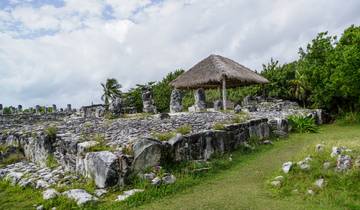
7 days
Riviera Maya Adventure 7D/6N
- ✓ Comprehensive Cancun tour
- ✓ Expert local guides included
- ✓ All accommodation arranged
- ✓ Transportation provided
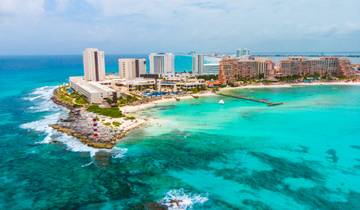
5 days
Riviera Maya Discovery – 5 Days
- ✓ Comprehensive Cancun tour
- ✓ Expert local guides included
- ✓ All accommodation arranged
- ✓ Transportation provided

1 days
Chichen Itza Tour: Explore Mayan Ruins, Valladolid and a Cenote
- ✓ Comprehensive Cancun tour
- ✓ Expert local guides included
- ✓ All accommodation arranged
- ✓ Transportation provided
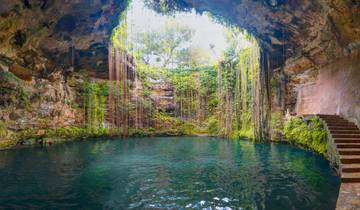
4 days
4-Day Dream Vacation in Cancun
- ✓ Comprehensive Cancun tour
- ✓ Expert local guides included
- ✓ All accommodation arranged
- ✓ Transportation provided
Multi-day tour packages powered by TourRadar. Prices and availability subject to change.
Weather Patterns and Climate Analysis 2026
Dry Season Overview: December-April 2026
The dry season delivers Cancún and Riviera Maya’s most consistent weather, with minimal rainfall, lower humidity, and comfortable temperatures ranging 24-30°C (75-86°F). December and January represent the coolest months, occasionally requiring light layers for evening activities. February through April progressively warm toward summer temperatures while maintaining dry conditions.
Rainfall during dry season averages 40-60mm monthly compared to 150-200mm during wet months. Rain events occur briefly, typically in late afternoon, rarely disrupting full travel days. Caribbean waters maintain 26-28°C (79-82°F) temperatures perfect for swimming, snorkeling, and diving throughout the dry season.
Occasional “Norte” cold fronts sweep south from Texas and the Gulf Coast December through February, bringing 2-4 days of cooler temperatures, clouds, and sometimes rain. These events occur roughly 4-6 times per season, affecting roughly 15-20 total days. Between fronts, weather returns to clear skies and warm temperatures within 24-48 hours.
Wet Season Overview: May-November 2026
The wet season transitions from late spring warmth through summer heat and humidity into fall hurricane season. May and early June feature increasing temperatures and humidity with afternoon thunderstorms becoming regular occurrences. These storms arrive predictably mid-to-late afternoon, delivering heavy rain for 30-90 minutes before clearing to beautiful evenings.
Peak summer months (July-August) combine highest temperatures (30-35°C / 86-95°F), maximum humidity (80-90%), and daily afternoon rain probability. Morning hours remain excellent for activities, with beaches, cenotes, and archaeological sites enjoyable before 2 PM storms develop. Air conditioning becomes essential rather than optional during these hottest months.
Hurricane season peaks September through October when Atlantic storm formation reaches maximum frequency. The vast majority of hurricanes miss the Yucatán entirely, but the region lies within hurricane-prone geography requiring awareness and flexibility. November transitions toward dry season with decreasing rain frequency and hurricane risk while maintaining warm temperatures.
Month-by-Month Guide for 2026
January 2026: Post-Holiday Value Period
January 2026 opens with continued holiday crowds through the first week, then transitions to excellent conditions as vacation travelers return home. Mid-to-late January offers prime travel timing—dry season weather, reduced crowds compared to December, and hotels seeking to fill post-holiday gaps with moderate discounts. Water temperatures remain comfortable at 26°C (79°F).
Weather expectations include daytime highs of 27-29°C (81-84°F), overnight lows around 20-22°C (68-72°F), and very low rain probability. Occasional Norte fronts bring brief cooler periods. Pack light layers for evenings and air-conditioned spaces. January provides excellent visibility for diving and snorkeling with calm seas predominating.
Pricing remains elevated compared to summer but 15-25% below December holiday peaks. Mid-range hotels average $120-180 nightly, luxury properties $250-400+ nightly (check official hotel websites for current 2026 rates as pricing varies). Booking 6-8 weeks ahead ensures availability at preferred properties without extreme advance planning.
February 2026: Pre-Spring Break Sweet Spot
February represents arguably the best value month within dry season, delivering excellent weather before March’s Spring Break surge. The month maintains January’s favorable conditions with gradually warming temperatures approaching 30°C (86°F) by month’s end. Rain remains extremely rare, seas stay calm, and crowds manageable at attractions.
Valentine’s Day week (February 8-16, 2026) sees brief demand spikes at romantic properties but minimally affects overall availability. Presidents’ Day weekend (February 15-17, 2026) brings US travelers but concentrated impacts remain limited compared to March. Mid-February through early March offers the final window before Spring Break transformations.
Pricing holds at dry season rates of $130-200 nightly for mid-range properties, with luxury options at $280-450 nightly (verify current rates on booking platforms). Wildlife highlights include continued excellent diving conditions and beginnings of sea turtle activity on nesting beaches. Whale shark season hasn’t yet begun.
March 2026: Spring Break Season Begins
March 2026 brings Spring Break, transforming Cancún’s Hotel Zone into party central for US college students while family-oriented Riviera Maya sees increased but more manageable crowds. The weather reaches near-perfection: warm without summer’s intensity, virtually no rain, calm seas, and comfortable humidity. These conditions justify enduring crowds for weather-prioritizing travelers.
Spring Break timing varies by US school calendars, with peak party crowds typically spanning mid-March through early April. Playa del Carmen, Tulum, and Puerto Morelos maintain more relaxed atmospheres than Cancún’s Hotel Zone during this period. Archaeological sites see increased visitor numbers but remain enjoyable with early morning arrival strategies.
The Spring Equinox (March 20, 2026) creates the famous serpent shadow phenomenon at Chichén Itzá, where afternoon light illuminates the pyramid staircase as if a serpent descends from heaven. Tens of thousands gather for this event—expect extreme crowds, limited access, and accommodation premiums throughout the region. Book months ahead if attending; avoid the date if seeking normal conditions.
Pricing reaches annual peaks during Spring Break weeks, with hotels increasing rates 30-50% above January-February levels. March accommodations average $180-280 nightly for mid-range, $400-600+ for luxury properties. Flight prices similarly elevated. Book 3-4 months ahead for reasonable availability.
April 2026: Easter Season and Transition
April 2026 includes Easter/Semana Santa (April 5 Easter Sunday), Mexico’s most significant holiday period when domestic travelers join international visitors. Semana Santa week (March 30-April 5, 2026) generates extreme demand, crowding, and pricing across all destinations. Post-Easter April transitions toward shoulder season as temperatures climb and rain probability increases.
Weather in April maintains dry conditions through mid-month, with late April beginning to show afternoon humidity and occasional storms previewing wet season patterns. Temperatures reach 30-33°C (86-91°F), feeling warmer with increasing humidity. Ocean temperatures rise to 27-28°C (81-82°F), excellent for water activities.
Mid-to-late April (post-Easter) offers strategic value: dry season weather remnants combined with rapidly decreasing crowds and pricing. Hotels drop rates 20-30% below peak levels by April’s final weeks. This transitional window provides excellent value for flexible travelers willing to accept slightly warmer conditions.
May 2026: Early Shoulder Season Value
May 2026 marks the unofficial start of value season, with significant price drops, dramatically reduced crowds, and weather that remains excellent despite increasing rain probability. Hurricane season technically begins June 1, but May typically delivers benign conditions with afternoon thunderstorms that enhance rather than detract from tropical atmosphere.
Temperatures reach summer levels of 31-34°C (88-93°F) with high humidity. Morning activities followed by midday pool/beach relaxation and evening exploration suit the climate pattern. Afternoon storms (typically 3-5 PM) provide dramatic skies, brief cooling, and spectacular sunsets as clouds clear.
Whale shark season begins mid-May 2026, offering early encounters before peak summer demand. Tours operate from Isla Mujeres and Holbox with smaller groups than June-August peak. Sea turtle nesting season commences along protected beaches, with lucky visitors potentially witnessing nighttime nesting activity.
Pricing drops 30-40% below dry season peaks, with mid-range hotels averaging $90-140 nightly and luxury properties $180-300 nightly. Flight prices similarly reduced. May represents excellent value for heat-tolerant travelers prioritizing wildlife experiences and uncrowded conditions.
June 2026: Whale Shark Season Peaks
June 2026 offers peak whale shark encounters combined with dramatic price reductions and manageable crowds. Hundreds of whale sharks concentrate near Isla Holbox and Isla Mujeres, feeding on plankton blooms. Tours operate daily (weather-permitting) with regulated swimming encounters allowing intimate experiences with Earth’s largest fish.
Hurricane season begins officially June 1, but early June historically sees minimal storm development. Late June occasionally encounters named storms, though direct Cancún impacts remain rare. Monitor forecasts, purchase appropriate travel insurance, and maintain flexibility for potential weather disruptions.
Weather continues warm and humid (31-34°C / 88-93°F) with daily afternoon rain probability around 40-50%. Morning hours provide reliable activity windows. Cenote visits prove particularly appealing—underground environments maintain cool temperatures regardless of surface conditions, and afternoon storms make excellent cenote timing.
Pricing remains in value territory at $100-160 nightly for mid-range hotels, $200-350 for luxury properties. School summer vacation hasn’t yet begun, maintaining relatively uncrowded conditions despite whale shark tourism. June balances value, wildlife, and acceptable weather effectively for flexible travelers.
July 2026: Peak Summer Heat and Activity
July 2026 brings maximum temperatures, highest humidity, and the beginning of US/international summer vacation travel. Weather reaches its most challenging: 32-35°C (90-95°F) with humidity exceeding 85%, afternoon rain probability around 50-60%, and cumulative heat making midday outdoor activities uncomfortable for unacclimated visitors.
Whale shark tours continue at peak levels, with morning departures essential to complete encounters before afternoon storms develop. Sea turtle nesting continues along protected beaches, with early hatchlings beginning to emerge by month’s end. Cenotes provide essential cooling escapes from surface heat.
Summer family travel increases crowds above spring value season levels but remains significantly below winter peaks. Attractions see moderate visitation with reasonable wait times. Hotels raise rates modestly for summer demand—mid-range averaging $120-180 nightly, luxury $250-400 nightly—still below dry season peaks.
Hurricane activity increases through July, with storm formation becoming more frequent. Most systems remain distant or weak, but travelers should maintain weather awareness and flexible booking arrangements. The month suits heat-tolerant visitors prioritizing whale sharks, family scheduling, and moderate savings.
August 2026: Hurricane Season Awareness
August 2026 enters the historical peak of hurricane activity, requiring heightened awareness while typically delivering many excellent travel days between potential weather events. Statistics show most August days feature normal tropical conditions; hurricanes remain exceptions rather than rules despite season positioning.
Weather continues hot and humid with daily afternoon storms. Whale shark season reaches its final peak month before sharks begin dispersing in September. Sea turtle hatchling releases increase throughout August as nests from May-June incubation periods emerge. Night snorkeling and diving reveal bioluminescent plankton activity at peak levels.
Pricing maintains summer levels slightly below dry season but above September-October lows. Hotels average $110-170 nightly for mid-range properties. Crowd levels hold at moderate summer family vacation intensity, with attractions seeing steady but not overwhelming visitation.
Booking strategies for August require flexibility: refundable reservations, trip insurance with weather coverage, and willingness to adjust plans if storms develop. Monitor National Hurricane Center forecasts beginning 10-14 days before departure. Most August travelers experience no disruption; preparation ensures smooth handling of exceptions.
September 2026: Maximum Value, Maximum Risk
September 2026 represents the year’s best value and highest hurricane risk simultaneously. Statistics identify September as peak Atlantic hurricane month, making trip insurance and flexible bookings essential. Between potential storms, conditions feature warm temperatures, afternoon rain patterns, and dramatically reduced crowds at all attractions.
Pricing reaches annual lows with hotels discounting 50-60% below peak season. Mid-range properties average $70-110 nightly, luxury options $140-250 nightly. Flight prices similarly reduced. Budget travelers willing to accept weather uncertainty find exceptional value throughout September.
The Fall Equinox (September 22, 2026) recreates Chichén Itzá’s serpent shadow phenomenon matching the spring event. Crowds gather significantly though typically below March levels due to overall reduced tourism. The equinox provides alternative timing for those unable to attend spring events.
Whale shark season winds down with declining encounter rates compared to summer peaks. Sea turtle hatchling releases continue strongly through September. Early September maintains summer heat; late September begins cooling slightly as season transitions toward November.
October 2026: Late Hurricane Season Value
October 2026 continues September’s value proposition with gradually decreasing hurricane risk as the month progresses. Late October sees storm formation frequency declining while pricing maintains low season levels. The month offers compelling value for travelers comfortable with weather flexibility requirements.
Weather begins transitioning from summer patterns, with temperatures moderating to 28-31°C (82-88°F) and humidity decreasing from peak summer levels. Afternoon rain remains probable but less intense than July-August storms. Ocean temperatures hold comfortable for swimming and water activities.
Day of the Dead celebrations (October 31-November 2, spanning into November) provide unique cultural experiences as Mexican families honor deceased loved ones with altars, cemetery visits, and traditional foods. Resorts often host cultural programming explaining traditions while authentic experiences occur in local communities and cemeteries.
Pricing maintains low season levels averaging $80-130 nightly for mid-range hotels, $150-280 for luxury properties. Crowds remain minimal with easy access to attractions, dining, and activities. Late October particularly suits budget-conscious travelers as hurricane probability decreases significantly while prices haven’t yet risen for winter season.
November 2026: Shoulder Season Excellence
November 2026 emerges as perhaps the year’s best value-to-conditions ratio, combining decreased hurricane risk with continuing low season pricing before December increases. Weather transitions toward dry season patterns: decreasing rain probability, moderate temperatures of 27-30°C (81-86°F), and comfortable humidity levels.
Early November maintains October’s low season pricing while conditions improve weekly. Thanksgiving week (November 26-29, 2026) sees brief US visitor surge with associated price increases, but surrounding weeks maintain excellent value. Post-Thanksgiving through December 15 offers final value window before holiday season premiums.
Sea turtle hatchling releases continue through early November as final nests of the season emerge. Whale shark season has ended, shifting wildlife focus to resident reef species, dolphins, and occasional whale sightings as humpback migration begins. Excellent diving and snorkeling visibility develops as summer plankton blooms diminish.
Pricing rises gradually through November, from $90-150 nightly early month to $130-200 mid-range by Thanksgiving. Luxury properties range $180-350 depending on specific dates. Booking 4-6 weeks ahead ensures availability while capturing value pricing before December transitions.
December 2026: Peak Season Returns
December 2026 launches peak season with ideal weather, maximum crowds, and premium pricing. The month divides into pre-Christmas moderate demand (December 1-20) and Christmas/New Year extreme demand (December 21-January 5). Weather achieves annual best conditions: minimal rain, comfortable temperatures of 26-29°C (79-84°F), and pleasant humidity.
Early December provides dry season weather at still-reasonable rates, representing final value opportunity before holiday premiums. Mid-range hotels average $150-220 nightly, luxury properties $300-500 nightly during the first three weeks. Book 2-3 months ahead for preferred properties during early December.
Christmas and New Year weeks see pricing reach annual peaks with hotels charging $250-400 nightly for mid-range, $500-1,000+ for luxury properties. Availability challenges require booking 4-6 months ahead for specific property preferences. Flights similarly reach annual peaks with limited inventory.
Attractions see maximum crowds during holiday weeks, with Chichén Itzá, major cenotes, and eco-parks requiring early arrival or advance reservations. Restaurant reservations become essential at popular establishments. Despite crowds and costs, December delivers picture-perfect Caribbean conditions justifying premium investment for holiday travelers.
Seasonal Wildlife Experiences 2026
Whale Shark Encounters 2026
The Cancún and Riviera Maya region hosts the world’s largest annual whale shark aggregation, with hundreds gathering to feed on plankton near Isla Holbox and Isla Mujeres from mid-May through mid-September. Peak 2026 encounters occur June through August when concentrations reach maximum density and sighting success approaches 100% on most tour days.
Tours depart early morning (typically 6-7 AM) from Cancún, Isla Mujeres, or Holbox, reaching feeding grounds after 1-2 hour boat rides. Regulated swimming encounters allow snorkelers to swim alongside these gentle giants—reaching 10-12 meters in length—in small groups with trained guides. Each swimmer receives 3-5 water entries depending on conditions and shark activity.
Booking strategies for 2026 whale shark tours include reserving 2-4 weeks ahead during peak season, selecting operators with strong sustainability practices (no touching sharks, limited swimmers per shark), and building flexibility for weather cancellations. Expect tour costs of $150-200 USD per person including transportation, equipment, and lunch (check operator websites for current pricing).
Sea Turtle Season 2026
Sea turtle nesting season spans May through October 2026 along protected beaches including Xcacel-Xcacelito, Akumal, and Isla Mujeres. Loggerhead, green, and hawksbill turtles return annually to natal beaches, creating opportunities for nighttime nesting observation and hatchling release participation through authorized conservation programs.
Hatchling releases peak August through November 2026 as eggs laid in May-June complete 45-60 day incubation periods. Conservation programs coordinate releases at dusk, allowing participants to help hatchlings reach the sea—profound experiences connecting visitors to marine conservation efforts. Programs operate through official channels rather than resort-based tours to ensure appropriate protocols.
Snorkeling with resident turtles at Akumal remains available year-round, though summer months see highest concentrations. Recent regulations limit daily visitors to protect the bay’s turtle population—arrive early or book through authorized operators to ensure access. Morning visits before 10 AM provide best conditions and availability.
Bioluminescence and Night Experiences 2026
Bioluminescent plankton create magical nighttime kayaking and swimming experiences in Holbox lagoons and Laguna Nichupté near Cancún. Peak bioluminescence occurs during warm summer months (June-September) when dinoflagellate concentrations reach maximum density. Moonless nights provide darkest conditions for dramatic glowing effects.
Tours typically depart 8-9 PM for 2-3 hour experiences including paddling through glowing waters where every stroke creates trails of blue-green light. Swimming opportunities allow immersion in bioluminescent waters with magical results. Summer 2026 dates around new moons (June 6, July 5, August 4, September 2) offer optimal darkness for maximum effect.
Night snorkeling and diving reveal nocturnal reef activity invisible during daylight. Octopus, lobster, moray eels, and numerous fish species emerge for nighttime feeding. Specialized dive operators offer night diving certification and guided night snorkeling experiences throughout the year, with summer months providing warmest water temperatures.
Special Events and Festivals 2026
Chichén Itzá Equinox Events 2026
The Spring Equinox (March 20, 2026) and Fall Equinox (September 22, 2026) create the famous “serpent shadow” phenomenon at Chichén Itzá’s El Castillo pyramid. Afternoon sunlight illuminates the pyramid’s staircase in a pattern resembling a serpent descending from heaven—a testament to ancient Maya astronomical precision that draws tens of thousands of visitors.
Practical considerations for equinox visits include extreme crowds (50,000+ visitors for spring event), limited site access requiring early arrival, accommodation premiums throughout the region, and traffic delays on all approach roads. Arrive before dawn or accept distant viewing positions. The phenomenon occurs over several days around the equinox, with adjacent days offering similar (if slightly less perfect) shadows with reduced crowds.
Alternative equinox strategies include visiting smaller sites like Dzibilchaltún near Mérida where equinox sunrise aligns through temple doorways with modest crowds, or simply avoiding equinox weeks entirely if preferring normal visitation conditions. The astronomical phenomenon impresses, but Chichén Itzá rewards equally during uncrowded regular visits.
Day of the Dead Celebrations 2026
Día de los Muertos (October 31-November 2, 2026) provides authentic cultural experiences throughout the Yucatán Peninsula. Mexican families construct elaborate altars (ofrendas) honoring deceased relatives with photographs, favorite foods, marigolds, and candles. Cemetery visits become family gatherings with music, food, and celebration rather than mourning.
Authentic Day of the Dead experiences occur in local communities rather than resort properties. Valladolid’s central plaza hosts community celebrations, while Felipe Carrillo Puerto and smaller Maya communities maintain indigenous traditions blending pre-Hispanic beliefs with Catholic observances. Xcaret eco-park presents theatrical festival celebrations explaining traditions to international visitors.
Photography opportunities abound during Day of the Dead, with elaborate face painting, costume traditions, and artistic altar displays. Approach celebrations respectfully as meaningful family events rather than tourist performances. Participating in cemetery visits requires sensitivity—observe quietly unless explicitly invited to join family celebrations.
Carnival Season 2026
Carnival celebrations occur February-March before Lent, with Cozumel hosting the region’s largest festivities featuring parades, music, dancing, and elaborate costumes. Carnival 2026 dates depend on Easter timing (April 5), placing main celebrations in late February through early March. Cozumel’s week-long events draw Mexican visitors alongside international tourists.
Hotel demand increases during Carnival week on Cozumel specifically, while mainland destinations see modest spillover effects. The celebration provides cultural counterpoint to beach tourism, showcasing Mexican festive traditions with live music, street food, and community participation. Book Cozumel accommodations 2-3 months ahead for Carnival week visits.
Booking Strategies by Season 2026
Peak Season Booking Timeline 2026
December-April peak season requires advance planning for optimal results. Begin researching destinations and properties 4-6 months ahead for December-January travel, 3-4 months for February-April. Set flight price alerts immediately upon deciding travel dates, as holiday and Spring Break inventory diminishes rapidly.
Hotel booking strategies vary by property type. All-inclusive resorts benefit from package deals through tour operators (Apple Vacations, Funjet, CheapCaribbean) often pricing competitively against booking components separately. Boutique hotels and vacation rentals book directly for best rates and cancellation flexibility.
Activity reservations for peak season warrant similar advance attention. Popular experiences—sunrise Chichén Itzá tours, specialty diving, whale shark tours (if visiting May-September), exclusive restaurant reservations—benefit from booking 2-4 weeks ahead. Spontaneous activity booking remains possible but sacrifices preferred timing and availability.
Value Season Booking Strategies 2026
May-November value season permits more relaxed booking timelines and last-minute flexibility. Accommodations typically available 2-4 weeks ahead except during Thanksgiving week. Flight prices hold relatively stable, allowing booking 4-6 weeks before travel without significant premium over earlier purchases.
Last-minute booking during value season often yields excellent deals as properties discount unsold inventory. Booking sites’ mobile apps frequently offer app-only discounts for same-week reservations. Flexibility with specific property preferences maximizes savings potential—consider several acceptable options rather than single must-have properties.
Weather-related flexibility requirements in hurricane season suggest booking refundable rates despite higher initial prices, purchasing comprehensive travel insurance, and maintaining backup plans for potential trip modifications. The value season price differential typically absorbs insurance costs while providing protection unavailable with non-refundable bookings.
Regional Timing Considerations 2026
Best Times for Archaeological Sites 2026
Archaeological site visits benefit from early morning timing regardless of season—beat tour bus crowds and intense midday heat. Dry season months (December-April) provide most comfortable temperatures for extensive site exploration, while wet season afternoons risk sudden storms interrupting visits.
Chichén Itzá opens at 8 AM; arriving at opening ensures 2-3 hours of relatively uncrowded exploration before tour buses arrive from Cancún around 10:30-11 AM. Similar patterns apply at Tulum (opens 8 AM, cruise ship crowds arrive 10 AM+) and Cobá (opens 8 AM, remains less crowded throughout).
Ek Balam and smaller sites maintain uncrowded conditions regardless of timing but still benefit from morning visits for comfortable temperatures. Muyil visits combining ruins with Sian Ka’an floating tours work best with early starts allowing morning ruin exploration before afternoon water activities.
Best Times for Cenote Visits 2026
Cenotes provide year-round appeal with consistent underground temperatures (24-25°C / 75-77°F) regardless of surface conditions. Wet season actually enhances cenote experiences by providing escape from afternoon heat and storms—underground swimming while rain falls above creates magical atmospheres.
Popular cenotes (Gran Cenote, Ik Kil, Cenote Dos Ojos) see crowds year-round, requiring early morning arrival (8-9 AM) for peaceful experiences. Weekday visits significantly reduce crowds compared to weekends when Mexican families visit. Value season months naturally thin crowds at even popular cenotes.
Lesser-known cenotes near Valladolid and along Puerto Morelos’ cenote route maintain uncrowded conditions throughout the year. Discovering these hidden gems rewards visitors with private swimming experiences regardless of seasonal timing—the hidden gems guide provides specific recommendations.
Best Times for Beaches and Water Activities 2026
Beach conditions peak during dry season (December-April) with calmest seas, clearest water visibility, and minimal seaweed. The Caribbean coast occasionally experiences sargassum seaweed arrivals (historically peaking May-August), though conditions vary significantly year-to-year and location-to-location.
Snorkeling and diving visibility reaches maximum during December-April when reduced plankton levels create crystal-clear conditions. Summer months see good visibility with occasional reduction during plankton blooms. Night diving and bioluminescence experiences peak during summer plankton season.
Water temperatures remain comfortable year-round (26-29°C / 79-84°F) with summer months slightly warmer. Brief winter cold fronts occasionally drop water temperatures 1-2 degrees for several days but rarely to uncomfortable levels. Wetsuit requirements remain minimal except for extended diving sessions in winter months.
FAQ: Best Time to Visit Cancún & Riviera Maya 2026
Is September a bad time to visit Cancún in 2026?
September offers the year’s lowest prices and emptiest conditions but carries highest hurricane risk. Most September days feature excellent weather between potential storms. With trip insurance, flexible bookings, and weather monitoring, September provides exceptional value for risk-tolerant travelers. Avoid if requiring guaranteed perfect conditions or inflexible travel dates.
What month has the least rain in Cancún in 2026?
March and April receive the least rainfall, averaging under 40mm monthly compared to 150-200mm during wet season peaks. February and December-January also maintain very dry conditions with brief, isolated showers. Any dry season month (December-April) provides reliable rain-free conditions for the vast majority of travel days.
When is Spring Break in Cancún in 2026?
Spring Break 2026 spans roughly mid-March through mid-April, with peak party crowds during the third week of March through first week of April. Specific timing varies by US school calendars, with different regions’ breaks spread across the six-week period. Cancún’s Hotel Zone sees most concentrated Spring Break activity; Playa del Carmen and Tulum maintain calmer atmospheres.
Can you swim at Cancún beaches in December 2026?
Yes, December provides excellent swimming conditions with water temperatures around 26-27°C (79-81°F), calm seas, and minimal rain. Occasional cold fronts bring brief cooler air temperatures but water remains comfortable. December ranks among the best months for Caribbean beach activities despite being the coolest month of the year.
What is sargassum season in Cancún and Riviera Maya in 2026?
Sargassum seaweed arrivals historically peak May through August, though occurrence varies significantly year-to-year based on Atlantic Ocean conditions. Some years see minimal impact while others bring significant beach accumulation. East-facing beaches (Cancún Hotel Zone, Tulum) experience more impact than sheltered areas (Isla Mujeres, Playa del Carmen). Hotels actively clean beaches, and seaweed forecasts provide advance warning of incoming accumulations.
Is November or December better for visiting Cancún in 2026?
November offers better value (30-40% lower prices, fewer crowds) while December provides guaranteed best weather and festive atmosphere. Early November combines decreasing rain with low season pricing—perhaps the year’s best overall value. Late December delivers perfect conditions at premium prices with holiday crowds. Choose November for value, December for ideal conditions and holiday travel.
How far in advance should I book my 2026 Cancún trip?
Peak season (December-April): Book 3-4 months ahead for best selection and prices. Holiday weeks (Christmas, New Year, Easter): Book 4-6 months ahead. Spring Break weeks: Book 3-4 months ahead. Value season (May-November): Book 2-4 weeks ahead, with last-minute deals often available. Whale shark tours: Book 2-4 weeks ahead during June-August peak.
What weather should I expect for a January 2026 Cancún trip?
January delivers excellent dry season conditions: daytime temperatures of 27-29°C (81-84°F), overnight lows around 20-22°C (68-72°F), minimal rain, and comfortable humidity. Occasional Norte cold fronts bring 2-4 day cooler periods with clouds—pack light layers for evenings and these brief weather changes. Water temperatures average 26°C (79°F), comfortable for swimming without wetsuits.