
Best Sofia Tours 2026: Walking Routes, Communist History & Day Trips
Sofia’s tour landscape combines exceptional value with deep historical insight, from free daily walking tours departing multiple times from the Palace of Justice to specialized communist-era explorations and UNESCO World Heritage day trips reaching Rila Monastery and ancient Plovdiv. Bulgaria’s capital rewards organized exploration, with English-speaking guides offering perspectives on 7,000 years of Thracian, Roman, Byzantine, Ottoman, and communist heritage compressed into walkable city blocks and accessible mountain monasteries.
Key Takeaways: Sofia Tours 2026
- Free Walking Tours Daily: Professional guides lead free walking tours at 11 AM and 2 PM every day from the Palace of Justice, covering Sofia’s main landmarks in 2-2.5 hours with donation-based payment. Spanish tours also run at 11 AM daily.
- Communist History Tours: Specialized 3-3.5 hour communist-era tours cost 35 BGN ($21) and run at 4 PM Monday-Sunday during summer, five times weekly in winter, exploring brutalist architecture, former Party headquarters, and preserved Soviet monuments.
- Rila Monastery Day Trips 2026: Full-day UNESCO World Heritage monastery tours range 50-70 BGN ($27-38) including transport and guide, departing 8-9 AM and returning by 5-6 PM with 2-3 hours at the monastery complex.
- Plovdiv Ancient City Tours 2026: Day trips to Europe’s sixth-oldest city cost 55-80 BGN ($30-44) with transport and guide, featuring Roman theaters, Thracian fortifications, and 8,000 years of preserved architecture in 4-5 hours of exploration.
- Tour Booking Strategy: Free walking tours require no advance booking—arrive 10-15 minutes early at Palace of Justice. Paid tours should be booked 1-3 days ahead during April-October peak season, 24 hours ahead November-March.
- Best Value Combinations 2026: Combining Rila Monastery with Boyana Church visits creates a dual-UNESCO day trip for 70 BGN ($38), while pairing free morning walking tours with afternoon paid communist tours maximizes Sofia understanding for minimal cost.
People Also Ask About Sofia Tours 2026
What Tours Are Free in Sofia in 2026?
Free Sofia Tour offers daily complimentary walking tours at 11 AM and 2 PM in English, departing from the Palace of Justice, covering Alexander Nevsky Cathedral, St. Sofia Church, the National Theater, and Palace of Justice in 2-2.5 hours. Spanish-language free tours run daily at 11 AM, and a free Jewish heritage tour operates Fridays at 11 AM. These donation-based tours operate 365 days yearly including weekends and holidays, with guides working for tips. No reservations are required—simply arrive 10-15 minutes before departure. The communist history tour, food tours, and day trips to Rila Monastery and Plovdiv require paid bookings.
How Much Does a Sofia Walking Tour Cost in 2026?
Free walking tours operate on donation basis with most participants tipping 10-20 BGN ($6-12) for 2-2.5 hour tours. Paid communist history tours cost 35 BGN ($21) for 3-3.5 hours, while private walking tours range 140-280 BGN ($80-160) for customized 2-4 hour experiences. Food walking tours cost 22-85 BGN ($12-47) depending on inclusions. The original Free Sofia Tour remains the best-value introduction, allowing budget travelers to experience professional guiding for voluntary payment.
Is Rila Monastery Worth a Day Trip From Sofia in 2026?
Rila Monastery justifies the full-day commitment for three compelling reasons. First, the UNESCO World Heritage complex represents Bulgaria’s most significant spiritual and architectural monument, with 10th-century origins and 19th-century frescoed churches that rival European monastery art. Second, the 120-kilometer mountain setting in Rila National Park provides dramatic scenery unreachable by casual Sofia exploration. Third, organized tours eliminate the public transport complications that make independent visits challenging, providing professional English commentary on the monastery’s role in preserving Bulgarian culture during Ottoman rule. Tours departing 8-9 AM return by 5-6 PM, fitting comfortably into Sofia-based itineraries.
What Are the Best Sofia Day Trips Besides Rila Monastery in 2026?
Plovdiv ranks as Sofia’s premier alternative day trip, offering 8,000 years of continuous habitation with preserved Roman amphitheaters, Ottoman mosques, and National Revival architecture in a 2-hour journey. Tours cost 55-80 BGN ($30-44) for full-day experiences with 4-5 hours in Plovdiv’s Old Town. Koprivshtitsa provides Bulgaria’s best-preserved 19th-century architecture in a mountain village setting 110 kilometers from Sofia. Seven Rila Lakes combines the monastery visit with alpine lake hiking for active travelers, though the combined itinerary creates a long 12-hour day. Boyana Church adds medieval UNESCO frescoes to Rila Monastery combinations for dual-heritage experiences.
Extended multi-day tours – 5+ days
Featured Sofia Multi-Day Tour Packages

3 days
Sofia 3-Day Discovery Tour
- ✓ Comprehensive Sofia experience
- ✓ Expert local guides included
- ✓ All accommodation included
- ✓ Transportation provided

5 days
Sofia 5-Day Highlights Experience
- ✓ Comprehensive Sofia experience
- ✓ Expert local guides included
- ✓ All accommodation included
- ✓ Transportation provided
7 days
Sofia 7-Day Cultural Journey
- ✓ Comprehensive Sofia experience
- ✓ Expert local guides included
- ✓ All accommodation included
- ✓ Transportation provided
10 days
Sofia 10-Day Complete Adventure
- ✓ Comprehensive Sofia experience
- ✓ Expert local guides included
- ✓ All accommodation included
- ✓ Transportation provided
Multi-day tour packages powered by TourRadar. Prices and availability subject to change.
Introduction: Sofia’s Tour Landscape in 2026
Sofia’s organized tour infrastructure delivers exceptional value compared to Western European equivalents, with professional English-speaking guides, transparent pricing, and daily departures creating accessibility that transforms short-stay visits into deep cultural encounters. The capital’s walkable center concentrates 2,000 years of layered history within a two-kilometer radius, from Roman ruins beneath modern streets to communist-era monuments standing alongside Orthodox cathedrals and Ottoman mosques. This compressed geography makes Sofia ideal for guided exploration, where expert commentary unlocks architectural palimpsests invisible to independent wandering.
The city’s tour ecosystem divides into three distinct categories. Free walking tours provide donation-based introduction to main landmarks, operating multiple times daily from the Palace of Justice with no advance booking required. These 2-2.5 hour walks cover Alexander Nevsky Cathedral, the Rotunda of St. George, Ivan Vazov National Theater, and the contrasting religious architecture of Sveta Nedelya Square, where Orthodox church, mosque, and synagogue occupy adjacent blocks. Professional guides work for tips, creating flexible pricing that suits budget travelers while maintaining high-quality interpretation.
Specialized thematic tours explore focused historical periods or cultural aspects. Communist history tours represent Sofia’s signature offering, using 3-3.5 hours to decode the brutalist architecture, Party headquarters, and Soviet monuments that shape the cityscape but remain opaque without expert explanation. These paid tours cost 35 BGN ($21) and run at 4 PM Monday through Sunday during April-October, five times weekly November-March. Food tours combine market visits with traditional cuisine tastings, while private tours allow customized itineraries addressing specific interests or language needs.
Day trip tours extend Sofia’s reach into surrounding mountains and historic cities. Rila Monastery tours access Bulgaria’s spiritual heart 120 kilometers south, a UNESCO World Heritage complex unreachable by convenient public transport. Plovdiv trips explore Europe’s sixth-oldest continuously inhabited city 145 kilometers southeast, where Roman theaters and Thracian fortifications layer 8,000 years of occupation. These full-day excursions operate year-round with morning departures and late-afternoon returns, providing comfortable coach transport and professional guiding that justifies the 50-140 BGN ($27-77) pricing.
Bulgaria’s tourism infrastructure prioritizes small-group experiences over mass-market buses. Maximum group sizes typically cap at 15-25 participants, maintaining intimacy that allows questions and flexible pacing. English remains the primary foreign language, supplemented by Spanish, Italian, and occasionally German offerings. This European approach—quality over volume—means Sofia’s tour operators deliver consistently high satisfaction despite charging 40-60 percent less than equivalent Western European experiences.
Booking patterns differ by tour type. Free walking tours never require reservations—arrive 10-15 minutes before the 11 AM or 2 PM departure time at the Palace of Justice steps. Paid walking tours and communist history experiences should be booked 1-3 days ahead during April-October peak season, 24 hours ahead in winter months. Day trips to Rila Monastery and Plovdiv benefit from 2-5 day advance booking during summer weekends and holidays, though midweek slots usually remain available with shorter notice. Most operators offer online booking through their websites or aggregators like GetYourGuide and Viator, with same-day availability displayed via live calendars.
The 2026 tour landscape shows stable pricing from 2024-2025 levels, with inflation-adjusted increases of 3-5 percent reflecting Bulgarian economic conditions. The introduction of the euro remains pending, so all current pricing uses Bulgarian lev with dollar conversions for international understanding. Payment methods vary by tour type—free walking tours collect cash donations at tour’s end, while paid experiences accept card payments through booking platforms and sometimes direct cash payment to operators. Having 40-60 BGN cash reserves covers spontaneous tour additions and traditional tip expectations of 10-15 percent for exceptional guiding.
Free Sofia Walking Tours 2026: Daily Departures & Routes
Free Sofia Tour, operated by the 365 Association, runs Bulgaria’s most established free walking tour program, now in its 15th year with over 100,000 participants and consistent TripAdvisor recognition as Sofia’s top activity. The organization operates two daily English-language tours at 11 AM and 2 PM, departing 365 days yearly including weekends, national holidays, Christmas, and Easter. Spanish-language tours run daily at 11 AM. Guides work voluntarily on a tip basis, creating flexible pricing that accommodates all budget levels while maintaining professional standards through competitive selection and training processes.
Tours depart from the Palace of Justice on the corner of Vitosha Boulevard and Alabin Street, one of Sofia’s most recognizable buildings with its massive colonnaded facade. The meeting point requires no advance identification—guides carry distinctive yellow umbrellas and wear bright identification. Arriving 10-15 minutes before departure time ensures space in the group, though late arrivals can usually join as tours begin. The Palace of Justice location sits at Sofia’s central crossroads, accessible via Metro stations Serdika (lines M1 and M2) and NDK (line M1), plus trams 5, 7, and 18 stopping at Tsentralna Gara.
The standard 2-2.5 hour route covers Sofia’s central landmarks in chronological layers, beginning with Roman archaeology and progressing through Byzantine, Ottoman, communist, and contemporary periods. Walking pace remains leisurely with frequent stops for explanation and photography. The circuit typically includes the following sequence, though guides adjust based on local events and group energy.
The tour begins at the Palace of Justice itself, explaining its 1940s construction under King Boris III and its function as Bulgaria’s Supreme Court. Moving east along Vitosha Boulevard, the route passes the National Theater Ivan Vazov, Sofia’s premier performing arts venue and architectural icon from 1907. The neoclassical building’s colonnade and sculptural pediment represent Bulgarian national romanticism, with guides explaining its namesake’s literary significance and the theater’s role in Sofia’s cultural identity.
The next major stop reaches Sveta Nedelya Square, showcasing Sofia’s unique religious pluralism. The Orthodox Sveta Nedelya Cathedral occupies the square’s center, a 19th-century rebuilding after the original suffered communist bombing in 1925. Within 100 meters stand the Banya Bashi Mosque, Sofia’s only functioning mosque from 1576 Ottoman construction, and the Sofia Synagogue, Europe’s third-largest and a testament to Bulgaria’s successful protection of its Jewish population during World War II. This religious triangle demonstrates Sofia’s layered identity and historical tolerance, themes guides develop through stories of coexistence and conflict.
The Roman archaeological section explores the Serdica complex, where excavated 4th-century streets, bath houses, and defensive walls lie beneath modern glass covers at Serdika Metro station. Sofia’s Roman name, Serdica, reflects its status as an important Eastern Roman city favored by Emperor Constantine, who famously stated “Serdica is my Rome.” The visible archaeology allows guides to reconstruct ancient city planning and explain how modern Sofia literally builds atop its Roman foundations.
The Rotunda of St. George provides the tour’s architectural centerpiece, a 4th-century circular church that ranks among Sofia’s oldest structures. Originally Roman baths, the building converted to Christian worship and later Ottoman mosque before restoration as an Orthodox church. The interior preserves fragmentary medieval frescoes, though photography restrictions limit casual documentation. Guides emphasize the building’s survival through 1,600 years of religious and political change, embodying Sofia’s adaptation and resilience.
The Presidential Palace and its adjacent St. Sofia Church conclude the historical sequence. The Presidential Guard changes hourly, providing a photo opportunity that guides time into the itinerary. St. Sofia Church, Sofia’s namesake, dates to 6th-century Byzantine construction, though Ottoman conversion to mosque and later abandonment required 20th-century restoration. The church’s simple brick exterior contrasts with Alexander Nevsky’s nearby grandeur, illustrating different architectural approaches to Orthodox worship.
The Alexander Nevsky Cathedral represents Sofia’s visual climax, a neo-Byzantine monument from 1912 commemorating Russian liberation of Bulgaria from Ottoman rule. The cathedral ranks among Eastern Europe’s largest Orthodox churches, with gold-plated domes visible across Sofia’s skyline. Guides explain the cathedral’s political symbolism, its naming for a Russian saint-prince, and its function as Bulgaria’s spiritual center. The interior visit remains optional, requiring 10 BGN ($6) entrance for the crypt’s icon collection, which guides mention but don’t include in the standard route.
Tour conclusions typically occur near Alexander Nevsky Cathedral or return to the Palace of Justice area, with guides providing restaurant recommendations, transportation advice, and answers to individual questions. The tip collection happens at tour’s end, with guides explaining the voluntary donation model and expressing appreciation regardless of amount. Most participants contribute 10-20 BGN ($6-12), though students and budget travelers often give less while satisfied visitors sometimes offer 30-50 BGN ($17-28).
The Free Sofia Tour communist history variant runs at 4 PM Monday, Thursday, Friday, Saturday, and Sunday, creating a paid 35 BGN ($21) specialized tour covered in detail in the following section. A Jewish heritage tour operates Fridays at 11 AM, exploring the Sofia Synagogue interior, Jewish Quarter history, and Bulgaria’s remarkable World War II rescue of 50,000 Jews. This tour also works on donation basis.
Alternative free walking tour operators include Sofia Free Tours and various independent guides using the Guru Walk platform. These tours follow similar routes and donation models, with quality depending on individual guide knowledge and presentation skills. The 365 Association’s Free Sofia Tour maintains the most consistent reputation through its training program and guide selection process, though trying different operators allows comparison and potentially discovering exceptional individual guides.
Private free walking tours don’t exist as a category—the “free” designation specifically means donation-based public tours. Travelers seeking private experiences should book dedicated private tours at 140-280 BGN ($80-160) for 2-4 hours, available through the same operators’ premium services.
Communist History Tours Sofia 2026: Architecture, Monuments & Ideology
Sofia’s communist history tours decode 45 years of socialist construction, ideology, and daily life through standing architecture, preserved monuments, and personal memory, transforming the brutalist buildings and Soviet memorials that dominate parts of the cityscape from puzzling concrete masses into legible historical documents. These specialized 3-3.5 hour experiences operate as paid tours, typically costing 35 BGN ($21) per person, running at 4 PM Monday through Sunday during April-October summer season, five times weekly November-March. The format builds on Free Sofia Tour’s reputation, using the same professional guides who lead free morning walks but dedicating extended time to communist-era specifics that standard tours only briefly address.
The communist tour departs from the Palace of Justice at 4 PM, the same location as free walking tours. Unlike the free offerings, this tour requires advance booking through the operator’s website, with payment collected at tour start. Group sizes cap at 20-25 participants, maintaining intimacy that allows questions and discussion of sensitive historical topics. English remains the primary language, with occasional Spanish tours arranged for minimum group sizes.
The route begins at the former Bulgarian Communist Party headquarters, the massive modernist structure facing the Party House. Built in the 1950s, this imposing building housed the Central Committee and represented the physical center of political power from 1944-1989. Guides explain the Party’s organizational structure, decision-making processes, and the building’s role in controlling Bulgarian society. The stark architecture—monumental scale, repetitive windows, absence of ornament—embodies socialist aesthetic principles of functionality and collective identity over individual expression.
The Monument to the Soviet Army provides the tour’s most photographed stop, a massive 1954 memorial in Borisova Gradina park. The central column rises 37 meters, surrounded by bronze sculptures depicting Soviet soldiers, Bulgarian partisans, and allegorical workers. Recent guerrilla art interventions—painting the statues as American pop culture characters—created international attention and ongoing debates about historical memory. Guides navigate these tensions carefully, explaining both the monument’s original propaganda purpose and contemporary controversies about its preservation or removal. The surrounding park area, with its socialist realist statuary and formal landscaping, extends the Soviet aesthetic vocabulary.
The Largo, Sofia’s administrative center, showcases Stalinist neoclassical architecture from the early 1950s. This monumental ensemble—Government House, the former Communist Party headquarters, and surrounding ministry buildings—was constructed by demolishing much of central Sofia’s historic fabric, a conscious decision to erase Ottoman and bourgeois history. The symmetrical planning, oversized scale, and decorative elements borrowed from classical antiquity demonstrate how communist regimes co-opted historical legitimacy while serving totalitarian functions. Underground excavations revealed Roman Serdica ruins, creating awkward juxtapositions between ancient democracy and modern authoritarianism.
The National Palace of Culture (NDK) represents late communist ambition, a massive 1981 congress center built for Bulgaria’s 1300-year anniversary celebrations. The structure spans eight levels, 123,000 square meters, and accommodates 8,000 attendees in its main hall. NDK’s brutalist concrete mass, softened by fountains and parks, exemplified late socialist cultural investment and technological achievement. Guides explain the building’s role in state-controlled cultural production, from Party congresses to approved concerts and exhibitions. Today NDK functions as Sofia’s premier events venue, its communist associations fading as newer generations use the space without historical baggage.
A piece of the Berlin Wall, installed near NDK in 2009, provides tangible connection to broader Eastern Bloc experience. The graffitied concrete section, transported from Berlin, stands as memorial to division and eventual liberation. Guides note the timing coincidence—the Berlin Wall fell November 9, 1989, just one day before Bulgaria’s own communist regime collapsed on November 10. This proximity demonstrates how 1989’s revolutionary wave swept across the Soviet sphere, from Poland’s Solidarity movement through Czechoslovakia’s Velvet Revolution to Bulgaria’s relatively peaceful transition.
The Central Department Store (TZUM) occupied special status in communist Sofia as the privileged shopping destination for Party elite and those with access to foreign currency. While ordinary Bulgarians queued for basic goods in state stores, TZUM offered imported items and better-quality products, though still far inferior to Western standards. Guides share stories of TZUM privilege, black market currency exchange, and the complex informal economies that developed around official scarcity. Today TZUM operates as conventional shopping mall, its elite associations erased by market abundance.
The site of Georgi Dimitrov’s mausoleum, now empty Prince Alexander Battenberg Square, provokes discussion of memory and erasure. Dimitrov, Bulgaria’s first communist leader, received Soviet-style embalming and public display in a massive mausoleum from 1949-1990. Democratic authorities demolished the structure in 1999, removing the physical focus of communist-era pilgrimages. The square’s current emptiness—retaining only the foundation outline—raises questions about how societies process difficult pasts through preservation, removal, or transformation of monuments.
The Museum of Socialist Art, located outside the walking route but often mentioned for independent visits, houses relocated communist-era statuary and propaganda posters. The outdoor sculpture park contains removed monuments of Lenin, Marx, and Bulgarian communist leaders, plus the original red star from atop the Party headquarters. This concentration allows engagement with socialist art while removing its propaganda function in public space.
Throughout the tour, guides interweave personal stories and family memories, as most come from families who lived through the communist period. This personal testimony—grandparents’ Party membership or dissident activities, parents’ adaptation to transition, guides’ own childhood memories of scarcity or security—humanizes the historical narrative beyond architectural analysis. Guides maintain balance, acknowledging both the system’s failures (political repression, economic stagnation, environmental damage) and certain achievements (guaranteed employment, universal literacy, women’s workforce participation), while clearly stating that few Bulgarians desire communism’s return.
The tour format encourages questions and discussion, with guides comfortable addressing controversial topics like secret police surveillance, labor camps, political persecution, and the moral compromises ordinary people made to survive or advance. This dialogue distinguishes the communist tour from standard historical walks, creating space for nuanced understanding of totalitarian systems and their lasting psychological impacts. Groups often include older travelers with Cold War memories seeking context, younger visitors curious about their parents’ experiences, and Eastern Europeans comparing Bulgarian and broader Soviet Bloc histories.
Tour conclusions occur near the antiques market at Alexander Nevsky Cathedral, where vendors sell communist-era memorabilia—military medals, Party badges, propaganda posters, and Red Army watches. Guides explain the market’s authenticity varies wildly, with genuine items mixed among modern reproductions. The market itself represents post-communist transition, transforming ideology into commerce and allowing former symbols of power to circulate as kitsch souvenirs.
Alternative communist history tour operators include private guide services and specialized operators like Traventuria, offering similar content at comparable prices. The Trabant car tour variant combines communist history with rides in East Germany’s iconic vehicle, a two-stroke symbol of socialist automotive production. These private Trabant tours cost around 310 BGN ($170) for groups up to three people, providing 2-hour themed experiences that emphasize novelty over walking depth.
Booking the 35 BGN ($21) communist walking tour requires 1-3 days advance notice during April-October peak season, though last-minute spaces sometimes become available. Winter season requires less advance booking, with 24-hour notice usually sufficient. Payment occurs at tour start in cash or card depending on operator, with optional tipping for exceptional guiding following the standard 10-15 percent convention.
Rila Monastery Day Trips 2026: UNESCO World Heritage Tours From Sofia
Rila Monastery represents Bulgaria’s spiritual heart and architectural crown jewel, a 10th-century Orthodox complex nestled in mountain forests 120 kilometers south of Sofia at 1,147 meters elevation. The UNESCO World Heritage Site combines medieval origins, 19th-century reconstruction, and continuous monastic life in a setting of dramatic natural beauty that rewards the full-day commitment required for visitation. Organized tours from Sofia eliminate the public transport complications that make independent visits challenging, providing comfortable coach travel, professional English-speaking guides, and structured time allocation that maximizes monastery experience while fitting Sofia-based itineraries.
Standard Rila Monastery tours cost 50-70 BGN ($27-38) per person for full-day experiences departing Sofia 8-9 AM and returning 5-6 PM, check official tour operator websites for current rates as seasonal pricing variations apply. This pricing includes round-trip coach transport, professional guide service, and 2-3 hours of monastery time. Monastery entrance remains free, though the small history museum requires 8 BGN ($4) optional admission. Group sizes typically range 8-20 participants, maintaining the small-group intimacy that characterizes Bulgarian tour operations.
The journey to Rila Monastery follows the E79 highway south through Sofia’s suburbs before entering the Rila Mountains, Bulgaria’s highest range. The 2-2.5 hour drive provides scenic progression from urban density through agricultural valleys into alpine forests, with guides narrating Bulgarian geography, history, and the monastery’s role in preserving Orthodox Christianity and Bulgarian identity during 500 years of Ottoman rule. Rest stops at roadside cafes accommodate coffee breaks and bathroom visits.
The monastery complex reveals itself dramatically, its fortified walls emerging from dense pine forest with snow-capped peaks rising beyond. The defensive architecture—stone walls up to 24 meters high enclosing the inner courtyard—protected the monastery from bandits and foreign armies while allowing monastic life to continue undisturbed. Founded in 927 by St. John of Rila, a hermit whose cave lies nearby, the monastery grew into Bulgaria’s largest and most influential Orthodox institution, surviving destruction and rebuilding multiple times before achieving its current form in the 1830s-1840s.
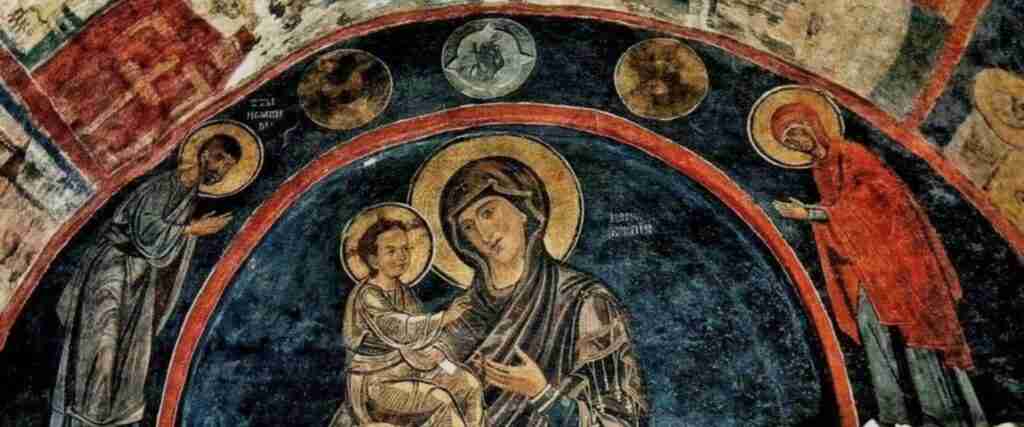
Tours typically allocate 2-3 hours at the monastery, beginning with 45-minute guided walking tours of the complex. Guides explain the four-level arcaded courtyard, painted in distinctive black and white stripes, where 300 rooms and 110 monk cells occupy the residential floors. The Church of the Nativity of the Virgin dominates the courtyard center, a 19th-century structure housing medieval icons and remarkable frescoes that blend traditional Byzantine iconography with 19th-century naturalism. The exterior frescoes, covering every surface in Biblical scenes and moral lessons, represent some of Bulgaria’s finest religious art.
Hreliyo’s Tower, the sole surviving structure from the 14th century, stands 25 meters tall at the complex’s corner. Climbing the narrow stone stairs rewards visitors with panoramic views across the monastery complex and surrounding mountains, though the steep ascent challenges those with mobility limitations. The tower’s survival through multiple destructions makes it tangible connection to the monastery’s medieval origins.
The monastery museum, requiring separate 8 BGN ($4) admission, displays religious artifacts, medieval manuscripts, and the monastery’s most famous relic—Rafail’s Cross. This 81-centimeter wooden cross contains 104 Biblical scenes and 650 miniature figures carved by monk Rafail between 1790-1802, requiring such intricate work that Rafail lost his sight in the process. The cross represents devotional art’s extreme expression, though its small size and protective glass case limit appreciation of the detailed carving.
Free time after the guided portion allows independent exploration, photography, and visits to the monastery bakery, which sells traditional bread and pastries. The Rila Forest surrounding the monastery offers short walking trails for those seeking nature experience, while the monastery courtyard provides peaceful atmosphere for contemplation. The working monastery maintains approximately 60 resident monks, and visitors should observe dress code requirements—covered shoulders and knees for both men and women entering the church. The bakery’s freshly fried mekitsi (sweet fried bread) draws crowds, with guides recommending arrival timing that avoids midday tourist peak.
Combined tours pairing Rila Monastery with Boyana Church create dual-UNESCO day trips for approximately 70 BGN ($38) per person. Boyana Church, located in Sofia’s southern suburbs, preserves 13th-century frescoes that pioneered realistic human portraiture 150 years before Italian Renaissance achievements. The church visit occurs either before driving to Rila or on the return journey, adding 45 minutes to the total tour time. Entrance to Boyana Church costs 12 BGN ($6) for adults, 3 BGN ($1.50) for students. The church’s small size limits interior capacity, requiring timed entry that tour operators coordinate in advance.
Alternative Rila Monastery tour variants combine monastery visits with the Seven Rila Lakes, a glacial lake circuit requiring chairlift access and 2-3 hours hiking at 2,100-2,500 meters elevation. These combined tours create intensive 12-hour days departing Sofia 7-8 AM and returning 7-8 PM, suitable for active travelers seeking both cultural and natural highlights. The Seven Lakes component requires additional 20 BGN ($11) for chairlift tickets and adequate fitness for alpine hiking with 600-meter elevation gain over rough trails.
The Rila Monastery and St. John’s Cave tour adds the hermit’s original dwelling to the monastery visit, a 30-minute hike from the monastery complex. The cave, hollowed from cliff rock where St. John lived in ascetic isolation, attracts pilgrims who believe crawling through the narrow passage provides spiritual healing. The cave visit suits travelers interested in spiritual sites and willing to handle steep forest paths and confined spaces.
Booking Rila Monastery tours requires 2-5 days advance notice during summer weekends and holidays when tour buses fill to capacity. Midweek April-June and September-October allows shorter 1-2 day booking windows. Winter months see reduced demand with 24-hour advance booking usually sufficient, though confirm specific tour operators’ winter schedules as some reduce frequency November-March. Major tour operators include Traventuria Day Tours, City Tour Sofia, and various GetYourGuide and Viator listed services, with pricing consistency across providers at the 50-70 BGN ($27-38) range for standard experiences.
Self-guided shuttle services, offering transport without guide commentary, reduce costs to approximately 30 BGN ($16) round-trip, suited for travelers preferring independent exploration or visiting with personal guidebooks. These shuttles maintain similar departure and return schedules but provide no historical context during travel or at the monastery itself.
Plovdiv Day Trips 2026: Ancient City Tours From Sofia
Plovdiv stands as Europe’s sixth-oldest continuously inhabited city, with 8,000 years of occupation layering Thracian, Roman, Byzantine, Ottoman, and Bulgarian heritage in a compact Old Town that rewards day-trip exploration from Sofia. The 145-kilometer journey southeast takes 1.5-2 hours through the Thracian Plain, passing the Rila and Rhodope mountain ranges that frame Bulgaria’s most fertile agricultural region. Organized day trips cost 55-80 BGN ($30-44) for full-day experiences including transport, guide service, and 4-5 hours in Plovdiv, providing efficient access to antiquities that would require complex independent travel arrangements.
Standard Plovdiv tours depart Sofia 8-8:30 AM from central meeting points, typically the Vasil Levski Monument or Palace of Justice area accessible via Metro and tram connections. Return arrivals occur 5:30-6:30 PM, fitting comfortably into Sofia-based itineraries without requiring overnight accommodation. Tour group sizes range 10-20 participants, maintaining the personal attention that characterizes Bulgarian tour operations. English remains the primary guide language, supplemented by Spanish and Italian for tours reaching minimum group thresholds.
The journey to Plovdiv follows the A1/E80 motorway through industrial zones before opening into agricultural plains. Guides use travel time to explain Bulgarian regional geography, Plovdiv’s status as Bulgaria’s second city and cultural capital, and the historical context that transformed this Thracian settlement into Roman Philippopolis and eventually Bulgarian Plovdiv. Rest stops at highway service areas provide coffee breaks and bathroom visits at the journey’s midpoint.
Tours typically begin at Plovdiv’s Eastern Gate, the ancient entrance to the Roman city where reconstructed portions of defensive walls frame the Old Town approach. The 2-hour guided walking portion proceeds up cobblestone streets into the preserved 19th-century merchant quarter, where National Revival architecture—colorful facades, overhanging upper floors, ornate courtyards—creates the visual character that distinguishes Plovdiv from Bulgaria’s other historic cities.
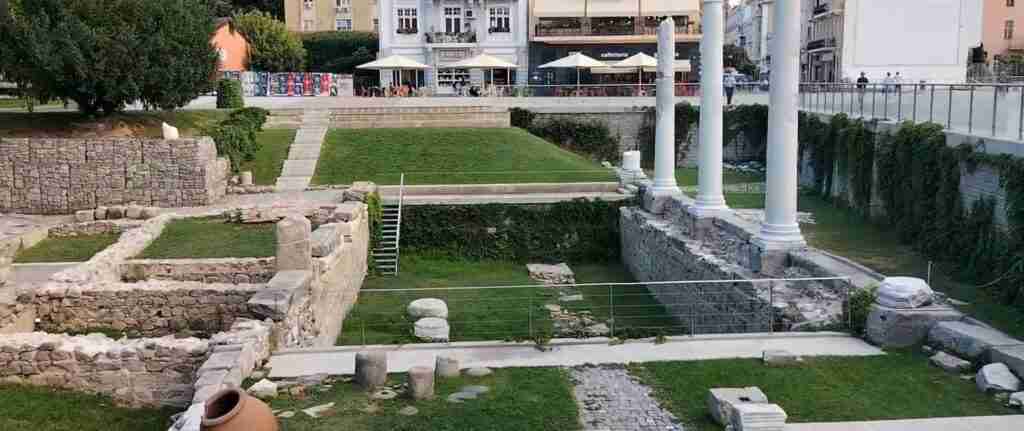
The Roman Theater provides Plovdiv’s signature monument, a 1st-century structure accommodating 6,000 spectators that remains among the Balkans’ best-preserved classical theaters. The semicircular seating area (cavea) survives nearly intact, while the stage building (scaena) shows extensive restoration. The theater’s hillside position affords views across Plovdiv to the Rhodope Mountains beyond, combining architectural appreciation with panoramic photography. The structure hosts contemporary performances during summer festivals, continuing its original entertainment function across 2,000 years. Guides explain Roman theater architecture, performance traditions, and the structure’s rediscovery during 1960s archaeological work that revealed the seating tiers buried under centuries of soil accumulation.
The Ancient Stadium, now partially excavated beneath modern Plovdiv’s main pedestrian street, demonstrates Roman urban planning and entertainment infrastructure. Originally 180 meters long and accommodating 30,000 spectators, the stadium hosted athletic competitions and chariot races. Today only the northern curved end (sphendone) remains visible, with the seating tiers exposed in an underground museum space. The stadium’s positioning directly beneath Plovdiv’s shopping district visualizes how modern cities literally build atop ancient foundations.
Nebet Tepe, the highest of Plovdiv’s original three hills (trimontium), preserves Thracian fortification walls from 5000 BC and commanding views across the modern city. The fortress remains demonstrate sophisticated military architecture from pre-Roman periods, predating the better-known classical structures. The hilltop position allows guides to explain Plovdiv’s strategic importance controlling the Maritsa River valley, the settlement’s evolution from Thracian Eumolpias through Roman Philippopolis to medieval Plovdiv, and the successive occupation layers visible in the archaeological evidence.
National Revival houses—Balabanov House, Hindliyan House, Lamartine House—showcase 19th-century merchant wealth expressed through architectural elaboration. These townhouses feature painted facades in distinctive Plovdiv colors, elaborate wooden ceilings, and courtyard gardens that blend Ottoman and Bulgarian aesthetic traditions. Several houses function as museums, though most tours view exteriors rather than including interior visits that would require separate entrance fees and extended time. Guides explain the National Revival period’s cultural significance, when Bulgarian identity reasserted itself during Ottoman decline, expressed through architecture, literature, and commercial success.
The Old Town’s narrow cobblestone streets connect these major sites through a preserved 19th-century urban fabric largely untouched by communist-era demolition or modern development. Art galleries, craft workshops, and traditional restaurants occupy ground floors, creating an active cultural quarter rather than mere museum preservation. Street musicians and artists contribute to the bohemian atmosphere that distinguishes Plovdiv from more commercialized European old towns.
Free time after the guided portion typically provides 1.5-2 hours for lunch, shopping, and independent exploration. The Kapana district, Plovdiv’s “Trap” neighborhood, has transformed from decaying workshops into Sofia’s hippest arts quarter, with galleries, cafes, and street art covering the low-rise buildings. This self-directed time allows personal interests—museum visits, church interiors, market browsing, or simply coffee in historic courtyards—that structured tours cannot accommodate.
Tour lunch arrangements vary by operator and booking choice. Most tours designate free time for independent lunch at personal expense, allowing dietary preferences and budget flexibility. Typical Plovdiv restaurant meals cost 15-30 BGN ($8-17) for main course, salad, and drink. Guides provide restaurant recommendations balancing authenticity, location, and value. Full-day tours sometimes include restaurant lunch at 20-25 BGN ($11-14) per person supplement, offering traditional Bulgarian cuisine in group-friendly venues.
Combined Plovdiv and Koprivshtitsa tours extend the day trip to two destinations, adding Bulgaria’s best-preserved National Revival mountain village to the ancient city visit. Koprivshtitsa, 110 kilometers from Sofia in the opposite direction from Plovdiv, showcases 19th-century architecture in a village setting largely unchanged since liberation from Ottoman rule. These combined tours cost approximately 145 BGN ($80) for 10-11 hour experiences departing Sofia 8 AM and returning 6-7 PM. The dual-destination format requires extended coach travel—approximately 4 hours total—reducing time at each location to 1.5-2 hours, suitable for travelers prioritizing breadth over depth.
Alternative Plovdiv tour variants pair the ancient city with Bachkovo Monastery, Bulgaria’s second-largest monastery complex located 30 kilometers south of Plovdiv in the Rhodope foothills. These combined tours cost approximately 80 BGN ($44), including monastery entrance and adding 1 hour to the total day trip duration. Bachkovo, founded 1083, preserves medieval frescoes and functioning monastic life in a mountain setting less famous but more intimate than Rila.
Booking Plovdiv tours requires 2-3 days advance notice during April-October peak season, though midweek availability often accommodates 24-hour advance booking. Winter months see reduced tourist numbers with same-day booking sometimes possible, though confirming operator schedules remains advisable as some reduce winter frequency. Major tour operators include City Tour Sofia, Traventuria, and various GetYourGuide/Viator listed services, with pricing consistency across providers at the 55-80 BGN ($30-44) range for standard experiences.
Self-guided transport options exist via intercity buses departing Sofia’s Central Bus Station hourly for Plovdiv, costing 16-22 BGN ($9-12) one-way with 2-2.5 hour journey times. This independent approach suits budget travelers or those desiring extended Plovdiv time, though requires navigating Bulgarian bus station procedures, Cyrillic signage, and lacks the historical commentary that organized tours provide. Returning to Sofia the same day requires afternoon buses, with schedules published on Bulgaria’s bus company websites and aggregator platforms.
Food Tours Sofia 2026: Culinary Walks & Market Experiences
Sofia’s food tour landscape bridges traditional Bulgarian cuisine with contemporary interpretations, using market visits, family restaurants, and street food stops to explain culinary traditions shaped by Thracian, Ottoman, and Slavic influences. Food tours operate as specialized experiences separate from general walking tours, focusing 3-4 hours on tasting, purchasing, and contextualizing Bulgarian food culture. These tours range from free donation-based market walks to comprehensive private culinary experiences, with pricing typically 22-155 BGN ($12-85) depending on inclusions and group size.
The Balkan Bites Food Tour represents Sofia’s donation-based food walk option, operating similarly to Free Sofia Tour’s model. Volunteer guides lead 2.5-3 hour walks incorporating 7-8 food stops, from banitsa bakeries through traditional restaurants to dessert shops. The tour operates Tuesday-Sunday with varying departure times, requiring booking through the GuruWalk platform or direct website contact. Participants pay voluntary donations at tour’s end, with 20-35 BGN ($11-19) representing typical contributions. This option suits budget travelers seeking authentic food introduction without premium pricing.
Paid market food tours focus on Sofia’s traditional food markets, particularly the Central Market Hall (Tsentralni Hali) and the Women’s Market (Zhenski Pazar). These 3-4 hour experiences cost 75-95 BGN ($40-52) per person and combine market browsing with structured tastings at 5-7 locations. The Central Market Hall, Sofia’s covered market from 1911, provides concentrated introduction to Bulgarian ingredients—white cheese, yogurt, cured meats, fresh produce, and spices. Women’s Market operates as outdoor stalls selling everything from vegetables to household goods, offering more chaotic but authentic local shopping atmosphere.
Market tour itineraries typically begin with traditional breakfast items—banitsa (cheese-filled pastry) and boza (fermented wheat drink) representing Bulgaria’s signature morning combination. Mid-morning progression explores market ingredients with vendor interactions, cheese and charcuterie sampling, and explanations of Bulgarian dairy traditions that center on yogurt’s cultural importance. Shopska salad—chopped tomatoes, cucumbers, onions, peppers topped with grated white cheese—demonstrates Bulgarian vegetable cuisine and the seasonal eating that shapes local cooking.
The preserved vegetable section introduces lyutenitsa (pepper and tomato relish), pickled vegetables, and other preservation techniques that sustained Bulgarians through pre-refrigeration winters. These jarred products remain staples in contemporary Bulgarian kitchens, with families maintaining traditional recipes passed through generations. Guides explain preparation methods, seasonal timing, and the social aspects of autumn preservation when families gather for large-batch production.
Lunch portions often occur at traditional mehana restaurants serving home-style Bulgarian dishes—kebapche and kyufte (grilled meat rolls and patties), shkembe chorba (tripe soup), and sarmi (stuffed grape leaves). These hearty preparations reflect Bulgaria’s agricultural heritage and Ottoman culinary influence, particularly in spice use and slow-cooked meat preparations. Restaurant stops allow seated dining rather than walking with food, creating social meal experiences that mirror Bulgarian eating culture.
Dessert tastings explore Bulgarian sweets, particularly baklava and kadaif (shredded phyllo pastry with nuts and syrup), both Ottoman inheritances that Bulgarians claim as national desserts. Turkish delight, fresh fruit compotes, and seasonal pastries round out the sweet course. Coffee service follows Ottoman/Turkish traditions, with thick grounds settled in small cups and fortune-telling practices still maintained in some establishments.
Beverage education covers Bulgarian wine regions, particularly the Thracian Valley and Black Sea coast varietals that remain underappreciated internationally despite quality improvements in recent decades. Rakia, the fruit brandy national drink, receives special attention with explanations of production methods, regional variations, and the social customs surrounding its consumption. Some tours include brief Rakia Museum visits with 3-4 tasting flights paired with Bulgarian appetizers, though this addition requires separate 15-20 BGN ($8-11) supplement.
Private food tours, costing 155-310 BGN ($85-170) for 1-4 participants, provide customized experiences addressing dietary restrictions, specific cuisine interests, or family-friendly adaptations. These private formats allow flexible pacing, extended time at preferred locations, and deeper conversation with guides about Bulgarian food culture, regional variations, and contemporary trends. Private tours particularly benefit travelers with gluten-free, vegetarian, or vegan requirements, as guides can pre-arrange appropriate alternatives at each stop.
Food tour booking requires 2-5 days advance notice during peak April-October season, allowing operators to coordinate restaurant reservations and market vendor timing. Many traditional food sellers operate morning-only schedules, particularly at outdoor markets, making late afternoon food tours less authentic or requiring adaptation to alternative venues. Winter booking allows 1-2 day notice, though confirming specific dates remains advisable as some operators reduce winter frequency.
Food tour pricing typically includes all tastings and samples but excludes full meal costs when restaurant stops serve beyond tasting portions. Guides clarify inclusion details during booking and at tour start, preventing confusion about payment expectations. Drinks beyond included samples—additional wine, beer, or rakia—require personal purchase. Tour groups typically range 4-12 participants, maintaining sizes that allow market navigation and restaurant accommodation without unwieldy crowds.
Alternative food experiences include cooking classes, typically 3 hours and costing 95-125 BGN ($52-69) per person, teaching traditional recipes like banitsa, shopska salad, and lyutenitsa through hands-on preparation. These classes conclude with eating the prepared meal, combining culinary skill acquisition with food consumption. Home dining experiences, arranged through platforms like EatWith or direct Bulgarian contacts, provide private meals in local homes for approximately 75-95 BGN ($40-52) per person, offering intimate cultural exchange through food that organized tours cannot replicate.
Private Tours Sofia 2026: Custom Itineraries & Specialized Experiences
Private tour services in Sofia provide customized experiences for travelers seeking flexible scheduling, specific interest focuses, or non-English language guiding that standard group tours cannot accommodate. Private tour pricing reflects the personalized service, ranging 140-560 BGN ($77-310) for 2-8 hour experiences depending on group size, locations visited, and guide expertise. This premium over group tours—typically 2-3 times the equivalent public tour cost—purchases flexibility, privacy, and tailored content that justifies investment for certain traveler profiles.
Standard private walking tours cover Sofia’s central landmarks in 2-4 hour experiences costing 140-280 BGN ($77-155) for groups up to 6 people. These tours follow similar routes to free walking tours but allow customization based on declared interests—emphasis on Roman archaeology, Orthodox church art, communist history, or contemporary culture. The private format enables question depth and pace adjustment impossible in larger groups, particularly valuable for travelers with specialized knowledge seeking expert-level discussion rather than introductory overview.
Family-friendly private tours adapt content and pacing for children’s attention spans and interests, incorporating interactive elements, frequent breaks, and simplified historical explanations. These 2-3 hour experiences cost approximately 160-200 BGN ($88-110) for families up to 5 people, with guides experienced in engaging younger participants through storytelling, scavenger hunt elements, and activity breaks. Family tours typically emphasize visual elements over detailed historical narrative—palace exteriors, changing of guard ceremonies, park visits—maintaining interest through variety rather than sustained architectural analysis.
Photography tours combine cultural guiding with photographic technique instruction, led by guides with professional photography backgrounds. These 3-4 hour experiences cost 220-310 BGN ($120-170) per person or small group, visiting locations offering optimal lighting, architectural details, and street photography opportunities. Guides provide compositional advice, explain ideal shooting times, and suggest lesser-known angles on familiar landmarks. Photography tours often operate at sunrise or sunset for dramatic light quality, requiring flexible scheduling that standard group tours cannot accommodate.
Communist history private tours allow extended exploration of socialist-era sites beyond the standard 3.5-hour public tour route. These 4-6 hour experiences cost 310-470 BGN ($170-260) for groups up to 4 people, including Museum of Socialist Art visits, Red Flat apartment museum entrance, and peripheral neighborhoods with preserved socialist housing estates. The extended format permits detailed discussion of daily life under communism, family stories, and moral complexities that public tours cannot fully develop within time constraints.
Jewish heritage private tours explore Sofia’s Jewish history, synagogue interior, and Holocaust rescue story in depth unavailable through the brief Friday free tour. These 2-3 hour experiences cost 180-280 BGN ($99-155), including synagogue entrance when open and visits to Jewish Quarter locations. The rescue narrative—Bulgaria’s successful protection of 50,000 Jews during World War II despite Nazi alliance—deserves extended treatment that private tours enable, exploring the political negotiations, public protests, and moral courage that prevented deportations.
Day trip private tours provide customized excursions to Rila Monastery, Plovdiv, or combined destinations with flexible departure times, duration, and supplementary stops impossible in scheduled group tours. Private Rila Monastery tours cost 470-750 BGN ($260-410) for groups up to 4-6 people, including private vehicle, driver, and guide for 6-8 hours. This premium purchases morning departure flexibility, extended monastery time, and potential additions like St. John’s Cave, Boyana Church, or Seven Rila Lakes that group tours structure rigidly.
Private Plovdiv tours cost similar ranges, with the advantage of customizing Old Town emphasis—focusing on Roman archaeology, Ottoman architecture, or National Revival art based on declared interests. Multi-day private tours combining multiple destinations—Rila Monastery, Plovdiv, Koprivshtitsa, Veliko Tarnovo—cost 860-1,550 BGN ($475-855) per day for 1-4 participants, creating comprehensive Bulgarian heritage explorations that public transport and group tour scheduling cannot efficiently achieve.
Language-specific private tours accommodate non-English speakers requiring French, German, Russian, Italian, or Spanish guiding. While some group tours offer these languages for minimum participant thresholds, private tours guarantee language service regardless of demand. Guide availability varies by language, with Spanish and Italian more readily available than German or French, requiring advance booking to secure qualified guides.
Booking private tours requires 3-7 days advance notice during peak season, allowing operators to assign appropriate guides and coordinate vehicle arrangements for day trips. Last-minute bookings sometimes succeed, particularly for walking tours, though guide quality and availability cannot be guaranteed with short notice. Winter allows 2-3 day booking windows. Payment typically occurs at tour start in cash or card, with some operators requiring advance deposits for expensive multi-day private arrangements.
Private tour sources include established operators like 365 Association’s private services, specialized companies like Private Guide Bulgaria, and independent licensed guides contactable through tourism associations. Quality varies significantly based on individual guide knowledge and presentation skills, making online reviews particularly valuable for private tour selection where group dynamics cannot compensate for weak guiding.
Sofia Night Tours & Pub Crawls 2026: Evening Experiences
Sofia’s evening tour offerings shift from daytime cultural education to social entertainment, with pub crawls representing the city’s primary organized nightlife experience for travelers. The Free Sofia Tour operates a regular pub crawl at 9 PM daily from March through October, five nights weekly November-February, providing structured introduction to Sofia’s bar districts and drinking culture. The pub crawl format costs 12 BGN ($7) entrance fee covering organization and first venue’s welcome drink, with subsequent drinks at personal expense and venue cover charges included.
The pub crawl departs from the Free Sofia Tour office location near Vitosha Boulevard, accessible via Metro Serdika station. Groups typically range 15-30 participants, creating social atmosphere that encourages interaction between travelers from different countries and backgrounds. The crawl visits 3-4 bars over 3-4 hours, progressing from craft beer venues through cocktail bars to nightclub conclusions. Guides lead the group, negotiate group rates at venues, and facilitate introductions between participants.
Sofia’s craft beer scene has developed significantly since 2015, with local breweries like Divo Pivo, Shumensko, and imported Czech and Belgian selections available at specialty bars. The pub crawl typically begins at craft beer venue, explaining Bulgarian beer culture’s evolution from Communist-era Zagorka and Kamenitza dominance to contemporary craft variety. Beer prices at crawl venues range 4-8 BGN ($2-4) per pint, significantly lower than Western European equivalents.
Cocktail bars occupy the crawl’s middle segment, introducing Sofia’s emerging cocktail culture and the trained bartenders who’ve returned from Western European experience. These venues serve mixed drinks in Western styles while incorporating local spirits—particularly rakia infusions—into creative combinations. Cocktail prices range 10-18 BGN ($6-10), comparable to Bulgarian restaurant wine but expensive relative to beer.
The nightclub conclusion, typically at Yalta Club or similar central venue, provides dance floor experience with DJ music spanning electronic, house, and commercial hits. Club entrance, covered by the crawl’s initial fee, includes access but not drink consumption. Club drink prices increase to 12-22 BGN ($7-12) for cocktails, 8-12 BGN ($4-7) for beer, reflecting premium venue economics. Participants can remain at the club independently after the organized crawl concludes around midnight-1 AM.
The pub crawl attracts predominantly 20-35 year-old travelers, creating young social atmosphere focused on meeting people rather than deep cultural engagement. Solo travelers particularly appreciate the structured social format that facilitates connections difficult to establish independently. The experience suits travelers seeking nightlife introduction and social interaction, less so those prioritizing sophisticated cocktail culture or club music quality over social accessibility.
Alternative evening experiences include traditional mehana restaurant nights with folk music and dance performances, typically organized for group tours or private bookings rather than individual walk-ins. These cultural evenings cost 55-85 BGN ($30-47) per person including dinner and show, lasting 2-3 hours with traditional Bulgarian instruments, regional costume dances, and sometimes audience participation. The format appeals to travelers seeking cultural entertainment rather than nightlife partying, though the tourist-oriented nature reduces authenticity compared to spontaneous folk music encounters.
Evening food tours operate occasionally, combining dinner at traditional restaurants with nighttime walking through illuminated central Sofia. These 3-4 hour experiences cost 75-115 BGN ($40-63) per person, offering after-work timing convenient for business travelers or those using daytime hours for other activities. Illuminated landmark photography—particularly Alexander Nevsky Cathedral—benefits from evening light quality that daytime tours cannot provide.
Ghost tours and dark history walks, popular in some European cities, remain underdeveloped in Sofia. The communist history focus dominates Sofia’s dark tourism offerings, with evening variants of the standard 4 PM communist tour occasionally scheduled by private arrangement. Sofia’s relatively recent history lacks the centuries-old ghost stories that fuel Edinburgh or Prague’s supernatural tourism.
Seasonal Tour Considerations Sofia 2026: Weather, Crowds & Timing
Sofia’s tour experiences vary seasonally through weather impacts, tourist volumes, and operational schedules that create distinct advantages and challenges across the calendar year. Understanding these seasonal patterns enables optimal timing for different tour priorities—crowd avoidance, weather comfort, or budget considerations.
April through June represents Sofia’s spring season, with moderate temperatures 15-25°C (59-77°F), increasing daylight hours, and manageable tourist volumes. Walking tours occur in comfortable conditions without summer heat exhaustion risks. Day trips to Rila Monastery encounter snow-free roads and spring wildflowers in mountain forests, though higher elevation Seven Rila Lakes may retain snow through May. Spring crowds remain moderate compared to July-August peaks, allowing easier monument photography and shorter queue times at popular sites. Booking day trips 2-3 days ahead usually secures space except Easter weekend and May holidays when Bulgarian domestic tourism increases. Spring weather variability requires layered clothing for temperature fluctuations during day-long tours.
July and August constitute peak summer season, with hot temperatures often exceeding 30°C (86°F) and maximum tourist volumes from European school holidays. Walking tours face heat challenges during midday hours, making early morning 11 AM departures preferable to 2 PM alternatives. The free walking tour’s 2 PM slot, perfectly timed in spring and fall, becomes uncomfortable in summer heat. Afternoon communist tours at 4 PM gain relative advantage as temperatures moderate toward evening. Day trips to mountain destinations—Rila Monastery, Seven Rila Lakes—provide temperature relief compared to Sofia’s urban heat island, with mountain elevations offering 5-10°C (9-18°F) cooler conditions.
Summer crowds increase particularly at Rila Monastery, where multiple tour buses concentrate visits between 11 AM-2 PM. Tours arriving earlier or later avoid peak congestion, though this requires private tour flexibility or operators specifically scheduling off-peak timing. Plovdiv’s open-air Roman Theater hosts evening summer performances, creating optional cultural additions to standard day tours for visitors extending beyond the organized tour conclusion. Booking day trips requires 3-5 days advance notice during summer weekends, with midweek availability less constrained.
September through early November represents fall season, arguably Sofia’s optimal tour period. Temperatures moderate to 15-25°C (59-77°F), tourist crowds decrease dramatically post-school return, and autumn colors enhance mountain scenery during Rila Monastery trips. Walking tour conditions return to spring’s comfort levels, while reduced crowds allow relaxed monument visits and easier photography. September specifically offers summer weather benefits without summer crowds, making it premium timing for Sofia visits. Booking windows shorten to 1-2 days for most tours except September’s early weeks when summer booking patterns persist.
November through March constitutes winter season, with cold temperatures often below freezing and occasional snow covering Sofia’s streets. Walking tours continue daily operation but require warm winter clothing—coats, gloves, scarves—for 2+ hour outdoor exposure. The free walking tours maintain their 11 AM and 2 PM schedule, though some operators reduce communist tour frequency to five weekly departures rather than daily. Indoor monument visits—church interiors, museum stops—gain relative importance when outdoor lingering becomes uncomfortable.
Winter day trips to Rila Monastery face road condition variables, with mountain snow sometimes requiring chains or causing cancellations. Operators monitor weather closely and notify participants of cancellations typically 24 hours prior, though last-minute weather changes occasionally disrupt planned tours. Winter mountain beauty—snow-covered peaks, frosted forests—rewards hardy travelers willing to accept weather uncertainties. Winter tourist volumes drop to minimal levels, creating nearly private experiences at major sites. Booking windows remain minimal, often allowing same-day arrangements, though confirming operator winter schedules remains important as some reduce frequency.
Holiday periods create specific considerations. Orthodox Christmas (January 7) and Easter (dates vary by lunar calendar) see increased Bulgarian domestic tourism but normal foreign visitor levels. The communist tour operates through holidays, while free walking tours maintain 365-day annual schedules. New Year’s period (December 31-January 2) brings Sofia nightlife peak, with pub crawls and restaurant bookings requiring advance planning.
Tour Safety & Health Considerations Sofia 2026
Sofia’s organized tours operate with strong safety records, professional guide training, and reliable transport standards that minimize travel risks while addressing the health considerations relevant to extended walking and full-day excursions. Understanding safety protocols, health requirements, and common concerns enables informed participation and appropriate preparation.
Walking tour safety centers on pedestrian awareness in Sofia’s mixed traffic environment. Historic center streets combine pedestrian zones, vehicle traffic, and tram lines requiring attention at crossings. Guides manage group safety during crossings, but individual awareness remains essential. Sofia’s cobblestone streets in historic quarters create uneven surfaces challenging for mobility-impaired travelers or those with balance concerns. The Roman archaeological sites, particularly Rotunda of St. George and ancient stadium excavations, involve stairs and confined spaces that may limit accessibility.
Pickpocketing represents Sofia’s primary urban crime concern, targeting tourists in crowded areas particularly around central metro stations, popular landmarks, and market districts. While violent crime remains rare, property theft requires vigilance. Free walking tours, with 15-25 participant groups, create opportunities for theft during crowded monument stops. Guides typically warn about pickpocketing and recommend secure bag positioning and pocket awareness. Day trip coaches rarely experience theft, as smaller groups and sustained guide presence provide natural monitoring. Valuables stored in accommodation safes rather than carried on tours eliminate risk entirely.
Traffic safety during day trips follows European coach tour standards, with licensed drivers and modern vehicle maintenance requirements. Bulgarian driving standards receive criticism compared to Western European norms, though commercial tour operators maintain higher safety standards than general driving culture suggests. Seatbelt use is mandatory and enforced by reputable operators. The mountain roads to Rila Monastery involve hairpin curves and elevation changes that may trigger motion sickness in susceptible travelers—window seats, focused distant viewing, and anti-nausea medication address this concern.
Food safety on food tours and included meals meets standard European hygiene expectations. Bulgaria’s EU membership requires adherence to European food safety regulations, though traditional market vendors may maintain less rigorous temperature control than commercial establishments. Food tours select reliable vendors and restaurants, while guides monitor preparation practices. Travelers with sensitive digestions should exercise standard precautions—avoiding mayonnaise-based salads in warm weather, ensuring meat thorough cooking, consuming only bottled water in uncertain situations. Food allergies require advance communication with tour operators, as Bulgarian cuisine uses nuts, dairy, and wheat extensively.
Physical fitness requirements vary by tour type. Free walking tours involve 2-2.5 hours of leisurely walking with frequent stops, accessible to moderate fitness levels. The pace accommodates most participants, though guides cannot slow for significant fitness limitations. Communist history tours cover longer distances over 3-3.5 hours, requiring somewhat higher endurance. Day trips involve extended sitting during transport but concentrated walking during site visits—typically 1-2 hours of walking at Rila Monastery, 2-3 hours in Plovdiv. The Seven Rila Lakes addition creates strenuous alpine hiking inappropriate for low fitness or altitude sensitivity.
Health preparation for tours requires minimal specific measures. Sofia’s altitude (550 meters/1,800 feet) poses no acclimatization concerns, though Rila Monastery at 1,147 meters (3,763 feet) and Seven Rila Lakes at 2,100-2,500 meters (6,900-8,200 feet) may affect altitude-sensitive individuals through mild symptoms—headache, fatigue, breathlessness. These elevations remain well below serious altitude sickness thresholds, though individuals with known altitude sensitivity should note the Seven Rila Lakes’ elevation when considering that tour option.
Hydration during summer tours requires conscious water intake, particularly during hot afternoon hours on walking tours and day trips. Guides typically indicate water source opportunities, though carrying personal water bottles ensures continuous hydration. Winter requires attention to cold weather protection—layered clothing, gloves, scarves—as 2+ hour outdoor exposure can lead to hypothermia risk in freezing conditions without proper gear.
Medical emergency procedures on tours follow standard protocols. Guides carry mobile phones for emergency service contact (112 European emergency number), though serious medical situations may require tour modification or abandonment. Travel insurance covering medical emergencies remains strongly recommended, as Bulgarian public healthcare quality varies and private hospitals preferred by international travelers require payment. Most tour operators require emergency contact information during booking, allowing family notification if serious situations arise.
COVID-19 protocols have largely normalized as of 2026, with no systematic mask requirements or capacity limitations on tours. Individual operators may maintain cleaning protocols for coaches and recommend distancing during indoor monument visits, though government mandates no longer enforce restrictions. Travelers with immunocompromised conditions should contact operators about specific hygiene protocols maintained.
Accessibility for disabled travelers varies by tour type. Walking tours cover uneven cobblestone, stairs at archaeological sites, and historic buildings lacking elevator access, creating barriers for wheelchair users or significant mobility limitations. Day trips use coaches with step entry rather than wheelchair lifts, limiting accessibility to those able to navigate stairs. Private tours allow customization for accessibility needs, using accessible vehicles and modifying routes to emphasize vehicle-accessible sites rather than extensive walking areas.
Booking Sofia Tours 2026: Platforms, Process & Payment
Sofia’s tour booking ecosystem combines direct operator websites, international aggregator platforms, and in-person booking options, with different approaches offering distinct advantages for price, flexibility, and booking security. Understanding these channels enables optimal selection based on traveler priorities and booking timeline.
Direct operator websites provide the most comprehensive information and sometimes modest pricing advantages over aggregator platforms. Major Sofia tour operators—Free Sofia Tour (365 Association), Traventuria Day Tours, City Tour Sofia—maintain English-language websites with detailed tour descriptions, current pricing, availability calendars, and secure online payment. Direct booking typically costs 5-10 percent less than aggregator platforms, as operators avoid commission fees. Direct websites also offer the most current information about tour modifications, seasonal schedule changes, and special promotions. Customer service inquiries receive faster response through direct channels than third-party platforms.
International aggregator platforms—GetYourGuide, Viator, Klook—consolidate multiple operators’ offerings with standardized search interfaces, customer reviews, and unified payment systems. These platforms charge 15-25 percent commission, increasing prices compared to direct booking, but offer advantages in convenience, review authenticity verification, and platform-backed booking guarantees. GetYourGuide’s “free cancellation until 24 hours before” policy applies across listed tours, providing flexibility that individual operators may not match. Aggregator reviews combine experiences across multiple departure dates and guides, offering statistical reliability that operator websites’ limited reviews cannot match.
The booking decision balances price savings versus convenience and protection. Budget-conscious travelers prioritizing minimum cost should book directly, accepting individual operator cancellation policies and managing multiple booking confirmations. Travelers valuing consolidated management and cancellation flexibility benefit from aggregator platforms despite higher prices. For expensive day trips—Rila Monastery, Plovdiv combinations—the 10-15 BGN ($6-9) aggregator premium represents modest protection for 70-80 BGN ($38-44) tour investments.
Booking timeline recommendations vary by season and tour type. Free walking tours never require advance booking—arrive 10-15 minutes before 11 AM or 2 PM departure at Palace of Justice. Paid walking tours and communist history tours should be booked 1-3 days ahead during April-October, same-day or next-day November-March. Day trips require more advance notice—3-5 days for summer weekends and holidays, 2-3 days for summer weekdays, 1-2 days during spring and fall, 24 hours in winter. Major holidays—Easter weekend, May 1, Bulgarian national holidays—require extended 5-7 day booking windows as domestic tourism increases.
Payment methods vary by booking channel. Direct operator websites accept credit cards through secure payment gateways, with Visa and Mastercard universal but American Express sometimes unsupported. Some operators maintain PayPal options for travelers preferring that platform’s buyer protection. Aggregator platforms use their standard payment systems, accepting broader card types. In-person tour booking and walk-up participation typically require cash payment in Bulgarian lev, though larger operators increasingly accept cards for on-the-spot bookings.
Currency considerations affect payment pricing. Tour operators price in Bulgarian lev (BGN), with websites often displaying dollar or euro conversions for international understanding. Card payments in lev avoid foreign transaction fees and unfavorable conversion rates that occur when paying in dollars or euros. Bulgarian ATMs provide lev withdrawal at bank exchange rates plus reasonable ATM fees (typically 5-8 BGN / $3-4), creating cost-effective payment method for cash-only situations.
Booking confirmations arrive via email immediately after payment, containing vouchers with meeting point details, departure times, and operator contact information. These vouchers typically require mobile phone display or printed presentation at tour start. Some operators use text message confirmation supplements, requiring functional Bulgarian mobile numbers or international phone number provision during booking. Last-minute booking changes or cancellations require direct operator contact, with email response times varying from immediate to 24 hours depending on operator size and season.
Group bookings for 10+ participants typically require direct operator contact rather than automated website booking. Most operators offer modest group discounts of 10-15 percent for groups exceeding 15 participants, with specific pricing requiring quote requests submitted through operator websites or email. Private tours automatically accommodate groups up to stated maximums (typically 4-8 people) at flat rates, making per-person costs decrease with group size increase.
Child pricing applies to children aged 5-12 for most paid tours, with reduced rates of 30-50 percent below adult pricing. Children under 5 typically tour free. Family packages combining two adults and 2-3 children sometimes offer bundled pricing advantages. Free walking tours extend free participation to all ages, though guides appreciate proportional tipping accounting for child participation.
Cancellation policies vary significantly by operator and booking channel. Standard terms allow free cancellation until 24 hours before departure, with full refunds for cancellations meeting that threshold. Later cancellations or no-shows forfeit payment. Aggregator platforms sometimes offer more generous “free cancellation until 24 hours” guarantees that override operator policies. Weather cancellations initiated by operators trigger automatic full refunds, though participant decisions to cancel due to weather predictions typically follow standard 24-hour policies. Tour operators typically contact participants 12-24 hours before departure if weather conditions force cancellation.
Sofia Tour Etiquette & Cultural Considerations 2026
Participating in Sofia’s organized tours requires understanding cultural expectations, tip practices, and behavioral norms that ensure positive experiences for all participants while respecting Bulgarian cultural contexts and guide professional standards. These unwritten rules shape tour dynamics and determine whether travelers gain local respect or mark themselves as inconsiderate visitors.
Punctuality expectations differ by tour type. Free walking tours operate on strict schedule—the 11 AM and 2 PM departures occur exactly on time, with guides unable to wait for late arrivals as this disadvantages punctual participants. Arriving 10-15 minutes early ensures inclusion and allows guide introduction before departure. Paid tours typically allow 5-minute grace periods but depart without substantially late participants, as coach schedules and site timing require adherence to planned timing. Tour operators’ confirmation emails state meeting times clearly, and travelers bear responsibility for timely arrival. Sofia’s metro and tram network provides reliable timing tools, eliminating most punctuality excuses.
Tipping practices create frequent confusion, particularly regarding free walking tours’ donation model. Free tour guides work exclusively for tips, making voluntary donations their sole compensation. Appropriate tip ranges span 10-20 BGN ($6-12) for 2-2.5 hour free tours, adjusted upward for exceptional guiding or downward for budget constraints—even 5 BGN ($3) contributions demonstrate appreciation versus nothing. Paid tours already compensate guides through tour fees, but additional tips reward exceptional service following the 10-15 percent convention—7-10 BGN ($4-6) for paid walking tours, 10-15 BGN ($6-9) for day trip guides. Tips typically present in cash at tour conclusion, as guides have limited card payment processing.
Question etiquette balances curiosity against group time constraints. Guides welcome relevant questions during appropriate moments—pauses between sites, designated question opportunities, quiet walking intervals. Repeatedly interrupting explanations or monopolizing guide attention with extended personal conversations disrespects other participants’ paid time and guide professional flow. Save complex questions requiring extended discussion for tour conclusion when guides typically offer individual conversation opportunities. Day trip transport segments provide natural extended conversation opportunities as casual chat rather than formal question-answer.
Photography practices require awareness of religious site restrictions and group dynamics. Orthodox churches generally prohibit interior photography, though exterior shots remain acceptable. The Rila Monastery church follows strict no-photography rules inside the main church, with guards enforcing violations. Museum sections often restrict photography or require photo permit purchases. Beyond official restrictions, avoid blocking other participants’ views while composing shots—quick photos rather than extended photography sessions maintain group cohesion. Photographing locals, particularly market vendors, requires permission through polite gesture or request.
Dress code considerations apply particularly for religious site visits. Bulgarian Orthodox churches prefer modest dress—covered shoulders and knees for both genders entering church interiors. The Rila Monastery enforces this strictly, refusing entry to visitors in shorts, short skirts, or tank tops. Bringing lightweight scarves or shawls allows covering bare shoulders for church visits while maintaining summer comfort during outdoor portions. The monastery provides loaner coverings for unprepared visitors, though using personal items demonstrates respect and preparation.
Headwear etiquette requires men removing hats in Orthodox churches, while women may keep head coverings. This reverses some Western religious traditions where women uncover and men cover heads, causing occasional confusion. Guide instructions before church entries clarify expectations, and observing Bulgarian participants provides behavioral models.
Group cohesion expectations require participants maintaining reasonable proximity to guides during walking portions, particularly in crowded areas where groups can fragment. Guides typically use raised umbrellas or signs as visual markers, but excessive wandering forces guides to repeatedly wait and regroup, reducing time at interesting sites. The implicit contract—guides provide expertise and navigation, participants maintain reasonable attention and group unity—allows efficient tour operation.
Mobile phone use during guide explanations represents contemporary etiquette challenge. Brief photos or checking directions remains acceptable, but sustained phone attention or taking calls during explanations demonstrates disrespect to guides and fellow participants. Tour hours represent dedicated cultural engagement time, with personal communication manageable during breaks, transport segments, or free time portions.
Food and beverage consumption during walking tours should confine to designated break times rather than continuous snacking that distracts from guide commentary and creates litter concerns. Day trips include designated lunch breaks and rest stops accommodating meals and drinks without walking interference. Carrying water bottles remains sensible, particularly in summer, with discrete sipping during walks perfectly acceptable.
Alcohol consumption on tours requires moderation and awareness. Food tours include wine and rakia tastings that participants should consume responsibly, as the accumulation across multiple tastings can impair attention and mobility. Pub crawl participants who become excessively intoxicated create safety and group dynamics problems, with guides reserving the right to exclude disruptive participants from continuing. Bulgarian drinking culture values controlled consumption rather than aggressive intoxication, with locals viewing drunk behavior as showing poor character rather than sociability.
Political sensitivity applies particularly during communist history tours, which address ideological topics and personal family memories. Bulgarian experiences of communism vary significantly—some view the period as unambiguous totalitarian horror, others maintain nostalgia for aspects of social security and employment, most hold complex mixed perspectives. Guides navigate these sensitivities through balanced presentation, and participants should avoid aggressive political debates or dismissive comments about others’ family experiences. The same sensitivity applies to Bulgaria’s ongoing Macedonian identity debates, Turkish minority status, and Roma integration challenges—all relevant historical topics requiring respectful rather than judgmental engagement.
Environmental awareness on tours includes basic trail-respect principles for mountain sites, particularly the Seven Rila Lakes. Pack out all trash, remain on marked paths, and avoid disturbing alpine vegetation in protected areas. Rila Monastery grounds are sacred spiritual space where loud behavior, inappropriate clothing, and disrespectful actions offend both religious sensibilities and cultural heritage. Treating the monastery as a theme park rather than functioning religious institution demonstrates profound cultural ignorance.
Frequently Asked Questions: Sofia Tours 2026
Do Sofia Walking Tours Operate in Winter and Bad Weather?
Free Sofia Tour operates 365 days annually including winter months, with 11 AM and 2 PM English departures continuing through snow, rain, and freezing conditions. Participants should dress appropriately for winter weather—warm coats, gloves, scarves—as tours proceed outdoors for full 2-2.5 hour duration regardless of conditions. The paid communist history tour operates Monday, Thursday, Friday, Saturday, and Sunday during November-March winter season, reducing from daily summer frequency. Severe weather rarely forces cancellations in Sofia’s relatively moderate climate, though heavy snow or ice may postpone tours for safety reasons. Tour operators contact participants via email or phone if weather forces cancellations, typically providing 12-24 hours notice. Day trips to Rila Monastery face greater weather sensitivity due to mountain road conditions, with winter snow occasionally requiring chains or causing cancellations. Operators monitor forecasts closely and notify participants of cancellations typically 24 hours prior, though rapid weather changes sometimes necessitate morning-of cancellations.
Can I Join Sofia Tours as a Solo Traveler?
Solo travelers represent large percentages of Sofia tour participants, particularly on free walking tours and pub crawls specifically designed to facilitate social connections between individual travelers. Tour formats naturally create conversation opportunities during walks between sites, lunch breaks on day trips, and structured mingling during pub crawls. Guides often introduce solo participants to each other at tour starts, and the shared experience creates instant social context. Day trips to Rila Monastery and Plovdiv work well for solo travelers seeking day excursions without rental car logistics, though the organized structure means less independent exploration than self-guided visits. Food tours and communist history tours provide intellectual engagement and cultural learning without requiring social interaction, suitable for solo travelers prioritizing education over socializing. Private tours seem counterintuitive for solo travelers due to higher costs, but sometimes represent best options for specific language needs or accessibility requirements unavailable through group tours. Solo travelers should expect to pay full per-person pricing on group tours without solo supplements that some European tour operators impose.
What Languages Are Available for Sofia Tours Beyond English?
Spanish represents the second most common tour language in Sofia, with Free Sofia Tour offering daily Spanish-language walking tours at 11 AM and occasional Spanish communist history tours for minimum group sizes. Italian and German tours operate less frequently, typically requiring minimum 4-6 participants and advance booking allowing operators to assign appropriate guides. French and Russian tours remain available primarily through private tour arrangements, as regular group departures rarely achieve minimum participant thresholds. Bulgarian tour guides hold professional licenses requiring language examinations, ensuring qualified linguistic ability rather than casual bilingualism. Tour aggregator platforms like GetYourGuide display language options during booking, with “audio guide available” typically indicating recorded commentary in multiple languages for self-guided day trips. The Rila Monastery and Plovdiv tours sometimes offer audio guide alternatives in Spanish, Italian, German, French, and Russian when live guides for those languages remain unavailable, costing additional 10 BGN ($6) for device rental. Private tours provide guaranteed language service in requested languages, assuming guide availability, though requiring advance booking allowing operator assignment of appropriately qualified guides. English remains the default international language, with virtually all tour operators maintaining English-speaking guide capabilities.
Are Sofia Tours Suitable for Children and Families?
Family suitability varies significantly by tour type and children’s ages. Free walking tours accommodate children but maintain adult-paced content and 2-2.5 hour duration that challenges attention spans of children under 8-10 years. The walking pace and frequent standing during explanations tire younger children who cannot sustain interest in architectural and historical content. Families with children should consider splitting into adult and child groups, with one parent taking the tour while the other entertains children separately. Private family tours adapt content and pacing specifically for children’s capabilities, incorporating interactive elements, simplified explanations, and frequent activity breaks that public tours cannot provide. These private family tours cost 160-200 BGN ($88-110) for 2-3 hour experiences, justifying the premium for families committed to cultural education for children.
Day trips to Rila Monastery work well for families with children 10+ years old interested in nature and historical buildings, though the long coach travel (4-5 hours round-trip) and extended walking at the monastery require patience and basic interest in cultural sites. The Seven Rila Lakes addition suits active families with teenagers capable of alpine hiking, though young children under 12 typically lack stamina for the elevation gain and rough trails. Plovdiv day trips engage historically-interested children with the visible Roman theater and ancient stadium, more tangible than abstract architectural discussions. The Old Town’s colorful buildings and cobblestone streets provide visual interest even for children unable to comprehend 8,000 years of occupation history. Food tours particularly suit families, as tasting traditional foods creates hands-on cultural engagement that transcends language barriers and sustains children’s interest through gustatory novelty. The Balkan Bites free food tour welcomes families and adapts its voluntary-donation model to family budgets.
What Is the Best Tour for First-Time Sofia Visitors?
The Free Sofia Tour 11 AM or 2 PM daily walking tour represents optimal first-day activity for Sofia newcomers, providing comprehensive central landmark orientation, historical context, and practical advice within 2-2.5 hours at voluntary cost. The tour covers Alexander Nevsky Cathedral, Roman archaeology, Ottoman mosques, and communist monuments in logical sequence while explaining Bulgaria’s complex history through accessible storytelling. Guides conclude with restaurant recommendations, transportation advice, and answers to individual questions about Sofia activities, creating foundational knowledge for subsequent independent exploration. The donation-based pricing allows first-day budget flexibility, important for travelers managing initial arrival expenses. Taking the free tour early in Sofia visits—ideally the first morning after arrival—provides orientation that makes subsequent days more productive, as travelers understand the city layout, identify attractions for deeper visits, and receive insider recommendations for authentic restaurants over tourist traps. Following the morning free tour with afternoon independent exploration of highlighted sites—entering Alexander Nevsky Cathedral, visiting the National Archaeological Museum, browsing the covered market—applies the morning’s context immediately while details remain fresh.
Can I Customize Day Trips to Rila Monastery or Plovdiv?
Standard group tours to Rila Monastery and Plovdiv follow fixed itineraries with predetermined departure times, monument sequences, and duration limits that cannot accommodate individual participant modifications. Private tours provide complete customization flexibility, allowing morning or afternoon departures, extended time at preferred locations, and supplementary stops like Boyana Church, St. John’s Cave, or Koprivshtitsa that group tours cannot incorporate. Private day trips cost 470-750 BGN ($260-410) for groups up to 4-6 people, creating per-person costs of 120-190 BGN ($66-105) when parties divide expenses—premium of 50-100 BGN ($27-55) per person over group tours purchasing the flexibility and personalization. Private tours suit travelers with mobility limitations requiring accessible vehicles and modified walking routes, families needing child-appropriate pacing and content, photographers seeking optimal lighting at specific times, and groups with specialized interests unable to address within group tour constraints. The customization extends to lunch arrangements—selecting specific restaurants, accommodating dietary restrictions, or skipping formal meals for extended monument time—that group tours cannot modify. Booking private day trips requires 5-7 days advance notice during peak season allowing operator coordination of qualified guides, appropriate vehicles, and any special arrangements like accessible equipment or supplementary site permissions.
What Should I Bring on Sofia Day Trips?
Day trip preparation requires attention to transportation duration, weather exposure, and site-specific needs. Essential items include comfortable walking shoes with good support, as monastery and old town visits involve extended walking on cobblestone and uneven surfaces that fatigue feet in inadequate footwear. Weather-appropriate clothing in layers allows adaptation to mountain temperature variations—Rila Monastery averages 5-10°C (9-18°F) cooler than Sofia, requiring light jacket even during summer. Spring and fall demand warm layers for mountain chill, while winter requires winter coat, gloves, and scarves for extended outdoor exposure. Sun protection—sunscreen, hat, sunglasses—remains essential during summer tours as mountain elevation increases UV exposure and coaches provide full sun exposure through windows during travel segments.
Water bottles and light snacks sustain energy during day-long tours, particularly important for travelers with blood sugar management needs or children requiring frequent eating. Tours include designated lunch breaks at restaurants or designated eating areas, but carrying supplementary snacks prevents hunger between scheduled stops. Cash in Bulgarian lev covers lunch purchases, monastery museum entrance, bathroom fees at highway rest stops, and optional purchases at monastery gift shops—40-80 BGN ($22-44) typically suffices for day trip incidentals. Credit cards work at some restaurants and larger shops but cannot be relied upon in remote areas.
Camera equipment captures architectural details and mountain scenery, though remember monastery interior photography restrictions and respect group dynamics by avoiding extended photography sessions blocking other participants’ views. Phones provide adequate photography for most travelers, eliminating heavy camera equipment while maintaining photographic documentation. Portable phone chargers ensure battery life through full-day photography and navigation use. Small daypacks distribute weight more comfortably than shoulder bags during extended walking, leaving hands free for photography, handrails on stairs, and general balance on uneven surfaces. Scarves or shawls in lightweight fabrics provide church entry coverage for bare shoulders while packing minimal space when not needed. Prescription medications, motion sickness remedies for susceptible travelers, and any personal medical items require inclusion as remote mountain areas lack convenient pharmacy access.
How Much Time Should I Allocate for Sofia Tours?
Sofia tour time allocation depends on visit duration and cultural interests. A minimum Sofia itinerary requires one full day covering the free walking tour (2-2.5 hours) plus either the communist history tour (3-3.5 hours) or a food tour (3-4 hours), creating 5-6 hours of guided content plus independent exploration time. This single-day minimum provides introduction to Sofia’s layered history without deep engagement on specific topics. Two days allows the free walking tour, communist history tour, and food tour across Day 1 and Day 2 mornings/afternoons, plus independent museum visits and restaurant experiences in remaining time. Three days enables the standard tours plus one full-day trip to Rila Monastery or Plovdiv, creating more comprehensive understanding of Bulgarian cultural heritage beyond the capital.
Four-five days permits relaxed pacing with both Rila Monastery and Plovdiv day trips, supplementary specialized tours like Jewish heritage or private photography tours, and substantial independent exploration time. Week-long Sofia stays justify private tour investments in specialized content areas, extended day trips combining multiple destinations, and deeper engagement with Bulgarian history through museums, galleries, and multiple regional excursions. Tour timing within daily schedules should account for transportation, meals, and rest intervals—the 11 AM free tour concludes around 1:30 PM allowing lunch before afternoon activities, while 2 PM tours finish near dinnertime around 4:30-5 PM creating natural day structure. Communist history tours at 4 PM conclude around 7:30-8 PM, perfect for dinner afterward. Day trips consume full days from morning departure through evening return, leaving no time for other organized activities but allowing evening independent restaurant visits and walks.
Are Sofia Tours Wheelchair Accessible?
Sofia’s tour infrastructure maintains limited wheelchair accessibility due to historic site architecture and tour format constraints. Free walking tours navigate cobblestone streets, archaeological sites with stairs, and churches with stepped entrances that create multiple barriers for wheelchair users. The Roman Rotunda of St. George, Alexander Nevsky Cathedral, and various other standard stops lack ramped access. Communist history tours cover even longer distances over similar terrain. Day trip coaches typically use step entry without wheelchair lifts, preventing wheelchair users from accessing these tours unless they can navigate stairs and transfer to coach seats.
Accessible tour options require private arrangements using accessible vehicles and route modifications emphasizing vehicle-accessible monuments over extensive walking areas. Several Sofia operators maintain accessible vehicle fleets that can accommodate wheelchair users, though requiring advance booking and premium pricing for specialized equipment. Private accessible tours cost 310-560 BGN ($170-310) for 4-8 hour experiences, justified by specialized vehicle requirements and route modifications. These tours focus on drive-by architecture viewing, accessible museum visits, and locations with ramped or ground-level access rather than the stairs and cobblestone that characterize standard walking routes. Rila Monastery provides wheelchair accessibility to the main courtyard and some ground-level areas, though church interior access requires navigating steps. Plovdiv’s Roman Theater involves substantial stairs to upper seating levels, though lower sections and exterior viewing remain ground-accessible.
What Happens If My Tour Is Cancelled Due to Weather?
Weather cancellations initiated by tour operators trigger automatic full refunds within 5-7 business days to original payment methods, with operators typically contacting participants via email or phone 12-24 hours before scheduled departure when possible. Last-minute weather developments sometimes necessitate morning-of cancellations, particularly for day trips to mountain destinations where road conditions change rapidly. Operators attempt to offer alternative dates when travelers’ schedules allow rescheduling, though no obligation exists to accommodate rebooking if original tour must cancel. Participant-initiated cancellations due to weather forecasts or personal weather concerns follow standard cancellation policies—free cancellation until 24 hours before departure, forfeited payment for later cancellations—as operators cannot determine which weather predictions justify cancellation versus normal operational conditions.
Walking tours in Sofia city rarely cancel for weather, continuing through rain, snow, and cold as urban infrastructure provides frequent shelter options and tours traverse paved streets rather than hazardous terrain. Participants should prepare for announced weather conditions rather than expecting tour cancellations. Day trips face higher weather sensitivity due to mountain road conditions and outdoor monument exposure. Winter snow sometimes forces Rila Monastery day trip cancellations when mountain roads become impassable despite chain usage. Summer thunderstorms occasionally postpone tours when lightning creates safety concerns, though brief rain showers typically prompt tour continuation with brief shelter pauses. Operators maintain weather monitoring systems and communicate with drivers about real-time conditions, making cancellation decisions based on safety rather than participant comfort preferences.