
Best Mostar Tours & Walking Routes 2026: Cultural & Food Experiences
Mostar’s UNESCO-listed Old Town rewards travelers who explore beyond the iconic bridge, and 2026 brings exceptional options for experiencing this Herzegovinian gem through guided tours, self-guided walks, and culinary adventures. From free walking tours led by locals who lived through the siege to full-day Herzegovina excursions combining waterfalls and medieval towns, the city offers meaningful ways to understand its Ottoman heritage, Yugoslav past, and remarkable reconstruction.
Key Takeaways:
- Free Walking Tours Available Daily 2026: Sheva Walking Tours and similar operators offer tip-based explorations departing multiple times daily (typically 9:30 AM, 2 PM, 5 PM), covering Old Bridge, Coppersmith Street, and war history with local guides who share personal experiences.
- Herzegovina Day Tours Cost 80-160 KM ($45-90) in 2026: Full-day excursions visiting Kravice Waterfalls, Blagaj Tekija, and Počitelj medieval town run 8 hours with hotel pickup, English-speaking guides, and all entry fees included.
- Old Town Walking Route Covers 2 Kilometers: The self-guided core circuit from Crooked Bridge to Stari Most, through Kujundžiluk bazaar, and up to Koski Mehmed Pasha Mosque takes 90 minutes at a leisurely pace, with optional extensions to war-era sites and viewpoints.
- Food Tours Range 70-130 KM ($40-70) Per Person 2026: Culinary experiences include traditional Bosnian tastings, coffee ceremonies, local restaurant visits, and wine tours in Herzegovina’s vineyard region.
- Private Tours Offer Maximum Flexibility 2026: Personalized explorations start at 36 KM ($20) per person for walking tours, with full-day private Herzegovina tours running 180-220 KM ($100-125) per vehicle for groups up to four.
- War Tours Provide Essential Context: Specialized 2-3 hour tours focusing on the 1992-1995 siege cost 75-80 KM ($42-45) and visit front-line areas, war photo exhibitions, and discuss Yugoslavia’s dissolution with guides who experienced the conflict firsthand.
People Also Ask About Mostar Tours 2026
What’s the best walking tour in Mostar for 2026?
Sheva Walking Tours operates the most acclaimed free walking tours in Mostar for 2026, departing daily at 9:30 AM, 2 PM, and 5 PM from the Hamam Museum in Old Town. The 2-2.5 hour experience covers 600 years of history from Ottoman foundations through Yugoslav era to the 1990s war, visiting the UNESCO-listed Old Bridge, Crooked Bridge, Kujundžiluk coppersmith street, and crossing into war-damaged areas beyond the tourist core. Guides like Arnela, Sheva, and Marko share personal experiences growing up during Yugoslavia and surviving the siege. While technically free, participants tip 20-90 KM ($10-50) based on satisfaction. Alternative excellent options include Meet the Locals walking tours (tip-based, personalized smaller groups) and Walkative tours (organized by Sheva guides, also tip-based). For those preferring fixed-price experiences, private walking tours cost 36-45 KM ($20-25) per person.
How much do Herzegovina day tours from Mostar cost in 2026?
Herzegovina day tours from Mostar in 2026 cost 80-160 KM ($45-90) per person for group tours, with private tours running 180-220 KM ($100-125) per vehicle. Standard full-day tours (8 hours) visit Blagaj Tekija dervish house, Počitelj medieval fortress, and Kravice Waterfalls with hotel pickup, English-speaking guide, and entry fees included. Tours depart around 9 AM and return by 5-6 PM. Budget operators like iHouse Travel charge 80 KM ($45), mid-range providers run 90-105 KM ($50-60), and premium small-group experiences reach 145 KM ($82). Private tours accommodate 1-4 passengers and offer flexible itineraries, adding stops like Žitomislići Monastery, Mogorjelo Roman villa, or Medjugorje pilgrimage site. Half-day Kravice-only excursions cost 70 KM ($40) for 4 hours.
Can I explore Mostar Old Town without a guide in 2026?
Mostar Old Town proves easily navigable without a guide in 2026 through self-guided exploration using the compact 2-kilometer core route. Start at Crooked Bridge (Kriva Ćuprija) over Radobolja stream, walk through Kujundžiluk bazaar’s coppersmith shops, cross the iconic Stari Most Old Bridge, and climb Koski Mehmed Pasha Mosque’s minaret (6 KM/$3 entry) for panoramic views. The circuit takes 90 minutes at a leisurely pace. Download the GPSmyCity app for audio-guided walks with detailed maps that work offline, or follow the blue heritage signs marking UNESCO sites. However, guided tours provide irreplaceable context about the 1992-1995 war, Ottoman architecture details, and local perspectives that transform surface-level sightseeing into meaningful understanding. The combination of one guided tour followed by self-exploration maximizes both comprehension and flexibility.
What food experiences should I book in Mostar for 2026?
Book a traditional Bosnian food tour in 2026 for the most comprehensive culinary introduction, costing 70-130 KM ($40-70) for 3-4 hours. Tours led by professional chefs visit hidden bakeries for fresh burek (flaky meat pies), local restaurants for ćevapi (grilled minced meat) and japrak (stuffed grape leaves), traditional coffeehouses for Bosnian coffee ceremony, and pastry shops for baklava and hurmašice. Expect 6-8 tasting stops with beer or wine included. Wine enthusiasts should book Herzegovina wine tours visiting family wineries near Čitluk, tasting distinctive Žilavka white and Blatina red varieties paired with local cheeses and cured meats, running 130-180 KM ($70-100) for half-day experiences. Cooking classes where you prepare pita (burek, sirnica) or japrak with local hosts cost 90-145 KM ($50-80) including meal and recipes. Street food tours focusing on markets and casual eateries run 70-90 KM ($40-50).
Extended multi-day tours – 5+ days
Featured Mostar Multi-Day Tour Packages
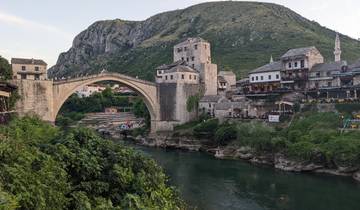
7 days
Bosnia and Herzegovina: Wild Horses & City Sights
- ✓ Comprehensive Mostar tour
- ✓ Expert local guides included
- ✓ All accommodation arranged
- ✓ Transportation provided
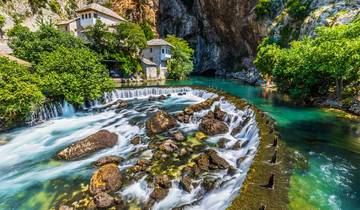
4 days
Bosnia & Hercegovina and Montenegro; Semi – Private Tour with Dedicated Tour Leader & Car
- ✓ Booking needs min. 2 travelers
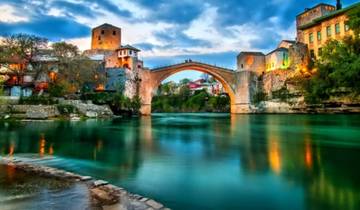
4 days
Dubrovnik Gateway – 3 nights 3 countries
- ✓ Comprehensive Mostar tour
- ✓ Expert local guides included
- ✓ All accommodation arranged
- ✓ Transportation provided
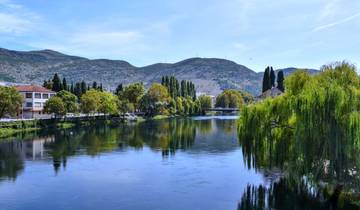
2 days
Mostar Discovery Tour
- ✓ Comprehensive Mostar tour
- ✓ Expert local guides included
- ✓ All accommodation arranged
- ✓ Transportation provided
Multi-day tour packages powered by TourRadar. Prices and availability subject to change.
Introduction to Mostar Tours and Walking Routes 2026
Mostar’s tourism landscape in 2026 balances the city’s dual identity as both a UNESCO World Heritage marvel and a place still processing the trauma of the 1992-1995 siege. The Old Bridge area, meticulously reconstructed after its wartime destruction and reopened in 2004, draws visitors to its Ottoman-era charm, but the authentic Mostar experience extends beyond the polished tourist core into neighborhoods where bullet-scarred buildings stand as reminders of recent history. Tours and walking routes in 2026 reflect this complexity, offering everything from lighthearted bazaar strolls and culinary adventures to sobering war tours that confront uncomfortable truths about ethnic conflict and urban warfare.
The city’s compact geography makes it exceptionally walkable, with most significant sites concentrated within a 15-minute walk of Stari Most. This accessibility has spawned a thriving guided tour industry dominated by local operators who emphasize personal storytelling over scripted narratives. Unlike many European tourist destinations where guides recite memorized facts, Mostar’s tour leaders frequently share firsthand accounts of growing up in Yugoslavia, surviving the siege as children or soldiers, and rebuilding lives in the divided city that emerged from the Dayton Agreement. These personal dimensions transform standard walking tours into oral history sessions that visitors consistently cite as trip highlights.
Herzegovina day tours radiating from Mostar have become equally essential, as the city serves as the logical base for exploring the region’s dramatic natural and cultural landscapes. Kravice Waterfalls’ turquoise cascades, Blagaj Tekija’s cliff-hugging dervish monastery, and Počitelj’s medieval stone village all lie within 45 minutes, making full-day circuits practical and rewarding. Tour operators in 2026 range from budget group experiences departing daily to private guides offering customized itineraries that accommodate photographers, hikers, or families with specific interests.
The Bosnian Convertible Mark (BAM or KM) serves as local currency, pegged at approximately 1.96 KM per euro. While many Old Town establishments accept euros, tours and entrance fees require convertible marks, available at numerous exchange offices and ATMs throughout the city. Most tour operators quote prices in both convertible marks and euros/dollars, simplifying comparison shopping.
Understanding Mostar’s Tour Options 2026
Mostar’s tour landscape divides into several distinct categories, each serving different traveler interests and budgets. Free walking tours operate on a tip-based model where participants pay what they feel the experience was worth, typically 20-90 KM ($10-50) per person. These tours have become the dominant introduction to Mostar, with multiple daily departures from central meeting points and enthusiastic local guides who rely on tips as primary income. The free model reduces financial barriers while ensuring guides deliver compelling experiences to earn their compensation.
Paid walking tours cost 36-90 KM ($20-50) per person for group experiences and 145-200 KM ($80-110) for private tours. While seemingly redundant given the free tour availability, paid options offer several advantages: guaranteed departure regardless of participant numbers, smaller group sizes capped at 8-12 people, specialized themes like food or war history, and professional guides with tourism certifications. Private tours provide maximum flexibility in timing, pace, and routing, appealing to travelers with mobility considerations, photography priorities, or desire for in-depth discussion.
Herzegovina day tours represent the most significant time and financial commitment at 80-160 KM ($45-90) for full-day group excursions. These tours solve the logistical challenges of visiting dispersed sites without a rental car, bundling transportation, guide services, and entrance fees into a single package. The standard circuit visits Blagaj, Počitelj, and Kravice in 8 hours, though variations exist adding Mogorjelo Roman ruins, Žitomislići monastery, or Medjugorje pilgrimage site. Private Herzegovina tours cost 180-220 KM ($100-125) per vehicle for 1-4 passengers, making them economical for couples or small groups who value flexibility.
Food tours operate in the 70-130 KM ($40-70) range for 3-4 hour experiences combining walking, eating, and cultural education. These tours have proliferated in recent years as Mostar’s culinary scene gained recognition beyond the tourist-trap restaurants around Stari Most. Professional chefs often lead food tours, providing insider knowledge about traditional preparation methods, ingredient sourcing, and the Ottoman-Austro-Hungarian fusion that defines Herzegovinian cuisine. Wine tours represent a subset, focusing on the vineyards around Čitluk where Herzegovina’s distinctive Žilavka and Blatina grape varieties thrive.
War tours addressing the 1992-1995 siege cost 75-80 KM ($42-45) for 2-3 hour specialized experiences that venture beyond Old Town into former front-line neighborhoods. These tours visit war cemeteries, view buildings still bearing bullet holes and shelling damage, and discuss the ethnic cleansing campaigns that divided the city along the Bulevar front line. Guides typically have personal connections to the conflict, either as survivors, soldiers, or family members of victims, lending raw authenticity that textbook history cannot convey.
Self-guided exploration remains free beyond entrance fees to specific sites. The Old Town charges no admission, though Koski Mehmed Pasha Mosque requests 6 KM ($3) to climb its minaret, and the Museum of War and Genocide costs 10 KM ($6). GPS-enabled walking apps like GPSmyCity provide audio-guided routes for one-time download fees of 5-7 KM ($3-4), offering compromise between complete independence and guided structure.
Free Walking Tours Mostar 2026
Sheva Walking Tours anchors Mostar’s free walking tour scene in 2026, operating multiple daily departures that have earned thousands of five-star reviews across TripAdvisor, Google, and GuruWalk platforms. The standard tour departs at 9:30 AM, 2 PM, and 5 PM from the Hamam Museum at the Old Town entrance, running 2-2.5 hours through the UNESCO World Heritage zone and beyond into areas that most tourists never reach. Meeting points are clearly marked and guides carry identifying signs, making rendezvous straightforward even for first-time visitors navigating unfamiliar streets.
The tour begins with Ottoman Mostar, explaining how Mimar Hajrudin’s 1566 bridge represented the apex of Islamic architectural achievement and served as the city’s economic and symbolic heart for four centuries. Guides lead groups through Kujundžiluk coppersmith street, where artisans still hammer traditional copper coffee sets and decorative plates, though modern vendors have added war-era memorabilia including engraved shell casings and military insignia that reflect the area’s complex history. The Crooked Bridge receives attention as the Old Bridge’s older sibling and engineering prototype, built in 1558 to test construction techniques before the main structure.
Koski Mehmed Pasha Mosque offers exterior discussion of 1618 Ottoman architecture, though climbing the minaret requires separate 6 KM ($3) admission that tours don’t include. Guides explain the mosque’s wartime damage and reconstruction, connecting it to broader patterns of religious site destruction during the conflict. The bridge diving tradition receives thorough coverage, with guides detailing the Mostarski Ikari (Mostar Divers Club) that maintains the centuries-old practice and explaining how to join the annual diving school for those brave enough to attempt the 24-meter leap into the Neretva’s cold current.
The tour’s distinguishing feature arrives when guides lead groups away from the polished Old Town into the Bulevar area that served as the front line between 1993-1995. Bullet-riddled apartment blocks, destroyed buildings left as monuments, and the Spanish Square that divided Croat and Bosniak forces provide visceral evidence of urban warfare that killed over 2,000 people and left the city ethnically partitioned. Guides share personal stories of life under siege—collecting water under sniper fire, makeshift schooling in basements, families separated by front lines just blocks apart.
Sheva Tours employs roughly a dozen guides including the eponymous Sheva, plus Arnela, Marko, Miran, and others who rotate based on language demand and tour timing. English tours dominate but Spanish, German, and Italian departures occur with advance booking. Guides receive no salary, relying entirely on tips that typically range 20-50 KM ($10-28) per person, with satisfied participants occasionally tipping 90 KM ($50) for exceptional experiences. Groups size varies from 5-25 people depending on season and time slot, with morning tours generally smaller than afternoon peak periods.
Alternative free walking tours operate under similar models. Meet the Locals offers more personalized experiences with guides like Sanjin who arrange restaurant bookings, customize routes based on group interests, and incorporate coffee breaks where they explain Bosnian coffee ceremony. These tours typically run 3 hours and accommodate smaller groups of 4-10 participants. GuruWalk platform lists multiple Mostar guides offering tip-based tours with slightly varied itineraries, some focusing more on Ottoman heritage and others emphasizing post-war recovery. Walkative tours, organized by Sheva guides under a different booking system, mirror the standard Sheva experience.
Booking requirements vary by operator. Sheva Walking Tours requests advance reservation through their website or WhatsApp (+387 61 209 388) to manage group sizes, though walk-ups can sometimes join if space permits. Payment occurs entirely at tour conclusion via cash tip in convertible marks, euros, or dollars. No credit cards accepted. Tours operate year-round in all weather, with guides carrying umbrellas during rain but canceling only for severe storms or dangerous conditions.
Private Walking Tours Mostar 2026
Private walking tours in Mostar for 2026 start at 36 KM ($20) per person for basic 1.5-hour Old Town explorations with professional licensed guides. AMAT Travel, Tours by Locals, and individual guides advertising through TripAdvisor and Google dominate this market segment, offering fully customizable experiences that depart at traveler-chosen times and follow routes adapted to specific interests. Unlike group tours that maintain fixed schedules and itineraries, private tours accommodate photographers who want golden hour light, families with young children requiring frequent breaks, or history enthusiasts who request extended time discussing particular periods.
Standard 2-hour private walking tours covering Old Town highlights cost 70-90 KM ($40-50) for couples and 145-180 KM ($80-100) for families or groups up to six. These tours include Stari Most with detailed architectural analysis, Kujundžiluk with time for shopping and artisan demonstrations, Crooked Bridge, Koski Mehmed Pasha Mosque exterior, and traditional neighborhoods showcasing Ottoman domestic architecture. Guides typically speak excellent English plus one or two additional languages, and many hold university degrees in history, architecture, or tourism.
Extended 3-4 hour private tours incorporating war history, museum visits, or broader area coverage run 145-200 KM ($80-110). These deeper explorations venture into the Bulevar front-line zone, visit the War Photo Exhibition in Tara Tower (10 KM/$6 admission not included), explore the massive war cemeteries on both sides of the conflict, and often include guided visits to Muslibegović House, a restored Ottoman mansion offering rare interior access to authentic period furnishings and architectural details. The Hamam Museum, housed in a 16th-century Ottoman bathhouse, sometimes receives inclusion depending on guide specialization.
Food-focused private walking tours represent a premium option at 145-180 KM ($80-100) per person for 3-4 hour culinary journeys. Professional chefs or trained food guides lead these experiences, stopping at 6-8 locations including family-run bakeries for fresh burek tasting, aščinica (traditional cafeterias) for home-style cooking, ćevabdžinica for grilled meats, and pastry shops for desserts. Guides explain ingredient sourcing, preparation techniques, and the cultural significance of dishes like japrak (stuffed grape leaves) and sarma (cabbage rolls). Many food tours include Bosnian coffee ceremony instruction, teaching proper preparation in a džezva (copper pot) and the fortune-telling tradition of reading grounds.
Wine-focused private tours depart Mostar for Herzegovina’s vineyard region around Čitluk and Međugorje, visiting 2-3 family wineries to taste Žilavka whites and Blatina reds paired with local cheeses and cured meats. These half-day experiences cost 200-270 KM ($110-150) per person including transportation, winery visits, tastings, and light lunch. Full-day wine tours adding more wineries and a traditional restaurant meal run 360-450 KM ($200-250) per person. Wineries like Brkić, Andrija, and Emporia offer tours in English explaining Herzegovina’s 4,000-year viticulture tradition and the indigenous grape varieties that survived phylloxera devastation.
Booking private tours requires advance contact via email, WhatsApp, or tour platforms like Tours by Locals and Viator. Deposit requirements vary—some guides request 30-50% advance payment via PayPal or credit card, while others accept full payment in cash at tour conclusion. Cancellation policies typically allow free cancellation 24-48 hours before departure, with deposits forfeited for same-day cancellations. Private tour prices often include flexibility for itinerary adjustments during the tour itself, with guides accommodating spontaneous requests to add stops or extend duration for additional fees.
Herzegovina Day Tours from Mostar 2026
Full-day Herzegovina tours from Mostar visit the region’s essential sites in 8-hour circuits that depart around 9 AM and return by 5-6 PM. The standard route stops at Blagaj Tekija (45 minutes), Počitelj (30-45 minutes), and Kravice Waterfalls (90-120 minutes including swimming time), with variations adding Žitomislići Monastery, Mogorjelo Roman villa, or Medjugorje pilgrimage site. Tours cost 80-160 KM ($45-90) per person depending on operator, group size, and inclusions, with hotel pickup, English-speaking guide, air-conditioned transportation, and most entrance fees standard.
Blagaj Tekija serves as the first stop, situated where the Buna River emerges from a cliff-face cave in an impossibly dramatic setting that photographs like a fantasy illustration. The 16th-century dervish monastery clings to the cliff 200 meters above the river source, its white walls and wooden balconies creating an iconic image that rivals Stari Most for visual impact. Entry costs 10 KM ($6) and allows exploration of the tekija’s prayer rooms, library, and garden courtyard while guides explain Sufi mysticism and the site’s spiritual significance. The riverside restaurants below the tekija offer optional coffee or lunch breaks with springwater trout as the specialty, though most tours don’t include meals and maintain strict schedules.
Počitelj medieval fortress appears next, a stone village climbing a hillside above the Neretva River that UNESCO has designated for protection as an outstanding example of Ottoman military and civil architecture. The 30-45 minute stop allows climbing to the Gavrakapetan Tower summit for sweeping valley views, exploring the Šišman Ibrahim Pasha Mosque, and browsing artisan studios where local artists sell watercolors, copperware, and textiles. The uphill walk proves moderately strenuous with uneven stone steps, but most visitors manage the climb despite the exertion. No entrance fee applies for general access, though the tower and mosque request donations.
Kravice Waterfalls anchor the tour as the primary time commitment, with 90-120 minutes allowing proper swimming and relaxation beside the 25-meter cascades that span 120 meters across the Trebižat River. Entry costs 20 KM ($11) and provides access to the waterfall amphitheater, natural swimming pools, and surrounding picnic areas. Summer months (June-September) see the site crowded with tour groups, locals, and swimmers, while spring and fall offer more solitude albeit cooler water temperatures. Facilities include changing rooms, basic café, and souvenir stands. The turquoise water and travertine formations create spectacular photography, particularly for drone operators capturing aerial perspectives of the cascades and surrounding forest.
Extended tours adding Žitomislići Monastery visit the Serbian Orthodox complex featuring 16th-century churches and active monastic community 15 minutes beyond Blagaj. The monastery charges no entrance fee but welcomes donations, and monks sometimes offer informal tours explaining icon traditions and monastery history. Mogorjelo Roman villa, 20 minutes past Počitelj, preserves mosaic floors and ruins from a 4th-century estate, providing historical contrast to the Islamic and Christian sites. Entry costs 5 KM ($3).
Medjugorje, the controversial Catholic pilgrimage site where apparitions of the Virgin Mary allegedly began in 1981, adds 60-90 minutes to tour length and represents a divisive inclusion. The town draws six million annual visitors to its enormous modern churches, apparition hill, and religious souvenir shops, creating either profoundly spiritual experiences or awkwardly commercial atmospheres depending on visitor beliefs. Most secular tour operators skip Medjugorje or offer it as optional add-on, while some Catholic-focused tours emphasize this stop above others.
Tour operators range from budget to premium. iHouse Travel charges 80 KM ($45) for standard circuits with larger group sizes of 15-25 people in full-size buses. Mid-range operators like Fortuna Travel and Explore Mostar run 90-105 KM ($50-60) with smaller minibus groups of 8-14 participants and more personalized guiding. Premium providers charge 145 KM ($82) for maximum 8-person groups in luxury vehicles with extended time at each site and enhanced guide expertise. All prices include transportation and guide but list entrance fees separately in tour descriptions to maintain transparency.
Private Herzegovina tours accommodate 1-4 passengers in sedan or SUV for 180-220 KM ($100-125) total vehicle cost, making them economical for couples and small groups. Private tours offer maximum flexibility in timing, stop duration, and route adjustments. Travelers can request early Kravice arrival before tour groups flood the waterfalls, extended Blagaj time for restaurant meals, or photography-focused itineraries hitting optimal light conditions. Private guides typically provide more detailed cultural and historical context than group tours working with diverse participant interests.
Booking Herzegovina day tours happens through hotel concierges, online platforms (GetYourGuide, Viator, operator websites), or direct WhatsApp contact with tour companies. Summer season (June-September) requires booking 3-7 days ahead as tours fill capacity, while spring and fall allow more spontaneous booking. Payment typically occurs via credit card for online bookings or cash to driver/guide at tour conclusion. Cancellation policies vary but generally allow free cancellation 24 hours before departure.
War Tours Mostar 2026
Mostar’s war tours address the 1992-1995 siege that killed over 2,000 people, destroyed the Old Bridge and much of the city, and created ethnic divisions that persist three decades later. These specialized 2-3 hour experiences cost 75-80 KM ($42-45) per person and visit sites that standard tours avoid: massive war cemeteries, bullet-scarred neighborhoods, the Bulevar front line, and war photo exhibitions. The essential difference from regular walking tours lies in the depth and focus—while standard tours mention the war briefly, dedicated war tours spend entire sessions examining causes, combat, atrocities, and consequences with guides who experienced the conflict firsthand.
Sheva Walking Tours operates “Break-up of Yugoslavia & The War in Mostar: Life Under Siege” as their primary war-focused offering, departing daily by appointment rather than fixed schedule. The tour begins with Yugoslav history, explaining how Tito’s death, economic collapse, and nationalist politics created conditions for ethnic conflict. Guides detail the 1992-1995 timeline when Mostar experienced two distinct sieges—first by the Yugoslav People’s Army and Bosnian Serb forces, then by Croatian forces against the Bosniak population after the Croat-Bosniak alliance collapsed. This second siege, lasting 9 months in 1993-1994, proved particularly brutal as former allies fought house-to-house across the city center.
The tour crosses the Bulevar, the wide boulevard that became the front line dividing Croat west from Bosniak east. Guides point out buildings still bearing thousands of bullet holes, explain sniper alley dynamics where civilians risked death attempting to cross for food or water, and discuss the humanitarian catastrophe in besieged east Mostar where 55,000 people endured shelling and starvation in an area measuring just one square kilometer. The Partisan Memorial Cemetery, converted into a massive war burial ground, contains row upon row of white marble headstones marking soldiers and civilians killed during the siege, many bearing birth dates in the 1970s indicating victims were teenagers or young adults.
The War Photo Exhibition in the Tara Tower adjacent to Stari Most charges 10 KM ($6) admission not included in tour cost but often incorporated into itineraries. Photographer Wade Goddard’s powerful black-and-white images capture life under siege—children playing amid ruins, soldiers in trenches overlooking the city, civilians collecting water under sniper threat. The photographs provide visceral documentation that complements guide narratives, particularly images showing the Old Bridge’s destruction on November 9, 1993, when Croatian artillery fire toppled the 427-year-old structure into the Neretva.
Guides share personal experiences rather than maintaining objective historical distance. Many grew up in Mostar during the 1980s, experienced the siege as teenagers, and lost family members or friends to the violence. Some served as soldiers defending besieged areas. Others fled the city and returned after the Dayton Agreement. This personal dimension transforms tours from academic history lessons into emotional reckonings with recent trauma. Guides discuss the difficulty of living in divided cities where former enemies remain neighbors, the slow pace of reconciliation, and frustrations with political structures that institutionalize ethnic divisions.
The Spanish Square, where Spanish peacekeeping forces maintained a buffer zone between Croat and Bosniak forces, receives detailed coverage as the symbolic center of division. The Bruce Lee statue nearby represents rare civic common ground, honoring the martial arts icon beloved by all Yugoslav communities and symbolizing non-ethnic identity. Guides explain how post-war Mostar functions under the Dayton Agreement’s complex power-sharing arrangement, where separate education systems teach different curricula to Croat and Bosniak students and municipal governance remains divided along ethnic lines.
Alternative war tour operators include local historians and veterans offering similar 2-3 hour experiences through private booking. Prices and quality vary, with some guides providing more military analysis and others emphasizing civilian survival stories. Tours by veterans sometimes include visits to former defensive positions, weapons demonstrations, or discussions of battlefield tactics that appeal to military history enthusiasts. Tours led by civilian survivors tend toward human rights perspectives, discussing ethnic cleansing, war crimes, and transitional justice.
Booking war tours requires contacting operators via email, WhatsApp, or tour platforms. These tours don’t operate on fixed schedules like standard walking tours but arrange by appointment based on guide availability. Minimum group sizes sometimes apply, though solo travelers can usually book by paying for two participants or joining other individuals seeking the same departure time. The content’s emotional intensity and explicit discussions of violence, death, and war crimes make these tours unsuitable for young children, though mature teenagers often find them profoundly educational.
Food Tours and Culinary Experiences Mostar 2026
Mostar food tours in 2026 provide systematic introductions to Bosnian cuisine through 3-4 hour walking experiences stopping at 6-8 locations for tastings, explanations, and cultural context. Tours cost 70-130 KM ($40-70) per person depending on operator, route, and inclusions, with local beer or wine generally included but substantial meals additional. Professional chefs or trained food guides lead most tours, explaining Ottoman-Austro-Hungarian culinary fusion that defines Herzegovina’s distinctive foodways different from Sarajevo’s cuisine farther north or Dalmatian-influenced coastal cooking.
The typical tour structure begins at a family-run bakery for fresh burek tasting, explaining the difference between burek (meat-filled pita), sirnica (cheese-filled), and krompiruša (potato-filled) while discussing the Ottoman legacy in pastry-making. Guides emphasize that genuine burek contains only meat despite Bosnian diaspora establishments worldwide using the term generically. The best pita bakeries in Mostar include Buregdžinica Ago on Fehima Čurčića street, where locals queue daily for spinach and cheese varieties smothered in garlic yogurt sauce.
Aščinica visits follow, stopping at traditional cafeteria-style restaurants where home-cooked dishes simmer in large pots and customers point to selections rather than ordering from menus. Aščinica Balkan and Aščinica Sahan serve authentic preparations of japrak (grape leaves stuffed with rice and meat), sarma (cabbage rolls), and grah (bean stew) that represent everyday Bosnian eating rather than tourist-oriented presentations. Tours include tastings of 2-3 dishes with bread and salad, explaining the slow-cooking techniques and spice profiles that characterize traditional cuisine.
Ćevapi tastings occur at respected ćevabdžinica like Tima-Irma, the family-owned institution widely considered Mostar’s finest for the grilled minced meat fingers served in lepinja flatbread with raw onions, kajmak (clotted cream), and ajvar (roasted red pepper spread). Guides discuss the Balkan-wide debate over proper ćevapi composition, size, and accompaniments, explaining regional variations from Sarajevo’s pure beef versions to Travnik’s combined beef-lamb preparations. The best ćevapi achieves crispy exterior and juicy interior through precise meat grinding, seasoning, and charcoal grilling—techniques that separate exceptional examples from mediocre tourist trap iterations.
Bosnian coffee ceremony receives thorough coverage, with guides teaching proper preparation in a džezva copper pot and explaining the social ritual of serving coffee with rahat lokum (Turkish delight) and a glass of water. Traditional coffeehouses like Café de Alma demonstrate the distinctive grind, water temperature, and serving method that distinguish Bosnian preparation from Turkish or Greek versions. The foam layer, fortune-telling with grounds, and the three-hour coffee session as social institution all receive explanation, connecting beverage preparation to cultural values around hospitality and unhurried conversation.
Dessert stops feature baklava, hurmašice (date-shaped pastries soaked in syrup), and tulumba (fried dough in syrup), with guides explaining Ottoman pastry traditions and pointing out quality indicators like paper-thin phyllo layers and proper syrup-to-pastry ratios. The best baklava in Mostar comes from smaller pastry shops on side streets rather than the prominent Old Town vendors serving tourists, with locals favoring establishments where grandmothers still hand-roll phyllo dough each morning.
Wine tastings sometimes supplement food tours or occur as dedicated experiences. Herzegovina’s wine region produces distinctive Žilavka white and Blatina red from indigenous grape varieties that pre-date Roman occupation. Proper wine tours depart Mostar for vineyard visits around Čitluk, but in-city tastings occur at wine bars like Urban Taste of Orient where knowledgeable staff pour local selections alongside cured meats and cheeses. Guides explain how limestone soils, Mediterranean climate, and minimal use of additives create wines that taste markedly different from international varieties.
Cooking classes represent hands-on alternatives to tasting tours, costing 90-145 KM ($50-80) for 3-4 hour sessions where participants prepare traditional dishes under local instruction. Classes typically focus on pita-making, teaching dough preparation, rolling techniques, filling composition, and baking in home kitchens. Participants eat their creations family-style with hosts, receiving recipe cards and sometimes small gifts like rolling pins or traditional coffee pots. Hosts share family stories, cooking traditions passed across generations, and advice on ingredient sourcing for recreating dishes at home.
Booking food tours happens through platforms like byFood, Viator, GetYourGuide, or direct operator contact. Tours operate year-round but concentrate departures during high season (May-September) when visitor numbers support daily scheduling. Off-season tours require minimum participant numbers or private booking. Dietary restrictions receive accommodation with advance notice—vegetarian versions substitute cheese and vegetable dishes for meat preparations, while vegan options prove more challenging given dairy’s prominence in Bosnian cuisine but are manageable with planning. Gluten-free modifications present difficulties as bread, pita, and phyllo pastries form cuisine cornerstones, though guides can substitute rice dishes and grilled meats.
Self-Guided Walking Routes Mostar 2026
The essential self-guided walking route through Mostar Old Town covers approximately 2 kilometers and takes 90 minutes at a leisurely pace including photography stops. The circuit begins at Crooked Bridge (Kriva Ćuprija) over Radobolja stream, the delicate 1558 prototype for its larger sibling that tests the same engineering principles on a smaller scale. The bridge’s graceful 28-foot span rises 14 feet above the water, built from finely cut local stone with crushed stone infill and rounded cobblestone paving—details that become more impressive when understanding this was the experimental structure before committing to the monumental Old Bridge.
From Crooked Bridge, walk upstream along Radobolja toward Tara Tower, passing stone houses with characteristic red tile roofs and stone shingles that survived war damage and reconstruction. Turn right onto Kujundžiluk, the coppersmith street that runs through the bazaar area from the Old Town entrance to Stari Most. The narrow cobblestone lane contains 50+ shops selling traditional crafts—hammered copper coffee sets, carpets, jewelry, ceramics, hookahs, and distinctive war memorabilia including engraved artillery shells converted to decorative pieces. Artisans work in some shops, demonstrating hand-engraving techniques that have defined the street since Ottoman times.
Stari Most appears at Kujundžiluk’s terminus, the UNESCO World Heritage bridge that spans 29 meters across the Neretva River and rises 24 meters above the water at its apex. The 1566 structure destroyed in 1993 and meticulously reconstructed 2001-2004 using original stone recovered from the riverbed and traditional Ottoman building techniques. The bridge surface consists of polished tenelija limestone that becomes dangerously slippery when wet—walk on the raised stone treads rather than smooth flat sections, a safety measure that locals emphasize to prevent falls into the river 24 meters below.
Tara Tower on the Old Bridge’s west end houses the War Photo Exhibition (10 KM/$6 admission) displaying Wade Goddard’s powerful black-and-white images from the 1992-1995 siege. The small two-room gallery provides essential context for understanding wartime destruction and reconstruction efforts, though the content’s emotional intensity requires mental preparation. On the opposite bank, Halebija Tower mirrors Tara’s defensive architecture, though it lacks the photo exhibition and primarily serves as Instagram backdrop for bridge selfies.
After crossing Stari Most, turn left along the Neretva promenade toward Koski Mehmed Pasha Mosque, passing cafés and restaurants with river-view terraces that charge premium prices for the setting. The mosque, built in 1618, charges 6 KM ($3) to climb its minaret—the single best viewpoint for Old Bridge photography. The 89-step climb proves moderately strenuous but delivers 360-degree panoramas encompassing the bridge, Old Town roofscape, surrounding mountains, and Neretva valley. Early morning (7-9 AM) or late afternoon (5-7 PM) provides optimal light for photography and smaller crowds than midday peak times.
The Hamam Museum adjacent to Koski Mehmed Pasha Mosque occupies a restored 16th-century Ottoman bathhouse, displaying original plumbing, heating systems, and bathing chambers that explain hammam cultural significance and technical sophistication. Entry costs 5 KM ($3). The small museum requires 20 minutes to tour but provides valuable context for understanding Ottoman urban planning and the social role of public baths in Islamic communities.
Extended routes venture beyond the tourist core into areas that standard walking tours often skip. Walk west from Stari Most along Onešćukova toward the Franciscan Church and Monastery of St. Peter and St. Paul, whose prominent bell tower marks the Croat side of the divided city. The 1866 church suffered heavy shelling during the siege but underwent reconstruction, and its tower provides alternative city views for 5 KM ($3) admission. The surrounding streets contain numerous buildings bearing bullet holes and shelling damage preserved as historical evidence rather than repaired.
The Bulevar, Mostar’s main boulevard paralleling the Neretva one kilometer from the Old Bridge, served as the front line between Croat and Bosniak forces during the 1993-1994 siege. Walking the Bulevar today reveals the war’s lasting impact—destroyed buildings standing as monuments, memorials to victims, and the physical division that still separates communities psychologically despite demolished checkpoints. The Spanish Square, where Spanish peacekeeping forces maintained a buffer zone, marks the symbolic center of division. The Bruce Lee statue nearby represents rare common ground, honoring the martial arts icon beloved across ethnic lines.
The New Muslim Cemetery occupies a hillside one block from Kujundžiluk, containing thousands of white marble headstones marking war dead from the siege. The cemetery continues expanding as veterans from the 1990s conflict die from injuries or age, their grave markers adding to rows that document the human cost of ethnic war. Photography here requires sensitivity to mourners and recognition that this is an active burial ground rather than historical monument.
Muslibegović House, a restored 18th-century Ottoman mansion on Osman Đikića street, offers rare interior access to authentic period furnishings, architecture, and decorative arts. The house operates as a boutique hotel but allows non-guests to tour ground-floor rooms for 10 KM ($6), providing glimpses of wealthy Ottoman domestic life through original carved ceilings, copper fixtures, and traditional textiles. The inner courtyard with its fountain and garden represents classic Ottoman residential planning that balanced public and private spaces.
GPS-enabled walking apps provide audio-guided alternatives to fully independent exploration. GPSmyCity offers two Mostar tours—”Introduction Walking Tour” covering Old Town highlights and “War & Peace Tour” addressing siege history—available as one-time downloads for 5-7 KM ($3-4) each. The app’s offline functionality proves valuable for travelers avoiding roaming charges, and the GPS navigation prevents getting lost in the bazaar’s maze of similar-looking lanes. However, recorded audio tours lack the spontaneity, current information, and personal perspectives that live guides provide.
Heritage signs marked with blue UNESCO logos mark significant sites throughout Old Town, providing basic information in English, German, and Bosnian. These signs offer sufficient orientation for independent exploration, though they don’t replace detailed cultural and historical context that tours provide. Tourist maps available free at hotels and information points show major sites, though the Old Town’s compact size makes navigation intuitive once oriented to the river and bridge as central landmarks.
Specialized Tours Mostar 2026
Photography tours cater to travelers prioritizing image-making over standard sightseeing, costing 145-200 KM ($80-110) for half-day private experiences with guides who understand optimal shooting locations, timing, and local access. These tours begin before dawn to capture Stari Most in golden hour light with minimal tourist presence, visit elevated viewpoints that casual visitors miss, and include back-lane routes through residential areas showcasing authentic daily life rather than performative tourist scenes. Guides arrange access to private properties with superior bridge views, coordinate bridge diver timing for action photography, and understand technical considerations like best angles for avoiding harsh midday contrast.
The premier photography location remains the Koski Mehmed Pasha Mosque minaret, though crowds complicate tripod use during peak hours. Alternative elevated positions include the hillside neighborhoods on both sides of the Neretva, the Franciscan Church bell tower on the west bank, and several rooftop cafés that allow photography from their terraces with purchase of coffee or meal. Evening blue hour (30-45 minutes after sunset) produces particularly dramatic images when floodlights illuminate the bridge against deepening blue sky, though this requires timing guidance that photography-focused tours provide.
Kayaking and rafting adventures on the Neretva River combine outdoor activity with perspective on Mostar’s landscape, departing from points upstream and paddling 2-4 hours through canyon scenery before finishing at the city. Half-day trips cost 90-145 KM ($50-80) per person including equipment, guide, and often a traditional BBQ lunch at trip conclusion. The Neretva’s emerald-green water and limestone canyon walls create photogenic settings, while the river’s relatively calm flow proves manageable for novice paddlers during summer low-water periods. Spring snowmelt creates more challenging conditions requiring intermediate skills.
Cycling tours around Mostar and into Herzegovina countryside operate as full-day or half-day experiences costing 90-180 KM ($50-100) depending on distance and difficulty. Routes visit surrounding villages, wine country, or historic sites like Blagaj and Počitelj, with electric bike options accommodating varying fitness levels. Cycling provides access to rural areas that bus tours skip while maintaining ground-level interaction with landscapes and communities that drone photographers miss. Tour operators supply quality mountain or hybrid bikes, helmets, repair kits, and support vehicles for longer routes.
Rock climbing and canyoning adventures near Mostar attract adventure travelers, with guides leading technical climbs on limestone cliffs or canyon descents requiring rappelling, swimming, and scrambling through narrow gorges. Half-day experiences cost 145-200 KM ($80-110) per person including all equipment, instruction, and transportation to climbing areas 30-45 minutes from the city. These activities demand good fitness and no acrophobia, though routes span beginner to advanced difficulties. The Bijela canyon and Prenj mountain area provide premier climbing venues.
Winter ski tours operate December through March when Bjelašnica and other Olympic mountains near Sarajevo receive adequate snowfall. Day trips from Mostar cost 145-180 KM ($80-100) including transportation, lift tickets, and equipment rental for those lacking gear. The 2.5-hour drive limits appeal compared to staying in Sarajevo or mountain villages, but the option exists for Mostar-based travelers wanting single-day ski experiences without changing accommodations.
Practical Information Tours Mostar 2026
Meeting points for tours concentrate around several key locations. Free walking tours typically depart from the Hamam Museum at the Old Town entrance, marked by the prominent stone bathhouse building where Onešćukova meets the bazaar area. The Franciscan Church bell tower serves as secondary meeting point for some tours, identifiable by its tall spire visible throughout the city. Private tours often arrange hotel pickup, eliminating navigation concerns but requiring clear communication about accommodation location and pickup timing.
Booking methods vary by tour type. Free walking tours use online reservation systems (tour operator websites, GuruWalk, Walkative platforms) that collect email and participant numbers but require no payment. Confirmations arrive via email with meeting point details and guide contact information. Paid tours book through multiple channels—online platforms (GetYourGuide, Viator, byFood), direct operator contact (email, WhatsApp), or hotel concierge services. Payment methods include credit cards for platform bookings, bank transfers for some private tours, or cash at tour conclusion for many local operators.
Cancellation policies generally allow free cancellation 24 hours before scheduled departure, though some budget operators require 48-72 hour notice. Free walking tours technically allow no-show without penalty since no payment occurs in advance, but courtesy dictates canceling reservations if plans change so guides can manage group sizes. Private tours with deposits risk losing 30-50% of payment for cancellations within 24 hours, while same-day cancellations forfeit full deposits.
Tipping practices follow regional norms. Free walking tours rely on tips as guides’ sole compensation, with satisfied participants typically paying 20-50 KM ($10-28) per person and exceptional experiences earning 70-90 KM ($40-50) tips. Paid tours with set prices don’t require additional tipping, though 10-20% gratuities for outstanding service represent appreciated bonuses. Food tours sometimes include tip in the total price but not always—check tour descriptions to determine if guide gratuity is separate. Private tours quote all-inclusive prices that don’t require supplemental tipping unless travelers specifically request extra services or extended duration.
Dress code requirements remain minimal for walking tours. Comfortable walking shoes with good traction prove essential given cobblestone surfaces, steep steps at Old Bridge, and uneven terrain at sites like Počitelj. Modest clothing covering shoulders and knees shows respect when entering mosques, though most tours don’t include mosque interiors beyond exterior discussions. Summer heat (temperatures regularly exceeding 35°C/95°F) demands sun protection, lightweight breathable clothing, and water bottles. Winter tours require warm layering as temperatures can drop to freezing and wind along the Neretva increases chill factor.
Physical fitness requirements vary by tour. Standard walking tours assume ability to walk 2-3 kilometers over 2-3 hours with multiple stops, climb stairs at the Old Bridge and mosque minarets (optional), and stand for extended periods during guide explanations. Participants with mobility limitations should inquire about route modifications or private tours that accommodate wheelchairs or walkers, though the Old Town’s cobblestones and steps present genuine accessibility challenges. Herzegovina day tours involve minimal walking beyond short distances at each site, making them suitable for most fitness levels.
Language availability emphasizes English, with most tour operators employing fluent English-speaking guides. German tours operate regularly given the large German-speaking tourist demographic. Spanish, Italian, and French tours require advance booking and may not operate daily depending on guide availability. Private tours can arrange guides speaking less common languages including Russian, Arabic, Turkish, or Scandinavian languages with sufficient advance notice. Free walking tours concentrate on English departures with occasional German or Spanish options during peak season.
Group size limitations vary significantly. Free walking tours sometimes swell to 20-25 participants during peak summer periods, creating challenges for hearing guide explanations and maintaining group cohesion. Mid-range paid tours cap groups at 12-15 people, while premium small-group experiences limit to 6-8 participants for more personalized interaction. Private tours serve 1-6 people typically, with larger private groups possible for additional fees. Large pre-organized groups (school trips, tour operators) should book private tours rather than joining public departures that they would overwhelm.
Age restrictions rarely apply to walking tours beyond practical considerations about young children’s attention spans and stamina. War tours discussing graphic violence and trauma typically recommend minimum age 12-14 for mature content. Food tours welcome children who enjoy trying new dishes, though picky eaters may struggle with the adventurous tastings. Herzegovina day tours suit all ages given minimal walking and the appeal of natural sites like Kravice Waterfalls for children.
Seasonal Considerations Tours Mostar 2026
Summer season (June-September) represents peak tour activity in Mostar 2026, with daily departures for all tour types, maximum guide availability, and largest participant numbers. The advantages include guaranteed departures regardless of booking numbers, broadest language options, and extended operating hours allowing both morning and evening tours. Disadvantages stem from crowds that fill Old Town with thousands of day-trippers during midday hours, long queues for mosque minaret access, and higher prices at restaurants near tourist sites. Temperatures regularly exceed 35°C (95°F), making afternoon tours uncomfortably hot and requiring early morning or evening timing for outdoor comfort.
Booking 5-7 days ahead secures preferred tour times during summer, with popular Herzegovina day tours and specialized experiences like food tours filling capacity. Free walking tours don’t sell out in the traditional sense but large group sizes during peak periods reduce the personal interaction and discussion that makes these tours compelling. Early morning departures (7-9 AM starts) avoid crowds but require advance booking since most tourists prefer afternoon arrivals after sleeping late. Evening tours departing 5-6 PM benefit from cooling temperatures and dramatic lighting as the Old Bridge receives floodlight illumination after dusk.
Spring (April-May) and fall (September-October) offer optimal touring conditions in 2026 with moderate temperatures, smaller crowds, and often lower prices than peak summer. The Old Town maintains manageable visitor numbers allowing easier photography, shorter waits for attractions, and more intimate tour group sizes. Tour operators reduce departure frequencies but maintain daily schedules for popular tours, with less common experiences like cooking classes or wine tours requiring advance booking to ensure minimum participant numbers. Weather remains generally favorable with occasional rain requiring flexible backup plans.
Winter (November-March) sees dramatically reduced tourism in Mostar, with many visitors concentrating around holiday periods and school breaks. Tour operators scale back to reduced schedules or appointment-only operations, often consolidating multiple small bookings into shared departures. This creates both challenges (tours may not depart without minimum participants) and opportunities (small group sizes create intimate experiences with generous guide attention). Winter weather alternates between crisp sunny days and periods of cold rain, with occasional snow transforming the Old Town into a fairytale setting that photographs dramatically.
The Old Bridge diving season runs June through September when professional divers from Mostarski Ikari club perform afternoon jumps once tourist donations accumulate to the 25 EUR threshold. Tours timed to coincide with diving provide spectacular photo opportunities, though the unpredictable timing (dependent on crowd gathering and donation collection) frustrates photographers hoping to capture the 24-meter plunge. Early summer (June) and early fall (September) offer better chances of witnessing dives without the aggressive midday heat and overwhelming crowds of July-August peak.
Kravice Waterfalls swimming season spans May through September, with July-August providing warmest water temperatures but densest crowds. The site becomes almost uncomfortably crowded during summer weekends when locals join tourist groups, creating festival-like atmospheres that some visitors enjoy while others find overwhelming. Spring (April-May) delivers maximum water flow from snowmelt creating more dramatic cascades, though water temperatures remain quite cold for swimming. Fall (September-October) provides the best balance of pleasant water temperature, manageable crowds, and reliable weather.
Combining Tours and Independent Exploration Mostar 2026
The optimal Mostar touring strategy in 2026 combines one or two guided tours with substantial independent exploration time. A suggested three-day approach begins with a free walking tour on day one, providing essential orientation, historical context, and local perspective that frames subsequent independent exploration. The 2-2.5 hour investment equips visitors with knowledge to interpret sites they’ll revisit independently, understand the war damage and reconstruction visible throughout the city, and identify restaurants, shops, and viewpoints that deserve return visits.
Day two dedicates to a full Herzegovina day tour visiting Blagaj, Počitelj, and Kravice Waterfalls. This single-day excursion addresses the logistical challenge of reaching dispersed regional sites without rental car while providing guided context that enriches appreciation of each location. The tour eliminates planning stress around transportation, timing, and entrance procedures, allowing travelers to focus on experiencing rather than organizing their day.
Day three employs for independent Old Town exploration based on orientation from the initial walking tour. This self-guided time allows revisiting sites that the walking tour covered quickly, pursuing photography at optimal light times the tour schedule couldn’t accommodate, shopping in bazaar stalls without group time pressures, and selecting restaurants based on informed choices rather than tour guide commissions. The Koski Mehmed Pasha Mosque minaret deserves dedicated time for photography and views, the War Photo Exhibition warrants unhurried contemplation the group tour couldn’t provide, and the back streets beyond the tourist core reward aimless wandering that scheduled tours prevent.
Food enthusiasts might substitute a culinary tour for the second walking tour, providing systematic introduction to Bosnian cuisine that independent restaurant visits can then build upon. The 3-4 hour food tour visits establishments tourists might not discover independently while explaining dishes in ways that menu descriptions cannot convey. Armed with this foundation, subsequent meals become more informed and adventurous as travelers recognize ingredients, understand preparation methods, and can request dishes confidently.
Photography-focused visitors benefit from booking a specialized photography tour that visits the Old Town during optimal light and reveals elevated viewpoints and access opportunities that casual exploration misses. The investment in guided photo tour pays dividends through superior images that generic tourist angles cannot achieve. Following the guided session, photographers can return independently to locations the guide identified, shooting at different times or weather conditions while already knowing optimal positions and technical approaches.
Budget-conscious travelers can minimize tour costs by taking one free walking tour for orientation and historical context, then conducting all other exploration independently using this guide’s route descriptions, GPS apps, and online resources. The free tour provides the essential foundation—understanding the war history, Ottoman heritage, and local perspective—that transforms independent wandering from superficial sightseeing into meaningful engagement. The tip-based model allows tailoring payment to actual tour quality, making the economic risk minimal.
Time-limited visitors making a day trip from Dubrovnik, Split, or Sarajevo should prioritize either the walking tour or independent Old Town exploration, selecting based on whether historical context or flexible photography time matters more. A day trip doesn’t allow combining walking tour plus Herzegovina excursion, forcing choice between depth in one location or breadth across multiple sites. Most day-trippers opt for independent Old Town exploration, climbing the mosque minaret for views, crossing the bridge, browsing Kujundžiluk, and eating lunch at a riverside restaurant before departure.
Booking Platforms and Operators Mostar 2026
Sheva Walking Tours (shevawalkingtours.com, WhatsApp +387 61 209 388) dominates Mostar’s free walking tour market with multiple daily departures, experienced guides including Sheva, Arnela, Marko, and Miran, and thousands of five-star reviews. The operation has become synonymous with Mostar free tours, to the point that many visitors don’t realize alternative operators exist. Booking occurs through the website or WhatsApp, with confirmations providing meeting point details and guide contact information. The team also offers paid specialized tours including war-focused experiences and Herzegovina day trips.
iHouse Travel (ihouse-mostar.com) operates budget-friendly Herzegovina day tours for 80 KM ($45) with larger group sizes and no-frills approach that emphasizes affordability over luxury. The company maintains solid reputation for reliable service, punctual departures, and knowledgeable guides despite lower prices than competitors. Booking happens through their website or hotel partners in Mostar. The operation also offers rafting, hiking, and multi-day Bosnia tours for travelers extending beyond Mostar.
Explore Mostar Adventures (exploremostar.com) provides mid-range Herzegovina tours, private experiences, and adventure activities including hiking, rafting, and canyoning. Their 90-105 KM ($50-60) standard day tours use smaller groups and newer vehicles than budget operators, while private tours offer maximum flexibility. The website booking system works smoothly, and the team responds quickly to inquiry emails and WhatsApp messages (+387 61 209 388).
Meet the Locals (operating through TripAdvisor and direct booking) specializes in personalized walking tours with guides like Sanjin who customize routes based on group interests and arrange restaurant reservations, coffee breaks, and extended discussions that larger group tours can’t accommodate. The tip-based pricing model mirrors free walking tours but the smaller group sizes (4-8 participants) create more intimate experiences. Booking requires advance contact via TripAdvisor messaging or email.
Tours by Locals (toursbylocals.com) aggregates independent Mostar guides offering private tours with fixed pricing starting around 145 KM ($80) for half-day experiences. The platform handles booking, payment processing, and customer service, providing consumer protection and reviews that direct local bookings lack. Guides create profiles with specialties, languages, and rates, allowing travelers to select based on specific criteria. The commission structure means slightly higher prices than booking guides directly, but the convenience and security justify the premium for many travelers.
GetYourGuide (getyourguide.com), Viator (viator.com), and byFood (byfood.com) represent major international booking platforms aggregating tours from multiple Mostar operators. These platforms standardize descriptions, pricing, and cancellation policies while providing credit card payment options and customer service support that small local operators cannot match. Prices typically run 10-20% higher than booking operators directly, but the convenience, reviews, and refund protections appeal to travelers prioritizing security over minor cost savings. All three platforms offer mobile apps with offline ticket access and real-time support.
Direct hotel booking through accommodation concierges provides convenience for travelers preferring in-person arrangements over online platforms. Hotels maintain relationships with trusted tour operators and receive commission for referrals, which sometimes but not always inflates prices compared to direct booking. The advantage lies in accountability—hotels want satisfied guests and will address problems with tour operators more effectively than travelers can independently. The disadvantage involves limited operator selection reflecting hotel partnerships rather than comprehensive market options.
Money-Saving Strategies Mostar Tours 2026
Free walking tours represent the most obvious cost-saving strategy, providing excellent historical and cultural orientation for just the tip amount that participants determine based on quality. Tipping 20-30 KM ($11-17) per person delivers substantial value compared to paid tours costing 70-90 KM ($40-50) for similar content and duration. The free model does involve some pressure to tip appropriately since guides rely on this income, but honest evaluation of tour quality should guide payment rather than artificial obligation.
Public transportation to Herzegovina sites saves substantial money compared to organized tours for travelers willing to invest planning effort. The bus from Mostar to Ljubuški (near Kravice Waterfalls) costs 12 KM ($7) and runs weekdays, though the 2.5-hour journey each direction plus irregular schedules make this practical only for very budget-conscious travelers with flexible schedules. Rental cars for day trips cost 70-90 KM ($40-50) plus fuel, making them economical for groups of three or four splitting costs but less competitive for solo travelers or couples compared to 90-105 KM ($50-60) per person group tours.
Booking tours directly with operators rather than through platforms like GetYourGuide or Viator saves 10-20% by avoiding platform commissions. Contact Sheva Walking Tours, iHouse Travel, or Explore Mostar via WhatsApp or email to arrange tours at the rates listed on operator websites rather than paying platform markups. The tradeoff involves handling payment in cash rather than credit card and losing the platform’s customer service support, but the savings accumulate for travelers booking multiple tours.
Off-season travel (November-March) delivers lower prices across accommodation, tours, and restaurants while eliminating the advance booking requirements of peak summer. Tour operators offer discounts of 10-20% during winter to attract sufficient participants for scheduled departures, and private tours become more negotiable when guides have empty schedules. The weather trade-off and reduced operating hours require weighing cost savings against experience quality, but budget-conscious travelers not bound to school holiday schedules find excellent value in shoulder seasons.
Forming small groups for private tours creates per-person costs competitive with or lower than group tour rates. A private Herzegovina tour costing 200 KM ($110) for a vehicle accommodating four people equals 50 KM ($28) per person—substantially less than 90-105 KM ($50-60) group tour rates. Connect with fellow travelers at hostels or through accommodation Facebook groups to organize shared private tours that combine private tour advantages (flexible itinerary, personalized guide attention) with group tour economics.
Self-guided exploration using GPS apps and online resources eliminates tour costs entirely beyond entrance fees. Download GPSmyCity walking routes for 5-7 KM ($3-4) or use free resources like Google Maps and Wikipedia for route planning and site information. The knowledge gap compared to guided tours means missing historical context and local perspectives, but combining one orientation tour with subsequent independent exploration achieves reasonable balance between education and budget management.
Food tour alternatives save 70-130 KM ($40-70) by researching recommended restaurants independently and visiting them at own pace. This guide’s food tour section identifies specific restaurants and traditional dishes that food tours visit, allowing travelers to recreate the experience without guide fees. The loss involves missing cultural explanations and insider knowledge that chefs provide, but determined food enthusiasts with research skills can approximate the culinary education through independent exploration.
Frequently Asked Questions About Mostar Tours 2026
Do I need to book Mostar walking tours in advance for 2026?
Book free walking tours 2-3 days ahead during summer season (June-September) to secure your spot, though walk-ups sometimes join if space remains. Sheva Walking Tours and similar operators use online booking systems to manage group sizes, and summer departures fill to 20-25 participants regularly. Private tours require booking 5-7 days ahead for preferred times and dates. Herzegovina day tours need 3-7 day advance booking during peak season when popular operators sell out. Spring and fall allow more spontaneous booking, while winter tours sometimes operate appointment-only requiring advance coordination regardless of demand.
What should I wear for walking tours in Mostar 2026?
Wear comfortable walking shoes with good traction for cobblestone streets and the steep steps at Stari Most. Modest clothing covering shoulders and knees shows respect when visiting mosques, though most tours don’t enter prayer spaces. Summer requires sun protection including hat, sunglasses, and sunscreen as temperatures exceed 35°C (95°F) regularly with limited shade in Old Town. Bring refillable water bottle as tours don’t include water and dehydration proves common during hot months. Winter demands warm layering as temperatures drop to freezing and wind along the Neretva increases chill factor.
Are Mostar tours suitable for children in 2026?
Standard walking tours suit children 8+ who can walk 2-3 kilometers and maintain attention for historical discussions. Herzegovina day tours work well for families as they involve minimal walking and natural sites like Kravice Waterfalls appeal to children. Food tours welcome adventurous young eaters but challenge picky children with unfamiliar tastes and textures. War tours discussing graphic violence and trauma typically recommend minimum age 12-14 for mature content. Free walking tours’ flexible payment allows families to assess tour quality before committing financially, reducing risk of wasting money if children lose interest.
Can I take photos during Mostar tours in 2026?
Photography is permitted and encouraged throughout tours, with guides often pausing at scenic viewpoints for photo opportunities and sometimes offering to take group photos. The War Photo Exhibition in Tara Tower prohibits photography inside the gallery to respect the powerful images and photographer’s copyright. Some traditional coffeehouses request no photography during coffee ceremonies to maintain intimate atmosphere. Respect local requests to avoid photographing individuals without permission, particularly in residential neighborhoods and at war cemeteries where photography requires sensitivity to mourners.
Do Mostar tour guides speak English in 2026?
English is the primary language for nearly all tour operators in Mostar, with guides speaking fluent conversational English that visitors consistently praise in reviews. German tours operate regularly during peak season given German-speaking tourist demographics. Spanish, Italian, and French tours require advance booking and may not depart daily depending on guide availability. Private tours can arrange guides speaking less common languages including Russian, Arabic, Turkish, or Scandinavian languages with sufficient notice. Free walking tours concentrate on English departures with occasional German or Spanish options during summer.
What’s included in Herzegovina day tour prices for 2026?
Herzegovina day tours in the 80-160 KM ($45-90) range include round-trip transportation from Mostar in air-conditioned vehicle, English-speaking guide, and most entrance fees (Blagaj Tekija 10 KM/$6, Kravice Waterfalls 20 KM/$11). Tours do not include meals or personal expenses, though many operators stop at restaurants where travelers can purchase lunch. Private tours follow similar inclusion patterns unless specifically noted as all-inclusive. Budget operators sometimes list entrance fees separately rather than bundling them into the tour price, requiring careful comparison shopping to identify true total costs.
Can I customize private tour itineraries in Mostar 2026?
Private tours offer complete itinerary customization including route, timing, stop duration, and activity additions. Contact guides before booking to discuss interests, mobility considerations, photography priorities, or specific sites you want to emphasize. Most guides accommodate reasonable requests including early morning starts for photography, extended time at particular locations, or adding stops to standard routes. However, physics limits apply—fitting all Herzegovina highlights into half-day proves impossible, and private tours still operate within practical time and distance constraints.
Are food tours in Mostar suitable for vegetarians in 2026?
Food tours accommodate vegetarians with advance notice, substituting cheese, spinach, or potato burek for meat pita, vegetable dolma for japrak, and other meat-free traditional dishes. Inform tour operators about dietary restrictions during booking to ensure proper arrangements. Vegan modifications prove more challenging given dairy’s prominence in Bosnian cuisine, but guides can adjust itineraries emphasizing grilled vegetables, bean stews, and dairy-free preparations. Gluten-free requirements present genuine difficulties as bread, pita, and phyllo pastries form cuisine cornerstones, though substituting rice dishes and grilled meats provides workable solutions.
What’s the best tour for understanding Mostar’s war history in 2026?
Dedicated war tours focusing on the 1992-1995 siege provide the most comprehensive understanding, costing 75-80 KM ($42-45) for 2-3 hour experiences visiting front-line areas, war cemeteries, and damaged neighborhoods that standard tours skip. Sheva Walking Tours’ “Break-up of Yugoslavia & The War in Mostar: Life Under Siege” represents the best-reviewed option, led by guides who experienced the conflict firsthand and share personal stories alongside historical analysis. Standard free walking tours address war history but spend only 30-45 minutes on the topic compared to the full sessions dedicated war tours provide.
How do I pay for tours in Mostar 2026?
Free walking tours collect tips in cash (convertible marks, euros, or dollars) at tour conclusion. Paid tours booked through platforms like GetYourGuide, Viator, or byFood require credit card payment online. Tours booked directly with local operators accept cash at tour conclusion or sometimes request bank transfer or PayPal for private bookings requiring deposits. Carry sufficient cash in convertible marks for tipping guides, entrance fees, and food/drink purchases as card acceptance remains limited outside the tourist core. ATMs throughout Mostar dispense convertible marks.