Mostar Travel Guide 2026: Stari Most & Bosnia’s UNESCO Old Town
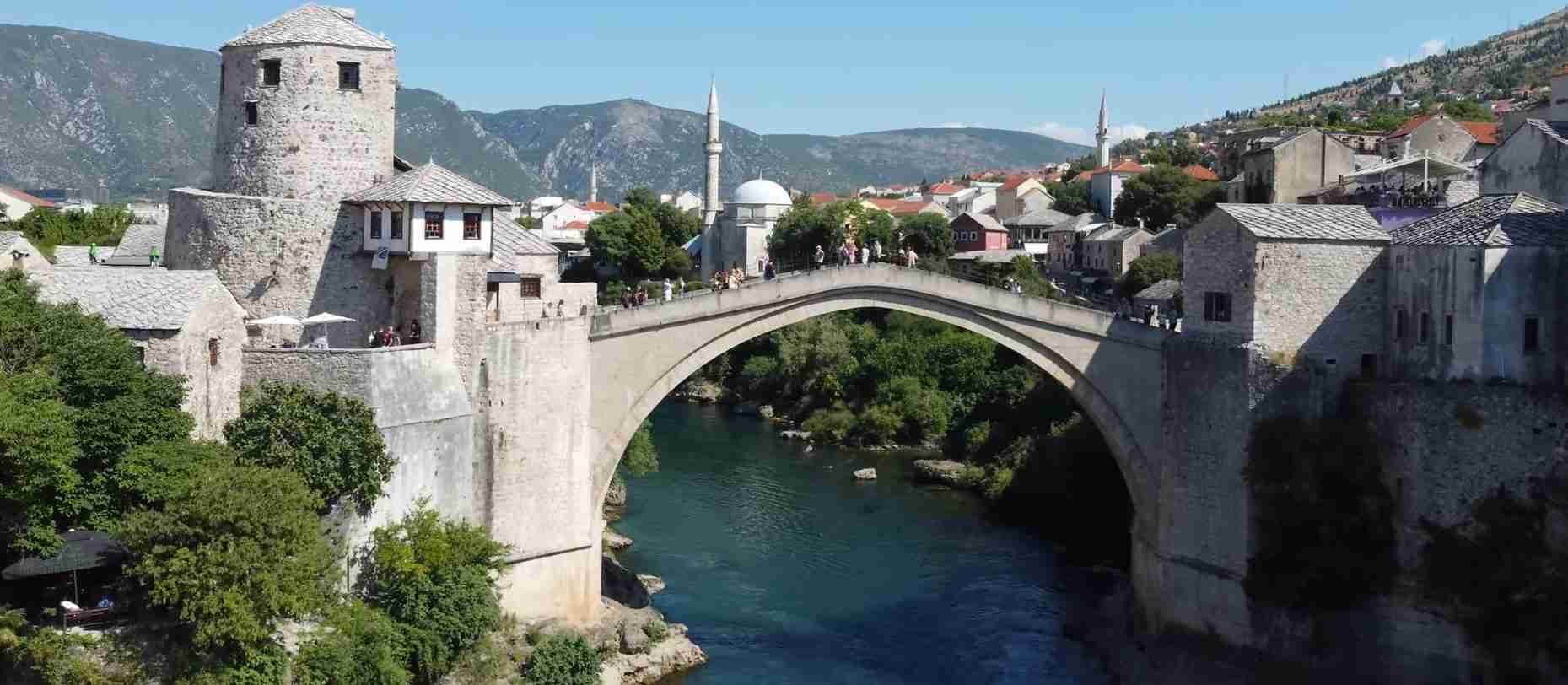
Mostar rises from the emerald Neretva River valley as Bosnia and Herzegovina’s most captivating destination, where the reconstructed Stari Most (Old Bridge) arches gracefully between medieval towers and Ottoman-era limestone houses cascade down steep hillsides. The UNESCO-inscribed Old Bridge Area, rebuilt after wartime destruction and reopened in 2004, represents both architectural triumph and powerful symbol of reconciliation in this city where East meets West.
Key Takeaways: Essential Mostar 2026 Planning Facts
- UNESCO World Heritage Recognition 2005: The Old Bridge Area of the Old City of Mostar gained UNESCO inscription in July 2005, recognizing the bridge’s reconstruction (1999-2004) as a landmark achievement in heritage protection and its role as a symbol of human solidarity following the bridge’s destruction in November 1993
- Budget Expectations for 2026: Budget travelers spend 68-102 BAM ($41-61) per person daily sharing hostel accommodation, mid-range visitors invest 178-275 BAM ($107-166) per person daily sharing hotels, while luxury travelers allocate 360-575 BAM ($217-347) per person daily for premium experiences
- Compact Walkable UNESCO Zone: The entire 7.6-hectare UNESCO-protected Old Bridge Area covers just 15 minutes end-to-end on foot, with Stari Most at its center connecting Ottoman-era neighborhoods characterized by distinctive stone architecture, cobblestone lanes, and the bustling Kujundžiluk bazaar
- Prime Visit Windows 2026: May and October deliver ideal 22°C (72°F) temperatures, manageable crowds, and accommodation rates 30-40% below summer peaks, while July-August brings intense 35-40°C heat, maximum tourism pressure, and hotel prices exceeding 500 BAM ($300) nightly at premium properties
- Strategic Geographic Position: Mostar sits 130 kilometers from Dubrovnik’s coastal attractions and 78 miles from Sarajevo’s urban energy, positioning the city as Herzegovina’s natural hub for day trips to Blagaj’s Tekke monastery, Počitelj’s Ottoman fortress, and Kravice waterfalls within 30-45 minutes
- Post-War Reconciliation Context: Understanding Mostar requires recognizing the 1992-1995 conflict’s profound impact—the bridge’s deliberate destruction symbolized cultural erasure, while its meticulous reconstruction using 1,088 original stones recovered from the Neretva represents Bosnia’s commitment to healing and multicultural coexistence
People Also Ask About Mostar Travel 2026
How much does Mostar cost per day in 2026?
Daily costs in Mostar range 68-102 BAM ($41-61) per person for budget travelers sharing hostel accommodation, 178-275 BAM ($107-166) for mid-range comfort sharing hotels, and 360-575 BAM ($217-347) for luxury experiences. Budget spending covers hostel dorms 25-35 BAM ($15-21), street food and budget restaurant meals totaling 35-52 BAM ($21-31), walking with occasional buses 3-5 BAM ($2-3), and selective paid attractions 5-10 BAM ($3-6). Mid-range allocations include 3-star hotels 70-120 BAM ($42-72) per person when two share, restaurant meals 65-90 BAM ($39-54), taxi supplements 8-15 BAM ($5-9), and comprehensive sightseeing 20-30 BAM ($12-18). Luxury budgets accommodate boutique hotels 140-250 BAM ($85-150) per person sharing, upscale dining 130-190 BAM ($78-114), private transportation 25-40 BAM ($15-24), and premium tour experiences 40-60 BAM ($24-36). Bosnia uses the Convertible Mark (BAM) pegged at approximately 1.66 BAM to 1 USD.
What is the best time to visit Mostar in 2026?
May and October represent optimal visit windows in 2026, delivering comfortable 18-25°C (64-77°F) temperatures, moderate tourism volumes, and accommodation prices 30-40% below summer peaks at 80-180 BAM ($48-108) for mid-range hotels compared to July’s 140-250 BAM ($85-150). Spring blooms transform the Neretva valley in late April through May, while autumn’s golden light from late September through October creates exceptional photography conditions and wine harvest celebrations in nearby Blagaj and Žitomislići. Summer months June through August bring extreme heat reaching 35-40°C (95-104°F), making morning and evening exploration essential while midday requires seeking shade in riverside cafés, plus major events like Red Bull Cliff Diving in late August can inflate hotel rates by 100%. Winter December through February offers dramatic snow-capped mountain backdrops and near-empty Old Town streets at rock-bottom prices 50-100 BAM ($30-60) nightly, though many attractions reduce hours and some restaurants close entirely.
Is Mostar worth visiting in 2026?
Mostar absolutely merits visit priority in 2026, combining UNESCO World Heritage significance with affordability, dramatic natural setting, and profound historical narrative that few European destinations match. The reconstructed Stari Most represents both architectural masterpiece—a 28.7-meter single-arch span built without mortar in 1566—and powerful symbol of post-conflict reconciliation, while the surrounding Ottoman old town preserves Bosnia’s multicultural heritage through mosques, Orthodox churches, Catholic cathedral, and Jewish heritage sites within one compact district. Daily costs at 68-275 BAM ($41-166) per person run 40-60% below neighboring Croatia’s Adriatic coast, positioning Mostar as exceptional value for Central European standards, while the compact 7.6-hectare UNESCO zone delivers concentrated cultural impact achievable in one intensive day or comfortably explored across three days with surrounding excursions. The city serves as Herzegovina’s strategic base for accessing Blagaj’s cliffside Dervish monastery (11 kilometers), Počitelj’s preserved Ottoman fortress (30 kilometers), Kravice’s travertine waterfalls (40 kilometers), and Međugorje’s pilgrimage site (25 kilometers), creating multi-day itinerary possibilities unavailable from coastal Croatian bases.
How many days do you need in Mostar in 2026?
Two full days provide ideal balance for experiencing Mostar’s Old Bridge Area thoroughly while incorporating one major day trip, though the UNESCO core alone can be meaningfully explored in one intensive day for travelers on tight schedules. A focused single-day visit covers Stari Most bridge walking and diving observations, Kujundžiluk bazaar browsing, Koski Mehmed Pasha Mosque minaret ascent for panoramic views, Museum of Herzegovina tour, and Old Bridge Museum’s reconstruction exhibition across 6-8 hours of concentrated sightseeing. Adding a second day enables morning excursion to Blagaj Tekke (30 minutes), afternoon exploration of Počitelj’s Ottoman architecture (45 minutes), or half-day Kravice waterfalls visit (1 hour), plus deeper engagement with Mostar’s neighborhoods beyond tourist zones including Partisan Cemetery’s brutalist monuments and the poignant War Photo Exhibition. Three days allow comprehensive regional exploration combining Mostar’s urban culture, Blagaj’s spiritual atmosphere, Počitelj’s fortress views, Kravice’s swimming, and Međugorje’s pilgrimage significance at relaxed pace without daily rushing, ideal for photography-focused visitors or those seeking genuine cultural immersion rather than checklist sightseeing.
Extended multi-day tours – 5+ days
Featured Mostar Multi-Day Tour Packages
7 days
Bosnia and Herzegovina: Wild Horses & City Sights
- ✓ Comprehensive Mostar tour
- ✓ Expert local guides included
- ✓ All accommodation arranged
- ✓ Transportation provided
4 days
Bosnia & Hercegovina and Montenegro; Semi – Private Tour with Dedicated Tour Leader & Car
- ✓ Booking needs min. 2 travelers
4 days
Dubrovnik Gateway – 3 nights 3 countries
- ✓ Comprehensive Mostar tour
- ✓ Expert local guides included
- ✓ All accommodation arranged
- ✓ Transportation provided
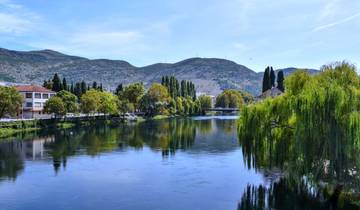
2 days
Mostar Discovery Tour
- ✓ Comprehensive Mostar tour
- ✓ Expert local guides included
- ✓ All accommodation arranged
- ✓ Transportation provided
Multi-day tour packages powered by TourRadar. Prices and availability subject to change.
Introduction: Understanding Mostar’s UNESCO Significance and 2026 Travel Context
Mostar commands the deep Neretva River valley where the Dinaric Alps transition from rugged peaks to Mediterranean coastal plain, creating dramatic geography that shaped the city’s strategic importance across six centuries. The settlement developed from 15th-century Ottoman frontier outpost into Herzegovina’s cultural and commercial capital by the 16th century, with the iconic Stari Most bridge constructed in 1566 under Sultan Suleiman the Magnificent’s commission to architect Mimar Hajrudin, a pupil of the empire’s legendary Sinan. This single elegant arch—spanning 28.7 meters at 24 meters height above the emerald Neretva—defined Mostar’s identity so profoundly that the city’s name derives from “mostari,” the bridge keepers who controlled crossings and collected tolls.
The 1992-1995 Bosnian War devastated Mostar’s multicultural fabric when the bridge suffered deliberate artillery destruction on November 9, 1993, collapsing into the river after sustained Croatian Defense Council shelling despite no military strategic value. International outcry recognized the loss as cultural catastrophe comparable to destroying Notre-Dame or the Parthenon, prompting UNESCO to launch reconstruction immediately upon war’s end. The bridge restoration project (1998-2004) became landmark heritage intervention, recovering 1,088 original limestone blocks from the Neretva riverbed and employing traditional Ottoman construction techniques using tenelia stone from the original Brač Island quarries, egg whites and horse hair in mortar mixing, and precise arch geometry calculated without modern engineering. The reconstructed bridge opened July 23, 2004, with UNESCO World Heritage inscription following on July 15, 2005, recognizing both the physical achievement and symbolic power as “universal symbol of coexistence of communities from diverse cultural, ethnic and religious backgrounds.”
Mostar’s 2026 travel landscape reflects two decades of post-war development, transforming from reconstruction site to established tourism destination while maintaining authenticity that mass-market coastal Croatian cities often lack. The UNESCO-protected Old Bridge Area encompasses 7.6 hectares containing the bridge itself, Tara and Halebija fortified towers, Ottoman-period residential houses with distinctive overhanging upper stories, five mosques including the 16th-century Koski Mehmed Pasha complex, Orthodox churches, Catholic cathedral, hammams (Turkish baths), madrasas (Islamic schools), and the famous Kujundžiluk copper bazaar where artisans still hammer traditional crafts. Beyond the tourist core, Mostar reveals layers of Austro-Hungarian architecture from 1878-1918 administration, Yugoslav-era modernism, and post-war reconstruction creating fascinating architectural palimpsest.
The city occupies strategic position 130 kilometers inland from Dubrovnik’s Adriatic coast and 78 miles southwest of capital Sarajevo, connected by scenic bus routes threading through mountain passes and river valleys. Herzegovina’s continental climate brings extreme summer heat peaking 35-40°C in July-August when the limestone streets become furnace and locals retreat to river-cooled terraces, contrasted with mild springs and autumns ideal for exploration. Tourism concentrates intensely within the compact old town’s 300-meter radius from the bridge, where medieval cobblestone lanes barely accommodate pedestrian flow during peak season midday rushes, while neighborhoods five minutes beyond remain authentically residential with local bakeries, produce markets, and cafés untouched by tourist commerce.
Mostar’s contemporary character reflects ongoing tensions between reconciliation aspiration and persistent ethnic division, visible in the boulevard separating primarily Bosniak eastern sector from Croat-dominated western districts, each maintaining separate schools, hospitals, and municipal services. The bridge’s reconstruction succeeded in physical terms—it looks identical to the 1566 original—but the social fabric it symbolized remains partially torn despite two decades of peace. Understanding this context enriches visits beyond picturesque photo opportunities, revealing Mostar as living laboratory where heritage preservation intersects with post-conflict rebuilding, mass tourism development challenges local authenticity, and symbols of unity exist alongside daily ethnic separation realities.
Planning Mostar visits in 2026 requires balancing the Old Bridge’s undeniable appeal against the city’s substance beyond single-landmark status, understanding that meaningful engagement demands moving past the bazaar’s tourist shops into residential neighborhoods, contemporary war memory sites, and Herzegovina’s broader regional context. The following sections provide comprehensive practical guidance for accommodation selection across price tiers, daily cost budgeting including restaurant pricing and transportation options, seasonal timing strategies, essential sightseeing priorities within the UNESCO zone, day trip combinations to complement urban exploration, and navigation of the post-war social landscape with appropriate cultural sensitivity.
Mostar’s UNESCO World Heritage Designation 2026: Old Bridge Area Significance and Scope
The Old Bridge Area of the Old City of Mostar gained UNESCO World Heritage inscription on July 15, 2005, at the World Heritage Committee’s 29th session in Durban, South Africa, under criteria (iv) and (vi) recognizing both architectural significance and exceptional symbolic value. Criterion (iv) acknowledges the Old Bridge Area as outstanding example of multicultural urban settlement combining pre-Ottoman, Eastern Ottoman, Mediterranean, and Western European architectural influences in coherent ensemble, while criterion (vi) honors the bridge’s symbolic power as “universal symbol of coexistence of communities from diverse cultural, ethnic and religious backgrounds” and testament to “unlimited efforts of human solidarity for peace and powerful cooperation in the face of overwhelming catastrophes.”
The UNESCO-protected property covers precisely 7.6 hectares encompassing the bridge, fortification towers, historic residential quarters, religious buildings, and commercial structures within the medieval city core. Stari Most itself spans 28.7 meters between Tara Tower on the east bank and Halebija Tower on the west, rising 24 meters above the Neretva River’s normal summer flow. The bridge’s revolutionary engineering employed single stone arch construction without mortar bonding, relying instead on precise limestone block cutting creating interlocking geometry held by gravity and lateral pressure. Original architect Mimar Hajrudin designed the 4.5-meter wide deck with pronounced upward curve rising 12 meters from abutments to crown, challenging crossing but enabling the architectural grace that prompted 17th-century explorer Evliya Çelebi to describe it as “thrown from rock to rock as high as the sky.”
The protected Old Bridge Area extends beyond the structure itself to include exceptional examples of Ottoman residential architecture concentrated in Kujundžiluk (Old Bazaar) district immediately east of the bridge and Tabhana quarter on the western approach. These limestone houses exhibit distinctive Herzegovinan characteristics: ground-floor commercial or storage functions opening to narrow cobblestone lanes, overhanging wooden-framed upper residential levels creating shaded passageways below, carved wooden lattice windows (mušebak) providing privacy while allowing ventilation, interior courtyards with fountains and gardens, and integration of the rugged natural topography where structures cascade down steep slopes in seemingly haphazard arrangement that actually reflects sophisticated water management and defensive planning.
Five significant mosques anchor the UNESCO zone’s Islamic heritage: Koski Mehmed Pasha Mosque (1618) with accessible minaret offering panoramic views across the entire old town; Karađozbeg Mosque (1557) contemporary with the bridge itself; Nesuh-aga Vučjaković Mosque (1564) distinguished by its enclosed graveyard; Roznamedži Ibrahim-efendi Mosque (1617); and Hadži-Kurt Mosque (1507), one of Mostar’s oldest surviving religious structures despite wartime damage. Orthodox Christian heritage appears through the Serbian Orthodox Church and accompanying cemetery, while Catholic presence concentrates in the 19th-century Franciscan Church of Saints Peter and Paul with distinctive twin 107-meter bell towers visible throughout the valley.
The bridge’s destruction and reconstruction narrative forms inseparable element of the site’s Outstanding Universal Value, recognized by UNESCO as rare case where modern intervention enhanced rather than diminished heritage significance. The 1998-2004 reconstruction project, led by UNESCO with World Bank financial coordination and technical oversight by international scientific committee, recovered 1,088 original limestone blocks weighing 38-40 tons each from the Neretva riverbed. These original stones, identifiable through weathering patterns and mason’s marks, were integrated with new tenelia limestone from Brač Island quarries matching original 16th-century source. Traditional Ottoman construction methods guided the work: limestone cutting by hand following historical templates; mortar mixing with egg whites and horse hair replicating medieval formulations; wooden scaffolding erected using period techniques; and final stone placement achieving tolerances of 2 millimeters matching the original arch’s precise geometry.
Buffer zones surrounding the core 7.6-hectare property extend heritage protection to broader visual and functional context, regulating new construction heights, materials, and styles to maintain the Old Bridge Area’s distinctive skyline and architectural harmony. These protections proved contentious immediately post-inscription when unauthorized hotel construction in 2005-2006 violated management plan guidelines, prompting UNESCO monitoring missions and World Heritage Committee concerns about development pressures threatening the site’s integrity. Subsequent enforcement tightened regulatory frameworks, though ongoing tension persists between heritage conservation priorities and local economic development aspirations in a city where tourism represents primary revenue source.
The UNESCO designation’s practical implications for 2026 visitors manifest in several ways: enhanced site interpretation through multilingual informational panels installed at key viewpoints; free access to the bridge itself enabling unlimited crossings without ticket requirements; regulated tourist flow through bazaar areas preventing uncontrolled commercialization; and coordinated restoration standards ensuring that renovated historic houses maintain authentic architectural elements rather than succumbing to theme-park aestheticization. The Old Bridge Museum, opened in 2006 within Tara Tower’s fortifications, provides essential context for understanding reconstruction process through exhibition of original stones, construction photographs, architectural models, and video documentation of the 2004 reopening ceremony attended by international dignitaries including UNESCO Director-General Koïchiro Matsuura.
Accommodation Costs Mostar 2026: Where to Stay by Budget and Location
Mostar’s accommodation landscape divides geographically between the densely packed Old Town tourist zone where 90% of visitors concentrate and residential neighborhoods offering quieter alternatives 5-15 minutes’ walk from the bridge. Budget travelers spending 68-102 BAM ($41-61) daily prioritize hostel dormitories and guesthouses trading location convenience for affordability, mid-range visitors allocating 178-275 BAM ($107-166) daily select 3-star hotels balancing proximity and comfort, while luxury seekers investing 360-575 BAM ($217-347) daily choose boutique properties and 5-star hotels delivering premium amenities and prime Old Bridge views.
Budget Accommodation Options in Mostar 2026 (25-35 BAM / $15-21 per person)
Hostel dormitories provide Mostar’s most economical lodging at 25-35 BAM ($15-21) per bed in 6-8 person mixed or gender-specific rooms, concentrated in the Old Town’s eastern sector within 200-400 meters of Stari Most. Hostel Miran and Hostel Nina occupy renovated Ottoman houses delivering authentic architectural experience with stone walls, wooden floors, and courtyard seating, offering shared kitchens where travelers prepare meals from the nearby green market saving 30-50 BAM ($18-30) daily on restaurant dining. Major Hostel and Hostel David provide similar pricing with rooftop terraces enabling budget travelers to experience signature bridge views without boutique hotel premiums, though summer heat makes these upper-level dorms uncomfortable July-August despite portable fans.
Private guesthouses (pansions) deliver budget double rooms at 50-80 BAM ($30-48) total when two share, translating to 25-40 BAM ($15-24) per person nightly. Pansion Nur and Pansion Oscar operate family-run establishments in residential areas 400-600 meters from the bridge where guests experience local neighborhood life away from tourist commerce, often including homemade Bosnian breakfast spreads with fresh burek pastries, local cheese, and strong Turkish coffee. These properties lack hotel amenities like air conditioning, elevators, or English-speaking staff, compensating through personal hospitality and insider recommendations for authentic restaurants patronized by Mostar residents rather than tour groups.
Location trade-offs significantly impact budget accommodation value in 2026. Properties within the UNESCO zone’s immediate radius (100-200 meters from Stari Most) command 20-30% premiums over equivalent rooms 500-800 meters distant, though Mostar’s compact scale makes even peripheral neighborhoods accessible via 8-12 minute walks. The eastern Musala neighborhood offers cluster of budget guesthouses along Onešćukova Street where rooms cost 40-60 BAM ($24-36) nightly per person, positioning guests equidistant between Old Town attractions and the modern bus station where intercity connections depart for Sarajevo and Dubrovnik. Western sector budget options near Spanish Square provide similar pricing with access to less-touristed restaurants along Kralja Petra Krešimira IV boulevard where locals dine.
Mid-Range Hotels and Boutique Properties 2026 (70-120 BAM / $42-72 per person)
Three-star hotels throughout Mostar’s Old Town deliver mid-range comfort at 140-240 BAM ($85-145) per room nightly, translating to 70-120 BAM ($42-72) per person when two share standard doubles. Hotel Kriva Ćuprija occupies prime position just steps from the famous Crooked Bridge (Mostar’s “other” historic bridge spanning the Radobolja stream), providing Old Town immersion with modern air conditioning, private bathrooms, free WiFi, and included breakfast buffets featuring Bosnian pastries, local yogurt, and seasonal fruit. Similar establishments like Hotel Pellegrino and Hotel Emen maintain boutique scale with 8-15 rooms enabling personalized service while preserving historic architectural elements in sensitively restored Ottoman houses.
Boutique hotels with exceptional bridge views command upper mid-range pricing at 180-280 BAM ($108-170) per room, justifying premiums through roof terraces and balconies where guests watch the famous cliff diving demonstrations and experience illuminated bridge photography after dark when tourist crowds dissipate. Muslibegović House represents Mostar’s premier heritage accommodation, occupying Ottoman-era merchant mansion dating to 1871 and designated Bosnian National Monument, where eight suites with period furnishings, traditional copper hammam-style bathrooms, and walled garden courtyard deliver immersive historical experience at 260-400 BAM ($157-240) per room. Such heritage properties appeal to visitors prioritizing authenticity over standardized hotel amenities, accepting occasional quirks like irregular floor levels, narrow staircases unsuitable for large luggage, and limited soundproofing between rooms characteristic of centuries-old construction.
The modern hotel cluster along Adema Buća and Maršala Tita streets 800-1,200 meters west of Old Bridge provides mid-range alternatives for visitors favoring contemporary standards over UNESCO zone location. Hotel Mostar and Bristol Hotel offer business-class 3-star accommodations at 120-180 BAM ($72-108) per room with elevators, parking garages, larger standardized rooms, and professional 24-hour reception services, appealing to travelers prioritizing convenience for early morning bus departures or late evening arrivals when navigating Old Town’s cobblestone lanes with wheeled luggage becomes impractical. These properties position guests near Herzegovina University campus, supermarkets, and residential neighborhoods where restaurants serve locals rather than tourists, potentially saving 20-30% on meal costs compared to Old Town establishments.
Luxury Hotels and Premium Boutique Options 2026 (140-250 BAM / $85-150 per person)
Mostar’s luxury accommodation tier centers on 4-5 star properties delivering comprehensive amenities, professional service standards, and strategic locations commanding premium pricing at 280-500 BAM ($170-300) per room, translating to 140-250 BAM ($85-150) per person nightly when two share. Hotel Mepas represents the city’s flagship 5-star establishment with 51 rooms, full-service spa featuring indoor pool and sauna, fitness center, on-site restaurant serving regional cuisine, and central Ante Starčevića location equidistant from Old Town and modern city center. Rates average 320-450 BAM ($193-271) per standard room with breakfast included, rising to 550-700 BAM ($331-422) for executive suites with separate living areas and oversized bathrooms featuring rainfall showers and designer toiletries.
Boutique luxury options within the UNESCO zone prioritize intimacy and personalized service over large-scale hotel facilities. Villa Cardak operates 4-star bed-and-breakfast in meticulously restored Ottoman house 150 meters from Stari Most, offering only six rooms ensuring high service-to-guest ratios and detailed attention to individual preferences. The property’s terrace restaurant serves gourmet interpretations of traditional Bosnian dishes using seasonal Herzegovina ingredients, while room rates at 300-420 BAM ($181-253) per night include continental breakfast, afternoon tea service, and complimentary rakija (fruit brandy) tastings featuring local varieties. Similar establishments like Villa Anri emphasize architectural heritage through exposed stone walls, handcrafted wooden furniture, and integration of traditional decorative elements including copperware, handwoven carpets, and ceramic pieces from local artisans.
Luxury properties outside the immediate tourist zone provide alternative value propositions combining high-end amenities with more spacious grounds unavailable in the compact Old Town. Motel Deny operates upscale accommodations 2 kilometers north with extensive parking, garden terraces overlooking surrounding vineyards, and larger room sizes at 200-300 BAM ($120-181) per night—30% below equivalent in-town options while maintaining premium bedding, modern bathrooms, and included breakfast. Such properties appeal to independent travelers with rental cars who value peaceful environments over walking access to nighttime Old Town atmosphere, particularly couples seeking romantic retreat or visitors extended stays where daily Old Town immersion might prove exhausting.
Seasonal Price Variations and Booking Strategies 2026
Accommodation pricing fluctuates dramatically across Mostar’s tourism calendar, with July-August commanding peak rates 60-100% above winter baseline while shoulder months May and October offer optimal value combining comfortable weather and moderate pricing. Mid-range hotel rooms averaging 140-200 BAM ($85-120) in May surge to 220-300 BAM ($133-181) in July, driven by domestic Balkan tourism, Croatian coast visitors taking inland excursions, and international tour groups following established May-September circuits. Budget hostel dormitories maintain more stable pricing year-round at 25-35 BAM ($15-21) due to consistent backpacker demand, though private room availability tightens August weekends when advance booking becomes essential.
Special event periods cause acute pricing spikes and availability constraints requiring booking 2-3 months advance. Red Bull Cliff Diving World Series stages Mostar competition late August attracting 30,000+ spectators when available hotel rooms within 5 kilometers approach zero and rates double normal August levels, forcing many visitors into Međugorje (25 kilometers) or Ljubuški (40 kilometers) alternatives with daily commuting. Mostar Summer Festival spanning late June brings similar if less severe pressures, while Orthodox Christmas (January 7) and Catholic Easter create modest demand bumps primarily affecting specific neighborhood properties near relevant churches.
Winter season November through February offers exceptional value for cold-weather tolerant travelers, with mid-range hotels discounting to 80-120 BAM ($48-72) per room and boutique properties negotiating stays 180-250 BAM ($108-150) compared to summer’s 300-400 BAM ($181-241). Some family-run guesthouses close entirely December-February when owner families relocate to warmer coastal areas or reduce operations to essential maintenance, limiting options but creating opportunities for extended-stay negotiations where remaining open properties appreciate consistent occupancy. The trade-off involves reduced restaurant hours, some attraction closures, and limited after-dark atmosphere as local businesses accommodate minimal tourism traffic.
Food and Dining Costs Mostar 2026: Restaurant Pricing and Meal Budgets
Mostar’s dining landscape reflects Bosnian culinary traditions shaped by Ottoman, Austro-Hungarian, and Mediterranean influences, with costs significantly below Western European standards while maintaining quality standards appealing to both budget backpackers and discerning gourmets. Daily meal budgets span 35-52 BAM ($21-31) for budget travelers emphasizing street food and casual eateries, 65-90 BAM ($39-54) for mid-range diners selecting established restaurants with varied menus, and 130-190 BAM ($78-114) for luxury seekers prioritizing upscale establishments and multi-course dining experiences.
Budget Dining in Mostar 2026 (35-52 BAM / $21-31 Daily)
Budget-conscious visitors achieve satisfying meals at 35-52 BAM ($21-31) daily by prioritizing Bosnian fast food staples and neighborhood eateries patronized by locals rather than tourist-oriented Old Town restaurants. Breakfast costs 8-12 BAM ($5-7) at local bakeries (pekare) serving fresh burek—flaky phyllo pastry filled with meat, cheese, or spinach—accompanied by glass of yogurt drink (mlijeko) or Turkish coffee. Pekara Šadrvan near Musala Square and Pekara Edin on the western bank provide authentic morning experience where Mostar residents grab takeaway breakfast during commute, with portion sizes sufficient for hearty start requiring only light lunch.
Lunch budget allocations of 12-18 BAM ($7-11) enable substantial meals at ćevabdžinica establishments specializing in ćevapi—grilled minced meat sausages served in somun flatbread with chopped onions, kajmak (clotted cream), and ajvar (roasted red pepper spread). Ćevabdžinica Tima-Irma occupies prime Old Town position 100 meters from the bridge where 10-piece ćevapi portion with all accompaniments costs 14 BAM ($8), providing protein-rich sustenance for afternoon sightseeing. Similar establishments throughout Mostar maintain consistent pricing regardless of location, though portions and meat quality vary with higher-traffic tourist spots sometimes compromising standards versus neighborhood operations where reputation relies on local patronage.
Dinner strategy for budget travelers involves either duplicating lunch’s ćevapi approach for 15-22 BAM ($9-13) or upgrading to sit-down restaurant traditional plates including stuffed peppers (punjene paprike), moussaka-style layers (musaka), or chicken with vegetables at neighborhood konobas (taverns) charging 18-25 BAM ($11-15) for main courses. Restaurant 4 Sobe Gospođe Safije operates in Tabačica neighborhood 400 meters from Old Bridge where complete dinner—soup, main course, and dessert—runs 30-40 BAM ($18-24) including non-alcoholic beverage, roughly matching two ćevapi meals but delivering sit-down dining atmosphere and home-style cooking unavailable at fast-food counters. Self-catering option using ingredients from green market or Konzum supermarket reduces daily food costs to 20-30 BAM ($12-18) when hostel kitchen facilities enable meal preparation, though quality fresh produce availability peaks April-October with winter months offering limited seasonal selection.
Mid-Range Restaurant Dining 2026 (65-90 BAM / $39-54 Daily)
Mid-range dining budgets of 65-90 BAM ($39-54) daily enable breakfast at hotel buffets or quality cafés, lunch at established Old Town restaurants, and dinner at better establishments featuring riverside terraces and diverse menus beyond Bosnian staples. Breakfast allocations of 15-20 BAM ($9-12) cover continental spreads at 3-star hotel buffets or café breakfasts including fresh bread, local cheese and prosciutto, eggs, seasonal fruit, and quality coffee at establishments like Café de Alma where morning Old Bridge views accompany meals. These breakfast costs typically integrate into accommodation packages for hotel guests while independent breakfast diners accept premium pricing justified by prime locations and morning atmosphere before tour groups arrive.
Lunch expenditures of 25-35 BAM ($15-21) access diverse menu options at mid-range restaurants throughout the Old Town. Hindin Han occupies beautifully restored 16th-century han (caravanserai) 50 meters from Stari Most, where traditional Bosnian plates including slow-cooked veal under a sač (metal dome), stuffed grape leaves, and grilled trout from the Neretva cost 28-38 BAM ($17-23) per main course with soups and salads adding 6-10 BAM ($4-6). National Restaurant serves similar traditional cuisine in Ottoman-style dining room with authentic period décor, charging 30-45 BAM ($18-27) for complete lunch including appetizer, main, and dessert with local wine available at 25-35 BAM ($15-21) per bottle. These establishments emphasize quality ingredients, generous portions, and attentive service justifying moderate premiums over budget ćevapčići joints.
Dinner represents mid-range travelers’ primary daily indulgence at 40-55 BAM ($24-33) per person enabling exploration of Herzegovina’s culinary diversity beyond Bosnian Muslim traditions. Konoba Taurus specializes in regional grilled meats and seasonal vegetables, with mixed grill platters (mješano meso) featuring lamb chops, beef steaks, and house-made sausages at 45-55 BAM ($27-33) serving two people accompanied by roasted potatoes, fresh salad, and house wine. Šadrvan Restaurant operates riverside terrace where summer evening dining combines excellent grilled fish selections—bass, sea bream, trout—at 35-50 BAM ($21-30) per entrée with atmospheric lighting reflecting on the Neretva and periodic cliff diving demonstrations if timed with professional divers’ evening practice sessions. Beverage additions contribute significantly to dinner costs, with local wines running 30-50 BAM ($18-30) per bottle, imported varieties 60-90 BAM ($36-54), and beer 5-7 BAM ($3-4) per half-liter.
Upscale Dining and Luxury Restaurant Experiences 2026 (130-190 BAM / $78-114 Daily)
Luxury dining budgets of 130-190 BAM ($78-114) daily enable premium breakfast experiences, refined lunch options, and sophisticated dinner selections at Mostar’s finest establishments where innovative chefs reinterpret traditional Bosnian cuisine using modern techniques and presentation styles. Breakfast allocations of 25-35 BAM ($15-21) access upscale hotel restaurants or specialty cafés like Café Marshall where organic ingredients, freshly squeezed juices, imported cheeses, and artisanal breads create elevated morning experience in elegant dining rooms or terraces with superior bridge views compared to crowded tourist cafés.
Lunch reservations at Restoran Bella Vista or Restoran Hindin Han’s private dining sections command 50-70 BAM ($30-42) per person for multi-course meals featuring sophisticated preparations: wild boar pâté with local herbs, Herzegovinan lamb slow-roasted with seasonal vegetables, house-made pasta with truffle sauce, and chef’s tasting desserts. These premium lunch experiences suit business travelers, special occasions, or culinary-focused visitors prioritizing exceptional food over atmospheric tourist venues, with reservations recommended for preferred seating particularly on outdoor terraces during comfortable spring and autumn weather.
Dinner at Mostar’s luxury tier reaches 80-120 BAM ($48-72) per person at establishments like Restoran Hindin Han’s upstairs private dining room where seven-course tasting menus showcase Herzegovina’s seasonal bounty through creative presentations respecting traditional flavor profiles. Urban Grill occupies modern space featuring open kitchen concept, premium imported beef selections aged in-house, and extensive international wine list where Dalmatian and Herzegovinan bottles complement French and Italian imports. Complete luxury dining experiences including aperitifs, wine pairings, and dessert easily surpass 150 BAM ($90) per person, positioning such occasions as special event dining rather than nightly routine even for well-budgeted travelers.
Alcohol, Coffee, and Beverage Costs Throughout Mostar 2026
Beverage costs supplement meal budgets significantly for visitors incorporating regular coffee breaks, wine with dinners, or evening socializing at Old Town bars. Turkish coffee (bosanska kafa) costs 2-4 BAM ($1-2) at local cafés versus 5-7 BAM ($3-4) at tourist-positioned establishments, with espresso-based drinks running 3-5 BAM ($2-3) for cappuccino or latte. Fresh-squeezed juices command 5-8 BAM ($3-5) at quality establishments versus 3-4 BAM ($2) for packaged varieties, while bottled water costs 1-2 BAM ($.60-$1) from shops or 3-5 BAM ($2-3) in restaurants.
Wine pricing divides sharply between local Herzegovina production and imports from Croatian Dalmatia or international sources. House wines served by the glass run 6-10 BAM ($4-6) per pour with bottles from Žilavka (regional white) or Blatina (regional red) grapes available at 25-40 BAM ($15-24) in restaurants, representing exceptional value for European standards. Croatian imports add 30-50% premiums while French, Italian, or Spanish selections command 80-150 BAM ($48-90) per bottle at upscale establishments. Beer—overwhelmingly Sarajevsko, Mostar’s preferred domestic lager—costs 4-6 BAM ($2-4) for half-liter draft or 5-7 BAM ($3-4) for bottled in restaurants, with imported varieties (Heineken, Corona) running 7-10 BAM ($4-6).
Rakija, Bosnia’s traditional fruit brandy, represents essential cultural experience at 4-8 BAM ($2-5) per shot depending on variety and venue. Standard šljivovica (plum brandy) or lozovača (grape brandy) occupies every restaurant menu while specialty versions incorporating honey (medovača), herbs, or specific regional fruits command premiums. Quality establishments offer house-made rakija distinguishable through smoothness and complex fruit notes compared to industrial versions, with some specialty shops and restaurants providing flights enabling comparisons across multiple varieties for 15-25 BAM ($9-15).
Transportation Costs and Getting Around Mostar 2026
Transportation costs within Mostar remain minimal due to the city’s compact walkable scale where most tourism activity concentrates within 800-meter radius of Stari Most accessible via 10-15 minute walks from virtually any accommodation. Budget travelers allocate merely 3-5 BAM ($2-3) daily for occasional bus rides or short taxis, mid-range visitors spending 8-15 BAM ($5-9) for taxi convenience and day trip supplements, while luxury seekers investing 25-40 BAM ($15-24) daily prioritize private transportation eliminating all public transport interaction.
Walking as Primary Transportation Within Mostar’s UNESCO Zone 2026
Walking represents the default transportation mode for navigating Mostar’s Old Town where 95% of tourist attractions, restaurants, and shops cluster within the 7.6-hectare UNESCO-protected area. The entire zone spans roughly 400 meters north-south from the Spanish Square to Koski Mehmed Pasha Mosque and 300 meters east-west from Tabhana quarter to Museum of Herzegovina, requiring 15 minutes maximum to traverse end-to-end at relaxed pace. Stari Most itself anchors this compact geography, positioning visitors within 5-minute walk of virtually every significant mosque, museum, bazaar, and historic house regardless of starting point.
Old Town walking conditions vary dramatically based on season and time of day. July-August midday heat reaching 35-40°C makes extended walking challenging despite short distances, requiring strategic planning where mornings before 11 AM and evenings after 6 PM provide tolerable conditions while afternoon heat necessitates extended café breaks in shaded riverside terraces. Limestone cobblestones throughout the old town create uneven walking surfaces particularly hazardous when wet during spring and autumn rains, demanding appropriate footwear choices beyond fashionable sandals or dress shoes. The bridge’s famous curved deck with smooth stones polished by centuries of foot traffic becomes genuinely slippery when damp, causing tourist tumbles regularly despite warning signs.
Extended walking explorations beyond the tourist core enable discovery of residential neighborhoods, war memorial sites, and local markets where authentic Mostar life unfolds away from souvenir shops. The Partisan Cemetery occupies hillside location 800 meters west requiring 15-minute uphill walk rewarding effort through dramatic brutalist architecture and panoramic city views. Musala Square and surrounding modern commercial district 400 meters north of the bridge provides access to supermarkets, local restaurants, and the bus/train station complex, easily walkable for visitors staying in Old Town guesthouses though uphill return journey with heavy shopping bags motivates occasional taxi use at 5-8 BAM ($3-5) back to accommodation.
Public Bus System Mostar 2026 (2 BAM / $1.20 per ride)
Mostar operates basic public bus network connecting Old Town with peripheral neighborhoods, the bus station, and surrounding suburbs, though most tourists rarely use these services given the city’s walkable scale. Single bus tickets cost 2 BAM ($1.20) purchased directly from drivers who expect exact change, with no daily or multi-ride passes available simplifying fare structure but eliminating bulk purchase savings. Bus routes 10 and 11 serve the train/bus station complex 1.5 kilometers north of the bridge, running every 20-30 minutes during daytime hours but reducing frequency after 8 PM and ceasing entirely near midnight.
Bus utility for tourists manifests primarily in three scenarios: airport connections to/from Mostar International Airport (OMO) 8 kilometers south where infrequent public buses charge 3 BAM ($2) versus taxis at 25-30 BAM ($15-18); reaching peripheral attractions like Partisan Cemetery or the southern Buna River spring beyond comfortable walking distance; and very hot summer days when even short walks become exhausting prompting bus use for errands or returns to accommodation. International bus services connecting Mostar with Sarajevo, Dubrovnik, Split, and Zagreb depart from the main bus station (Autobusna Stanica) requiring either bus route 10/11 or 10-12 minute walk from Old Town accommodations.
Bus route information availability remains limited for foreign visitors with minimal English signage at stops and no comprehensive route maps distributed to tourists. Asking accommodation staff for specific route directions proves more reliable than attempting independent navigation, with many guesthouses providing hand-drawn maps showing relevant bus stops and frequency information. The practical reality sees most visitors ignoring public buses entirely, either walking all distances under 20 minutes or utilizing taxis for longer trips given modest price differences between 2 BAM bus fare and 5-8 BAM taxi for typical in-city journeys.
Taxi Services and Ride Options Throughout Mostar 2026
Taxis provide convenient transportation throughout Mostar at reasonable rates by Western European standards, though costs accumulate quickly for visitors relying heavily on cars rather than walking. Standard taxi fares charge 2 BAM ($1.20) per kilometer plus 2-3 BAM ($1-2) base fee, making typical Old Town to bus station journey cost 5-8 BAM ($3-5) and airport transfers run 25-30 BAM ($15-18) for 15-minute drives. MojTaxi represents Mostar’s primary ride-hailing app providing smartphone-based booking with upfront price quotes and driver ratings similar to Uber functionality, though traditional street-hailed taxis remain common with stands positioned near Stari Most, Spanish Square, and the bus station.
Negotiating fixed rates for specific journeys often benefits both drivers and passengers, particularly for longer trips where metered accumulation might discourage acceptance. Day trips to Blagaj Tekke and Počitelj combining both sites typically negotiate 60-80 BAM ($36-48) for 3-4 hour excursions including waiting time at each location, compared to 35-45 BAM ($21-27) for Blagaj alone or 40-50 BAM ($24-30) for Počitelj. Kravice waterfalls excursions requiring 90-minute round-trip drives command 100-120 BAM ($60-72) for half-day trips with 2 hours at the falls, though sharing costs among 3-4 travelers reduces per-person expenses to 25-30 BAM ($15-18).
Evening taxi availability concentrates around Old Town restaurant and bar zones through approximately 1 AM, though late-night services after 2 AM become unreliable requiring advance arrangements particularly on weeknights when tourism traffic diminishes. Women traveling alone report generally safe taxi experiences in Mostar with drivers respectful and prices consistent, though requesting MojTaxi through app provides additional security through ride tracking and driver accountability unavailable with unlicensed cabs occasionally soliciting passengers near tourist sites.
Intercity Transportation 2026: Reaching and Departing Mostar
Mostar’s strategic position between Adriatic coast and inland Bosnia creates extensive intercity bus network serving as primary long-distance transport mode, supplemented by scenic but limited train service to Sarajevo. Bus connections to Sarajevo operate hourly throughout day at 18-22 BAM ($11-13) for 2.5-hour journeys through mountain terrain and river valleys, with some services continuing to Tuzla or Banja Luka. Dubrovnik routes run 4-5 times daily at 30-35 BAM ($18-21) for 3-4 hour trips including Croatian border crossings where passport checks occasionally extend journey times. Split connections cost 35-40 BAM ($21-24) for similar 3-4 hour routes along Adriatic approaches.
Train service operates twice daily to Sarajevo at dramatically lower 12 BAM ($7) fares for approximately 2-hour scenic journeys following the Neretva River through narrow gorges and mountain valleys, widely regarded as one of Balkans’ most beautiful rail routes. The journey’s reputation as bucket-list experience encourages many visitors to combine bus travel one direction with train return, maximizing scenic variety though older rolling stock, overcrowding during peak season, and limited luggage space create comfort trade-offs versus modern buses. Trains depart mid-morning and mid-afternoon from station adjacent to bus terminal, requiring advance arrival as ticket offices may close between services and trains occasionally run 15-30 minutes behind schedule.
Car rental provides independence for visitors planning extensive Herzegovina exploration beyond Mostar’s immediate environs, with local agencies like Green Point Car Rental and international chains (Europcar, Budget) operating city offices. Daily rates start 50-80 BAM ($30-48) for compact vehicles rising to 120-180 BAM ($72-108) for SUVs or premium models, with insurance coverage essential given Bosnia’s sometimes challenging road conditions and occasional unclear parking regulations. Driving within Mostar’s Old Town remains prohibited with limited parking areas requiring 2-4 BAM ($1-2) hourly fees, though most hotels and guesthouses arrange parking either on-site or at nearby garages for 10-15 BAM ($6-9) daily.
Attraction Admission Costs and Sightseeing Budget 2026
Mostar’s sightseeing expenses remain modest compared to Western European UNESCO sites, with many prime attractions accessible free while paid sites charge reasonable 5-15 BAM ($3-9) admissions. Budget travelers allocate 5-10 BAM ($3-6) daily for selective museum entries and mosque visits, mid-range visitors spend 20-30 BAM ($12-18) accessing comprehensive attraction lineup including tours and experiences, while luxury seekers investing 40-60 BAM ($24-36) prioritize private guides, VIP experiences, and premium tour packages.
Free Attractions in Mostar’s UNESCO Zone 2026
The centerpiece Stari Most bridge itself requires no admission fee enabling unlimited crossings throughout day and night, with surrounding immediate viewing areas freely accessible for photography and dive spectating. The famous cliff divers from Mostar’s traditional diving club perform jumps from the bridge’s 24-meter height multiple times daily June-September, typically clustering around midday and late afternoon when tourist crowds peak and tip collection maximizes. While diver performances themselves cost nothing to watch, performers strongly encourage tips collected via bucket passed through spectators where contributing 2-5 BAM ($1-3) acknowledges their skill and preserves centuries-old tradition.
Walking the entire Old Town’s cobblestone lanes, browsing Kujundžiluk bazaar stalls displaying copperware and traditional crafts, exploring residential neighborhoods beyond tourist zones, and experiencing the riverside parks and promenades incur zero costs beyond occasional coffee breaks at strategic terrace viewpoints. The Partisan Cemetery’s dramatic brutalist monuments 800 meters west of the bridge remain freely accessible for self-guided exploration, delivering powerful testament to Yugoslav-era architecture and memorial culture commemorating World War II casualties. Similarly, the Orthodox Church and Catholic Cathedral permit exterior viewing and cemetery walks without charges, though interior access may require modest donations especially during active worship times.
River walks along both Neretva banks extend several kilometers upstream from the bridge through residential areas where limestone cliffs rise dramatically from water’s edge and local swimmers access river at designated points during summer months. These promenades encounter virtually no other tourists beyond immediate bridge vicinity, revealing daily life snapshots as Mostar families fish, socialize, and escape urban heat along waters running emerald-green from limestone mineral content. Spring wildflower displays (April-May) and autumn foliage (October-November) add seasonal color to these walks costing nothing except time and comfortable footwear.
Paid Attraction Admissions Throughout Mostar 2026
Koski Mehmed Pasha Mosque charges 8 BAM ($5) admission including minaret ascent delivering Mostar’s best 360-degree panoramas across the entire UNESCO zone and surrounding mountains. The 17th-century complex includes original prayer hall with decorated mihrab, ablution courtyard with historic fountain, and narrow spiral staircase climbing 89 steps to the minaret’s upper gallery where waist-high walls create exposed platform photographing the Old Bridge’s graceful arc against Neretva gorge backdrop. Modest dress requirements apply—shoulders and knees covered, women provided scarves if needed—though enforcement remains relaxed compared to stricter mosques elsewhere in the Islamic world. Photography permitted throughout premises except during active prayer times when respectful observation from courtyard maintains appropriate distance.
Old Bridge Museum occupies Tara Tower’s fortified medieval structure 10 meters from the bridge’s eastern abutment, charging 5 BAM ($3) for self-guided tours through three floors documenting reconstruction history. Exhibitions display original limestone blocks recovered from the Neretva, architectural models showing construction phases, video documentation of the 2004 reopening ceremony, photographs comparing 1993 destruction aftermath with contemporary views, and technical explanations of Ottoman construction methods employed during restoration. Bilingual panels (Bosnian/English) provide context accessible to international visitors, though more detailed information requires purchasing 10 BAM ($6) illustrated guidebook from small shop at ground level.
Museum of Herzegovina operates from 18th-century house complex 300 meters south of Stari Most, presenting Herzegovina’s cultural history through archaeological finds, Ottoman-era household items, traditional costumes, weapons collection, and ethnographic displays for 8 BAM ($5) admission. The museum’s strength lies in contextualizing Mostar within broader regional history spanning Illyrian settlements through Roman conquest, medieval kingdoms, Ottoman expansion, Austro-Hungarian modernization, and Yugoslav federation, helping visitors understand complex layers underlying contemporary Bosnia’s ethnic tensions. English labels remain inconsistent throughout permanent collection though temporary exhibitions often feature better multilingual presentation.
The War Photo Exhibition documents 1992-1995 conflict through disturbing images of siege warfare, civilian casualties, destroyed cultural heritage, and post-war reconciliation efforts, charging 10 BAM ($6) for emotionally challenging but essential perspective on events that destroyed the original bridge. Located in former frontline buildings showing unrepaired war damage, the exhibition deliberately confronts visitors with harsh realities rarely visible in the sanitized tourist Old Town where reconstruction has erased most physical conflict evidence. Recommended for visitors seeking genuine understanding of Mostar’s complex present beyond romantic Old Bridge photography, though graphic content may disturb sensitive viewers including children.
Guided Tours and Specialized Experiences 2026
Walking tours represent most popular guided experience, with free walking tours operating daily departures at 10 AM and 3 PM from Spanish Square lasting 2-2.5 hours covering essential Old Town sites, bridge history, war impacts, and reconstruction narrative. While advertised as “free,” these tours rely on tip-based compensation where contributing 10-20 BAM ($6-12) per person acknowledges guides’ time and expertise, creating effective cost similar to paid alternatives. English-language guiding maintains high standards with enthusiastic locals often sharing personal war experiences and family histories adding depth unavailable through guidebooks.
Specialized private tours command premium pricing justified through expert knowledge and customized itineraries. Cultural heritage tours focusing on Ottoman architecture and Islamic art cost 80-120 BAM ($48-72) for 2-3 hour sessions with architecture historians providing technical analysis of construction techniques, decorative elements, and historical contexts invisible to casual observers. War history tours visiting former frontline positions, sniper alleys, and memorial sites charge 100-150 BAM ($60-90) for intense 3-4 hour experiences led by war veterans or survivors offering firsthand accounts of siege conditions and ethnic cleansing that destroyed multiethnic Mostar. Photography workshops tailored to capturing bridge’s architectural beauty across different lighting conditions and seasonal contexts run 120-180 BAM ($72-108) for half-day sessions with professional photographers sharing technical expertise and accessing optimal viewpoints.
Adventure experiences supplement cultural tourism for active visitors seeking physical engagement with Herzegovina’s natural environment. Traditional cliff diving courses enable tourists to jump from lower 10-meter platforms under supervision of experienced divers for 50-80 BAM ($30-48) per session, though full bridge-height dives remain exclusive to trained club members given extreme difficulty and danger. Rafting excursions on the Neretva organize 2-hour trips through downstream gorges at 40-60 BAM ($24-36) per person May-September when water levels permit navigation, combining mild Class II rapids with swimming stops and riverside lunch at traditional konobas. Rock climbing routes on limestone cliffs surrounding Mostar appeal to experienced climbers, with local guides offering half-day instruction and equipment for 80-120 BAM ($48-72) accessing crags within 20 minutes’ drive from Old Town.
Complete Daily Budget Breakdowns Mostar 2026 by Travel Style
Comprehensive daily budgets in Mostar aggregate accommodation, meals, transportation, and attractions across three distinct travel styles reflecting genuine price realities based on 2026 costs. These breakdowns assume two travelers sharing accommodation where applicable, express all costs as ranges reflecting low-to-high options within each category, and include representative examples of how travelers actually allocate funds throughout typical days.
Budget Travel Daily Costs 2026: 68-102 BAM ($41-61 per person)
Budget travelers spending 68-102 BAM ($41-61) per person daily achieve comfortable Mostar experience through strategic accommodation choices, emphasis on street food and local eateries, extensive walking supplemented by occasional buses or short taxis, and selective attraction admission focusing on free sites while paying entry to 1-2 must-see museums. Accommodation costs 25-35 BAM ($15-21) per person in hostel dormitories or shared guesthouse rooms. Breakfast self-catered from bakery burek and market yogurt runs 8-12 BAM ($5-7), lunch from ćevapčići establishments totals 12-18 BAM ($7-11), dinner at neighborhood konobas or repeated ćevapi costs 15-22 BAM ($9-13). Transportation remains minimal at 3-5 BAM ($2-3) covering occasional bus rides or one short taxi. Attractions budget of 5-10 BAM ($3-6) enables Koski Mehmed Pasha Mosque minaret ascent plus one museum while enjoying free bridge walking and Old Town exploration.
Representative budget day distributes costs across practical activities: morning bakery breakfast 10 BAM ($6) followed by free Old Town walking and bridge observation; midday ćevapi lunch 15 BAM ($9); afternoon paid entry to Old Bridge Museum 5 BAM ($3) and Koski Mehmed Pasha Mosque 8 BAM ($5); early dinner at local restaurant 20 BAM ($12); return to hostel accommodation 30 BAM ($18) split with roommate; evening socializing at hostel common area or riverside park bench with supermarket-purchased beer 4 BAM ($2). Total daily spend: 92 BAM ($55) per person maintaining budget while experiencing core Mostar offerings.
Budget travelers extend stays through additional savings strategies: self-catering breakfast and occasional dinners using hostel kitchen facilities reduces food costs to 25-35 BAM ($15-21) daily; walking all distances under 25 minutes eliminates transportation spending entirely; concentrating sightseeing on free attractions (bridge walking, cemetery visit, neighborhood exploration) while paying admission only to top-priority sites; purchasing supermarket snacks and beverages avoiding café markups; joining free walking tours relying on tips rather than fixed fees. These aggressive measures enable sub-60 BAM ($36) daily budgets for ultra-frugal travelers willing to sacrifice some comfort and convenience.
Mid-Range Travel Daily Costs 2026: 178-275 BAM ($107-166 per person)
Mid-range travelers allocating 178-275 BAM ($107-166) per person daily access comfortable 3-star hotels with included breakfasts, established restaurant dining across all meals, selective taxi use for convenience, and comprehensive attraction admission without budget constraints forcing difficult priority choices. Accommodation in 3-star hotels with private bathrooms and air conditioning costs 70-120 BAM ($42-72) per person sharing double rooms. Breakfast included with hotel stay or paid at quality café adds 15-20 BAM ($9-12) if not covered. Lunch at mid-range Old Town restaurants totals 25-35 BAM ($15-21), dinner at established establishments with riverside terraces runs 40-55 BAM ($24-33). Transportation combines walking with occasional taxis for convenience budgeting 8-15 BAM ($5-9). Attractions allocation of 20-30 BAM ($12-18) covers multiple mosque entries, museums, and participation in free walking tour with appropriate tip.
Representative mid-range day structures around balanced comfort and value: hotel breakfast buffet included with accommodation; morning exploration of Old Town culminating in Koski Mehmed Pasha Mosque visit 8 BAM ($5); lunch at National Restaurant or similar establishment 30 BAM ($18); afternoon museums covering Old Bridge Museum and Museum of Herzegovina 13 BAM ($8); late afternoon taxi to Partisan Cemetery and return 12 BAM ($7); dinner at riverside restaurant with house wine 55 BAM ($33); accommodation in comfortable hotel 90 BAM ($54) per person; evening stroll and ice cream dessert 8 BAM ($5). Total daily spend: 216 BAM ($130) per person delivering comprehensive experience without luxury indulgence or budget stress.
Mid-range flexibility enables spontaneous upgrades enhancing experience quality: upgrading lunch or dinner to premium restaurants when atmosphere appeals; booking half-day private tour to Blagaj and Počitelj adding 40-60 BAM ($24-36) to base budget; purchasing quality souvenirs from authentic craftspeople rather than restricting shopping; enjoying afternoon coffee breaks at scenic terraces without price concerns; selecting better-positioned hotel rooms with bridge views accepting 20-30 BAM ($12-18) nightly premiums. These periodic splurges push daily costs toward upper range while maintaining overall mid-range category comfort and value proposition.
Luxury Travel Daily Costs 2026: 360-575 BAM ($217-347 per person)
Luxury travelers investing 360-575 BAM ($217-347) per person daily prioritize boutique accommodations with exceptional locations, upscale dining featuring innovative cuisine and premium beverages, private transportation eliminating public transport entirely, and exclusive experiences including private guides and VIP access. Accommodation in 4-5 star properties or heritage boutique hotels costs 140-250 BAM ($85-150) per person when two share premium rooms or suites. Meals allocate 25-35 BAM ($15-21) for upscale breakfast, 50-70 BAM ($30-42) for refined lunch, 80-120 BAM ($48-72) for sophisticated dinner including wine pairings. Transportation exclusively via private taxis or pre-arranged transfers totals 25-40 BAM ($15-24). Premium experiences including private guides, exclusive tours, and VIP access budget 40-60 BAM ($24-36).
Representative luxury day emphasizes personalized service and exclusive access: gourmet breakfast at boutique hotel or specialty café 30 BAM ($18); private 3-hour cultural heritage tour with architecture expert 120 BAM ($72) split between two people = 60 BAM ($36) per person; lunch at Restoran Bella Vista with wine pairing 65 BAM ($39); private taxi excursion to Blagaj and Počitelj including waiting time 70 BAM ($42) split = 35 BAM ($21) per person; return to premium boutique hotel accommodation 200 BAM ($120) per person; multi-course dinner at top establishment with premium wines 100 BAM ($60); evening private transfer to overlook viewpoint for illuminated bridge photography 15 BAM ($9). Total daily spend: 485 BAM ($292) per person delivering exceptional comfort, convenience, and exclusive experiences unavailable to budget travelers.
Ultra-luxury options exceed standard luxury baseline through highest-tier accommodations and experiences: staying in historical monument properties like Muslibegović House at 300-400 BAM ($181-241) per room; dining exclusively at finest establishments with imported wines and multi-course chef tastings totaling 200-300 BAM ($120-181) daily; hiring private drivers for full-day flexibility rather than metered taxis; booking private photography sessions with professional guides; accessing closed monuments through special arrangements; enjoying spa treatments and wellness services at 5-star properties. These peak experiences drive daily costs toward 700-900 BAM ($422-542) per person representing maximum luxury achievable within Mostar’s relatively modest scale and pricing structure.
Sample Multi-Day Itineraries with Cost Breakdowns 2026
Three representative itineraries demonstrate realistic Mostar experiences across different durations and budget levels, providing day-by-day activity suggestions with associated costs enabling travelers to estimate total trip expenses and plan accordingly. Each itinerary assumes two travelers sharing accommodation where applicable, includes all major cost categories, and suggests optional upgrades or economizing alternatives.
Budget 3-Day Mostar Experience: 276-306 BAM ($166-184 per person total)
Day One focuses on Old Town orientation and essential sightseeing: Morning arrival by bus from Sarajevo 18 BAM ($11) or Dubrovnik 30 BAM ($18), walk to hostel accommodation in Old Town, check-in and drop luggage. Lunch at Ćevabdžinica Tima-Irma 15 BAM ($9), afternoon free walking tour with 10 BAM ($6) tip, explore Kujundžiluk bazaar and photograph bridge from multiple angles, dinner at neighborhood konoba 22 BAM ($13), hostel dorm accommodation 30 BAM ($18). Day One total: 95-107 BAM ($57-64) per person.
Day Two expands to nearby attractions via budget-friendly approaches: Bakery breakfast 8 BAM ($5), morning bus to Blagaj 3 BAM ($2) with 2-hour self-guided Tekke monastery exploration, packed lunch from supermarket 12 BAM ($7), afternoon return bus and visit to Old Bridge Museum 5 BAM ($3) plus Koski Mehmed Pasha Mosque 8 BAM ($5), evening ćevapi dinner 18 BAM ($11), hostel accommodation 30 BAM ($18). Day Two total: 84 BAM ($51) per person.
Day Three emphasizes free experiences and departure preparation: Bakery breakfast 10 BAM ($6), morning Partisan Cemetery visit via walk (free), return through residential neighborhoods observing daily life, lunch at budget restaurant 15 BAM ($9), afternoon river walk and final bridge photography, early dinner 20 BAM ($12), evening bus departure to next destination 18-30 BAM ($11-18), or hostel accommodation if staying third night 30 BAM ($18). Day Three total: 93-105 BAM ($56-63) per person. Three-day budget total: 272-296 BAM ($164-178) per person plus initial arrival transport and final departure bus.
Mid-Range 5-Day Comprehensive Mostar Visit: 1,080-1,375 BAM ($651-829 per person total)
Day One establishes comfortable base and orients to city layout: Arrival with private taxi from Sarajevo 200 BAM ($120) split between two = 100 BAM ($60) per person or Dubrovnik 250 BAM ($150) split = 125 BAM ($75) per person, check into 3-star hotel with breakfast included, afternoon Old Town stroll and bridge viewing, lunch at Hindin Han 35 BAM ($21), free walking tour with 15 BAM ($9) tip, dinner at National Restaurant with house wine 55 BAM ($33), hotel accommodation 90 BAM ($54). Day One total: 295-320 BAM ($178-193) per person.
Day Two explores Blagaj’s spiritual atmosphere: Hotel breakfast (included), morning taxi to Blagaj 40 BAM ($24) split = 20 BAM ($12) per person with 2-hour guided Tekke tour 30 BAM ($18), riverside lunch at traditional restaurant 35 BAM ($21), afternoon return and visit to War Photo Exhibition 10 BAM ($6), evening relaxation and dinner at Šadrvan Restaurant with grilled fish 50 BAM ($30), hotel accommodation 90 BAM ($54). Day Two total: 235 BAM ($141) per person.
Day Three combines culture and adventure: Hotel breakfast (included), morning museums covering Old Bridge Museum 5 BAM ($3) and Museum of Herzegovina 8 BAM ($5), Koski Mehmed Pasha Mosque climb 8 BAM ($5), lunch at Konoba Taurus 40 BAM ($24), afternoon cliff diving observation with tip to performers 5 BAM ($3), dinner at Urban Grill 60 BAM ($36), hotel accommodation 90 BAM ($54). Day Three total: 216 BAM ($130) per person.
Day Four ventures to Počitelj and Kravice: Hotel breakfast (included), full-day taxi excursion to Počitelj fortress village and Kravice waterfalls 120 BAM ($72) split = 60 BAM ($36) per person, packed lunch or roadside restaurant 25 BAM ($15), entrance to Kravice 10 BAM ($6), return late afternoon, relaxed dinner at hotel restaurant or nearby establishment 45 BAM ($27), hotel accommodation 90 BAM ($54). Day Four total: 230 BAM ($138) per person.
Day Five concludes with flexibility for interests: Hotel breakfast (included), morning at leisure revisiting favorite spots or shopping for quality crafts, lunch at preferred restaurant discovered during stay 30 BAM ($18), afternoon departure with taxi to bus station 10 BAM ($6), bus to next destination 18-30 BAM ($11-18). Day Five total: 58-70 BAM ($35-42) per person. Five-day mid-range total: 1,034-1,266 BAM ($623-763) per person including comprehensive sightseeing, comfortable accommodation, quality dining, and convenient transportation.
Luxury 3-Day Mostar Intensive: 1,455-1,725 BAM ($877-1,040 per person total)
Day One emphasizes premium arrival and exclusive experiences: Private transfer from Sarajevo or Dubrovnik with professional driver and commentary 300-400 BAM ($181-241) split = 150-200 BAM ($90-120) per person, check into Muslibegović House or similar heritage property 300 BAM ($181) per person, gourmet lunch at Restoran Bella Vista 70 BAM ($42), private 3-hour cultural heritage walking tour 120 BAM ($72) split = 60 BAM ($36) per person, multi-course dinner with wine pairing at Hindin Han private dining 120 BAM ($72), premium accommodation. Day One total: 700-752 BAM ($422-453) per person.
Day Two combines exclusive access with natural beauty: Gourmet hotel breakfast 30 BAM ($18), private driver for full-day excursion to Blagaj, Počitelj, and Kravice with VIP scheduling 200 BAM ($120) split = 100 BAM ($60) per person, expert guide accompaniment 150 BAM ($90) split = 75 BAM ($45) per person, lunch at premier riverside restaurant in Blagaj 65 BAM ($39), Kravice private swimming area access 15 BAM ($9), return evening with sunset overlook stop, sophisticated dinner at Urban Grill with imported wines 130 BAM ($78), premium accommodation 300 BAM ($181). Day Two total: 715 BAM ($430) per person.
Day Three concludes with personalized experiences: Gourmet breakfast 30 BAM ($18), private photography session with professional guide capturing optimal bridge angles across morning light 120 BAM ($72) split = 60 BAM ($36) per person, exclusive access to closed monuments through prearranged permissions 40 BAM ($24), refined lunch with local wine tasting 80 BAM ($48), afternoon spa treatment at Hotel Mepas 100 BAM ($60), farewell dinner at top establishment with seven-course tasting menu 150 BAM ($90), private evening transfer to airport or next destination 100 BAM ($60) split = 50 BAM ($30) per person. Day Three total: 482 BAM ($290) per person. Three-day luxury total: 1,897-1,949 BAM ($1,142-1,173) per person delivering exceptional service, exclusive access, and memorable experiences justifying premium investment.
Money-Saving Strategies for Mostar Travel 2026
Strategic planning enables significant cost reductions without sacrificing core Mostar experiences, with particular savings opportunities in accommodation timing, meal strategies, transportation choices, and attraction prioritization. The following tactics help budget-conscious travelers maximize value while maintaining comfortable and enriching visits.
Accommodation Savings Through Strategic Booking and Location Flexibility
Booking accommodation 2-3 months advance during peak season (June-August) often secures early-bird rates 20-30% below last-minute availability, with many properties offering free cancellation up to 7-14 days before arrival enabling price monitoring and rebooking if better rates emerge. Traveling during shoulder months May or October delivers automatic accommodation savings of 30-40% compared to July-August peaks while weather remains highly suitable for exploration, with September also offering good value as month progresses and high-season momentum wanes. Accepting locations 400-800 meters from Stari Most cuts accommodation costs 20-30% versus premium UNESCO zone addresses, though Mostar’s compact walkable scale means even “peripheral” properties remain within 10-15 minute walks of all major attractions.
Extending stays beyond typical 2-3 night visits often unlocks weekly rate discounts where 7-night bookings receive 10-15% reductions per night, particularly at guesthouses and family-run properties where steady occupancy enables owners to discount incremental nights. Communicating directly with accommodations via email or phone after identifying properties through booking platforms sometimes reveals unpublished rates or upgrades, especially during slower periods when properties prefer direct bookings avoiding commission fees to intermediary platforms. Winter season (November-February) presents extreme savings opportunities with mid-range hotels discounting to 80-120 BAM ($48-72) per room compared to summer’s 200-280 BAM ($120-169), though this strategy suits only cold-weather tolerant travelers comfortable with reduced restaurant hours and some attraction closures.
Food and Dining Cost Reductions Without Quality Sacrifice
Eating at establishments patronized by local residents rather than tourist-positioned Old Town restaurants reduces meal costs 30-50% while often delivering superior quality and authentic preparation. Restaurants along Kralja Petra Krešimira IV boulevard in the western district serve identical ćevapi and traditional plates at 12-18 BAM ($7-11) versus Old Town’s 18-28 BAM ($11-17), with neighborhood konobas near Musala Square offering complete dinners at 25-35 BAM ($15-21) compared to tourist zone’s 35-50 BAM ($21-30). The green market (pijaca) operating daily mornings provides exceptional fresh produce, local cheese, cured meats, and seasonal fruit at prices 40-60% below supermarkets, enabling self-catered breakfasts and picnic lunches from hostel or guesthouse kitchens.
Prioritizing lunch as the main meal rather than dinner capitalizes on many restaurants offering similar menu items at reduced midday pricing, with some establishments providing lunch specials featuring soup, main course, and dessert for 18-25 BAM ($11-15) versus dinner’s 30-45 BAM ($18-27) for equivalent selections. Drinking tap water rather than purchasing bottled eliminates 3-5 BAM ($2-3) daily beverage costs, with Mostar’s municipal water quality considered safe for consumption though some visitors prefer brief adaptation period. House wine by carafe rather than bottles reduces alcohol spending significantly, with 1-liter carafes at 20-30 BAM ($12-18) delivering better value than 750ml bottles at 30-45 BAM ($18-27), though quality varies and requesting taste before committing prevents disappointment.
Transportation and Activity Cost Management
Walking virtually everywhere within Mostar eliminates most transportation costs given the city’s 800-meter radius tourist zone, with even peripheral attractions like Partisan Cemetery manageable via 15-20 minute walks for reasonably fit travelers. Sharing taxis among 3-4 travelers reduces per-person costs to bus-ticket levels while delivering door-to-door convenience, particularly effective for airport transfers where 30 BAM ($18) divided four ways produces 7-8 BAM ($4-5) per person versus 20-minute walks to bus stops. Joining group day tours to Blagaj, Počitelj, and Kravice through hostel arrangements costs 40-60 BAM ($24-36) per person compared to private taxi excursions at 80-120 BAM ($48-72), with group dynamics and set schedules traded for significant savings.
Concentrating paid attraction visits to 2-3 priority sites while fully exploring free offerings delivers excellent value, with Koski Mehmed Pasha Mosque 8 BAM ($5) and Old Bridge Museum 5 BAM ($3) providing essential experiences totaling just 13 BAM ($8) while unlimited bridge walking, bazaar browsing, cemetery visits, and neighborhood exploration cost nothing. Attending free walking tours with appropriate tips (10-15 BAM / $6-9) delivers superior value versus paid private tours at 80-150 BAM ($48-90), though group sizes of 15-25 people and standardized routes reduce personalization. Photography enthusiasts save substantially versus hiring professional guides by independently researching optimal shooting locations and timing through online forums and photography websites, then exploring sites during ideal golden-hour light conditions.
Shopping and Souvenir Selection for Value
Purchasing authentic copperware and traditional crafts directly from artisan workshops outside the densest tourist zones yields 30-40% savings versus Kujundžiluk bazaar shops, with workshops along Maršala Tita and in Blagaj village maintaining retail operations where quality matches tourist bazaar offerings at lower prices minus intermediary markups. Negotiating prices for multiple items or larger purchases remains acceptable and expected in bazaar settings, though aggressive haggling proves counterproductive as vendors quickly identify serious buyers versus tire-kickers and adjust willingness accordingly. Distinctive Bosnian coffee sets, traditionally patterned copper coffee pots (džezva), and handwoven wool socks represent authentic souvenirs unavailable elsewhere at reasonable 20-60 BAM ($12-36) prices reflecting genuine craftsmanship rather than mass-produced imports.
Purchasing supermarket snacks, beverages, and basic supplies at Konzum or Mercator chains rather than tourist-oriented convenience stores saves 40-60% on identical products, with half-liter waters costing 1 BAM ($.60) at supermarkets versus 4-5 BAM ($2-3) at Old Town shops. Bringing reusable water bottles and refilling from accommodations or public fountains eliminates beverage purchase needs entirely, with fountain water throughout Herzegovina considered potable though some international visitors prefer brief acclimatization. Avoiding combination tour-plus-shopping excursions prevents exposure to high-pressure sales tactics at affiliated craft workshops and restaurants charging inflated “tour group” rates while delivering mediocre quality.
Seasonal Considerations and Best Times to Visit Mostar 2026
Mostar’s continental climate creates dramatic seasonal variations affecting not only weather conditions but accommodation availability, pricing structures, crowd levels, and practical logistics from clothing requirements to attraction operating hours. Understanding these patterns enables strategic visit timing matching individual priorities whether emphasizing optimal photography conditions, minimal crowds, budget consciousness, or specific cultural events.
Spring Season March-May 2026: Ideal Weather and Rising Tourism
Spring emerges as many experienced travelers’ preferred visit window combining comfortable temperatures, blooming landscapes, and moderate pricing before summer’s extremes arrive. March brings variable conditions with daily highs 12-16°C (54-61°F) and occasional rain showers requiring layered clothing and waterproof jackets, though late March sunshine enables pleasant outdoor exploration and limestone monuments appear dramatically clean following winter rains. April delivers consistently improving weather with 18-22°C (64-72°F) temperatures ideal for extended walking, wildflower displays transforming surrounding hillsides, and Easter week creating first significant tourism surge when accommodation availability tightens and advance booking becomes advisable.
May represents peak spring conditions with 22-26°C (72-79°F) days enabling comfortable all-day exploration without summer’s oppressive heat, Neretva River running high and powerful from mountain snowmelt creating impressive flow volumes under the bridge, and fruit tree blossoms throughout Herzegovina valleys producing scenic drives for visitors extending exploration beyond Mostar proper. Tourism momentum builds steadily through May as European school groups begin appearing and international tour operators launch full seasonal programs, though crowds remain manageable compared to July-August chaos and accommodation rates sit 20-30% below summer peaks at 100-160 BAM ($60-96) for mid-range hotels.
Spring advantages include genuine local atmosphere before mass tourism arrives, restaurant terraces opening after winter closures enabling riverside dining without summer’s crushing heat, professional divers beginning bridge jumping demonstrations as water temperatures reach tolerable 16-18°C, and photography opportunities featuring fresh green vegetation contrasting with limestone architecture. Disadvantages involve unpredictable early spring weather requiring flexible planning, some seasonal attractions maintaining reduced hours until May, and occasional tour cancellations to outdoor sites like Kravice waterfalls when late-season rains create unsafe conditions.
Summer Season June-August 2026: Peak Crowds and Intense Heat
Summer dominates Mostar’s tourism calendar bringing maximum visitor numbers, highest accommodation rates, most extensive restaurant and attraction operating hours, but also extreme temperatures testing even heat-tolerant travelers’ endurance. June begins summer gradually with 28-32°C (82-90°F) temperatures manageable for adapted visitors, while July-August regularly exceeds 35°C (95°F) with peaks reaching 40°C (104°F) when limestone streets become furnaces and midday exploration proves genuinely dangerous without frequent cooling breaks. The bridge’s stones become hot enough to burn bare feet, requiring footwear or extreme caution when crossing, while afternoon hours 1-5 PM see even locals retreating to air-conditioned interiors or shaded riverside cafés.
Tourism reaches capacity limits in July-August when Old Town cobblestones accommodate continuous pedestrian flows making photography challenging without capturing dozens of other visitors in every frame, restaurants require reservations for prime riverside terrace seating, and popular attractions like Koski Mehmed Pasha Mosque experience queue waits of 20-40 minutes during peak midday periods. Accommodation prices surge 60-100% above shoulder season rates with mid-range hotels commanding 200-280 BAM ($120-169) per room and premium boutique properties exceeding 400 BAM ($241) nightly, while advance booking becomes essential as quality properties achieve near-100% occupancy weeks ahead. Budget hostels maintain somewhat more stable pricing at 30-40 BAM ($18-24) per dorm bed though availability tightens significantly.
Summer advantages include guaranteed excellent weather enabling reliable activity planning, complete restaurant and attraction accessibility with extended evening hours capitalizing on cooler conditions, maximum frequency of professional cliff diving demonstrations occurring multiple times daily, active nightlife scene with bars and clubs operating until 2-3 AM, and easiest transportation connections as intercity buses run most frequently serving peak demand. Summer disadvantages beyond heat stress include diminished authentic local atmosphere as tourists outnumber residents 10:1 in the Old Town, inflated restaurant pricing with some establishments operating separate “tourist menus” at premium rates, and reduced spontaneity as sold-out accommodations and fully-booked tours limit flexibility.
Autumn Season September-November 2026: Golden Light and Declining Crowds
Autumn represents Mostar’s second optimal visit window combining summer’s weather reliability with spring’s moderate pricing and crowd levels, particularly September and October before November’s transition to winter conditions. September maintains summer temperatures early month at 28-32°C (82-90°F) but moderates to comfortable 22-26°C (72-79°F) by late month, with tourist volumes decreasing progressively as European school terms resume and family travelers return home. October delivers ideal conditions with 18-24°C (64-75°F) temperatures perfect for all-day exploration, golden autumn light creating exceptional photography conditions particularly during early morning and late afternoon hours, and accommodation rates declining 30-40% from summer peaks to 120-180 BAM ($72-108) for mid-range hotels.
Autumn light quality attracts photographers specifically timing visits to capture the bridge’s limestone arch glowing warm tones against blue skies and emerald river, with October’s lower sun angle and crisper atmospheric clarity delivering superior conditions versus summer’s harsh overhead light and heat haze. Wine harvest season September-October enables visits to Herzegovina’s limited but quality-focused vineyards around Čitluk and Žitomislići where tastings showcase Žilavka white and Blatina red grape varieties, though most operations remain small-scale family affairs without formal tourism infrastructure. Regional fig harvest also peaks September-October when markets overflow with fresh fruit and vendors prepare traditional fig preserves and dried variations for winter consumption.
November transitions toward winter bringing increased rainfall frequency, shortened daylight hours with sunset occurring by 5 PM limiting afternoon photography opportunities, and progressive tourism decline as accommodation and restaurants begin reducing operations or closing entirely for off-season maintenance. Temperatures drop to 10-16°C (50-61°F) requiring medium-weight jackets and making riverside activities less appealing, though pricing advantages become dramatic with hotels negotiating as low as 60-100 BAM ($36-60) per room at mid-range properties and some boutique establishments offering 40-50% discounts versus summer rates. November suits budget-conscious travelers comfortable with reduced atmosphere and willing to confirm specific attraction and restaurant operating hours before arrival.
Winter Season December-February 2026: Dramatic Scenery and Minimal Tourism
Winter brings Mostar to near-standstill tourism-wise with dramatic cost advantages and unique atmospheric qualities offset by cold temperatures, reduced services, and limited hours creating practical challenges for less-experienced travelers. December-January temperatures range 4-10°C (39-50°F) with occasional drops below freezing overnight, while surrounding mountains receive substantial snowfall creating striking visual contrasts where snow-capped peaks rise above the Old Town’s medieval architecture. The bridge’s famous divers cease jumping entirely as Neretva water temperatures drop to 6-8°C making immersion dangerous, though occasional adventurous locals undertake New Year’s polar plunges for charitable fundraising or personal challenges.
Accommodation becomes extraordinarily affordable at 50-100 BAM ($30-60) for mid-range hotels and 150-250 BAM ($90-150) for boutique properties that remain open, representing 50-70% discounts versus summer rates and creating opportunities for luxury-tier lodging at mid-range budgets for flexible travelers. Many family-run guesthouses close completely December-February when owner families relocate temporarily to coastal areas or simply cease operations given insufficient guest traffic to justify heating costs and staff retention. Restaurants similarly reduce hours or close entirely with as many as 40% of Old Town establishments shuttered by January, forcing remaining open venues to serve virtually entire dining scene and sometimes operating reduced menus given lower ingredient turnover and supply chain adjustments.
Winter advantages include absolute solitude enabling unobstructed bridge photography and Old Town exploration where encountering another tourist proves rare rather than constant, rock-bottom pricing across accommodation and dining where negotiation becomes viable even for advertised rates, and genuine engagement with year-round local residents unaccustomed to winter visitors and often exceptionally welcoming to those braving off-season conditions. Winter disadvantages involve genuine cold requiring substantial winter clothing unsuitable for efficient packing, significant restaurant and attraction closures forcing careful advance research, extremely limited nightlife as bars and clubs cease operations, and risk of holiday closures around Christmas/New Year when even open establishments may suspend operations for family celebrations. Weather uncertainty also increases with rain and occasional snow creating slippery cobblestone conditions and low clouds obscuring mountain views that provide much of winter’s visual appeal.
Day Trips and Regional Exploration from Mostar 2026
Mostar’s central Herzegovina position enables exceptional day trip opportunities accessing Ottoman fortresses, medieval monasteries, natural attractions, and pilgrimage sites within 40-60 minute drives, creating multi-day itineraries combining urban cultural immersion with broader regional exploration. The following destinations represent highest-priority excursions complementing Mostar’s Old Bridge focus through architectural diversity, natural beauty, and historical depth unavailable within city limits.
Blagaj Tekke and Buna River Spring 2026
Blagaj occupies position 11 kilometers southeast of Mostar where the Buna River emerges dramatically from cliff-face cave system creating one of Europe’s strongest karst springs, with the 16th-century Blagaj Tekke (Dervish monastery) built directly into rockface above the spring’s turquoise pools. The monastery served Sufi mystical order for centuries until 1851 when Ottoman authorities closed the lodge, reopening as museum and active spiritual center following renovation completed 2006. Admission costs 5 BAM ($3) enabling access to tekke’s main hall featuring original wooden mihrab, modest museum displaying Dervish ceremonial objects and historical photographs, and terraces overlooking spring waters where visitors observe source chamber carved by millennia of water erosion.
Reaching Blagaj independently via public bus from Mostar’s east station costs 3 BAM ($2) for 20-minute journey operating hourly throughout day, though return schedules prove inconsistent requiring flexibility or taxi backup plan. Private taxi round-trips negotiate 40-50 BAM ($24-30) including 1-2 hour waiting time enabling comfortable pacing, while shared taxis among 3-4 travelers reduce per-person costs to 10-15 BAM ($6-9) matching or beating bus economics with superior convenience. Organized half-day tours combining Blagaj with Počitelj and sometimes Kravice cost 40-60 BAM ($24-36) per person including transportation and guide but operating fixed schedules limiting spontaneity.
Blagaj village itself merits exploration beyond the tekke, with traditional stone houses climbing hillsides, Ottoman-era Velagić House museum showcasing 18th-century Herzegovina architecture and lifestyle, and riverside restaurants where fresh trout grilled whole costs 25-35 BAM ($15-21) accompanied by salads and local wine. The Buna River’s 200-meter channel between spring and Neretva confluence offers swimming opportunities June-September when turquoise waters reach 16-20°C, substantially cooler than air temperatures but refreshing during Herzegovina’s intense summer heat. Medieval Stjepan-grad fortress ruins crown clifftop 200 meters above the tekke, accessible via steep hiking trail requiring 30-40 minutes ascent rewarding effort through panoramic views across entire Buna valley and distant Mostar skyline.
Počitelj Ottoman Fortress Village 2026
Počitelj represents Herzegovina’s best-preserved medieval fortress settlement occupying near-vertical hillside 30 kilometers south of Mostar along the Neretva canyon, with distinctive amphitheater layout where stone houses cascade from river level to citadel commanding strategic valley control. The settlement originated as Bosnian Kingdom fortification circa 1383, underwent Ottoman expansion adding hammam, clock tower, madrasas, and distinctive Hajji Alija Mosque (1563), then served Austro-Hungarian administration before wartime damage 1992-1995 prompted UNESCO-supported reconstruction. The entire village operates as open-air museum with free access enabling exploration of cobblestone lanes, restored period houses, and fortress ramparts though some restored buildings charge minimal 3-5 BAM ($2-3) admission for interior viewing.
The fortress citadel requires steep 15-20 minute climb via ancient stone stairs, testing fitness but delivering exceptional 360-degree panoramas encompassing the Neretva gorge, surrounding mountain ranges, and Počitelj’s amphitheater layout revealing defensive genius of hilltop position and interlocking fortification systems. Hajji Alija Mosque anchors the settlement’s architectural composition with elegant minaret rising 17 meters and interior prayer hall featuring original 16th-century mihrab and carved wooden gallery, open to respectful visitors outside prayer times with 3 BAM ($2) suggested donation. The hammam (Turkish bath) underwent complete restoration recreating original bathing chambers, heating systems, and social spaces, operating as museum with guided explanations of Ottoman bathing rituals for 5 BAM ($3) admission.
Reaching Počitelj independently proves challenging as public buses between Mostar and coastal destinations stop at highway junction 1 kilometer from village requiring walk or hitchhike, making taxi option at 60-80 BAM ($36-48) round-trip with waiting time more practical despite higher cost. Organized tours typically combine Počitelj with Blagaj and sometimes Kravice in single day excursions, providing efficient logistics but limiting time at each site to 45-60 minutes preventing deep exploration. Timing visits for early morning or late afternoon avoids midday heat when exposed hillside fortress becomes oven-like and delivers superior photography lighting conditions versus harsh noon sun creating extreme contrast challenging even professional equipment. Village restaurants serve simple grilled meals and beverages at reasonable prices 15-25 BAM ($9-15), though food quality remains basic prioritizing convenient tourist service over culinary excellence.
Kravice Waterfalls Natural Swimming Area 2026
Kravice waterfalls create horseshoe-shaped travertine cascade spanning 120 meters width with 25-meter drops into turquoise pools surrounded by lush vegetation, located 40 kilometers south of Mostar near Ljubuški. The falls operate as Herzegovina’s premier natural swimming destination drawing both tourists and domestic visitors June-September when water temperatures reach 18-22°C enabling comfortable swimming beneath cascades. Entrance fees of 10 BAM ($6) June-September or 5 BAM ($3) off-season access site facilities including changing rooms, toilets, snack bars, and maintained access paths, with revenues supporting environmental protection programs managing heavy visitation impacts.
Peak summer weekends see substantial crowds where hundreds of swimmers occupy pools creating theme-park atmosphere conflicting with natural setting expectations, making weekday visits or shoulder season timing (May, September-October) deliver superior experiences with manageable visitor numbers and preserved tranquility. Early morning arrivals before 10 AM capture best conditions before crowds accumulate and before afternoon sun creates harsh lighting washing out waterfall’s distinctive blue-green coloration stemming from limestone mineral content. Swimming directly beneath cascades tests courage as water force proves substantial, though designated safe zones enable less-adventurous visitors to enjoy pools without challenging currents.
Reaching Kravice requires private transportation as no public bus serves the falls directly, with taxis from Mostar negotiating 100-120 BAM ($60-72) round-trip including 2-hour waiting time or organized tours combining Kravice with Blagaj and Počitelj at 50-70 BAM ($30-42) per person. The falls sit 2 kilometers from main road requiring either walk or local shuttle 2 BAM ($1) each way, with parking facilities charging 5 BAM ($3) for visitors arriving in private vehicles. On-site facilities remain basic despite recent infrastructure improvements, with limited food options at high markup prices making packed lunches advisable, and changing facilities often overwhelmed during peak visitation creating queues and substandard cleanliness conditions. The waterfall site operates year-round though winter visits find reduced water flow, near-freezing temperatures, and minimal facilities justifying reduced admission but offering photographically distinctive frozen cascade elements.
Međugorje Catholic Pilgrimage Site 2026
Međugorje occupies position 25 kilometers southwest of Mostar as one of Catholicism’s most controversial pilgrimage sites where six local residents claimed Virgin Mary apparitions beginning 1981, subsequently attracting millions of pilgrims despite Vatican’s official neutrality regarding authenticity of supernatural claims. The town transformed from agricultural village to pilgrimage infrastructure supporting 1+ million annual visitors through hundreds of hotels, guesthouses, restaurants, and religious shops, creating unique commercial-spiritual hybrid atmosphere. St. James Church anchors pilgrimage activity with open-air Mass celebrations occurring daily in multiple languages, while Apparition Hill marks initial vision site accessible via rocky 45-minute climb rewarding effort through valley panoramas and devotional atmosphere.
Visiting Međugorje proves divisive among travelers with devout Catholics finding profound spiritual significance while secular tourists often perceive commercialized religious tourism lacking authentic heritage value compared to established pilgrimage sites elsewhere in Europe. The town offers minimal architectural or historical interest beyond recent church construction and pilgrimage infrastructure, making visits primarily relevant for religious motivations or anthropological curiosity regarding contemporary pilgrimage phenomenon. Međugorje’s massive accommodation infrastructure creates alternative overnight base for budget-conscious visitors where hotel rates undercut Mostar’s tourist premium by 20-30% at 60-120 BAM ($36-72) for mid-range rooms, though requiring daily commutes to Mostar eliminating location convenience advantages.
Regular bus connections link Mostar with Međugorje throughout day at 8-12 BAM ($5-7) for 35-minute journey, making independent visit straightforward for curious travelers willing to allocate half-day exploring the phenomenon. Taxis negotiate 60-80 BAM ($36-48) round-trip with waiting time, enabling more efficient logistics particularly when combined with stops at Čitluk’s wine region or Stolac’s medieval ruins en route. Organized tours from Mostar focus on religious contexts presenting apparition claims sympathetically, though secular tour operators increasingly offer “cultural perspective” visits examining pilgrimage tourism impacts on traditional Herzegovinan life and analyzing commercial-spiritual tensions underlying Međugorje’s development.
Cultural Sensitivity and Post-War Social Dynamics 2026
Understanding Mostar requires recognition that visible Old Town tourist atmosphere exists atop complex post-war social fabric where ethnic divisions persist despite two decades of official peace and UNESCO-supported physical reconstruction. The bridge’s symbolic reunification contrasts with daily realities of a city operating parallel educational, healthcare, and municipal systems divided along ethnic Bosniak-Croat lines, with visitors’ authentic engagement demanding awareness extending beyond picturesque photography and souvenir shopping.
Navigating Ethnic Geography and Divided City Infrastructure
Mostar operates under complex administrative structure where single city contains effectively separate Bosniak-majority eastern sector and Croat-majority western sector, each maintaining parallel institutions from schools and hospitals to utility companies and municipal services. The Boulevard physical divides sectors with residents typically identifying by eastside/westside terminology rather than unified Mostar citizenship, visible through neighborhood ethnicity reflected in religious buildings, language usage (Bosnian versus Croatian despite linguistic similarity), and commercial character. Tourists rarely notice these divisions as most accommodation, dining, and sightseeing concentrates in the nominally-reunified Old Town tourist zone where economic interests override ethnic tensions, though moving beyond this bubble reveals persistent separation.
Respectful visitors avoid reducing complex realities to simplistic narratives about “reconciliation” or “reunification” given that residents themselves contest whether such descriptions accurately characterize contemporary Mostar. Many locals express frustration with international visitors projecting hopeful symbolism onto the bridge reconstruction while ignoring continued social divisions, separate school systems preventing inter-ethnic child interactions, and political dysfunction where ethnic parties prioritize group interests over collective governance. Engaging Mostar authentically means accepting uncomfortable truths that physical heritage restoration succeeds more completely than social fabric repair, and that bridge rebuilding represents aspiration rather than accomplished fact regarding genuine ethnic reconciliation.
Appropriate Discussion of War History and Conflict Memory
The 1992-1995 conflict remains living memory for essentially all Mostar adults, with many residents directly affected through displacement, family casualties, property destruction, or participation in fighting as soldiers or siege survivors. Visitors should recognize that war discussion proves sensitive particularly regarding questions of responsibility, ethnic blame, or judgments about conflict causes and conduct. Asking local residents directly about wartime experiences without established rapport often creates discomfort as individuals may have participated in events they’d prefer not discussing with strangers or hold political positions they’re reluctant to defend to foreign audiences lacking contextual understanding.
War-themed tourism through museums, photo exhibitions, and specialized tours provides appropriate channels for understanding conflict impact without imposing on individuals’ private experiences or expecting free emotional labor explaining traumatic events. The War Photo Exhibition and War Childhood Museum specifically create spaces where conflict memory receives professional interpretation balancing Bosniak, Croat, and Serb perspectives rather than privileging single ethnic narrative. Visitors should avoid taking conflict-related selfies at war damage sites or treating ruins as mere photographic backdrops, recognizing that visible destruction represents individuals’ lost homes, destroyed livelihoods, and traumatic memories rather than abstract historical curiosities.
Religious Respect and Mosque Visitation Etiquette
Mostar’s mosques welcome non-Muslim visitors during non-prayer times, with Koski Mehmed Pasha Mosque specifically orienting toward tourism through minaret access and minimal prayer interruptions, though respectful behavior remains essential. Visitors must remove shoes before entering prayer halls regardless of Muslim/non-Muslim status, with shoe storage provided at entrances. Modest dress requires coverage of shoulders, knees, and cleavage for both genders, with women typically provided headscarves if arriving without though many younger Bosniak women don’t cover routinely making this cultural rather than religious requirement. Photography receives general permission in tourist-oriented mosques though asking first demonstrates courtesy, while photographing during prayer times or focusing on individual worshippers proves disrespectful.
Understanding that mosques serve as active religious spaces rather than museums enhances visit quality, with prayer times (announced via call to prayer/ezan five times daily) creating brief periods when non-Muslims should exit prayer halls while remaining welcome in courtyards. The intense midday heat often sees local men gathering in mosque courtyards for shade and conversation rather than solely religious purposes, representing normal community usage where religious and social functions intermingle. Visitors should avoid loud conversation, physical displays of affection, and eating/drinking within mosque compounds as behaviors conflicting with sacred space expectations regardless of personal religious beliefs.
Responsible Souvenir Purchasing and Cultural Appropriation Awareness
Mostar’s copper bazaar traditions represent authentic cultural heritage where artisan families maintain metalworking skills across generations, making quality copper purchases support legitimate craftsmanship rather than merely extract tourist dollars. Distinguishing handcrafted pieces from imported mass-production requires examination of tool marks, weight variations between similar items indicating individual creation, and seller knowledge about manufacturing processes versus vague descriptions. Prices for genuine handmade copper coffee sets, decorative plates, and traditional coffee pots (džezva) range 40-150 BAM ($24-90) depending on size and complexity, with negotiation expected but should remain respectful rather than aggressively demanding unrealistic discounts degrading artisans’ work.
Traditional Bosnian textiles, hand-woven carpets, and embroidered items similarly represent authentic cultural expressions when purchased from legitimate artisans rather than tourist shops importing generic “ethnic” goods from undisclosed sources. The distinction matters both ethically—supporting real cultural practitioners versus corporate intermediaries—and legally as some traditional patterns hold protected geographical indication status similar to champagne or Parmesan designations. Islamic calligraphy art and decorative items featuring Quranic verses or religious symbolism deserve cultural sensitivity regarding appropriate display contexts, with some Muslims considering non-religious display or commercial usage of sacred text inappropriate though opinions vary widely.
Safety, Health, and Practical Information Mostar 2026
Mostar presents minimal safety concerns for international visitors exercising normal urban precautions, with violent crime extremely rare in tourist zones and petty theft comparable to other Southern European destinations. Standard precautions regarding valuables, bag security, and awareness of surroundings prove sufficient for trouble-free visits, while understanding practical considerations around health services, insurance, and local regulations ensures preparedness for unexpected situations.
Personal Safety and Crime Prevention
Tourist-focused petty crime including pickpocketing and bag snatching occurs occasionally in crowded Old Town areas, particularly around Stari Most and Kujundžiluk bazaar during peak summer months when dense pedestrian flows create opportunities for skilled thieves. Maintaining awareness of bags and pockets in crush situations, using hotel safes for passports and excess cash, and avoiding ostentatious jewelry or electronics display represents adequate prevention. Violent crime targeting tourists remains exceptionally rare with Mostar’s economy depending heavily on tourism creating strong local incentives for maintaining visitor safety.
Women traveling alone report generally safe experiences throughout Mostar including evening walks in well-lit Old Town areas, though standard precautions about avoiding isolated locations after dark and utilizing reputable taxis for late returns apply universally. Catcalling or verbal harassment occurs less frequently than in many Mediterranean destinations, though attention from local men sometimes proves persistent requiring clear refusals. Solo female travelers find Mostar’s hostel scene particularly welcoming with established backpacker community and staff experienced in facilitating connections between independent travelers.
Post-war landmines represent historical concern in rural Herzegovina though tourist areas including Mostar, Blagaj, Počitelj, and Kravice underwent complete demining decades ago and present zero risk. Visitors hiking in remote mountain areas outside established trails should exercise caution and consult local authorities regarding mine-cleared status, though typical tourist activities involve no landmine exposure. War-damaged buildings occasionally remain unstable particularly in peripheral neighborhoods beyond tourist zones, with crumbling structures marked by warning signs that visitors should respect.
Healthcare Services and Medical Tourism
Mostar offers adequate healthcare services for routine medical needs through general hospital (Bolnica Mostar), several private clinics, and numerous pharmacies (apoteka) throughout city center and residential neighborhoods. European Health Insurance Cards (EHIC) receive recognition for EU citizens enabling access to public healthcare system at reduced rates, though private clinics and pharmacies operate fee-for-service requiring upfront payment. Travel insurance with medical coverage remains essential for non-EU visitors as private treatment costs, while lower than Western Europe, still represent significant expenses if hospitalization or emergency services become necessary.
Pharmacies throughout Mostar stock comprehensive medication selections including many prescription drugs available over-counter that require prescriptions elsewhere, with pharmacists often speaking sufficient English to assist foreign visitors with common ailments. Standard European medications for pain relief, gastric issues, allergies, and minor infections prove readily available at reasonable costs 5-20 BAM ($3-12) for typical treatments. Some specialized or expensive medications may require ordering with 1-2 day delays, making continuation of existing prescriptions from home advisable rather than relying on local sourcing.
Tap water quality in Mostar meets European standards with municipal supply considered safe for consumption by local residents and most visitors, though some international travelers experience brief digestive adjustment to different mineral content or bacterial composition. Bottled water remains inexpensive at 1-2 BAM ($.60-$1) per 1.5-liter bottle providing alternative for cautious visitors or those with sensitive digestive systems. Summer heat creates dehydration risks particularly for visitors unaccustomed to 35-40°C temperatures, requiring conscious fluid intake of 3+ liters daily during extended outdoor activity and recognition of heat exhaustion symptoms including dizziness, headache, and nausea demanding immediate cooling and rehydration.
Currency, Banking, and Payment Systems
Bosnia uses the Convertible Mark (BAM or KM) pegged at fixed rate of approximately 1.66 BAM to 1 USD or 1.96 BAM to 1 EUR, simplifying mental price calculations for visitors from those currency zones. ATMs throughout Mostar’s city center and residential neighborhoods accept international cards (Visa, Mastercard, Maestro) with withdrawal fees typically 2-4 BAM ($1-2) plus whatever international charges home banks assess, making larger withdrawals more economical than frequent small amounts. Currency exchange offices cluster around the Old Town charging 3-5% commissions on cash exchanges, with rates posted clearly and generally honest though comparing several offices before committing proves advisable particularly for larger amounts.
Credit and debit cards receive acceptance at hotels, established restaurants, larger shops, and tour operators, though many smaller establishments, street vendors, and budget accommodations operate cash-only requiring visitors maintain sufficient BAM reserves. Contactless payments remain uncommon even at card-accepting establishments, with chip-and-PIN standard transaction method and occasional manual imprint machines in small shops. Tipping etiquette follows informal patterns where rounding up bills or leaving 5-10% at sit-down restaurants acknowledges good service without strict expectations, with café bills typically rounded to nearest 5 BAM and taxi fares to nearest whole mark.
Connectivity, SIM Cards, and Digital Services
Mobile phone coverage throughout Mostar and major highways reaches 4G/LTE standards through primary operators BH Telecom, m:tel, and HT Eronet, with tourist SIM cards available at airports, mobile shops, and some newsstands for 10-20 BAM ($6-12) including initial credit. Prepaid packages offering 5-10GB data sufficient for 7-10 days of moderate usage (maps, social media, email) cost 15-25 BAM ($9-15) with straightforward activation requiring passport presentation. EU residents benefit from “roam like home” regulations eliminating roaming charges throughout Bosnia-Herzegovina when using home country SIMs, making local SIM purchase unnecessary unless extended stays exhaust included roaming allowances.
WiFi availability proves excellent throughout tourist zones with virtually all accommodations, restaurants, and cafés providing free guest access, though connection quality varies from reliably fast at professional establishments to barely functional at budget guesthouses relying on residential-grade internet. Mobile data sometimes proves more reliable than café WiFi for business communications or video calls, particularly during peak usage hours when networks experience congestion. WhatsApp dominates local communication with residents and businesses preferring this platform over traditional SMS or voice calls, making installation advisable for visitors arranging tours, restaurant reservations, or coordinating with accommodation hosts.
Frequently Asked Questions About Visiting Mostar 2026
Can you swim in the Neretva River beneath Stari Most in 2026?
Swimming in the Neretva River directly beneath Stari Most remains technically legal though strongly discouraged due to unpredictable currents, cold water temperatures of 12-16°C even in summer, underwater hazards including submerged rocks and bridge diving impact zones, and absence of lifeguard supervision or safe entry/exit points in the immediate bridge area. Local swimmers access the Neretva at designated swimming areas 500+ meters upstream where gentle banks enable safe entry and currents prove more manageable, with these spots popular among Mostar families June-September when air temperatures reach 30-35°C making cold river water refreshing rather than shock-inducing. Visitors determined to swim in proximity to the bridge should utilize these upstream access points rather than attempting direct bridge-area immersion where diving demonstration activities and tourist boat traffic create additional hazards beyond natural river conditions.
How much does it cost to jump from Stari Most with the cliff diving club in 2026?
The Mostar Diving Club maintains exclusive rights to perform bridge jumps from the full 24-meter height, with membership and years of training required before attempting this extremely dangerous dive due to 60+ km/h impact velocity, precise entry angle requirements, water depth variations, and cold shock potential from 12-16°C water temperatures. Tourists cannot pay to perform full-height dives under any circumstances despite occasional online claims suggesting otherwise, as club regulations and municipal insurance liability prevent casual jumps regardless of price offered. The club does operate summer tourist program enabling jumps from lower 10-12 meter platforms under strict supervision for 50-80 BAM ($30-48) per session, providing bridge-jumping experience without extreme danger of full-height attempts that have caused serious injuries and occasional fatalities even among trained club members. Visitors should recognize professional divers’ demonstrations as specialized athletic performance requiring years of physical conditioning and technique development rather than tourist activity accessible through fee payment.
Is Mostar safe to visit alone as a woman traveler in 2026?
Women traveling solo report generally positive safety experiences in Mostar with violent crime virtually nonexistent and harassment substantially less prevalent than Mediterranean destinations like Italy or Greece, though standard urban precautions about awareness, avoiding isolated areas after dark, and utilizing reputable transportation remain advisable. The established backpacker scene creates natural community where solo female travelers easily connect with others through hostel common areas and organized activities, with staff experienced in facilitating introductions and recommending safe practices. Some women report occasional persistent attention from local men particularly in evening bar areas, requiring clear verbal refusals and willingness to remove oneself from uncomfortable situations rather than expecting automatic acceptance of disinterest. Conservative dress proves unnecessary in tourist zones where summer fashion norms match Western European standards, though covering shoulders and knees when visiting mosques demonstrates cultural respect regardless of personal religious beliefs or local expectations.
How much should you tip the bridge divers when watching their demonstrations in 2026?
Tipping bridge divers remains customary and strongly encouraged as these athletes maintain centuries-old tradition while providing free entertainment to thousands of tourists, with club members circulating collection buckets through spectator crowds after each jump. Contributing 2-5 BAM ($1-3) per person acknowledges the skill, training, and physical risk involved in performing 24-meter dives into cold water, with many visitors giving 5-10 BAM ($3-6) particularly after impressive synchronized jumps or multiple consecutive dives. The diving club relies substantially on tourist tips supplementing modest municipal support, with these contributions enabling equipment maintenance, medical coverage for injury treatment, and youth training programs preserving diving tradition for future generations. Visitors watching multiple demonstrations throughout their stay might reasonably spread contributions across different viewing sessions rather than tipping each time, though more generous travelers recognize that repetitive diving throughout long summer days represents genuine physical labor deserving fair compensation beyond mere symbolic gestures.
Can you visit Mostar as a day trip from Dubrovnik in 2026 or do you need to stay overnight?
Visiting Mostar as day trip from Dubrovnik proves entirely feasible and represents common tourism pattern, with numerous bus services departing Croatian coast 7-9 AM for 3-4 hour journeys including border crossings, enabling 4-6 hours in Mostar before 4-6 PM return departures reaching Dubrovnik by evening. This schedule provides sufficient time for bridge walking, Kujundžiluk bazaar browsing, Koski Mehmed Pasha Mosque ascent, one museum visit, and lunch at riverside restaurant covering essential Mostar highlights if somewhat rushed. However, overnight stays deliver superior experience enabling morning and evening Old Town exploration when atmospheric lighting and reduced crowds create optimal conditions, accommodation in authentic Ottoman houses or heritage hotels adding cultural dimension impossible via day trip, and flexibility for extending visits to Blagaj, Počitelj, or other regional sites without time pressure. Travelers prioritizing depth over breadth should allocate 2-3 nights in Mostar, while those on tight schedules or preferring Dubrovnik coastal base can achieve satisfactory though compressed Mostar experience via well-planned day excursion.
What is the best time of day to photograph Stari Most in 2026?
Early morning between 6-8 AM delivers optimal Stari Most photography conditions with soft golden light illuminating the bridge’s limestone from east, minimal tourist crowds enabling unobstructed compositions, and calm atmospheric conditions before midday heat creates haze. Sunrise timing varies seasonally from 5:30 AM in June to 7:00 AM in December, with summer mornings offering advantage of warm light temperatures matching bridge’s stone tones while winter sunrise occurs conveniently later though weather reliability decreases. Late afternoon 5-7 PM provides second premium window particularly autumn-winter when lower sun angle creates dramatic sidelighting emphasizing bridge’s curved profile, though summer’s extreme heat and tourist crowds continue through these hours diminishing conditions versus morning sessions. Bridge illumination after dark creates striking contrast photography opportunities with limestone glowing against black sky and emerald river, best captured approximately 30-45 minutes after sunset when ambient light hasn’t completely faded creating dimensional rather than flat artificial lighting. Midday photography June-August suffers from harsh overhead sun creating extreme contrast beyond most cameras’ dynamic range, washed-out limestone appearing white rather than warm honey-colored, and maximum tourist presence making crowd-free compositions virtually impossible.
Does Mostar require multiple days or can it be seen thoroughly in one day in 2026?
Mostar’s compact 7.6-hectare UNESCO zone enables comprehensive single-day touring covering Stari Most bridge walking, Kujundžiluk bazaar exploration, Koski Mehmed Pasha Mosque minaret ascent, Old Bridge Museum and Museum of Herzegovina visits, traditional lunch, afternoon coffee breaks, and evening riverside dining across 8-10 hours of intensive but manageable sightseeing. This compressed schedule requires efficiency and energy, prioritizing must-see attractions while accepting some sites remain unvisited and atmospheric Old Town wandering gets limited time. Adding second day enables more relaxed pacing with morning Blagaj excursion, afternoon return for deeper museum exploration or neighborhood walks beyond tourist zones, and evening at leisure rather than constant activity pressure. Three days allow comprehensive Mostar experience including Blagaj, Počitelj, and Kravice day trips, participation in walking tours and specialized experiences, discovery of favorite restaurants and cafés meriting return visits, and genuine rather than touristic engagement with the city’s character and contemporary dynamics.
What are typical costs for traditional Bosnian coffee and desserts in Mostar’s Old Town 2026?
Traditional Bosnian coffee (bosanska kafa) served in distinctive copper džezva pots with Turkish delight (rahat lokum) costs 5-8 BAM ($3-5) at Old Town cafés occupying prime riverside terraces or bridge-view positions, while identical service runs 3-5 BAM ($2-3) at neighborhood establishments 300-500 meters from tourist epicenter where locals take their coffee breaks. The coffee service includes entire ritual of copper pot, matching ceramic cup, water glass, and sweet accompaniment, providing cultural experience justifying modest premiums versus espresso-based drinks that many cafés offer at 3-5 BAM ($2-3) for cappuccino or latte. Traditional desserts including baklava’s honey-soaked phyllo layered with nuts cost 6-10 BAM ($4-6) per portion, tufahija’s poached apple stuffed with walnuts and topped with whipped cream runs 8-12 BAM ($5-7), and hurmašice’s date-shaped cookies in syrup average 5-8 BAM ($3-5) for 3-piece serving. These sweets represent genuine Bosnian-Ottoman culinary heritage rather than tourist inventions, with quality varying substantially between establishments where house-made versions using traditional recipes deliver far superior experiences versus mass-produced alternatives some tourist cafés source from commercial suppliers. Afternoon coffee breaks prove culturally essential in Mostar where locals spend hours socializing over coffee and sweets, making visitor participation in this ritual provide authentic cultural engagement beyond mere refreshment.
Are there luggage storage facilities in Mostar for day visitors in 2026?
The main bus and train station complex 1.5 kilometers north of Old Town operates left luggage storage facility charging 3-5 BAM ($2-3) per piece for day storage, enabling visitors arriving on early morning buses from Sarajevo or Dubrovnik to explore Mostar unburdened before catching evening departures. Storage hours align with station operations roughly 6 AM to 10 PM daily though exact schedules vary seasonally, with occasional closures during slow winter months or holidays requiring advance confirmation during those periods. Many hostels and hotels provide luggage storage for guests checking out before departure buses, typically without additional charges as courtesy service enabling afternoon sightseeing after morning checkout. Several shops and cafés near the Old Town have begun offering informal luggage storage for small fees 5-10 BAM ($3-6) per bag, though security and reliability of these ad-hoc services varies making bus station’s official facility more dependable despite less convenient location requiring 15-minute walk or short taxi ride. Visitors can inquire at tourist information center near Stari Most regarding current luggage storage options and recommendations, as arrangements sometimes change based on seasonal demand and emerging private services.
How does Mostar compare to Dubrovnik for tourism value and costs in 2026?
Mostar delivers substantially better value than Dubrovnik across accommodation, dining, and attraction costs while offering comparably significant UNESCO World Heritage site, with daily budgets running 40-60% lower at 68-275 BAM ($41-166) per person versus Dubrovnik’s 120-450 BAM ($72-271) for equivalent comfort levels and experiences. Accommodation price differences prove most dramatic where Mostar’s mid-range hotels cost 140-240 BAM ($85-145) per room compared to Dubrovnik’s 300-500 BAM ($181-301), both cities’ budget hostels remain similarly priced, and luxury tier shows smaller gaps though Mostar’s luxury ceiling sits lower than Dubrovnik’s ultra-premium five-star resorts. Restaurant meals in Mostar cost 30-50% less than Dubrovnik equivalents for comparable quality, with traditional cuisine arguably more authentic in Mostar where Ottoman influences create distinctive character versus Dubrovnik’s more homogenized Mediterranean-Italian fusion. Attraction admission in Mostar remains minimal at 5-15 BAM ($3-9) for key sites compared to Dubrovnik’s Walls circuit alone charging 200 HRK (approximately 35 EUR / $38) creating different value propositions where Dubrovnik concentrates investment in single premium experience while Mostar distributes interest across multiple affordable sites. The cities offer complementary rather than competitive experiences—Dubrovnik’s dramatic Adriatic setting, polished tourism infrastructure, and Game of Thrones fame versus Mostar’s raw post-war authenticity, Ottoman heritage depth, and genuine rather than performative local culture—making combination visits ideal for travelers with time and budget for both destinations.