Explore the colorful world of Peruvian crafts at Machu Picchu markets. These markets are more than places to shop. They are living museums that show off Peru’s rich cultural heritage. Here, you can see intricate textiles, ceramics, and handmade items.
Peru’s shopping guide takes you on a journey through artisan experiences. You’ll meet skilled craftspeople who keep ancient traditions alive. From the Sacred Valley to Cusco, these markets let you dive into Peru’s creativity and culture.
Visiting these markets is a special way to learn about Peru’s indigenous communities. It also helps support traditional crafts and local economies.
Key Takeaways
- Authentic cultural experiences beyond traditional tourism
- Direct interaction with skilled local artisans
- Unique handcrafted souvenirs with historical significance
- Preservation of traditional Peruvian crafting techniques
- Economic support for indigenous communities
- Immersive shopping experiences in historic market settings
- Contact us for a comfortable and personalized itinerary (Free Service)
Traditional Markets Overview in Sacred Valley Region
The Sacred Valley markets are a colorful mix of Andean culture. They combine old trading ways and community traditions. These places are more than shops – they’re living museums of Peru’s history.
Andean market history goes back to before the Spanish arrived. Local people keep these markets alive. They are key for both the economy and keeping cultural ties strong.
Historical Significance of Andean Markets
Markets in the Sacred Valley show a complex economy before the Europeans came. They were important for:
- Trading goods and food
- Sharing cultural knowledge
- Building strong social bonds
- Creating unique ways to trade
Cultural Impact on Local Communities
These markets are vital for artisans. They help them:
- Keep traditional crafts alive
- Make a steady income
- Keep their culture alive
- Teach young people about their heritage
Market Trading Traditions
Trading in the Sacred Valley markets is personal and full of tradition. Artisans and vendors follow old ways. This creates a special economy that values people over money.
The markets are living stories of Peru’s rich culture. Every deal tells a tale of tradition and strength.


Where to Find Machu Picchu Local Artisan Markets
Exploring Machu Picchu’s markets is a journey into Peru’s rich culture. The artisan market map shows a network of markets in the Sacred Valley. Each market offers unique treasures and authentic experiences.
Looking for the best markets near Machu Picchu? You’ll find several great places:
- Pisac Market: About an hour from Cusco, it’s a key spot for shopping in the Sacred Valley
- San Pedro Market: In Cusco, it has a wide range of products
- Chinchero Market: Famous for its traditional weaving on Sundays
- Aguas Calientes Market: The closest market to Machu Picchu
Each market is a chance to meet local artisans and buy real Peruvian crafts. You’ll find everything from detailed textiles to handmade jewelry. These items make great souvenirs.
| Market Name | Location | Best Day to Visit | Unique Features |
|---|---|---|---|
| Pisac Market | Sacred Valley | Sunday | Largest selection of regional artisan goods |
| San Pedro Market | Cusco | Daily | Diverse product range, historical significance |
| Chinchero Market | 28 km Northwest of Cusco | Sunday | Traditional weaving demonstrations |
Plan your market visit by looking at transportation and market hours. Most are near Cusco, making them easy day trips. They’re perfect for those wanting to dive into local culture and craftsmanship.
Pisac Market: Sacred Valley’s Premier Shopping Destination
The Pisac Market is in the heart of Peru’s Sacred Valley. It’s a lively place that shows off Andean culture and skill in making things. Here, you can see local traditions and find great shopping.
The Pisac Market is a world of traditional crafts and local trade. It’s just 45 minutes from Cusco. Visitors love it for its handmade goods and cultural importance.
Best Times to Visit Pisac Market
The market is open every day from 9 AM to 4:30 PM. But Sundays are the best time to go. On this day, local people wear their traditional clothes, making it a special experience.
- Daily market hours: 9 AM – 4:30 PM
- Peak day: Sunday
- Best season: Dry season (April to October)
Popular Pisac Artisan Products
The market has a wide range of Pisac artisan products. These items show the area’s rich culture. You can find many unique things:
- Colorful textiles
- Alpaca wool clothing
- Silver jewelry
- Ceramic artwork
- Traditional musical instruments
Bargaining Tips and Etiquette
When you shop, you’ll need to negotiate prices. Do it with respect and understanding. Remember, these artisans depend on their work for a living.
Pro tip: Learn a few basic Spanish phrases and always negotiate with a friendly, respectful attitude.
Prices at the Pisac Market are higher than in Cusco. This is because the items are made by hand. For example, a watercolor art piece might cost about 40 Peruvian soles (around $12 USD).
San Pedro Market: Cusco’s Cultural Hub
San Pedro Market is near the historic Plaza de Armas. It’s a lively spot that shows off Cusco’s rich culture. Almost 1,000 people visit every day to experience the real Cusco.
The market is huge, with about 300 local vendors. Each one has a story of Andean traditions. You can see:
- Over 100 fresh produce stalls
- 15 different traditional craft vendors
- More than 50 traditional food offerings
San Pedro Market is all about being green. About 70% of what’s sold comes from local farms and workshops. The market is not just a shopping destination—it’s a living museum of Peruvian culture.
“Every stall here represents generations of skill and passion” – Local Market Guide
Food lovers will find a world of tastes. You can try chicharrón and Andean foods like lucuma and quinoa. Meals start at just $1.50, so it’s affordable for everyone.
Here are some tips for visitors:
- Open 7 days a week
- Hours: 7:00 AM to 6:00 PM
- Free entry
- Cash preferred (though card acceptance is increasing)
San Pedro Market is a must-see for anyone. It’s a place where food and culture come together in a unique way.
Chinchero Market: Ancient Weaving Traditions
Chinchero sits high in the Peruvian Andes, at 3,762 meters above sea level. It’s the heart of traditional Peruvian textile craftsmanship. This small town near Cusco has kept its amazing weaving traditions alive for centuries. It offers visitors a deep dive into the rich textile heritage of the Andean region.
The Chinchero Market is a lively showcase of the Peruvian textile market. Local artisans display their incredible skills every Sunday. It’s like stepping into a living cultural museum that honors generations of textile artistry.
Traditional Weaving Demonstrations
Artisans show off their skills through weaving demonstrations. They use techniques passed down through the ages. The process includes:
- Spinning wool from alpaca and llama using traditional drop spindles
- Utilizing ancient backstrap looms to create complex patterns
- Designing textiles that tell stories of daily life and cultural heritage
Natural Dyeing Techniques
The natural dyeing in Chinchero is a showcase of ecological wisdom. Artisans get vibrant colors from local plants, minerals, and even the cochineal insect. Key ingredients include:
- Chilca for creating green shades
- Molle for producing yellow tones
- Cochineal for generating rich red pigments
Textile Collections and Prices
The market has a wide range of handcrafted textiles. Prices reflect the intricate work and cultural significance. Visitors can find:
- Baby alpaca wool garments
- Intricate tapestries
- Traditional clothing with historical designs
Each piece is more than just a textile. It’s a connection to Andean cultural heritage. It supports local artisans and keeps ancient craftsmanship alive.
Aguas Calientes Market: Gateway to Machu Picchu

Aguas Calientes is at the foot of Machu Picchu. It offers a unique shopping experience that shows off Peruvian culture. The town’s artisan market is great for last-minute gifts and souvenirs from Machu Picchu. It lets visitors take home a piece of their amazing journey.
The craft market has about 220 stalls, right next to the train station. This makes shopping in Aguas Calientes easy and fun. You can find authentic local handicrafts, textiles, and keepsakes.
- Handwoven textiles with traditional Andean patterns
- Ceramic items featuring Inca-inspired designs
- Silver and alpaca wool jewelry
- Colorful traditional clothing and accessories
Here are some shopping tips for the Aguas Calientes Market:
- Arrive early to avoid crowded market conditions
- Practice gentle bargaining with local artisans
- Verify the authenticity of handmade products
- Carry small denominations of local currency
Pro tip: Supporting local artisans not only gives you unique Machu Picchu souvenirs. It also helps the community’s economy.
With about 3,000 daily visitors, the Aguas Calientes Market is a lively showcase of Peruvian culture and craftsmanship.
Essential Shopping Tips and Cultural Etiquette
Shopping in Peruvian markets is more than just finding cool souvenirs. Knowing the local customs and how the market works can make your shopping trip unforgettable. Our guide will teach you the Peru market etiquette and how to connect with local artisans.
Bargaining Customs in Peruvian Markets
Bargaining in Peruvian markets is an art that needs respect and finesse. It’s not about pushing for the lowest price. It’s about building a friendly conversation and understanding each other. Keep in mind, many artisans rely on daily sales to make a living, so be kind when discussing prices.
- Start conversations with a warm greeting
- Show genuine interest in the product’s craftsmanship
- Propose reasonable counter-offers
- Be prepared to walk away politely if prices don’t align
Quality Assessment Guidelines
Checking the quality of artisan products takes attention to detail. Look for real materials, good craftsmanship, and traditional methods. For example, alpaca wool products are often sold as 100% pure but might have synthetic mixes.
Cultural Sensitivity Tips
Being respectful is more than just buying things. Learning some Spanish, understanding local ways, and appreciating the artisans’ skills can make your visit better. Don’t take photos without asking, and always ask before touching anything.
Cultural understanding transforms a simple purchase into a meaningful exchange.
What to Buy: Authentic Peruvian Crafts
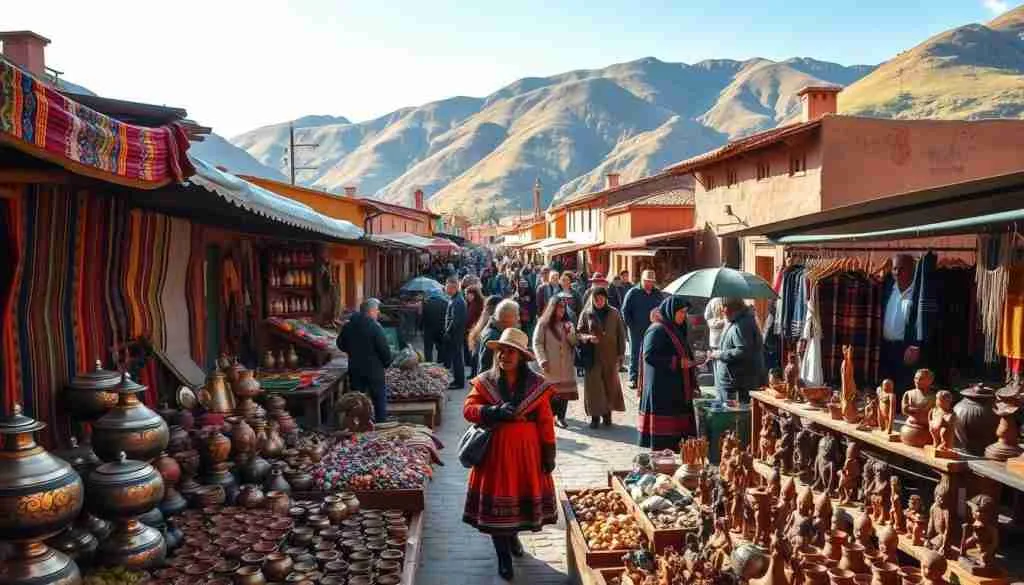
Exploring Peruvian handicrafts gives travelers a peek into the Andean region’s rich culture. Peru’s markets are filled with authentic souvenirs. These items share stories of old traditions and artistic skill.
Looking for the best Andean textiles? Focus on these key areas of craftsmanship:
- Handwoven Textiles from Chinchero
- Ceramics from Pisaq
- Silver Jewelry from Cusco
- Alpaca Wool Products
- Traditional Wood Carvings
Each market gives a special look into local craftsmanship. Chinchero Market, held every Sunday, showcases extraordinary textile traditions. Artisans use techniques passed down through generations.
| Craft Type | Key Characteristics | Average Price Range |
|---|---|---|
| Alpaca Textiles | Soft, warm, naturally hypoallergenic | $30-$250 |
| Ceramic Pieces | Hand-painted, traditional designs | $15-$100 |
| Silver Jewelry | Intricate Andean-inspired designs | $50-$300 |
“The true value of a handicraft lies not in its price, but in the story it carries” – Peruvian Artisan Proverb
When shopping, look for signs of authenticity. Natural dyes, traditional weaving, and direct sales from local artisans are key. San Pedro Market in Cusco and Pisac Market are great places to find genuine Peruvian handicrafts.
Conclusion
The Machu Picchu market experience connects travelers deeply with Peru’s culture. By visiting local artisan markets, they see more than just tourist spots. These markets are like living museums, showing off traditional crafts and old trading ways in authentic local environments.
Buying from local artisans is more than just shopping. It’s a chance to share cultures. Each item, from textiles to ceramics, shows skill passed down through generations. By shopping here, travelers help keep these traditions alive and support local communities.
Sustainable tourism in Peru is not just about the environment. It’s also about preserving culture. By shopping in places like Aguas Calientes, which gets 1.5 million visitors a year, travelers help keep traditions alive. Markets around Machu Picchu offer a special chance to connect with Peru’s heritage, making every purchase memorable.
Exploring these markets shows the true heart of Peruvian traditions. From Chinchero’s detailed textiles to San Pedro Market’s lively stalls, each place has its own story. Travelers are encouraged to see these markets as more than places to buy souvenirs. They are doors to understanding Peru’s rich cultural heritage.
