Step into the world of Peru at San Pedro Market Cusco. This market is a hub of cuisine, handicrafts, and Andean culture. It’s a place where you can dive into the local scene and experience the sights, smells, and sounds of Cusco.
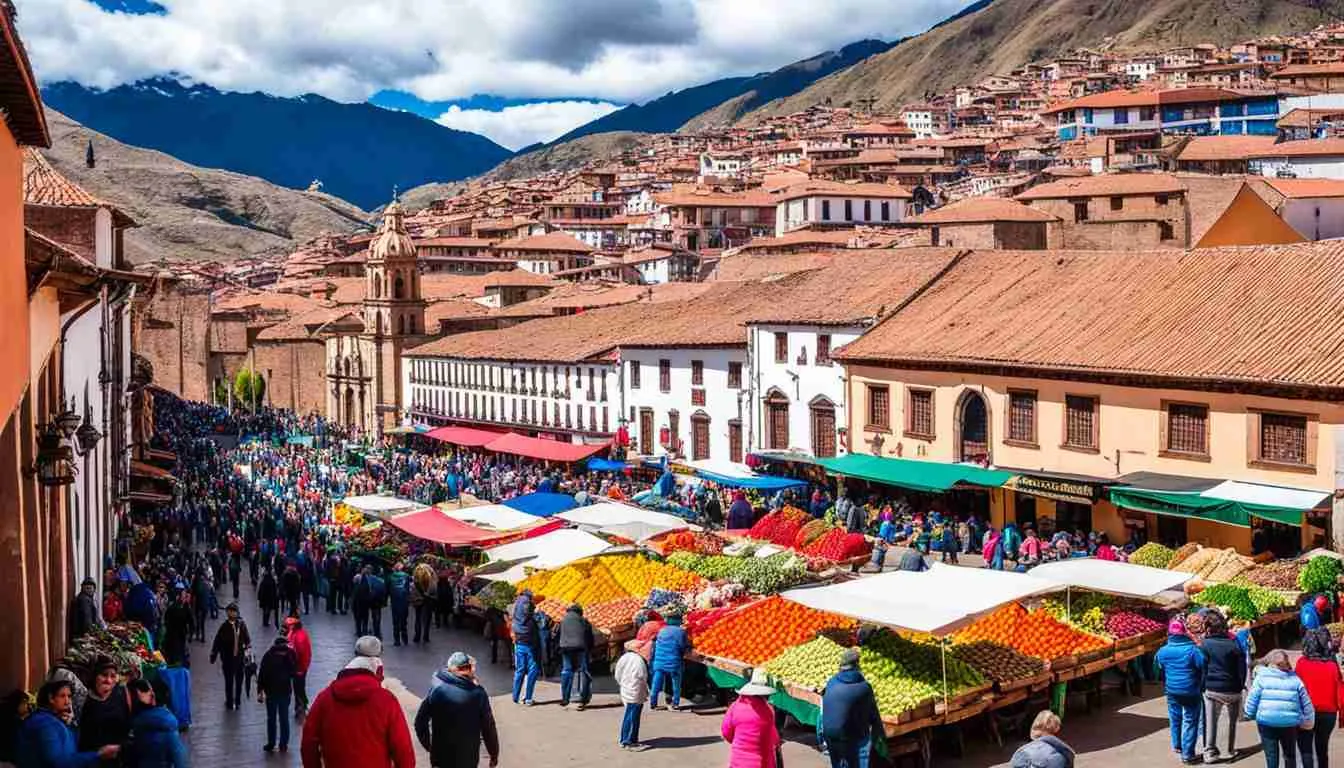
As you walk through the market, you’ll see stalls full of colors and life. The air is filled with the smells of traditional foods. You’ll hear the sounds of people chatting and haggling over prices.

Key Takeaways
- Discover the rich culinary and commercial traditions of Cusco at San Pedro Market.
- Explore a vibrant array of local peruvian crafts, andean textiles, and quechua culture.
- Immerse yourself in the lively atmosphere and take in the sights, sounds, and smells of this cusco attractions.
- Shop for unique south american souvenirs from local artisans at the artisan marketplace.
- Discover the historical significance of San Pedro Market as a traditional handicrafts hub and tourist destination.
- Contact us for a comfortable and personalized itinerary (Free Service)
The Heart of Cusco’s Culinary and Commercial Traditions
The San Pedro Market has deep roots in Cusco’s history and culture. It started as a small spot for traders and farmers. Over time, it grew into a key place for cusco commerce and cusco food culture. This shows how Cusco’s society, economy, and food have changed.
Importance of San Pedro Market Cusco
The San Pedro Market is like a living museum. It shows how Cusco’s commerce and culture have changed over time. With over 300 stalls, it draws in about 10,000 visitors every day. This makes it a lively spot.
Origins and Historical Significance
The market’s story goes back to the Inca times. In 1925, the famous architect Gustave Eiffel designed its current look. Now, it’s a key place to see the area’s farming and food diversity. It’s a symbol of Cusco’s lasting history and market traditions.
“San Pedro Market serves as a cultural institution, preserving and promoting Peru’s diverse heritage through various traditional practices such as weaving, gastronomy, and trade methods.”
The market’s economy still uses old trading ways, just like in Inca times. You’ll find many stalls with textiles in different patterns and colors. This shows the skill of local artists. The market also supports sustainable practices, like selling local produce and trading. This helps keep the community together and preserves traditions.


How to Get to San Pedro Market in Cusco
San Pedro Market is right in the heart of Cusco. It’s easy to get there from many parts of the city. If you’re in the historic center, walking is a great way to go. It only takes about 10 minutes from Plaza de Armas to the market. This walk lets you see the beautiful streets and buildings of Cusco.
Walking from the Historic Center
Walking is a great way to see Cusco and get to San Pedro Market. The market is just a short walk southeast of Plaza de Armas. As you walk, you’ll feel the city’s energy and see historic landmarks.
Taxis and Public Transportation Options
If you want a quick trip, taxis are easy to find in Cusco. They can take you straight to San Pedro Market. Taxis are good if you have a lot to carry or want to save time. Or, you can take a bus, which is cheaper but might be crowded and slow.
For a planned visit, consider a guided tour to San Pedro Market. It’s a good way to learn more and avoid the hassle.
| Transportation Option | Advantages | Considerations |
|---|---|---|
| Walking |
|
|
| Taxis |
|
|
| Public Transportation |
|
|
| Guided Tour |
|
|
Choosing how to get to San Pedro Market in Cusco is easy and convenient. You can enjoy the sights, sounds, and tastes of this famous market easily.
Navigating the Maze: Exploring San Pedro Market
San Pedro Market in Cusco is a lively spot for [exploring san pedro market]. It’s where visitors can dive into the city’s rich food and trade culture. The market stretches out in a maze of aisles and sections. Each one offers a taste of the region’s culture and commerce.
Key Sections and Highlights
As you walk through the busy [san pedro market sections], you’ll find different sections, each with its own vibe:
- The produce section is full of fresh fruits and veggies. It shows off the Andes’ rich agriculture.
- The meat and poultry section has skilled butchers showing off the best cuts.
- The artisan and craft stalls let you see the area’s lively art in textiles, ceramics, and souvenirs.
- The food stalls fill the air with smells of Peruvian dishes like chicharrón and fresh bread, making you hungry.
- The bakery and sweets section lets you taste the heart of Peruvian baking, from flaky pastries to rich desserts.
- The cheese and dairy section shows off the Andean region’s rich dairy culture.
- The flowers and plants section adds natural beauty and color to the market.
Exploring San Pedro Market is an amazing experience. It lets you see the core of Cusco’s food and trade traditions.
san pedro market cusco peru: A Culinary Journey
In the heart of Cusco, the San Pedro Market is a key spot for food lovers. It’s filled with san pedro market food, cusco street food, and true peruvian cuisine. This place gives visitors a unique cusco culinary experience.
Walking through the market, you’ll smell the amazing smells of Peruvian food. You’ll find everything from zesty ceviche to hearty tamales and savory chicharrón. There are also fresh juices and smoothies made from tropical fruits to cool you down.
For those who love to try new things, the market is perfect. You can try juane, a tasty rice and meat dish in bijao leaves. Or enjoy empanadas, both sweet and savory, which show off Peruvian pastry skills.
If you want a real taste of Cusco or just a food adventure, the San Pedro Market is the place to be. It promises to delight your taste buds and take you on a journey through peruvian cuisine. Get ready for a cusco culinary experience that will make you want more of its amazing flavors.
Shopping Extravaganza: Souvenirs and Handicrafts
San Pedro Market in Cusco, Peru, is a place full of treasures. You can find everything from everyday items to unique finds. Among the top items are traditional Peruvian textiles, known for their beautiful patterns and colors. Alpaca products are also popular, offering soft sweaters, scarves, and blankets.
The market is full of spices, herbs, and special Peruvian ingredients. You can take a taste of the country’s amazing food back home. There are exotic fruits, Andean souvenirs, and many Cusco crafts to choose from.
| Product | Description | Average Price |
|---|---|---|
| Peruvian Textiles | Vibrant and intricately patterned textiles showcasing the rich cultural heritage | $10 – $100 |
| Alpaca Products | Soft and high-quality sweaters, scarves, and blankets made from alpaca wool | $20 – $150 |
| Andean Spices and Herbs | Unique Peruvian ingredients for authentic cuisine | $2 – $10 |
| Exotic Fruits | Unique and flavorful tropical fruits, such as lucuma, cherimoya, and granadilla | $1 – $5 |
Looking for the perfect Andean souvenir? Or just want to dive into the Cusco crafts and san pedro market shopping scene? San Pedro Market is your go-to place for a memorable journey through Peru’s culture.
“San Pedro Market is a true feast for the senses, where the sights, sounds, and aromas of Peruvian culture come alive. It’s a must-visit destination for any traveler seeking a genuine connection with the heart of Cusco.”
Bargaining and Payment Methods
Bargaining is key at the san pedro market cusco. Start by offering a lower price than you want to pay. Be ready for a back-and-forth until you agree with the vendor. Keep it friendly and respect the sellers, as they depend on this for a living.
Tips for Successful Negotiation
- Start by offering a lower price than your target amount.
- Be polite and engaging during the bargaining process, as this can help build rapport with the vendor.
- Research the approximate prices of items beforehand to have a better understanding of fair market value.
- Avoid being confrontational or aggressive, as this could hinder the negotiation.
- Be willing to walk away if the vendor is unwilling to meet your desired price, as this can sometimes lead to a better offer.
Accepted Payment Options
At the cusco market negotiation, many stalls prefer cash, especially Peruvian Soles. Before going, get small bills. While payment methods cusco like credit and debit cards are becoming more common, cash is still the top choice. You can find ATMs and money exchange services near the market for extra cash. Some vendors also accept san pedro market cash and cards.
“Bargaining is an art form at the San Pedro Market in Cusco. It’s all about finding that sweet spot where both the vendor and the customer walk away feeling satisfied.”

Etiquette and Cultural Sensitivity
When you visit the lively san pedro market cusco, being respectful and sensitive is key. The cusco cultural traditions are a big part of the market. Knowing these customs makes your visit better.
Respecting Local Traditions and Customs
At the san pedro market etiquette, many people don’t speak English. So, be friendly and patient. Always ask before taking pictures of people, their stalls, or their goods. Some items have deep cusco cultural traditions, so learn about their importance.
- Avoid haggling too much or getting upset, as it’s seen as rude in the peruvian market customs.
- Wear modest clothes to show respect for the area.
- Don’t be too loud or disturb the market’s calm vibe.
By understanding the san pedro market cusco, you’ll connect better with the locals. This makes your visit to cusco more meaningful and positive.
“The heart of peruvian market customs is in the traditions and values passed down through generations. Showing respect for these customs can make your visit to the San Pedro Market special.”
The san pedro market etiquette shows off Cusco’s rich culture. By embracing the cusco cultural traditions, you’ll have a visit you’ll always remember.
Practical Information for Visitors
Opening Hours and Best Times to Visit
The San Pedro Market in Cusco is open every day, including Sundays, from 7:00 AM to 6:00 PM. Mornings are busiest as locals buy fresh produce and essentials. Midday is great for trying traditional Peruvian dishes in a lively atmosphere. Late afternoons are quieter, perfect for exploring the market’s vibrant textiles and herbs.
Visiting the San Pedro Market is a treat for the senses. It shows the heart of Cusco’s food and commerce. Whether you want to try local food or enjoy the market’s energy, any time is good to visit this part of Peruvian culture.
| Market | Hours | Highlights |
|---|---|---|
| San Pedro Market | 7:00 AM – 6:00 PM, 7 days a week | Fresh produce, traditional Peruvian dishes, artisan crafts |
| Wanchaq Market | 7:00 AM – 6:00 PM, 7 days a week | Fruits, vegetables, cheese, meat, clothing, kitchen supplies |
| Artisan’s Market | 9:00 AM – 6:00 PM, daily | Alpaca sweaters, jewelry, traditional pottery |
| San Blas Market | 7:00 AM – 5:00 PM, 7 days a week | Fruits, vegetables, cheese, meat, less touristy atmosphere |
The best time to visit san pedro market is when you can fully experience its sights, sounds, and flavors. Whether you like to get up early or take it easy, the san pedro market hours are perfect for exploring the cusco market schedule and when to go to san pedro market that fits your trip.
Safety and Hygiene Precautions
When you visit the San Pedro Market in Cusco, make sure to keep safe and clean. This market is full of life and sometimes pickpockets might be around. Keep your things close and don’t carry too much cash. Use digital payments if you can.
The market has lots of tasty Peruvian food, but be careful with food safety. Being over 11,000 feet high in Cusco makes water purification harder. To avoid getting sick, eat only cooked, hot food. Avoid raw meat, seafood, and raw dairy.
- Carry Pepto Bismol tablets to help prevent and treat traveler’s diarrhea, but limit use to no more than three weeks per FDA guidelines.
- Opt for bottled water or boil tap water for at least three minutes to ensure it’s safe to drink.
- Familiarize yourself with the symptoms of altitude sickness and take precautions, such as staying hydrated and avoiding strenuous activities upon arrival.
- Consider getting the Yellow Fever vaccine before your visit, as it is recommended for travel to Cusco.
By following these san pedro market safety and cusco market hygiene tips, you can enjoy the market’s lively vibe. You’ll also keep your health in check.
| Safety Tip | Recommendation |
|---|---|
| Prevent Pickpocketing | Keep valuables secure, avoid carrying large amounts of cash |
| Avoid Foodborne Illnesses | Stick to cooked, hot dishes, and avoid raw meat, seafood, and unpasteurized dairy |
| Manage Altitude Sickness | Stay hydrated, avoid strenuous activities upon arrival |
| Get Recommended Vaccines | Consider the Yellow Fever vaccine before your visit |
“Prioritize your well-being while exploring the vibrant San Pedro Market in Cusco.”
Sustainable Tourism: Leaving a Positive Impact
When you visit the lively San Pedro Market Cusco, think about how you can help the local community and environment. Buy things from small businesses and artisans. This helps support them. Also, understand the cultural importance of what you buy and respect local ways.
Choose food and produce that comes from around here and is in season. This helps the planet. Always throw away trash properly and don’t use plastic bags or bottles. By doing this, you help keep the area’s culture and nature safe for the future.
Tips for Responsible Travel
- Support local businesses and artisans by purchasing handmade crafts and souvenirs
- Respect local traditions and cultural practices
- Choose locally sourced, in-season food items to reduce your carbon footprint
- Properly dispose of waste and avoid single-use plastics
By choosing sustainable tourism, you make sure your visit to San Pedro Market Cusco helps the community and nature. This way, you leave a good mark.
“Sustainable tourism is about finding a balance between the needs of travelers, the environment, and the local community. It’s about preserving the rich cultural heritage and natural resources for future generations.”
Conclusion
The San Pedro Market in Cusco, Peru, is a lively spot that shows off the city’s food and trade traditions. It’s full of vendors, local products, and tasty Peruvian food. This market is a top spot for anyone visiting Cusco.
Looking for street food, unique gifts, or just the vibe? The San Pedro Market has it all. It’s easy to get to, has lots to offer, and tells the story of the Peruvian people’s strength and pride.
When you leave the San Pedro Market, you’ll remember the sights, sounds, and tastes. Buying from the vendors helps the local economy and supports cultural exchange. The San Pedro Market in Cusco is a snapshot of Peru’s lively culture. It’s a place every traveler should visit to dive into the heart of this amazing country.