
Best Komodo Tours 2026: Dragons & Snorkeling Complete Planning Guide
Komodo National Park tours in 2026 combine two extraordinary experiences—encountering the world’s largest lizards in their UNESCO-protected habitat and snorkeling through Indonesia’s richest coral ecosystems where manta rays glide beneath turquoise waters. The choice between speedboat day trips departing Labuan Bajo at dawn and multi-day liveaboard adventures aboard traditional phinisi vessels fundamentally shapes your Komodo experience, affecting everything from dragon viewing quality and snorkeling time allocation to accommodation comfort and total investment ranging from $100 budget day trips to $5,000+ luxury private charters.
Key Takeaways for Komodo Tours 2026
- New 1,000 daily visitor limit 2026: Komodo National Park introduces quota system requiring advance booking and specific session times, making early tour reservations essential particularly for July-September peak season
- Entrance fees consolidated 2026: Single park fee IDR 650,000 ($42) covers Komodo Island access, trekking, snorkeling permits, and ranger fees; Rinca Island alternative costs IDR 900,000 ($58) with both representing significant increases from previous multi-component pricing
- Liveaboard vs day trip decision: Multi-day tours (2D1N starting $150, 3D2N starting $220 per person shared) provide sunrise Padar hikes, extended manta ray encounters, and overnight anchorage near islands; day trips ($100-150) maximize limited time but involve 6+ hours round-trip speedboat travel
- Dragon viewing locations 2026: Komodo Island offers dramatic savannah landscapes and larger dragon populations but higher entrance fees; Rinca Island delivers close-range encounters with similar wildlife at premium cost; both require mandatory park ranger accompaniment
- Manta Point snorkeling peak season: April-November provides 80-90% manta ray sighting probability at Manta Point and Makassar Reef during plankton blooms; December-March rainy season reduces visibility and marine activity significantly
- Total tour costs 2026: Budget travelers spend $250-400 for 3D2N shared liveaboard including meals, accommodation, activities, and park fees; mid-range private group charters cost $1,500-3,000 total (4-6 people); luxury phinisi experiences reach $5,000-10,000 per night with gourmet service
People Also Ask About Komodo Tours 2026
What is the best type of Komodo tour for first-time visitors in 2026?
The 3-day 2-night shared liveaboard tour represents the optimal choice for first-time Komodo visitors in 2026, balancing comprehensive park exploration with reasonable pricing ($220-350 per person) and manageable time commitment for travelers with 7-10 day Indonesia itineraries. This tour length allows sunrise hiking at Padar Island when soft morning light illuminates the famous three-bay panorama without midday crowds, dedicated time viewing Komodo dragons during their active morning feeding periods (7:00-10:00 AM) before heat drives them to shade, multiple snorkeling sessions at Manta Point where patient 45-60 minute visits maximize manta ray encounter probability, and Pink Beach exploration without the rushed 30-minute stops that characterize day trips. The liveaboard format provides overnight anchorage near islands eliminating the exhausting 3-4 hour speedboat commute each direction from Labuan Bajo that consumes half of day trip schedules, allows flexibility to adjust snorkeling locations based on current conditions and marine life sightings, and delivers the complete “sleeping under stars surrounded by islands” experience that defines memorable Komodo adventures. First-timers benefit particularly from the inclusive nature of reputable 3D2N packages covering all meals (freshly prepared Indonesian and Western options), park entrance fees (IDR 650,000), snorkeling equipment, ranger fees for dragon trekking, and professional guides explaining the park’s ecology and conservation challenges—eliminating the planning complexity and hidden costs that plague independent day trip arrangements. The 2-night duration proves sufficient for experiencing Komodo’s highlights without the physical exhaustion of 4+ day expeditions, accommodates travelers prone to seasickness who need intermittent land breaks, and fits budgets of $250-350 per person representing excellent value compared to $100-150 day trips that deliver superficial rushed experiences or $500+ luxury liveaboards offering marginal additional value for most visitors.
How much does a Komodo tour cost in 2026 including all fees?
Complete Komodo tour costs in 2026 range from $250-400 for budget-conscious travelers joining 3D2N shared liveaboards to $1,500-3,000 for mid-range private group charters (4-6 people), with luxury experiences reaching $5,000-10,000+ for premium phinisi vessels with gourmet dining and personalized service. The all-inclusive 3D2N shared liveaboard at $280-350 per person typically covers traditional phinisi boat accommodation in basic air-conditioned cabins with shared or ensuite bathrooms, all meals including breakfast, lunch, dinner, snacks, coffee and tea throughout the journey, Komodo National Park entrance fee IDR 650,000 ($42), ranger fees for Komodo or Rinca Island dragon trekking (IDR 200,000 / $13 shared among groups), snorkeling equipment for all marine activities, professional English-speaking guide coordinating activities and providing ecological context, and harbor fees (IDR 25,000 / $1.50 per person). Budget day trips starting $100-150 appear economical but require additional costs including Labuan Bajo accommodation ($30-80 per night), separate meals before/after tour ($20-40), and often exclude park entrance fees listed as “extra” creating total costs approaching $200-250 for equivalent single-day experience. Mid-range 3D2N private charters ($1,500-3,000 total for 4-6 person groups) provide superior boat quality with spacious deluxe phinisi vessels featuring private cabins, flexible itinerary customization allowing extra time at favored snorkeling sites or additional island visits, premium meal quality with fresh seafood and Indonesian specialties, and dedicated crew attention without sharing with 15-20 strangers on budget group tours. Luxury experiences ($5,000-10,000+ per night) aboard vessels like Lamima, Alexa, or Celestia deliver yacht-standard accommodations with king beds, private balconies, outdoor bathtubs, gourmet chef-prepared meals with wine pairings, professional photography services, and additional activities like kayaking, paddleboarding, or diving with advanced equipment—justifying premium pricing only for travelers prioritizing ultimate comfort and exclusivity over value maximization.
Can you see Komodo dragons and swim with manta rays on the same tour?
Every Komodo National Park tour combines dragon viewing and manta ray snorkeling in single itineraries as these twin attractions represent the park’s defining experiences, with typical 3D2N tours allocating morning hours (Day 2, 7:00-11:00 AM) for Komodo or Rinca Island dragon trekking followed by afternoon manta ray encounters at Manta Point (Day 2, 2:00-4:00 PM) when plankton activity peaks attracting feeding mantas. The morning dragon viewing timing exploits the lizards’ temperature-dependent activity patterns—Komodo dragons emerge from overnight burrows at sunrise to warm their cold-blooded bodies in open savannah areas, actively patrol territories and hunt during cooler 25-28°C morning temperatures, then retreat to shaded forest areas by 11:00 AM when surface temperatures exceed 35°C and dragons become lethargic and difficult to observe. Park rangers leading mandatory 60-90 minute trekking circuits through Komodo or Rinca Islands position groups along established paths where dragons frequently sun themselves near watering holes or patrol for prey including deer, wild boar, and smaller monitors, maintaining 3-5 meter safety distances enforced with forked sticks to prevent aggressive encounters with apex predators reaching 3 meters length and 70 kilograms weight. The afternoon manta ray snorkeling follows naturally as boats transit from dragon islands to Manta Point (45-60 minute journey), arriving when rising afternoon water temperatures and stronger currents concentrate plankton attracting feeding mantas that cruise cleaning stations with mouths open filtering microscopic organisms. Successful manta encounters require patient 45-60 minute snorkeling sessions remaining stationary at reef edges rather than chasing the rays, with April-November dry season providing 80-90% sighting probability versus 40-60% during December-March rainy season when reduced visibility and plankton density diminish marine activity. The sequential scheduling works because dragon islands and manta sites lie within 1-2 hours boat travel, optimal viewing times don’t overlap (dragons early morning, mantas mid-afternoon), and both activities accommodate all fitness levels unlike challenging multi-hour trekking or advanced scuba diving that exclude many participants.
Is a Komodo day trip worth it or should I do a liveaboard?
Liveaboard tours deliver substantially superior value and experience quality compared to day trips for travelers with 3+ days available, with the fundamental tradeoff involving 3D2N shared liveaboards at $220-350 per person providing comprehensive park exploration, multiple snorkeling sessions, sunrise Padar hike, and overnight adventure atmosphere versus day trips at $100-150 offering rushed highlight visits with 6+ hours consumed by exhausting speedboat commutes from Labuan Bajo. Day trips force travelers onto speedboats departing 6:00 AM for 3-4 hour high-speed runs to Komodo National Park covering 40+ kilometers through often-choppy seas, arriving 9:30-10:00 AM when dragon activity declines and tour group crowds peak at popular Komodo and Rinca Island sites, then racing through 30-45 minute stops at Padar Island (insufficient time for the 30-minute summit hike and proper photography), Pink Beach (minimal swimming/snorkeling before next departure), and Manta Point (brief 20-30 minute snorkeling sessions providing marginal manta encounter probability), before 3-4 hour return speedboat journey arriving Labuan Bajo 6:00-7:00 PM physically exhausted from continuous boat motion and sun exposure. The mathematics prove unfavorable—day trips allocate perhaps 4-5 hours actual park activities versus 10-12 hours travel and transit, while 3D2N liveaboards provide 24-30 hours of island exploration, snorkeling, and activities with only 2-3 hours total travel as the boat repositions overnight between anchorage points. Liveaboards enable sunrise Padar Island arrivals (5:30-6:00 AM) before day trip crowds appear, allowing solitary summit experiences and optimal photography light impossible on day schedules, dedicate full mornings to dragon viewing when rangers lead extended 90-120 minute treks through varied terrain increasing encounter diversity, and schedule multiple 60-90 minute snorkeling sessions at different sites rather than single rushed stops maximizing marine life diversity from reef fish at Pink Beach to mantas at cleaning stations to sea turtles at Siaba Island. The overnight experience itself—sunset viewing from the boat deck anchored in pristine bays, sleeping under brilliant stars unpolluted by mainland lights, waking to island silhouettes emerging from morning mist—creates memorable moments impossible on day trips returning to Labuan Bajo hotels. Day trips justify only for travelers with severe time constraints (cruise ship passengers with single port day, Indonesia itineraries allowing just one Labuan Bajo day), extreme budget limitations accepting reduced experience quality for $120-150 savings versus 3D2N tours, or significant seasickness concerns making overnight boat stays unacceptable despite modern phinisi vessels’ stability and seasickness medication availability.
Extended multi-day tours – 5+ days
Featured Komodo Multi-Day Tour Packages
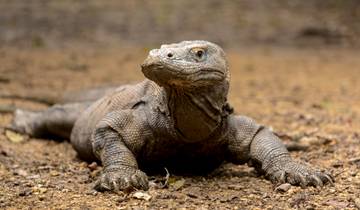
1 days
Private: Day Trip Komodo from Labuan Bajo Airport
- ✓ Booking needs min. 2 travelers
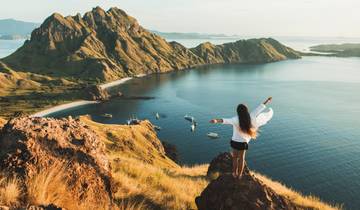
5 days
Highlights of Flores & Komodo – 5 days
- ✓ Comprehensive Komodo tour
- ✓ Expert local guides included
- ✓ All accommodation arranged
- ✓ Transportation provided

6 days
Komodo & Flores Sail
- ✓ Comprehensive Komodo tour
- ✓ Expert local guides included
- ✓ All accommodation arranged
- ✓ Transportation provided
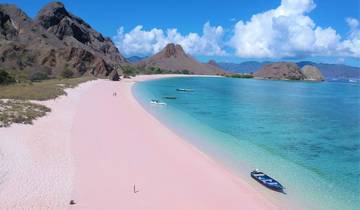
3 days
3 Days Fascinating Flores
- ✓ Comprehensive Komodo tour
- ✓ Expert local guides included
- ✓ All accommodation arranged
- ✓ Transportation provided
Multi-day tour packages powered by TourRadar. Prices and availability subject to change.
Understanding Komodo National Park Tours in 2026
Komodo National Park tours in 2026 operate under new visitor management protocols introduced to balance tourism revenue with wildlife conservation and ecosystem protection in this UNESCO World Heritage Site spanning 1,733 square kilometers across Komodo, Rinca, Padar, and numerous smaller islands. The newly implemented 1,000 daily visitor limit represents the most significant regulatory change affecting tour planning, requiring advance booking through official SiORA permit system with specific session time allocations (Session 1: 5:00-8:30 AM, Session 2: 9:00-12:00 PM, Session 3: 1:00-4:00 PM) that tour operators must coordinate when scheduling dragon island visits.
Understanding the park’s geography clarifies why virtually all tours originate from Labuan Bajo, the bustling fishing town on Flores Island’s western tip serving as the gateway to Komodo National Park located 40 kilometers west across the Flores Sea. The main islands form a rough line running west from Labuan Bajo—Kelor Island (1 hour), Rinca Island (2-3 hours), Padar Island (3-4 hours), and Komodo Island (4-5 hours)—with travel times varying dramatically between speedboats capable of 30-40 knots reaching destinations in half the time of traditional phinisi vessels cruising at 7-10 knots but providing far less comfortable rides across open water.
The consolidated entrance fee structure implemented in 2026 simplifies previous multi-component pricing that confused travelers with separate charges for park entry, ranger fees, trekking permits, and marine activities. The current single payment of IDR 650,000 ($42) covers complete Komodo Island access including mandatory ranger-guided dragon trekking, snorkeling anywhere within park waters, Padar Island hiking, and all conservation contributions—paid once per trip regardless of duration (day trip or multi-day liveaboard). Tours visiting Rinca Island instead of Komodo pay the alternative fee of IDR 900,000 ($58) covering equivalent activities at this dragon-rich alternative offering closer encounters in more compact terrain than Komodo’s sprawling savannahs.
Tour operators categorize into three distinct types serving different traveler profiles and budgets. Budget operators running shared group tours on basic phinisi boats charge $180-250 per person for 3D2N trips with simple Indonesian meals, basic air-conditioned cabins, and standard snorkeling equipment—acceptable for backpackers and budget travelers accepting no-frills conditions to minimize costs. Mid-range operators offering better quality phinisi vessels with deluxe cabins, ensuite bathrooms, varied meal options, and smaller group sizes (10-12 people versus 15-20 on budget boats) charge $280-400 per person for equivalent 3D2N itineraries attracting couples and families willing to invest moderately more for enhanced comfort. Luxury operators commanding $500-800+ per person for shared trips or $5,000-10,000+ for private charters provide yacht-standard vessels with spacious private cabins, gourmet Indonesian and international cuisine, premium equipment, and personalized service justifying costs only for high-end travelers prioritizing ultimate comfort.
Komodo Dragon Encounters on 2026 Tours
Komodo dragon viewing represents the primary attraction drawing visitors to Indonesia’s eastern archipelago, with these ancient monitor lizards—the world’s largest reaching 3 meters length and 70 kilograms weight—inhabiting only a handful of islands within Komodo National Park where roughly 3,000-5,000 individuals survive in wild populations protected since UNESCO designation in 1991. The mandatory ranger-accompanied trekking system implemented for visitor safety after several tourist injuries and one 2009 fatality ensures all dragon encounters occur under controlled conditions with licensed park guides carrying forked sticks to maintain safe distances from apex predators possessing venomous bites, powerful tails, and surprising speed bursts reaching 20 kilometers per hour over short distances.
Komodo Island and Rinca Island represent the two primary dragon viewing destinations included in virtually all park tours, with the choice between them affecting entrance costs (Komodo IDR 650,000 / Rinca IDR 900,000), trekking difficulty levels, landscape scenery, and encounter probability based on island-specific dragon populations and terrain characteristics. Komodo Island, the larger landmass spanning 390 square kilometers with approximately 1,500-2,000 dragons, offers dramatic savannah landscapes dotted with lontar palms where sunrise light creates golden photography conditions, longer trekking circuits (short 1-hour, medium 2-hour, long 3-hour routes) traversing varied ecosystems from coastal mangroves to dry forest hilltops, and better infrastructure including shaded rest areas and improved pathways accommodating less physically fit visitors. Rinca Island’s more compact 198 square kilometers supporting 1,200-1,500 dragons concentrates encounters along shorter circuits (30-90 minutes) through open grasslands where dragons sun themselves near ranger stations and watering holes, providing virtually guaranteed close-range sightings that require less hiking effort—explaining the island’s popularity among cruise ship passengers and older travelers with limited mobility despite the higher entrance fee.
Dragon activity patterns follow predictable temperature-dependent cycles that skilled rangers exploit when timing trekking circuits for optimal viewing opportunities. The lizards emerge from overnight burrows or shaded resting spots at sunrise (6:00-7:00 AM) when cool overnight temperatures (22-24°C) necessitate warming their cold-blooded bodies through basking behavior in open sunny areas near watering holes and along established patrol routes. Morning hours (7:00-11:00 AM) represent peak activity when ambient temperatures reach 25-30°C providing ideal conditions for hunting, territorial displays, and social interactions including aggressive encounters between competing males. By midday (11:00 AM-2:00 PM) when surface temperatures exceed 35°C radiating from exposed rocks and sand, dragons retreat to shaded forest areas, burrows, or beneath large boulders where they remain largely inactive and difficult to observe—explaining why tours universally schedule dragon island visits for early morning arrivals rather than afternoon stops.
The trekking circuits themselves vary significantly in difficulty, duration, and dragon encounter probability based on terrain, time investment, and fitness requirements. The short circuit (1 hour, easy difficulty, 2-3 kilometer distance) follows established flat paths through open savannah and light forest visiting guaranteed dragon congregation points including watering holes where thirsty dragons gather during dry season and ranger station areas where human food waste historically attracted scavenging individuals before current strict feeding prohibitions. Medium circuits (1.5-2 hours, moderate difficulty, 4-5 kilometers) add elevation gain climbing low hills for panoramic savannah views and access to less-frequented areas where patient observation may reveal hunting behavior, nesting sites during July-September breeding season, or juvenile dragons in trees avoiding cannibalistic adults. Long circuits (2.5-3 hours, challenging difficulty, 6-8 kilometers) appeal primarily to serious wildlife enthusiasts and photographers willing to invest significant effort climbing steep ridges to remote valleys where dragon density remains lower but wilderness atmosphere and diverse wildlife encounters (wild boar, Timor deer, sulfur-crested cockatoos, endemic Komodo rats) create more authentic experiences than crowded ranger station areas.
Rangers maintain strict safety protocols throughout all treks including mandatory 3-5 meter minimum distance from dragons enforced with forked sticks used to gently redirect approaching individuals, prohibition of approaching nesting sites or juveniles in trees that trigger aggressive maternal defense, and immediate group repositioning when dragons display threat behaviors including hissing, tail lashing, or body inflation. The venomous bite danger—resulting from toxic proteins and pathogenic bacteria in saliva rather than traditional venom glands—necessitates evacuation protocols for any bite incidents as even minor wounds frequently develop severe infections requiring hospitalization and extended antibiotic treatment. Deaths remain extremely rare (one tourist fatality in 2009, occasional local villager incidents) but rangers emphasize that Komodo dragons are wild apex predators, not zoo animals, and unpredictable dangerous behavior can occur particularly during breeding season aggression or when dragons detect injured prey triggering feeding responses.
Best Snorkeling Sites in Komodo National Park 2026
Komodo National Park’s marine environment rivals its terrestrial dragon attractions, protecting some of Indonesia’s richest coral reef ecosystems where the collision of Indian Ocean and Pacific Ocean currents creates nutrient upwellings supporting extraordinary biodiversity including 1,000+ fish species, 260+ coral species, and regular encounters with manta rays, reef sharks, sea turtles, and seasonal whale shark visits. The park’s underwater topography varies from shallow coral gardens perfect for beginner snorkelers to dramatic underwater slopes and channels delivering strong currents that attract pelagic species but require experienced swimmers and favorable conditions.
Manta Point near Komodo Island represents the park’s most famous snorkeling destination where reef manta rays (Manta alfredi) congregate at cleaning stations, allowing sustained close encounters with these gentle filter-feeding giants spanning 3-5 meter wingspans as they perform elegant barrel rolls and loop-de-loops feeding on plankton concentrations. The site’s coral reef outcrop at 8-12 meter depth features resident cleaner wrasse that remove parasites from mantas hovering in the current, creating predictable congregation patterns that skilled guides exploit by positioning snorkelers along the reef edge where mantas approach within 2-3 meters during optimal conditions. Successful manta encounters require patience remaining stationary rather than swimming after the rays, with 45-60 minute snorkeling sessions during April-November dry season providing 80-90% sighting probability when plankton blooms concentrate feeding activity. The December-March rainy season reduces success rates to 40-60% as decreased visibility (10-15 meters versus 20-30 meters dry season), cooler water temperatures (26-27°C versus 28-29°C), and reduced plankton density from freshwater runoff diminish manta presence and feeding behavior.
Pink Beach on Komodo Island’s northern coast delivers the park’s most photogenic snorkeling location where coral-sand beaches tinged rose-pink from eroded red coral fragments slope gently into shallow protected bays containing pristine coral gardens teeming with tropical fish accessible even to nervous beginners and young children. The sheltered conditions with minimal currents and 2-6 meter depths allow relaxed snorkeling without strong swimming skills, while the kaleidoscope of hard and soft corals hosting clownfish, parrotfish, butterflyfish, and angelfish provides sustained visual interest during 45-60 minute water sessions. The beach itself offers pleasant swimming, beach combing for shells and coral fragments (collection prohibited), and stunning photography with turquoise waters contrasting pink sand and green hills—though the site’s beauty attracts day trip crowds (11:00 AM-2:00 PM) creating congestion that liveaboard tours avoid through early morning (7:00-9:00 AM) or late afternoon (3:00-5:00 PM) scheduling.
Taka Makassar, a small sandy island appearing and disappearing with tides roughly 2 hours boat travel from Komodo Island, surrounds visitors with 360-degree underwater panoramas where shallow coral reefs (3-8 meters depth) circle the sandbar creating an aquarium effect with visibility often exceeding 30 meters during calm conditions. The site’s exposure to open ocean brings stronger currents and waves requiring confident swimming ability and favorable weather conditions, but rewards patient snorkelers with diverse marine encounters including reef sharks patrolling the drop-off, large schools of fusiliers and trevally, occasional eagle rays gliding over sand channels, and healthy hard coral formations recovering from past bleaching events. The dramatic shallow-to-deep topography creates snorkeling variety—beginners stay in protected lagoon areas within the reef ring (2-4 meter depth) while stronger swimmers venture toward outer slopes where the reef drops to 15-25 meters attracting larger pelagic species and offering wall-style snorkeling perspectives without scuba equipment.
Siaba Island located between Labuan Bajo and Komodo Island provides excellent sea turtle encounters in shallow seagrass beds where green turtles feed on vegetation and hawksbill turtles hunt for sponges and soft corals among rocky outcrops at 4-8 meter depths. The site’s proximity to Labuan Bajo (45-60 minutes) makes it popular for both day trips and as first-day liveaboard stops, with gentle conditions and high turtle density (3-5 turtles per snorkeling session typical) accommodating all experience levels including children and elderly snorkelers. The sandy-bottomed environment with scattered coral heads lacks the dramatic reef structures of other sites but compensates through guaranteed wildlife encounters as turtles surface regularly to breathe, allowing photographers to capture close-range images of these ancient reptiles in their natural feeding habitat.
Kanawa Island northeast of Labuan Bajo combines excellent coral reef snorkeling with beach resort amenities including the small Kanawa Beach Bungalows offering overnight accommodation for travelers wanting extended snorkeling access. The fringing reef descending from beach shallows to 15-20 meter depths hosts impressive hard coral formations featuring table corals, staghorn species, and massive brain corals creating complex three-dimensional structures inhabited by countless reef fish, nudibranchs, moray eels, and occasional white-tip reef sharks resting in coral caves. The island’s northeastern aspect provides natural protection from prevailing winds and swells during dry season (April-November), maintaining calm conditions ideal for full-day snorkeling with beach breaks, though rainy season waves can create challenging entry/exit across sharp coral shallows requiring protective reef shoes and careful timing.
Choosing Between Day Trips and Liveaboard Tours 2026
The fundamental decision between Komodo day trips and multi-day liveaboard experiences shapes every aspect of your park visit from total costs and physical comfort to wildlife encounter quality and photographic opportunities, with clear tradeoffs involving time investment, budget allocation, and experience depth that different traveler profiles weight uniquely. Day trips from Labuan Bajo operate on fixed schedules departing 5:30-6:00 AM for 3-4 hour speedboat journeys reaching Komodo National Park by 9:30-10:00 AM, completing rushed visits to 3-4 sites including dragon viewing (60-90 minutes), Padar Island stop (30-45 minutes insufficient for proper summit hike), Pink Beach or Manta Point snorkeling (30-45 minutes), then returning 3-4 hours to Labuan Bajo arriving 6:00-7:00 PM exhausted from continuous boat motion, sun exposure, and compressed activity schedules.
The time allocation mathematics reveal day trip limitations—approximately 6-8 hours consumed by speedboat travel versus perhaps 4-5 hours actual park activities, with this imbalance worsening during rough sea conditions when captains reduce speed for passenger comfort extending travel times to 4-5 hours each direction. The speedboat experience itself divides travelers, with some enjoying the adrenaline rush of 30-40 knot speeds bouncing across waves while others find the continuous pounding motion exhausting and nauseating particularly on rougher afternoon return journeys when afternoon winds increase wave heights. The boats’ limited space (typically 20-30 passengers in open seating) offers minimal shade, no climate control, and basic facilities (single marine toilet, no changing area) creating endurance test conditions during 12-14 hour total trip durations.
Liveaboard tours aboard traditional wooden phinisi vessels or modern motor yachts transform travel time into experience time as boats reposition overnight between islands while passengers sleep in air-conditioned cabins, arriving at each location without conscious awareness of movement and waking to discover the boat anchored in new pristine bays. The typical 3D2N liveaboard allocates perhaps 2-3 hours total active travel when repositioning between distant sites during daylight, with the remaining 70+ hours available for island exploration, snorkeling multiple sites, meals, relaxation, and social interaction with fellow travelers—creating 15-20x more actual park engagement time compared to day trips.
Cost analysis requires comparing total expenses rather than advertised tour prices alone. Budget day trips advertised at $100-150 per person appear economical but require additional Labuan Bajo accommodation ($30-80 per night), meals before/after tour ($20-40), and often exclude park entrance fees (IDR 650,000 / $42) listed as “payable directly,” creating realistic total costs of $200-280 per person for single day park access. The comparable 3D2N budget liveaboard at $220-280 per person inclusive of accommodation, all meals, park fees, and activities delivers dramatically superior value—essentially adding just $20-40 to access two full additional days of experiences, overnight boat stay, multiple snorkeling sites, and comprehensive park exploration rather than rushed highlight sampling.
The liveaboard advantages extend beyond simple mathematics into experience quality improvements. Sunrise Padar Island arrivals (5:30-6:00 AM before day trip crowds arrive at 10:00-11:00 AM) allow solitary summit hikes photographing the famous three-bay panorama in soft morning light without 50+ tourists crowding viewpoints and appearing in every frame. Extended morning dragon viewing (8:00 AM-11:00 AM) during peak activity hours follows natural pace of ranger-led treks rather than day trip schedules forcing departure by 10:30 AM to maintain itinerary timing. Multiple 60-90 minute snorkeling sessions at different sites (Manta Point, Pink Beach, Taka Makassar, Kanawa) permit relaxed exploration adapting to conditions and marine life sightings rather than single rushed 30-minute stops checking boxes without meaningful underwater engagement.
The overnight experience itself—sunset viewing from boat decks anchored in pristine island bays, dining under brilliant stars unpolluted by mainland lights, morning coffee watching flying foxes return from mainland feeding areas, swimming directly from the boat before breakfast in empty bays—creates memorable moments defining Komodo adventures for most visitors. The social dimension emerges as passengers share meals, swap travel stories, and collaborate on wildlife spotting creating temporary communities that transform solitary experiences into shared adventures photographically documented and collectively celebrated.
Day trips justify choosing only in specific circumstances where liveaboard advantages cannot overcome practical constraints. Cruise ship passengers spending single port days in Labuan Bajo lack time for multi-day tours making day trips the only option despite limitations. Severe seasickness sufferers unable to manage overnight boat stays even with medication may prefer day trip discomfort to multi-day misery, though modern phinisi vessels’ size and stability combined with professional crew route selection to avoid roughest waters makes seasickness less problematic than assumed. Extremely budget-constrained backpackers counting every dollar may accept reduced quality saving $120-180 versus 3D2N tours, though this economy disappears when total trip costs including accommodation and meals receive proper analysis. Travelers with rigid schedules allowing exactly one day for Komodo between other Indonesia destinations obviously cannot extend to multi-day tours regardless of advantages.
3-Day 2-Night Liveaboard Tours Complete Breakdown 2026
The 3-day 2-night liveaboard format represents Komodo National Park’s most popular tour length, balancing comprehensive island coverage with manageable time investment and reasonable pricing ($220-400 per person shared tours) that accommodates most traveler budgets while delivering meaningful experiences impossible on rushed day trips or excessive 5+ day expeditions that exceed many visitors’ available vacation time. The standard 3D2N itinerary follows a proven template maximizing highlight visits while maintaining flexible pacing that adapts to weather conditions, marine life sightings, and group preferences under experienced captain and guide direction.
Day 1 typically begins with 10:00-11:00 AM Labuan Bajo departure as passengers board phinisi boats at the harbor after hotel pickups (9:00-9:30 AM), receive safety briefings and cabin assignments, then sail 2-3 hours to Kelor Island for first snorkeling session (1:00-2:30 PM) in shallow protected bays perfect for warming up rusty swimming skills and testing equipment fit. The afternoon continues to Rinca Island (arriving 3:30-4:00 PM) for sunset trekking encountering dragons during their late-day emergence from afternoon shade, followed by dinner onboard and overnight anchorage in Rinca’s sheltered bays where boats rock gently to sleep passengers under star-filled skies unmarred by mainland light pollution.
Day 2 delivers the tour’s core experiences beginning with early wake-up calls (4:30-5:00 AM) for sunrise departure to Padar Island, arriving 5:30-6:00 AM for the 30-45 minute summit hike ascending 200+ meters on established pathways to the famous three-bay viewpoint where morning light creates golden illumination across turquoise waters and pink-sand beaches. After descent and light breakfast onboard, boats transit 1 hour to Komodo Island for morning dragon trekking (8:30-11:00 AM) when lizard activity peaks, followed by lunch while sailing to Pink Beach (arriving 1:00 PM) for relaxed snorkeling and beach time. The afternoon’s highlight follows at Manta Point (3:00-4:30 PM) where patient snorkeling sessions maximize manta ray encounter probability during afternoon plankton concentration, then sunset sailing to protected anchorage at Kalong Island where thousands of flying foxes emerge at dusk on evening feeding flights creating spectacular silhouettes against orange skies.
Day 3 begins leisurely with sunrise coffee watching flying foxes return from mainland foraging, followed by final snorkeling session at Kanawa or Sebayur Islands (7:00-9:00 AM) before returning to Labuan Bajo (arriving 11:00 AM-12:00 PM) with lunch served en route, allowing afternoon flights for travelers continuing to Bali or other destinations. This relaxed final morning contrasts with some budget operators rushing early Labuan Bajo arrivals (8:00-9:00 AM) to reduce fuel costs by shortening Day 3 sailing, sacrificing the peaceful final snorkeling session that many travelers rank among their favorite moments.
The 3D2N format’s flexibility allows itinerary variations adapting to specific interests and conditions. Diving-focused tours substitute scuba diving (2-3 dives per day) for some snorkeling sessions, accessing deeper sites inaccessible to snorkelers and targeting specific marine life including reef sharks, turtles, and coral gardens requiring depth to appreciate. Photography-oriented groups request extended time at photogenic locations particularly Padar Island summit (90+ minutes versus standard 60 minutes) and Pink Beach (2 hours versus standard 60-90 minutes), accepting fewer total destinations to maximize quality over quantity. Family groups with young children may skip challenging Padar summit hikes substituting beach time at other islands, request additional calm snorkeling sites versus current-prone Manta Point, and prioritize cabin comfort and meal variety over adventure optimization.
The accommodation quality on 3D2N tours varies significantly across budget, standard, and deluxe boat categories affecting comfort levels, privacy, and amenities while traveling and sleeping onboard. Budget phinisi boats charge $220-280 per person offering basic but adequate facilities including simple air-conditioned cabins (2-4 person shared rooms with bunk beds), shared bathrooms with cold or lukewarm showers (hot water rare on budget boats), Indonesian-style meals (rice, vegetables, fish or chicken, tropical fruit) served cafeteria-style on communal deck tables, basic snorkeling equipment (often worn masks and fins requiring early selection for better-fitting pieces), and large group sizes (15-20 passengers) creating hostel-style social atmosphere that backpackers enjoy but couples and families often find too public.
Standard tours ($280-350 per person) improve accommodations with better-maintained phinisi vessels featuring twin-bed cabins with ensuite bathrooms including hot water showers, air conditioning that functions reliably throughout nights, varied meal menus mixing Indonesian specialties with Western breakfast options and fresh seafood dinners, newer snorkeling equipment in multiple sizes, and smaller groups (10-12 passengers) creating more intimate atmosphere. Deluxe tours ($350-450 per person shared) provide spacious private cabins with double beds, large ensuite bathrooms with proper hot showers, comfortable common areas with cushioned seating rather than hard benches, chef-prepared meals with multiple choices and dietary accommodation (vegetarian, vegan, allergies), premium snorkeling and water sports equipment, and maximum group sizes of 8-10 passengers ensuring personalized guide attention and flexible pacing.
All 3D2N inclusive pricing typically covers boat accommodation for two nights, all meals from Day 1 lunch through Day 3 lunch including snacks and beverages (coffee, tea, water; soft drinks and alcohol typically excluded), Komodo National Park entrance fee (IDR 650,000), ranger fees for dragon trekking, snorkeling equipment use throughout trip, professional English-speaking guide coordinating activities, and harbor fees. Excluded costs requiring additional payment include Labuan Bajo accommodation before/after tour (most tours depart 10:00-11:00 AM allowing same-day arrival from morning Bali flights, return by early afternoon permitting same-day departures), dive equipment rental if substituting diving for snorkeling (approximately $30-50 per day), alcoholic beverages beyond welcome drink (beer $3-5, wine $6-8 per glass), tips for crew and guides ($10-20 per person recommended), and airport transfers if not included in specific operator packages.
Private Charter vs Shared Group Tours 2026
The decision between private charter and shared group tours fundamentally affects total costs, itinerary flexibility, privacy levels, and social dynamics, with private options starting approximately 4-5x higher than shared equivalents but delivering customization and exclusivity impossible when coordinating 12-20 strangers’ preferences and pacing. Private 3D2N charters on standard phinisi boats accommodating 6-8 passengers cost $2,500-4,000 total (approximately $300-500 per person when groups fill boats to capacity), while deluxe vessels accommodating 8-12 passengers range $4,000-7,000 total, and luxury yachts for 10-16 guests reach $7,000-15,000+ depending on vessel quality and included services.
The private charter advantages justify premium pricing for specific traveler profiles and circumstances. Family groups (6-10 people spanning multiple generations) appreciate controlling itinerary pacing around elderly grandparents’ limited mobility and young children’s shorter attention spans, selecting kid-friendly snorkeling sites avoiding strong currents, and timing meals and rest periods around familiar routines rather than fixed group schedules. Friend groups celebrating special occasions (honeymoons, anniversaries, reunions, milestone birthdays) value privacy for intimate celebrations, flexibility to add special requests like sunset champagne service or birthday cakes, and freedom from other travelers’ presence during romantic or significant moments. Photography enthusiasts leading small workshops need extended time at optimal shooting locations during specific light conditions, freedom to return to productive sites multiple times rather than fixed single visits, and accommodation for specialized equipment including underwater housings and drone photography requiring experienced crews and equipment storage.
The itinerary customization available on private charters permits optimization impossible with shared tours following fixed programs accommodating diverse passenger interests. Diving-focused charters dedicate most activity time to scuba diving (3-4 dives daily) at sites selected based on participants’ certification levels and interests (macro photography, wide-angle reef scenes, pelagic encounters), minimize non-diving stops to brief mandatory dragon viewing, and schedule around optimal dive timing including early morning and late afternoon sessions when marine life peaks. Relaxation-oriented groups request maximum beach time at pristine islands, extended snorkeling at favorite sites discovered early in trip, and flexible meal timing allowing lazy morning starts and sunset cocktail hours rather than rigid breakfast/lunch/dinner schedules. Adventure groups add activities beyond standard snorkeling and trekking including kayaking between islands, stand-up paddleboarding in calm bays, night snorkeling with flashlights revealing nocturnal reef activity, and challenging multi-hour Komodo or Rinca summit hikes accessing remote viewpoints rarely visited.
The crew and service levels increase substantially on private charters with dedicated crews (captain, engineers, deckhands, cook, guide) serving 6-12 passengers versus shared tours where identical crew size handles 15-20 people, translating to faster service, more personalized attention, and superior meal quality as cooks prepare fresh dishes rather than bulk cafeteria-style serving. The flexibility extends to meal preferences with private charter guests requesting specific cuisines (Italian, Japanese, Western BBQ), dietary accommodations (gluten-free, kosher, extensive vegetarian menus), and meal timing (late breakfasts, sunset dinner service on deck, midnight snacks for hungry swimmers) impossible on shared tours maintaining fixed feeding schedules.
Shared group tours ranging $220-450 per person for 3D2N trips maintain fixed itineraries visiting the same island sequence regardless of passenger composition, follow rigid timing (breakfast 7:00 AM, activities 8:00-11:00 AM and 2:00-5:00 PM, dinner 7:00 PM) required to coordinate diverse travelers, and accommodate various fitness levels by offering easier activity alternatives (beach time instead of summit hikes) but limiting ambitious travelers to conservative group-appropriate options. The social atmosphere appeals to solo travelers and couples enjoying meeting other Indonesia adventurers, sharing travel tips, and forming friendships during shared meals and experiences, with many participants highlighting the camaraderie as unexpected tour highlights. However, the shared nature requires accepting occasional incompatible group members (loud complainers, entitled demanders, perpetual late arrivals), accommodating others’ pacing (waiting for slow swimmers, rushing energetic explorers), and managing cabin assignments (random roommate matching for solo travelers, family room shortages during peak periods).
The break-even analysis clarifies when private charters make economic sense beyond luxury considerations. Groups of 6-8 people comparing private charter costs ($3,000-5,000 total) to shared tour pricing ($220-350 per person × 6-8 passengers = $1,320-2,800 total) find private charters cost just $200-700 more for dramatic improvements in itinerary control and privacy—often justifiable for families and friend groups. Smaller groups (2-4 people) face larger price gaps ($3,000 private charter versus $440-1,400 shared tour) making private options reasonable only for high-budget travelers or special occasions, while solo travelers essentially never choose private charters requiring minimum 6-8 passenger bookings to reach reasonable per-person rates through group formation.
Best Time to Visit Komodo National Park 2026
The optimal months for Komodo National Park tours span the dry season (April-November) when calm seas, minimal rainfall, and peak marine life activity create ideal conditions for boat travel, snorkeling, and wildlife viewing, with July-September representing peak season attracting maximum visitors and highest prices while April-June and October-November shoulder periods deliver equivalent weather at reduced costs with smaller crowds. The seasonal weather patterns follow Indonesia’s monsoon cycles with distinct wet and dry periods affecting sea conditions, underwater visibility, manta ray sightings, and overall comfort levels that fundamentally shape experience quality.
The dry season months (April-November) feature predominant southeast winds creating calm seas in Komodo’s protected channels between islands, minimal rainfall (5-10 rain days per month) reducing tour disruption probability, and optimal underwater visibility (20-30 meters typical) allowing distant marine life observation and dramatic photography. Water temperatures remain warm year-round (27-29°C) eliminating wetsuit requirements for most snorkelers though divers often wear 3mm suits for extended submersion, while air temperatures of 28-32°C with lower humidity (60-70% versus 80%+ rainy season) create comfortable conditions for outdoor activities and sleeping in boat cabins where air conditioning systems sometimes struggle during hottest months.
Manta ray sighting probability peaks during dry season months when plankton blooms concentrated by predictable currents attract feeding mantas to cleaning stations at Manta Point and Makassar Reef, with April-November providing 80-90% encounter probability during proper 45-60 minute snorkeling sessions versus 40-60% December-March when reduced plankton density, cooler water temperatures, and stronger currents from monsoon patterns diminish manta presence. The late dry season (September-November) particularly excels for manta encounters as peak plankton production following mid-year minimum creates feeding frenzies attracting not only mantas but also whale sharks making rare appearances in Komodo waters during October-November optimal conditions.
Peak season (July-September) coincides with global summer holidays when European, Australian, and Asian tourists flood Southeast Asia creating maximum Komodo demand evidenced by fully booked liveaboards requiring 2-3 month advance reservations, crowded dragon viewing sites where 50+ tourists wait at ranger stations for circuit assignments, and premium pricing with budget 3D2N tours reaching $280-350 versus $220-280 shoulder season and deluxe options commanding $400-500 versus $350-400 off-peak. The newly implemented 1,000 daily visitor limit particularly impacts peak season when quota sessions fill completely forcing late bookings into less desirable time slots or alternative dates, though shoulder season (April-June, October-November) maintains availability even for 1-2 week advance bookings.
Shoulder season months (April-June, October-November) deliver optimal value propositions with identical weather conditions and marine life activity as peak months but 15-25% reduced pricing, smaller group sizes (10-12 passengers versus 15-20 peak season when operators maximize capacity), and empty dragon viewing circuits allowing solitary encounters with wildlife and pristine landscapes. The April-May and October-November periods represent the calendar sweet spots for visitors with scheduling flexibility, avoiding both peak season crowds/costs and rainy season weather disruption while maintaining dry season advantages.
The rainy season (December-March) features prevailing northwest monsoon winds creating rougher seas with 1-2 meter swells making small boat travel uncomfortable and occasionally dangerous when storms develop, frequent afternoon thunderstorms (15-20 rain days per month) disrupting outdoor activities and photography, and reduced underwater visibility (10-15 meters typical) from freshwater runoff and plankton disturbance limiting marine observation distances. Water temperatures cool slightly (26-27°C versus 28-29°C dry season) encouraging wetsuit use even for snorkeling, while overcast conditions reduce natural light penetration creating darker underwater environments challenging for photography without strobes or video lights.
Despite these limitations, rainy season maintains appeal for budget travelers accepting weather risks to access 30-40% discounted tour pricing when operators reduce rates to maintain bookings during slow periods, photographers seeking dramatic cloud formations and moody lighting impossible during clear dry season skies, and visitors specifically avoiding crowds willing to accept reduced manta ray probabilities for empty Padar summit viewpoints and private Pink Beach experiences. The rainfall pattern concentrates in late afternoon storms (2:00-6:00 PM) rather than all-day rain, allowing morning activities (dragon viewing, Padar hikes) to proceed normally while snorkeling sessions adapt to afternoon conditions or move to morning timing when visibility typically exceeds afternoon measurements after storms stir sediment.
Complete Komodo Tour Costs Breakdown 2026
Budget-conscious travelers completing 3D2N Komodo liveaboard experiences spend approximately $250-350 total per person when combining tour costs, additional fees, and incidental expenses, while mid-range comfort-focused visitors investing in superior boat quality and enhanced services reach $400-600 total, with luxury travelers accessing premium phinisi charters spending $800-1,500+ per person for equivalent duration but dramatically elevated accommodation and dining standards. The budget breakdown requires understanding which costs are included in advertised tour prices versus additional expenses paid separately before, during, or after trips.
The baseline 3D2N budget shared liveaboard tour advertised at $220-280 per person (shared accommodation, basic amenities) typically includes two nights boat accommodation in simple air-conditioned cabins with 2-4 person shared rooms and shared or basic ensuite bathrooms, all meals from Day 1 lunch through Day 3 lunch featuring Indonesian-style rice-based dishes with vegetables, fish or chicken, and tropical fruit desserts, unlimited drinking water, coffee, and tea throughout trip (soft drinks and alcohol excluded), Komodo National Park entrance fee IDR 650,000 ($42) covering dragon island access and snorkeling permits, ranger fees for mandatory dragon trekking at Komodo or Rinca Islands (IDR 200,000 / $13 typically shared among group), snorkeling equipment including mask, snorkel, and fins for all water activities, professional English-speaking guide coordinating activities and providing park information, and harbor fees (IDR 25,000 / $1.50). These inclusive packages deliver true $220-280 all-in costs with minimal additional expenses beyond pre/post tour accommodation and personal purchases.
Additional budget tour expenses requiring separate payment include Labuan Bajo accommodation before tour departure (Day 0) and after return (Day 3), with guesthouse rooms costing $15-30 per night or mid-range hotels $40-80 allowing travelers to select quality matching budgets, airport transfers between Labuan Bajo airport (LBJ) and hotels/harbor ($5-10 by taxi, $2-3 by angkot public transport), meals not included in tour package ($5-15 per meal at Labuan Bajo restaurants depending on venue selection), and crew/guide tips representing customary compensation ($10-20 per person recommended based on service quality). The conservative budget including these elements reaches $280-380 total per person for complete 4-day/3-night Komodo experience from arrival to departure.
Mid-range travelers choosing standard or deluxe 3D2N tours at $280-400 per person receive significant comfort and quality improvements including twin or double bed cabins with ensuite bathrooms featuring reliable hot water showers (versus temperamental lukewarm systems on budget boats), consistent air conditioning maintaining comfortable sleeping temperatures throughout tropical nights, varied meal menus incorporating Western breakfast options (eggs, toast, fresh fruit) and fresh seafood dinners (grilled fish, calamari, prawns) beyond basic rice dishes, newer better-maintained snorkeling equipment in multiple sizes ensuring proper fit, and smaller group sizes (10-12 passengers versus 15-20) reducing crowding and allowing more personalized guide attention. Adding equivalent pre/post accommodation at mid-range hotels ($50-80 per night), quality restaurant meals ($10-20), comfortable airport transfers ($10), and appropriate tipping ($20-30 reflecting superior service) creates realistic $450-600 total trip costs representing excellent value for significantly enhanced comfort and experience quality.
Luxury and deluxe shared tours charging $400-600 per person for 3D2N trips deliver yacht-standard amenities including spacious private cabins with queen or king beds, large modern bathrooms with premium fixtures and full hot water systems, air-conditioned common areas with comfortable lounge seating and entertainment systems, chef-prepared gourmet meals featuring Indonesian specialties and international cuisine with wine pairings, premium water sports equipment including kayaks and paddleboards beyond basic snorkeling gear, expert guides with advanced ecological and cultural knowledge, smaller maximum group sizes (6-10 passengers) ensuring intimate experiences, and additional services like professional trip photography or special occasion celebrations. Combined with luxury hotel accommodation in Labuan Bajo ($100-200+ per night), fine dining meals ($25-50), private airport transfers ($20-30), and generous tipping ($40-60), total luxury shared tour costs reach $700-1,000+ per person for 4-day experiences.
Private charter costs calculated per boat rather than per passenger create dramatically different economics depending on group size. A standard private charter phinisi (6-8 passenger capacity) costs $2,500-4,000 total for 3D2N trips, translating to $300-650 per person when the boat fills to capacity (6-8 people) but $800-1,300 per person for small groups (3-4 people) and $1,250-2,000 per person for couples forcing minimum passenger guarantees. Deluxe private charters ($4,000-7,000 total) and luxury yacht charters ($7,000-15,000+ total) follow similar per-person arithmetic where larger groups sharing costs achieve reasonable rates approaching deluxe shared tour pricing while small groups pay premium per-person costs for private vessel access and itinerary control.
Day trip costs appear economical at $100-150 advertised pricing but require comprehensive analysis including Labuan Bajo accommodation costs, excluded park entrance fees, and meal expenses creating realistic $200-280 total for single-day park access—just $20-80 less than budget 3D2N liveaboards delivering infinitely superior experiences. The day trip’s primary cost advantage emerges for travelers already staying Labuan Bajo multiple nights for other Flores activities (visiting traditional villages, driving to Cunca Wulang Canyon, exploring Labuan Bajo nightlife and restaurants) who can amortize hotel costs across varied activities rather than maintaining empty paid rooms during 3D2N liveaboard absences.
Booking Komodo Tours: Timing and Procedures 2026
Booking Komodo tours in 2026 requires understanding the new visitor quota system introduced to protect park ecosystems while managing tourism demand, with the 1,000 daily visitor limit and mandatory SiORA permit reservations forcing advance planning particularly during July-September peak season when desirable tours and time slots sell out 2-3 months ahead. The booking process varies significantly between budget group tours, mid-range operators, and luxury charters, with corresponding differences in advance notice requirements, deposit structures, and cancellation policies affecting financial commitments and flexibility.
Budget and standard shared group tours generally operate on fixed weekly schedules (common departure days Monday, Wednesday, Friday) with published itineraries and set prices allowing straightforward online booking through operator websites, travel platforms (GetYourGuide, Viator, TripAdvisor), or direct communication via WhatsApp and email. The advance booking timeline extends from 3-7 days minimum for shoulder season departures when boats rarely fill completely to 4-8 weeks recommended for peak season (July-September) when popular tours sell out early and last-minute availability becomes limited. Deposit requirements typically demand 30-50% payment upon reservation confirmation with remainder due 7-30 days before departure, though full payment accepted for travelers booking within final payment windows simplifies the transaction to single payment.
The tour operator selection process requires researching company reputation, boat quality, safety records, and customer reviews through multiple sources before committing deposits to unknown operators in foreign jurisdictions without consumer protection mechanisms. TripAdvisor and Google Reviews provide customer feedback aggregation with recent reviews (2024-2026) carrying more relevance than older reports predating current ownership, management, or boat conditions. Facebook groups dedicated to Komodo tourism and Labuan Bajo travel (search “Komodo Travel Indonesia” or “Labuan Bajo Tourism”) contain candid discussions of operator experiences, recommended companies, and scam warnings from recent travelers without commercial bias affecting review platform content. Instagram research examining operator accounts reveals boat condition through photos, customer engagement through comments and stories, and activity levels indicating functioning businesses versus dormant companies maintaining old websites.
Red flags indicating potentially problematic operators include prices significantly below market average ($180-200 for 3D2N tours versus typical $220-280) suggesting either hidden costs, substandard boats/meals, or inexperienced crews, reluctance providing specific boat names and photos indicating vessel quality concerns, vague itinerary descriptions without committed island visits allowing last-minute substitutions reducing costs, slow communication response times (24-48+ hours to answer simple questions) suggesting disorganized operations, and absence of clear cancellation and refund policies creating ambiguity around financial commitments. Conversely, professional operators respond promptly (within 12-24 hours), provide detailed itineraries specifying which boat assigned to your departure, offer transparent pricing clearly listing inclusions and exclusions, maintain active social media showing recent trips and satisfied customers, and include proper business registration and insurance documentation when requested.
Luxury and private charter bookings require significantly longer advance notice with 2-4 months minimum recommended for peak season departures when premium boats maintain near-capacity bookings from repeat customers and travel agents representing high-net-worth clients. The booking process involves more consultation with operators customizing itineraries, selecting specific boats from available fleets, and negotiating special requests (dietary restrictions, activity preferences, celebration arrangements) impossible in standardized group tour formats. Deposit structures shift to 40-50% upon reservation with remainder due 30-60 days before departure reflecting the substantial revenue impact of cancelled luxury bookings, though flexible cancellation policies (full refund until 45-60 days, partial refunds until 30 days) provide reasonable protection for travelers whose plans change.
The consolidation of Komodo National Park entrance fees into single payment (IDR 650,000) effective 2026 simplifies previous complex fee structures where travelers paid separate charges for park entry, ranger services, marine permits, and conservation contributions creating confusion about total costs. Most reputable tour operators now include this consolidated fee in advertised prices, eliminating the previous common practice of listing tours at attractive prices plus “park fees payable directly” that added unexpected $40-50 costs upon arrival. However, budget operators occasionally continue the excluded fee practice to advertise lower headline prices, making careful verification of inclusions essential during booking process to avoid unpleasant payment surprises reducing trip enjoyment.
What to Pack for Komodo Tours 2026
Essential packing for Komodo liveaboard tours balances luggage space limitations (soft bags preferred over hard cases for easier boat storage), tropical climate clothing requirements (lightweight, quick-dry materials), and specialized gear for snorkeling and trekking activities unavailable or expensive to purchase in Labuan Bajo last-minute. The typical 3D2N liveaboard requires modest luggage capacity accommodating 3-4 outfit changes, swimwear, minimal toiletries, and personal items fitting small to medium duffel bags or backpacks that stow easily in compact boat cabins lacking closet space or luggage racks.
Clothing recommendations emphasize quick-dry synthetic fabrics or merino wool maintaining comfort in tropical heat and humidity while drying rapidly when exposed to sun, wind, or cabin air conditioning after swimming or sweating—essential for multi-day boat trips without laundry facilities. Pack 3-4 quick-dry t-shirts or tank tops for daytime wear, 1-2 long-sleeve sun shirts providing UV protection during exposed boat travel and snorkeling (reef-safe rashguards ideal), lightweight shorts or skirts for hot weather comfort, long lightweight pants for dragon trekking (ranger requirements and sun protection), and one warm layer (light fleece or windbreaker) for air-conditioned cabin sleeping and early morning Padar hikes when temperatures drop to 22-24°C.
Swimwear requires 2-3 sets allowing rotation while damp suits dry, with women benefiting from supportive athletic-style bikinis or one-piece suits maintaining coverage during active snorkeling and boat climbing versus fashion bikinis that shift position or fall off when swimming. Men’s board shorts or swim trunks with secure waistbands prevent loss during enthusiastic manta ray chasing or strong current snorkeling. The reef-safe rashguard provides dual sun protection and warmth during extended water sessions, with long-sleeve versions protecting arms and shoulders from sunburn during hours-long snorkeling where regular sunscreen washes off despite claims of water resistance.
Footwear needs span three distinct functions requiring separate shoes unless accepting compromises. Reef shoes or water sandals with secure straps (Tevas, Chacos, Keens) enable safe rocky shore entry/exit, provide foot protection against sea urchins and sharp coral while snorkeling, and allow beach walking without burning feet on hot sand—representing the single most versatile Komodo footwear bringing daily use. Hiking shoes or trail runners with ankle support and aggressive tread tackle Padar Island’s steep rocky trails and Komodo/Rinca dragon trekking circuits where loose gravel and exposed roots create slip hazards, though many budget travelers successfully use quality sport sandals accepting reduced stability. Flip-flops or slide sandals for boat use and cabin comfort complete the footwear trio, though not essential if space-constrained as water sandals substitute adequately.
Sun protection equipment prevents the severe sunburns afflicting unprepared visitors during cumulative hours of tropical sun exposure across boat travel, snorkeling, trekking, and beach time. Reef-safe sunscreen (physical/mineral formulations using zinc oxide or titanium dioxide rather than chemical UV filters damaging coral reefs) in 100+ SPF requires frequent reapplication every 60-90 minutes and after water activities despite marketing claims of multi-hour protection. Wide-brimmed sun hat (baseball caps insufficient) shades face, ears, and neck during boat travel and land activities, with chin straps preventing loss overboard during speedboat rides or windy conditions. Quality polarized sunglasses reduce glare from water surfaces, enhance underwater visibility for snorkelers spotting marine life, and protect eyes from UV damage during extended outdoor exposure. Lightweight UV-blocking clothing (long-sleeve shirts, pants, sun gloves) provides superior protection versus sunscreen alone for serious sun-avoiders or fair-skinned travelers burning easily.
Personal snorkeling equipment investment justifies for serious snorkelers planning multiple sessions, travelers with difficult-to-fit faces requiring specific mask sizes, and hygiene-conscious visitors avoiding shared rental equipment used by hundreds of previous guests. A properly fitting mask creating watertight seal without pressure points transforms snorkeling from tolerable to enjoyable, with modern low-volume masks featuring silicone skirts and tempered glass lenses costing $30-60 outperforming rental equipment quality while providing ownership ensuring availability and fit. Snorkels with purge valves and splash guards enhance comfort versus basic J-tube designs, though experienced snorkelers often prefer simple models without mechanical complexity prone to failure. Fins remain optional as rental equipment typically includes adequate choices in various sizes, though owning travel-friendly short fins improves swimming efficiency versus long fins that pack poorly. Prescription mask availability addresses vision-impaired snorkelers’ needs through custom lenses or snap-in corrective inserts transforming blurry underwater environments into crisp detailed views.
Camera and electronics packing considers waterproof protection, battery charging limitations during boat travel, and storage requirements for equipment vulnerable to salt water and humidity. Smartphone waterproof cases ($10-30) enable casual underwater photography and video without investing in dedicated underwater cameras, with modern phone camera quality rivaling compact cameras for surface and moderate-depth snorkeling photos. Dedicated underwater cameras (GoPro, Olympus Tough, Nikon Coolpix) provide superior controls and image quality for serious underwater shooting, with GoPro’s wide-angle perspective capturing sweeping reef scenes while compact cameras’ zoom capabilities isolate distant marine life. Extra camera batteries and memory cards accommodate heavy shooting during days packed with photographic opportunities, as Labuan Bajo offers limited availability and inflated prices for last-minute purchases. Universal power adapters with multiple USB charging ports maximize limited boat electrical outlets serving numerous passengers, while waterproof dry bags protect electronics from salt spray and storage in damp boat environments.
Safety Considerations for Komodo Tours 2026
Komodo National Park tours involve inherent safety risks from wildlife encounters, marine activities, boat travel, and remote location medical limitations that travelers must understand and prepare for through appropriate precautions, insurance coverage, and realistic assessment of personal capabilities versus tour demands. The park’s apex predator status for Komodo dragons, strong currents and waves affecting snorkeling and boat travel, tropical sun and heat stress, and limited medical facilities between Labuan Bajo (basic emergency care) and Bali (comprehensive hospital access requiring expensive evacuation) create risk factors requiring informed decision-making and proper preparation.
Komodo dragon safety protocols implemented by park rangers include mandatory guided trekking with no independent hiking permitted, minimum 3-5 meter distance enforcement using forked sticks to redirect approaching dragons, immediate group repositioning when dragons display aggressive behaviors (hissing, tail lashing, body inflation), and strict prohibition of approaching nesting sites or juveniles in trees triggering maternal defense responses. The venomous bite danger stems from toxic proteins and pathogenic bacteria in saliva creating severe infections requiring immediate medical attention including wound cleaning, antibiotic treatment, and potential evacuation to Labuan Bajo or Bali hospitals for serious cases. Deaths remain extremely rare (one tourist fatality in 2009, occasional local villager incidents) but rangers emphasize unpredictable wild animal behavior particularly during July-September breeding season when territorial aggression increases and normally tolerant dragons attack perceived threats.
Marine safety concerns center on snorkeling risks for inexperienced or overconfident swimmers, with strong currents at exposed sites like Manta Point and Taka Makassar creating exhaustion scenarios where swimmers cannot return to boats or safe shallow areas without assistance. Proper fitting life jackets mandatory for weak or nervous swimmers prevent drowning scenarios, though inflated vests restrict diving to observe underwater features and many competent swimmers find them unnecessary encumbrance. The buddy system pairing swimmers provides mutual observation for problems including mask flooding, cramps, disorientation, or marine life encounters requiring assistance, with guides and boat crew maintaining visual contact with all snorkelers and conducting regular counts ensuring no one left behind or separated from group. Dangerous marine life including jellyfish (occasional stings causing painful welts but rarely serious), sea urchins (stepped on creating puncture wounds), and rare reef sharks (typically harmless unless provoked) present manageable risks through awareness and appropriate behavior avoiding harassment or contact with marine organisms.
Sun exposure and heat stress affect virtually all Komodo visitors during cumulative outdoor hours across boat travel, snorkeling, and trekking in 28-35°C temperatures with 60-80% humidity creating heat index values exceeding 40°C. Proper hydration requires consuming 3-4 liters water daily despite not feeling thirsty (dehydration symptoms appear after fluid deficit already exists), with tours providing unlimited drinking water but travelers responsible for actual consumption rather than assuming occasional sips suffice. Heat exhaustion symptoms (excessive sweating, weakness, nausea, headache, dizziness) require immediate rest in shade, fluid consumption, and cooling measures (wet towels, fanning), while heat stroke (confusion, loss of coordination, hot dry skin) represents medical emergency requiring evacuation to medical care. The tropical sun burns fair skin within 15-30 minutes despite feeling comfortable in cooling breezes, necessitating comprehensive protection through clothing, sunscreen, shade seeking, and limiting midday exposure during peak UV hours (10:00 AM-2:00 PM).
Boat safety standards vary significantly across Komodo operators from properly maintained vessels with current safety certifications, adequate life jackets, functioning communication equipment, and experienced licensed captains to substandard boats lacking proper equipment, inexperienced crews, and questionable seaworthiness creating genuine hazard during rough weather or mechanical failures. Research-based operator selection examining safety records, boat condition photos, and customer feedback regarding safety consciousness prevents majority of boat-related risks, while on-site inspection before departure allows refusal to board obviously unsafe vessels despite booking inconvenience and financial loss. Proper life jacket availability and fit for all passengers, functioning marine radio or satellite communication for emergencies, clearly marked emergency exits and assembly points, and visible fire extinguishers and first aid supplies represent minimum acceptable safety equipment, with their absence indicating operator shortcuts risking passenger safety.
Medical preparation requires comprehensive travel insurance covering emergency evacuation from remote locations, with standard policies often excluding adventure activities like snorkeling and boat travel requiring specific coverage endorsements or specialized adventure travel insurance policies. The nearest basic medical facilities exist in Labuan Bajo providing emergency stabilization and minor injury treatment but lacking capacity for serious trauma, cardiac events, or complex medical issues requiring evacuation to Bali, Jakarta, or Singapore hospitals via expensive air ambulance ($10,000-30,000+ depending on destination and patient condition). Personal medication supplies should include 7+ day quantities accounting for delayed returns from weather disruptions, motion sickness medication (dramamine, meclizine, ginger supplements) for susceptible travelers, antihistamines for jellyfish sting treatment, antibiotic ointment for minor cuts and abrasions, and any prescription medications with doctor’s letters explaining medical necessity for customs clearance.
Frequently Asked Questions Komodo Tours 2026
Do I need to be a strong swimmer to snorkel in Komodo National Park?
Moderate swimming ability and water comfort allow safe snorkeling at most Komodo National Park sites, with life jackets mandatory for weak or nervous swimmers providing flotation enabling ocean enjoyment without independent swimming capability, though strong currents at exposed locations like Manta Point and Taka Makassar challenge even confident swimmers requiring realistic self-assessment before entering water. The majority of Komodo snorkeling occurs at protected sites including Pink Beach, Kanawa Island, and various shallow reef areas where minimal currents, 2-6 meter depths, and nearby boat positioning create low-risk conditions accommodating beginners, children over 8-10 years with basic swimming skills, and elderly snorkelers with reduced endurance. The properly fitting life jacket transforms non-swimmers into functional snorkelers by providing effortless surface flotation eliminating swimming exertion, allowing mask and snorkel familiarization in relaxed environments, and permitting participation in guided snorkeling sessions without excluding nervous participants from signature Komodo experiences. However, the inflated vest restricts diving below surface to examine coral details or approach marine life, limits swimming speed and maneuverability making current-prone sites exhausting, and marks wearers as inexperienced encouraging guide attention that confident swimmers avoid. Strong current sites including Manta Point where underwater topography channels water flow and Taka Makassar exposed to open ocean swells require confident swimming ability maintaining position against water movement, with guides typically keeping inexperienced swimmers in protected zones while escorting capable participants to current-swept channels where manta rays congregate. The realistic self-assessment involves considering swimming pool comfort (can you swim 100 meters without stopping while remaining relaxed rather than panicked?), ocean experience (have you snorkeled previously in open water versus only swimming pools?), and physical fitness (does continuous moderate exertion for 30-60 minutes cause exhaustion?), with honest negative answers indicating life jacket use or limitation to calm protected sites rather than attempting challenging locations beyond personal capabilities.
What is the difference between visiting Komodo Island versus Rinca Island for seeing dragons?
Komodo Island and Rinca Island both deliver excellent dragon viewing with approximately 1,500-2,000 Komodo monitors inhabiting each landmass, but differ significantly in entrance fees (Komodo IDR 650,000 / $42 versus Rinca IDR 900,000 / $58), trekking circuit length and difficulty, landscape scenery, and encounter probability based on terrain and dragon distribution patterns. Komodo Island, the larger landmass spanning 390 square kilometers, offers dramatic savannah landscapes dotted with lontar palms where sunrise and late afternoon light creates golden photographic conditions, longer trekking circuits (short 1-hour, medium 2-hour, long 3-hour routes) traversing varied ecosystems from coastal areas through grasslands to forested hilltops providing wilderness immersion and diverse wildlife encounters beyond just dragons, and better infrastructure including shaded rest areas, improved pathways, and ranger station facilities accommodating less physically fit visitors. The island’s size means dragon encounters require more hiking investment to reach productive viewing areas, with short circuits visiting guaranteed congregation points near ranger stations and watering holes while extended treks access remote valleys where wilderness atmosphere compensates for potentially fewer total dragon sightings. Rinca Island’s more compact 198 square kilometers concentrates dragon population into smaller territory creating higher density encounters along shorter circuits (30-90 minutes) through open grasslands where dragons sun themselves prominently near ranger stations, virtually guaranteeing close-range sightings (3-5 meters) within first 30 minutes that require minimal physical exertion—explaining the island’s popularity among cruise ship passengers, elderly travelers, and families with young children despite the IDR 250,000 ($16) entrance fee premium over Komodo. The terrain differences extend to scenery as Rinca features drier more compact landscape creating intimate enclosed-valley atmosphere versus Komodo’s expansive savannah vistas stretching to distant volcanic peaks, with photographers often preferring Komodo’s dramatic backdrop while wildlife enthusiasts seeking guaranteed close encounters favor Rinca’s concentration benefits. Most multi-day tours visit one island not both as similar dragon species and behavior make dual visits somewhat redundant, with the Komodo versus Rinca choice affecting overall park entrance costs, physical exertion levels, and photographic background variety rather than fundamentally different wildlife experiences. Budget-conscious travelers save IDR 250,000 ($16) per person selecting Komodo Island access, potentially justifying the choice for large families or groups where savings accumulate significantly, while travelers prioritizing guaranteed easy encounters or with mobility limitations may accept the Rinca premium for higher probability close-range viewing with minimal hiking demands.
Can I use a drone for photography in Komodo National Park in 2026?
Drone photography in Komodo National Park requires advance permit applications with fees of approximately IDR 2,000,000-2,500,000 ($130-160) per device per day plus 3-7 working days processing time through park management authorities, making casual tourist drone usage impractical while commercial photography projects justify the investment for aerial perspectives of Padar Island’s famous three-bay vista, Pink Beach shorelines, and dragon habitat landscapes impossible from ground positions. The permit application process involves submitting detailed flight plans specifying exact locations, altitudes, and timing for drone operations, providing operator credentials and aircraft technical specifications demonstrating professional capability, obtaining insurance coverage for potential accidents or wildlife disturbance, and coordinating with park rangers who monitor drone activities to ensure compliance with wildlife protection regulations prohibiting low-altitude flights over dragon congregations or nesting areas. The substantial fees reflect conservation priorities limiting disruptive technologies affecting wildlife behavior, with studies demonstrating that drone noise and visual presence disturb nesting birds, cause dragons to flee basking areas reducing visitor viewing opportunities, and create stress responses in marine life when flown over shallow reef areas during feeding or cleaning behaviors. Most tour participants unable or unwilling to arrange permits weeks in advance rely on conventional photography from boats, island summits, and beach positions delivering excellent results through proper composition, timing, and equipment use, with Padar Island’s 200-meter summit providing natural aerial-perspective views across the archipelago without requiring drone flight. Professional photography tours occasionally include permitted drone operations in premium packages when tour operators coordinate advance applications on participants’ behalf, allowing amateur photographers to benefit from aerial captures without personally managing Indonesian bureaucratic permit processes. Unauthorized drone usage detected by park rangers results in equipment confiscation without compensation, potential fines, and possible tour expulsion creating severe consequences that far exceed benefits of unpermitted aerial photos, making compliance essential for visitors bringing drone equipment to Komodo National Park.
Are Komodo tours suitable for families with young children?
Families with children ages 8-12 find Komodo tours highly rewarding when selecting appropriate liveaboard operators emphasizing family-friendly boats with safety rails, spacious cabins accommodating parents and children, varied meal options beyond spicy Indonesian dishes, and guides experienced explaining dragon ecology in child-accessible terms, while families with younger children under 8 face challenges from long boat days, snorkeling skill requirements, hot exposed trekking circuits, and limited emergency medical access requiring realistic assessment of individual child temperament and capabilities. The ideal family Komodo experience involves 3D2N liveaboard tours with mid-range or deluxe operators providing enclosed cabin sleeping (versus open-air deck sleeping on budget boats), Western breakfast options (cereal, eggs, toast) supplementing Indonesian meals, shorter snorkeling sessions (30-45 minutes versus 60-90 minutes) accommodating children’s reduced endurance, and flexible scheduling allowing rest breaks during hottest midday hours rather than continuous activity pushing tired children to meltdowns. Children who enjoy swimming, show interest in marine life and wildlife, tolerate heat without excessive complaining, and adapt to unfamiliar sleeping arrangements transition successfully to liveaboard adventures, particularly when parents frame the experience as exciting “sleeping on a boat” adventure rather than endurance test creating positive anticipation. The snorkeling component works well for confident swimmers ages 8+ familiar with mask and snorkel use through practice in swimming pools before the trip, with protected sites like Pink Beach and Kanawa Island providing calm shallow conditions perfect for supervised children discovering reef fish and sea turtles without strong currents or deep water anxiety. Life jackets enable non-swimming children to participate in snorkeling sessions when properly fitted and supervised, though parents must maintain direct contact during water activities rather than delegating supervision to guides focused on entire group. The dragon viewing circuits present minimal difficulty as short routes (1 hour, 2-3 kilometers, flat terrain) accommodate children’s walking abilities while the wildlife fascination sustains interest better than abstract museum or temple visits that bore young visitors. However, parents must enforce ranger safety instructions maintaining distance from dragons, staying on paths, and avoiding running or loud behavior that disturbs wildlife or other tourists, with noncompliance creating dangerous situations rangers address through immediate removal from trekking circuits. The boat environment requires constant parental supervision as children move around decks, climb stairs, and approach open railings where falls into water present genuine drowning risks on vessels without child-specific safety equipment like pool-style fencing. The remote location and basic medical facilities mean parents of children with chronic conditions (asthma, diabetes, severe allergies) must bring comprehensive medication supplies and discuss emergency protocols with tour operators before departure, while children prone to seasickness require preventive medication and realistic assessment of whether multi-day boat travel matches their tolerance given limited escape options once departing Labuan Bajo. Family-oriented tour operators specializing in child-friendly Komodo experiences provide better outcomes than budget backpacker boats where party atmosphere, late-night drinking, and minimal child accommodation create miserable experiences for families with young travelers.
What happens if weather prevents our Komodo tour from operating?
Severe weather including storms, high winds, or dangerous seas occurring during scheduled tour departures triggers operator decisions to delay departure (waiting several hours or full day for conditions to improve), modify itineraries (substituting protected island visits for exposed locations), or cancel trips entirely with refunds or rescheduling, though weather cancellations remain relatively rare during April-November dry season when stable conditions prevail while December-March rainy season introduces higher probability of disruptions affecting tour reliability. Reputable operators prioritize passenger safety over schedule adherence, monitoring weather forecasts and sea conditions through captain experience, official maritime weather reports, and communication with other boats operating in park waters, making go/no-go decisions based on wave heights exceeding comfortable navigation limits (generally 2+ meter swells), strong wind forecasts (20+ knots sustained), or approaching storm systems creating lightning and dangerous seas. The typical scenario involves departure delays of 2-4 hours when morning conditions appear marginal but forecast improvement by midday, allowing shortened Day 1 itineraries skipping furthest destinations (Padar Island, western Komodo areas) while maintaining core experiences (dragon viewing at closer Rinca Island, snorkeling at protected sites), then potentially extending Day 3 return timing if weather stabilizes permitting makeup activities. Full trip cancellations occur primarily during major storm events (tropical depressions, monsoon peak periods) when multi-day poor conditions prevent any safe sailing, with operators offering complete refunds, alternative departure dates when traveler schedules permit, or credit toward future tours valid 6-12 months accommodating trip rescheduling. The financial protection requires understanding cancellation and weather policies when booking, with reputable operators clearly documenting refund procedures for weather cancellations (full refund minus minimal processing fees typically 5-10%) versus customer-initiated cancellations (partial refunds based on notice timing, often 50% refund until 14-30 days before departure, no refund within 7 days). Travel insurance with trip interruption coverage protects financial investment when weather disrupts plans, covering losses from cancelled tours, additional accommodation costs during delays, and potentially flight change fees when weather forces itinerary modifications affecting onward travel connections. The practical preparation involves building scheduling buffer in Indonesia itineraries (avoid back-to-back international flights same day as Komodo return), maintaining budget reserves for potential accommodation extensions ($50-100 per additional night), and accepting that remote island tourism inherently involves weather dependencies where nature determines schedules more than human plans regardless of deposits paid or expectations formed.
Do Komodo tours include scuba diving or only snorkeling?
Standard Komodo liveaboard tours focus on snorkeling for all marine activities with no scuba diving included in typical 3D2N itineraries targeting general tourism market rather than dedicated divers, while specialized dive liveaboards exist serving certified scuba divers with 2-4 dives daily at Komodo’s world-class dive sites featuring drift diving, manta cleaning stations, reef shark encounters, and coral wall topography requiring advanced open water certification and 20+ logged dives for safe participation. The typical shared 3D2N tour allocates 4-6 snorkeling sessions at various sites (Manta Point, Pink Beach, Kanawa Island, Taka Makassar) accommodating all fitness and experience levels from nervous beginners to expert swimmers, with no diving opportunities beyond surface snorkeling using basic mask, snorkel, and fins equipment included in tour packages. The snorkeling-focused approach reflects the mass market appeal as roughly 80% of tour participants lack scuba certification, snorkeling requires no training or certification enabling immediate participation by all ages and abilities, and surface activities maintain group cohesion without segregating certified divers on separate schedules from non-diving partners and family members. However, certified divers seeking underwater experiences beyond snorkeling limitations can arrange diving through specialized operators offering dive-focused liveaboards ($400-800 per person for 3D2N including 6-10 dives), day boat dive trips from Labuan Bajo ($120-150 per day for 3 dives), or hybrid tours mixing recreational snorkeling with dedicated dive sessions for certified participants willing to pay equipment and guide supplements ($50-80 per day). Komodo’s marine environment ranks among Indonesia’s finest diving destinations with strong currents attracting pelagic species (manta rays, reef sharks, eagle rays, tuna, trevally), dramatic underwater topography including coral walls dropping 30+ meters, pristine hard and soft coral gardens recovering from past bleaching events, and advanced sites like Batu Bolong and Castle Rock delivering adrenaline-pumping drift dives through channels teeming with marine life. The diving requires advanced skills as most signature sites feature strong currents demanding efficient propulsion and air consumption, negative entry descents beginning dive immediately upon entry to reach bottom before currents sweep divers away, and multilevel profiles ascending along reef walls requiring proper buoyancy control and depth monitoring. Beginning divers with basic Open Water certification and minimal experience find Komodo challenging or impossible as dive operators refuse accepting inexperienced divers at advanced current-prone sites where safety risks multiply, instead directing beginners to calmer sites near Labuan Bajo that lack the dramatic marine encounters justifying Komodo’s diving reputation. The decision between snorkeling-focused general tours and dedicated dive liveaboards depends on certification status (Open Water minimum, Advanced Open Water preferred), diving experience level (20+ logged dives recommended), traveling companions’ diving interest (problematic if partner non-diver on dive-focused trip), and primary Komodo motivation (seeing dragons and landscapes versus underwater photography and marine encounters).
How far in advance should I book a Komodo tour for 2026?
Peak season Komodo tours (July-September) require 6-12 weeks advance booking to secure preferred departure dates, boat quality, and pricing before popular options sell out, while shoulder season months (April-June, October-November) maintain availability with 2-4 weeks notice, and low season (December-March) often accommodates last-minute bookings within 3-7 days though weather uncertainty makes advance planning advisable despite operator availability. The newly implemented 1,000 daily visitor quota introduced for 2026 affects booking timelines as park sessions fill sequentially with Session 1 (5:00-8:30 AM) and Session 2 (9:00-12:00 PM) selling out first during peak periods when tour operators competing for optimal dragon viewing times reserve slots weeks or months ahead, forcing late bookings into Session 3 (1:00-4:00 PM) when midday heat reduces dragon activity and overall experience quality declines. The advance booking timeline extends further for specific requirements including private charters requiring operator coordination to block boats from shared tour sales (8-16 weeks peak season), deluxe or luxury boats with limited fleet availability compared to budget operators running 10+ similar vessels (6-10 weeks), and special occasion arrangements like honeymoons or birthday celebrations requiring customization and preparation time (4-8 weeks). The practical booking strategy involves researching operators and comparing options 2-3 months before desired travel dates even if not committing deposits immediately, monitoring availability and pricing trends to understand market dynamics, and making reservations 6-10 weeks out for peak season or 3-4 weeks for shoulder season balancing advance planning benefits (better boat selection, preferred dates, negotiating power) against commitment risks (nonrefundable deposits if plans change, missing last-minute deals). The last-minute booking approach (within 7-14 days of departure) occasionally yields discounted rates when operators reduce prices filling final available spaces on otherwise empty boats, with savings reaching 15-25% below published prices during slow periods when demand fails to materialize, though this strategy risks limited selection of substandard boats or undesirable departure dates while prime options sell out at full price weeks earlier. The travel agent relationships provide booking advantages as professional tour operators and travel agencies maintaining volume partnerships with Komodo operators access preferential pricing, priority availability, and confirmed space during peak demand periods when individual travelers struggle finding acceptable options, though booking direct through operators eliminates agent markup (typically 10-15%) benefiting budget travelers willing to invest research time replacing agent expertise. The flexible date approach improves availability and pricing as shifting planned departure by 2-3 days often reveals better options, with Wednesday and Friday departures typically filling before Monday and Thursday alternatives even when visiting identical islands following similar itineraries, while budget travelers may find significant savings departing midweek versus high-demand weekend starts when working professionals maximize limited vacation time.
Are meals provided on Komodo liveaboard tours?
All meals from Day 1 lunch through Day 3 lunch are included in comprehensive Komodo liveaboard packages with Indonesian-style dishes featuring rice, vegetables, fish or chicken, and tropical fruits served family-style on communal deck tables for budget tours, while mid-range and deluxe tours provide varied menus incorporating Western breakfast options, fresh seafood dinners, and dietary accommodations (vegetarian, vegan, allergies) when requested during booking, though unlimited drinking water, coffee, and tea remain included across all price tiers while soft drinks, alcohol, and specialty beverages require separate purchase. The typical meal schedule begins Day 1 with lunch served 1:00-2:00 PM after departure and first snorkeling session, followed by dinner 7:00-8:00 PM after day’s activities conclude and sunset viewing completes, then Day 2-3 follow regular timing with breakfast 6:30-7:30 AM before morning activities, lunch 12:00-1:00 PM between morning and afternoon sessions, dinner 7:00-8:00 PM concluding activity days, and final Day 3 lunch served 11:00 AM-12:00 PM during return journey to Labuan Bajo. The Indonesian meal foundation centers on rice accompanying every lunch and dinner with rotating protein options (grilled fish, fried chicken, beef rendang, tofu and tempeh for vegetarians), vegetable dishes (stir-fried greens, mixed vegetables in light sauce), sambal chili condiment for those wanting spice, and fresh tropical fruit desserts (pineapple, watermelon, papaya, bananas), with breakfast adding fried rice or noodles, eggs, toast, and sometimes pancakes or French toast on better boats. Mid-range and deluxe tours improve meal variety through chef-prepared dishes featuring better ingredient quality (fresh grilled fish versus frozen), multiple protein options each meal allowing choice rather than accepting single option, Western additions (pasta, soups, salads), and attention to presentation elevating dining experience beyond basic sustenance focus. The dietary restriction accommodation works reasonably well when communicated during booking (vegetarian easily accommodated, vegan requires specific requests, gluten-free challenging in rice-centric cuisine), though last-minute requests after boarding create difficulties as boats stock provisions for entire journey without ability to source specialized ingredients mid-trip. The included beverage selection typically encompasses unlimited bottled water (essential staying hydrated during hot exposed days), instant coffee and tea (basic Nescafe and tea bags rather than premium options), though better boats may provide brewed coffee and improved tea selection. The excluded beverages requiring purchase include soft drinks ($1-2), beer ($3-5), wine ($6-8 per glass or $25-40 per bottle), and specialty drinks (fresh fruit juices, cocktails), with BYOB policies varying by operator as some boats permit bringing purchased alcohol from Labuan Bajo while others prohibit outside beverages requiring onboard purchases. The meal quality varies dramatically between budget operators cutting costs through minimal portions, limited variety, and questionable ingredient freshness versus premium operators investing in experienced cooks, daily fresh market shopping, and cuisine that becomes tour highlight rather than tolerated necessity. The realistic expectations involve understanding that liveaboard boat galleys lack full restaurant capabilities, ingredient availability reflects what markets offered during pre-departure shopping rather than unlimited possibilities, and continuous Indonesian rice-based meals may feel repetitive by Day 3 regardless of operator quality, though hunger from physical activities typically ensures appreciation for hearty meals regardless of gourmet aspirations.