
Best Day Trips from Zurich 2026: Complete Excursion Guide
Zurich’s central location in Switzerland makes it the perfect gateway to alpine peaks, medieval towns, thundering waterfalls, and pristine lakes—all reachable within two hours. This guide reveals the best day trips from Zurich in 2026, from accessible Rhine Falls to soaring Jungfraujoch, with complete transportation details, accurate pricing, and strategic planning advice to maximize every excursion from Switzerland’s largest city.
Key Takeaways: Planning Day Trips from Zurich in 2026
- Swiss Travel Pass Value in 2026: At CHF 254 ($280) for three days, the pass breaks even with one Zurich-Zermatt round trip (CHF 125/$138 each way), then delivers unlimited travel including boats, city transport, and mountain railway discounts
- Rhine Falls Costs $5-32 Total: Europe’s most powerful waterfall costs CHF 5 ($5) entrance at Schloss Laufen viewing platforms, CHF 6-25 ($7-27) for boat rides, with the northern bank accessible free year-round
- Lucerne Reached in 50 Minutes: Direct trains depart Zurich Hauptbahnhof every 30 minutes for CHF 27 ($29) one-way, delivering Switzerland’s most photogenic lakeside town with Chapel Bridge, Lion Monument, and Mount Pilatus access
- Mount Titlis Tours Run $198-216: Full-day guided excursions including round-trip coach, rotating cable car to 3,028-meter summit, Cliff Walk, Ice Flyer, and Lucerne stop cost less than independent travel at CHF 182 ($200) public transport alone
- Interlaken Gateway Opens at $48: Two-hour trains starting CHF 40-48 ($43-52) connect to Jungfrau region hiking, Harder Kulm panoramas, and lake cruises between Thun and Brienz with Eiger-Mönch-Jungfrau backdrop
- Early Departure Maximizes Mountain Weather: Alpine excursions to Titlis, Pilatus, or Jungfraujoch benefit from 7-9 AM starts, securing clearest conditions before afternoon clouds obscure peaks and reduce visibility to meters
People Also Ask About Zurich Day Trips 2026
What is the best day trip from Zurich in 2026?
Lucerne ranks as the most balanced Zurich day trip in 2026, combining 50-minute train access (CHF 27/$29 one-way), medieval Old Town exploration, lakefront Chapel Bridge photography, and mountain excursion options to Pilatus or Rigi within single-day timeframes. The compact historic center concentrates Lion Monument, Museggmauer ramparts, and Jesuit Church within 20-minute walking radius, while Lake Lucerne steamers depart hourly for scenic cruises. Rhine Falls offers the easiest waterfall excursion at 45-60 minutes by train with CHF 5 ($5) entrance, while Mount Titlis delivers the highest altitude experience at 3,028 meters with year-round snow guaranteed.
How much does a day trip from Zurich cost in 2026?
Day trip costs from Zurich range CHF 35-220 ($38-240) per person depending on destination and transportation choices in 2026. Rhine Falls independent visits cost CHF 32-37 ($35-41) for round-trip train plus entrance, Lucerne runs CHF 54-80 ($59-88) for transport and attractions, Interlaken reaches CHF 80-96 ($88-106) round-trip by train, and Mount Titlis guided tours with cable car included cost CHF 180-198 ($198-216). The Swiss Travel Pass at CHF 254 ($280) for three consecutive days eliminates per-trip costs for unlimited trains, boats, and city transport while providing mountain railway discounts.
Can you do Lucerne and Mount Pilatus from Zurich in one day in 2026?
Lucerne and Mount Pilatus combine successfully in single-day Zurich excursions in 2026 with strategic timing. Depart Zurich 7-8 AM, reach Lucerne 8:50 AM, take cogwheel railway to Pilatus summit by 10 AM, descend via cable car to Kriens by 1 PM, return to Lucerne 2 PM for 90-minute Old Town exploration, and catch 5-6 PM train back to Zurich. Round-trip train costs CHF 54 ($59), Pilatus Golden Round Trip runs CHF 116 ($127), totaling CHF 170 ($187) transportation alone. Guided tours from Zurich including both destinations start around CHF 150 ($165) with coach transport and skip ticket-buying logistics.
What mountain can you see from Zurich in 2026?
Clear days from Zurich reveal the Glärnisch Alps 60 kilometers southeast, particularly prominent from Zurichberg, Uetliberg, and lakefront Sechseläutenplatz viewpoints. The 2,914-meter Glärnisch massif and neighboring peaks appear as white profiles above the lake’s southern horizon. For guaranteed mountain immersion, Uetliberg at 871 meters elevation reaches via 30-minute train from Hauptbahnhof for standard city transport fare, delivering 360-degree panoramas encompassing Zurich, the lake, and the full Alpine chain from Säntis to Eiger when weather permits. Mount Rigi, Pilatus, and Titlis offer higher-altitude experiences within 90 minutes-two hours from Zurich.
Extended multi-day tours – 5+ days
Featured Zurich Multi-Day Tour Packages
3 days
Zurich 3-Day Discovery Tour
- ✓ Comprehensive Zurich experience
- ✓ Expert local guides included
- ✓ All accommodation included
- ✓ Transportation provided
5 days
Zurich 5-Day Highlights Experience
- ✓ Comprehensive Zurich experience
- ✓ Expert local guides included
- ✓ All accommodation included
- ✓ Transportation provided
7 days
Zurich 7-Day Cultural Journey
- ✓ Comprehensive Zurich experience
- ✓ Expert local guides included
- ✓ All accommodation included
- ✓ Transportation provided
10 days
Zurich 10-Day Complete Adventure
- ✓ Comprehensive Zurich experience
- ✓ Expert local guides included
- ✓ All accommodation included
- ✓ Transportation provided
Multi-day tour packages powered by TourRadar. Prices and availability subject to change.
Introduction: Switzerland’s Central Gateway to Alpine Excellence in 2026
Zurich occupies Switzerland’s geographic and transportation crossroads, positioning the country’s largest city as the natural staging point for day excursions spanning medieval lakeside towns, thundering Rhine cataracts, glacier-topped peaks exceeding 3,000 meters, and verdant valleys threaded by crystalline rivers. The Swiss Federal Railways hub at Hauptbahnhof connects to Lucerne in 50 minutes, Interlaken in two hours, and Bern in 55 minutes via trains departing every 30 minutes with Swiss punctuality that treats three-minute delays as service failures. This transportation density converts morning departure decisions into afternoon summit experiences, Chapel Bridge photographs, or Rhine Falls spray encounters without overnight logistics.
Day trip planning from Zurich in 2026 balances three variables: destination altitude (higher peaks demand earlier starts for optimal visibility), travel independence versus guided convenience, and Swiss Travel Pass economics. Independent travelers using point-to-point tickets retain schedule flexibility and pay only for chosen routes, while the three-day Swiss Travel Pass at CHF 254 ($280) breaks even after one long-distance round trip then delivers unlimited subsequent travel including city trams, lake steamers, and PostBuses across the country. Guided tours eliminate ticket-buying uncertainty and include English commentary, but restrict flexibility and often compress Lucerne stops to 60-90 minutes when combined with mountain excursions.
Alpine weather patterns significantly influence 2026 day trip success rates. Mountain visibility peaks 8 AM-noon before thermal heating generates afternoon clouds that can reduce Jungfraujoch, Titlis, or Pilatus panoramas from 50-kilometer vistas to 50-meter fog blankets within 90 minutes. Rhine Falls and lakeside Lucerne maintain visual appeal regardless of cloud cover, making them weather-independent backup options when morning forecasts show deteriorating mountain conditions. Summer months June-August deliver longest daylight and warmest temperatures but also heaviest tourist crowds and highest accommodation costs in destination towns, while shoulder seasons May and September-October offer reduced visitor density with mostly reliable weather and lower pricing.
Switzerland’s unique railway system operates without seat reservations on domestic routes, meaning trains cannot “sell out” and departures accommodate all passengers with standing room if seated capacity fills. This eliminates booking stress but creates peak-hour crowding on popular routes like Zurich-Lucerne during 8-9 AM and 5-6 PM windows. Regional and InterCity trains between major cities run every 30-60 minutes throughout the day, providing departure flexibility that allows weather-responsive decision-making instead of advance commitment to potentially cloud-obscured mountain trips.
Understanding Swiss Transportation Systems for Day Trips in 2026
Swiss Federal Railways operates the tightest-coordinated national rail network in Europe, with Zurich Hauptbahnhof functioning as the primary interchange connecting all major destinations within two-hour travel radius. The clock-face timetable system schedules at least one train per hour to every destination at the same minute past each hour (Lucerne trains at :02 and :32, Bern at :32), simplifying memorization and connection planning. Second-class coaches provide comfortable seating, power outlets, and free WiFi on InterCity routes, with first-class offering larger seats and quieter carriages at approximately 75% premium over second-class fares.
The Swiss Travel Pass represents the most comprehensive transportation solution for Zurich-based day trippers planning multiple excursions in 2026. At CHF 254 ($280) for three consecutive days in second class or CHF 405 ($446) first class, the pass covers unlimited travel on Swiss Federal Railways trains, PostBuses, and lake steamers including Zurich’s city S-Bahn and trams. Mountain railways like Jungfraujoch, Titlis cable car, and Gornergrat cogwheel receive 25-50% discounts but require additional payment. The pass breaks even when comparing three-day costs to round-trip Zurich-Zermatt alone at CHF 125 ($138) each way, then delivers free value for city transport, Rhine Falls access, and Lucerne exploration.
The Swiss Half Fare Card at CHF 120 ($132) valid 30 days offers alternative economics for travelers making 2-4 day trips. The card reduces all train fares by 50%, recovering its cost with two Zurich-Interlaken round trips (full fare CHF 80-96/$88-106, discounted CHF 40-48/$44-53) or one Zurich-Lucerne-Pilatus excursion. Accompanied children under 16 travel free with Swiss Family Card (free when purchased with parent’s ticket), making the Half Fare Card particularly economical for family trips. Saver Day Passes sold in limited daily quantities provide all-Switzerland unlimited travel for CHF 40-45 ($44-50) purchased minimum one day in advance, but exclude most mountain transport and require purchase before weather clarity.
Point-to-point tickets purchased at SBB machines or mobile app offer maximum flexibility without pass investment. Standard fares apply to any train that day, meaning early purchase provides no discount but also no penalty for missed departures. The SBB Mobile app displays live departure boards, platform numbers, and journey planning with step-by-step navigation including walking time between platforms for connections. Contactless credit cards work directly at ticket machines and on the app, eliminating cash requirements. Tickets must be purchased before boarding—inspectors regularly check trains and issue CHF 90 ($99) fines plus ticket cost for fare evasion.
Mountain railways and cable cars operate independently from Swiss Travel Pass base coverage, requiring supplemental tickets or accepting percentage discounts depending on the specific installation. Titlis cable car charges CHF 92 ($101) adult return from Engelberg valley regardless of Zurich transport method, while Swiss Travel Pass holders receive 50% discount to CHF 46 ($51). Jungfraujoch cogwheel railway from Kleine Scheidegg costs CHF 140-180 ($154-198) return depending on season and start point, with 25% Swiss Travel Pass discount reducing cost to CHF 105-135 ($116-149). Pilatus cogwheel railway from Alpnachstad runs CHF 72 ($79) one-way with 50% pass discount to CHF 36 ($40), while the Golden Round Trip combining cogwheel ascent and cable car descent totals CHF 116 ($127) full fare.
Rhine Falls Excursion from Zurich 2026: Europe’s Most Powerful Waterfall
The Rhine Falls near Schaffhausen thunders 150 meters wide and 23 meters high at maximum flow of 600,000 liters per second in summer snowmelt season, making it Europe’s largest waterfall by volume and Switzerland’s most accessible natural spectacle from Zurich. The falls sit 47 kilometers north of Zurich city center, reachable in 45-60 minutes by direct train to either Neuhausen Rheinfall or Schloss Laufen am Rheinfall stations positioned on opposite riverbanks. Round-trip train fare runs CHF 25-27 ($28-30) without passes, with departures every 30 minutes throughout the day from Hauptbahnhof platform 31-34 typically.
The southern bank at Schloss Laufen delivers superior viewing perspectives from multiple terrace levels descending toward the waterfall base. Entrance costs CHF 5 ($5) per adult (children ages 6-15 CHF 3/$3) granting access to Belvedere platform suspended directly above the falls, Känzeli viewing perch jutting into the spray, panoramic lift, and Historama exhibition detailing geological formation. The medieval Laufen Castle crowns the cliff above the falls, now housing a restaurant with terrace dining and visitor center selling boat tickets. Waterproof clothing proves essential for lower platforms—the Känzeli position generates constant mist drench even on calm days.
The northern bank at Schlössli Wörth provides free year-round access to riverfront promenades and distant waterfall views. The charming Wörth Castle island restaurant sits directly in the Rhine current opposite the falls, connected by pedestrian walkway from the northern shore. This side offers better perspectives of the central rock formations and boat approaches but lacks the close-proximity intensity of southern platforms. The rail bridge crossing just upstream of the falls provides free viewing from the pedestrian walkway, delivering overhead waterfall perspectives without entrance fees to either bank.
Four boat tour options operate April-October weather permitting, launching from the northern bank Schlössli Wörth dock. The Basic Tour circles the falls perimeter for CHF 6 ($7) per adult, passing close enough to the cascade to generate soaking spray but maintaining safe distance from the turbulence. The Rock Landing boat CHF 25 ($27) navigates to the central rock platform in the falls middle, allowing passengers to climb stairs to viewing positions surrounded by whitewater on all sides. The Upper Rhine Tour CHF 15 ($17) explores upstream toward Rheinau monastery, while the Lower Rhine option CHF 10 ($11) floats downstream past Rheinau vineyards. Children ages 6-16 receive approximately 50% discounts on all boat fares.
Rhine Falls visits require 2-3 hours minimum for southern bank platforms and boat tour, or 4-5 hours to thoroughly explore both banks plus boats. Morning arrivals 9-11 AM capture optimal lighting angles with sun illuminating the falls from the east, while late afternoon 4-6 PM produces dramatic backlit spray columns. Summer weekends attract heavy crowds that can queue 20-30 minutes for boat departures—weekday visits or early morning starts reduce congestion significantly. The falls maintain impressive power year-round, though winter flow drops to 250,000 liters per second creating clearer individual water stream visibility versus summer’s overwhelming whitewater wall.
Combining Rhine Falls with Stein am Rhein medieval town adds cultural dimension to waterfall excursions. Stein am Rhein sits 20 kilometers upstream, reachable in 30 minutes by regional train from Schaffhausen station (one stop from Rhine Falls) or 45 minutes by seasonal boat from the falls. The perfectly preserved medieval Rathaus plaza showcases painted building facades depicting guild symbols and historical scenes, while cobblestone lanes lead to 12th-century Hohenklingen Castle overlooking the Rhine valley. Allow 90 minutes for Stein am Rhein exploration, extending total Rhine Falls-Stein am Rhein excursion to full-day 6-8 hours round-trip from Zurich.
Lucerne Day Trip from Zurich 2026: Switzerland’s Most Photogenic Town
Lucerne anchors Switzerland’s visual identity with the Chapel Bridge wooden span, medieval Musegg walls, waterfront promenades, and Mount Pilatus backdrop combining into Switzerland’s most frequently photographed urban scene. The city sits 52 kilometers southwest of Zurich, connected by direct trains departing every 30 minutes from Hauptbahnhof taking 48-55 minutes depending on express versus stopping service. One-way standard fare runs CHF 27 ($29), or CHF 54 ($59) same-day return, with Swiss Travel Pass providing unlimited travel at no additional cost.
Chapel Bridge (Kapellbrücke) dating to 1333 spans the Reuss River diagonally from the Old Town north shore to the New Town south bank, making it Europe’s oldest covered wooden bridge and Lucerne’s defining landmark. The 204-meter-long bridge interior displays 17th-century paintings depicting Lucerne’s history and patron saint stories, though 1993 fire destroyed two-thirds of the original artwork with subsequent restoration replacing lost panels with copies. The octagonal Water Tower (Wasserturm) rising mid-bridge served as archive, treasury, and prison over eight centuries, now functioning purely as visual anchor for Chapel Bridge photographs best captured from Seebrücke 50 meters downstream.
The Lion Monument (Löwendenkmal) carved into natural sandstone cliff commemorates Swiss Guards killed defending Louis XVI during 1792 French Revolution storming of Tuileries Palace. Danish sculptor Bertel Thorvaldsen designed the 10-meter-long dying lion collapsing over a shield bearing French royal fleur-de-lis, completed 1820-1821 as one of Switzerland’s most moving sculptures. The monument sits in small park 10 minutes walk uphill from Chapel Bridge, accessed free year-round. Adjacent Glacier Garden museum exhibits massive glacial potholes formed during Ice Age and displays relief map of Switzerland, charging CHF 18 ($20) adult admission.
Musegg Wall ramparts stretch 870 meters along Lucerne’s northern hillside perimeter, preserving nine medieval towers from 14th-century fortifications. Four towers—Schirmer, Zyt, Wacht, and Männli—open to public access free April-October, allowing rampart walks between towers with Old Town rooftop panoramas and lake views extending to Pilatus and Rigi peaks. The Zyt Tower clock from 1535 privileges its mechanism to strike one minute before all other Lucerne clocks, maintaining medieval precedence. The eastern rampart walk from Nölliturm to Männliturm covers 15-20 minutes with gentle uphill grade providing best photography positions over Chapel Bridge and the Old Town.
Lake Lucerne steamship cruises depart from piers immediately adjacent to train station, operating year-round with summer frequency increased to hourly departures on multiple routes. The one-hour circuit tour costs CHF 33 ($36) covering the Lucerne Bay with Meggenhorn Castle and alpine backdrop views. Three-hour cruises to Vitznau at Mount Rigi base station run CHF 46 ($51) one-way, while the full-day William Tell Express to Flüelen (4.5 hours) costs CHF 69 ($76) first class. Swiss Travel Pass includes lake cruises at no additional charge, making them exceptional value-adds to Lucerne visits. Lunch is available from onboard restaurants at CHF 18-32 ($20-35) per main course, though bringing picnic provisions remains common practice.
The Swiss Museum of Transport (Verkehrshaus) ranks as Switzerland’s most visited museum, displaying locomotives, aircraft, automobiles, and spacecraft across indoor and outdoor exhibition areas. Full admission costs CHF 32 ($35) adult with IMAX cinema included, or Swiss Travel Pass provides 50% discount to CHF 16 ($18). The museum sits 2.5 kilometers east of Old Town center, reachable in 15 minutes by Bus 6 or 8 from train station. Planetarium shows add CHF 5 ($6), while Swiss Chocolate Adventure ride costs CHF 15 ($17). Plan minimum 2.5-3 hours for comprehensive museum exploration, though transport enthusiasts can easily spend full days examining the locomotive hall and aircraft collection.
Lucerne day trips from Zurich commonly combine with Mount Pilatus or Mount Rigi excursions, though single-day timeframes restrict the combination to either mountain plus minimal Lucerne city time, or thorough Lucerne exploration without mountain ascents. The Golden Round Trip to Pilatus costs CHF 116 ($127) including boat from Lucerne to Alpnachstad, cogwheel railway up Pilatus, cable car descent to Kriens, and bus return to Lucerne—requiring 5-6 hours minimum and leaving only 1-2 hours for Lucerne city exploration in same-day return to Zurich. Prioritize either mountain experience or Lucerne cultural immersion rather than attempting compressed combination that satisfies neither fully.
Mount Titlis Day Trip from Zurich 2026: Glacier Summit Experience
Mount Titlis soars to 3,028 meters on the Engelberg Valley rim, delivering Switzerland’s highest cable car-accessible summit in central Switzerland with year-round snow guaranteed and 360-degree panoramas encompassing the Bernese Alps, Central Swiss Alps, and Italian border ranges on clear days. The mountain sits 90 kilometers south of Zurich, reachable in 90 minutes by train to Engelberg valley station then 45-minute cable car journey through three successive stages climbing from 1,000-meter valley floor to the glacier-covered summit. The rotating Rotair cable car completes one full revolution during the final five-minute ascent, providing slowly changing window perspectives without passenger movement.
Guided day tours from Zurich including round-trip coach transport, Titlis cable car, and Lucerne stop run CHF 180-198 ($198-216), departing 8-8:30 AM from Sihlquai Bus Station adjacent to Hauptbahnhof and returning by 6 PM. These tours prove more economical than independent travel, which totals CHF 182 ($200) for Zurich-Engelberg round-trip train (CHF 90/$99) plus Titlis cable car (CHF 92/$101) without the included guide commentary or Lucerne orientation. Tours provide multilingual guides speaking English and Spanish, handle all ticketing logistics, and time Titlis visits for optimal morning summit conditions before afternoon cloud formation reduces visibility.
Independent Titlis visits via Swiss Travel Pass provide maximum flexibility and cost control. Trains from Zurich Hauptbahnhof to Engelberg depart hourly at :35 past requiring one change at Lucerne, taking 100 minutes total journey time with Swiss Travel Pass covering full transport cost. The Titlis cable car charges CHF 92 ($101) standard adult return, or CHF 46 ($51) with 50% Swiss Travel Pass discount, plus optional CHF 18 ($20) surcharge for Horizon observation deck access (opened June 2026). Arrive Engelberg valley station by 9-10 AM to secure morning summit conditions—clouds frequently move in after noon reducing 50-kilometer panoramas to 50-meter visibility within one hour.
The summit station at 3,028 meters offers multiple included activities weather permitting. The Titlis Cliff Walk suspension bridge stretches 100 meters across glacier crevasse at 3,041-meter altitude, making it Europe’s highest suspension bridge with 500-meter drop to glacier ice below creating substantial psychological challenge despite secure engineering. The Ice Flyer chairlift floats passengers over glacier crevasses and seracs to Glacier Park sledding area, operating in tandem with the Ice Grotto tunnel carved through glacier ice displaying frozen sculptures and crystalline formations. Snow tubing runs provide downhill sledding on prepared tracks year-round, while the restaurant terrace delivers panoramic dining from CHF 18-38 ($20-42) main courses.
Weather considerations dominate Titlis trip success rates. Check Titlis webcams and weather forecast at titlis.ch before departing Zurich—summit conditions can differ dramatically from valley weather. Temperatures at 3,028-meter altitude run 15-20°C colder than Zurich, requiring warm jacket, closed shoes with grip, sunglasses for glacier glare, and sunscreen for increased UV exposure at altitude. June-September provides warmest conditions and longest daylight, but also heaviest crowds creating 30-45 minute cable car queues during late-morning peaks. December-March delivers exceptional winter sports conditions and Ski Experience option for beginners, though shorter daylight windows compress available summit time.
Construction work summer 2026 temporarily modifies Titlis operations. The Rotair rotating cable car undergoes replacement August 17-December 11 2026 with newer Titlis Connect non-rotating alternative maintaining summit access but removing the rotation feature. Summit visits during construction period limit to approximately one hour at the peak before descending to Trübsee middle station for extended dining and hiking options. The new Horizon observation deck opening June 2026 adds CHF 18 ($20) adult optional access to glass-floored platform projecting beyond cliff edge for unobstructed photography perspectives, requiring separate ticket purchase on-site.
Interlaken and Jungfrau Region Access from Zurich 2026
Interlaken occupies the narrow isthmus between Lake Thun and Lake Brienz, positioning the resort town as gateway to the Jungfrau mountain region containing Grindelwald, Lauterbrunnen, Wengen, and Mürren alpine villages plus the Jungfraujoch “Top of Europe” summit at 3,454 meters. The town sits 120 kilometers south of Zurich, connected by direct trains taking 1 hour 54 minutes to 2 hours 17 minutes depending on routing via Bern or Lucerne. Standard one-way fare runs CHF 40-48 ($43-52), or CHF 80-96 ($88-106) same-day return, with Swiss Travel Pass providing unlimited access.
Interlaken functions primarily as transportation hub rather than destination itself, with limited historical sights confined to Unterseen district’s medieval church and Jungfrau Park adventure world. The town’s value lies in Jungfrau region access and the Höhematte meadow providing unobstructed Jungfrau massif photography from town-center lawns. Harder Kulm funicular climbs 1,322 meters above Interlaken in 10 minutes for CHF 32 ($35) round-trip, delivering panoramic restaurant terrace overlooking both lakes and the Eiger-Mönch-Jungfrau trio. The scenic lookout operates year-round weather permitting, though winter snow conditions may close the viewpoint platform while maintaining restaurant access.
Lake Thun and Lake Brienz boat services operate from piers adjacent to Interlaken West and Interlaken Ost stations respectively, providing scenic alternatives to train or bus transport into surrounding valleys. Lake Thun cruises run to Thun medieval town (75 minutes, CHF 28/$31 one-way) passing Oberhofen and Spiez castles en route, while Lake Brienz boats reach Giessbach Falls (40 minutes, CHF 18/$20) and Brienz woodcarving village (55 minutes, CHF 22/$24). Swiss Travel Pass includes all lake cruises, making them exceptional value for scenic transportation replacing bus or train alternatives. Summer departures increase to hourly frequency on popular routes, while winter schedules reduce to 2-3 daily sailings.
The Jungfraujoch excursion from Interlaken requires full-day commitment and substantial additional cost beyond Zurich-Interlaken transport. The journey begins with train from Interlaken Ost to Kleine Scheidegg (52 minutes, CHF 38/$42 one-way), then cogwheel railway ascending to Jungfraujoch summit (35 minutes, CHF 88/$97 one-way) for total one-way cost CHF 126 ($139) or round-trip CHF 252 ($277). Swiss Travel Pass provides 25% discount reducing round-trip to CHF 189 ($208), while early morning departures before 8 AM receive further discount to approximately CHF 165 ($182). The summit station at 3,454 meters features ice palace, Sphinx observation terrace, and restaurants, requiring 1.5-2 hours minimum exploration plus 2.5-3 hours train time round-trip.
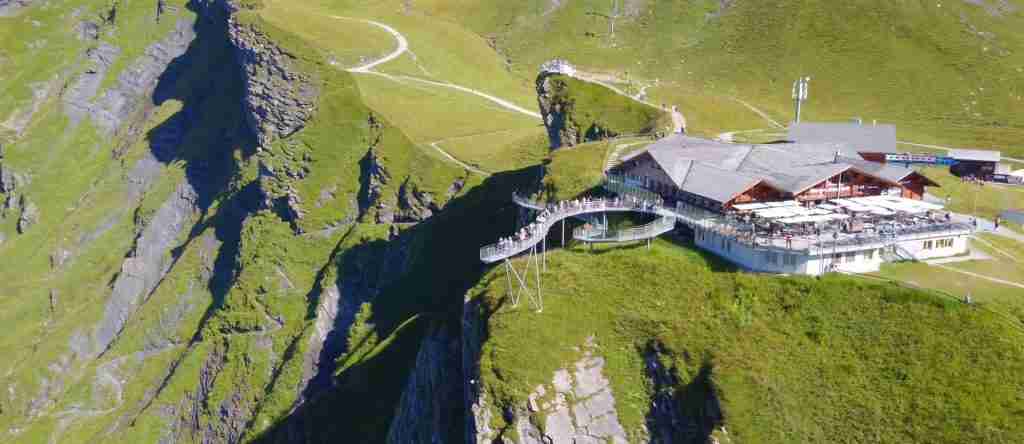
Grindelwald offers alternative Jungfrau region base with superior alpine village atmosphere compared to Interlaken’s resort commercialism. The car-free village sits 1,034 meters altitude beneath the Eiger north face, reachable from Interlaken Ost in 35 minutes by train for CHF 12 ($13) one-way. First Cliff Walk suspension bridge and viewing platform accessed via Grindelwald-First gondola (CHF 62/$68 round-trip) delivers Eiger, Mönch, and Wetterhorn panoramas from 2,168-meter altitude with multiple hiking trail options. The Grindelwald-First combination with Jungfraujoch proves too ambitious for single-day Zurich round-trips—choose one major alpine experience or plan overnight stay in Interlaken or Grindelwald.
Lauterbrunnen Valley extends 3 kilometers south of Interlaken, featuring 72 waterfalls cascading from 300-meter cliff walls on both valley sides. Staubbach Falls plunges 297 meters as Lauterbrunnen’s most prominent feature, while Trümmelbach Falls charges CHF 14 ($15) adult admission to tour underground glacier-fed cascades carving through mountain interior. The valley floor village of Lauterbrunnen connects to Wengen car-free resort via 15-minute cogwheel railway (CHF 12/$13 one-way) or Mürren via cable car (CHF 16/$18 one-way), both delivering alpine hiking trail access with wildflower meadows June-July and golden larch forests late September-October.
Bern Day Trip from Zurich 2026: Switzerland’s Capital City
Bern serves as Switzerland’s political capital and UNESCO World Heritage-listed medieval city, featuring Europe’s longest covered shopping arcade stretching 6 kilometers through Old Town arcades dating to the 15th century. The city sits 120 kilometers southwest of Zurich, connected by direct InterCity trains departing every 30 minutes taking 55-60 minutes for CHF 50 ($55) one-way standard fare or CHF 100 ($110) same-day return. Swiss Travel Pass includes unlimited Bern access plus city tram and bus network, adding significant value for travelers making multiple Swiss city visits.
The Old Town occupies a peninsula formed by the Aare River’s horseshoe bend, with medieval street plan preserving 15th-16th century building facades, fountain sculptures, and covered arcade shopping galleries. The Zytglogge clock tower from 1218-1220 performs hourly astronomical clock show with moving figures four minutes before each hour, drawing crowds to Kramgasse pedestrian street below. The Bern Cathedral (Berner Münster) Switzerland’s tallest church spire at 100 meters offers tower climb for CHF 5 ($6) delivering Old Town rooftop perspectives across red-tile roofs to distant Bernese Alps. The Federal Palace (Bundeshaus) provides free guided tours Monday-Saturday revealing Swiss parliamentary chambers and 38-meter-high cupola dome interior.
The Bear Park (BärenPark) maintains Bern’s heraldic symbol in modern welfare conditions replacing medieval bear pits that held captive bears 1513-2009. The 6,000-square-meter terraced enclosure descends to Aare River allowing resident bears to swim, forage, and hibernate naturally while remaining visible to public observation platforms accessed free year-round. The adjacent Bärengraben historical bear pit now functions as viewing terrace over the modern facility. Bear activity peaks morning 9-11 AM and late afternoon 4-6 PM, with midday hours often seeing bears rest in dens invisible to visitors.
The Zentrum Paul Klee houses the world’s largest Paul Klee collection in Renzo Piano-designed undulating building east of Old Town center. The museum displays approximately 200 paintings from Klee’s 10,000-work output on rotating basis, supplemented by temporary exhibitions, interactive Kindermuseum Creaviva art workshops, and sculpture park. Adult admission costs CHF 20 ($22) or Swiss Travel Pass provides 50% discount to CHF 10 ($11). Bus 12 from Hauptbahnhof reaches the museum in 15 minutes, or the 30-minute walk through residential Länggasse quarter provides local neighborhood perspective contrasting with tourist-focused Old Town arcades.
The Aare River swimming season June-September draws locals floating downstream from Eichholz riverside park to Old Town Marzili baths, covering 1.5 kilometers in 15-20 minutes with strong current requiring competent swimming ability. The free activity provides authentic Bernese summer experience, though water temperature running 17-20°C demands acclimatization. Riverside restaurants at Marzili landing point serve beer and simple meals to post-swim crowds from CHF 12-24 ($13-26) per dish. Multiple entry and exit points along the river accommodate shorter float sections for less confident swimmers.
Bern’s compact Old Town concentrates major sights within 30-minute walking radius, making the city ideal for efficient half-day visits from Zurich. Arrive 9-10 AM via early train, explore Old Town arcades and cathedral by noon, lunch at covered market or riverside restaurant 12-1 PM, visit Bear Park and Federal Palace afternoon 2-4 PM, and return to Zurich by 5-6 PM train maintaining full evening availability. The city’s limited accommodation costs and strong restaurant scene support overnight stays for travelers wanting deeper immersion in Swiss political capital atmosphere contrasting with Zurich’s commercial energy or Lucerne’s tourist orientation.
Mount Rigi Day Trip from Zurich 2026: Queen of the Mountains
Mount Rigi rises to 1,798 meters between Lake Lucerne, Lake Zug, and Lake Lauerz, earning “Queen of the Mountains” designation for 360-degree panoramas encompassing 13 Swiss lakes and alpine peaks from Säntis to Mont Blanc visibility stretching 300 kilometers on exceptional clarity days. The mountain sits 70 kilometers south of Zurich, accessible via Lucerne then lake steamer or train to either Vitznau or Arth-Goldau base stations. Round-trip costs vary by routing: Zurich-Lucerne-Vitznau boat-Rigi cogwheel railway totals CHF 135 ($149), while Swiss Travel Pass covers lake transport and provides 50% railway discount to approximately CHF 70-80 ($77-88) total cost.
The Vitznau cogwheel railway dating to 1871 was Europe’s first mountain railway, ascending 1,438 meters vertical over 7.4 kilometers track in 35-40 minutes. Modern red carriages with panoramic windows replace historic steam locomotives still displayed at Vitznau museum, though the original track and gradient remain unchanged. The northern Arth-Goldau cogwheel railway provides alternative 45-minute ascent to Rigi Kulm summit, creating circular routing options: ascend Vitznau route viewing Lake Lucerne, descend Arth-Goldau side with Lake Zug perspectives. The Blue Rigi cogwheel line from Goldau offers evening twilight rides May-October with sunset summit dining before descent.
Rigi Kulm summit station at 1,798 meters features Hotel Rigi Kulm (Switzerland’s highest hotel opened 1816), restaurant terrace, and observation platforms with summit cross and orientation tables identifying visible peaks. On clear days the panorama encompasses Eiger-Jungfrau-Mönch massif southwest, Säntis northeast, Pilatus west, and on exceptional visibility extends to Mont Blanc 300 kilometers distant. Morning ascents 8-10 AM typically secure clearest conditions before afternoon thermal clouds obscure distant peaks—though Rigi maintains impressive views even with partial cloud cover unlike higher peaks where clouds completely eliminate visibility.
Hiking trails crisscross Rigi’s slopes from gentle lakeside paths to summit ridge walks. The Rigi-Scheidegg to Rigi Kulm ridge trail covers 7 kilometers in 2 hours with minimal elevation gain, passing Rigi Staffel and Staffelhöhe viewpoints overlooking Lake Lucerne’s multiple branches. The Rigi Kulm to Rigi Kaltbad descent (4.5 kilometers, 90 minutes) passes through alpine meadows with wildflower displays June-July and grazing cattle producing milk for local Alpkäse cheese. Winter months transform Rigi into sledding and winter hiking destination with 15-kilometer toboggan run from Rigi Kulm to Goldau valley station claiming longest illuminated night sledding in Switzerland.
The Golden Round Trip combines Lucerne boat, Rigi cogwheel railway, and coach transfer into single-ticket package for CHF 116 ($127). The routing begins Lucerne boat to Vitznau (45 minutes), Vitznau-Rigi Kulm cogwheel ascent (40 minutes), summit exploration time 1-2 hours, Rigi Kulm-Rigi Kaltbad cable car (10 minutes), Kaltbad-Weggis cable car (10 minutes), and Weggis-Lucerne boat return (30 minutes). This comprehensive loop requires 6-7 hours minimum including summit time, leaving limited hours for Lucerne city exploration in same-day Zurich return. Alternatively, ride Vitznau route both directions (90 minutes total travel) maximizing 3-4 hours summit and hiking time.
Rigi’s lower altitude compared to Titlis or Jungfraujoch makes it accessible year-round with less weather sensitivity. The mountain maintains visibility on days when higher peaks disappear in clouds, making Rigi ideal backup option when morning weather forecasts show deteriorating mountain conditions. Spring (April-May) delivers wildflower meadows and mostly reliable weather, summer (June-August) provides warmest temperatures and longest daylight, autumn (September-October) offers golden foliage and reduced crowds, while winter (December-March) transforms the landscape to snow-covered sledding terrain. Sunrise ascents (first railway 7-8 AM depending on season) capture morning alpenglow coloring distant peaks pink-orange, though requiring overnight Lucerne stay for most Zurich-based travelers.
Appenzell and Swiss Alps Cultural Experience from Zurich 2026
Appenzell region in northeastern Switzerland preserves rural Swiss Alpine culture, traditional architecture, and pastoral landscapes contrasting sharply with Zurich’s urban modernity or tourist-focused Lucerne and Interlaken. The main village of Appenzell sits 100 kilometers east of Zurich, reachable in 100-110 minutes by train requiring one change typically at St. Gallen or Gossau for CHF 35 ($39) one-way standard fare. Swiss Travel Pass covers full journey, making Appenzell day trips economically attractive for pass holders seeking authentic Swiss cultural immersion beyond major tourist circuits.
Appenzell village showcases distinctive painted building facades depicting rural scenes, guild symbols, and family heraldry across the compact Old Town car-free center. The main Landsgemeindeplatz square hosts Switzerland’s last outdoor hand-vote cantonal assembly annually last Sunday of April, where eligible citizens vote directly on laws by show of hands in open democratic tradition dating to medieval era. The Appenzeller cheese demonstration dairy explains Appenzeller cheese production using traditional methods including three-month cellar aging with herbal brine wash, offering tastings and cheese purchases. The Museum Appenzell documents regional history, folk art, and traditional costume evolution, charging CHF 7 ($8) adult admission.
The Ebenalp cable car ascends from Wasserauen village (10 minutes south of Appenzell by narrow-gauge train) to 1,644-meter summit in 8 minutes for CHF 34 ($37) round-trip. The mountaintop station provides starting point for Seealpsee lake hike (30-minute descent), Äscher cliff restaurant visit (15-minute traverse), and Wildkirchli hermit caves exploration (5-minute scramble). The Äscher Wildkirchli restaurant clings dramatically to cliff face beneath rock overhang, serving traditional Appenzeller rösti and cheese dishes CHF 18-28 ($20-31) with unmatched terrace views across Alpstein range. The adjacent Wildkirchli caves housed hermit monks 1658-1853, with stone chapel still preserved inside the caverns.
Seealpsee alpine lake at 1,143 meters altitude offers swimming June-September in crystal-clear water fed by mountain springs, though water temperature rarely exceeds 18-20°C even peak summer. The circular lake hike takes 90 minutes counterclockwise from Wasserauen valley via Ebenalp cable car descent or clockwise starting directly from Wasserauen station. Berghaus Seealpsee restaurant at lake’s southern shore serves simple alpine fare including cheese fondue CHF 26 ($29) for two, rösti variations CHF 16-22 ($18-24), and homemade Apfelstrudel CHF 8 ($9). Overnight stays in the historic 1870s guesthouse support multi-day hiking deeper into Alpstein region, though day visits require calculated timing for Zurich return trains.
The Appenzeller Show Dairy in Stein village 6 kilometers north of Appenzell demonstrates cheese production with viewing windows into working dairy processing Appenzeller cheese from local alpine farms. Guided tours CHF 8 ($9) explain the three-month aging process and secret herbal brine recipe guarded for over 700 years, concluding with cheese tastings comparing mild, semi-spicy, and fully aged extra-spicy varieties. The attached shop sells cheese wheels, regional specialties, and gift items. Stein village preserves concentrated painted facade architecture including the famous “Sennenstube” traditional farmhouse with exterior pastoral murals considered finest examples of Appenzeller folk art.
Appenzell region suits travelers seeking authentic Swiss rural experience, hiking access, and cultural immersion away from mainstream tourist infrastructure. The area operates at slower pace with limited English signage compared to Jungfrau region resorts, appealing to independent travelers comfortable navigating rural Switzerland. Full-day Zurich round-trips allow 5-6 hours in the region sufficient for Appenzell village exploration plus Ebenalp-Äscher-Seealpsee circuit, though overnight stays in Appenzell or Wasserauen support deeper Alpstein hiking and multiple cheese dairy visits. Spring and autumn shoulder seasons deliver uncrowded trails and authentic village atmosphere, while summer weekends attract domestic Swiss tourists maintaining lively but never overwhelming visitor density.
Stein am Rhein Medieval Village from Zurich 2026
Stein am Rhein ranks among Switzerland’s best-preserved medieval villages, with 16th-century painted house facades depicting guild scenes, historical events, and family coats of arms concentrated around Rathausplatz central square. The village occupies the Rhine River’s exit point from Lake Constance, positioning it 70 kilometers north of Zurich and reachable in 80-90 minutes by train requiring one change at Schaffhausen for CHF 30 ($33) one-way. The destination combines naturally with Rhine Falls excursions—both sites accessible via Schaffhausen hub allowing coordinated morning Rhine Falls-afternoon Stein am Rhein itineraries totaling 7-8 hours including transport.
Rathausplatz square showcases Stein am Rhein’s visual pinnacle, with Town Hall (Rathaus), Sun Inn (Gasthof Sonne), White Eagle (Weisser Adler), and Red Ox (Roter Ochsen) buildings displaying elaborate painted facades dating to 1520-1550. The Sun Inn facade depicts mythological scenes and zodiac symbols, while the White Eagle shows Habsburg Imperial heraldry and guild emblems. Each building’s exterior functions as architectural storytelling through painted imagery, with the practice continuing into 18th-19th centuries before preservation efforts halted further modifications. The entire Old Town core approximately 400 meters x 200 meters concentrates photographic opportunities within effortless walking radius.
Hohenklingen Castle crowns the hillside 120 meters above Stein am Rhein, offering Rhine valley panoramas extending to Lake Constance 8 kilometers west. The castle dating to 1225 now operates as restaurant serving traditional Swiss cuisine CHF 22-38 ($24-42) main courses on terrace overlooking the village and river. The 20-minute uphill walk from Rathausplatz follows cobblestone lanes then forest path marked with yellow hiking signs, or vehicle road provides gentler gradient. Castle entrance remains free for restaurant patrons or exterior viewing, with interior medieval chambers accessible during special events only. Evening dinner reservations capture sunset lighting over Lake Constance creating memorable dining backdrop.
St. George’s Abbey (Kloster St. Georgen) founded 1007 preserves Romanesque and Gothic architecture with painted wooden ceilings and medieval frescoes in abbey church and cloister. The former Benedictine monastery converted to museum 1869 displays period rooms, religious art, and local history collections for CHF 8 ($9) adult admission. The Great Refectory hall features 16th-century painted timber ceiling depicting biblical scenes and natural motifs, while the herb garden recreates medieval monastery plantings. Allow 45-60 minutes for thorough abbey exploration, or combine with Old Town stroll for comprehensive 2-3 hour village visit.
Rhine River promenade stretches along the southern bank offering riverside walking paths, boat landing piers, and castle views across the water. Summer season (May-October) brings Rhine River cruises connecting Stein am Rhein to Schaffhausen (1.5 hours upstream, CHF 22/$24 one-way) and Konstanz Lake Constance (45 minutes downstream, CHF 18/$20 one-way). The slower boat pace compared to train transport extends Rhine valley scenery appreciation, though significantly increases total travel time. Swiss Travel Pass includes Rhine River boats, creating no-cost transportation alternative for pass holders connecting Rhine Falls with Stein am Rhein via scenic waterborne routing.
Stein am Rhein village size suits 2-3 hour visits covering Rathausplatz photography, abbey tour, castle ascent, and riverside lunch at traditional Gasthaus restaurants serving local fish from the Rhine and Lake Constance. The compact medieval core and limited commercial development beyond historic buildings create authentic preserved atmosphere without significant modern tourist infrastructure. Visit timing matters—midday crowds June-August can fill narrow lanes around Rathausplatz, while morning arrivals before 10 AM or late afternoon after 4 PM provide emptier streets for unobstructed facade photography. Combining Stein am Rhein with Rhine Falls creates culturally and naturally balanced full-day excursion from Zurich, with both destinations accessible via efficient Schaffhausen railway hub.
Transportation Strategies and Money-Saving Tips for Zurich Day Trips 2026
Swiss Travel Pass purchase timing influences overall trip economics. The three-day pass at CHF 254 ($280) proves economical when making three or more day trips from Zurich, particularly when combining train-heavy destinations like Interlaken, Bern, and Zermatt that individually cost CHF 80-125 ($88-138) one-way. The pass breaks even comparing three-day cost to point-to-point tickets for: Zurich-Lucerne round-trip (CHF 54/$59) plus Zurich-Interlaken round-trip (CHF 80-96/$88-106) plus Zurich-Bern round-trip (CHF 100/$110), totaling CHF 234-250 ($257-275) without pass benefits of unlimited city transport, lake cruises, and mountain railway discounts.
The Swiss Half Fare Card at CHF 120 ($132) valid 30 days suits travelers making 4-6 day trips over extended Switzerland stays. The card recovers its cost with four Zurich-Lucerne round-trips (CHF 27/$30 per direction with card versus CHF 54/$59 full fare, saving CHF 27/$30 per trip) or two Zurich-Interlaken round-trips (saving CHF 40-48/$44-53 per journey). Families with children receive exceptional value as accompanying kids under 16 travel free with Swiss Family Card issued automatically when purchasing parent’s Half Fare Card, effectively doubling the per-trip savings when including children in calculation.
Saver Day Passes purchased minimum one day advance through SBB website provide all-Switzerland unlimited travel for CHF 40-45 ($44-50), though limited daily quantities sell out quickly for popular weekends and holidays. The passes work best for spontaneous single-day excursions to Rhine Falls, Lucerne, or Bern where mountain transport isn’t required, as most alpine railways and cable cars charge full supplemental fares even with Saver Day Pass coverage. Purchase attempts should begin at midnight day before desired travel to secure limited availability before 9 AM sellout common during peak summer season.
Early booking provides no discount for point-to-point Swiss domestic train tickets, but ensures connection research and platform familiarity reducing station stress. SBB Mobile app downloaded before arrival allows ticket purchase, live departure tracking, and journey planning with step-by-step platform navigation. The app’s timetable function shows connections departing any time (not just next three trains like station boards) enabling flexible schedule planning around weather conditions or energy levels rather than rigid advance commitments.
Weather-responsive booking preserves trip quality. Mountain excursions to Titlis, Jungfraujoch, Pilatus, or Rigi succeed or fail based on summit visibility, making flexible booking essential. Check destination webcams morning of travel before purchasing tickets—if clouds obscure summits at 8-9 AM, they typically persist or worsen through midday. Switch same-day plans to weather-independent destinations like Lucerne Old Town, Rhine Falls, Bern arcades, or Stein am Rhein rather than committing to cloud-obscured mountain trips yielding CHF 150-250 ($165-275) spent seeing only fog.
Combination day trips maximize transportation efficiency when routing allows natural multi-stop itineraries. Rhine Falls plus Stein am Rhein via Schaffhausen hub, Lucerne plus Rigi with boat connections, or Interlaken plus Grindelwald via Bernese Oberland railway exemplify sensible combinations sharing transport corridors. Avoid attempting geographically separated destinations in single days—Bern plus Rhine Falls requires backtracking through Zurich consuming 3+ hours pure travel time leaving insufficient destination hours, while Lucerne plus Appenzell involves opposite-direction departures from Zurich making combination illogical.
Packed lunch provisions reduce daily meal costs without compromising nutrition. Supermarket chains Migros and Coop near Hauptbahnhof open 6 AM weekdays stock fresh sandwiches CHF 5-8 ($6-9), fruit, drinks, and snacks at fraction of train station kiosk or mountain restaurant pricing. Swiss cultural acceptance of picnic dining means eating purchased food on trains, station benches, or scenic viewpoints attracts no negative attention. Mountain summits like Titlis, Rigi, and Pilatus permit outside food consumption on outdoor terraces (indoor restaurant areas require food purchase), creating CHF 30-40 ($33-44) daily meal savings per person versus restaurant-only dining.
Group travel discounts apply to parties of 10+ travelers purchasing tickets together, reducing per-person costs by approximately 20-30% depending on specific journey and advance booking timing. The discounts work best for organized tours or large family groups coordinating travel plans, as minimum 10-person threshold rarely applies to typical tourist groups. Contact SBB group travel service minimum one week advance to secure group rates and reserved seating for popular routes.
Seasonal Considerations for Zurich Day Trips in 2026
Spring season March-May delivers awakening Swiss landscapes with alpine wildflower meadows, snowmelt waterfalls at maximum volume, and moderate temperatures ranging 12-20°C in valleys. Rhine Falls reaches peak power May-June with snowmelt-fed flows creating thunderous whitewater impressive even to repeat visitors. Mountain railways begin seasonal operations April-May as snow clears from lower stations, though summit conditions at Titlis and Jungfraujoch remain winter-like with snow and cold requiring appropriate clothing year-round. Spring represents excellent shoulder season with reduced tourist crowds (except Easter holidays), moderate accommodation pricing, and mostly reliable weather punctuated by occasional rainy spells.
Summer season June-August provides warmest weather, longest daylight extending to 9 PM sunset late June, and guaranteed operation of all mountain transport, hiking trails, and alpine facilities. Temperatures reach 25-30°C in Zurich and valleys, dropping to 15-20°C at mid-altitude Lucerne and Interlaken, while mountain summits remain cold requiring warm layers despite valley heat. This peak tourist season brings maximum crowds to major destinations—Rhine Falls, Lucerne Chapel Bridge, and Jungfraujoch cable cars can queue 30-45 minutes during late-morning peaks. Hotel prices peak July-August, and popular mountain restaurants require reservations or early arrival for terrace seating with panoramic views.
Autumn season September-October maintains largely stable weather with reduced rainfall compared to spring, cooler temperatures 10-18°C in valleys, and spectacular golden larch forests coloring mountain slopes particularly late September-mid October. This represents ideal time for Zurich day trips combining reliable weather, diminished crowds after school returns mid-August, lower accommodation costs, and autumn foliage photography opportunities. Mountain visibility often improves during autumn as summer thermal instability decreases, creating clearer long-distance panoramas from Rigi, Titlis, and Pilatus summits. However, daylight hours shorten significantly through October limiting available destination time for afternoon returns to Zurich.
Winter season November-March transforms Switzerland to snow-covered alpine wonderland, with guaranteed snow at mountain summits and variable snow line descending to 800-1,200 meters elevation. Titlis and Jungfraujoch maintain full year-round access, while lower destinations like Rhine Falls, Lucerne, and Bern function normally without significant snow impacts in city centers. Winter sports additions include Titlis Ski Experience for beginners, Rigi sledding runs, and Grindelwald winter hiking trails. Short daylight hours restrict day trip timing—sunrise around 8 AM and sunset by 5 PM December-January compress available destination hours requiring earlier departures and afternoon returns. Hotel prices drop November-December pre-Christmas and January-March except holiday weeks, creating economical winter travel opportunities.
Weather patterns influence mountain trip success rates across all seasons. Morning conditions typically provide clearest visibility before thermal heating generates afternoon clouds that can transform 50-kilometer summit panoramas to 50-meter fog within one hour. Check destination webcams at Titlis, Pilatus, Rigi, and Jungfraujoch between 7-9 AM before departing Zurich—cloud-obscured summits rarely clear during same day, making weather-independent destination switches preferable to cloud-viewing mountain trips. Lucerne, Rhine Falls, Bern, and Stein am Rhein maintain full visual appeal regardless of cloud cover, making them reliable backup options when morning forecasts show mountain weather deterioration.
Swiss public holidays impact day trip planning, particularly regional cantonal holidays varying by canton. Ascension Day (39 days after Easter), Whit Monday (50 days after Easter), and Swiss National Day August 1st create domestic travel peaks with increased train crowding and reduced accommodation availability in popular destinations. Christmas period December 24-January 2 brings partial closure of tourist facilities, reduced train frequencies, and restaurant closures particularly December 25-26. Plan around these dates or embrace them for experiencing authentic Swiss holiday traditions in quieter tourist destinations.
Practical Logistics for Zurich Day Trip Planning in 2026
Zurich Hauptbahnhof serves as Switzerland’s busiest railway station and primary departure point for all day trips, with 32 tracks divided into main hall (tracks 3-18) and underground Löwenstrasse section (tracks 21-34). The SBB information center on main hall concourse provides English-language assistance with journey planning, ticket purchases, and pass validation Monday-Saturday 6 AM-10 PM, Sunday 6 AM-9 PM. Station shops, restaurants, and bakeries open from 5:30 AM for early departure provisions, with Migros and Coop supermarkets offering picnic supplies at significantly lower costs than station kiosks.
Luggage storage options include 24-hour automated lockers in multiple locations throughout Hauptbahnhof, costing CHF 4-12 ($4-13) per 24-hour period depending on locker size. Small lockers accommodate daypacks, medium lockers fit rolling carry-on bags, and large lockers hold full-size suitcases or multiple bags. Locker locations concentrate near tracks 3-4, tracks 14-15, and ShopVille underground level, with payment via cash or credit card and access code provided for retrieval. For oversized luggage exceeding locker dimensions, the SBB baggage service near track 18 offers attended storage CHF 10-15 ($11-17) per item per day.
Mobile connectivity enhances day trip navigation and flexibility. Swiss mobile network coverage extends to most destinations including alpine areas, with occasional gaps in deepest valleys or tunnels. Purchase temporary Swiss SIM card from Swisscom, Salt, or Sunrise shops in Hauptbahnhof providing data-only or data-plus-calls options starting CHF 20-30 ($22-33) for 7-30 day validity periods. International roaming plans from US, Canadian, or European carriers typically function throughout Switzerland, though verify roaming charges before relying on home country mobile plan. SBB Mobile app, Google Maps, and WhatsApp messaging prove essential tools for journey planning, restaurant reservations, and group coordination requiring mobile data access.
Restaurant reservation recommendations vary by destination. Lucerne waterfront restaurants require advance booking summer weekends for lakeside terrace seating, while Titlis and Pilatus summit restaurants accommodate walk-ins but may fill by midday peaks. Bern Old Town restaurants serve lunch without reservation Monday-Friday, but Saturday-Sunday brunch and dinner require booking. Rhine Falls restaurants near the falls offer casual dining without reservations, though Schloss Laufen terrace fills quickly during sunny afternoon peaks. Use The Fork or OpenTable apps for online restaurant reservations, or call directly morning of visit for same-day availability checks.
Travel insurance covering mountain activities provides peace of mind for alpine excursions, though not required for standard day trips. Swiss mountain rescue operations charge for helicopter evacuations and medical transport, with costs reaching CHF 5,000-15,000 ($5,500-16,500) for serious incidents requiring air ambulance. Standard travel insurance policies often exclude mountain activities above certain altitudes or specific sports, making policy review essential before booking Jungfraujoch or Titlis trips. Annual multi-trip policies frequently provide better value than single-trip coverage for travelers making multiple Switzerland visits, while credit card travel insurance (American Express, Chase Sapphire) may provide adequate coverage depending on card tier and policy terms.
Photography equipment considerations include weather protection, spare batteries, and lens choices. Mountain summit temperatures drop 6-10°C per 1,000 meters altitude gain, creating battery drain through cold exposure—carry spare batteries in warm pockets and rotate cold batteries to body warmth for recovery. Waterproof camera bags or rain covers protect equipment from Rhine Falls spray, boat splash, or unexpected rain showers common in alpine environments. Lens selection balances wide-angle landscape photography (16-35mm range) with telephoto wildlife and architectural detail capture (70-200mm range), though modern smartphone cameras prove adequate for casual documentation of most day trip destinations.
Frequently Asked Questions: Zurich Day Trips 2026
Is the Swiss Travel Pass worth it for Zurich day trips in 2026?
The Swiss Travel Pass at CHF 254 ($280) for three consecutive days proves economical for travelers making three or more day trips from Zurich, particularly when combining train-intensive destinations like Interlaken (CHF 80-96/$88-106 round-trip), Bern (CHF 100/$110 round-trip), and Zermatt (CHF 125/$138 each way). The pass breaks even comparing three-day cost to point-to-point tickets totaling CHF 234-250 ($257-275) for those three destinations alone, then adds unlimited value through included city transport in Zurich, Geneva, Lucerne, and 90+ Swiss cities, free lake cruises on Lucerne, Thun, Brienz, and Geneva lakes, and 50% discounts on most mountain railways including Titlis and Pilatus. For travelers making only 1-2 day trips, the Swiss Half Fare Card at CHF 120 ($132) provides better value through 50% discount on all train fares without three-day minimum commitment.
Can you visit multiple destinations from Zurich in one day in 2026?
Certain destination combinations work efficiently in single-day Zurich excursions while others prove logistically impractical. Rhine Falls plus Stein am Rhein combines naturally via Schaffhausen railway hub, requiring 7-8 hours total including 2-3 hours at each destination. Lucerne plus Mount Rigi fits single-day timeframes departing Zurich 7-8 AM, though summit time becomes compressed to 90 minutes when including Lucerne city exploration. However, attempting Lucerne plus Mount Titlis or Interlaken plus Jungfraujoch creates rushed itineraries with insufficient time at either location—these major alpine excursions deserve full-day focus without secondary destinations splitting attention. Geographically separated combinations like Bern plus Rhine Falls require inefficient backtracking through Zurich consuming 3+ hours pure transport time better allocated to single destination thorough exploration.
What is the closest mountain to Zurich for day trips in 2026?
Uetliberg at 871 meters elevation functions as Zurich’s closest mountain accessible in 30 minutes by S10 S-Bahn train from Hauptbahnhof using standard city transport fare. The summit delivers 360-degree panoramas encompassing Zurich city, lake, and distant Alpine chain from observation tower and hotel terrace restaurant. For true alpine experiences, Mount Rigi at 1,798 meters elevation represents the nearest significant peak reachable via Lucerne train connection (50 minutes) plus lake steamer and cogwheel railway (additional 90 minutes), totaling 2.5 hours from Zurich to summit. Mount Titlis at 3,028 meters requires 90 minutes train to Engelberg plus 45-minute cable car ascent, delivering Switzerland’s closest glacier-altitude experience from Zurich. Mount Pilatus via Lucerne takes similar 2.5-3 hours total journey time, while Jungfraujoch at 3,454 meters demands 4-5 hours each direction including multiple train transfers through Interlaken and Kleine Scheidegg.
How early should I start day trips from Zurich in 2026?
Mountain destinations require 7-8 AM departures from Zurich Hauptbahnhof to secure optimal summit visibility before afternoon cloud formation. Titlis-bound travelers benefit from Engelberg arrival by 9 AM allowing cable car ascent during morning clarity window, while Jungfraujoch excursions need 7 AM Zurich departure reaching summit by 11 AM-noon before thermal clouds obscure Eiger-Mönch-Jungfrau panoramas. Rhine Falls, Lucerne, and Bern function well with relaxed 9-10 AM departures arriving 10-11 AM for full-day exploration without weather sensitivity. Earliest Zurich train departures begin 5-6 AM enabling sunrise experiences at mountain destinations or maximum daylight hours for ambitious multi-destination combinations, though most travelers find 7-9 AM departures balance reasonable wake times with adequate destination hours for satisfying day trip experiences before 6-8 PM returns to Zurich.
Do I need advance reservations for Zurich day trips in 2026?
Swiss domestic trains require no advance reservations and cannot “sell out,” as railways accommodate all passengers with standing room if seated capacity fills during peak hours. This eliminates booking stress but creates potential crowding on popular routes like Zurich-Lucerne 8-9 AM and 5-6 PM departures. Mountain cable cars similarly operate first-come-first-served without reservations, though summer weekend queues at Titlis or Jungfraujoch can reach 30-45 minutes late-morning. Restaurant reservations prove unnecessary for casual dining at Rhine Falls, mountain summits, or Lucerne quick lunches, but lakeside terrace seating in Lucerne and Bern Old Town restaurants fills summer weekends requiring advance booking for guaranteed preferred seating. Guided tour packages from Zurich to Titlis, Jungfraujoch, or combined destinations require advance booking securing seats on specific departure buses, typically with 24-hour cancellation policies allowing weather-responsive plan changes if summit conditions deteriorate overnight.
What happens if weather is bad on my planned mountain day trip in 2026?
Mountain weather unpredictability necessitates flexible backup planning, as cloud-obscured summits eliminate the primary value of expensive Titlis, Jungfraujoch, or Pilatus excursions costing CHF 150-250 ($165-275) per person. Check destination webcams 7-9 AM morning of travel before departing Zurich—if clouds obscure summits early morning, conditions typically persist or worsen through midday rather than clearing. Switch same-day plans to weather-independent destinations maintaining full appeal regardless of cloud cover: Lucerne Old Town exploration, Rhine Falls waterfall power, Bern medieval arcades, or Stein am Rhein painted facades. Point-to-point tickets purchased same-day provide complete flexibility for weather-responsive destination changes, while Swiss Travel Pass holders already invested in multi-day passes benefit from unlimited itinerary pivots without per-trip cost considerations. Most mountain cable cars operate in cloud, rain, and moderate snow, though high winds may trigger closures announced via facility websites or SBB travel information updates.
Can I use my Swiss Travel Pass on mountain cable cars in 2026?
The Swiss Travel Pass provides partial discounts on most mountain transport but rarely covers full costs, creating additional expenses beyond base pass investment. Titlis cable car from Engelberg charges CHF 92 ($101) standard adult return, reduced to CHF 46 ($51) with 50% Swiss Travel Pass discount. Jungfraujoch cogwheel railway from Kleine Scheidegg costs CHF 140-180 ($154-198) depending on season and route, discounted 25% to CHF 105-135 ($116-149) for pass holders. Pilatus cogwheel railway receives 50% pass discount reducing CHF 72 ($79) full fare to CHF 36 ($40) one-way. Rigi cogwheel railways from Vitznau or Arth-Goldau similarly discount 50% to approximately CHF 35-40 ($39-44) return. Notable exception: Harder Kulm funicular above Interlaken charges full CHF 32 ($35) return without Swiss Travel Pass discounts. Budget mountain excursion costs accordingly even with pass coverage, planning CHF 35-135 ($39-149) additional per-person per-mountain beyond base pass investment depending on chosen destination and routing.
What food should I bring for Zurich day trips in 2026?
Packed lunch provisions significantly reduce daily meal expenses while providing flexible eating options during travel and destination exploration. Migros and Coop supermarkets adjacent to Hauptbahnhof open 6 AM weekdays stock fresh sandwiches CHF 5-8 ($6-9), salads CHF 6-9 ($7-10), fruit CHF 2-4 ($2-4), drinks CHF 2-4 ($2-4), and snacks CHF 2-5 ($2-6), totaling CHF 17-30 ($19-33) complete day provisions versus CHF 35-60 ($39-66) restaurant meals or CHF 50-80 ($55-88) mountain summit dining. Swiss cultural acceptance of picnic consumption permits eating purchased food on trains, station platforms, scenic viewpoints, and outdoor areas of mountain summits without negative social reaction. Reusable water bottles refill from public fountains throughout Switzerland providing safe drinking water at no cost. Include energy bars or trail mix for hiking excursions, and warm beverage thermos for mountain trips where hot drinks cost CHF 4-6 ($4-7) at summit cafeterias. Garbage receptacles appear regularly along Swiss routes, though carry plastic bag for waste transport between disposal points maintaining Switzerland’s strict littering taboos.
Are Zurich day trips suitable for families with young children in 2026?
Most Zurich day trip destinations accommodate families with children ages 4+ successfully, particularly Rhine Falls (easy walking, dramatic waterfall appeal), Lucerne Old Town (compact exploration radius, lake boats, playgrounds), and Rigi (gentle summit terrain, tobogganing options). Children under 6 travel free on Swiss trains when accompanied by parent, while ages 6-15 pay half fare or travel free with Swiss Family Card issued automatically when purchasing parent’s Swiss Travel Pass or Half Fare Card. Strollers function adequately on trains and flat destinations like Lucerne or Bern, though mountain excursions to Titlis or Jungfraujoch suit children ages 6+ comfortable with altitude, cold, and multi-hour excursions. The Swiss Museum of Transport in Lucerne specifically targets families with interactive exhibits, simulator rides, and outdoor playground areas maintaining engagement for 2-3 hours. Plan shorter day trip durations with children versus adult-only groups, incorporating breaks, playground stops, and flexible scheduling accommodating energy level fluctuations and bathroom needs throughout 6-8 hour excursion days.
What should I pack for a day trip from Zurich in 2026?
Essential day trip packing includes: comfortable walking shoes with grip (Swiss cobblestones and mountain paths), layered clothing adapting to temperature changes (morning Zurich 15°C, mountain summit 0°C), waterproof jacket or umbrella for unexpected rain, sunglasses and sunscreen (alpine UV intensity increases with altitude), backpack or day bag for provisions and purchased items, refillable water bottle (Swiss fountains provide safe drinking water everywhere), snacks and packed lunch (optional cost-saving measure), passport or ID card (required for train travel), travel insurance documentation, Swiss Travel Pass or tickets (digital acceptable via SBB Mobile app), phone charger or power bank, basic first aid supplies, and any prescription medications. Mountain excursions specifically require warm jacket even summer months (summit temperatures 15-20°C colder than valleys), closed shoes (no flip-flops or sandals), and lip balm for dry alpine air. Photography enthusiasts add camera equipment, spare batteries, and lens cleaning cloth. Families with children include entertainment items for train rides, extra snacks, wet wipes, and activity materials maintaining engagement during 2-4 hour travel segments between Zurich and destinations.