
Best Day Trips from Montreal 2026: Best Excursions & Planning
Montreal’s strategic location in Quebec positions travelers within reach of historic cities, mountain resorts, wine regions, and wilderness parks, all accessible as day trips. From the European charm of Quebec City 250 kilometers northeast to the outdoor recreation of Mont-Tremblant 130 kilometers north, the surrounding region offers diverse experiences that complement Montreal’s urban attractions while requiring minimal overnight planning.
Key Takeaways: Montreal Day Trips 2026
- Quebec City Access 2026: Canada’s most European city sits 2.5-3 hours from Montreal via Highway 20 or VIA Rail, with combined transportation and attraction costs of CAD $110-190 ($83-143) per person for a full day including Old Quebec exploration, Citadelle admission, and meals in the historic district.
- Ottawa Proximity 2026: Canada’s capital lies 2 hours west with Parliament Hill tours, national museums, and ByWard Market experiences totaling CAD $85-125 ($64-94) per person daily including bus transportation, museum entry, and dining.
- Laurentians Recreation 2026: Mont-Tremblant and surrounding mountain communities 90 minutes north offer year-round activities with summer hiking and winter skiing, with day costs of CAD $115-140 ($86-105) per person including gas, gondola rides, and mountain village dining.
- Eastern Townships Wine Route 2026: The region 90 minutes southeast features vineyard tours, tastings, and lakeside villages with typical day expenses of CAD $130-155 ($98-117) per person covering gas, three winery tastings, and lunch at vineyard restaurants.
- Seasonal Optimization 2026: Summer months June through September provide optimal conditions for most day trips with all attractions operating full schedules, while winter December through March transforms Mont-Tremblant and the Laurentians into premier ski destinations worth the seasonal adjustment.
- Transportation Strategies 2026: Car rentals offer maximum flexibility at CAD $60-90 ($45-68) daily including gas for most destinations, while VIA Rail to Quebec City at CAD $60-120 ($45-90) round trip and Orleans Express buses to various destinations at CAD $40-80 ($30-60) provide economical alternatives without driving fatigue.
People Also Ask About Montreal Day Trips 2026
What is the best day trip from Montreal in 2026?
Quebec City ranks as the premier day trip from Montreal in 2026, offering North America’s most intact walled city with 400 years of history compressed into walkable Old Quebec. The 250-kilometer journey takes 2.5-3 hours via Highway 20 or VIA Rail, delivering cobblestone streets, French colonial architecture, cliff-top fortifications, and the iconic Château Frontenac hotel. A full day allows exploration of both Upper and Lower Town, Citadelle fortification tours, Place Royale’s historic square, and lunch along Rue Saint-Jean. The combination of European atmosphere without passport requirements, significant historical depth, and distinctive architecture unavailable elsewhere in North America makes Quebec City the standout choice for travelers prioritizing cultural immersion and photographic opportunities.
How much does a day trip from Montreal cost in 2026?
Day trips from Montreal in 2026 cost CAD $75-190 ($56-143) per person depending on destination, transportation method, and activity selection. Quebec City trips using VIA Rail run CAD $110-190 ($83-143) including round-trip train fare at CAD $60-120 ($45-90), Citadelle admission at CAD $18 ($14), and meals at CAD $30-50 ($23-38). Ottawa excursions by Orleans Express bus cost CAD $85-125 ($64-94) with bus fare at CAD $40-60 ($30-45), Canadian Museum of History entry at CAD $20 ($15), and dining at CAD $25-45 ($19-34). Driving destinations like Mont-Tremblant require CAD $115-140 ($86-105) covering rental car and gas at CAD $54 ($41) per person for couples sharing, gondola ride at CAD $25 ($19), and mountain village meals at CAD $35-60 ($26-45). Eastern Townships wine tours reach CAD $130-155 ($98-117) with driving costs at CAD $52 ($39) per person for couples sharing, three winery tastings at CAD $40-60 ($30-45), and vineyard lunch at CAD $35-55 ($26-41).
Can you do Quebec City as a day trip from Montreal in 2026?
Quebec City functions effectively as a day trip from Montreal in 2026 despite the 250-kilometer distance, with early morning departures at 7:00-8:00 AM providing 7-8 hours in the city before evening returns at 6:00-7:00 PM. VIA Rail trains departing Montreal’s Gare Centrale at 7:12 AM arrive Quebec’s Gare du Palais at 10:22 AM, allowing a full afternoon and evening before return trains at 6:47 PM reaching Montreal at 9:47 PM. Driving via Highway 20 offers similar timing with greater flexibility for brief stops at roadside attractions. The concentrated layout of Old Quebec within a 1-kilometer radius enables efficient exploration of major sites including the Citadelle, Château Frontenac, Place Royale, Quartier Petit Champlain, and Terrasse Dufferin without extensive walking. While an overnight stay permits evening ambiance and reduced rush, the day trip format succeeds for travelers prioritizing efficient use of limited vacation days who accept the trade-off of longer transportation time for a unique destination.
What is the best time of year for day trips from Montreal in 2026?
Late spring through early fall, specifically May through October 2026, provides optimal conditions for most Montreal day trips with comfortable temperatures averaging 15-25°C (59-77°F), all attractions operating full schedules, and minimal weather disruption to transportation. Summer months June through August offer peak conditions but also maximum crowds at Quebec City and Mont-Tremblant, while shoulder seasons May and September-October deliver pleasant weather with fewer tourists and lower accommodation costs for those extending trips overnight. Fall foliage from late September through mid-October transforms the Laurentians and Eastern Townships into spectacular color displays worth targeting for nature-focused excursions. Winter December through March creates a distinct season for Mont-Tremblant ski trips and Quebec City’s Winter Carnival in February, though cold temperatures averaging -10 to -15°C (14-5°F) and potential snow closures require weather monitoring and flexible planning. Spring April sees unpredictable conditions with lingering snow in mountains and mud season affecting rural roads, making it the least reliable window for spontaneous day trips.
Extended multi-day tours – 5+ days
Featured Montreal Multi-Day Tour Packages

3 days
Montreal 3-Day Discovery Tour
- ✓ Comprehensive Montreal experience
- ✓ Expert local guides included
- ✓ All accommodation included
- ✓ Transportation provided
5 days
Montreal 5-Day Highlights Experience
- ✓ Comprehensive Montreal experience
- ✓ Expert local guides included
- ✓ All accommodation included
- ✓ Transportation provided

7 days
Montreal 7-Day Cultural Journey
- ✓ Comprehensive Montreal experience
- ✓ Expert local guides included
- ✓ All accommodation included
- ✓ Transportation provided

10 days
Montreal 10-Day Complete Adventure
- ✓ Comprehensive Montreal experience
- ✓ Expert local guides included
- ✓ All accommodation included
- ✓ Transportation provided
Multi-day tour packages powered by TourRadar. Prices and availability subject to change.
Introduction: Exploring Quebec from Montreal in 2026
Montreal’s position in southern Quebec creates a launching point for day trips spanning four distinct regions within three hours’ drive or train ride. To the northeast, Quebec City presents 17th-century French colonial architecture and North America’s only walled city north of Mexico. West lies Ottawa, where national museums and Parliament Hill showcase Canadian political and cultural heritage. North into the Laurentian Mountains, Mont-Tremblant and surrounding communities offer year-round outdoor recreation from skiing to hiking. Southeast, the Eastern Townships combine vineyard tours with lakeside villages settled by British Loyalists, creating a cultural contrast to Montreal’s French majority.
The 2026 travel season benefits from renewed infrastructure investments in Quebec’s highway system, with Highway 20 to Quebec City and Highway 15 north to the Laurentians receiving pavement upgrades completed in 2025. VIA Rail maintains hourly service to Quebec City on weekdays with journey times under three hours, while Orleans Express operates frequent bus connections to Ottawa, Trois-Rivières, and Eastern Townships destinations. Gas prices averaging CAD $1.60-1.80 per liter ($4.80-5.40 per gallon USD) affect driving costs but remain stable compared to 2025 rates.
Day trip planning from Montreal requires understanding Quebec’s geographic scale. While European travelers accustomed to hour-long journeys between countries may find three-hour drives extensive, North American distances make these excursions reasonable by continental standards. Most recommended destinations cluster within 100-250 kilometers from Montreal, keeping one-way drive times under three hours. This guide prioritizes destinations offering significant experiences distinct from Montreal itself rather than minor variations on the city’s existing attractions, ensuring the time investment yields proportional rewards.
Transportation choices significantly impact day trip logistics and costs. Rental cars provide maximum flexibility for multi-stop itineraries and rural destinations but require comfortable highway driving and parking navigation in historic districts. VIA Rail trains to Quebec City eliminate driving fatigue while offering scenic views along the St. Lawrence River, though fixed schedules reduce spontaneity. Orleans Express buses serve as economical alternatives at roughly half the cost of trains while maintaining similar schedules. The optimal choice depends on group size, destination, desired flexibility, and personal preference for driving versus passenger relaxation.
This comprehensive guide details seven premier day trips from Montreal, analyzing each destination’s highlights, optimal timing, transportation logistics, and realistic cost breakdowns for 2026. Regional sections progress from closest destinations outward, starting with the Laurentians 90 minutes north before moving to Quebec City three hours northeast and Ottawa two hours west. Practical planning sections address transportation strategies, seasonal considerations, and budget optimization across all destinations, enabling informed decisions matched to individual interests, time constraints, and financial parameters.
Quebec City Day Trip from Montreal 2026
Quebec City stands 250 kilometers northeast of Montreal as Canada’s most historically significant urban center and North America’s closest approximation to European medieval cities. Founded in 1608 by Samuel de Champlain, the city preserves 17th and 18th-century French colonial architecture within fortified walls, earning UNESCO World Heritage designation in 1985 for Old Quebec’s intact defensive systems and urban fabric. The dramatic clifftop setting above the St. Lawrence River narrows creates a natural fortress enhanced by military engineering, while 400 years of continuous Francophone culture distinguishes Quebec City even from Montreal’s cosmopolitan blend.
Getting to Quebec City from Montreal 2026
Three transportation options connect Montreal to Quebec City in 2026, each offering distinct advantages. VIA Rail operates 8-12 daily trains from Montreal’s Gare Centrale departing between 6:12 AM and 7:12 PM, with journey times of 2 hours 50 minutes to 3 hours 20 minutes depending on route. Round-trip economy fares cost CAD $120 ($90) when booked in advance, with Business class at CAD $200 ($150) including lounge access and complimentary beverages. Check the VIA Rail official website for current rates as pricing may vary. Early morning departures at 7:12 AM arrive Quebec’s Gare du Palais at 10:22 AM, providing maximum time in the city before return trains at 6:47 PM.
Driving via Highway 20 East (Autoroute Jean-Lesage) covers 253 kilometers in 2 hours 40 minutes to 3 hours 15 minutes depending on Montreal departure point and traffic conditions. The route follows the St. Lawrence River’s south shore through Trois-Rivières, offering rest stops and photo opportunities at river viewpoints. Rental cars average CAD $70-90 ($53-68) daily for compact to mid-size vehicles, with gas consumption of roughly 15 liters round trip costing CAD $24-27 ($18-20). Highway 20 tolls were eliminated in Quebec in 2024, simplifying cost calculations. Parking in Old Quebec runs CAD $20-30 ($15-23) for day-long stays at public lots along rue Saint-Paul or near the port.
Orleans Express buses provide the most economical option with 6-8 daily departures from Montreal’s bus terminal, completing the journey in 3 hours 15 minutes to 3 hours 45 minutes with brief stops in Trois-Rivières. Round-trip fares cost CAD $60-80 ($45-60) depending on booking timing and day of week, with advance online purchases securing lower rates. Morning buses departing 7:00-8:00 AM arrive Quebec City by 10:30-11:30 AM, while return buses at 5:30-6:30 PM reach Montreal by 9:00-10:00 PM. Bus service trades slightly longer travel time for significant cost savings versus trains.
Old Quebec Upper Town Exploration 2026
Old Quebec divides into Upper Town atop Cap Diamant cliff and Lower Town at river level, connected by funicular, stairs, and steep streets. Upper Town contains the Citadelle military fortress, Château Frontenac hotel, Plains of Abraham battleground park, and the main commercial district along Rue Saint-Jean. A complete Upper Town circuit requires 3-4 hours of walking, covering roughly 3 kilometers with moderate elevation changes.
The Citadelle fortification anchors Upper Town’s eastern cliff, serving as an active Canadian Forces base while offering guided tours through star-shaped ramparts, powder magazines, and historic barracks. Admission costs CAD $18 ($14) for adults with tours operating hourly from 9:00 AM to 5:00 PM May through October, and 10:00 AM to 3:00 PM November through April. The 50-minute tour includes the Changing of the Guard ceremony at 10:00 AM daily June through early September, when the Royal 22nd Regiment performs the military tradition with precision drills and period uniforms. Tour routes cover the Governor General’s residence, military museum, and Cape Diamond bastion offering 360-degree views across the St. Lawrence River, Lévis on the south shore, and the Laurentian Mountains north.
Château Frontenac dominates Quebec City’s skyline as the world’s most photographed hotel, its copper-roofed turrets and red-brick facade defining the city’s visual identity since 1893. While the hotel’s luxury rates place overnight stays beyond typical day-tripper budgets at CAD $400-800 ($300-600) nightly, public areas including the main hall, Champlain restaurant entrance, and Terrasse Dufferin boardwalk offer photography opportunities and architectural appreciation without accommodation costs. The 1-kilometer Terrasse Dufferin wooden boardwalk extends along the cliff edge from Château Frontenac to the Citadelle, providing sweeping river views and popular photo spots at gazebo overlooks.
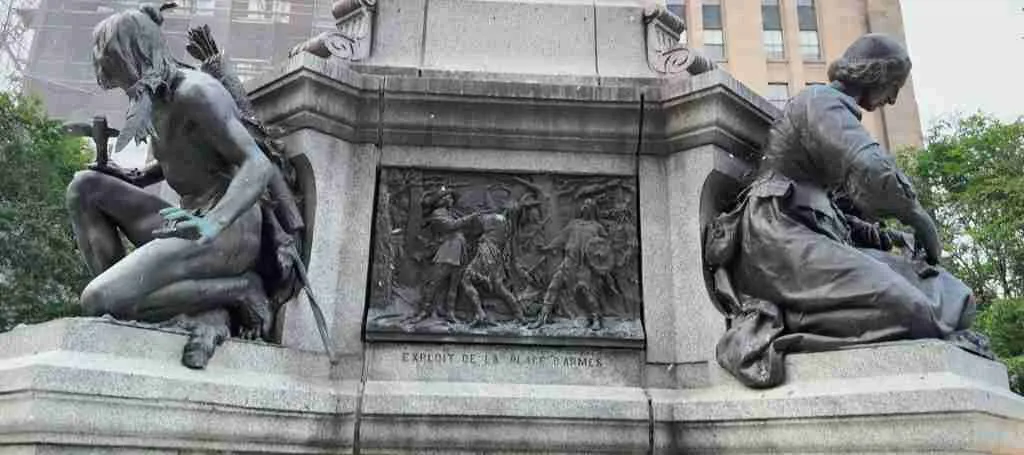
Place d’Armes square fronts Château Frontenac as Old Quebec’s central gathering point, surrounded by restaurants, boutiques, and the Notre-Dame de Québec Basilica-Cathedral. The basilica, originally constructed in 1647 and rebuilt after 1922 fire, opens free to visitors daily 7:00 AM to 5:00 PM with the museum section charging CAD $5 ($4) for access to crypts and treasury exhibits. The gilded baroque interior contrasts with the austere exterior, featuring elaborate woodwork, religious paintings, and the tomb of Quebec founder Samuel de Champlain.
Lower Town and Petit Champlain District 2026
Lower Town clusters around Place Royale where Champlain established Quebec’s first settlement in 1608, now surrounded by 17th and 18th-century stone buildings housing museums, galleries, and restaurants. The Quartier Petit Champlain shopping district fills narrow pedestrian lanes with boutiques, cafes, and artisan workshops, while the Old Port waterfront extends northeast with promenades and seasonal activities.
Reaching Lower Town from Upper Town via the Funiculaire du Vieux-Québec inclined elevator costs CAD $4 ($3) per ride, operating continuously 7:30 AM to 11:00 PM daily. The 64-meter vertical ascent in glass-enclosed cars takes 90 seconds, connecting Terrasse Dufferin to Petit Champlain’s entrance. Alternative access includes the Breakneck Stairs (Escalier Casse-Cou), a steep stone staircase descending from Côte de la Montagne street, or the gentler Côte de la Fabrique route winding downward through residential areas.
Place Royale’s stone plaza centers around a bronze bust of Louis XIV, surrounded by the Church of Notre-Dame-des-Victoires and restored merchant houses now operating as museums and cultural centers. The Place Royale interpretation center charges CAD $4 ($3) admission for exhibits on New France colonial life and Quebec City’s commercial history. Free outdoor displays throughout the square explain the archaeological discoveries beneath the modern surface, where excavations revealed remains of Champlain’s original Habitation structure.
Quartier Petit Champlain’s pedestrian-only lanes create Quebec City’s most photographed shopping district, with stone buildings draped in flowering window boxes during summer and elaborate Christmas decorations in winter. The district spans approximately 500 meters along Rue du Petit-Champlain and connecting alleys, taking 45-60 minutes to browse completely. While boutiques carry expected tourist items including maple products, Indigenous crafts, and Quebec-themed souvenirs, several galleries feature serious Canadian art and hand-crafted jewelry worth examining.
Dining in Quebec City 2026
Quebec City’s restaurant scene emphasizes French-Canadian cuisine, traditional Quebecois dishes, and modern interpretations of regional ingredients. Prices in Old Quebec tourist areas run 20-30% higher than Montreal equivalents, reflecting captive-audience economics and prime historic real estate.
Lunch options in Old Quebec range from quick cafes to sit-down bistros. Crêperies along Rue Saint-Jean serve sweet and savory crepes for CAD $12-18 ($9-14), while traditional Quebecois spots offer tourtière meat pie, pea soup, and sugar pie for CAD $15-22 ($11-17). Mid-range bistros providing full table service charge CAD $20-35 ($15-26) for mains including duck confit, salmon, and seasonal vegetables. Aux Anciens Canadiens restaurant on Rue Saint-Louis occupies an 1675 house and serves traditional cuisine including caribou stew and maple-smoked ham at CAD $28-42 ($21-32) per entree, totaling CAD $40-55 ($30-41) with appetizer or dessert and beverage.
Lower Town’s Petit Champlain district offers similar price ranges with cafe seating providing river views. Budget-conscious travelers can assemble picnic lunches from grocery stores outside Old Quebec’s walls, then eat at Plains of Abraham or Terrasse Dufferin benches, though most visitors prefer at least one restaurant meal to experience local cuisine and historic building interiors.
Coffee stops between attractions run CAD $4-6 ($3-5) for espresso drinks at independent cafes, with Quebec City’s numerous patisseries offering pastries and croissants for CAD $3-5 ($2-4) each. Afternoon snacks including poutine from street vendors cost CAD $8-12 ($6-9) for standard portions, while beaver tails (fried dough pastries) at seasonal stands run CAD $6-9 ($5-7).
Quebec City Day Trip Timing 2026
An effective Quebec City day trip from Montreal requires 7-8 hours in the destination to justify the 5-6 hours of total travel time. Early morning departures at 7:00-8:00 AM enable arrival by 10:00-11:00 AM, providing the full afternoon for exploration before evening returns at 6:00-7:00 PM.
A sample timeline using VIA Rail: 7:12 AM departure from Montreal Gare Centrale arrives 10:22 AM at Quebec Gare du Palais. Walk or taxi 15 minutes to Old Quebec Upper Town. 11:00 AM start Citadelle tour (1 hour). 12:00 PM walk Terrasse Dufferin and photograph Château Frontenac (45 minutes). 12:45 PM lunch at Upper Town bistro (75 minutes). 2:00 PM descend to Lower Town via funicular. 2:15 PM explore Place Royale and museums (60 minutes). 3:15 PM browse Quartier Petit Champlain shops (60 minutes). 4:15 PM walk Old Port promenade (45 minutes). 5:00 PM ascend to Upper Town and walk Rue Saint-Jean commercial street (45 minutes). 5:45 PM taxi to Gare du Palais. 6:47 PM depart Quebec City, 9:47 PM arrive Montreal.
This schedule covers major highlights with reasonable pacing but requires commitment to timing discipline. Those driving gain flexibility to adjust schedules spontaneously or add brief stops at Montmorency Falls 15 minutes east of Quebec City, a 83-meter waterfall accessible via cable car for CAD $16 ($12) with views exceeding Niagara Falls’ height.
Quebec City Day Trip Total Costs 2026
Complete Quebec City day trip costs break down as follows for a single traveler using public transportation. VIA Rail round-trip ticket CAD $120, Citadelle admission CAD $18, funicular rides CAD $8 (two trips), lunch CAD $30, coffee and snack CAD $12, total approximately CAD $188 ($141) per person. Couples or small groups driving reduce per-person transportation costs: rental car CAD $80, gas CAD $25, parking CAD $25, combined CAD $130 ($98) divided by two equals CAD $65 ($49) per person, plus attractions and meals CAD $68 ($51), totaling CAD $133 ($100) per person for the driving option.
Budget optimization strategies include Orleans Express bus at CAD $70 instead of VIA Rail CAD $120, picnic lunch instead of restaurant, and walking between Upper and Lower Town via stairs instead of funicular. These adjustments reduce total costs to approximately CAD $110 ($83) per person while maintaining the core Quebec City experience.
Ottawa Day Trip from Montreal 2026
Ottawa sits 190 kilometers west of Montreal as Canada’s federal capital, combining political institutions with national museums and a revitalized downtown core along the Ottawa River and Rideau Canal. The city’s bilingual character and concentration of cultural institutions distinguish it from Montreal’s primarily Francophone environment, while manageable scale makes Ottawa conducive to day-trip exploration.
Montreal to Ottawa Transportation 2026
Ottawa lies closer to Montreal than Quebec City but paradoxically receives less frequent train service due to route geography. VIA Rail operates 4-6 daily trains covering the 190 kilometers in 2 hours flat via the direct route through Vaudreuil and Cornwall. Round-trip economy fares cost CAD $80-100 ($60-75), with advance booking securing lower rates. Morning departures at 6:42 AM and 9:15 AM arrive Ottawa station at 8:42 AM and 11:20 AM respectively, while return trains at 5:52 PM and 7:08 PM enable 7-9 hours in the capital depending on schedule selection.
Driving via Highway 40 West (Autoroute Félix-Leclerc) and Highway 417 covers 196 kilometers in 2 hours to 2 hours 30 minutes depending on Montreal origin point and Ottawa traffic through Gatineau and downtown approaches. The route crosses from Quebec into Ontario at the Ottawa River, requiring brief navigation of Gatineau’s street grid before bridges connect to Ottawa’s downtown core. Rental car and gas costs mirror Quebec City calculations at CAD $80-90 ($60-68) for the vehicle plus CAD $18-20 ($14-15) for gas, with downtown Ottawa parking at CAD $15-25 ($11-19) for full-day lots near major attractions.
Greyhound and Orleans Express buses operate 6-8 daily departures from Montreal bus terminal with 2 hours 15 minutes to 2 hours 45 minutes journey times. Round-trip fares average CAD $50-70 ($38-53) with advance online booking providing the best rates. The bus option offers the most economical access to Ottawa while maintaining reasonable travel time, particularly valuable for solo travelers who would bear full driving costs alone.
Parliament Hill and Political Ottawa 2026
Parliament Hill’s Gothic Revival buildings dominate Ottawa’s skyline from a cliff above the Ottawa River, housing Canada’s Senate and House of Commons within Centre Block’s iconic Peace Tower. Free guided tours operate daily year-round, requiring advance booking through the House of Commons visitor services website. Tours last 60 minutes, covering the Senate chamber with its red-carpeted elegance, the green-carpeted House of Commons where debates occur, and the Parliamentary Library’s ornate wood-carved reading room.
Security screening precedes all Parliament tours, with restricted items including bags larger than standard purses. Summer scheduling operates 9:00 AM to 4:30 PM with tours departing every 20 minutes, while winter reduces frequency to every 30-45 minutes. Book tours at least 2-3 weeks ahead during July-August peak season to secure preferred time slots, or attempt same-day standby tickets at the tour office opposite the Peace Tower, though availability proves unpredictable.
The Peace Tower’s observation deck requires separate booking, with free timed tickets released three months in advance. The 92-meter climb via elevator delivers panoramic views across Ottawa, Gatineau, and the Ottawa River, with the memorial chamber halfway up honoring Canadian war dead. Tower tours last 20 minutes with limited capacity requiring strict adherence to reserved time slots.
The Changing of the Guard ceremony occurs daily at 10:00 AM late June through late August on Parliament Hill’s front lawn, weather permitting. The 30-minute ceremony features the Governor General’s Foot Guards and Canadian Grenadier Guards in red tunics and bearskin caps performing precision drills to military band accompaniment. Arrive 20-30 minutes early to secure viewing positions along the front barriers, as crowds of 500-1,000 spectators gather for popular summer performances.
National Museums of Canada 2026
Ottawa concentrates Canada’s premier national museums within walking distance of Parliament Hill, offering comprehensive coverage of Canadian art, history, nature, and culture. Day trip timing typically permits one major museum in depth or two museums with selective gallery visits.
The Canadian Museum of History in Gatineau (Quebec side of the river, 10-minute walk from Parliament Hill across Alexandra Bridge) houses the world’s largest collection of totem poles in the dramatic Grand Hall overlooking Parliament Hill. The museum charges CAD $20 ($15) admission, operating 9:30 AM to 5:00 PM daily with extended 8:00 PM Thursday closing. Exhibition halls trace Canadian history from Indigenous peoples through European contact to modern multiculturalism, with particular strength in First Nations artifacts and maritime heritage. The children’s museum occupies the lower level, though less relevant for adult-focused day trips. Plan 2-3 hours for comprehensive exploration or 90 minutes for highlights including the Grand Hall and Canadian History Hall.
The National Gallery of Canada stands three blocks east of Parliament Hill, featuring Canadian and international art within an architectural landmark designed by Moshe Safdie. Admission costs CAD $16 ($12), with the gallery open 10:00 AM to 5:00 PM Tuesday-Sunday, closed Mondays except holiday weekends. Canadian art collections span Group of Seven landscapes, Indigenous contemporary art, and historical portraits, while international galleries cover European masters and modern works. The Maman spider sculpture by Louise Bourgeois on the entrance plaza creates a distinctive photo opportunity. Allocate 2-3 hours for thorough visits or 75 minutes for Canadian art focus.
The Canadian Museum of Nature occupies a castle-like building 15 minutes south of Parliament Hill by bus or 30-minute walk. Admission runs CAD $18 ($14) with operating hours 9:00 AM to 5:00 PM daily. Natural history exhibits feature dinosaur fossils, Canadian mammals, mineral collections, and a popular mammal gallery with life-size dioramas. The museum appeals particularly to families but offers quality exhibits for adult visitors interested in Canadian natural history. Allow 90-120 minutes for complete exploration.
ByWard Market and Downtown Dining 2026
ByWard Market, five blocks northeast of Parliament Hill, functions as Ottawa’s premier dining and shopping district within an historic market building and surrounding pedestrian blocks. The market building houses fresh produce vendors, cheese shops, bakeries, and prepared food stalls, while external streets contain restaurants, bars, boutiques, and cafes.
Lunch options range from market food stalls offering sandwiches and international cuisine at CAD $10-15 ($8-11), to sit-down restaurants charging CAD $18-30 ($14-23) for mains. BeaverTails pastry stands throughout the market serve the quintessential Canadian fried dough treat topped with cinnamon sugar, chocolate, or maple butter for CAD $7-10 ($5-8). Poutine specialists including Smoke’s Poutinerie offer variations on Quebec’s signature dish for CAD $10-16 ($8-12). Mid-range restaurants provide diverse cuisine including Italian, Lebanese, Thai, and Canadian contemporary, with full lunch totals reaching CAD $25-40 ($19-30) including beverage and tip.
The market area extends along York, William, George, and Clarence streets, creating a grid of pedestrian-friendly blocks requiring 30-45 minutes to explore completely. Summer weekends bring outdoor performer and craft vendor stalls, while year-round operation maintains restaurants and shops even during Ottawa’s harsh winters.
Rideau Canal and Additional Attractions 2026
The Rideau Canal, a UNESCO World Heritage Site since 2007, flows 7.5 kilometers through Ottawa connecting the Ottawa River to the Rideau River and onward 202 kilometers to Kingston on Lake Ontario. The downtown section between Parliament Hill and Carleton University transforms into the world’s largest skating rink during winter, operating January through early March when ice thickness permits. Summer operation features recreational boating and waterside paths for walking and cycling.
Rideau Canal locks adjacent to Parliament Hill raise and lower boats eight meters between the Ottawa River and the canal, with Parks Canada operating the historic hand-cranked lock system during navigation season May through October. Observation platforms allow watching lock operations free of charge, with interpretive displays explaining the canal’s 1832 completion as a military supply route and subsequent evolution into recreational waterway.
The National War Memorial stands at Confederation Square where Sparks Street meets Elgin Street, one block south of Parliament Hill. The 21-meter granite and bronze monument features allegorical figures representing peace and freedom with Canadian soldiers passing through an arch. The Tomb of the Unknown Soldier was added in 2000 at the memorial’s base. Remembrance Day ceremonies occur here November 11 annually, though the memorial remains accessible year-round for reflection and photographs.
Ottawa Day Trip Timing 2026
An efficient Ottawa day trip accommodates Parliament Hill, one major museum, ByWard Market, and canal walks within 7-8 hours. Using VIA Rail early morning trains: 6:42 AM Montreal departure arrives 8:42 AM Ottawa. Walk or taxi 15 minutes to Parliament Hill. 9:00 AM Parliament tour (75 minutes including security). 10:45 AM walk to Canadian Museum of History (15 minutes). 11:00 AM museum visit (2 hours). 1:00 PM walk to ByWard Market (20 minutes). 1:30 PM lunch (60 minutes). 2:30 PM browse market area (45 minutes). 3:15 PM walk to Rideau Canal locks and National War Memorial (45 minutes). 4:00 PM walk to National Gallery exterior photography (20 minutes). 4:30 PM return to Ottawa station (20 minutes). 5:52 PM departure Ottawa, 7:52 PM arrival Montreal.
This schedule prioritizes Parliament and museums over shopping, though ByWard Market time can extend by reducing museum duration. Driving enables spontaneous schedule adjustments but requires accounting for parking and walking from lots to attractions.
Ottawa Day Trip Total Costs 2026
Complete Ottawa day trip costs for a single traveler using VIA Rail total: train CAD $90, Parliament tour free, Canadian Museum of History CAD $20, lunch CAD $30, coffee and snack CAD $10, total approximately CAD $150 ($113) per person. Driving reduces transportation costs for groups: rental car CAD $80, gas CAD $19, parking CAD $20, combined CAD $119 ($89) divided by two equals CAD $60 ($45) per person, plus museum and meals CAD $60 ($45), totaling CAD $120 ($90) per person for couples driving.
Budget optimization includes bus transportation at CAD $60 instead of train CAD $90, selecting one museum versus touring multiple museums, and market food stall lunch instead of restaurant. These adjustments bring total costs to approximately CAD $105 ($79) per person while maintaining core Ottawa experiences.
Mont-Tremblant Day Trip 2026
Mont-Tremblant Resort sits 130 kilometers northwest of Montreal in the Laurentian Mountains, combining Quebec’s highest skiable peak at 875 meters elevation with a pedestrian village modeled on Quebecois alpine architecture. The year-round resort transforms seasonally from winter skiing December through April to summer hiking, mountain biking, and scenic gondola rides June through October.
Accessing Mont-Tremblant from Montreal 2026
Mont-Tremblant requires personal vehicle access as no direct public transportation operates from Montreal. Highway 15 North (Autoroute des Laurentides) extends 117 kilometers from Montreal to Sainte-Agathe-des-Monts, where Highway 117 North continues 27 kilometers to Mont-Tremblant village and the resort entrance. Total driving time runs 90 minutes to 2 hours depending on Montreal departure point and weekend traffic through Saint-Jérôme and Sainte-Agathe.
Rental cars for Mont-Tremblant day trips average CAD $70-90 ($53-68) daily for compact to mid-size vehicles, with gas consumption of approximately 18-20 liters round trip costing CAD $29-36 ($22-27). Resort parking lots charge CAD $20-25 ($15-19) for full-day access, though arriving before 9:00 AM often secures free spaces in peripheral lots with shuttle service to the village. Car rentals booked Friday evening for Saturday-Sunday return reduce per-day costs to CAD $45-60 ($34-45) when splitting weekend rental across two days.
Alternative access via Galland Bus operates weekend-only service December through March during ski season, departing Montreal’s Gare d’autocars at 7:00 AM and arriving Mont-Tremblant at 9:30 AM, with return buses at 5:00 PM. Round-trip fares cost CAD $50-60 ($38-45), though limited schedule and winter-only operation restrict usefulness for most travelers. Summer visitors and those seeking schedule flexibility require personal vehicles.
Summer Activities at Mont-Tremblant 2026
Mont-Tremblant’s summer season, operating late May through mid-October, emphasizes mountain recreation and scenic experiences accessible to all fitness levels. The Panoramic Gondola operates daily 10:00 AM to 5:00 PM, transporting visitors from the pedestrian village at 265 meters elevation to the summit at 875 meters in 12-minute rides. Round-trip gondola tickets cost CAD $25 ($19) for adults, with the summit offering 360-degree views across the Laurentians, Lac Tremblant far below, and on clear days, Mont Royal visible 130 kilometers south marking Montreal’s location.
Summit hiking trails range from easy 20-minute nature walks along wooden boardwalks to challenging 2-3 hour circuits descending the mountain’s north face. The Ridge Trail follows the summit plateau for 1.5 kilometers with minimal elevation change, passing through boreal forest and mountain meadows with interpretive signs explaining Laurentian ecology. The Devil’s River Trail descends 610 meters over 6 kilometers to Lac Tremblant’s north shore, a strenuous route requiring 2.5-3 hours with careful footing on rocky sections. Hikers completing the Devil’s River descent must arrange return transportation to the resort via taxi or pre-positioned second vehicle, as no shuttle service operates.
Mountain biking trails cover 35 kilometers of the resort’s terrain with dedicated flow trails, technical single-track, and cross-country routes. Bike rentals at the resort base cost CAD $60-80 ($45-60) for half-day access including helmet and trail map. The resort’s Via Ferrata climbing route opened in 2018, offering guided rock face traversing using fixed cables, ladders, and bridges for CAD $110 ($83) per person including all equipment and instruction. The 2.5-hour experience requires moderate fitness and comfort with heights, ascending the Johannsen peak’s exposed cliff faces.
Pedestrian Village and Dining 2026
Mont-Tremblant’s pedestrian village replicates traditional Quebecois mountain architecture with colorful facades, cobblestone plazas, and car-free streets arranged in two levels connected by stairs and elevators. The village concentrates 50+ restaurants, bars, boutiques, and galleries within a compact 400-meter radius, creating a European-style resort atmosphere.
Dining options span quick-service cafes to fine dining establishments. Casual lunch spots including La Savoie creperie and Pizzateria charge CAD $15-22 ($11-17) for sandwiches, salads, and individual pizzas. Mid-range restaurants offer fuller menus with mains at CAD $22-38 ($17-29), including Microbrasserie La Diable’s locally brewed beers and pub fare, and Le Shack’s upscale comfort food. Après-ski bars and summer terrace restaurants along Place St-Bernard charge premium prices reflecting resort economics, with full lunch totals reaching CAD $35-60 ($26-45) including appetizers, mains, and beverages.
Budget-conscious visitors can pack lunches from Montreal grocery stores, then eat at summit picnic areas or lakeside benches, though most travelers indulge in at least one village meal to experience the resort’s culinary offerings and people-watching opportunities. Coffee shops throughout the village charge CAD $4-6 ($3-5) for espresso drinks, while ice cream parlors and candy shops provide snacks at CAD $4-8 ($3-6).
Winter Skiing at Mont-Tremblant 2026
Mont-Tremblant’s ski season operates early December through mid-April, offering 102 trails across 755 acres with Quebec’s greatest vertical drop at 645 meters. The resort suits intermediate skiers primarily, with 56% of trails rated intermediate, 23% advanced, and 21% beginner. Modern eight-passenger gondolas and high-speed quad chairlifts provide uplift capacity of 27,230 skiers per hour, though weekend lineups still develop during February-March peak season.
Day lift tickets cost CAD $130-145 ($98-109), with advance online purchases providing CAD $10-15 ($8-11) discounts versus gate rates. Check the Mont-Tremblant official website for current rates as pricing may vary. The resort rarely discounts midweek January-March tickets despite lower crowds, maintaining premium pricing throughout the season. Rental equipment for skis, boots, and poles runs CAD $50-65 ($38-49) for standard packages, with performance equipment at CAD $75-90 ($56-68).
Day trip skiing from Montreal requires early starts to maximize slope time, with 7:00-7:30 AM Montreal departures arriving by 9:00 AM for first lifts. Four to five hours of skiing typically exhausts most recreational skiers before 2:30-3:00 PM departures back to Montreal. The compressed timeline makes overnight stays more practical for serious skiing, though day trips serve casual skiers seeking a single day’s recreation without accommodation costs.
Lac Tremblant and Surrounding Areas 2026
Lac Tremblant extends 12 kilometers northwest from the resort’s base, with the village of Mont-Tremblant town (distinct from the resort) occupying the lake’s north shore 7 kilometers from the resort entrance. The lake offers swimming beaches, kayak rentals, and scenic drives along the shore road with mountain views reflected in calm waters.
Plage Municipale public beach in Mont-Tremblant town provides free access to a supervised swimming area with change facilities, operating mid-June through late August. Kayak and paddleboard rentals at various lakeside operators cost CAD $25-35 ($19-26) per hour, enabling water-level exploration of the lake’s shoreline and small islands. Summer weekends bring recreational boaters, though the lake’s size dissipates crowds unlike smaller Laurentian lakes that become congested.
The Route du P’tit Train du Nord, a 232-kilometer rail trail running from Saint-Jérôme north through the Laurentians to Mont-Laurier, passes through Mont-Tremblant town. The paved multi-use path attracts cyclists in summer and cross-country skiers in winter, with the Mont-Tremblant section offering 20-30 kilometer rides through forest and lakeside scenery. Bike rentals in Mont-Tremblant town cost CAD $35-50 ($26-38) for half-day access.
Mont-Tremblant Day Trip Timing 2026
A summer Mont-Tremblant day trip balancing driving time with activity time: 7:30 AM Montreal departure arrives 9:00 AM at resort. Park and walk to gondola base (15 minutes). 9:30 AM gondola ascent (15 minutes). 9:45 AM summit hiking and photography (90 minutes). 11:15 AM gondola descent (15 minutes). 11:45 AM lunch in pedestrian village (75 minutes). 1:00 PM browse village shops and galleries (60 minutes). 2:00 PM drive to Lac Tremblant beach (15 minutes). 2:30 PM lakeside walk or swimming (60 minutes). 3:30 PM depart for Montreal. 5:00 PM arrive Montreal.
This schedule prioritizes scenic experiences over intensive hiking or biking, suitable for mixed fitness groups and families. Serious hikers or mountain bikers should allocate 3-4 hours for activities, reducing village browsing time or eliminating the lake visit. Winter ski day trips compress resort time to 4-5 hours maximum given travel requirements.
Mont-Tremblant Day Trip Total Costs 2026
Summer day trip costs for a couple sharing driving: rental car CAD $75, gas CAD $32, parking CAD $20, combined transportation CAD $127 ($95) divided by two equals CAD $64 ($48) per person, plus gondola CAD $25 ($19), lunch CAD $40 ($30), coffee and snack CAD $10 ($8), total approximately CAD $139 ($105) per person. Winter ski day trips substantially increase with lift tickets CAD $140 ($105), equipment rental CAD $60 ($45), lunch CAD $45 ($34), plus transportation CAD $64 ($48), totaling approximately CAD $309 ($232) per person for those requiring rentals, or approximately CAD $249 ($187) for skiers with personal equipment.
Budget optimization strategies include packing lunch from Montreal grocery stores, limiting village purchases to coffee only, and selecting free hiking trails instead of paid gondola rides, though the gondola provides the premier Mont-Tremblant experience worth prioritizing. Summer day trips prove far more economical than winter skiing, with total costs of CAD $75 ($56) per person achievable through packed lunches and free trail hiking.
Laurentians Scenic Drive 2026
The Laurentian Mountains north of Montreal comprise dozens of small resort villages, lakes, and provincial parks connected by scenic highways winding through forested hills. A driving loop covering Saint-Sauveur, Sainte-Adèle, Val-David, and Sainte-Agathe-des-Monts delivers mountain scenery, village exploration, and lakeside stops within a 180-200 kilometer circuit requiring 4-5 hours of total driving.
Laurentians Driving Route 2026
The classic Laurentians loop from Montreal follows Highway 15 North to Saint-Sauveur (60 kilometers, 50 minutes), continues to Sainte-Adèle (15 kilometers, 15 minutes), proceeds to Val-David (15 kilometers, 15 minutes), reaches Sainte-Agathe-des-Monts (18 kilometers, 20 minutes), then returns via Highway 117 South connecting to Highway 15 South back to Montreal (110 kilometers, 90 minutes). Total loop distance covers approximately 200 kilometers with 3 hours of pure driving time, leaving 4-5 hours for village stops and activities.
Highway 15 North operates as a major autoroute with divided lanes and 100 km/h speed limits to Saint-Jérôme, transitioning to narrower undivided Highway 117 beyond. Traffic congestion affects Friday evenings and Sunday afternoons year-round as Montreal residents access weekend cottages, with winter weekends adding ski resort traffic to Saint-Sauveur and Sainte-Adèle. Early Saturday morning departures at 7:00-8:00 AM avoid the worst congestion, as do Tuesday-Thursday weekday trips when possible.
Saint-Sauveur Village and Val-David 2026
Saint-Sauveur, 60 kilometers north of Montreal, functions as the Laurentians’ southern gateway with a compact village core along Rue Principale featuring boutiques, galleries, and restaurants. The village attracts Montreal daytrippers year-round, creating a bustling atmosphere somewhat detached from traditional mountain-town character. Summer terraces fill with diners, while winter brings skiers from Mont Saint-Sauveur’s slopes immediately west of town.
Val-David, 30 kilometers north of Saint-Sauveur, presents a quieter artistic community scattered around Rivière du Nord’s rapids and Parc Régional Val-David-Val-Morin’s trail network. The village emphasizes galleries, studios, and craft shops rather than restaurants and bars, appealing to travelers seeking authentic creative communities over resort atmospheres. Summer months bring an outdoor sculpture garden along the river, with works by regional artists displayed among the rapids and pine forests.
Parc Régional Val-David-Val-Morin contains 19 kilometers of hiking trails accessing rock faces, forest streams, and lookout points with valley views. The Montagne du Condor trail climbs 200 meters over 2 kilometers to a summit overlook, requiring 90 minutes round trip for moderate hikers. Park access costs CAD $8 ($6) per adult, with trail maps provided at the entrance station on Chemin de la Sapinière.
Sainte-Agathe-des-Monts and Lac des Sables 2026
Sainte-Agathe-des-Monts anchors the central Laurentians as the region’s largest town with 10,000 residents, wrapping around Lac des Sables’ 4-kilometer shoreline. The Rue Principale commercial district offers restaurants, outdoor equipment shops, and grocery stores serving both tourists and year-round residents, while the lakeside boardwalk provides walking paths, beaches, and boat launch facilities.
Croisières Alouette operates 50-minute narrated boat tours circling Lac des Sables aboard enclosed tour boats accommodating 100 passengers. Tours depart daily at 11:00 AM, 1:30 PM, and 3:30 PM mid-June through early September, with tickets costing CAD $18 ($14) for adults. The narration covers local history, lakeside estates, and Laurentian geology, though views prove the primary attraction as the boat passes dense shoreline forests and glimpses mountain peaks beyond.
Public beaches along Lac des Sables include Plage Major at the north end with supervised swimming, change facilities, and picnic areas operating late June through late August with free access. The beach attracts local families, creating a genuine community atmosphere contrasting with resort environments elsewhere in the Laurentians.
Laurentians Dining and Activities 2026
Laurentian villages offer diverse dining reflecting the region’s mix of anglophone and francophone heritage plus recent immigrant arrivals. Saint-Sauveur’s Rue Principale concentrates bistros and cafes charging CAD $18-32 ($14-24) for lunch mains, while Val-David emphasizes casual spots at CAD $12-20 ($9-15). Sainte-Agathe provides the broadest selection including Greek, Italian, Chinese, and traditional Quebecois restaurants at CAD $15-28 ($11-21).
Antique shops and galleries throughout the Laurentians provide browsing opportunities between driving segments, with Val-David’s artisan studios welcoming visitors to watch glassblowing, pottery, and woodworking demonstrations. Most studios operate Tuesday-Sunday 10:00 AM to 5:00 PM, closing Mondays except during July-August peak season.
Maple sugar shacks (cabanes à sucre) dot the Laurentians, though most operate only during sugaring season late February through mid-April when maple sap flows. Au Pied de Cochon’s sugar shack near Mont-Tremblant operates year-round with reservations required weeks in advance for their lavish multi-course traditional meals priced at CAD $70-85 ($53-64) per person.
Laurentians Loop Day Trip Timing 2026
A complete Laurentians loop timeline: 7:30 AM Montreal departure arrives 8:30 AM Saint-Sauveur. Browse Rue Principale shops and coffee stop (45 minutes). 9:30 AM depart for Val-David, arrive 9:50 AM. Walk river sculpture garden and village galleries (75 minutes). 11:15 AM depart for Sainte-Agathe, arrive 11:40 AM. Lunch at lakeside restaurant (75 minutes). 1:00 PM lake cruise (50 minutes). 2:00 PM walk boardwalk and beach (45 minutes). 3:00 PM depart for Montreal via Highway 117 South. 4:30 PM arrive Montreal.
This schedule maintains reasonable pacing with flexibility for extended stops at any village that particularly appeals. Hikers can substitute Val-David trail time for village browsing, while those preferring shopping can reduce Sainte-Agathe lake activities in favor of additional Saint-Sauveur boutique time.
Laurentians Loop Day Trip Total Costs 2026
Laurentians driving loop costs for a couple: rental car CAD $75, gas CAD $28, combined CAD $103 ($77) divided by two equals CAD $52 ($39) per person, plus lunch CAD $25 ($19), lake cruise CAD $18 ($14), coffee and snacks CAD $10 ($8), total approximately CAD $105 ($79) per person. Budget optimization includes packed lunch from Montreal and skipping the lake cruise in favor of free beach walking, reducing total costs to approximately CAD $70 ($53) per person while maintaining scenic driving and village exploration experiences.
Eastern Townships Wine Route 2026
The Eastern Townships (Cantons-de-l’Est), 90 minutes southeast of Montreal, feature Quebec’s emerging wine region centered around Dunham and the shores of Lac Brome. The rolling hills, Victorian-era villages, and agricultural landscape create a countryside atmosphere distinct from Montreal’s urbanity or the Laurentians’ wilderness character, while a dozen wineries offer tastings of cold-climate wines and ciders.
Accessing the Eastern Townships from Montreal 2026
The Eastern Townships wine route requires personal vehicle access given the rural geography and multiple winery locations spread across 40 kilometers of country roads. Highway 10 East (Autoroute des Cantons-de-l’Est) extends 100 kilometers from Montreal to Bromont, where Highway 104 South continues to Lac Brome and Highway 202 reaches the Dunham wine region. Total driving time covers 90 minutes to 2 hours depending on Montreal origin and final destination within the townships.
Rental car costs mirror other destinations at CAD $70-90 ($53-68) daily, with gas consumption of approximately 16-18 liters round trip costing CAD $26-32 ($20-24) given the shorter distance versus Mont-Tremblant. Winery parking remains free at all locations, though designated driver requirements or taxi services between wineries factor into planning for those prioritizing tastings over driving.
Dunham Wine Region and Principal Wineries 2026
Dunham anchors Quebec’s wine region with six significant wineries within 10 kilometers of the village center, specializing in cold-hardy hybrid grapes including Frontenac, Marquette, and Vidal alongside traditional varieties in warmer microclimates. The region produces primarily white wines and ice wines given Quebec’s climate, with red wine production increasing as vineyard techniques improve cold tolerance.
Vignoble de l’Orpailleur, Quebec’s pioneering winery established in 1982, operates 90-minute guided tours at 11:00 AM and 2:00 PM Thursday-Sunday May through October, priced at CAD $15 ($11) including vineyard walk, cellar viewing, and tasting of four wines. The tour explains Quebec viticulture’s unique challenges including winter vine protection, early frost management, and cold-climate fermentation techniques. The winery’s restaurant serves lunch Thursday-Sunday with regional ingredients paired with estate wines, charging CAD $35-55 ($26-41) for three-course prix fixe menus.
Vignoble La Bauge specializes in organic viticulture and natural winemaking, offering self-guided tastings in a converted barn tasting room. Five-wine tastings cost CAD $8 ($6), while reserve tastings of library and limited-production wines run CAD $15 ($11). The vineyard encourages picnicking on grounds overlooking the vines, with visitors welcome to purchase wines and enjoy them outdoors on provided tables May through October weather permitting.
Domaine Bresee focuses on traditional method sparkling wines, producing Quebec’s premier bubbles using Champagne techniques. Tastings include three sparkling wines for CAD $12 ($9), with tour and tasting combinations at CAD $20 ($15) covering production explanation and cellar visits. The facility operates Wednesday-Sunday June through October with limited winter weekend hours.
Lac Brome and Knowlton Village 2026
Lac Brome, 20 kilometers northwest of Dunham, centers around Knowlton village on the lake’s western shore. The village preserves Victorian architecture along its main commercial street, with brick storefronts housing antique shops, galleries, bookstores, and cafes. The pedestrian-friendly village requires 45-60 minutes to explore completely, with particular interest in Brome County Museum’s local history exhibits housed in five heritage buildings.
Lac Brome’s shoreline offers 7-kilometer walking paths connecting Knowlton with neighboring hamlets, passing through waterfront parks and residential areas with mountain-backed lake views. Swimming beaches operate at Bondville and Knowlton Bay June through September with free access, though water temperatures remain cool even in August given the lake’s mountain-fed nature.
The region’s signature culinary product, Brome Lake duck, appears on restaurant menus throughout the townships. Lac Brome Farm Market in Knowlton sells fresh duck, duck confit, and prepared products, while several village restaurants including Knowlton Pub feature duck preparations as specialty items at CAD $28-38 ($21-29) for main courses.
Additional Eastern Townships Destinations 2026
Sutton village 30 kilometers south of Dunham near the Vermont border preserves an arts community centered on Rue Principale’s galleries and studios. Mont Sutton ski resort operates in winter with terrain favored by expert skiers, while summer brings hikers to Sutton mountain trails accessing summit views over three states and provinces. The village’s scale suits brief stops rather than extended exploration, with 30-45 minutes sufficient for main street browsing.
Abbaye de Saint-Benoît-du-Lac, a Benedictine monastery on the west shore of Lac Memphrémagog 35 kilometers east of Dunham, welcomes visitors to its church for daily services and operates a shop selling monk-produced cheeses, ciders, and preserves. The monastery’s Gothic Revival architecture perched above the lake creates a photogenic setting, with grounds open for quiet walking. Shop hours run 9:00 AM to 6:00 PM daily, with Gregorian chant services at 5:00 PM open to respectful visitors.
Eastern Townships Dining 2026
Eastern Townships restaurants emphasize local ingredients including duck, lamb, artisanal cheeses, and seasonal produce. Village bistros charge CAD $18-30 ($14-23) for lunch mains, while vineyard restaurants reach CAD $35-55 ($26-41) for multi-course meals. Knowlton Pub provides casual atmosphere with duck poutine at CAD $16 ($12) and full meals at CAD $22-35 ($17-26).
Several wineries permit picnicking on grounds, enabling grocery store provisioning from Montreal or Dunham village shops. A picnic strategy combining purchased deli items with winery bottle purchases creates an economical lunch alternative to restaurant dining while maximizing time among vineyards.
Eastern Townships Wine Route Day Trip Timing 2026
A complete wine route day trip timeline: 8:00 AM Montreal departure arrives 9:45 AM Dunham. Coffee at village cafe (20 minutes). 10:15 AM drive to first winery, tasting (45 minutes). 11:15 AM second winery tour and tasting (90 minutes). 12:45 PM lunch at vineyard restaurant or picnic (75 minutes). 2:00 PM third winery tasting (45 minutes). 3:00 PM drive to Knowlton village. 3:30 PM browse Knowlton shops and lakeside walk (75 minutes). 4:45 PM depart for Montreal. 6:15 PM arrive Montreal.
This schedule accommodates three wineries with one formal tour, leaving time for village exploration while maintaining responsible consumption limits for the designated driver. Those prioritizing more wineries over village browsing can substitute additional tastings for Knowlton time, while those preferring countryside scenery can add the Abbaye monastery stop by reducing winery count to two locations.
Eastern Townships Day Trip Total Costs 2026
Eastern Townships wine route costs for a couple: rental car CAD $75, gas CAD $29, combined CAD $104 ($78) divided by two equals CAD $52 ($39) per person, plus three winery tastings averaging CAD $25 ($19) per person, lunch CAD $40 ($30), wine purchases variable, coffee and snacks CAD $8 ($6), total approximately CAD $125 ($94) per person excluding wine bottle purchases. Budget optimization includes picnic lunch from Montreal grocery stores and limiting tastings to two wineries, reducing costs to approximately CAD $90 ($68) per person while maintaining the wine country experience.
Parc National du Mont-Mégantic Day Trip 2026
Parc National du Mont-Mégantic, 225 kilometers southeast of Montreal in the Eastern Townships’ southernmost region, combines significant hiking with astronomy at the ASTROLab observatory atop Quebec’s highest accessible peak at 1,105 meters elevation. The remote location requires a 2.5-3 hour drive but rewards with exceptional hiking trails, summit views spanning five mountain ranges, and the darkest night skies in southern Quebec earning Dark Sky Reserve status.
Accessing Mont-Mégantic from Montreal 2026
Mont-Mégantic requires personal vehicle access via Highway 10 East to Magog, then Highway 112 East through Coaticook, and finally Highway 212 North to Notre-Dame-des-Bois village and the park entrance. The 235-kilometer route takes 2 hours 45 minutes to 3 hours 15 minutes depending on Montreal origin and driving pace. The final 30 kilometers on Highway 212 follows narrow mountain roads with limited services, requiring gas fill-ups in Coaticook before the final approach.
Rental car and gas costs increase given the longer distance, with fuel consumption of approximately 22-25 liters round trip costing CAD $35-45 ($26-34). The extended driving time makes Mont-Mégantic best suited for hikers and astronomy enthusiasts willing to commit 6-7 hours of total travel time to access unique mountain and observatory experiences unavailable closer to Montreal.
Mont-Mégantic Hiking Trails 2026
The park’s trail network includes five main routes ranging from easy nature walks to strenuous summit climbs. Park entry requires a daily access pass at CAD $10 ($8) per adult, purchased at the Discovery and Visitor Centre near the main entrance on Rue du Parc in Notre-Dame-des-Bois.
The Mont-Saint-Joseph trail, the park’s signature route, climbs 600 meters over 5.2 kilometers one-way from Lac Mégantic’s shore to the summit plateau where the ASTROLab observatory stands. The challenging hike requires 2.5-3 hours ascending with 2 hours descending, passing through deciduous forest, subalpine fir zones, and exposed rocky slopes before reaching the summit’s observatory complex and 360-degree viewing platform. The trail’s difficulty stems from continuous climbing rather than technical obstacles, suiting experienced hikers comfortable with sustained effort.
The Montagne du Gobelet trail offers a shorter summit option at 3 kilometers round trip with 365 meters elevation gain, taking 90 minutes to 2 hours. The trail delivers panoramic views over surrounding townships from a rocky outcrop at 851 meters elevation, providing significant visual rewards for less effort than the full Mont-Saint-Joseph route.
Easier trails including the Lac à la Truite circuit (2.5 kilometers, 30 minutes, minimal elevation) and the Pins Gris boardwalk (1.5 kilometers, 20 minutes, fully accessible) accommodate families and those preferring nature walks over mountain ascents. These routes explore lakeshores and boreal forest ecosystems with interpretive signs explaining regional ecology.
ASTROLab Observatory and Dark Sky Reserve 2026
The ASTROLab public observatory operates on Mont-Mégantic’s summit 1,105 meters above sea level, offering daytime exhibits and nighttime viewing programs. The facility shares the summit with professional research telescopes of the Observatoire du Mont-Mégantic, operated by Université de Montréal and Université Laval. The region’s Dark Sky Reserve designation, established in 2007, ensures minimal light pollution within a 5,500-square-kilometer protected zone.
Daytime ASTROLab visits include interactive astronomy exhibits, multimedia presentations on observatory research, and when weather permits, solar observations through filtered telescopes showing sunspots and prominences. Admission costs CAD $18 ($14) for adults, with the facility open 10:00 AM to 5:00 PM daily mid-June through early September, and weekends only May-June and September-October. The 45-60 minute self-guided visit explains Quebec’s contributions to astronomy research and the importance of dark sky preservation.
Evening viewing programs operate Friday-Saturday nights June through October, featuring constellation tours, telescope observations of planets and deep-sky objects, and astronomy presentations by resident scientists. Programs start after sunset, typically 8:00-9:00 PM depending on season, running 2-3 hours. Tickets cost CAD $42 ($32) for adults, requiring advance booking through the park website. The evening programs prove incompatible with Montreal day trips given travel time, but those able to arrange overnight stays in Notre-Dame-des-Bois or nearby communities gain access to exceptional stargazing experiences impossible in light-polluted southern Quebec.
Mont-Mégantic Village and Regional Services 2026
Notre-Dame-des-Bois, population 800, provides minimal services for park visitors with a convenience store, gas station, and two small restaurants. Aux Berges de l’Aurore restaurant near the park entrance serves lunch daily June through September, charging CAD $15-25 ($11-19) for sandwiches, soups, and simple mains. The village’s location at the end of Highway 212 with no through traffic creates a genuine mountain community atmosphere free from resort development, though visitor amenities remain limited compared to Laurentian destinations.
Accommodation in Notre-Dame-des-Bois includes several B&Bs and the Aux Berges de l’Aurore inn, relevant for those extending visits to capture evening astronomy programs. The park itself operates no camping facilities, though nearby Parc National de Frontenac 30 kilometers west provides full camping services.
Mont-Mégantic Day Trip Timing 2026
A Mont-Mégantic hiking-focused day trip timeline: 7:00 AM Montreal departure arrives 9:45-10:00 AM at park entrance. Purchase day pass and drive to trailhead (20 minutes). 10:30 AM begin Mont-Saint-Joseph summit hike. 1:00-1:30 PM reach summit, visit ASTROLab, lunch at picnic tables (90 minutes). 3:00 PM descend trail. 5:00 PM return to parking lot. 5:15 PM depart for Montreal. 8:00-8:30 PM arrive Montreal.
This schedule commits fully to the demanding summit hike, leaving minimal time for other activities. Those preferring less strenuous routes can substitute the Montagne du Gobelet shorter summit or combine easy trails with extended ASTROLab time, maintaining similar timeline structure but reducing physical demands.
Mont-Mégantic Day Trip Total Costs 2026
Mont-Mégantic day trip costs for a couple: rental car CAD $80, gas CAD $40, combined CAD $120 ($90) divided by two equals CAD $60 ($45) per person, plus park entry CAD $10 ($8), ASTROLab admission CAD $18 ($14), packed lunch CAD $0 (from Montreal), coffee and snack CAD $8 ($6), total approximately CAD $96 ($72) per person. The remote location makes restaurant options impractical given hiking schedules, with packed lunches consumed at summit picnic areas standard practice for serious hikers. The higher transportation costs reflect the extended distance, making Mont-Mégantic best suited for those specifically prioritizing mountain hiking and astronomy over shorter-distance alternatives.
Trois-Rivières Historical Day Trip 2026
Trois-Rivières sits 130 kilometers northeast of Montreal on the St. Lawrence River where the Saint-Maurice River splits into three channels before joining the main waterway. Founded in 1634 as New France’s second permanent settlement after Quebec City, Trois-Rivières preserves colonial architecture and industrial heritage as Quebec’s pulp and paper manufacturing center. The city suits travelers interested in Quebec history beyond the heavily touristed Quebec City experience.
Montreal to Trois-Rivières Transportation 2026
Trois-Rivières lies directly on the Highway 40 route between Montreal and Quebec City, with the city center accessible via exits 191-197. The 143-kilometer drive takes 90 minutes to 2 hours depending on Montreal origin and traffic conditions through Trois-Rivières’ suburban approaches. VIA Rail trains serve Trois-Rivières on the Montreal-Quebec City route with 6-8 daily trains each direction, covering the distance in 90 minutes to 2 hours. Round-trip economy fares cost CAD $70-90 ($53-68) with advance booking, though Trois-Rivières’ compact Old Town clusters within 10-minute walk from the train station, making rail access particularly practical for this destination.
Orleans Express buses operate 8-10 daily departures from Montreal to Trois-Rivières, with 90-minute to 2-hour journey times and round-trip fares of CAD $40-60 ($30-45) representing the most economical transportation option. The bus terminal sits adjacent to downtown, maintaining the walkability advantage of rail service without the higher cost.
Old Trois-Rivières Historic District 2026
The Old Trois-Rivières district concentrates within a 1-kilometer radius along Rue des Ursulines and adjacent streets near the St. Lawrence riverfront, with architecture spanning 1650s stone buildings through Victorian commercial blocks. The district operates as an active city center rather than preserved museum environment, with contemporary shops and restaurants occupying heritage structures.
The Ursulines Monastery, founded in 1697, opens its museum Tuesday-Sunday 10:00 AM to 5:00 PM mid-May through mid-October, with admission at CAD $8 ($6). The 60-minute self-guided visit explores the religious order’s 325-year history in Trois-Rivières through period rooms, religious artifacts, and exhibits on the Ursulines’ educational mission. The chapel, accessed free during the museum visit, features ornate baroque decoration including gilded altarpieces and ceiling frescoes.
The Old Prison of Trois-Rivières, operating as a corrections facility from 1822-1986, now functions as a museum with guided tours exploring cells, gallows chamber, and administrative offices. Tours cost CAD $12 ($9) per adult with departures at 10:00 AM, 1:00 PM, and 3:00 PM June through September. The 75-minute experience includes former inmate testimonials and displays on Canadian penal history, creating a somewhat dark but fascinating historical perspective.
The Museum of Quebec Folk Culture (Musée des Arts et Traditions Populaires) occupies an 1850s foundry building, displaying exhibitions on regional crafts, industrial heritage, and domestic life from 1850-1950. Admission runs CAD $7 ($5) with operating hours 10:00 AM to 5:00 PM Wednesday-Sunday. The museum’s strength lies in its comprehensive collection of work tools, household items, and period clothing documenting the daily lives of ordinary Quebecois rather than elite society.
Trois-Rivières Waterfront and Parks 2026
The St. Lawrence riverfront extends northeast from Old Town along Terrasse Turcotte, a 2-kilometer promenade with benches, interpretive displays, and marina views. The walkway passes Parc Portuaire, a large green space with playground, splash pad, and seasonal food vendors operating June through August. The waterfront setting provides context for understanding Trois-Rivières’ historical role as a river transportation hub when the Saint-Maurice River’s lumber industry and St. Lawrence shipping created the city’s wealth.
Parc de l’Île Saint-Quentin, a 42-hectare river island park 3 kilometers northwest of downtown, offers swimming beaches, hiking trails, and cross-country ski trails across its forested interior. The park charges CAD $6 ($5) vehicle entry May through October, with swimming at supervised beaches June through August. The island’s main beach operates 10:00 AM to 7:00 PM with change facilities, playground, and picnic areas, attracting local families for day outings. Access requires personal vehicle or taxi given the distance from downtown.
Trois-Rivières Dining 2026
Trois-Rivières’ dining scene reflects its working-city character rather than tourist orientation, with prices 10-15% lower than Quebec City equivalents. Rue des Forges, the main commercial street, contains bistros and cafes charging CAD $15-25 ($11-19) for lunch mains. Le Poivre Noir restaurant offers contemporary Quebec cuisine in a heritage building setting at CAD $22-35 ($17-26) for three-course lunches. Brewery pubs including Le Trou du Diable provide craft beers and casual food at CAD $18-28 ($14-21) for burgers, sandwiches, and pub mains.
Budget options include cafes serving sandwiches and soups for CAD $10-14 ($8-11), while bakeries along Rue des Ursulines offer pastries and coffee for CAD $5-8 ($4-6). The lack of heavy tourist traffic means restaurants cater more to local tastes than visitor expectations, sometimes creating more authentic dining experiences than heavily marketed Quebec City establishments.
Trois-Rivières Day Trip Timing 2026
A complete Trois-Rivières day trip using public transportation: 8:15 AM VIA Rail Montreal departure arrives 9:47 AM Trois-Rivières station. Walk 10 minutes to Old Town. 10:00 AM Ursulines Museum visit (75 minutes). 11:30 AM walk historic streets and riverfront (45 minutes). 12:15 PM lunch at Rue des Forges bistro (75 minutes). 1:30 PM Museum of Quebec Folk Culture visit (75 minutes). 3:00 PM Old Prison tour (75 minutes). 4:30 PM walk to station area and coffee stop (30 minutes). 5:23 PM VIA Rail departure Trois-Rivières. 6:55 PM arrive Montreal.
This schedule covers three major museums and historic area walking, though visitors could substitute the prison tour for extended waterfront time or additional shopping. The compact district enables efficient exploration within the 7-hour window provided by train schedules.
Trois-Rivières Day Trip Total Costs 2026
Trois-Rivières day trip costs using VIA Rail: train round-trip CAD $80, Ursulines Museum CAD $8, Old Prison CAD $12, Folk Culture Museum CAD $7, lunch CAD $24, coffee and snack CAD $8, total approximately CAD $139 ($104) per person. Budget optimization using Orleans Express bus instead of train saves transportation costs, reducing total to approximately CAD $109 ($82) per person. The destination’s lower entrance fees and dining costs compared to Quebec City deliver good value for history-focused travelers seeking less crowded alternatives to major tourist centers.
Planning Your Day Trips from Montreal 2026
Transportation Decision Matrix 2026
Choosing between personal vehicle, train, and bus transportation depends on destination characteristics, group size, and priorities. Quebec City and Ottawa benefit from frequent train and bus service with downtown station locations eliminating parking concerns, making public transportation the optimal choice for solo travelers and couples. Mont-Tremblant, Eastern Townships, Laurentians loops, and Mont-Mégantic require personal vehicles given rural geography and multiple-stop itineraries. Trois-Rivières works equally well via train, bus, or car given its highway location and compact downtown.
Cost breakeven analysis favors public transportation for single travelers, with round-trip bus fares of CAD $40-80 ($30-60) undercutting the combined cost of rental car plus gas for one person. Couples reach parity at most destinations when splitting driving costs, with per-person car costs approximately equal to train or bus fares. Groups of three or four passengers make driving substantially cheaper per person, with rental and gas divided creating significant savings versus unchanged per-person public transportation fares.
Flexibility considerations tilt toward driving for destinations where spontaneous schedule adjustments add value, particularly the Laurentians loop and Eastern Townships where travelers might extend village stops or discover unplanned attractions. Fixed-schedule destinations including Quebec City’s Citadelle tours and Ottawa’s Parliament tours benefit less from driving flexibility, as key attractions operate on scheduled timings regardless of transportation method.
Rental Car Strategies 2026
Montreal rental car options include major airport locations and downtown offices, with pricing varying between providers and booking timing. Airport rental offices generally charge CAD $10-15 ($8-11) higher daily rates versus downtown locations but offer 24-hour return convenience for evening arrivals. Advance booking 2-3 weeks ahead secures rates CAD $60-70 ($45-53) daily for compact cars, while last-minute rentals reach CAD $90-110 ($68-83). Weekend rates (Friday evening through Monday morning) average CAD $120-160 ($90-120) total, effectively reducing daily costs for two-day trips.
Fuel policies vary by company, with full-to-full requiring renters to return vehicles with the same fuel level as pickup, avoiding expensive pre-purchase options. Gas stations cluster near all rental return locations, enabling final fill-ups within 5 minutes of return facilities. Canadian rental cars include unlimited mileage within Quebec and Ontario, eliminating concerns about distance charges for any recommended day trip destination.
Insurance coverage requires attention, as personal auto insurance policies and credit card rental coverage may or may not extend to Canadian rentals. Rental company collision damage waiver costs CAD $25-35 ($19-26) daily, doubling total rental costs but eliminating financial risk from accidents. Review personal insurance coverage and credit card benefits before purchasing redundant protection, though international visitors typically require rental company insurance given lack of personal policy coverage.
Seasonal Planning Considerations 2026
Quebec’s four-season climate creates distinct windows for optimal day trip experiences. Summer June through August delivers reliable warm weather averaging 20-26°C (68-79°F), all attractions operating full schedules, and maximum daylight hours from 5:00 AM to 9:00 PM enabling early starts and late returns. Summer weekends bring peak crowds to Quebec City, Mont-Tremblant, and Laurentian destinations, requiring accommodation booking months ahead for those extending day trips overnight and arriving early at attractions to minimize wait times.
Fall September through October offers ideal conditions with comfortable temperatures of 10-20°C (50-68°F), reduced crowds after students return to school and before Christmas shopping season, and spectacular foliage displays peaking late September through mid-October across the Laurentians, Eastern Townships, and Mont-Mégantic. Fall foliage timing varies by elevation and latitude, with higher elevations north peaking first around September 25-October 5, while lower elevations and southern regions peak October 5-15. The Quebec government operates a foliage report website updating weekly conditions by region, enabling travelers to target peak color windows.
Winter December through March transforms Mont-Tremblant and Laurentian destinations into ski resorts, requiring different equipment and expectations than summer hiking trips. Quebec City’s Winter Carnival operates two weeks in February, creating unique festival atmosphere but also maximum hotel demand and prices. Winter driving requires all-season or winter tires on rental vehicles, standard equipment from November through April, plus awareness of snow conditions that can extend travel times 30-45 minutes beyond summer norms. VIA Rail maintains year-round schedules largely immune to weather delays, making winter train travel to Quebec City or Ottawa more reliable than driving during snowstorms.
Spring April through May brings unpredictable “mud season” conditions to rural areas, with freeze-thaw cycles creating poor road conditions and many seasonal attractions remaining closed until June. Sugar shack season late February through mid-April creates unique culinary tourism opportunities in the Laurentians and Eastern Townships, though requires advance reservations at popular establishments. Early spring proves the least recommended window for spontaneous day trips given weather uncertainty and limited attraction operations.
Booking and Reservation Requirements 2026
Most day trip destinations require minimal advance booking for standard experiences, though certain attractions demand planning. Quebec City’s Citadelle tours accept walk-in visitors but may sell out by early afternoon during July-August peak weeks, making morning arrivals advisable. Ottawa Parliament tours require advance online booking 2-3 weeks ahead for summer weekends, though weekday availability remains better. Mont-Tremblant’s summer gondola operates on first-come basis without reservations, rarely reaching capacity except holiday weekends.
Eastern Townships wineries accept walk-in tastings without appointments, though L’Orpailleur’s guided tours require phone reservations a day or two ahead during peak season. Mont-Mégantic’s evening astronomy programs demand advance booking through the park website, selling out Friday-Saturday nights throughout summer with tickets released two months ahead.
Dining reservations prove unnecessary at most destinations for lunch service, as weekday and even weekend lunch periods rarely fill. Quebec City’s popular restaurants including Aux Anciens Canadiens may have 30-45 minute waits during peak 12:30-1:30 PM periods but seat parties without reservations before and after rush windows. Those with strict timeline requirements can book lunch tables ahead, though the inflexibility of fixed reservation times often conflicts with day trip spontaneity where attraction visit durations prove difficult to predict precisely.
Group Size Optimization 2026
Day trip logistics vary significantly by group size, with different destinations suiting various party configurations. Quebec City and Ottawa suit all group sizes given public transportation access and attraction diversity appealing to varied interests. Mont-Tremblant and skiing destinations favor pairs and small groups of similarly skilled outdoor enthusiasts, as fitness level mismatches create frustration when faster hikers must wait for slower companions or advanced skiers separate from beginners.
Driving destinations including the Eastern Townships wine route and Laurentians loop work best for 2-4 travelers in a single vehicle, enabling cost sharing while maintaining reasonable vehicle capacity. Five or more passengers require larger vehicles at premium rental rates or multiple cars, increasing complexity and separating the group during drives.
Family travel with children under 12 steers toward destinations with shorter driving times and kid-appropriate activities. Ottawa’s museums and Parliament tour, Mont-Tremblant’s gondola and village, and Lac Brome’s swimming beaches accommodate family groups better than wine-focused Eastern Townships tours or challenging Mont-Mégantic summit hikes. Trois-Rivières’ waterfront parks and prison museum appeal to older children and teenagers, while younger children may find the historical focus less engaging.
Best Time for Montreal Day Trips 2026
Monthly Conditions Throughout 2026
January-February 2026 delivers winter conditions with average highs of -5 to -3°C (23-27°F) and nighttime lows of -15 to -13°C (5-9°F). Quebec City’s Winter Carnival, typically scheduled in early February, creates a unique destination worth targeting despite cold temperatures, with ice sculptures, outdoor activities, and special events transforming the city. Mont-Tremblant and Laurentian ski areas operate at peak capacity with natural and machine-made snow coverage. Driving requires winter driving experience given icy roads and potential snowstorms.
March 2026 transitions from winter to early spring with variable conditions, averaging -1 to 5°C (30-41°F). Late March brings sugar shack season to the Laurentians and Eastern Townships, with maple syrup production creating culinary tourism opportunities. Snow remains common through mid-March, with spring skiing at Mont-Tremblant continuing through early April. The month’s unpredictability makes trip planning difficult, as weather can range from sunny and mild to heavy snow within the same week.
April-May 2026 covers spring’s mud season with temperatures rising to 8-18°C (46-64°F) by May but persistent dampness and bare tree conditions reducing scenic value. Many seasonal attractions remain closed until Victoria Day weekend in late May, limiting options particularly in Mont-Tremblant and Eastern Townships wine regions. Late May into early June provides good conditions as foliage emerges and attractions reopen, though black fly season in forests from mid-May through mid-June creates nuisance conditions for hiking.
June 2026 opens summer season with ideal conditions, averaging 18-24°C (64-75°F) with low humidity and extensive daylight. Attractions operate full summer schedules but crowds remain modest until school vacation begins late June. The month provides optimal timing for Mont-Mégantic hiking before high-season congestion, Eastern Townships wine tours as vines develop, and Quebec City exploration before peak tourist season. Book accommodations ahead for late June weekends approaching Saint-Jean-Baptiste Day (June 24), Quebec’s national holiday bringing festivals and increased domestic travel.
July-August 2026 delivers peak summer weather and maximum tourist crowds. Temperatures average 22-27°C (72-81°F) with occasional heat waves exceeding 30°C (86°F) and high humidity. All attractions operate full schedules with extended hours, but popular destinations including Quebec City, Mont-Tremblant village, and ByWard Market become congested, particularly weekends. Early morning starts at 7:00-8:00 AM enable beating crowds to major attractions while afternoon thunderstorms remain possible, typically clearing by early evening. Budget accommodation in Quebec City and Ottawa fills weekends months in advance, affecting those extending day trips to overnight stays.
September 2026 provides excellent conditions as crowds diminish after Labour Day weekend but weather remains pleasant at 15-22°C (59-72°F). Fall foliage begins late September in northern Laurentians and Mont-Mégantic, with colors intensifying through early October. The month suits flexible travelers able to target peak foliage windows using Quebec’s official foliage report updates. Attractions maintain full summer schedules through September with reduced visitor volumes creating relaxed exploration conditions.
October 2026 delivers spectacular fall colors peaking October 5-15 across most regions south of the Laurentians, while northern areas complete their display by mid-month. Temperatures cool to 8-15°C (46-59°F) requiring layers but remaining comfortable for outdoor activities. Many seasonal attractions close mid-October or shift to weekend-only operations, affecting Eastern Townships wineries and Mont-Mégantic programs. Early October before Thanksgiving represents prime timing balancing foliage, weather, and attraction availability.
November-December 2026 brings cold and frequent precipitation as winter establishes. November’s transition period with temperatures near freezing creates poor conditions with bare trees, frequent rain, and early darkness by 4:30 PM. Early December improves as ski areas open and Quebec City’s Christmas markets begin operating, with festive decorations transforming cities by mid-month. By late December, proper winter conditions enable full ski season operations at Mont-Tremblant and reliable ice formation on Ottawa’s Rideau Canal skateway.
Special Events and Holiday Impacts 2026
Major Quebec holidays affect day trip planning through attraction closures and altered transportation schedules. New Year’s Day (January 1), Good Friday (April 18), Easter Monday (April 21), Victoria Day (May 18), Saint-Jean-Baptiste Day (June 24), Canada Day (July 1), Labour Day (September 7), Thanksgiving (October 12), and Christmas (December 25-26) all see reduced VIA Rail and bus frequencies with many attractions closed January 1 and December 25-26.
Quebec City’s Summer Festival (Festival d’été de Québec) typically operates 11 days in mid-July, bringing major concerts and street performers but also maximum hotel occupancy and prices. The Quebec Winter Carnival runs approximately February 6-15 in 2026, creating unique winter tourism opportunities but requiring advance booking. Montreal’s Formula 1 Grand Prix weekend in mid-June generates increased regional travel with higher car rental rates and fuller trains.
Eastern Townships fall wine harvest festivals occur throughout September and early October at various wineries, offering special tastings and vineyard tours beyond standard offerings. Mont-Tremblant’s Blues Festival typically scheduled in early July and Oktoberfest celebrations create themed weekends worth targeting or avoiding depending on interests and crowd tolerance.
Day Trip Cost Breakdown 2026
Transportation Cost Comparison 2026
Transportation represents the largest variable in day trip budgeting, with choices significantly impacting total costs. For Quebec City from Montreal, VIA Rail economy round-trip costs CAD $120 ($90) per person with advance booking, Business class CAD $200 ($150), Orleans Express bus CAD $60-80 ($45-60), and driving totals divided among passengers. Solo travelers pay full driving costs versus per-person train or bus fares, making public transportation substantially cheaper. Couples split driving costs to approximate train pricing while gaining flexibility. Groups of four reduce per-person driving costs significantly, creating substantial savings versus per-person public transportation.
For Ottawa, VIA Rail costs CAD $80-100 ($60-75) round-trip, Greyhound or Orleans Express buses CAD $50-70 ($38-53), with driving costs divided among passengers. The bus option provides optimal value for solo travelers while maintaining reasonable travel time.
Driving-only destinations including Mont-Tremblant, Eastern Townships, Laurentians, and Mont-Mégantic require rental car costs of CAD $70-90 ($53-68) daily plus gas ranging from CAD $25-45 ($19-34) depending on distance. Solo travelers bear full costs while groups divide expenses proportionally.
Attraction and Activity Costs by Destination 2026
Quebec City attractions cost CAD $18 ($14) for Citadelle admission, CAD $8 ($6) for round-trip funicular rides, and CAD $4-18 ($3-14) for various museum entries, totaling approximately CAD $25-45 ($19-34) per person for a comprehensive visit covering major paid sites. Ottawa’s Canadian Museum of History charges CAD $20 ($15), National Gallery CAD $16 ($12), with Parliament tours free but requiring advance booking. Mont-Tremblant summer gondola costs CAD $25 ($19) with hiking trails free, while winter lift tickets reach CAD $130-145 ($98-109). Eastern Townships winery tastings average CAD $10-15 ($8-11) per location with three wineries totaling CAD $30-45 ($23-34). Mont-Mégantic park entry runs CAD $10 ($8) with ASTROLab admission CAD $18 ($14). Trois-Rivières combines multiple small museums at CAD $7-12 ($5-9) each, totaling CAD $25-35 ($19-26) for three attractions.
Dining Budget Expectations 2026
Lunch expenses vary by destination and dining choices, with Quebec City restaurant mains at CAD $20-35 ($15-26) and full meals including beverages reaching CAD $35-55 ($26-41). Ottawa charges similar rates at CAD $18-30 ($14-23) for mains and CAD $30-50 ($23-38) complete. Mont-Tremblant village restaurants reach CAD $22-38 ($17-29) for mains with full meals at CAD $40-65 ($30-49) given resort pricing. Eastern Townships charges CAD $18-30 ($14-23) in village restaurants or CAD $35-55 ($26-41) at vineyard establishments. Trois-Rivières offers best value at CAD $15-25 ($11-19) for mains and CAD $25-40 ($19-30) complete meals.
Budget alternatives include packed lunches from Montreal grocery stores for per-person costs when assembled from deli meats, cheese, bread, fruit, and beverages. This strategy works particularly well for Mont-Tremblant, Mont-Mégantic, and Laurentians destinations with picnic facilities at trails and lookout points. Coffee stops and snacks add costs across most destinations.
Sample Budget Ranges by Destination 2026
Quebec City day trip total costs range CAD $110-190 ($83-143) per person using economical transportation, visiting primary attractions, and mid-range dining. Premium options using VIA Rail Business class and fine dining reach higher totals. Budget optimization through bus travel, packed lunch, and selective attraction visits reduces costs to approximately CAD $110 ($83) per person.
Ottawa day trips cost CAD $85-125 ($64-94) per person with bus transportation, one museum, and moderate lunch. Budget versions using bus travel, free Parliament tour, and market food stall lunch achieve lower totals.
Mont-Tremblant summer visits total CAD $115-140 ($86-105) per person sharing driving costs, gondola ride, and village dining. Winter ski trips reach substantially higher totals including lift tickets and equipment rentals. Budget summer alternatives using packed lunch and free trail hiking reduce costs significantly.
Eastern Townships wine tours run CAD $125-155 ($94-117) per person with driving costs for couples sharing, three winery tastings, and vineyard restaurant lunch. Budget versions using picnic lunches and two wineries reduce totals.
Mont-Mégantic hiking trips cost CAD $96 ($72) per person sharing driving costs, park entry and ASTROLab, and packed lunch, representing relatively high per-person costs given remote location.
Trois-Rivières day trips total CAD $109-139 ($82-104) per person using public transportation, multiple museums, and lunch.
Frequently Asked Questions
How many days should I spend in Montreal to do day trips in 2026?
Allocate a minimum of 5-7 days total in Montreal to explore the city itself plus execute 2-3 quality day trips without exhausting rush. Three days exploring Montreal’s neighborhoods, museums, and dining scene provide foundational city understanding, leaving 2-4 days for excursions to Quebec City, Ottawa, Mont-Tremblant, or other destinations. Travelers with 10-14 days available can comfortably include 4-5 day trips alongside comprehensive Montreal exploration, though recognize that each day trip consumes 10-12 hours including travel time, leaving limited energy for evening Montreal activities upon return. Those prioritizing day trip quantity over deep Montreal immersion can adjust ratios, though missing Montreal’s own attractions to rush through surrounding regions proves counterproductive given the city’s significant cultural offerings.
Can I do multiple day trips in one day from Montreal in 2026?
Combining multiple destinations into a single day trip proves impractical for most recommended excursions given distances and activity time requirements. Quebec City at 250 kilometers distance requires 5-6 hours round-trip driving, leaving insufficient time to add other destinations. Mont-Tremblant and Eastern Townships could theoretically combine given proximity but require 8-10 hours total, exhausting most travelers and allowing only cursory experiences at each location. The Laurentians scenic loop already incorporates multiple villages in a single day trip as designed. The only practical combination links Trois-Rivières as a brief stop on routes between Montreal and Quebec City, though this serves travelers continuing to Quebec City rather than executing day trips from Montreal as a base. Focus single day trips on individual destinations to enable meaningful experiences rather than rushing through multiple locations superficially.
What is the closest day trip from Montreal in 2026?
The Laurentians region, specifically Saint-Sauveur village, sits closest to Montreal at 60 kilometers north, requiring only 45-60 minutes driving via Highway 15. This proximity makes Saint-Sauveur and neighboring Saint-Adèle suitable for half-day excursions or evening dinner trips rather than requiring full-day commitments. Mont-Saint-Hilaire, a UNESCO Biosphere Reserve 40 kilometers east of Montreal with hiking trails and apple orchards, provides another nearby option though receives less visitor infrastructure than Laurentian destinations. For those seeking absolute minimum travel time, Laval’s Cosmodome space museum 20 kilometers north and Chambly’s historic fort 30 kilometers southeast qualify as excursions though limited scope makes them better suited to specific interest travelers rather than general audiences. Most compelling day trips including Quebec City, Ottawa, Mont-Tremblant, and Eastern Townships require 90-180 minutes one-way travel, accepted trade-offs for the significant experiences these destinations deliver.
Do I need a car for day trips from Montreal in 2026?
Car necessity depends on selected destinations, with Quebec City, Ottawa, and Trois-Rivières fully accessible via VIA Rail trains or Orleans Express buses that deliver travelers to walkable downtown cores where major attractions cluster within 1-2 kilometers of stations. Mont-Tremblant, Laurentians scenic loops, Eastern Townships wine routes, and Mont-Mégantic require personal vehicles given rural locations and multiple-stop itineraries unsuitable for public transportation. Those planning exclusively Quebec City and Ottawa trips can avoid car rental entirely, saving significant daily costs on rental and gas. Travelers targeting mountain and countryside destinations must rent vehicles, though can optimize costs by booking longer weekend rentals at reduced daily rates or coordinating trips with other travelers to share expenses. Montreal residents with personal vehicles gain greatest flexibility, while visitors must weigh rental costs against destination priorities when planning itineraries.
What should I pack for a day trip from Montreal in 2026?
Day trip packing requirements vary seasonally and by destination. Summer trips June through August require sunscreen, hat, sunglasses, reusable water bottle, comfortable walking shoes, light rain jacket, and layers for air-conditioned trains or restaurants. Add hiking boots, trail snacks, and bear spray (though attacks remain extremely rare) for Mont-Mégantic and serious Mont-Tremblant trails. Winter trips December through March demand heavy coats, insulated boots, gloves, hats, and hand warmers, with ski trips requiring full ski clothing or rentals at resort. Spring and fall shoulder seasons require versatile layering given temperature swings from 5-20°C (41-68°F) in single days. All seasons benefit from phone charging cables, small cash reserves for rural areas with limited card acceptance, and prescription medications as pharmacies remain sparse outside major towns. Pack lunch and snacks from Montreal grocery stores for budget trips or destinations with limited dining options including Mont-Mégantic and Laurentians countryside.
Are Montreal day trips suitable for families with young children in 2026?
Day trip suitability for young children (under 10) varies significantly by destination and activity selection. Ottawa ranks highest for family appeal with Parliament tours, Canadian Museum of History’s children’s section, and ByWard Market’s diverse food options maintaining engagement for 4-10 year olds. Mont-Tremblant’s summer gondola, pedestrian village, and easy nature trails work well for families, as do Lac Brome swimming beaches in Eastern Townships. Quebec City’s cobblestone streets, funicular rides, and historic atmosphere appeal to older children (8+) but long walking distances and sophisticated historical content may bore younger children. Mont-Mégantic’s challenging summit hike excludes families with children under 10 given fitness requirements. Trois-Rivières’ prison museum interests teenagers but frightens younger children. Consider children’s stamina for 5-8 hours of activity following 2-3 hours of car or train travel, recognizing that adult-paced exploration often conflicts with children’s energy patterns and attention spans. Families with children under 6 might better explore closer destinations including Laval attractions or Montreal’s own family-oriented sites rather than executing full day trips that exhaust young travelers.
Can I visit Quebec City and Montreal in the same day trip in 2026?
The question structure reverses the premise, but addressing the likely intent of visiting Quebec City as a day trip from Montreal as a base: yes, Quebec City functions effectively as a day trip despite the 250-kilometer distance, with early 7:00-8:00 AM departures enabling 7-8 hours in Quebec City before evening returns. However, attempting to visit both Quebec City and Montreal’s attractions in a single calendar day from either city as a base proves impractical, as the 5-6 hours consumed by round-trip transportation leaves only 2-3 hours for actual exploration. Travelers staying in Montreal should plan Quebec City as a dedicated full-day excursion, while those staying in Quebec City can similarly execute Montreal day trips though the reversed direction makes less practical sense given Montreal’s broader attraction base justifying multi-day stays. Those traveling between cities can break the journey with a Trois-Rivières lunch stop, though this serves point-to-point travel rather than day-trip purposes.
What is the best value day trip from Montreal in 2026?
The Laurentians scenic driving loop delivers the best value ratio of experiences to costs, with total expenses of approximately CAD $70 ($53) per person sharing driving costs providing access to multiple mountain villages, free hiking trails, lake views, and small-town exploration across a full day. The loop’s shorter 200-kilometer distance reduces gas consumption versus farther destinations, while numerous free activities including village walking, lake shore paths, and roadside viewpoints create substantial experience value without admission charges. Budget versions using packed lunches instead of restaurant dining reduce costs further per person. Eastern Townships wine route provides comparable value at similar costs but requires spending on winery tastings that some travelers may consider essential experiences while others view as optional expenses. Ottawa via Orleans Express bus offers strong value for solo travelers given free Parliament tours and affordable museums, while public transportation eliminates rental car costs that disadvantage solo travelers at driving destinations. Best value ultimately depends on individual interests, though Laurentians and Eastern Townships consistently deliver diverse experiences at costs below Quebec City or Mont-Tremblant winter skiing alternatives.
How early should I leave Montreal for a day trip in 2026?
Optimal departure times range from 7:00-8:30 AM depending on destination distance and planned activities. Quebec City trips benefit from 7:00-7:30 AM starts enabling arrival by 10:00-10:30 AM when Citadelle tours begin and before midday crowd buildup, while return flexibility allows 6:00-7:00 PM departures capturing full evening light in summer. Ottawa’s 2-hour distance permits slightly later 8:00-8:30 AM departures still achieving 10:00-10:30 AM arrival for Parliament tours typically scheduled 10:00 AM-4:00 PM. Mont-Tremblant summer trips work well with 7:30-8:30 AM starts providing gondola access before midday heat and afternoon thunderstorm potential, while winter ski trips demand earlier 6:30-7:30 AM departures to maximize slope time given 4:00 PM sunset. Eastern Townships wine tours begin later at 9:00-10:00 AM given winery tasting room opening times around 10:00 AM-12:00 PM, though early departures enable countryside driving during optimal morning light. Weekend traffic congestion from Friday evening through Sunday afternoon adds 20-30 minutes to travel times for Mont-Tremblant and Laurentians routes, warranting earlier departures or schedule flexibility. Sunrise timing varies from 7:30 AM in June to 7:00 AM in September to 5:00 AM in midsummer, affecting very early departure experiences.
What are the best day trips from Montreal in winter 2026?
Winter day trips December through March prioritize destinations with heated indoor attractions or winter-specific activities rather than outdoor exploration requiring warm weather. Quebec City excels in winter with the Winter Carnival in early February, Christmas markets mid-December through early January, and the historic district’s European atmosphere enhanced by snow-covered architecture and holiday decorations. Ottawa’s Rideau Canal Skateway, typically operating January through early March, creates a unique 7.5-kilometer skating experience through downtown, while Parliament’s interior tours and heated national museums provide all-weather activities. Mont-Tremblant transforms into Quebec’s premier ski destination with reliable snow coverage and full lift operations, though winter ski trips require appropriate clothing and equipment rentals. The Laurentians offer cross-country skiing on the P’tit Train du Nord trail and smaller alpine ski areas at Saint-Sauveur, while horse-drawn sleigh rides and cozy sugar shacks (February-March) create romantic winter experiences. Eastern Townships wineries maintain limited winter hours (mostly weekends) with ice wine tastings available January-March, combined with scenic snow-covered vineyard photography. Avoid Mont-Mégantic in winter given summit trail closures and severe cold at elevation, while Trois-Rivières functions adequately year-round given indoor museum focus though outdoor waterfront activities cease.