
Montreal History Guide: From Indigenous to Modern Metropolis
Montreal’s 8,000-year human story transforms from Haudenosaunee settlement through French colonial outpost to Canada’s second-largest metropolis, where centuries of Indigenous, French, British, and immigrant influences create North America’s most distinctly European city. This guide traces Montreal’s evolution across major historical periods, examining how geography, conflict, commerce, and cultural exchange shaped the city’s unique bilingual character and architectural heritage that distinguishes it from every other North American urban center.
Key Takeaways
- Indigenous Foundation: St. Lawrence Iroquoian peoples established sophisticated agricultural settlements on Montreal Island centuries before European contact, with Hochelaga hosting over 1,500 residents when Jacques Cartier arrived in 1535
- Strategic Geography: Montreal’s location at the confluence of the St. Lawrence and Ottawa Rivers—where rapids blocked further navigation inland—determined its destiny as a fur trade hub and commercial gateway controlling access to North America’s interior
- Dual Colonial Legacy: French rule (1642-1760) established Montreal’s Catholic institutions, linguistic character, and urban layout, while British conquest brought commercial capital, industrial development, and the English-speaking merchant class that dominated economics until the Quiet Revolution
- Immigration Waves: Sequential arrivals of Irish Catholics (1840s), Eastern European Jews (1880s-1920s), Italians (1950s-1970s), and global immigration since 1976 transformed Montreal from a predominantly French-British city into a genuinely multicultural metropolis where over 120 languages are spoken
- Quiet Revolution Transformation: The 1960s-1970s modernization movement shifted economic and political power from anglophone to francophone hands, secularized Quebec society, created contemporary Quebecois identity, and fundamentally altered Montreal’s social structure and language dynamics
- Architectural Palimpsest: Montreal’s built environment layers Indigenous sites beneath French colonial stone structures, Victorian commercial architecture, and modern skyscrapers—each era visible in distinct neighborhoods that preserve 375 years of continuous urban development
People Also Ask About Montreal History
Who founded Montreal and when?
Paul de Chomedey, Sieur de Maisonneuve, founded Montreal on May 17, 1642, establishing Ville-Marie as a Catholic missionary settlement on behalf of the Société de Notre-Dame de Montréal. The original settlement consisted of approximately 50 French colonists who constructed a fort, chapel, and hospital on the present site of Pointe-à-Callière. Jeanne Mance, who arrived with Maisonneuve, founded the Hôtel-Dieu hospital and served as co-leader of the early colony. The religious mission to convert Indigenous peoples quickly gave way to the fur trade as Montreal’s primary economic function, though Catholic institutions remained central to the city’s development for over three centuries.
What Indigenous peoples originally inhabited Montreal?
St. Lawrence Iroquoian peoples inhabited Montreal Island and the surrounding St. Lawrence Valley when Jacques Cartier first visited in 1535, living in the fortified village of Hochelaga with an estimated 1,500 residents. Archaeological evidence indicates continuous human habitation on Montreal Island for at least 8,000 years, with various Indigenous groups occupying the territory across different periods. By the time the French established permanent settlement in 1642, St. Lawrence Iroquoians had disappeared from the region—likely through a combination of epidemic disease, warfare with other Indigenous nations, and population dispersal—and Haudenosaunee (Iroquois Confederacy) and Algonquin peoples used the Montreal area as hunting grounds and a strategic portage point. The absence of a permanent Indigenous village when the French arrived facilitated their settlement claims, though the territory remained contested ground between the French and their Indigenous allies (primarily Algonquin and Huron) versus the Haudenosaunee Confederacy for decades.
Why did Montreal become more important than Quebec City?
Montreal surpassed Quebec City in population and economic importance during the 19th century due to its superior geographic position for continental commerce and its transformation into Canada’s primary industrial and transportation hub. While Quebec City served as the colonial capital and ocean port, Montreal’s location at the head of ocean navigation and the intersection of the St. Lawrence and Ottawa Rivers made it the natural transshipment point for goods moving between the Atlantic and the continental interior. The completion of the Lachine Canal in 1825 allowed ships to bypass the Lachine Rapids, connecting Montreal directly to the Great Lakes system and exponentially expanding its commercial reach. British merchants concentrated in Montreal after the Conquest, developing the city as the financial and industrial center of British North America. Railroad construction in the 1850s-1880s, with Montreal as the eastern terminus of the Canadian Pacific Railway, cemented the city’s role as Canada’s economic capital. By 1860, Montreal’s population exceeded Quebec City’s, and by 1900, Montreal’s commercial and industrial base dwarfed that of the older capital, which retained only governmental functions.
How did the Quiet Revolution change Montreal?
The Quiet Revolution of the 1960s-1970s fundamentally transformed Montreal’s power structure, economy, language dynamics, and cultural character by shifting control from the anglophone business elite to an emergent francophone professional and managerial class. Premier Jean Lesage’s Liberal government (1960-1966) modernized Quebec’s institutions, secularized education and healthcare, nationalized hydroelectric power, and created a francophone-controlled provincial civil service that provided career opportunities previously dominated by anglophones. In Montreal specifically, the provincial government’s French-language laws—culminating in Bill 101 (1977), which made French the sole official language and required francophone education for immigrant children—reversed a century of English commercial dominance and triggered significant anglophone out-migration to Toronto and other Canadian cities. The creation of francophone business institutions, the requirement that corporations operate in French, and affirmative action policies for francophones transformed Montreal from a city where anglophones controlled banking, industry, and corporate headquarters despite being a linguistic minority into one where francophones commanded economic and political power proportionate to their population majority. The Quiet Revolution’s secularization emptied Montreal’s churches, ended the Catholic Church’s control over education and social services, and replaced religious identity with Quebecois linguistic nationalism as the primary source of collective identity.
Extended multi-day tours – 5+ days
Featured Montreal Multi-Day Tour Packages
3 days
Montreal 3-Day Discovery Tour
- ✓ Comprehensive Montreal experience
- ✓ Expert local guides included
- ✓ All accommodation included
- ✓ Transportation provided
5 days
Montreal 5-Day Highlights Experience
- ✓ Comprehensive Montreal experience
- ✓ Expert local guides included
- ✓ All accommodation included
- ✓ Transportation provided

7 days
Montreal 7-Day Cultural Journey
- ✓ Comprehensive Montreal experience
- ✓ Expert local guides included
- ✓ All accommodation included
- ✓ Transportation provided

10 days
Montreal 10-Day Complete Adventure
- ✓ Comprehensive Montreal experience
- ✓ Expert local guides included
- ✓ All accommodation included
- ✓ Transportation provided
Multi-day tour packages powered by TourRadar. Prices and availability subject to change.
Introduction
Montreal occupies a singular position in North American history as the continent’s only major metropolis where European colonial heritage remained culturally and linguistically dominant into the 21st century. Unlike cities throughout the United States and anglophone Canada, where European settler culture merged into a broadly similar North American identity, Montreal preserved its French Catholic character across 375 years of uninterrupted development, creating an urban culture more European than American in sensibility, architecture, and daily life. This preservation was never passive—it resulted from active resistance to assimilation pressures, particularly after British conquest in 1760 threatened to submerge French language and culture within an anglophone empire.
The city’s history divides into clearly demarcated eras, each leaving visible marks on Montreal’s contemporary landscape, demographics, and cultural dynamics. The Indigenous period established Montreal Island as a strategic location where the St. Lawrence River’s rapids forced travelers to portage, making it a natural gathering point and trading hub long before European arrival. French colonial rule (1642-1760) imprinted Montreal with its Catholic institutions, linguistic heritage, and urban form—narrow streets radiating from Place d’Armes, stone construction techniques imported from northwestern France, and the institutional architecture of convents, seminaries, and hospitals that dominated the landscape. British conquest brought Protestant institutions, English commercial law, and British imperial trade networks that transformed Montreal from a modest fur-trading post into Canada’s largest city and primary industrial center by 1860.
The 19th century saw Montreal emerge as British North America’s commercial capital, with English-speaking merchants and industrialists controlling banking, shipping, railroads, and manufacturing despite comprising a minority of the population. French Canadians provided labor for Montreal’s factories and occupied service positions in an economy dominated by anglophone capital, creating a dual city where language determined economic class more reliably than any other factor. This arrangement persisted for a century, disrupted only by massive immigration waves—Irish Catholics integrated into the francophone majority, while Jews and Italians navigated between the two solitudes, learning both languages to survive in Montreal’s segmented labor market.
The 20th century brought modernization, suburbanization, and ultimately the Quiet Revolution’s transformation of power relations between Montreal’s linguistic communities. The city that had been North America’s largest and wealthiest in 1900 faced relative decline as Toronto surpassed it economically after 1976, partly due to anglophone exodus following Quebec’s nationalist turn. Yet Montreal retained its distinct character—a majority French-speaking city with significant anglophone and allophone (neither English nor French mother tongue) minorities, all navigating complex language politics while creating a genuinely cosmopolitan culture unique in North America.
Understanding Montreal’s contemporary character requires tracing how Indigenous presence, French colonialism, British conquest, industrial capitalism, mass immigration, and Quebecois nationalism layered upon each other, each era adding elements that remain visible in the city’s neighborhoods, institutions, linguistic landscape, and cultural tensions. Montreal’s history is Canada’s history in microcosm—the story of how peoples from different continents and cultures coexisted, competed, and eventually created something entirely new, neither fully European nor conventionally North American.
Indigenous Montreal: Pre-Contact to Hochelaga
Archaeological evidence documents human presence on Montreal Island extending back approximately 8,000 years to the Archaic period, when nomadic hunter-gatherer peoples seasonally camped along the St. Lawrence River to exploit its abundant fish, waterfowl, and game. The island’s location at the confluence of major waterways and its position where the Lachine Rapids blocked further river navigation made it a natural crossroads, gathering point, and seasonal encampment long before permanent settlement emerged. Successive waves of Indigenous cultures—Archaic, Woodland, and finally the St. Lawrence Iroquoians who Jacques Cartier encountered—occupied Montreal Island across millennia, each adapting to the St. Lawrence Valley’s resources and climate while developing increasingly sophisticated material cultures.
By 1000 CE, St. Lawrence Iroquoian peoples had developed agricultural societies based on the “Three Sisters” cultivation of corn, beans, and squash supplemented by hunting, fishing, and gathering. These agricultural communities constructed substantial villages surrounded by wooden palisades, with large longhouses accommodating extended families and serving as the basic social and economic unit. Archaeological excavations reveal a flourishing culture with extensive trade networks reaching the Great Lakes, the Atlantic coast, and deep into the continental interior, evidenced by copper implements from Lake Superior, marine shells from the Atlantic, and exotic lithic materials from distant sources found in St. Lawrence Iroquoian sites.
Hochelaga: Montreal’s First Urban Settlement
When Jacques Cartier ascended the St. Lawrence River in October 1535, he encountered Hochelaga, a fortified Iroquoian village located near present-day McGill University campus on the slopes of Mount Royal. Cartier’s detailed account describes a substantial settlement surrounded by a triple palisade of wooden stakes, with approximately 50 longhouses arranged around a central plaza. Based on Cartier’s description of longhouse dimensions and typical Iroquoian population densities, historians estimate Hochelaga’s population at 1,000-1,500 residents, making it one of the larger Indigenous settlements in the St. Lawrence Valley.
The village’s residents cultivated extensive cornfields visible from approaching rivers, demonstrating the agricultural productivity that supported permanent settlement. Hochelaga’s location was strategically chosen—positioned at the base of Mount Royal (which Cartier named), the settlement commanded views of the surrounding landscape while exploiting the rich agricultural soils of the St. Lawrence lowlands. The Lachine Rapids immediately west of the settlement marked the practical end of water navigation from the Atlantic, making Hochelaga the gateway to the continental interior and positioning its residents to control trade flowing between coastal areas and the Great Lakes basin.
Cartier’s reception at Hochelaga reveals a sophisticated political culture with clear protocols for greeting foreign visitors. The village headman, whom Cartier called Agouhanna, orchestrated elaborate welcoming ceremonies including gift exchanges, ceremonial smoking, and requests for French healing of sick villagers—interactions that followed established diplomatic customs common among Iroquoian peoples. The French received corn bread, squash, and fish in quantities suggesting organized surplus production beyond subsistence needs. Hochelaga’s political organization, agricultural base, and trade connections indicate a complex society comparable to other late pre-contact Indigenous communities throughout northeastern North America.
The Mystery of Hochelaga’s Disappearance
When Samuel de Champlain explored Montreal Island in 1603, he found no trace of Hochelaga or any other St. Lawrence Iroquoian villages that Cartier had documented 68 years earlier. The entire St. Lawrence Iroquoian culture had vanished from the valley, leaving only archaeological traces. This dramatic disappearance remains one of Canadian archaeology’s enduring mysteries, with multiple factors likely contributing to the St. Lawrence Iroquoians’ dispersal or destruction between 1540 and 1600.
Epidemic diseases introduced by European contact represent the most probable primary cause—measles, smallpox, and other Old World pathogens to which Indigenous peoples lacked immunity could have devastated communities within decades of Cartier’s visits, even without sustained European presence. Archaeological evidence from St. Lawrence Iroquoian sites shows population decline and settlement abandonment consistent with epidemic mortality. Warfare with neighboring Indigenous peoples may have finished what disease began. Oral traditions from the Mohawk and other Haudenosaunee nations mention conflicts with northern Iroquoian groups and population incorporation through adoption or conquest, suggesting St. Lawrence Iroquoian survivors may have been absorbed into the Haudenosaunee Confederacy or other neighboring groups.
Climate change during the Little Ice Age (1550-1850) reduced growing season lengths and agricultural productivity, potentially forcing St. Lawrence Iroquoian communities already weakened by disease and warfare to abandon marginal agricultural territories and consolidate elsewhere. The combination of epidemic disease, intensified warfare as groups competed for diminishing resources and European trade goods, and climatic deterioration likely produced a perfect storm that eliminated St. Lawrence Iroquoian culture from the valley within two generations. By the time French permanent settlement began in 1608 at Quebec and 1642 at Montreal, the St. Lawrence Valley had transitioned from densely settled agricultural territory to contested hunting grounds claimed by multiple Indigenous nations but controlled by none permanently.
Indigenous Montreal After Hochelaga
The absence of permanent Indigenous settlement on Montreal Island when the French arrived in 1642 simplified their territorial claims but did not eliminate Indigenous presence or interests in the region. The Haudenosaunee Confederacy (particularly the Mohawk nation), Algonquin peoples, and Huron-Wendat refugees fleeing Iroquois expansion all considered Montreal’s strategic portage vital to their trade networks and military movements. The French settlement immediately became enmeshed in complex inter-Indigenous politics, allied with Algonquin and Huron peoples against the powerful Haudenosaunee, whose warriors raided Montreal’s environs regularly during the 17th century.
Montreal evolved into a crucial node in the French-Indigenous alliance system that characterized New France’s fur trade economy. Indigenous allies brought furs from the Great Lakes and western territories to Montreal’s annual trade fairs, where French merchants, missionaries, and officials negotiated commercial and military arrangements. These gatherings transformed Montreal from an isolated French outpost into a multicultural entrepôt where French, various Indigenous nations, and eventually British traders interacted, creating the hybrid fur-trade culture that defined Canadian history for two centuries. Indigenous peoples continued to visit, trade, and camp around Montreal throughout the French regime and beyond, their presence woven into the city’s commercial and cultural fabric even after their permanent villages had vanished from the immediate vicinity.
French Colonial Montreal: Foundation and Survival (1642-1665)
Montreal’s European history began on May 17, 1642, when Paul de Chomedey, Sieur de Maisonneuve, and approximately 50 colonists established Ville-Marie (City of Mary) on Montreal Island’s southern shore. Unlike earlier French settlements at Quebec (1608) and Trois-Rivières (1634), which originated as commercial fur-trading posts, Ville-Marie began as a Catholic missionary project financed by the Société de Notre-Dame de Montréal, a group of devout French nobles and religious figures seeking to convert Indigenous peoples to Christianity. This religious founding distinguished Montreal from purely commercial ventures and established the Catholic Church’s central role in the settlement’s institutions and culture for the next 320 years.
The original settlement occupied approximately one square kilometer on a raised terrace above the St. Lawrence River at Pointe-à-Callière, where a small tributary stream provided fresh water and defensive advantages. Maisonneuve directed construction of a wooden palisade fort, a chapel dedicated to Notre-Dame, a hospital, and residential buildings for the colonists. Jeanne Mance, who accompanied Maisonneuve as co-founder, established the Hôtel-Dieu hospital in 1645, providing medical care for French and Indigenous people alike. The hospital became one of Montreal’s most enduring institutions, operating continuously from 1645 to 2017—372 years of uninterrupted service that spanned the entire French regime, British rule, and modern Canada.
Ville-Marie’s first decade proved extraordinarily perilous. The settlement’s exposed position at the western edge of French colonization and its proximity to Haudenosaunee territories made it a prime target for Mohawk warriors who viewed the French as allies of their Algonquin and Huron enemies. Constant raiding parties attacked colonists working in fields, ambushed travelers between buildings, and besieged the fort itself, killing approximately one-third of Ville-Marie’s residents during the 1640s-1650s. The colony survived only through remarkable determination, periodic reinforcement from France, and Maisonneuve’s military leadership that established a reputation for stubborn resistance that eventually discouraged large-scale Haudenosaunee assaults.
From Mission to Fur Trade Entrepôt
The religious mission that motivated Ville-Marie’s founding quickly proved impractical—few Indigenous peoples remained in the immediate vicinity to convert, and those who visited the settlement came primarily to trade furs rather than embrace Christianity. By the 1650s, Montreal’s raison d’être shifted from missionary work to commercial fur trading, a transformation formalized when the Société de Notre-Dame de Montréal transferred control to the Sulpician order in 1663. The Sulpicians developed Montreal as a seigneurial landholding system, where they granted agricultural lands to habitants (tenant farmers) while retaining Montreal Island’s strategic trading sites for commercial development.
Montreal’s location at the confluence of the St. Lawrence and Ottawa Rivers positioned it perfectly for the fur trade’s continental expansion. The Ottawa River route provided canoe access to the Great Lakes basin and the enormous fur-producing territories beyond, while the St. Lawrence connected Montreal to Quebec and the Atlantic trade. Indigenous traders paddling from western territories stopped at Montreal to exchange furs for European manufactured goods—metal tools, weapons, cloth, and other items that revolutionized Indigenous material culture. This trade generated enormous profits for Montreal merchants while creating the economic base that sustained the settlement’s growth and financed the stone architecture that replaced the original wooden buildings.
The annual fur trade fairs held at Montreal from the 1650s onward became legendary gatherings where hundreds of Indigenous traders arrived with canoe loads of beaver pelts and other furs. These events transformed Montreal into a cosmopolitan frontier town where French, Algonquin, Huron, Ottawa, and other nations negotiated, traded, drank, and interacted across cultural boundaries. The fairs established Montreal’s commercial character—a marketplace oriented toward continental trade rather than local agriculture, where fortunes could be made through shrewd trading, wilderness knowledge, and alliances with Indigenous suppliers. This trading culture persisted for 200 years, shaping Montreal’s economy and social relations long after furs ceased to dominate Canadian commerce.
Montreal’s Urban Form and Stone Architecture
The transition from wooden fort to stone town accelerated after 1665, when increased immigration and relative peace following French-Haudenosaunee treaties allowed construction of permanent stone buildings. Montreal’s street pattern emerged during this period, radiating from Place d’Armes (parade ground) at the fort’s center and following the agricultural long-lot pattern where narrow properties extended perpendicular from the St. Lawrence River frontage. This irregular medieval layout contrasted with the grid plans common in later North American cities, giving Montreal its distinctive Old World street pattern that survives in Vieux-Montréal.
Stone construction using limestone quarried on Montreal Island became the standard for substantial buildings by the 1680s, with techniques and styles imported from northwestern France. The Sulpicians constructed Notre-Dame-de-Bon-Secours Chapel (1678), the Seminary of Saint-Sulpice (1685), and numerous convents and institutions that anchored Montreal’s religious landscape. Wealthy merchants built stone houses with thick walls, steep roofs suited to Montreal’s heavy snowfall, and cellars that provided fireproof storage for furs and trade goods. These French colonial buildings—characterized by thick rubble-stone walls coated in whitewash, casement windows with wooden shutters, and steeply pitched roofs—created an architectural vocabulary that remained dominant in Montreal until the 19th century.
Fire regulations following devastating blazes in 1721 and 1734 mandated stone construction and fire walls between buildings, accelerating the replacement of wooden structures throughout the urban core. The resulting stone townscape gave Montreal a solidity and permanence that distinguished it from contemporary wooden colonial towns throughout North America. Many buildings constructed during the 18th century survive in Vieux-Montréal, including private homes, commercial warehouses, and religious institutions that form the oldest continuous urban architectural heritage in North America north of Mexico.
French Regime Maturity: Growth and Conflict (1665-1760)
Montreal’s population and prosperity grew substantially after the arrival of the Carignan-Salières Regiment in 1665, which brought 1,200 soldiers who constructed forts along the Richelieu River, the primary invasion route from Haudenosaunee territories. Many soldiers settled in the Montreal region after completing their service, providing both agricultural laborers and defenders who transformed Montreal from a vulnerable outpost into a secure colonial town. By 1700, Montreal’s population reached approximately 3,000 residents, making it the second-largest town in New France after Quebec City but the commercial center that controlled the far more lucrative fur trade.
The 18th century represented French Montreal’s golden age of expansion and prosperity. Coureurs des bois (unlicensed fur traders) and voyageurs (licensed canoe-men) departed Montreal each spring for months-long expeditions to trading posts throughout the Great Lakes, the Mississippi Valley, and eventually the western plains. These expeditions extended French influence across half of North America while funneling enormous quantities of furs through Montreal’s warehouses to European markets. The wealth generated by this continental trade built Montreal’s stone houses, financed its religious institutions, and supported a merchant class that dominated New France’s economy.
Military Campaigns and Border Conflicts
Montreal served as the staging point for numerous French military expeditions during the colonial wars that pitted France against Britain and its Indigenous allies throughout the late 17th and early 18th centuries. King William’s War (1688-1697), Queen Anne’s War (1702-1713), King George’s War (1744-1748), and the French and Indian War (1754-1763) repeatedly drew Montreal’s men into military service defending New France or raiding British colonies to the south. The Lachine Massacre of 1689, when 1,500 Mohawk warriors attacked the settlement of Lachine just west of Montreal and killed approximately 200 French colonists, demonstrated Montreal’s continued vulnerability and prompted construction of stronger fortifications.
Montreal’s military importance expanded during the 18th century as French authorities constructed a defensive system protecting the St. Lawrence-Richelieu corridor. Fort Chambly (1709) and Fort Saint-Frédéric (1734) guarded invasion routes from New York, while Montreal itself received stone fortifications enclosing the old town in walls pierced by gates that controlled access to the urban core. These defenses proved inadequate during the French and Indian War when British armies advanced up Lake Champlain and down the St. Lawrence simultaneously, overwhelming French forces through sheer numerical superiority and superior naval power.
Society and Culture in French Montreal
French Montreal developed a distinct social hierarchy topped by nobles, military officers, and wealthy fur trade merchants, followed by craftsmen, shopkeepers, and habitants (tenant farmers), with Indigenous peoples and enslaved Africans occupying the bottom rungs. The Catholic Church provided the institutional framework for education, healthcare, and social services, operating schools, hospitals, and orphanages that served the entire community. Religious orders—particularly the Sulpicians, who owned Montreal Island as a seigneury—wielded enormous influence over Montreal’s development, controlling land grants, administering justice through seigneurial courts, and providing clergy for parish churches.
Women played more prominent roles in French Montreal than in most colonial societies. Jeanne Mance’s co-founding status established precedent for female religious and institutional leadership, continued by the Congrégation de Notre-Dame (founded 1658 by Marguerite Bourgeoys) and the Grey Nuns (founded 1737 by Marguerite d’Youville), who operated schools and hospitals that became central to Montreal’s social fabric. These female religious congregations owned property, managed institutions, and exercised authority that would have been impossible in more restrictive societies, creating a tradition of female institutional leadership that persisted into modern Quebec.
French Canadian culture in Montreal blended metropolitan French influences with frontier adaptations and Indigenous elements. The French language spoken in Montreal developed characteristics distinct from Parisian French—preserving archaic pronunciations and vocabulary from 17th-century northwestern France while incorporating Indigenous loanwords and developing unique expressions. Housing styles, clothing, food, and material culture adapted to Montreal’s harsh winters and frontier conditions, creating a distinctly Canadian French culture that diverged from its metropolitan origins. This cultural distinctiveness—neither purely French nor conventionally North American—would later fuel Quebec nationalism’s insistence on preserving French language and culture against anglophone assimilation pressures.
The Conquest and British Rule (1760-1800)
Montreal’s French era ended abruptly in September 1760 when three British armies converged on the city from Quebec, Lake Champlain, and Lake Ontario simultaneously, surrounding the last French forces in Canada with overwhelming military superiority. Governor Pierre de Rigaud de Vaudreuil negotiated Montreal’s surrender on September 8, 1760, transferring control of New France to British military occupation pending final diplomatic settlement. The Treaty of Paris (1763) formalized British possession of Canada, marking Montreal’s transition from French colonial outpost to British provincial city—a transformation that would fundamentally alter the city’s economic structure, ethnic composition, and cultural character across the next two centuries.
British conquest introduced new ethnic and religious divisions that defined Montreal’s society for generations. The Quebec Act of 1774 preserved French civil law, guaranteed Catholic religious freedom, and maintained the seigneurial land system—concessions that prevented Quebec from joining the American Revolution but created anomalies in British imperial administration. Montreal’s French Catholic majority retained their language, religion, and legal system while British Protestant merchants arrived to dominate commerce and establish anglophone institutions, creating the “two solitudes” that characterized Montreal until the late 20th century.
British Merchants and the Fur Trade Empire
British and Scottish merchants moved quickly to capture Montreal’s fur trade after 1760, forming partnerships that eventually coalesced into the North West Company (1779), which competed with the Hudson’s Bay Company for control of Canadian fur resources. These Scottish merchants—names like McGill, McTavish, Fraser, and McGillivray became synonymous with Montreal wealth—expanded the fur trade to continental scale, establishing trading posts from Hudson Bay to the Pacific Ocean and competing with American traders for the fur resources of the Great Plains and Rocky Mountains. The North West Company operated like a colonial empire from its Montreal headquarters, employing thousands of French Canadian voyageurs who paddled birchbark canoes from Montreal to Lake Athabasca and beyond each summer, returning with furs that generated fortunes for Montreal’s merchant elite.
This reorganized fur trade created Montreal’s first great fortunes and established the anglophone commercial dominance that persisted for 150 years. British merchants controlled capital, international trading networks, and commercial credit that French Canadian traders lacked, allowing them to monopolize the large-scale fur trade while relegating French Canadians to positions as voyageurs, interpreters, and small-scale traders. The North West Company’s Montreal agents built mansions in what became the Golden Square Mile neighborhood, imported luxury goods from Britain, and established exclusive social clubs that cemented anglophone control over Montreal’s economy despite French Canadians comprising 80-90% of the population.
American Invasion and Occupation (1775-1776)
The American Revolution brought Continental Army forces to Montreal in November 1775, when General Richard Montgomery’s army captured the city after a brief siege. The eight-month American occupation exposed divisions within Montreal’s population—British merchants opposed the occupation and awaited liberation, while many French Canadians remained neutral or sympathetic to American promises of religious and linguistic freedom. The arrival of the Conway Cabal commissioners, including Benjamin Franklin, failed to convince Quebecois to join the rebellion, and British relief forces arriving in May 1776 drove American forces from Quebec entirely. The failed American invasion strengthened British determination to maintain Quebec’s loyalty through religious and cultural concessions, while the influx of Loyalist refugees after 1783 added a new anglophone Protestant population that reinforced British cultural presence in Montreal.
Post-War Growth and Constitutional Change
Montreal’s population and economy expanded rapidly in the late 18th century as British imperial trade networks replaced French commercial connections. The city’s merchants exported furs and imported British manufactured goods, creating a commercial economy oriented toward transatlantic trade rather than continental conquest. The Constitutional Act of 1791 divided Quebec into Upper and Lower Canada with separate legislatures, granting Montreal’s district representative government while maintaining British institutional control. Montreal became Lower Canada’s commercial and financial center, though Quebec City remained the political capital—a division that reflected Montreal’s economic dominance despite its secondary official status.
The late 18th century saw construction of Montreal’s first anglophone institutions—Christ Church (Anglican, 1766), the Protestant cemetery, and the Beaver Club (1785), an exclusive social organization for North West Company partners and fur trade magnates. These institutions paralleled French Catholic establishments, creating dual institutional structures that served Montreal’s separate linguistic communities. The British also introduced English common law for commercial disputes while maintaining French civil law for property and family matters, creating a hybrid legal system unique in the British Empire that required bilingual lawyers and judges fluent in both legal traditions.
The 19th Century: Industrial Capital and Urban Expansion
The 19th century transformed Montreal from a modest colonial town of 9,000 residents in 1800 to Canada’s largest city and primary industrial center with 267,000 inhabitants by 1900. This explosive growth resulted from Montreal’s pivotal position in the transportation networks that opened Canada’s interior to settlement and commerce. The Lachine Canal (1825) bypassed the Lachine Rapids, allowing ships to reach the Great Lakes without transshipment. The Grand Trunk Railway (1856) connected Montreal to Portland, Toronto, and eventually the Pacific coast, making the city Canada’s railroad hub. These transportation improvements, combined with British imperial tariff preferences and proximity to U.S. markets, drove industrial development that transformed Montreal into the “Workshop of Canada”—producing everything from locomotives to textiles, ships to munitions, processed foods to refined metals.
The Lachine Canal and Industrial Development
The Lachine Canal’s completion in 1825 revolutionized Montreal’s economy by connecting the city directly to the Great Lakes shipping system without the expensive transshipment required by the Lachine Rapids. The canal corridor immediately attracted mills, foundries, and factories exploiting water power from the canal’s locks while accessing both water transport and Montreal’s growing labor force. By 1850, the canal district had become Montreal’s primary industrial zone, with flour mills processing Canadian wheat for export, iron foundries producing rails and locomotives for railroad construction, and shipyards building the lake steamers that connected Montreal to Chicago and beyond.
The canal’s industrial success attracted waves of immigrant workers who settled in crowded working-class neighborhoods surrounding the factories. Irish Catholics fleeing the potato famine arrived in Montreal during the 1840s-1850s, with nearly 100,000 passing through the city between 1845-1851, many remaining to work in canal-district factories or on railroad construction crews. These Irish immigrants brought typhus epidemics that killed thousands, including Montreal Mayor John Mills who contracted typhus while visiting sick immigrants. The Irish community’s integration into Montreal’s French Catholic majority rather than the anglophone Protestant community significantly altered the city’s demographic balance, adding a third major ethnic group that identified primarily with French Canadians due to shared Catholic faith.
Railroad Hub and Commercial Supremacy
Railroad construction from the 1850s onward cemented Montreal’s position as Canada’s economic capital. The Grand Trunk Railway’s construction (1853-1860) created the world’s longest railroad system under single management, connecting Montreal to Portland (ice-free Atlantic port), Toronto, Sarnia, and Detroit. The Victoria Bridge (1859), an engineering marvel spanning the St. Lawrence River with 25 iron tube spans, symbolized Montreal’s technological sophistication and transported thousands of railway cars annually between Montreal’s factories and Canadian and American markets. The Canadian Pacific Railway’s selection of Montreal as its eastern terminus (1881) further reinforced the city’s centrality to Canadian transportation networks, with transcontinental rail links connecting Montreal to Vancouver and every significant Canadian settlement in between.
Railroad construction enriched Montreal’s merchant and financial elite while transforming the city’s physical landscape. Railway yards, locomotive works, freight terminals, and passenger stations occupied enormous tracts of land along the waterfront and in suburban districts. The Canadian Pacific Railway built its headquarters in Montreal, constructed the Windsor Station (1889) as its flagship passenger terminal, and developed company towns like Angus Shops that employed thousands manufacturing locomotives and rolling stock. These railroad facilities attracted supporting industries—foundries, machine shops, coal yards, and warehouses—that created integrated industrial complexes employing tens of thousands of workers and generating the capital that financed Montreal’s transformation from merchant city to industrial metropolis.
The Golden Square Mile and Anglophone Dominance
Montreal’s industrial and commercial wealth concentrated overwhelmingly in anglophone Protestant hands during the 19th century, creating extreme economic inequality between linguistic communities. The Golden Square Mile neighborhood on Mount Royal’s southern slopes housed Canada’s wealthiest families, with Scottish and English surnames dominating the lists of bank directors, railroad magnates, industrial owners, and import-export merchants. These families—McGills, Molsons, Allans, Redfords, Stephens, and dozens more—controlled assets representing over 70% of Canadian wealth at one point, making Montreal’s anglophone elite proportionately wealthier than any comparable community in North America.
This concentration of wealth in anglophone hands while francophones provided factory labor created profound social divisions that persisted into the late 20th century. Anglophone industrialists operated their businesses in English, dealt with anglophone banks providing capital, and employed French Canadians in positions rarely rising above foreman level. French Canadians dominated small-scale commerce, professions serving francophone clientele, and the Catholic Church’s extensive institutional network, but they largely lacked access to the capital, commercial networks, and industrial management positions that generated real wealth. This economic hierarchy—anglophones owning and managing, francophones working and serving—became entrenched in Montreal’s social structure and would not be seriously challenged until the Quiet Revolution of the 1960s.
Urban Growth and Neighborhood Development
Montreal’s population growth from 57,000 in 1850 to 267,000 in 1900 drove territorial expansion that transformed the city from a compact walled town to a sprawling metropolitan area encompassing formerly separate villages. Streetcar lines built from the 1860s onward enabled commuting from residential suburbs to downtown workplaces, creating distinct neighborhoods segregated by class, language, and ethnicity. Westmount and the western suburbs developed as anglophone enclaves housing Protestant merchants and professionals, while eastern neighborhoods like Hochelaga and Maisonneuve became overwhelmingly francophone working-class districts centered on textile mills, shoe factories, and refineries.
The Montreal Annexation Act of 1883 incorporated surrounding municipalities into the city, expanding Montreal’s territory tenfold and bringing suburban populations under municipal administration. This annexation brought infrastructure responsibilities—water supply, sewage, paved streets, public markets—that required massive public investment financed through increased taxation. The city constructed reservoirs on Mount Royal, extended water mains to all annexed districts, paved major streets with wooden blocks or macadam, and built covered public markets that centralized food distribution. These improvements modernized Montreal’s infrastructure but required debt financing that burdened municipal finances for decades.
Immigrant neighborhoods added ethnic diversity to Montreal’s previously binary French-English composition. Jewish immigrants from Eastern Europe settled in districts north of downtown from the 1880s onward, creating a Yiddish-speaking community that operated between Montreal’s two linguistic solitudes. The Main (Boulevard Saint-Laurent) emerged as the boundary between francophone east and anglophone west, with immigrant communities clustering along this commercial artery, operating businesses serving both linguistic communities while maintaining distinct cultural identities. This ethnic diversification previewed the multicultural Montreal that would emerge fully in the late 20th century.
Turn of the Century Montreal: Peak and Transformation (1900-1929)
Montreal reached the apex of its relative national importance during the early 20th century. In 1911, Montreal was Canada’s largest city with 470,000 residents, controlling 70% of Canadian manufacturing output and hosting the headquarters of Canada’s major banks, railroads, and industrial corporations. The city’s port handled more tonnage than any other Canadian harbor, its railroad yards dispatched transcontinental freight trains, and its factories produced goods exported throughout the British Empire. Montreal’s financial district on St. James Street functioned as Canada’s Wall Street, where decisions made in boardrooms shaped economic development from Halifax to Vancouver. This was Montreal’s moment of maximum power and prestige—a genuinely national capital despite lacking official political status.
Architecture of Ambition: Skyscrapers and Infrastructure
Early 20th-century prosperity financed architectural monuments that asserted Montreal’s metropolitan status and commercial power. The Royal Bank Building (1928) rose 22 stories to become the British Empire’s tallest building, while the Sun Life Building (1933) claimed similar height and housed the British government’s gold reserves during World War II. These Art Deco skyscrapers transformed Montreal’s skyline, creating a vertical city center that rivaled New York and Chicago in ambition if not absolute scale. Railway companies constructed palatial hotels—the Windsor Hotel (1878, expanded 1906), Place Viger Hotel (1898), and the Ritz-Carlton Montreal (1912)—that catered to transcontinental passengers and visiting businessmen while symbolizing Montreal’s sophistication and cosmopolitan character.
Infrastructure projects modernized Montreal’s urban fabric during this boom period. The port’s expansion added concrete piers, grain elevators with 10-million-bushel capacity, and modern cargo-handling equipment that made Montreal Canada’s primary ocean gateway despite freezing shut five months annually. The Montreal Metro’s predecessor, the underground electric streetcar tunnel beneath Mount Royal (1918), demonstrated engineering ambition while solving the logistical challenge of hauling streetcars up the mountain’s slopes. These projects employed thousands of laborers while creating the physical infrastructure that supported Montreal’s continued growth and economic dominance.
World War I and Industrial Expansion
World War I transformed Montreal into a massive munitions production center, with existing factories converting to war production and new plants constructed specifically for shell manufacture, rifle production, and ship construction. The port handled enormous quantities of war materials shipped to Britain and France, while railroad yards dispatched trainloads of wheat, lumber, and manufactured goods to Atlantic ports for transatlantic shipment. Montreal’s contribution to the Allied war effort enriched the city’s industries while expanding productive capacity that supported continued manufacturing growth in the 1920s.
The conscription crisis of 1917-1918 exposed deep divisions between Montreal’s linguistic communities. French Canadians overwhelmingly opposed conscription for a European war they viewed as Britain’s conflict, while anglophone Montrealers supported mandatory military service and questioned francophone loyalty. Riots erupted in Montreal when military police attempted to arrest conscription evaders, requiring army intervention to restore order. These tensions revealed how fundamentally Montreal’s French and English communities differed in their understanding of Canada’s place in the British Empire and their own obligations to that empire—divisions that would resurface during World War II and contribute to Quebec’s eventual nationalist turn.
The Roaring Twenties and Prohibition Tourism
Montreal’s reputation as North America’s “sin city” emerged during the 1920s when American Prohibition (1920-1933) drove U.S. tourists to Montreal’s legal bars, cabarets, and nightclubs. Thousands of Americans crossed the border each weekend seeking alcohol, jazz, and entertainment unavailable in the dry United States, creating a tourism boom that enriched Montreal’s hospitality industry. Downtown nightclubs, cabarets along St. Catherine Street, and brothels in red-light districts catered to this influx, while organized crime networks smuggled Canadian liquor into the United States, generating enormous illicit profits. Montreal’s reputation for tolerating vice and providing sophisticated entertainment attracted artists, musicians, and bohemians who contributed to the city’s cultural dynamism during the 1920s.
This era also saw working-class radicalism intensify as labor unions organized strikes demanding better wages, shorter hours, and improved working conditions. The Winnipeg General Strike’s echoes reached Montreal, where workers in various industries walked out demanding union recognition and higher wages. The Catholic Church’s social teachings, articulated in papal encyclicals addressing workers’ rights, influenced Quebec labor organizing and provided ideological justification for unionization distinct from the socialist ideology common in English Canadian labor movements. This Catholic unionism created a distinctly Quebecois labor tradition that persisted until secularization during the Quiet Revolution.
Depression, War, and Transformation (1929-1960)
The Great Depression devastated Montreal’s working class while exposing the inadequacy of charitable relief systems inherited from the 19th century. Unemployment reached 30% by 1933, with entire neighborhoods dependent on soup kitchens and charity operated by Catholic religious orders and Protestant social agencies. The Depression revealed Montreal’s economic vulnerability—dependent on export-oriented industries like shipping and manufacturing that collapsed when international trade contracted, the city lacked the economic diversity to cushion unemployment’s impact. Shantytowns of unemployed men appeared on Montreal’s outskirts, while breadlines stretched around downtown blocks as thousands waited for daily rations.
World War II and Economic Revival
World War II renewed Montreal’s industrial economy as factories once again converted to war production. Ship construction at Montreal’s yards produced corvettes and merchant vessels for the Battle of the Atlantic, while munitions plants produced artillery shells, small arms, and military equipment shipped to Allied forces worldwide. The port handled convoys supplying Britain and the Soviet Union, making Montreal a crucial node in the Allied logistics network. War production employed tens of thousands, eliminating Depression-era unemployment and generating wages that supported consumer spending and economic recovery.
The conscription crisis of 1944 reignited tensions dormant since World War I. Quebec overwhelmingly rejected conscription in a 1942 plebiscite while English Canada supported it, forcing Prime Minister Mackenzie King to navigate between Quebec’s opposition and English Canada’s insistence on mandatory military service. When the government finally imposed conscription in late 1944, riots erupted in Montreal as protesters challenged military authority and resisted conscription enforcement. These events reinforced Quebec’s sense of distinct identity and contributed to the postwar nationalism that eventually produced the Quiet Revolution.
Postwar Prosperity and the Duplessis Era
Quebec Premier Maurice Duplessis governed the province from 1944 to 1959, implementing conservative policies that preserved Catholic Church dominance over education and social services while encouraging industrial development through low taxes and anti-union legislation. The Duplessis era represented Quebec’s last gasp of traditional Catholic society before secularization swept it away during the 1960s. Montreal thrived economically during this period—manufacturing expanded, suburbs sprawled into former farmland, automobile ownership transformed transportation patterns, and consumer prosperity raised living standards for working and middle classes. Yet political and cultural tensions simmered beneath this prosperity as younger francophones chafed under a social system that restricted their economic mobility and cultural expression.
The 1950s saw massive suburban expansion as Montreal’s population grew to over one million and automobile-oriented development consumed agricultural land surrounding the urban core. Federal mortgage programs encouraged homeownership, and developers constructed tract housing subdivisions serviced by new highways, shopping centers, and suburban amenities. This suburban growth was linguistically segregated—western suburbs remained overwhelmingly anglophone, eastern suburbs predominantly francophone, creating spatial divisions that reinforced linguistic separation. The postwar baby boom filled these new suburbs with young families, creating demand for schools, hospitals, and services that expanded Quebec’s public sector and eventually undermined the Catholic Church’s institutional monopoly.
The Quiet Revolution and Montreal’s Transformation (1960-1980)
Quebec’s Quiet Revolution began in 1960 with the Liberal Party’s electoral victory under Jean Lesage, initiating rapid modernization, secularization, and nationalist assertion that fundamentally transformed Quebec society and Montreal’s character. The revolution targeted Quebec’s institutional backwardness—education controlled by the Catholic Church rather than the state, healthcare provided by religious orders rather than public systems, and a provincial government dominated by patronage rather than professional civil service. Lesage’s government implemented sweeping reforms: secularizing education through creation of the Ministry of Education (1964), nationalizing hydroelectric companies into Hydro-Quebec (1962), expanding the civil service, and promoting French language rights in business and public life.
Language Politics and Bill 101
Language became the central battlefield of Quebec nationalism as francophones demanded that Quebec’s French majority control the province’s economy, culture, and institutions rather than the anglophone minority that had dominated since 1760. The Gendron Commission (1968-1972) documented systemic discrimination against francophones in Montreal’s economy—French-speaking workers earned 35% less than anglophone counterparts with equivalent qualifications, corporate management remained overwhelmingly anglophone despite serving a francophone market, and immigrants adopted English rather than French, threatening French’s demographic position. These findings justified increasingly aggressive language legislation culminating in Bill 101 (1977), which made French Quebec’s sole official language, required businesses to operate in French, mandated French-language education for immigrant children, and imposed French commercial signage requirements.
Bill 101’s implementation triggered massive anglophone out-migration as Montreal’s English-speaking community declined from 700,000 in 1971 to 500,000 by 1986. Corporate headquarters relocated to Toronto to avoid French-language requirements—Sun Life, Royal Bank, and dozens of other companies moved operations westward, transferring thousands of jobs and billions in economic activity out of Quebec. This exodus represented Montreal’s most significant economic setback, as Toronto surpassed Montreal in population (1976) and economic output (1980), ending Montreal’s 200-year reign as Canada’s commercial capital. Yet for Quebec nationalists, this price was acceptable—French language protection and francophone economic advancement mattered more than maintaining Montreal’s national dominance, particularly since that dominance had enriched anglophones while marginalizing francophones.
The October Crisis and Separatist Violence
The Front de libération du Québec (FLQ), a radical separatist group, escalated from property bombings to kidnapping in October 1970, abducting British Trade Commissioner James Cross and murdering Quebec Labour Minister Pierre Laporte. Prime Minister Pierre Trudeau invoked the War Measures Act, deploying the Canadian army to Quebec and authorizing arrests without warrant—the only peacetime use of emergency powers in Canadian history. The October Crisis traumatized Quebec society, discrediting violent separatism while channeling nationalist energies toward democratic politics through the Parti Québécois, which won provincial power in 1976 under René Lévesque and implemented Bill 101’s language reforms.
Expo 67 and Montreal’s Modern Identity
The 1967 World’s Fair (Expo 67) showcased Montreal’s modernist ambitions and international aspirations to 50 million visitors. The exposition occupied artificial islands created in the St. Lawrence River, featuring avant-garde architecture including Buckminster Fuller’s geodesic dome (U.S. Pavilion) and Moshe Safdie’s Habitat 67 modular housing complex. Expo 67 coincided with Canada’s centennial, presenting an optimistic vision of Canadian modernity and creativity that contrasted sharply with the political tensions emerging simultaneously. The fair’s success demonstrated Montreal’s capacity to organize major international events, establishing precedent for the 1976 Summer Olympics that would nearly bankrupt the city with cost overruns and stadium construction debacles.
Montreal’s Metro subway system opened in 1966, providing modern rapid transit that reduced automobile congestion while connecting suburban residential areas to downtown employment centers. The Metro’s distinctive rubber-tired trains, spacious stations featuring public art, and efficient operations demonstrated Montreal’s technical competence and urban planning sophistication. The system’s expansion to 68 stations across four lines transformed Montreal’s transportation patterns, enabling higher-density development around stations while preserving downtown vitality against suburban dispersal. The Metro became a symbol of modern Montreal—technologically advanced, aesthetically sophisticated, and accessible to all linguistic communities equally.
Contemporary Montreal: Multiculturalism and Identity Politics (1980-Present)
Montreal’s transformation from a binary French-English city into a genuinely multicultural metropolis accelerated after Quebec modified immigration policies to favor French-speaking immigrants from former French colonies in Africa, Southeast Asia, and the Caribbean. Haitian, Vietnamese, North African, and other francophone immigrant communities established themselves in Montreal neighborhoods, adding ethnic diversity while reinforcing French as the city’s majority language. Non-francophone immigration continued as well, with Chinese, South Asian, Latin American, and Middle Eastern communities creating ethnic enclaves while navigating between French and English in daily life. By 2020, allophones (residents whose mother tongue was neither English nor French) comprised 25% of Montreal’s population, fundamentally altering the city’s demographic composition and cultural dynamics.
The Referendum Campaigns and Constitutional Crises
Two sovereignty referendums tested Quebec’s commitment to remaining in Canada. The 1980 referendum asked for a mandate to negotiate sovereignty-association (political independence with continued economic union), which Quebecers rejected 59.56%-40.44%. The 1995 referendum on outright sovereignty nearly succeeded, failing by only 50.58%-49.42% margin—barely 54,000 votes. Montreal voted decisively against sovereignty in both referendums, with anglophone and allophone communities rejecting separation almost unanimously while francophone neighborhoods divided between federalist and sovereigntist camps. The narrow 1995 defeat discouraged further referendum attempts while leaving Quebec’s constitutional status unresolved—neither fully committed to Canada nor prepared to separate, Quebec exists in constitutional limbo that shapes contemporary politics.
These political battles scarred Montreal’s economy and social fabric. Business uncertainty surrounding potential separation deterred investment, while linguistic tensions between communities occasionally erupted into confrontations over language-of-service issues, commercial signage requirements, and educational rights. Montreal’s development stagnated relative to Toronto and Vancouver during the 1980s-1990s, as companies avoided Quebec’s political instability and language regulations. Only after the 1995 referendum’s defeat did Montreal’s economy stabilize and begin recovering, though it never regained the national dominance it had held before 1976.
Montreal’s Economic Renaissance and Cultural Flourishing
The 21st century brought economic diversification and cultural renaissance as Montreal developed expertise in aerospace, pharmaceuticals, information technology, video game design, and artificial intelligence. Bombardier Aerospace maintained Montreal headquarters while becoming a global aviation manufacturer. Pharmaceutical companies including Merck and Pfizer operated major facilities producing drugs for North American markets. Video game studios—Ubisoft, Electronic Arts, and numerous independents—made Montreal a global gaming industry hub. Artificial intelligence research centered on the University of Montreal and McGill University attracted global talent and venture capital, positioning Montreal as an AI research powerhouse rivaling Silicon Valley and Toronto.
This knowledge-economy transition reduced Montreal’s dependence on traditional manufacturing while attracting educated workers from around the world. The city’s affordable housing compared to Toronto and Vancouver, vibrant cultural scene, bilingual labor force, and quality universities made it attractive to both companies and workers seeking alternatives to more expensive Canadian cities. Montreal’s population finally surpassed its 1970 peak by 2005, reaching 1.7 million in the city proper and 4.3 million in the metropolitan area by 2020, establishing it as Canada’s second-largest urban region.
Linguistic Dynamics in the 21st Century
Contemporary Montreal navigates complex linguistic politics as French’s demographic position remains contested despite Bill 101’s protections. French remains Montreal’s majority language in public life, business, and education, yet English’s global prestige and economic advantages tempt young francophones toward bilingualism or English adoption. Immigrant integration patterns vary—some communities adopt French as Bill 101 requires, others maintain ethnic languages while learning English for economic opportunity, creating trilingual communities navigating between heritage languages, French, and English daily. This multilingual reality challenges Quebec nationalism’s French-only vision while demonstrating that linguistic diversity need not threaten French’s survival.
The discovery of significant numbers of Montreal residents unable to access services in English because businesses complied with French-only requirements sparked debates about language accommodation. The question of whether Montreal should officially recognize its bilingual character or maintain Quebec’s French-only policy continues generating political conflict. Anglophone communities demand recognition of historical linguistic rights, francophone nationalists insist French remains endangered and requires continued protection, and allophone communities seek pragmatic solutions allowing them to function in whichever language circumstances require. These tensions persist as Montreal’s defining characteristic—a city where language politics permeate every aspect of public life, from business signage to educational policy to political campaigns.
Urban Development and Neighborhood Gentrification
The early 21st century witnessed dramatic gentrification as Montreal’s affordable housing and cultural amenities attracted young professionals, artists, and students to previously working-class neighborhoods. The Plateau Mont-Royal transformed from francophone working-class district to hipster enclave hosting cafés, boutiques, and renovated triplexes commanding premium rents. Mile End emerged as an artistic quarter attracting musicians, writers, and visual artists alongside Orthodox Jewish and Portuguese communities that had inhabited the neighborhood for generations. Griffintown, an old Irish working-class district near downtown, underwent complete redevelopment with condominium towers replacing warehouses and light industry, erasing historical character while creating controversial high-density residential neighborhoods.
This gentrification displaced long-term residents unable to afford rising rents, pushing working-class families to outer suburbs while concentrating affluent young professionals in desirable central neighborhoods. Critics charged that gentrification destroyed Montreal’s neighborhood character, displaced vulnerable populations, and commodified the cultural authenticity that made neighborhoods attractive in the first place. Defenders argued that renovation improved housing quality, attracted investment to declining districts, and enabled demographic renewal in aging neighborhoods losing population to suburban flight. The debate continues as neighborhoods throughout central Montreal undergo similar transformations.
Montreal’s Physical Heritage and Preservation
Montreal possesses North America’s largest concentration of 17th-18th century architecture in Vieux-Montréal (Old Montreal), where stone buildings constructed during the French regime and early British period survive as restaurants, boutique hotels, galleries, and museums. The Sulpician Seminary (1685), Notre-Dame-de-Bon-Secours Chapel (1678), Château Ramezay (1705), and dozens of French colonial houses document Montreal’s earliest European architectural heritage. British commercial architecture from the 19th century—warehouses, banks, and offices in neoclassical, Victorian Gothic, and Second Empire styles—demonstrates Montreal’s transformation into an industrial and financial capital. Twentieth-century architecture includes Art Deco skyscrapers, Brutalist complexes like Habitat 67, and postmodern towers that reflect changing architectural fashions and construction technologies.
Preservation Movements and Heritage Conflicts
Montreal’s preservation movement emerged in the 1960s responding to aggressive urban renewal projects that demolished historic neighborhoods for highway construction and modern development. The proposed demolition of the Van Horne Mansion (1973) galvanized opposition, leading to creation of heritage protection mechanisms and municipal conservation districts. Vieux-Montréal received heritage protection preventing demolition and requiring preservation of historic building facades, though battles continue over appropriate interventions in heritage structures and conflicts between preservation and development pressures in expanding neighborhoods.
Significant architectural losses include the 1972 demolition of Van Horne Mansion, destruction of numerous Victorian mansions in the Golden Square Mile for high-rise apartment construction, and clearance of working-class neighborhoods for the Ville-Marie Expressway. These losses spurred heritage advocates to document surviving architecture and lobby for legal protections preventing further demolitions. Contemporary preservation debates center on whether Montreal should prioritize heritage conservation or accommodate development pressures through selective demolition and facade preservation compromises that satisfy neither developers nor preservationists completely.
Religious Architecture and Institutional Heritage
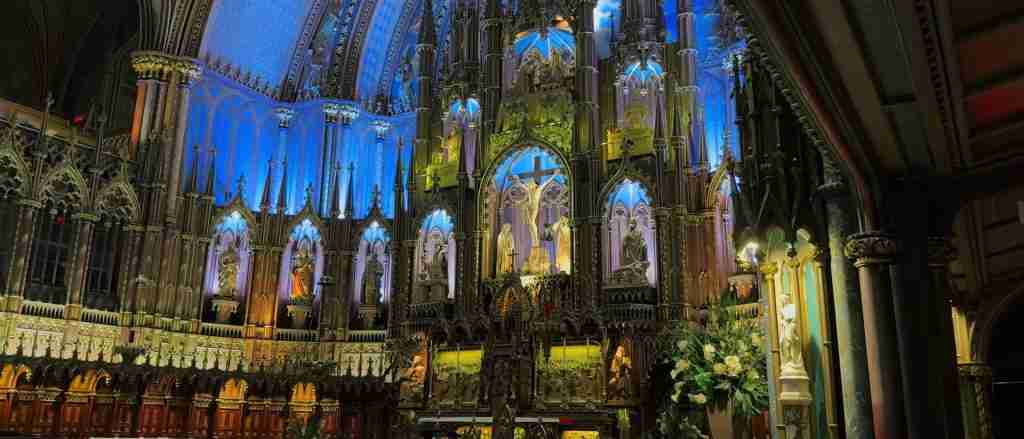
Montreal’s 450+ churches represent Quebec’s Catholic heritage and architectural ambition, ranging from modest parish churches to monumental cathedrals. Notre-Dame Basilica (1829) showcases Gothic Revival architecture with polychrome interior decorations, while Saint Joseph’s Oratory (1924-1967) features Renaissance Revival design with a dome second only to Saint Peter’s Basilica in size. Protestant churches including Anglican Christ Church Cathedral (1859) and Presbyterian St. Andrew and St. Paul (1931) demonstrate anglophone religious architecture, while synagogues, mosques, and temples built by 20th-century immigrant communities add religious diversity to Montreal’s architectural landscape.
Secularization following the Quiet Revolution left many churches underutilized as attendance collapsed from near-universal Catholic practice to minimal regular worship. Some churches converted to cultural centers, libraries, concert halls, or residential condominiums, preserving exteriors while adapting interiors to contemporary uses. Others face deterioration as congregations lack funds for maintenance, creating preservation challenges for buildings recognized as architectural and historical monuments but lacking sustainable functions. Quebec’s transformation from one of North America’s most religious societies to one of its most secular left a legacy of magnificent but redundant religious architecture seeking new purposes in a society that abandoned the faith that built them.
Frequently Asked Questions
What happened to the Indigenous peoples who originally lived in Montreal?
The St. Lawrence Iroquoian peoples who inhabited Montreal Island and the St. Lawrence Valley—including the village of Hochelaga that Jacques Cartier visited in 1535—completely disappeared from the region between 1540 and 1600, before permanent French settlement began. Archaeological and historical evidence suggests this disappearance resulted from a combination of epidemic diseases introduced through early European contact (against which Indigenous peoples lacked immunity), intensified warfare with neighboring Indigenous nations competing for European trade goods and declining resources during the Little Ice Age, and possible population dispersal or absorption into other Indigenous groups. By the time the French established Ville-Marie in 1642, Montreal Island had no permanent Indigenous settlement, though various Indigenous nations—primarily Haudenosaunee, Algonquin, and Huron—continued using the area for hunting, fishing, and travel through the crucial portage around the Lachine Rapids. Montreal developed as a major hub for French-Indigenous fur trade interactions, with Indigenous traders visiting annually for decades, but no permanent Indigenous community reestablished itself on the island after the St. Lawrence Iroquoians’ mysterious disappearance.
Why does Montreal speak French when the rest of Canada speaks English?
Montreal and Quebec speak French because the region was colonized by France starting in 1608 (Quebec City) and 1642 (Montreal), developing as the core of New France with French as the colonial language, French legal systems, and Catholic religious institutions for 150 years before British conquest in 1760. Unlike other territories Britain acquired where small French populations were overwhelmed by British settlers, Quebec contained approximately 65,000 French-speaking Catholics at conquest—a population too large to assimilate easily and strategically important enough that Britain granted significant concessions to secure loyalty. The Quebec Act of 1774 guaranteed French civil law, Catholic religious freedom, and the seigneurial land system, establishing precedent for French-language and cultural preservation that persisted through Canadian Confederation (1867) and into the present. Montreal specifically maintained French majority demographics throughout British rule and Canadian history because rural Quebec’s high birth rates continuously supplied francophone migrants to the city, more than offsetting anglophone immigration and economic dominance. The 20th-century decline of anglophone political and economic power—particularly following Bill 101’s language protections—reinforced French as Montreal’s majority language, though the city remains substantially bilingual compared to the rest of Quebec, with significant populations fluent in both languages plus increasing numbers speaking neither as mother tongue.
How did Montreal go from being Canada’s largest and wealthiest city to being second to Toronto?
Montreal’s decline from Canada’s undisputed economic capital to second-place behind Toronto resulted primarily from the political instability and linguistic tensions following Quebec’s Quiet Revolution, particularly surrounding sovereignty movements and language legislation. When the Parti Québécois won power in 1976 and implemented Bill 101’s strict French-language requirements for business, many anglophone-dominated corporations relocated headquarters to Toronto to avoid language regulations and political uncertainty about Quebec potentially separating from Canada. Sun Life, Royal Bank, and dozens of other major firms moved operations westward during 1976-1980, transferring thousands of jobs and billions in assets. Simultaneously, approximately 200,000 anglophones left Quebec between 1970-1985, taking capital, professional expertise, and entrepreneurial energy with them. Toronto capitalized on this exodus, attracting financial institutions, corporate headquarters, and skilled workers fleeing Quebec’s political uncertainty. Additionally, the St. Lawrence Seaway’s opening in 1959 allowed ocean-going vessels to bypass Montreal and proceed directly to Great Lakes ports, reducing Montreal’s importance as a transshipment hub. Finally, Toronto’s location in Canada’s most populous and industrialized province (Ontario), combined with less restrictive language policies and stable political environment, made it more attractive to international corporations and immigrants. By the mid-1980s, Toronto had surpassed Montreal in population, corporate headquarters, financial sector employment, and economic output—a reversal of the situation that had prevailed for Montreal’s 200-year reign as Canada’s commercial and industrial capital from approximately 1760 to 1960.
What is the Quiet Revolution and why was it significant?
The Quiet Revolution was Quebec’s rapid modernization movement during the 1960s-1970s that transformed the province from a traditional, Catholic, rural-influenced society into a modern, secular, urban-dominated jurisdiction with a confident francophone nationalist identity. The movement began with Jean Lesage’s Liberal government victory in 1960 after decades of conservative Premier Maurice Duplessis’s rule that had maintained the Catholic Church’s control over education, healthcare, and social services. Lesage’s reforms secularized these institutions by creating provincial government ministries and services, nationalized hydroelectric companies into Hydro-Quebec to provide francophone-controlled economic development tools, expanded the provincial civil service to create professional career opportunities for francophones, and promoted French language rights in business and public life. The Quiet Revolution was “quiet” because it achieved revolutionary social transformation through democratic politics and institutional reform rather than violent upheaval. Its significance extends beyond institutional changes to fundamentally altering Quebecois identity from Catholic and religious to secular and nationalist, from economically subordinate to politically assertive, and from accepting anglophone dominance to demanding francophone control of Quebec’s economy and institutions. For Montreal specifically, the Quiet Revolution shifted power from the city’s anglophone business elite to francophone professionals and managers, implemented French-language requirements that drove corporate relocations and anglophone out-migration, and transformed the city from one where language determined economic class to one where francophones command authority proportionate to their population majority. The Quiet Revolution’s legacy includes modern Quebec’s extensive social programs, strong provincial government, language protections, and the ongoing debate about Quebec’s place in Canada versus potential independence.
What role did Montreal play in the fur trade?
Montreal functioned as the organizational center and transshipment hub for the Canadian fur trade from approximately 1650 to 1850, controlling the commerce that drove French and British colonization of North America’s interior. Montreal’s strategic location at the confluence of the St. Lawrence and Ottawa Rivers—where the Lachine Rapids blocked further navigation westward—made it the natural point where furs from the continental interior transferred from birchbark canoes to larger vessels for shipment to Quebec City and Europe. French merchants based in Montreal organized brigades of voyageurs who paddled thousands of miles each summer to trading posts in the Great Lakes, the Mississippi Valley, and eventually the western plains and Rocky Mountains, returning with canoe loads of beaver pelts and other furs purchased from Indigenous trappers. The annual fur trade fairs held in Montreal during the French regime attracted hundreds of Indigenous traders from dozens of nations, creating a multicultural commercial gathering that generated enormous profits for Montreal’s merchant class. After British conquest, Scottish merchants formed the North West Company (1779) headquartered in Montreal, which competed with the Hudson’s Bay Company for dominance of the Canadian fur trade, expanding trading networks from Montreal to the Pacific Ocean. This reorganized fur trade created Montreal’s first great fortunes—the wealth that built the Golden Square Mile mansions and established the Scottish merchant families’ dominance over Montreal’s economy for the next century. The fur trade’s importance declined after 1821 when the North West Company merged with Hudson’s Bay Company, and by the 1850s timber, wheat, and manufactured goods had replaced furs as Montreal’s primary commodities. However, the two centuries when fur dominated Canadian commerce established Montreal’s role as continental gateway and commercial capital, shaping the city’s economic structure and merchant culture long after individual beaver pelts ceased determining Canada’s economic prosperity.
Why are there so many Irish people and Irish names in a French Canadian city?
Irish Catholics comprised Montreal’s largest immigrant group during the 1840s-1850s, with an estimated 30,000-40,000 Irish remaining in Montreal from the larger wave of famine refugees passing through the city between 1845-1860. Unlike Irish immigrants to the United States who settled in predominantly anglophone cities, Montreal’s Irish encountered a Catholic French-speaking majority and faced a choice between joining the anglophone Protestant minority or integrating with French Catholic society. Most Irish chose the latter—sharing Catholic faith, similar economic class positions as laborers and service workers, and common grievances against Protestant anglophone elites who controlled Montreal’s economy, the Irish and French Canadians formed natural alliances. Irish immigrants and their descendants intermarried with French Canadians at high rates, adopted French language while maintaining English fluency, and politically aligned with francophone interests rather than anglophone business elites. By the third generation, many families of Irish descent were functionally French Canadian, speaking French at home and identifying with Quebec nationalism despite retaining Irish surnames and cultural heritage elements. The Irish contribution to Montreal’s demographics and culture was profound—they added approximately 15% to the Catholic population, provided labor for canal and railroad construction, contributed political leaders who championed working-class interests, and created the distinct Irish-Quebecois identity that persists in neighborhoods like Griffintown and Pointe-Saint-Charles. Many prominent Quebec politicians, labor leaders, and public figures bore Irish names—Ryan, Sullivan, O’Neill, Brennan—while functioning entirely within francophone Quebec society, demonstrating the Irish community’s successful integration into the French Catholic majority rather than the anglophone minority. This integration contrasts with Irish experiences in Boston, New York, or Chicago, where Irish immigrants remained within anglophone culture, creating a uniquely Quebec-Irish identity found nowhere else in North America.
What is “the Main” and why is Boulevard Saint-Laurent significant?
Boulevard Saint-Laurent, universally known as “the Main,” historically functioned as Montreal’s ethnic and linguistic boundary, dividing the predominantly francophone east from the largely anglophone west. This street’s symbolic and practical significance emerged during Montreal’s 19th-century expansion when immigrant communities—particularly Jewish refugees from Eastern European pogroms arriving between 1880-1920—settled along the Main rather than firmly committing to either francophone or anglophone Montreal. The Main developed as a cosmopolitan corridor where Yiddish, Italian, Greek, Portuguese, and other languages mixed with French and English, creating a multilingual commercial district serving all of Montreal’s ethnic communities. Businesses along the Main operated bilingually by necessity, with Jewish merchants, in particular, learning both French and English to serve customers from both linguistic solitudes. The street’s character reflected immigrant pragmatism—shops, delicatessens, restaurants, theaters, and synagogues catered to ethnic communities while remaining accessible to Montrealers from all backgrounds. Schwartz’s Delicatessen (established 1928) and other Main institutions became Montreal landmarks where francophone and anglophone Montrealers mingled while consuming smoked meat, bagels, and other foods introduced by Jewish immigrants. The Main’s symbolic role as boundary and meeting ground between Montreal’s two solitudes persisted into the 21st century, though gentrification and demographic changes have diminished its historic role as immigrant gateway. Contemporary the Main remains a culturally significant street where Montreal’s linguistic divisions remain visible in changing signage, business practices, and the neighborhoods flanking it—still predominantly French to the east, still substantially anglophone to the west, with the Main itself maintaining a cosmopolitan character that reflects neither solitude exclusively.
What major events and infrastructure projects shaped modern Montreal?
Expo 67, the 1967 World’s Fair celebrating Canada’s centennial, transformed Montreal into an internationally recognized modern metropolis and demonstrated Quebec’s capacity to execute massive infrastructure projects. The exposition attracted 50 million visitors to artificial islands in the St. Lawrence featuring avant-garde architecture and pavilions from 62 nations, generating immense pride in Montreal’s sophistication and organizational capacity. The Metro subway system, opened in 1966 specifically for Expo, provided Montreal with modern rapid transit featuring distinctive rubber-tired trains, architecturally ambitious stations with public art installations, and efficient service connecting suburbs to downtown. The 1976 Summer Olympics represented Montreal’s ambition to cement its status as a world-class city but became infamous for massive cost overruns—the Olympic Stadium’s retractable roof construction problems and budget explosions left Montreal taxpayers servicing Olympic debt until 2006, thirty years after the games. These three projects—Expo 67, the Metro, and the Olympics—physically transformed Montreal’s landscape with modern infrastructure, elevated highways, new civic buildings, and expanded transit networks while symbolizing the Quiet Revolution’s modernization agenda. Other significant infrastructure developments include the Underground City, a network of interconnected shopping complexes and Metro stations beneath downtown that allows pedestrians to navigate 33 kilometers without surfacing—particularly valuable during Montreal’s harsh winters. The Notre-Dame Basilica restoration (1870s-1880s) under architect Victor Bourgeau created the Gothic Revival interior that made it Montreal’s most visited religious monument. Place Ville-Marie’s skyscraper complex (1962) established downtown’s modern high-rise district and demonstrated Montreal’s transition from low-rise European city to North American metropolis. Contemporary projects include gentrification and redevelopment of the Griffintown, Griffintown Basin, and Pointe-Saint-Charles districts, converting industrial lands to residential and commercial uses, expanding the downtown core westward and southward toward the Lachine Canal. These infrastructure investments and major events shaped Montreal’s physical form, international reputation, and residents’ collective memory while creating visible landmarks that define contemporary Montreal’s urban landscape.
How does Montreal’s architecture reflect its history?
Montreal’s architectural heritage functions as a three-dimensional history book where each major period left distinct building types and styles visible throughout the contemporary city. French colonial architecture (1650-1760) survives primarily in Vieux-Montréal, with thick rubble-stone walls, steeply pitched roofs designed for heavy snow loads, casement windows with wooden shutters, and institutional buildings like the Sulpician Seminary demonstrating construction techniques imported from northwestern France. British colonial architecture (1760-1840) introduced Georgian and neoclassical styles with formal symmetry, refined proportions, and brick construction techniques seen in surviving merchant houses and institutional buildings like the Old Courthouse. Victorian Montreal (1840-1900) produced the grey-limestone rowhouses and commercial buildings that characterize downtown and plateau neighborhoods—Second Empire mansions in the Golden Square Mile, Romanesque Revival churches and public buildings, and the commercial warehouses in Vieux-Montréal demonstrate Montreal’s transformation into an industrial and financial capital during this period. Early 20th-century architecture includes Beaux-Arts banks and office buildings, Art Deco skyscrapers like the Royal Bank Building and Sun Life Building that asserted Montreal’s metropolitan ambitions, and the working-class triplexes with exterior staircases (characteristic Montreal architectural feature) that house substantial portions of the urban population. Modernist architecture from the 1960s-1970s includes Brutalist concrete structures like Habitat 67, the Place des Arts cultural complex, and Metro stations that embodied the Quiet Revolution’s break with traditional aesthetics. Contemporary architecture features glass-and-steel condominium towers, restored industrial buildings converted to lofts, and postmodern commercial structures that demonstrate 21st-century building technologies and aesthetic preferences. This architectural layering—with buildings from four centuries coexisting in neighborhoods throughout Montreal—creates an urban palimpsest where historical periods remain visible through building styles, construction materials, and urban forms that survived demolition pressures and economic transformations. Walking Montreal’s streets traverses centuries, with each block potentially containing French colonial stone, Victorian greystone, Art Deco towers, Brutalist concrete, and contemporary glass structures side by side, documenting the city’s continuous evolution from 1642 to present.
What is Montreal’s relationship with the rest of Quebec and Canada?
Montreal occupies a contradictory position as simultaneously the heart of Quebec’s francophone culture and the most anglophone, multicultural, and cosmopolitan part of the province—a duality that creates tensions with both Quebec’s rural and small-town regions and with English Canada. For Quebec nationalists, Montreal represents both the historic center of French Canadian resistance to assimilation and a dangerous site of anglicization and ethnic dilution where immigrants adopt English, anglophone institutions maintain presence, and bilingualism threatens French’s dominance. Rural Quebec often views Montreal as culturally suspect—too cosmopolitan, too accepting of English, too secular, too multicultural—and questions whether Montreal remains authentically Quebecois given its linguistic diversity and openness to global cultural influences. Yet Montreal’s size—containing half of Quebec’s population in its metropolitan area—makes it economically and politically dominant, with Quebec government policies necessarily reflecting Montreal interests even when these conflict with the rest of the province. In relation to English Canada, Montreal functions as a French-speaking enigma—a major Canadian city that most anglophone Canadians cannot fully access linguistically, whose political culture reflects Quebec nationalist sentiments often hostile to Canadian federalism, yet which remains inextricably linked to Canada economically, culturally, and constitutionally. Toronto’s surpassing of Montreal economically generated complex emotions—anglophone Torontonians viewing it as proper recognition of Ontario’s economic importance versus Quebec’s political instability, while Quebecers interpreting it as punishment for asserting francophone rights and evidence that Canada privileges anglophone provinces. Contemporary Montreal navigates between its Quebec identity—French-speaking, nationalist in sympathies, protective of linguistic and cultural distinctiveness—and its Canadian integration through federal institutions, economic ties, and the reality that approximately 25% of metropolitan residents are neither francophone nor anglophone but allophones navigating between multiple identities. This position as simultaneously the heart of Quebec nationalism and the most cosmopolitan part of Quebec creates ongoing tensions about Montreal’s authentic character and its role in Quebec’s future—whether as the guardian of French language and culture in North America or as a globalizing metropolis evolving beyond traditional francophone-anglophone divisions into something more complex and multicultural.
Why is Montreal’s architecture so European compared to other North American cities?
Montreal’s distinctly European architectural character compared to other North American cities results from multiple factors: continuous occupation since 1642 without the frontier periods of abandonment and rebuilding common in western cities, stone construction techniques imported from France and maintained through British rule, 19th-century adoption of European architectural styles rather than uniquely American forms, and preservation of pre-industrial street patterns incompatible with automobile-dominated planning. French colonial Montreal constructed in stone rather than wood due to fire regulations and building traditions from northwestern France, creating a durable building stock that survived into contemporary times. The irregular medieval street pattern in Vieux-Montréal—narrow streets radiating from Place d’Armes rather than orthogonal grids—resembles European old towns and resists the geometric street grids imposed on most North American cities. Montreal’s 19th-century commercial architecture looked to Paris, London, and Edinburgh for stylistic inspiration, producing Second Empire, Romanesque Revival, and Victorian Gothic buildings that matched contemporary European design rather than developing distinctly American styles. The city’s dense urban form—continuous streetwalls of attached rowhouses, buildings built to property lines rather than set back with lawns, mixed-use neighborhoods combining residential and commercial functions—follows European urbanism patterns rather than the automobile-oriented sprawl typical of North American cities. Montreal’s preservation movement protected historic districts and buildings that would have been demolished in other North American cities during urban renewal periods, maintaining continuity with pre-20th-century urban forms. The survival of extensive pre-1900 architecture, stone construction throughout the urban core, narrow streets incompatible with automobile traffic, and continuous urban fabric without suburban-style gaps creates streetscapes more reminiscent of French or British provincial cities than typical North American downtowns dominated by parking lots, highway infrastructure, and modernist towers. This European character represents both genuine historical continuity—Montreal genuinely developed as a European colonial city and retained those patterns—and conscious preservation choices by late-20th-century authorities who recognized Montreal’s historic architecture as economically valuable cultural capital distinguishing it from competitors like Toronto and attracting tourism, film production, and residents seeking alternatives to conventional North American suburban development patterns.