
Best Day Trips from Guatemala City 2026: Colonial Towns & Maya Sites
Key Takeaways:
- Antigua (1 hour) offers Guatemala’s finest colonial architecture and volcano viewpoints, ideal for full-day or overnight extensions with shuttle services $12-15 each way in 2026
- Chichicastenango market (3 hours, Thursdays and Sundays only) provides authentic Maya culture and textile shopping with organized tours $30-45 including transportation and guide throughout 2026
- Pacaya Volcano (2 hours) delivers active lava viewing and marshmallow roasting experiences at 2,552 meters elevation with tours $35-55 per person in 2026
- Iximché Maya ruins (2 hours) showcase K’iche’ ceremonial centers and ongoing Maya spiritual practices with minimal crowds and $8 entry fees during 2026
- Lake Atitlán (3.5 hours) exceeds comfortable day trip parameters—overnight stays provide proper time to explore volcano-rimmed waters and indigenous villages in 2026
- Pre-booking shuttle services and organized tours 3-7 days ahead during December-March high season ensures availability and saves 15-20% versus last-minute walk-in arrangements in 2026
Introduction to Guatemala City Day Trip Planning for 2026
Guatemala City’s central location in the highlands creates exceptional access to colonial cities, active volcanoes, Maya archaeological sites, and traditional indigenous markets—all within 1-4 hours of the capital. The diversity of day trip options from Guatemala City surpasses most Central American capitals, offering everything from UNESCO World Heritage colonial architecture to active volcanic eruptions, Thursday-Sunday Maya markets to ceremonial ruins still used for traditional spiritual practices.
Understanding which destinations work as genuine day trips versus those requiring overnight stays determines your 2026 Guatemala itinerary success. Antigua (1 hour each way) functions perfectly as day trip or overnight extension, with shuttle services departing every 1-2 hours throughout the day. Chichicastenango market (3 hours each way, Thursdays and Sundays only) requires early morning departures (5-6 AM) but returns by evening (6-7 PM), making it a long but manageable day trip. Pacaya Volcano (2 hours) combines easily with Antigua visits or works as standalone afternoon excursion. Iximché ruins (2 hours) offer convenient half-day options with morning or afternoon timing flexibility.
Lake Atitlán (3.5 hours each way), despite appearing in many “day trip” lists, exceeds comfortable single-day parameters. The 7 hours of transport plus minimal lake exploration time creates exhausting experiences with limited reward—Lake Atitlán deserves 2-3 night stays for proper village exploration, volcano hiking, and cultural immersion. Similarly, Tikal temples in Petén require domestic flights (1 hour) or overnight buses (8-10 hours), positioning them as multi-day extensions rather than day trips from Guatemala City.
This comprehensive guide details the five best day trips from Guatemala City for 2026: Antigua for colonial architecture and culture, Chichicastenango for Maya market experiences, Pacaya Volcano for active lava viewing, Iximché for archaeological exploration, and brief coverage of other options with honest assessments of their day trip viability. Each destination includes transportation logistics, costs with Option A pricing disclosure, optimal timing, and sample itineraries with verified budget calculations following Day Cost Summary Protocol v2.8.
People Also Ask About Guatemala City Day Trips 2026
What is the best day trip from Guatemala City in 2026?
Antigua represents the single best day trip from Guatemala City in 2026, combining exceptional colonial architecture, volcano viewpoints, coffee plantation tours, and vibrant restaurant scenes within 1-1.5 hours via shuttle service. The UNESCO World Heritage colonial city offers 8-10 hours of exploration time when departing Guatemala City at 8-9 AM and returning at 6-7 PM, providing ample opportunity for Santa Catalina Arch photography, cathedral visits, Central Park people-watching, and Cerro de la Cruz volcano panoramas. Shuttle services run $12-15 each way (check Atitrans.com or Adrenalina Tours for current rates), with departures every 1-2 hours from Zona 10 hotels. Antigua also works excellently as overnight extension—many travelers use day trips to preview the city before returning for 2-3 night stays. Alternative top choices include Chichicastenango market (Thursdays and Sundays only) for authentic Maya textiles and cultural experiences, or Pacaya Volcano for active lava viewing and marshmallow roasting at 2,552 meters elevation.
How much does a day trip from Guatemala City cost in 2026?
Day trip costs from Guatemala City range $30-120 per person in 2026 depending on destination and tour type. Antigua independent visits cost $25-45 (shuttle $12-15 each way, lunch $10-18, optional museums $3-5), DIY Iximché trips run $15-30 (local bus $3 each way, ruins entry $8, lunch $8-12), while organized tours with transportation and guide range $30-55 for Pacaya Volcano, $35-65 for Iximché with Antigua combination, and $30-45 for Chichicastenango market. Budget travelers minimize costs through public buses to Antigua ($2-3 each way on Pullman services from zone 4 terminal), packed lunches from Guatemala City supermarkets ($5-8), and free walking exploration. Mid-range travelers optimize comfort through shuttle services, restaurant meals, and optional guided experiences. Premium organized tours ($75-120) include hotel pickup, English-speaking guides, admission fees, and sometimes meals, providing maximum convenience while eliminating logistics planning. The sweet spot for most 2026 visitors combines shuttle services to Antigua or buses to Iximché with independent exploration and local restaurant meals, averaging $35-60 per person including all transport, food, and entry fees.
Can you visit Antigua as a day trip from Guatemala City in 2026?
Antigua functions perfectly as day trip from Guatemala City in 2026, with 1-1.5 hour shuttle rides each way allowing 7-9 hours of colonial exploration. Depart Guatemala City at 8-9 AM via shuttle services like Atitrans ($12-15 one-way, check website for current rates), arriving Antigua by 10 AM. Explore Santa Catalina Arch (free), Central Park and Cathedral ($5 entry), La Merced Church (free facade, $3 interior), climb Cerro de la Cruz for volcano panoramas (free, 20-minute walk), visit coffee plantation for tours ($10-15), lunch at local restaurants ($10-18), shop artisan markets, and photograph colonial streetscapes. Return shuttles depart Antigua hourly until 6 PM, arriving Guatemala City by 7:30 PM. Single-day visits work well for overview experiences, though Antigua’s sunset volcano views, evening restaurant scene, and relaxed cafe culture reward 2-3 night stays for travelers with flexible schedules. Many visitors use day trips as previews before returning for extended Antigua stays, or combine Antigua day visits with other activities (morning museum touring in Guatemala City, afternoon Antigua shuttle, return same evening).
Is Lake Atitlán a good day trip from Guatemala City in 2026?
Lake Atitlán exceeds comfortable day trip parameters from Guatemala City despite appearing in many tour listings. The 3.5-hour shuttle ride each way (total 7 hours transport) leaves minimal time for lake exploration—arriving Panajachel around noon after 8 AM departure, exploring 2-3 hours, then departing by 3 PM for 6:30 PM Guatemala City arrival creates rushed, unsatisfying experiences. Lake Atitlán deserves 2-3 night stays for proper village visits (San Pedro La Laguna, Santiago Atitlán, Santa Catarina Palopó), volcano hikes (San Pedro, Atitlán, Tolimán), kayaking, cultural experiences, and sunset viewing. The lake’s 15+ villages, spiritual significance, and artisan communities require slow exploration rather than hurried day trip logistics. Instead of attempting Lake Atitlán as Guatemala City day trip in 2026, allocate 3-4 days for the region following your Antigua visit or before departing to Tikal, traveling directly from Antigua (2.5 hours) rather than returning to Guatemala City. Shuttle services from Guatemala City to Panajachel cost $20-25 each way with 3-4 hour journey times—these work well for one-way transport to begin multi-day lake stays, not round-trip day excursions.
Extended multi-day tours – 5+ days
Featured Guatemala Multi-Day Tour Packages
5 days
Guatemala – Discovering Guatemala in 5 days
- ✓ Comprehensive Guatemala tour
- ✓ Expert local guides included
- ✓ All accommodation arranged
- ✓ Transportation provided
6 days
Magical Guatemala in 6 days
- ✓ Comprehensive Guatemala tour
- ✓ Expert local guides included
- ✓ All accommodation arranged
- ✓ Transportation provided
9 days
Solo-ish Guatemala
- ✓ Comprehensive Guatemala tour
- ✓ Expert local guides included
- ✓ All accommodation arranged
- ✓ Transportation provided

7 days
Heart of Guatemala
- ✓ Comprehensive Guatemala tour
- ✓ Expert local guides included
- ✓ All accommodation arranged
- ✓ Transportation provided
Multi-day tour packages powered by TourRadar. Prices and availability subject to change.
Antigua: Colonial Architecture Day Trip 2026
Why Visit Antigua from Guatemala City
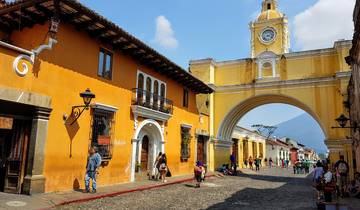
Antigua Guatemala ranks among Latin America’s finest preserved colonial cities, with 33 church ruins, restored convents, cobblestone streets, and volcano backdrop creating UNESCO World Heritage atmosphere just 1 hour from Guatemala City. Founded as Santiago de los Caballeros de Guatemala in 1543, the city served as Central American Spanish colonial capital until devastating earthquakes in 1773 forced government relocation to present-day Guatemala City. The ruins remain frozen in time, with earthquake-damaged baroque facades, exposed church walls, and intact monasteries providing extraordinary historical immersion.
Three volcanoes frame Antigua’s colonial core: Volcán de Agua (3,760 meters) rises directly south, while Fuego (3,763 meters) and Acatenango (3,976 meters) dominate the western horizon. Fuego erupts continuously with small explosions every 15-20 minutes—visible smoke plumes punctuate volcano photographs throughout the day. The volcano views from Cerro de la Cruz (15-minute uphill walk from city center) rank among Guatemala’s most iconic scenes, combining colonial architecture foreground with volcanic backdrop.
Antigua’s compact 1 x 1 km historic center concentrates virtually all attractions within 10-15 minute walks, eliminating transportation needs once you arrive from Guatemala City. The pleasant highland climate (18-25°C daily) makes walking comfortable year-round. Spanish language schools, coffee plantations, jade workshops, textile markets, and international restaurants create vibrant contemporary culture alongside historical preservation.
Transportation to Antigua in 2026
Shuttle services provide the easiest Antigua transport from Guatemala City in 2026. Companies like Atitrans, Adrenalina Tours, and hotel-arranged services depart Zona 10 pickup points every 1-2 hours from 6 AM-6 PM, taking 1-1.5 hours via modern highway to Antigua’s center or specific hotels. Shuttles cost $12-15 one-way, $20-25 round-trip when pre-booked (check operator websites for current official rates as pricing may vary seasonally). Book online 3-7 days ahead during December-March high season, same-day or next-day during remainder of 2026. Shuttles collect passengers from major Zona 10 hotels (Real InterContinental, Westin) or central meeting points—confirm exact pickup location and time when reserving.
Uber from Guatemala City to Antigua costs $25-35 for the trip, working well for groups of 3-4 sharing expenses. The service provides door-to-door flexibility and eliminates fixed shuttle schedules. Request Uber from your Zona 10 hotel, expect 1-1.5 hours for the journey depending on traffic (worst 7-9 AM and 4-6 PM weekdays). Return Uber pickups in Antigua work reliably from Central Park area throughout the day.
Public buses from Guatemala City’s main terminal (Zona 4) to Antigua run every 15-30 minutes from 5 AM-7 PM, costing $2-3 per person. The Pullman-style buses take 1.5-2 hours with stops, arriving at Antigua’s main terminal 10 blocks from the historic center. Budget travelers save $20-30 daily through bus transport, though navigating Guatemala City’s terminal, carrying luggage on crowded buses, and walking from Antigua’s terminal adds complexity. Shuttles’ minimal additional cost provides significant convenience value for most visitors.
Antigua Highlights and Activities for 2026
Begin Antigua day trips at Central Park (Parque Central), the colonial heart where the cathedral ruins, municipal building, and fountain create perfect introduction to the city’s baroque architecture. The Metropolitan Cathedral ($5 entry) combines operating church with earthquake-damaged ruins—explore intact sanctuary and colonial art collection before viewing exposed walls and vaulted ceilings in the ruined sections. Climb the cathedral roof for elevated city views ($3 additional).
Santa Catalina Arch (Arco de Santa Catalina) provides Antigua’s most photographed scene, with the yellow arch framing Volcán de Agua in perfect composition. The arch connected Santa Catalina convent with school buildings across the street, allowing nuns to cross without touching public streets. Free to photograph from street level, the arch lights beautifully for sunrise (6-7 AM) or late afternoon (4-5 PM) shots when volcano appears clearest.
La Merced Church showcases baroque facade ornamentation in pristine condition—the mustard-yellow walls and white stucco decorations create Guatemala’s finest colonial facade. Interior visits cost $3 and include access to baroque altarpiece and colonial religious art. The church remains active with daily masses, creating authentic spiritual atmosphere alongside historical preservation.
Cerro de la Cruz offers panoramic city and volcano views from elevated viewpoint 20-25 minutes uphill from Central Park. The moderate climb rewards effort with exceptional photography opportunities capturing Antigua’s red-tile roofs, church domes, and volcanic backdrop. Free access throughout daylight hours (6 AM-6 PM), though solo travelers should visit during busy periods (9 AM-3 PM) when tourist groups create safety in numbers.
Coffee plantation tours operate at several fincas surrounding Antigua, with FS Café, Caoba Farms, and Filadelfia offering 1-2 hour guided experiences. Tours cost $10-15 per person (check individual plantation websites for current rates) and cover coffee cultivation from seedling to roasting, plus tastings of Antigua’s renowned volcanic-soil arabica beans. Morning tours (9-11 AM) provide best light and temperatures for walking through coffee groves.
Jade Maya museum and workshop demonstrates jade carving techniques used in ancient and contemporary Maya art. The free museum ($3 suggested donation) displays archaeological pieces and explains jade’s cultural significance, while workshops sell contemporary jewelry and sculptures at artist-direct prices 30-40% below gallery rates elsewhere in Guatemala.
Sample Antigua Day Trip Itinerary 2026
Depart Guatemala City 8:00-8:30 AM via Atitrans or Adrenalina shuttle from Zona 10 hotel ($12-15 one-way). Arrive Antigua 9:30-10:00 AM at shuttle drop-off near Central Park. Walk to Santa Catalina Arch for photography (30 minutes, free). Continue to La Merced Church facade photos (20 minutes, free exterior, $3 interior if entering). Return to Central Park, visit Metropolitan Cathedral ruins ($5 entry, 45 minutes). Lunch at Café Condesa or Hector’s Bistro on Central Park ($12-18 per person, 1 hour).
Afternoon: Walk to Cerro de la Cruz viewpoint (20-minute climb, free, 30-45 minutes at summit for photos and rest). Descend to browse artisan markets around Central Park (1 hour, costs vary for purchases). Optional: coffee plantation tour at FS Café ($10-15, 1-1.5 hours) or visit Jade Maya museum (free-$3 donation, 30 minutes). Late afternoon cafe stop at Fernando’s Kaffee or Café Sky for espresso and cake ($5-8, 30 minutes). Depart Antigua 5:30-6:00 PM on return shuttle to Guatemala City. Arrive Zona 10 Guatemala City 7:00-7:30 PM.
Costs: Shuttle round-trip $24-30, cathedral entry $5, lunch $12-18, La Merced interior $3, coffee/cake $5-8, optional coffee tour $10-15, purchases variable. Total day cost: $49-74 per person excluding optional coffee tour or purchases. With coffee tour: $59-89 per person.
Chichicastenango Market Day Trip 2026
Why Visit Chichicastenango Market
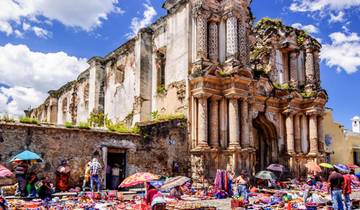
Chichicastenango operates Central America’s largest and most authentic indigenous market every Thursday and Sunday, with K’iche’ Maya vendors from surrounding highland villages converging on the colonial town to sell handwoven textiles, carved masks, pottery, fresh produce, and traditional foods. The market’s scale—occupying 6-8 square blocks around Santo Tomás church—and authenticity (70-80% vendors serving local Maya communities rather than tourists) create immersive cultural experiences unmatched elsewhere in Guatemala.
Unlike touristy souvenir markets in Antigua or Panajachel, Chichicastenango maintains traditional commercial character serving indigenous communities. Women wear distinctive huipiles (embroidered blouses) and cortes (wrap skirts) in styles specific to their villages, men conduct business in K’iche’ Maya language, and traditional foods like boxboles (sweet corn tamales) and ponche (fruit punch) sell alongside modern goods. The surrounding mountains provide stunning backdrop to colorful market scenes.
Santo Tomás church on the market square demonstrates religious syncretism blending Catholic and Maya spiritual practices. K’iche’ shamans (ajq’ij) burn copal incense and perform ceremonies on the church steps while Catholic masses proceed inside—photography requires sensitivity as rituals remain sacred rather than tourist performances. The adjacent cemetery and Pascual Abaj shrine (20-minute uphill walk) offer additional insight into continuing Maya spiritual traditions.
Transportation to Chichicastenango in 2026
Organized tours provide practical Chichicastenango transport for most Guatemala City visitors in 2026. Companies like Atitrans, Old Town Outfitters, and Clark Tours offer Thursday and Sunday departures with 5-6 AM pickup from Zona 10 hotels, 3-hour drive to the highlands, 3-4 hours market exploration time, and 6-7 PM return to Guatemala City. Tours cost $30-45 per person including transportation and English-speaking guide (check tour operator websites for current rates as pricing varies). The guides provide cultural context, prevent overcharging at textile stalls, and handle logistics like restroom locations and lunch recommendations—valuable services for first-time visitors to highland Maya markets.
Budget travelers can reach Chichicastenango via public chicken buses from Guatemala City’s Zona 4 terminal, though the complexity deters most visitors. Buses depart 3-4 AM (arrival times critical for market setup viewing), cost $5-8, take 3.5-4 hours with multiple stops and transfers, and return in afternoon when market winds down (2-4 PM). The savings ($40-50 versus organized tours) come with substantial inconvenience: navigating unfamiliar bus terminal in darkness, managing luggage through multiple transfers, limited flexibility for market exploration timing, and language barriers without Spanish fluency. Tours prove worthwhile for most travelers given value proposition.
Chichicastenango Market Highlights for 2026
Textile stalls dominate Chichicastenango market with hundreds of vendors displaying handwoven huipiles ($25-80), cortes ($30-100), table runners ($15-35), and blankets ($40-120). Each village surrounding Chichicastenango produces distinctive weaving patterns and color combinations—Nahualá features geometric designs in purple and magenta, Momostenango emphasizes wool blankets with earth tones, Santa Catarina Palopó showcases bright blues and greens. Quality varies dramatically from crude tourist pieces to museum-worthy backstrap loom textiles requiring weeks of work. Examine weaving tightness, natural dye versus synthetic colors (natural dyes show subtle variations, synthetics appear uniform), and complexity of patterns before negotiating prices. Initial asking prices run 2-3 times fair value—expect to settle at 40-50% of first quote after polite but persistent negotiation.
Carved wooden masks represent another Chichicastenango specialty, with artisans from surrounding villages creating ceremonial dance masks depicting Spanish conquistadors, indigenous heroes, animals, and Christian saints. Quality masks ($80-200) feature detailed carving, natural aging techniques, and traditional iconography. Tourist-grade masks ($15-40) use simpler designs and commercial finishes. Handle masks to assess weight and wood quality—cedarwood pieces outlast pine significantly.
Food vendors sell traditional K’iche’ Maya dishes rarely available in Guatemala City or tourist areas. Try boxboles (sweet corn and bean tamales, $2-3), pepián (chicken in spiced pumpkin seed sauce, $5-7 plate), or ponche caliente (hot fruit punch, $2-3). The food stalls concentrate on the lower market level near Santo Tomás church, with women cooking over wood fires in traditional style. Standard food safety applies—choose vendors with visible cooking, high turnover indicating freshness, and busy local clientele.
Santo Tomás church steps serve as ceremonial site where K’iche’ Maya shamans perform daily rituals every Thursday and Sunday. Copal incense clouds rise from braziers as ajq’ij make offerings, pray in K’iche’ language, and counsel community members. Photography requires permission and sensitivity—ceremonies are sacred spiritual practices rather than tourist performances. The church interior blends Catholic imagery with Maya symbolism, including flower petals arranged in traditional patterns on the floor. Mass schedule: 6 AM, 8 AM, 10 AM, 5 PM Thursdays and Sundays.
Pascual Abaj shrine sits on hillside 20-minute walk from market center, offering additional insight into Maya spiritual practices. The site contains weathered stone idols where shamans perform ceremonies involving copal, flower petals, candles, and alcohol offerings. Local guides ($5-8 tip expected) lead groups to the shrine, explain ceremonial significance, and request permission from ajq’ij before tourists photograph rituals. The walk traverses residential areas and pine forest with views over Chichicastenango and surrounding peaks.
Sample Chichicastenango Market Day Trip 2026
Organized tour departing Guatemala City 5:30-6:00 AM from Zona 10 hotel pickup. Three-hour drive through highlands to Chichicastenango with rest stop (included in tour). Arrive market 9:00-9:30 AM when stalls reach full activity. Guide provides market orientation, cultural context, bargaining advice (45 minutes). Free time for textile shopping, photography, and exploration (2 hours).
Lunch at local comedor recommended by guide—pepián with rice and tortillas ($5-7 per person, 45 minutes). Afternoon visit to Santo Tomás church for ceremony viewing (30 minutes), option to walk to Pascual Abaj shrine with guide ($5-8 additional tip, 1 hour total including walk). Final market shopping and photography (1 hour). Depart Chichicastenango 3:00-3:30 PM for return to Guatemala City. Arrive Zona 10 Guatemala City 6:30-7:00 PM.
Costs: Organized tour $30-45 including transportation and guide (check tour operator for current rates), lunch $5-7, optional Pascual Abaj guide tip $5-8, purchases variable ($50-200 typical for quality textiles). Total day cost: $35-52 per person excluding purchases. With Pascual Abaj visit: $40-60 per person excluding purchases.
Pacaya Volcano Day Trip 2026
Why Visit Pacaya Volcano
Pacaya ranks among the world’s most accessible active volcanoes, with lava flows, fumaroles, and volcanic heat providing extraordinary natural spectacles just 2 hours from Guatemala City. The 2,552-meter volcano erupted continuously since 1965, creating fresh lava fields, sulfur vents, and opportunities to roast marshmallows over volcanic heat—unique experiences impossible at dormant volcanoes elsewhere in Guatemala. The relatively easy 1.5-2 hour uphill hike (400 meters elevation gain) makes Pacaya accessible for moderate fitness travelers compared to technical climbs required at Fuego or Acatenango.
Views from Pacaya’s summit area span surrounding volcanoes (Agua, Fuego, Acatenango visible on clear days) plus Guatemala City sprawling across the valley. The barren lava landscape of blacks, reds, and grays contrasts dramatically with the green agricultural valleys visible from the trailhead. Afternoon visits (2-5 PM departures from Guatemala City) provide optimal conditions—morning clouds obscure summit views while late afternoon sun illuminates lava fields beautifully.
Transportation to Pacaya Volcano in 2026
Organized tours provide standard Pacaya transport in 2026, with companies like Old Town Outfitters, Antigua Tours, and Clark Tours offering Guatemala City pickup, national park transport, guided hike, and return. Half-day tours cost $35-55 per person including transportation, guide, and national park entry (check tour operator websites for current rates). Tours depart Guatemala City 6-7 AM for morning climbs arriving summit 10 AM-noon, or 1-2 PM for afternoon climbs reaching summit 4-6 PM. Afternoon timing provides better weather (morning clouds clear by noon-1 PM) and dramatic sunset light on lava fields.
Tours collect passengers from Zona 10 hotels, drive 1.5 hours to Pacaya National Park entrance near San Francisco de Sales village, allow 15-20 minutes for snacks and restrooms, then begin 1.5-2 hour uphill hike through lava fields to summit area. Guides provide hiking poles, volcanic heat demonstrations, safety instructions, and cultural context. Summit time (30-45 minutes) allows lava viewing, marshmallow roasting, and photography before 1-1.5 hour descent. Total experience: 5-6 hours including transport, hiking, summit time, and return to Guatemala City.
Horses are available at the trailhead ($15-25) for travelers unable or unwilling to complete the uphill hike on foot. The animals climb to 80-90% of the route before dismounting for the final steep section unsuitable for horses. Budget for horse rental separate from tour costs if needed—mention requirements when booking to ensure availability.
Pacaya Hiking Details for 2026
Pacaya’s main hiking trail gains 400 meters elevation over 2.5-3 km distance, taking 1.5-2 hours uphill at moderate pace. The first 30 minutes traverse agricultural fields and pine forest on volcanic soil path—gentle slopes allow warm-up pace. The middle section (45 minutes) climbs through older lava fields with loose volcanic rock requiring careful footing. The final 30-45 minutes crosses barren black lava fields from recent eruptions, with steep sections and exposed areas demanding concentration.
Physical fitness requirements remain moderate—travelers who walk regularly, climb stairs without difficulty, and maintain moderate cardio activity handle the hike comfortably. Altitude at 2,552 meters summit causes some breathlessness for lowland arrivals, though effects remain minimal compared to higher peaks (Acatenango at 3,976 meters causes more significant altitude impact). Pace yourself during ascent, take 2-3 rest breaks, and communicate with guides about personal limits—they adjust pace for group capabilities.
Weather conditions at Pacaya vary throughout 2026. Dry season (November-April) provides mostly clear conditions with 20-30% cloud cover limiting views. Rainy season (May-October) brings afternoon storms most days—morning departures from Guatemala City (6-7 AM arriving summit 10 AM-noon) beat typical 2-4 PM rainfall. Temperatures at summit average 15-20°C during day, dropping to 10-15°C in late afternoon with wind chill. Wear layers allowing temperature adjustment as hiking generates heat during ascent, summit winds create chill during rest periods.
Sample Pacaya Volcano Day Trip 2026
Afternoon tour departing Guatemala City 1:00-1:30 PM from Zona 10 hotel pickup. Drive 1.5 hours to Pacaya National Park entrance (included in tour). Arrive trailhead 2:30-3:00 PM, use restrooms, purchase snacks ($2-4 for water, crackers, fruit at trailhead vendors). Begin hike 3:00 PM with guide providing volcanic geology commentary. First section through agricultural areas (30 minutes), second section through pine forest (30 minutes), rest break with provided hiking poles. Final section crossing lava fields (45 minutes), summit arrival 4:45-5:15 PM.
Summit time (45 minutes): lava flow viewing, fumarole sulfur observations, marshmallow roasting over volcanic heat ($2-3 for marshmallow bag from guide or bring from Guatemala City), photography of volcano landscape and Guatemala City views, sunset viewing in season (varies January-December). Descend 5:15-6:00 PM with headlamps provided by guide if needed. Arrive trailhead 6:45-7:15 PM. Return drive to Guatemala City 1.5 hours, drop-off at Zona 10 hotels 8:15-8:45 PM.
Costs: Organized tour $35-55 per person including transportation, guide, and national park entry (check tour operator for current rates), snacks $2-4, optional horse $15-25 if needed, optional marshmallows $2-3. Total day cost: $37-59 per person. With horse rental: $52-84 per person.
Iximché Maya Ruins Day Trip 2026
Why Visit Iximché Archaeological Site
Iximché served as K’iche’ Maya capital from 1470-1524, containing ceremonial pyramids, ball courts, and palaces where Spanish conquistador Pedro de Alvarado briefly established Guatemala’s first colonial capital in 1524. The site’s historical significance as both late pre-Columbian Maya center and earliest Spanish settlement in Guatemala creates unique dual heritage. Unlike Tikal’s massive temples requiring domestic flights, Iximché sits just 2 hours from Guatemala City with minimal crowds, making it the most accessible major Maya archaeological site for day trips during 2026.
Four main plazas contain partially reconstructed pyramids, temples, and ceremonial structures where modern Maya communities conduct traditional rituals—the site remains active spiritual center rather than purely archaeological museum. K’iche’ Maya shamans perform ceremonies using copal incense, flower petals, and prayers in K’iche’ language, especially during significant dates in the Maya calendar. Visitors observe rituals respectfully from designated areas, with photography permitted at ceremonies on request.
The archaeological site sits at 2,260 meters elevation in pine forest with views toward distant volcanoes on clear days. The cool highland climate (15-22°C typically) makes midday exploration comfortable year-round. Site museum displays artifacts from Iximché including ceramic vessels, obsidian tools, and explanatory panels covering K’iche’ history and Spanish conquest.
Transportation to Iximché in 2026
Independent travel to Iximché works well for budget-conscious visitors in 2026. Chicken buses depart Guatemala City’s Zona 4 terminal to Tecpán Guatemala (the town nearest Iximché) every 30-60 minutes from 5 AM-6 PM, costing $3 each way per person, taking 2-2.5 hours with stops. From Tecpán’s main square, walk 10 minutes or take tuk-tuk ($1-2) to the ruins entrance 2 km outside town. Return buses to Guatemala City run until 6 PM from Tecpán center. Total independent costs: $6-8 transport, $8 Iximché entry, $8-12 lunch in Tecpán = $22-28 per person. The savings versus organized tours appeal to travelers comfortable navigating Spanish-language bus systems and seeking authentic local transport experiences.
Organized tours combining Iximché with Antigua stops cost $40-65 per person (check tour operator websites for current rates) including Guatemala City pickup, transportation, English-speaking guide, and Iximché entry. Tours depart 8-9 AM, visit Iximché first (2 hours including museum), continue to Antigua for lunch and colonial city exploration (3-4 hours), return to Guatemala City by 6-7 PM. The combination tour works well for travelers wanting both archaeological and colonial experiences in single day trip.
Iximché Archaeological Highlights for 2026
Four main plazas (A, B, C, D) contain Iximché’s ceremonial structures arranged in typical late Postclassic Maya urban planning. Plaza A features the largest pyramid (Structure 2) standing approximately 10 meters tall with steep stairways ascending to temple platform. The pyramid underwent partial restoration showing original appearance, while adjacent structures remain unrestored displaying archaeologist-documented conditions. Ball court between Plazas A and B demonstrates prehispanic ballgame traditions—the I-shaped court measures 40 meters long with sloping side walls where rubber balls bounced during ritual competitions.
Plaza C contains royal palace complex where K’iche’ lords conducted governance and ceremonies. Multiple rooms, courtyards, and ceremonial platforms indicate the structure’s administrative function. Stone carvings and stucco remains visible on some walls show original decorative elements. Plaza D holds additional temples and ceremonial platforms in less-restored condition, allowing visitors to see archaeological sites as discoverers found them.
Active Maya ceremonies occur regularly at Iximché throughout 2026, with K’iche’ shamans performing rituals on pyramid stairs and in plazas. Copal incense smoke, flower petal arrangements, candle offerings, and prayers in K’iche’ create powerful spiritual atmosphere blending ancient and contemporary Maya traditions. Ceremonies become particularly frequent during Maya calendar dates (Wajxakib’ Batz’, 8 B’atz’, considered highly auspicious). Photography of ceremonies requires respectful approach—observe first, ask permission if shamans seem receptive, never interrupt active rituals, and consider donations ($5-10) if shamans shared their spiritual practices with you.
Site museum at entrance displays artifacts excavated from Iximché including ceramic vessels showing Plumbate pottery style characteristic of late Postclassic period, obsidian blades and spear points used in warfare and ceremonies, jade ornaments indicating elite status, and detailed explanatory panels (Spanish and some English) covering K’iche’ history, Spanish conquest, and site archaeology. Budget 30-45 minutes for museum before exploring ruins.
Sample Iximché Day Trip Itinerary 2026
Independent visit: Depart Guatemala City 7:30 AM via chicken bus from Zona 4 terminal to Tecpán Guatemala ($3, 2-2.5 hours). Arrive Tecpán 10:00-10:30 AM. Walk or tuk-tuk ($1-2) to Iximché entrance 2 km from town center. Purchase entry ticket ($8), begin visit 10:30-11:00 AM. Explore site museum (45 minutes), then walk through four plazas and ceremonial structures (1.5-2 hours). Watch for active Maya ceremonies if present during visit. Return to Iximché entrance 1:00-1:30 PM.
Tuk-tuk or walk back to Tecpán main square (10-15 minutes). Lunch at local comedor—try pepián chicken or kaq ik turkey soup ($5-8 per person including drink, 45 minutes-1 hour). Browse Tecpán market if market day (Saturday main market). Catch return bus to Guatemala City from 2:30-3:00 PM departures, arriving Guatemala City 5:00-5:30 PM at Zona 4 terminal. Uber to Zona 10 hotel ($5-8).
Costs: Guatemala City-Tecpán bus round-trip $6, tuk-tuks $2-4, Iximché entry $8, lunch $5-8, Uber in Guatemala City $5-8. Total day cost: $26-34 per person.
Budget Planning for Guatemala City Day Trips 2026
Transportation Cost Comparisons
Shuttle services to Antigua cost $12-15 one-way, $20-25 round-trip when pre-booked versus $25-35 for Uber one-way—shuttles save money for solo travelers while Uber benefits groups of 3-4 sharing costs. Public buses to Antigua run $2-3 each way from Guatemala City’s Zona 4 terminal, creating $18-24 savings versus shuttles though requiring terminal navigation and luggage management on crowded vehicles.
Organized tours to Chichicastenango ($30-45), Pacaya Volcano ($35-55), or combination Iximché-Antigua trips ($40-65) include transportation, guides, and entry fees—representing good value when calculated per component. Independent transport via chicken buses saves $25-40 per person compared to tours but requires Spanish language skills, flexible schedules, and comfort with local transport systems. The time investment researching buses, waiting for connections, and managing logistics often exceeds the financial savings for travelers on limited Guatemala schedules.
Meal Budget Strategies
Pack snacks and water from Guatemala City supermarkets ($5-10 per person for full day) versus purchasing at tourist sites where prices run 50-100% higher. Paiz, La Torre, or Walmart in Zona 10 sell fresh fruit, bread, cheese, crackers, and bottled water ideal for day trip provisions. Restaurants in Antigua charge $10-18 for typical meals compared to $5-8 at local comedores in Tecpán or Chichicastenango—budget travelers save $5-10 per meal through market vendors and simple eateries versus tourist-oriented establishments.
Optimal Day Trip Value Combinations
Antigua proves most economical as independent shuttle trip ($24-30 round-trip) with free activities (walking colonial streets, Santa Catalina Arch, La Merced facade, Cerro de la Cruz climb) supplemented by $3-5 museum entries and $10-18 meals. Total: $37-53 per person. Iximché via chicken bus creates second-best value at $26-34 per person including all transport, entry, and meals. Pacaya Volcano tours ($35-55) and Chichicastenango market tours ($30-45) represent higher costs but include guide value and logistical simplification justifying premiums for most travelers. Combination tours to multiple destinations ($40-65) maximize experiences per day though may feel rushed for travelers preferring leisurely exploration.
Planning Your Guatemala City Day Trips for 2026
Optimal Scheduling and Timing
Dry season November-April provides best conditions for all Guatemala City day trips in 2026, with clear volcano views, minimal rain, and pleasant temperatures. December-January peak season brings more tourists to Antigua and organized tours—book 1-2 weeks ahead for this period. February-March offer excellent weather with fewer crowds. Rainy season May-October sees afternoon storms typically starting 2-4 PM—schedule morning departures to Antigua, Iximché, or Pacaya, completing main activities before typical rainfall.
Chichicastenango market operates only Thursdays and Sundays—plan Guatemala City stays to include at least one market day if interested in textiles and Maya culture. Thursday markets see fewer tourists than Sunday, though both days maintain authentic character. Pacaya afternoon tours (1-2 PM Guatemala City departures) provide better weather than morning tours, as typical morning fog clears by noon-1 PM revealing summit views and volcano landscapes.
Booking Strategies for 2026
Book shuttle services to Antigua 3-7 days ahead during December-March high season when popular departure times fill, same-day or next-day during remainder of year. Organized tours to Chichicastenango, Pacaya, and Iximché benefit from 3-5 day advance booking during peak season ensuring availability and sometimes providing early-booking discounts (10-15% savings). Compare prices across multiple operators (Atitrans, Old Town Outfitters, Clark Tours, Adrenalina Tours) as rates vary by season and promotions.
Independent travelers using public buses require no advance planning—buses depart regularly throughout the day. However, confirm return bus schedules before departing Guatemala City, especially for Iximché visits where last buses leave Tecpán around 6 PM.
Frequently Asked Questions About Guatemala City Day Trips 2026
How far is Antigua from Guatemala City?
Antigua sits 45 kilometers west of Guatemala City via modern CA-9 highway, taking 1-1.5 hours by shuttle or Uber depending on traffic. Morning departures (6-9 AM) encounter heavier traffic exiting Guatemala City, while midday trips (10 AM-2 PM) move faster. The highway climbs from Guatemala City’s 1,500-meter elevation to Antigua’s 1,530 meters through scenic agricultural valleys and coffee plantations. Shuttle services collect passengers from Zona 10 hotels and deliver directly to Antigua’s colonial center, eliminating navigation concerns. Return trips take similar times though evening departures (5-7 PM) may encounter Guatemala City commuter traffic adding 15-30 minutes to journey times.
Can you climb Pacaya Volcano without a guide in 2026?
Pacaya National Park requires guided visits—independent hiking without authorized guides is prohibited in 2026 for safety and conservation reasons. All visitors must enter with licensed guides who provide safety instructions, volcanic hazard information, and emergency support if needed. The requirement makes practical sense given Pacaya’s active status with unpredictable lava flows and sulfur gas emissions creating real dangers for uninformed visitors. Organized tours include guides automatically, while independent travelers arriving at the park entrance must hire guides there ($20-25 per group) in addition to national park entry fees ($8 per person). The guide requirement ensures all visitors receive proper briefing on safe areas, restricted zones, and emergency procedures before ascending the volcano.
What should I wear for Guatemala City day trips in 2026?
Antigua day trips require comfortable walking shoes (sneakers or hiking shoes), light layers for 18-25°C temperatures, sun protection (hat, sunglasses, SPF 30+ sunscreen), and light rain jacket during May-October rainy season. Modest clothing (covering shoulders and knees) shows respect when visiting churches and religious sites. Chichicastenango market visits benefit from similar attire plus secure bags for purchases and money belts for valuables given crowded market conditions. Pacaya Volcano hikes demand sturdy hiking shoes or boots with ankle support (lava fields create uneven surfaces), warm layers for 15-20°C summit temperatures plus wind chill, gloves for handling lava rocks, and headlamps for late afternoon departures. Iximché archaeological visits require comfortable walking shoes, sun protection, and modest clothing for observing Maya ceremonies respectfully. Pack small backpacks with water (1-2 liters per person), snacks, camera, phone charger, and any needed medications for all-day excursions.
Are Guatemala City day trips safe for tourists in 2026?
Standard day trip destinations (Antigua, Pacaya, Iximché, Chichicastenango) maintain good safety records with millions of tourist visits annually. Shuttle services and organized tours provide secure transport in modern vehicles with experienced drivers. Antigua’s tourist zones see regular police presence with low incident rates for standard street crime—basic urban awareness (secure bags, avoid displaying valuables, stay in central areas) proves sufficient. Chichicastenango market requires heightened awareness due to dense crowds creating pickpocket opportunities—use money belts, secure pockets with zippers or buttons, and keep cameras under control. Pacaya volcano guides ensure visitors stay in safe zones away from active lava flows and dangerous fumes. Iximché sees few visitors and minimal crime beyond rural Guatemala generally. Travel with reputable companies, follow guide instructions, maintain standard safety practices, and day trips prove very safe throughout 2026.
Should I bring cash or cards for day trips in 2026?
Carry cash (US dollars or Guatemalan quetzales) for all Guatemala City day trips in 2026. Shuttle services, organized tours, and upscale Antigua restaurants accept credit cards, but markets (Chichicastenango), archaeological sites (Iximché), local restaurants, tuk-tuks, artisan vendors, and tips require cash payments. Bring Q300-500/$40-65 per person in small bills (Q20, Q50, Q100 notes) for typical day trip expenses including meals, entry fees, tips, small purchases, and contingencies. ATMs in Antigua work reliably for additional withdrawals if needed, though Chichicastenango, Pacaya, and Iximché lack convenient ATM access. Exchange Q200-300/$25-40 to smaller bills at Guatemala City hotels before departing, as vendors struggle making change for Q200 bills especially in markets. US dollars work at some tourist-oriented businesses in Antigua at reasonable exchange rates (Q7.5-7.8 per dollar), though quetzales provide better value and wider acceptance throughout your day trip experiences.