Best Bucharest Tours 2026: Walking, Communism History & Day Trips
Romania’s enigmatic capital reveals layers of Byzantine heritage, Belle Époque grandeur, and communist-era monumentalism through expert-led tours that transform chaotic first impressions into coherent historical narratives. Whether decoding Ceaușescu’s megalomaniacal Palace of Parliament, tracing Vlad the Impaler’s medieval roots through cobblestone alleyways, or venturing into Transylvania’s castle-dotted Carpathian foothills, Bucharest’s 2026 tour landscape offers structured exploration that independent wandering cannot replicate.
Key Takeaways About Bucharest Tours 2026
- Free Walking Tours Excel: Tip-based walking tours (€10-15 suggested per person) deliver comprehensive Old Town and communism history introductions without upfront costs, operating daily in English, Spanish, and Italian with 2-3 hour durations covering Parliament Palace exteriors, Revolution Square, and Stavropoleos Monastery.
- Communism Tours Bring Context: Specialized communism-focused tours cost RON 110-185 ($24-42) per person and provide essential historical framework for understanding Bucharest’s jarring architectural contrasts, with guides sharing personal family stories from the Ceaușescu era alongside visits to demolished neighborhoods and secret police sites.
- Parliament Palace Requires Advance Booking: Europe’s second-largest administrative building allows entry only via guided tours at RON 125-140 ($27-30) per person for standard access, with skip-the-line tickets selling out 1-2 weeks ahead during peak season and security requiring original passport or EU ID card presentation.
- Transylvania Day Trips Deliver Value: Full-day excursions to Bran Castle, Peles Castle, and Brașov medieval center cost $90-120 per person including transport and English-speaking guides, departing Bucharest 8:00 AM for 12-hour journeys through Carpathian Mountain scenery with castle entry fees typically additional at $20-30.
- Budget-Conscious Options Abound: Tour expenses range $38-59 per person daily for free walking tours with tips and self-guided exploration, $96-150 for mid-range guided experiences combining Parliament access with specialized thematic tours, and $105-145 for comprehensive Transylvania castle day trips including meals.
- Bike Tours Expand Coverage: Two-to-three-hour bicycle tours at RON 180-235 ($40-52) per person cover greater distances than walking routes, accessing communist-era residential districts, Herăstrău Park lakefronts, and Parliament Palace approaches while guides explain urban planning decisions that shaped modern Bucharest’s sprawling layout.
People Also Ask About Bucharest Tours 2026
What types of tours should first-time visitors to Bucharest book in 2026?
First-time visitors maximize orientation and historical understanding by booking a morning free walking tour of the Old Town (2.5-3 hours covering core landmarks) followed by an afternoon communism-focused tour or Parliament Palace guided visit. The free walking tour provides chronological context from Vlad the Impaler through Belle Époque prosperity to communist transformation, while the specialized afternoon tour deepens understanding of the specific period most dramatically shaping contemporary Bucharest’s appearance. Combined, these tours cost €10-15 for the morning tip plus RON 125-185 ($27-42) for the afternoon experience, totaling approximately $40-60 per person for comprehensive city introduction. Alternative first-day approaches include bike tours for greater geographic coverage or food tours blending culinary education with neighborhood exploration, though these sacrifice historical depth for breadth or gastronomic focus.
How much do Bucharest tours cost per person in 2026?
Bucharest tour costs span wide ranges depending on format and duration. Free walking tours operate tip-based with €10-15 ($11-16) suggested per person for standard 2-3 hour experiences. Paid group walking tours range RON 90-200 ($20-45) per person. Specialized thematic tours cost RON 110-185 ($24-42) for communism history, RON 125-140 ($27-30) for Parliament Palace skip-the-line access, and RON 180-235 ($40-52) for bike tours. Multi-day Transylvania excursions command $90-120 per person for full-day castle trips including transport and guides, with castle entry fees additional at $20-30. Private tours elevate costs to $100-300 per small group for customized itineraries. Budget-conscious visitors combining free tours with self-guided exploration spend $38-59 daily, while mid-range travelers selecting paid group tours invest $96-150 per person daily. Luxury private experiences with dedicated guides and premium restaurant stops exceed $200 per person daily before accommodation.
Are day trips from Bucharest to Transylvania worth booking in 2026?
Transylvania day trips from Bucharest justify their $90-120 per person cost through logistical convenience and time efficiency that independent travelers cannot replicate without rental cars. The 170-kilometer journey to Bran Castle requires 3-4 hours via private vehicle or 5+ hours combining trains and buses, consuming travel time that organized tours eliminate through early 8:00 AM departures, air-conditioned coaches, and English-speaking guides providing historical context during mountain drives. Standard full-day itineraries visit three major sites — Peles Castle’s royal opulence in Sinaia, Bran Castle’s Gothic towers and Dracula mythology, and Brașov’s Saxon medieval center — condensing what independent travelers would need 2-3 days to accomplish comfortably. Tour value increases for solo travelers avoiding car rental costs ($50-70 daily) and navigation challenges, couples preferring guided experiences over self-driving, and groups of 3-4 where per-person tour costs approach rental car economics. The primary trade-off involves limited time at each location (60-90 minutes typical) versus independent travelers’ flexibility for extended castle exploration or spontaneous village stops.
When is the best time to book Bucharest tours in 2026?
Parliament Palace tours require 1-2 weeks advance booking during peak season (April through October) as skip-the-line slots sell out quickly, while walking tours and communism experiences accept same-day bookings except during summer weekends when group sizes max at 15-20 participants. Transylvania day trips benefit from 3-5 day advance reservations ensuring preferred departure dates and securing small-group tours (8-12 people) rather than large coach experiences (30+ participants). Free walking tours operate first-come first-served with meeting points announced on operator websites, though arriving 10-15 minutes early guarantees inclusion during July-August crowds. January through March and November represent shoulder season with immediate tour availability, smaller group sizes, and occasional discounted rates, though Peles Castle closes Mondays and Tuesdays year-round affecting Transylvania day trip scheduling. Booking tours for the first 2-3 days of Bucharest visits allows flexibility to extend stays or pursue independent exploration based on initial guided experiences, while reserving Transylvania day trips for mid-visit timing prevents weather-related disappointments affecting mountain driving conditions.
Extended multi-day tours – 5+ days
Featured Romania Multi-Day Tour Packages
3 days
Romania 3-Day Discovery Tour
- ✓ Comprehensive Romania experience
- ✓ Expert local guides included
- ✓ All accommodation included
- ✓ Transportation provided
5 days
Romania 5-Day Highlights Experience
- ✓ Comprehensive Romania experience
- ✓ Expert local guides included
- ✓ All accommodation included
- ✓ Transportation provided

7 days
Romania 7-Day Cultural Journey
- ✓ Comprehensive Romania experience
- ✓ Expert local guides included
- ✓ All accommodation included
- ✓ Transportation provided
10 days
Romania 10-Day Complete Adventure
- ✓ Comprehensive Romania experience
- ✓ Expert local guides included
- ✓ All accommodation included
- ✓ Transportation provided
Multi-day tour packages powered by TourRadar. Prices and availability subject to change.
Introduction to Bucharest’s 2026 Tour Landscape
Bucharest’s transformation from medieval trading post to communist showcase to vibrant European capital creates interpretive challenges that guided tours resolve through structured narratives and expert context. The city lacks the preserved historic cores of Prague or Kraków, presenting instead architectural palimpsests where 16th-century Orthodox churches nestle beside 19th-century French-inspired mansions and brutalist concrete housing blocks. Without guided interpretation, these juxtapositions confuse rather than clarify, leaving visitors uncertain whether specific neighborhoods represent authentic preservation or modern reconstruction. Tour guides transform confusion into coherent storytelling, explaining how the catastrophic 1977 earthquake enabled Ceaușescu’s demolition of medieval neighborhoods to construct his megalomaniacal Centrul Civic district, or how Belle Époque boulevards earned Bucharest its “Little Paris of the East” moniker before communist planners added Socialist Realist apartment towers.
The 2026 tour market segments clearly into core city experiences and regional day trips. Core city tours divide further into chronological approaches (covering Vlad the Impaler through modern democracy), thematic focuses (communism, architecture, food culture), and activity-based formats (walking, biking, tuk-tuk). Regional excursions concentrate overwhelmingly on Transylvania’s castle triangle — Bran’s Dracula associations, Peles’s royal grandeur, Brașov’s medieval preservation — though alternative options explore Danube Delta wetlands, Carpathian monasteries, or wine regions. Most visitors construct three-day Bucharest itineraries combining one comprehensive walking tour for orientation, one specialized thematic tour deepening specific interests, and one Transylvania day trip satisfying Romania’s iconic castle-visiting expectations.
Tour quality in Bucharest varies dramatically between free tip-based walking tours, mid-priced paid group experiences, and premium private options. Free tours attract budget travelers and deliver surprisingly comprehensive content through passionate local guides working for tips, though group sizes often reach 15-20 participants reducing personal interaction. Paid group tours ($20-45 per person) offer smaller groups (8-12 typical), skip-the-line access at Parliament Palace, and guides with formal training in Romanian history and architecture. Private tours command premium pricing ($100-300 per group) but allow complete itinerary customization, family-friendly pacing, and guides adapting depth to participant knowledge levels. The optimal approach for most visitors combines a free walking tour for budget-conscious orientation with one paid specialized experience (Parliament Palace or communism tour) where expert guidance and exclusive access justify higher costs.
Seasonal dynamics affect tour availability and experience quality significantly throughout 2026. April through October represents peak season with maximum tour frequency (free walking tours departing 2-3 times daily), full Transylvania day trip schedules, and extended Parliament Palace hours (9:00 AM-5:00 PM). Summer brings largest crowds to Bran and Peles castles, where organized tours provide skip-the-line benefits unavailable to independent visitors. November through March sees reduced schedules (some operators eliminating second daily departures), shorter Parliament hours (10:00 AM-4:00 PM), and Peles Castle closures on Mondays and Tuesdays, though winter delivers smaller tour groups, discounted rates, and atmospheric snowy castle visits for photographers. Spring (April-May) and autumn (September-October) balance favorable weather, manageable crowds, and full tour availability.
Free Walking Tours Bucharest 2026: Comprehensive Old Town Exploration
Bucharest’s free walking tour scene operates through tip-based business models where guides work for end-of-tour gratuities rather than fixed fees, creating accessible entry points for budget travelers while maintaining guide motivation to deliver engaging experiences. Multiple operators including Walkabout Free Tours, Orange Umbrella, and GuruWalk conduct daily English-language tours departing from central meeting points near Revolution Square or Piața Unirii. Standard tours run 2.5-3 hours covering 3-4 kilometers at leisurely paces with frequent stops for historical explanations, architectural analysis, and local culture insights. Meeting points display distinctive markers (orange umbrellas, tour company signs) and guides arrive 10-15 minutes before departure to welcome early arrivals and answer preliminary questions.
Core free walking tour routes trace chronological arcs from medieval Bucharest through Belle Époque prosperity to communist transformation and post-1989 democracy. Tours typically begin at the Old Princely Court where Vlad the Impaler established his seat of power in the 15th century, explaining how the Wallachian prince’s brutal defense against Ottoman expansion inspired Bram Stoker’s Dracula character despite never visiting Transylvania. Routes continue through Lipscani District’s narrow cobblestone lanes where medieval trading guilds operated, pointing out architectural remnants surviving communist-era demolitions. The elegant Macca-Vilacrosse Passage, a yellow-glass covered fork-shaped arcade from 1891, demonstrates Belle Époque commercial architecture before guides explain how Ceaușescu’s urban renewal erased entire neighborhoods visible in pre-1977 photographs. Tours culminate at Revolution Square where December 1989 protests toppled the communist regime, with guides sharing personal or family memories of those transformative days.
Landmark coverage on free walking tours includes Stavropoleos Monastery, a tiny 18th-century Orthodox church with intricate stone carvings and Byzantine frescoes squeezed between modern buildings; CEC Palace, Romania’s former savings bank displaying French neoclassical grandeur; the Romanian Athenaeum concert hall’s ornate round architecture; and panoramic views of Parliament Palace from Constitution Square. Guides explain architectural styles ranging from Romanian vernacular to French Second Empire to Socialist Realism, helping visitors decode the visual chaos into historical periods. Most tours pass through Cișmigiu Garden, Bucharest’s oldest public park offering green respite from urban density. The Old Town section reveals Hanul lui Manuc, Romania’s oldest operating hotel from 1808, and explains how pedestrianized Lipscani streets transformed from neglected decay to vibrant nightlife quarters after 2000.
Tipping expectations on free walking tours follow €10-15 per person as standard gratuities for satisfied participants, with cash payments made directly to guides at tour conclusions. Exceptional guides receiving enthusiastic group responses often earn €15-20 per person, while disappointing experiences might prompt €5-10 contributions. Group sizes fluctuate between 8-12 participants during shoulder season and 15-20 during summer peaks, with some operators capping registrations while others accept unlimited walk-ups. Tours proceed in all weather conditions except severe storms, with guides recommending comfortable walking shoes, weather-appropriate clothing, and water bottles. Photography opportunities abound throughout routes, though Parliament Palace allows only exterior photos from designated viewpoints. Tours conclude near central locations facilitating lunch plans or continued independent exploration, with guides providing restaurant recommendations, public transport directions, and suggestions for afternoon activities.
Alternative free walking tour themes expand beyond standard Old Town circuits to specialized focuses. Free communism tours explore Socialist Realist architecture, demolished neighborhoods, and personal stories of life under Ceaușescu’s regime. Food-focused free tours visit Obor Market introducing Romanian produce, cured meats, and traditional dairy products, though food tastings cost €15-25 beyond the tip-based tour structure. Evening free tours highlight Bucharest’s nightlife evolution and recommend authentic local bars avoiding tourist traps. Cemetery tours at Bellu Cemetery explore Romania’s famous residents through elaborate tombs and funerary art spanning 180 years. Most operators offer 2-3 different free tour themes allowing multi-day visitors to experience various perspectives without repeating content.
Communism History Tours Bucharest 2026: Understanding Romania’s Soviet Era
Specialized communism tours provide essential historical context for understanding Bucharest’s jarring architectural contrasts and contemporary political culture that general walking tours merely introduce. Operating as paid group experiences rather than tip-based free tours, these 3-hour explorations cost RON 110-185 ($24-42) per person and focus intensively on the period between 1947’s communist takeover and 1989’s violent revolution. Leading operators including Real Tour of Communism, Life Under Communism, and Contrasts of Communism employ guides with family memories of the Ceaușescu era, sharing personal anecdotes about food rationing, secret police surveillance, forced apartment relocations, and cultural restrictions that academic histories omit.
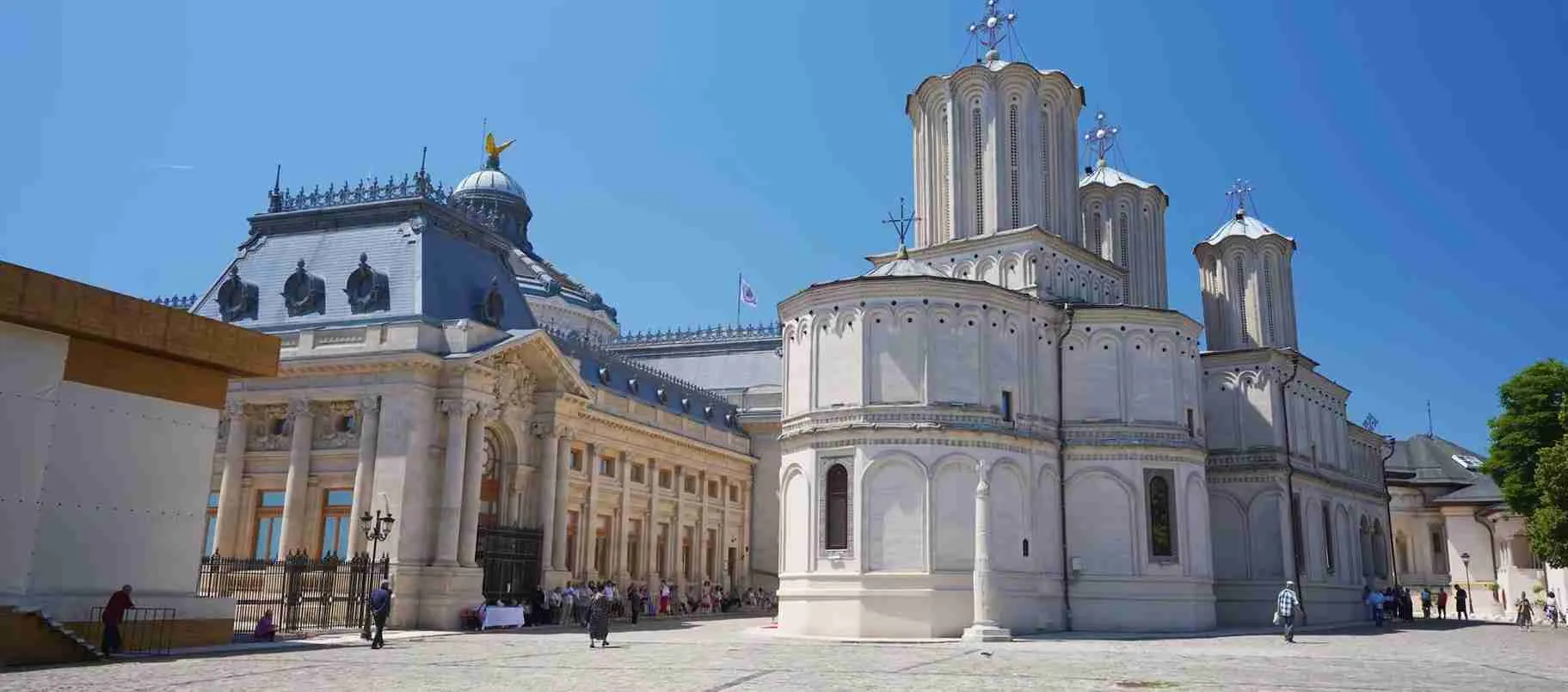
Route structures on communism tours prioritize demolished neighborhoods and megaproject sites over preserved historic districts. Tours typically begin at Patriarchal Cathedral on Dealul Mitropoliei, explaining how Ceaușescu positioned Parliament Palace to rival and overshadow religious authority. Guides lead groups through the Uranus neighborhood’s remnants, where bulldozers demolished 7,000 homes, 30 churches, and entire medieval streets to clear space for Centrul Civic district. Photographs from the 1980s contrast dramatically with today’s six-lane boulevards and apartment blocks, helping participants visualize the scale of destruction. Routes continue to Revolution Square where December 1989 protests began, examining the former Communist Party headquarters balcony where Ceaușescu delivered his final speech before fleeing by helicopter. Guides explain the revolution’s violent conclusion with 1,104 deaths during the week between December 16-25, 1989.
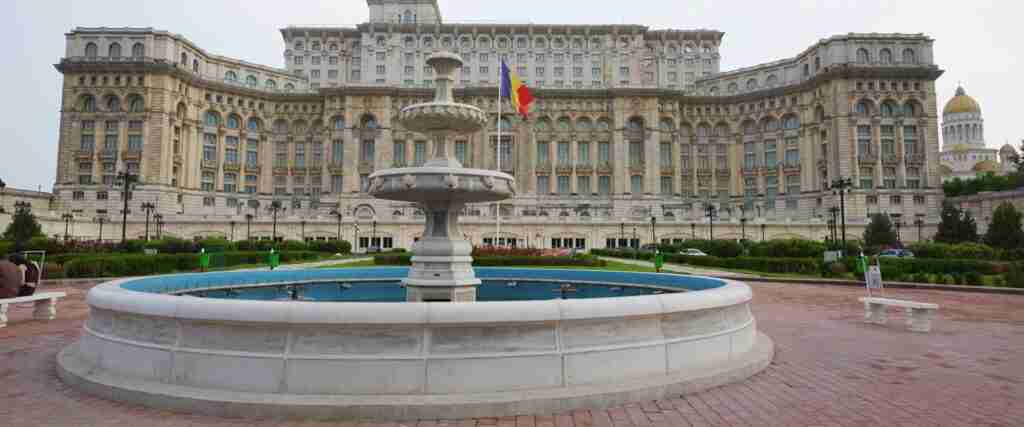
Parliament Palace visits anchor most communism tours as the ultimate symbol of Ceaușescu’s megalomania, though tours view only the building’s exterior rather than conducting interior guided visits (which require separate Parliament tour bookings). Guides explain the Palace’s staggering statistics: 365,000 square meters making it Earth’s heaviest building at 4 billion kilograms; 1,100 rooms requiring 20,000 workers on 24-hour shifts; 700,000 tons of steel and bronze, 3,500 tons of crystal, 900,000 cubic meters of wood, and 1 million cubic meters of marble quarried from Romanian mountains. The construction consumed Romania’s entire national output of materials during the 1980s while citizens endured food rationing, heating restrictions to 13°C (55°F) in winter apartments, and televisions broadcasting only two hours daily of Ceaușescu propaganda. Tour groups stand at Constitution Square viewing Parliament’s monumental facade while guides describe how Bulevardul Unirii, built one meter wider than Paris’s Champs-Élysées specifically to claim superiority, required demolishing 40,000 homes along its three-kilometer length.
Personal narrative elements distinguish communism tours from conventional historical walks through guides sharing family experiences with communist-era realities. Typical stories include grandparents queuing four hours for bread ratios, parents concealing typewriters to avoid secret police suspicion of dissident writing, or relatives relocated from demolished neighborhoods receiving inferior replacement apartments in peripheral concrete tower blocks. Guides explain the omnipresent Securitate secret police network that employed one informant per 43 citizens, creating paranoid social atmospheres where neighbors monitored neighbors and casual conversations carried political risks. Tours often include surviving examples of communist-era products — guides passing around Romanian chocolate bars from state factories that continue production using 1970s recipes, allowing participants to taste bland flavors reflecting ingredient shortages during that period.
Architectural analysis forms crucial components of communism tours beyond demolition narratives. Guides explain Socialist Realist principles mandating buildings demonstrate state power through monumental scale and neoclassical ornamentation rejecting modernist “bourgeois decadence.” Examples include Casa Scânteii (House of the Free Press), a 1956 Stalin-era building modeled on Moscow’s Seven Sisters, and Sala Palatului conference center’s massive columns. Tours contrast these state showpieces with standardized prefabricated apartment blocks housing ordinary citizens — guides explaining how five-story “walk-up” buildings avoided elevator costs while ten-story towers used primitive cage elevators frequently breaking down. Neighborhoods like Drumul Taberei and Titan demonstrate communist urban planning principles separating residential zones from industrial areas, creating car-dependent sprawl that persists today.
Tour formats vary between walking-focused explorations and bike tours covering greater distances. Walking communism tours concentrate on demolished Uranus neighborhood and central Parliament Palace areas, while bike versions extend to peripheral residential districts showcasing standardized apartment architecture and communist-era factories. Bike tours cost RON 220-250 ($48-55) per person including bicycle and helmet rental, covering 12-15 kilometers in 2.5-3 hours compared to walking tours’ 4-5 kilometers. Both formats conclude with Q&A sessions where participants ask guides about contemporary Romanian politics, EU membership impacts, and personal reflections on communism’s legacy. Tours typically end near Parliament Palace, positioning participants for afternoon Parliament interior visits if separately booked.
Parliament Palace Tours Bucharest 2026: Inside Europe’s Second-Largest Building
Parliament Palace guided tours provide the only legal access to Bucharest’s defining architectural monument, requiring advance reservations and costing RON 125-140 ($27-30) per person for standard 60-minute experiences. The Palace operates as Romania’s active legislative building housing both parliamentary chambers, restricting independent visits and mandating guided group tours departing every 30 minutes during operating hours (March-October: 9:00 AM-5:00 PM daily; November-February: 10:00 AM-4:00 PM daily). Skip-the-line tickets purchased online guarantee entry slots bypassing on-site queues that reach 40-60 minutes during peak summer hours, though all visitors regardless of ticket type must present original passports or EU national ID cards at two security checkpoints before entering the building.
Standard Parliament tours access approximately 3-5% of the building’s total area, visiting 15-20 rooms across two floors during 60-minute circuits. Routes begin at the Senate entrance on the building’s left side when facing the main facade, proceeding through metal detectors and security screening before ascending the marble main staircase to the upper hall (Sala C.A. Rosetti). This grand reception area features 2,200-square-meter floor surfaces of polished Romanian marble and introduces visitors to the Palace’s overwhelming scale through sheer spatial volume. Guides lead groups through a sequence of named reception rooms including the Pink Room with its silk-covered walls and handwoven carpets, the Music Hall hosting official concerts and receptions, and the Honor Hallway showcasing Romanian oak paneling and busts of Romanian historical figures including Vlad the Impaler.
Europe’s largest ballroom anchors Parliament tour highlights with staggering dimensions: 2,226 square meters, 16 meters high, illuminated by 480 light fixtures including massive crystal chandeliers each weighing 2-3 tons. The ballroom’s floor consists of handwoven wool carpets covering the entire surface area in deep red tones, while walls display Romanian marble in multiple color variations. Guides explain construction details including how all materials came from Romanian sources — marble from Transylvanian quarries, crystal from Romanian glassworks, wood from Carpathian forests — as Ceaușescu insisted on domestic production demonstrating national self-sufficiency despite the catastrophic economic costs consuming the country’s entire industrial output during the 1980s. The chandelier system required special structural engineering with steel beams supporting the 5-ton central fixture’s weight distribution.
Tour commentary balances architectural appreciation with historical condemnation, explaining how 100,000 workers labored 24-hour shifts to complete the Palace while citizens endured rationing and heating restrictions. Guides note that construction consumed one-third of Bucharest’s historic center, with demolition crews destroying 7,000 homes, 30 churches, 6 synagogues, 3 hospitals, and numerous cultural monuments. The Palace remained incomplete when Ceaușescu fled by helicopter from its roof on December 22, 1989, with democratic governments debating demolition before pragmatically choosing to complete and utilize the structure rather than waste its massive investment. Tours explain Romania’s post-1989 struggle to find purposes for the building’s excess capacity, noting that Parliament chambers occupy less than 30% of total space while the remainder houses government offices, museums, and occasional conference facilities.
Extended tour options costing RON 180-200 ($40-44) add the Torture Chambers basement exhibition and Time Tunnel immersive experience, though these remain optional rather than included in standard packages. The basement chambers display equipment and documentation from political imprisonment during communist rule, presenting harsh historical realities through preserved interrogation rooms and prison cells. Standard tours exclude the main parliamentary chambers where active legislative sessions occur, viewing only public reception areas and ceremonial halls. Photography restrictions vary by room, with most areas permitting photos without flash while specific chambers prohibit all photography for security reasons — guides announce restrictions before entering each space.
Practical tour logistics require arriving 20-30 minutes before scheduled departure times at the meeting point on Bulevardul Natiunile Unite near the Gemenii Center office tower. Online booking confirmation emails specify exact meeting locations and security requirements. Tours proceed in Romanian, English, Spanish, Italian, and German with multilingual audio guides available as supplements. Group sizes max at 20 participants for standard tours, with private group bookings available at premium rates for corporate or family groups. Tours involve walking approximately 200 steps across multiple flights (not all consecutive) without elevator access, making the experience challenging for visitors with limited mobility. The Palace’s interior temperature remains constant around 21°C (70°F) year-round regardless of exterior weather. Tours conclude at Senate entrance areas, positioning participants for nearby Old Town exploration or return to central accommodation areas via metro (Izvor station, Lines M1 and M3) or buses (routes 136 and 385).
Transylvania Day Trips from Bucharest 2026: Bran Castle, Peles & Brașov
Full-day Transylvania excursions from Bucharest deliver Romania’s most iconic sightseeing trifecta — Dracula’s Bran Castle, royal Peles Castle, and medieval Brașov — in 12-hour circuits that depart 8:00 AM and return approximately 8:00-9:00 PM. Standard tours cost $90-120 per person including round-trip air-conditioned coach transport, English-speaking guides, and Carpathian Mountain scenic routing through Prahova Valley. Castle entry fees typically remain separate at $20-30 per person combined for both Bran and Peles, though some premium operators include tickets in base pricing. Small-group tours (8-12 participants) command higher rates ($110-120) compared to large coach experiences (30-40 participants at $90-100) but provide more personalized guidance and flexibility for photography stops during mountain drives.
Peles Castle visits typically occur first after 2.5-hour northward drives from Bucharest through Carpathian foothills to Sinaia mountain resort. Known as the “Pearl of the Carpathians,” Peles served as summer residence for Romanian kings from 1883 until 1947’s communist takeover. The castle demonstrates German Renaissance architecture with 160 rooms, 30 bathrooms, central heating, vacuum cleaning systems, and electricity — technological marvels when constructed in the 1880s. Guided interior tours (45-60 minutes, included in entry tickets) showcase the Weapons Hall containing 4,000 pieces of medieval and Renaissance armor and weaponry, the Music Hall with its retractable glass ceiling, and the Royal Apartments with their intricate wood carvings and Murano glass chandeliers. Gardens surrounding Peles offer mountain backdrop photography opportunities and summer terraces where tour groups gather before continuing to Bran Castle.
Bran Castle attracts the most visitor interest through associations with Bram Stoker’s Dracula novel, though the connection remains tenuous as Stoker never visited Romania and Vlad the Impaler likely never entered the castle. Built in 1377 as a defensive fortress guarding mountain passes between Transylvania and Wallachia, Bran served various military and customs functions before becoming Queen Marie’s royal residence in the 1920s. Tours arrive afternoon allowing 60-90 minutes for self-guided castle exploration. Narrow wooden staircases connect four levels spiraling through towers and chambers filled with medieval furniture, armor displays, and temporary exhibitions about Romanian royal family history. The intimate castle rooms contrast sharply with Peles’s palace grandeur, creating claustrophobic Gothic atmospheres matching Dracula mythology. Exterior courtyards and gardens provide Carpathian vista photography and access to souvenir markets selling Dracula-themed merchandise, traditional Romanian handicrafts, and local honey and cheese products.
Brașov medieval center visits provide lunch stops and urban exploration balancing morning castle visits. Located 30 kilometers from Bran, Brașov represents Transylvania’s best-preserved Saxon settlement founded by German merchants in the 13th century. Tours typically allow 1.5-2 hours for independent exploration starting at Council Square (Piața Sfatului), the historic heart surrounded by colorful Baroque merchant houses now containing cafes and restaurants. The Black Church (Biserica Neagră), Transylvania’s largest Gothic church built 1385-1477, dominates the square though most tour schedules allow only exterior viewing rather than interior visits. Guides point out Rope Street (Strada Sforii), Europe’s narrowest street at 1.3 meters wide, and recommend local restaurants serving traditional Romanian dishes including sarmale (stuffed cabbage rolls), mici (grilled minced meat rolls), and papanași (fried dough with cream and jam). Lunch costs $15-25 per person at mid-range establishments, with tour groups dispersing for individual dining before regrouping for return drives.
Transportation logistics involve 170-kilometer drives each direction consuming roughly 6 hours total travel time during favorable traffic conditions, though weekend getaway traffic from Bucharest can extend return journeys to 3-4 hours. Modern air-conditioned coaches provide comfortable seating, WiFi connectivity, and onboard restrooms on most tours. Guides use driving time for Romanian history lessons, cultural context about Transylvania’s Hungarian and German minorities, and practical information about castle visits. Routes through Prahova Valley showcase Carpathian Mountain scenery including Bucegi Mountains and Piatra Craiului limestone massif, with some tours scheduling brief photo stops at mountain viewpoints. Alternative routing via Bran-Rucăr corridor passes through traditional villages and mountain passes reaching 1,200 meters elevation.
Seasonal considerations significantly affect Transylvania day trip experiences throughout 2026. April through October offers optimal conditions with full castle operating hours (9:00 AM-6:00 PM typically), pleasant mountain temperatures, and accessible mountain roads. July and August bring peak crowds requiring 20-30 minute queues even for organized tour groups at Bran Castle, though skip-the-line arrangements minimize delays. September and October deliver spectacular autumn foliage in Carpathian forests with thinner crowds and comfortable temperatures. November through March creates winter atmospheres with potential snow-covered castles presenting fairy-tale photography, though Peles closes Mondays and Tuesdays year-round plus occasional additional closures during harsh weather. Winter tours face extended driving times through mountain passes and reduced daylight for castle exploration, with return journeys often occurring after dark.
Tour variations expand beyond standard Bran-Peles-Brașov circuits to include alternative destinations or activities. Some operators add Râșnov Fortress, a 13th-century hilltop citadel offering panoramic valley views, or Cantacuzino Castle in Bușteni. Extended tours visiting all four castles require 14-15 hours with 9:00 PM-10:00 PM returns. Bear sanctuary visits at Zărnești observe rescued brown bears in natural forest habitats, adding wildlife experiences to castle touring. Wine tasting additions stop at Dealu Mare vineyards producing Romanian reds and whites. Multi-day Transylvania tours (2-3 days) extend coverage to Sighișoara citadel (Vlad the Impaler’s birthplace) and Viscri village showcasing rural Saxon heritage, though these require overnight accommodations and higher costs around $300-400 per person all-inclusive.
Bucharest Walking Tours 2026: Specialized Thematic Experiences
Beyond free general walking tours and communism-focused explorations, Bucharest’s 2026 tour market offers specialized thematic walks concentrating on specific aspects of the city’s culture, history, or neighborhoods. These paid group experiences cost RON 160-200 ($35-45) per person for 2.5-3 hour circuits and limit group sizes to 8-12 participants ensuring guide interaction and question opportunities. Food tours, architecture walks, Jewish heritage routes, street art explorations, and vampire-themed experiences cater to particular interests while maintaining walking tour accessibility and human-scale engagement with urban environments.
Food and culinary walking tours blend Romanian cuisine introduction with neighborhood exploration, visiting markets, family-run restaurants, and traditional pastry shops for tastings totaling 6-8 food stops. Tours beginning at Obor Market, Bucharest’s largest fresh food market, introduce participants to Romanian produce varieties, cured meats (tochitură, slanină), traditional cheeses (telemea, brânză de burduf), and seasonal specialties. Guides explain culinary traditions including sarmale preparation requiring hours of hand-rolling cabbage leaves around meat and rice filling, and cozonac sweet bread baked for holidays. Subsequent stops sample street foods like mici (grilled minced meat rolls served with mustard and fresh bread), kurtos kalacs (chimney cake), and covrigi (Romanian pretzels). Restaurant visits provide sit-down tastings of appetizer platters featuring cheese spreads (zacuscă), pickled vegetables, and cured meats paired with Romanian wines from Dealu Mare or Cotnari regions. Tours conclude with papanași dessert — fried dough balls topped with sour cream and fruit preserves. Food tour pricing typically includes all tastings, with total food value exceeding tour cost making these excellent culinary introductions for visitors uncertain about navigating restaurants independently.
Architecture-focused walking tours analyze Bucharest’s jarring stylistic contrasts through expert lenses explaining how each historical period produced distinctive building types. Tours typically progress chronologically from Byzantine-influenced Orthodox churches through Romanian vernacular residential architecture, French Second Empire boulevards, Art Nouveau commercial buildings, interwar modernism, Socialist Realism, and contemporary glass towers. The CEC Palace demonstrates 1890s French neoclassical banking architecture with its monumental columns and decorative sculptures. The Romanian Athenaeum represents 1888 concert hall design with its distinctive round shape and ornate interior. Guides explain how the Cantacuzino Palace exemplifies Belle Époque residential architecture before contrasting it with 1950s Casa Scânteii’s Stalinist monumentalism. Architecture tours attract design professionals, architecture students, and cultural travelers seeking deeper understanding beyond surface-level landmark identification.
Jewish heritage tours trace Bucharest’s once-thriving Jewish community through surviving synagogues, Holocaust memorials, and neighborhood remnants. Pre-World War II Bucharest hosted Romania’s largest Jewish population exceeding 100,000 residents concentrated in neighborhoods north of the city center. Tours visit the Choral Temple synagogue, Great Synagogue, and Jewish History Museum while explaining how the Holocaust and subsequent communist-era emigration reduced the community to fewer than 3,000 today. Guides describe pogroms during the 1941 Legionnaire rebellion when fascist Iron Guard forces murdered hundreds of Jewish residents and destroyed synagogues. Memorial sites honor victims while explaining Romania’s complex Holocaust history involving both persecution and relative protection compared to neighboring countries. Jewish heritage tours appeal particularly to diaspora descendants researching family histories and travelers interested in European Jewish culture preservation.
Street art and urban exploration tours showcase Bucharest’s vibrant contemporary art scene flourishing in formerly neglected neighborhoods. Routes concentrate on the Rahova and Militari districts where large-scale murals cover residential building facades, many commissioned during annual street art festivals. Guides explain how artists including Ernest Pignon-Ernest, Okuda San Miguel, and Romanian muralists transformed gray communist-era apartment blocks into colorful canvases addressing social themes, environmental concerns, and cultural identity. Tours visit legal street art locations rather than guerrilla graffiti sites, explaining the difference between sanctioned public art projects and illegal tagging. Photography dominates these experiences with guides positioning groups for optimal mural angles and explaining artistic techniques and messages. Street art tours attract younger demographics, creative professionals, and travelers seeking alternatives to conventional historical tourism.
Vampire and Dracula-themed walking tours capitalize on Bucharest’s tangential connections to Vlad the Impaler and Bram Stoker’s fiction, though honest operators acknowledge the limited historical accuracy. Tours visit the Old Princely Court where Vlad III ruled Wallachia from 1456-1462, explaining how his brutal impalement of Ottoman prisoners inspired fearsome reputation but also how 19th-century Western writers sensationalized these accounts into vampire mythology. Guides clarify that Vlad never lived in Bran Castle, Stoker never visited Romania, and the Dracula character represents pure fiction loosely inspired by Vlad’s nickname “Drăculea” (son of Dracul/dragon). Evening vampire tours add Gothic atmosphere through twilight timing and visits to shadowy courtyards and medieval church crypts. These tours succeed as entertainment mixing historical facts with literary analysis, appealing to Stoker fans and Gothic culture enthusiasts willing to accept the largely fictional framing.
Bucharest Bike Tours 2026: Expanding Coverage Beyond Walking Radius
Bicycle tours expand geographic coverage beyond central walking tour limits, accessing peripheral neighborhoods, parks, and riverfront areas while maintaining similar durations (2.5-3 hours) and pricing (RON 180-235 / $40-52 per person including bike rental). Tours provide city bikes or hybrid models in multiple frame sizes, helmets, and basic safety equipment while guides lead groups along protected bike lanes, park paths, and low-traffic residential streets. Bucharest’s relatively flat topography makes cycling accessible to recreational riders without requiring athletic fitness, though tours maintain moderate paces covering 12-15 kilometers compared to walking tours’ 4-5 kilometers. Group sizes max at 10-12 participants ensuring cohesive riding formations and enabling guides to maintain conversational narrative while cycling.
Standard bike tour routes begin at central meeting points near Old Town, proceeding north through Herăstrău Park’s lakefront paths before exploring communist-era residential neighborhoods like Floreasca and Primăverii. The park sections provide scenic cycling along Herăstrău Lake’s 70-hectare waters with willow-lined paths and palace views across water surfaces. Guides pause at Arch of Triumph explaining how Romania’s 1922 version predated Paris’s famous monument by seven years despite popular assumptions of copying. Routes continue through Primăverii neighborhood showcasing villas housing communist party elite during Ceaușescu’s era — guides explaining how party members enjoyed single-family homes with gardens while ordinary citizens lived in cramped apartment blocks. Contemporary cycling infrastructure includes protected bike lanes along major boulevards installed during 2010s urban improvements, though sections still require sharing traffic lanes with cars necessitating basic cycling confidence.
Parliament Palace approaches form dramatic bike tour moments as groups cycle south along Bulevardul Unirii’s six-lane width, experiencing the boulevard’s overwhelming scale from cyclists’ perspectives. Guides stop at Constitution Square for Parliament facade photography while explaining demolition statistics and construction details covered in walking tours but viewed from different vantage points. The cycling format allows reaching Parliament’s rear facades and surrounding neighborhoods demolished during construction, areas too distant for walking tour inclusion. Bike routes continue through Izvor Park and along Dâmbovița River paths before returning to Old Town, completing circuits covering twice walking tour distances while maintaining conversational guide commentary throughout rides.
Specialized bike tour themes mirror walking tour diversification into focused topics. Communist bike tours emphasize architectural elements and peripheral residential districts inaccessible via walking routes, visiting standardized apartment complexes in Drumul Taberei and Titan neighborhoods. Park-focused tours prioritize green space cycling through Herăstrău, Cișmigiu, and Tineretului parks while explaining urban planning evolution. River route tours follow Dâmbovița River paths explaining flood control systems and waterfront development projects. Evening bike tours offer twilight cycling when temperatures cool and traffic diminishes, concluding at recommended dinner locations in revitalized neighborhoods. Winter bike tours (November-March) face reduced demand due to cold weather and potential snow/ice but attract hardy cyclists seeking uncrowded experiences.
Bike tour operators maintain equipment fleets to professional standards with regular maintenance ensuring reliable performance. City bikes feature upright riding positions, multiple gears for varied terrain, and chain guards protecting clothing from grease. Hybrid bikes offer slightly sportier geometries for experienced cyclists. All bikes include lights for visibility and locks for security during stops. Helmets meet EU safety standards though wearing remains optional under Romanian law — most participants choose to wear provided helmets. Tours accommodate height ranges from 155cm to 195cm through varied frame sizes, though children under 140cm typically cannot safely ride adult bikes. Child seats and tag-along trailer bikes accommodate families with young children on private tour bookings though standard group tours require all participants capable of independent riding.
Safety protocols emphasize group cohesion and traffic awareness throughout rides. Guides lead from front positions while sweep riders (on larger groups) monitor rear positions ensuring no participants fall behind. Tours use hand signals for turns and stops, with guides demonstrating these at tour beginnings. Routes prioritize protected bike lanes and park paths over heavy traffic streets, though some sections unavoidably share roadways with cars. Romanian drivers show variable awareness of cyclists, requiring defensive riding techniques that guides model continuously. Tour insurance covers participant accidents though standard liability waivers acknowledge cycling inherent risks. Tours cancel during heavy rain or thunderstorms but proceed in light rain with provided ponchos. Punctures or mechanical issues trigger guide repairs or bike swaps from support vehicles following larger group tours.
Parliament Palace & Ceaușescu Mansion Combo Tours 2026
Combined tours pairing Parliament Palace visits with Ceaușescu’s former residence at Primăverii create comprehensive communist-era experiences costing RON 280-350 ($62-78) per person for 4-hour programs. These tours operate as mid-priced alternatives between basic Parliament-only visits and full-day thematic explorations, appealing to travelers seeking deeper communist history understanding without committing entire days to single topics. Transportation between locations via air-conditioned minibus and skip-the-line access at both sites justify premium pricing over assembling separate visits independently.
Ceaușescu Mansion visits precede Parliament tours in typical itineraries, beginning with 10:00 AM departures from central meeting points. The Primăverii palace served as Nicolae and Elena Ceaușescu’s private residence from 1965 until their December 1989 flight and execution. Located in an exclusive neighborhood housing communist party elite, the mansion demonstrates the stark contrast between leaders’ luxury and citizens’ deprivation during 1980s austerity. Guided tours (approximately 90 minutes) explore 80 of the mansion’s rooms including private living quarters, entertainment halls, swimming pool complex, and Elena Ceaușescu’s extensive wardrobe collection. Decorative excess includes Murano glass chandeliers, handwoven silk carpets, ornate furniture, and gold-plated bathroom fixtures — guides emphasizing how construction consumed resources while ordinary Romanians faced heating restrictions and food rationing.
Personal item displays provide intimate insights into the Ceaușescus’ daily lives and personality cults. Elena’s shoe collection filling multiple rooms demonstrates vanity and extravagance, while Nicolae’s hunting trophies showcase authoritarian machismo. The couple’s bedroom maintains period furnishings including the beds they abandoned December 22, 1989, when secret service agents warned of approaching protesters and hustled them to a rooftop helicopter. Guides describe the hasty departure leaving half-eaten breakfast and running televisions broadcasting revolution coverage. The mansion’s underground bunker designed for nuclear attack protection remains closed to tours but guides explain its existence and specifications. Gardens surrounding the mansion feature presidential swimming pool, tennis courts, and greenhouses producing year-round fresh produce for the family while citizens accessed limited vegetables through rationing systems.
Transportation segments between Ceaușescu Mansion and Parliament Palace allow guides to contextualize the leaders’ megalomaniacal building projects within broader Romanian history. Routes pass through neighborhoods demolished for Parliament construction, with guides pointing out before-and-after photographs of destroyed churches and homes. Commentary explains how Ceaușescu’s 1971 visit to North Korea inspired his vision for remaking Bucharest into a communist showcase capital rivaling Pyongyang’s monumentalism. The couple’s execution by firing squad on December 25, 1989, following hasty trial proceedings receives detailed explanation including guards’ testimonies and controversial legal questions surrounding the summary proceedings. Modern Romanian perspectives on this period vary between older citizens remembering guaranteed employment and younger generations condemning the regime’s human rights abuses.
Parliament Palace segments of combo tours follow standard interior routes described in previous sections, though guides integrate Ceaușescu narrative threads throughout commentary. The obsessive construction consuming national resources while citizens suffered poverty gains emotional impact after mansion visit demonstrations of leadership hypocrisy. Guides explain how even Nicolae Ceaușescu never saw the completed Palace, fleeing the revolution before interior work finished. Modern parliamentary use of the building prompts discussions about historical preservation versus demolition debates during 1990s democratic transitions. Some participants find the Parliament visit anticlimactic after the mansion’s intimate personal revelations, while others appreciate the architectural scale and craftsmanship despite the problematic historical context.
Tour logistics require advance bookings due to limited Ceaușescu Mansion visiting slots (maximum 50 visitors daily) and Parliament security protocols. Combined tours operate Tuesday through Sunday with Monday closures affecting both sites. Photography restrictions differ between locations — Ceaușescu Mansion permits photos throughout most rooms while Parliament prohibits photography in specific chambers. Original passports or EU ID cards remain mandatory at both security checkpoints. Tours conclude near central locations around 2:00-2:30 PM positioning participants for afternoon independent exploration or lunch at recommended restaurants. Some operators extend combo tours to include Village Museum visits showcasing traditional Romanian rural architecture, creating full-day experiences at RON 420-500 ($93-111) per person.
Bucharest Food Tours 2026: Markets, Tastings & Culinary Culture
Dedicated food walking tours immerse participants in Romanian culinary traditions through market visits, family-run restaurant tastings, and cultural context explaining how traditional dishes evolved from peasant cuisine into national identity markers. These 3-4 hour experiences cost RON 270-360 ($60-80) per person including all food and beverage tastings representing $40-50 value, making them economical introductions to Romanian gastronomy versus independent restaurant exploration. Group sizes limit to 8-10 participants enabling guides to secure restaurant tables and maintain intimate atmospheres conducive to culinary education. Tours operate morning (10:00 AM start) or afternoon (2:00 PM start) with timing affecting market versus restaurant balance.
Obor Market visits anchor most food tours as Romania’s largest fresh food marketplace operating since 1880s in the same northeast Bucharest location. The covered market halls showcase Romanian agricultural abundance through produce stands displaying seasonal vegetables, fruit orchards’ apples and plums, and greenhouse tomatoes and peppers. Butcher stalls sell fresh meats and traditional cured products including tochitură (spiced pork spread), slanină (cured pork fat), and various sausage types. Dairy vendors offer telemea (brined white cheese similar to feta), cașcaval (semi-hard yellow cheese), and urdă (soft cottage cheese). Guides explain ingredient selection for traditional dishes, regional specialty variations, and seasonal availability affecting Romanian cooking patterns. Market tastings include fresh cheese samples, seasonal fruit, and traditional pickled vegetables (murături) accompanying Romanian meals as standard condiments.
Restaurant stops progress chronologically through Romanian meal structures from appetizers through main courses to desserts. First stops typically serve sliced cured meats, cheese spreads (zacuscă based on roasted eggplant and peppers), and fresh bread with mineral water or compote fruit beverages. Guides explain table customs including toasting traditions and bread’s cultural significance in Romanian hospitality. Main course tastings include sarmale (cabbage or grape leaves stuffed with pork, rice, and herbs, slow-cooked for hours), ciorbă (sour soup with meat or vegetables flavored with borș fermented wheat bran), and mici (grilled minced meat rolls combining beef, pork, and lamb with garlic and spices). These dishes represent peasant cooking traditions emphasizing preservation techniques (fermentation, smoking, brining) and maximizing inexpensive ingredients through labor-intensive preparation. Family-run restaurants hosting tours maintain traditional recipes passed through generations rather than modernized tourist versions.
Wine pairing segments introduce Romanian viticulture concentrating on native grape varieties and traditional winemaking regions. Tastings include Fetească Albă and Fetească Regală whites from Moldova and Dealu Mare regions, Fetească Neagră and Băbească Neagră reds from Dealu Mare, and Tămâioasă Românească sweet wines. Guides explain how communist-era cooperative farming damaged Romania’s wine reputation through quantity-over-quality mandates, while post-1990 privatization enabled quality renaissance through modern equipment and international consultation. Contemporary Romanian wines compete successfully at European competitions though remain underappreciated internationally due to limited export distribution. Wine shop stops allow purchasing bottles at local prices ($8-15 for quality regional wines) significantly below tourist restaurant markups.
Dessert conclusions feature papanași, Romania’s signature sweet consisting of fried cottage cheese dough balls topped with sour cream and fruit preserves (typically sour cherry or blueberry). Guides explain preparation techniques requiring specific cottage cheese moisture content and frying oil temperatures achieving crispy exteriors and fluffy interiors. Alternative desserts include cozonac (sweet bread with walnut or Turkish delight filling baked for holidays), kurtos kalacs (chimney cake cooked on rotating spits), and plăcintă (phyllo pastry filled with cheese, apples, or cabbage). Turkish influence on Romanian desserts reflects centuries of Ottoman rule introducing baklava, halva, and Turkish delight adaptations. Coffee service follows Italian espresso traditions rather than American drip coffee, with guides explaining Bucharest’s “Little Paris” Belle Époque café culture history.
Cultural context distinguishes quality food tours from mere restaurant hopping through explanations connecting dishes to Romanian history, agricultural patterns, and social customs. Guides describe how peasant preservation techniques developed from pre-refrigeration necessity, creating fermented and pickled foods that became cultural preferences persisting after modern preservation technology arrived. Communist-era food shortages and rationing stories explain older Romanians’ continued preferences for simple traditional dishes over experimental fusion cuisine. Regional variations between Transylvanian, Moldavian, and Wallachian cooking traditions reflect historical divisions and ethnic influences (Hungarian, German, Turkish). Food tours appeal particularly to culinary travelers, food bloggers, and visitors seeking authentic cultural immersion beyond conventional sightseeing.
Day Trip Alternatives from Bucharest 2026: Beyond Transylvania Castles
While Transylvania castle circuits dominate Bucharest day trip bookings, alternative excursions explore different Romanian landscapes and cultural sites appealing to travelers seeking variety beyond Gothic towers and royal residences. These specialized tours cost $85-140 per person depending on distance and inclusions, operating as full-day experiences departing 8:00-9:00 AM and returning 6:00-8:00 PM. Small-group formats (8-12 participants) predominate due to niche market demand, though some larger operations offer set-schedule departures for popular alternatives like Danube Delta and painted monasteries.
Danube Delta day trips venture 280 kilometers northeast from Bucharest to Europe’s second-largest river delta and Romania’s most significant wetland ecosystem. Tours typically travel to Tulcea port city where Danube splits into three main channels before entering the Black Sea, then embark on motorboat excursions through delta channels observing bird species (over 300 recorded including pelicans, herons, and cormorants), traditional fishing villages, and reed-covered islands. The delta’s 5,800 square kilometers create habitats supporting diverse wildlife including wild boars, foxes, and occasional wolves on larger islands. Boat tours navigate narrow channels flanked by floating reed beds while guides explain delta formation, ecosystem dynamics, and traditional lipovenian fishing communities maintaining centuries-old lifestyles. Tours include fresh fish lunches at delta restaurants serving locally caught carp, pike, and catfish. Day trip constraints limit delta exploration to 2-3 hours on water versus multi-day delta tours allowing deeper penetration and overnight village stays. Tours operate April through October with peak bird watching during spring and autumn migrations.
Painted Monasteries of Bucovina tours travel 350 kilometers north into Moldova region visiting UNESCO World Heritage sites famous for exterior frescoes covering entire church walls. These full-day excursions represent Romania’s longest day trips from Bucharest, requiring 4-5 hours driving each direction with early 7:00 AM departures and 9:00-10:00 PM returns. Tours visit 2-3 monasteries typically including Voroneț (the “Sistine Chapel of the East” with its distinctive blue frescoes), Moldovița, and Sucevița. The 15th-16th century frescoes depict biblical scenes, saints’ lives, and Last Judgment imagery in vibrant pigments that survived 500 years of weather exposure through techniques scholars still debate. Guides explain Orthodox iconography, monastic traditions, and historical context of Moldavian principality resisting Ottoman expansion. The remote rural locations showcase traditional Bucovina village architecture and pastoral landscapes contrasting sharply with urban Bucharest. Long driving distances make these tours physically demanding though culturally rewarding for travelers prioritizing UNESCO sites over tourist-heavy castles.
Wine region tours concentrate on Dealu Mare, Romania’s premier red wine region located 100 kilometers north of Bucharest in Carpathian foothills. Full-day wine experiences visit 2-3 wineries for guided tours through production facilities, barrel cellars, and vineyard walks followed by structured tastings of 6-8 wines including indigenous varieties (Fetească Neagră, Băbească Neagră) and international grapes (Cabernet Sauvignon, Merlot) thriving in local terroir. Wineries like Cramele Halewood, Davino, and Budureasca offer modern tasting rooms and English-speaking staff explaining post-communist privatization transformations from state cooperatives to quality-focused private estates. Tours include traditional Romanian lunches at winery restaurants pairing local dishes with estate wines. Wine education components appeal to oenophiles and beverage professionals while scenic vineyard landscapes attract photographers. Tours cost $95-120 per person including tastings and lunch, with options to purchase wines at winery prices ($10-25 per bottle) for export or local consumption.
Slănic Prahova Salt Mine visits explore Europe’s largest salt mine converted into underground therapeutic spa and amusement park 100 kilometers northwest of Bucharest. Tours descend 208 meters via staircases or elevators into cathedral-like excavation chambers reaching 54 meters height with stable 12°C (54°F) temperatures and 65% humidity year-round. The mine’s therapeutic microclimate treats respiratory conditions while recreational facilities include children’s playgrounds, mini-golf, amphitheater, and lake for paddle boating — unusual underground entertainment attracting families. Half-day tours (4-5 hours total) cost $50-65 per person including transport and mine entry but allow only 1.5-2 hours underground, frustrating visitors hoping for longer therapeutic exposure. Full-day versions combine salt mine visits with Slănic Moldova resort town stops and Carpathian mountain scenery. The mine’s scale impresses through sheer volumetric dimensions rather than decorative beauty, appealing to engineering enthusiasts and families with children versus art-focused travelers.
Therme Bucharest spa day trips transport participants 15 kilometers north to Europe’s largest thermal water entertainment complex featuring 10 swimming pools, 16 water slides, numerous saunas and steam rooms, and tropical plant gardens under climate-controlled domes. Half-day excursions (4-5 hours) cost $45-60 per person including transport and basic zone entry, while full-day packages with Elysium premium areas reach $75-90. The facility appeals primarily to families with children, spa enthusiasts, and visitors seeking active recreation rather than cultural sightseeing. Transfers reduce logistical hassles versus public transport or taxi access. Tours position Therme as relaxation rewards after intensive sightseeing days rather than primary cultural attractions. Winter visits (November-March) attract highest demand as heated pools and tropical environments counter cold outdoor weather.
Bucharest Private Tours 2026: Customized Itineraries & Premium Experiences
Private guided tours elevate Bucharest exploration through completely customized itineraries, flexible pacing, and dedicated guides providing personalized attention unavailable in group settings. These premium experiences cost $250-450 per group (2-6 participants) for full-day programs, with per-person economics improving as group size increases — couples pay $125-225 each while families of four invest $62-112 per person. Half-day private tours (4 hours) reduce costs to $150-250 per group. Pricing variations reflect guide expertise levels, vehicle types (standard sedan versus luxury Mercedes), and inclusion of entry tickets, meals, or special access arrangements.
Customization advantages allow tailoring every element to participant interests, physical capabilities, and time constraints. Families with young children adjust pacing for nap schedules and include playground stops, while elderly participants minimize walking distances and add frequent rest breaks. Photography enthusiasts allocate extra time at scenic locations during optimal lighting hours and access restricted viewpoints through guide connections. Architecture professionals request deeper technical explanations and visits to contemporary buildings beyond standard tourist circuits. Food-focused travelers design progressive tastings visiting specific restaurants or markets matching dietary preferences. Private guides accommodate spontaneous itinerary modifications based on discovered interests or energy levels rather than rigid group schedules.
Expert guide quality distinguishes premium private tours through advanced credentials and specialized knowledge. Top-tier guides hold university degrees in Romanian history, art history, or architecture plus professional tourist guide certifications requiring comprehensive examinations. Many maintain museum curatorial backgrounds, architectural practice experience, or academic publishing records bringing scholarly depth to explanations. Language capabilities extend beyond basic English fluency to include Italian, French, German, or Spanish at native or near-native levels. Guides cultivate relationships with museum directors, restaurant owners, and cultural institution managers facilitating special access arrangements like behind-scenes Parliament areas, private museum viewings after public hours, or chef demonstrations at renowned restaurants.
Private vehicle transportation enables efficient multi-site coverage impossible via public transit or walking. Modern air-conditioned sedans or SUVs provide comfortable climate-controlled environments with leather seating and premium sound systems. Drivers navigate Bucharest’s chaotic traffic while guides maintain uninterrupted commentary. Parking logistics at restricted-access sites like Parliament Palace or Ceaușescu Mansion become guide responsibilities rather than visitor frustrations. Private vehicles enable seamless Transylvania day trip execution with flexible departure times, photo stops at scenic viewpoints, and route modifications avoiding traffic congestion. Luxury tour packages upgrade to Mercedes S-Class or similar premium vehicles with WiFi, bottled water, and phone charging capabilities.
Exclusive access opportunities available through private tour bookings include Parliament Senate chamber viewings during weekend closures when public tours access only standard routes, private Ceaușescu Mansion tours outside regular hours, and curator-led National Museum walks explaining collection highlights beyond label information. Restaurant reservations at impossible-to-book establishments become achievable through guide industry connections. Private tours arrange meetings with contemporary Romanian artists in their studios, antique dealers explaining communist-era collectibles, or historians discussing specific research interests. Such access carries premium pricing ($500-800 per group for specialized full-day programs) but delivers unique experiences unavailable through conventional tourism channels.
Multi-day private tour packages extend Bucharest experiences into comprehensive Romanian explorations. Three-day programs combine two Bucharest days (city tours plus Parliament and museums) with one Transylvania excursion at $800-1,200 per couple all-inclusive except meals. Five-day itineraries add painted monasteries and Danube Delta at $1,800-2,500 per couple. Seven-day comprehensive Romania tours covering Bucharest, Transylvania, Bucovina monasteries, and Maramureș wooden churches reach $3,000-4,500 per couple including mid-range hotel accommodations, private vehicle transport, guide services, and major entry tickets. Such packages appeal to affluent travelers prioritizing efficiency and comfort over budget constraints, honeymooners seeking romantic experiences, and special-interest groups (photographers, architecture enthusiasts, food lovers) requiring specialized expertise.
Bucharest Tour Booking Strategies 2026: Maximizing Value & Experience
Effective tour booking strategies balance advance planning ensuring availability with flexibility accommodating discovered preferences and weather conditions. Parliament Palace and Transylvania day trips require 1-2 weeks advance reservations during peak season (May-September) as skip-the-line slots and small-group tours sell out, while free walking tours and most paid group experiences accept same-day or next-day bookings except weekends. Optimal approaches combine confirmed bookings for must-do experiences (Parliament Palace on second day, Transylvania castle trip on fourth day) with flexible slots for walking tours selected after initial orientation reveals specific interests.
Booking platform selection affects pricing, cancellation flexibility, and tour quality significantly. Direct operator websites typically offer lowest prices without middleman commissions and clearest cancellation policies, though require researching multiple companies individually. Consolidator platforms (GetYourGuide, Viator, TripAdvisor Experiences) simplify comparison shopping and centralize reviews but add 15-25% commission markups reflected in higher tour prices. Free walking tour operators maintain simple booking processes through proprietary websites listing daily departure times and meeting points without requiring advance reservations — participants simply appear at designated times. Private tour bookings benefit from direct operator communication enabling customization discussions impossible through platform messaging systems.
Review analysis requires filtering techniques separating authentic experiences from promotional content or competitor sabotage. Verified purchase indicators (booking confirmations required for review submission) increase reliability. Recent reviews (within 6 months) better reflect current guide quality and operational standards than 2-3 year old testimonials potentially describing different personnel. Specific detail density distinguishes genuine participant accounts (“our guide Elena explained how her grandmother hid typewriters from Securitate agents”) from generic praise (“great tour, very informative”). Negative review patterns matter more than occasional complaints — consistent mentions of late departures, rushed pacing, or poor English fluency signal systematic problems, while isolated bad experiences may reflect outlier circumstances. Review counts above 100 provide statistical reliability unavailable from operators with 10-15 testimonials potentially curated selectively.
Cancellation policy scrutiny prevents monetary losses from itinerary changes or weather disruptions. Standard group tour policies allow full refunds for cancellations 24 hours before scheduled departures, though some operators impose 48-72 hour windows. Private tours typically require 3-7 day advance cancellations for full refunds with partial refunds (50-75%) for shorter notice. Weather cancellation policies vary — Parliament Palace tours proceed regardless of weather while Transylvania day trips cancel during severe snow or ice creating unsafe driving conditions. Operators refusing refunds for weather cancellations risk stranding participants with useless bookings when tours cannot physically operate. Comprehensive travel insurance covering “cancel for any reason” scenarios protects against unpredictable circumstances like illness or family emergencies better than relying solely on operator policies.
Group composition considerations affect tour enjoyment through shared interests and pacing compatibility. Solo travelers benefit from free walking tours’ social atmospheres facilitating conversations with fellow participants from diverse countries, while couples preferring intimate experiences select smaller paid groups (8-12 participants) or private options. Families with children under 12 should verify tour child-friendliness as some operators set minimum ages for Parliament Palace (security protocols) or Transylvania day trips (long driving durations). Senior travelers with mobility limitations need confirming tour physical demands — Parliament involves 200 steps without elevator access while castle visits include steep medieval staircases. Language verification ensures guides deliver tours in participants’ preferred languages rather than assuming English-only options, particularly for Italian, French, or Spanish speakers seeking native-language experiences.
Tipping expectations vary between free and paid tours with different calculation methods. Free walking tours suggest €10-15 per person as standard gratuities for satisfactory experiences, with exceptional guides earning €15-20 and disappointing tours prompting €5-10. Paid group tours with set prices do not obligate additional tipping though €5-10 per person rewards outstanding guide performance. Private tour tipping follows 10-15% of total tour cost convention ($25-45 for $250-300 day tours) distributed between guide and driver. Cash tips in euros or Romanian lei are universally accepted while credit card tipping remains unavailable. Having appropriate denominations ready simplifies tip distribution at tour conclusions rather than scrambling for change or requesting bill-breaking.
Seasonal Tour Considerations Bucharest 2026
Bucharest’s continental climate creates distinct seasonal tourism patterns affecting tour availability, pricing, crowd levels, and experience quality throughout 2026. Understanding these variations enables strategic timing for optimal visit conditions matching personal preferences for weather, budget constraints, and crowd tolerance. Peak summer season (June-August) delivers warmest weather and maximum daylight hours but brings largest crowds and highest prices, while winter months (December-February) reduce tourist numbers dramatically through cold temperatures deterring casual visitors while rewarding hardy travelers with uncrowded museums and discounted rates.
Spring season (April-May) represents Bucharest’s first prime visiting window combining pleasant temperatures (15-22°C / 59-72°F), moderate crowds, and full tour availability. Cherry and plum blossoms color parks and boulevards during late April, creating picturesque backdrops for walking tours and photography. Herăstrău Park and Cișmigiu Garden reach peak beauty with blooming flowers and fresh green foliage. Free walking tours operate full schedules with 2-3 daily departures while Parliament Palace extends hours to 9:00 AM-5:00 PM. Transylvania day trips benefit from mild mountain temperatures and spring landscapes though Carpathian higher elevations may retain snow patches through mid-April affecting road conditions. Spring rain occurs frequently, averaging 60mm monthly, requiring waterproof jackets and flexible touring schedules. Easter celebrations (April 20, 2026) attract Romanian domestic tourists increasing Bucharest hotel prices and tour demand during long holiday weekends.
Summer peak season (June-August) brings maximum tourist numbers, extended daylight (sunset around 9:00 PM), and warmest temperatures (25-32°C / 77-90°F) creating both advantages and challenges for touring. Long daylight hours enable evening walking tours and extended Transylvania day trips with 9:00 PM returns in full daylight. Parliament Palace, museums, and attractions maintain longest operating hours maximizing daily sightseeing possibilities. However, July-August heat creates uncomfortable conditions for walking tours during midday hours, with many operators shifting departures to morning (9:00 AM) or late afternoon (4:00 PM) avoiding peak heat. Bran and Peles castles experience maximum crowds requiring 30-45 minute queues even for skip-the-line organized tours. Bucharest natives flee to Black Sea beaches during August leaving the city to tourists, creating somewhat artificial atmospheres lacking local life. Prices reach annual peaks with tour operators charging premium rates and hotels implementing dynamic pricing. Afternoon thunderstorms occur frequently during July-August, bringing brief intense downpours that cool temperatures but disrupt outdoor touring.
Autumn season (September-October) rivals spring as optimal visiting period while offering advantages of stable weather and reduced crowds. September maintains summer warmth (20-25°C / 68-77°F) without August’s extremes or tourist masses. October introduces cooler temperatures (12-18°C / 54-64°F) and spectacular autumn foliage in Carpathian forests visible during Transylvania day trips. Grape harvest occurs during September in Dealu Mare wine region creating opportunities for harvest participation during wine tours. Bucharest residents return from summer holidays reinvigorating restaurant scenes and cultural events. Tour availability remains comprehensive through October though some operators reduce departure frequencies to once daily instead of summer’s multiple options. Parliament Palace and museums maintain extended hours through October before November transitions to winter schedules. November represents shoulder season with unpredictable weather mixing pleasant autumn days with first winter cold snaps, though significantly reduced tourist numbers and 20-30% lower tour prices reward flexible travelers.
Winter season (December-February) transforms Bucharest tourism through cold temperatures (−5 to 5°C / 23-41°F), potential snow, and dramatically reduced visitor numbers creating both obstacles and opportunities. Free walking tours maintain daily operations though some eliminate second daily departures. Paid group tours run less frequently with minimum participant requirements (4-6 people) creating occasional cancellations during low-booking periods. Transylvania day trips face extended driving times through snowy mountain passes and occasional cancellations during severe weather, though operate regularly during typical winter conditions. Parliament Palace reduces hours to 10:00 AM-4:00 PM while Peles Castle closes Mondays and Tuesdays plus occasional additional days during harsh weather. Snow-covered castles create fairy-tale photography appealing to winter landscape enthusiasts willing to accept reduced interior visiting hours and cold outdoor exploration. Christmas markets (late November through December) occupy Revolution Square and other central locations adding festive atmospheres and evening illumination displays. January-February deliver lowest tourist seasons with 30-40% discounted tour rates, immediate availability without advance bookings, and intimate group sizes (3-8 participants typical). Winter touring requires layered clothing, waterproof boots, and tolerance for shortened daylight (sunset around 5:00 PM) limiting evening activities.
Combining Bucharest Tours with Independent Exploration 2026
Optimal Bucharest itineraries balance guided tours providing expert context with independent exploration allowing personal discovery and spontaneous experiences. Three-to-five-day visits typically allocate 2-3 days to structured tours (one comprehensive walking tour, one specialized thematic tour, one Transylvania day trip) while reserving 1-2 days for self-guided museum visits, neighborhood wandering, and restaurant exploration. This balance prevents tour fatigue where consecutive guided days create information overload while ensuring critical historical and cultural context that enriches subsequent independent exploration.
Morning guided tours paired with afternoon independent activities create sustainable daily rhythms preventing exhaustion. A 9:00 AM-12:00 PM free walking tour provides orientation and landmark identification, leaving afternoons for museum visits where tour guides mentioned specific collections worth deeper exploration. Parliament Palace morning tours (departing 10:00 AM, concluding 12:00 PM) position participants for afternoon Old Town restaurant lunches and pedestrian zone shopping. Transylvania day trips consume full days but evening returns by 8:00-9:00 PM still allow late dinners at recommended restaurants guides mentioned during castle drives. Alternating tour days with independent days prevents burnout — day one walking tour introduces the city, day two independent museum and park exploration processes information, day three communism tour deepens understanding, day four independent neighborhood discovery applies learned context.
Self-guided activities complementing tour experiences include National Museum of Art exploring Romanian and European collections in former royal palace, Village Museum showcasing traditional rural architecture from all Romanian regions through relocated historic buildings, and Cotroceni Palace offering royal residence tours (advance booking required, English tours Wednesday and Sunday only). Herăstrău Park provides relaxing green space with lake boats, cafes, and shaded paths for post-tour recovery. Old Town evening exploration reveals restaurant scenes and nightlife that daytime tours merely pass through — guides often recommend specific establishments but reserve participation for independent evenings. Lipscani pedestrian streets become vibrant after 8:00 PM with sidewalk dining, live music venues, and social atmospheres attracting locals and tourists equally.
Food experiences benefit particularly from combining guided tours with independent restaurant visits. Food tours introduce traditional dishes, cooking techniques, and restaurant quality standards enabling informed selections during subsequent independent dining. Guides recommend specific restaurants by neighborhood and price level — budget sărăcălii spots serving workers’ meals ($8-12 per person), mid-range traditional restaurants ($15-25), and upscale contemporary Romanian cuisine ($35-50). Armed with tour education about sarmale preparation, mici quality indicators, and wine pairing principles, independent diners navigate menus confidently ordering authentic dishes versus tourist-oriented versions. Market visits following tour introductions allow purchasing Romanian cheese, cured meats, wine, and pickled vegetables as portable snacks or gifts understanding ingredient quality from market tastings.
Practical logistics benefit from tour guide recommendations streamlining independent exploration. Guides explain metro system navigation (M1, M2, M3 lines requiring rechargeable cards purchased at stations), bus routes connecting major sites, and taxi apps (Uber, Bolt) avoiding unmetered cabs charging tourist prices. Walking safety advice identifies neighborhoods avoiding after dark and street awareness techniques navigating Bucharest’s aggressive stray dog population. Restaurant tipping customs (10% standard, 15% excellent service), Romanian language phrases, and cultural customs (removing shoes entering homes, offering flowers in odd numbers) smooth independent interactions. ATM locations, currency exchange avoiding airport rates, and pharmacy locations for unexpected needs represent practical information tour guides share informally during breaks.
Bucharest Tour Operators 2026: Leading Companies & Quality Standards
Bucharest’s tour operator market divides between established companies operating since post-communist tourism development (1990s-2000s) and newer entrants launching during recent growth periods (2015-2025). Established operators including Walkabout Free Tours, Real Tour of Communism, TravelMaker, and Yolo Tours maintain professional guide rosters, consistent quality standards, and extensive review histories enabling informed booking decisions. Newer operators often specialize in niche markets (food tours, architecture walks, photography experiences) bringing innovation but lacking long operational track records. Understanding operator categories and quality indicators helps travelers select reliable experiences versus experimental startups with unproven service levels.
Free walking tour operators dominate entry-level touring through tip-based business models eliminating booking barriers while maintaining quality through guide self-interest in earning strong gratuities. Walkabout Free Tours operates internationally with Bucharest representing one European city in their network, bringing standardized training methods and quality control systems from successful operations in Prague, Krakow, and Budapest. Orange Umbrella focuses exclusively on Romanian cities including Bucharest, Brașov, and Sibiu, employing local university students and graduates passionate about Romanian history. GuruWalk aggregates independent guides under platform branding, creating variable quality where individual guide expertise matters more than company reputation. Free tour guide quality depends heavily on specific personnel — reading recent reviews mentioning guides by name identifies standout individuals worth seeking.
Paid tour operators position themselves across quality and pricing spectrums from budget group tours to luxury private experiences. Budget operators like Real Tour of Communism charge RON 110-130 ($24-29) per person for thematic walks maintaining quality through passionate guides working for modest wages supplemented by tips. Mid-range operators including TravelMaker and Yolo Tours price RON 180-220 ($40-49) offering smaller groups, skip-the-line access, and transportation in newer vehicles with air conditioning. Luxury operators including Secret Romania and Romania Specialists command $250-450 per group for private tours delivering expert guides, premium vehicles, exclusive access arrangements, and white-glove service standards. Quality correlates somewhat with pricing though exceptional guides work across price segments while some expensive tours disappoint through inexperienced personnel or poor logistics.
Guide quality indicators transcending company affiliation include professional certification (licensed Romanian tourist guides completing state examinations), language proficiency (native English speakers or C2 certificate holders versus basic conversational English), specialized knowledge (architecture degrees for building tours, history PhDs for communist tours), and review mentions highlighting specific expertise. Outstanding guides maintain personal followings with repeat clients requesting them by name for private tours and recommending them in online reviews. Poor guides receive consistent criticism for rushing through sites, providing superficial explanations, or demonstrating weak English comprehension limiting question responses. Tour companies employing multiple guides create quality variance where booking cannot guarantee specific personnel — requesting particular guides mentioned in reviews sometimes succeeds though operators resist such arrangements.
International tour operator chains including GetYourGuide, Viator, and Civitatis act as booking platforms aggregating local operators rather than conducting tours directly. Their value lies in centralized comparison shopping, consolidated reviews, and consistent booking interfaces across multiple cities, though 15-25% commission markups increase costs versus direct operator bookings. Platform quality control remains minimal — problematic operators maintain listings despite poor reviews until reaching termination thresholds. Travelers benefit from platform fraud protection and dispute resolution mechanisms when tours fail to meet descriptions or operators cancel without notice, advantages offsetting higher costs for risk-averse bookers. Direct operator bookings save money and support local businesses but require individual company research and assume cancellation risks if operators prove unreliable.
Sustainable tourism considerations favor operators demonstrating environmental and social responsibility through small-group sizes minimizing impact, living wages for guides versus exploitative tip-dependency, and community benefits beyond tourism extraction. Walkabout Free Tours employs local guides permanently rather than gig-economy arrangements, providing consistent income and professional development. Food tour operators partnering with family restaurants support traditional cuisine preservation versus chains serving industrialized tourist menus. Bike tour companies maintaining professional equipment and safety standards demonstrate operational maturity versus budget operators renting defective bicycles. Choosing operators balancing profit motives with community benefit and environmental stewardship aligns tourism spending with values beyond mere price minimization.
Frequently Asked Questions About Bucharest Tours 2026
Do Bucharest walking tours operate in bad weather or during winter?
Free and paid walking tours operate year-round regardless of weather conditions except extreme circumstances like severe thunderstorms or blizzards creating safety hazards. Standard tours proceed during light rain, cold temperatures, and light snow, with guides recommending participants dress appropriately in waterproof jackets, layered clothing, and sturdy footwear. Summer thunderstorms typically arrive afternoon bringing brief intense downpours that pass within 30-45 minutes, during which guides seek shelter in covered passages, cafes, or churches until conditions improve. Winter tours continue at temperatures as low as −5°C (23°F), though guides may shorten outdoor portions and add indoor museum or cafe stops providing warming breaks. Tour operators notify participants of cancellations due to severe weather via email or phone 2-3 hours before scheduled departures, offering rescheduling or refunds. Transylvania day trips face more frequent weather cancellations during winter when mountain snow or ice creates dangerous driving conditions, with operators monitoring forecasts and road reports before confirming departures. Participants booking winter tours should maintain flexible schedules allowing alternative day options if weather forces cancellations.
Can children participate in Bucharest tours, and are there age restrictions?
Most Bucharest walking tours welcome children without age restrictions, though practical considerations affect participation suitability. Free walking tours typically last 2.5-3 hours covering 4-5 kilometers at moderate paces, creating endurance challenges for children under 8 who may tire before completion. Tour operators allow children to join free tours but recommend parents assess whether their kids can maintain attention through historical explanations targeting adult comprehension levels. Parliament Palace tours impose security screening requiring all participants including infants to present identification, though minimum age policies vary between operators with some setting 10-year thresholds while others accept younger children accompanied by parents. The Palace tour’s 200-step climbing without elevators and 60-minute duration challenges children with limited patience for architectural details. Transylvania day trips’ 12-hour durations including 6 hours driving prove exhausting for children under 10, though some families succeed with portable entertainment (tablets loaded with movies, books) and snack supplies. Family-specific tour options designed for children include shorter 90-minute Old Town walks emphasizing legends and stories over dense historical facts, food tours incorporating market visits and tastings appealing to young palates, and bike tours where cycling activity maintains engagement versus passive walking. Private tours allow complete customization for family needs including playground stops, simplified explanations, and flexible pacing accommodating naps or energy crashes.
Are Bucharest tours accessible for visitors with mobility limitations?
Bucharest tour accessibility varies significantly between experiences, with some fully accommodating wheelchair users while others present insurmountable barriers. Free walking tours covering Old Town cobblestone streets prove challenging for wheelchairs due to uneven surfaces, narrow sidewalks, and curbs without ramps, though participants using walking aids or managing short distances can participate with advance notice allowing guides to adjust routes minimizing steps. Parliament Palace tours explicitly exclude wheelchair users as the mandatory 200-step route across multiple floors without elevator access cannot accommodate mobility-limited visitors — the Palace’s active government building status prevents adding accessibility infrastructure. Transylvania day trips accommodate participants unable to climb castle staircases by allowing bus waits while mobile group members explore interiors, though this reduces value for non-climbing participants. Bike tours obviously require cycling ability excluding wheelchair users and participants with balance issues. Private tours offer maximum accommodation potential through custom routing avoiding stairs, extended time allowances for slow walking, and vehicle-based touring minimizing walking distances. Museums and indoor attractions including National Museum of Art and Village Museum provide elevator access and wheelchair-accessible routes, making these better independent alternatives versus walking tours for mobility-limited visitors. Travelers requiring accessibility accommodations should communicate specific limitations when booking, enabling operators to assess feasibility honestly rather than discovering incompatibility upon arrival.
What is the typical group size for paid walking tours versus free tours?
Free walking tours average larger group sizes ranging 12-20 participants during peak season (June-September) due to unlimited registration policies, while shoulder season (April-May, October-November) and winter months reduce groups to 6-12 participants reflecting lower tourist volumes. Some free tour operators implement maximum participant caps at 15-20 people maintaining guide-to-participant ratios enabling adequate hearing and interaction, though others accept unlimited walk-ups potentially creating 25-30 person groups during summer peaks that diminish personal experience quality. Paid group walking tours deliberately maintain smaller sizes averaging 8-12 participants maximum, with premium operators capping at 6-8 to ensure intimate atmospheres and extensive guide interaction. The higher per-person fees for paid tours ($20-45 versus €10-15 tips) enable operators to run profitable smaller groups versus free tours’ economic dependence on larger participant numbers. Parliament Palace tours group 15-20 participants per guide as mandatory security and building access protocols standardize group sizes regardless of operator. Transylvania day trips vary between small-group experiences (8-12 participants in Mercedes Sprinter vans) commanding $110-120 per person versus large coach tours (30-40 participants) charging $90-100. Private tours naturally consist only of booking party sizes (2-8 typical, up to 12 maximum in larger vehicles) delivering ultimate intimacy. Travelers prioritizing personal attention and question opportunities should select paid tours with explicit small-group guarantees versus free tours’ variable sizes, while budget-conscious visitors accept larger free tour groups as reasonable trade-offs for zero upfront costs.
How much should I tip free walking tour guides in Bucharest?
Standard gratuities for free walking tours range €10-15 per participant for satisfactory experiences, with exceptional guides earning €15-20 and disappointing tours prompting €5-10. These amounts represent Romanian market norms balancing tourist budgets with guide income expectations — significantly lower tips signal dissatisfaction while excessive amounts ($25-30) exceed local standards though remain appreciated. Tip calculations should factor tour duration (3-hour tours justify higher tips than 90-minute walks), group size (smaller groups allowing more personal interaction merit higher gratuities), guide expertise (university-educated historians versus casual guides), and weather conditions (guides conducting tours in rain or cold demonstrate extra commitment). Cash payments in euros or Romanian lei are universally accepted, with most participants handing money directly to guides at tour conclusions while exchanging thanks and handshakes. Some operators position tip boxes allowing discreet contributions for participants uncomfortable with direct exchanges, though personal handoffs remain standard practice. Guides typically work for tips as sole compensation without base wages, making gratuities essential income rather than optional bonuses — the “free” tour model depends on participants understanding this dynamic and tipping accordingly. Budget travelers uncertain about affordable tip amounts should consider €10 per person as baseline sufficiency, increased to €15 for particularly engaging or knowledgeable guides. Families or groups tipping collectively should multiply per-person amounts by participant count (family of four tips €40-60 total) rather than treating tips as group totals, as guides invest equivalent effort regardless of traveling party relationships.
Can I book Bucharest tours on arrival, or must I reserve in advance?
Booking requirements vary dramatically between tour types and seasons. Free walking tours never require advance reservations — participants simply appear at designated meeting points 5-10 minutes before scheduled departures with operators accommodating unlimited walk-ups except during extreme summer crowds when some implement first-come first-served caps at 15-20 participants. Paid walking tours and communism-focused experiences typically accept same-day or next-day bookings except summer weekends when popular time slots fill 2-3 days ahead. Parliament Palace tours demand 1-2 weeks advance booking during peak season (May-September) as skip-the-line slots sell out quickly, while shoulder season allows 2-3 day advance reservations and winter sometimes permits next-day bookings. Transylvania day trips require 3-5 day advance reservations during summer ensuring preferred departure dates and small-group options versus large coaches, though shoulder season availability allows 1-2 day bookings. Private tours benefit from 1-2 weeks advance notice enabling guide assignment, itinerary customization, and vehicle arrangements, though some operators accommodate last-minute requests if guides and vehicles remain available. Arriving in Bucharest without any advance bookings risks disappointment for must-do experiences like Parliament Palace during peak season, though remains viable for free walking tours and general exploration. Optimal strategies book 1-2 anchor tours (Parliament Palace, Transylvania castles) before arrival while leaving flexible days for walking tours and independent activities booked after initial orientation reveals specific interests. Travelers visiting during July-August should expect advance booking necessities for all paid tours, while April-May and September-October shoulder seasons allow more spontaneous touring with 2-3 day planning horizons sufficient for most experiences.
Are food and drinks included in Bucharest tour prices?
Inclusion policies vary by tour type and operator. Free walking tours include nothing beyond guide services, with participants responsible for purchasing any drinks, snacks, or meals during tour stops — guides may pause at cafes suggesting refreshment opportunities but costs remain individual responsibility. Standard paid walking tours similarly exclude food and beverages, though some operators provide bottled water on hot summer days. Food-specific tours explicitly include all tastings and beverages as core tour components, with pricing ($60-80 per person) reflecting substantial food and wine value ($40-50 worth of tastings). Transylvania day trips typically exclude lunch costs, with tours pausing at Brașov for 1.5-2 hour breaks where participants purchase individual meals at recommended restaurants ($15-25 per person typical). Some premium Transylvania operators include traditional Romanian lunches with wine at partner restaurants, reflected in higher tour prices ($140-160 versus standard $90-120). Parliament Palace tours never include food as 60-minute durations don’t accommodate meal breaks. Private tours allow complete customization including restaurant lunch additions, wine tasting stops, or market food purchases charged separately from base tour rates unless negotiated as all-inclusive packages. Tour descriptions specify inclusions and exclusions clearly, though participants uncertain about coverage should email operators before booking clarifying whether costs listed represent complete expenses or exclude additional food, entry tickets, or gratuities. Budget-conscious travelers should assume food and drink costs remain separate unless explicitly included, adding €15-30 per person daily for refreshments and snacks purchased during tours.
What languages do Bucharest tour guides speak besides English?
English dominates Bucharest tour offerings with 90%+ of tours conducted in English as the international tourism lingua franca, though multiple operators provide alternative language options accommodating non-English speakers. Italian represents the second most common tour language, reflecting substantial Italian tourist numbers and Romania’s Latin language family connections — Walkabout Free Tours, GuruWalk, and several paid operators offer daily Italian-language departures during peak season. Spanish tours operate 2-3 times weekly through summer months, typically as afternoon or evening options when morning English tours already departed. French tours appear less frequently (2-4 weekly during summer) despite Romania’s francophone historical connections, with guides often Romanian nationals educated in French rather than native speakers. German-language tours occur occasionally through summer, particularly for Transylvania day trips where German serves as lingua franca for Austrian, German, and Swiss participants. Romanian-language tours exist primarily for school groups and Romanian diaspora visitors rediscovering heritage, though some operators offer Romanian tours for language learners practicing comprehension. Multilingual audio guides provide alternative solutions for Parliament Palace visits, available in English, German, French, Italian, Spanish, and Romanian through smartphone apps or provided devices. Private tours accommodate virtually any language request given adequate advance notice (1-2 weeks) allowing operators to source specialized guides, though rare languages (Portuguese, Dutch, Polish, Czech) may require premium pricing reflecting limited guide availability. Tour descriptions specify offered languages clearly — English/Italian/Spanish typically indicates three separate departures in respective languages rather than multilingual guides code-switching during single tours, though some talented guides conduct hybrid tours alternating between two languages for mixed groups.
How do Bucharest tours handle large groups or corporate bookings?
Large group and corporate bookings require private tour arrangements as standard group tours limit participants to 8-20 people maintaining quality experiences. Operators accommodate corporate groups, school trips, conference attendees, and family reunions (15-50+ participants) through dedicated private tours at wholesale rates ranging $30-50 per person depending on group size — larger groups achieve lower per-person costs through fixed guide fees ($250-400) and vehicle costs ($150-300) distributed across more participants. Corporate bookings typically request half-day programs (4 hours) fitting conference schedules rather than full-day tours conflicting with business commitments. Popular corporate formats include morning Old Town and Parliament Palace combinations, afternoon communism tours with reception hall discussions about business under dictatorship relevant to corporate values, or team-building bike tours promoting group bonding through shared physical activity. Some operators provide conference room facilities for post-tour debriefings, catered Romanian lunch options, and corporate invoicing with payment terms versus immediate settlement. School groups receive educational pricing discounts (20-30% below standard rates) and age-appropriate content modifications emphasizing interactive elements over lecture-format history. University groups studying Romanian history, architecture, or political science arrange specialized academic tours connecting classroom learning to physical sites, often including university professor guides supplementing professional tourist guides. Large group logistics require 2-4 weeks advance notice enabling guide scheduling, vehicle arrangements (multiple vans or coaches for 30+ participants), and restaurant reservations for meal stops. Groups exceeding 40 participants typically split into multiple guided subgroups (15-20 each) maintaining tour quality, with staggered Parliament Palace entry times or parallel routes through Old Town preventing congestion. Corporate incentive trips combine standard tours with premium additions like private Parliament chamber access, chef-led cooking classes, or exclusive wine cellar tastings unavailable to general public bookings.
What should I bring on Bucharest tours for maximum comfort and convenience?
Essential tour items include comfortable broken-in walking shoes with good arch support as tours cover 4-8 kilometers on cobblestone streets, concrete sidewalks, and castle staircases creating foot fatigue in inadequate footwear. Weather-appropriate clothing layers accommodate Bucharest’s variable temperatures — summer requires light breathable fabrics, sun hats, and sunglasses, while winter demands insulated jackets, scarves, and gloves. Rain gear (compact umbrella or waterproof jacket) protects against sudden showers year-round, particularly during spring and autumn when precipitation occurs unpredictably. Reusable water bottles reduce plastic waste and enable hydration during 2-3 hour walking tours, with guides identifying public fountains and cafe stops for refills. Participants should bring original passports or EU national ID cards for Parliament Palace security checkpoints as photocopies or digital images are rejected — this requirement applies regardless of age including children. Small backpacks or crossbody bags secure belongings while keeping hands free for photography, though large backpacks may require security screening or checking at Parliament Palace. Camera equipment for photography enthusiasts should balance quality with portability — mirrorless or compact cameras suffice for most situations while heavy DSLR kits with multiple lenses create fatigue during extended carrying. Portable phone chargers ensure devices maintain power for Google Maps navigation, photography, and emergency communication throughout full-day tours. Cash in small denominations (€5, €10, €20 bills, or RON 20, 50, 100 bills) facilitates tour tips, cafe purchases, and museum entries where card readers sometimes malfunction. Snacks (energy bars, nuts, dried fruit) prevent hunger during gaps between meal stops, particularly on Transylvania day trips where lunch occurs 5-6 hours after breakfast. Prescription medications, contact lens solutions, and personal medical items should accompany participants as Romanian pharmacies require prescriptions for many medications available over-the-counter elsewhere. Comfortable clothing avoiding restrictive waistbands or tight shoes enables hours of walking and standing without developing blisters or circulation problems. Sun protection (SPF 30+ sunscreen, lip balm with SPF) prevents burns during summer when tours expose participants to 6-8 hours of direct sunlight.