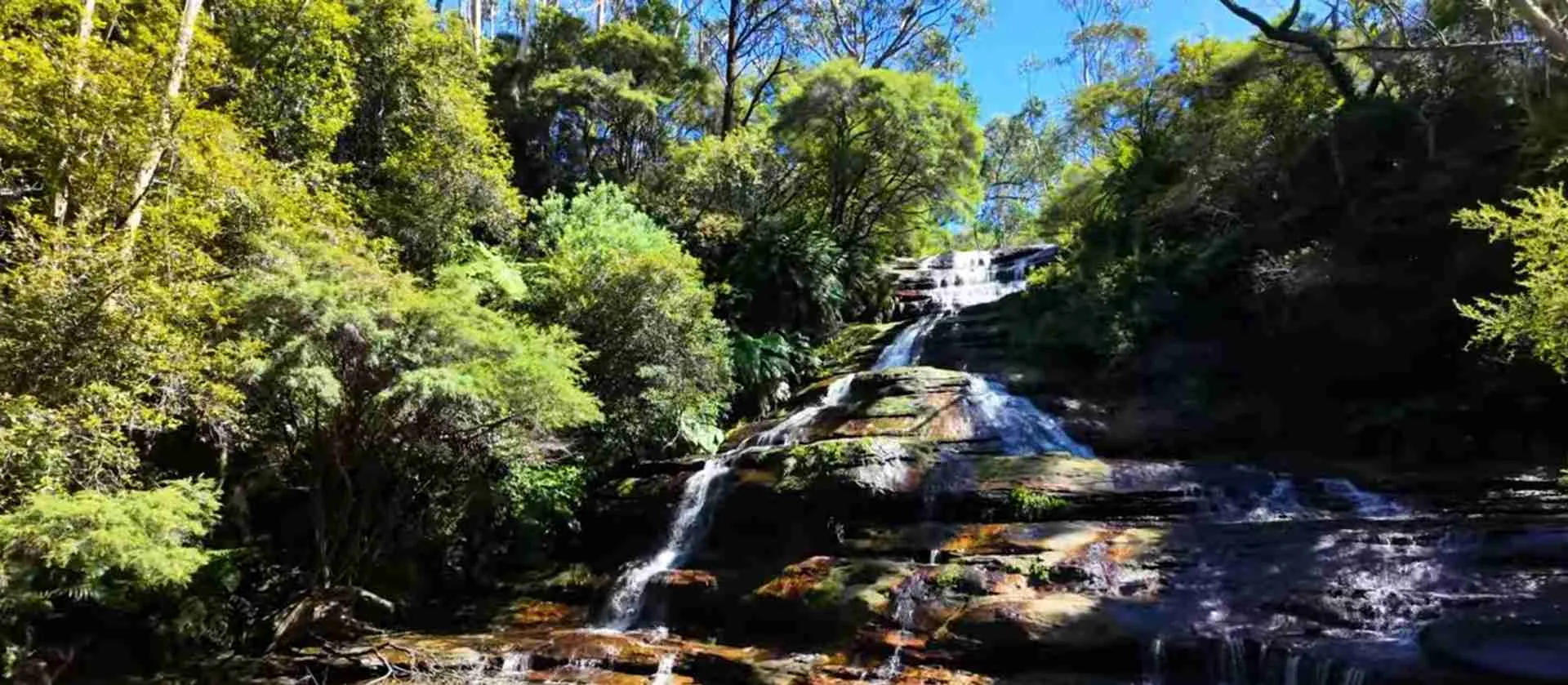
Best Blue Mountains Walks 2026: Three Sisters to Wentworth Falls
Key Takeaways
- Three Sisters walk combines stunning valley views with accessible 2km circuit suitable for all fitness levels in 2026
- Wentworth Falls tracks range from easy waterfall viewing (1 hour) to challenging 4-hour cliff base circuits with 500-step descents
- Giant Stairway descent requires strong knees and fitness – 800+ steps down through rainforest returning via Scenic Railway ($50-55 in 2026)
- Early morning starts between 7-9 AM provide optimal lighting, fewer crowds, and comfortable temperatures during 2026 peak season
- National Park entry remains free in 2026, with train access from Sydney costing $13-15 return using Opal card versus $140-200 for guided tours
- Winter months (June-August 2026) offer clearest views and crisp conditions, while spring (September-November) provides wildflower displays along walking trails
Introduction to Blue Mountains Walking in 2026
The Blue Mountains walking trails deliver Australia’s most accessible wilderness experience, combining dramatic cliff scenery, eucalyptus forests, and spectacular waterfalls within 90 minutes of Sydney. The 2026 season presents exceptional conditions for exploring iconic trails including the Three Sisters walk, Wentworth Falls tracks, and the challenging Giant Stairway descent. This comprehensive guide covers the best walking routes, practical costs, optimal timing, and booking strategies to maximize your Blue Mountains hiking experience in 2026.
Walking the Blue Mountains in 2026 provides distinct advantages over previous years. Infrastructure improvements completed in late 2025 enhanced trail maintenance and safety features, while transportation upgrades streamlined access from Sydney. The walking season extends year-round, with each season offering unique appeal – winter’s crisp clarity for photography, spring’s wildflower displays, summer’s lush vegetation, and autumn’s golden foliage. Strategic planning ensures you experience these trails at their finest while managing crowds and optimizing your budget.
The Blue Mountains walking network encompasses over 140 kilometers of maintained tracks across the Greater Blue Mountains World Heritage Area. This guide focuses on the most rewarding day walks accessible from Katoomba and Wentworth Falls, providing detailed route descriptions, difficulty assessments, cost breakdowns, and practical planning advice for 2026 visitors. Whether you’re seeking gentle scenic strolls or challenging cliff-edge circuits, the Blue Mountains deliver walking experiences that showcase why UNESCO designated this region for World Heritage protection.
People Also Ask About Blue Mountains Walks 2026
What is the best walk in the Blue Mountains for 2026?
The Wentworth Falls to Conservation Hut walk ranks as the best overall Blue Mountains trail for 2026, combining spectacular waterfall views, cliff-edge walking, rainforest sections, and manageable 4-5 hour duration. This 8-kilometer circuit provides comprehensive Blue Mountains experience including Wentworth Falls lookouts, Valley of the Waters descent, and Jamison Creek valley walking. The trail suits moderate fitness levels with well-maintained paths and clear signage throughout.
For visitors with limited time or mobility considerations, the Three Sisters walk at Echo Point delivers maximum scenery with minimal effort. This 2-kilometer circuit takes 45-60 minutes and provides iconic Blue Mountains photography opportunities including the famous Three Sisters rock formation and Jamison Valley vistas. The paved pathway accommodates wheelchairs and strollers, making it the most accessible premium viewpoint in the region.
Adventure walkers should prioritize the Federal Pass loop combining Prince Henry Cliff Walk with Leura Cascades and Scenic Railway return. This challenging 6-hour circuit covers 13 kilometers through dramatic cliff formations, multiple waterfall systems, and pristine rainforest valleys. The Giant Stairway descent adds thrilling vertical exposure, descending 800+ steps through cliff faces before following the valley floor beneath towering sandstone walls.
How difficult is the Three Sisters walk in 2026?
The Three Sisters walk at Echo Point rates as easy difficulty in 2026, featuring fully paved pathway with gradual grades suitable for all ages and fitness levels. The main 2-kilometer circuit completes in 45-60 minutes without significant elevation change, making it the most accessible premium viewpoint walk in the Blue Mountains. Wheelchair users and visitors pushing strollers navigate the pathway successfully, though some lookout platforms require short unpaved detours.
The optional Giant Stairway extension dramatically increases difficulty, descending 800+ steps through cliff faces to reach valley floor trails. This challenging descent requires strong knees, good fitness, and careful foot placement on metal stairs that can be slippery when wet. Most walkers complete the descent in 30-45 minutes, but the physical impact on knees and thighs becomes significant. Return options include the equally steep stairway climb (exhausting for most) or the convenient Scenic Railway ride ($50-55 in 2026) back to clifftop level.
Weather conditions in 2026 impact Three Sisters walk difficulty minimally due to the paved surface and protective railings. Morning fog occasionally obscures views but creates atmospheric photography opportunities. Summer afternoons bring crowds that slow walking pace, making early morning visits (7-9 AM) preferable for comfortable progression and optimal lighting. Winter ice rarely affects the main circuit but can create hazards on the Giant Stairway metal steps.
Can you walk to Wentworth Falls in 2026?
Yes, multiple walking routes lead to Wentworth Falls in 2026, with the most popular approach starting from Wentworth Falls village station (5-minute walk from train platform). The easiest option follows the 1.5-kilometer paved path from Conservation Hut car park directly to Wentworth Falls lookout, taking 20-30 minutes each way with gentle grades suitable for most fitness levels. This route provides stunning waterfall views without significant climbing or technical trail navigation.
The comprehensive Wentworth Falls experience follows the National Pass track, descending through cliff formations to reach the waterfall base and continuing through Valley of the Waters. This 8-kilometer circuit takes 4-5 hours and includes significant elevation change – approximately 300 meters of descent followed by equivalent climbing. The National Pass section features Australia’s most dramatic cliff-face walking, with narrow ledges carved into vertical sandstone walls providing breathtaking exposure and photography opportunities.
Alternative routes in 2026 include the shorter Valley of the Waters walk (3 hours return) and the Wentworth Pass option (2.5 hours return), both accessing different waterfall perspectives. Train access from Sydney delivers hikers directly to Wentworth Falls village for $13-15 return using Opal card, with clear signage guiding visitors to trailheads. Park at Conservation Hut (free) or Wentworth Falls lookout car park ($8 daily fee) for vehicle-based access.
How long does it take to walk the Giant Stairway in 2026?
The Giant Stairway descent from Three Sisters viewpoint to Dardanelles Pass takes 30-45 minutes for most walkers in 2026, covering 800+ steps through vertical cliff faces with spectacular geological formations. The descent demands careful foot placement and controlled movement to protect knees from the sustained downward impact. Fit walkers complete the stairway in 25-30 minutes, while those taking photography breaks or proceeding cautiously require 45-60 minutes.
The return climb reverses this timing but feels considerably longer due to cardiovascular demands and leg muscle fatigue. Most walkers require 45-60 minutes to climb the Giant Stairway, with frequent rest stops needed on platforms positioned every 100-150 steps. The steep gradient maintains consistent challenge throughout, making this one of the Blue Mountains’ most demanding short walks. Heat and humidity in summer months increase difficulty significantly, with early morning climbs (before 10 AM) providing coolest conditions.
Smart planning in 2026 utilizes the Scenic Railway as return transport, eliminating the exhausting climb while experiencing Australia’s steepest passenger railway. Scenic World operates 9 AM-5 PM daily with trains departing every 10 minutes during peak periods. The $50-55 admission (check official Scenic World website for current rates) includes unlimited Scenic Railway, Cableway, and Skyway rides, making the return journey comfortable and providing bonus valley floor exploration opportunities via boardwalk trails.
Extended multi-day tours – 5+ days
Featured New South Wales Multi-Day Tour Packages
8 days
Sydney to Brisbane Adventure (14 destinations)
- ✓ Comprehensive New South Wales tour
- ✓ Expert local guides included
- ✓ All accommodation arranged
- ✓ Transportation provided

5 days
Sydney 5 Days: Iconic Opera House & Scenic Blue Mountains
- ✓ Comprehensive New South Wales tour
- ✓ Expert local guides included
- ✓ All accommodation arranged
- ✓ Transportation provided
7 days
Sydney to Brisbane Experience: Bushwalks & Surfing
- ✓ Comprehensive New South Wales tour
- ✓ Expert local guides included
- ✓ All accommodation arranged
- ✓ Transportation provided

6 days
Best of Sydney & Blue Mountains
- ✓ Booking needs min. 2 travelers
Multi-day tour packages powered by TourRadar. Prices and availability subject to change.
Essential Planning Information for 2026 Blue Mountains Walks
Current Costs and Budget Planning for 2026
Blue Mountains walking costs in 2026 remain remarkably affordable, with National Park entry completely free for all visitors. Train access from Sydney Central to Katoomba or Wentworth Falls costs $13-15 return using Opal card, providing the most economical transport option. The journey takes 2 hours each way with frequent departures throughout the day, delivering walkers directly to trailheads without additional transfer costs.
Scenic World attractions represent the main discretionary expense, with admission priced at $50-55 for adults in 2026 including unlimited access to Scenic Railway, Cableway, and Skyway (check scenicworld.com.au for current official rates as pricing may vary). This investment becomes valuable when planning Giant Stairway walks, as the Scenic Railway provides effortless return transport after the challenging descent. Family packages offer better value, with children under 4 riding free and reduced rates for ages 4-15.
Meal costs in Katoomba and Leura villages range from $15-25 for cafes and casual dining to $35-50 for restaurant meals. Picnic provisions from Sydney supermarkets reduce costs significantly, with scenic picnic areas at Conservation Hut, Govetts Leap, and various lookout points providing exceptional dining settings without expense. Water refill stations operate at major trailheads, eliminating bottled water costs while supporting environmental responsibility.
Transportation and Access Strategies for 2026
NSW TrainLink operates frequent Blue Mountains services from Sydney Central, with trains departing every 30 minutes during peak periods and hourly during off-peak times in 2026. The journey provides comfortable seating, restroom facilities, and large windows showcasing the gradual climb into mountain terrain. Opal card users benefit from daily caps ($16.80 on weekdays, $8.40 on weekends) making multiple trips within 24 hours cost-effective for those exploring various villages.
Katoomba station serves as the main hub for Three Sisters walks and Echo Point access, positioned 15 minutes’ walk uphill from the famous viewpoint. Free shuttle buses connect the station to Echo Point during peak season weekends, operating 9 AM-5 PM with departures every 20-30 minutes. Wentworth Falls station provides direct access to Conservation Hut trails (5-minute walk) and Wentworth Falls village facilities, making it ideal for waterfall-focused walking days.
Driving from Sydney takes 90-120 minutes via the Great Western Highway, with parking available at most trailheads. Echo Point car park charges $4 per hour or $8 daily, while Conservation Hut and Wentworth Falls lookout offer free parking with limited spaces. Weekend and holiday periods see parking fill by 9-10 AM, making early arrival essential or train transport preferable. Parking inspectors actively patrol popular areas, with fines issued for expired meters or restricted zone violations.
Best Blue Mountains Walks for 2026: Detailed Trail Guide
Three Sisters Walk and Echo Point Circuit
The Three Sisters walk from Echo Point delivers the Blue Mountains’ most iconic scenery via an accessible 2-kilometer circuit suitable for all abilities. The paved pathway begins at Echo Point visitor center, following cliff edges with continuous Jamison Valley vistas and multiple photography platforms. The Three Sisters rock formation dominates the skyline, representing Aboriginal legend of three sisters turned to stone, with interpretive signage explaining the Dreamtime story and geological formation processes.
Walk clockwise from Echo Point to maximize lighting for Three Sisters photography, with morning sun illuminating the rock faces while afternoon light creates silhouettes. The circuit includes several lookout platforms extending over cliff edges, providing unobstructed valley views and dramatic perspective shots. Prince Henry Cliff Walk connection extends the circuit for those seeking longer walks, adding 2-3 kilometers of clifftop walking with additional lookout points and forest sections.
The optional Giant Stairway descent adds serious challenge, plunging 800+ steps through vertical cliff faces to reach valley floor trails. This extension transforms a gentle 45-minute stroll into a 2-3 hour expedition requiring strong knees and good fitness. The stairs follow natural cliff features, passing through rock tunnels and offering increasingly dramatic upward views of the Three Sisters formation. Valley floor trails connect to Scenic World boardwalks (free access) or continue to more remote Ruined Castle walks (additional 2-3 hours).
Wentworth Falls Walking Tracks
Wentworth Falls presents the Blue Mountains’ premier waterfall walking destination, with multiple trails accessing different perspectives of the spectacular 300-meter cascade system. The easiest option follows the paved path from Conservation Hut to Wentworth Falls lookout (1.5 kilometers, 30 minutes), providing classic waterfall views from clifftop platforms. This route suits all fitness levels and provides picnic facilities at Conservation Hut with cafe service and restroom facilities.
The National Pass track delivers Australia’s most dramatic cliff-edge walking experience, carved into vertical sandstone walls beneath Wentworth Falls. This 4-kilometer section takes 2.5-3 hours and includes the thrilling overhanging cliff traverse – narrow ledges positioned behind the waterfall with spray creating rainbow effects in morning light. The exposed positioning demands attention to footing and comfort with heights, though safety rails protect the most dramatic sections. Afternoon light creates spectacular waterfall photography with sun penetrating the mist.
The complete Wentworth Falls circuit combines National Pass with Valley of the Waters return, creating an 8-kilometer loop taking 4-5 hours. This route descends via stairs and cliff paths to valley floor level, follows Jamison Creek upstream through pristine rainforest, and climbs gradually through Valley of the Waters with multiple waterfall encounters. The circuit provides comprehensive Blue Mountains terrain experience – cliff formations, rainforest ecosystems, creek valleys, and dramatic vertical topography. Moderate fitness handles the distance, though the elevation changes (300+ meters total) create sustained physical demand.
Federal Pass and Prince Henry Cliff Walk
The Federal Pass loop combines the best Blue Mountains cliff walking with valley floor exploration, creating the region’s most comprehensive day walk. Starting from Katoomba Falls or Leura Cascades, this 13-kilometer circuit takes 5-6 hours and showcases vertical cliff formations, multiple waterfall systems, pristine rainforest, and dramatic valley perspectives. The route suits experienced walkers comfortable with distance and elevation change, providing wilderness experience within easy reach of village facilities.
Prince Henry Cliff Walk forms the upper section, following cliff edges between Katoomba and Leura with continuous valley views and regular lookout platforms. This 7-kilometer stretch takes 2-3 hours and provides mostly level walking on well-maintained paths, making it suitable for casual walkers seeking extended exercise with spectacular scenery. Interpretation signs explain geological features, Aboriginal heritage, and European exploration history, adding educational value to the scenic experience.
The valley floor section follows Federal Pass beneath towering cliffs, connecting waterfalls via shaded creek valleys and rainforest walking. This lower route provides temperature relief during summer heat, with creek crossings and waterfall encounters maintaining interest throughout. The circuit creates satisfying loop structure, with descent via Leura Cascades (stone steps) and return climbing either via Scenic Railway or the challenging Giant Stairway for those seeking maximum workout.
Valley of the Waters Walk
Valley of the Waters from Conservation Hut delivers the Blue Mountains’ most rewarding short walk, combining waterfall encounters, rainforest immersion, and creek valley beauty in a compact 3-hour return journey. The trail descends gradually from Conservation Hut through eucalyptus forest before entering the sheltered valley system where moisture-loving vegetation flourishes. Multiple waterfalls cascade down sandstone walls, with Empress Falls presenting the most photogenic cascade positioned in an amphitheater setting.
The creek valley section follows Jamison Creek downstream through pristine rainforest, with the trail crossing the creek via stepping stones and small bridges. Tree ferns create a prehistoric atmosphere, while creek pools provide habitat for Blue Mountains water skinks and other endemic species. The lower valley opens to reveal towering cliff walls on both sides, showcasing the dramatic vertical topography that characterizes this World Heritage landscape.
Return via the same route or extend the walk by connecting to Wentworth Falls tracks via National Pass for the comprehensive 8-kilometer circuit. This extension adds 2 hours and includes the dramatic cliff-face walking section beneath Wentworth Falls, creating one of Australia’s finest day walks. The extra effort delivers exponentially greater scenery, though the challenging National Pass section requires good fitness and comfort with exposed positions on narrow cliff ledges.
Seasonal Planning for 2026 Blue Mountains Walking
Winter Walks (June-August 2026)
Winter delivers optimal Blue Mountains walking conditions with crisp clear air providing exceptional visibility across the Jamison Valley to distant mountain ranges. Morning temperatures range 4-10°C, creating comfortable hiking conditions once movement warms the body, while afternoon temperatures reach 12-16°C. The clear atmospheric conditions produce brilliant blue skies contrasting with eucalyptus forest greens, enhancing photography opportunities throughout the day.
Early morning starts encounter occasional frost on shaded trail sections and lookout platforms, requiring careful footing on metal stairs and wooden boardwalks. The Giant Stairway metal steps become slippery when frost-covered, making post-sunrise starts (after 9 AM) safer during coldest winter mornings. Crowds diminish significantly during winter weekdays, providing near-private experiences on popular trails that see hundreds of visitors during peak season weekends.
Layer clothing strategically for winter walks, starting with base layers and adding fleece or down when stationary at lookouts. The physical exertion of climbing generates substantial heat, making lightweight layers preferable to heavy jackets that create overheating during active walking. Waterproof outer layer protects against occasional winter rain showers, though Blue Mountains winter weather generally remains dry with precipitation concentrated in spring and autumn months.
Spring Walking Season (September-November 2026)
Spring brings wildflower displays to Blue Mountains walking trails, with native species including waratahs, flannel flowers, and mountain devil creating colorful understory throughout eucalyptus forests. October presents peak flowering, though the extended season runs September through November providing opportunities throughout the three-month period. Waratah blooms emerge first in September, with the crimson flowers creating spectacular displays along Prince Henry Cliff Walk and Valley of the Waters trails.
Weather variability increases during spring, with warm sunny days interspersed with cool fronts bringing showers and temperature drops. Pack lightweight rain jacket for all spring walks, as weather changes rapidly in mountain environments. Morning temperatures range 8-14°C, warming to 16-22°C by afternoon, creating comfortable hiking conditions throughout the day. The increased moisture from spring rains enhances waterfall flows, with Wentworth Falls and Valley of the Waters cascades running stronger than summer and autumn periods.
Crowds begin building during spring weekends as Sydney residents take advantage of warming weather and wildflower displays. Weekday visits provide much quieter experiences, with popular trails like Three Sisters walk and Wentworth Falls tracks seeing 70-80% fewer visitors Tuesday through Thursday compared to Saturday and Sunday. Early morning starts (7-8 AM) capture the best light for photography while avoiding crowds that peak 10 AM-2 PM on all major trails.
Summer and Autumn Considerations (December 2025-May 2026)
Summer brings warm temperatures and increased visitor numbers, with afternoon heat sometimes reaching uncomfortable levels for strenuous walking. Morning starts become essential during December-February, with 7-9 AM departures providing coolest conditions and optimal lighting for valley photography. Afternoon thunderstorms develop frequently during summer months, making early completion of walks advisable to avoid exposure during electrical activity and heavy rainfall.
Autumn delivers outstanding walking conditions with moderate temperatures (12-20°C), lower humidity, and reduced summer crowds dispersing after school holidays end. Deciduous trees introduced in historic gardens provide golden foliage displays, particularly around Leura village and along waterfall walking tracks. March through May presents the second-best walking season after winter, combining comfortable temperatures with generally stable weather patterns and manageable visitor numbers.
Water consumption increases significantly during warmer months, with 2-3 liters recommended for full-day walks like Federal Pass loop or extended Wentworth Falls circuits. Refill stations operate at major trailheads including Echo Point, Conservation Hut, and Scenic World, allowing hikers to carry lighter initial loads and refill during walks. Heat exhaustion risks increase on exposed cliff walks during hot afternoons, making shade-seeking and regular rest breaks essential for maintaining safe core temperatures.
Difficulty Levels and Fitness Requirements for 2026
Easy Walks Suitable for All Abilities
Three Sisters walk from Echo Point represents the Blue Mountains’ premier easy walk, combining spectacular scenery with fully accessible paved pathway. The 2-kilometer circuit takes 45-60 minutes at leisurely pace, with benches positioned at regular intervals for rest and photography. Wheelchair users navigate the main circuit successfully, though some lookout platforms require short unpaved detours. Families with young children complete the walk comfortably, with railings providing safety at cliff edges and minimal elevation change preventing fatigue.
Conservation Hut to Wentworth Falls lookout delivers another excellent easy option, following 1.5 kilometers of paved pathway through eucalyptus forest to waterfall viewpoints. The gentle gradient suits all fitness levels, with the round trip taking 60-90 minutes including lookout time. Restroom facilities and cafe services at Conservation Hut provide convenience for families and casual walkers. This route combines natural beauty with accessibility, making it ideal for introducing visitors to Blue Mountains walking without physical demands.
Govetts Leap lookout and Braeside Walk create additional easy options in the Blackheath area, north of Katoomba. The Braeside circuit follows 2 kilometers of level pathway through garden areas and bushland to reach Govetts Leap – arguably the Blue Mountains’ most dramatic single viewpoint. The Grose Valley vista extends 30 kilometers, with Bridal Veil Falls visible across the valley and multiple cliff formations creating layered perspective. Parking at the lookout eliminates walking entirely for those seeking viewpoint-only experience.
Moderate Walks Requiring Good Fitness
Wentworth Falls National Pass circuit represents the classic moderate Blue Mountains walk, combining manageable distance (8 kilometers) with significant elevation change (300+ meters total). The 4-5 hour duration suits walkers comfortable with half-day excursions, though the sustained climbing during the return leg demands good fitness and strong legs. The narrow cliff-edge sections require comfort with heights and careful footing, adding technical considerations to the physical demands.
Valley of the Waters from Conservation Hut presents moderate challenge through distance and elevation change rather than technical difficulty. The 6-kilometer return walk takes 3 hours with gradual descent to the valley floor followed by sustained climbing on the return. The well-maintained trail surface reduces fatigue compared to rough track walking, though the cumulative elevation gain of 250+ meters creates cardiovascular demand. This walk suits those building fitness for more challenging Blue Mountains expeditions.
Prince Henry Cliff Walk between Katoomba and Leura delivers moderate challenge through distance (7 kilometers one way) rather than elevation change or technical difficulty. The mostly level clifftop path takes 2-3 hours with continuous valley views maintaining interest throughout. Good fitness handles the distance comfortably, with the option to extend into loop walks via valley floor trails or shorten by using one of several connecting paths back to villages. This route works well for training longer distance walking capability without vertical challenge.
Challenging Walks for Experienced Hikers
The Federal Pass loop combining Prince Henry Cliff Walk with valley floor exploration creates the Blue Mountains’ premier challenging day walk. The 13-kilometer circuit takes 5-6 hours and includes 500+ meters of cumulative elevation change through multiple descent and climbing sections. The distance and vertical gain combine to create significant physical demand, with the final climb from valley floor to clifftop testing leg strength and cardiovascular fitness. Experienced walkers comfortable with full-day expeditions find this circuit highly rewarding.
Giant Stairway descent and climb (without Scenic Railway return) represents one of the region’s most demanding short walks. The 800+ steps create intense impact on knees during descent and severe cardiovascular demand during climbing. Most walkers find the climb exhausting regardless of fitness level, with the unrelenting gradient providing no relief during the 45-60 minute ascent. This challenge suits those seeking workout intensity rather than distance, with the spectacular cliff formations and exposed positioning adding adventure elements to the physical demands.
Ruined Castle walk from Scenic World extends valley floor exploration to remote peaks, creating a 9-10 kilometer return expedition taking 5-6 hours. The route follows Federal Pass before climbing steeply to Ruined Castle summit – an eroded sandstone outcrop providing 360-degree views across Jamison Valley. The isolation and distance from rescue services add wilderness considerations to the physical challenges, making this walk suitable only for fit, experienced hikers comfortable with remote terrain and self-reliance.
Sample 2026 Blue Mountains Walking Itineraries
Classic Day Trip: Three Sisters and Wentworth Falls
This efficient day trip combines the Blue Mountains’ two most iconic walks, providing comprehensive scenery experience within a single day from Sydney. Depart Sydney Central on the 7:42 AM train reaching Katoomba at 9:47 AM, walk uphill 15 minutes to Echo Point (or catch shuttle bus), and complete Three Sisters circuit by 11 AM. The early timing provides optimal morning light for photography and avoids crowds that peak after 11 AM.
Return to Katoomba station via Echo Point shuttle or downhill walk (15-20 minutes), catch the 11:30 AM train one stop to Wentworth Falls (3 minutes), walk 5 minutes to Conservation Hut trailhead, and begin Wentworth Falls lookout walk. Complete the 1.5-kilometer circuit by 1 PM, enjoying waterfall views and picnic lunch at Conservation Hut or lookout platforms. The cafe at Conservation Hut serves excellent meals if preferring purchased food to packed provisions.
Catch return train from Wentworth Falls between 2-4 PM depending on desired Sydney arrival time, with the 3:27 PM service reaching Central by 5:34 PM. Train costs $13-15 return using Opal card, lunch ranges $15-25 at Conservation Hut cafe or bring picnic provisions, water from refill stations is free. Total day cost: $28-40 per person (excluding accommodation).
Full-Day Challenge: National Pass Circuit
This demanding itinerary tackles the Blue Mountains’ premier waterfall walk, providing comprehensive cliff and valley experience for fit hikers. Catch early train from Sydney reaching Wentworth Falls by 9 AM, walk 5 minutes to Conservation Hut, begin National Pass circuit by 9:30 AM. The 8-kilometer route takes 4-5 hours with dramatic cliff-edge walking beneath Wentworth Falls, valley floor creek walking, and sustained climbing through Valley of the Waters.
Pack substantial lunch for valley floor dining at scenic creek locations, with multiple picnic spots positioned along Jamison Creek between waterfalls. Carry 2-3 liters of water per person for the full circuit, refilling at Conservation Hut before departure. The challenging National Pass section demands careful footing on narrow cliff ledges, with morning timing providing optimal lighting for the overhanging cliff traverse behind Wentworth Falls.
Complete the circuit by 2-3 PM, refreshing at Conservation Hut cafe with post-walk coffee and snacks, catch return train from Wentworth Falls between 3-5 PM. Train costs $13-15 return, packed lunch saves money versus cafe dining, bring minimum 2 liters water. Total day cost: $13-30 per person (excluding accommodation). This demanding walk delivers exponentially greater scenery than shorter easy walks, justifying the physical effort for those capable of handling the challenge.
Two-Day Exploration: Comprehensive Blue Mountains Walking
This extended itinerary provides thorough Blue Mountains walking experience across two days, covering major trails without rushing. Day one focuses on Katoomba area walks including Three Sisters circuit, Echo Point lookouts, and optional Giant Stairway descent with Scenic Railway return. Arrive Katoomba by mid-morning, complete Three Sisters walk before lunch, explore Scenic World attractions in afternoon, stay overnight in Katoomba village accommodation.
Day two tackles Wentworth Falls walking tracks, beginning with early start for National Pass circuit from Conservation Hut. The 4-5 hour walk provides comprehensive waterfall experience, completing by early afternoon. Catch late afternoon train back to Sydney, or extend stay for Prince Henry Cliff Walk if energy permits. The two-day structure eliminates rushing, allowing thorough exploration of major trails with rest time between walks.
Accommodation costs $120-180 per night for mid-range Katoomba hotels, with budget backpackers available from $40-60 per night in dormitory rooms. Train travel $13-15 each way (one-way trip, not return, as staying overnight), Scenic World admission $50-55, meals $40-70 per day depending on dining choices. Day one costs: Scenic World $50-55, lunch $15-25, dinner $25-40, accommodation $120-180. Total day one: $210-300 per person. Day two costs: packed breakfast or cafe $12-20, lunch $15-25, snacks $8-12. Total day two: $35-57 per person (excluding accommodation from previous night). Two-day total: $245-357 per person (excluding accommodation on the final night).
Safety and Preparation for 2026 Blue Mountains Walks
Essential Gear and Clothing Requirements
Proper footwear ranks as the most critical equipment for Blue Mountains walking, with closed-toe shoes featuring good tread essential for all but the easiest paved walks. Running shoes or trail runners suit most walks, providing adequate grip on rock surfaces and stairs while remaining lightweight for climbing. Dedicated hiking boots become necessary only for challenging routes like Ruined Castle or extended Federal Pass loops where ankle support adds value on rough terrain.
Layered clothing provides temperature regulation flexibility across changing conditions during full-day walks. Base layer (merino wool or synthetic) manages moisture and maintains warmth, mid-layer fleece provides insulation during rest stops, waterproof outer shell protects against rain and wind. Summer walks require sun protection including wide-brimmed hat, sunscreen, and lightweight long sleeves to prevent sunburn on exposed cliff walks where shade remains scarce.
Daypack capacity of 20-30 liters carries all essentials comfortably, including water (2-3 liters for full-day walks), food, layers, first aid kit, phone, and emergency supplies. Walking poles assist on steep descents and climbs, reducing knee impact during Giant Stairway or National Pass traverses. Headlamp or flashlight provides backup if walks extend longer than anticipated, particularly important during shorter winter daylight hours where 4:30 PM sunset approaches quickly.
Weather Monitoring and Risk Management
Blue Mountains weather changes rapidly, with conditions varying significantly between clifftop areas and sheltered valley floors. Check Bureau of Meteorology forecasts before departing Sydney, paying particular attention to temperature ranges, wind speed, and precipitation probability. Morning cloud often obscures valley views but typically clears by mid-morning, making early starts advisable even when forecasts suggest marginal conditions.
Thunderstorm risk peaks during summer afternoons, with electrical activity developing over the mountains between 2-5 PM on hot days. Complete exposed cliff walks by early afternoon during December-February, avoiding ridge walks during active thunderstorms where lightning strike risk increases significantly. Seek shelter in forest areas or return to village facilities if thunderstorms develop, never continuing exposed walks during electrical activity.
Fog occasionally creates disorienting conditions on clifftop walks, reducing visibility to less than 50 meters and obscuring trail markers. Exercise extreme caution near cliff edges during fog, staying well back from drop-offs and following marked trails carefully. The Echo Point area becomes particularly dangerous during fog, with visitors sometimes approaching cliff edges too closely when visual depth perception fails. Cancel walks if heavy fog persists, as the scenery becomes invisible and safety risks outweigh any benefits.
Emergency Procedures and Communication
Mobile phone coverage extends across most Blue Mountains walking areas in 2026, with 4G service available at Echo Point, Wentworth Falls lookouts, and along Prince Henry Cliff Walk. Valley floor areas sometimes lose signal, particularly on National Pass and Federal Pass sections where cliff walls block transmission. Download offline maps before walks and carry physical trail maps as backup navigation tools when electronic navigation fails.
Emergency services respond via 000 (Triple Zero) from mobile phones, with location services helping pinpoint positions when callers cannot provide exact coordinates. Share walking plans with accommodation providers or friends in Sydney, including expected return times and planned routes. If missed return times exceed 2-3 hours without communication, contacts should alert police for search activation, particularly for solo walkers or those attempting challenging routes.
First aid capability handles minor injuries common on walking trails, including blisters, small cuts, twisted ankles, and bee stings. Comprehensive first aid kit includes bandages, antiseptic, pain relievers, blister treatments, compression bandage for sprains, and antihistamines. Snake encounters remain rare but possible during warmer months – maintain distance if spotted, never attempt to catch or kill snakes, seek immediate medical attention if bitten (call 000 and apply compression bandage without restricting blood flow).
Booking and Transportation Strategies for 2026
Train Travel Optimization
NSW TrainLink Blue Mountains services operate hourly throughout most of the day, with increased frequency during morning peak (6-9 AM) and evening peak (4-7 PM) periods. Book train travel through Opal card system, touching on at Sydney Central and touching off at destination stations. Adult Opal card costs accumulate throughout the day but cap at $16.80 on weekdays and $8.40 on weekends, making multiple trips within 24 hours cost-effective for those exploring various villages.
Off-peak travel (after 9 AM on weekdays, all day weekends) provides discount benefits and guaranteed seating due to lower passenger numbers. The 10:12 AM departure from Central reaches Katoomba by 12:17 PM, delivering hikers to trailheads with full afternoon available for walking. Earlier departures at 7:42 AM and 8:42 AM suit full-day walk plans, providing morning arrival and maximum daylight hours for extended routes like Federal Pass loop or comprehensive Wentworth Falls circuits.
Return journey planning considers final train departures – the last train from Katoomba to Sydney typically departs around 10-11 PM, though confirm current schedules before trips as service times adjust seasonally. Missing final trains requires expensive taxi alternatives or overnight accommodation, making buffer time essential when planning return journeys. Early afternoon returns (2-4 PM) provide comfortable margins while still allowing 4-5 hours of walking time from morning arrivals.
Scenic World Ticketing Approaches
Scenic World admission ($50-55 in 2026 for adults, check scenicworld.com.au for current official rates as pricing may vary) provides unlimited access to all attractions including Scenic Railway, Cableway, Skyway, and valley floor boardwalks. Purchase tickets online before visits for small discounts and guaranteed entry during peak periods when capacity limits may apply. Family packages significantly reduce per-person costs compared to individual adult and child tickets, with children under 4 entering free.
Strategic timing optimizes Scenic World value, visiting early (9-10 AM opening) to experience attractions before crowds arrive, completing valley floor boardwalk walks, then using Scenic Railway as return transport from Giant Stairway walks. This approach combines multiple experiences within a single visit, maximizing the admission investment. The boardwalk trails on valley floor access stunning forest areas without additional cost once admission is paid.
Alternative approach skips Scenic World entirely, completing Giant Stairway as return climb for fitness challenge and cost savings. This demanding option suits budget travelers and those seeking workout intensity, though the exhausting stair climb tests most fitness levels. Consider climbing ability realistically before declining Scenic Railway option – many walkers overestimate their uphill capacity and find the 800-step climb brutally difficult after descending the same stairs earlier in the day.
Accommodation Booking Timing
Blue Mountains accommodation books heavily during peak season (September-April) and holiday periods, with weekends requiring advance reservations 4-6 weeks ahead for preferred properties. Mid-range hotels in Katoomba and Leura charge $120-180 per night for double rooms, while budget backpackers offer dormitory beds from $40-60. Luxury guesthouses and boutique properties command $250-400 per night with superior amenities and often include breakfast.
Book winter weekday accommodation with shorter lead times, as demand drops significantly Monday through Thursday during June-August. Last-minute bookings often secure discounted rates during these quieter periods, with some properties reducing prices 20-30% below weekend rates. Verify cancellation policies before booking, as weather uncertainty during winter months may prompt itinerary changes if severe conditions develop.
Village location impacts walking convenience significantly – Katoomba provides closest access to Three Sisters and Echo Point walks, while Wentworth Falls suits waterfall-focused itineraries. Leura offers charming village atmosphere with cafe culture and boutique shopping, positioned between Katoomba and Wentworth Falls for central base location. Train connections between villages take 3-5 minutes, making location less critical for train-based visitors compared to those driving and parking at specific trailheads.
Photography Tips for 2026 Blue Mountains Walks
Optimal Timing for Valley Vistas
Early morning provides the finest photography conditions for Blue Mountains valley views, with soft directional light illuminating cliff faces and the distinctive blue haze creating atmospheric depth. Arrive Echo Point by 7-8 AM during winter and spring for golden hour light painting the Three Sisters formation in warm tones. Summer requires even earlier arrivals (6:30-7:30 AM) to capture best light before harsh overhead sun creates excessive contrast and washed-out colors.
Late afternoon delivers dramatic lighting during autumn and winter months, with low-angle sun creating long shadows across valley terrain and highlighting the vertical topography. The 4-5 PM window produces excellent Three Sisters photography with warm side-lighting emphasizing the rock formations’ three-dimensional structure. Cloud formations often develop during afternoon in the Jamison Valley, creating dynamic skies that add interest to compositions when positioned above the distant mountain ranges.
Overcast conditions suit waterfall photography perfectly, with even diffused light preventing harsh shadows and highlights that plague sunny waterfall images. Schedule Wentworth Falls and Valley of the Waters walks for cloudy days, using slow shutter speeds (1/4 to 2 seconds) to create silky water effects. Cloudy conditions also reduce contrast at Echo Point, making the blue haze less prominent but creating moodier atmospheric images with fog and mist adding mystery to valley views.
Composition Strategies for Cliff Walks
Foreground interest transforms standard cliff-edge valley views into compelling compositions, incorporating rock formations, vegetation, or pathway elements in the lower third of frames. Position yourself to include sections of Prince Henry Cliff Walk pathway curving along cliff edges, with the distant valley and mountains forming background layers. Tree branches extending into frame edges create natural framing elements that add depth and draw viewer attention toward the main valley vista.
Vertical compositions work exceptionally well for Three Sisters photography, encompassing the full height of the rock formations with valley floor visible below and sky above. Portrait orientation emphasizes the dramatic vertical scale of Blue Mountains cliff topography, showcasing the 200+ meter drops from clifftops to valley floors. Include human figures for scale reference, positioning hikers on lookout platforms or pathways to illustrate the massive geological formations’ true dimensions.
Panoramic sequences capture the Blue Mountains’ expansive valley views effectively, stitching multiple images to create wide-format compositions. Shoot 4-6 overlapping frames horizontally while maintaining consistent exposure settings, keeping the horizon level and rotating the camera smoothly between frames. These panoramas work particularly well from Govetts Leap, where the Grose Valley extends 30+ kilometers with multiple cliff formations creating layered depth throughout the composition.
Waterfall Photography Techniques
Slow shutter speeds between 1/4 and 2 seconds create the classic silky water effect in waterfall images, requiring tripod stability or improvised camera support on rocks or railings. Neutral density filters extend shutter speeds during brighter conditions, allowing longer exposures that blur water motion even in midday light. The National Pass section beneath Wentworth Falls provides spectacular spray and mist photography, with rainbow effects occurring frequently when sun angles align correctly with water droplets.
Multiple exposure brackets ensure properly exposed waterfall images despite challenging high-contrast conditions between bright sky, dark rock faces, and white water. Shoot three exposures at -1, 0, and +1 stops, merging them during post-processing to retain detail in both shadow and highlight areas. Alternatively, expose for the water highlights to prevent blown-out white areas, accepting darker shadows that can be lifted slightly during editing without degrading image quality.
Wide-angle lenses (16-35mm full-frame equivalent) capture complete waterfall cascades with surrounding cliff context, while telephoto lenses (70-200mm) isolate specific cascade sections for intimate detail shots. The Valley of the Waters walk provides varied waterfall compositions at different distances, allowing both environmental context shots and closer detail images of individual cascade formations. Early morning and late afternoon side-lighting creates texture and dimension in the rock faces behind waterfalls, adding depth beyond flat front-lighting conditions.
Environmental Conservation and Responsible Walking
Leave No Trace Principles
Blue Mountains National Park operates under strict leave-no-trace principles, requiring all visitors to remove everything they bring including food scraps, packaging, and personal items. Carry reusable water bottles instead of disposable plastic, refilling at stations positioned at major trailheads. Pack out all organic waste including apple cores and orange peels – these items take months to decompose and introduce non-native nutrients to fragile ecosystems despite their biodegradable nature.
Stay on designated trails throughout all walks, avoiding shortcuts that cause erosion and vegetation damage. The temptation to cut switchbacks or create direct routes proves destructive to trail infrastructure and accelerates erosion that threatens long-term trail sustainability. Boardwalk sections protect particularly sensitive wetland areas – never step off boardwalks even for photography opportunities, as single footsteps can damage decades of plant growth in these fragile environments.
Respect wildlife by maintaining distance and never feeding native animals despite their apparent friendliness. Human food harms wildlife health and creates dangerous dependency behaviors where animals approach visitors aggressively seeking handouts. Brush turkeys, kookaburras, and currawongs frequent picnic areas but require strict no-feeding policies to maintain their natural foraging behaviors and prevent overpopulation issues in high-traffic areas.
Fire Safety and Vegetation Protection
Total fire bans apply frequently during summer months and extreme fire danger days, prohibiting all outdoor fire use including camping stoves. Check current fire danger ratings before visiting, with restrictions updated daily during high-risk periods. The Blue Mountains experienced catastrophic bushfires during 2019-20 summer, destroying extensive areas and threatening villages – fire safety compliance protects this World Heritage landscape from preventable disasters.
Eucalyptus forests contain highly flammable oils making them particularly fire-prone during dry conditions. Avoid parking vehicles on dry grass where hot exhausts can ignite vegetation, use only designated parking areas at trailheads. Never discard cigarette butts on trails or in bushland – they remain ignition sources for hours after appearing extinguished. Report any smoke sightings immediately to emergency services via 000, as rapid response prevents small ignitions from developing into major fires.
Sensitive vegetation areas require particular protection, with marked rehabilitation zones excluding all foot traffic. These sections recover from previous overuse or fire damage, requiring complete rest to regenerate native plant communities. Respect all closure signs and fencing, understanding that short-term access restrictions ensure long-term trail sustainability and ecosystem health for future generations of Blue Mountains visitors and endemic species populations.
FAQ: Blue Mountains Walks 2026
Can you do Blue Mountains walks as a day trip from Sydney?
Yes, Blue Mountains day trips from Sydney work excellently with train services taking 2 hours each way, providing 5-6 hours for walking activities between morning arrival and early evening return. Focus on either Three Sisters and Echo Point area or Wentworth Falls for single-day visits, allowing thorough exploration of one major area without rushing between locations. The early train departing Sydney Central at 7:42 AM reaches Katoomba by 9:47 AM, providing full morning and afternoon for walking.
Do I need a guide for Blue Mountains walks?
No, guides are unnecessary for Blue Mountains walks as all major trails feature excellent signage, maintained paths, and straightforward navigation. Independent walking provides flexibility to proceed at your own pace and spend unlimited time at favorite viewpoints. Guided tours offer transportation convenience and educational commentary but restrict timing and route choices compared to independent exploration using train access and trail maps.
What’s the best walk for first-time Blue Mountains visitors?
Three Sisters walk from Echo Point combined with Conservation Hut to Wentworth Falls lookout provides ideal first-time experience, showcasing the region’s iconic scenery via accessible trails suitable for all fitness levels. This combination takes 3-4 hours total including transit between locations, delivers comprehensive Blue Mountains scenery, and requires no technical skills or special fitness. Both walks feature paved paths, regular facilities, and easy train access.
Are Blue Mountains walks safe for solo travelers?
Yes, Blue Mountains major trails prove safe for solo walkers during daylight hours, with regular park visitor traffic on popular routes like Three Sisters, Wentworth Falls, and Prince Henry Cliff Walk. Share walking plans with accommodation providers or friends, carry charged mobile phone, and stick to well-marked main trails. Early morning and late afternoon walks see fewer visitors, making midday timing safer for solo walkers preferring company presence.
Can children complete Blue Mountains walks?
Yes, children handle easy walks like Three Sisters circuit and Conservation Hut to Wentworth Falls lookout successfully with regular rest breaks and snack motivation. Avoid challenging routes like Giant Stairway climb or National Pass for young children, as the sustained physical demands exceed typical childhood endurance. Children as young as 6-8 years complete moderate walks like Valley of the Waters with patient pacing and frequent stops.
What happens if weather deteriorates during walks?
Retreat to nearest trailhead or village if weather deteriorates significantly during walks, particularly if thunderstorms develop or heavy rain reduces visibility and creates slippery conditions. Major trails provide multiple exit points connecting back to roads and villages, with Prince Henry Cliff Walk offering several connecting paths back to Katoomba and Leura. Check Bureau of Meteorology radar before starting walks, postponing if severe weather approaches.
Do I need National Park permits for walking?
No permits required for day walking in Blue Mountains National Park – all trails operate under free access with no booking or registration requirements. Vehicle entry fees apply at some car parks ($8 daily at Echo Point) but these are parking charges rather than park entry fees. Train-based visitors pay zero park fees, with the National Park system funded through New South Wales government budgets rather than direct visitor charges.
Can I bring dogs on Blue Mountains walks?
No, dogs are prohibited on all Blue Mountains National Park walking trails to protect native wildlife and prevent disturbance to natural ecosystems. This prohibition applies to all dogs including service animals, with limited exceptions for certified assistance animals only. Leave dogs at accommodation or with pet-care services when planning Blue Mountains walking days – the restriction receives strict enforcement with significant fines for violations.
What wildlife might I encounter on walks?
Expect encounters with native birds including lyrebirds, superb fairy wrens, yellow-tailed black cockatoos, and various honeyeaters along forested trail sections. Lyrebirds prove particularly rewarding to observe, with their extraordinary mimicry abilities and elaborate courtship displays. Eastern water dragons frequent creek areas, while swamp wallabies sometimes appear at dawn and dusk. Snakes remain rare but possible during warmer months – maintain distance if spotted and continue walking past rather than approaching.
Are there restrooms available on walking trails?
Major trailheads including Echo Point, Conservation Hut, and Scenic World provide restroom facilities, but no facilities exist along the trails themselves. Use trailhead facilities before starting walks and plan walks within comfortable duration limits relative to personal needs. Carry toilet paper and hand sanitizer for emergency situations, using designated areas well away from trails and water sources if necessary. Carry out all waste in sealed bags – no facilities exist for disposal along trails.