
Bernina Express: Complete Guide to the UNESCO Railway
The Bernina Express operates along one of the world’s most spectacular railway routes, climbing through the Swiss Alps on tracks designated as a UNESCO World Heritage Site since 2008. This narrow-gauge railway traverses 145 kilometers from Chur to Tirano, crossing the Bernina Pass at 2,253 meters elevation using only adhesion traction—no rack railway—while navigating 55 tunnels and 196 bridges through landscapes ranging from alpine glaciers to Mediterranean palm trees.
Key Takeaways:
- UNESCO Recognition: The Rhaetian Railway in the Albula/Bernina Landscapes earned World Heritage status in 2008, recognizing the engineering achievement of two historic mountain railway lines built between 1904 and 1910
- Engineering Marvel: The route features gradients reaching 70 per thousand without rack assistance, the steepest adhesion railway crossing the Alps, with iconic structures including the 65-meter-high Landwasser Viaduct and the circular Brusio Viaduct
- Complete Journey: The full Chur-Tirano route requires approximately four hours, passing through 25 stations and climbing from 585 meters to 2,253 meters before descending to 429 meters in Italy
- Panoramic Experience: Modern panoramic coaches feature floor-to-ceiling windows providing unobstructed views of alpine scenery, glaciers, mountain passes, and the dramatic transition from northern to southern Alpine landscapes
- Ticket Requirements: Travel requires both a base ticket and a mandatory seat reservation; standard fares are CHF 96 ($100) second class for the full route, with reservations adding CHF 32-44 ($34-46) depending on season and distance
- Year-Round Operation: The railway operates throughout the year with varying seasonal schedules, offering distinct experiences from winter snowscapes to summer wildflowers
People Also Ask About the Bernina Express
What makes the Bernina Express a UNESCO World Heritage Site?
The Rhaetian Railway in the Albula/Bernina Landscapes received UNESCO World Heritage designation in July 2008 for its outstanding technical, architectural, and environmental achievements. The property encompasses two historic railway lines—the 67-kilometer Albula line opened in 1904 and the 61-kilometer Bernina line completed in 1910—that exemplify early 20th-century engineering solutions for overcoming the isolation of Central Alpine settlements. UNESCO recognized the railway for its comprehensive and diversified set of innovative solutions including 42 tunnels and 144 viaducts on the Albula section, plus 13 tunnels and 52 viaducts on the Bernina section, all harmoniously integrated into dramatic alpine landscapes. The designation honors both the technological achievement of constructing a steep mountain railway without rack assistance and the lasting socio-economic impact on mountain communities, demonstrating how transportation infrastructure transformed alpine life while respecting environmental constraints.
How steep is the Bernina Railway and how does it climb without a rack system?
The Bernina Railway reaches gradients of 70 per thousand (7% incline) while operating entirely on adhesion traction without cog wheels or rack assistance, making it the steepest adhesion railway in the Alps. This engineering achievement relies on the friction between steel wheels and steel rails to provide sufficient grip for both ascending and descending the challenging terrain. The railway employs several technical solutions to navigate these steep sections safely: tight curve radii allowing gradual elevation changes, spiral tunnels that gain altitude within limited horizontal space, and specialized braking systems for the descent. The track gauge of 1,000 millimeters (meter gauge) provides stability while allowing the railway to follow the natural contours of the landscape more flexibly than standard gauge would permit. This adhesion-only design represents a remarkable feat of early 20th-century railway engineering, demonstrating that careful route planning and precision construction could eliminate the need for expensive rack railway infrastructure while maintaining safe operation on severe gradients.
What is the difference between the Bernina Express and regular regional trains on the same route?
The Bernina Express consists of dedicated panoramic coaches with floor-to-ceiling curved windows specifically designed for sightseeing, while regular regional trains operating on the identical route feature standard windows with limited vertical viewing angles. Both services traverse the same UNESCO World Heritage railway line and pass through identical landscapes, tunnels, and viaducts, but the Bernina Express requires mandatory seat reservations (CHF 32-44 depending on route and season) and operates on a fixed schedule with limited daily departures, whereas regional trains accept unreserved seating, run on hourly schedules during peak seasons, and permit free seating anywhere capacity allows. The Bernina Express typically consists entirely of panoramic coaches pulled by modern electric locomotives, offers onboard refreshment service at your seat, provides complimentary WiFi, and includes informational commentary through a smartphone app describing route highlights. Regional trains use standard Rhaetian Railway rolling stock, allow passengers to open windows for photography, permit bicycle transport (prohibited on the Bernina Express), and cost significantly less—only the base ticket price without reservation supplements. Travelers seeking flexibility to stop at intermediate stations, photograph from open windows, or minimize costs often prefer regional trains, while those prioritizing comfort, guaranteed seating, and maximum window exposure choose the Bernina Express panoramic experience.
Which side of the train offers better views on the Bernina Express?
Both sides of the Bernina Express provide spectacular alpine scenery throughout the journey, with different highlights depending on travel direction and route section. Traveling southbound from Chur toward Tirano, the right side offers superior views of the Landwasser Viaduct as the train crosses it, the Albula Valley descending toward Bergün, and the Morteratsch Glacier approaching the Bernina Pass, while the left side provides better perspectives of the Rhine Gorge near Chur, Lake Bianco at the summit, and the dramatic descent through Val Poschiavo toward Italy. The circular Brusio Viaduct near journey’s end delivers 360-degree panoramic views regardless of seating position, as the entire train spirals through the complete loop. Rather than fixating on one side, experienced travelers recommend appreciating the constantly changing perspectives: mountain massifs, glacial valleys, engineering structures, and cultural landscapes alternate between both sides throughout the four-hour journey. The panoramic coach design minimizes this concern—large windows extend across much of the ceiling and side walls, allowing passengers to view across the aisle and observe landmarks on either side without significant obstruction. For photographers seeking specific shots, the regional trains’ opening windows provide greater flexibility than the Bernina Express’s sealed panoramic coaches, compensating for any seating position disadvantages.
Extended multi-day tours – 5+ days
Featured St Moritz Multi-Day Tour Packages

5 days
5 Day Italy Tour Package with Bernina Express – Verona, Sirmione, Bellagio & Como
- ✓ Comprehensive St Moritz tour
- ✓ Expert local guides included
- ✓ All accommodation arranged
- ✓ Transportation provided

4 days
Wonders of Swiss Alps, Bellagio & Lake Como – 4 Days
- ✓ Comprehensive St Moritz tour
- ✓ Expert local guides included
- ✓ All accommodation arranged
- ✓ Transportation provided

7 days
Golf and Wellness Retreat in Switzerland 7Days/ 6 Nights (Luxury)
- ✓ Booking needs min. 2 travelers
6 days
Highlights of Switzerland – 6 days
- ✓ Comprehensive St Moritz tour
- ✓ Expert local guides included
- ✓ All accommodation arranged
- ✓ Transportation provided
Multi-day tour packages powered by TourRadar. Prices and availability subject to change.
Introduction: Understanding the Bernina Express Railway
The Bernina Express represents far more than a scenic train journey through the Swiss Alps—it embodies over a century of railway engineering achievement, cultural integration, and sustainable mountain tourism. Operated by the Rhaetian Railway (Rhätische Bahn in German, Ferrovia Retica in Italian), this service connects the oldest city in Switzerland, Chur, with the Italian border town of Tirano through landscapes so exceptional that UNESCO designated the entire railway corridor as a World Heritage Site in 2008. The designation recognizes not merely the spectacular scenery but the extraordinary human achievement of constructing and operating a mountain railway that harmonizes technical excellence with environmental sensitivity.
The railway’s UNESCO inscription encompasses two distinct but interconnected historic railway lines: the Albula Railway linking Thusis to St. Moritz, opened in 1904, and the Bernina Railway connecting St. Moritz to Tirano, completed in 1910. Together these lines form a continuous transalpine route demonstrating early 20th-century solutions to the fundamental challenge of Alpine transportation—how to connect isolated mountain communities to broader European economic and cultural networks without destroying the landscapes that defined those communities. The Bernina Express, as the signature passenger service operating on this UNESCO route, provides modern travelers direct access to this historic corridor while maintaining operational practices and infrastructure largely unchanged from the railway’s inception.
The journey’s technical specifications reveal why engineers and railway enthusiasts regard the Bernina line as exceptional among Alpine railways. Operating on 1,000-millimeter narrow gauge tracks, the railway climbs from Chur at 585 meters elevation to the Ospizio Bernina station at 2,253 meters—a vertical rise of 1,668 meters accomplished without rack railway assistance. The descent to Tirano at 429 meters adds another 1,824 meters of elevation change, creating total elevation variation of 3,492 meters along the 145-kilometer route. Gradients reach 70 per thousand on several sections, meaning the track climbs or descends seven meters for every 100 meters of horizontal distance, yet trains maintain safe operation using only the friction between steel wheels and rails.
The cultural significance extends beyond engineering achievement. The railway’s construction between 1898 and 1910 employed over 2,000 workers, many from northern Italy, who faced extreme weather conditions, dangerous working environments, and technical challenges that claimed numerous lives. Their labor connected German-speaking Graubünden with Italian-speaking Valposchiavo and the Valtellina region of Italy, creating transportation infrastructure that transformed economic relationships, facilitated cultural exchange, and enabled tourism development that now supports thousands of Alpine residents. The railway reduced travel time between Chur and Tirano from multiple days by carriage to approximately four hours by train—a transformation comparable to the impact of modern aviation on intercontinental travel.
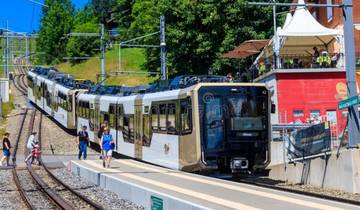
Contemporary travelers experience this heritage through the Bernina Express panoramic coaches, specially designed rolling stock featuring massive windows that extend from floor level to well above passenger head height. These coaches, introduced progressively from the 1970s onward and continually modernized, represent the Rhaetian Railway’s commitment to balancing historic preservation with modern comfort expectations. The sealed panoramic windows maintain climate control and reduce noise, though they prevent the photography flexibility that open windows on regional trains provide. Onboard amenities include WiFi connectivity, smartphone-based informational commentary synchronized with the train’s position, refreshment service delivered to passenger seats, and complimentary gifts during summer seasons—typically Swiss chocolate and herbal tea from Valposchiavo.
Understanding the Bernina Express requires distinguishing between the physical railway infrastructure (the UNESCO World Heritage property), the operating railway company (Rhaetian Railway), and the specific passenger service (Bernina Express). The UNESCO designation protects the historic railway corridor including tracks, structures, stations, and surrounding cultural landscapes, ensuring preservation standards that restrict modifications to historic elements. The Rhaetian Railway operates comprehensive passenger and freight services throughout Graubünden canton using this and other railway lines, maintaining historic infrastructure while providing modern transportation. The Bernina Express represents one specific passenger service—the premium panoramic tourist offering—among several train types using the UNESCO railway, including standard regional trains, local services, and occasional special trains.
The railway’s year-round operation distinguishes it from many Alpine tourist attractions that close during winter months. Snow removal equipment, heated track switches, avalanche protection structures, and winter maintenance protocols enable reliable service through severe Alpine conditions. This operational continuity reflects the railway’s dual purpose: serving tourists seeking spectacular scenery and local residents requiring dependable daily transportation. The seasonal variation in landscape appearance—summer wildflowers, autumn foliage, winter snowscapes, spring snowmelt—provides returning visitors distinctly different experiences, while operational challenges vary from summer thunderstorms triggering temporary stops for passenger safety to winter conditions requiring constant vigilance for avalanche risks and track ice accumulation.
Historical Context and UNESCO World Heritage Designation
The Rhaetian Railway in the Albula/Bernina Landscapes achieved UNESCO World Heritage status on July 7, 2008, during the 32nd session of the World Heritage Committee meeting in Quebec City, Canada. The inscription recognized the property under cultural criteria (ii) and (iv), identifying the railway as an outstanding example of early 20th-century mountain railway development and a significant illustration of cultural exchange in civil engineering technology. The designation encompasses not only the railway infrastructure itself but also the surrounding cultural landscapes through which the line passes, creating a protected corridor approximately 122 kilometers long spanning two of Switzerland’s most dramatic Alpine valleys.
The UNESCO inscription cites specific justifications for World Heritage status that extend beyond engineering achievement to encompass social, economic, and cultural impacts. Criterion (ii) recognizes that the Rhaetian Railway constitutes an outstanding technical, architectural, and environmental ensemble demonstrating substantial interchange of human and cultural values in mountain railway technology development, architectural achievement, and aesthetic harmony with landscapes. Criterion (iv) identifies the railway as an exceptionally significant illustration of high-altitude mountain railway development in the first decade of the 20th century, representing a consummate example of quality that proved instrumental in long-term development of human activities in mountainous regions.
The historic context begins in the 1890s when Swiss railway development focused intensively on overcoming Alpine barriers to connect isolated communities with national and international transportation networks. The Gotthard Railway (1882) and Simplon Tunnel (1906) provided north-south routes through the central and western Alps, but eastern Switzerland remained isolated despite the economic importance of resort communities like St. Moritz and the strategic significance of connecting Switzerland with Italy through multiple corridors. The Rhaetian Railway’s Albula line, conceived in the 1890s and opened in 1904, represented the first solution for eastern Graubünden, linking Chur to St. Moritz through extraordinarily challenging terrain.
The Bernina line’s development emerged from complementary motivations: connecting the affluent resort of St. Moritz with Italy to facilitate tourist access from Milan and southern Europe, establishing freight connections for agricultural and industrial products, and providing year-round transportation for Valposchiavo residents whose valley had previously been accessible only via high mountain passes closed in winter. The line’s construction between 1906 and 1910 occurred under the direction of the Bernina Railway Company, which operated independently until merging with the Rhaetian Railway in 1943. Chief engineer Friedrich Hennings designed the route, applying lessons learned from the earlier Albula line while introducing innovations specific to the Bernina Pass’s extreme gradients and exposure.
The construction process required solving unprecedented technical challenges. The Bernina line’s decision to avoid rack railway technology—which would have increased construction and operational costs—necessitated extremely careful route selection to keep gradients below 70 per thousand while navigating terrain that naturally dropped far more steeply. This constraint produced the spectacular engineering works that now attract photographers and railway enthusiasts: spiral tunnels gaining altitude within limited horizontal space, viaducts crossing deep gorges at carefully calculated angles to maintain acceptable grades, and track alignments that follow natural contours rather than forcing straight routes through obstacles.
Labor conditions during construction were extraordinarily harsh. Workers lived in basic barracks, worked through winter conditions at high altitude, and faced constant danger from rock falls, avalanches, and accidents with explosives and heavy machinery. The workforce, predominantly Italian laborers from northern regions experiencing economic hardship, accepted these conditions for wages significantly higher than agricultural work provided but still modest by Swiss standards. Historical records document numerous fatalities during construction, though exact numbers remain uncertain as record-keeping for transient foreign workers was incomplete. The workers’ contributions receive recognition at several points along the modern railway, with memorial plaques and informational displays acknowledging their role in creating the route modern travelers enjoy.
The line’s opening on July 5, 1910, transformed Valposchiavo from one of Switzerland’s most isolated valleys into a year-round transportation corridor. Freight service enabled agricultural exports from the valley’s fertile lands, particularly dairy products and wine, while passenger service facilitated both emigration and tourism. The economic impact was immediate: St. Moritz gained direct rail connection to Milan (requiring only a change at Tirano to Italian State Railways), Italian tourists could reach Swiss resorts more easily, and valley residents could access employment, education, and commercial opportunities in Chur and other Swiss cities without arduous mountain journeys.
The railway’s role during both World Wars added historical significance beyond its peacetime transportation functions. Switzerland’s neutrality required maintaining defensive capabilities at all Alpine passes, and the Bernina line provided strategic military transportation for troops and supplies defending the Engadin region. The railway also facilitated refugee movements, particularly during World War II when individuals fleeing fascist Italy crossed into Switzerland, and provided essential freight connections when international border restrictions complicated alternative supply routes. These wartime roles, while less celebrated than the railway’s tourist and economic functions, contributed to the line’s designation as nationally significant infrastructure meriting preservation.
The UNESCO designation process began in the early 2000s when Swiss heritage organizations, the Rhaetian Railway, and cantonal authorities recognized that the railway met World Heritage criteria through its combination of technical achievement, cultural landscape integration, and continued operational significance. The nomination dossier, submitted in 2007, required extensive documentation of the railway’s physical structures, historical development, and ongoing management practices. UNESCO’s advisory body, the International Council on Monuments and Sites (ICOMOS), conducted site visits and technical evaluations before recommending inscription with specific management requirements to ensure preservation of historic elements while permitting continued railway operations.
The World Heritage status imposes specific obligations on the Rhaetian Railway and Swiss authorities. All modifications to historic structures require heritage review to ensure compatibility with preservation objectives. Track maintenance must balance modern safety standards with preservation of original alignment and engineering works. Station buildings, signals, and operational infrastructure in the protected corridor receive special scrutiny for alterations. The designation also requires ongoing monitoring of threats to the property’s “outstanding universal value,” including climate change impacts on glaciers and landscapes visible from the railway, tourism pressure affecting fragile environments, and development pressures in communities along the route.
The practical benefits of UNESCO designation extend beyond prestige. World Heritage status increases international recognition, supports tourism marketing efforts, facilitates cultural heritage funding, and provides additional legal protection against development proposals that might compromise the railway corridor’s character. The designation has proven particularly valuable in justifying infrastructure investments: when historic structures require expensive preservation work, World Heritage obligations strengthen arguments for adequate funding rather than less expensive but historically inappropriate modern replacements.
Route Geography and Engineering Landmarks
The Bernina Express route divides into three distinct geographic and engineering sections, each presenting unique technical challenges and landscape characteristics. The northern Albula section from Chur to St. Moritz traverses the Albula Valley and crosses the Albula Pass through extensive tunnel infrastructure. The central Bernina section climbs from St. Moritz to Ospizio Bernina at the pass summit, navigating exposed high-altitude terrain above the treeline. The southern Val Poschiavo section descends from the Bernina Pass to Tirano through steep mountain slopes and Mediterranean vegetation, concluding at the lowest point of the entire route.
The journey begins at Chur Bahnhof, situated at 585 meters elevation in the Rhine Valley. Chur, Switzerland’s oldest continuously inhabited city with settlement evidence dating to the Bronze Age, serves as the capital of Graubünden canton and the operational headquarters of the Rhaetian Railway. The station functions as a major transportation hub where the Bernina Express route diverges from other Rhaetian Railway lines serving the Rhine Valley and connections to the Swiss Federal Railways network. The first section southward follows the Hinterrhein (Posterior Rhine) through a dramatic gorge carved over millennia by glacial meltwater, with track alignment hugging valley walls and crossing the river on multiple bridges as the railway gains elevation.
The Rhine Gorge section between Chur and Reichenau demonstrates early challenges of mountain railway construction. The narrow valley required multiple tunnels to avoid unstable slopes, while the river’s meandering course necessitated repeated crossings on substantial bridges. The landscape transitions from agricultural valleys near Chur to increasingly steep forested slopes as the train climbs southward. At Reichenau, the railway reaches the confluence of the Vorderrhein (Anterior Rhine) and Hinterrhein, where these two major tributaries join to form the Rhine proper. The station serves the nearby medieval Reichenau Abbey and marks the junction where branch lines diverge toward other destinations.
Beyond Reichenau, the route follows the Albula Valley, climbing steadily through a succession of engineering works designed to gain altitude while maintaining manageable gradients. The landscape opens into broader valley floors around Thusis, where the railway crosses the Albula River on the first of many viaducts that will characterize the route. The valley sides display evidence of historic landslides and rockfalls that complicated railway construction, with several sections requiring extensive retaining walls and avalanche protection structures to ensure safe year-round operation. Traditional Alpine villages appear at regular intervals, their architecture reflecting Romansh cultural traditions distinct from both German and Italian influences.
The Landwasser Viaduct, located between Filisur and Alvaneu, stands as the railway’s most photographed structure and the signature image representing the entire UNESCO World Heritage property. This curved limestone structure spans 136 meters at a maximum height of 65 meters above the Landwasser River, with six arches supporting the approach to the eastern tunnel portal. Construction between 1901 and 1902 employed traditional stone masonry techniques, with each stone precisely cut and fitted without modern lifting equipment. The viaduct’s dramatic setting—crossing a narrow gorge immediately before disappearing into a tunnel carved directly into the rock face—creates the iconic view reproduced in countless photographs and promotional materials.
The technical achievement of the Landwasser Viaduct extends beyond its visual impact. The structure combines functional efficiency with aesthetic grace: the curved alignment matches the valley’s natural contours while providing acceptable track radius for trains, the limestone construction harmonizes with surrounding rock formations, and the proportions demonstrate classical engineering principles balancing structural strength with material economy. The immediate transition from viaduct to tunnel represented an innovative solution to terrain constraints, eliminating the need for additional approach structures while creating a dramatic visual effect. The viaduct remains in active use with minimal modifications from its original 1902 configuration, demonstrating the quality of early 20th-century engineering when construction standards prioritized durability over cost minimization.
Beyond the Landwasser Viaduct, the route continues climbing through increasingly dramatic alpine terrain toward Bergün, a traditional mountain village that serves as a base for exploring the Albula Railway’s engineering highlights. The section from Bergün to Preda demonstrates the railway’s solution for gaining maximum altitude within limited horizontal space: a series of spiral tunnels and loops that effectively double back on themselves, allowing the track to climb steep slopes while maintaining constant gradients. These works, though less visually spectacular than exposed viaducts, represent equally impressive engineering calculation and construction precision.
The Albula Tunnel, at 5,866 meters the longest tunnel on the entire route, penetrates the Albula Pass at the upper end of the Preda valley. Construction between 1898 and 1902 proceeded simultaneously from both portals, with survey teams achieving remarkable precision: when the two tunnel bores met in the mountain’s center, horizontal alignment differed by only 83 centimeters and vertical alignment by 53 centimeters—extraordinary accuracy considering early 20th-century surveying technology. The tunnel emerges at Spinas in the upper Engadin Valley, where the landscape transitions dramatically to the region’s characteristic high-altitude plateau topography with broad valleys, extensive wetlands, and clear views of surrounding peaks.
The Engadin section from the Albula Tunnel to St. Moritz traverses Switzerland’s highest inhabited valley, a broad glacial trough at approximately 1,800 meters elevation flanked by peaks exceeding 3,000 meters. The railway follows the valley floor past a chain of Engadin lakes—Lej da Champfèr, Lej da Silvaplauna, Lej da Segl (Silsersee), and Lej da San Murezzan (St. Moritzersee)—each contributing to the region’s distinctive landscape. The relatively gentle terrain in this section provides visual relief from the dramatic gradients and structures of the Albula ascent, while showcasing the cultural landscape of Alpine agriculture and tourism development that characterized Engadin valley settlement.
St. Moritz, at 1,775 meters, represents both the terminus of the Albula section and the beginning of the Bernina ascent. The resort’s development from a small Alpine village to an international tourism destination paralleled railway construction, with improved transportation access enabling the winter sports industry that now defines St. Moritz’s economy. The railway station serves as both a through station for Bernina Express trains and a terminus for regional services, with extensive platform facilities reflecting the volume of tourist and local passenger traffic.
The Bernina ascent from St. Moritz toward the pass represents the route’s most technically demanding section. The railway climbs from 1,775 meters to 2,253 meters—a rise of 478 meters—over approximately 20 kilometers, requiring constant gradients approaching the 70 per thousand maximum while navigating exposed mountain slopes subject to avalanches, rockfalls, and extreme weather. The section lacks the extensive tunnel infrastructure of the Albula line; instead, the track follows natural terraces and ridgelines, with numerous avalanche galleries protecting vulnerable sections where snow slides could cross the railway.
Morteratsch station, at 1,896 meters, provides access to the Morteratsch Glacier, one of the largest glaciers in the Bernina massif. Historical photographs displayed at the station document the glacier’s dramatic retreat over the past century, with the ice front having receded several kilometers since the railway’s opening. The visual evidence of climate change impacts visible from this station has contributed to environmental awareness among railway passengers, transforming a historic engineering landmark into an outdoor classroom on glacial dynamics and global warming.
Above Morteratsch, the railway continues climbing past Bernina Diavolezza station, the highest staffed railway station in the Rhaetian Railway network, where passengers can transfer to cable cars accessing high-altitude ski areas and mountain viewpoints. The landscape at this elevation exists above the natural treeline, with only hardy alpine grasses, lichens, and dwarf shrubs able to survive the harsh growing conditions. The track alignment follows exposed ridges offering dramatic views across the Bernina massif, with peaks including Piz Bernina (4,049 meters, the highest in the Eastern Alps) and Piz Palü (3,900 meters) dominating the western horizon.
Ospizio Bernina station, at 2,253 meters, marks the highest point on the entire Rhaetian Railway network and the southern portal of the Bernina Pass tunnel network. The station building, constructed in traditional stone and timber Alpine architecture, provides shelter from weather extremes at this exposed location. The surrounding landscape features three alpine lakes—Lej Nair (Black Lake), Lej Pitschen (Small Lake), and Lago Bianco (White Lake)—each exhibiting distinct colors resulting from different geological conditions and glacial sediment content. Lago Bianco’s milky turquoise color, caused by suspended glacial flour particles, creates one of the route’s most photographed natural features.
The descent from Ospizio Bernina into Val Poschiavo represents a complete environmental transition over barely 20 kilometers of track. The railway drops from 2,253 meters to 1,013 meters at Poschiavo village, traversing multiple climate zones from high-alpine tundra through subalpine meadows, coniferous forests, mixed deciduous forests, and finally to Mediterranean vegetation zones where chestnuts, vineyards, and even palm trees grow. This extraordinary biodiversity concentration results from the valley’s southern exposure, sheltered position, and rapid elevation change creating microclimates supporting vegetation associations typical of regions hundreds of kilometers farther south.
The upper Val Poschiavo section features several notable viaducts crossing lateral valleys and gorges as the railway follows the slope contours. Alp Grüm station, at 2,091 meters, provides the last high-altitude viewpoint before the descent, with panoramic views northward to the Bernina peaks and southward down the entire Poschiavo valley to the Italian lowlands visible on clear days. The station restaurant, accessible only by train or hiking trail, serves as a destination for travelers seeking the experience of dining at a remote mountain railway station with exceptional views.
The middle Poschiavo section traverses extensive pastureland and traditional Alpine dairy farming landscapes, with historic stone barns and seasonal cheese-making operations visible from the train. The valley’s architecture begins transitioning from the stone-and-timber construction typical of German-speaking Graubünden to the stucco-finished buildings with overhanging roofs characteristic of Italian-speaking Alpine regions. Poschiavo village, the valley’s main settlement, displays well-preserved historic architecture including baroque churches and patrician houses reflecting the community’s past prosperity from trade and agriculture.
The lower Poschiavo section between Poschiavo village and Brusio contains the Brusio Circular Viaduct, the second most photographed structure on the entire route. This spiral viaduct, constructed 1906-1908, solves the challenge of descending 30 meters in a confined valley space by creating a complete 360-degree loop with radius of 70 meters and constant gradient of 70 per thousand. The nine-arch stone structure allows the railway to lose altitude while maintaining safe gradients, with passengers experiencing the unusual sensation of the train passing directly above and below their position as it completes the spiral. The viaduct demonstrates elegant engineering problem-solving: rather than forcing the route down the valley with dangerous gradients or expensive tunneling, the spiral uses available horizontal space to convert steep terrain into manageable grades.
The final section from Brusio to Tirano descends through increasingly Mediterranean landscapes, with extensive vineyards, chestnut groves, and stone-walled terraces characteristic of southern Alpine valleys. The railway crosses the Swiss-Italian border at Campocologno, marked by a simple border post but no passport controls under Schengen Agreement provisions. The final kilometers traverse Italian territory along the Poschiavino River to Tirano, situated at 429 meters in the Valtellina, a broad valley opening toward Lake Como and the Po River plain.
Tirano station serves as the interchange point between the Swiss Rhaetian Railway’s meter-gauge tracks and the Italian State Railways’ standard-gauge network, with separate but adjacent platforms serving each system. The town’s architecture, cuisine, and cultural atmosphere immediately signal the transition from Swiss to Italian environments, with Lombard baroque churches, Italian restaurants, and street life patterns contrasting sharply with the ordered Swiss villages higher in the valley. For Bernina Express passengers, Tirano represents either the journey’s conclusion or the departure point for return travel through the same landscapes from a reversed perspective.
Journey Experience and Onboard Features
The Bernina Express panoramic coaches represent the culmination of decades of specialized railway vehicle development for scenic tourism. The current generation of vehicles, introduced progressively since the 1990s and continuously refined, features floor-to-ceiling curved windows that extend across approximately 60 percent of the coach’s vertical surface area, providing unobstructed views without the need to crane one’s neck or shift position constantly. The windows’ curves extend both upward toward the roof and outward from the body sides, creating a greenhouse effect that maximizes visibility while maintaining the structural integrity necessary for safe operation at high speeds through mountain terrain.
The coach interiors employ a 2+1 seating configuration in first class and 2+2 in second class, with seat widths and legroom designed for extended journeys of four hours or more. Seat cushions use high-density foam providing support without excessive firmness, covered in durable fabrics chosen for their resistance to wear from tourist traffic while maintaining comfortable tactile qualities. Each seat features adjustable backrests, folding tray tables for refreshments or work materials, and individual reading lights. Unlike many modern trains, the Bernina Express retains the ability to rotate seats 180 degrees, allowing travel groups to configure facing seating arrangements for conversation and shared viewing of landscapes.
The panoramic windows employ multi-layer safety glass with ultraviolet filtering properties that protect passengers from excessive sun exposure at high altitudes where UV intensity increases significantly. The glass specifications balance transparency for optimal views with thermal control to prevent excessive heat buildup during summer months when direct sunlight can raise interior temperatures uncomfortably. The sealed window design prevents opening for air circulation or photography, a deliberate choice prioritizing climate control, reduced noise levels, and dust/pollen exclusion over the flexibility that opening windows would provide. This design decision reflects the Rhaetian Railway’s assessment that most passengers prioritize comfort over photography opportunities during the four-hour journey.
Climate control systems maintain comfortable interior temperatures across the extreme range of external conditions the railway experiences: from below-freezing temperatures at the Bernina Pass in winter to Mediterranean warmth in Tirano during summer. The heating system employs both forced-air distribution and radiant floor heating to ensure even temperature distribution without creating uncomfortable drafts. Air conditioning provides cooling during summer months, though the high-altitude sections’ naturally cool temperatures reduce cooling demand compared to lower-elevation railways. The ventilation system exchanges air constantly to maintain freshness while filtering incoming air to remove pollen and particulates.
Onboard refreshment service offers a curated selection of beverages and light meals delivered to passenger seats by roving attendants pushing service trolleys through the coaches. The beverage menu emphasizes regional products including coffee from Italian roasters, Swiss chocolate-based drinks, herbal teas produced in Valposchiavo, and wines from Graubünden vineyards. Snack offerings include packaged sandwiches, pastries, and chocolate products, with emphasis on Swiss and regional Italian specialties rather than generic international options. During summer peak seasons, each passenger receives a complimentary gift package containing Lindt chocolate hearts and herbal tea in a souvenir box designed for retention as a journey memento.
The onboard WiFi system provides complimentary internet connectivity throughout most of the route, though signal quality varies based on location and terrain. The numerous tunnels interrupt connectivity regularly, while the exposed mountain sections at high altitude generally maintain good signal strength due to direct line-of-sight to transmission towers. The Rhaetian Railway’s network infrastructure prioritizes coverage along tourist routes, resulting in better connectivity on the Bernina Express compared to many regional trains. Bandwidth limitations during peak travel times can reduce download speeds, but email access and basic web browsing remain functional for most passengers.
The informational commentary system employs a smartphone app that passengers download before or during the journey, with GPS positioning triggering audio descriptions and visual content synchronized with the train’s location. The app supports multiple languages including English, German, Italian, French, Spanish, and Japanese, with professionally narrated content describing engineering landmarks, historic sites, natural features, and cultural highlights visible from the windows. The system represents a modern alternative to traditional printed guide materials or audio guides, allowing content updates without physical distribution of new materials and enabling passengers to access information at their own pace rather than following fixed commentary schedules.
The restroom facilities maintain cleanliness standards appropriate for a premium tourist service, with modern fixtures, adequate space for luggage and movement, and accessibility accommodations for passengers with mobility limitations. The railway employs retention tanks rather than direct discharge systems, ensuring environmental compliance particularly important given the UNESCO World Heritage designation and sensitive alpine ecosystems through which the route passes. Attendants monitor and maintain facilities throughout the journey, with supplies replenished and cleaning performed at major stations during passenger boarding periods.
Accessibility features accommodate passengers with various mobility requirements, though the heritage nature of much station infrastructure creates limitations compared to modern barrier-free designs. Designated wheelchair spaces exist in specific coaches, with wider doors, appropriate floor clearances, and securing points for wheelchairs during travel. Passengers requiring accessibility accommodations must reserve these specific spaces in advance through the railway’s accessibility booking service, as the limited number of adapted positions cannot accommodate last-minute requests during peak travel periods. Platform access at various stations ranges from level boarding at modernized facilities to requiring portable ramps or station staff assistance at historic stations where platform modifications would compromise heritage preservation requirements.
The luggage storage provisions reflect the railway’s dual character serving both tourists with substantial baggage and day-trip passengers carrying minimal gear. Overhead racks provide space for small bags, coats, and personal items, while larger suitcases require placement in designated luggage areas at coach ends. The storage capacity limitations during peak summer seasons when tourist volumes peak can create competition for space, leading the railway to recommend its luggage forwarding service for passengers making multi-day journeys with substantial belongings. This service allows passengers to ship bags directly to destination accommodations, traveling with only day bags and cameras on the train itself.
Photography from the sealed panoramic windows requires techniques different from open-window photography. The glass reduces some image sharpness and can create reflections that degrade photograph quality, particularly when interior lighting reflects in the window surface. Experienced railway photographers recommend several strategies: positioning the camera lens as close to the glass as possible to minimize reflection angles, using lens shades to block ambient interior light from reaching the lens, shooting when the train passes through tunnels or shaded areas where interior-exterior light level differences decrease, and employing polarizing filters to reduce reflections though these also reduce overall light transmission. The constantly changing landscape and frequent tunnels challenge photographers to remain alert for fleeting opportunities, as the train’s continuous motion prevents returning to missed shots.
The journey’s pacing creates natural rhythm: gradual acceleration departing stations, sustained cruising speeds on straight valley sections, reduced speeds through curves and approaching major structures, brief stops at stations serving local passengers, and longer pauses at major stations where passenger volumes justify extended boarding times. The operational schedule balances tourism expectations for relaxed viewing with transportation efficiency requirements, resulting in average speeds of approximately 35 kilometers per hour for the complete journey—slow by modern railway standards but appropriate for the terrain challenges and passenger experience priorities.
Weather conditions dramatically influence the visual experience despite the climate-controlled interior environment. Clear days provide crisp views of distant peaks and detailed perception of engineering structures, though intense sunlight can create harsh shadows and glare challenging for photography. Partially cloudy conditions often produce the most photographically interesting light, with cloud shadows moving across mountain slopes, dramatic sky backgrounds, and occasional penetrating sun beams highlighting specific landscape features. Overcast conditions reduce visual drama but provide even lighting that reveals subtle terrain details and eliminates harsh shadows. Precipitation events—rain in valleys, snow at high altitudes—create atmospheric effects ranging from reduced visibility to spectacular clearing conditions when storms break, revealing snow-covered peaks emerging from clouds.
The seasonal variation in landscape appearance creates fundamentally different visual experiences throughout the year. Spring journeys (April-May) feature snowmelt waterfalls cascading down valley walls, flowering alpine meadows at lower elevations while high-altitude sections remain snow-covered, and dramatic temperature gradients from cool mountain passes to mild valley floors. Summer travel (June-August) showcases maximum vegetation growth with alpine wildflowers at high elevations, lush meadows in mid-altitude zones, and full agricultural activity in valley settlements. Autumn journeys (September-October) display changing foliage colors particularly spectacular in the larch forests that turn golden yellow before dropping needles, while early season snowfalls begin accumulating on high peaks. Winter travel (November-March) presents snow-covered landscapes throughout most of the route, frozen waterfalls, cross-country skiing activities visible from the train, and the distinctive quality of winter light at high latitudes.
The audio environment inside the panoramic coaches combines mechanical sounds from the railway’s operation with environmental sounds penetrating the sealed windows and social sounds from fellow passengers. The electric locomotives’ characteristic humming intensifies during acceleration and climbing sections when power demand peaks, while coasting sections produce primarily wheel-rail contact sounds and air resistance noise. Tunnel passages create dramatic sound level increases as noise reflection amplifies within confined spaces, with the sudden silence upon emerging from tunnels providing acoustic contrast. The climate control systems produce continuous low-level ventilation noise that masks some external sounds, while conversations among passengers add variable social ambient sound depending on cultural norms, travel group composition, and individual personality factors.
Ticket Systems, Reservations, and Pass Integration
The Bernina Express employs a two-component fare structure that separates base transportation charges from mandatory seat reservation supplements, creating complexity that confuses many first-time travelers but allows flexibility for pass holders and frequent users of Swiss railway services. Understanding this dual system proves essential for budgeting accurately and selecting the most economical ticket option for individual circumstances.
Base tickets provide the actual right to travel on the railway between specified origin and destination stations, with pricing determined by distance traveled and class of service. The standard fare structure for the complete Chur to Tirano route charges CHF 96 ($100) for second class and CHF 164 ($170) for first class, representing unrestricted walk-up fares valid for any departure on the date of purchase without advance booking requirements. These base fares grant access to regular railway seats on any train operating the route—not specifically the Bernina Express panoramic coaches—and include transfer privileges allowing passengers to break the journey at intermediate stations provided all travel occurs within the ticket’s validity period.
Shorter route segments employ proportionate pricing based on distance tables published in the Rhaetian Railway’s official tariff schedules. The popular St. Moritz to Tirano section, frequently chosen by travelers combining the Bernina Express with other activities in the Engadin region, charges CHF 33 ($35) second class and CHF 57 ($60) first class for base transportation. Intermediate stations between Chur and Tirano generate their own fare combinations based on kilometers traveled, with the railway’s computerized ticketing system calculating appropriate charges for any valid origin-destination pair. Tickets purchased at station counters, through the railway’s official website, or via authorized agents all reflect identical base fare pricing, as the Rhaetian Railway maintains consistent pricing across distribution channels.
The mandatory seat reservation system serves multiple purposes beyond simply assigning passengers to specific seats. The reservation fee contributes to the premium service costs associated with operating specialized panoramic coaches, maintains manageable passenger volumes preventing overcrowding that would degrade the tourist experience, and provides operational predictability allowing the railway to allocate appropriate rolling stock for expected demand. Reservation pricing varies by route length and season, reflecting the railway’s revenue management strategies and operational cost variations.
For the complete Chur to Tirano journey, seat reservations cost CHF 44 ($46) per person during high season (May 2 through October 25) and CHF 40 ($42) during low season (remainder of the year). The shorter St. Moritz to Tirano section requires CHF 32 ($34) year-round regardless of season. These fees apply identically to first and second class passengers, meaning class selection affects only the base ticket price while reservation supplements remain constant. Children under age six travel without tickets or reservations provided they sit on accompanying adults’ laps rather than occupying separate seats, while children age six through fifteen pay full adult reservation fees despite receiving discounted base ticket pricing.
The reservation requirement carries absolute enforcement: passengers without valid reservations cannot board the Bernina Express panoramic coaches regardless of ticket possession or seat availability. This policy contrasts with many European trains where reservations are optional or recommended but not mandatory, creating potential confusion for international travelers accustomed to more flexible systems. The railway’s online reservation system allows booking up to 365 days in advance, though actual availability typically extends only to the publication date of the next timetable revision, usually mid-December for the following year’s services. Peak summer dates often sell out weeks or months in advance, while winter travel generally permits booking closer to departure dates.
Swiss Travel Pass holders receive significant value from the pass’s comprehensive coverage of the Bernina Express base fare while still requiring reservation payment. The Swiss Travel Pass provides unlimited travel on Swiss Federal Railways, most regional railways including the Rhaetian Railway, postal buses, and urban transportation in major cities, with pricing structured by validity period. A three-day consecutive pass costs approximately CHF 244 ($255) second class, while longer durations and flexible-date versions command higher prices. For travelers planning multiple train journeys throughout Switzerland, the pass often delivers better value than purchasing individual point-to-point tickets, with the Bernina Express base fare representing one included component among unlimited travel options.
The pass integration means Swiss Travel Pass holders pay only the CHF 32-44 reservation supplement for the Bernina Express, avoiding the CHF 96-164 base ticket cost. This arrangement transforms the economic calculation: travelers making even two significant train journeys during a three-day period often break even on pass costs, with additional journeys generating clear savings. The pass also simplifies logistics by eliminating ticket purchasing at each station, provides spontaneity allowing last-minute travel decisions without fare penalties, and includes many mountain railways and boat services that would otherwise require separate tickets.
Eurail and Interrail passes follow similar principles to the Swiss Travel Pass, covering base rail fares while requiring reservation supplements. These passes target non-Swiss residents planning multi-country European railway journeys, with Switzerland representing one participating country among broader coverage areas. The Bernina Express qualifies as a pass-included service, though passengers must understand that the iconic status and premium nature of the journey translates to mandatory reservations that impose costs beyond pass validity alone. Pass holders sometimes express frustration discovering that “included” trains still require payment, though the transparent advance disclosure of reservation policies and the genuine value of having base fares covered mitigates most disappointment.
The Swiss Half Fare Card offers an alternative for travelers making fewer journeys or preferring à la carte pricing over unlimited-travel passes. This annual subscription (CHF 185 / $195) or monthly version (CHF 32 / $34) provides 50 percent discounts on most Swiss railway tickets, cable cars, and public transportation while requiring ticket purchase for each journey. Half Fare Card holders pay CHF 48 ($50) second class or CHF 82 ($86) first class for the complete Bernina Express base fare plus the full reservation supplement without discounts. The card makes economic sense for Swiss residents using railways regularly throughout the year but often delivers less value for tourists concentrating their travel into brief periods where pass unlimited-travel features provide better utility.
Alternative ticketing strategies exist for budget-conscious travelers willing to sacrifice the panoramic coach experience in exchange for substantial savings. Regular regional trains operate on identical tracks through identical scenery, using standard Rhaetian Railway rolling stock with conventional windows but no reservation requirements or supplements. These trains carry unreserved seating on a first-come, first-served basis, permit window opening for photography and fresh air, allow bicycle transport, and operate on approximately hourly frequencies during peak seasons. The base ticket prices for regional trains match the Bernina Express fares, but eliminating the CHF 32-44 reservation supplement reduces total costs significantly.
Travelers choosing regional trains accept certain trade-offs: no guaranteed seating requiring earlier arrival to claim preferred positions, potential crowding during peak hours when standing becomes necessary, standard window sizes limiting viewing angles particularly for shorter passengers, and the need for manual window operation which some travelers prefer while others find inconvenient. The regional trains make identical station stops and maintain similar schedules to the Bernina Express, meaning the journey duration and routing remain unchanged regardless of train selection. For photographers prioritizing unobstructed shots through open windows over climate-controlled comfort, regional trains often provide superior results despite less dramatic window sizes.
Advance purchase discounts occasionally appear in the form of Supersaver tickets or last-minute offers when the railway anticipates empty seats and reduces prices to stimulate demand. These promotions typically surface during shoulder seasons or for off-peak departures, with savings ranging from 10-30 percent compared to standard walk-up fares. The promotional tickets impose restrictions including non-refundability, non-transferability, and limitation to specific trains rather than flexible date validity. Travelers with confirmed schedules able to commit to fixed departures can realize meaningful savings, while those requiring schedule flexibility must weigh discount benefits against penalty risks if plans change.
Group booking discounts apply for parties of ten or more passengers traveling together, with discounts of approximately 30 percent on base fares though reservation supplements remain at full price. The group discounts require advance booking through the railway’s dedicated group sales department rather than standard online reservation channels, with minimum advance notice periods ensuring adequate coach allocation for large parties. Groups must coordinate arrivals to board simultaneously and travel together throughout the journey, as the discount prohibits splitting the reservation across multiple departures or coaches.
Luggage forwarding services operate separately from ticket pricing but integrate with overall journey economics for travelers carrying substantial baggage. The Rhaetian Railway collaborates with Swiss Federal Railways’ luggage transfer service allowing passengers to ship bags directly between accommodations, avoiding the inconvenience of managing heavy luggage through station transfers, on narrow coach aisles, and in limited storage spaces. The service costs approximately CHF 25 ($26) per bag with delivery typically occurring the day following dispatch, requiring advance planning to ensure bags arrive before passengers need them at destination hotels. For multi-day journeys through Switzerland combining the Bernina Express with other activities, luggage forwarding transforms the travel experience by enabling light travel on the train itself while ensuring full wardrobe and equipment availability at each overnight stop.
Alternative Regional Train Services and Flexibility Options
The Rhaetian Railway operates comprehensive regional train services along the identical UNESCO World Heritage route used by the Bernina Express, providing alternatives that sacrifice premium panoramic coaches for increased schedule flexibility, lower costs, and operational characteristics suiting different traveler priorities. Understanding the regional train option proves essential for independent travelers seeking to customize their Alpine railway experience beyond the constraints of the premium tourist service.
Regional train services maintain approximate hourly frequency during peak summer months, with reduced but still regular service during winter and shoulder seasons. The trains operate under standard Rhaetian Railway scheduled services rather than tourist-specific departures, meaning they serve local passengers commuting between valley communities, students traveling to schools, and workers accessing employment centers alongside tourists exploring the UNESCO railway. This mixed passenger composition creates a distinctly different social atmosphere compared to the predominantly international tourist population on the Bernina Express, offering insights into everyday Alpine life rather than purely recreational travel experiences.
The rolling stock employed on regional services represents standard modern electric multiple units designed for efficient passenger transportation rather than specialized sightseeing. The coaches feature conventional window sizes positioned at standard heights for seated passengers, with openable window sections allowing fresh air circulation and unobstructed photography when desired. Seating employs durable materials prioritizing longevity over luxury comfort, with less legroom and simpler amenities compared to Bernina Express panoramic coaches. However, the fundamental passenger experience—traveling along the UNESCO route through spectacular landscapes—remains identical regardless of which train carries passengers over those tracks.
The unreserved seating system on regional trains operates on first-come, first-served principles, with passengers selecting any available seat upon boarding without advance seat assignment. This approach provides spontaneity and flexibility: travelers can board any departure matching their schedule without prebooking requirements, change plans freely without reservation change fees, and select seating positions optimizing their priorities whether window views, quiet zones, or proximity to exits for station photography stops. The absence of reservation requirements eliminates one component of complexity from journey planning, though it introduces uncertainty about seat availability during peak travel periods.
The practical implications of unreserved seating vary dramatically by season and time of day. Summer midday departures from Chur southbound and afternoon departures from Tirano northbound often reach capacity with all seats occupied and some passengers standing, particularly during European school holiday periods when family travel peaks. Winter services outside holiday weeks typically operate well below capacity with abundant seat availability. Experienced regional train travelers employ several strategies for securing preferred seating: boarding trains at origin stations rather than intermediate stops where seats have already been claimed, selecting shoulder-season travel dates when demand decreases, and avoiding peak departure times clustered around hotel checkout hours and tour bus schedules.
The bicycle transport policy represents one clear operational difference between regional trains and the Bernina Express. Regional services accommodate bicycles in designated compartments, allowing cyclists to combine railway travel with independent cycling through Alpine valleys and between stations along the route. The bicycle transport fee (CHF 14 / $15 per bike per journey) applies in addition to passenger tickets, with specific regulations governing loading procedures, storage positions, and restricted carriage during peak hours when passenger volumes make bicycle accommodation impractical. Cyclists planning railway-bicycle combinations must verify bicycle space availability in advance for peak season travel, as the designated compartments’ limited capacity can fill completely during summer weekends.
The window opening capability provides distinct advantages for photographers and travelers who prioritize fresh air over climate control. Opening windows eliminate glass reflections that degrade photograph quality, allow precise camera positioning without glass interference, and enable direct environmental contact with temperature, scents, and sounds from the passing landscape. The disadvantages include exposure to weather (rain enters through open windows), tunnel smoke and dust infiltration when trains pass through ventilated but not fully sealed tunnels, and increased noise levels from wind and rail contact sounds. Photographers consistently rank window opening as the single most valuable feature for serious railway photography, accepting discomfort in exchange for uncompromised image quality.
The journey duration on regional trains matches or slightly exceeds the Bernina Express schedule depending on specific departure selections. Some regional services make additional stops at smaller stations bypassed by tourist trains, adding 15-30 minutes to total journey times. Other regional departures maintain schedules nearly identical to the Bernina Express, stopping only at major stations serving significant passenger volumes. Travelers prioritizing minimum journey duration should verify specific timetables when selecting regional train departures, while those seeking to explore intermediate stations find the additional stops valuable for accessing hiking trailheads, village centers, and railway heritage sites along the route.
Breaking the journey at intermediate stations represents a key advantage of regional train flexibility combined with standard ticket validity allowing route interruptions. Travelers purchase tickets for the complete route but disembark at any intermediate station to explore, photograph, or rest before boarding subsequent trains to continue toward their destination. This capability transforms the railway from a single four-hour journey into a multi-day exploration opportunity, with possibilities including hiking from Alp Grüm station down to Poschiavo village (approximately 3 hours), photographing the Landwasser Viaduct from valley viewpoints requiring an hour’s walk from Filisur station, exploring Bergün’s railway museum and village architecture, or visiting St. Moritz’s resort amenities during a layover between Albula and Bernina sections.
The economic comparison between Bernina Express and regional train approaches depends on individual priorities and circumstances. A solo traveler on a budget without time constraints maximizes value by purchasing a standard ticket and riding regional trains, saving the CHF 32-44 reservation supplement while gaining window opening and journey-breaking flexibility. A family of four values the guaranteed seating and climate-controlled comfort of the Bernina Express differently, as managing young children through multiple train changes while competing for unreserved seats may outweigh the CHF 128-176 reservation cost for the family. Travelers with limited time visiting Switzerland for a single day of Alpine railway experience often choose the Bernina Express for its premium features and assured experience, while multi-week travelers with flexible schedules lean toward regional trains’ spontaneity and cost advantages.
The luggage handling differences influence practical journey planning. Regional trains provide more generous luggage storage space and fewer restrictions on bag sizes and numbers, reflecting their role serving local passengers with shopping, sports equipment, and household goods alongside tourists with vacation luggage. The Bernina Express’s limited storage and luggage size restrictions create challenges for travelers with oversized bags, bicycles, ski equipment, or other bulky items, essentially requiring use of luggage forwarding services or regional trains for equipment-intensive trips. Photography enthusiasts carrying tripods, multiple camera bodies, and long lenses find regional trains accommodate their gear more readily than the space-constrained panoramic coaches.
The seasonal character variations affect the relative appeal of each service type. Winter travel when landscapes are snow-covered and daylight hours are limited may favor the Bernina Express’s climate control and guaranteed window seats maximizing limited photography windows. Summer travel with long daylight extending potential photography hours, mild temperatures reducing climate control importance, and opportunities for intermediate station exploration tilts advantages toward regional train flexibility. Shoulder seasons present mixed calculations where weather unpredictability, moderate demand levels, and transitional landscapes create scenarios where either service delivers satisfactory experiences.
Operational Schedules, Seasonal Variations, and Journey Planning
The Bernina Express operates on seasonal timetables that reflect tourism demand patterns, weather conditions, and operational resource availability throughout the year. Understanding these schedule variations proves essential for planning travel dates, coordinating connections, and managing expectations about service frequency and journey characteristics across different seasons.
The summer high season, defined by the railway as May 2 through October 25, provides maximum service frequency with typically three to four daily departures in each direction between Chur and Tirano. Departure times cluster around mid-morning and early afternoon hours, optimizing for daylight viewing throughout the complete journey and accommodating tourist patterns where travelers depart hotels after breakfast and complete the railway journey in time for evening arrival at destination accommodations. The specific departure times vary annually based on timetable optimization, connection coordination with other railway services, and operational efficiency factors, requiring travelers to verify current schedules during trip planning rather than relying on previous years’ information.
Sample summer departures from Chur typically include morning services around 8:30-9:30 AM, midday departures around 12:00-1:00 PM, and early afternoon options around 2:00-3:00 PM. The southbound journeys arrive in Tirano approximately four hours later, with timing allowing onward connections to Italian State Railways services toward Milan, Lake Como, and other northern Italian destinations. Northbound departures from Tirano mirror this pattern with morning, midday, and afternoon options designed to provide reciprocal service for travelers making return journeys or approaching the route from the Italian side.
The winter low season, operating from late October through early May with modifications around Christmas and February school holiday weeks, reduces service frequency to typically one to two daily departures each direction. Weekend service often maintains higher frequency compared to weekdays when tourist demand drops to minimal levels. The Christmas through New Year period represents an exception to standard winter patterns, with enhanced service matching high-season frequencies to accommodate holiday travelers seeking winter sports access and festive Alpine experiences. Similarly, the February school holiday weeks across European countries generate temporary demand spikes requiring additional departures during an otherwise quiet operational period.
The daylight availability dramatically affects journey experience and optimal departure selection across seasons. Summer solstice period travelers benefit from approximately 16 hours of daylight in the Alpine regions, allowing even late afternoon departures to complete the entire journey in full daylight with spectacular low-angle evening light illuminating mountain peaks and valleys. Winter solstice periods reduce daylight to approximately 8 hours, meaning only midday departures ensure the complete journey occurs during daylight hours. Travelers departing Chur after 1:00 PM during December and January experience the final Val Poschiavo descent sections in dusk or darkness, missing some of the route’s most dramatic landscape transitions.
The sunrise and sunset timing considerations extend beyond simple daylight availability to the quality and character of lighting for landscape viewing and photography. Early morning departures capture the golden hour light painting east-facing slopes while western exposures remain in shadow, creating dramatic contrast and three-dimensional depth perception. Midday departures experience overhead lighting that reduces landscape drama but provides even illumination revealing surface details and colors without shadow obscuration. Late afternoon departures showcase sunset light on west-facing slopes while eastern aspects fall into shadow, with the potential for spectacular alpenglow effects on high peaks as the sun sets.
Weather pattern variations across seasons influence not only the visual experience but operational reliability and passenger comfort. Summer thunderstorm activity peaks during late afternoon hours in the Alps, occasionally causing service delays when lightning protocols require trains to pause in safe locations until electrical storms pass. Winter operations face snow accumulation challenges, avalanche risks requiring temporary stops during heightened danger periods, and extreme cold affecting some mechanical systems. Spring shoulder seasons combine relatively stable weather patterns with transitional landscapes showcasing both winter snowpack at high elevations and emerging vegetation at lower altitudes. Autumn typically provides the most stable weather patterns with clear days, minimal precipitation, and spectacular foliage colors before winter weather establishes itself.
Connection planning with other transportation services requires attention to timetable coordination and realistic transfer time allowances. Travelers arriving at Chur from Zurich, Basel, or other Swiss cities via Swiss Federal Railways must allow adequate connection time at Chur station to locate the Rhaetian Railway platforms, validate tickets if purchased separately, and board the Bernina Express. The railway recommends minimum 15-20 minute connection times for straightforward transfers, with longer buffers prudent during peak tourist seasons when station congestion increases. Similarly, Tirano arrivals connecting to Italian State Railways services toward Milan should verify Italian departure times and platform locations, as the Italian station functions separately from the Rhaetian Railway terminus despite physical proximity.
The Bernina Express Bus extension provides circular journey possibilities for travelers seeking to avoid backtracking on return trips. This dedicated bus service operates between Tirano and Lugano from late March through late October, though not daily during early and late season periods. The three-hour bus journey follows the western shore of Lake Como through Italian territory before crossing back into Switzerland at the southern canton border, providing complementary lake and lowland scenery contrasting with the Alpine railway landscapes. The bus requires separate seat reservations (CHF 16-18 / $17-19 in addition to Swiss Travel Pass coverage or separate ticket purchase) and connects with specific Bernina Express train arrivals and departures, requiring careful schedule coordination to ensure compatible connections.
Multi-day itinerary planning recognizing that the complete Chur-Tirano-Chur circuit requires either a very long day or preferably overnight stops transforms the railway journey from a single-day tourist excursion into a more comprehensive Alpine exploration. Travelers can overnight in St. Moritz, dividing the route into Chur-St. Moritz and St. Moritz-Tirano segments completed on consecutive days, allowing time to explore the Engadin resort town and its amenities between railway segments. Alternatively, overnighting in Poschiavo village provides authentic Italianate Alpine village experience at more moderate prices than St. Moritz commands. Some travelers spend several days along the route, using the railway as transportation while dedicating days to hiking, visiting museums, or exploring villages rather than treating the railway solely as a viewing platform.
The advance reservation strategy varies based on season and flexibility preferences. Summer high-season travelers visiting during July-August European vacation periods should reserve seats several weeks or months in advance to secure preferred departure times and seating positions, as sold-out trains are common during peak demand weeks. Shoulder season travelers in May-June and September-October generally find adequate availability booking one to two weeks ahead, though popular weekends around holidays warrant earlier reservations. Winter travelers outside Christmas and February holiday weeks typically encounter abundant availability allowing last-minute bookings days or even hours before departure, though this spontaneity forgoes the ability to select optimal seating positions that early bookers claim.
The seating position selection process during online reservation allows passengers to specify coach number and seat number preferences based on a visual seating chart showing available and occupied positions. Forward-facing or backward-facing seat orientation affects some passengers’ comfort, with motion sickness susceptibility suggesting forward-facing preferences while photographers may value backward-facing window angles for specific shots. The Bernina Express’s ability to rotate seats at major stations sometimes allows passengers to request seat rotation if all occupants of a seating group agree, providing some flexibility to address changing preferences mid-journey.
Wheelchair accessibility and mobility-limited passenger accommodations require advance booking through the railway’s specialized reservation service rather than standard online channels. The railway allocates specific coach positions with appropriate clearances, securing points, and boarding assistance capabilities for wheelchair users, with limited availability necessitating early reservation particularly during peak seasons. Passengers requiring boarding assistance at stations without level platforms should contact the railway at least 24 hours in advance to arrange station staff support, as not all stations maintain staff capable of providing impromptu accessibility assistance.
Photography and Landscape Viewing Strategies
Photographing the Bernina Express journey presents technical challenges and creative opportunities distinct from most railway photography situations. The combination of moving platform, sealed windows, constantly changing landscapes, and variable lighting requires adapting techniques and managing expectations about achievable results. Understanding these factors enables photographers to maximize their success rate while maintaining realistic goals about what panoramic coach photography can deliver.
The sealed window limitation represents the primary technical constraint affecting image quality. The multi-layer safety glass introduces optical aberrations reducing sharpness compared to shooting through air, creates potential for reflections from interior lighting and bright clothing reflecting in the window surface, and prevents the camera lens from positioning perpendicular to the subject—the glass curvature means shooting angle is never perfectly straight-on. These factors degrade technical image quality compared to exterior photography, though careful technique minimizes these degradations to acceptable levels for most purposes short of large-format printing or professional publication standards.
The reflection management starts before boarding by selecting clothing in dark, non-reflective colors that minimize bright surfaces potentially reflecting in windows. Once seated, positioning the camera lens as close to the glass as possible reduces reflection angles and provides the clearest sight line to external subjects. Using a rubber lens hood pressed firmly against the glass creates a light seal blocking ambient interior light from reaching the lens barrel where it could reflect internally or bounce off the window surface. Shooting during tunnel passages or in shadow provides additional reflection reduction, as the decreased interior-exterior light differential reduces reflections’ visibility and impact. Some photographers employ circular polarizing filters to suppress reflections, though this approach also reduces total light transmission requiring slower shutter speeds that increase motion blur risks.
The motion blur challenge requires faster shutter speeds than typical landscape photography employs. The train’s continuous movement means that handholding cameras at typical 1/60 or 1/125 second speeds produces blurred results as the subject moves relative to the camera during exposure. Successful panoramic coach photography typically requires shutter speeds of 1/500 second or faster, with 1/1000 second providing better assurance against blur particularly for nearby foreground subjects. These fast speeds necessitate either increased ISO sensitivity accepting some noise in the final images or shooting during bright conditions when available light supports fast speeds at base ISO. The modern camera sensors’ excellent high-ISO performance makes ISO 800-1600 perfectly viable for railway photography, delivering noise levels acceptable for typical viewing and output purposes.
The compositional approach must account for the inability to stop the train or control shooting position beyond seat selection. The continuously moving viewpoint means traditional landscape photography’s careful composition process of setting up tripods, waiting for optimal light, and fine-tuning framing becomes impossible. Successful Bernina Express photography adopts a more opportunistic style: pre-visualizing shots while approaching landmarks, maintaining camera readiness with appropriate settings pre-configured, and shooting multiple frames of promising subjects recognizing that precise composition will be imperfect but volume increases the probability of successful captures. This approach mirrors wildlife photography techniques where subjects control positioning and timing rather than the photographer dictating these factors.
The landmark anticipation strategy involves studying the route beforehand using guidebooks, online resources, and route maps to identify major photographic subjects and their approximate locations. The Landwasser Viaduct, Brusio Circular Viaduct, Morteratsch Glacier viewpoints, and Lago Bianco’s turquoise waters represent obvious targets that all photographers attempt to capture. Knowing these landmarks’ locations allows preparation: checking camera settings, clearing memory card space if needed, positioning the camera for ready access, and alerting travel companions to minimize obstructions during critical shooting windows. The smartphone app’s GPS-triggered commentary provides helpful alerts when approaching major landmarks, though the narration typically begins as the train nears the subject rather than providing advance warning for preparation.
The Landwasser Viaduct photography presents specific technical challenges due to the train’s position on the viaduct during the photographic opportunity. Southbound trains cross the viaduct before the classic view angle becomes visible, meaning passengers cannot photograph the viaduct itself from aboard southbound trains—they’re standing on it. Northbound trains approach the viaduct with the classic view angle visible through forward windows, but the brief exposure time as the train traverses the approach track provides only seconds for photography. The optimal Landwasser Viaduct photography actually requires leaving the train at Filisur station, hiking approximately one hour to the valley viewpoint directly across from the viaduct, and photographing passing trains from this fixed position—an approach impossible for through passengers but feasible for travelers using regional trains with journey-breaking flexibility.
The Brusio Circular Viaduct offers better onboard photography opportunities as the structure’s spiral configuration provides extended viewing time and multiple angles as the train completes the 360-degree loop. Passengers on both sides of the train capture different perspectives of the spiral, with the left side (southbound) or right side (northbound) showing more of the complete loop structure while the opposite side provides dramatic views down the valley with the railway curving away below. The viaduct’s relatively low speed traversal (trains slow significantly when navigating the tight curve radius) provides more time for composition and multiple exposures compared to faster-speed sections of the route.
The lens selection strategy for panoramic coach photography balances competing priorities. Wide-angle lenses (24-35mm full-frame equivalent) capture expansive landscape views including foreground, middle ground, and background elements in single frames, but the sealed windows’ optical quality degradation affects sharpness more significantly across wide fields of view. Standard focal lengths (35-70mm) provide more manageable shooting and generally produce sharper results through the window glass while still capturing substantial scenic content. Moderate telephoto lenses (70-200mm) enable isolating distant peaks, compressing mountain range perspectives, and photographing details of engineering structures, though the faster shutter speeds required for telephoto photography compound the challenge of shooting from a moving platform. Many experienced railway photographers rely on 24-70mm or 24-105mm zoom lenses providing flexibility to adjust focal length for varying subjects without the time-consuming process of changing lenses as opportunities arise.
The exposure metering challenges stem from extreme dynamic range in Alpine landscapes: bright snow-covered peaks, deep valley shadows, tunnel-to-daylight transitions, and high-altitude light intensity variations. The camera’s evaluative or matrix metering mode typically performs adequately for general scenes, though photographers should monitor histograms to verify that important highlights and shadows fall within the sensor’s capture range. Snow-covered landscapes often require positive exposure compensation (+0.3 to +1.0 stops) to prevent the camera’s meter from rendering bright snow as middle gray, while back-lit mountain scenes may need negative compensation to prevent blown highlights in clouds or snow. The rapidly changing light conditions favor shooting in aperture priority mode, allowing the photographer to maintain desired depth of field while the camera automatically adjusts shutter speed for varying light levels.
The post-processing approach for panoramic coach railway photography recognizes that technical limitations inherent in the shooting situation necessitate corrective work. Slight unsharp mask or clarity adjustments recover some of the sharpness lost to window glass optical degradation. Cropping removes framing imperfections resulting from inability to precisely compose while the train moves. Selective color and contrast adjustments compensate for the slight color cast and flattening that window glass introduces. These corrections transform acceptable in-camera captures into strong final images, though photographers should maintain realistic expectations that results will never match the technical quality achievable with professional large-format cameras on tripods shooting through clean air from fixed positions.
The video recording from panoramic coaches provides alternative documentation approaches for travelers who prioritize comprehensive coverage over single perfect frames. Modern cameras and smartphones record 4K video capturing the entire journey’s flow, with post-processing allowing extraction of still frames from video sequences or creation of edited highlight reels. The continuous recording eliminates the pressure to anticipate specific moments, instead capturing everything for later review and selection. The large file sizes and battery consumption impose practical limitations on continuous video recording, though recording selective sections during key landscapes provides manageable file quantities while ensuring documentation of major highlights.
The alternative photography strategy of riding regional trains with opening windows deserves serious consideration for dedicated photographers prioritizing image quality over comfort. The ability to shoot through open air rather than glass fundamentally improves optical quality, eliminates reflections entirely, allows precise camera positioning without glass curvature constraints, and enables use of polarizing filters effectively. The trade-offs include exposure to weather, potential motion sickness from watching landscapes through a viewfinder while the train moves, and the need to compete for window positions when trains carry heavy passenger loads. Professional railway photographers and serious enthusiasts consistently choose regional trains despite their reduced amenities, while casual photographers generally find panoramic coach results acceptable for personal albums and social media sharing.
Cultural and Natural Heritage Along the Route
The Bernina Express traverses three distinct cultural and linguistic regions during its journey from Chur to Tirano, with the railway itself serving as both observer of and participant in the cultural landscapes it crosses. Understanding these cultural contexts transforms the journey from a passive scenic viewing experience into an engagement with living Alpine communities whose histories, languages, and traditions reflect centuries of adaptation to mountain environments.
The northern section from Chur through the Rhine and Albula valleys travels through predominantly Romansh-speaking territories, where this endangered Romance language maintains its position as the fourth national language of Switzerland alongside German, French, and Italian. Romansh, descended directly from the Vulgar Latin spoken by Roman soldiers and settlers who occupied Raetia (modern Graubünden) during the Roman Empire, exists in five regional dialects with standardized written form developed only in the 20th century. The language faces ongoing pressures from German language dominance in Swiss national life, declining speaker populations as young people migrate to urban centers, and insufficient economic incentives for maintaining minority language competence. The Albula valley communities represent some of Romansh’s strongest remaining territories, with village names, signage, and local governance conducted in Romansh alongside German translations.
The architectural traditions visible from the train reflect Engadin building styles developed over centuries to address severe Alpine climate challenges. The characteristic sgraffito decoration—intricate geometric or figurative patterns created by scratching through colored plaster layers to reveal contrasting colors beneath—adorns many traditional buildings particularly in St. Moritz and surrounding Engadin villages. The distinctive Engadin house form combines residential, barn, and storage functions under a single massive roof, with small windows minimizing heat loss, thick stone walls providing thermal mass, and interior layouts prioritizing warmth retention during fierce winter conditions. These traditional structures contrast with modern resort developments whose architecture adopts international luxury styles largely divorced from vernacular building traditions.
St. Moritz represents a unique cultural phenomenon: an Alpine village transformed into a global luxury brand while retaining elements of its traditional character. The resort’s development beginning in the 1860s pioneered Alpine winter tourism, establishing patterns that subsequent resort developments worldwide have copied. The permanent resident population of approximately 5,000 swells to over 30,000 during winter high season, creating a demographic pattern where the community exists primarily to serve transient visitors rather than sustaining traditional Alpine livelihoods. The railway’s arrival in 1904 enabled this tourism development by providing reliable year-round access, transforming St. Moritz from a remote mountain village into an accessible destination for international travelers seeking Alpine experiences without frontier hardships.
The Bernina Pass section traverses uninhabited high-altitude territory where human presence consists entirely of infrastructure: the railway itself, the parallel road crossing the pass, isolated service buildings, and summer-only mountain restaurants serving skiers and hikers. This landscape represents the opposite of cultural heritage—a natural environment largely unmodified by human activity beyond the transportation corridor cutting through it. The absence of permanent settlement at this elevation reflects environmental constraints that make year-round habitation impossible with traditional technologies: extreme cold, deep snow cover, avalanche risks, and isolation that would prove fatal in emergencies. The railway’s construction and operation in this environment demonstrate technological capability to overcome natural barriers, though the infrastructure requires constant maintenance and protection to survive conditions that would destroy less robust installations.
The Val Poschiavo section enters Italian-speaking Switzerland, where cultural affiliations lean toward Lombardy and northern Italy despite political boundaries placing the valley within Swiss territory. The valley’s historical development as a trading route between Graubünden and the Valtellina created strong economic and cultural ties with Italian regions, reinforced by shared language, religious traditions (predominantly Catholic in contrast to Protestant German-speaking regions), and family relationships crossing political borders. The architectural styles shift noticeably from Romansh Engadin traditions to Italian Alpine patterns, with stucco-finished buildings, baroque church facades, and agricultural infrastructure patterns typical of Lombardy’s mountain valleys.
Poschiavo village, the valley’s main settlement, preserves historic architecture and urban patterns dating from the 17th and 18th centuries when the community prospered from trade and agricultural production. The village’s baroque churches, patrician townhouses with elaborately decorated facades, and narrow streets optimized for foot and animal traffic rather than motor vehicles demonstrate the community’s past wealth and cultural sophistication. The railway’s arrival in 1910 brought economic transformation from agricultural and trade economy toward tourism and service industries, though the valley retains more traditional character than heavily touristed destinations like St. Moritz. The local specialty products—Poschiavo cheese, Sassella wine, and chestnuts—connect to centuries-old agricultural traditions adapted to the valley’s microclimate and terrain.
The natural heritage along the route encompasses multiple ecological zones compressed into the railway’s 145-kilometer length. The northern sections traverse mixed forests of spruce, fir, and pine characteristic of Alpine valleys below 1,500 meters elevation, with these forests providing essential watershed protection, avalanche stabilization, and wildlife habitat. The treeline zone between approximately 1,800 and 2,200 meters displays dwarf pine and larch forests adapted to shorter growing seasons and harsher conditions, with spectacular autumn color when larches’ needles turn golden yellow before dropping. Above treeline, alpine tundra vegetation consists of low-growing perennials adapted to extreme cold, short growing seasons, intense ultraviolet radiation, and nutrient-poor soils, with specialized species including cushion plants, alpine flowers, and lichens.
The glacial landscapes visible from the train document dramatic environmental changes occurring during the railway’s operational lifetime. The Morteratsch Glacier, prominently visible from the railway near Pontresina, has retreated approximately two kilometers since 1900, with photographic documentation showing the glacier’s terminus extending far beyond its current position when the railway opened. The exposed bedrock and moraines reveal the glacier’s recent presence, while vegetation succession gradually colonizes newly deglaciated terrain with grasses, shrubs, and eventually tree species. This visible evidence of climate change impacts provides educational opportunities for railway passengers, with interpretive displays at Morteratsch station documenting the glacier’s retreat and explaining glacial processes.
The alpine lakes along the route showcase diverse ecological conditions and aesthetic qualities. Lago Bianco (White Lake) near Ospizio Bernina derives its milky turquoise color from suspended glacial flour—fine rock particles ground by glacial movement and carried by meltwater. The particles’ size and density create light scattering effects producing the lake’s distinctive color that changes with light angles and weather conditions. In contrast, Lej Nair (Black Lake) nearby appears dark blue or black depending on light, resulting from different geological conditions and minimal glacial input reducing suspended particle concentrations. These adjacent lakes demonstrating contrasting colors from different geological processes provide natural experiments in how environmental conditions determine water body appearance.
The Mediterranean vegetation zone in lower Val Poschiavo and approaching Tirano represents remarkable biodiversity for such high latitude and altitude. Chestnut groves thrive on south-facing slopes, with traditional cultivation including both fruit production and timber harvesting for construction. Vineyard terraces produce local wines marketed in specialty markets, though the limited production volumes prevent commercial-scale distribution. The presence of palm trees in Tirano’s gardens and parks signals the complete transition from high Alpine to Mediterranean climate zones over the railway’s descent, demonstrating how topographic sheltering and elevation create microclimates supporting vegetation communities typical of regions hundreds of kilometers farther south.
Practical Planning Considerations and Travel Tips
Successful Bernina Express journey planning requires attention to numerous practical details extending beyond simply purchasing tickets and boarding trains. Understanding these operational factors, seasonal considerations, and traveler-tested strategies enables visitors to maximize their experience while avoiding common frustrations that diminish enjoyment of this UNESCO World Heritage railway.
The packing essentials for the journey vary significantly by season but share common elements. Cameras and photography equipment head most travelers’ lists, with extra memory cards and fully charged batteries essential as the four-hour journey provides continuous photographic opportunities. Smartphones require charging before departure, as GPS-based route commentary apps, photography, and WiFi usage rapidly deplete batteries. Power banks provide insurance against mid-journey battery depletion, though the Bernina Express coaches lack individual seat power outlets making pre-journey charging the reliable solution. Sunglasses and sunscreen become critical at high altitudes where UV radiation intensity increases significantly, with the combination of direct sun and reflection from snow surfaces creating conditions causing rapid sunburn even through coach windows.
The layered clothing approach addresses the significant temperature variations between Chur’s relatively mild climate and the Bernina Pass’s alpine conditions. Even during summer, the pass can experience near-freezing temperatures while valley floors register 25°C or higher, with the climate-controlled coach interior providing comfortable ambient temperature throughout. However, passengers leaving the train at stations for photography or brief explorations face immediate exposure to local conditions, making a light jacket or fleece essential even during summer months. Winter travel requires full cold-weather wardrobes for any activities beyond riding the train, as temperatures can drop to -15°C or lower at the pass elevation with wind chill creating significantly harsher perceived conditions.
The food and beverage strategy recognizes that while onboard catering exists, the selection is limited and prices reflect premium train service economics. Many travelers pack snacks, sandwiches, and beverages purchased before boarding, as no regulations prohibit bringing outside food onto the train. The water requirement deserves special attention at high altitudes where dehydration occurs more readily than at sea level, with the climate-controlled coach environment’s dry air exacerbating fluid loss. Bringing refillable water bottles enables staying hydrated throughout the journey without repeatedly purchasing expensive bottled water from the trolley service. The major stations provide opportunities for restocking supplies during longer stops, though relying on station purchases requires knowing which stops provide adequate time for leaving the train, locating shops, and returning before departure.
The seating selection strategy involves trade-offs between sides of the train and position within coaches. The conventional wisdom suggesting one side offers categorically superior views oversimplifies the reality that highlights appear on both sides throughout the journey, with the specific advantages varying by travel direction. Travelers prioritizing specific landmarks should research which side provides better views of their priority targets, though accepting that no single position captures every highlight optimally. The window seat versus aisle seat decision affects photography convenience (window seats provide unrestricted window access) versus mobility for restroom visits and photography from both sides (aisle seats enable easier movement). Forward-facing versus backward-facing seat orientation matters more for motion sickness susceptibility than viewing quality, as the panoramic windows’ curved design provides adequate views regardless of travel direction.
The intermediate station stop opportunities enable travelers using flexible tickets to break the journey for extended photography, village exploration, or hiking. The stations offering particularly valuable stopping opportunities include Filisur for hiking to Landwasser Viaduct viewpoints, Bergün for the railway museum documenting Albula line construction history, Alp Grüm for the spectacular panoramic restaurant and viewpoint, and Poschiavo for exploring this well-preserved Italian Swiss village. Breaking the journey requires planning around train schedules to ensure reasonable connection times between activities and subsequent departures, recognizing that some stations serve only a few trains daily particularly during winter schedules. Travelers should verify return train times before disembarking to avoid being stranded until the next departure hours later.
The weather monitoring before and during travel influences clothing choices, photography expectations, and contingency planning. The Swiss Meteorological Office (MeteoSwiss) provides detailed mountain weather forecasts including specific predictions for the Bernina Pass area, with webcams at multiple locations along the route enabling real-time visual weather assessment. Thunderstorm forecasts during summer warrant bringing rain protection even if conditions appear clear at departure, as Alpine weather can change rapidly with storms developing suddenly. Winter travel requires checking avalanche danger ratings, as extreme conditions can cause temporary service suspensions when safety protocols prohibit running trains through high-risk zones. The railway maintains excellent safety records through conservative risk assessment, though this means occasional delays or cancellations frustrating travelers who planned trips around specific departures.
The connection coordination with other travel plans requires realistic time buffering to account for potential delays, missed connections, and scheduling changes. Travelers connecting to international flights should allow substantial margins, as no rail journey merits missing a transatlantic flight. Similarly, accommodation reservations at destination cities should account for the possibility of late arrivals, with many hotels charging for rooms even if guests arrive after midnight. Building slack time into itineraries prevents cascading failures where a single delay disrupts multiple subsequent reservations, transforming a relaxing scenic railway journey into a stress-inducing race against the clock.
The travel insurance considerations encompass both trip cancellation coverage and travel medical insurance. The Bernina Express operates in Switzerland with world-class medical care availability, though treatment costs for non-residents can prove substantial particularly for serious injuries or illnesses requiring evacuation. Travel insurance covering medical emergencies, trip interruption, and baggage loss provides peace of mind at modest cost relative to overall trip expenses. Reading policy details carefully ensures coverage applies in Switzerland and includes provisions relevant to specific traveler circumstances including age-related restrictions, pre-existing condition clauses, and coverage limits adequate for Swiss medical costs.
The solo traveler considerations address the reality that many UNESCO railway enthusiasts travel independently rather than with companions. Solo travel eliminates the need for coordinating multiple schedules and preferences, enables spontaneous itinerary adjustments, and often facilitates conversations with fellow travelers and local residents who might not approach groups. The social opportunities aboard the Bernina Express vary seasonally: summer high-season trains carry predominantly international tourists willing to share experiences and photography tips, while off-season trains serve more local passengers whose daily transportation needs create less social interaction with tourists. Solo travelers should balance independence with reasonable safety precautions particularly when leaving trains at remote stations, as mobile phone coverage remains spotty in some valley sections and emergency assistance requires more time to arrive than in urban areas.
The language considerations recognize that the Rhaetian Railway operates in multilingual Switzerland with services and information available in German, Italian, French, and English. Station announcements, signage, and official communications typically present in multiple languages, though smaller stations may offer limited information beyond the primary local language. Railway staff generally speak adequate English for addressing tourist needs, while fellow passengers often assist with translations when language barriers arise. Learning a few basic phrases in German and Italian demonstrates respect for local cultures and often prompts more patient assistance than expecting everyone to speak English, though English remains widely understood throughout tourist-oriented portions of the railway.
Frequently Asked Questions About the Bernina Express
Can I use the Swiss Travel Pass on the Bernina Express?
Yes, the Swiss Travel Pass provides full coverage of the base transportation fare for the Bernina Express, though passengers must still purchase the mandatory seat reservation supplement. Pass holders pay only the CHF 32-44 ($34-46) reservation fee depending on route length and season, avoiding the CHF 96-164 ($100-170) base ticket cost. This arrangement applies to all Swiss Travel Pass variants including consecutive-day passes and flex passes, as well as to Eurail and Interrail passes covering Switzerland. The pass also covers the Bernina Express Bus between Tirano and Lugano, again requiring the separate reservation supplement. Children under age six travel free without tickets or reservations when sitting on accompanying adults’ laps, while children six through fifteen pay half-price base fares but full adult reservation fees. The Swiss Half Fare Card provides 50 percent discount on base fares while still requiring full reservation payment, making it less economical than the Travel Pass for tourists concentrating multiple journeys into brief periods. Remember that reservations cannot be made for free with any pass—the reservation fee always applies regardless of pass type, and reservations must be arranged through the Rhaetian Railway’s reservation system separately from pass purchase.
What is the best time of year to ride the Bernina Express?
The optimal season depends entirely on traveler priorities, as each season offers distinct advantages rather than one period being objectively superior to others. Summer (June-August) provides maximum daylight hours for photography, warm weather requiring minimal cold-weather clothing, access to hiking trails at high elevations, and alpine wildflowers at their peak, though summer also brings peak tourist crowds, higher accommodation costs, and occasional afternoon thunderstorms limiting visibility. Autumn (September-October) delivers spectacular foliage colors particularly in larch forests, stable weather patterns with more frequent clear days than summer, reduced tourist volumes compared to peak season, and lower accommodation prices, though daylight hours decrease and some high-altitude facilities begin closing for winter. Winter (December-February) showcases snow-covered landscapes throughout the route, provides access to winter sports areas along the way, offers fewer tourists and minimal crowding, and delivers unique winter light quality at high latitudes, though daylight hours are severely limited, extreme cold requires substantial clothing, and some services reduce frequency. Spring (April-May) presents transitional landscapes with snow remaining at high elevations while valleys green with emerging vegetation, offers moderate prices and crowds, and provides adequate daylight for complete journey viewing, though weather remains unstable with snow, rain, and sun alternating unpredictably. Photography enthusiasts favor September-October for clear weather and dramatic light, while winter sports participants choose December-March, families with children select July-August when school schedules permit travel, and budget-conscious travelers target April-May or October-November shoulder seasons for reduced costs without extreme weather.
How far in advance should I book Bernina Express tickets?
Advance booking requirements vary dramatically by season, with summer high-season travel demanding reservations weeks or months ahead while winter off-season permits booking days before departure. Summer peak season (July-August), particularly weekends and European school holiday weeks, frequently sells out completely three to four weeks before departure dates, with the most popular morning departures filling even earlier. Travelers planning July-August journeys should book immediately upon finalizing travel dates, ideally two to three months in advance to ensure preferred departure times and seating positions. Shoulder season periods (May-June, September-October) typically maintain good availability booking two to three weeks ahead, though popular weekend departures around public holidays can fill earlier. Winter travel outside Christmas-New Year and February school holiday weeks usually permits booking one week ahead or even last-minute reservations, as demand drops substantially during periods when most tourists avoid Alpine travel. The Christmas through New Year period requires booking similar to summer peak seasons, with two to three months advance recommended for securing desired departures. The railway’s reservation system opens approximately 365 days before travel dates, though actual availability may extend only to the next timetable revision date typically mid-December for the following year. Travelers with inflexible schedules or specific accommodation connections should always book as early as possible regardless of season, while those with flexible itineraries able to adjust departure times or even dates can risk later booking during non-peak periods. Remember that even when trains are not fully booked, early reservation provides better seating position choices, allowing window seats, preferred sides of the train, and positions away from restrooms or noisy groups that later bookers must accept.
Can I break my journey and stop at stations along the route?
Journey interruption policies differ between the Bernina Express panoramic service and regular regional trains, with regional trains offering far greater flexibility for travelers wanting to explore intermediate stations. Standard rail tickets purchased for the full route include route interruption rights allowing passengers to disembark at any intermediate station, explore for hours or days, and resume travel on subsequent trains provided all segments occur within the ticket’s validity period (typically the date of purchase). However, Bernina Express seat reservations are departure-specific, valid only for the particular train number and date for which they were purchased, meaning passengers leaving the Bernina Express at intermediate stations forfeit their reservations for the remaining journey and cannot reboard the same train after a break. Travelers wanting to stop at intermediate stations have two practical options: book separate Bernina Express reservations for each segment of their journey (Chur to Filisur, then Filisur to Tirano on a later train, for example), paying separate reservation fees for each segment, or use regional trains which permit unlimited journey breaks without reservation requirements or forfeiture. The regional train approach provides maximum flexibility to stop wherever interests arise—photographing the Landwasser Viaduct from valley viewpoints requiring an hour’s hike from Filisur, exploring Bergün’s railway museum, lunching at Alp Grüm’s panoramic restaurant, wandering Poschiavo’s historic center, or hiking trails accessing viewpoints near the railway—without scheduling constraints or additional fees beyond the initial base ticket price. Many experienced travelers combine both services: riding the Bernina Express for the complete journey on their first experience to appreciate the route continuously, then using regional trains for subsequent visits when they want to explore specific locations in depth. This approach balances the Bernina Express’s premium features and guaranteed experience with the flexibility that journey interruption enables.
Is first class worth the additional cost on the Bernina Express?
The first class premium adds approximately 70 percent to ticket costs while delivering modest incremental benefits that many travelers find insufficient to justify the expense. Both classes use identical panoramic coaches with the same floor-to-ceiling windows, travel the same route at the same speed, and arrive simultaneously at the destination—the landscape views that motivate most Bernina Express travelers remain identical regardless of class. The first class advantages consist of wider seats with more legroom (2+1 configuration versus 2+2 in second class), quieter atmosphere with fewer passengers per coach, and slightly more spacious restroom facilities, though second class amenities are already comfortable for the four-hour journey. The seat reservation fees apply identically to both classes, meaning the entire cost difference comes from the base ticket price: CHF 164 ($170) first class versus CHF 96 ($100) second class for the complete Chur-Tirano route. For travelers using Swiss Travel Passes that cover base fares regardless of class, upgrading costs CHF 47 ($49) for the complete journey, making the class difference more affordable than for ticket purchasers paying full fare differences. Travelers who prioritize personal space, silence, and maximum comfort value first class despite the premium, particularly on fully-booked summer trains where second class reaches capacity with some aisle seats occupied. Budget-conscious travelers, families with children who occupy space regardless of class, and photographers who prioritize window access over legroom typically find second class delivers equivalent viewing experiences at substantially lower cost. Solo travelers might appreciate first class’s 2+1 seating providing guaranteed solo window seats rather than second class’s 2+2 requiring either taking an aisle seat or sitting beside strangers. The decision ultimately reflects personal priorities regarding comfort versus economy, with neither choice being categorically superior—some travelers happily pay the premium while others find the expenditure provides minimal marginal utility.
What happens if I miss my Bernina Express reservation?
Missed reservations result in forfeited seat assignments with no refunds or exchanges for the specific departure, though the base ticket may retain value depending on ticket type purchased. The Bernina Express operates a strict boarding policy where seat reservations are departure-specific and non-transferable to different trains, meaning passengers arriving after departure cannot use their reservations on subsequent trains. Walk-up fares for base tickets typically allow flexible use on any train during the purchase date, but the mandatory seat reservation specifically links to one departure, so missing that departure forfeits the entire reservation value. Travelers holding Swiss Travel Passes or similar pass products that cover base fares only need to purchase new reservations for the next available departure with space, avoiding the base ticket replacement cost. Those who purchased combined ticket-and-reservation products through the Rhaetian Railway’s website or agents must evaluate whether their ticket type permits rebooking on alternative trains: fully flexible tickets generally allow use on any train that day, but passengers still require new reservations for the next departure with availability, while advance-purchase discounted tickets may restrict use to specific trains making missed departures a total loss. The practical implications during peak summer seasons can be severe: if the missed train was the last departure with available seats that day, travelers might wait until the following day for the next departure with space, requiring unplanned overnight accommodations and disrupting subsequent travel plans. The railway advises arriving at departure stations at least 15 minutes before scheduled departure times to allow for locating platforms, validating tickets if needed, and boarding without time pressure. Travelers with tight connection times from other trains should build adequate buffers to prevent minor delays from cascading into missed Bernina Express departures. Some travel insurance policies cover missed departure costs if delays result from documented reasons like cancelled flights or medical emergencies, though policies vary and travelers should verify coverage details before purchasing. The single most important prevention strategy is allowing generous time margins when coordinating Bernina Express reservations with other travel arrangements, recognizing that the premium nature of the service and limited daily departures make missed reservations far more consequential than missing regular regional trains with hourly frequencies.
Can I bring luggage on the Bernina Express?
Passengers may bring luggage aboard the Bernina Express subject to size and quantity limitations reflecting the coaches’ limited storage capacity and premium service character. Each passenger receives allowance for hand luggage (small bags fitting in overhead racks) plus one larger suitcase or bag stored in designated luggage areas at coach ends, with dimensions ideally not exceeding 85 centimeters length for compatibility with available storage spaces. The panoramic coaches prioritize passenger seating and viewing space over luggage capacity, creating more restrictive allowances than typical intercity trains where luggage transport represents primary functionality. Passengers traveling with oversized luggage, sports equipment like skis or bicycles (bicycles are prohibited on the Bernina Express entirely), or multiple large bags face challenges accommodating their belongings in the available spaces, particularly during peak summer seasons when storage areas fill rapidly. The Rhaetian Railway strongly recommends its luggage forwarding service for travelers making multi-day journeys through Switzerland with substantial baggage, allowing direct shipment from departure accommodations to destination hotels for approximately CHF 25 ($26) per bag with next-day delivery. This service enables passengers to board the Bernina Express with only day bags containing cameras, personal items, and essentials for the journey itself, eliminating concerns about storage space competition while ensuring full wardrobe and equipment availability at overnight destinations. Passengers who must transport substantial luggage despite storage limitations should consider regional trains offering more generous luggage capacity and fewer restrictions on bag sizes and quantities, though this choice sacrifices the Bernina Express’s panoramic windows and guaranteed reserved seating. The luggage policy explicitly prohibits items that cannot be safely secured during travel including unboxed bicycles (forcing cyclists to use regional trains or ship bikes separately), oversized musical instruments unless purchased separate seat tickets, and bulky items creating obstruction hazards in aisles or emergency exits. For travelers uncertain whether their luggage meets acceptable standards, contacting the railway’s customer service before travel provides authoritative guidance preventing last-minute complications at boarding. The storage space competition during peak travel periods means that even passengers with acceptable luggage sizes benefit from early boarding to claim space before storage areas fill completely, with latecomers potentially struggling to find accommodation for regulation-compliant bags when spaces are already occupied.
How does the Bernina Express compare to the Glacier Express?
The Bernina Express and Glacier Express represent distinct railway experiences despite both being operated by Rhaetian Railway using panoramic coaches on UNESCO World Heritage routes through the Swiss Alps. The Glacier Express traverses western Graubünden and Valais between St. Moritz and Zermatt over approximately 8 hours covering 291 kilometers, while the Bernina Express runs from Chur to Tirano in approximately 4 hours covering 145 kilometers, making the Glacier Express significantly longer in both distance and duration. The Glacier Express route remains entirely within Switzerland at elevations generally below 2,000 meters except for the Oberalp Pass crossing at 2,033 meters, traversing Rhine Gorge, Surselva, Upper Valais, and Zermatt regions without crossing international borders, while the Bernina Express climbs to 2,253 meters at Ospizio Bernina and terminates in Italian territory at Tirano, creating more dramatic elevation changes and international character. The landscape character differs substantially: the Glacier Express emphasizes deep valleys, forested slopes, agricultural settlements, and cultural landscapes with only distant views of major peaks, while the Bernina Express features extensive high-altitude sections above treeline providing close proximity to glaciers, high peaks, and alpine environments with the dramatic transition to Mediterranean vegetation in Val Poschiavo. The operational characteristics show the Glacier Express operating with dining car service providing full meal options at passenger seats during the extended journey, while the Bernina Express offers only trolley service with beverages and light snacks reflecting the shorter duration where passengers typically eat before or after the journey rather than during. The pricing structures are similar in principle—both require base tickets plus mandatory seat reservations—though the Glacier Express’s greater length produces higher absolute costs: CHF 152 ($160) second class plus CHF 59 ($62) reservation versus CHF 96 ($100) plus CHF 32-44 ($34-46) for the Bernina Express. Travelers deciding between the two routes should consider that they serve different itinerary purposes: the Glacier Express connects eastern and western Swiss Alpine regions enabling through travel between famous destinations, while the Bernina Express provides access to Italian connections and creates circular routing possibilities when combined with the Bernina Express Bus. Many serious railway enthusiasts and comprehensive Switzerland visitors experience both routes during extended trips, as they offer complementary perspectives on Swiss Alpine railway engineering rather than redundant experiences competing for limited travel time.
Are there any special events or themed journeys on the Bernina Express?
The Rhaetian Railway occasionally operates special event trains and themed journeys on the Bernina Express route beyond the standard panoramic service, though these offerings vary annually and require checking the railway’s official announcements for current availability. Past special events have included photography-focused departures with slower speeds and extended stops at optimal viewing locations, though these sell out rapidly among serious photographers who value the enhanced shooting opportunities. Holiday period services sometimes feature festive decorations and seasonal refreshments celebrating Christmas and New Year traditions, creating atmospheric holiday travel experiences particularly popular with families and cultural tourists. The railway has also operated culinary-focused journeys with enhanced dining service featuring regional specialties from Graubünden and Valposchiavo, transforming the train into a mobile restaurant while traversing the spectacular landscapes. Private charter options exist for groups willing to pay premium rates, allowing customized itineraries, exclusive coach use, and specialized services tailored to corporate events, photography workshops, or special celebrations. The standard daily Bernina Express service itself qualifies as a special journey for most travelers given the UNESCO route and panoramic coaches, making additional special event requirements unnecessary for satisfying memorable railway experiences. Travelers interested in themed journeys should monitor the Rhaetian Railway’s website and social media channels where special services receive advance publicity, typically several months before departure dates to allow trip planning and reservation arrangements. The railway’s partnership with various travel agencies occasionally produces packaged experiences combining the Bernina Express with accommodations, guided tours, and other activities, creating comprehensive itineraries particularly appealing to international visitors unfamiliar with independent Swiss travel logistics. These packaged experiences command premium pricing compared to booking components independently, though the convenience and professional organization provide value for some traveler segments despite higher costs.
What accessibility features does the Bernina Express provide for passengers with disabilities?
The Bernina Express provides accessibility accommodations for passengers with various mobility requirements, though the heritage nature of much railway infrastructure creates limitations compared to modern barrier-free designs. Dedicated wheelchair spaces exist in specific panoramic coaches with wider entry doors, appropriate floor clearances, securing points for wheelchair positioning during travel, and accessible restroom facilities meeting disability accommodation standards. Passengers requiring these specialized spaces must book through the Rhaetian Railway’s dedicated accessibility reservation service (telephone +41 81 288 65 65 or email [email protected]) rather than standard online channels, as the limited number of adapted positions necessitates coordination beyond automated reservation systems. The reservation process requires advance notice of specific accessibility needs, preferred travel dates, and any assistance requirements for boarding and alighting, allowing the railway to arrange appropriate staffing and equipment at stations where platforms do not provide level boarding. The station accessibility varies significantly along the route: modern facilities like Chur and St. Moritz feature elevators, ramps, and level-boarding platforms enabling independent wheelchair access, while historic smaller stations retain original platform heights and lack elevators, requiring portable ramps and staff assistance for boarding. Passengers with mobility limitations should contact the railway well in advance of intended travel dates—ideally several weeks—to ensure accessible spaces remain available and coordinate necessary assistance arrangements at stations requiring additional support. The boarding assistance must be requested at least 24 hours before departure through SBB Call Center Handicap (telephone 0800 007 102 within Switzerland) rather than the Rhaetian Railway’s general customer service, as specialized disability assistance coordination operates through Swiss Federal Railways’ centralized accessibility services. Passengers with visual or hearing impairments find the Bernina Express generally accessible as the panoramic windows and landscape viewing require no physical mobility, though audio announcements and visual signage both contribute to station identification and safety information. The smartphone app providing route commentary includes visual display of station names and landmarks supplementing audio narration, benefiting passengers with hearing impairments who might miss verbal announcements. Assistance dogs accompany passengers without additional charges provided proper documentation (EU pet passport, vaccination records) validates the dog’s service role, with space for dogs accommodated at wheelchair positions or passenger seats depending on dog size and requirements. The panoramic coach design with sealed windows provides climate control benefiting passengers with temperature regulation challenges, though the inability to adjust windows for ventilation may prove uncomfortable for some individuals with specific medical conditions requiring fresh air access.