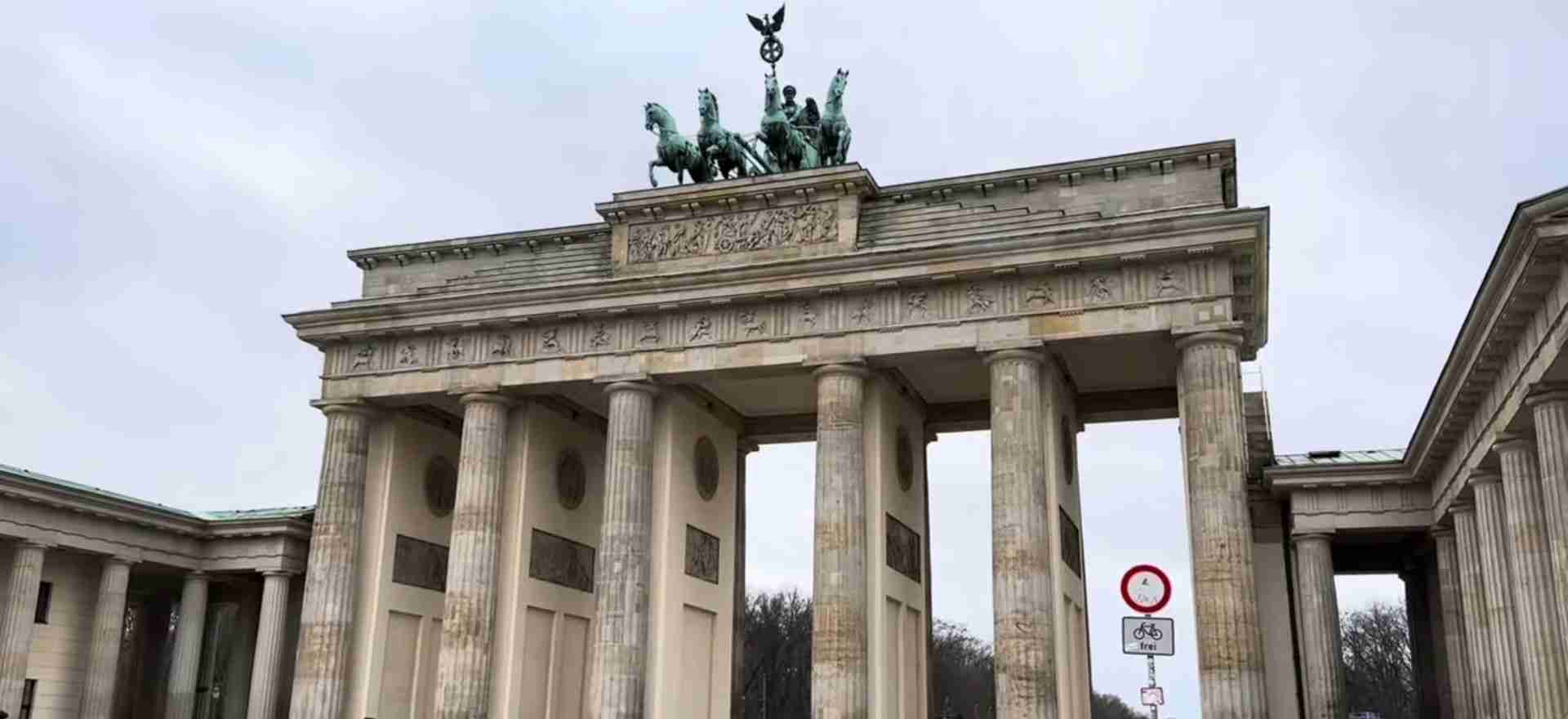
Brandenburg Gate: History & Visitor Guide
Key Takeaways
- The Brandenburg Gate represents Berlin’s transformation from Prussian royal capital through Cold War division to reunified European metropolis, embodying German national identity across three centuries
- Carl Gotthard Langhans designed the neoclassical structure in 1791 as a monumental city gate celebrating peace, drawing inspiration from the Propylaea gateway to Athens’ Acropolis
- The Quadriga sculpture—Victory driving a chariot pulled by four horses—has witnessed removal by Napoleon, restoration to Berlin, Cold War isolation, and reunification celebrations
- The gate’s position at the former border between East and West Berlin transformed it from architectural monument into symbol of division and subsequent German reunification
- Photography opportunities span from dawn’s golden light illuminating the eastern facade to nighttime illumination creating dramatic contrasts against Berlin’s sky
- The gate anchors Pariser Platz, creating a ceremonial space connecting Unter den Linden boulevard to the Tiergarten park and serving as gathering place for public celebrations and political demonstrations
Introduction: Berlin’s Iconic Symbol
The Brandenburg Gate stands as Germany’s most recognizable architectural monument, a neoclassical masterpiece that has witnessed three centuries of German history from Prussian monarchy through Nazi dictatorship, Cold War division, and democratic reunification. The gate’s transformation from functional city entrance to charged political symbol reflects Berlin’s journey from provincial capital to global metropolis, making the structure inseparable from German national identity and European history.
Built between 1788 and 1791 under King Friedrich Wilhelm II of Prussia, the gate originally served as one of eighteen entrances to Berlin through the customs wall surrounding the city. Unlike purely defensive medieval gates, the Brandenburg Gate announced Berlin’s cultural ambitions through classical architecture that referenced ancient Athens. This deliberate evocation of Greek democracy and philosophical achievement proclaimed Prussia’s aspiration to cultural leadership within German-speaking lands and broader European civilization.
The gate’s architectural significance extends beyond its classical proportions and sculptural decoration to its role in establishing neoclassical style across German architecture. Carl Gotthard Langhans’ design synthesized influences from ancient Greek architecture, contemporary French neoclassicism, and emerging German romantic nationalism into a structure that inspired countless civic buildings, monuments, and gateways throughout German lands. The Brandenburg Gate essentially defined what monumental German architecture should look like, establishing aesthetic principles that dominated public building for generations.
The monument’s evolution into a symbol transcending its architectural merit began during the Napoleonic Wars, when French troops’ temporary removal of the Quadriga sculpture to Paris created national resentment that transformed the gate into a focus for German patriotic sentiment. This process accelerated through Prussian military victories, the German Empire’s founding, Nazi appropriation of the gate for propaganda, Cold War division that made it inaccessible, and finally reunification celebrations that returned the gate to its position as gathering place for the German people. Each historical layer adds meaning, making contemporary encounters with the Brandenburg Gate experiences dense with historical resonance.
People Also Ask About Brandenburg Gate
What architectural style defines the Brandenburg Gate?
The Brandenburg Gate exemplifies neoclassical architecture, drawing direct inspiration from ancient Greek structures, particularly the Propylaea gateway to Athens’ Acropolis. The design employs the Doric order—the most austere and ancient of Greek column types—through twelve columns arranged in six pairs that create five passageways. The central opening, originally reserved for royal use, exceeds the side passages in width and height, establishing ceremonial hierarchy through architectural dimensions. The horizontal entablature spanning the columns features triglyphs and metopes characteristic of Doric temples, while the attic story above provides a base for the Quadriga sculpture.
The gate’s proportions follow classical principles of harmony and mathematical relationships derived from ancient Greek architectural theory. The column heights, spacing, and diameter maintain ratios that create visual balance and convey stability and permanence. These proportional relationships, codified in Renaissance architectural treatises, connected Enlightenment architecture to ancient precedents, suggesting continuity between classical civilization and contemporary European culture. The Brandenburg Gate’s successful application of these principles established it as a model that German architects studied and emulated throughout the 19th century.
Who created the Quadriga sculpture and what does it represent?
Johann Gottfried Schadow, one of the leading German sculptors of his era, created the Quadriga between 1789 and 1793. The sculpture depicts Victoria, the Roman goddess of victory, driving a chariot pulled by four horses. She carries a staff topped with an iron cross wreathed in oak leaves and surmounted by an eagle—symbols combining Prussian military achievement with Germanic identity. The oak leaf wreath references ancient associations between oak trees and strength while nodding to Germanic tribal traditions, creating a synthesis of classical imagery with national symbolism.
The Quadriga’s orientation matters symbolically—Victoria faces east, into Berlin, suggesting the city receives victory and prosperity. This directional choice reflects the gate’s original purpose as entrance to the city from the west, though interpretations have varied across historical periods. The sculpture’s dynamic composition, with rearing horses and Victory’s forward-leaning posture, creates movement contrasting with the static architecture below. This animated quality distinguishes the Brandenburg Gate from purely architectural monuments, adding dramatic narrative element to classical geometric order.
How did the Brandenburg Gate survive World War II destruction?
The Brandenburg Gate suffered significant damage during the Battle of Berlin but remained structurally intact, unlike many surrounding buildings reduced to rubble. Artillery fire and aerial bombing damaged the columns, damaged the Quadriga, and destroyed much decorative detail. The structure’s robust stone construction and relatively simple architectural composition—lacking the ornate interior spaces vulnerable to fire and collapse—contributed to survival. The gate’s position in an open plaza without surrounding buildings that could collapse onto it also reduced destruction risk compared to structures embedded in dense urban fabric.
Immediately after the war, the gate stood in the Soviet sector near the border between Soviet-controlled East Berlin and the western sectors. Both German authorities recognized the monument’s symbolic importance, motivating reconstruction efforts despite widespread devastation requiring attention. The East German government undertook restoration work in the 1950s, though the Quadriga remained damaged. When the gate became inaccessible after 1961 Berlin Wall construction, it stood as visible but unreachable symbol for West Berliners, its damaged condition paradoxically enhancing emotional resonance as witness to war’s destruction and division’s cruelty.
What role did the Brandenburg Gate play during the Cold War?
The Brandenburg Gate occupied the border zone between East and West Berlin, becoming inaccessible to both populations after Berlin Wall construction in 1961. The wall ran directly in front of the gate on the western side, preventing West Berliners from approaching the monument. East German authorities closed the area to their citizens as well, creating a militarized no-man’s land where the gate stood isolated, visible from a distance but reachable by neither side. This inaccessibility transformed the monument into perhaps the most potent symbol of German division and the larger East-West conflict.
Western politicians and media repeatedly invoked the Brandenburg Gate as embodiment of division, using images of the barricaded monument to communicate the Cold War’s human cost and political absurdity. American President Ronald Reagan’s 1987 speech demanding “Mr. Gorbachev, tear down this wall” delivered near the gate (though on the western side of the barrier) exemplified this symbolic deployment. The monument’s classical architecture, originally intended to celebrate peace and cultural achievement, gained tragic irony standing in a militarized zone separating a divided city and nation.
The gate’s prominence in reunification celebrations reversed its Cold War symbolism from division to unity. When the Berlin Wall opened on November 9, 1989, crowds gathered at the Brandenburg Gate despite its continued closure to free movement. The gate’s official reopening on December 22, 1989, created powerful imagery of Germans from east and west meeting at a monument that had separated them, transforming the structure’s meaning from symbol of division to emblem of reunification and hope for unified Germany’s future.
How does the Brandenburg Gate function in contemporary Berlin?
The Brandenburg Gate serves as both active civic space and historical monument in reunified Berlin. Pariser Platz, the square surrounding the gate, hosts public celebrations, political demonstrations, cultural events, and daily tourist visitation. New Year’s Eve celebrations regularly attract hundreds of thousands of people gathering around the gate, continuing traditions of using the space for communal festivities. Political protests and rallies employ the gate’s symbolic resonance to amplify their messages, recognizing that actions at this location gain heightened significance through association with German historical memory.
The gate anchors a pedestrianized ceremonial axis connecting the Tiergarten park to Unter den Linden boulevard and the historical city center. This car-free environment allows visitors to experience the monument’s architecture and surrounding urban space without vehicular traffic intrusions. The restoration of Pariser Platz following reunification, including reconstruction of destroyed historic buildings around the square’s perimeter, recreated the gate’s urban context while accommodating contemporary uses including hotel, embassy, and cultural functions that activate the area throughout the day and evening.
Extended multi-day tours – 5+ days
Featured Berlin Multi-Day Tour Packages
3 days
Berlin 3-Day Discovery Tour
- ✓ Comprehensive Berlin experience
- ✓ Expert local guides included
- ✓ All accommodation included
- ✓ Transportation provided
5 days
Berlin 5-Day Highlights Experience
- ✓ Comprehensive Berlin experience
- ✓ Expert local guides included
- ✓ All accommodation included
- ✓ Transportation provided
7 days
Berlin 7-Day Cultural Journey
- ✓ Comprehensive Berlin experience
- ✓ Expert local guides included
- ✓ All accommodation included
- ✓ Transportation provided

10 days
Berlin 10-Day Complete Adventure
- ✓ Comprehensive Berlin experience
- ✓ Expert local guides included
- ✓ All accommodation included
- ✓ Transportation provided
Multi-day tour packages powered by TourRadar. Prices and availability subject to change.
Historical Evolution and Political Transformations
King Friedrich Wilhelm II commissioned the Brandenburg Gate as part of a broader program enhancing Berlin’s monumental architecture and establishing the city as worthy capital for Prussia’s growing power. The king’s architectural patronage extended beyond practical necessities to symbolic statements about Prussian culture and political aspirations. The decision to model the gate on Athens’ Propylaea connected Prussian kingship to ancient democracy’s cultural achievements, suggesting parallels between classical Greece and contemporary Prussia as centers of European civilization.
Architect Carl Gotthard Langhans, who had studied classical architecture through books and drawings though never traveling to Greece, designed the gate based on published architectural surveys and his understanding of neoclassical theory. His design interpretation of the Propylaea simplified the Greek original’s complex asymmetry into a symmetrical, regular composition more suited to Prussian aesthetic preferences for order and clarity. This adaptation process exemplifies how neoclassicism functioned as creative reinterpretation rather than archaeological reproduction, using ancient precedents to create architecture serving contemporary purposes.
The gate’s construction employed sandstone from Silesian quarries, transported to Berlin via river and canal systems. Skilled stonemasons carved the decorative elements including metopes, triglyphs, and capitals using traditional hand tools and techniques passed through craftsman guilds. The construction process demonstrated Prussian organizational capacity and resource mobilization, transforming raw materials into refined architecture through coordinated labor, technical expertise, and state resources. The completed structure announced Prussia’s ability to marshal resources for monumental projects rivaling older European powers.
Napoleon’s triumphant entry through the gate in 1806 initiated the structure’s transformation from architectural monument to politically charged symbol. Following Prussia’s military defeat, French troops removed the Quadriga sculpture and transported it to Paris as war trophy. This act of symbolic appropriation outraged Prussians, making the gate’s Victory sculpture into emblem of national humiliation. When Prussian forces recovered the Quadriga after Napoleon’s defeat in 1814, its return to Berlin created intense patriotic celebration, transforming what had been merely decorative sculpture into sacred national relic.
The returned Quadriga underwent modification reflecting changed political circumstances. The original staff Victoria carried received a new iron cross and Prussian eagle, symbols connecting the sculpture to military victory against France. Oak leaf wreaths added nationalist overtones referencing Germanic traditions and natural symbolism. These alterations transformed Schadow’s original relatively neutral classical allegory into explicitly Prussian nationalist iconography, demonstrating how political events can reshape monuments’ meanings through physical and interpretive modifications.
The German Empire’s founding in 1871 invested the Brandenburg Gate with additional significance as symbol of German unification under Prussian leadership. Victory parades following military triumphs against Denmark, Austria, and France marched through the gate, establishing traditions of using the monument for nationalist celebrations and military displays. These rituals reinforced the gate’s association with German military prowess and national pride, meanings that persisted through the Imperial period and would later facilitate Nazi appropriation for propaganda purposes.
The Weimar Republic period saw the Brandenburg Gate continue serving as focus for public gatherings, though now representing republican rather than monarchical Germany. Political demonstrations, workers’ marches, and competing political factions all claimed the gate as symbolic space for expressing their vision of Germany’s future. This pluralistic use reflected the Weimar period’s contentious political culture, where multiple ideologies competed for popular support and symbolic legitimacy. The gate’s meaning remained contested rather than fixed, shaped by whoever could mobilize crowds to gather at the monument.
Nazi Germany systematically appropriated the Brandenburg Gate for propaganda, staging torchlight parades, military displays, and political rallies that associated the regime with German historical continuity and national greatness. The Nazis’ visual culture deployed the gate’s classical architecture and patriotic associations to legitimate dictatorship as authentic expression of German identity. This propaganda use corrupted the monument’s meaning, associating it with totalitarianism and aggressive nationalism that would haunt the gate’s symbolism through subsequent decades.
Allied bombing and the Battle of Berlin damaged the gate but left it standing amid widespread destruction. Photographs showing the damaged monument surrounded by rubble became iconic images of war’s devastation and Berlin’s destruction. The gate’s survival, though damaged, suggested continuity amid catastrophic change, offering a physical anchor for German identity when the nation itself lay defeated and occupied. The damaged Quadriga—eventually removed for safety—created particularly poignant imagery, the headless Victory representing Germany’s comprehensive defeat.
Post-war division placed the Brandenburg Gate in the Soviet sector, making it symbolically significant for competing German states emerging from occupation. The East German government’s restoration efforts attempted to claim the monument for the socialist state, though its position near the sector boundary complicated unambiguous appropriation. The gate stood accessible to East Berliners and controlled by East German authorities but remained visible to West Berliners across the sector line, creating an ambiguous symbolic status reflecting the city’s divided condition.
Berlin Wall construction in 1961 transformed the gate from contested symbol into emblem of division itself. The wall’s route placed the gate in a closed zone accessible to neither East nor West Berliners, creating a no-man’s land where the monument stood isolated. This inaccessibility paradoxically enhanced the gate’s symbolic power—its visibility but unreachability perfectly embodied division’s absurdity and cruelty. Western propaganda extensively deployed images of the barricaded gate, making it perhaps the single most recognizable symbol of the Cold War’s human cost.
The gate’s reopening following the Berlin Wall’s fall created emotionally overwhelming scenes broadcast worldwide. Images of people celebrating atop the wall with the gate illuminated behind them became defining visual records of communism’s collapse and the Cold War’s end. The structure that had symbolized division for twenty-eight years suddenly represented reunification and hope for European reconciliation. This dramatic symbolic reversal demonstrated how monuments’ meanings depend on political contexts rather than inherent architectural properties, with the same physical structure capable of embodying radically different values across time.
Architectural Analysis and Design Elements
The Brandenburg Gate’s dimensions establish its monumental scale while maintaining classical proportional relationships that create visual harmony. The structure measures sixty-five meters wide, eleven meters deep, and twenty-six meters tall to the top of the Quadriga sculpture. These measurements follow proportional systems derived from ancient Greek architecture, where ratios between elements create aesthetic unity. The twelve columns, each standing eleven meters tall with diameters of 1.75 meters, maintain slenderness ratios producing elegant verticality without appearing fragile or unstable.
The gate’s five passageways create hierarchical arrangement emphasizing the central opening. The middle passage exceeds the four side passages in both width and height, establishing visual and ceremonial primacy. This hierarchical arrangement recalls ancient city gates where central openings served ceremonial processions while side passages accommodated everyday traffic. The original usage restrictions—central passage reserved for royal family while commoners used side openings—reinforced social hierarchy through architectural control of movement and access.
The Doric order employed throughout the gate represents the most ancient and austere of Greek column types, conveying strength, stability, and masculine virtue according to classical architectural theory. The columns lack bases, rising directly from the stylobate (the platform they stand on), a characteristic distinguishing Doric from more ornate Ionic and Corinthian orders. The column shafts feature fluting—vertical grooves running their length—creating plays of light and shadow that enhance three-dimensional presence and visual interest. The capitals consist of simple echinus (cushion-like element) and abacus (square slab), eschewing the scrolls of Ionic or leaf decorations of Corinthian capitals.
The entablature spanning the columns divides into three horizontal bands following classical precedent. The architrave (lowest band) consists of plain stone without decoration, providing structural support for the elements above. The frieze alternates triglyphs (vertical grooved elements) with metopes (square panels), recreating the Doric temple feature originally representing wooden beam ends and intervening spaces. The cornice (top element) projects outward, protecting the frieze from rain while creating strong shadow line that emphasizes the horizontal division between column-supported entablature and the attic story above.
The attic story rises above the entablature, providing a tall rectangular base for the Quadriga sculpture. This architectural element has no precedent in the Propylaea, representing Langhans’ adaptation of the Greek gateway to accommodate the crowning sculpture. The attic’s smooth surface contrasts with the column-and-entablature composition below, creating a distinct zone that draws attention upward to the sculpture. Rectangular panels on the attic’s east and west faces originally contained relief sculptures (now lost), adding decorative interest to surfaces that might otherwise appear blank.
The passageways between columns employ coffered ceiling decoration, creating square recessed panels that reduce visual weight while adding ornamental interest. The coffering technique, derived from Roman architecture, demonstrates classical influence extending beyond Greek precedents to encompass the full range of Mediterranean antiquity. The careful execution of this ceiling decoration, visible to people passing through the gate, indicates attention to architectural refinement extending to surfaces that might have been left plain, reflecting Prussian values of thoroughness and quality craftsmanship.
The gate’s sandstone construction employs traditional masonry techniques of precisely cut and fitted stone blocks. The joints between stones create nearly invisible seams, demonstrating mason craftsmanship and careful stone selection for uniform color and texture. This precise fitting ensures structural stability while creating an appearance of monolithic construction rather than assembled blocks. The stone’s color—a warm beige—provides visual softness compared to grey granite or white marble alternatives, creating an approachable monumentality rather than cold imperial grandeur.
The Quadriga sculpture integrates with the architecture despite being technically separable. The sculpture’s copper construction creates visual and material contrast with the stone gate below, the metal’s green patina providing color variation while the sculpture’s dynamic movement contrasts the architecture’s geometric stability. The sculpture’s orientation—Victory facing into Berlin—creates directionality, transforming the gate from symmetrical architecture into a composition with front and back, inside and outside, conferring meaning through orientation rather than pure form alone.
Architectural restoration following World War II damage required careful documentation, damaged element reproduction, and new stone sourcing matching original material. Restorers faced decisions about whether to repair damage invisibly or leave evidence of history’s impact. The approach generally favored invisible repair, restoring the gate’s idealized appearance rather than preserving war damage as historical document. This restoration philosophy reflects different values than contemporary conservation theory, which increasingly preserves historical layers including damage rather than recreating hypothetical original pristine conditions.
The Quadriga: Symbol and Sculpture
Johann Gottfried Schadow’s Quadriga represents the pinnacle of German neoclassical sculpture, combining technical virtuosity with symbolic complexity. The sculpture consists of Victory standing in a chariot pulled by four horses, executed in copper sheets hammered over wooden forms and assembled into the complete composition. This construction technique allowed creation of a large-scale sculpture that could be placed atop the gate without exceeding the structure’s load-bearing capacity—solid bronze or stone sculpture of equivalent size would have been prohibitively heavy.
Victory’s iconography synthesizes classical Roman imagery with Prussian symbols. Her toga and classical features reference ancient precedent, establishing continuity with Mediterranean civilization and suggesting Prussia’s worthiness to inherit classical cultural achievements. The staff she carries, topped with iron cross, eagle, and oak wreath, introduces specifically Prussian and Germanic elements, transforming a generic classical allegory into a statement about Prussian identity and German nationalism. This combination of classical form and national symbolism exemplifies neoclassicism’s ability to serve contemporary political purposes while claiming ancient cultural authority.
The four horses demonstrate Schadow’s mastery of equine anatomy and dynamic composition. The horses rear and surge forward, muscles tensed and manes flowing, creating movement that contrasts dramatically with the architecture’s static geometry. The careful differentiation between individual horses—varying poses, head positions, and degrees of agitation—prevents monotonous repetition while maintaining overall compositional unity. This attention to natural observation combined with classical idealization characterized Schadow’s approach, balancing accurate anatomy with aesthetic refinement.
The chariot’s design follows ancient Roman precedents reconstructed from literary descriptions, relief sculptures, and archaeological finds. The two-wheeled vehicle features side panels decorated with classical ornament and a curved front providing protection for Victory’s lower body. The wheel design, though simplified for sculpture’s requirements, suggests functional construction rather than pure fantasy. This archaeological attention to detail reflects Enlightenment values of scholarly accuracy and educational purpose in public monuments, aiming to instruct viewers about ancient culture while simultaneously creating contemporary symbolic statements.
The Quadriga’s temporary removal to Paris by Napoleon created a mythology that transformed the sculpture from artwork into national relic. Stories of Prussian humiliation during French occupation, secret resistance, and ultimate triumph with the sculpture’s return invested the Quadriga with emotional significance beyond aesthetic appreciation. The modified version returning to Berlin carried additional symbols linking the sculpture to anti-French military victory, transforming what had been a generic classical allegory into specifically Prussian patriotic icon. These modifications and associated narratives demonstrate how political events and national storytelling can fundamentally reshape artworks’ meanings.
The Quadriga’s restoration following World War II damage required reconstruction of elements destroyed during combat and subsequent exposure to weather while the monument stood damaged. Photographs documenting the damaged sculpture show Victory’s head missing and horses damaged, creating powerful imagery of defeated Germany that contrasted sharply with the sculpture’s original triumphant symbolism. The decision to restore the Quadriga despite Germany’s partition reflected both German states’ desire to reclaim cultural heritage and establish continuity with pre-Nazi German identity, making restoration a political statement about national identity as much as aesthetic preservation.
The complete restoration of the Quadriga in the 1990s following reunification employed modern conservation techniques while respecting Schadow’s original design. Conservators removed accumulated dirt and corrosion, repaired damaged copper sheets, and stabilized the internal wooden support structure deteriorated through two centuries of exposure. The decision to maintain the sculpture’s green patina rather than removing it to restore original copper color reflects contemporary conservation philosophy’s preference for preserving evidence of age and history rather than attempting to recreate hypothetical pristine original appearance.
Brandenburg Gate in German National Identity
The Brandenburg Gate’s evolution as national symbol reflects Germany’s complex path from fragmented principalities through unification, dictatorship, division, and reunification. The monument embodies German identity’s contested nature, having represented Prussian militarism, Nazi totalitarianism, Cold War division, and democratic reunification at different historical moments. This layered symbolism makes the gate a palimpsest of German historical memory, where each era’s meanings remain present beneath contemporary significance, creating a symbol dense with historical resonance.
The gate’s architectural classicism connects German identity to European cultural heritage and Mediterranean civilization, claiming continuity with ancient Greece and Rome. This connection served Prussia’s 19th-century cultural ambitions, positioning German culture as heir to classical achievements and legitimate participant in European civilization. The neoclassical style’s association with Enlightenment values including reason, education, and progress suggested Prussia’s alignment with progressive European movements despite its monarchical political structure. This cultural positioning through architecture helped Prussia establish leadership within German-speaking lands and broader European community.
Military parades and victory celebrations using the Brandenburg Gate as focal point associated the monument with German military achievement and national pride. The tradition of marching through the gate following military victories created ritualized connection between the structure and German martial values. These celebrations reinforced narratives linking German national identity to military prowess and territorial expansion, values that contributed to aggressive nationalism culminating in World War II. The gate’s association with this militant nationalism complicated post-war efforts to reclaim the monument for more benign purposes.
Nazi propaganda’s systematic deployment of the Brandenburg Gate in visual culture and ceremonial rituals corrupted the monument’s symbolism through association with totalitarianism, war, and genocide. The Nazis’ torchlight parades, propaganda photographs, and military displays transformed the gate from architectural monument into complicit participant in dictatorship’s visual legitimation. This tainted legacy created post-war ambivalence about celebrating the gate as positive symbol, requiring conscious effort to reclaim the monument for democratic values and distance it from Nazi associations.
The gate’s Cold War transformation into division symbol created new meanings disconnecting the monument from its original purpose and earlier political associations. The barricaded gate visible but inaccessible represented divided Germany’s tragic condition, making the structure emblem of national wound rather than national pride. This suffering symbol paradoxically rehabilitated the gate’s broader reputation—representing victims of division rather than perpetrators of aggression helped cleanse associations with militarism and dictatorship. The gate’s redemption through suffering reflects broader patterns in German memory culture, where victimhood narratives sometimes obscure perpetrator history.
Reunification transformed the Brandenburg Gate into symbol of national reconciliation and democratic renewal. The joyful scenes of Germans from east and west meeting at the reopened gate created powerful imagery of healing and hope that displaced earlier associations with division and militarism. The monument’s meaning shifted from representing separation to embodying unity, demonstrating remarkable symbolic flexibility. This positive transformation allowed Germans to embrace the gate as national symbol without the ambivalence its earlier associations might have prompted, making it the closest thing to an unproblematic German national icon despite its complicated history.
Contemporary use of the Brandenburg Gate for national celebrations, political demonstrations, and cultural events continues evolving the monument’s meaning while maintaining its central position in German symbolic geography. The gate functions as gathering place where Germans enact collective identity through shared rituals and celebrations. This active use prevents the monument from becoming mere historical relic, instead keeping it relevant to contemporary political and cultural life. The gate’s ability to accommodate diverse uses from solemn commemorations to exuberant parties demonstrates its symbolic flexibility and continued relevance to German society.
Pariser Platz: The Gate’s Urban Context
Pariser Platz, the square surrounding the Brandenburg Gate, creates the monument’s immediate urban setting and shapes visitor experience. The square’s name commemorates Prussian military victories against France, establishing the space as setting for nationalist celebration before its later transformation into scene of division and reunification. The square’s dimensions—approximately 69 meters square—provide sufficient space for the gate to be viewed from distance while maintaining human scale that allows pedestrian occupation and use for gatherings.
The square’s 18th-century development created a uniform architectural ensemble of aristocratic palaces and institutional buildings surrounding the gate. This coordinated design established formal plaza appropriate to the gate’s monumental character, preventing visual competition from discordant architecture while creating worthy urban setting for Prussian symbolic architecture. The symmetrical arrangement and consistent building heights reflected Enlightenment urban planning values of order, proportion, and architectural harmony.
World War II destruction obliterated most buildings surrounding Pariser Platz, leaving the Brandenburg Gate standing in a wasteland of rubble. This devastated landscape created dramatic imagery of Berlin’s destruction while eliminating the gate’s original urban context. The square’s subsequent development during Berlin’s division reflected the broader city’s partition, with East German authorities controlling the area but creating minimal new construction near the border zone. The square essentially ceased to function as civic space, becoming instead a militarized boundary area accessible to neither East nor West Berliners.
Post-reunification reconstruction of Pariser Platz attempted to recreate the square’s historical character while accommodating contemporary uses and architectural standards. The reconstruction guidelines required new buildings to respect historical building lines, heights, and materials while allowing modern design within these constraints. This approach, sometimes called “critical reconstruction,” aimed to restore urban spatial quality without literal reproduction of destroyed historical buildings. The result creates an architectural ensemble evoking historical character through massing and proportion while clearly representing contemporary rather than period design.
The reconstructed buildings house diverse functions including hotels, banks, embassies, and cultural institutions, creating active urban space rather than purely ceremonial plaza. This functional diversity ensures pedestrian activity throughout the day and evening, making Pariser Platz a living urban space rather than static monument setting. The mix of commercial, diplomatic, and cultural uses reflects contemporary Berlin’s character as both national capital and international city, the square functioning as interface between German national identity and global engagement.
The Academy of Arts building on the square’s north side represents particularly significant reconstruction, replacing the historical academy building destroyed during World War II. The new building houses exhibition spaces, performance venues, and working spaces for artists, activating the square with cultural programming that complements the Brandenburg Gate’s symbolic presence. The academy’s programs create dynamic cultural environment where the gate functions as backdrop to ongoing artistic production and display rather than isolated historical monument.
The square’s pedestrianization following reunification transformed how visitors experience the Brandenburg Gate and surrounding area. Eliminating vehicular traffic created safe space for strolling, photography, and spontaneous gathering, making the gate accessible in ways impossible when traffic circulated through the structure’s passages. This traffic-free environment allows visitors to approach the monument from multiple angles, stand directly beneath it, and experience its architecture without the noise and danger of cars. The pedestrian environment exemplifies how urban design decisions shape monuments’ accessibility and meaning, transforming the gate from object viewed from passing cars into space visitors can occupy and explore.
Photography Guide: Capturing the Gate
Photographing the Brandenburg Gate effectively requires understanding how light, season, and surrounding urban context affect the monument’s appearance. The gate’s east-west orientation creates different lighting conditions on its two facades throughout the day. Morning sunlight illuminates the eastern facade facing into Berlin, creating warm tones and dramatic shadows that emphasize the column fluting and entablature details. Afternoon and evening light illuminates the western facade, visible from Pariser Platz, creating the golden light photographers prize for its warm color temperature and directional quality that enhances three-dimensional form.
Dawn photography offers soft, diffused light with minimal crowds, creating serene images emphasizing the monument’s architectural qualities without tourist presence. The low sun angle creates long shadows that stretch across Pariser Platz, adding visual interest to foreground areas. Early morning light’s cool blue tones contrast with the sandstone’s warm beige, creating color harmony that enhances the gate’s classical proportions. This timing requires advance planning and early rising but rewards photographers with unique atmospheric conditions impossible to achieve during busier daytime hours.
Midday overhead lighting creates harsh shadows and high contrast that generally produces less flattering architectural photography. However, the intense light reveals surface textures and details invisible during softer lighting conditions. Detail photography of column capitals, frieze elements, or coffers benefits from this direct illumination that reveals three-dimensional carving and surface treatment. Focusing on architectural fragments rather than overall composition allows effective midday photography despite challenging lighting conditions.
Late afternoon and evening golden hour provides classic conditions for Brandenburg Gate photography. The warm light enhances the sandstone’s color while creating modeling shadows that reveal architectural depth and three-dimensionality. The sun’s low angle creates side lighting that emphasizes the Quadriga’s sculptural qualities, making the horses and Victory figure stand out dramatically against the sky. This timing attracts numerous photographers, requiring patience to find unobstructed vantage points and acceptance that other photographers will likely appear in wider shots.
Night photography transforms the Brandenburg Gate through dramatic illumination that creates stark contrasts between lit architectural elements and dark sky. The monument’s floodlighting emphasizes vertical columns and the Quadriga silhouette, creating graphic compositions reduced to essential forms. Long exposures smooth pedestrian movement into ghostly traces while capturing vehicular light trails from surrounding streets (outside the pedestrianized plaza). Tripods enable exposures long enough to capture fine detail in shadows while preventing the bright floodlit areas from overexposing, though handheld photography remains possible using higher ISO settings and wide apertures at the cost of some image quality.
Seasonal variations create different photographic opportunities. Winter’s bare trees in the Tiergarten provide less visual obstruction than summer’s full foliage, creating clearer views from approaches to Pariser Platz. Snow transforms the scene dramatically, the white ground reflecting light upward onto the gate’s underside while creating monochromatic color palette emphasizing form over color. Summer’s tourists and street performers create animated human presence that either enhances or complicates photography depending on whether the goal is architectural documentation or conveying the gate’s contemporary use and relevance.
Compositional approaches range from frontal symmetry emphasizing the gate’s classical proportions to oblique angles creating dynamic diagonal compositions. Including surrounding architecture in wider shots provides urban context showing the gate’s relationship to Pariser Platz and broader Berlin cityscape. Tight framing isolating the Quadriga against sky emphasizes the sculpture’s dynamic movement and symbolic importance. Including human figures provides scale reference that communicates the monument’s impressive dimensions while documenting contemporary use and visitor engagement.
Detail photography reveals aspects invisible in overall compositions—column fluting creating patterns of light and shadow, weathering patterns in sandstone revealing the material’s geological origins, or the Quadriga’s copper construction technique visible in sheet metal overlaps and rivets. These details communicate craftsmanship and material authenticity that overall views cannot capture, adding depth to photographic documentation. Macro photography of surface textures, lichens growing on stone, or metal patina creates abstract compositions finding beauty in material decay and natural processes acting upon monumental architecture.
Historical context photography documents the gate’s setting within Berlin’s broader urban landscape. Wide shots from the Victory Column showing the gate terminating the Unter den Linden vista communicate the monument’s position within Berlin’s ceremonial axis. Photographs from the Reichstag dome or other elevated viewpoints reveal the gate’s relationship to the Tiergarten, the Spree River, and Berlin’s historic core. These contextual images situate the gate within larger urban patterns invisible at ground level, revealing how the monument anchors important sight lines and ceremonial routes that organize Berlin’s symbolic geography.
Visitor Experience and Practical Guidance
Approaching the Brandenburg Gate from Unter den Linden creates a dramatic experience as the monument gradually reveals itself at the end of Berlin’s grand boulevard. The tree-lined avenue frames the view, creating a composed approach that builds anticipation through the steady progression toward the increasingly prominent gate. This processional quality reflects original urban planning that conceived the gate as ceremonial terminus to the city’s most important street, making arrival at Pariser Platz a climactic moment in the walk from the city center.
The gate’s scale becomes apparent only through close approach. From a distance, the monument appears impressive but comprehensible; upon arrival, the column heights, passage widths, and Quadriga’s dimensions create visceral understanding of monumental architecture’s impact. Standing directly beneath the gate, looking up at the Doric capitals and coffered ceilings, provides perspectives impossible from distant viewpoints. This multi-scalar experience—impressive from afar, overwhelming when close—demonstrates why photographs inadequately convey monumental architecture’s impact compared to physical presence.
Walking through the central passage creates a transitional experience between Pariser Platz and the Tiergarten, the urban formality of the plaza giving way to the park’s natural landscape. This threshold quality reflects the gate’s original function as entrance to Berlin, the passage marking transformation from outside to inside, foreign to domestic, nature to culture. The coffered ceiling overhead and framing columns create temporary enclosure that heightens awareness of the transition before emerging into the open space beyond. This architectural experience of passage and transformation operates independently of historical knowledge, affecting visitors through spatial sequence and proportion.
The Tiergarten approach from the west offers different but equally compelling experience. Emerging from the park’s tree-shaded paths into the open area before the gate creates a moment of revelation as the monument suddenly appears. The contrast between natural landscape and monumental architecture emphasizes the gate’s cultural function as boundary marker between nature and civilization, wildness and order. This approach, less traveled than the Unter den Linden route, provides quieter contemplation opportunities and fewer crowds, though at the cost of missing the ceremonial boulevard’s formal approach sequence.
Information panels around Pariser Platz provide historical context about the gate’s construction, the Quadriga’s symbolism, Cold War division, and reunification. These educational elements transform casual visits into learning opportunities, offering accessible historical information that enhances understanding without requiring specialized knowledge or guided tours. The panels include historical photographs showing the gate during various periods, creating visual comparisons that communicate historical transformation more effectively than text alone. Reading these materials requires modest time investment that rewards visitors with deeper appreciation of what they’re seeing.
Street performers and vendors around Pariser Platz create animated atmosphere reflecting the gate’s contemporary use as public gathering place rather than solemn memorial. Musicians, living statues, and portrait artists contribute to festive environment that, while sometimes dismissed as tourist kitsch, demonstrates the space’s vitality and ongoing relevance to Berlin life. This commercial activity polarizes opinion—some visitors find it authentic expression of urban culture while others see it as detracting from the monument’s dignity. Both perspectives have validity, reflecting different values about appropriate uses for heritage sites and public space.
Evening visits offer different atmosphere than daytime experiences. The illuminated gate against dark sky creates dramatic visual impact while crowd levels typically decrease after most tour groups depart. The surrounding buildings’ lights and street activity create animated urban environment contrasting with the monument’s timeless architecture. This contemporary context demonstrates the gate’s integration into living city rather than existing in isolated heritage precinct, the juxtaposition of ancient architectural forms and modern urban life creating dynamic rather than static heritage experience.
Physical accessibility allows visitors of varying mobility to experience the gate. The flat plaza requires no stair climbing, enabling wheelchair access throughout the area. The passages through the gate accommodate visitors unable to climb stairs, ensuring core architectural experience remains accessible. This inclusive design, partly resulting from the monument’s original function as working city gate rather than purely ceremonial structure, ensures diverse audiences can engage with the architecture without physical barriers limiting access.
The Gate in Popular Culture and Media
The Brandenburg Gate’s appearance in films, photographs, and news media has made it perhaps the most recognizable symbol of Berlin and Germany worldwide. Its use in Cold War-era spy thrillers established the gate as shorthand for East-West division and international intrigue, these fictional narratives embedding the monument in global popular consciousness. Films set in divided Berlin inevitably featured the barricaded gate, using its powerful imagery to communicate political situation without lengthy exposition. This cinematic presence extended the gate’s symbolic reach beyond people who had visited Berlin, creating mental associations between the structure and political division affecting millions who knew the gate only through media representation.
The 1989 wall opening created iconic images broadcast globally, with celebrations at the Brandenburg Gate providing visual focal point for stories about communism’s collapse. These images— people dancing on the wall with the illuminated gate behind them—became some of the late 20th century’s most reproduced photographs, visual shorthand for freedom’s triumph and Europe’s transformation. The gate’s presence in these historic images ensured its continued symbolic relevance, transitioning from division symbol to freedom symbol in the space of hours as political circumstances transformed.
Contemporary media use of the Brandenburg Gate as establishing shot for Berlin location indicates how thoroughly the monument has become identified with the city. News stories about German politics, European Union debates, or Berlin cultural life regularly employ gate footage to signal location, making the structure Germany’s most recognizable architectural image. This media ubiquity ensures the gate remains culturally relevant beyond heritage tourism, functioning as active participant in contemporary visual culture rather than merely historical artifact.
Artistic interventions and temporary installations transform the gate periodically, creating contemporary dialogues with historical architecture. Light projections, conceptual art pieces, and political statements using the gate as canvas demonstrate ongoing cultural relevance and contested meanings. These contemporary artistic engagements prevent the monument from becoming frozen heritage object, instead maintaining its position as active site where Germans and international visitors negotiate questions about memory, identity, and political values. The gate’s tolerance for these interventions reflects German comfort with contested heritage and willingness to allow multiple, sometimes conflicting, uses of shared symbolic spaces.
Frequently Asked Questions
Why does the Quadriga face eastward into Berlin?
Victory faces east because the Brandenburg Gate served as western entrance to Berlin, with travelers approaching from the west and entering the city eastward. The sculpture’s orientation suggests victory entering the city, bringing triumph and prosperity inward. This directional choice reflects the gate’s original function as threshold between outside and inside, with the Quadriga welcoming arrivals while blessing the city it protects. Interpretations of this orientation have varied historically, with some seeing it as Prussia welcoming victory while others interpret it as Prussia bringing victory to subject territories east of Berlin.
What happened to the original Quadriga during the Napoleonic Wars?
Napoleon ordered the Quadriga removed and transported to Paris in 1806 following Prussia’s military defeat. The sculpture remained in France for eight years as war trophy, creating intense Prussian resentment over this symbolic humiliation. Prussian forces recovered the Quadriga after Napoleon’s defeat and returned it to Berlin in 1814 amid patriotic celebration. Upon return, the sculpture received modifications including new symbols like the iron cross and Prussian eagle, transforming it from generic classical allegory into specifically Prussian nationalist icon commemorating victory over France.
How wide is the Brandenburg Gate and how many passages does it have?
The Brandenburg Gate measures sixty-five meters wide and features five passages between six pairs of columns. The central passage exceeds the four side passages in width and height, originally reserved for royal use while commoners used the side openings. This hierarchical arrangement reflected social structure through architectural control of movement, making passage through the gate’s center a privilege marking social status. Contemporary use allows anyone to use any passage, though the central opening’s greater width makes it the most trafficked route.
Why was the Brandenburg Gate closed during the Cold War?
The Berlin Wall’s construction in 1961 placed the Brandenburg Gate directly on the border between East and West Berlin. East German authorities closed the area around the gate, creating a militarized zone accessible to neither East nor West Berliners. The gate stood isolated in no-man’s land, visible from both sides but reachable by neither. This inaccessibility transformed the monument into symbol of division, its famous silhouette representing the city’s tragic partition and the Cold War’s human cost. The gate remained closed until December 22, 1989, when its reopening symbolized German reunification.
What architectural model inspired the Brandenburg Gate’s design?
Carl Gotthard Langhans based the Brandenburg Gate’s design on the Propylaea, the monumental gateway to Athens’ Acropolis. The Propylaea’s Doric columns and function as ceremonial entrance provided the template that Langhans adapted for Prussian purposes. However, Langhans simplified the Greek original’s asymmetrical complexity into a symmetrical, regular composition more suited to Prussian aesthetic preferences. The Brandenburg Gate represents creative interpretation of classical precedent rather than archaeological reproduction, using ancient Greek architecture to serve contemporary political and cultural purposes.
What material is the Brandenburg Gate constructed from?
The gate consists of sandstone blocks quarried in Silesia and transported to Berlin via river and canal systems. Skilled stonemasons carved the architectural elements using traditional hand tools and techniques. The sandstone’s warm beige color provides visual warmth compared to grey granite or white marble alternatives. The stone’s relative softness allowed detailed carving of decorative elements but also makes it vulnerable to weathering and air pollution, requiring periodic conservation treatments. The Quadriga sculpture employs different material—copper sheets hammered over wooden forms—creating contrast between golden-patina metal sculpture and beige stone architecture.
How tall is the Quadriga sculpture?
The Quadriga stands approximately six meters tall, rising above the gate’s attic story to create a total monument height of twenty-six meters. The sculpture’s dimensions needed to balance visual impact against structural limitations—too small would appear insignificant atop the large gate while too large would exceed the structure’s load-bearing capacity. The copper construction kept weight manageable while allowing impressive size. Victory and the four horses maintain proportions creating dynamic composition visible from ground level despite the elevated position over twenty meters above the plaza.
What restoration work has the Brandenburg Gate undergone?
The gate has undergone multiple restoration campaigns addressing war damage, environmental deterioration, and structural concerns. Post-World War II work in the 1950s repaired combat damage and replaced destroyed elements. A major restoration in the 1990s following reunification cleaned accumulated dirt, repaired damaged stonework, and restored the Quadriga. Recent work addresses ongoing weathering, air pollution damage, and structural monitoring ensuring the monument’s preservation for future generations. Conservation philosophy has evolved from invisible repair attempting to restore pristine original appearance toward approaches that preserve historical layers including evidence of damage and age.
Can visitors walk through the Brandenburg Gate?
Yes, the Brandenburg Gate’s passages remain open for pedestrian passage. The monument stands in a pedestrianized zone where cars no longer circulate, allowing visitors to walk through any of the five passages freely. This access enables direct experience of the architecture’s threshold quality and coffered ceiling details. Historical restrictions limiting central passage to royalty no longer apply—contemporary use treats all passages equally, though the central opening’s greater width makes it most heavily trafficked. The ability to walk through rather than merely view the gate allows embodied architectural experience impossible if the monument were barricaded or restricted.
What events are celebrated at the Brandenburg Gate?
The Brandenburg Gate hosts New Year’s Eve celebrations attracting hundreds of thousands of people for concerts and fireworks. National holidays, political demonstrations, cultural festivals, and sports celebrations regularly use the gate as gathering point and symbolic focus. The gate’s prominence in German collective consciousness makes it the natural location for events with national significance, from somber commemorations to exuberant celebrations. This active use demonstrates the monument’s ongoing relevance to German public life, functioning as shared space where Germans enact collective identity through communal gatherings and rituals.