
Belgium Budget Guide 2026: Complete Cost Breakdown
Understanding Belgium’s actual costs empowers travelers to plan realistic budgets without overspending or unnecessary sacrifices. This comprehensive 2026 budget guide provides verified current prices for accommodation, food, transportation, attractions, and daily expenses across budget, mid-range, and luxury travel styles, enabling you to explore Belgium’s medieval cities, UNESCO sites, and culinary excellence within your financial comfort zone.
Key Takeaways
- Budget Travel €50-65 Daily: Hostels (€25-35), street food and self-catering (€20-30), public transport (€8.50 daily cap), free attractions enable comprehensive Belgium experiences on backpacker budgets
- Mid-Range Travel €100-130 Daily: Comfortable hotels (€80-120), restaurant meals (€40-50), transportation, paid museums provide quality Belgian experiences without luxury pricing
- Train+ Revolution 2026: New discount system (€4-6 monthly) saves 40-60% on rail travel with capped €14 maximum fares, dramatically reducing transportation costs for multi-city trips
- Free Belgium Experiences: Grand Place Brussels, Bruges medieval center, numerous museums first Sunday/Wednesday, public parks, and architectural walks cost absolutely nothing while delivering exceptional experiences
- Strategic Timing Saves 30-40%: Shoulder seasons (April-May, September-October) and winter (January-February) offer significantly lower accommodation rates, restaurant deals, and reduced crowds compared to summer peaks
- Food Budget Flexibility: Belgium supports all budgets from €3.50 frites to Michelin-starred dining, with excellent mid-range brasseries (€15-25 meals) providing authentic Belgian cuisine at accessible prices
People Also Ask About Belgium Budget 2026
How much money do I need per day to visit Belgium in 2026?
Budget travelers need €50-65 daily covering hostel dormitory (€25-35), street food and supermarket meals (€20-30), public transport (€8.50 Brussels daily cap), and free attractions. Mid-range travelers require €100-130 daily including comfortable hotel (€80-120), restaurant meals breakfast-lunch-dinner (€40-50), transportation, and paid museum entries. Luxury travelers spend €200+ daily accessing high-end hotels (€150-300), fine dining (€80-120 per meal), taxis, and premium experiences. These ranges exclude major purchases like Brussels Card or special event tickets but represent realistic all-inclusive daily spending for each travel style.
Is Belgium expensive compared to other European countries in 2026?
Belgium positions mid-range for European travel costs – less expensive than Switzerland, Scandinavia, United Kingdom, or Paris, but pricier than Southern Europe (Portugal, Greece), Eastern Europe (Poland, Czech Republic), or Spain outside Barcelona/Madrid. Brussels hotel costs align with Amsterdam and Munich while running 20-30% below London or Zurich. Restaurant meals cost 10-20% less than Paris equivalents while exceeding Prague or Lisbon by 30-40%. Belgium’s compact size and excellent public transport reduce overall trip costs compared to larger countries requiring expensive domestic flights or extensive rail passes. Strategic use of free museum days, Train+ rail discounts, and Brussels Card significantly improves value.
What is the cheapest month to visit Belgium in 2026?
January and February represent Belgium’s cheapest months with accommodation costs 30-40% below summer peaks, minimal tourism creating authentic local atmosphere, and potential restaurant/attraction deals during slow season. Trade-offs include cold temperatures (2-8°C), frequent rain, limited daylight (8-9 hours), and some establishments maintaining reduced hours or Monday-Tuesday closures. November (excluding Thanksgiving week) and early March also offer value with milder weather than deep winter. Avoid Christmas market season (late November through December) when prices spike and crowds intensify. Book 4-6 weeks ahead for winter travel securing best rates.
How much does food cost in Belgium per day in 2026?
Food costs vary dramatically by dining style. Budget travelers spending €20-30 daily combine supermarket breakfast (€3-5), street food lunch frites or kebab (€6-10), simple brasserie dinner or self-prepared meal (€12-15), eliminating alcohol or choosing supermarket beer (€1.50-3). Mid-range travelers allocating €40-50 daily enjoy café breakfast (€8-12), casual restaurant lunch (€15-20), proper dinner at traditional brasserie (€25-30), plus coffee/beer throughout day. Luxury diners investing €80-120+ daily experience fine dining, Michelin-starred restaurants, premium wines, and gourmet chocolates. Belgian cuisine rewards all budgets – exceptional €15-25 brasserie meals rival pricier international restaurants for authentic experiences.
Extended multi-day tours – 5+ days
Featured Belgium Multi-Day Tour Packages
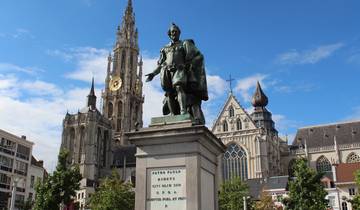
7 days
7 Day Brussels including Antwerp, Battle of the Bulge, Flanders Fields, Ghent, Bruges, Luxemburg & Dinant
- ✓ Comprehensive Belgium tour
- ✓ Expert local guides included
- ✓ All accommodation arranged
- ✓ Transportation provided
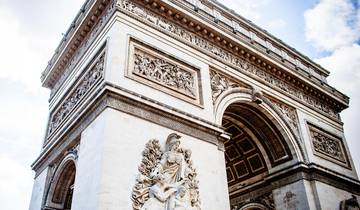
7 days
7 Days Across Paris & Brussels: From Eiffel Tower to Grand Place
- ✓ Comprehensive Belgium tour
- ✓ Expert local guides included
- ✓ All accommodation arranged
- ✓ Transportation provided
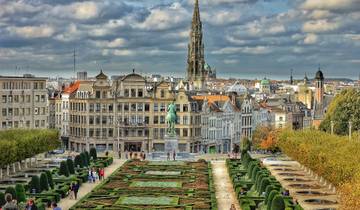
6 days
6 Days of Belgian Charm: Bruges, Ghent, Antwerp, Dinant & Luxembourg
- ✓ Comprehensive Belgium tour
- ✓ Expert local guides included
- ✓ All accommodation arranged
- ✓ Transportation provided

9 days
9 Days in Brussels and Luxembourg by Train: Fairytale Cities, Castles & Culture
- ✓ Comprehensive Belgium tour
- ✓ Expert local guides included
- ✓ All accommodation arranged
- ✓ Transportation provided
Multi-day tour packages powered by TourRadar. Prices and availability subject to change.
Introduction: Planning Your Belgium Budget 2026
Belgium defies simple budget categorization. Unlike destinations where costs cluster narrowly around single price points, Belgium accommodates travelers across complete financial spectrum – from backpackers surviving on €50 daily to luxury travelers investing €500+ for premium experiences. This flexibility creates opportunities but requires strategic planning to maximize value regardless of budget level.
The 2026 travel landscape offers particular advantages. The new Train+ discount system (launched October 2025) fundamentally changes rail economics, reducing multi-city transportation costs 40-60% through monthly subscriptions costing €4-6. Brussels Card continues providing access to 49 museums plus optional public transport for €32-52 depending on duration. Many major museums maintain first Sunday or first Wednesday free admission. These structural advantages enable budget optimization across spending levels.
Belgian cost patterns differ significantly from stereotypical “expensive Europe” assumptions. Accommodation ranges from €25 hostel dormitories to €400+ luxury suites, but quality mid-range hotels charge €80-120 nightly – less than Amsterdam, Copenhagen, or Zurich equivalents. Food spans €3.50 frites from street stalls to €150+ Michelin-starred tasting menus, with exceptional traditional brasseries offering authentic Belgian cuisine at €15-25 per meal. This range rewards informed travelers while punishing those defaulting to obvious tourist-area restaurants.
Understanding Belgium’s regional price variations optimizes budgets. Brussels averages 15-25% higher costs than smaller Flemish cities (Ghent, Leuven, Mechelen) for comparable accommodation and dining. Bruges inflates 20-30% above Brussels for hotels due to limited supply and intense demand, though food costs remain similar. Wallonia (French-speaking region) generally costs 10-20% less than Flanders for equivalent services, rewarding adventurous travelers willing to explore beyond typical Bruges-Brussels circuits.
Seasonal timing dramatically impacts costs. Summer (June-August) peak season commands 25-40% premiums on accommodation compared to shoulder periods (April-May, September-October). Christmas market season (late November through December) creates second pricing spike. Conversely, January-February winter months offer 30-40% discounts on hotels with minimal tourism, though weather trade-offs apply. Strategic timing around these patterns enables significant savings without sacrificing experiences.
This comprehensive budget guide provides detailed 2026 pricing across all expense categories – accommodation, food, transportation, attractions, miscellaneous costs. Each section includes budget, mid-range, and luxury options with specific verified prices (check official sources for current rates as pricing may vary). Sample daily budgets and multi-day trip calculations enable realistic financial planning. Strategic saving tips and value optimization strategies help maximize Belgium experiences within individual budget constraints.
The guide emphasizes verified current pricing over vague cost estimates. All prices reflect 2026 conditions based on recent research, official sources, and current booking platforms. Where applicable, OPZIONE A pricing strategy provides specific costs with minimal disclaimers for transparent planning. Budget calculations include all realistic expenses – accommodation, meals, local transport, attractions, occasional treats – avoiding artificially low “backpacker survivor mode” estimates that prove unsustainable in practice.
Accommodation Costs 2026
Budget Accommodation (€25-60 per night)
Belgium’s budget accommodation scene combines quality hostels, budget hotel chains, and vacation rentals providing comfortable lodging without premium pricing. Major cities offer best selections, rural areas limited options.
Hostels: Dormitory beds cost €25-35 per night in major cities (Brussels, Bruges, Ghent, Antwerp) with variations based on season, dorm size, and facilities. 4-6 bed dorms run €30-35, 8-12 bed dorms €25-30. Private hostel rooms (double or twin) range €50-70 nightly with shared bathrooms, €60-80 with private facilities. Brussels averages €28-35 dorm beds, Bruges €30-38 (higher demand), Ghent €25-32 (better value).
Quality hostel options include MEININGER Hotels (Brussels, Bruges – modern facilities, private rooms available), Jacques Brel Youth Hostel (Brussels, near Grand Place, €28-35 dorms), Sleep Well Youth Hostel (Brussels, 5 minutes from Gare du Nord, €25-32 dorms), St. Christopher’s Inn Bruges (central location, social bar atmosphere, €32-38 dorms), Hostel Uppelink Ghent (historic building, €25-30 dorms).
Hostel amenities typically include free WiFi, lockers (bring own lock), communal kitchens enabling self-catering, common areas for socializing, and luggage storage. Some provide free breakfast (basic continental), walking tours, or pub crawls. Book 4-6 weeks ahead for summer (June-August) and major events, 2-3 weeks for shoulder seasons.
Budget Hotel Chains: Ibis Budget, B&B Hotels, Campanile, and similar chains offer €45-65 double rooms with private bathrooms, television, WiFi, and occasional breakfast options. Brussels locations average €50-65, Bruges €55-70, smaller cities €45-55. These properties typically locate 10-15 minutes by public transport from city centers, requiring additional time/cost for attractions access.
Budget hotels provide reliable quality with standardized rooms, 24-hour reception, parking options (€8-15 additional), and business-traveler amenities. Less character than independent hotels but consistent cleanliness and functionality. Book through hotel direct websites sometimes offers better rates than third-party platforms – compare prices across Booking.com, Hotels.com, and direct booking.
Vacation Rentals: Airbnb and Vrbo list budget apartments €50-80 nightly in residential neighborhoods outside tourist centers. Studio apartments for 1-2 people run €50-70, one-bedroom units for 2-3 people €65-85. Benefits include kitchen facilities (significant food savings through self-catering), washing machines (laundry savings), more space than equivalent hotel rooms, and residential neighborhood experiences.
Budget rental locations typically require 15-25 minute public transport to major attractions. Verify transport connections and neighborhood safety through reviews and Google Maps street view. Book 2-3 months ahead for peak seasons securing best selection and prices. Cleaning fees (€30-60) add to nightly rates – calculate total cost when comparing options.
Mid-Range Accommodation (€80-150 per night)
Mid-range hotels provide excellent value combining central locations, quality amenities, and professional service at prices below many European capitals.
Three-Star Hotels: Independent hotels and chains (NH Hotels, Novotel, Best Western, Mercure) offer €90-130 double rooms with en-suite bathrooms, flat-screen TVs, WiFi, air conditioning (increasingly standard), and breakfast included or available €12-18 additional. Brussels averages €100-120, Bruges €110-140 (limited supply premium), Ghent €85-110, Antwerp €90-115.
Typical room sizes: 16-22 square meters with double or twin beds, small desk, wardrobe, private bathroom with shower or bathtub. Central Brussels locations (Grand Place, Sainte-Catherine, Sablon) command €10-20 premiums over European Quarter or peripheral areas. Bruges accommodation anywhere within historic center provides easy walking access despite premium pricing.
Mid-range hotel amenities include 24-hour reception, multilingual staff, luggage storage, tourist information, occasional fitness rooms or business centers. Some properties occupy converted historic buildings adding character to standard hotel experience. Breakfast buffets (when included) typically feature continental options – bread, cheese, cold cuts, yogurt, fruit, coffee, juice.
Boutique Properties: Converted townhouses and historic buildings house characterful hotels with 10-20 rooms, personalized service, design-focused interiors, and premium locations. Brussels boutique hotels range €100-150 nightly for standard doubles, Bruges €110-160, Ghent €95-130. These properties emphasize unique character over chain hotel standardization.
Boutique hotels often occupy Art Nouveau townhouses (Brussels), medieval merchant houses (Bruges, Ghent), or renovated industrial buildings (Antwerp). Room sizes vary more than chains – some compact but stylish, others spacious with period details. Breakfast usually included, typically higher quality than chain buffets with fresh pastries and local products.
Apartment Hotels: Citadines, Adagio, and similar serviced apartment brands provide studio and one-bedroom apartments with kitchenettes, combining hotel services (daily cleaning, reception) with self-catering flexibility. Rates €90-140 nightly work well for families or longer stays where cooking reduces food costs. Brussels locations average €100-130 for studios, €120-160 for one-bedrooms. Four-night minimum stays common, weekly rates sometimes discounted.
Luxury Accommodation (€150-400+ per night)
Belgium’s luxury hotel scene balances international brands with exceptional independent properties, many occupying historic buildings or landmark locations.
Four-Star Hotels: Marriott, Hilton, Radisson, Sofitel properties offer €150-250 double rooms with upscale amenities, fitness centers, restaurants, bars, concierge services, and prime locations. Brussels European Quarter hosts numerous business-oriented four-stars with weekend rate reductions (Friday-Sunday) dropping rates €30-60 below weekday business traveler pricing. Bruges four-stars range €180-280 emphasizing historic building conversions.
Expect rooms 24-35 square meters with quality furnishings, marble bathrooms, premium toiletries, robes and slippers, mini-bars, espresso machines. On-site dining typically includes restaurant, bar, room service. Fitness facilities range from basic gyms to full spas with pools. Business centers, meeting rooms standard.
Five-Star Icons: Properties including Hotel Amigo Brussels (near Grand Place, €280-450), The Hotel Brussels (boutique luxury, €250-400), Steigenberger Wiltcher’s (European Quarter, €200-350), and Martin’s Klooster Leuven (converted monastery, €180-300) provide exceptional experiences with personalized service, fine dining, spa facilities, and distinguished atmospheres.
Five-star amenities include turndown service, 24-hour room service, concierge arranging reservations and experiences, valet parking, executive lounges, full-service spas, swimming pools, and Michelin-level restaurants. Bruges luxury hotels in medieval buildings command €200-350 for unique historic atmosphere. Expect rooms 30-45 square meters with luxury bedding, oversized bathrooms with separate tubs and showers, premium bath products, and exceptional soundproofing.
Historic Châteaux and Estates: Belgium excels at luxury conversions of aristocratic townhouses, convents, and countryside châteaux. Properties like Château du Lac (Genval near Brussels, €250-400), Martin’s Château du Lac (Bruges, €220-380), and various Relais & Châteaux members emphasize architectural heritage, period details, exclusive atmospheres, and personalized service over generic luxury branding.
These properties typically locate outside city centers (10-30 minutes by car or taxi) emphasizing parkland settings, quiet luxury, and destination dining. Rates include breakfast, some offer half-pension packages with dinner. Weekend getaway packages sometimes provide better value than nightly rates.
Food and Dining Costs 2026
Budget Food Options (€20-30 daily)
Budget travelers achieve €20-30 daily food spending through strategic combinations of self-catering, street food, and selective affordable restaurant meals.
Self-Catering: Supermarkets including Delhaize, Carrefour, Colruyt, Albert Heijn provide comprehensive grocery selections. Budget breakfast costs €3-5 combining bakery bread or croissants (€0.80-1.50), cheese (€2-3 per 200g), jam (€2-3 jar), coffee or juice (€1.50-2.50 liter). Lunch components include sandwich materials (bread, cold cuts, vegetables, €4-6 total), yogurt (€0.60-1.20 each), fruit (€1.50-3 per day). Simple dinner ingredients: pasta (€0.80-1.50 per 500g), tomato sauce (€1.50-2.50), vegetables (€3-5), occasionally meat or fish (€4-8 portion).
Daily self-catering budget: breakfast €3-5, lunch €5-8, dinner €8-12, snacks/drinks €2-4. Total €18-29 allows complete control over costs. Hostel kitchens enable cooking, apartment rentals provide better facilities. Pack reusable water bottle – Belgian tap water excellent quality, free refills eliminate bottled water expense.
Street Food: Belgian frites (fries) from friteries cost €3-4.50 for regular portion with sauce, providing filling €3.50 lunch alternative. Brussels’ Maison Antoine and Friterie Tabora charge €3.50-4 for quality frites. Waffles from street vendors run €1.50-4 depending on toppings – plain Liège waffles €1.50-2.50, Brussels waffles with fruit/chocolate €3.50-5. Avoid obvious tourist-area waffle stands charging €6-8 for basic preparations.
Pita and kebab shops (Turkish, Middle Eastern influence) throughout Belgian cities offer €6-10 wraps, plates, and sandwiches with generous portions. Durum wraps €6-7, mixed kebab plates with fries and salad €8-10. Asian fast-casual restaurants provide €8-12 rice/noodle bowls. These options deliver filling meals at budget prices while experiencing multicultural Belgium.
Budget Restaurants: Brasseries often feature €10-15 lunch specials (plat du jour) including main course, sometimes drink or dessert. Quality varies – look for lunch crowds indicating local approval rather than empty tourist traps. Sandwich shops and bakery cafés prepare fresh baguette sandwiches €5-8. University district restaurants (Leuven, Ghent) sometimes offer student-friendly pricing open to all customers.
Budget dining strategy: self-cater breakfast and occasional dinners, use street food for lunches, splurge on one traditional brasserie dinner every 2-3 days experiencing Belgian cuisine without daily restaurant expenses. This approach maintains €20-30 daily food budget while enjoying cultural dining.
Mid-Range Dining (€40-50 daily)
Mid-range travelers allocating €40-50 daily enjoy authentic Belgian food culture through café breakfasts, brasserie lunches and dinners, with occasional beer or dessert treats.
Breakfast: Café continental breakfast costs €8-12 including coffee, orange juice, croissants or bread, butter, jam, sometimes cheese and cold cuts. Belgian breakfast culture lighter than American expectations – continental style standard. Upgrading to “English breakfast” (eggs, bacon, toast) adds €3-5. Coffee shops (€4-6 cappuccino, €3.50-5 pastry) provide alternative breakfast options.
Lunch: Brasserie lunch menus range €15-20 for main course without alcohol. Typical offerings: omelettes €10-14, pasta dishes €12-16, salads €11-15, sandwiches/burgers €13-18. Add €2.50-4 for soft drink or coffee, €3.50-5.50 for beer. Brussels’ Sainte-Catherine district, Ghent’s Patershol, Antwerp’s Het Zuid concentrate quality lunch options. Avoid Grand Place Brussels and Markt Bruges immediate surroundings where tourist-trap pricing inflates €4-8 over equivalent quality elsewhere.
Dinner: Traditional Belgian brasseries offer €25-40 dinner experiences including appetizer (€8-15), main course (€18-28), beer or wine (€3.50-8 per glass). Classic dishes: moules-frites (mussels and fries) €18-25, carbonnade flamande (Flemish beef stew) €20-26, waterzooi (chicken or fish stew) €22-28, steak-frites €24-32. Add €8-12 for dessert if desired. Three-course dinner with drinks typically totals €35-48 per person.
Mid-range dining enables experiencing authentic Belgian cuisine without luxury restaurant premiums. Quality brasseries deliver exceptional food at accessible prices – Michelin-aspirational preparation without starred pricing. Belgium rewards mid-range diners with better food value than neighboring countries at equivalent spending levels.
Daily Food Calculation Example: Breakfast café €10, lunch brasserie with beer €18, dinner traditional restaurant with wine €32, afternoon coffee €4.50. Total €64.50. Adjusting dinner to €25-28 range brings total to €57-61. Alternating restaurant dinners with occasional self-prepared meals or budget options (€12-15) enables €40-50 average.
Fine Dining and Luxury Food Experiences (€80-200+ daily)
Belgium’s exceptional culinary scene rewards luxury travelers with numerous Michelin-starred restaurants, renowned chocolatiers, premium beer tastings, and gastronomic experiences.
Michelin Dining: One-star restaurants typically charge €75-120 lunch menus, €95-180 dinner tasting menus. Brussels hosts numerous one-star establishments including Bon Bon, La Paix, Le Chalet de la Forêt. Two-star restaurants range €120-200 tasting menus – Comme Chez Soi (Brussels icon, €160-200), Hertog Jan (Bruges, €140-180). Three-star dining reaches €200-350+ for complete experiences with wine pairings adding €80-150.
Lunch represents optimal value for Michelin experiences – many starred restaurants offer €45-80 lunch menus versus €95-180 dinner for similar quality. Reserve 4-8 weeks ahead for top restaurants, especially weekends. Some require deposits or prepayment.
Premium Belgian Products: Artisanal chocolate from Pierre Marcolini, Wittamer, or Mary costs €40-60 per 500g pralines. Rare Trappist beers (Westvleteren 12, special Rochefort releases) range €6-15 per bottle. Belgian wine remains niche but improving – expect €25-50 bottles for quality Belgian whites. Premium gin distilleries (Filliers, Copperhead) produce exceptional spirits €35-65 per bottle.
Culinary Experiences: Belgian beer tastings with sommelier guidance cost €45-85 per person for 8-12 beer flights with food pairings. Chocolate workshops (making pralines, truffles) range €65-120 for 2-3 hour sessions. Private brewery tours with extended tastings €80-150 per person. Food tours combining tastings at 5-7 establishments cost €85-130.
Daily Luxury Food Budget: Hotel breakfast included or premium café €15-25, upscale lunch €40-65, Michelin or high-end dinner €80-150, premium beers/wines €15-30, artisanal chocolates or pastries €10-20. Total €160-290 enables exceptional food experiences. Substituting occasional brasserie meals for every-meal luxury reduces costs while maintaining quality.
Transportation Costs 2026
International Transportation to Belgium
Flights: Transatlantic flights (New York, Washington DC, Chicago to Brussels) range $350-900 economy round-trip depending on season, booking timing, and demand. Summer (June-August) and Christmas markets (December) command highest fares. January-February and November (excluding Thanksgiving) offer lowest prices. Book 2-4 months ahead for best economy rates. Premium economy adds $400-800, business class $2,000-4,000 over economy baseline.
European flights from major cities (London, Paris, Amsterdam, Frankfurt, Barcelona) cost €50-200 round-trip budget carriers (Ryanair, easyJet, Vueling), €100-300 traditional airlines (Brussels Airlines, Lufthansa, Air France). Note Brussels South Charleroi Airport (CRL) used by budget carriers locates 46 kilometers from Brussels requiring 60-75 minutes transfer versus 15-20 minutes from Brussels Airport (BRU).
High-Speed Trains: Eurostar connects London to Brussels (2 hours, £80-200 round-trip booked advance), Paris to Brussels (1.5 hours, €60-150), Amsterdam to Brussels (1.75 hours, €60-140). Book 2-3 months ahead for lowest fares. Flexibility costs premium – same-day tickets often double advance purchase prices. First class adds €40-80 over standard with larger seats, meals, lounge access.
Belgium Domestic Rail 2026
The October 2025 SNCB fare restructuring introduced Train+ discount system fundamentally changing travel economics for tourists and residents alike.
Train+ Discount System: Monthly subscription costs €4 for youth (under 26), seniors (65+), and preferential reimbursement beneficiaries; €6 for adults ages 26-64. Annual subscriptions cost €32 (youth/seniors) or €48 (adults). Launch promotion through January 4, 2026 offers 50% discounts – €2-3 monthly, €16-24 annually.
Train+ benefits include 40% additional discount on already-reduced off-peak fares (cumulative discounts), 40% extra discount on weekend travel (applying sequentially), and capped maximum fares regardless of distance or time (€14 per trip second class adults, €8.80 youth/seniors, €22 first class adults, €14 first class youth/seniors).
Off-peak hours defined: Monday-Friday midnight-6am, 9am-4pm, 6pm-midnight; all day Saturday, Sunday, and public holidays. Peak hours: Monday-Friday 6:01am-8:59am and 4:01pm-5:59pm.
Sample Route Pricing: Brussels-Bruges one-way standard fare €15.50-17, with Train+ off-peak approximately €9-10. Brussels-Antwerp one-way €8.50-9.50, with Train+ off-peak €5-6. Brussels-Ghent one-way €9.50-11, with Train+ off-peak €6-7. Ghent-Bruges one-way €7-8, with Train+ €4.50-5. Maximum distance capped at 120 kilometers for pricing calculations.
Tourist Cost-Benefit Analysis: Five-day Belgium trip with 10 train journeys (Brussels-Bruges round trip, Brussels-Ghent round trip, Brussels-Antwerp round trip, Ghent-Bruges round trip, Brussels-Leuven round trip) totals approximately €90-110 standard fares. With Train+ monthly subscription (€6) plus discounted fares, total drops to approximately €40-50 including subscription. Break-even point occurs around 3-4 journeys. Purchase Train+ via SNCB website (belgiantrain.be) or mobile app with immediate digital activation.
Standard Fares Without Train+: Belgium uses distance-based pricing. Minimum fare €2.50 second class regardless of distance. First class costs approximately 50% more than second class. Weekend return tickets (valid Friday 7pm through Sunday for round trips) offer slight discounts over two one-way tickets. Group travel (4+ people) receives 40% discount during off-peak hours even without Train+.
Urban Public Transport
Brussels: STIB/MIVB operates comprehensive metro, tram, and bus network. Contactless payment system introduced 2024 enables pay-as-you-go with bank card or smartphone – €2.40 per 60-minute journey with unlimited transfers within time window, daily cap €8.50 prevents exceeding reasonable costs. Validate card at yellow readers when boarding, keep for exit validation on metro.
Alternative ticketing: single paper ticket €2.60 purchased at machines (no transfers), 10-journey card €19 (saves €7 over singles but expires 1 year), MOBIB card (reloadable smart card, €5 initial cost). Brussels Card optional public transport packages: €8 (24 hours), €10 (48 hours), €12 (72 hours) added to museum access pricing.
Walking covers most central Brussels attractions within 20-30 minutes. Grand Place to Atomium approximately 40 minutes walk or 15 minutes metro. European Quarter to city center 15-20 minutes walk.
Bruges: Compact medieval center mostly pedestrian-only. Walking handles 90% of sightseeing. De Lijn operates bus network connecting train station to center (€3 standard fare, 10 minutes) and outlying areas. Most visitors require zero public transport beyond train station transfer. Bicycle rental €10-15 daily suits flat terrain for broader exploration.
Ghent: Similar walkable historic center supplemented by De Lijn tram and bus. Tram 1 connects train station to city center (€3, 10 minutes). Bicycle culture strong – numerous rental options €8-12 daily. Most attractions cluster within 1-2 kilometer walking radius from Korenmarkt.
Antwerp: De Lijn comprehensive network. Contactless payment available (€3 per journey). Day pass €8 if making 3+ trips. Central diamond district, cathedral, Grote Markt accessible by walking from Centraal station (itself architectural attraction worth visiting).
Taxis and Ride-Sharing
Belgian taxis expensive compared to public transport or other European countries. Brussels airport to city center costs €35-45 fixed rate (verify before entering). Within Brussels, 5-kilometer journey runs €15-25 depending on time, traffic, exact route. Bruges taxi from station to center €8-12. Ghent and Antwerp similar pricing structures.
Uber operates in Brussels and Antwerp with comparable or slightly lower pricing than traditional taxis. Not available Bruges or smaller cities. Bolt (similar service) also operates Brussels. Reserve taxis through hotel/restaurant rather than hailing on street to avoid potential overcharging or unlicensed operators.
Rental Cars
Rental cars unnecessary for city-focused Belgium trips given excellent rail connections and urban public transport. Driving complicates urban visits through parking challenges (€15-30 daily garage costs, scarce street parking, historic center restrictions) and traffic congestion.
Cars benefit Ardennes exploration, rural UNESCO sites, or travelers preferring independent scheduling. Compact cars rent €35-55 daily, mid-size €45-70, automatic transmission adds €10-20 premium. Weekly rates (€200-350) provide better value than daily for longer rentals. Fuel costs approximately €1.80-2 per liter diesel, €1.90-2.10 petrol (gasoline). Parking €2-4 hourly in cities, €15-30 daily garages.
Attraction and Activity Costs 2026
Museum Admissions
Belgian museum entry fees generally range €8-15 adults, with discounts for students (€6-10), seniors (€6-10), and children often free under 12 or reduced €4-6 ages 12-18. Many museums offer first Sunday or first Wednesday free admission – verify current 2026 schedules on official websites as days/times may vary by institution.
Brussels Museums: Royal Museums of Fine Arts (Old Masters, Modern, Magritte) €12-15 adults depending on sections visited, free first Wednesday afternoon monthly. Horta Museum €12 adults. Musical Instruments Museum €10. BELvue Museum (Belgian history) €10. Comics Art Museum €12. Natural Sciences Museum €12. Individual visits total €70-90 for comprehensive coverage, Brussels Card (€32-52) provides better value with 49 included museums.
Bruges Museums: Combined museum tickets often available – verify visitbruges.be for current packages. Groeningemuseum (Flemish Primitives) €12. Memling Museum €12. Belfry climb €12-15. Church of Our Lady (Michelangelo) €6 museum section, free church access. Historium €15-17. Folklore Museum €8. Individual entries total €60-80 for major museums.
Ghent Museums: Saint Bavo’s Cathedral Ghent Altarpiece €6-8 separate ticket for viewing chapel. Museum of Fine Arts €10. STAM Ghent City Museum €10. Design Museum €10. Gravensteen Castle €12-15. Combined tickets sometimes available with savings €4-8 over individual purchases.
Antwerp Museums: Plantin-Moretus (UNESCO) €10-12. Royal Museum of Fine Arts €15. MAS (Museum aan de Stroom) €10-12, rooftop terrace free. Diamond Museum €10-12. Red Star Line Museum (immigration history) €10. Cathedral of Our Lady €8-10 including treasury.
Brussels Card Value Analysis
Brussels Card provides free access to 49 Brussels museums plus discounts on attractions, tours, shops, restaurants. Pricing: €32 (24 hours), €42 (48 hours), €52 (72 hours). Optional public transport add-ons: €8 (24 hours), €10 (48 hours), €12 (72 hours).
Break-even calculation: Three museums (€30-36 individual) plus public transport day use (€8.50) totals €38-44 versus €40 Brussels Card with transport. Visiting four museums breaks even definitively. Heavy museum users (5-6 museums over 48-72 hours) save €40-60.
Purchase Brussels Card at visit.brussels desks (Town Hall Grand Place, rue Royale 2). Include 100-page guidebook and city map. Discount vouchers (restaurants, shops, tours) rarely used by short-stay visitors but might add €10-20 value if leveraged. Best value for intensive 2-3 day Brussels stays with daily museum visits planned.
Attraction Admissions
Beyond museums, Belgium offers various paid attractions with separate entry fees.
Architecture and Landmarks: Atomium €16 adults (check atomium.be for current official rates as pricing may vary), €8.50 children 6-11. Mini-Europe €17-19 adults. Bruges Belfry €12-15 climb (366 steps). Ghent Belfry included in various combination tickets or €10 separate. Cathedral climbs generally €6-10.
Historical Sites: Waterloo battlefield €14-16 comprehensive ticket including museum, lion mound, panorama. WWI sites: In Flanders Fields Museum (Ypres) €12-14. Menin Gate memorial free. Passchendaele Museum €10. Tyne Cot Cemetery free (Commonwealth War Graves).
Tours and Experiences: Walking tours in major cities range free (tip-based, typically tip €5-15 per person) to €20-35 paid tours. Bruges canal boat tours €12-15 for 30 minutes. Brussels beer tastings €20-45 per person for 4-8 beers with guide. Chocolate museum entry with tasting €10-15. Brewery tours €12-25 including tastings. Food tours (multiple tastings) €85-130 per person for 3-4 hours.
Free Activities and Experiences
Belgium rewards budget travelers with exceptional free experiences delivering authentic cultural immersion.
Free Brussels: Grand Place (UNESCO) costs nothing to admire – Europe’s most beautiful square accessible 24/7. Manneken Pis statue free viewing. Comic book route murals throughout city. Parlamentarium EU visitor center free admission with excellent European Union exhibits. Cathedral of St. Michael and St. Gudula free entry (donation appreciated). Royal Palace gardens (summer seasonal access). Cinquantenaire Park and triumphal arch. Sunday Midi Market (huge flea market, 6am-1pm).
Free Bruges: Entire UNESCO Historic Centre costs nothing to explore – walking medieval streets, canal views, market squares provides quintessential Bruges experience. Begijnhof peaceful gardens free access (€6-8 museum). Church of Our Lady free church section (€6 Michelangelo museum). Evening atmosphere after day-trippers leave (5pm-6pm onward) transforms tourist-crowded center into magical medieval townscape.
Free Ghent: Medieval city center walkable exploration including Graslei/Korenlei waterfront, Patershol neighborhood. Saint Bavo’s Cathedral free entry for church (€6-8 Ghent Altarpiece chapel ticket). Saint Nicholas Church free. Sunday morning Vrijdagmarkt flea market. Graffiti Street contemporary art alley. Parks and green spaces.
Free Antwerp: Cathedral exterior and surroundings. Diamond district window shopping (no purchase obligation). Centraal Station architecture (spectacular Art Nouveau building). MAS rooftop panoramic views free. Scheldt riverfront walks. Sunday antiques market along canal.
Sample Daily Budgets 2026
Budget Travel: €50-65 Daily
Hostel dormitory bed €30, supermarket breakfast €4, street food lunch (frites or kebab) €7, brasserie simple dinner €15, public transport €8.50, one free museum/attraction €0, coffee €2.50. Total €67 – adjust by eliminating coffee or choosing cheaper hostel (€25-28) for €60-64 range.
Budget strategy emphasizes free attractions (Grand Place, Bruges center, architectural walks), supermarket meals for breakfast and occasional dinners, street food lunches, selective restaurant splurges every 2-3 days, Train+ rail card for transportation savings, walking between nearby attractions minimizing metro use.
Sample Budget 5-Day Brussels-Bruges-Ghent Trip Total: Hostel 5 nights €140-150, food €100-125 (combination self-catering and budget restaurants), Train+ monthly subscription €6, train tickets with Train+ discounts €25-35, Brussels metro 3 days €25, attractions/museums (focusing on free days and one Brussels Card 48 hours €42) €65-75, miscellaneous €30-40. Total €391-479 (€78-96 daily average).
Mid-Range Travel: €100-130 Daily
Three-star hotel €100, breakfast café €10, lunch brasserie €18, dinner traditional restaurant €30, public transport €8.50, two museum entries €20-24, beer/coffee/snack €8. Total €194.50-200.50 – optimize by choosing €85-90 hotel, sharing accommodation costs, or selecting lunch specials reducing to €160-180 range, though €100-130 represents realistic single-traveler per-person daily average.
Mid-range travelers enjoy comfortable hotels (not luxury but quality central locations), authentic Belgian cuisine at brasseries avoiding tourist traps, comprehensive museum access, occasional beer bar visits, stress-free budget planning without constant cost calculations.
Sample Mid-Range 5-Day Trip Total: Hotel 5 nights €450-500, food €200-250 (café breakfasts, brasserie lunches and dinners), Train+ subscription €6, train tickets €25-35, Brussels metro/trams €25, Brussels Card 48 hours €42, additional museum entries €40-50, miscellaneous €50-75. Total €838-983 (€168-197 daily average). Sharing double hotel room with partner/friend reduces per-person costs significantly – €650-800 per person for same trip quality.
Luxury Travel: €200-400+ Daily
Four/five-star hotel €200-300, hotel or upscale breakfast €20-30, upscale lunch €45-65, Michelin or fine dining €100-150, premium transport (taxis) €20-40, private tour or premium attractions €40-80, drinks/treats €30-50. Total €455-720 daily. Luxury travelers often exceed these ranges with €300-500 hotels, multiple Michelin experiences, private guides, premium shopping.
Luxury strategy emphasizes historic luxury hotels, Michelin dining experiences, private brewery tours, VIP museum access, stress-free premium transportation, exceptional Belgian products (rare beers, artisan chocolates), and personalized services throughout.
Money-Saving Strategies 2026
Accommodation Savings
Book early (3-4 months summer, 2-3 months shoulder seasons) securing 20-30% lower rates than last-minute bookings. Compare direct hotel websites versus booking platforms – sometimes direct offers better rates or added value (breakfast, upgrade, late checkout). Consider locations outside immediate tourist centers – Brussels Sainte-Catherine versus Grand Place saves €20-30 nightly for 5-minute walking difference. Stay weeknights in business hotels (Radisson, Marriott European Quarter) when weekend rates drop €40-80 below weekday business traveler pricing.
Share accommodation costs – double hotel rooms cost 20-40% more than singles, not double, creating per-person savings. Apartment rentals for 3-4 night minimums often price lower than equivalent hotel nights while providing kitchen facilities worth €15-25 daily in food savings. Choose shoulder seasons (April-May, September-October) saving 15-25% on accommodation versus summer peaks.
Food and Dining Savings
Supermarket breakfast (€3-5) versus café (€8-12) saves €5-7 daily, €25-35 over 5-day trip. Lunch as main meal taking advantage of €12-18 lunch specials then lighter self-prepared dinner reverses typical expensive dinner pattern while experiencing restaurant quality. Avoid obvious tourist-area restaurants – Grand Place Brussels, Markt Bruges immediate surroundings charge €4-10 premiums over equivalent quality 3-5 minute walk away.
Drink tap water (free, excellent quality) versus bottled water (€2-4 restaurant). House wine by glass (€5-7) versus premium bottles (€30-80). Happy hour beer specials 5pm-7pm many bars (€2.50-4 versus €4-6.50 regular). Supermarket beer (€1.50-3 per bottle) for apartment/hostel evening drinks versus bar consumption (€4-7). Lunch at friteries and street food (€6-10) stretches budgets while experiencing Belgian classics.
Transportation Savings
Train+ monthly subscription (€4-6) essential for multi-city trips – breaks even at 3-4 journeys, saves €40-60 over 8-10 journeys typical 5-7 day trips. Travel off-peak hours when possible maximizing Train+ 40% additional discounts. Brussels daily metro cap (€8.50) prevents runaway costs even with extensive daily use – walk for nearby attractions (free), metro for distant destinations.
Walk between Bruges attractions entirely free eliminating any public transport costs. Bruges train station to center manageable 20-minute walk saving €3 bus fare each direction. Consider staying Ghent (lower accommodation costs) with day trips to Bruges and Brussels rather than basing expensive Bruges – Train+ makes this strategy economical.
Attraction and Museum Savings
Museum free days (first Sunday or Wednesday many institutions) eliminate entry costs entirely – plan museum-heavy days around these schedules. Brussels Card worthwhile for 2-3 day intensive Brussels visits with 4+ museums planned daily – saves €40-70 over individual entries. Architecture walking tours free (buildings, squares, neighborhoods) providing cultural experiences without tickets.
Free attractions extensive: Grand Place Brussels, Bruges historic center, Manneken Pis, cathedrals (donations versus mandatory entry), parks, markets, architectural districts. Skip tourist trap attractions lacking substance – Manneken Pis requires 30 seconds viewing not €12 museum ticket. Student/senior discounts universally available (€2-4 savings per museum) – carry valid ID.
Belgium Budget by Season 2026
Peak Season Budgets (June-August, December)
Summer peak and Christmas market season command highest costs. Accommodation increases 25-40% over shoulder periods. Brussels mid-range hotel €140-160 versus €100-120 shoulder seasons. Bruges €160-190 versus €110-140. Popular restaurants fully booked requiring reservations and premium menu pricing. Major attractions experience longest waits and occasional surge pricing.
Peak season daily budgets: Budget travelers €60-75, mid-range €120-150, luxury €250-400. Five-day trip totals: budget €900-1,100, mid-range €1,100-1,400, luxury €2,200-3,500. Advance booking essential (4-6 months accommodation, 2-3 months restaurants for Michelin dining). Benefits include optimal weather, maximum daylight hours, fullest festival calendars, all attractions operating peak hours.
Shoulder Season Budgets (April-May, September-October)
Ideal value-quality balance combines good weather, manageable crowds, and reasonable pricing. Accommodation costs 15-25% below summer peaks. Brussels mid-range €90-110, Bruges €100-130. Restaurant availability better without summer rush. Museums manageable lines. Weather generally pleasant with occasional rain requiring flexibility.
Shoulder season daily budgets: Budget €50-65, mid-range €100-120, luxury €200-300. Five-day trip totals: budget €700-900, mid-range €900-1,150, luxury €1,800-2,600. Book 4-8 weeks ahead securing good selection without extreme advance planning. Benefits include authentic atmosphere, local life visible beyond tourist overlay, comfortable exploration conditions.
Off-Season Budgets (January-February, November, March)
Lowest costs trade weather compromises for exceptional value. Accommodation drops 30-40% below summer. Brussels mid-range €70-90, Bruges €80-100. Some restaurants offer winter specials or lunch/dinner deals. Tourist-area establishments might maintain regular pricing but quality-price ratio improves in residential neighborhoods serving primarily locals.
Off-season daily budgets: Budget €45-55, mid-range €85-105, luxury €150-250. Five-day trip totals: budget €600-750, mid-range €750-950, luxury €1,400-2,200. Book 3-6 weeks ahead adequate except Christmas/New Year period requiring advance planning. Benefits include rock-bottom prices, zero crowds, authentic local winter culture (cozy cafés, hearty food). Trade-offs: cold temperatures (2-10°C), limited daylight (8-9 hours), potential rain, some attractions reduced hours.
Frequently Asked Questions About Belgium Costs 2026
What is the average cost of a 7-day Belgium trip in 2026?
Seven-day Belgium trip costs vary dramatically by travel style and timing. Budget backpackers spend approximately €700-900 total covering hostel dormitories (€175-245 for 7 nights), food through supermarkets and street food (€140-210), Train+ subscription with discounted trains (€40-60), public transport (€30-50), free attractions and selective museum entries (€20-40), miscellaneous (€40-60). Mid-range travelers invest €1,100-1,600 including comfortable hotels (€560-840), restaurant meals (€280-350), comprehensive transportation (€80-120), museum entries and Brussels Card (€120-180), miscellaneous (€100-150). Luxury travelers exceed €2,500-4,500 accessing premium hotels (€1,400-2,100), fine dining (€560-840), private transport (€200-350), VIP experiences (€250-400), shopping/treats (€300-500).
How much cash should I bring to Belgium for 2026?
Belgium operates heavily on cards with excellent credit/debit card acceptance throughout tourist areas, restaurants, hotels, museums, shops. Carry €100-200 cash covering occasional small purchases (markets, some cafés, tips, emergency backup). ATMs abundant in cities – withdraw €50-100 as needed rather than carrying large cash amounts risking loss/theft. Smaller establishments and rural areas sometimes prefer cash. Notify your bank before travel preventing card blocks. Contactless payment widespread – many Belgians never use cash for daily transactions. Budget approximately €20-40 daily cash needs for typical tourist activities, less if relying primarily on cards.
Are credit cards widely accepted in Belgium in 2026?
Yes – major credit cards (Visa, Mastercard) accepted virtually everywhere in Belgian cities: hotels, restaurants, museums, shops, supermarkets, train stations. American Express less universal but major establishments accept. Contactless payment standard – tap card for purchases under €50 typically requiring no PIN. Some small cafés, markets, independent shops prefer cash or maintain €10-15 minimums for card payments. PIN required unlike signature system – ensure you know your credit card PIN before traveling. Inform your card issuer about Belgium travel dates preventing fraud blocks. Consider no-foreign-transaction-fee cards avoiding 2-3% charges on international purchases.
Is tipping expected in Belgium restaurants in 2026?
Service charges included in Belgian restaurant bills – no obligation to tip beyond bill total. Rounding up to nearest euro or leaving small amount (€2-5 on €50 bill, €5-10 on €100 bill) appreciated for exceptional service but not expected. Belgium follows European model unlike American 15-20% standard tipping. Taxi drivers appreciate rounding up fare (€23 ride rounded to €25). Hotel porters €2-3 per bag if using service. Tour guides €5-10 per person for excellent tours. Never feel pressured to tip – service industry workers receive living wages unlike tip-dependent American systems.
What costs more in Belgium than other European countries in 2026?
Belgium accommodation costs align with Netherlands and Germany, running 15-25% higher than Southern Europe (Spain, Portugal, Greece) and 40-60% higher than Eastern Europe (Poland, Czech Republic, Hungary). Belgian museum entry fees (€10-15 typical) exceed free/reduced pricing in UK national museums but match Western European averages. Beer bar prices (€3.50-7) higher than Czech Republic (€1.50-3) but lower than Norway (€8-12). Restaurant meals competitive with France and Germany, exceeding Eastern/Southern Europe. Public transport very affordable compared to Switzerland, UK, Scandinavia. Overall: mid-range European pricing with excellent value in food quality, public transport, and cultural attractions relative to costs.
Can you visit Belgium on €30 per day in 2026?
Extremely challenging requiring severe restrictions unlikely sustainable beyond 2-3 days. Theoretical €30 daily: hostel dormitory cheapest bed €25-28, supermarket food exclusively €5-8, walking everywhere €0, only free attractions €0, no beer/coffee/treats €0. Reality: impossible maintaining this budget with any quality of life. Minimum realistic budget €45-50 daily allowing hostel (€25-30), basic food (€15-20), occasional public transport (€5-8), one beer or coffee (€3-5). Better to plan €55-65 daily enabling sustainable budget travel without constant deprivation or single cheap hostel meals for every meal. Belgium rewards strategic spending over extreme penny-pinching.
Are hostels in Belgium safe for solo travelers in 2026?
Yes – Belgian hostels maintain high safety standards with 24-hour security, locker storage (bring own lock), key card access, and professional staff. Choose established hostels (MEININGER, HI Hostels, well-reviewed independent hostels) over questionable budget options. Use lockers for valuables and passport – never leave items unattended. Women-only dorms available most hostels for solo female travelers preferring additional privacy/security. Belgium’s overall low crime rates extend to hostel environments. Solo travelers report feeling safe throughout Belgian hostel scene. Standard precautions: secure belongings, don’t share room numbers with strangers, use hostel safes for important documents, maintain awareness of surroundings.
What Belgium experiences provide best value for money in 2026?
Exceptional value experiences include Train+ rail pass (€4-6 monthly enabling unlimited affordable travel), Brussels Card museum access (€32-42 for 2-3 days covering €100+ individual entries), free UNESCO site exploration (Grand Place, Bruges center, Flemish béguinages), traditional brasserie dining (€15-25 meals delivering Michelin-quality preparation at accessible prices), beer bar culture (€3-6 exceptional Belgian beers versus €15+ wine equivalents), museum free days (first Sunday/Wednesday many institutions), self-guided walking tours (free architectural and cultural immersion), supermarket Belgian products (€1.50-3 excellent beers, €6-12 quality chocolates versus tourist shop markups), public transport versus taxis (€2.40-8.50 daily versus €15-45 taxi rides). Belgium rewards informed strategic travelers with exceptional quality-price ratios.
Should I exchange currency before traveling to Belgium in 2026?
No – exchange rates and fees at airport/hotel currency exchanges significantly worse than ATM withdrawals in Belgium. Arrive with small euro amount (€50-100) covering immediate needs (taxi, snack, coffee) or rely entirely on credit card for airport transfers and first meals. Use Belgian ATMs for cash withdrawals receiving interbank exchange rates (best available) minus your bank’s fees (typically 1-3% plus $2-5 per withdrawal). Withdraw larger amounts (€100-200) less frequently minimizing per-transaction fees. Debit cards generally offer better exchange rates than credit cards for ATM cash. Never accept “conversion” when using cards abroad – always choose to be charged in euros (local currency) letting your bank handle exchange at better rates than merchant conversion.
How much should I budget for souvenirs and shopping in Belgium 2026?
Souvenir budgets vary dramatically by interests. Budget travelers allocate €20-50 covering small chocolate purchases (€8-15 quality box), beer bottles (€3-6 each for 2-3 special beers), postcard/magnets (€1-3 each). Mid-range shoppers budget €80-150 for premium chocolates (€30-50 larger selections from Pierre Marcolini or Wittamer), specialty beers (€20-40 for 4-6 bottles including rare Trappists), lace or local crafts (€20-40), fashion accessories (€30-60). Serious shoppers interested in Antwerp fashion, Belgian design, or extensive chocolate purchases budget €200-500+. Chocolate easily transported, beer heavy but durable, lace delicate requiring careful packing. Many travelers ship purchases home avoiding luggage weight limits for extensive shopping.