Batalha & Alcobaça Day Trip from Lisbon 2026: Twin UNESCO Monasteries
This comprehensive guide delivers complete planning information including current transportation options, entrance pricing strategies, optimized itineraries combining both sites, and cultural context enabling informed decisions maximizing your UNESCO World Heritage experiences. Understanding these practical elements transforms ambitious dual-site excursion into rewarding cultural immersion complementing Lisbon-based Portuguese travels.
Key Takeaways
- Combined UNESCO ticket costs €15 covering both monasteries plus Tomar, saving €15 vs individual entries
- Organized tours from Lisbon cost €75-95 including transportation, guide services, and entrance fees
- Independent visit via rental car takes 2.5 hours driving plus 5-6 hours monastery exploration time
- Day trip total costs €92-128 per person excluding accommodation with comprehensive dual-site exploration
- Batalha features dramatic Manueline architecture while Alcobaça showcases pure Gothic Cistercian simplicity
- Early departure (8:00-8:30 AM) essential for completing both sites with adequate exploration time
Introduction: Planning Your Batalha & Alcobaça Day Trip in 2026
Batalha and Alcobaça monasteries represent two of Portugal’s most magnificent UNESCO World Heritage sites, each showcasing distinct architectural traditions spanning five centuries of Portuguese history. The Monastery of Santa Maria da Vitória in Batalha commemorates Portugal’s decisive 1385 victory at Aljubarrota securing independence from Castilian invasion, while the Monastery of Santa Maria de Alcobaça stands as Portugal’s first Gothic structure founded by the nation’s inaugural king in 1153. These twin monuments lie just 20 kilometers apart in central Portugal, positioned 130 kilometers north of Lisbon, creating ideal combined day trip exploring Portugal’s medieval architectural zenith.
Batalha demonstrates the evolution from Gothic foundations through Manueline ornamentation climaxing in the remarkable Unfinished Chapels with elaborate stone carving representing Portugal’s Age of Discovery ambitions. Alcobaça maintains austere Cistercian simplicity with soaring white stone naves, elegant cloisters, and the legendary tombs of King Pedro I and Inês de Castro immortalizing Portugal’s greatest tragic love story. Together, these monasteries provide comprehensive understanding of Portuguese medieval architecture, religious life, and royal patronage unavailable through single-site visits.
People Also Ask About Batalha & Alcobaça Day Trips 2026
How much does a day trip to Batalha and Alcobaça cost from Lisbon in 2026?
A complete independent day trip visiting both Batalha and Alcobaça costs €92-128 per person excluding accommodation. This includes rental car (€40-60 split among passengers plus fuel €15-20 and tolls €10), combined UNESCO entrance ticket (€15), lunch (€12-18), snacks and refreshments (€10-15), dinner (€15-20). Organized tours cost €75-95 per person including transportation, entrance fees, and guide services but allocate limited time per site (60-90 minutes each vs 2-3 hours independent visits). Solo travelers or pairs find organized tours more economical while groups of three or four achieve cost advantages through rental car expense splitting.
Can I visit both Batalha and Alcobaça in one day from Lisbon in 2026?
Visiting both monasteries in one day from Lisbon requires early departure (8:00-8:30 AM), efficient transportation, and structured time management but remains entirely feasible with proper planning. The 20-kilometer distance between sites takes 25 minutes driving enabling mid-morning Batalha exploration (2-2.5 hours), lunch in Batalha or Alcobaça (1 hour), afternoon Alcobaça visit (2-2.5 hours), and evening return to Lisbon arriving 7:00-8:00 PM. Organized tours complete both sites in 10-12 hour excursions though allocating compressed schedule (60-90 minutes per monastery) compared to independent visits enabling deeper exploration.
What’s the difference between Batalha and Alcobaça monasteries?
Batalha showcases late Gothic architecture transitioning to flamboyant Manueline style with elaborate stone carving, maritime motifs, and royal patronage spanning two centuries (1386-1563). The Unfinished Chapels represent Portugal’s Manueline apogee with intricate portal carving and soaring unfinished pillars revealing ambitious royal architectural vision. Alcobaça maintains pure Cistercian Gothic simplicity with austere white stone interiors, harmonious proportions, and minimal decoration reflecting monastic poverty vows. Alcobaça predates Batalha by 240 years representing Portugal’s Gothic introduction while Batalha demonstrates evolved Portuguese interpretation. Together they provide comprehensive medieval architectural education spanning stylistic development from simple Cistercian austerity to elaborate Manueline exuberance.
Is the combined UNESCO monastery ticket worth buying in 2026?
The €15 combined UNESCO ticket covering Batalha, Alcobaça, and Tomar provides exceptional value saving €30 compared to individual site tickets (€15 each x 3 = €45). The ticket maintains one-year validity enabling flexible visit scheduling across multiple Portugal trips or extended stays. Purchase at any of the three monasteries or online through official heritage portals. Travelers visiting all three sites benefit enormously from this combined ticket while even dual-site visitors (Batalha + Alcobaça) save €15 compared to individual purchases. This represents the single most effective cost-saving strategy for central Portugal monastery exploration.
Extended multi-day tours – 5+ days
Featured Lisbon Multi-Day Tour Packages
3 days
Lisbon 3-Day Discovery Tour
- ✓ Comprehensive Lisbon experience
- ✓ Expert local guides included
- ✓ All accommodation included
- ✓ Transportation provided
5 days
Lisbon 5-Day Highlights Experience
- ✓ Comprehensive Lisbon experience
- ✓ Expert local guides included
- ✓ All accommodation included
- ✓ Transportation provided
7 days
Lisbon 7-Day Cultural Journey
- ✓ Comprehensive Lisbon experience
- ✓ Expert local guides included
- ✓ All accommodation included
- ✓ Transportation provided

10 days
Lisbon 10-Day Complete Adventure
- ✓ Comprehensive Lisbon experience
- ✓ Expert local guides included
- ✓ All accommodation included
- ✓ Transportation provided
Multi-day tour packages powered by TourRadar. Prices and availability subject to change.
Essential Planning Information 2026
Current Costs and Pricing Breakdown
Batalha Monastery entrance costs €15 for adults in 2026, with reduced tickets at €7.50 for visitors aged 13-24 (student ID required), seniors 65+ (proof of age required), and family combinations (one adult + one child under 13). Check mosteirobatalha.gov.pt for current official rates as pricing may vary. Children under 12 enter free when accompanied by adults. The main church nave remains accessible without charge though paid entry (€15) provides access to Founders’ Chapel, Royal Cloister, Chapter House, and the Unfinished Chapels containing the monument’s most significant architectural elements.
Alcobaça Monastery entrance costs €15 for adults with identical reduced pricing structure: €7.50 for ages 13-24, seniors 65+, and family combinations. Free admission for children under 12. The church nave offers free access while paid entry enables exploration of cloisters, royal tombs of Pedro I and Inês de Castro, refectory, kitchen, and monks’ quarters. Portuguese residents receive free admission Sundays and holidays until 2:00 PM upon presentation of Citizen Card at both monasteries.
The combined UNESCO Heritage Route ticket costs €15 total covering entrance to all three central Portugal monasteries (Batalha, Alcobaça, and Tomar Convento de Cristo) with one-year validity from first use. This combined ticket saves €30 compared to individual site purchases (€45 total if bought separately) representing remarkable value for multi-site exploration. Purchase at any of the three monasteries or advance book online through official heritage monuments portal. The ticket allows one entry per site with no restrictions on visit sequencing or timing within the one-year validity period.
Transportation Options and Schedules 2026
No direct public transportation operates between Lisbon and these monasteries, requiring private vehicles or organized tours for efficient dual-site visits. Rental cars cost €40-60 per day for compact/economy vehicles through major operators (Europcar, Hertz, Sixt) with airport pickup providing best rates. The route follows A1 expressway north 100 kilometers, then IC2/N1 roads east 30 kilometers to Batalha, continuing 20 kilometers north on N1 to Alcobaça. Total driving time approximately 2 hours 30 minutes (Lisbon to Batalha 1 hour 45 minutes, Batalha to Alcobaça 25 minutes).
Highway tolls via A1 expressway cost approximately €10 round-trip using electronic Via Verde system automatically charging rental vehicle transponders. Fuel costs €15-20 for round-trip journey (approximately 280 kilometers total) depending on vehicle efficiency and current fuel prices. Parking operates free at both monastery sites with ample spaces rarely filling except during major festivals or peak summer weekends. Total independent transportation costs €65-90 split among vehicle occupants (€16-23 per person for four passengers, €22-30 for three, €33-45 for two).
Organized tours from Lisbon offer comprehensive logistics including hotel pickup, comfortable coach transportation, English-speaking guides providing historical context, and structured schedules ensuring both monastery visits within 10-12 hour excursions. Tours cost €75-95 per person with entrance fees included. GetYourGuide, Viator, and Civitatis provide reliable booking platforms. Tours typically allocate 60-90 minutes per monastery compared to 2-3 hours possible during independent visits, though eliminating transportation planning stress and providing expert historical interpretation.
Opening Hours and Seasonal Considerations
Batalha Monastery operates 9:00 AM to 6:00 PM (last entry 5:30 PM) April through September, and 9:00 AM to 5:30 PM (last entry 5:00 PM) October through March. The monastery closes January 1, Easter Sunday, May 1, December 25. Always verify current schedules as special events or conservation work occasionally affect access to specific areas within the complex.
Alcobaça Monastery maintains similar hours: 9:00 AM to 7:00 PM (last entry 6:30 PM) April through September, and 9:00 AM to 6:00 PM (last entry 5:30 PM) October through March. Closure dates match Batalha schedule. Both monasteries offer free admission Sundays and holidays until 2:00 PM for Portuguese residents creating potential savings for travelers with Portuguese residency documentation or extended Portugal stays enabling strategic weekend visit timing.
Summer months (June-September) feature extended hours enabling leisurely afternoon exploration though bringing peak crowds with organized tours creating temporary congestion in popular areas. Spring (April-May) and fall (September-October) provide optimal conditions combining pleasant temperatures (16-24°C), blooming monastery gardens, manageable tourist volumes, and adequate daylight hours for comprehensive dual-site exploration. Winter visits (November-March) offer authentic Portuguese experiences with minimal crowds but shorter daylight (sunset 5:30 PM) limiting afternoon exploration particularly during independent visits requiring multi-hour monastery sessions.
Sample 2026 Itinerary: Complete Day Trip
Morning Departure and Batalha Arrival (8:00 AM – 10:30 AM)
Depart Lisbon 8:00-8:30 AM via A1 expressway north toward Porto. Morning traffic exits Lisbon northbound flows smoothly compared to southern Algarve-bound routes. Follow A1 for 100 kilometers (approximately 1 hour) then exit onto IC2 toward Leiria, continuing N1/N356 to Batalha. Total driving time 1 hour 45 minutes arriving 9:45-10:15 AM enabling immediate monastery access after opening.
Park in the free municipal lot adjacent to the monastery (GPS coordinates 39.6597, -8.8253) with spaces accommodating 100+ vehicles rarely filling except during major events. The monastery’s remarkable facade rises immediately upon exiting the parking area with the statuary-covered main portal and flying buttresses creating dramatic first impressions. Purchase entrance tickets (€15 or combined UNESCO ticket) at the office within the complex, collecting complimentary audio guide providing essential architectural and historical context throughout exploration.
Batalha Monastery Exploration (10:30 AM – 12:30 PM)
Begin with the main church (Igreja) accessible free though full paid entrance provides access to most significant areas. The soaring central nave reaches 32.5 meters height supported by eight columns per side creating remarkable vertical emphasis characteristic of Gothic ambitions. Original medieval stained glass windows (among Portugal’s earliest) filter colored light throughout the interior creating atmospheric conditions varying with sun position throughout the day. The free audio guide provides historical context regarding the church’s construction beginning 1386 under King João I fulfilling victory vow made before the Battle of Aljubarrota.
Progress to the Founders’ Chapel (Capela do Fundador) containing the remarkable octagonal mausoleum of King João I and Queen Philippa of Lancaster with their children’s tombs lining the walls. This chamber represents Portugal’s first royal pantheon showcasing Gothic funerary sculpture including João’s tomb carved depicting full armor. The star-vaulted ceiling rises impressively overhead demonstrating sophisticated medieval engineering supporting substantial stone weight without central columns.
The Royal Cloister (Claustro Real) showcases Portugal’s Manueline architectural pinnacle with late Gothic arches overlaid with intricate stone tracery featuring maritime motifs, ropes, coral, and navigation instruments. The delicate lattice stonework creates lace-like effects in limestone demonstrating extraordinary mason craftsmanship. This cloister often appears in Portuguese architectural textbooks representing Manueline style’s zenith combining structural Gothic foundations with ornamental innovation reflecting Portugal’s 16th-century maritime empire.
Conclude with the Unfinished Chapels (Capelas Imperfeitas) accessible from exterior entrance behind the main church. This extraordinary structure features the remarkable Manueline portal with elaborate stone carving covering every surface: flowers, ropes, royal emblems, religious symbols, and maritime references executed with exceptional skill. Seven massive pillars rise toward an absent roof (hence “unfinished”) revealing King Duarte’s ambitious architectural vision never completed following his premature death. The haunting incomplete state creates powerful atmospheric effects with open sky visible above the soaring stone columns.
Lunch in Batalha Town (12:30 PM – 1:30 PM)
Several traditional restaurants operate within walking distance of the monastery along Largo do Mosteiro and adjacent streets. Budget-friendly options include daily specials (prato do dia) €10-15 featuring regional Portuguese cuisine with generous portions. Local specialties include roasted meats, grilled fish, hearty stews, and conventual sweets reflecting monastic culinary traditions. Outdoor terrace seating offers monastery-view dining creating memorable meal settings.
Alternatively, drive 20 kilometers north to Alcobaça (25 minutes) having lunch there after midday Batalha exploration. This option eliminates double lunch stops while providing immediate afternoon access to Alcobaça monastery. Batalha town offers more developed restaurant infrastructure serving organized tour groups while Alcobaça maintains slightly more authentic Portuguese dining atmosphere with family-run establishments serving local customers alongside tourists.
Alcobaça Monastery Arrival and Exploration (2:00 PM – 4:30 PM)
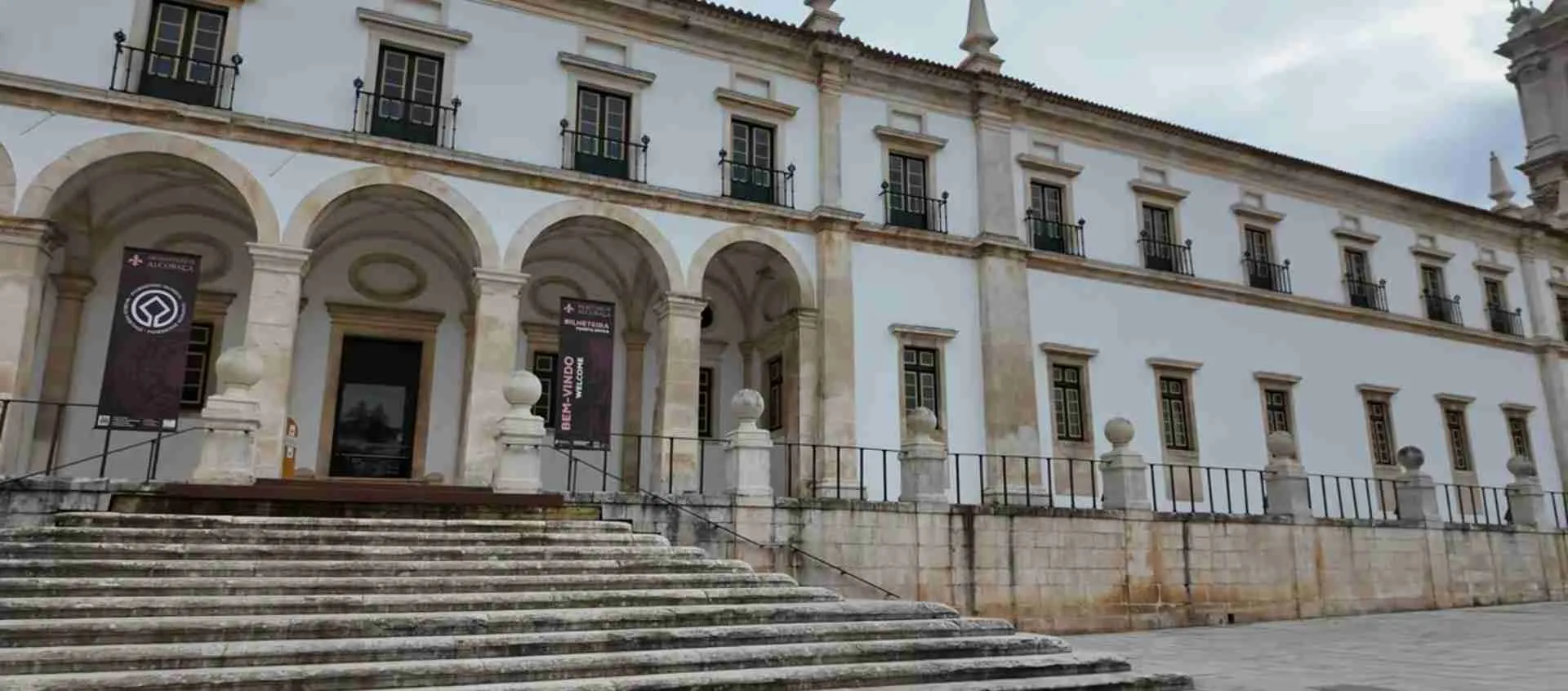
Drive 20 kilometers north from Batalha via N1 reaching Alcobaça in 25 minutes. Free parking operates in municipal lots surrounding Praça 25 de Abril with the monastery’s imposing Baroque facade dominating the town square. The 18th-century facade somewhat disguises the medieval Gothic structure behind, with the original austere Cistercian character revealed upon entering the church nave.
Purchase entrance tickets (€15 or present combined UNESCO ticket if purchased at Batalha) at the ticket office within the complex. The complimentary audio guide provides essential context regarding Cistercian monastic life, the monastery’s founding by King Afonso Henriques in 1153, and the legendary Pedro and Inês love story immortalized in their facing tombs. Begin exploration with the church nave – Portugal’s first wholly Gothic structure featuring remarkable 106-meter length, pure white limestone, soaring vertical proportions, and minimal decoration reflecting Cistercian poverty vows and architectural clarity.
The transept contains the monastery’s most famous elements: the facing tombs of King Pedro I and his murdered love Inês de Castro. These masterpieces of Gothic funerary sculpture feature intricate carving depicting the Life of Saint Bartholomew (Pedro’s tomb) and the Last Judgment (Inês’s tomb) with exceptional detail and emotional intensity. Legend claims Pedro positioned the tombs foot-to-foot ensuring the lovers would see each other first upon resurrection at Judgment Day, creating enduring romantic symbolism attracting pilgrims and tourists alike.
Progress through the remarkable Cloister of King Dinis (Claustro de Dom Dinis), also called the Cloister of Silence reflecting monastic silence vows. The two-story structure demonstrates Gothic proportions with elegant arches surrounding the central courtyard garden. Access adjoining rooms including the Chapter House where monks conducted administrative meetings, the Monks’ Hall displaying religious artifacts, the refectory with azulejo tile panels, and the extraordinary kitchen featuring massive central chimney and stream running through for fish supply and waste disposal.
The Kings’ Hall (Sala dos Reis) displays 18th-century azulejo panels depicting monastery founding and Portuguese royal genealogy with 19 statues of Portuguese kings lining the walls. This room provides historical context connecting the monastery to Portuguese royal power extending from the 12th century through the 18th century when royal patronage maintained and expanded the complex beyond its original Cistercian simplicity.
Return Journey Planning (4:30 PM – 7:00 PM)
Depart Alcobaça by 4:30-5:00 PM enabling Lisbon arrival before evening traffic peaks. The return route reverses morning journey: N1 south 20 kilometers to Batalha, IC2/N356 west 30 kilometers to A1 junction, then A1 expressway south 100 kilometers to Lisbon. Total driving time approximately 2 hours arriving Lisbon 6:30-7:00 PM depending on traffic conditions. Evening rush traffic entering Lisbon adds 15-30 minutes during weekday returns (particularly Fridays) while weekend returns flow more smoothly.
Return rental vehicles to airport or city center locations per rental agreement terms. Airport returns avoid navigating Lisbon city center traffic though adding 15-20 minutes compared to central drop-off locations near accommodations. Evening hours remain available for dinner in Lisbon neighborhoods, rest at accommodations, or reflection on the comprehensive monastery exploration accomplished during the intensive day trip.
Day Cost Summary
Rental car €40-60 per day (split among passengers), fuel €15-20, tolls €10, combined UNESCO entrance ticket €15, lunch €12-18, snacks/refreshments €10-15, dinner €15-20. Total day cost: €92-128 per person for dual occupancy (€46-64 per person for four passengers).
Cost Breakdown 2026: Budget Planning
Transportation Costs Comparison
Rental car provides most flexible independent exploration option costing €40-60 per day for compact/economy vehicles plus fuel (€15-20) and tolls (€10) totaling €65-90. These costs split among passengers: €16-23 per person (four passengers), €22-30 (three passengers), €33-45 (two passengers), €65-90 (solo traveler). Airport rental pickup generally offers better rates than city center locations while avoiding urban driving challenges during departure and return.
Organized tours from Lisbon cost €75-95 per person including transportation, entrance fees, and guide services. These tours eliminate rental logistics, parking concerns, and navigation complexity while providing historical context through knowledgeable multilingual guides. However, tours allocate compressed schedules (60-90 minutes per monastery) compared to independent visits enabling 2-3 hours per site. Tours prove most economical for solo travelers and pairs while groups of three or four achieve cost advantages through rental expense splitting.
Hybrid approaches combine public transportation to Leiria (nearest city with bus/train connections) then local taxis or buses to monasteries. However, limited local bus frequencies and taxi costs (€15-25 per transfer) make this approach less practical than organized tours or rental cars. Independent travelers without vehicles find organized tours providing superior value and convenience compared to complex multi-modal public transportation requiring extensive schedule coordination and limited flexibility.
Entrance and Combined Ticket Strategy
Individual monastery tickets cost €15 each (€30 total for both Batalha and Alcobaça) compared to combined UNESCO ticket covering all three central Portugal monasteries (Batalha, Alcobaça, Tomar) for €15 total. The combined ticket saves €15 for dual-site visits and €30 for all three sites representing exceptional value. The one-year validity enables flexible scheduling across multiple Portugal trips or extended stays without predetermined visit sequences.
Purchase combined tickets at any of the three monasteries or online through official heritage monuments portal (mmp.bymeoblueticket.pt). Present the combined ticket at subsequent sites for included admission. This strategy proves optimal for travelers planning comprehensive central Portugal monastery exploration even if Tomar visits occur during different trips given the one-year validity creating long-term value and planning flexibility.
Meal and Activity Costs
Lunch at traditional Portuguese restaurants costs €12-18 for complete meals including soup, main course, beverage, and coffee. Daily specials (prato do dia) offer best value €10-15 with generous regional dishes. Both Batalha and Alcobaça towns maintain authentic Portuguese dining options serving local customers alongside tourists creating quality incentives beyond one-time tourist service.
Snacks, coffee, and refreshments throughout the day cost €10-15 including morning coffee in Lisbon (€1.50-2.50), mid-afternoon coffee and pastries (€3-5), bottled water and light snacks during exploration (€5-8). Portuguese café culture provides exceptional value with high-quality products at remarkably affordable prices. Carrying refillable water bottles and light snacks purchased beforehand reduces day-trip food costs by €5-10 particularly for families where individual purchases multiply significantly.
Dinner upon return to Lisbon costs €15-20 at mid-range establishments or €10-15 for casual dining. After intensive day trip covering 280+ kilometers and 5-6 hours monastery exploration, many travelers prefer simple dinners near accommodations over elaborate restaurant experiences. Takeaway options or hotel room dining provide relaxed evening conclusion to culturally intensive day.
Transportation Guide 2026: Detailed Options
Rental Car Logistics
Major rental operators (Europcar, Hertz, Sixt, Avis, Budget) maintain locations at Lisbon Airport and city center providing competitive rates particularly for advance bookings. Airport pickup offers convenience for early departures (8:00-8:30 AM required for dual-site visits) avoiding morning city traffic while accessing expressway systems directly. Rental costs €40-60 per day for compact/economy vehicles with unlimited kilometers, basic insurance, and electronic toll transponders (Via Verde) included.
Reserve manual transmission vehicles for significant cost savings (€10-15 per day) compared to automatic transmission if comfortable with manual driving. Portuguese vehicles predominantly feature manual transmission with automatic options limited to higher-priced categories. Consider size requirements: compact cars prove adequate for 2-3 passengers while 4 passengers require larger vehicles both for comfort and luggage capacity particularly if combining monastery visits with multi-day regional exploration.
Confirm Via Verde electronic toll transponder inclusion enabling automated toll payment throughout Portuguese highway network. The A1 expressway charges approximately €10 round-trip (Lisbon-Batalha-Lisbon) with the transponder automatically billing rental company who charges credit cards provided at rental. International driving permits remain unnecessary for EU, UK, US, Canadian, and Australian license holders with home licenses valid for short-term Portugal visits under 90 days.
Driving Route Details
From central Lisbon, access A1 expressway via Segunda Circular or A5 depending on accommodation location. Follow A1 north toward Porto for 100 kilometers (approximately 1 hour) then exit toward Leiria (exit 19) continuing IC2 northeast. After 20 kilometers, follow N356 east approximately 10 kilometers directly to Batalha town center. Clear directional signage guides drivers with monastery visible from several kilometers distance given elevated hilltop position.
From Batalha to Alcobaça, follow N1 north for 20 kilometers (25 minutes) through rural Portuguese countryside with small villages, agricultural lands, and rolling hills. The monastery’s towers become visible approaching Alcobaça town with clear signage directing to Praça 25 de Abril where the monastery dominates the main square. Return journey reverses this routing requiring approximately 2 hours Alcobaça to central Lisbon depending on traffic conditions.
GPS navigation apps (Google Maps, Waze) function reliably throughout central Portugal providing real-time traffic updates and optimal routing. However, physical maps or downloaded offline maps provide backup given occasional mobile data coverage gaps in rural areas between towns. The routing remains straightforward with limited complex navigation beyond initial Lisbon exit and final Lisbon re-entry where multiple lane options create potential confusion for unfamiliar drivers.
Organized Tour Service Details
Multiple Lisbon operators offer daily departures visiting Batalha and Alcobaça either independently or combined with additional sites (frequently Fátima, Nazaré, or Tomar). Standard tours operate 9:00 AM-7:00 PM (10 hours) including hotel pickup, comfortable coach transportation, English-speaking guides, entrance fees, and structured monastery visits allocating 60-90 minutes per site. Tours cost €75-95 per person with advance booking recommended particularly during peak season (June-September) when tours fill capacity.
Small group tours (maximum 8-16 participants) offer personalized experiences with flexible schedules accommodating participant questions and interests. These premium options cost €90-120 per person but provide intimate settings enabling meaningful guide interactions and adaptable timing. Larger coach tours (30-50 participants) provide economical pricing €65-80 per person though following rigid schedules with limited individual flexibility.
Review tour descriptions carefully regarding time allocations, additional stops (some tours add Fátima pilgrimage site or Nazaré beach town creating compressed monastery schedules), meal arrangements (lunch included vs independent), and group size limits. Customer reviews on GetYourGuide, Viator, or Civitatis platforms provide insight regarding guide quality, schedule adherence, and overall tour experience enabling informed operator selection matching personal preferences and expectations.
Cultural Context 2026: Understanding the Monasteries
Batalha Historical Significance
The Battle of Aljubarrota (August 14, 1385) represents the defining moment in Portuguese independence history where 6,500 Portuguese forces under Nuno Álvares Pereira defeated 30,000 Castilian invaders led by King Juan I claiming the Portuguese throne. The decisive victory secured João I’s reign and Portuguese sovereignty establishing the House of Aviz dynasty ruling Portugal through 1580. King João vowed to build a magnificent monastery honoring the Virgin Mary if granted victory, fulfilling this promise through Batalha’s construction beginning 1386.
Construction continued over two centuries (1386-1563) involving Portugal’s finest architects including Afonso Domingues, Huguet, and Mateus Fernandes. The extended timeline explains stylistic evolution from pure Gothic foundations through late Gothic elaboration to Manueline ornamentation reflecting Portugal’s maritime empire prosperity. King Manuel I commissioned the Unfinished Chapels though his death in 1521 and subsequent focus on Jerónimos Monastery in Belém left Batalha’s final architectural vision incomplete creating the haunting “unfinished” character defining the monument today.
Alcobaça Historical Foundations
King Afonso Henriques, Portugal’s founding monarch, established Alcobaça in 1153 fulfilling a vow made to Saint Bernard of Clairvaux after conquering Santarém from Moorish forces in 1147. The monastery became seat of the Cistercian Order in Portugal with monks receiving vast land grants enabling the order to develop sophisticated agriculture, wine production, and educational programs transforming central Portugal’s economy and culture over subsequent centuries.
By the 13th century, Alcobaça operated as one of Europe’s wealthiest and most influential monasteries with 999 monks (according to legend) inhabiting the complex. The monks pioneered progressive agricultural techniques, maintained Portugal’s finest medieval library, operated prestigious schools teaching Latin and theology, and produced illuminated manuscripts of exceptional artistic quality. Royal patronage continued through centuries with multiple Portuguese kings buried in the monastery including Afonso II and Afonso III in the Royal Pantheon.
The Pedro and Inês Love Story
The tragic romance of Pedro I and Inês de Castro ranks among Portugal’s most enduring legends immortalized in poetry, literature, and their Gothic tomb sculptures at Alcobaça. Prince Pedro married Constança of Castile in 1339 for political alliance though fell passionately in love with Inês, a lady-in-waiting in his wife’s entourage. Following Constança’s death in 1345, Pedro and Inês lived openly together producing four children despite political opposition fearing Castilian influence.
King Afonso IV, Pedro’s father, ordered Inês’s assassination in 1355 to eliminate perceived threat to Portuguese independence. Upon ascending the throne in 1357, Pedro famously exhumed Inês’s body, placed her corpse on the throne, crowned her posthumous Queen of Portugal, and commanded his entire court to kiss her hand demonstrating his undying love while executing her assassins. The facing tombs at Alcobaça position the lovers foot-to-foot ensuring they see each other first upon resurrection creating powerful romantic symbolism surviving over 650 years.
Planning Your 2026 Visit: Practical Considerations
Best Time to Visit Analysis
Spring months (April-May) provide optimal conditions with pleasant temperatures (16-24°C), blooming monastery gardens, manageable tourist volumes, and stable weather patterns enabling outdoor exploration. Monastery hours extend April 1 onward (closing 6:00-7:00 PM vs 5:30 PM winter) providing additional afternoon exploration time. Spring also avoids peak summer crowds while maintaining adequate daylight for comprehensive dual-site visits.
Summer (June-September) brings extended hours (closing 6:00-7:00 PM) accommodating leisurely afternoon exploration though also delivering peak tourism with organized tours creating temporary congestion in popular monastery areas. July-August temperatures exceed 30-35°C making outdoor walking and photography challenging during midday hours. Consider afternoon visits or early morning arrivals (9:00 AM openings) avoiding peak heat while enjoying morning light for optimal photography conditions.
Fall (September-October) mirrors spring advantages: comfortable temperatures, reduced crowds after summer peak, harvest season atmosphere, and autumn colors transforming monastery gardens and surrounding countryside. September maintains summer extended hours while October transitions to winter schedule requiring earlier planning for afternoon returns to Lisbon. Fall often features stable weather with lower rainfall compared to winter months making it reliable for advance trip planning.
Photography Opportunities
Both monasteries offer exceptional photographic subjects with morning light (9:00-11:00 AM) illuminating facades and cloisters optimally. The Batalha main portal benefits from morning sun highlighting the elaborate statuary carving while afternoon light (2:00-4:00 PM) better illuminates the Unfinished Chapels’ remarkable portal. Interior photography operates freely without flash or tripods with high ISO settings and image stabilization essential for dimly-lit church naves and cloisters.
Alcobaça’s white limestone interior photographs beautifully with available light streaming through clerestory windows creating atmospheric conditions throughout the day. The Pedro and Inês tombs require careful exposure balancing bright church ambient light with darker tomb sculpture details. External monastery facade photography benefits from afternoon light in Alcobaça’s main square with surrounding buildings creating natural framing compositions.
Drone photography remains prohibited at both UNESCO sites protecting architectural integrity and visitor experiences. However, surrounding countryside and town views from conventional ground positions provide remarkable compositions particularly utilizing elevated positions near Batalha monastery showcasing the fortified structure rising above the town. Always respect other visitors avoiding extended photography sessions blocking access to popular viewing areas or monastery circulation paths.
Accessibility Considerations
Both monasteries present accessibility challenges due to medieval construction predating modern accessibility standards. Batalha’s main church and Founders’ Chapel maintain relatively level access though Royal Cloister and Unfinished Chapels require navigating stairs and uneven medieval surfaces. Wheelchair users access ground-floor areas only with upper-level cloisters, dormitory, and secondary chapels remaining inaccessible.
Alcobaça provides better accessibility with the church nave, main cloister, and Kings’ Hall largely step-free enabling wheelchair access to primary attractions including the Pedro and Inês tombs. However, secondary cloisters, refectory, and monks’ quarters involve stairs limiting comprehensive site exploration for mobility-challenged visitors. Both monasteries provide fold-up seating stools for elderly or tired visitors enabling rest periods during exploration.
Contact monastery administrations in advance (Batalha +351 244 765 497, Alcobaça +351 262 505 120) arranging accessibility assistance and verifying current accessible areas as periodic conservation work occasionally affects access routes. Staff members assist with accessibility questions and recommend optimal routes maximizing accessible area exploration while providing realistic expectations regarding site limitations for visitors with mobility challenges.
Booking and Reservations 2026: Securing Your Visit
Entrance Ticket Booking
Purchase monastery tickets at site entrances (cash or card accepted) or advance book online through official heritage monuments portal (mmp.bymeoblueticket.pt). Online booking proves unnecessary except during peak season (July-August) when organized tour groups create temporary congestion. Sites rarely reach capacity enabling spontaneous visits without advance planning though purchasing combined UNESCO tickets before departure ensures immediate access without queuing at first monastery visited.
The combined UNESCO ticket (€15) purchase occurs at any of the three monasteries (Batalha, Alcobaça, Tomar) or online through official channels. Present this ticket at subsequent sites for included admission. One-year validity enables flexible scheduling across multiple trips to Portugal or extended stays planning visits based on weather, schedule availability, and personal energy levels rather than predetermined fixed dates.
Rental Car Booking
Book rental cars 2-4 weeks advance for optimal rates and vehicle selection particularly during peak season (June-September) when demand increases significantly. Compare rates across operators (Europcar, Hertz, Sixt, Avis, Budget) through aggregator platforms (Rentalcars.com, Auto Europe, Kayak) identifying best value for desired vehicle categories and pickup locations. Read terms carefully regarding insurance coverage, toll transponder inclusion, additional driver fees, and fuel policies avoiding unexpected charges at vehicle return.
Confirm Via Verde toll transponder inclusion enabling automated highway toll payment without cash toll booths or post-trip invoice complications. Verify geographic restrictions: most rentals permit travel throughout Portugal and Spain though some economy rates restrict international travel. Add GPS navigation if personal devices lack European mobile data plans though most modern smartphones with international data packages provide adequate navigation through Google Maps or Waze apps.
Organized Tour Booking
Book organized tours 7-14 days advance during peak season ensuring availability and preferred departure dates. GetYourGuide, Viator, and Civitatis provide reliable booking platforms with customer reviews enabling informed operator selection. Filter searches by group size limits, language options, additional sites included, and customer ratings identifying tours matching personal preferences and expectations.
Review cancellation policies carefully: most tours offer full refunds for cancellations 24-72 hours before departure enabling weather-based rescheduling. Confirm hotel pickup locations and timing ensuring convenient departure points from your specific Lisbon accommodation. Verify what’s included: entrance fees (should be included at these prices), lunch arrangements (included vs independent), audio equipment quality, and guide expertise level affecting overall tour value and experience quality.
Extended Regional Exploration 2026
Adding Fátima to the Itinerary
Fátima, the famous Catholic pilgrimage site, lies 20 kilometers east of Batalha (20 minutes driving) creating logical three-site day trip combining religious and architectural Portuguese heritage. The Sanctuary of Our Lady of Fátima operates free admission with the massive plaza, basilicas, and apparition chapel accommodating millions of pilgrims annually. However, adding Fátima extends total day trip to 12-14 hours requiring even earlier Lisbon departure (7:00-7:30 AM) and compressed monastery schedules potentially sacrificing comprehensive architectural appreciation.
Many organized tours combine all three sites (Batalha, Fátima, Alcobaça) in 11-12 hour excursions though allocating limited time per location. Independent travelers should realistically assess whether religious interest in Fátima justifies compressed monastery exploration or whether separate dedicated days enable proper appreciation of each site’s distinct significance. Quality architectural immersion often proves more rewarding than rushed multi-site accumulation lacking meaningful engagement with individual locations.
Nazaré Beach Town Addition
Nazaré, the famous Atlantic fishing village, lies 35 kilometers west of Alcobaça (30 minutes driving) offering coastal contrast to inland monastery exploration. The town features traditional fishing culture, dramatic cliff-top viewpoints (Sítio neighborhood), and world-famous big wave surfing (November-February). However, adding Nazaré creates 14-15 hour day trip with minimal monastery time or superficial coastal visit lacking adequate beach/cliff exploration.
Consider multi-day regional stays enabling dedicated monastery day (Batalha + Alcobaça) and separate coastal day (Nazaré + Peniche) rather than attempting compressed multi-site single-day marathon. This strategy provides meaningful engagement with each location while maintaining sustainable energy levels and avoiding rushed schedules diminishing experience quality and cultural understanding. Base overnight accommodation in Alcobaça, Nazaré, or Caldas da Rainha accessing all sites within 30-40 minute drives.
Tomar Three-Monastery Route
Adding Tomar (Convento de Cristo) to Batalha and Alcobaça creates the complete UNESCO “Three Monasteries Route” though requiring full-day commitment (14-16 hours) or multi-day regional exploration. Tomar lies 70 kilometers east of Alcobaça (1 hour driving) with the combined UNESCO ticket (€15) covering all three sites saving €30 compared to individual purchases. This represents Portugal’s premier medieval architectural collection though attempting all three in one day from Lisbon proves exhausting with compressed exploration periods reducing appreciation quality.
Multi-day strategies enabling proper three-monastery exploration include: Day 1 Tomar (full day from Lisbon), Day 2 Batalha + Alcobaça (full day from Lisbon), or establish regional base (Fátima, Tomar, Leiria) visiting each monastery on separate days with relaxed schedules, optimal photography conditions, and comprehensive architectural engagement. The combined UNESCO ticket’s one-year validity accommodates this multi-visit strategy across separate Portugal trips or extended stays enabling flexible high-quality exploration versus rushed single-day marathon.
Frequently Asked Questions: Batalha & Alcobaça 2026
Which monastery is more impressive, Batalha or Alcobaça?
Both monasteries offer exceptional architectural experiences representing distinct medieval traditions making direct comparison impossible. Batalha showcases elaborate Manueline ornamentation with the Unfinished Chapels and Royal Cloister representing Portuguese architectural pinnacles, while Alcobaça demonstrates pure Cistercian Gothic simplicity with Portugal’s longest church nave and the legendary Pedro-Inês tombs. Architecture enthusiasts appreciate both equally for different reasons: Batalha for ornamental richness and complex stylistic evolution, Alcobaça for austere perfection and spatial harmony. Most visitors find visiting both in sequence creates comprehensive Portuguese Gothic understanding unattainable through single-site visits.
Is it better to visit with a tour or independently?
Independent visits via rental car provide maximum flexibility with 2-3 hours per monastery enabling comprehensive exploration, personal photography timing, and flexible lunch scheduling. This approach suits architecture enthusiasts, photographers, and travelers valuing self-paced cultural immersion. Organized tours offer convenient logistics eliminating driving/navigation stress while providing expert historical context through knowledgeable guides, though allocating compressed schedules (60-90 minutes per site). Solo travelers and pairs find tours economically advantageous while groups of 3-4 achieve cost savings through rental car expense splitting. Choose based on priorities: convenience and guidance (tour) vs flexibility and depth (independent).
How much walking is involved at each monastery?
Both monasteries involve considerable walking across large medieval complexes with stairs, uneven surfaces, and multilevel areas. Batalha requires approximately 2-3 kilometers walking including church nave, Founders’ Chapel, Royal Cloister, secondary cloisters, and Unfinished Chapels circuit with numerous staircases accessing different levels. Alcobaça involves similar distance covering church nave, main cloister, secondary cloisters, refectory, kitchen, and monks’ quarters. Wear comfortable walking shoes with good support anticipating 2-3 hours standing/walking per monastery. Rest opportunities exist in cloister courtyards and designated seating areas though active mobility throughout visits maximizes comprehensive architectural appreciation.
Can I take photos inside the monasteries?
Photography operates freely throughout both monasteries for personal non-commercial use. Flash photography and tripods are prohibited protecting delicate medieval surfaces and preventing visitor obstruction. Interior church lighting proves challenging requiring high ISO settings (800-3200) and image stabilization for sharp handheld photography. The remarkable architectural details, sculptural elements, and atmospheric lighting conditions provide exceptional photographic subjects rewarding skilled photographers. Respect other visitors’ experiences avoiding extended photography sessions blocking circulation paths or popular viewing areas particularly during organized tour group periods creating temporary congestion.
What happens if it rains during my visit?
Both monasteries feature extensive covered areas including church naves, cloisters with arcaded walkways, and interior rooms providing rain protection during most exploration. However, some areas (Batalha Unfinished Chapels, certain cloister courtyards, exterior architectural details) require outdoor exposure. Rain occurs more frequently October-March with summer months (June-September) experiencing minimal precipitation. The monasteries remain open during rain without closures except extreme weather circumstances. Bring umbrella or rain jacket for transitions between covered areas and comfortable waterproof footwear as medieval stone surfaces become slippery when wet requiring careful footing.
Is lunch included in organized tours?
Tour lunch arrangements vary by operator: some include lunch at traditional Portuguese restaurants (typically adding €10-15 to tour cost), others allocate independent lunch periods (1-1.5 hours) enabling personal restaurant selection and budget control, while economy tours minimize lunch stops maintaining tight schedules. Review specific tour descriptions carefully regarding meal arrangements and timing. Tours including lunch often feature tourist-oriented restaurants serving large groups potentially compromising quality compared to authentic establishments independent travelers select. Budget-conscious travelers prefer tours excluding lunch enabling personal dining choices controlling costs and quality.
How crowded are the monasteries in summer 2026?
Summer months (June-September) bring increased tourism with organized tour buses creating temporary congestion 11:00 AM-1:30 PM particularly at Batalha. However, the extensive monastery complexes distribute visitors effectively preventing absolute overcrowding. Alcobaça maintains slightly lower visitor volumes benefiting from less prominent tourism marketing compared to Batalha. Early arrivals (9:00-10:00 AM) or afternoon visits (after 2:30 PM) largely avoid tour group impacts. The monasteries never reach capacity requiring admission limits though summer weekends and Portuguese holidays generate maximum visitor density. Spring (April-May) and fall (September-October) offer optimal balance of pleasant weather and manageable crowds.
Can children visit these monasteries?
Children under 12 enter free making family visits economically accessible. However, the cultural-historical content better suits teenagers and adults with the architectural significance potentially failing to engage young children lacking historical context or aesthetic appreciation. The extensive walking, stairs, and lack of interactive elements create challenges maintaining children’s interest during 2-3 hour monastery explorations. Consider children’s ages, interest in history/architecture, and mobility before committing to intensive dual-monastery day trip. Family-oriented organized tours sometimes offer child-friendly interpretation though most guides focus on adult architectural/historical content assuming sophisticated audience knowledge and interests.
What’s the best order to visit: Batalha first or Alcobaça first?
Most itineraries visit Batalha first (closer to Lisbon by 20 kilometers) enabling mid-morning arrival after 9:00 AM opening, comprehensive exploration, then afternoon progression to Alcobaça. This routing maintains logical geographic sequence and energy management with the more elaborate Batalha exploration occurring during fresh morning energy levels. However, reverse routing (Alcobaça first) also functions effectively particularly if preferring to photograph Alcobaça’s main square during morning light or avoiding potential Batalha morning tour bus congestion. Both sequences prove equally viable with minimal practical differences affecting overall experience quality or logistics.
Do I need advance reservations?
Neither monastery requires advance entrance reservations except during rare special events or peak season organized group visits. Walk-in ticket purchase at site entrances suffices for independent travelers year-round. Rental car reservations prove essential 2-4 weeks advance during peak season (June-September) ensuring vehicle availability and optimal rates. Organized tour bookings require 7-14 days advance particularly for summer departures when tours fill to capacity. Restaurant reservations remain unnecessary in both towns though lunch peak hours (1:00-2:00 PM) create temporary capacity challenges at popular establishments particularly when multiple tour buses arrive simultaneously.