
Bari Walking Tours & Routes 2026: Self-Guided Walks
This guide presents five primary walking routes designed for self-guided exploration of Bari’s essential districts and landmarks in 2026. Each route includes detailed navigation instructions, estimated walking times, suggested stop points for photography and refreshment, and contextual information about sites along the way. The routes function independently for visitors with limited time focusing on specific interests, or combine into extended full-day or multi-day walking explorations for those wanting comprehensive Bari coverage. Whether you’re interested in Norman architecture, belle époque elegance, seaside strolls, or medieval urban fabric, you’ll find walking routes that deliver efficient, enjoyable access to Bari’s most significant and characteristic areas while maintaining the flexibility to deviate, dawdle, and discover at your own pace.
Key Takeaways
- The comprehensive Bari Vecchia walking route covers 3.5 km in 3-4 hours, connecting Basilica di San Nicola, Castello Normanno-Svevo, Cathedral, and 40+ medieval streets within the walled old town’s UNESCO heritage core
- Lungomare waterfront walks extend 5 km from Porto Vecchio to Pane e Pomodoro beach, requiring 90 minutes of continuous walking or 2-3 hours with stop intervals for photography and cafe breaks
- The Murat District grid pattern enables efficient self-navigation through Bari’s elegant 19th-century quarter, with Via Sparano forming the 1.2 km shopping spine connecting Teatro Petruzzelli to central Piazza Umberto
- Combined heritage routes linking Bari Vecchia, waterfront, and Murat districts total 7-8 km and require 5-6 hours including site visits, creating comprehensive full-day walking experiences
- Early morning walks (7-9 AM) provide optimal photography lighting in Bari Vecchia’s narrow streets while avoiding midday heat and peak tourist hours, with golden hour (5-7 PM) best for waterfront promenade strolls
- Free walking tour apps and downloadable maps eliminate guide costs while printed routes from tourist information at Piazza Aldo Moro provide reliable offline navigation backup in 2026
Introduction: Discovering Bari on Foot in 2026
Bari reveals its layered character most effectively through walking explorations that connect medieval lanes, seafront promenades, and elegant avenues in a compact urban fabric designed for pedestrian discovery. The city’s geography creates natural walking districts – the dense medieval maze of Bari Vecchia occupies the eastern promontory, the ruler-straight streets of the Murat district form the 19th-century expansion, and the lungomare waterfront promenade connects both sections along the Adriatic edge. This clear spatial organization allows systematic walking tours that progressively reveal Bari’s evolution from Norman trading port to contemporary Puglia capital, with each district offering distinct architectural character, historical periods, and urban atmospheres that combine into a comprehensive understanding of the city’s identity and development.
Walking tours in Bari function smoothly as self-guided experiences given the compact scale and clear district boundaries that make navigation straightforward even without guides. The entire historic center spans just 2 km east-west by 1.5 km north-south, with most significant sites concentrated within even smaller areas accessible through interconnected walking routes. Flat terrain eliminates the hills that complicate walking tours in many Italian cities, while the seaside position provides constant orientation reference preventing disorientation in Bari Vecchia’s labyrinthine streets. Street signage in major areas appears in Italian and English, and the prevalence of smartphone mapping apps provides backup navigation when traditional street signs create confusion in the old town’s organic medieval layout where streets sometimes lack clear names or numbers.
People Also Ask About Bari Walking Tours 2026
How long does it take to walk around Bari’s old town in 2026?
Walking the complete perimeter of Bari Vecchia takes 45-60 minutes at moderate pace, following the lungomare waterfront along the eastern and northern edges, then Via Venezia along the western boundary. This circuit covers approximately 3 km but involves only exterior appreciation without entering the interior medieval streets or visiting major sites. Comprehensive exploration of Bari Vecchia’s interior requires 3-4 hours minimum, covering 3.5-4 km while visiting Basilica di San Nicola, the Cathedral, Castello Normanno-Svevo, and wandering through the characteristic narrow streets connecting major monuments. This timeframe allows reasonable pacing with photography stops, brief cafe breaks, and time to appreciate architectural details, street life, and the neighborhood character that makes Bari Vecchia special beyond just its famous landmarks. Visitors wanting to visit museum interiors, attend mass at San Nicola, or enjoy extended restaurant meals should allocate 5-6 hours for complete old town experiences in 2026.
Is Bari Vecchia safe for walking tours?
Yes, Bari Vecchia operates as a safe walking district during daylight hours with heavy pedestrian traffic, resident activity, and tourist presence creating natural security through active street life. The neighborhood underwent significant revitalization over the past two decades, transforming from a neglected quarter into a vibrant residential and tourist area with restaurants, shops, and renovated housing. Morning through evening hours (8 AM – 10 PM) present no particular safety concerns for walkers exercising normal urban awareness. The densely-packed medieval streets can feel disorienting with limited sightlines around corners, but this architectural character creates interest rather than danger. Late night hours (after 11 PM) see reduced activity when exercising additional caution makes sense, as in any urban historic district. Solo travelers, including women, walk Bari Vecchia comfortably during standard hours. The main considerations involve watching for uneven pavement, occasional motorcycle traffic in narrow lanes, and keeping valuables secure in crowded market areas – standard precautions applicable to any Italian historic center.
Can you walk Bari’s waterfront in 2026?
Yes, Bari’s lungomare waterfront promenade extends approximately 5 km from Porto Vecchio and the Margherita Theater at the old town’s edge southeast to Pane e Pomodoro beach, offering completely paved, accessible walking along the Adriatic. The lungomare functions as Bari’s primary recreational space with dedicated pedestrian paths separated from vehicle traffic, frequent benches, regular cafe/gelato stops, and spectacular sea views throughout. Walking the full distance requires 60-90 minutes continuous walking, or 2-3 hours with stops for photography, refreshments, and appreciation of the seafront atmosphere. The promenade sees heavy local use especially during early evening passeggiata hours (6-8 PM) when Bari residents walk, jog, cycle, and socialize along the waterfront. Sunrise (6-7 AM) provides beautiful eastward light over the Adriatic for photography and peaceful conditions before crowds arrive, while sunset (6:30-8 PM in summer) creates golden light on the cityscape and animated social scenes along the walkway. The lungomare connects seamlessly to Bari Vecchia walking routes at the northwestern end and to Murat district routes at various access points, enabling integrated waterfront and city explorations in 2026.
What is the best time for walking tours in Bari?
Early morning hours (7-9 AM) provide optimal conditions for Bari Vecchia walking tours with cool temperatures, excellent photographic light penetrating narrow streets at low angles, active local life as residents start daily routines, and minimal tourist crowds. Morning markets operate with full energy, street cleaning crews maintain medieval lanes, and churches open for morning mass providing interior access. These hours work particularly well May-September when midday heat (11 AM – 4 PM) makes extended walking uncomfortable and forces breaks in shaded cafes or air-conditioned museums. Late afternoon and early evening (4:30-7:30 PM) creates the second prime window for walking tours, with cooling temperatures, golden hour lighting along the waterfront, active street life as shops reopen after lunch closure, and the passeggiata tradition bringing locals out for pre-dinner walks. Winter months (November-March) compress ideal walking hours to midday (11 AM – 3 PM) when temperatures peak and lighting remains adequate, though Bari’s mild winters allow comfortable walking year-round with appropriate layering.
Do you need a guide for Bari walking tours?
No, Bari’s compact layout, clear district organization, and straightforward navigation make self-guided walking tours perfectly viable and often preferable for independent travelers in 2026. Detailed walking route maps available at tourist information offices in Piazza Aldo Moro, smartphone mapping apps with GPS tracking, and downloadable self-guided tour apps provide sufficient navigation support for confident exploration without professional guides. The main sites – Basilica di San Nicola, Cathedral, Castello, and major streets – feature informational plaques in Italian and English explaining historical significance, while many churches and museums offer audio guides or written materials for deeper context. Self-guided walking eliminates the constraints of group pacing, allows spontaneous deviations to explore interesting streets or cafes, and enables photography without group coordination. However, professional guided tours add value for visitors particularly interested in detailed historical narratives, architectural analysis, or local cultural insights beyond what self-reading provides. Several reputable operators offer 2-3 hour guided Bari Vecchia walking tours at €15-25 per person in 2026, worthwhile for history enthusiasts wanting expert interpretation while still allowing independent exploration of other districts on subsequent days.
Extended multi-day tours – 5+ days
Featured Bari Multi-Day Tour Packages

3 days
Bari 3-Day Discovery Tour
- ✓ Comprehensive Bari experience
- ✓ Expert local guides included
- ✓ All accommodation included
- ✓ Transportation provided

5 days
Bari 5-Day Highlights Experience
- ✓ Comprehensive Bari experience
- ✓ Expert local guides included
- ✓ All accommodation included
- ✓ Transportation provided

7 days
Bari 7-Day Cultural Journey
- ✓ Comprehensive Bari experience
- ✓ Expert local guides included
- ✓ All accommodation included
- ✓ Transportation provided
10 days
Bari 10-Day Complete Adventure
- ✓ Comprehensive Bari experience
- ✓ Expert local guides included
- ✓ All accommodation included
- ✓ Transportation provided
Multi-day tour packages powered by TourRadar. Prices and availability subject to change.
Essential Planning Information 2026
Understanding Bari’s Walking Districts and Geography
Bari’s urban structure divides into three primary walking districts, each occupying distinct geographic zones and historical periods. Bari Vecchia (Old Bari) occupies the peninsula promontory projecting into the Adriatic on the city’s northeast edge, bounded by water on two sides and by the line of Corso Vittorio Emanuele II on the landward side. This medieval quarter preserves the Norman street plan with over 40 lanes creating an irregular maze pattern built around two major basilicas. The dense urban fabric, tight streets (some just 2-3 meters wide), and limited vehicular access create authentic pedestrian-focused medieval atmosphere with residential character despite tourist activity. Walking this district requires acceptance of temporary disorientation in the maze-like streets while trusting that the small area (roughly 500m x 300m) prevents getting seriously lost – the waterfront or major streets always appear within minutes of walking in any direction.
The Murat District occupies the rectangular grid west and south of Bari Vecchia, developed from 1813 when Joachim Murat (Napoleon’s brother-in-law and King of Naples) commissioned planned expansion following geometric principles. The district features perpendicular streets creating regular blocks, elegant palazzo architecture, the Teatro Petruzzelli opera house, Piazza Umberto, and Via Sparano shopping street. Navigation follows simple grid logic – numbered streets run parallel, named streets run perpendicular, and the Teatro serves as central landmark. This district provides complete contrast to Bari Vecchia’s organic medievalism, showcasing 19th-20th century urban planning, bourgeois architecture, and contemporary commercial energy. The Lungomare waterfront promenade forms the third major walking zone, functioning as linear park connecting both historic districts along the Adriatic edge. These three distinct areas enable logical walking tour organization, with visitors systematically exploring each district separately or creating combined routes linking multiple zones in single extended walks.
Current Navigation Tools and Walking Tour Resources for 2026
Free resources support self-guided Bari walking in 2026 without requiring commercial tour purchases or app subscriptions. The Tourist Information Office in Piazza Aldo Moro (adjacent to central train station) provides complimentary printed maps showing Bari Vecchia, Murat District, and major landmarks with Italian and English labeling. These paper maps function as reliable backup navigation when smartphone batteries deplete or data connectivity fails in dense medieval streets where stone buildings sometimes interfere with GPS signals. The maps highlight major walking routes with suggested itineraries, though the simplified cartography doesn’t show every small alley in Bari Vecchia’s complex street network. Request maps upon arrival in Bari and keep them accessible during walking tours for quick reference and orientation checks.
Smartphone mapping applications provide real-time GPS navigation superior to static paper maps for complex route following. Google Maps shows Bari’s street network comprehensively including most Bari Vecchia lanes, allows route planning between specific addresses, and tracks your position as you walk. Download offline maps of Bari before exploring to ensure functionality without data connectivity. Maps.me offers another reliable offline mapping option with detailed street coverage and the ability to bookmark locations for easy navigation. Several free walking tour apps provide audio commentary and suggested routes: Rick Steves Audio Europe includes Bari content, GPSmyCity offers self-guided walking tours with maps and descriptions, and Izi.travel provides free audio guides for Bari landmarks. These digital resources cost nothing beyond initial app downloads and eliminate guide fees while providing substantial interpretive content for historical and architectural understanding during self-guided walks.
Walking Tour Costs and Budget Considerations
Self-guided walking tours in Bari cost nothing beyond optional site admissions and refreshment stops, making walking the most budget-friendly way to experience the city comprehensively. The main walking districts – Bari Vecchia streets, Lungomare waterfront, Murat boulevards – remain freely accessible 24 hours daily with no entry fees or restrictions. Churches including Basilica di San Nicola and the Cathedral allow free entry for worship and general viewing, though donations of €1-2 support maintenance and respect sacred space. Castello Normanno-Svevo charges admission at €3 for adults, the only paid entry among major Bari Vecchia sites. Museums in the Murat District including Pinacoteca Provinciale charge €5-8, while Teatro Petruzzelli tours cost €8 when available. Total admission costs for visiting all paid sites run €15-25 per person, modest expenses that most visitors spread across multiple days rather than attempting comprehensive admission-required visits in single walking tours.
Refreshment stops during extended walks add variable costs depending on choices. Espresso at standing bars costs €1-1.50, cappuccino €1.50-2, seated cafe service doubles these prices to €3-4 per coffee. Gelato ranges €2.50-4 for standard cones, increasing to €5-7 for larger sizes or premium flavors. Light snacks including focaccia, panzerotti (fried calzones), or pastries cost €2-4 at bakeries and street food vendors. Full restaurant meals during walking tours run €15-25 for lunch at neighborhood trattorias, €25-40 at more tourist-oriented establishments. A realistic full-day walking tour budget including admissions, two coffee breaks, gelato, and lunch totals €35-55 per person. Budget-conscious walkers reduce costs by carrying water bottles (refill at public fountains), packing snacks, choosing standing bar service over seated cafes, and timing walks to avoid expensive meal periods. The walking itself remains free, with expenses entirely discretionary based on personal preferences for refreshments and paid attractions during routes.
Bari Vecchia Historic Center Walking Routes 2026
Comprehensive Bari Vecchia Tour: Medieval Streets and Major Basilicas
This complete Bari Vecchia walking route covers 3.5 km over 3-4 hours, visiting all major sites while experiencing the characteristic medieval street atmosphere. Begin at Piazza del Ferrarese on the old town’s western edge, where a morning fish market operates Monday-Saturday with fresh catches displayed on stone tables, creating vibrant local scenes. Cross into Bari Vecchia via Strada delle Crociate, walking east toward the massive Basilica di San Nicola visible ahead. The street opens into Piazza San Nicola, dominated by the basilica’s austere Romanesque facade built 1087-1197 to house St. Nicholas relics brought from Myra. Enter the church (free admission, modest dress required) for 30-45 minutes exploring the three-nave interior, viewing the golden altarpiece, descending to the crypt where St. Nicholas relics rest in an ornate tomb, and appreciating the Romanesque architecture featuring clean stone surfaces and soaring proportions that influenced Pugliese church construction for centuries.
Exit the basilica and walk north through Piazza San Nicola, taking Via delle Crociate north toward the waterfront. Turn right on Strada del Carmine, following it east along the northern waterfront edge with Adriatic views to your left. The route passes through residential streets where locals maintain traditional courtyard homes, with women preparing orecchiette pasta by hand on doorsteps during morning hours. Continue east to reach Castello Normanno-Svevo, the massive fortress dominating Bari Vecchia’s northeast corner. Built originally by Normans in the 12th century and reinforced by Holy Roman Emperor Frederick II in the 1230s, the castle now functions as a museum and cultural space. Entry costs €3 for courtyard and rampart access with city and sea views, though the interior museum spaces contain limited permanent collections. Allocate 30-45 minutes for castle exploration, or skip interior admission and continue along the waterfront for free exterior appreciation of the imposing fortifications.
From the castle, walk southwest on Via Federico II di Svevia into the densest medieval street network in Bari Vecchia’s interior. Turn onto Strada Vallisa, one of the old town’s main commercial lanes with souvenir shops, cafes, and restaurants occupying medieval buildings. The street curves naturally following the organic medieval plan rather than straight alignments. At Piazzetta del Ferrarese, bear right onto Strada San Benedetto, leading to the Cathedral (Cattedrale di San Sabino) in Piazza Cattedrale. The cathedral, built in the 12th-13th centuries, presents more decorative Romanesque facade than San Nicola’s austere front, with rose window, sculptural details, and elegant proportions. Enter free to view the crypt containing relics and Byzantine-style frescoes, the main nave with its clean medieval architecture, and the adjacent museum (€2 admission) displaying ecclesiastical treasures. After cathedral visits totaling 30-40 minutes, explore the surrounding Piazza Cattedrale, often hosting outdoor art exhibitions and markets.
Complete the route by wandering southwest through additional characteristic streets – Via Sparano di Bari Vecchia, Via Abate Gimma, Arco Basso, and other lanes revealing daily residential life, small artisan workshops, elderly residents chatting in dialect, children playing in narrow passages, and washing hung between buildings creating quintessential southern Italian medieval atmosphere. Exit Bari Vecchia via Corso Vittorio Emanuele II at Piazza Mercantile, where the colonna della giustizia (justice column) stands as a medieval relic where debtors were publicly shamed. End the walk at Piazza del Ferrarese fish market for lunch at one of the surrounding seafood restaurants, or continue into the Murat District for additional exploration. This comprehensive route delivers complete Bari Vecchia coverage connecting major monuments with atmospheric wandering through the medieval urban fabric that makes the district special beyond just its famous churches.
Focused San Nicola Pilgrimage Walk
This shorter 1.5 km route concentrates on the Basilica di San Nicola and immediately surrounding medieval streets, ideal for morning visits before midday heat or for travelers with limited time wanting to experience Bari’s most significant religious monument. Begin at the western entrance to Bari Vecchia at Piazza del Ferrarese around 8-9 AM when the basilica opens and streets start active morning routines. Walk directly east on Strada delle Crociate, the main pedestrian route connecting modern Bari to the basilica. This 400-meter straight approach provides theatrical progression as the basilica facade grows larger ahead, emerging from surrounding medieval buildings. The street passes small shops selling religious items, postcards, and local products while revealing glimpses of perpendicular lanes extending into the dense street network on both sides.
Arrive at Piazza San Nicola, using time before basilica entry to appreciate the exterior architecture. The facade, completed in the late 12th century, demonstrates Apulian Romanesque style with minimal decoration emphasizing geometric purity and structural clarity. Two towers flank the main entrance, while the clean stone surfaces create austere power rather than the elaborate ornamentation typical of later Gothic or Baroque periods. Enter the basilica when opening (usually 7 AM for morning mass, 9 AM for general tourists) to avoid afternoon crowds that intensify after 11 AM. Interior visits follow typical pattern: appreciate the three-nave space with stone columns supporting the ceiling, view the ciborium (canopy) over the main altar with 12th-century columns, examine the episcopal throne (cathedra) in the apse dating to 1098, and descend to the crypt where St. Nicholas relics rest in a silver-and-gold reliquary beneath the altar.
The crypt functions as active pilgrimage destination particularly for Orthodox Christians who venerate St. Nicholas, with regular services held in the crypt chapel. Photography without flash is permitted in most areas. After basilica exploration requiring 30-45 minutes, exit into Piazza San Nicola and explore the immediate surrounding streets. Via Dottula runs behind the basilica’s apse, offering excellent perspectives on the building’s massive stonework and architectural proportions from rear vantage points. Vico Abate Stefano and other small lanes radiating from the piazza reveal characteristic Bari Vecchia street life with small workshops, elderly residents maintaining traditional courtyard homes, and glimpses into interior spaces through open doorways. Return to Piazza del Ferrarese via alternative routes through Arco San Nicola and Via Venezia for varied street scenes, or extend the walk north to the waterfront Lungomare for sea views before returning to modern Bari. Total walking time runs 90 minutes to 2 hours including basilica visit, suitable for morning explorations before lunch or as introduction to Bari Vecchia before returning for more extensive afternoon wandering.
Cathedral Quarter and Southern Bari Vecchia Loop
This 2 km circuit focuses on the southern section of Bari Vecchia, centering on the Cathedral while exploring quieter streets experiencing less tourist traffic than the San Nicola area. Start at the western entrance to Bari Vecchia near Piazza Mercantile, walking east on Strada del Palazzo di Città past the city hall’s grand entrance. Bear left onto Strada San Benedetto, climbing gently upward through the southern medieval streets toward the Cathedral occupying the old town’s highest point. This approach provides the most dramatic cathedral arrival, with the building emerging above surrounding medieval rooflines as you ascend through narrow lanes. The surrounding neighborhood maintains stronger residential character with fewer tourist-oriented businesses, allowing observation of authentic daily life – residents shopping at small alimentari stores, elderly men playing cards in small piazzas, families preparing meals in ground-floor kitchens visible through doorways.
Reach Piazza Cattedrale and the Cathedral (Cattedrale di San Sabino), entering for 30-40 minutes of interior exploration. The cathedral, despite rebuilding in 1950s that added questionable modern elements, preserves important medieval architecture including the Romanesque facade, crypt with Byzantine-style frescoes, and portions of the 12th-century structure. The adjacent cathedral museum (€2 admission) displays ecclesiastical treasures including illuminated manuscripts, liturgical objects, and archaeological finds from earlier structures beneath the current building. The museum visit adds 20-30 minutes for those interested in religious art and local history. After cathedral exploration, wander the surrounding streets – Via Dottula extending east toward the old Jewish quarter, Via Abate Gimma leading south toward residential areas, and various small lanes revealing architectural details, doorway shrines, and street-level views into private courtyards that characterize medieval Mediterranean urbanism.
Complete the loop by walking south and west through Via Roberto da Bari and Via Venezia along Bari Vecchia’s southern perimeter, where the medieval quarter meets the planned Murat district along Corso Vittorio Emanuele II. This border zone reveals the dramatic contrast between organic medieval streets and geometric 19th-century planning, with narrow irregular lanes ending abruptly at wide straight boulevards. Turn north along the western edge, reaching Piazza Mercantile with its arcaded perimeter, central column of justice, and position as historic commercial center. The piazza connects to several atmospheric streets including Arco Basso and Strada Vallisa worth brief exploration before concluding the walk. This route requires 90 minutes minimum walking time, extending to 2.5-3 hours with cathedral visit and exploratory wandering. The southern emphasis provides alternatives to heavily-trafficked San Nicola routes while revealing residential Bari Vecchia character and the Cathedral’s architectural significance as complement to the more famous basilica.
Waterfront and Lungomare Walking Tours 2026
Complete Lungomare Promenade Walk: Porto Vecchio to Pane e Pomodoro
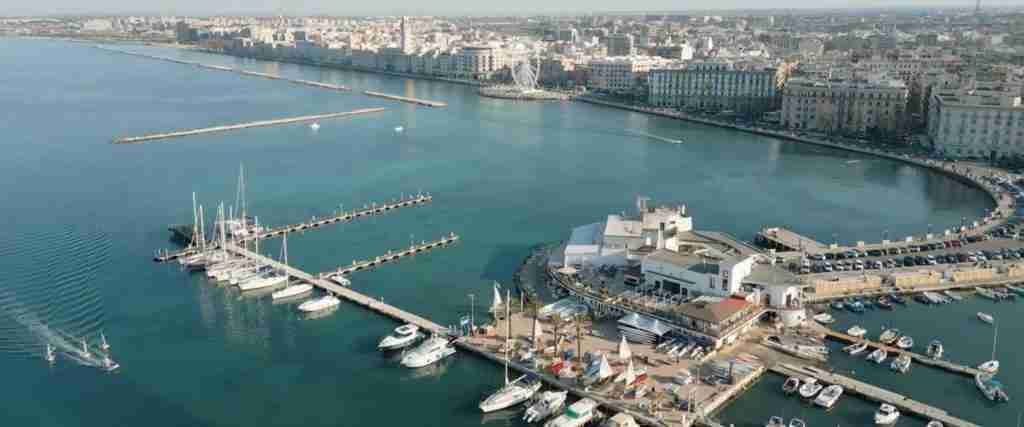
The full Lungomare waterfront walk extends approximately 5 km from the Margherita Theater and Porto Vecchio at the old town’s edge southeast along the Adriatic to Pane e Pomodoro beach, requiring 60-90 minutes continuous walking or 2-3 hours with photography stops and refreshment breaks. Begin at the Margherita Theater (Teatro Margherita), the distinctive early 20th-century building constructed on a pier extending into the water. The theater, built 1910-1914 in eclectic style combining Art Nouveau and Liberty elements, now functions as contemporary art space. Walk southeast along the broad paved lungomare, initially passing fishing boats and small watercraft in Porto Vecchio, with the massive defensive walls of Bari Vecchia rising to your right creating dramatic stone backdrops for harbor activities.
Continue along the waterfront promenade as it curves south, passing several significant landmarks. Piazza IV Novembre offers the first major break point with benches, palm trees, and views across the Adriatic. The waterfront here features jogging paths, dedicated cycling lanes, and broad pedestrian zones making comfortable multi-use recreation space. Further south, reach the Fortino di San Antonio, a small 17th-century coastal fort now surrounded by gardens and serving as occasional exhibition venue. The lungomare continues past various beach access points, small rocky outcrops where locals fish, and regular cafe/bar locations offering espresso, gelato, and drinks with waterfront seating. The promenade maintains consistently high quality with smooth pavement, regular benches, decorative lighting, and landscaping creating one of southern Italy’s most pleasant urban waterfront walks.
The route culminates at Pane e Pomodoro beach, Bari’s main urban beach featuring sandy shoreline, beach volleyball courts, shower facilities, and seasonal lifeguard services. The beach name (literally “bread and tomato”) references simple food Bari families historically brought for beach picnics. During summer months (June-September), the beach sees heavy local use especially weekends when families claim umbrella spots from morning through evening. The area provides logical turnaround point for the lungomare walk, with the option to return along the same route (creating 10 km total round-trip) or taking urban bus service back to central Bari (bus routes connect from streets behind the beach to city center). The complete one-way walk delivers continuous Adriatic views, excellent early morning or sunset photography opportunities, and comprehensive introduction to Bari’s seafront recreational culture. Budget 2-3 hours for leisurely walking with stops for coffee (€1.50-3), gelato (€3-4), or seated breaks appreciating the sea views and coastal atmosphere.
Sunset Waterfront Stroll: Bari Vecchia to Murat Promenade
This shorter 2.5 km evening walk captures golden hour lighting and local passeggiata culture along the waterfront section between Bari Vecchia and the Murat District, optimally timed for 5:30-7:30 PM May-September or 4:30-6:30 PM October-April. Start at the northern edge of Bari Vecchia near Castello Normanno-Svevo, walking west along Lungomare Augusto Imperatore where medieval walls meet the Adriatic. This section provides dramatic evening light on the stone fortifications and castle, with low-angle sunlight creating shadows that emphasize architectural texture and mass. Stop at various viewpoints along this stretch for photography of the castle, fishing boats, and northward views along the coast toward Barletta and the Gargano peninsula visible on clear days.
Continue west and south around the peninsula point, reaching the northwestern waterfront where Bari Vecchia’s densely packed buildings rise directly from the sea. The evening passeggiata intensifies along this section as locals emerge for pre-dinner walks, joggers complete exercise routines, and families with children populate benches and open spaces. The social scene provides excellent people-watching opportunities while experiencing authentic Bari recreational culture distinct from tourist activities. Regular gelato stands, juice bars, and coffee carts serve the evening crowd at standard prices (gelato €2.50-4, fresh-squeezed orange juice €3-4). The waterfront here features wider spaces with grassy areas, children’s playgrounds, and open plazas creating family-friendly atmosphere.
Conclude the walk near the Margherita Theater as sunset approaches (check sunset times for your visit dates – typically 7:30-8:30 PM summer, 5:30-6:30 PM winter). The theater’s position on its pier creates excellent sunset viewing location with unobstructed western horizon views. Find a bench or waterfront cafe for sunset watching as the sky transitions through golden to pink to purple tones reflecting off the Adriatic. After sunset, either continue into evening Bari Vecchia exploration when streets take on atmospheric lighting and restaurant activity peaks, or walk inland into the Murat District for dinner at one of the neighborhood trattorias. This relatively short walk (45-60 minutes without extended stops, 90-120 minutes with relaxed pacing and sunset appreciation) provides peak waterfront experience combining optimal lighting, active local social scenes, and comfortable evening temperatures particularly valuable during summer when midday walking becomes uncomfortable under intense sun and heat.
Modern Bari and Murat District Routes 2026
Murat District Grid Walk: Teatro Petruzzelli to Piazza Umberto
This 2.5 km route explores Bari’s elegant 19th-century planned quarter, showcasing belle époque architecture, shopping streets, and urban planning that contrasts dramatically with Bari Vecchia’s medieval irregularity. Begin at Teatro Petruzzelli on Corso Cavour, Italy’s fourth-largest theater and Bari’s grandest building. The theater, originally built 1903 and restored after devastating 1991 fire, dominates the area with its neo-classical facade and cultural significance. Guided tours operate irregularly (€8 when available), but the exterior alone merits appreciation. Walk south on Corso Cavour through the grid pattern, noting the regular blocks, tree-lined streets, and palazzo architecture featuring ornate balconies, ground-floor arcades, and decorative stonework typical of late 19th-early 20th century Italian urban development.
Turn east onto Via Sparano, Bari’s main shopping street running 1.2 km from Teatro Petruzzelli to Piazza Umberto. This pedestrianized thoroughfare concentrates retail activity with Italian and international brands, local boutiques, bookstores, and cafes occupying elegant historic buildings. The street sees heavy foot traffic throughout the day, particularly during late afternoon-evening hours when Bari residents shop and socialize. Window shopping costs nothing while providing insights into contemporary Italian fashion, design, and consumer culture. Notable shops include Feltrinelli bookstore with English-language sections, various local pastry shops offering regional specialties, and designer boutiques showcasing Italian style. The street’s complete pedestrianization creates comfortable browsing environment with benches, occasional street performers, and cafe seating spilling onto sidewalks.
Via Sparano terminates at Piazza Umberto, the Murat district’s formal center with gardens, monuments, and surrounding arcaded buildings creating gracious urban plaza. The square functions as meeting point and orientation landmark, with the central gardens providing shaded respite during hot months. From Piazza Umberto, several options extend the walk: continue east across Corso Vittorio Emanuele II into Bari Vecchia’s western edge; walk north on Via Melo toward the train station and Piazza Aldo Moro; or explore perpendicular streets including Via Argiro and Via Dante Alighieri that reveal additional belle époque architecture and neighborhood character. The Pinacoteca Provinciale (Provincial Art Gallery) sits nearby on Lungomare N. Sauro if art museum visits appeal (€5 admission, collection includes medieval-modern Italian art). This Murat district walk requires 60-90 minutes basic walking time, extending to 2-3 hours with shopping stops, museum visits, or cafe breaks. The route provides complete contrast to medieval Bari Vecchia while showcasing the elegant urban development that modernized Bari and created its contemporary commercial and residential center.
Market and Modern Life Walk: Mercato Coperto to Libertà District
This 3 km route explores contemporary Bari’s commercial and residential areas beyond the tourist-focused old town and main shopping streets, revealing authentic daily life and local markets. Start at Mercato Coperto (covered market) on Via Principe Amedeo in the Libertà district. This early 20th-century market hall operates Monday-Saturday mornings (7 AM – 1 PM) with vendors selling fresh produce, fish, meat, cheese, bread, and prepared foods to local residents. The market provides excellent cultural experience with no tourist orientation – stall holders speak primarily dialect, prices reflect local rather than tourist economics, and the atmosphere captures authentic Pugliese food culture. Walk through the market halls observing displays of seasonal vegetables, regional cheeses including burrata and caciocavallo, fresh pasta varieties, and seafood from morning catches. Photography works best with vendor permission; morning timing (8-10 AM) shows peak activity.
Exit the market and walk southeast through the Libertà district’s residential streets lined with early-to-mid 20th century apartment buildings housing Bari’s middle-class families. The area lacks architectural grandeur but provides insights into normal urban life away from heritage monuments and shopping districts. Small neighborhood shops – alimentari grocery stores, local bars serving morning coffee to regulars, pastry shops, and fruit stands – reveal daily commercial patterns supporting residential communities. Via Nicolai and Via Calefati form the main commercial spines with slightly more retail activity than purely residential streets. The district name references Piazza della Libertà, a functional traffic roundabout lacking the aesthetic appeal of historic piazzas but serving as important local landmark.
Conclude the walk by heading southwest toward the waterfront, reaching Pane e Pomodoro beach or the nearby coastal promenade. This route creates natural combination with waterfront walks, linking market culture, residential neighborhoods, and seaside recreation in continuous exploration of contemporary Bari. Alternatively, urban bus routes connect from the Libertà district back to central areas if tired from extended walking (single tickets €1.50 purchased at tobacco shops). This route appeals particularly to travelers interested in authentic urban life beyond tourist circuits, photography opportunities of everyday scenes, and understanding how contemporary Italians live rather than exclusively focusing on historic monuments. Budget 90 minutes for basic walking plus market time, or extend to 2.5-3 hours with relaxed market exploration, cafe breaks in neighborhood bars (espresso €1-1.50), and waterfront conclusions. The experience delivers genuine local atmosphere and market culture that complements but doesn’t replicate tourist-focused Bari Vecchia and Murat district walks.
Extended Walking Tours 2026: Full-Day Combined Routes
Complete Bari Heritage Walk: Old Town, Waterfront, and Murat in One Day
This comprehensive 7-8 km route combines all major walking districts in a single full-day exploration requiring 5-6 hours walking time plus additional periods for site visits, meals, and rest breaks. Start at 8:30 AM in Bari Vecchia at Piazza del Ferrarese, walking the comprehensive old town route visiting Basilica di San Nicola (45 minutes), wandering medieval streets (45-60 minutes), reaching Castello Normanno-Svevo (30 minutes exterior appreciation or 45 minutes with interior admission), and visiting the Cathedral (30-40 minutes). Complete old town exploration by 11:30 AM, exiting via the northern waterfront near the castle. Walk west along Lungomare Augusto Imperatore toward the Margherita Theater, covering approximately 1 km of waterfront promenade with stops for photography and brief rest on benches (20-30 minutes).
Reach the Margherita Theater around noon, walking inland into the Murat District via Corso Cavour. Find a restaurant in the grid streets around Teatro Petruzzelli for lunch, allocating 60-90 minutes for a proper sit-down meal (€20-30 per person at neighborhood trattorias). The lunch break provides necessary rest during extended all-day walks and occurs at natural midpoint in the route. After lunch around 1:30-2 PM, walk Via Sparano from Teatro Petruzzelli to Piazza Umberto, allowing time for window shopping and browsing (30-45 minutes). From Piazza Umberto, walk to the Pinacoteca Provinciale if art museums interest you (€5 admission, 60 minutes visit), or explore perpendicular streets in the Murat grid including Via Argiro, Via Dante, and residential blocks revealing belle époque architecture (45-60 minutes wandering).
By mid-afternoon (3:30-4 PM), return to the waterfront via Via Melo or Via Cognetti, reaching the lungomare for the final extended section of the walk. Head southeast along the waterfront promenade toward Pane e Pomodoro beach, covering 2-3 km depending on your energy levels and how far you want to extend. The late afternoon timing provides cooling temperatures and golden hour light for waterfront photography. Stop for gelato break at one of the lungomare vendors (€3-4), find benches for rest intervals, and enjoy the afternoon-evening passeggiata as locals emerge for their traditional pre-dinner walks. Complete the route at whatever point feels appropriate – ending at Piazza IV Novembre allows shorter return walking to central areas, while extending to Pane e Pomodoro beach (arriving around 5:30-6 PM) provides logical full-extension endpoint before bus return or retracing steps back along the waterfront.
This ambitious full-day route totals approximately €40-60 per person including Castello admission €3, Pinacoteca €5 (optional), lunch €20-30, coffee/gelato breaks €8-12, incidentals €5-8. The comprehensive coverage delivers complete Bari walking experience spanning Norman medieval, 19th-century planned development, and contemporary waterfront recreation in single integrated exploration. The route requires reasonable fitness levels and comfortable walking shoes, with built-in flexibility to shorten sections or skip optional museums based on energy levels. Water bottle, sun protection, and light snacks help maintain energy through extended walking. This route works best October-May when temperatures remain comfortable for all-day activity, or early summer (June) before peak heat. July-August walkers should start earlier (7:30 AM) and accept longer midday breaks to avoid hottest hours.
Photography-Focused Architectural Walk
This specialized 4-5 km route prioritizes photographic opportunities across Bari’s architectural styles, timed for optimal lighting conditions and requiring 4-5 hours with substantial photography time at each location. Begin at sunrise (check sunrise times: 6-7 AM summer, 7-8 AM winter) at the northern waterfront near Castello Normanno-Svevo. Early morning light illuminates the castle’s eastern facade dramatically while the northwestern waterfront receives soft indirect light perfect for stone architecture photography. Spend 45-60 minutes working around the castle exterior from various angles – waterfront perspectives with Adriatic backgrounds, elevated positions from the lungomare walls, close detail shots of Norman-period stonework and medieval architectural elements.
Walk into Bari Vecchia around 7-7:30 AM when streets remain relatively quiet but morning light penetrates the narrow lanes. The low-angle sun creates dramatic light-and-shadow contrasts on whitewashed walls, reveals texture in stone surfaces, and produces the directional lighting that makes medieval street photography compelling. Focus on characteristic streets including Via Dottula behind San Nicola, alleys near the Cathedral, and quiet residential lanes in the southern quarter. Work doorways, courtyards, laundry lines, architectural details, and street life as elderly residents begin daily routines. This photography session can extend 90-120 minutes for thorough coverage. Stop for espresso break at neighborhood bar (€1-1.50) when needing rest around 9 AM.
Late morning (10-11 AM), photograph the Basilica di San Nicola exterior when direct light illuminates the western facade’s Romanesque details. Enter for interior photography if desired (no flash permitted, high ISO settings necessary, tripods generally not allowed). By midday, transition to the Murat District where the grid streets, belle époque architecture, and Teatro Petruzzelli photograph well under overhead light that emphasizes decorative details and architectural features. The parallel streets create geometric compositions while Via Sparano’s pedestrian activity provides human-scale interest. Lunch break around 1-2 PM avoids harsh midday light while providing rest period. Resume photography mid-afternoon (3-4 PM) focusing on architectural details, street scenes, and Murat district elements.
Complete the photography walk during golden hour (timing varies: 5-7 PM summer, 4-6 PM winter) along the waterfront. Sunset light illuminates buildings facing west while creating golden glow on waterfront promenades. The Margherita Theater, Bari Vecchia’s western facades, and the lungomare all benefit from late-day lighting. Extend photography through sunset and blue hour (20-30 minutes after sunset) when artificial lighting activates but sky retains color, creating beautiful twilight scenes particularly along the waterfront and in Bari Vecchia’s lit streets. This photography-focused route totals €15-25 costs including coffee breaks €3-5, lunch €20-30, admission to Castello if photographing interior €3. The timing and pacing prioritize light quality and photographic opportunities over comprehensive sightseeing, working best for serious photographers wanting to capture Bari’s architectural character rather than casual snapshots during general touring.
Self-Guided Tour Planning Strategies 2026
Route Customization Based on Interests and Time Constraints
Adapting walking routes to personal interests and available time creates more satisfying experiences than attempting to follow comprehensive itineraries that don’t match your priorities. Culture and history enthusiasts focus walking time on Bari Vecchia, allocating 3-4 hours minimum for thorough old town exploration including both major basilicas, castle visits, and extended wandering through medieval streets where architectural details and neighborhood character reward slow-paced observation. Add Cathedral museum and potentially Pinacoteca visits for deeper art-historical content. This cultural emphasis might skip or minimize waterfront walking beyond brief connections between districts, accepting that comprehensive lungomare coverage appeals more to recreation seekers than architecture-focused visitors.
Photography specialists customize routes around lighting conditions, shooting characteristic streets during optimal early morning hours in Bari Vecchia, returning to the same locations at different times when light changes create new opportunities. Architectural photography prioritizes building exteriors and urban compositions over interior museum visits, while street photography enthusiasts spend more time in active commercial areas and markets where human activity provides subjects. Beach and coastal enthusiasts prioritize lungomare walks during best weather, potentially combining waterfront strolls with beach time at Pane e Pomodoro rather than extensive medieval quarter exploration. Food-focused travelers build walking routes connecting market visits, specific restaurant destinations, and food shop browsing in both Bari Vecchia and Murat districts, with sightseeing secondary to culinary experiences.
Time constraints require realistic scope reductions. A single half-day (3-4 hours) allows thorough Bari Vecchia exploration OR comprehensive lungomare waterfront walk OR Murat district coverage – choose one district rather than attempting superficial coverage of multiple areas. A full day (7-8 hours including breaks) enables complete old town plus waterfront OR old town plus Murat OR waterfront plus Murat combinations. Multi-day visits allow systematic district-by-district coverage: day one Bari Vecchia, day two Murat and shopping, day three waterfront and beaches. This sequential approach maintains focus and reduces walking fatigue from attempting excessive daily coverage. Match ambitions to available time, recognizing that thorough exploration of fewer areas creates richer experiences than rushed attempts to see everything possible in limited time frames.
Weather and Seasonal Timing Considerations
Weather conditions significantly affect walking tour comfort and optimal route selection. Summer months (June-September) bring temperatures 28-35°C (82-95°F) making midday walking uncomfortable in exposed areas. Time summer walks for early morning (7-10 AM) or late afternoon-evening (5-8 PM) when temperatures moderate and light quality improves. The dense medieval streets of Bari Vecchia provide more shade than the exposed waterfront promenade, making old town routes more suitable for midday walking when necessary during summer. Reserve waterfront walks for early morning or sunset periods when sea breezes cool the promenade and light creates better photography conditions. Carry water bottles, wear sun protection, and plan extended lunch breaks in air-conditioned restaurants during hottest hours.
Spring (April-May) and fall (October-November) offer ideal walking conditions with temperatures 18-25°C (64-77°F), moderate sunshine, and reduced tourist crowds. These shoulder seasons allow comfortable all-day walking without summer heat constraints, making them optimal for ambitious comprehensive routes combining multiple districts. Morning clouds burning off to afternoon sun create dynamic lighting conditions good for photography. Occasional spring/fall rain requires checking forecasts and carrying light rain jackets, though rain remains relatively uncommon during these months. Winter (December-March) brings cooler temperatures 8-15°C (46-59°F) with occasional rain and wind, particularly along exposed waterfront areas. Layer clothing for winter walks, potentially reducing waterfront time while increasing focus on sheltered Bari Vecchia streets and Murat district boulevards where buildings provide wind protection.
Wind conditions affect waterfront walking significantly. The lungomare faces southeast-east exposure, making morning walks along the waterfront face headwinds from typical onshore breezes, while afternoon-evening walks benefit from sun angles and potentially calmer conditions as land breezes develop. Check wind forecasts when planning extended waterfront walks – sustained winds above 25 km/h create less comfortable conditions while moderate breezes enhance summer cooling. Rain doesn’t necessarily cancel walking tours given Bari’s relatively low precipitation, but affects route choices – prioritize covered markets, arcaded Murat streets, and churches over exposed waterfront or medieval quarters where narrow streets channel wind. Most Bari walking operates successfully across seasons with appropriate clothing and route timing adjustments matching conditions.
Combining Walking Tours with Public Transportation
Strategic public bus use extends walking range while reducing fatigue on extended exploration days. Bari’s urban bus network connects major districts with routes running frequently throughout the day. Single tickets cost €1.50 purchased at tobacco shops (tabacchi), valid for 90 minutes from validation including transfers. The main bus routes useful for walking tour connections include routes linking Bari Centrale train station with the waterfront areas, routes running from central areas to Pane e Pomodoro beach, and routes connecting the Libertà district with historic center areas. Use buses to eliminate return walking on out-and-back routes – walk 5 km along the lungomare to Pane e Pomodoro, then bus back to central Bari rather than retracing 5 km on foot.
Buses also enable one-way walking itineraries where public transport returns you to starting points or accommodations. Walking comprehensive Bari Vecchia routes then taking buses back to hotels in the Murat district or near the train station eliminates tired evening walking through already-covered areas. Similarly, bus out to Pane e Pomodoro beach or other peripheral starting points allows fresh morning walking back toward central areas, arriving at Bari Vecchia for lunch and afternoon exploration. This strategy proves particularly valuable for older travelers or families with children where reducing total walking distance while maintaining thorough district coverage improves overall experience quality. Bus routes and schedules appear on the AMT Bari website and in Google Maps transit planning, making integration straightforward without requiring detailed local knowledge of bus systems.
Walking Tour Equipment and Preparation 2026
Essential Walking Gear and Comfort Items
Comfortable walking shoes form the foundation of successful Bari walking tours, with broken-in shoes essential given the 5-8 km typical daily distances and varied pavement conditions including smooth modern surfaces, cobblestones in Bari Vecchia, and occasional uneven areas. Lightweight athletic shoes or walking shoes work well for most visitors, while sturdy sandals function for summer walks if you’ve tested them previously on long distances. Avoid new shoes that haven’t been worn sufficiently to identify potential hot spots or pressure points that develop into blisters during extended walking. The flat terrain throughout Bari means serious hiking boots remain unnecessary – save those for countryside walking and choose lighter urban-appropriate footwear.
Sun protection becomes critical May-September when Mediterranean sunshine intensifies throughout the day. Wide-brimmed hats provide head and neck protection while keeping sun out of eyes during photography. Quality sunglasses reduce glare particularly along the waterfront where reflected light off water increases exposure. Sunscreen (SPF 30-50) applied before walking and reapplied midday protects exposed skin, with higher SPF valuable for fair-skinned northern European visitors unaccustomed to southern Italian sun intensity. Light long-sleeve shirts in breathable fabrics provide sun protection while remaining cool, often more comfortable than short sleeves plus heavy sunscreen application. Small packable umbrellas serve dual purpose as sun shade and rain protection, though their awkwardness when walking makes sun hats preferable for dedicated sun protection.
Refillable water bottles reduce plastic waste while ensuring hydration availability throughout walks. Public drinking fountains (typically safe water unless marked otherwise) appear occasionally around Bari for bottle refilling, while bars and cafes generally provide water when purchasing drinks. Carry 500ml-750ml capacity bottles appropriate for your hydration needs – smaller bottles require more frequent refills, larger bottles add carrying weight. Small backpacks or crossbody bags accommodate water bottles, cameras, light layers, and purchased items during walks without the awkwardness of hand-carrying items or shopping bags. Choose bags with secure closures to protect belongings in crowded areas, particularly in dense Bari Vecchia streets where tight spaces bring people into close contact creating occasional pickpocket opportunities.
Navigation Tools and Offline Map Solutions
Download offline maps before starting Bari walking tours to ensure navigation functionality without reliable data connectivity. Google Maps allows downloading specific geographic areas for offline use – before leaving WiFi-connected accommodation, search for Bari, access the location profile, and select “Download offline map.” This creates a saved map covering Bari and immediate surroundings accessible without cellular data, showing your GPS position and enabling route planning even without internet connection. Maps.me provides alternative offline mapping solution with more detailed path and trail information sometimes lacking in Google Maps, particularly useful for Bari Vecchia’s complex medieval street network where smaller alleys don’t always appear clearly in commercial mapping applications.
Printed paper maps from Tourist Information offices provide valuable backup when smartphone batteries deplete or technical issues arise. Request maps immediately upon arrival in Bari and keep them accessible during walking tours rather than buried in luggage at accommodations. The simplified cartography on tourist maps doesn’t show every small street but clearly indicates major landmarks, main routes, and district boundaries sufficient for general orientation and recovery when detailed navigation fails. Paper maps also avoid the tunnel vision that smartphone dependence creates, encouraging broader spatial awareness and understanding of how different districts relate geographically rather than following arrow-by-arrow directions that provide no sense of overall geography.
Battery management extends smartphone functionality during long walking days. Start with fully charged phones, carry portable battery packs (especially valuable for camera-intensive photography walks), enable battery-saving modes by reducing screen brightness and closing unnecessary apps, and use airplane mode when not actively navigating to prevent constant cellular signal searching that drains batteries faster. Download walking tour audio guides and map data while connected to WiFi rather than streaming during tours. These simple practices typically ensure smartphone functionality throughout full walking days without mid-route charging needs. For multi-day visits, evening phone charging at accommodations resets batteries for next day’s walking tours.
Photography Equipment Recommendations
Smartphone cameras provide sufficient quality for most casual travel photography and documentation of Bari walking tours, with modern phones offering excellent image quality, convenient portability, and instant sharing/backup capabilities. The main smartphone limitations appear in low-light situations (Bari Vecchia interior streets, churches) where dedicated cameras with larger sensors and faster lenses produce better results, and in architectural photography where smartphone wide-angle lenses create perspective distortion that dedicated cameras minimize through proper lens selection. For visitors primarily documenting travels rather than creating serious photography, smartphones eliminate the weight and complexity of additional camera equipment while delivering shareable images perfectly adequate for most purposes.
Dedicated camera users benefit from bringing compact mirrorless systems or lightweight DSLRs with versatile zoom lenses covering wide-angle to short telephoto (24-70mm equivalent or similar ranges). This focal length range handles architectural photography in the constricted medieval streets, street photography capturing local life, and general travel documentation without requiring lens changes that slow walking tours and risk dust entering camera sensors. A second wider lens (16-35mm equivalent) helps for interior church photography and dramatic architectural perspectives but remains optional rather than essential. Avoid bringing elaborate professional camera systems with multiple lenses and heavy equipment that becomes burdensome during extended walking – Bari’s compact geography and walking-focused exploration calls for lightweight, efficient camera setups that don’t impede mobility or require constant equipment management.
Support equipment should remain minimal for walking tours. Tripods create carrying burden and aren’t necessary for daytime photography, while monopods provide some stability for slower shutter speeds without tripods’ bulk and setup requirements. Small camera bags or camera-dedicated backpack compartments protect equipment while allowing quick access for spontaneous photography during walks. Memory cards in sufficient capacity eliminate mid-tour card changes, while backup batteries ensure full-day shooting without power concerns. Lens cleaning cloths help maintain image quality when dust accumulates on lenses during walks. Beyond these basics, avoid elaborate lighting equipment, extensive lens collections, or professional video gear that transforms walking tours into equipment-management exercises rather than photographic exploration opportunities. Keep setups simple, lightweight, and appropriate for walking-while-shooting rather than location-based setup photography.
Frequently Asked Questions About Bari Walking Tours
How much walking is involved in seeing Bari?
Comprehensive Bari exploration involves 5-8 km daily walking when covering major districts including Bari Vecchia, waterfront lungomare, and Murat quarter. Single-district focused days reduce walking to 3-4 km for thorough Bari Vecchia routes or 4-5 km for complete waterfront walks. Multi-day visits allow distributing walking across several days at moderate 4-5 km per day paces that maintain comfort without exhaustion. The flat terrain throughout Bari makes distance the primary consideration rather than elevation changes that complicate walking in hillier Italian cities. Visitors with mobility limitations can focus on smaller areas – Bari Vecchia’s compact core requires just 1-2 km walking for basic coverage of major sites when minimizing exploratory wandering through all medieval streets.
Can you walk Bari in one day?
Yes, one full day allows coverage of Bari’s essential areas including Bari Vecchia’s major sites, sections of the waterfront, and glimpses of the Murat district, though rushed pacing reduces enjoyment compared to multi-day visits allowing thorough exploration. A single-day walking route starting 9 AM and ending 6 PM provides time for comprehensive Bari Vecchia visit (3 hours including basilica, cathedral, castle), waterfront walk from old town to Piazza IV Novembre (45 minutes), lunch break (90 minutes), and Murat district walk on Via Sparano to Teatro Petruzzelli (90 minutes). This schedule totals approximately 7-8 km walking plus site visit time, creating full but manageable single-day experiences. The condensed timeframe requires accepting surface-level coverage and skipping optional museums, extended cafe breaks, and thorough neighborhood wandering that multi-day visits accommodate comfortably.
Is Bari good for walking tours?
Yes, Bari excels for walking tours given its compact scale, clear district organization, flat terrain, pedestrian-friendly areas, and interesting architectural variety spanning medieval to contemporary periods. The complete walkability of major districts without requiring public transportation, taxis, or vehicle tours makes self-guided exploration practical and rewarding. Bari Vecchia’s dense medieval streets reward wandering and discovery rather than just monument-collecting, while the elegant Murat district boulevards and continuous waterfront promenade provide varied walking environments that maintain interest across extended explorations. The moderate tourist volumes compared to Venice, Florence, or Rome create more authentic urban walking experiences with local life visible and accessible. Weather conditions remain walking-friendly most of the year, with only summer midday heat requiring timing adjustments that don’t prevent walking entirely.
What should I wear for Bari walking tours?
Wear comfortable broken-in walking shoes appropriate for 5-8 km daily distances on varied surfaces including smooth pavement, cobblestones, and occasional rough areas. Lightweight breathable clothing works best for warm months (May-September) when temperatures reach 25-35°C (77-95°F), with layers allowing adaptation as temperatures vary between shaded medieval streets and sun-exposed waterfront areas. Modest dress helps for church visits particularly San Nicola Basilica and Cathedral where bare shoulders and very short shorts/skirts may restrict entry – light shawls or thin long-sleeve shirts provide easy coverage when entering religious sites. Sun hats and sunglasses protect against intense Mediterranean sunshine. Spring/fall (April-May, October-November) requires light jacket layers for morning cooling that can be removed as temperatures rise midday. Winter (December-March) calls for warm layers, wind-resistant outer jackets for waterfront exposure, and potentially light rain gear for occasional precipitation.
Are walking tours in Bari free?
Self-guided walking tours cost nothing beyond optional admission fees for specific sites and personal refreshment choices. The streets, promenades, and neighborhoods remain freely accessible, while major churches including Basilica di San Nicola and Cathedral allow free entry for worship and general viewing. Only Castello Normanno-Svevo charges admission (€3) among major Bari Vecchia sites. Some commercial “free” walking tours operate on tip-basis where guides work for gratuities rather than fixed fees – these tours technically remain free but social pressure creates expectation of €10-15 tips per person for 2-3 hour tours. Genuinely self-guided independent walking using this article’s routes, downloaded mapping apps, and free tourist office maps costs zero, making walking Bari’s most budget-friendly exploration method while delivering comprehensive access to all major areas and attractions.
How long should I spend in Bari for walking tours?
Two to three days provides optimal balance for thorough walking exploration of Bari’s major districts without rushing or creating exhaustion from consecutive full walking days. This timeframe allows one day dedicated to comprehensive Bari Vecchia exploration including both basilicas and extended medieval street wandering, one day for waterfront lungomare walks combined with beach time or Murat district coverage, and a third day for markets, neighborhood exploration, or revisiting favorite areas discovered during initial walks. Single-day visits limit coverage to highlights only with rushed pacing, while 4-5 days enables relaxed exploration including repeated visits to areas at different times for varied lighting and atmosphere, plus day trips to surrounding Puglia destinations using Bari as base.
Can elderly or less mobile travelers do Bari walking tours?
Yes, with route modifications focusing on smaller areas and utilizing public buses for connections between districts. Bari’s flat terrain eliminates the steep hills that challenge mobility in many Italian cities, while frequent benches along the waterfront and in plazas provide regular rest opportunities. Reduce walking distances by focusing on Bari Vecchia core monuments (Basilica, Cathedral, castle) requiring just 1.5-2 km total walking, or limiting waterfront walks to shorter sections between old town and Margherita Theater. The Murat district’s wide sidewalks and regular grid pattern provide easy navigation and comfortable walking environments. Public buses supplement walking to minimize total distances – bus from accommodations to Bari Vecchia entrance, walk the compact medieval core, then bus return. Wheelchairs face challenges in densest Bari Vecchia areas where narrow lanes and cobblestones create obstacles, though main sites remain accessible and waterfront/Murat districts accommodate wheelchairs smoothly on modern paved surfaces.
What’s the best walking route for first-time visitors?
The comprehensive Bari Vecchia route visiting Basilica di San Nicola, Cathedral, and Castello Normanno-Svevo provides the best introduction for first-time visitors, covering the city’s most significant historical and architectural heritage in a concentrated 3-4 hour walk. This route delivers essential Bari experiences including Norman-era architecture, medieval urban character, and religious art while requiring just 3.5 km walking in compact area with clear navigation. Start morning (9-10 AM) to avoid midday heat and afternoon crowds, following the detailed route description from the Bari Vecchia section of this guide. After completing the old town route, extend walking along the northern waterfront to Margherita Theater for contrast between medieval density and open seafront atmosphere, adding 1 km and 20-30 minutes. This combination creates satisfying first-day Bari experience balancing cultural depth with reasonable physical demands, leaving energy for evening dining and optional Murat district exploration.
Are there guided walking tour options in Bari?
Yes, several companies offer organized walking tours of Bari Vecchia and historic areas for visitors preferring professional guides over self-guided exploration. Standard 2-3 hour Bari Vecchia walking tours cost €15-25 per person, covering major sites with English-language historical and cultural commentary. Some operators offer “free” tip-based tours where payment remains discretionary but €10-15 gratuities per person represent expected contributions. Food-focused walking tours combine neighborhood walks with tastings at local shops, bakeries, and markets, costing €40-60 per person for 3-4 hour experiences including food samples. Private custom tours run €100-150 for small groups wanting personalized itineraries and flexible pacing. Book tours through local operators, hotel concierges, or online platforms including GetYourGuide and Viator. While guided tours provide expert interpretation and guarantee efficient route coverage, the well-documented self-guided routes in this article deliver comprehensive Bari walking experiences at no cost while maintaining personal pacing flexibility and spontaneous discovery opportunities that group tours limit.
What are the most photogenic walking routes?
Bari Vecchia’s dense medieval streets provide the most photographically interesting walking environments with narrow lanes, characteristic doorways, courtyard glimpses, and stone architecture creating compelling compositions. Early morning walks (7-9 AM) capture optimal lighting when low-angle sun penetrates the tight streets creating dramatic shadows and revealing texture in whitewashed walls and stone surfaces. The waterfront lungomare delivers spectacular photography during golden hour and sunset (timing varies seasonally: 6-8 PM summer, 4-6 PM winter) when warm light illuminates the promenade, castle walls, and old town facades while reflecting off the Adriatic. The northern waterfront section between Castello and Margherita Theater provides particularly strong sunset photography with western exposure. Murat district architecture photographs well under overhead midday light emphasizing decorative details, though the modern commercial character creates less dramatic imagery than medieval Bari Vecchia or the scenic waterfront. Combine all three areas in photography-focused routes visiting each during optimal light conditions across full-day or multi-day walking schedules.