Barcelona Art Collections Guide: Masterpieces from Gothic to Modernisme
Key Takeaways
- Picasso’s Formative Years: Barcelona’s Museu Picasso houses over 4,000 works documenting the artist’s crucial development period from 1895-1904, including the complete Las Meninas series and Blue Period masterpieces
- Romanesque Treasure Trove: MNAC (Museu Nacional d’Art de Catalunya) preserves the world’s finest collection of Romanesque mural paintings, rescued from Pyrenean churches and reconstructed in their original architectural contexts
- Modernisme’s Artistic Legacy: Beyond Gaudí’s architecture, Barcelona’s museums showcase the complete artistic movement through paintings, decorative arts, and furniture by Ramon Casas, Santiago Rusiñol, and Josep Llimona
- Miró’s Creative Universe: Fundació Joan Miró presents the most comprehensive collection of the artist’s work, from early figurative paintings through revolutionary abstract compositions, displayed in Josep Lluís Sert’s purpose-built modernist structure
- Gothic Masterworks: Barcelona Cathedral’s collections and MNAC’s Gothic galleries preserve exceptional altarpieces and panel paintings by Jaume Huguet, Bernat Martorell, and the Master of Sant Joan de les Abadesses
- Contemporary Innovation: MACBA (Museum of Contemporary Art) and Fundació Antoni Tàpies showcase post-1945 Catalan and international art, establishing Barcelona as a major contemporary art center alongside its historical collections
Understanding Barcelona’s Artistic Heritage
Barcelona stands among Europe’s premier art destinations, housing collections that span from medieval Romanesque frescoes through cutting-edge contemporary installations. The city’s museums preserve not merely individual masterpieces but complete artistic movements—from the revolutionary innovations of Catalan Modernisme to Pablo Picasso’s formative years. Unlike cities where art collections developed through royal patronage or private donations, Barcelona’s museums emerged from deliberate cultural preservation efforts, particularly the rescue of Romanesque art from remote Pyrenean churches and the documentation of Modernisme’s brief but transformative period.
The concentration of artistic excellence reflects Barcelona’s historical position as a Mediterranean cultural crossroads. Roman, Visigothic, Moorish, and Christian influences merged to create distinctive Catalan artistic traditions. The medieval period saw the development of unique Romanesque and Gothic styles in Catalonia’s mountain monasteries and Barcelona’s workshops. The city’s 19th-century industrial prosperity funded the Modernisme movement, while 20th-century political upheavals brought international artists including Picasso and Miró into Barcelona’s creative orbit. Today, visitors can trace this complete artistic evolution through world-class museum collections positioned within walking distance of the city’s architectural masterpieces.
Barcelona’s art museums function as both repositories of masterworks and active research institutions. MNAC’s conservation laboratories continuously study and restore medieval paintings using advanced scientific techniques. The Picasso Museum collaborates with international institutions to expand understanding of the artist’s creative process. Contemporary art foundations commission new works and support emerging artists, ensuring Barcelona’s artistic tradition continues evolving. This combination of preservation and innovation makes Barcelona’s art collections essential destinations for understanding European artistic development from the Middle Ages through the present.
People Also Ask About Barcelona Art Collections
What makes Barcelona’s Picasso Museum unique among Picasso collections worldwide?
Barcelona’s Museu Picasso preserves the world’s most comprehensive collection of Picasso’s early works, documenting his artistic development from childhood drawings through his revolutionary Blue Period. The museum houses over 4,000 pieces spanning paintings, drawings, engravings, and ceramics, with particular strength in works created between 1895 and 1904 when the young artist lived in Barcelona. The collection includes the complete Las Meninas series (58 interpretations of Velázquez’s masterpiece created in 1957), early academic studies demonstrating his classical training, and intimate portraits of Barcelona friends and family.
The museum occupies five adjoining medieval palaces on Carrer Montcada, creating an atmospheric setting that connects Picasso’s work to Barcelona’s Gothic heritage. Unlike collections assembled through market purchases, Barcelona’s holdings came primarily from donations by Picasso himself and his secretary Jaume Sabartés, ensuring authenticity and personal significance. The collection reveals how Barcelona’s bohemian culture, particularly the artistic community at Els Quatre Gats café, shaped Picasso’s transition from academic realism to modernist innovation. Visitors see not just finished masterpieces but sketches, studies, and experimental works that illuminate the creative process behind 20th-century art’s most influential figure.
Where can you see the world’s finest Romanesque art collection?
MNAC (Museu Nacional d’Art de Catalunya) on Montjuïc houses the world’s preeminent collection of Romanesque art, particularly mural paintings from 11th and 12th-century Pyrenean churches. Between 1919 and 1923, teams of art historians and restorers undertook the monumental task of removing fragile frescoes from remote mountain churches threatened by deterioration and art theft. Using the strappo technique, they transferred painted plaster layers and transported them to Barcelona, where skilled restorers reconstructed entire church apses in their original architectural forms within MNAC’s galleries.
The collection includes masterpieces such as the Sant Climent de Taüll apse paintings (circa 1123), featuring the majestic Pantocrator figure with penetrating eyes that became Romanesque art’s most iconic image. The Santa Maria de Taüll frescoes display exceptional color preservation, particularly the distinctive blue and ochre pigments characteristic of Pyrenean workshops. The Sant Joan de Boí paintings demonstrate the Byzantine influence on Catalan Romanesque style through their formal compositions and symbolic iconography. MNAC’s galleries preserve not just individual paintings but complete decorative programs, allowing visitors to understand how these works functioned within medieval church architecture and liturgical practice.
What distinguishes Catalan Gothic art from other European Gothic traditions?
Catalan Gothic painting developed distinctive characteristics that set it apart from French, Italian, and Flemish Gothic traditions. Catalan artists working in 14th and 15th-century Barcelona workshops combined International Gothic elegance with local preferences for bold colors, gold leaf backgrounds, and narrative clarity. Unlike the increasing naturalism of Italian trecento painting or the detailed realism emerging in Flemish art, Catalan Gothic maintained decorative richness and symbolic power through stylized figures and architectural framing devices.
MNAC’s Gothic collection showcases masters including Jaume Huguet, whose Altarpiece of the Constable (1464-1465) demonstrates the Catalan preference for brilliant color harmonies and richly patterned textiles. Bernat Martorell’s Altarpiece of Saint George (1434-1435) combines vigorous narrative scenes of the saint’s martyrdom with delicate decorative details in armor and landscape elements. Lluís Dalmau’s Virgin of the Councillors (1445) reveals Flemish influence through its realistic portraiture and atmospheric perspective while maintaining Catalan compositional traditions. These works served both devotional and civic functions, commissioned by Barcelona’s merchant guilds and municipal authorities to display religious piety and civic pride through artistic patronage.
How does Fundació Joan Miró represent the artist’s complete creative evolution?
Fundació Joan Miró, designed by architect Josep Lluís Sert and opened in 1975, presents the most comprehensive collection of Joan Miró’s work across all creative phases. The foundation displays over 14,000 pieces including paintings, sculptures, textiles, and ceramics that Miró himself donated to establish a permanent showcase of his artistic development. The collection begins with early realistic works influenced by Fauvism and Cubism, progresses through the revolutionary abstract compositions of the 1920s and 1930s that established Miró’s distinctive visual language, and continues through late works that pushed toward increasingly pure abstraction.
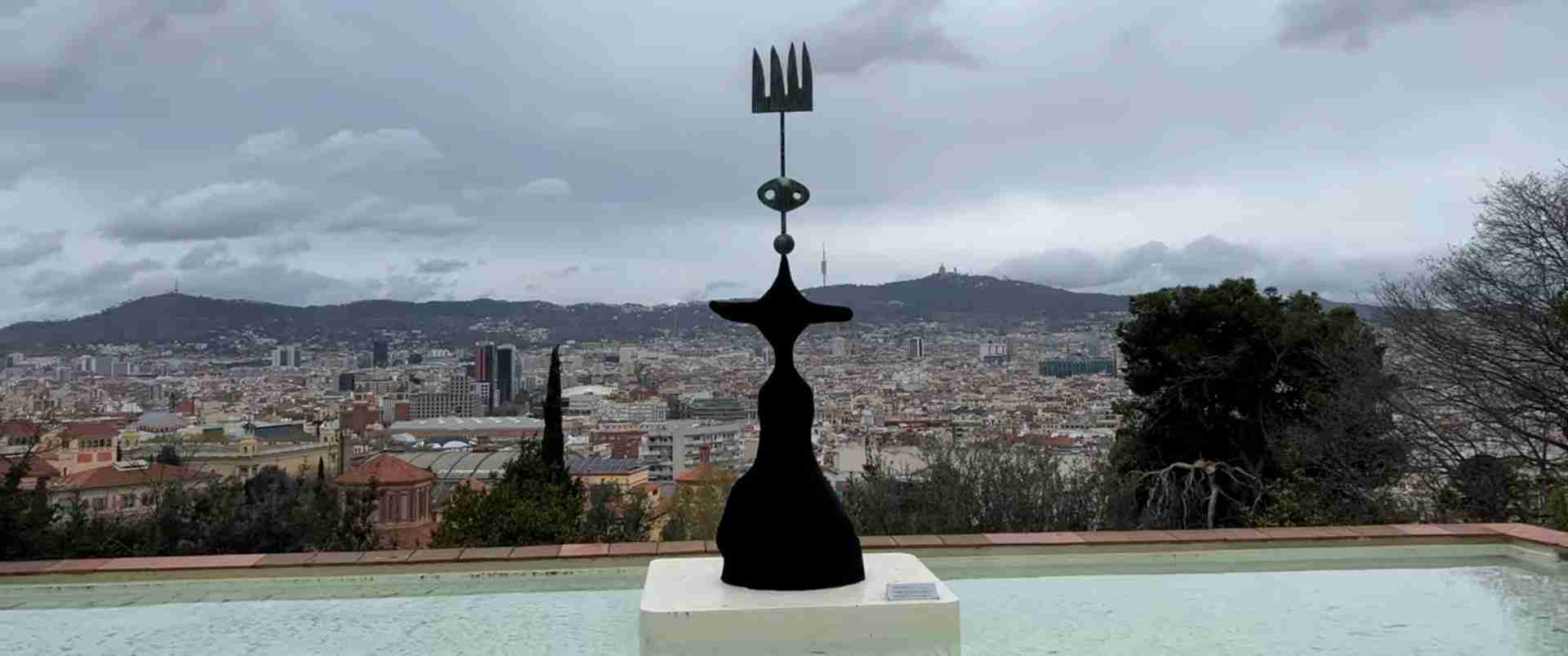
Key works include The Farm (1921-1922), Miró’s transitional masterpiece combining detailed realism with emerging symbolic elements; the Catalan Peasant series exploring identity themes during Spanish Civil War exile; and the monumental tapestry created for the World Trade Center. The foundation’s architecture complements the artwork through Sert’s modernist spaces featuring natural light, Mediterranean courtyards, and flexible galleries. Temporary exhibitions explore Miró’s influence on contemporary artists and his collaborative relationships with poets, dancers, and fellow painters. The rooftop sculpture terrace displays Miró’s three-dimensional works against Barcelona’s skyline, connecting his abstract forms to the Catalan landscape that inspired his visual vocabulary.
Extended multi-day tours – 5+ days
Featured Barcelona Multi-Day Tour Packages
2 days
Montserrat, Girona and Costa Brava in 2 days from Barcelona
- ✓ Comprehensive Barcelona tour
- ✓ Expert local guides included
- ✓ All accommodation arranged
- ✓ Transportation provided

5 days
Best of Catalonia, Self-drive
- ✓ Comprehensive Barcelona tour
- ✓ Expert local guides included
- ✓ All accommodation arranged
- ✓ Transportation provided

7 days
Lisbon, Madrid and Barcelona
- ✓ Comprehensive Barcelona tour
- ✓ Expert local guides included
- ✓ All accommodation arranged
- ✓ Transportation provided
5 days
Trip to Barcelona in 5 Days
- ✓ Comprehensive Barcelona tour
- ✓ Expert local guides included
- ✓ All accommodation arranged
- ✓ Transportation provided
Multi-day tour packages powered by TourRadar. Prices and availability subject to change.
The Picasso Museum: Documenting Artistic Genesis
Museu Picasso occupies five interconnected Gothic palaces on Carrer Montcada, one of Barcelona’s most atmospheric medieval streets in the Born neighborhood. The museum opened in 1963 through donations from Jaume Sabartés, Picasso’s lifelong friend and secretary, who preserved works documenting the artist’s Barcelona years. Picasso later donated additional pieces, and his heirs contributed further works after his death, creating a collection focused on his formative period rather than attempting comprehensive coverage of his entire career. This concentration on early development makes Barcelona’s collection unique among the world’s major Picasso museums.
The chronological installation begins with childhood drawings and academic studies from Picasso’s training at La Llotja art school in Barcelona. These early works demonstrate his mastery of classical techniques by age 14, including precise figure drawing and traditional composition. The breakthrough Science and Charity (1897) shows Picasso working within academic conventions while developing the emotional intensity that would characterize his mature style. Portraits of Barcelona friends, particularly artists and writers from the Els Quatre Gats circle, capture the bohemian culture that nurtured Picasso’s experimental spirit during his crucial years from 1899 to 1904.
The Blue Period galleries house masterworks created during Picasso’s most emotionally intense phase. The Madman (1904) and Desemparats (1903) exemplify the monochromatic palette and themes of poverty, isolation, and despair that defined this period. These paintings emerged from Picasso’s experiences in Barcelona’s working-class neighborhoods and his responses to his friend Carles Casagemas’s suicide. The museum’s collection reveals how Barcelona’s social realities and artistic community shaped the emotional depth and technical innovations that propelled Picasso toward international recognition.
The Las Meninas series occupies dedicated galleries, displaying all 58 paintings and drawings Picasso created in 1957 as interpretations of Velázquez’s masterpiece. This obsessive exploration of a single artwork reveals Picasso’s creative process, showing how he deconstructed classical composition and reconstructed it through cubist fragmentation and expressive color. The series demonstrates Picasso’s continued engagement with Spanish artistic traditions despite decades living in France. The museum’s presentation allows visitors to trace Picasso’s thinking across multiple canvases, understanding how he approached problems of space, light, and pictorial structure through repeated experimentation.
The ceramic collection showcases Picasso’s work at Madoura pottery in Vallauris, France, from 1947 until his death. Plates, vases, and sculptural forms display Picasso’s playful approach to traditional Mediterranean pottery techniques, transforming functional objects into canvases for his distinctive imagery of bulls, faces, and mythological scenes. The museum displays over 40 ceramics demonstrating Picasso’s mastery of this medium and his ability to innovate within craft traditions. These works connect to Picasso’s Spanish heritage and his love of Mediterranean folk art traditions.
MNAC: From Romanesque Frescoes to Modernisme Masterworks
The Museu Nacional d’Art de Catalunya occupies the Palau Nacional, the monumental building constructed for Barcelona’s 1929 International Exposition on Montjuïc hill. MNAC’s encyclopedic collections span Romanesque, Gothic, Renaissance, Baroque, and Modern art, with particular strength in Catalan artistic production from the 11th through early 20th centuries. The museum’s Romanesque collection stands as its crown jewel and primary international draw, while the Modernisme galleries showcase the artistic movement that transformed Barcelona’s appearance around 1900.
The Romanesque galleries recreate church interiors using the original architectural structures that framed the frescoes. The Sant Climent de Taüll apse (consecrated 1123) preserves one of Romanesque art’s most powerful images—Christ in Majesty (Pantocrator) surrounded by evangelists’ symbols, rendered in bold linear style with the intense gaze that characterizes Byzantine-influenced Catalan painting. The Santa Maria de Taüll Master of Taüll created companion frescoes featuring the Virgin Mary with refined color harmonies of blue, ochre, and red that demonstrate exceptional technical skill in fresco preparation and application. The Ermita de Santa Eulàlia de Estaon collection shows narrative scenes from saints’ lives painted with expressive gestures and clear storytelling despite the stylized figures.
MNAC’s Gothic collection documents the transition from Romanesque abstraction toward increasing naturalism and narrative complexity. The collection strength lies in altarpieces created for Barcelona’s churches, convents, and guild chapels during the 14th and 15th centuries. Jaume Huguet dominated Barcelona painting in the mid-15th century, and MNAC displays his Altarpiece of the Constable (1464-1465) with its brilliant reds, golds, and blues arranged in complex multi-panel compositions. Bernat Martorell’s Altarpiece of Saint George presents the saint’s life and martyrdom through vigorous action scenes and decorative Gothic architectural frames. Lluís Dalmau’s Virgin of the Councillors reveals Flemish influence through realistic portraiture of Barcelona’s civic leaders kneeling before the Virgin.
The Renaissance and Baroque collections demonstrate how Catalan art absorbed Italian and Spanish influences while maintaining regional characteristics. El Greco’s Christ Carrying the Cross and Francisco de Zurbarán’s Immaculate Conception represent Spanish Golden Age painting in MNAC’s holdings. The collection includes works by minor masters documenting Barcelona’s artistic production during periods when the city’s creative energy focused more on commerce than cultural innovation. These galleries provide context for understanding how Barcelona’s artistic traditions evolved from medieval brilliance through centuries of relative quietude before the Modernisme explosion.
MNAC’s Modernisme collection preserves paintings, sculptures, furniture, and decorative arts from Barcelona’s turn-of-the-century cultural renaissance. Ramon Casas’s large-scale portraits and scenes of modern Barcelona life, including Ramon Casas and Pere Romeu on a Tandem, capture the movement’s engagement with contemporary urban experience. Santiago Rusiñol’s landscape paintings and interior scenes document the artistic community’s fascination with gardens, old towns, and artistic heritage. Josep Llimona’s sculpture Desconsuelo (Despair) exemplifies Modernisme’s exploration of psychological states through symbolist imagery and refined marble carving. The decorative arts galleries display furniture by Gaspar Homar, metalwork by Joan Busquets, and complete interior ensembles that demonstrate how Modernisme artists approached total design integration.
The museum’s photography collection includes over 75,000 images documenting Catalan life and Barcelona’s urban development from photography’s invention through the 20th century. This collection provides essential visual documentation of the city that Modernisme architects and artists transformed, showing Barcelona before Gaudí’s projects and during the dramatic expansion that created the Eixample district. The photographs function both as artistic works in their own right and as historical evidence for understanding Barcelona’s social and architectural evolution.
Fundació Joan Miró: Abstract Innovation and Catalan Identity
Fundació Joan Miró opened in 1975 on Montjuïc, designed by Josep Lluís Sert, the Catalan architect who worked with Le Corbusier and led Harvard’s architecture school. Sert’s building creates ideal conditions for displaying Miró’s work through naturally lit galleries, intimate courtyards, and flexible spaces accommodating paintings, sculptures, and installations. The white geometric forms and Mediterranean character of Sert’s architecture complement Miró’s artistic vocabulary of primary colors, organic shapes, and symbolic signs. The foundation operates as both museum and active cultural center, hosting exhibitions, educational programs, and performances that continue Miró’s commitment to making art accessible and socially engaged.
The permanent collection traces Miró’s artistic development from early works influenced by Fauvism and Cubism through the revolutionary abstract style he developed in 1920s Paris. The Farm (1921-1922), though owned by the National Gallery of Art in Washington and displayed as a long-term loan, represents Miró’s transitional moment—meticulously detailed realistic elements arranged in the flattened space and symbolic composition that pointed toward his mature style. Early portraits and Barcelona street scenes show Miró absorbing modernist innovations while maintaining connection to Catalan landscape and culture.
Miró’s 1920s and 1930s works established the distinctive visual language that made him one of Surrealism’s central figures. Paintings from this period reduce recognizable forms to schematic signs—suns, moons, stars, birds, women, and ladders—arranged in fields of primary colors or earth tones. These compositions balance spontaneity with careful structure, combining automatic drawing’s liberating potential with Miró’s innate sense of pictorial order. Works like The Tilled Field (1923-1924) and Harlequin’s Carnival (1924-1925) demonstrate how Miró transformed Catalan agricultural landscape into dreamlike spaces populated by fantastic creatures and symbolic objects.
The Spanish Civil War and World War II years produced works of political engagement and personal anguish. The Wild series and the series Still Life with Old Shoe express horror at Spain’s conflict through aggressive mark-making and dark palettes. Miró spent these years in exile, first in Paris and later in Varengeville on the Normandy coast. The Constellations series, created during this period, returns to smaller formats and intricate compositions that Miró described as escape into pure imagination during Europe’s darkest hours. These works’ dense networks of signs, stars, and biomorphic forms influenced Abstract Expressionist painters including Jackson Pollock.
Postwar works show Miró moving toward increasing simplification and scale. Large canvases reduce the complex sign systems of earlier work to just a few elements—a single line cutting across a monochrome field, a splash of color punctuated by minimal marks. Blue II (1961) exemplifies this reductive power, using just one dark blue field, a thin line, and a red dot to create expansive meditation on color, space, and gesture. These late paintings anticipate Color Field painting and Minimalism while maintaining Miró’s distinctive poetic sensibility and connection to natural forms.
The sculpture garden and terrace display bronze sculptures demonstrating Miró’s three-dimensional work. Many pieces began as found objects—tools, furniture fragments, and organic materials—that Miró assembled and cast in bronze, preserving their original textures while transforming them into monumental totemic forms. Moon Bird and Solar Bird combine organic and mechanical elements into creatures that seem simultaneously ancient and futuristic. The Alexander Calder mobile honors Miró’s friendship with the American sculptor who shared his interest in biomorphic abstraction and kinetic movement.
The foundation’s textile collection reveals Miró’s collaboration with Josep Royo to create large-scale woven works. The enormous Tapestry of the World Trade Center Foundation (later remade as Tapestry for the Miró Foundation) translates Miró’s gestural marks and color into fiber arts, demonstrating his belief that art should integrate into architectural settings rather than remaining isolated in museums. These collaborations with craftspeople reflect Miró’s commitment to working across media and engaging with traditional Catalan craft techniques.
Modernisme’s Artistic Revolution Beyond Architecture
While Gaudí’s buildings define Modernisme for most visitors, the movement encompassed complete artistic renewal across painting, sculpture, decorative arts, and graphics. Modernisme artists sought to create distinctively Catalan cultural expression while engaging with international Art Nouveau trends. The movement flourished roughly from 1888’s Universal Exposition through the 1920s, coinciding with Barcelona’s industrial prosperity and the Renaixença (Catalan cultural renaissance). Modernisme workshops produced furniture, metalwork, ceramics, and stained glass that transformed Barcelona’s bourgeois homes into total works of art integrating architecture, decoration, and fine arts.
Ramon Casas emerged as Modernisme’s most prominent painter through large-scale portraits, modern life scenes, and advertising posters. His work documents Barcelona’s café society, particularly the artistic circle at Els Quatre Gats tavern where Picasso held his first exhibition. Ramon Casas and Pere Romeu on a Tandem (1897) became Modernisme’s iconic image, showing the artist and tavern owner riding through Barcelona streets with casual elegance. The painting originally hung in Els Quatre Gats, establishing the connection between art and modern urban lifestyle that defined Modernisme’s cultural project. Casas’s society portraits captured Barcelona’s wealthy industrialists and their families with sophisticated technique combining academic realism with loose brushwork influenced by Impressionism.
Santiago Rusiñol brought Symbolist influences to Catalan painting through landscape works and interior scenes emphasizing mood, atmosphere, and decorative arrangement. His paintings of gardens—particularly the Granada gardens and his own property at Cau Ferrat in Sitges—explore how cultivated nature becomes artistic composition. Interior scenes focus on antique furniture, ceramics, and textiles that Rusiñol collected obsessively, presenting these objects as embodiments of cultural memory and artistic refinement. Rusiñol’s work as playwright and cultural organizer made him central to Modernisme’s intellectual life beyond his painting production.
Joaquim Mir developed a distinctive Post-Impressionist style focusing on Catalan landscape, particularly the Mallorca coast and Pyrenean foothills. His paintings use intense colors and energetic brushwork to transform observed landscape into expressive chromatic experiences. Works like The Cathedral of the Poor show Barcelona’s working-class neighborhoods not as social documentation but as opportunities for exploring color harmonies and atmospheric effects. Mir’s paintings established a tradition of Catalan landscape painting that influenced later artists including Salvador Dalí.
Josep Llimona excelled in sculpture, creating marble and bronze works that combined academic technique with Symbolist subject matter. Desconsuelo (Despair) demonstrates his ability to express psychological states through poses, gestures, and surface treatment. The female figure’s downward gaze, closed posture, and smooth marble surfaces create contemplative mood that transcends specific narrative. Llimona’s religious sculptures for Barcelona churches show how Modernisme artists revitalized Catholic iconography through contemporary sculptural language influenced by Rodin’s expressiveness while maintaining idealized forms.
Modernisme decorative arts integrated into architecture through collaborations between architects, craftspeople, and artists. Gaspar Homar created furniture combining Gothic revival elements with Art Nouveau organic curves and marquetry decoration. Joan Busquets designed metalwork including lamps, balcony railings, and hardware that transformed functional elements into sculptural accents. Antoni Rigalt produced stained glass windows for Gaudí and other architects, developing techniques for creating opalescent effects and complex color gradations. These decorative arts objects, displayed in MNAC’s period room installations, demonstrate how Modernisme sought to beautify all aspects of domestic life through artistic design.
Gothic and Medieval Treasures
Barcelona Cathedral’s museum preserves liturgical objects, vestments, and paintings documenting the church’s artistic patronage from medieval times through the Baroque period. The collection includes works commissioned for the cathedral’s numerous chapels and those transferred from Barcelona’s convents and parish churches. The Pietà by Bartolomé Bermejo (circa 1490) represents one of Spanish Gothic painting’s masterpieces, combining Flemish-influenced realism with emotional intensity and brilliant jewel-like colors. The work demonstrates the increasing influence of Netherlandish painting techniques on Catalan artists in the late 15th century.
The cathedral’s altarpiece of Saint Gabriel displays late Gothic carving and polychrome decoration typical of Barcelona workshops. Multiple panels narrate the angel’s biblical appearances through crowded compositions filled with architectural details, elaborate costumes, and expressive figures. The gilded backgrounds and rich color harmonies demonstrate the continued importance of precious materials in creating sacred art’s splendor. These altarpieces functioned within the cathedral’s liturgical life, their iconography chosen to support specific devotions and feast day celebrations.
Santa Maria del Mar basilica, Barcelona’s finest example of Catalan Gothic architecture, preserves medieval stained glass and tomb sculpture despite losses during Spanish Civil War church burnings. The surviving rose window fragments show the high quality of glass painting in 14th-century Barcelona workshops, using deep reds, blues, and golds to create jewel-like effects when Mediterranean light streams through the church’s soaring spaces. Tomb monuments for Barcelona merchant families demonstrate how Gothic sculptors adapted French and Italian models to local preferences for heraldic display and portrait realism.
The Monastery of Pedralbes museum, located in a beautifully preserved Gothic cloister, houses paintings, ceramics, and religious objects from the Poor Clare nuns’ historic collection. Ferrer Bassa’s mural paintings in the Saint Michael Chapel (1346) represent Catalan Gothic painting’s high point, showing influence from Sienese masters including Simone Martini and the Lorenzetti brothers. The murals’ refined drawing, graceful figures, and sophisticated spatial organization demonstrate how Barcelona artists absorbed Italian Gothic innovations while maintaining local stylistic preferences. The monastery’s setting provides exceptional context for understanding medieval religious art’s function within monastic life.
Contemporary Art: MACBA and Beyond
MACBA (Museu d’Art Contemporani de Barcelona) opened in 1995 in the Raval neighborhood, housed in Richard Meier’s brilliant white modernist building that contrasts dramatically with the surrounding medieval streets. The museum’s collection focuses on post-1945 art with emphasis on Catalan, Spanish, and Mediterranean artists while including international works from North America and Northern Europe. MACBA’s programming explores relationships between art and society, featuring artists who engage with political, urban, and social issues through diverse media including installation, video, performance, and participatory projects.
The collection’s Catalan section documents artistic developments from the late Franco dictatorship through democratic transition and contemporary globalization. Antoni Tàpies’s large-scale abstract works using earth, sand, and unconventional materials represent the mature achievement of one of Spain’s most influential postwar artists. Tàpies combined Abstract Expressionist gestural freedom with symbolic references to Catalan culture and Buddhist philosophy, creating powerful meditations on matter, time, and consciousness. His work influenced younger artists including Miquel Barceló, whose neo-expressionist paintings and ceramics explore Mediterranean themes through raw, visceral surfaces.
International holdings include works by Paul Klee, Alexander Calder, and American Minimalists including Donald Judd and Dan Flavin. These works provide context for understanding how Catalan and Spanish artists engaged with international artistic developments while maintaining distinct local concerns. The conceptual art collection documents how Barcelona artists participated in 1960s and 1970s international movements questioning traditional art object status and gallery exhibition contexts. Performance documentation, artists’ books, and ephemera preserve this experimental period’s radical questioning of art’s social function.
MACBA’s temporary exhibitions program brings major international artists to Barcelona while supporting emerging local artists through commissions and residencies. The museum’s educational programs and archive make it a research center for contemporary art studies, not just an exhibition venue. The transformation of the Raval neighborhood around MACBA demonstrates contemporary art institutions’ urban regeneration impact, though not without controversy regarding gentrification and displacement of long-term residents.
Fundació Antoni Tàpies, housed in Lluís Domènech i Montaner’s Modernisme building topped by Tàpies’s Cloud and Chair sculpture, presents the most comprehensive collection of this artist’s work. The foundation displays paintings, sculptures, and mixed-media works from all creative phases, documenting Tàpies’s evolution from early Surrealist-influenced compositions through matter paintings and late large-scale gestural works. The collection includes the artist’s prints and illustrated books demonstrating his engagement with literary collaborations and graphic arts. Temporary exhibitions explore Tàpies’s influences from Eastern philosophy to arte povera, positioning his work within international artistic contexts.
Photography and Graphic Arts
Barcelona’s photography collections document both the city’s visual culture and the medium’s artistic development. The Arxiu Fotogràfic de Barcelona preserves over six million images documenting urban transformation from the mid-19th century through today. This archive provides essential visual evidence for understanding how Barcelona grew from a walled medieval city to a modern metropolis, including comprehensive documentation of the Eixample expansion and Modernisme architecture construction. The archive’s artistic holdings include works by pioneering Catalan photographers who established photography as a fine art medium alongside commercial and documentary applications.
MNAC’s photography collection complements its historical art holdings with images documenting Catalan life, landscape, and cultural traditions. The collection strength lies in late 19th and early 20th-century works that captured rural Catalonia before industrialization’s complete transformation. These photographs preserve visual records of architectural heritage, traditional dress, festivals, and agricultural practices that Modernisme artists drew upon in constructing Catalan cultural identity. The collection includes photographic documentation of Gaudí’s buildings under construction and completed, providing valuable research material for understanding his working methods and original finishes.
CaixaForum Barcelona’s temporary photography exhibitions bring major international photographers to Barcelona while showcasing Spanish and Catalan photography’s rich traditions. The programming ranges from historical surveys to contemporary art photography, treated with equal curatorial seriousness. These exhibitions have introduced Barcelona audiences to masters including Henri Cartier-Bresson, Sebastião Salgado, and Cindy Sherman, while recuperating forgotten figures from Spanish photography history and supporting emerging contemporary photographers.
The City History Museum (MUHBA) uses photography as historical documentation, preserving images that record Barcelona’s social history, political events, and urban development. The photographic collection documents the Spanish Civil War’s impact on Barcelona, including destruction from bombing, militarization of daily life, and refugee experiences. These images provide crucial visual evidence complementing written historical sources and offering intimate glimpses into how Barcelona residents experienced dramatic political upheaval.
Museum Architecture and Settings
Barcelona’s art museums occupy architecturally significant buildings that enhance the viewing experience through designed spaces and historical contexts. The Picasso Museum’s five medieval palaces preserve Gothic architecture including arcaded courtyards, stone staircases, and ceramic-tiled walls that create atmospheric settings contrasting with Picasso’s modernist works. The juxtaposition between medieval architecture and 20th-century art emphasizes Picasso’s lifelong engagement with Spanish artistic traditions, particularly Velázquez and Goya, whose works he studied in Madrid’s Prado Museum.
MNAC’s Palau Nacional provides monumental spaces appropriate for large-scale installations including the reconstructed Romanesque church apses. The building’s dome and ceremonial halls create dramatic architectural settings, while the renovation by Italian architects Gae Aulenti and Enric Steegmann modernized galleries while respecting the 1929 building’s character. The museum’s Montjuïc location offers spectacular views over Barcelona and the Mediterranean, connecting the art collections to the city and landscape they document and represent.
Fundació Joan Miró’s modernist architecture by Josep Lluís Sert creates ideal conditions for viewing abstract art through naturally lit white galleries, sheltered courtyards with ceramic tile floors, and terraces opening to sky and city views. Sert designed the building specifically for Miró’s work, understanding how the artist’s paintings and sculptures require particular lighting conditions and spatial relationships. The building’s Mediterranean character—white walls, ceramic details, outdoor spaces—reflects Catalan architectural traditions while employing modernist forms and spatial organization. Expansions by Jaume Freixa maintained Sert’s architectural language while adding gallery space for the growing collection.
Richard Meier’s MACBA building introduces International Style modernism to Barcelona’s medieval fabric through a brilliant white geometric composition of ramps, balconies, and glass walls. The building’s transparency and public circulation through lobbies and stairs make art accessible and visible from outside, challenging traditional museum barriers between art and everyday life. The adjacent plaza became a gathering place for skateboarders and residents, creating informal public space that complements the museum’s formal exhibition program. The building’s architecture sparked debates about contemporary architecture’s role in historic cities and about public space creation in densely populated urban neighborhoods.
Specialized Collections and Hidden Treasures
The Frederic Marès Museum preserves the eccentric collector’s accumulation of sculpture and decorative arts spanning Roman times through the 19th century. The sculpture collection emphasizes religious art removed from churches and convents during Spain’s 19th-century confiscations of church properties. Medieval crucifixes, Gothic altarpieces, Baroque saints, and processional figures document Catalan religious sculpture’s evolution. The Collector’s Cabinet displays Marès’s obsessive accumulation of everyday objects including fans, keys, pipes, cameras, and toys arranged in densely packed cases that evoke 19th-century curiosity cabinets. The museum occupies part of Barcelona’s Royal Palace complex adjacent to the Cathedral, providing architectural context connecting collections to Barcelona’s medieval history.
The Egyptian Museum of Barcelona houses a private collection of Egyptian antiquities spanning from prehistoric times through the Roman period. The collection includes mummies, sarcophagi, funerary objects, jewelry, and sculptures that document ancient Egyptian art and culture. Though modest compared to major European Egyptian collections, the museum provides accessible introduction to Egyptian civilization with well-designed educational displays. The collection emphasizes funerary practices and religious beliefs, showing how Egyptian art functioned within spiritual and ritual contexts.
The European Museum of Modern Art (MEAM) focuses on contemporary figurative art, championing realistic and representational painting and sculpture in an era dominated by abstract and conceptual approaches. The museum occupies the Palau Gomis, an 18th-century palace in the Born neighborhood, creating traditional gallery settings for classical artistic techniques applied to contemporary subjects. The collection includes international artists working in academic traditions including Spanish realists continuing the legacy of Antonio López García and American photorealists. The museum’s programming counters mainstream contemporary art’s privileging of conceptual and installation work, arguing for continued relevance of observational skill and technical mastery.
The Chocolate Museum (Museu de la Xocolata) combines culinary history with artistic practice through elaborate chocolate sculptures demonstrating craftspeople’s skills. Beyond its novelty appeal, the museum documents chocolate’s introduction to Europe through Barcelona’s port and its transformation from luxury import to popular confection. The collection includes historical chocolate-making equipment, advertising materials, and temporary exhibitions exploring chocolate’s cultural meanings. The chocolate sculptures recreating Barcelona landmarks including Gaudí buildings demonstrate sculptural techniques and craftsmanship paralleling traditional fine arts.
Museum-Quality Art in Religious Buildings
Barcelona Cathedral’s interior preserves significant artworks within their original liturgical contexts. The choir stalls, carved by German and Catalan craftsmen in the late 15th century, feature intricate relief sculptures, misericords depicting daily life scenes, and heraldic decorations representing Barcelona’s nobility and merchant families. The crypt chapel dedicated to Saint Eulàlia, Barcelona’s patron saint, houses a marble sarcophagus with Gothic relief sculptures narrating her martyrdom. The cloister’s medieval capitals demonstrate Gothic stone carving craft, while the Chapter House displays religious paintings including works by Barceló commissioned for contemporary liturgical use.
The Basilica of Santa Maria del Pi preserves Gothic stained glass in the enormous rose window, one of Catalonia’s largest and finest examples of medieval glass painting. The window’s concentric circles of geometric and figurative scenes create spectacular light effects when evening sun streams through the 10-meter diameter composition. The church’s treasury displays liturgical objects including silver processional crosses, reliquaries, and vestments that document the parish’s historical wealth and artistic patronage. The church’s name references a legendary pine tree and its location in medieval Barcelona’s artisan quarter.
Sant Pau del Camp, Barcelona’s oldest surviving church building (originally 10th century with 12th-century reconstructions), preserves Romanesque capitals with carved biblical scenes and decorative motifs in its small but beautiful cloister. The church’s isolated location in what became an industrial neighborhood protected it from many modernization campaigns that altered more prominent churches. The building’s simple Romanesque forms and intimate scale provide rare examples of medieval architecture surviving relatively unaltered, allowing visitors to experience Romanesque spatial character and proportions as originally conceived.
Conservation and Research Centers
MNAC operates extensive conservation laboratories employing art historians, chemists, and specialized restorers who study and preserve the museum’s collections using advanced scientific techniques. The Romanesque paintings receive particular attention given their fragility and the complex history of their removal from original church locations. Conservators monitor environmental conditions, consolidate flaking paint layers, and research original painting techniques using microscopic analysis and chemical testing. The laboratories publish research findings contributing to international understanding of medieval painting materials and methods.
The Institute of Catalan Studies’ art history sections conduct research on Barcelona’s artistic heritage, publishing scholarly catalogs, organizing academic conferences, and training new specialists in Catalan art. Research projects document unstudied works, establish attributions, reconstruct lost artworks through archival evidence, and contextualize known masterpieces within broader cultural frameworks. This scholarly infrastructure supports the museums’ collections by continuously expanding knowledge about artists, patrons, workshops, and artistic exchanges.
Barcelona University’s art history departments collaborate with museums on research projects, student internships, and educational programs. The university maintains photographic archives, specialized art history libraries, and digital resources supporting scholarly research and public education about Barcelona’s artistic heritage. Graduate programs train professionals who staff museums, conduct research, and teach future generations, ensuring continued vitality of Barcelona’s art history community.
Digital Resources and Virtual Collections
Barcelona’s major museums have digitized significant portions of their collections, making high-resolution images and detailed catalog information accessible online. MNAC’s digital collections allow users to explore Romanesque frescoes’ fine details, Gothic altarpiece panels, and Modernisme decorative arts through zoomable images revealing brushwork, gilding techniques, and material details invisible in gallery viewing. The museum’s website provides scholarly information including provenance, conservation history, bibliographic references, and interpretive essays written by curators and outside specialists.
The Picasso Museum’s digital archive documents the collection’s acquisition history and displays works not currently on view due to space limitations or conservation concerns. Online presentations allow users to study entire series including Las Meninas variations and early sketchbooks that rotate in physical displays to limit light exposure. Educational resources including videos, interactive timelines, and contextual materials support classroom teaching and independent learning about Picasso’s Barcelona years and artistic development.
Google Arts & Culture partnerships with Barcelona museums provide virtual museum tours, gigapixel detail images of masterworks, and curated online exhibitions exploring specific themes or artistic movements. These digital resources expand access beyond physical visitors, allowing global audiences to engage with Barcelona’s art collections and supporting research by scholars unable to travel to Barcelona. Virtual reality applications allow users to experience reconstructed spaces including medieval church interiors for Romanesque frescoes’ original architectural contexts.
Frequently Asked Questions About Barcelona Art Collections
Which museum should I visit first in Barcelona?
MNAC (Museu Nacional d’Art de Catalunya) provides the most comprehensive introduction to Barcelona’s artistic heritage, spanning Romanesque through Modernisme with exceptional masterworks in each period. The Romanesque collection alone justifies the visit, while the Gothic, Renaissance, and Modernisme galleries offer complete survey of Catalan artistic development. MNAC’s Montjuïc location allows combining art viewing with city views and nearby attractions including Fundació Joan Miró and Olympic facilities.
How much time should I budget for the Picasso Museum?
Plan at least 2-3 hours for comprehensive viewing of the permanent collection, though serious art enthusiasts often spend 4-5 hours exploring the galleries. The museum’s layout encourages chronological viewing from early academic works through Blue Period paintings and culminating in the Las Meninas series. Audio guides provide detailed information about key works and Picasso’s Barcelona biography. The museum’s location on Carrer Montcada allows combining the visit with exploration of the Born neighborhood’s medieval streets, restaurants, and Santa Maria del Mar basilica.
Can I see original works by Gaudí in Barcelona’s art museums?
MNAC displays furniture, decorative objects, and architectural fragments designed by Gaudí for buildings including Casa Batlló and Casa Milà. The Casa Batlló Chair demonstrates Gaudí’s organic approach to furniture design, while metalwork samples show his attention to decorative details. The Museum of the History of Barcelona (MUHBA) displays architectural models and original drawings from Gaudí’s projects. However, Gaudí’s primary artistic legacy remains his buildings rather than portable artworks, so visiting the actual architecture provides the fullest understanding of his creative achievement.
Are there combined tickets for multiple Barcelona museums?
The Articket BCN pass covers admission to six museums including MNAC, Fundació Joan Miró, Fundació Antoni Tàpies, MACBA, CCCB (Centre de Cultura Contemporània de Barcelona), and Fundació Foto Colectània. The pass valid for three months allows single entry to each institution at reduced combined price compared to individual admissions. The Barcelona Card includes admission to some museums plus public transportation. Museum websites list current ticket options and combination passes, which change seasonally and with special exhibitions.
Do Barcelona museums have works by Spanish masters from outside Catalonia?
MNAC includes works by El Greco, Zurbarán, Ribera, and other Spanish Golden Age painters in its Renaissance and Baroque galleries, though the collection emphasizes Catalan artists. The Thyssen-Bornemisza Museum in Madrid maintains a more comprehensive Spanish masters collection. Barcelona museums focus appropriately on Catalan artistic production, where their holdings remain unparalleled globally. The Picasso Museum covers his Barcelona years rather than attempting comprehensive career survey, while major Velázquez, Goya, and Murillo works remain in Madrid’s Prado Museum.
Are photography and filming allowed in Barcelona’s art museums?
Photography without flash and tripods is permitted in most Barcelona museums’ permanent collections for personal use, though temporary exhibitions often prohibit photography due to loan agreements with other institutions. MNAC, Fundació Joan Miró, and MACBA allow personal photography in permanent galleries. The Picasso Museum restricts photography in certain galleries to protect light-sensitive works. Commercial photography and filming require advance permission and may incur fees. Museums post specific photography policies at entrances and on websites.
What makes MNAC’s Romanesque collection unique in the world?
MNAC preserves the world’s finest and most comprehensive collection of Romanesque mural paintings, rescued from deteriorating Pyrenean churches and reconstructed in their original architectural forms. No other museum displays entire church apses with frescoes in situ architectural contexts. The collection’s historical significance lies in preserving artworks that would have been lost to decay, theft, or destruction without the early 20th-century rescue campaigns. The technical achievement of removing fragile frescoes, transporting them, and reconstructing complete church interiors in museum galleries represents heroic preservation effort unmatched elsewhere.
Can I visit artist studios or see contemporary art production in Barcelona?
Barcelona’s Poblenou district hosts numerous artist studios, galleries, and creative workspaces in former industrial buildings. Gallery openings and studio visits occur during periodic art walks when studios open to the public. The Hangar production center supports experimental art practices and occasionally offers public programs. Established artists including contemporary painters, sculptors, and installation artists maintain private studios not regularly open to visitors. Gallery districts in Born, Raval, and Eixample show contemporary art by Barcelona-based and international artists, providing insights into current artistic production.
Are there art collections focusing on contemporary Catalan artists?
MACBA’s collection emphasizes Catalan and Spanish contemporary art alongside international works, documenting artistic production from 1945 through today. The collection includes major works by Antoni Tàpies, Miquel Barceló, Perejaume, and younger artists exploring installation, video, and performance. Fundació Vila Casas operates three venues showing contemporary Catalan painting, sculpture, and drawing from its extensive collection. Private foundations including Fundació Suñol and Fundació Foto Colectània display contemporary art focusing on Catalan and Spanish artists while including international comparative examples.
How do Barcelona’s art collections compare to other major European art cities?
Barcelona’s collections excel in specific areas—Romanesque art, Catalan Gothic painting, Picasso’s early works, Miró’s complete oeuvre, and Modernisme arts—where holdings surpass all other institutions globally. The city lacks comprehensive collections of Italian Renaissance, Northern European, French Impressionist, or other major European art movements found in Paris, London, or Madrid universal museums. Barcelona’s focused strengths in regional and modern Catalan art create distinctive museum experiences unavailable elsewhere, making the city essential for these specific artistic traditions while complementing rather than duplicating other European art capitals’ encyclopedic collections.