Barcelona 6-Day Itinerary 2026: Essential Planning & Practical Advice
Barcelona rewards extended exploration with architectural marvels spanning from Gothic to modernist masterpieces, Mediterranean beaches within the urban landscape, distinctive neighborhoods each offering unique cultural experiences, and culinary traditions from market halls to Michelin-starred restaurants. Six days provides the ideal duration to experience Gaudí’s vision alongside Roman ruins, engage with local life beyond tourist circuits, and discover why this Catalan capital captivates travelers seeking both cultural depth and coastal relaxation.
Key Takeaways for Your 6-Day Barcelona Visit 2026
- Budget Planning 2026: Mid-range travelers budget €565-735 total for six days excluding accommodation (€95-125 daily per person covering attractions, food, transport, miscellaneous), while accommodation adds €125-200 nightly (€750-1,200 for six nights). Transport costs €43.60 for a 5-day Hola Barcelona Travel Card plus single tickets for day six, totaling approximately €50 for comprehensive coverage.
- Strategic Itinerary Flow: Begin with Gaudí’s architectural masterpieces (Sagrada Familia, Park Güell, Casa Batlló) on days 1-2 when energy peaks, transition to Gothic Quarter and cultural sites mid-week, conclude with beach neighborhoods and Montjuïc for relaxed exploration. This sequence prevents architectural fatigue while maintaining engagement throughout the week.
- Advance Booking Essential 2026: Sagrada Familia, Park Güell, and Casa Batlló require timed-entry reservations that sell out weeks ahead during peak season (May-September). Book major attractions 4-6 weeks before arrival, securing morning slots (9:00-10:30 AM) to avoid afternoon crowds and optimal light for photography.
- Neighborhood Diversity: Allocate full days to distinct districts rather than rushing between areas. Eixample showcases modernist architecture, Gothic Quarter reveals medieval Barcelona, El Born balances historic charm with contemporary culture, Gràcia offers authentic local life, and Barceloneta provides Mediterranean beach access within city limits.
- Seasonal Considerations 2026: Spring (April-May) and autumn (September-October) deliver comfortable 18-24°C temperatures with fewer crowds than summer peak. Summer (June-August) brings intense heat (28-32°C), packed attractions, and premium pricing. Winter (November-March) offers budget advantages with mild 10-16°C weather, though some outdoor terraces close.
- Transportation Efficiency: Barcelona’s integrated metro system connects all major sites within 15-25 minutes. The 5-day Hola Barcelona Travel Card (€43.60) includes airport transfer and unlimited journeys, covering days 1-5, while day 6 requires only €2.90 for single metro tickets, totaling approximately €50 for comprehensive six-day transport coverage.
People Also Ask About Barcelona 6-Day Itinerary 2026
Is 6 Days Too Long for Barcelona in 2026?
Six days provides optimal time to experience Barcelona’s essential attractions without rushing while exploring neighborhoods beyond standard tourist circuits. Days 1-3 cover major architectural sites (Sagrada Familia, Park Güell, Gothic Quarter, Casa Batlló), days 4-5 delve into museums, markets, and distinct neighborhoods (El Born, Gràcia, Montjuïc), and day 6 allows beach relaxation, shopping along Passeig de Gràcia, or day trips to Montserrat or coastal towns. Travelers consistently report six days feels complete rather than excessive, particularly when incorporating leisure time alongside sightseeing rather than maintaining frenetic three-day pace.
What is the Best Way to Organize 6 Days in Barcelona 2026?
The most effective six-day structure alternates intensive sightseeing days with lighter cultural exploration. Start with high-energy architectural days (Gaudí sites requiring advance tickets and extended visits), transition to walkable neighborhood exploration (Gothic Quarter, El Born allowing spontaneous discovery), dedicate a full day to Montjuïc’s museums and gardens, reserve a day for markets and beach districts, and conclude with flexible time for missed spots or repeat visits to favorites. This rhythm prevents exhaustion while maximizing engagement, with built-in recovery periods between demanding attraction visits.
How Much Does a 6-Day Barcelona Trip Cost in 2026?
A mid-range six-day Barcelona trip costs €1,315-1,935 per person in 2026, including accommodation (€750-1,200 for six nights at €125-200 nightly), daily expenses (€565-735 covering meals, attractions, local transport, and miscellaneous costs), and flights (variable by origin). Budget-conscious travelers manage €535-930 total by choosing hostels (€30-70 nightly), utilizing free museum hours and attractions, and dining at markets, while luxury experiences reach €2,700-4,500 with upscale hotels (€250-450 nightly), fine dining, and premium guided tours. Transport within Barcelona remains consistent across budgets at approximately €50 for six days.
Should I Book Barcelona Attractions in Advance for 2026?
Advance booking proves essential for Sagrada Familia, Park Güell, and Casa Batlló, where timed-entry systems limit capacity and sell out 2-6 weeks ahead during peak season (May-September, Easter week). Book these three attractions immediately upon confirming travel dates, selecting morning time slots (9:00-10:30 AM) for optimal light and smaller crowds. Other sites like Picasso Museum, MNAC, and Casa Milà accept walk-up visitors during off-peak periods but benefit from online purchase to skip ticket office queues. Gothic Quarter, beaches, markets, and parks require no reservations, maintaining spontaneous exploration flexibility.
Extended multi-day tours – 5+ days
Featured Barcelona Multi-Day Tour Packages

3 days
Barcelona 3-Day Discovery Tour
- ✓ Comprehensive Barcelona experience
- ✓ Expert local guides included
- ✓ All accommodation included
- ✓ Transportation provided
5 days
Barcelona 5-Day Highlights Experience
- ✓ Comprehensive Barcelona experience
- ✓ Expert local guides included
- ✓ All accommodation included
- ✓ Transportation provided

7 days
Barcelona 7-Day Cultural Journey
- ✓ Comprehensive Barcelona experience
- ✓ Expert local guides included
- ✓ All accommodation included
- ✓ Transportation provided
10 days
Barcelona 10-Day Complete Adventure
- ✓ Comprehensive Barcelona experience
- ✓ Expert local guides included
- ✓ All accommodation included
- ✓ Transportation provided
Multi-day tour packages powered by TourRadar. Prices and availability subject to change.
Understanding Barcelona’s Layout and Transportation 2026
Barcelona’s compact 100-square-kilometer center organizes along a coastal strip between Montjuïc hill and Besòs river, with most attractions concentrated within 5 kilometers of Plaça Catalunya. The city divides into distinct neighborhoods: Eixample’s grid pattern showcases modernist architecture including Sagrada Familia and Casa Batlló, Gothic Quarter’s medieval maze centers on the cathedral, El Born blends historic buildings with contemporary galleries, Gràcia maintains village atmosphere despite central location, and Barceloneta extends along the Mediterranean waterfront. Understanding this geography enables efficient daily planning, grouping nearby sites rather than crisscrossing the city.
The integrated TMB metro system operates 11 lines covering the urban area, with trains running every 2-5 minutes during peak hours and every 7-10 minutes off-peak. Service begins at 5:00 AM weekdays and continues until midnight Sunday-Thursday, extending to 2:00 AM Fridays and operating continuously Saturday nights. The Hola Barcelona Travel Card provides unlimited metro, bus, tram, regional train (FGC Zone 1, Rodalies Zone 1), and Montjuïc funicular access. The 5-day pass (€43.60) includes airport metro transfer on Line L9 Sud, eliminating the need for separate airport tickets (€5.70 one-way). For a six-day visit, purchase the 5-day card covering arrival through day 5, then buy single tickets (€2.90) for day 6, totaling approximately €50 for complete six-day coverage.
Walking remains the most rewarding way to experience Barcelona’s neighborhoods, particularly in car-restricted zones like Gothic Quarter and El Born where metro stations sit at district edges. From Plaça Catalunya to Barceloneta beach measures 2 kilometers (25-minute walk), Sagrada Familia to Arc de Triomf covers 1.5 kilometers (18 minutes), and Casa Batlló to Casa Milà spans just 600 meters (7 minutes) along Passeig de Gràcia. Plan itineraries grouping walkable clusters: Passeig de Gràcia modernist route (Casa Batlló, Casa Amatller, Casa Milà), Gothic Quarter to El Born historic circuit, or Barceloneta beach to Port Vell waterfront promenade. Reserve metro for longer distances or when moving between distinct districts.
Day 1: Sagrada Familia and Eixample Modernist Masterpieces 2026
Begin your Barcelona week with Gaudí’s crowning achievement, the still-under-construction Sagrada Familia, where morning light (9:00-11:00 AM) illuminates the Nativity façade’s intricate stonework and stained glass transforms the interior into a kaleidoscope of colored light. Pre-book tickets (€26 with audioguide) for the earliest available slot, arriving 15 minutes early as timed entry enforces strict windows. The basic ticket includes basilica access and museum in the crypt showcasing construction history, original Gaudí models, and workshop displays explaining techniques. Budget 90-120 minutes for thorough exploration, though the space permits unlimited time once inside. The audioguide (included in ticket price, available in 19 languages) proves essential for understanding symbolic details: tree-like columns representing a forest, Passion façade’s stark modernist contrast to Nativity’s organic forms, and the central towers projected completion timeline.
After Sagrada Familia, walk 15 minutes southwest along Carrer de Provença to Casa Batlló (€29-49 depending on ticket tier), arriving mid-morning (11:00 AM-12:00 PM) when tour groups thin. The Blue ticket (€29) provides standard access with audioguide, while Silver (€35) adds rooftop terrace views, Gold (€39) includes augmented reality video guide showing furnished rooms, and Platinum (€49) offers fast-track entry plus all features. The augmented reality experience transforms empty spaces into period interiors and animates architectural details into natural forms (skeletal balconies become skulls, roof tiles morph into dragon scales), enhancing understanding of Gaudí’s nature-inspired vision. Allocate 60-75 minutes for comprehensive visit including the Noble Floor where the Batlló family lived, the dragon-scale rooftop, and the Gaudí Dome immersive experience in the basement.
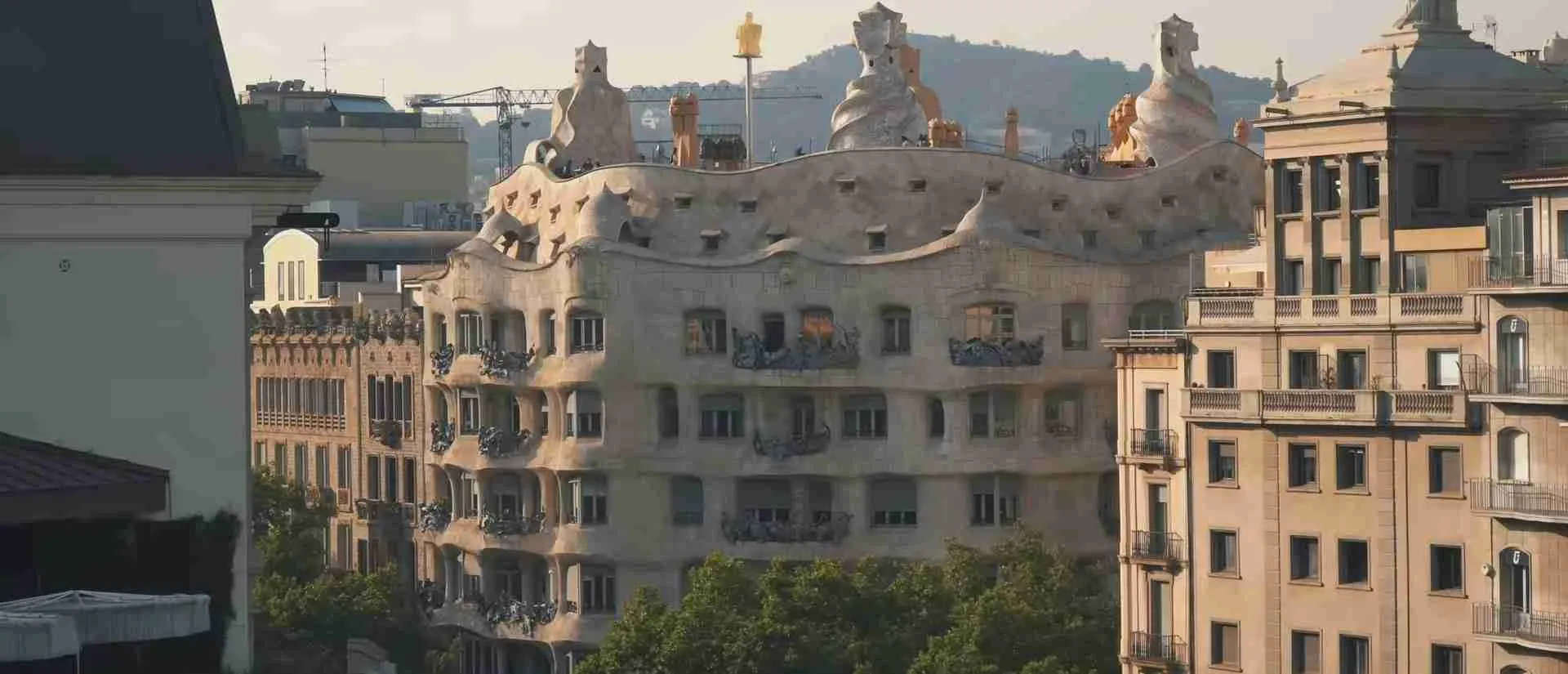
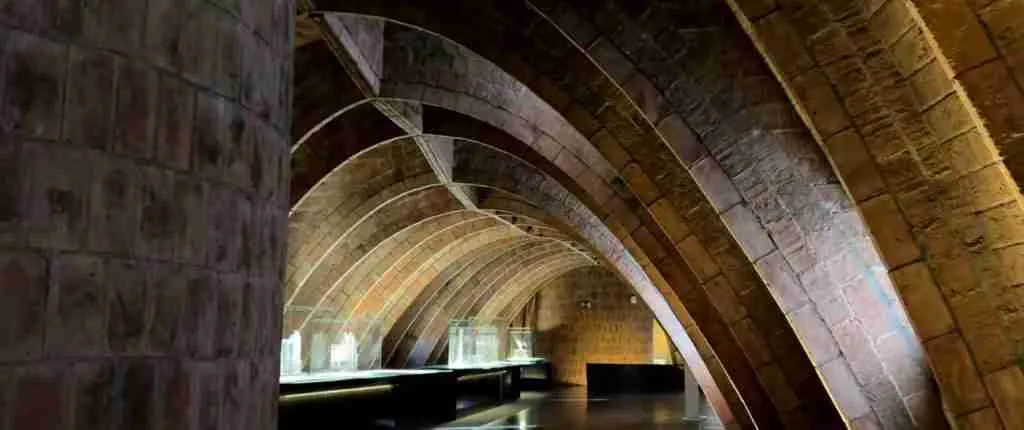
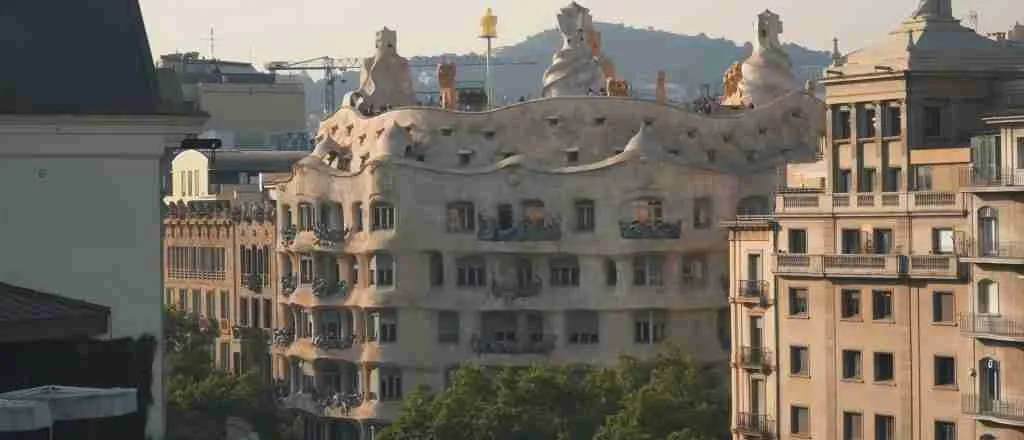
Continue north along Passeig de Gràcia to Casa Milà (La Pedrera), located 600 meters from Casa Batlló (7-minute walk). Standard admission (€25) includes rooftop with distinctive chimneys resembling warrior helmets, the Espai Gaudí attic exhibition explaining construction techniques, and a recreated modernist apartment showing early 20th-century bourgeois life. The undulating stone facade and iron balconies demonstrate Gaudí’s rejection of straight lines, while the rooftop provides elevated city views extending to Sagrada Familia and Mediterranean. Visit duration runs 60-90 minutes. The three-house proximity enables efficient morning architectural immersion without metro transitions.
Afternoon exploration continues in Eixample’s broader modernist context. Walk east to Hospital de Sant Pau (1.2 kilometers, 15 minutes from Casa Milà), a UNESCO World Heritage modernist hospital complex designed by Lluís Domènech i Montaner. The €15 self-guided visit reveals art nouveau pavilions connected by underground tunnels, mosaic-decorated facades, and landscaped gardens. Unlike Gaudí’s organic forms, Domènech employed geometric patterns and colorful ceramics, offering architectural contrast. The site sees fewer visitors than major Gaudí works, providing peaceful afternoon exploration. Budget 75-90 minutes.
Conclude day one in Eixample’s dining scene. Return to Passeig de Gràcia area where Carrer d’Enric Granados and Carrer d’Aribau host local restaurants serving Catalan cuisine. Cervecería Catalana (Carrer de Mallorca 236) offers exceptional tapas in lively atmosphere (€12-18 per person for shared plates). Alternatively, Moments restaurant at Mandarin Oriental provides Michelin two-star Catalan fine dining (€95-140 tasting menus). For budget options, head to nearby Mercat de la Concepció where market stalls close at 8:30 PM but surrounding streets offer casual eateries (€8-12 set menus).
Day 1 Costs 2026: Sagrada Familia €26, Casa Batlló €29-49, Casa Milà €25, Hospital Sant Pau €15, lunch €12-18, dinner €15-25, metro €2.90 (if not using multi-day pass yet). Total approximately €125-160 per person excluding accommodation.
Day 2: Park Güell, Gràcia, and Bunkers del Carmel 2026
Reserve day two for Park Güell, Barcelona’s second UNESCO-listed Gaudí site, where the architect’s garden city vision manifests in serpentine benches, mosaic salamander, and the Hypostyle Room’s 86 Doric columns. Entry requires advance timed tickets (€18 adults, €13.50 reduced) for the Monumental Zone containing iconic works, while surrounding woodland park remains free. Book the earliest slot (9:30 AM when gates open) to photograph the dragon stairway and terrace bench without crowds obscuring views. The restricted zone caps visitors at 1,400 per hour, enforcing 30-minute entry windows (9:30 ticket permits entry until 10:00 AM). Once inside, unlimited time allows thorough exploration, though most visitors complete the circuit in 90-120 minutes.
Park Güell occupies Carmel Hill’s slopes in Gràcia district, accessible via metro L3 to Lesseps or Vallcarca stations, both requiring uphill walks (15-20 minutes) to the main entrance. Alternatively, take bus H6 or D40 to Travessera de Dalt/Olot stop (5-minute walk to entrance). The park’s elevated position provides panoramic city views extending to the Mediterranean, particularly spectacular from Austria Gardens on the hill’s upper reaches. The Monumental Zone’s highlights include Casa Museu Gaudí (€5.50 additional ticket, combinable with park entry) where Gaudí lived 1906-1925, now displaying furniture and decorative objects he designed.
After Park Güell, descend into Gràcia neighborhood for late morning and lunch exploration. This former independent village, annexed to Barcelona in 1897, retains distinct identity with intimate plazas, local cafes, and independent boutiques contrasting Eixample’s tourist corridors. Plaça del Sol anchors the neighborhood with outdoor terraces packed during aperitivo hour, while Carrer de Verdi hosts independent cinema and casual restaurants. La Pepita (Carrer de Còrsega 343) serves contemporary tapas in cozy setting (€15-22 per person), or explore Mercat de l’Abaceria Central, Gràcia’s covered market operating Tuesday-Saturday mornings where bar counters serve market-fresh plates (€8-12).
Afternoon adventure continues to Bunkers del Carmel (Turó de la Rovira), Civil War anti-aircraft fortifications now providing Barcelona’s finest free panoramic viewpoint. From Gràcia, take bus V17 or 24 to Marià Labèrnia/Mühlberg stop, then climb the final 10-minute path to the summit at 262 meters elevation. The concrete bunker platforms offer 360-degree views encompassing Sagrada Familia, Mediterranean coast, Montjuïc, and Tibidabo, particularly stunning during golden hour (sunset varies seasonally: 6:30 PM winter, 9:15 PM summer). The site costs nothing, sees moderate crowds, and permits unlimited visit duration. Bring water as no facilities exist on site.
Return to city center for evening in El Born district, adjacent to Gothic Quarter but distinct in atmosphere. Metro L4 to Jaume I or L1 to Arc de Triomf provides direct access. El Born’s medieval streets now house contemporary galleries, design shops, and innovative restaurants. Passeig del Born, the neighborhood’s main artery, buzzes with outdoor bars and pintxo specialists. El Xampanyet (Carrer de Montcada 22) has served vermouth and anchovies since 1929 in unchanged setting (€10-15 per person), while nearby Cal Pep (Plaça de les Olles 8) draws locals for seafood counter dining (€25-35 per person, no reservations, expect queues).
Day 2 Costs 2026: Park Güell €18, Gaudí House Museum €5.50 (optional), lunch €12-18, dinner €20-30, public transport €5.80 (bus/metro combinations). Total approximately €55-80 per person excluding accommodation.
Day 3: Gothic Quarter, Cathedral, and Waterfront 2026
Dedicate day three to Barcelona’s medieval core, where Roman walls still define street patterns and Gothic spires rise above narrow alleys. Begin at Barcelona Cathedral (Catedral de la Santa Creu i Santa Eulàlia) opening at 8:30 AM for morning prayers when entry remains free until 12:30 PM (€9 fee 12:30 PM-7:30 PM). The 14th-century Gothic structure features soaring nave, cloister with resident geese (13 white geese symbolizing Saint Eulàlia’s age at martyrdom), and rooftop accessible via elevator (€4) offering elevated Gothic Quarter views. Budget 45-60 minutes for cathedral and cloister exploration.
The Gothic Quarter’s compact 1-square-kilometer area enables full-morning walking exploration without metro transitions. From the cathedral, wander south through Plaça del Rei, medieval royal palace complex now housing the Barcelona City History Museum (MUHBA, €7) where excavated Roman ruins beneath the plaza reveal Barcino’s 1st-century street level. Continue to Plaça Sant Jaume, political center since Roman times, where Barcelona City Hall and Palau de la Generalitat (Catalan government) face each other across the square (both buildings permit free Sunday morning visits).
Navigate the Call, Barcelona’s medieval Jewish quarter, where narrow passages (Carrer de Sant Domènec del Call, Carrer de Marlet) barely permit single-file walking between stone buildings. The Ancient Synagogue (Sinagoga Major, €2.50) operates as small museum in a structure potentially dating to 3rd century, discovered during 1990s renovations. The quarter’s claustrophobic streets contrast Eixample’s wide boulevards, demonstrating Barcelona’s layered urban evolution.
Midday lunch options cluster around Plaça Reial, the Gothic Quarter’s lone classical square with palm trees and arcaded perimeter. Les Quinze Nits (Plaça Reial 6) offers three-course lunch menu for €13.90, though quality matches budget price. For superior experience, exit Gothic Quarter to nearby El Xampanyet or Bar del Pla (Carrer de Montcada 2) in El Born serving wine and Catalan small plates (€15-20 per person).
Afternoon transition to waterfront via Las Ramblas, Barcelona’s famous pedestrian boulevard connecting Plaça Catalunya to Port Vell. While the 1.2-kilometer tree-lined avenue attracts crowds and occasional pickpockets, side streets reveal authentic discoveries: Mercat de la Boqueria (officially Mercat de Sant Josep de la Boqueria) operates as Barcelona’s most celebrated food market with produce stalls, seafood displays, and juice bars. Enter via the colorful modernist entrance at Rambla 91, navigating to market bars like Pinotxo or El Quim where counter seating permits watching chefs prepare market-fresh dishes (€12-18 for substantial plates). Market hours run Monday-Saturday 8:00 AM-8:30 PM.
Continue south along Las Ramblas to Port Vell (Old Port), Barcelona’s historic harbor transformed into leisure marina. The wooden Rambla de Mar pedestrian bridge extends across water to Maremagnum shopping mall (open Sundays when most shops close), but the waterfront promenade itself offers free walking with sailboats and cruise ships providing maritime atmosphere. Monument a Colom (Columbus Monument) marks the Ramblas’ southern terminus, with elevator access to viewing platform (€6, 60-meter elevation) revealing harbor and Montjuïc perspectives.
Late afternoon and evening explore Barceloneta, the triangular beach neighborhood extending from Port Vell to Olympic Port. Originally built in 18th century to house displaced La Ribera residents, the fishing quarter now balances traditional character (narrow grid streets, laundry hanging between buildings) with beach tourism. Walk along Passeig Marítim, the beachfront promenade extending 4.5 kilometers from Barceloneta to Diagonal Mar, where beach bars (chiringuitos) serve seafood and sangria. For authentic paella, avoid promenade tourist traps and venture inland to Can Solé (Carrer de Sant Carles 4), family-run since 1903 serving rice dishes and grilled fish (€25-35 per person for substantial meal).
Day 3 Costs 2026: Cathedral rooftop €4, MUHBA €7, Ancient Synagogue €2.50, Columbus Monument €6 (optional), Boqueria market lunch €12-18, dinner €25-35, metro/walking only. Total approximately €50-75 per person excluding accommodation.
Day 4: Montjuïc Museums, Gardens, and Cable Car 2026
Montjuïc, the 173-meter hill dominating Barcelona’s southwestern skyline, dedicates an entire day to museums, gardens, Olympic sites, and castle fortifications. Access begins via Funicular de Montjuïc from Paral·lel metro station (L2/L3), included in standard metro tickets and travel cards. The funicular ascends to Parc de Montjuïc station in 2 minutes, where Telefèric de Montjuïc cable car continues upward to castle summit (€9.20 one-way, €13.20 round-trip, not included in transit passes). Alternatively, walk from Plaça Espanya up landscaped stairs and terraces, a gradual 20-25 minute climb offering exercise and city views.
Begin at Museu Nacional d’Art de Catalunya (MNAC), housed in Palau Nacional’s imposing 1929 Exhibition building atop Montjuïc’s northern slope. The €12 admission (free first Sunday monthly, Saturday after 3:00 PM) grants access to Europe’s finest Romanesque art collection, featuring 11th-12th century frescoes removed from Pyrenean churches and reassembled in museum galleries replicating original church apses. The Gothic, Renaissance, and modern art collections complement the Romanesque focus, while rooftop terraces provide elevated Plaça Espanya views framing the city between Venetian Towers. Budget 2-3 hours for comprehensive visit, or 90 minutes focusing on Romanesque highlights.
From MNAC, walk 10 minutes west to Fundació Joan Miró, purpose-built 1975 museum displaying the largest Miró collection globally. The €13 admission includes permanent galleries tracking Miró’s evolution from early realistic works through surrealist experiments to late abstract period, temporary exhibitions featuring contemporary artists, and sculpture garden with Mediterranean and city views. The bright white architecture by Josep Lluís Sert integrates Catalan light into exhibition spaces. Allow 90-120 minutes.
Lunch options near Montjuïc museums remain limited, with most visitors descending to Poble Sec neighborhood (10-minute walk downhill, or Paral·lel metro one stop) where Carrer de Blai serves as tapas corridor with dozens of pintxo bars offering small plates for €2-4 each. Alternatively, MNAC’s Òleum restaurant occupies the museum’s domed hall with set lunch menu (€28) and à la carte options (€35-45 per person), combining meal with architectural setting.
Afternoon exploration continues with Castell de Montjuïc, the hilltop fortress dominating the summit. Reach the castle via cable car from Parc de Montjuïc funicular station (€9.20 one-way, €13.20 round-trip), or walk the gradual 1.5-kilometer path (25-30 minutes). Castle admission (€5) provides access to ramparts with 360-degree panoramas extending across Barcelona, the Mediterranean, and inland mountains. The fortress served as military prison during Franco dictatorship, now housing exhibitions detailing this dark history. Budget 60-75 minutes for castle and grounds exploration. Return via cable car or walking descent through Jardins de Mossèn Cinto Verdaguer, terraced gardens featuring bulb flowers and water features (free access).
Late afternoon and evening remain on Montjuïc for additional sites or relaxed garden time. Options include Poble Espanyol (€14), an open-air architecture museum replicating Spanish regional buildings, CaixaForum (€6), contemporary art center in converted textile factory, or simply walking Montjuïc’s extensive gardens and viewpoints. Magic Fountain of Montjuïc performs free light and music shows Thursday-Sunday evenings at Plaça Espanya (check seasonal schedule: winter shows 8:00 PM-9:00 PM, summer shows 9:00 PM-11:30 PM). The 15-minute performances combine colored illumination with water choreography and classical or contemporary music soundtracks, drawing crowds but remaining completely free.
Day 4 Costs 2026: MNAC €12, Fundació Miró €13, Montjuïc cable car round-trip €13.20, Castell €5, lunch €15-25, dinner €18-28, metro/funicular included in pass. Total approximately €75-95 per person excluding accommodation.
Day 5: Markets, El Born, and Picasso Museum 2026
Day five shifts pace from architectural sightseeing to market culture, medieval neighborhoods, and museum immersion. Begin at Mercat de Santa Caterina (Avinguda de Francesc Cambó 16), opening at 7:30 AM Monday-Saturday. This El Born market distinguishes itself through Enric Miralles’ undulating tile roof (2005 renovation) covering traditional stalls selling produce, fish, meat, and prepared foods. Unlike Boqueria’s tourist-heavy atmosphere, Santa Caterina maintains neighborhood market character with locals shopping for dinner ingredients. Several market bars serve breakfast (€8-12 for coffee, fresh juice, and pastries or tortilla española).
From Santa Caterina, explore El Born’s preserved medieval streets radiating from Santa Maria del Mar basilica. This 14th-century Gothic church (free entry) demonstrates Catalan Gothic’s austere elegance with soaring octagonal columns creating unified interior space. The church’s rooftop tour (€10, advance booking recommended) provides elevated El Born views and close examination of Gothic construction techniques. Visit duration runs 45-60 minutes including rooftop.
El Born Center cultural center (Plaça Comercial 12, €7 or free Sunday after 3:00 PM) preserves 18th-century neighborhood ruins revealed during former market’s conversion to library. The excavated streets, taverns, and homes froze in time when Barcelona surrendered to Bourbon forces in 1714, now displayed beneath modern glass roof with exhibitions explaining the city’s history. Budget 60 minutes for archaeological site and exhibitions.
Midday options include continuing market exploration at Mercat del Born (reconstructed iron structure now housing El Born Centre) or dining in El Born’s restaurant concentration. Euskal Etxea (Placeta de Montcada 1-3) specializes in Basque pintxos with counter displays of elaborate small plates (€15-20 for satisfying selection). For sit-down meal, El Xampanyet (mentioned Day 2) remains atmospheric choice, or try Sagardi (Carrer de l’Argenteria 62) serving traditional Basque cuisine (€18-25 per person).
Afternoon dedicates time to Museu Picasso (Carrer de Montcada 15-23), occupying five medieval palaces in El Born’s heart. The €12 admission (free Thursday 5:00 PM-8:00 PM, first Sunday monthly) provides access to early works from Picasso’s Barcelona period (1895-1904), including the comprehensive Las Meninas series reinterpreting Velázquez’s masterpiece through cubist lens. The collection focuses on formative years rather than famous later works, offering insight into artistic development. Advanced online booking recommended as same-day capacity fills by midday, particularly during free evening hours. Allow 90-120 minutes.
Late afternoon shopping and strolling continues along Passeig del Born, El Born’s main thoroughfare lined with boutiques selling design objects, clothing, and artisan crafts. The street extends from Santa Maria del Mar to Born market, with side streets (Carrer dels Flassaders, Carrer de l’Esparteria) revealing additional shops and galleries. Unlike Passeig de Gràcia’s luxury brands, El Born emphasizes independent designers and local craftspeople.
Evening options include remaining in El Born for dinner or crossing into Raval neighborhood west of Las Ramblas. Raval’s multicultural character brings Pakistani restaurants, Filipino grocery stores, and Middle Eastern kebab shops alongside contemporary art galleries and design studios. Bar Cañete (Carrer de la Unió 17) serves exceptional Catalan tapas in traditional setting (€25-35 per person), while Elisabets (Carrer d’Elisabets 2) provides budget-friendly lunch and dinner menus (€10-12) frequented by locals and students.
Day 5 Costs 2026: Santa Maria del Mar rooftop €10, El Born Centre €7, Picasso Museum €12, breakfast €10, lunch €15-20, dinner €20-30, metro minimal. Total approximately €70-90 per person excluding accommodation.
Day 6: Flexible Day – Beach, Shopping, or Day Trips 2026
The sixth day permits flexible planning based on weather, energy levels, and personal interests. Three distinct options accommodate different priorities: beach relaxation, shopping and final sightseeing, or day trip beyond Barcelona.
Option A: Beach Day and Olympic Port
Dedicate the final day to Barcelona’s 4.5-kilometer Mediterranean coastline if weather permits (water temperature ranges from 13°C winter to 25°C August). Barceloneta beach closest to city center draws crowds but provides full beach infrastructure including lifeguards (10:00 AM-7:00 PM summer), showers, changing rooms, and wheelchair-accessible ramps. For quieter alternatives, continue northeast to Nova Icària, Bogatell, or Mar Bella beaches, progressively less crowded as distance from center increases.
Beach activities require minimal costs: bring beach towel and sunscreen, or rent sun lounger and umbrella (€8-12 combined) from beach concessions. Swimming remains free, though water quality varies (blue flag certification indicates clean water). Beach volleyball courts permit free play, and promenade cycling offers alternative activity (bike rental €10-15 for 4 hours from various Barceloneta shops).
Lunch at chiringuito beach bars ranges from budget (€8-12 sandwiches and salads) to seafood specialist (€25-35 paella or grilled fish). For superior quality, walk to nearby Peix d’Or (Carrer de Pujades 60, Port Olímpic area, €20-28 per person) or Can Maño (Carrer del Baluard 12, Barceloneta, €15-20) serving daily catch in no-frills setting favored by locals.
Afternoon options include Port Olímpic, marina and dining complex built for 1992 Olympics, or continuing along promenade to Fòrum area (3.5 kilometers from Barceloneta) where Barcelona’s urbanized coastline reaches industrial zones. The walk provides local beach life perspective absent from tourist-focused Barceloneta. Return via metro L4 from Ciutadella | Vila Olímpica or Llacuna stations.
Option B: Shopping and Final Sightseeing
Use the sixth day for shopping along Passeig de Gràcia, Barcelona’s luxury avenue combining high-end fashion with modernist architecture. International brands (Chanel, Hermès, Louis Vuitton) occupy restored historic buildings, while Spanish retailers like Zara flagship, Massimo Dutti, and Mango provide more accessible pricing. The avenue extends 1.5 kilometers from Plaça Catalunya to Diagonal, with cross streets (Carrer del Consell de Cent, Carrer de Mallorca) hosting additional boutiques.
Break shopping with visits to missed architectural sites. Casa Vicens (Carrer de les Carolines 20-26, €16), Gaudí’s first major commission (1883-1888), recently opened to visitors following restoration. The Moorish-influenced design with ceramic tile decoration demonstrates the architect’s early style before his organic period. Budget 60 minutes for self-guided visit.
Alternatively, explore Tibidabo, Barcelona’s 512-meter mountain offering panoramic views, amusement park (€33 unlimited rides or €13 walk-through access), and Temple Expiatori del Sagrat Cor church crowning the summit. Access requires multiple transport connections: FGC train from Plaça Catalunya to Avinguda Tibidabo (20 minutes), Tramvia Blau historic tram to funicular station (10 minutes), then Funicular del Tibidabo to summit (5 minutes). Total journey takes 45-60 minutes one-way, with combined transport and park entry reaching €45-50. The mountain rewards clear-weather visits with views extending to Montserrat and Mediterranean, but fog or clouds eliminate visibility.
Final evening dining could revisit favorite neighborhood (Gràcia, El Born, Gothic Quarter) or explore Poble Sec’s Carrer de Blai tapas corridor for economical farewell meal. Quimet & Quimet (Carrer del Poeta Cabanyes 25) serves exceptional montaditos (small open sandwiches with premium ingredients like smoked salmon, anchovies, caviar) in standing-room-only atmosphere (€15-22 per person for filling selection).
Option C: Day Trip to Montserrat
The mountain monastery of Montserrat, located 50 kilometers northwest of Barcelona, provides dramatic half-day or full-day excursion. The journey begins at Plaça Espanya (FGC railway R5 line toward Manresa) departing hourly from 8:36 AM, with the trip to Montserrat-Aeri station taking 55 minutes (€5.50 one-way, not included in Barcelona travel cards). From Montserrat-Aeri, cable car (€7.50 one-way, €12 round-trip) ascends 1,236 meters to monastery in 5 minutes, or continue one stop to Monistrol de Montserrat and ride rack railway (€6.80 one-way, €11.20 round-trip) up the mountain.
The Benedictine monastery, founded 1025, houses the Black Madonna (La Moreneta), Catalonia’s patron virgin. Basilica entry remains free, though viewing the Madonna requires queuing (30-60 minutes during peak times). The site’s dramatic setting amid serrated rock formations justifies the journey regardless of religious interest. Mountain trails extend from monastery to hermitages and viewpoints, with Sant Jeroni summit hike (1.5 hours one-way) providing Pyrenees and Mediterranean vistas on clear days.
Montserrat visit requires 6-8 hours total including transport, suggesting early departure (8:36 AM or 9:36 AM train) and afternoon return. Combined train and cable car tickets (TransMontserrat €32.70, TotMontserrat €49.50 including funicular to Santa Cova and Sant Joan) simplify logistics. Budget €40-50 total for transport and optional mountain activities, plus €15-20 for monastery cafeteria lunch.
Day 6 Costs 2026 (Beach Option): Beach free, sun lounger €10, lunch €15-25, ice cream/drinks €8, metro €2.90. Total approximately €35-45 per person excluding accommodation.
Day 6 Costs 2026 (Shopping/Sightseeing Option): Casa Vicens €16, lunch €12-18, dinner €15-22, metro €5.80. Total approximately €50-60 per person. Adding Tibidabo (€45-50 transport/entry) brings total to €95-110 excluding shopping purchases.
Day 6 Costs 2026 (Montserrat Option): TransMontserrat €32.70, lunch €15-20, snacks €8. Total approximately €55-60 per person excluding accommodation. Optional additional funiculars (Santa Cova, Sant Joan) add €15 if desired, bringing total to €70-75.
Accommodation Guide Barcelona 2026
Barcelona accommodation spans budget hostels to luxury hotels, with location and timing significantly affecting prices. Six nights (five full days plus partial arrival/departure days) requires strategic neighborhood selection balancing convenience, atmosphere, and budget.
Budget Accommodation (€30-70 per night)
Hostels cluster in Gothic Quarter, El Born, and Raval, offering dormitory beds (€25-40 per night) and private rooms (€60-90 for doubles). Sant Jordi Hostels operates multiple locations with social atmosphere, rooftop terraces, and organized activities. Generator Barcelona (Via Laietana) provides boutique hostel experience with design-forward common spaces and bar. Budget hotels like Hotel Catalunya (Las Ramblas) or Praktik Rambla offer private rooms with basic amenities (€70-100 nightly), while Airbnb apartments in Gràcia or Poble Sec neighborhoods range €50-80 nightly for entire units.
Mid-Range Accommodation (€125-200 per night)
Three-star and four-star hotels throughout Eixample, Gothic Quarter, and El Born provide comfortable rooms with modern amenities. Hotel Jazz (Carrer de Pelai) near Plaça Catalunya offers rooftop pool and central location (€140-180 nightly). Mercer Barcelona (Gothic Quarter) occupies restored medieval building with contemporary interiors (€200-250). Boutique options like Cotton House Hotel (Gran Via) blend historic architecture with luxury touches (€180-230). Eixample locations permit easy metro access to all sites while avoiding old city’s nighttime noise.
Luxury Accommodation (€250-450+ per night)
Five-star hotels concentrate along Passeig de Gràcia and waterfront. El Palace Barcelona maintains grand dame elegance with Michelin-starred restaurant (€300-400). Hotel Arts Barcelona (Olympic Port) provides beachfront setting with contemporary art collection and spa (€350-500). Barcelona EDITION (El Born) combines cutting-edge design with historic neighborhood location (€320-450). W Barcelona’s sail-shaped tower dominates beachfront skyline with club atmosphere and infinity pool (€400-600).
Neighborhood Selection Guidance 2026
Eixample provides metro accessibility and modernist architecture outside your window but fewer dining options requiring walks to adjacent neighborhoods. Gothic Quarter offers atmospheric medieval streets and central location though narrow alleys can feel claustrophobic and nighttime noise disrupts sleep in some hotels. El Born balances historic charm with restaurant concentration and slightly quieter nights than Gothic Quarter. Gràcia neighborhood maintains local character with excellent dining but requires metro rides to major sites. Barceloneta suits beach-focused visitors willing to commute 15-20 minutes to city center attractions.
Six-night accommodation costs for mid-range travelers range €750-1,200 total (€125-200 nightly), with budget options managing €180-420 (€30-70 nightly) and luxury experiences reaching €1,500-2,700 (€250-450 nightly). Barcelona’s tourist tax adds €10-15 per person per night (higher for luxury hotels), totaling €60-90 for six nights per person, a cost often overlooked when budgeting but mandatory at checkout.
Dining Guide Barcelona 2026
Catalan cuisine emphasizes Mediterranean ingredients, seasonal produce, and preparations ranging from rustic country dishes to innovative molecular gastronomy. Understanding meal timing and dining categories optimizes both budget and experience.
Meal Timing and Spanish Dining Culture
Barcelona follows Spanish late dining schedule: breakfast (8:00 AM-10:00 AM) remains light coffee and pastry, lunch service runs 1:30 PM-4:00 PM with many restaurants closing thereafter, and dinner begins 8:30 PM-9:00 PM with peak crowds arriving 9:30 PM-10:30 PM. Restaurants opening before 8:00 PM typically target tourists rather than locals. Menú del día (set lunch menu) represents best value: three courses with bread, beverage, and dessert for €12-18 at establishments serving €25-35 dinners à la carte. Look for menú del día signs on chalkboards outside restaurants around 1:00 PM.
Budget Dining Strategies (€8-15 per meal)
Market bars inside La Boqueria, Santa Caterina, or Sant Antoni markets serve fresh plates at counter seating (€8-14 for substantial dishes). Bocadillo (baguette sandwich) shops throughout the city provide €5-8 sandwiches with jamón, cheese, tortilla, or grilled vegetables. Carrer de Blai in Poble Sec operates as tapas street where dozens of bars display pintxos at €2-4 each, permitting budget-conscious grazing. Asian restaurants in Raval neighborhood offer rice or noodle dishes (€6-10) with generous portions. Supermarkets like Mercadona or Bonpreu sell prepared foods, fruit, cheese, and bread for picnic lunches in parks or beach (€5-8 assembled meal).
Mid-Range Dining (€15-30 per person)
Traditional Catalan restaurants (cuines catalanes) serve pa amb tomàquet (bread with tomato), esqueixada (salt cod salad), suquet de peix (fish stew), and crema catalana (custard dessert). Cervecería Catalana, Els Quatre Gats (historic modernist cafe), or 7 Portes (paella specialist since 1836) represent quality traditional establishments. Contemporary tapas bars like Tickets (Albert Adrià, requires advance booking), Bodega 1900, or Ciudad Condal modernize classic preparations. Wine bars throughout El Born and Gràcia pair Spanish wines with charcuterie boards and cheeses (€18-25 per person for satisfying selection).
Special Occasion and Fine Dining (€50-150+ per person)
Barcelona hosts multiple Michelin-starred restaurants spanning traditional Catalan to avant-garde molecular gastronomy. Moments (two Michelin stars, Mandarin Oriental hotel) serves contemporary Catalan cuisine with €95-140 tasting menus. Disfrutar (three Michelin stars, €240 tasting menu, months-advance booking essential) pushes boundaries with playful presentations from former El Bulli chefs. Cinc Sentits (one star, €125 tasting menu) provides more intimate fine dining in Eixample. Tickets (molecular tapas, €80-110, advance online booking required) makes haute cuisine approachable through small plates format.
Six-Day Dining Budget Planning 2026
Daily food costs depend entirely on dining strategy. Budget travelers managing €25-35 daily (€150-210 total six days) combine market breakfasts, menú del día lunches, and tapas dinners or supermarket picnics. Mid-range diners budgeting €50-75 daily (€300-450 total) enjoy sit-down restaurant meals twice daily with occasional market lunches. Luxury dining approach reaching €100-150 daily (€600-900 total) reserves Michelin experiences, hotel breakfasts, and wine pairings. Most travelers adopt mixed strategy: budget breakfasts (€5-8 coffee and pastry), moderate lunches (€12-18 menú del día), and varied dinners alternating between tapas (€20-25) and restaurants (€30-45), totaling €50-70 daily per person or €300-420 for six days.
Money-Saving Strategies Barcelona 2026
Barcelona’s moderate European pricing permits budget optimization through strategic planning without sacrificing quality experiences.
Free Attractions and Activities
Barcelona Cathedral permits free entry morning hours (8:30 AM-12:30 PM). Gothic Quarter, El Born, and Gràcia neighborhoods cost nothing to explore, with architectural details and atmosphere rivaling paid museums. All beaches offer free access with lifeguard supervision, showers, and changing rooms. Bunkers del Carmel provides superior city views at no cost. Magic Fountain shows entertain thousands nightly without admission fees. Park Güell’s surrounding woodland remains free outside the Monumental Zone, with trails and views accessible without tickets. Many museums offer free entry first Sunday monthly or specific evening hours (MNAC Saturday after 3:00 PM, Picasso Museum Thursday 5:00 PM-8:00 PM).
Multi-Attraction Passes Value Analysis
Barcelona Card (€48 for 3 days, €55 for 4 days, €62 for 5 days) includes public transport, MNAC admission, and discounts at attractions. For the typical six-day itinerary described above, manual calculation proves more economical: Hola Barcelona 5-day transport card (€43.60) plus individual attraction tickets totals less than combined pass price while permitting flexible scheduling rather than pass-mandated consecutive days. Multi-attraction passes benefit travelers visiting 4+ paid museums daily, uncommon in realistic itineraries that alternate sightseeing with beach, markets, and neighborhood exploration.
Booking Timing and Dynamic Pricing
Major attractions (Sagrada Familia, Park Güell, Casa Batlló) implement dynamic pricing where same-day tickets cost €4-12 more than advance purchases. Book all timed-entry sites when confirming travel dates, securing lowest prices and preferred time slots. Hotels demonstrate seasonal pricing with June-August commanding 40-60% premiums over November-March. Shoulder seasons (April-May, September-October) balance comfortable weather with moderate pricing, typically 20-30% below summer peak.
Menú del Día Optimization
The set lunch menu represents Barcelona’s best dining value, offering three-course meals for €12-18 at restaurants charging double for equivalent dinner à la carte. Make lunch the main meal, saving dinner for lighter tapas or market purchases. This inverted dining pattern aligns with Spanish culture (large lunch, light dinner) while minimizing costs. Calculate savings: six lunches at €15 menú del día versus €30 dinner = €90 total savings over six days.
Metro Pass Strategy
The 5-day Hola Barcelona card (€43.60) covers days 1-5, with single tickets (€2.90) sufficient for day 6. This combination costs €46.50 total versus purchasing 6-day coverage unavailable through Hola system. Individual metro tickets (€2.90 per journey) require 16+ trips to match 5-day pass value, achievable through 3 daily metro rides. Budget travelers making 2 or fewer daily trips save money with single tickets (€17.40 for six days at 3 rides daily) but sacrifice convenience of unlimited access and airport transfer inclusion.
Practical Tips and Essential Information 2026
Weather and Seasonal Considerations 2026
Barcelona’s Mediterranean climate creates distinct seasonal experiences. Spring (March-May) brings 15-22°C temperatures with occasional rain, ideal for walking between sites without heat exhaustion. Summer (June-August) reaches 28-32°C with high humidity, crowded attractions, and premium accommodation pricing, though beach activities peak and terraces buzz until midnight. Autumn (September-November) mirrors spring conditions (18-24°C) with September maintaining summer warmth while October brings comfortable 20-22°C and fewer crowds. Winter (December-February) sees mild 10-16°C days with rare rain, budget hotel rates, and uncrowded museums, though beach swimming proves too cold for most visitors (water temperature 13-15°C).
Safety and Common Scams
Barcelona maintains low violent crime but notorious pickpocket activity concentrates on Las Ramblas, metro trains, and crowded tourist areas. Secure valuables in front pockets or cross-body bags, avoid displaying phones or cameras unnecessarily, and maintain awareness in packed metro cars and around major attractions. Common scams include: distraction theft where one person asks directions while accomplice takes bags, fake petition signers requesting donations then pickpocketing during interaction, and card games near Las Ramblas where shills create false confidence before stealing money. Legitimate concerns exist, but basic vigilance (avoiding empty metro cars late night, keeping bags secured, declining street approaches) prevents most incidents.
Language and Communication
Catalan serves as Barcelona’s primary language alongside Spanish (Castilian), though most tourism workers speak English. Learning basic phrases enhances interactions: “Bon dia” (good morning), “Gràcies” (thank you), “Perdó” (excuse me), “Sisplau” (please). Restaurant menus typically appear in Catalan, Spanish, and English. Street signs use Catalan names (Passeig not Paseo, Carrer not Calle), though maps show both versions. Language politics carry cultural weight with many Catalans preferring Catalan over Spanish, though visitors communicating in either language or English face no issues.
Tipping Culture
Spain does not follow American tipping expectations. Service charge (servicio) appears on restaurant bills, eliminating tipping obligation, though locals round up or leave €1-2 for exceptional service. Taxi drivers expect no tip beyond rounding to nearest euro. Hotel porters appreciate €1-2 per bag. Tour guides receive €5-10 per person for group tours, €20-30 for private guides. Bar service requires no tipping for coffee or drinks. The absence of tipping pressure reduces dining costs compared to American-style expectations.
Business Hours and Siesta
Traditional siesta (afternoon closure 2:00 PM-5:00 PM) persists in small shops and some restaurants, though major attractions, museums, and chains maintain continuous hours. Most shops open 10:00 AM-2:00 PM and 5:00 PM-8:30 PM Monday-Saturday, closing Sundays except Maremagnum mall and some tourist-area stores. Restaurants serve lunch 1:30 PM-4:00 PM, close mid-afternoon, and reopen for dinner 8:00 PM-midnight. Supermarkets operate 9:00 AM-9:00 PM daily. Museums typically close Mondays with extended Thursday or Friday evening hours.
Mobile Connectivity and WiFi
Free WiFi functions in most hotels, restaurants, and cafes, though connection quality varies. Metro stations now provide underground WiFi coverage on major lines. For constant connectivity, purchase Spanish SIM card (€10-20 for 10-30GB monthly prepaid data) from Vodafone, Orange, or Movistar shops, or activate European roaming if home carrier offers it. Google Maps offline functionality downloads neighborhood maps for navigation without data, essential for Gothic Quarter’s maze-like streets where GPS positioning occasionally fails.
Electrical Outlets and Voltage
Spain uses Type C and F European plugs with 230V electrical current. North American devices (110V) require both plug adapter and voltage converter, though most phone/laptop chargers handle dual voltage (check power brick specifications). Purchase universal travel adapter before departure or from airport shops (€8-15), as Barcelona stores charge premium prices.
Six-Day Budget Summary Barcelona 2026
Comprehensive six-day Barcelona costs depend on accommodation tier, dining choices, and activity selection. These totals reflect realistic spending for different budget levels, excluding international flights.
Budget Traveler Total (€535-930 per person)
Accommodation €180-420 (hostels/budget hotels €30-70 nightly for six nights), daily expenses €355-510 total for six days covering food (€140-200 at €23-33 daily using market breakfasts, menú del día lunches, tapas or supermarket dinners), attractions (€120-185 selecting budget-friendly sites, free museum hours, and skipping premium experiences), transport €50 (Hola BCN 5-day plus day 6 tickets or single tickets), miscellaneous €50-70 (snacks, occasional paid metro trips, beach rentals). Total approximately €535-930 per person including accommodation.
Mid-Range Traveler Total (€1,315-1,935 per person)
Accommodation €750-1,200 (mid-range hotels €125-200 nightly for six nights), daily expenses €565-735 total for six days covering attractions (€140-180 with premium ticket tiers at Gaudí sites, all major museums), food (€230-310 at approximately €40-50 daily including cafe breakfasts, restaurant lunches and dinners), transport €50 (Hola BCN 5-day plus single tickets), miscellaneous €100-150 (shopping, additional snacks, cable cars, beach rentals). Total approximately €1,315-1,935 per person including accommodation.
Luxury Traveler Total (€2,700-4,500 per person)
Accommodation €1,500-2,700 (luxury hotels €250-450 nightly for six nights), food €600-900 (€100-150 daily: hotel breakfasts, Michelin dining, wine pairings), attractions €180-220 (premium tickets, private tours, special experiences), transport €80-100 (Hola BCN plus taxis for convenience), miscellaneous €300-600 (shopping, spa treatments, exclusive activities). Total approximately €2,700-4,500 per person including accommodation.
Tourist tax adds €60-90 per person (€10-15 nightly for six nights), a mandatory charge collected at hotel checkout not always included in online booking prices. Factor this additional cost when comparing accommodation options.
Frequently Asked Questions
What is the best time of year to visit Barcelona in 2026?
April-May and September-October provide optimal Barcelona conditions with comfortable 18-24°C temperatures, moderate crowds compared to summer peak, and reasonable accommodation pricing. May combines pleasant weather with pre-summer pricing, while September maintains summer warmth (24-26°C) as crowds diminish and hotel rates drop 20-30% from August levels. April sees occasional rain but exploding spring flowers in parks and gardens. October delivers reliable weather through mid-month before November brings cooler temperatures and increased rain probability. Summer (June-August) offers beach-perfect conditions but intense heat (28-32°C), packed attractions requiring advance booking weeks ahead, and accommodation costing 40-60% more than shoulder seasons.
How many days are ideal for Barcelona first-time visitors in 2026?
Five to seven days provides comprehensive Barcelona experience for first-time visitors, permitting coverage of essential architectural sites (Sagrada Familia, Park Güell, Casa Batlló, Gothic Quarter) while exploring distinct neighborhoods (El Born, Gràcia, Barceloneta), visiting key museums (Picasso, MNAC), experiencing market culture, and maintaining relaxed pace with beach time or garden visits. Three to four days feels rushed, requiring attraction-heavy itineraries without leisure moments or neighborhood wandering. Eight to ten days suits travelers incorporating day trips to Costa Brava beaches, Girona’s medieval quarter, Montserrat monastery, or Tarragona’s Roman ruins, though Barcelona’s compact center reveals its primary offerings within a week.
Is Barcelona expensive compared to other European cities in 2026?
Barcelona positions itself in mid-range European pricing, more expensive than Eastern European capitals (Prague, Budapest) and Southern Europe destinations (Athens, Lisbon) but more affordable than Northern European cities (London, Copenhagen, Zurich, Paris). Mid-range daily budgets run €110-185 per person excluding accommodation, comparing favorably to London (€150-250), Paris (€140-220), or Amsterdam (€130-200) while exceeding Madrid (€90-150), Lisbon (€80-140), or Rome (€95-170). Gaudí attraction tickets (€18-49) reach premium levels matching European heritage sites, though Barcelona’s free offerings (beaches, Gothic Quarter, parks, viewpoints) balance costs. Dining spans budget menú del día lunches (€12-18) to Michelin fine dining (€95-240), with tapas culture permitting satisfying €20-30 dinners unavailable in Northern European capitals where similar quality costs €40-60.
Can I visit Barcelona without speaking Spanish or Catalan in 2026?
English functions effectively throughout Barcelona’s tourism infrastructure including hotels, major attractions, restaurants in central neighborhoods, and metro/transport systems with multilingual signage and announcements. Museum audioguides and information panels appear in English, Sagrada Familia and Park Güell tours offer English options, and most hospitality workers in Gothic Quarter, Eixample, and El Born speak sufficient English for transactions. Challenges arise in neighborhood restaurants beyond tourist areas (Gràcia, Poble Sec, Sants) where menus appear only in Catalan/Spanish and staff speak limited English, though pointing at dishes or using translation apps resolves ordering. Learning basic phrases (“Bon dia,” “Gràcies,” “Perdó,” “Sisplau”) demonstrates respect and enhances interactions, but language barriers rarely impede navigation or essential activities for English-speaking visitors.
What should I pack for 6 days in Barcelona during summer 2026?
Summer Barcelona (June-August) requires light, breathable clothing for 28-32°C heat with high humidity. Pack lightweight pants or skirts, short-sleeve shirts, sundresses, comfortable walking shoes (you’ll cover 8-12 kilometers daily), sandals for evening or beach, swimwear and beach towel, sun hat or cap, sunglasses, and SPF 30+ sunscreen. Modest clothing suffices for entering churches (covered shoulders and knees): carry light scarf or cardigan for cathedral visits. Air-conditioned museums feel cold against outdoor heat, so layers help. Evening temperatures drop to 20-24°C, comfortable for outdoor dining in same daytime clothes. Bring daypack for carrying water bottle (refill at public fountains throughout the city), camera, metro card, and purchases. Barcelona’s casual dress culture accepts beach attire near waterfront but expects covered attire in Gothic Quarter restaurants and museums.
How do I get from Barcelona Airport to city center in 2026?
Five transport options connect Barcelona-El Prat Airport (BCN) to city center 14 kilometers away. Metro Line L9 Sud (orange line) reaches airport Terminal 1 and Terminal 2, connecting to city center via transfer at Torrassa (L1), Collblanc (L5), or Zona Universitària (L3) stations in 40-50 minutes total, operating 5:00 AM-midnight Sunday-Thursday and continuously Friday-Saturday nights. Single metro ticket costs €5.70 for airport journey (not covered by T-Casual 10-trip cards). Hola Barcelona Travel Card (2-5 day passes) includes airport metro at no additional charge. Aerobus express shuttle (€5.90 one-way, €10.20 round-trip) runs every 5-10 minutes to Plaça Catalunya in 35 minutes during daytime (5:00 AM-1:00 AM), offering faster service than metro but costing more. Taxi flat rate (€39 daytime, €45 nighttime/weekends) reaches city center in 20-30 minutes depending on traffic, most economical for groups of 3-4 sharing cost. Train (RENFE R2 Nord line, €4.60) operates hourly to Passeig de Gràcia and Barcelona Sants stations in 25 minutes but serves limited city areas. Uber/Cabify function similarly to taxis at comparable pricing.
Are there dress codes for Barcelona churches and sacred sites 2026?
Sagrada Familia, Barcelona Cathedral, and other religious sites enforce modest dress codes prohibiting shorts above knees, sleeveless tops, low-cut necklines, and see-through clothing. Security guards at Sagrada Familia entrance deny entry to improperly dressed visitors without refunds for pre-purchased tickets. Carry lightweight scarf or shawl to cover bare shoulders, and wear pants, skirts, or shorts extending to knees. These restrictions apply year-round regardless of summer heat. Tank tops, beach attire, athletic wear, and revealing clothing fail dress codes even when acceptable for general Barcelona sightseeing. The policy aims to maintain sacred atmosphere, not cultural conservatism, as Barcelona otherwise embraces casual, relaxed dress standards. Museums, secular attractions, restaurants, and beaches impose no clothing restrictions beyond basic coverage.
Can I drink Barcelona tap water in 2026?
Barcelona tap water meets European Union safety standards for drinking, though high chlorine content and mineral composition create taste many visitors find unpleasant compared to bottled water. The water won’t cause illness but may taste different from home supplies. Most Barcelona residents drink tap water or use filters to improve taste. Public fountains throughout the city (labeled “Font” or “Aigua potable”) provide free refills, eliminating need for bottled water purchases. Some restaurants serve tap water upon request, though many default to bottled water (€2-4 per bottle) unless specifically asking for “agua del grifo” (tap water). Bringing reusable water bottle and refilling at fountains saves money (€12-18 daily on bottled water over six days) while reducing plastic waste. The high Barcelona heat (28-32°C summer) necessitates carrying water during all-day sightseeing to prevent dehydration.
How safe is Barcelona for solo travelers in 2026?
Barcelona maintains low violent crime rates with primary concerns focusing on opportunistic theft rather than personal safety threats. Solo travelers face identical pickpocket risks as groups, concentrated in Las Ramblas, crowded metro cars, and major tourist attractions. Women traveling alone report feeling safe walking neighborhoods day and night, though standard precautions apply: avoid empty streets after midnight, stay in well-lit areas, maintain awareness of surroundings, and trust instincts when situations feel uncomfortable. The city’s late dining culture (restaurants filling 9:00 PM-11:00 PM) and outdoor terrace scene create populated streets until 1:00 AM-2:00 AM in neighborhoods like El Born, Gothic Quarter, and Gràcia, reducing isolated walking. Hostels and social accommodations facilitate meeting other travelers for group activities or dining. Barcelona’s compact walkable districts and comprehensive metro system operating until midnight (2:00 AM weekends) minimize reliance on taxis for safe late-night transport. Overall safety rating for solo travelers matches or exceeds other major European capitals.
Should I book Sagrada Familia tickets for specific towers in 2026?
Sagrada Familia offers three ticket tiers: basic basilica with audioguide (€26), basilica plus Nativity facade tower (€36), and basilica plus Passion facade tower (€36). Tower access requires climbing spiral staircases in confined spaces (not wheelchair accessible), with elevator ascending and stairs descending. The Nativity facade tower (designed and partially built by Gaudí) provides views of the finished facade’s intricate organic stonework and overlooks Park Güell direction, while Passion facade tower (Josep Maria Subirachs’ stark modern interpretation) offers Mediterranean views and close examination of angular sculptural forms. Neither tower proves essential for understanding the basilica, as the interior’s colored light and forest-like columns create the most memorable experience accessible with basic tickets. Tower visits add 30-45 minutes to overall visit duration and sell out faster than basic tickets, requiring advance booking 6-8 weeks ahead during peak season. First-time visitors prioritizing comprehensive Barcelona coverage over detailed Sagrada Familia exploration find basic tickets sufficient, saving €10 and time for other attractions.