
Bangkok History: Complete Historical Guide
Key Takeaways
- Bangkok emerged from Ayutthaya’s ashes in 1782 when King Rama I established the new Siamese capital on the Chao Phraya River’s eastern bank, selecting a strategic bend with defensive advantages and trade access
- The Chakri Dynasty founded by Rama I continues unbroken for nine monarchs across 240+ years, making it one of Asia’s longest-reigning royal houses with profound influence on Thai identity and national development
- Bangkok’s name “Krung Thep Maha Nakhon” translates to “City of Angels, Great City” while official ceremonial name extends to 168 characters representing royal aspirations and cosmic symbolism deeply embedded in Thai culture
- The Grand Palace and Wat Phra Kaew complex built 1782-1785 established physical and spiritual center of Thai nation, housing Emerald Buddha transferred from Thonburi and Vientiane with sacred authority over Siamese kingdom
- Western diplomatic pressure and territorial concessions under Rama IV and Rama V preserved Siamese independence while neighboring Burma, Malaya, Cambodia, Vietnam, and Laos fell to British and French colonial control
- 1932 bloodless revolution transformed absolute monarchy to constitutional monarchy while maintaining royal institution’s prestige and cultural centrality through careful balance of tradition and modernization
Introduction to Bangkok’s Historical Significance
Bangkok represents one of Southeast Asia’s great urban transformations, evolving from minor trading outpost and Chinese settlement into Thailand’s capital, cultural heart, and economic powerhouse within two and a half centuries. The city’s history intertwines with Thailand’s national story through the Chakri Dynasty’s continuous rule, strategic diplomacy preserving independence during colonial era, cultural synthesis of Thai, Chinese, and Western influences, and rapid modernization balanced against Buddhist tradition and royal authority. Understanding Bangkok requires tracing multiple historical threads: the political narrative of royal capital establishment and dynastic succession, the urban development story of canal construction and modern infrastructure, the cultural evolution absorbing Chinese immigration and Western contact, the economic transformation from river trade to regional financial center, and the spiritual dimension of Buddhism anchoring Thai identity through temples and ceremonies.
Bangkok’s location on the Chao Phraya River’s final bend before reaching the Gulf of Thailand provided natural advantages driving its selection as capital and enabling subsequent growth. The river offered defensive moat, transportation network, irrigation source, and commercial highway connecting northern rice lands to maritime trade routes extending to China, India, and beyond. Early Bangkok consisted primarily of canals (khlongs) earning nickname “Venice of the East” with waterborne commerce, amphibious architecture on stilts, and boat-based lifestyle gradually giving way to land-based urbanism, roads, and wheeled transport during late 19th and 20th centuries. This physical transformation from water city to land metropolis parallels Bangkok’s cultural shift from traditional Siamese society to cosmopolitan Asian capital, though temples, markets, and neighborhoods preserve historical layers visible to attentive visitors exploring beyond tourist routes.
Thai historiography emphasizes continuity through royal succession, Buddhist merit-making, and national independence narratives distinguishing Thailand as Southeast Asia’s sole nation never formally colonized by European powers. Bangkok’s founding myth connects directly to Ayutthaya glory and responsibility for restoring Thai civilization after Burmese destruction, with each Chakri monarch seen as dharmaraja (righteous Buddhist king) maintaining cosmic order through royal sponsorship of temples, monasteries, and religious ceremonies. This sacred kingship concept remained politically potent through modern era despite constitutional limitations introduced after 1932, as Thai society maintained deep reverence for monarchy’s symbolic and moral authority even as actual governmental power shifted to elected officials and military leadership.
People Also Ask About Bangkok History
When was Bangkok founded and who founded it?
King Rama I (Phra Buddha Yodfa Chulaloke) established Bangkok as Thailand’s capital on April 21, 1782, following Ayutthaya’s destruction by Burmese armies in 1767 and a brief period with Thonburi serving as interim capital across the Chao Phraya River. Rama I rose from military commander under King Taksin to founder of the Chakri Dynasty through coup in 1782, with legitimacy claims based on successful resistance against Burmese threats, restoration of Thai power, and proper observance of Buddhist kingship requirements including merit-making and temple construction. The new king selected a site on the Chao Phraya’s eastern bank previously occupied by small trading settlement and Chinese merchant community, evacuating Chinese residents downstream to Sampheng area (now Chinatown) while clearing land for palace and temple construction.
Bangkok’s founding involved elaborate ceremonies combining Brahmanical and Buddhist rites establishing cosmic legitimacy for the new capital. The city pillar (Lak Mueang) was installed with astrologically determined timing invoking protective spirits and establishing sacred geography, while the Grand Palace complex and Wat Phra Kaew temple rose simultaneously to house king and kingdom’s most sacred Buddha image (the Emerald Buddha) transferred from former capitals. Rama I deliberately invoked Ayutthaya precedents by recreating palace layout, temple architecture, and administrative structures reestablishing continuity with pre-destruction Siamese civilization, though on more modest scale initially befitting kingdom’s reduced circumstances after decades of warfare and displacement.
What does Bangkok’s name mean?
Bangkok’s Thai name “Krung Thep Maha Nakhon” translates literally as “City of Angels, Great City” representing abbreviated version of full ceremonial name extending 168 characters and ranking among world’s longest place names. The complete name “Krung Thep Maha Nakhon Amon Rattanakosin Mahinthara Ayuthaya Mahadilok Phop Noppharat Ratchathani Burirom Udomratchaniwet Mahasathan Amon Piman Awatan Sathit Sakkathattiya Witsanukam Prasit” describes the city as repository of divine gems, grand unconquerable land, prosperous Ayutthaya reborn, supreme royal dwelling, home of the incarnated gods, and city given by Indra and built by Vishnukarn. This elaborate name reflects Sanskrit and Pali linguistic influences from Buddhism and Brahminism, encoding royal cosmology and legitimacy claims through sacred language traditionally reserved for religiously significant entities.
The name “Bangkok” used internationally derives from earlier village “Bang Makok” meaning “place of olive plums” or alternatively “water village of wild plums” describing agricultural settlement existing before capital establishment. Foreigners adopted and retained this simpler village name while Thais use “Krung Thep” in daily conversation and official contexts, creating linguistic division where international usage differs completely from local terminology. This duality exemplifies larger Bangkok pattern of dual identities: the idealized royal-religious capital versus practical commercial metropolis, the timeless Buddhist kingdom versus modern Asian tiger economy, the harmonious facade versus underlying political tensions that have periodically erupted throughout Bangkok’s history.
Why did Thailand move its capital to Bangkok?
Ayutthaya’s complete destruction by Burmese armies during 1765-1767 siege necessitated new capital selection, as the former city lay in ruins with palaces burned, temples demolished, population scattered, and infrastructure destroyed beyond practical reconstruction. King Taksin initially established Thonburi on the Chao Phraya’s western bank as interim capital due to its existing fortifications and strategic location for defense against potential Burmese return, but Thonburi’s limitations including cramped geography, inadequate space for palace and administrative expansion, and association with Taksin’s controversial reign prompted Rama I’s selection of new site across river. The eastern bank offered superior defensive position with river as natural barrier, more extensive flat land enabling planned capital layout, and proximity to Gulf of Thailand facilitating maritime trade and naval operations against remaining Burmese threats.
Bangkok’s selection also reflected pragmatic calculation about geopolitical realities following Ayutthaya period, with Siamese power compressed into Chao Phraya basin and survival dependent on strong fortifications, rapid military mobilization, and secure supply lines from northern rice-producing regions. The new capital positioned closer to sea enabled faster reinforcement from tributary states and Chinese merchant allies while maintaining riverine connection to rice supplies and population centers upstream. Rama I’s choice proved strategically sound as Bangkok successfully resisted multiple Burmese attempts to destroy the new capital during 1780s-1820s, with city fortifications, river defenses, and strategic depth ultimately exhausting Burmese military capabilities and securing Thai independence through remainder of pre-colonial era.
Who were the most important kings in Bangkok’s history?
King Rama I (1782-1809) founded the capital and Chakri Dynasty, establishing political legitimacy through successful warfare against Burma, religious authority through temple construction and Buddhist scholarship, and administrative foundation restoring Ayutthaya legal codes and governmental structures. His reign focused on consolidation after decades of chaos, with defensive campaigns securing borders, cultural programs reasserting Thai civilization, and diplomatic initiatives reestablishing Siam’s regional influence over Laos, Cambodia, and Malay sultanates. Rama I’s lasting achievements include Grand Palace construction, Emerald Buddha Temple establishment, royal coronation ceremonies codification, Ramakien epic Thai version compilation, and Buddhist Tipitaka scripture revision producing authoritative Thai edition remaining standard text in Theravada tradition.
King Rama IV Mongkut (1851-1868) transformed Thailand through Western engagement after spending 27 years as Buddhist monk before ascending throne at age 46. His European education and scientific interests produced progressive policies including treaty negotiations opening Siam to Western trade, educational reforms introducing secular subjects and English language instruction, and modernization of court ceremonies reducing excessive royal protocol while maintaining essential traditional elements. Mongkut’s Bowring Treaty with Britain in 1855 marked watershed moment establishing free trade, extraterritorial rights for Europeans, and British influence over Siamese affairs, though preventing direct colonization by demonstrating Siamese willingness to engage Western powers on diplomatic terms rather than face military conquest like neighboring kingdoms.
King Rama V Chulalongkorn (1868-1910) modernized Siam most dramatically through abolishing slavery and corvée labor, establishing professional bureaucracy with specialized ministries, creating modern military with European training and equipment, constructing railways connecting Bangkok to northern and northeastern regions, and implementing educational reforms establishing schools and sending Thai students abroad for higher education. His reign coincided with peak European imperialism in Southeast Asia, with Siam forced to cede substantial territories in Laos, Cambodia, and Malay states to France and Britain but maintaining core kingdom independence through diplomatic skill and demonstrated willingness to reform governance along Western models. Chulalongkorn’s legacy extends beyond specific reforms to fundamental transformation of Thai society from feudal absolutism toward modern nation-state with centralized administration, though royal authority remained supreme until 1932 constitutional revolution.
Extended multi-day tours – 5+ days
Featured Bangkok Multi-Day Tour Packages
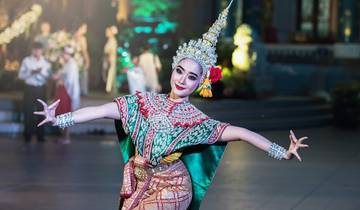
4 days
4 Day Bangkok City Break including Amphawa Floating Market & Erawan National Park
- ✓ Comprehensive Bangkok tour
- ✓ Expert local guides included
- ✓ All accommodation arranged
- ✓ Transportation provided
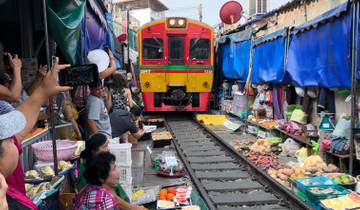
1 days
Small Group: Damnoen Floating market & Train market
- ✓ Comprehensive Bangkok tour
- ✓ Expert local guides included
- ✓ All accommodation arranged
- ✓ Transportation provided

3 days
Central Thailand Highlights in a Loop 3 Days, Private Tour
- ✓ Comprehensive Bangkok tour
- ✓ Expert local guides included
- ✓ All accommodation arranged
- ✓ Transportation provided
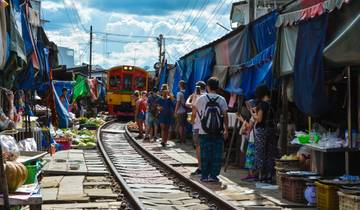
4 days
Bangkok Basics, City Break, Small Group Tour
- ✓ Comprehensive Bangkok tour
- ✓ Expert local guides included
- ✓ All accommodation arranged
- ✓ Transportation provided
Multi-day tour packages powered by TourRadar. Prices and availability subject to change.
Founding and Early Bangkok Period (1782-1851)
Establishment of the Chakri Dynasty
Bangkok’s founding occurred within broader context of post-Ayutthaya political reconstruction following fifteen years of instability, fragmentation, and warfare since 1767 Burmese destruction. King Taksin of Thonburi had partially restored Siamese power through military campaigns recovering lost territories and reassembling kingdom from regional strongmen and rival claimants, but his increasingly erratic behavior, religious delusions claiming Buddha status, and harsh punishments alienating nobles culminated in 1782 coup by military commander Chao Phraya Chakri. The coup leader arranged Taksin’s execution (traditionally by beating with sandalwood club avoiding royal blood spillage) before being offered crown by noble consensus recognizing his military competence, administrative experience under Taksin, and aristocratic lineage providing legitimacy framework for new dynasty.
Rama I’s accession followed established Southeast Asian pattern of military strongman replacing weakened or incompetent monarch, with legitimacy derived from prowess in warfare, administrative capability, royal genealogical connections (often fabricated or exaggerated), and proper performance of Buddhist kingship obligations through temple patronage and religious observance. The new king took name “Phra Buddha Yodfa Chulaloke” emphasizing warrior (yodfa) and cosmic ruler (chulaloke) aspects while claiming descent from Ayutthaya royal lineage through maternal grandmother, providing hereditary claim despite actual power deriving from military success and noble support. His dynasty name “Chakri” honored his former title Chao Phraya Chakri earned through military service, with subsequent monarchs numbered Rama I through current Rama X in Western historiography while using elaborate throne names in Thai tradition.
The transition from Thonburi to Bangkok reflected deliberate fresh start separating new dynasty from Taksin’s controversial reign while invoking Ayutthaya glory and legitimacy. Rama I commissioned Grand Palace construction mirroring Ayutthaya palace layout in scaled-down form appropriate for kingdom’s reduced circumstances, built Wat Phra Kaew temple to house Emerald Buddha image transferred from Thonburi representing palladium of Thai nation, and restored governmental structures including military organization, provincial administration, and legal codes adapted from Ayutthaya precedents. The king personally supervised law code revision producing “Three Seals Law” compilation governing property, criminal justice, marriage, inheritance, and other civil matters drawing on Ayutthaya codes modified for contemporary conditions, with this legal framework remaining foundational to Thai law through modern era despite subsequent reforms and constitutional overlays.
Urban Development and Infrastructure
Early Bangkok consisted primarily of canals (khlongs) dug for defensive purposes, irrigation, transportation, and drainage in low-lying delta landscape prone to seasonal flooding. Rama I ordered construction of major defensive canal Khlong Rop Krung (City Moat Canal) circling the inner royal district known as Rattanakosin Island, creating artificial island defensible against land invasion while maintaining river access for maritime commerce and naval operations. Additional canals extended radially and in parallel networks providing transportation arteries as streets remained minimal with most movement occurring by boat, with residential areas developing along canal banks in wooden houses raised on stilts accommodating annual monsoon flooding. This amphibious urban form earned Bangkok reputation as “Venice of the East” among European visitors, though comparison oversimplified vastly different cultural and technological contexts producing superficially similar waterborne cities.
Chinese immigration during early Bangkok period transformed city demographics and commercial character, with large-scale migration from southern China provinces including Guangdong, Fujian, and Chaozhou driven by economic opportunity and political instability in home regions. Rama I initially relocated Chinese merchants from palace construction site to downstream Sampheng area establishing Chinatown district that became economic powerhouse through trade networks connecting Bangkok to regional commerce in rice, textiles, ceramics, and luxury goods. Chinese immigrants dominated retail trade, operated sailing junks linking Bangkok to Chinese ports, managed revenue farms for gambling, opium, and alcohol, and provided skilled craftsmen for construction projects including temples, palaces, and merchant houses. This Sino-Thai synthesis shaped Bangkok’s commercial character with Chinese business networks, architectural influences, and cultural practices including food, festivals, and Mahayana Buddhism blending with Theravada Thai majority.
Temple construction dominated early Bangkok’s architectural production as Buddhist merit-making and royal legitimacy required extensive monastery patronage. Rama I founded Wat Phra Kaew within Grand Palace grounds as royal chapel housing Emerald Buddha, rebuilt Wat Pho as teaching monastery with medicine school and massage tradition, and patronized numerous smaller temples providing religious services to urban population. Wat Arun on Thonburi side received royal attention with prang (tower) expansion creating Bangkok’s most distinctive architectural landmark visible from across river. Temple architecture followed Ayutthaya precedents in design, decoration, and spatial organization while adapting to available resources and contemporary aesthetic preferences, with extensive use of Chinese ceramics for decoration reflecting both Chinese immigration influence and pragmatic use of ballast material from trading junks that became architectural element rather than waste disposal problem.
Military Defense and Regional Conflicts
Bangkok faced immediate military threats from Burma seeking to complete conquest of Siamese territories and from Vietnam expanding westward into Cambodia traditional Siamese tributary state. The “Nine Armies War” of 1785-1786 saw largest Burmese invasion attempt with forces attacking from multiple directions simultaneously, but Thai defenses held with combination of fortified positions, scorched earth tactics denying invaders food supplies, and counter-attacks exploiting Burmese overextension. Rama I’s military organization divided kingdom into regional commands with mandatory conscription providing large armies when needed while maintaining core professional forces around Bangkok for rapid response and royal guard duties. This military system proved adequate for defensive warfare against Burma while enabling offensive campaigns recovering territories lost during post-Ayutthaya chaos including Lao principalities and Cambodian vassalage.
Naval warfare played crucial role in Bangkok’s defense and offensive operations, with Siamese fleet controlling Chao Phraya River approaches and Gulf of Thailand waters enabling coastal defense, supply line protection, and power projection to Malay Peninsula and Cambodia. The navy combined war galleys rowed by conscripted labor with merchant junks converted for military use, while Thai naval tactics emphasized boarding actions and close combat rather than ship-to-ship gunnery. British naval superiority demonstrated during Bowring Treaty negotiations showed limitations of traditional Thai naval forces against European technology, though river and coastal waters remained effectively controlled by Thai forces throughout pre-colonial period. Bangkok’s strategic position at river mouth enabled rapid fleet mobilization for defensive operations while supporting offensive campaigns deploying troops and supplies via water transport more efficient than overland marching through monsoon-affected roads.
Modernization and Western Contact (1851-1932)
The Bowring Treaty and Opening to Trade
Sir John Bowring’s 1855 arrival representing British interests marked watershed in Thai history, culminating in treaty fundamentally altering Siamese economy, diplomacy, and sovereignty. The treaty abolished royal trading monopolies dominating Siamese commerce, established fixed low import and export tariffs limiting government revenue, granted extraterritorial rights exempting British subjects from Thai law under consular jurisdiction, and opened Bangkok and additional ports to British ships without restriction. These provisions replicated “unequal treaty” system imposed on China after Opium Wars, though Siam negotiated without military defeat, accepting disadvantageous terms to avoid British military intervention that had devastated China and would subsequently colonize Burma. Rama IV personally negotiated with Bowring, demonstrating scientific knowledge, diplomatic sophistication, and genuine engagement with Western ideas impressing British envoy and facilitating relatively smooth treaty conclusion.
Economic transformation following Bowring Treaty integration proved dramatic with rice exports increasing exponentially as European demand and steamship transportation created lucrative market for Siamese agricultural production. Chinese merchants and millers dominated export trade through capital, networks, and organizational capability superior to traditional Thai aristocratic commerce, while European trading houses including British, French, and German firms established Bangkok offices managing import-export operations. The shift from royal monopoly to free trade enriched Chinese and European merchants while reducing royal revenues and undermining traditional noble privilege derived from trade control, creating economic foundations for subsequent political tensions between commercial bourgeoisie and hereditary aristocracy. Imported European manufactured goods including textiles, machinery, and luxury items flooded Bangkok markets, displacing traditional crafts while introducing consumer culture and Western material lifestyle to urban Thai elite eager to demonstrate modernity through European fashion, architecture, and customs.
Administrative and Social Reforms
King Chulalongkorn’s modernization program following 1868 accession (initially under regency until 1873 majority) revolutionized Thai governance through bureaucratic rationalization replacing feudal personal loyalty systems with impersonal administrative ministries. The king established twelve ministries covering interior, defense, foreign affairs, finance, agriculture, justice, education, and other state functions, staffing positions with educated commoners and minor nobles loyal to crown rather than great families holding hereditary provincial governorships. This bureaucratic centralization concentrated power in Bangkok while reducing provincial autonomy, with governors becoming appointed officials rather than hereditary lords, and modern communication including telegraph and railways enabling rapid central direction of regional administration. European advisers provided technical expertise in law, finance, military organization, and railway engineering, though Chulalongkorn carefully maintained Thai sovereignty by balancing British and French advisers preventing single power’s dominance.
Slavery abolition occurred gradually over Chulalongkorn’s reign beginning with 1874 decree preventing new debt slavery while allowing existing obligations to expire naturally, with complete abolition achieved by 1905 through compensating owners for lost property rights and providing freed slaves land access and economic opportunities. The practice of corvée labor requiring commoners to work royal and noble projects without payment was similarly phased out through commutation payments allowing cash substitution for labor service, though full abolition took decades as provincial administration slowly implemented central directives. These social reforms undermined traditional aristocratic privilege based on unfree labor while creating wage labor market necessary for modern economy, though implementation remained incomplete with informal bondage, exploitation, and forced labor continuing in peripheral regions beyond Bangkok’s effective administrative reach.
Educational reform established modern schools teaching secular subjects alongside Buddhist religious instruction, with Chulalongkorn founding elite institutions including Suan Kulap College and sending royal princes abroad for European education. Western-style education created new social mobility paths for commoners and minor nobles through government employment requiring modern skills in languages, mathematics, science, and administration, while traditional education through Buddhist monasteries continued serving rural areas with basic literacy and religious instruction. The king promoted women’s education through Queen Saovabha’s efforts establishing girls schools, though female education remained limited compared to male opportunities with emphasis on domestic arts and moral instruction suitable for elite women’s expected roles rather than professional preparation. English language instruction became standard in elite schools producing Bangkok upper class comfortable with Western culture and capable of diplomatic, commercial, and technical exchanges with European powers increasingly dominating regional trade and politics.
Territorial Losses and Diplomatic Survival
Franco-Siamese crisis of 1893 resulted in French gunboats forcing passage up Chao Phraya River to Bangkok under threat of bombardment, demonstrating Siamese military helplessness against European naval power. France demanded and received Lao territories east of Mekong River, extraterritorial privileges for French subjects, and control over Cambodian provinces claimed by both nations, with Siam forced to accept humiliating terms including 25-kilometer demilitarized zone west of Mekong and French military presence in contested areas. This diplomatic defeat shocked Thai elite into recognizing vulnerability to European aggression, spurring military modernization, administrative reforms demonstrating civilized governance reducing European pretexts for intervention, and careful diplomacy playing British and French imperial interests against each other to maintain buffer state between British Burma and French Indochina.
Subsequent territorial losses included northern Lao principalities, four Malay sultanates ceded to British Malaya, and western Cambodian provinces transferred to French protectorate, with Siam’s territory reduced approximately one-third from maximum 19th-century extent. Each concession involved calculation that maintaining core Thai territories with Bangkok as capital took priority over peripheral areas where Thai sovereignty remained nominal with local rulers maintaining autonomy, and that selective territorial sacrifice demonstrated Siamese reasonableness to European powers while preserving independence of central Siamese territories most valuable economically and politically. Anglo-French agreement of 1896 guaranteed Siamese independence in Chao Phraya basin creating buffer zone between colonial empires, with Siam’s survival dependent on maintaining this diplomatic balancing act while demonstrating sufficient modernity and governance capability to avoid civilizing mission pretexts justifying conquest.
Constitutional Era and Modern Bangkok (1932-Present)
1932 Revolution and Political Transformation
Bloodless coup on June 24, 1932, by military officers and civilian bureaucrats ended absolute monarchy establishing constitutional government with elected parliament and limited royal authority. The coup resulted from multiple factors including economic hardship during Great Depression reducing government revenues and prompting austerity measures unpopular with bureaucrats facing salary cuts, ideological influences from Thai students studying abroad encountering democracy and nationalism, generational tensions between absolutist King Prajadhipok (Rama VII) and young educated officials seeking modernization, and resentment at continuing royal privilege amid economic crisis affecting ordinary Thais. The conspirators demanded constitutional monarchy with parliamentary democracy, people’s participation in governance, and equitable distribution of economic benefits, with demands presented to king who agreed without resistance recognizing political impossibility of defending absolute rule against military forces and popular sentiment.
Initial constitution promulgated December 1932 established parliament with appointed and elected members, ministerial government answerable to parliament, and king as constitutional monarch with ceremonial duties but minimal actual power. Reality proved messier with military faction dominating government under strongman Luang Phibunsongkhram, civilian politicians marginalized through manipulation and intimidation, and revolving-door governments as military officers competed for power through coups rather than democratic processes. King Prajadhipok abdicated in 1935 citing dissatisfaction with militarization of politics and insufficient royal influence, with succession passing to young nephew Ananda Mahidol (Rama VIII) living in Switzerland under regency, creating power vacuum filled by military leaders increasingly embracing fascist ideology and Japanese alliance during World War II era.
World War II and Japanese Occupation
Thailand under Phibunsongkhram’s ultra-nationalist government initially declared neutrality when World War II reached Southeast Asia in 1941, but accepted Japanese demands for passage through Thai territory to attack British Malaya and Burma following brief military resistance December 8, 1941. Thailand became Japanese ally through necessity rather than enthusiasm, declaring war on Britain and United States while maintaining formal independence as Japanese puppet state rather than experiencing occupation like Philippines, Burma, and Indonesia. Thai government navigated difficult position hosting large Japanese military presence, participating nominally in military operations including Burma campaign, while underground Free Thai movement organized with Allied support conducting intelligence operations and preparing for post-war period when Japan’s inevitable defeat would require diplomatic flexibility.
Bangkok suffered Allied bombing attacks targeting Japanese military installations, railways, and bridges, with civilian casualties and infrastructure damage modest compared to Manila, Singapore, or Rangoon but marking first military action on Thai soil in modern era. Food shortages affected urban population as Japanese requisitioned rice supplies, while inflation eroded purchasing power and black markets flourished amid rationing and official price controls. War ended with Japanese surrender August 1945 before Allied invasion of Thailand became necessary, with Free Thai movement helping negotiate favorable post-war settlement where Thai declaration of war deemed invalid as forced upon unwilling nation under Japanese coercion. Britain demanded rice shipments and territorial concessions as price for non-punishment, while United States took more lenient approach recognizing Free Thai cooperation and desiring strong anti-communist Thailand as Cold War began influencing regional politics.
Cold War Era and Economic Development
Thailand aligned firmly with United States during Cold War providing military bases for Vietnam War operations, sending troops to support South Vietnam and South Korea, and joining SEATO (Southeast Asia Treaty Organization) alliance system containing communism in region. American military presence, economic aid, and infrastructure development transformed Thailand from agricultural backwater to developing economy with modern roads, telecommunications, airports, and industrial base supporting military logistics while creating foundations for civilian economic growth. Bangkok expanded dramatically during 1960s-1980s as American dollars flowed through economy, tourism industry developed serving R&R military personnel and eventually mass civilian travel, and rural-urban migration brought agricultural workers seeking factory employment and service sector jobs in rapidly modernizing capital.
Economic boom accelerated during 1980s-1990s with export-oriented industrialization attracting foreign investment in electronics, textiles, automotive, and other manufacturing sectors employing millions of workers and generating substantial economic growth averaging 7-10% annually for decades. Bangkok became Southeast Asian economic hub with modern skyscrapers, shopping malls, mass transit systems, and infrastructure rivaling developed nations, while income inequality, environmental degradation, traffic congestion, and social dislocation accompanied rapid economic transformation. Property speculation and financial sector overextension culminated in 1997 Asian Financial Crisis beginning in Thailand with baht devaluation and economic collapse requiring IMF bailout, though recovery occurred relatively quickly with reformed banking sector and continued export competitiveness supporting return to strong growth in 2000s.
Recent Political Developments
Thai politics since 2000s have featured escalating tensions between rural-supported populist governments and Bangkok-based royalist/military establishment, with businessman Thaksin Shinawatra’s electoral dominance among northeastern and northern rural voters triggering Bangkok elite backlash and ultimately 2006 military coup deposing his government. Subsequent decade saw political instability including 2010 street protests and military crackdown killing 90+ demonstrators, 2014 coup installing military junta, and continuing tension between democratic legitimacy through elections and traditional elite power through military intervention backed by courts and bureaucracy. Monarchy remained above direct criticism through strict lèse-majesté laws, though King Bhumibol Adulyadej’s 2016 death and succession by King Vajiralongkorn (Rama X) brought some questioning of royal institution’s political role and resource control previously unthinkable in Thai public discourse.
Pro-democracy protests in 2020 saw youth protesters demanding constitutional reform, military accountability, and monarchy reform including reduction of royal budget and military control, representing unprecedented public challenge to institutions long considered untouchable in Thai society. The protests highlighted generational divide between older Thais maintaining reverence for traditional authorities and younger generation questioning hierarchical structures and demanding democratic participation, with COVID-19 pandemic economic impacts exacerbating youth frustration at political system seen as serving elite interests rather than addressing majority needs. Thai political future remains contested between incompatible visions of governance with populist democracy favored by rural and working-class majorities conflicting with Bangkok elite and military preferences for guided democracy maintaining traditional hierarchies and royal centrality.
Cultural and Religious Development
Buddhism and Royal Patronage
Theravada Buddhism forms foundation of Thai culture and identity with estimates suggesting 95% of ethnic Thais identify as Buddhist, though practice ranges from devout daily temple attendance to nominal cultural affiliation. The sangha (monastic community) receives royal patronage establishing temples, supporting monastic education, and sponsoring religious ceremonies reinforcing connection between monarchy and Buddhism as twin pillars of Thai identity. Young men traditionally serve temporary monastic stints (typically three months) earning merit for families while receiving religious education and moral instruction, with this practice declining in urban Bangkok but continuing in rural areas maintaining traditional customs despite modernization pressures.
Major temples including Wat Phra Kaew, Wat Pho, and Wat Arun serve both religious and tourist functions with daily ceremonies continuing amid visitor crowds photographing architectural beauty and cultural performances. The Emerald Buddha at Wat Phra Kaew receives seasonal costume changes by king performing ceremonial duties maintaining cosmic order, with ceremonies drawing large crowds of Thai devotees alongside foreign tourists observing sacred traditions adapted to modern urban context. Buddhist education through monastery schools provided basic literacy and moral instruction historically, with this role partially assumed by secular schools during modernization period though monastic education continues serving rural areas and providing advanced Buddhist scholarship for monks pursuing religious careers.
Chinese-Thai Cultural Synthesis
Chinese immigration transformed Bangkok demographics with current estimates suggesting 40-50% of Bangkok population claims some Chinese ancestry, though centuries of intermarriage and cultural assimilation created hybrid Sino-Thai identity rather than separate Chinese minority. Early immigrants from southern China brought merchant skills, business networks, and work ethic enabling economic dominance in retail trade, rice milling, and import-export operations, with subsequent generations achieving higher social status through education, government service, and marriage into Thai aristocracy. Chinese surnames were adopted under 1913 law requiring family names, with Chinese immigrants selecting Thai surnames sometimes incorporating Chinese characters or meanings while conforming to Thai linguistic patterns, creating hybrid nomenclature reflecting dual heritage.
Chinese cultural influences permeate Bangkok through food (noodles, dim sum, Chinese-Thai fusion cuisine), architecture (shophouses, clan associations), festivals (Chinese New Year celebrations), religion (Mahayana Buddhist and Taoist temples), and business practices (family firms, guanxi networks). Chinatown’s Yaowarat Road remains cultural center with gold shops, herbal medicine stores, seafood restaurants, and temples maintaining Chinese identity, though surrounding neighborhoods show increasing Thai-Chinese synthesis with bilingual signage, mixed religious practices, and intermarried families embodying successful integration compared to ethnic tensions elsewhere in Southeast Asia. This harmonious integration reflects Thai cultural openness to assimilation rather than exclusion, with Chinese immigrants and descendants embracing Thai language, Buddhist religion, and national identity while maintaining ancestral cultural elements enriching rather than threatening Thai society.
Economic History and Trade
Traditional Economy and Royal Monopolies
Pre-Bowring Treaty Siamese economy centered on royal monopolies controlling lucrative exports including rice, sugar, tin, and luxury goods with Chinese merchants operating under royal license paying fees for exclusive trading rights. The king and royal family owned vast agricultural lands worked by unfree labor, operated trading junks conducting commerce with China and regional ports, and collected taxes and tribute from provincial governors and vassal states. This tributary economic system enriched Bangkok court while providing minimal incentive for productivity improvement or technological advancement, as wealth extraction rather than economic development drove royal policy. European observers criticized royal monopolies and unfree labor as obstacles to economic development, though Thai aristocracy viewed Western free trade advocacy as self-serving attempt to access Thai markets and resources benefiting European merchants at Thai expense.
Rice cultivation in central plains sustained Siamese economy with sophisticated irrigation systems, water management, and agricultural techniques producing surpluses exported to regional markets including China, British Straits Settlements, and Dutch Indonesia. Buffalo-powered plowing, transplanting, and harvesting followed seasonal monsoon patterns with coordinated community labor during planting and harvest periods, while extended families worked lands under various tenure arrangements including royal lands, noble estates, temple properties, and commoner holdings. Rice milling and export trade fell largely to Chinese merchants with capital and commercial expertise exceeding Thai capabilities, creating economic partnership where Thai farmers produced raw materials while Chinese middlemen processed and exported products with profits disproportionately benefiting Chinese merchant class and royal monopoly holders rather than agricultural laborers.
Modernization and Industrialization
Railway construction beginning 1890s connected Bangkok to northern rice regions, southeastern Cambodia border, and southern tin mines, facilitating internal trade while reducing transport costs and enabling market integration of previously isolated regions. Roads remained poor quality until mid-20th century with water transport via canals and rivers providing primary means of moving goods and people within central plains region, though highways eventually supplanted water routes as motor vehicles replaced boats and khlongs were filled for land reclamation and traffic reduction. Electricity generation began early 20th century with private companies providing power to Bangkok elite areas before government monopoly established broader electrification supporting industrial development and modern urban infrastructure.
Import-substitution industrialization during 1960s-1970s produced textile mills, cement factories, food processing plants, and other industries supplying domestic market with previously imported goods, while export-oriented industrialization from 1980s onward attracted foreign investment in electronics assembly, automotive parts, garments, and other labor-intensive manufacturing for developed country markets. Japanese, American, and European corporations established regional production bases in Thailand exploiting low labor costs, favorable tax treatment, and political stability compared to communist neighbors experiencing wars and revolutions. Bangkok became Southeast Asian hub with modern port facilities at Laem Chabang, international airport at Don Mueang (later Suvarnabhumi), and industrial estates surrounding metropolitan area providing infrastructure attracting continued investment despite rising labor costs and competition from China and Vietnam.
Architectural and Urban Development
Traditional Bangkok Architecture
Thai traditional architecture exemplified in temple buildings, royal palaces, and elite residences featured wooden construction raised on posts, steep pitched roofs with multiple tiers and elaborate finials, open-air layouts maximizing ventilation in tropical climate, and extensive decorative elements including carved wood, gilded details, colored glass mosaics, and ceramic ornamentation. The Grand Palace complex demonstrates royal architectural style with throne halls combining Thai traditional forms with Western neoclassical elements, while Wat Phra Kaew’s ubosot (ordination hall) showcases pure Thai religious architecture with gilt surfaces, glass inlay, and mythological murals depicting Buddhist cosmology. Wats (temples) followed standardized layouts with ubosot for ordination ceremonies, vihara (assembly hall) for sermons and gatherings, chedi (stupa) containing relics, and monks’ quarters surrounding courtyard, with architectural richness corresponding to royal patronage level and community wealth.
Common residential architecture employed simpler wooden structures with single-story construction, open-plan interiors facilitating extended family living, and minimal furniture with mats for sleeping and floor-level dining traditional practice. Raised platforms protected against flooding and provided underneath space for storage, livestock, or workshop activities, while overhanging eaves shaded walls from tropical sun and rain. Chinese shophouses introduced by immigrant merchants became dominant commercial architecture with narrow frontages maximizing expensive street footage, deep floor plans extending 30-50 meters behind facades, multiple stories combining ground-floor shops with upper residential quarters, and courtyards providing light and ventilation to interior rooms. These shophouses lined major commercial streets including Charoen Krung, Yaowarat, and Sampheng, creating dense continuous facades with arcaded sidewalks protecting pedestrians from sun and rain while window shopping retail displays.
Colonial and Modern Architecture
European architectural influences entered through trade, diplomatic relations, and royal enthusiasm for Western styles, with neoclassical buildings appearing in late 19th century including Ananta Samakhom Throne Hall built by Italian architects as parliament house and royal reception venue. Western-educated Thai architects and European practitioners introduced reinforced concrete construction enabling larger structures, longer spans, and permanent buildings replacing traditional wooden architecture vulnerable to fire, termites, and monsoon deterioration. The Chakri Maha Prasat throne hall within Grand Palace exemplifies East-West synthesis with Italian Renaissance base supporting traditional Thai roof structures, creating hybrid architecture critiqued by purists but reflecting Chulalongkorn’s modernization philosophy balancing tradition and progress.
Post-World War II modernization produced international-style architecture with concrete and glass towers housing government offices, banks, and corporate headquarters, while shophouse neighborhoods gave way to wide boulevards lined with multi-story commercial buildings and eventually high-rise condominiums. American architectural influence dominated 1960s-1980s with suburban sprawl, shopping malls, and car-dependent development replacing traditional compact walkable neighborhoods, though BTS and MRT construction from 1990s enabled transit-oriented development concentrating high-density residential and commercial construction near stations. Contemporary Bangkok architecture ranges from Buddhist-inspired postmodern towers referencing Thai traditional forms to glass curtain-wall boxes indistinguishable from Hong Kong or Singapore, with preservation battles protecting historic temples and neighborhoods against development pressures in land-scarce rapidly growing metropolis.
Social and Demographic Changes
Population Growth and Urbanization
Bangkok’s population exploded from approximately 100,000 in late 18th century to 400,000 by early 20th century, then accelerating to 1.5 million by 1960, 5 million by 1980, and current metropolitan area estimates exceeding 10 million residents representing one-sixth of Thailand’s total population. Rural-urban migration drove growth as agricultural mechanization, land pressure, and urban economic opportunities pulled peasants from rice fields to factory floors and service sector jobs. The capital’s primacy in Thai national system concentrates educational institutions, employment opportunities, government administration, healthcare facilities, and cultural resources creating massive disparities between Bangkok and provincial areas with continuing migration despite Bangkok problems including traffic, pollution, and high living costs.
Informal settlements and slums housed rural migrants unable to afford formal housing, with communities establishing along canals, railway lines, and peripheral areas in bamboo and scrap-material structures lacking sanitation, clean water, and secure tenure. Government attitudes toward slums evolved from clearance attempts to community development programs providing infrastructure improvements and tenure security enabling residents to invest in permanent housing improvements, though gentrification pressures increasingly displace low-income communities from valuable central locations as land values appreciate with urban development. Bangkok’s demographic diversity encompasses ethnic Thais, Chinese-Thais, Laotians, Khmers, Burmese, South Asians, Western expatriates, and recent influx of tourists, creating cosmopolitan metropolis with increasing diversity compared to ethnically homogeneous Thai provinces.
Class Structure and Social Mobility
Traditional Thai society featured rigid hierarchy with royal family at apex, hereditary nobility controlling provinces and resources, Buddhist monks holding religious authority and moral prestige, Chinese merchants dominating commerce, and Thai peasant majority working agriculture and providing conscript labor and soldiers. Modernization disrupted hierarchy through education creating professional middle class, economic development enriching entrepreneurs and skilled workers, and constitutional government theoretically eliminating formal aristocratic privilege though informal status hierarchies persist. Bangkok upper class combines old nobility maintaining prestige and connections with new commercial elite enriched through business, Chinese-Thai tycoons controlling major corporations, and professional class educated at top universities entering government, medicine, law, and corporate management.
Education became primary social mobility mechanism enabling commoners to achieve middle-class status through government employment, professional practice, or business careers, though access to elite universities and international education still correlates strongly with family wealth and connections reproducing privilege across generations. The middle class expanded dramatically during economic boom creating consumer culture, suburban lifestyles, car ownership, and service sector employment in retail, hospitality, and white-collar office work. Working class encompasses factory workers, construction laborers, service staff, street vendors, and informal sector participants struggling with low wages, limited job security, and inadequate social services despite contributing essential labor supporting Bangkok’s economy and daily operations. Inequality remains pronounced with luxury condominiums and mansions neighboring slum communities, imported cars stuck in traffic alongside motorcycle taxis weaving through jams, and shopping malls selling luxury brands within sight of street vendors selling ฿40 meals.
Conservation and Heritage Preservation
UNESCO World Heritage Considerations
Bangkok itself lacks UNESCO World Heritage designation despite historical significance and architectural treasures, with nearby Ayutthaya Historical Park receiving inscription in 1991 recognizing former capital’s ruins and cultural importance. Proposals for Bangkok Grand Palace and temple complex to receive World Heritage status face obstacles including urban development pressures, management challenges coordinating multiple government agencies and religious authorities, authenticity concerns regarding modern restoration work, and political sensitivity around national symbols subject to tourism commercialization. Historic districts including Rattanakosin Island (royal district), Chinatown, and Thonburi preserve architectural and urban fabric illustrating Bangkok’s evolution, though protection remains incomplete with demolitions and unsympathetic modifications threatening historical character.
Individual monuments receive protection under Thai law with Fine Arts Department designating national historic sites and regulating alterations, while Bangkok Metropolitan Administration controls zoning and development permits influencing preservation outcomes. Tensions arise between development pressures generating significant economic value through land redevelopment and heritage preservation protecting historical buildings and neighborhoods with cultural value but limited revenue generation. Community-based preservation initiatives in areas like Thonburi’s artist communities and Talad Noi’s heritage shophouses demonstrate alternative preservation models empowering residents to maintain historic character while accommodating contemporary uses and sustainable tourism that respects local life rather than displacing residents for commercial exploitation.
Contemporary Heritage Challenges
Bangkok’s rapid development threatens historic neighborhoods with skyscraper construction replacing low-rise heritage buildings, road widening destroying shophouse arcades and traditional street character, and gentrification displacing low-income residents from centrally located historic communities. The khlong system that defined early Bangkok and earned “Venice of the East” comparison has been largely filled with remaining canals polluted and neglected, though recent preservation efforts including Khlong Saen Saep tourist boats and canal cleanup campaigns demonstrate growing awareness of waterways’ historical and ecological value. Traditional wooden houses and shophouses deteriorate without maintenance funding or preservation incentives, while property values encourage demolition for profitable high-rise development with inadequate regulatory protection for non-temple historic buildings.
Cultural heritage preservation extends beyond buildings to intangible elements including traditional crafts, performance arts, cuisine, ceremonies, and social practices threatened by modernization and globalization. Temple festivals, royal ceremonies, and neighborhood traditions continue with varying vitality, some maintaining authentic community participation while others transform into tourist spectacles losing original meaning and community connection. Language preservation concerns arise as English infiltrates Thai vocabulary, younger generations adopt global youth culture, and traditional literary forms decline in popularity. Heritage preservation efforts balance maintaining living culture capable of evolution against freezing traditions as museum pieces, requiring community engagement, economic sustainability, and adaptation to contemporary contexts while maintaining essential cultural values and practices connecting modern Bangkok to historical roots.
FAQ: Bangkok History
What is the significance of the Emerald Buddha?
The Emerald Buddha (Phra Kaew Morakot) ranks as Thailand’s most sacred Buddhist image with legendary origins, contested histories, and central role in Thai political legitimacy and religious life. The statue measuring 66 centimeters tall consists of jade or jadeite carved into meditating Buddha form traditionally attributed to ancient India though historical evidence suggests 15th-century Lanna Kingdom origin. Legends describe image hidden in chedi that cracked revealing Buddha inside, with subsequent wanderings through Chiang Rai, Chiang Mai, Laos (where Lao kings possessed it for centuries), before capture by Thai armies and installation in Bangkok’s Wat Phra Kaew in 1784. Possession of Emerald Buddha conveyed political legitimacy as palladium protecting kingdom, with its presence in Bangkok establishing Chakri Dynasty’s authority and Thai power after Ayutthaya destruction and Burmese conflicts.
Seasonal costume changes performed exclusively by king during important ceremonies at equinoxes and start of hot, rainy, and cool seasons maintain cosmic order through royal intervention connecting earthly monarchy to Buddhist spiritual authority. The ceremonies attract large crowds of Thai devotees and foreign observers witnessing living tradition demonstrating continuing significance of monarchy despite constitutional limitations and modern skepticism. Thai reverence for Emerald Buddha combines religious devotion to sacred Buddha image with nationalist pride in national palladium and respect for royal ceremonies maintaining cosmic balance, making the statue irreducible to pure artistic or religious object but rather complex symbol embodying Thai identity, Buddhist faith, and political legitimacy through tangible presence in Wat Phra Kaew where daily worship and royal ceremonies perpetuate traditions connecting contemporary Thailand to legendary and historical past.
How did Bangkok avoid European colonization?
Thailand (Siam) remained Southeast Asia’s only nation escaping European colonization through diplomatic skill, strategic concessions, and geographic buffer position between British and French colonial empires. King Mongkut and King Chulalongkorn pursued deliberate modernization demonstrating Siamese civilization and governance capability undermining European “civilizing mission” justifications for colonial intervention, with legal reforms, abolition of slavery, Western education, and administrative rationalization showcasing Siamese progress toward Western standards reducing pretexts for conquest. The monarchs employed European advisers in various government positions proving Siamese willingness to learn from West while maintaining sovereignty, hired foreign experts for railways and infrastructure rather than accepting colonial development concessions, and sent princes and officials abroad for education creating Thai elite capable of diplomatic engagement with European powers on intellectual par.
Geographic position between British Burma and French Indochina created buffer state utility for both imperial powers preferring neutral Siam separating their territories to risky border confrontations if British-French division of Siam created direct territorial contact. Anglo-French agreement of 1896 guaranteed Siamese independence in Chao Phraya basin core territories while allowing continued British and French expansion into peripheral Lao, Malay, and Cambodian regions claimed by Siam. Thai diplomatic strategy involved playing British and French interests against each other, granting concessions to both powers maintaining balance preventing either from dominating, and signing unequal treaties accepting economic disadvantages and extraterritorial privileges to avoid military conflict that would certainly result in conquest given European technological and organizational superiority over traditional Siamese armies despite brave resistance.
What was the impact of the 1932 revolution?
The 1932 revolution ended 700 years of absolute monarchy replacing divine-right royal rule with constitutional monarchy limiting king to ceremonial role while transferring actual governance power to elected parliament and appointed government ministers. The bloodless coup occurred peacefully with King Prajadhipok accepting constitutional limitations without military resistance, creating precedent for negotiated political change rather than violent conflict though subsequent Thai history showed pattern of military coups indicating incomplete democratic transition. Initial revolutionary ideals including equality, popular participation, and social justice proved difficult implementing given entrenched elite interests, military ambitions, and limited democratic experience, with strongman rule and military-dominated politics replacing royal absolutism rather than genuine parliamentary democracy emerging immediately after revolution.
Long-term impacts include establishment of constitutional framework remaining Thai political foundation despite multiple constitutions and frequent military interventions, legitimization of non-royal political authority enabling commoners and minor nobles to lead government based on bureaucratic position rather than hereditary status, and creation of competing power centers between monarchy retaining symbolic authority and reverence, military controlling violence means and repeatedly intervening in politics, elected politicians representing (at least theoretically) popular will, and bureaucracy managing state administration. The revolution’s incomplete nature with monarchy surviving though limited, military repeatedly overthrowing governments, and constitutional principles honored more in breach than observance reflects broader Thai struggle reconciling traditional hierarchical values emphasizing social order and deference to authority with modern democratic ideals of equality and popular sovereignty.
How has Chinese immigration shaped Bangkok?
Chinese immigration transformed Bangkok from predominantly Thai Buddhist capital into cosmopolitan Chinese-Thai hybrid city with approximately 40-50% of current Bangkok population claiming Chinese ancestry. Early immigrants from Guangdong, Fujian, Chaozhou, and Hainan provinces established commercial networks dominating retail trade, rice milling, import-export operations, and craft industries while intermarrying with Thais producing hybrid Chinese-Thai population identifying simultaneously with both heritages. Chinese business acumen, networks extending to Chinese ports and trading communities throughout Southeast Asia, and willingness to work long hours in commercial enterprises created economic dominance persisting today with most major Thai corporations controlled by Chinese-Thai families and Bangkok retail trade largely in Chinese-Thai hands.
Cultural influences permeate Bangkok through food with Chinese noodles, dim sum, and stir-fry techniques blending with Thai flavors creating distinctive Chinese-Thai cuisine, architectural shophouses lining commercial streets, Mahayana Buddhist and Taoist temples supplementing Theravada wats, Chinese New Year celebrations attracting citywide participation, and business practices emphasizing family firms and personal connections reflecting Chinese values. Thai cultural openness to assimilation and Buddhist non-exclusivism enabled peaceful integration compared to ethnic tensions and anti-Chinese sentiment in other Southeast Asian nations, with Chinese immigrants adopting Thai names, learning Thai language, practicing Buddhism, and accepting Thai national identity while maintaining ancestral cultural elements enriching rather than threatening dominant Thai society. This successful integration created syncretic Chinese-Thai culture visible throughout Bangkok in bilingual signage, fusion cuisine, religious pluralism, and intermarried families embodying harmonious hybrid identity rare in ethnically diverse urban environments.
What role did Bangkok play in World War II?
Bangkok served as nominal capital of independent Thailand allied with Japan while effectively functioning as Japanese military base supporting operations in Burma, Malaya, and Indonesia during World War II. Thai government under Prime Minister Phibunsongkhram initially resisted Japanese demands for passage through Thai territory but capitulated after brief fighting December 8, 1941, recognizing military impossibility of sustained resistance against Japanese forces vastly superior in training, equipment, and organization. Thailand declared war on Britain and United States officially becoming Axis ally, though Thai ambassador in Washington refused to deliver declaration to US government allowing postwar Thai claims of forced alliance under Japanese coercion. Japanese military presence transformed Bangkok with troops, installations, and requisitioning of supplies creating shortages and inflation affecting civilian population, while Allied bombing targeted railways, bridges, and Japanese military facilities causing casualties and damage though sparing most historic sites and residential areas from destruction experienced by Manila or other Southeast Asian cities.
Free Thai underground movement organized resistance to Japanese occupation including intelligence gathering for Allies, sabotage of Japanese facilities, rescue of downed Allied airmen, and preparation for liberation assuming eventual Allied invasion of Thailand that never materialized due to Japanese surrender after atomic bombings. The movement led by Pridi Banomyong helped negotiate favorable postwar settlement where Thai wartime alliance with Japan deemed invalid as forced upon unwilling nation, enabling relatively smooth transition to Allied camp and avoiding punishment or occupation despite technical Axis membership. Bangkok’s war experience left physical damage requiring postwar reconstruction, economic disruption from Japanese requisitions and inflation, and political lessons about small nation vulnerability to great power conflicts where pragmatic accommodation often proves preferable to principled resistance resulting in devastation.
Why is Bangkok called the “Venice of the East”?
European visitors in 18th and 19th centuries nicknamed Bangkok “Venice of the East” observing extensive canal (khlong) network providing primary transportation routes, waterborne commerce, and urban infrastructure in pre-automobile era when most Thai capital movement occurred by boat. Early Bangkok consisted primarily of canals dug for defense, irrigation, and drainage in low-lying delta landscape, with residential areas developing along canal banks in wooden houses raised on stilts accommodating seasonal flooding. Markets, temples, administrative offices, and commercial enterprises oriented toward waterways with boat docks replacing street frontages, while boats ranging from small personal craft to large commercial barges moved people and goods throughout city creating vibrant amphibious urban culture fundamentally different from land-based European cities despite superficial comparison to Venice.
The “Venice” comparison oversimplified vastly different cultural, technological, and historical contexts producing superficially similar canal cities, as Bangkok’s khlongs served practical functions in tropical climate rather than Venice’s artistic and defensive purposes, and Thai wooden vernacular architecture contrasted sharply with Venetian stone palaces and churches. Modern Bangkok has filled most canals for land reclamation and road construction leaving remnants like Khlong Saen Saep and tourist boat routes evoking former water city character, though most historical khlong network disappeared under asphalt and concrete as automobiles and roads supplanted boats and waterways. Some historic neighborhoods including Thonburi preserve canal-oriented layouts and boat-dependent lifestyles maintaining connections to Bangkok’s aquatic past, while canal cleanup and tourist development efforts attempt recovering environmental and cultural value from remaining waterways long neglected as development priorities favored cars over boats.
What is the significance of the Grand Palace?
The Grand Palace represents physical and symbolic center of Thai nation as royal residence from 1782-1925, government administrative headquarters, site of Wat Phra Kaew housing Emerald Buddha, and location for major royal ceremonies continuing today despite king no longer residing within palace grounds. Rama I ordered palace construction 1782 immediately after establishing Bangkok as capital, deliberately mirroring Ayutthaya palace layout connecting new dynasty to former kingdom’s glory while scaling down to reflect Siam’s reduced post-war circumstances. Palace complex encompasses multiple throne halls serving distinct ceremonial functions, residential quarters originally housing king, queens, and royal consorts, administrative buildings for government ministries, and extensive grounds with gardens, temples, and support facilities creating self-contained royal city within greater Bangkok.
Architectural significance derives from combination of traditional Thai forms including multi-tiered roofs and gilded surfaces with Western neoclassical influences visible in columns, windows, and spatial organization representing Thai engagement with European architecture while maintaining essential Thai character. The complex showcases successive monarchs’ additions and modifications including Chakri Maha Prasat throne hall’s controversial East-West hybrid design criticized by traditionalists and Ananta Samakhom Throne Hall’s Italian Renaissance style reflecting Chulalongkorn’s modernization agenda. Today the palace functions primarily as museum and ceremony venue with tourist visitation providing significant revenue while royal family resides elsewhere, though major ceremonies including coronations, royal funerals, and important state occasions continue using Grand Palace’s throne halls and spaces maintaining connection to Thai political and religious traditions centered on physical presence of king and Buddha performing cosmic duties ensuring kingdom’s prosperity.
How did King Chulalongkorn modernize Siam?
King Chulalongkorn (Rama V, 1868-1910) transformed Siam through comprehensive reforms in administration, economy, military, education, and social structures responding to European colonial pressure while establishing modern nation-state replacing feudal absolute monarchy. Administrative centralization replaced hereditary provincial lords with appointed governors answerable to Bangkok ministries, while new government departments covering interior, defense, finance, education, and other functions employed educated commoners and minor nobles rather than great aristocratic families monopolizing power under previous system. European advisers provided technical expertise in law, finance, railways, and military organization though Chulalongkorn carefully balanced British and French advisers preventing either power from dominating, while sending princes and officials abroad for education creating Thai elite capable of managing modern institutions without European control.
Social reforms abolished slavery gradually over 30-year process beginning 1874 and completing by 1905, transformed corvée labor obligations into commutation payments, and established modern schools teaching secular subjects preparing new bureaucratic class. Infrastructure development included railway construction connecting Bangkok to northern and southern regions, telegraph communications enabling rapid central direction, modern postal service, sanitation improvements in Bangkok reducing disease, and public works projects building roads, bridges, and government buildings demonstrating Siamese progress. Military modernization hired European instructors training professional army, purchased modern weapons and equipment, established military academies, and reorganized command structures, though Siamese forces remained inferior to European militaries with Chulalongkorn recognizing diplomatic skill rather than military power would preserve independence during peak colonial era. The king’s reforms preserved Siamese sovereignty while fundamentally transforming traditional society, creating tensions between conservative nobles losing privileges and modernizers seeking faster change that contributed to subsequent political instability after absolute monarchy ended 1932.