
Balos Lagoon & Elafonisi Beach 2026: Complete Travel Guide
Balos Lagoon and Elafonisi Beach represent Crete’s most spectacular coastal destinations, combining turquoise Caribbean-like waters with unique pink-tinged sands and dramatic natural settings. This comprehensive planning guide provides verified 2026 pricing, detailed transport options, and strategic advice for experiencing both beaches during your Crete visit.
Key Takeaways
- Balos boat tours from Kissamos cost €40-45 for adults in 2026, while Elafonisi requires €5 parking plus optional €8 sunbed rental
- Both beaches are accessible by rental car, organized tours, or public transport, with driving offering the most flexibility for early arrival
- Visiting both beaches in one day is logistically challenging but possible with private boat tours or extremely early starts by car
- Peak season (July-August) brings overwhelming crowds; May, June, September, and early October offer the best balance of weather and manageable visitor numbers
- Balos requires either a scenic but challenging 8km unpaved drive or a relaxing 1-hour-20-minute boat journey, while Elafonisi involves 1.5 hours of mountain driving from Chania
- Early morning arrival (before 10:00 AM) is essential at both locations during summer to secure parking and avoid the worst crowds
People Also Ask About Balos & Elafonisi 2026
How much does it cost to visit Balos Lagoon and Elafonisi Beach in 2026?
Balos boat tours from Kissamos cost €40-45 for adults and €24-27 for children ages 3-12 in 2026, with prices varying by season (lower April-mid-July and mid-September-October, higher mid-July-mid-September). Driving to Balos is free but requires navigating an 8km unpaved road. Elafonisi charges €5 for parking at the Mega Parking facility located 650-800 meters from the beach, with optional sunbed and umbrella rental at €8 per day. Public buses from Chania to Elafonisi cost €20 one-way. Organized tours to either beach range €25-80 depending on inclusions and departure point.
Can you visit both Balos Lagoon and Elafonisi Beach in one day in 2026?
Visiting both beaches in one day is logistically challenging but achievable through two main approaches in 2026. Private boat tours departing from Kissamos can combine Balos, Elafonisi, and Kedrodasos in a 7-8 hour excursion, typically costing €300-1,100 depending on boat size and services. By car, extremely early starts (departing 6:00-7:00 AM) allow dedicated travelers to visit Balos first, then drive to Elafonisi, though this requires 12-14 hours and significant mountain driving. Most travelers find dedicating separate days to each beach provides a more relaxed and enjoyable experience.
What is the best time to visit Balos and Elafonisi in 2026?
May, June, September, and early October represent the optimal visiting periods in 2026, offering warm swimming temperatures (22-26°C), manageable crowd levels, and reliable sunny weather without extreme July-August heat. Within any given day, arriving before 10:00 AM proves essential during peak season, as parking fills completely and beaches become uncomfortably crowded by midday. Afternoon visits after 3:00 PM see departing day-trippers create more space, though ferry schedules limit this option at Balos. Weather conditions matter significantly at both beaches—strong winds can create sandblasting conditions at Elafonisi and rough seas affecting Balos boat schedules, so checking forecasts 2-3 days before visiting allows rescheduling if necessary.
How do I get to Balos Lagoon and Elafonisi Beach from Chania in 2026?
Balos Lagoon access from Chania requires reaching Kissamos (45km west, 45-60 minutes by car), then either taking a boat tour (€40-45 adults, departing 10:00 AM-12:00 PM) or driving 8km on an unpaved road to the peninsula parking area followed by a 20-minute downhill walk. Organized tours from Chania including boat tickets cost €25-80 with hotel pickup. Elafonisi Beach sits 72km southwest of Chania, requiring 1.5 hours of mountain driving on paved roads to reach the Mega Parking facility. Public buses depart Chania at 9:00 AM daily during season (May-September), returning at 4:00 PM, costing €20 one-way. Organized day tours from Chania cost €25-34 with transportation included. Rental cars provide maximum flexibility for early arrival and exploration of both destinations.
Extended multi-day tours – 5+ days
Featured Crete Multi-Day Tour Packages
3 days
Crete 3-Day Discovery Tour
- ✓ Comprehensive Crete experience
- ✓ Expert local guides included
- ✓ All accommodation included
- ✓ Transportation provided
5 days
Crete 5-Day Highlights Experience
- ✓ Comprehensive Crete experience
- ✓ Expert local guides included
- ✓ All accommodation included
- ✓ Transportation provided
7 days
Crete 7-Day Cultural Journey
- ✓ Comprehensive Crete experience
- ✓ Expert local guides included
- ✓ All accommodation included
- ✓ Transportation provided

10 days
Crete 10-Day Complete Adventure
- ✓ Comprehensive Crete experience
- ✓ Expert local guides included
- ✓ All accommodation included
- ✓ Transportation provided
Multi-day tour packages powered by TourRadar. Prices and availability subject to change.
Introduction: Planning Your Balos and Elafonisi Experience in 2026
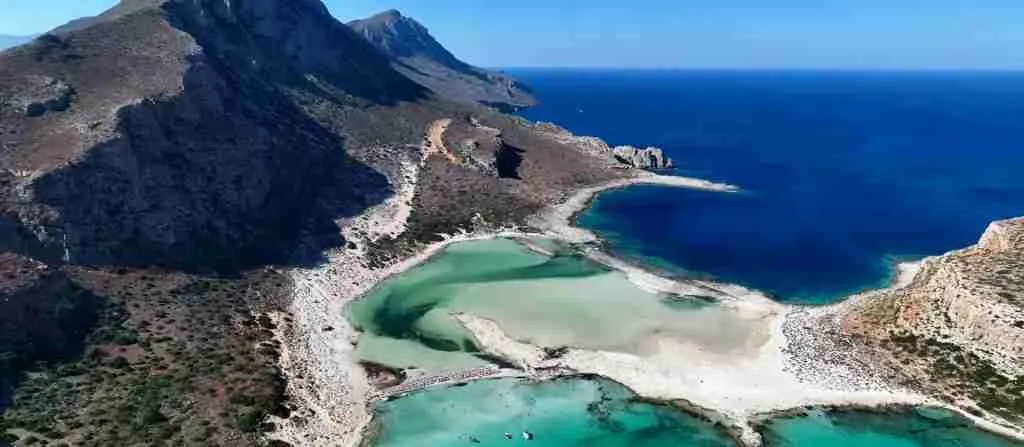
Balos Lagoon and Elafonisi Beach consistently rank among Europe’s most beautiful coastal destinations, attracting hundreds of thousands of visitors annually to Crete’s western shores. Balos showcases a dramatic lagoon setting where three seas meet between the Gramvousa Peninsula and a small islet, creating shallow turquoise pools that shimmer in countless shades of blue and green. The lagoon’s exotic appearance, enhanced by white-pink sand and surrounding cliffs, gained international fame through countless travel magazine covers and social media posts.
Elafonisi Beach offers a completely different but equally stunning experience, featuring a vast stretch of pink-tinted sand created by crushed shells mixing with white sand. The beach extends to a small island accessible by wading through ankle-deep crystal-clear water, while protected Natura 2000 designation ensures environmental preservation. Both destinations sit in remote southwestern Crete locations, requiring significant travel effort that rewards visitors with unforgettable natural beauty.
Planning a 2026 visit to these beaches demands careful consideration of transport logistics, timing strategies, and realistic expectations regarding crowds. The combination of remote locations and international popularity creates challenges—Balos boat tours carry 300-1,200 passengers per departure, while Elafonisi’s parking areas fill completely by 10:00 AM during July and August. Understanding access options, cost structures, and seasonal patterns allows travelers to maximize their experience while minimizing frustrations.
This guide provides comprehensive 2026 planning information based on verified current pricing, operational details, and strategic recommendations. Whether visiting both beaches during a Crete vacation or choosing one destination for a focused day trip, proper preparation ensures these remarkable locations deliver the extraordinary experiences they promise. The following sections detail every aspect of planning and executing successful Balos and Elafonisi visits in 2026.
Understanding Balos Lagoon and Elafonisi Beach in 2026
Balos Lagoon occupies the northwestern tip of Crete’s Gramvousa Peninsula, approximately 56 kilometers northwest of Chania. The lagoon forms where shallow waters separate the peninsula mainland from the small Imeri Gramvousa islet, creating a protected natural pool that displays extraordinary color variations depending on depth, sand composition, and light angles. The setting combines dramatic 200-meter cliffs, white-pink sand beaches, and incredibly shallow warm water that remains waist-deep up to 100 meters from shore in many areas.
The lagoon’s remote location within a protected Natura 2000 area limits development—no permanent facilities exist on the beach itself, with visitors either arriving by boat from Kissamos or driving the challenging unpaved road from Kaliviani village. This isolation preserves the lagoon’s pristine character but creates the crowds paradox: limited access concentrates thousands of daily visitors into narrow arrival windows when boats discharge passengers or drivers complete the morning journey.
Elafonisi Beach sits 72 kilometers southwest of Chania on Crete’s southwestern corner, where a small uninhabited island lies just offshore connected to the mainland beach by a shallow lagoon passable on foot. The famous pink sand results from countless tiny fragments of crushed shells from Foraminifera, single-celled organisms with reddish shells that break down and mix with white sand. The pink hue varies significantly by season, wave action, and specific beach location—some areas show vivid pink tones while others appear white with subtle pink highlights.
The beach stretches extensively along the coast and around the island, providing far more space than Balos for crowd distribution. Protected Natura 2000 status since 2013 brought regulations including parking restrictions (vehicles no longer drive directly to the beach), designated turtle nesting areas requiring visitor respect, and prohibitions on taking sand or shells. Basic facilities exist including changing rooms, bathrooms (€1 entrance fee), beach bars, and sunbed rentals, representing more infrastructure than Balos but still maintaining a relatively undeveloped character.
Both beaches require significant travel investment from major Crete tourism centers, with Heraklion sitting 160+ kilometers from either destination. This distance creates natural day-trip patterns from western Crete bases including Chania, Rethymno, and the Kissamos region, while travelers staying in eastern or central Crete face challenging logistics for visiting either beach as a day trip. Understanding these geographical and infrastructural realities helps set appropriate expectations for 2026 visit planning.
Balos Lagoon Access Options 2026
Reaching Balos Lagoon in 2026 involves choosing between boat tours from Kissamos port and driving the challenging unpaved road to the peninsula parking area, with each option offering distinct advantages and constraints that suit different traveler priorities and capabilities.
Boat Tours from Kissamos to Balos Lagoon 2026
Ferry services from Kissamos port to Balos operate daily during the main season (April-October), with multiple companies running boats carrying 300-1,200 passengers per departure. The journey takes approximately 1 hour 20 minutes sailing along the dramatic northwest coast, with most tours stopping first at Imeri Gramvousa island for 1.5-2 hours before continuing to Balos for an additional 2.5-3 hours of beach time.
Pricing for the 2026 season follows a two-tier structure with Cretan Daily Cruises (the largest operator) charging €40 for adults and €24 for children ages 3-12 during shoulder season (April to mid-July, mid-September to end-October), increasing to €45 for adults and €27 for children during peak season (mid-July to mid-September). Check official websites for current rates as pricing may vary by operator. Children under 3 travel free. These prices include round-trip boat transportation and time at both Gramvousa and Balos, but exclude food, drinks, and optional umbrella rentals available for purchase onboard.
Departure times typically span 10:00 AM to 12:00 PM, with earlier departures recommended for less crowded beach conditions. Return boats leave Balos between 3:30-4:30 PM depending on the specific departure schedule. Boats fill to capacity during July and August, making advance online booking essential—showing up at the port hoping for same-day tickets frequently results in disappointment during peak season.
The boat journey itself provides value through spectacular coastal views, photo opportunities from the water, and the atmospheric approach to Gramvousa’s Venetian fortress perched 137 meters above the sea. The fortress visit requires a steep but manageable 20-minute climb offering panoramic views of the lagoon and surrounding islands. Onboard facilities include bathrooms, snack bars selling sandwiches (€5-8), coffee (€2-4), soft drinks (€2-3), and sunbed/umbrella rentals for beach use.
Ferry advantages include relaxation without driving stress, no navigation of the unpaved road, included Gramvousa fortress access, and social atmosphere with other travelers. Disadvantages involve fixed schedules limiting flexibility, crowded conditions with hundreds of other passengers, and inability to arrive early or stay late for better lighting and fewer people.
Driving to Balos Lagoon 2026
Driving to Balos from Chania requires 56 kilometers covering approximately 1 hour 20 minutes to reach Kaliviani village, then an additional 8 kilometers on a rough, steep, unpaved road adding 30-40 minutes of challenging driving to reach the peninsula parking area. The paved portion presents no difficulties—standard highway driving through Kissamos then smaller paved roads through villages. The unpaved section demands attention, cautious speed, and comfort with narrow tracks, sharp drops, and loose gravel surfaces.
The unpaved road features steep switchbacks climbing to a high ridge before descending to the parking area, with sections barely wide enough for two cars to pass. Most rental cars handle the road successfully—4×4 vehicles unnecessary but welcome for additional ground clearance and stability. Driving requires patience, slow speeds (rarely exceeding 20 km/h), and willingness to pull over at wider sections to allow opposing traffic passage. The road surface deteriorates through summer from heavy use, with the worst conditions typically in August-September before autumn maintenance.
No fees apply for the road or parking area. The parking zone sits approximately 20 minutes walking distance above Balos beach via a clear downhill path offering spectacular views. The descent involves rocky steps and moderate incline, manageable for most fitness levels but challenging with heavy beach gear or for those with mobility limitations. The return uphill climb in afternoon heat proves significantly more strenuous, requiring 25-35 minutes for most visitors.
Driving advantages include schedule flexibility for early arrival (before 9:00 AM beats boat crowds), late departure for sunset, free access, and ability to bring extensive beach supplies. Disadvantages involve challenging road conditions, no Gramvousa access, significant walking, and parking limitations during peak hours when the area fills completely. The road from Kaliviani to Balos closes occasionally due to weather, accidents, or maintenance, so contingency planning helps avoid disappointment.
Organized Tours to Balos from Chania and Other Areas 2026
Numerous tour operators offer Balos excursions from Chania, Rethymno, and eastern Crete, with prices varying based on inclusions and departure locations. Basic tours from Chania typically cost €25-40 per person, including bus transportation to Kissamos and boat tickets, but excluding meals and hotel pickup. Premium tours with hotel pickup, onboard meals, and smaller group sizes range €60-80 per person.
Full-day excursions from Heraklion combining Chania visit with Balos boat tour operate Mondays and Thursdays, costing approximately €80-100 per person with all transportation and boat tickets included. These extremely long days (13-14 hours) suit travelers staying in eastern Crete without time for separate western region visits. The itinerary typically allocates 2 hours in Chania Old Town, then transfers to Kissamos for the afternoon boat departure, returning to Heraklion by 10:00-11:00 PM.
Tour advantages include stress-free logistics, no driving or navigation concerns, and social opportunities with other travelers. Disadvantages involve fixed schedules, large group dynamics, and inability to adjust plans based on weather or personal preferences. Reading recent reviews helps identify reliable operators providing good value versus those cutting corners on timing or boat quality.
Elafonisi Beach Access Options 2026
Elafonisi Beach access in 2026 centers on either driving directly to the Mega Parking facility or utilizing public buses and organized tours from Chania and other western Crete locations. The beach’s infrastructure and parking regulations changed in 2023 with vehicles no longer permitted to drive directly to the sand, creating a consistent 650-800 meter walk from designated parking areas.
Driving to Elafonisi Beach 2026
The drive from Chania to Elafonisi covers 72 kilometers requiring approximately 1 hour 30 minutes on entirely paved mountain roads in good condition. The route follows the main highway southwest from Chania, then branches onto smaller roads through mountain villages including Topolia (notable for its gorge) and Elos, before descending to the coastal village of Chrysoskalitissa and finally Elafonisi. The roads feature typical Cretan mountain characteristics—narrow, winding, with occasional dramatic drops—but present no technical difficulties for drivers comfortable with such conditions.
Elafonisi Mega Parking operates as the primary parking facility, located approximately 650-800 meters (10-minute walk) from the beach entrance. The facility charges €5 for all-day parking with unlimited in-out privileges throughout the day. The parking area provides substantial capacity but fills completely by 10:00 AM during July and August, with late arrivals facing roadside parking options farther from the beach or turning back entirely. The walk from Mega Parking to the beach follows a flat, exposed path—comfortable in moderate temperatures but challenging under midday summer sun without shade.
Alternative parking areas exist slightly farther from the beach but typically fill simultaneously with Mega Parking during peak season. Arrive before 9:00 AM during July-August to guarantee parking space. May, June, September, and October see more manageable parking availability with 10:00 AM arrivals still finding spaces, though earlier remains preferable.
The village area near Chrysoskalitissa Monastery offers limited accommodation and tavernas, allowing overnight stays for those wanting to access Elafonisi beach early morning or late afternoon after day-trippers depart. Staying locally eliminates driving stress and parking concerns while enabling multiple beach visits and exploration of the quiet southwestern corner of Crete.
Public Bus from Chania to Elafonisi 2026
KTEL Chania-Rethymno operates public bus service from Chania bus station to Elafonisi during the main season (May through September). The bus departs Chania at 9:00 AM daily, reaching Elafonisi approximately 11:00 AM after the 2-hour journey through mountain roads. Return departure from Elafonisi occurs at 4:00 PM, arriving back in Chania around 6:00 PM. This schedule provides approximately 5 hours at the beach, sufficient for swimming, lunch, and relaxation but constraining for those wanting longer stays.
Tickets cost €20 one-way, purchased at Chania bus station preferably several days in advance during peak season as seats sell out. The bus drops passengers approximately 1 kilometer from the beach, requiring a short walk to the entrance. This represents the most economical Elafonisi access option for travelers without rental cars, though the fixed schedule and limited beach time create constraints compared to driving flexibility.
Organized Tours to Elafonisi from Chania 2026
Tour operators throughout Chania offer Elafonisi day trips ranging €25-34 per person including round-trip transportation and typically offering hotel pickup from Chania, Agia Marina, Platanias, and other nearby areas. Tours depart 8:00-9:00 AM and return 5:00-6:00 PM, providing 4-5 hours at the beach. Some tours include stops at Chrysoskalitissa Monastery (€2.50 entrance fee) or other scenic viewpoints along the route.
Premium tours with smaller groups, onboard refreshments, and additional stops cost €40-60 per person. Combined tours visiting both Elafonisi and Balos via boat represent the most efficient way to see both beaches in one day, typically costing €80-120 per person for full-day excursions departing from Kissamos. These specialized tours remain limited in availability and require advance booking.
Tour advantages include no driving stress, knowledgeable guides providing cultural and historical context, and social atmosphere. Disadvantages involve fixed schedules, inability to arrive early for best conditions, and large group dynamics. Free cancellation policies (typically 24 hours before departure) allow flexibility if weather forecasts predict poor beach conditions.
Visiting Both Beaches in One Day 2026
Combining Balos Lagoon and Elafonisi Beach in a single day represents a significant logistical challenge due to the 45-50 kilometer distance between destinations and time required for each location. Two viable approaches exist for dedicated travelers willing to commit to long, intensive days.
Private Boat Tours Combining Balos and Elafonisi 2026
Private boat charters departing from Kissamos or Falasarna offer the most comfortable method for visiting both beaches in one day. These 7-8 hour excursions typically include Balos Lagoon, Elafonisi Beach, and often Kedrodasos Beach (a quieter alternative near Elafonisi), with swimming stops at each location and onboard refreshments. The boat journey showcases Crete’s dramatic western coastline from the water while avoiding mountain driving and parking challenges.
Pricing varies significantly based on boat size, services, and season, ranging €300-1,100+ for full-day private charters. Smaller speedboats accommodating 8-10 passengers typically cost €600-900 for the full boat (not per person), while larger vessels with more amenities reach €1,000+. This option makes financial sense for groups of 4-8 travelers splitting costs, with per-person rates often comparable to or less expensive than two separate boat tours and car rentals combined.
Private boat advantages include visiting both beaches without driving, flexible timing at each location, avoiding parking challenges, and unique coastal perspectives impossible from land. Disadvantages involve significant cost for solo travelers or couples, weather dependency (rough seas cancel trips), and advance booking requirements during peak season. Departures from Kissamos reduce sailing time compared to Chania-based boats, allowing more beach time within the 7-8 hour window.
Driving to Both Beaches in One Day 2026
Visiting both beaches by car requires extremely early starts, efficient time management, and realistic expectations about the rushed nature of such an itinerary. The total driving distance approaches 150 kilometers with 3+ hours behind the wheel, plus time at each beach, creating 12-14 hour days.
The most practical routing visits Balos first, departing accommodations by 6:00-6:30 AM to reach the unpaved road parking area by 8:00 AM, allowing descent to the lagoon before boat tour crowds arrive. After 2-3 hours at Balos and the challenging uphill return walk, driving to Elafonisi requires approximately 1 hour 45 minutes (56km from Balos to Elafonisi via Kissamos and the inland route). Arrival at Elafonisi around 1:00-2:00 PM provides afternoon beach time, though this represents the hottest, most crowded period.
Alternative routing starting with Elafonisi allows 7:00-8:00 AM arrival for optimal uncrowded conditions, followed by afternoon Balos access either by paid ferry (if schedule aligns) or driving the unpaved road. This reversal suits photographers prioritizing Elafonisi’s morning light and travelers comfortable with afternoon heat at Balos.
Single-day dual beach visits by car demand high energy, tolerance for intensive driving, and acceptance of relatively brief time at each location. Most travelers find dedicating separate days to each beach provides more relaxed, enjoyable experiences allowing proper appreciation of each destination’s unique character. The combined approach makes most sense for visitors with extremely limited Crete time or those specifically interested in photographic comparison and efficient destination collection.
Best Time to Visit Balos and Elafonisi in 2026
Timing considerations for Balos and Elafonisi operate on both seasonal and daily scales, with weather patterns, crowd levels, and operational factors varying significantly throughout the year and across each day.
Seasonal Timing for 2026 Visits
May, June, September, and early October represent optimal visiting windows balancing favorable weather with manageable crowd levels. Water temperatures during these months range 22-26°C (72-79°F)—warm enough for comfortable extended swimming without July-August heat intensity. Air temperatures in May and October reach 22-27°C (72-81°F), while June and September see 25-30°C (77-86°F), providing excellent beach conditions without extreme heat.
July and August deliver guaranteed sunshine and warmest water (26-28°C/79-82°F) but bring overwhelming crowds, parking challenges, completely booked accommodations, and intense afternoon heat (32-38°C/90-100°F) making midday beach time uncomfortable. Ferry boats to Balos carry maximum passenger loads creating sardine-like conditions, while Elafonisi parking fills by 9:00 AM with aggressive attendants directing latecomers to distant roadside spots. These months suit only travelers with high crowd tolerance or ability to arrive extremely early.
April and late October mark shoulder season boundaries with pleasant temperatures (18-24°C/64-75°F) but cooler water (18-21°C/64-70°F) and reduced ferry schedules to Balos. Occasional rain and wind create unpredictable conditions, though sunny stretches provide delightful uncrowded beach experiences. Check ferry schedules carefully as some operators don’t begin service until late April or end by mid-October.
November through March sees most tourism infrastructure closed including ferry services to Balos, though Elafonisi remains accessible year-round by car. Winter visits appeal to photographers and solitude-seekers, with dramatic seascapes and complete beach privacy offset by cold water (15-17°C/59-63°F), frequent wind, and possibility of rain. Winter visits work only for those interested in landscape photography and coastal walks rather than swimming.
Daily Timing Strategies 2026
Arriving before 10:00 AM proves essential during May through September for both beaches, with even earlier arrival (before 9:00 AM) strongly recommended during July-August peak season. Early arrival secures parking, provides space to spread out on uncrowded beaches, and avoids the worst afternoon heat and light conditions.
At Balos, the first ferry typically arrives around 11:30 AM, meaning driving access provides approximately 2-3 hours of relative solitude before crowds surge. Boat tour passengers concentrate arrivals between 11:30 AM-1:00 PM, creating peak crowding from noon-3:00 PM when both ferry passengers and early-driving visitors overlap. Ferry departures begin around 3:30 PM, with beach crowds thinning by 4:00 PM. Drivers staying until sunset (7:00-8:30 PM depending on season) experience magical light and dramatic solitude, though the uphill return walk in darkness requires caution and headlamps.
Elafonisi parking fills completely by 10:00 AM during July-August, with arriving drivers after this time facing distant roadside parking, potential turning back, or aggressive parking attendants demanding €10-20 for unofficial spots. The beach’s extensive size allows crowd distribution better than compact Balos, but prime locations near the island crossing and facilities fill early. Afternoon departures begin around 3:00-4:00 PM as tour buses leave, creating more space and comfortable late afternoon swimming conditions. Unlike Balos, Elafonisi accommodations nearby enable multi-day visits with morning and evening beach access avoiding midday intensity.
Weather Considerations and Wind Patterns
Weather monitoring 2-3 days before planned visits allows rescheduling if unfavorable conditions develop. Wind represents the primary concern at both beaches—strong meltemi winds (common July-August) can transform Elafonisi into an uncomfortable sandblasting experience and create rough seas affecting Balos boat schedules and swimming safety. Checking windguru.cz provides accurate wind forecasts, with winds above 20 knots (red indicators) suggesting rescheduling to alternative destinations.
Balos offers more wind protection than Elafonisi due to its lagoon setting between cliffs, though strong northwest winds still create choppy conditions and flying sand in exposed areas. The boat journey becomes significantly rougher in wind, with some visitors experiencing seasickness. Elafonisi’s exposed southwestern position makes it particularly wind-vulnerable, with strong south or southwest winds creating unpleasant conditions even when other beaches remain calm.
Cloud cover rarely affects summer visits but occurs more frequently during shoulder season. Cloudy conditions reduce photographic appeal but create pleasant beach temperatures and enable comfortable full-day stays without intense sun exposure. Checking 7-day forecasts when planning Crete itineraries allows flexibility to visit Balos and Elafonisi on predicted sunny days while scheduling mountain villages, archaeological sites, or Chania exploration for cloudier periods.
What to Expect at Balos Lagoon 2026
Balos Lagoon delivers extraordinary visual impact through its unique geographical setting, shallow turquoise waters, and dramatic surrounding landscape. The lagoon sits between the Gramvousa Peninsula and the small Imeri Gramvousa islet, creating a protected shallow basin where incredibly clear water displays every shade of blue and green depending on depth and sand composition. The famous pink-white sand results from crushed shells mixing with white sand, creating photogenic color contrasts against the vivid water.
The beach itself offers no facilities—no umbrellas for rent (beyond those sold on boats), no food service, no bathrooms, no changing areas. Visitors must bring everything needed for their stay including water, food, sun protection, and shade solutions. The lack of development preserves the lagoon’s pristine character but demands preparation and self-sufficiency. Boat tour passengers can purchase umbrellas onboard before disembarking (approximately €5-10), while drivers must bring their own shade equipment.
Water depth remains remarkably shallow, with wading possible 50-100 meters from shore in many areas before reaching waist-deep water. This creates perfect conditions for families with children and non-swimmers while offering protected calm conditions even when surrounding seas show roughness. The shallow water warms quickly under summer sun, sometimes reaching surprisingly high temperatures that feel more like bathwater than sea.
Swimming and snorkeling opportunities exist throughout the lagoon, though limited marine life compared to rockier coastal areas means underwater scenery focuses more on remarkable water clarity and sandy bottom patterns than fish diversity. The western side near the cliffs offers slightly deeper water and rock formations attracting more marine life. Strong swimmers can reach the nearby Imeri Gramvousa islet, though currents between the lagoon and open sea require caution and strong swimming ability.
Photography opportunities abound, particularly from viewpoints along the access path where the full lagoon spreads below showcasing its incredible colors and dramatic setting. Morning light (8:00-10:00 AM) provides the best illumination with sun highlighting the water’s blue-green tones, while afternoon light becomes harsher and less flattering. Sunset photography from the beach works wonderfully for those driving, creating golden-hour magic though requiring the challenging uphill return walk in darkness.
The intense popularity means complete solitude never occurs during operational season, with even early morning arrivals encountering dozens of other visitors. Accepting the crowds as inevitable allows focusing on the lagoon’s undeniable beauty rather than disappointment about imagined pristine isolation. Walking farther from the main beach area toward the western cliffs provides more space and fewer people, though these areas lack the perfect sandy beach conditions of the central lagoon.
What to Expect at Elafonisi Beach 2026
Elafonisi Beach presents a vast coastal landscape combining the mainland beach with the small island accessible by wading through shallow lagoon water. The famous pink sand appears most vividly in areas where crushed red Foraminifera shells concentrate, creating striking color contrasts particularly when wet. The pink intensity varies significantly by location, season, and recent wave action—some areas display vivid pink hues while others show subtle hints, so exploring different beach sections helps find the most photogenic spots.
The beach extends extensively along the coast and around the island, providing far more space than compact Balos for crowd distribution. Even during peak July-August periods, walking 10-15 minutes east or west from the central arrival area leads to quieter sections with significantly fewer visitors. The western sections near the juniper forest offer shade options rare at Greek beaches, while the island itself provides circumnavigation walks revealing hidden coves and different perspectives.
Beach facilities include changing rooms and bathrooms (€1 entrance fee) located near the main entrance, beach bars selling drinks and snacks at premium prices (€3-5 for soft drinks, €5-8 for snacks), and sunbed/umbrella rentals at €8 per set for the full day. The sunbed allocation proves insufficient for peak-season crowds, requiring early arrival to secure rental equipment. Many visitors bring their own beach umbrellas and mats, spreading throughout the extensive beach area beyond the sunbed zones.
Water conditions at Elafonisi range from bathtub-calm in the protected lagoon between beach and island to slightly rougher on the open-sea sides, though rarely dangerous given the extensive shallow areas. The crossing to the island involves ankle-to-knee-deep water over sandy bottom, easily accomplished by all ages and swimming abilities. Water temperature reaches very comfortable levels (24-28°C/75-82°F) during May-October, often feeling warmer than Balos due to the extensive shallows that heat quickly.
Snorkeling at Elafonisi reveals more marine life than Balos, particularly around rocky areas near the island and western sections where small fish congregate. The water clarity allows underwater visibility of 10-20 meters on calm days, showcasing sandy bottom ripple patterns, occasional sea grass beds, and shell accumulations. Designated turtle nesting areas marked with ropes require respectful distance—these protected zones help preserve Elafonisi’s important role in loggerhead sea turtle reproduction.
The protected Natura 2000 status brings strict regulations including prohibitions on removing sand or shells (resulting in fines if caught), bans on camping or fires, and restrictions on introducing non-rental beach equipment in certain areas to minimize environmental impact. These rules aim to preserve Elafonisi’s delicate ecosystem while allowing sustainable tourism access. Visitors should pack out all trash and respect designated protected zones to support long-term preservation.
Photography at Elafonisi works beautifully throughout the day, with morning light (8:00-10:00 AM) providing the best pink sand illumination and afternoon light creating dramatic contrasts between turquoise water and pink-tinged sand. The island crossing offers particularly photogenic compositions with clear shallow water and distant beach views. Sunset from Elafonisi creates spectacular light shows, with the western-facing beach providing perfect positioning for golden-hour photography.
Sample Day Budget Breakdown 2026
Understanding realistic daily costs for visiting Balos Lagoon and Elafonisi Beach helps travelers budget accurately for their 2026 Crete vacations. The following breakdowns represent typical expenses for different visitor profiles, excluding accommodation costs which vary dramatically by location and quality tier.
Budget Balos Lagoon Day Trip from Chania 2026
Rental car fuel and fees €20-30 (split among passengers), Balos parking free, packed lunch from supermarket €8-12, water and snacks €5-8, sunscreen and beach supplies €10 (if needed). Total day cost: €43-60 per person for solo travelers, €25-35 per person for couples splitting car costs (excluding accommodation).
Mid-Range Balos Lagoon Day Trip 2026
Boat tour from Kissamos €40-45 (adult), onboard snacks and drinks €10-15, Gramvousa fortress entrance included in boat ticket, sunbed/umbrella rental €5-10, water and additional supplies €5. Total day cost: €60-75 per person (excluding accommodation and meals before/after the trip).
Budget Elafonisi Beach Day Trip from Chania 2026
Rental car fuel and fees €20-30 (split among passengers), Elafonisi parking €5, packed lunch from supermarket €8-12, water and snacks €5-8, beach bar coffee €3-4. Total day cost: €41-59 per person solo, €24-34 per person for couples splitting car costs (excluding accommodation).
Mid-Range Elafonisi Beach Day Trip 2026
Organized tour from Chania €25-34, sunbed/umbrella rental €8, beach bar lunch €12-18, drinks and snacks €8-12, bathroom fee €1. Total day cost: €54-73 per person (excluding accommodation).
Combined Balos and Elafonisi Private Boat Tour 2026
Private boat charter €600-900 total (typically split among 6-8 passengers), onboard refreshments usually included, no parking or transport costs, packed lunch €8-12 per person. Total day cost: €90-135 per person for groups of 6-8 splitting boat costs (excluding accommodation).
These budget breakdowns demonstrate that independent travel by rental car offers the most economical approach for couples and groups, while organized tours provide better value for solo travelers avoiding single-occupancy car rental costs. The boat tour option for Balos costs more than driving but eliminates the challenging unpaved road and provides the Gramvousa fortress experience, representing reasonable value for the convenience and unique perspective.
Booking Strategies and Tips 2026
Successful Balos and Elafonisi visits in 2026 benefit significantly from advance planning, strategic booking, and realistic preparation for the realities of visiting extremely popular destinations in remote locations.
Advance Booking Requirements
Ferry tickets to Balos require advance online booking during July-August peak season, with boats frequently selling out 3-7 days before departure dates. Booking 1-2 weeks ahead guarantees availability and often provides small discounts compared to last-minute or dock purchases. Shoulder season (May-June, September-October) sees more availability, though weekend departures still fill quickly. Most operators offer free cancellation up to 24-48 hours before departure, allowing weather-dependent rescheduling.
Organized tours to either beach similarly benefit from advance booking, particularly during peak season when quality operators with good reviews fill capacity. Booking 5-7 days ahead typically suffices during shoulder season, though 2+ weeks recommended for July-August. Reading recent TripAdvisor or Google reviews helps identify reliable operators versus those cutting corners on timing, boat quality, or service.
Accommodation near Elafonisi remains limited, with properties near Chrysoskalitissa Monastery and Elafonisi village booking solid months ahead for July-August dates. Travelers wanting to stay locally should book 2-3 months in advance for peak season, 3-4 weeks for shoulder season. Staying in Chania, Kissamos, or Paleochora provides more accommodation options while requiring longer drive times to the beaches.
Rental Car Considerations
Booking rental cars through comparison platforms like DiscoverCars, Rentalcars.com, or Booking.com Cars typically provides better rates than booking directly with local agencies, particularly when reserving 4+ weeks before arrival. Comprehensive insurance coverage proves worthwhile given the challenging unpaved road to Balos and mountain driving to Elafonisi—the €10-15 daily insurance cost provides peace of mind against potential damage claims.
Most rental companies don’t explicitly prohibit driving the Balos unpaved road, but some insurance policies exclude coverage on unpaved surfaces. Reading rental agreement fine print and asking specifically about unpaved road coverage helps avoid unpleasant surprises. Choosing slightly larger or higher-clearance vehicles (small SUVs versus compact cars) costs €5-10 more daily but provides easier handling on the rough Balos road and better stability on mountain routes.
What to Pack for Beach Visits
Essential items for both beaches include high-SPF reef-safe sunscreen (European regulations increasingly restrict chemical sunscreens harming marine environments), wide-brimmed hats, sunglasses, multiple water bottles (minimum 2 liters per person for full-day visits), and packed lunches/snacks. Beach-specific items include swimwear, towels, snorkeling gear for those interested, waterproof bags for electronics, and beach shoes protecting against occasional sharp rocks or sea urchins.
Shade equipment proves crucial at both beaches—popup beach tents, large umbrellas, or shade tarps protect against intense sun exposure, particularly important given limited natural shade. Bringing collapsible coolers maintains food and drink temperature during long beach days. Dry bags protect phones and cameras when wading to Elafonisi island or exploring Balos lagoon shallows.
Practical additions include small first aid kits (particularly bandages for potential minor cuts on rocks), biodegradable trash bags for pack-out waste management, portable phone chargers for navigation and photography, and lightweight long-sleeve swim shirts providing sun protection during extended water time. Evening visits to Balos require headlamps or flashlights for the uphill return walk in darkness.
Managing Expectations and Alternatives
Understanding that complete solitude at either beach never occurs during operational season helps prevent disappointment when encountering the inevitable crowds. Both beaches deliver extraordinary beauty despite visitor numbers, with strategic timing (early arrival, shoulder season) and realistic expectations enabling enjoyment rather than frustration. Alternative quieter beaches including Kedrodasos (near Elafonisi), Falasarna, Seitan Limania, and Preveli offer similarly spectacular settings with fewer visitors for those prioritizing solitude over visiting the most famous locations.
Weather dependency affects both beaches significantly, with wind potentially creating uncomfortable conditions or canceling boat tours. Building schedule flexibility allows shifting beach visits to better-weather days while having backup plans (Chania exploration, mountain villages, museum visits) for poor beach conditions. Checking windguru.cz forecasts 2-3 days before planned visits enables proactive rescheduling rather than disappointment upon arrival.
The significant travel investment required for both beaches—minimum 3-4 hours including driving and walking—means failed visits due to poor planning carry high opportunity costs. Thorough preparation including verified current ferry schedules, realistic timing estimates, proper equipment, and contingency planning maximizes success probability and ensures these spectacular destinations deliver the extraordinary experiences they promise when conditions align.
Frequently Asked Questions
Is Balos Lagoon or Elafonisi Beach better for families with young children in 2026?
Both beaches offer excellent conditions for young children due to extensive shallow areas with calm water, though each presents distinct considerations. Elafonisi provides superior facilities including bathrooms (€1 fee), changing rooms, beach bars for snacks and drinks, and sunbed rentals (€8 per day), making family logistics more manageable. The vast beach area allows children to explore safely, while the island crossing through shallow water provides adventure without danger. However, the 1.5-hour mountain drive from Chania and 10-minute walk from parking may challenge families with very young children and extensive gear.
Balos offers more limited facilities (no bathrooms, no food service, no changing areas) requiring families to pack everything needed for the day. The boat journey fascinates children and avoids driving the challenging unpaved road, though the 1+ hour boat ride may prove difficult for restless toddlers or those prone to seasickness. The lagoon’s incredibly shallow water and protected setting create perfect conditions for children to wade and play safely. Overall, Elafonisi edges ahead for families due to better facilities and infrastructure, while Balos suits families with older children (5+) who enjoy boat adventures and can manage limited facilities.
Can you swim between the beach and island at Elafonisi in 2026?
The connection between Elafonisi Beach and the island typically involves wading rather than swimming, with water depth ranging ankle-to-knee level during normal conditions. The shallow lagoon allows easy crossing by walking through clear warm water over sandy bottom, accessible to all ages and swimming abilities. Children and non-swimmers cross safely when accompanied, while the gradual depth change provides no sudden drop-offs. However, water levels vary with tides and wave conditions—occasional high-tide periods or rough seas can create deeper water requiring actual swimming or making crossing inadvisable. During calm summer conditions, the crossing remains consistently shallow and safe for wading throughout the day. Strong swimmers interested in longer swimming can explore the island’s perimeter where water deepens gradually, offering more substantial swimming opportunities in protected coves around the island’s back side.
How difficult is the unpaved road to Balos Lagoon in 2026?
The 8-kilometer unpaved road from Kaliviani village to Balos parking area challenges drivers unfamiliar with rough mountain tracks but remains navigable for standard rental cars without 4×4 capability when approached with appropriate caution and speed. The road features steep switchbacks with sharp drops, narrow sections barely accommodating two vehicles passing, loose gravel surfaces, and occasional larger rocks requiring careful navigation. Driving speed rarely exceeds 20 km/h, with the journey requiring 30-40 minutes of concentrated attention.
The road deteriorates through summer from heavy vehicle traffic, reaching worst conditions in August-September before autumn maintenance. Early season (May-June) typically shows better road surface quality. Most rental cars complete the journey successfully—compact cars handle it with care, while small SUVs provide better ground clearance and stability. Drivers comfortable with mountain driving and rough tracks find the road manageable but demanding, while those preferring paved roads or with limited rough-road experience should choose the boat tour option from Kissamos. The spectacular views during the drive reward the challenging navigation, though nervous passengers may find the exposure and narrow sections stressful.
What is the pink sand at Balos and Elafonisi made from in 2026?
The pink sand at both Balos Lagoon and Elafonisi Beach results from crushed shells of Foraminifera, single-celled microorganisms with reddish-pink calcium carbonate shells that live in Mediterranean coastal waters. When these organisms die, wave action breaks down their shells into tiny fragments that mix with white sand derived from crushed larger shells and coral, creating the distinctive pink hue. The intensity of pink coloration varies significantly based on concentration of Foraminifera shell fragments in specific beach areas, recent wave patterns affecting shell distribution, and seasonal factors influencing organism populations.
Elafonisi generally displays more consistent and vivid pink tones than Balos, particularly in areas where high Foraminifera shell concentrations create striking color. Close examination of the “pink sand” reveals it comprises countless tiny shell fragments visible to the naked eye. The pink appears most intense when sand is wet, with dry sand sometimes showing subtle pink hints rather than dramatic color. Environmental protection regulations at both beaches prohibit removing sand or shells, with fines imposed on visitors caught taking these protected natural materials. The pink sand remains one of Crete’s most distinctive natural phenomena, though visitors should maintain realistic expectations as the pink intensity rarely matches heavily saturated social media photographs.
Are there restaurants near Balos Lagoon and Elafonisi Beach in 2026?
Balos Lagoon offers no restaurants or food services on the beach itself due to its protected remote location, requiring visitors to bring all food and water needed for their stay. Boat tour passengers can purchase limited snacks, sandwiches (€5-8), drinks (€2-4), and coffee onboard before disembarking. The nearest restaurants sit in Kaliviani village 8km away from the parking area, or in Kissamos town 17km distant. Visitors driving to Balos should pack complete lunches and ample water, planning meals either before departure or after return to avoid hunger during the visit.
Elafonisi provides better food access with beach bars near the main entrance selling drinks (€3-5), snacks, ice cream, and simple food at premium prices reflecting the remote location. Kalomirakis Taverna, located near Elafonisi Resort approximately 700 meters from the beach, serves traditional Greek cuisine including fresh seafood and local dishes at reasonable prices (€8-15 for main courses). Panorama Restaurant offers similar menu options with excellent views over the beach and coast. However, carrying packed lunches remains advisable for budget-conscious travelers and families, as beach bar prices significantly exceed supermarket costs and restaurant lunch timing may not align with preferred beach schedules.
What time do boats depart Kissamos for Balos Lagoon in 2026?
Ferry boats from Kissamos port to Balos Lagoon typically operate multiple departures daily during the main season (April-October), with departure times generally spanning 10:00 AM to 12:00 PM depending on the specific operator and date. Cretan Daily Cruises, the largest operator, usually offers morning departures around 10:00 AM and sometimes additional midday departures around 11:30 AM or 12:00 PM during peak July-August season. Return boats leave Balos around 3:30-4:30 PM, arriving back in Kissamos 5:00-6:00 PM.
Exact schedules vary by operator, specific dates, and season, with more frequent departures during July-August peak period and reduced schedules during April-May and September-October shoulder season. Checking official operator websites or calling ahead confirms current departure times for planned visit dates, particularly important during shoulder season when schedules change more frequently. Early departures (10:00 AM boats) provide maximum beach time and better conditions before afternoon crowds peak, making these departures most desirable and often first to sell out during peak season. Online advance booking guarantees space on preferred departure times while allowing schedule verification before arrival.
Can you visit Balos Lagoon and Elafonisi Beach without a car in 2026?
Visiting both beaches without a rental car remains entirely possible through organized tours and public transportation, though options vary in convenience and cost. For Balos, boat tours from Kissamos port represent the primary car-free access method, with organized tours from Chania (€25-80 including boat tickets and transportation) providing complete logistics for travelers staying in Chania or nearby coastal areas. Public buses don’t service Balos directly, making boat tours the only realistic option beyond expensive taxis.
Elafonisi offers public bus service from Chania (€20 one-way, departing 9:00 AM, returning 4:00 PM) providing the most economical car-free access, though the fixed schedule limits flexibility with only 5 hours at the beach. Organized tours from Chania (€25-34) add hotel pickup convenience and slightly more beach time. Combined tours visiting both beaches exist but remain limited in availability and require advance booking.
Taxis from Chania to either beach cost €80-120 each way, making this option financially impractical unless splitting costs among larger groups. Overall, car-free visits work well through organized tours or public bus (for Elafonisi), though rental cars provide superior flexibility for early arrival, extended stays, and ability to adjust plans based on weather conditions. Budget-conscious solo travelers find public buses and budget tours most economical, while couples and small groups often discover rental car costs split among passengers prove comparable to or cheaper than tour costs while offering more freedom.
Is there shade available at Balos Lagoon and Elafonisi Beach in 2026?
Natural shade remains extremely limited at both beaches, requiring visitors to bring their own shade equipment for sun protection during extended stays. Balos Lagoon offers virtually no natural shade on the beach itself, with the surrounding cliffs too distant to provide useful shadow. The remote location and protected status mean no permanent shade structures exist. Boat tour passengers can purchase umbrellas onboard before disembarking (approximately €5-10), while drivers must bring popup beach tents, large umbrellas, or shade tarps. The lack of shade combined with intense summer sun creates uncomfortable conditions for extended exposure without protection, making shade equipment essential rather than optional.
Elafonisi provides marginally better shade options with juniper trees growing near the beach at the western sections and around parts of the island, offering limited natural shade for those willing to walk 10-15 minutes from the main beach area. These shaded spots become highly contested during peak season, filling early morning. Sunbed rentals (€8 per day) include umbrellas providing artificial shade, though sunbed availability proves insufficient during July-August peak season. The extensive beach area allows spreading out with personal shade equipment, making popup beach tents popular among families and groups wanting guaranteed shade coverage. For both beaches, bringing substantial shade solutions proves essential for comfortable full-day visits, particularly when visiting with children or during peak summer when shade scarcity combines with intense sun exposure.
How long should I plan to spend at Balos Lagoon and Elafonisi Beach in 2026?
Optimal visit duration varies by personal priorities, energy levels, and whether accessing beaches independently or via organized tours with fixed schedules. For Balos Lagoon, ferry tours automatically set timeframes at approximately 2.5-3 hours of beach time, sufficient for swimming, relaxing, photography, and basic exploration but preventing extended stays. Drivers control their own timing—minimum 2 hours allows basic beach enjoyment, while 3-4 hours enables thorough exploration, multiple swim sessions, and relaxation without rush. Photography enthusiasts often stay 5+ hours for optimal light conditions, particularly those staying through sunset requiring careful planning for the dark uphill return walk.
Elafonisi’s larger size and superior facilities support longer comfortable stays, with 4-6 hours representing typical visit duration allowing proper beach enjoyment, island exploration, lunch, and multiple swimming sessions. The extensive beach area rewards spending more time discovering different sections and finding personal favorite spots away from crowds. Public bus schedules automatically provide approximately 5 hours (11:00 AM-4:00 PM arrival window), sufficient for solid beach experience though limiting flexibility. Tours similarly allocate 4-5 hours of beach time within full-day itineraries.
Visitors driving independently often arrive 9:00 AM and depart 3:00-4:00 PM (6-7 hours), balancing substantial beach time with avoiding the most intense afternoon heat. Full-day visits (8:00 AM-6:00 PM) suit those wanting thorough exploration, multiple activities, or simply maximizing beach relaxation time. The key consideration involves energy management—both beaches require walking from parking/boat drop-off points, with physical demands increasing in heat, so building rest time into longer visits prevents exhaustion.
What should I do if weather is bad on my planned Balos or Elafonisi visit day in 2026?
Poor weather conditions including strong winds, heavy cloud cover, or rain dramatically impact beach enjoyment and should trigger rescheduling when possible rather than forcing visits during unfavorable conditions. Strong winds (above 20 knots) create particularly challenging situations—Elafonisi becomes an uncomfortable sandblasting experience with flying sand making beach time unpleasant, while wind at Balos creates choppy water conditions and can lead to boat tour cancellations for safety reasons. Checking windguru.cz forecasts 2-3 days before planned visits allows proactive rescheduling to better-weather days.
Ferry operators occasionally cancel Balos trips due to rough seas making sailing dangerous, typically notifying booked passengers the evening before or early morning of departure day. Most operators offer full refunds or rescheduling options for weather cancellations. Organized tours similarly cancel for severe weather, with free cancellation policies (usually 24 hours before departure) allowing travelers to cancel preemptively when forecasts predict poor conditions.
Alternative activities for poor beach weather days include exploring Chania Old Town and Venetian Harbor, visiting Samaria Gorge or other hiking destinations (cloud cover actually improves hiking conditions), touring mountain villages like Apokoronas region, visiting Knossos Palace or Archaeological Museum in Heraklion, or enjoying wine tasting at Cretan wineries. Building flexible itineraries with beach visits during forecast sunny days and cultural/mountain activities during cloudier or windier periods maximizes Crete vacation enjoyment. The unpredictable nature of Mediterranean weather means even well-planned trips occasionally encounter unfavorable conditions—maintaining flexibility and backup plans prevents disappointment and ensures productive use of all vacation days regardless of weather.