
Crete Day Trips 2026: Spinalonga, Rethymno & Hidden Villages
Crete’s diverse geography enables exceptional day trips combining Venetian fortresses, Byzantine villages, and dramatic island histories, all accessible within 60-90 minutes from major coastal hubs. This guide details three distinct day trip categories—the haunting Spinalonga leper colony island, atmospheric Rethymno old town, and authentic mountain villages preserving traditional Cretan culture—providing complete planning information for 2026 visitors seeking experiences beyond beach resorts.
Key Takeaways
- Spinalonga Island costs €28-34 total per person in 2026 combining boat transportation (€8-14 depending on departure point) with €20 fortress entrance, requiring 3-5 hours for complete exploration of Greece’s former leper colony
- Rethymno offers free old town exploration with €5 Fortezza fortress admission and €14 bus rides from Heraklion, creating budget-friendly full-day experiences mixing Venetian architecture with harbor dining
- Hidden mountain villages like Archanes, Zaros, and Anogia sit 15-44 kilometers from Heraklion providing authentic cultural immersion through wine tasting, trout tavernas, and traditional craft demonstrations unavailable in coastal resorts
- Optimal day trip timing in 2026 runs May-June and September-October avoiding July-August crowds overwhelming Spinalonga (5,000+ daily visitors peak season) and Rethymno harbor restaurants while maintaining excellent weather
- Rental cars enable multi-village combinations visiting 2-3 mountain settlements in single days (Archanes-Zaros-Vathipetro winery circuit costs €30-40 daily car rental plus €20-35 lunch and tastings)
- Public transportation serves all major destinations with KTEL buses connecting Heraklion-Rethymno (€14, hourly), Heraklion-Agios Nikolaos (€8), and villages like Archanes and Anogia (€2-4), though limiting flexibility for remote locations
People Also Ask About Crete Day Trips 2026
How much does a Spinalonga day trip cost in 2026?
A Spinalonga day trip costs €28-70 per person in 2026 depending on departure point and tour inclusion level. Independent travelers departing from Plaka (closest access point) spend €28-32 total, combining €8-12 boat return tickets for the 10-minute crossing with €20 fortress entrance fees. Departures from Elounda cost €32-34 total with €12-14 boat tickets for 20-30 minute journeys plus €20 admission. Organized full-day tours from Agios Nikolaos including boat transportation, guided fortress visit, swimming stops, and BBQ lunch range €40-70 per person, representing good value for comprehensive experiences with expert historical commentary. Budget-conscious travelers minimize costs through Plaka departures, while those valuing guided context and included meals justify premium organized tour pricing.
Can I visit Rethymno and Chania in one day from Heraklion in 2026?
Visiting both Rethymno and Chania in one day from Heraklion proves logistically possible but rushed in 2026, covering 160 kilometers total driving or 5+ hours bus travel leaving minimal exploration time at each destination. Rental car travelers departing Heraklion 8:00 AM reach Rethymno 9:15 AM (78 kilometers, 75 minutes), allowing 2 hours old town exploration before continuing to Chania 12:30 PM (60 kilometers, 60 minutes) for 2-3 hours before returning to Heraklion by 7:00 PM. This schedule provides superficial overviews rather than meaningful experiences, with limited time for Fortezza fortress, Archaeological Museum, harbor dining, or authentic neighborhood wandering that define both towns’ appeal. Superior alternative: dedicate full days to each destination, staying overnight in Rethymno or Chania to experience evening harbor atmospheres, sunset views, and relaxed dining impossible during rushed day trips. Budget travelers using buses (Heraklion-Rethymno €14, Rethymno-Chania €7) face even tighter schedules with 2 hour 40 minute Heraklion-Rethymno journey reducing already limited destination time.
Which hidden Crete villages are best for first-time visitors in 2026?
First-time visitors to Crete’s hidden villages should prioritize Archanes, Zaros, and Anogia in 2026, offering accessible authentic experiences with good infrastructure while maintaining traditional character unavailable in mass-tourism areas. Archanes sits just 15 kilometers from Heraklion (20 minutes driving, €2-3 bus), combining award-winning village restoration featuring neoclassical architecture and flower-filled streets with excellent wine tasting at PDO-designated vineyards, simple taverna dining, and proximity to Minoan archaeological sites. Zaros, located 44 kilometers from Heraklion (45 minutes driving), delivers stunning natural beauty through Lake Votomos and Rouvas Gorge hiking, exceptional trout tavernas serving fresh mountain-stream fish, and peaceful mountain atmosphere perfect for relaxed lunch stops. Anogia, 39 kilometers from Heraklion (50 minutes driving through mountains), provides most authentic cultural immersion with traditional shepherds’ mitata stone houses, renowned Cretan lyra music performances, roasted lamb specialties, and access to legendary Ideon Cave birthplace of Zeus mythology. All three villages offer day-trip accessibility, English-speaking hospitality, and compelling reasons for multi-hour visits without requiring overnight stays or extensive pre-planning.
What’s the best Crete day trip for families with young children in 2026?
Rethymno old town represents the best Crete day trip for families with young children in 2026, combining stroller-friendly flat streets, short walking distances between attractions, abundant playgrounds and beaches, and child-engaging sights requiring minimal museum patience. The compact old town (20-30 minute walking circuit) features traffic-free cobblestone lanes safe for running children, numerous gelato shops providing motivation for continued walking, and shaded harbor areas with ducks and fishing boats fascinating for young attention spans. Fortezza fortress delivers excellent family value at €5 adult admission (children under 18 free for EU residents) with thick walls perfect for pretend-play medieval adventures, open spaces for running energy release, and dramatic sea views creating memorable photo opportunities. Rethymno’s 12-kilometer sandy beach provides afternoon swimming and sandcastle building just 5-10 minutes walking from old town center, with gentle wave conditions suitable for young swimmers and abundant beach tavernas offering simple child-friendly meals. Public bus access from major north coast resorts (€7-14 depending on origin) eliminates car rental necessity, while compact geography prevents exhausting distances common in archaeological site visits or mountain village explorations requiring extensive driving and patience young children rarely possess.
Extended multi-day tours – 5+ days
Featured Santorini Multi-Day Tour Packages

3 days
Santorini 3-Day Discovery Tour
- ✓ Comprehensive Santorini experience
- ✓ Expert local guides included
- ✓ All accommodation included
- ✓ Transportation provided
5 days
Santorini 5-Day Highlights Experience
- ✓ Comprehensive Santorini experience
- ✓ Expert local guides included
- ✓ All accommodation included
- ✓ Transportation provided

7 days
Santorini 7-Day Cultural Journey
- ✓ Comprehensive Santorini experience
- ✓ Expert local guides included
- ✓ All accommodation included
- ✓ Transportation provided
10 days
Santorini 10-Day Complete Adventure
- ✓ Comprehensive Santorini experience
- ✓ Expert local guides included
- ✓ All accommodation included
- ✓ Transportation provided
Multi-day tour packages powered by TourRadar. Prices and availability subject to change.
Introduction: Planning Crete Day Trips in 2026
Crete’s 260-kilometer length and diverse topography enable day trip experiences ranging from haunting historical islands to atmospheric Venetian towns to authentic mountain villages preserving millennia-old traditions, all accessible from coastal accommodation hubs through public buses, rental cars, or organized tours. The island’s mature tourism infrastructure ensures reliable transportation, English-speaking guides, and well-maintained attractions, while its compact northern corridor positioning major destinations within 60-90 minutes of each other maximizes daylight hours for exploration rather than transit. Strategic day trip selection balances personal interests across history, culture, nature, and gastronomy against logistical realities of transportation costs, operating hours, and seasonal crowd patterns significantly impacting 2026 visitor experiences.
Three distinct day trip categories dominate Crete’s tourism landscape, each delivering unique value propositions for different traveler profiles. Spinalonga Island, Greece’s former leper colony fortress off Elounda in eastern Crete, provides profound historical experiences combining Venetian military architecture with poignant 20th-century medical isolation history, made internationally famous through Victoria Hislop’s novel “The Island.” Rethymno, Crete’s third-largest city positioned midway between Chania and Heraklion, showcases the island’s best-preserved old town mixing Venetian and Ottoman architecture within pedestrian-friendly streets perfect for aimless wandering interrupted by harbor-side dining and fortress exploration. Hidden mountain villages scattered throughout Crete’s interior—particularly Archanes wine country, Zaros trout-fishing settlement, and Anogia shepherding community—offer authentic cultural encounters impossible in beach resorts, from traditional craft demonstrations to PDO wine tastings to roasted lamb feasts in family tavernas unchanged across generations.
2026 day trip planning requires understanding seasonal variations dramatically affecting both costs and experiences across Crete’s attraction categories. Peak season (July-August) brings crushing crowds to Spinalonga (5,000+ daily visitors creating long entrance queues and packed boat departures), inflated Rethymno harbor restaurant prices, and sweltering temperatures diminishing mountain village hiking appeal, though guaranteeing perfect beach weather and maximum service availability. Shoulder seasons (May-June, September-October) deliver optimal day trip conditions with 40-60% reduced crowds at major sites, moderate temperatures (22-28°C) ideal for walking-intensive old town exploration and mountain village drives, and dramatically shorter entrance queues enabling spontaneous visits without advance booking requirements. Winter months (November-March) offer authentic village experiences with minimal tourists but reduced bus frequencies, occasional rain disrupting outdoor plans, and cooler temperatures (12-18°C) requiring warm clothing for mountain excursions though creating comfortable conditions for intensive walking tours through Rethymno’s sun-exposed streets.
This comprehensive guide provides complete 2026 planning information across Spinalonga boat logistics and entrance procedures, Rethymno attraction sequencing and dining strategies, and hidden village selection matching different interest areas from wine enthusiasm to nature hiking to cultural immersion. Each section presents verified current pricing, updated operating hours, transportation options with comparative costs, and strategic timing recommendations enabling informed decisions balancing budget constraints against experience quality throughout your Cretan exploration.
Spinalonga Island Day Trip Planning for 2026
Spinalonga Island day trips cost €28-70 per person in 2026 depending on departure point and tour comprehensiveness, requiring 3-5 hours total for complete experiences combining boat transportation, fortress exploration, and optional swimming stops or guided historical commentary. Located in Mirabello Bay off eastern Crete near Elounda and Agios Nikolaos, this fortified islet served as Venetian defensive position (1579-1715), Ottoman settlement (1715-1903), and Greece’s official leper colony (1903-1957), creating layered historical narrative brought to international attention through Victoria Hislop’s 2005 novel “The Island” translated into 30+ languages.
Spinalonga Boat Departure Points and Costs in 2026
Three departure points serve Spinalonga Island in 2026, offering different cost-distance trade-offs affecting both budget and time allocation. Plaka village, positioned directly opposite the island 800 meters across calm waters, provides cheapest access at €8-12 return boat tickets for 10-minute crossings departing every 30 minutes from approximately 9:00 AM to 5:00 PM April through October. These small fishing boats accommodate 30-40 passengers, loading flexibly without fixed schedules when sufficient passengers arrive, and allowing open return timing enabling 1-4 hour island stays matching individual exploration paces. Free parking when purchasing boat tickets eliminates additional costs, while Plaka’s traditional fishing village atmosphere with excellent waterfront tavernas creates pleasant pre- or post-trip dining opportunities.
Elounda harbor, located 4.8 kilometers from Spinalonga, offers second departure option at €12-14 return tickets for 20-30 minute crossings running every 30 minutes during high season with slightly reduced winter frequencies. Larger tour boats accommodate 50-100 passengers with more structured schedules (typically 1 hour island time, 1.5 hours total trip duration) and occasional route variations circling scenic Kolokytha Peninsula for photography opportunities. Elounda’s resort infrastructure provides broader accommodation options and beach facilities compared to tiny Plaka, though boat costs run €4-6 higher per person for identical island access. Elounda boats sometimes include brief swimming stops at secluded bays, adding recreation value for families though reducing fortress exploration time within fixed schedules.
Agios Nikolaos, Lassithi’s capital city 15 kilometers from Spinalonga, serves as base for organized full-day tours costing €40-70 per person including boat transportation (45 minute crossing), guided island tour with historical commentary, swimming stop at Kolokytha Bay or nearby beaches, and BBQ lunch on boat or beach taverna. These comprehensive packages suit travelers valuing expert guidance explaining Spinalonga’s complex history—Venetian fortress construction, Ottoman occupation evolution, leper colony establishment and eventual closure, famous residents’ stories—impossible to fully appreciate through independent exploration without research preparation. Tour pricing represents good value when calculating included lunch (€15-20 value), professional guide services (€10-15 value), and organized transportation eliminating logistics planning, though sacrificing flexibility and extending total time commitment to 5-6 hours versus 3-4 hours for independent Plaka departures.
Spinalonga Fortress Entrance and Exploration in 2026
Spinalonga fortress entrance costs €20 per person in 2026 (reduced €10 for seniors 65+ from EU countries November-May, free for visitors under 25 from EU countries year-round), representing substantial increase from previous €8 admission following Greece’s April 2025 archaeological site pricing revision. Tickets purchase occurs on-island at fortress gate following boat disembarkation, with occasional summer peak season queues reaching 15-20 minutes requiring patience during 11:00 AM-2:00 PM arrival windows when multiple tour boats converge. Credit cards accepted though cash (euros) recommended as backup for potential payment system issues in remote island location.
Fortress exploration requires 90-120 minutes for thorough experiences covering the island’s compact 850-meter perimeter including all significant structures and viewpoints. Well-marked pathways guide visitors through ruined residential houses where leper colony inhabitants lived 1903-1957, hospital buildings providing medical care during isolation period, Byzantine church of Saint George with intact frescoes, Ottoman mosque with preserved minaret, cemetery revealing poignant personal histories, and Venetian fortress walls offering dramatic sea views across Mirabello Bay. Informational plaques in Greek and English explain historical contexts at major points, though professional guides or pre-downloaded audio tours significantly enhance understanding of complex layered history spanning Venetian military strategy, Ottoman civilian settlement, and modern medical isolation creating “Island of the Living Dead” local mythology.
Physical accessibility varies across the island’s uneven terrain with rocky pathways, stone steps, and occasional steep sections requiring sturdy closed-toe footwear and reasonable mobility for complete exploration. Wheelchair access reaches central courtyard and some ground-level structures from main entrance, though many buildings and defensive walls remain inaccessible to mobility-limited visitors. Small café sells overpriced drinks (€3-4 water, €4-5 soft drinks) and snacks near entrance, while no food service exists deeper in fortress, necessitating carrying water bottles during summer heat when temperatures reach 30-35°C with minimal shade across exposed stone surfaces. Toilet facilities available at entrance though basic standard, with no facilities beyond initial structures requiring planning for young children and those with medical considerations.
Spinalonga Historical Context and Visitor Experience in 2026
Spinalonga’s unique historical trajectory creates profound visitor experiences combining architectural grandeur with humanitarian tragedy impossible at typical tourist attractions. Venetians constructed the massive fortress 1579-1586 protecting Mirabello Bay and nearby salt pans essential to colonial economy, employing advanced military engineering creating virtually impregnable defensive position remaining under Venetian control until 1715—decades after remaining Crete fell to Ottoman Empire in 1669. Following Ottoman conquest, Turkish families settled the island creating civilian community maintaining fortifications while fishing and trading, remaining until 1903 when Crete achieved independence and designated Spinalonga as official leper colony isolating Hansen’s disease patients from general population.
The leper colony period 1903-1957 defines Spinalonga’s modern identity and primary visitor interest, with abandoned residential streets, hospital buildings, and personal artifacts creating haunting atmospheric experiences connecting contemporary visitors to tragic human stories. At colony peak, 400+ patients lived on the island in enforced isolation from families and society, creating self-sustaining community with shops, schools, church, social clubs, and even cinema despite disease stigma and permanent exile from mainland life. Medical advances including sulfa drugs and antibiotics eventually enabled treatment rather than isolation, leading to colony closure 1957 and patients’ return to normal society, though psychological scars and social prejudices persisted throughout survivors’ remaining lives.
Victoria Hislop’s 2005 novel “The Island” transformed Spinalonga from local historical footnote to international tourism phenomenon, narrating fictional family story centered on leper colony experiences and bringing human dimensions to medical statistics and administrative records. The novel’s tremendous success—selling millions of copies in 30+ languages and inspiring Greek television adaptation—created passionate visitor interest in locations, buildings, and historical details featured in narrative, though also contributing to overtourism pressures now challenging site preservation. Contemporary visitors should balance Hislop’s emotional storytelling with accurate historical understanding through professional guides or research, as novel’s dramatic license occasionally diverges from documented realities while serving crucial role making abstract medical isolation tangible and emotionally resonant for modern audiences otherwise disconnected from Hansen’s disease historical contexts.
Spinalonga Practical Logistics and Timing Recommendations for 2026
Optimal Spinalonga visiting timing in 2026 prioritizes early morning or late afternoon departures avoiding 11:00 AM-2:00 PM peak tourist concentration when multiple organized tours from Agios Nikolaos, Heraklion, and Rethymno converge creating crowded fortress pathways and long entrance queues. Independent travelers departing Plaka on first boats around 9:00 AM experience near-empty island before tour groups arrive 10:30-11:00 AM, enabling peaceful photography, unrushed exploration, and contemplative historical engagement impossible amid midday crowds. Late afternoon departures after 3:00 PM similarly reduce crowd density as day tours conclude, though limiting exploration time before final boat returns 5:00-6:00 PM depending on season.
Seasonal variations dramatically affect Spinalonga experiences, with April-June and September-October shoulder seasons delivering ideal conditions combining pleasant temperatures (22-28°C), moderate crowd levels (60% below peak summer), blooming wildflowers (spring) or warm sea temperatures (autumn), and full boat service availability without winter reductions. July-August peak season brings maximum crowds (5,000+ daily visitors), hottest temperatures (32-38°C creating exhausting conditions on exposed fortress), highest boat and tour prices, though guaranteeing perfect weather and most frequent boat departures enabling flexible spontaneous scheduling. November-March low season offers minimal tourists and dramatically reduced admission queues, though cooler temperatures (12-18°C), potential rain disrupting plans, reduced boat service (Plaka boats often winter-only weekends with good weather), and earlier sunset limiting afternoon visits create planning complications requiring weather monitoring and schedule verification.
Complete Spinalonga day trip logistics from major Crete bases: from Heraklion (67 kilometers), drive to Plaka 75 minutes via north coast highway or take KTEL bus to Agios Nikolaos (€8, 90 minutes) then taxi to Plaka (€15-20) or organized tour (€40-70); from Agios Nikolaos (15 kilometers), drive to Plaka 25 minutes, taxi €15-20, or organized boat tours departing city harbor; from Elounda resorts, walk or taxi to harbor (€5-10), or walk to Plaka 75 minutes along scenic coastal path; from western Crete (Chania, Rethymno), organized day tours (€60-90) or self-drive 2-3 hours each direction making day trip logistically challenging though possible with very early departures.
Rethymno Old Town Day Trip Planning for 2026
Rethymno old town day trips cost €15-45 per person in 2026 depending on transportation mode, paid attraction visits, and dining choices, offering Crete’s best-preserved Venetian-Ottoman architectural ensemble within compact pedestrian-friendly streets perfect for aimless wandering requiring 4-6 hours for thorough exploration. Located on Crete’s north coast 60 kilometers west of Heraklion and 78 kilometers east of Chania, Rethymno (also spelled Rethymnon) serves as the island’s third-largest city with 32,500 inhabitants, preserving intimate old town character despite modern expansion creating resort areas east and west of historic core.
Rethymno Transportation and Access Options in 2026
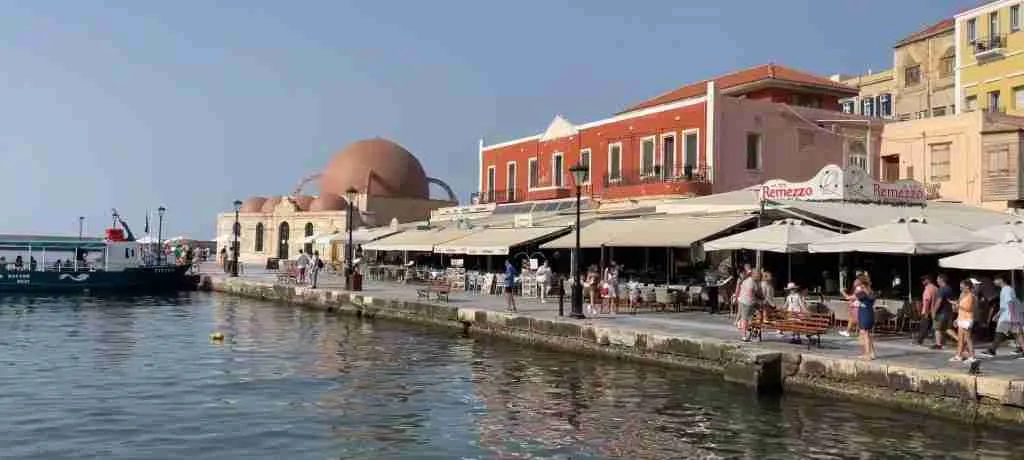
Public KTEL buses connect Rethymno with all major Crete cities in 2026, providing economical transportation eliminating parking hassles inherent in old town’s narrow traffic-restricted streets. Heraklion-Rethymno buses depart hourly 6:00 AM-8:00 PM, costing €14 per person for 78-kilometer journey taking 2 hours 40 minutes along scenic north coast highway with stops at intermediate beaches and towns. Buses arrive/depart Rethymno’s central bus station on Kefalogianni Street 500 meters from old town entrance, requiring 5-10 minute walk through modern commercial district before reaching historic Venetian harbor and old quarter atmospheric streets. Return buses operate identical frequency enabling flexible day trip scheduling with departures every 60-90 minutes accommodating 4-8 hour Rethymno stays matching different exploration paces and dining preferences.
Chania-Rethymno buses cost €7 for 60-kilometer journey taking 90 minutes with hourly departures 6:00 AM-8:00 PM, creating feasible western Crete day trips though Chania’s own exceptional old town arguably merits dedicated full days rather than rushed combined visits attempting both destinations in single outings. Smaller north coast towns (Bali €5, Panormo €4, Georgioupoli €3) connect to Rethymno with less frequent service (2-6 daily buses depending on season), useful for travelers based in these quieter resort areas seeking cultural day trips without driving. Bus schedules reduce significantly November-March, with weekend services particularly limited requiring careful timetable verification through KTEL website or hotel reception before planning winter visits.
Rental car access provides maximum Rethymno flexibility enabling early morning arrivals before crowds, late afternoon departures after day-trippers leave, and multi-stop combinations visiting nearby attractions like Arkadi Monastery (€3 entrance, 23 kilometers), Margarites pottery village (30 kilometers), or Preveli Beach and monastery (37 kilometers) impossible within bus-based schedules. Paid parking costs €2-5 hourly or €8-15 daily in lots surrounding old town perimeter, with free street parking available in residential neighborhoods 10-15 minutes walking from historic center though requiring early arrival (before 10:00 AM) for space availability during summer peak season. Rethymno’s compact old town geography (20-30 minute walking circuit) combined with traffic restrictions make cars unnecessary once parked, with all attractions accessible on foot through atmospheric pedestrian lanes where vehicles cannot penetrate.
Rethymno Major Attractions and Entrance Costs in 2026
Fortezza fortress dominates Rethymno’s skyline and historical narrative, representing Crete’s largest Venetian castle built 1573-1580 protecting the city from Ottoman and pirate attacks through massive star-shaped defensive walls surrounding 35,000 square meter hilltop plateau. Entrance costs €5 per person in 2026 (free for children under 18 from EU countries, reduced €2.50 for seniors 65+ from EU November-May), providing access to impressive defensive bastions with panoramic town and sea views, Sultan Bin Ibrahim Mosque with intact dome and original minaret, ruined residential buildings, ammunition storage rooms, and archaeological displays explaining fortress construction and military history. Exploration requires 60-90 minutes walking the walls, climbing towers, and reading informational plaques, with minimal shade necessitating sun protection during summer heat though cooling sea breezes across exposed hilltop provide relief unavailable in lower old town streets.
Archaeological Museum occupies restored Venetian Loggia and 16th-century Franciscan church buildings on Arkadiou Street, displaying artifacts from Rethymno region spanning Neolithic through Roman periods including pottery, jewelry, coins, sculptures, and architectural fragments from nearby excavations. Entrance costs €5 in 2026 with 45-60 minute typical visit durations, though limited collection size compared to Heraklion’s Archaeological Museum makes this somewhat skippable for travelers with extensive archaeological site experience elsewhere on Crete. Museum strengths include well-presented Minoan pottery from local sites, Roman sculpture collection, and beautiful Venetian building architecture deserving appreciation independent of artifact displays. Combined Fortezza-Museum tickets unavailable in 2026 following Greece’s elimination of multi-site passes, requiring separate €5 purchases for each attraction versus previous bundled savings.
Free attractions dominate Rethymno’s appeal, with old town wandering through traffic-free cobblestone lanes, Venetian harbor strolls past colorful fishing boats and waterfront tavernas, lighthouse walks along stone pier, Rimondi Fountain admiration featuring three lion heads dispensing water from Venetian aqueduct, Neratze Mosque exterior photography (interior closed to tourists, functioning as Odeon music school), and numerous small Byzantine and Venetian churches scattered throughout residential neighborhoods creating continuous discovery experiences without admission costs. This abundance of no-cost attractions makes Rethymno exceptional budget destination where €5 Fortezza entrance represents only major paid activity, with remaining 3-4 hour explorations costing nothing beyond dining and transportation.
Rethymno Dining Strategies and Restaurant Selection in 2026
Rethymno harbor restaurants occupy prime waterfront positions commanding premium prices for location rather than food quality, with typical meals costing €25-35 per person for mediocre taverna fare served amid tourist-heavy atmosphere and aggressive solicitation creating unpleasant dining pressure. Budget-conscious and quality-focused diners achieve superior value walking 2-3 blocks inland from harbor to residential streets where local-patronized tavernas charge €12-18 per person for excellent traditional Cretan cuisine in authentic atmospheres free from tourist-trap dynamics. Arkadiou Street parallel to harbor, Ethnikis Antistaseos connecting old town with modern city, and small lanes radiating from central Plateia Petihaki contain numerous excellent tavernas where predominantly Greek-speaking clientele signals authentic quality unavailable in heavily-touristed waterfront locations.
Lunch timing strategies impact both costs and experiences, with early dining 12:00-1:00 PM securing immediate seating without waits while avoiding intense afternoon heat ideal for siesta breaks in shaded taverna courtyards before resuming afternoon exploration. Late lunch 2:30-3:30 PM following northern European patterns often finds reduced crowds as local Greeks haven’t yet begun their later dining schedules (typically 3:00-4:00 PM for lunch, 9:00-10:00 PM for dinner), though limiting menu availability as kitchens transition between service periods. Dinner in Rethymno provides atmospheric experiences along illuminated harbor with sunset views and cooler temperatures, though requiring flexible accommodation plans enabling evening stays rather than afternoon bus returns to eastern Crete bases.
Rethymno specializes in fresh seafood reflecting active fishing industry, with daily catches displayed at taverna entrances and sold by weight (€45-65 per kilogram typically serving 2-3 portions). Grilled fish, seafood pasta, octopus in wine sauce, and mixed seafood platters represent regional strengths justifying occasional splurge dining at quality harbor establishments earning local recommendations over tourist-trap neighbors. Meat-eaters should seek traditional Cretan lamb slow-roasted with herbs, stifado beef stew with pearl onions, and apaki (smoked pork) showcasing mountain village traditions, while vegetarians enjoy excellent horta (wild greens), dakos (barley rusk salad), and gigantes (giant beans) impossible to find with comparable authenticity in international resort restaurants catering to generic tourist preferences.
Rethymno Old Town Walking Route and Timing Recommendations for 2026
Optimal Rethymno old town walking route begins at Fortezza fortress utilizing morning energy for uphill climb and wall walking before midday heat intensifies, then descends through old town streets browsing shops and cafés before harbor lunch, with afternoon beach relaxation or Archaeological Museum visit preceding late afternoon bus departures or evening harbor dining for overnight visitors. Complete circuit requires 4-6 hours including Fortezza exploration (90 minutes), old town wandering (90-120 minutes), lunch (60-90 minutes), and optional beach time or museum visit (60-90 minutes), though flexible pacing accommodates both rushed 3-hour overviews and leisurely 8-hour full-day experiences with multiple café breaks and extended shopping browsing.
Fortezza access from bus station follows Kefalogianni Street to Eleftheriou Venizelou waterfront, then turns right along palm-lined promenade to Katehaki Street climbing to fortress entrance. Alternatively, experienced city navigators cut through old town streets (Arkadiou, Souliou, Melissinou) to fortress north approach, though signage challenges and residential maze complexity make waterfront route safer for first-time visitors. Fortress exploration follows well-marked paths around defensive walls with excellent interpretive signs explaining Venetian military architecture, Ottoman occupation modifications, and modern archaeological restoration efforts creating today’s impressive monument. Panoramic viewpoints along walls provide orientation for subsequent old town navigation, identifying key landmarks including Neratze Mosque minaret, harbor lighthouse, and beach stretching east toward modern resort areas.
Descending Fortezza fortress, old town exploration follows atmospheric lanes radiating from central squares, with Arkadiou Street serving as main commercial axis connecting fortress to harbor through shops selling leather goods, traditional textiles, jewelry, and tourist souvenirs interspersed with cafés and restaurants. Side streets (Arabatzoglou, Dambergi, Paleologou) preserve quieter residential character with beautiful Venetian mansions, overhanging wooden balconies, blooming bougainvillea, and glimpses into shaded courtyards revealing traditional Cretan domestic architecture. Rimondi Fountain on Plateia Petihaki provides classic photo opportunity with its 1626 construction featuring three lion heads spouting water beneath ornate Venetian arches, while nearby Neratze Mosque’s tall minaret and former church architecture create visible Ottoman heritage blending with Venetian Catholic foundations in typical Rethymno architectural palimpsest.
Hidden Mountain Villages Day Trip Planning for 2026
Hidden mountain village day trips cost €20-60 per person in 2026 depending on transportation mode, wine tasting participation, and dining choices, offering authentic Cretan cultural experiences through traditional architecture, local crafts, regional cuisine, and hospitality traditions unavailable in mass-tourism coastal resorts. Scattered throughout Crete’s interior from 15-60 kilometers from major cities, these villages preserve centuries-old lifestyles combining agriculture, shepherding, and artisan traditions with modern tourism infrastructure providing tavernas, small museums, and craft shops welcoming visitors without compromising authentic community character.
Archanes Wine Village Day Trip from Heraklion in 2026
Archanes village sits just 15 kilometers south of Heraklion (20 minutes driving, €2-3 KTEL bus), making it Crete’s most accessible hidden village for travelers based in the island’s capital or nearby north coast resorts. This beautifully-restored settlement won second-place European Union award for traditional village preservation, with €millionsEU funding supporting meticulous restoration of neoclassical mansions, stone-paved streets, Byzantine churches, and flower-filled courtyards creating postcard-perfect atmosphere blending 5,000 years of history with contemporary vitality. The village divides into Ano (Upper) Archanes centered on hilltop main square and Kato (Lower) Archanes spreading across fertile plain, with most visitor interest focusing on upper village’s concentrated historic architecture and cafe-lined plateia providing shaded people-watching beneath ancient plane trees.
Archanes’ primary attraction centers on PDO (Protected Designation of Origin) wine production utilizing indigenous Kotsifali and Mandilari grape varieties cultivated across surrounding vineyards creating distinctive regional wines impossible to produce elsewhere on Crete or globally. Multiple wineries offer tastings and tours in 2026, with Lyrarakis Winery (award-winning estate producing excellent reds), Paterianakis Winery (100% organic production), and Boutari (large-scale commercial producer) welcoming visitors for €15-25 per person tastings including 4-6 wines paired with local cheeses, olives, and bread while learning about 3,500-year Cretan viticulture history dating to Minoan period. Some wineries require advance booking while others accept walk-ins, with morning visits (10:00 AM-12:00 PM) or late afternoon sessions (4:00-6:00 PM) avoiding intense midday summer heat in non-air-conditioned tasting rooms and vineyard tours.
Beyond wine, Archanes offers Archaeological Museum (free admission, Wednesday-Monday 8:30 AM-4:00 PM) displaying Minoan artifacts from nearby palace and cemetery excavations, traditional kafeneia (coffee shops) serving thick Greek coffee and conversation with elderly locals maintaining village social traditions, and exceptional tavernas specializing in Cretan mountain cuisine unavailable in coastal tourist areas. Lunch costs €12-18 per person for generous portions of slow-roasted lamb, wild greens, dakos barley rusk salad, and house wine in family-run establishments where three-generation ownership maintains grandmother’s recipes and grandfather’s hospitality. Combined half-day Archanes visit typically costs €30-45 per person including round-trip transportation (€6 bus or €15 car gasoline and parking), wine tasting at one estate (€15-25), and taverna lunch (€12-18), representing excellent value for authentic cultural immersion impossible to replicate in sanitized resort experiences.
Zaros Mountain Village and Lake Votomos Day Trip in 2026
Zaros village sits 44 kilometers south of Heraklion (45 minutes driving through Messara Plain) in Psiloritis mountain foothills, famous throughout Crete for natural spring water bottled and sold island-wide plus stunning Lake Votomos and exceptional trout tavernas serving mountain-stream fish impossible to find in coastal restaurants. The village maintains agricultural character with locals cultivating olive oil, sultanas, and vegetables in surrounding fertile plain, while abundant spring water flowing from Psiloritis slopes creates year-round streams supporting fish farms and lush vegetation contrasting dramatically with Crete’s typical arid landscapes. KTEL buses serve Zaros with limited frequency (2-4 daily depending on season, €4-5 from Heraklion), making rental car transportation preferable for day trips enabling flexible timing and combination visits to nearby attractions.
Lake Votomos, located 1.5 kilometers west of Zaros village center, provides picturesque natural reservoir surrounded by plane trees, cafés, and duck-feeding families creating peaceful atmosphere perfect for relaxed breaks before or after village dining. No entrance fee charged for lake access, though cafés and tavernas lining the shore expect customer purchases (€3-5 coffee or drinks) for table use and waterside seating. The lake serves as trailhead for Rouvas Gorge hiking through pristine oak, maple, and pine forest forming part of E4 European Walking Path, with 3-4 hour moderate-difficulty loop trails offering mountain scenery and bird-watching opportunities for nature enthusiasts. Most day-trippers skip gorge hiking in favor of village dining and cultural exploration, though active travelers combining both activities achieve exceptional full-day experiences mixing gastronomy with outdoor recreation.
Zaros’ defining culinary specialty centers on fresh trout raised in mountain-stream fish farms utilizing cold spring water creating ideal growing conditions and superior flavor compared to pond-raised alternatives. Multiple trout tavernas cluster near Lake Votomos and within village center, serving whole grilled trout (€12-15 per portion), trout with almonds, smoked trout appetizers, and trout pasta amid shaded courtyard settings with mountain views creating memorable dining experiences justifying Zaros visits independent of other attractions. Lunch costs €15-22 per person including trout main course, Greek salad, bread, and house wine or water, with family-friendly atmospheres welcoming children and generous portions satisfying hearty appetites developed through morning exploration. Combined Zaros day trip typically costs €35-55 per person including round-trip car rental and gasoline (€15-20), trout taverna lunch (€15-22), coffee at Lake Votomos (€3-5), and optional monastery or archaeological site entrance fees (€2-5 each) near village.
Anogia Traditional Shepherding Village Day Trip in 2026
Anogia village occupies dramatic Psiloritis mountain slopes 39 kilometers from Heraklion (50 minutes driving through winding mountain roads, €3-4 KTEL bus with limited frequency), preserving authentic Cretan shepherding culture, traditional music heritage, and proud independent spirit forged through centuries of mountain isolation and WWII German occupation brutality. The village suffered complete destruction and male population massacre in 1944 German retaliation for resistance activities, with post-war reconstruction creating modern buildings lacking architectural charm found in other traditional villages, yet maintaining fierce cultural identity through music, crafts, and culinary traditions unchanged across generations. At 740 meters elevation, Anogia provides cooler temperatures than coastal areas (typically 5-8°C lower), making summer visits pleasant though requiring warm clothing for shoulder-season excursions when mountain conditions turn cold and occasionally snowy.
Anogia’s cultural significance centers on legendary Cretan music tradition, as birthplace of Nikos Xylouris (1936-1980)—Greece’s most famous lyra player and singer whose recordings defined modern Cretan musical identity—plus his brother Psarantonis and numerous other musicians maintaining living traditions of improvised lyra playing, mantinades (rhyming couplets), and communal dancing at village celebrations. Small museums and music shops sell recordings and instruments, while traditional kafeneia occasionally host impromptu performances when local musicians gather for coffee and conversation, creating lucky encounters with authentic musical culture impossible to experience through staged tourist shows elsewhere on Crete. Visitors should respectfully observe rather than request performances, as genuine tradition emerges spontaneously from community interaction rather than commercial entertainment frameworks.
Traditional crafts thrive in Anogia, particularly women’s weaving producing distinctive textiles utilizing sheep wool from local flocks and natural dyes creating muted earth-tone color palettes. Shops throughout village sell handwoven blankets, rugs, wall hangings, and smaller items at prices reflecting hundreds of hours of skilled labor (€150-500+ for large pieces), with demonstrations sometimes visible as elderly women work looms at shop entrances maintaining traditions passed mother-to-daughter across centuries. Male shepherding culture remains active around Anogia, with spring-summer mountain pasture transhumance continuing ancient patterns, though modern roads and vehicles have replaced some traditional practices. Visitors exploring mountain roads above village encounter mitata (traditional stone shepherds’ huts) and may observe cheese-making demonstrations at pastoral settlements during summer months.
Anogia dining emphasizes roasted lamb prepared antikristo style (meat cooked vertically around open fire) creating tender results impossible through conventional oven roasting, served with village bread, wild greens, and local cheese in rustic tavernas where three-course meals cost €15-20 per person. The village’s fierce independent character extends to somewhat brusque service styles contrasting with coastal hospitality norms, though genuine warmth emerges once initial reserve breaks, particularly for visitors demonstrating respect for local traditions and genuine interest beyond superficial tourism. Combined Anogia day trip costs €40-60 per person including round-trip transportation (€20-30 car rental plus gasoline), traditional lunch (€15-20), and optional craft purchases or Ideon Cave excursion (€15 admission, located 21 kilometers above village at 1,540 meters elevation, legendary Zeus birthplace requiring additional 45 minutes driving on mountain road).
Multi-Village Combination Routes and Itineraries in 2026
Rental car transportation enables multi-village combinations creating comprehensive mountain culture days impossible through single-destination visits or public bus limitations. The classic “Wine and Mountains Circuit” combines Archanes wine tasting with Zaros trout lunch and optional Vathipetro Minoan wine press archaeological site (free admission), covering 90 kilometers total driving (2.5 hours transit time plus village visits) creating full 8-10 hour days departing Heraklion 9:00 AM with returns by 7:00 PM. This route begins with morning Archanes exploration and 10:30 AM-12:00 PM winery tasting, continues to Vathipetro ruins (15 minutes drive from Archanes), then crosses Messara Plain to Zaros for 2:00-3:30 PM trout lunch before returning to Heraklion via Agia Varvara valley with mountain scenery photo stops.
Western mountain villages combine well for travelers based in Rethymno or Chania, with routes linking Anogia (traditional culture), Spili (famous Venetian lion fountain), Thronos (Byzantine church), and Amari Valley villages (unspoiled agricultural landscapes) creating 120-kilometer circuits through Crete’s mountainous heartland. These routes require full days with early 8:00 AM departures and 7:00-8:00 PM returns, though delivering continuous discovery experiences as each village reveals different traditional specialty—Spili’s 25 lion-head fountains, Thronos’ 14th-century frescoes, Amari Valley’s organic farming cooperatives, Anogia’s music traditions—creating rich cultural tapestries impossible in coastal resort stays or single-destination excursions.
Practical multi-village logistics require realistic timing allocations avoiding rushed superficial experiences destroying the relaxed atmosphere justifying mountain village visits. Budget 60-90 minutes per village including arrival parking, brief walking exploration, café/shop browsing, and departure preparations, plus 30-45 minutes per winery tasting or museum visit, plus 90-120 minutes for sit-down taverna meals, plus actual driving transit times between destinations. Three-village days (Archanes-Vathipetro-Zaros example) represent practical maximums enabling satisfying experiences at each location, while four-village attempts typically create exhausting schedule pressure destroying relaxation and forcing superficial 30-minute village “drive-throughs” capturing nothing of authentic atmosphere requiring patient unhurried immersion for genuine appreciation.
Day Trip Transportation Comparisons and Budget Analysis for 2026
Transportation choices fundamentally impact day trip experiences and costs in 2026, with public buses, rental cars, and organized tours each offering distinct advantages and limitations affecting destination selection, schedule flexibility, and per-person expenses. Solo travelers and couples prioritizing budget economy favor public KTEL buses providing cheapest access to major destinations (Heraklion-Rethymno €14, Heraklion-Agios Nikolaos €8, Heraklion-Archanes €3), though accepting fixed schedules limiting departure/return timing and restricting remote village access with infrequent or non-existent service. Groups of 3-4 travelers find rental cars economically competitive with bus costs when splitting €30-40 daily rental plus €15-25 gasoline across multiple passengers, while gaining enormous flexibility advantages enabling spontaneous stops, multi-village combinations, and personalized timing impossible within bus constraints.
Organized day tours cost €40-90 per person in 2026 depending on destination and inclusion scope, representing premium pricing compared to independent travel but delivering valuable services including expert guides explaining historical and cultural contexts, pre-arranged entrance fees and logistics eliminating planning burden, included meals reducing dining research time, and social experiences meeting fellow travelers appealing to solo visitors or those preferring group dynamics over independent exploration. Tours from major bases (Heraklion, Rethymno, Chania, Agios Nikolaos) cover popular routes including Spinalonga Island with swimming (€40-70), Samaria Gorge hiking (€35-55), Knossos-Heraklion combination (€45-65), Balos Lagoon boat trip (€50-70), and western Crete multi-town circuits (€55-85), with advance online booking often securing 10-20% discounts versus walk-up hotel tour desk purchases.
Budget comparison examples for representative day trips illustrate cost-benefit analysis across transportation modes. Heraklion-based travelers visiting Rethymno spend €28 per person using public bus (€14 each direction), €5 Fortezza entrance, €15-20 harbor lunch, versus €45-55 per person via rental car for couples (€35 car rental and gasoline split two ways, €5 entrance, €15-20 lunch) gaining parking hassles but enabling Arkadi Monastery side trip, versus €55-75 per person for organized tour including transportation, guide, and lunch though following fixed schedule visiting tourist-focused restaurants. Spinalonga Island from Heraklion costs €44-48 per person independently (€16 bus to Agios Nikolaos, €12 taxi to Plaka, €8-12 boat, €20 entrance, requiring complex connections and timing coordination), versus €60-85 per person for organized tour including all transportation, guided fortress visit, swimming stop, and lunch, making tours exceptional value for this specific destination given independent logistics complexity.
Mountain village visits demonstrate rental car necessity for satisfying experiences, as Archanes-Zaros-Vathipetro circuit costs €42-55 per person for couples (€20 car rental and gasoline split, €20 winery tasting, €18 trout lunch, €2-5 miscellaneous) creating comprehensive 8-hour day, versus public bus limitations forcing single-village focus (Heraklion-Archanes €6 round-trip bus, €20 tasting, €15 lunch, total €41) eliminating multi-destination flexibility and accepting constrained timing around bus schedules. Solo travelers face €60-75 total costs for rental car approach (no cost-splitting benefits) versus €35-45 for single-village bus trips, making public transportation relatively more attractive for individual budgets though still sacrificing multi-village combination possibilities and schedule flexibility that transform good village visits into exceptional full-day cultural immersion experiences.
Seasonal Timing and Crowd Management Strategies for 2026
Day trip seasonal timing dramatically affects both costs and experience quality in 2026, with peak July-August crowds overwhelming Spinalonga (5,000+ daily visitors creating 30-45 minute entrance queues), Rethymno harbor (shoulder-to-shoulder tourist density reducing atmospheric old town charm), and popular village restaurants (wait times, rushed service, inflated prices), while delivering guaranteed excellent weather and maximum service availability including tour options, restaurant hours, and attraction operations. Shoulder seasons (May-June, September-October) provide optimal day trip conditions combining pleasant temperatures (22-28°C ideal for walking-intensive old town exploration and mountain driving), 40-60% reduced crowds enabling spontaneous visits without advance booking, blooming wildflowers (spring) or warmest sea temperatures (autumn), and moderate pricing across restaurants, accommodations, and tour services.
Early morning timing strategies mitigate peak-season crowd impacts regardless of travel month, with 8:00-9:00 AM attraction arrivals (Spinalonga first boats, Rethymno Fortezza opening, village market activity) preceding 10:30 AM-12:00 PM tour bus arrivals and day-tripper convergence. Spinalonga visitors departing Plaka 9:00 AM enjoy near-empty fortress exploration 9:15-10:45 AM before organized tours from Agios Nikolaos arrive 11:00 AM onward, enabling peaceful photography, thorough historical reading, and contemplative experiences impossible amid midday crowds. Rethymno early arrivals secure free parking (critical summer consideration), explore Fortezza in pleasant morning temperatures before intense afternoon heat, browse shops and markets before tourist influx, and secure prime taverna tables for early lunch (12:00-1:00 PM) avoiding peak 2:00-3:00 PM crush when multiple tour buses discharge passengers simultaneously.
Late afternoon and evening strategies create alternative crowd-avoidance approaches, particularly for Rethymno visits enabling overnight stays or very late returns. Arriving Rethymno 3:00-4:00 PM after day-trippers depart, exploring old town during pleasant afternoon temperatures (22-26°C versus 30-35°C midday), dining at sunset-lit harbor (7:00-9:00 PM) amid atmospheric evening ambiance, and returning to accommodation bases 9:30-10:30 PM via car or organized evening bus tours transforms standard day trips into extended cultural experiences capturing magic impossible during compressed daytime-only visits. This approach requires flexible accommodation either staying overnight in Rethymno (€45-90 budget to mid-range hotels) or booking evening return tours/buses, though delivering qualitatively superior experiences justifying logistical complexity and modest additional expense.
Winter day trips (November-March) offer dramatic crowd reductions and lowest annual pricing, though requiring weather flexibility, warm clothing, earlier sunset adjustments (4:30-5:30 PM limiting afternoon activities), and service availability verification as some mountain village tavernas, wineries, and museums reduce hours or close entirely during quiet months. Spinalonga boat service operates weekend-only November-March weather permitting, requiring flexible scheduling around forecast conditions, while Rethymno and accessible villages like Archanes maintain year-round operations though with reduced restaurant selections as seasonal establishments close until Easter. Budget travelers and flexible retirees achieve excellent winter value through €30-50 total day trip costs combining off-season car rental rates (€20-30 daily), reduced restaurant prices (€10-15 lunch versus €15-22 summer), and uncrowded authentic village experiences as locals return to traditional rhythms absent tourist adaptations.
Combining Day Trips with Beach Time and Resort Relaxation in 2026
Balanced Crete itineraries combine cultural day trips with beach relaxation avoiding exhausting daily excursion schedules creating vacation stress rather than rejuvenation, particularly for families with young children and travelers seeking genuine rest alongside sightseeing experiences. Strategic pacing allocates 2-3 day trips across week-long stays, interspersed with beach days, pool relaxation, and spontaneous local exploration maintaining energy levels while achieving comprehensive cultural exposure impossible through either purely resort-bound or continuously traveling approaches. This rhythm accommodates different family member preferences, with culture enthusiasts pursuing intensive attraction visits while beach lovers maximize Mediterranean swimming and sunbathing, reuniting for shared experiences like harbor dining or sunset fortress visits requiring minimal cultural commitment.
Heraklion-based travelers achieve excellent day trip variety accessing Spinalonga Island (90 minutes east), Rethymno old town (90 minutes west), Knossos Palace and Archaeological Museum (local visits), mountain villages (Archanes 20 minutes, Zaros 45 minutes south), and Matala beach and Phaistos Palace (90 minutes south) creating comprehensive Crete sampling from single accommodation base. This approach eliminates packing/unpacking hassles inherent in multi-stop itineraries while enabling deeper local neighborhood integration and favorite restaurant discovery impossible when changing locations every 2-3 nights. Budget considerations favor single-base strategies, as weekly apartment rentals (€400-700) provide kitchen facilities enabling breakfast preparation and occasional simple dinners reducing dining costs €100-150 weekly versus hotel stays requiring every meal out.
Western Crete bases (Chania, Rethymno, Kissamos) enable different day trip selections emphasizing stunning beaches (Balos Lagoon, Elafonisi, Falassarna), Samaria Gorge hiking, western mountain villages (Vamos, Thronos, Anogia), and charming harbor towns, though positioning travelers 90-120 minutes from eastern attractions like Spinalonga and Knossos creating either very long day trips or practical exclusion from itineraries favoring western focus. Eastern Crete bases (Agios Nikolaos, Elounda, Sitia) optimize Spinalonga access and eastern exploration including Vai Palm Beach and Zakros Minoan palace, though similarly distancing western highlights requiring acceptance of geographical limitations or multiple-base itineraries splitting accommodation between east and west.
Practical integration examples demonstrate balanced approaches: Day 1-2 arrival and beach acclimatization, Day 3 Spinalonga Island excursion, Day 4 beach relaxation, Day 5 Rethymno old town visit, Day 6-7 beach days with local village exploration (Archanes wine tasting half-day), Day 8 Knossos and Archaeological Museum, Day 9-10 final beach relaxation before departure. This 10-day pattern allocates four cultural days (Spinalonga, Rethymno, villages, Knossos) interspersed with six beach/relaxation days creating satisfying balance where cultural experiences enhance rather than dominate vacation character, while beach days provide physical recovery and spontaneous discovery time often producing unexpected highlight moments through casual local interactions impossible within tightly-scheduled excursion frameworks.
Frequently Asked Questions About Crete Day Trips in 2026
How early should I book Spinalonga boat tickets in 2026?
Spinalonga boat tickets from Plaka and Elounda generally require no advance booking in 2026, with operators selling tickets at harbor kiosks on arrival throughout April-October operating season, though summer peak season (July-August) mornings before 10:00 AM and weekends warrant earlier arrival (9:00-9:30 AM) ensuring space on preferred departures before boats fill to capacity. Small Plaka boats accommodate 30-40 passengers departing when full or every 30 minutes, creating occasional 15-30 minute waits during peak periods though rarely refusing boarding entirely. Larger Elounda tour boats accommodate 50-100 passengers with more predictable schedules, though popular 10:00-11:00 AM departures sometimes sell out during absolute peak periods (mid-July through mid-August weekends) requiring boarding subsequent boats or arriving 30-45 minutes before desired departure for ticket purchase and boarding queue positioning. Organized full-day tours from Agios Nikolaos, Heraklion, and Rethymno warrant 2-7 days advance booking through hotels, tour agencies, or online platforms (GetYourGuide, Viator) securing guaranteed spaces and occasional 10-20% early-booking discounts, particularly beneficial for large groups (6+ people) or travelers visiting during absolute peak weeks (last two weeks July, first three weeks August) when same-day availability becomes uncertain.
Can I visit Spinalonga in winter months in 2026?
Spinalonga operates limited winter schedules November-March in 2026, with official fortress closure but weekend openings weather permitting creating uncertainty requiring flexible planning and same-day decision-making based on conditions. Boat service from Plaka typically runs Saturday-Sunday only during winter months when seas remain calm (wave heights under 1 meter, winds under 25 km/hour), with departures 10:00 AM-3:00 PM providing 2-4 hour visiting windows before afternoon returns. Winter visitors should call Spinalonga information line (+30 28410 22462) or check harbor conditions morning-of intended visits, arriving Plaka by 10:00 AM to assess weather and confirm boat operations rather than making definitive advance plans risking wasted travel time if conditions prevent crossings. Winter Spinalonga visits offer dramatic advantages including zero crowds enabling completely solitary fortress exploration, stunning photography with dramatic cloud formations and winter light, and authentic historical atmosphere absent summer’s tourist commercialization, though requiring acceptance of cancellation risks and cooler temperatures (12-18°C) necessitating warm clothing and wind protection for exposed island conditions. Alternative winter day trips to Rethymno old town, accessible villages like Archanes, or Heraklion museums provide reliable weather-independent cultural experiences when coastal island visits prove impossible.
Are Crete’s mountain villages accessible by public bus in 2026?
Major mountain villages including Archanes, Anogia, and Zaros connect to Heraklion and Rethymno via KTEL public buses in 2026, though limited frequencies (2-6 daily departures depending on route and season) and restrictive schedules create timing challenges reducing day trip flexibility compared to rental car independence. Heraklion-Archanes buses run frequent service (every 60-90 minutes weekdays, reduced weekends) costing €2-3 for 20-minute journey, making this Crete’s most bus-accessible hidden village suitable for spontaneous half-day visits without advance schedule research. Heraklion-Anogia buses operate 2-4 daily (reduced winter service) costing €3-4 for 50-minute mountain journey, requiring careful morning departure coordination and afternoon return timing as mid-day service gaps create either very short village stays (2-3 hours) or very long waits (5-6 hours) between return options. Zaros receives minimal KTEL service (2-3 daily buses, primarily school schedules) making independent bus-based visits challenging and rental cars strongly recommended for satisfying full-day experiences including Lake Votomos, trout tavernas, and Rouvas Gorge access. Smaller villages (Vamos, Spili, Thronos, Kritsa) operate even more limited bus schedules (1-3 weekly service in some cases) effectively requiring private transportation for day trip access unless joining organized village tours including transportation from coastal bases.
What’s the minimum time needed for a Rethymno day trip in 2026?
Minimum satisfying Rethymno day trips require 4-5 hours on-site in 2026 enabling Fortezza fortress exploration (90 minutes), old town wandering (60-90 minutes), and harbor lunch (60-90 minutes), though 6-8 hour visits create relaxed pacing allowing Archaeological Museum addition, extended shopping browsing, beach time, or multiple café breaks transforming rushed overviews into memorable atmospheric experiences. Heraklion-based travelers allocating 8-9 hours total (including 5+ hours round-trip bus travel) achieve full-day excursions departing 9:00 AM with 7:00-8:00 PM returns, while western Crete visitors from Chania (3 hours round-trip transit) manage more comfortable timing with longer destination stays within equivalent daily commitments. Rushed 3-hour Rethymno visits attempting Fortezza, quick old town circuit, and hasty taverna meal sacrifice atmospheric immersion justifying visits, as the town’s appeal centers on unhurried café lingering, spontaneous shop discovery, and relaxed harbor people-watching impossible within compressed timeframes. Travelers facing schedule constraints should either extend Rethymno to overnight stays experiencing evening harbor magic and morning market activity, or redirect limited time toward more compact destinations like Archanes village (2-3 hour satisfying visits) or Knossos Palace (2 hour thorough exploration) better suited to constrained availability.
Can I combine Spinalonga and Rethymno in one day from Heraklion in 2026?
Combining Spinalonga Island and Rethymno old town in single days from Heraklion proves logistically impossible in 2026 given opposing directions (Spinalonga 67 kilometers east, Rethymno 78 kilometers west) and time requirements (Spinalonga 4-5 hours minimum including boats, Rethymno 4-5 hours minimum for satisfying visits) totaling 8-10 hours destination time plus 6-7 hours driving or bus travel exceeding realistic daily commitments. Organized tours occasionally offer eastern Crete combinations visiting Spinalonga plus Agios Nikolaos town (€50-75, 8-9 hours total) or western routes combining Rethymno with Chania or Arkadi Monastery (€55-85, 8-10 hours), though never mixing eastern and western destinations within single excursions. Independent travelers should allocate separate days for each destination, perhaps Spinalonga Monday with beach relaxation Tuesday and Rethymno Wednesday, creating balanced pacing avoiding exhaustion while thoroughly experiencing each location’s unique offerings impossible through rushed combination attempts. Multi-base itineraries splitting accommodation between eastern Crete (Agios Nikolaos, Elounda) for Spinalonga access and western/central Crete (Rethymno, Heraklion) for old town exploration enable both visits while minimizing transit times, though requiring packing/unpacking efforts and potentially higher accommodation costs versus single-base strategies accepting longer but less frequent day trip drives.
Are wine tastings in Archanes suitable for non-drinkers and families in 2026?
Archanes wine tastings accommodate non-drinkers and families in 2026, with wineries offering non-alcoholic alternatives including grape juice, spring water, and soft drinks during tours, while children receive age-appropriate education about viticulture, traditional farming, and Cretan agricultural history making visits culturally valuable beyond alcohol consumption. Most established wineries (Lyrarakis, Boutari, Paterianakis) welcome families during daytime visits (advance notification appreciated for large groups), providing outdoor vineyard walks, barrel room tours showing wine-making equipment and processes, and family-friendly hospitality reflecting Cretan cultural values where multi-generational activities represent normal social patterns rather than adult-exclusive experiences common in some wine regions. Non-drinking adults appreciate vineyard landscapes, traditional architecture, agricultural education, and cultural insights independent of tasting components, while enjoying included local cheeses, olives, breads, and conversation with passionate winemakers sharing family histories and regional traditions. Archanes’ compact village geography enables non-drinking partners or family members to explore separately (Archaeological Museum, traditional kafeneia, street wandering) during 60-90 minute tasting sessions, reuniting for shared taverna lunches where all participants enjoy Cretan cuisine and village atmosphere regardless of alcohol preferences. Alternative Archanes experiences for alcohol-averse visitors include archaeological site tours, traditional craft shopping, hiking to nearby Minoan ruins, and simple village life observation capturing authentic Cretan culture without wine focus.
What should I wear for mountain village visits in Crete in 2026?
Mountain village visits in Crete require modest casual clothing combining comfort for walking with cultural respect for traditional communities in 2026, emphasizing lightweight layers accommodating 5-8°C cooler temperatures than coastal areas and potential weather variability across mountain terrain. Summer village visits (June-September) warrant light cotton pants or knee-length skirts (avoiding very short shorts showing excessive leg), breathable shirts covering shoulders for church visits and cultural sensitivity, comfortable walking shoes with closed toes for cobblestone streets and potential taverna courtyard gravel, and sun protection including hats and sunglasses for exposed village squares and driving between destinations. Spring and autumn visits (April-May, October-November) require additional light jacket or sweater for morning/evening cooler temperatures (15-20°C) and occasional mountain breezes, particularly in high-elevation villages like Anogia (740 meters) experiencing notably cooler conditions than sea-level coastal areas. Winter village visits (December-March) necessitate warm clothing including jackets, long pants, closed shoes (avoiding sandals given 10-15°C temperatures), and potentially scarves and light gloves for mountain driving and outdoor taverna courtyard dining in crisp mountain air. Modest dress becomes particularly important when visiting village churches, monasteries, and traditional neighborhoods where elderly residents maintain conservative standards expecting tourist respect through covered shoulders, knee-length bottoms, and avoiding beachwear-style clothing inappropriate in religious and residential contexts. While Crete generally maintains relaxed Mediterranean standards, mountain villages preserve more traditional values than coastal resorts, with thoughtful clothing choices demonstrating cultural awareness and facilitating warmer local interactions compared to insensitive tourist attire alienating community members whose hospitality defines positive village experiences.
How much time do I need at each mountain village in 2026?
Individual mountain villages require 60-120 minutes for satisfying basic exploration in 2026, with time allocations varying based on specific activities and personal pacing preferences. Archanes merits 90-120 minutes enabling old town walking (30-40 minutes), winery tasting (60-90 minutes at single estate), Archaeological Museum visit (30-45 minutes), or extended café lingering and shopping browsing for those drawn to village atmosphere and local craft purchases. Zaros typically receives 90-150 minutes allowing Lake Votomos drive and brief walk (20-30 minutes), village center exploration (20-30 minutes), and trout taverna lunch (60-90 minutes), with active hikers adding Rouvas Gorge trails (3-4 hours additional) transforming quick village stops into comprehensive half-day nature experiences. Anogia requires 60-90 minutes for basic village circuit including main street walking, craft shop browsing, traditional kafeneio observation, and perhaps small museum visits, with visitors seeking deep cultural immersion through local music encounters or extended shepherd conversations potentially spending 2-3 hours though such experiences depend heavily on fortunate timing and spontaneous interaction opportunities impossible to guarantee or schedule.
Is it worth hiring a guide for mountain village day trips in 2026?
Private guides significantly enhance mountain village experiences in 2026 for travelers prioritizing cultural depth over independent flexibility, with professional guides (€150-250 full day for up to 4 people) providing historical context, cultural explanations, local connections, and logistical coordination impossible through self-guided exploration relying on minimal English signage and limited tourist infrastructure. Guides facilitate authentic experiences including private winery visits with owner conversations about family traditions and wine-making philosophy, introductions to craft artisans explaining traditional weaving or pottery techniques, restaurant reservations at hard-to-find local tavernas avoiding tourist traps, and cultural interpretation explaining village social dynamics, architectural details, and historical events creating meaningful understanding versus superficial photo-taking. Language barriers in traditional villages particularly justify guide value, as elderly residents often speak limited English, with guides translating conversations about shepherding traditions, WWII resistance memories, traditional recipes, and community histories creating profound personal connections and memorable cultural exchanges impossible for English-only independent travelers. However, guides reduce spontaneity and add substantial costs (€150-250 guide fees plus €30-50 car rental and gasoline, €40-60 meals and tastings, totaling €220-360 for couples or €55-90 per person for groups of four), making independent village visits more economical for budget travelers accepting reduced depth in exchange for cost savings and scheduling freedom. Intermediate option: join group village tours (€55-85 per person) providing guided commentary and cultural context without private guide expense, though following fixed schedules and larger group dynamics reducing intimate local interactions possible through private arrangements.
What’s the best day of the week for Crete day trips in 2026?
Tuesday through Thursday represent optimal Crete day trip timing in 2026, avoiding weekend crowds when domestic Greek tourists and European short-break visitors supplement regular tourist volumes creating maximum attraction congestion, restaurant waits, and transportation pressure particularly during summer peak season. Spinalonga experiences notably higher Saturday-Sunday visitor numbers as Athenians and Thessaloniki residents making weekend Crete trips prioritize famous island visits, while weekday departures encounter 30-40% fewer fellow visitors enabling more pleasant fortress exploration and shorter entrance queues. Rethymno similarly sees weekend tourist influxes both from domestic visitors and cruise ship passengers (when vessels dock at nearby Souda port serving Chania), with Tuesday-Thursday visits providing quieter old town wandering, immediate taverna seating, and more relaxed shopping browsing compared to weekend shoulder-to-shoulder harbor crowds. Mountain villages maintain quieter atmospheres throughout weeks given lower overall tourist penetration, though Monday closures affect some museums and occasional tavernas following Greek tradition of Sunday family lunches and Monday recovery days, making Tuesday-Friday slightly preferable to Monday visits potentially encountering reduced service availability. Organizational day tours operate daily throughout summer season, though Tuesday-Thursday departures typically offer better availability and occasional mid-week pricing discounts (5-10% reductions) compared to premium weekend rates when demand peaks, creating modest savings opportunities for flexible travelers able to schedule around optimal timing windows.