
Atlantic Canada Travel Guide 2026: Ultimate Planning Resource
Atlantic Canada—comprising Nova Scotia, New Brunswick, Prince Edward Island, and Newfoundland and Labrador—offers travelers a distinctive blend of dramatic coastlines, maritime heritage, and authentic cultural experiences across four provinces shaped by the Atlantic Ocean. From Halifax’s vibrant waterfront to Newfoundland’s rugged cliffs and the world’s highest tides in the Bay of Fundy, this comprehensive 2026 guide provides essential planning information including current ferry rates, accommodation costs, regional highlights, and strategic routing advice for exploring Canada’s eastern maritime provinces.
Key Takeaways for Planning Your Atlantic Canada Journey in 2026
- Marine Atlantic Ferry Savings: The Canadian government’s 50% fare reduction remains in effect for 2026, significantly lowering costs on Newfoundland ferry crossings between Nova Scotia and Newfoundland
- Budget Planning for 2026: Expect CAD $135-210 ($95-150) per person daily for mid-range travel assuming two sharing accommodation, meals, regional transport, and major attractions across the Atlantic provinces
- Regional Diversity Requires Strategic Routing: The four Atlantic provinces span over 500,000 square kilometers requiring 10-21 days for comprehensive coverage, with Halifax, Charlottetown, and St. John’s serving as primary hub cities
- Summer Season Dominance: Peak tourism from June through September offers warmest weather, longest daylight, and full attraction access, though shoulder seasons (May, October) provide fewer crowds and lower accommodation rates
- Essential Ferry Connections: Marine Atlantic ferries to Newfoundland require advance summer booking, while shorter crossings connect Nova Scotia to Prince Edward Island and New Brunswick via the Digby-Saint John route
- Distinct Provincial Identities: Each province offers unique characteristics from Nova Scotia’s lighthouse coastline and UNESCO sites to PEI’s beach culture, New Brunswick’s Bay of Fundy tides, and Newfoundland’s Viking history and iceberg viewing
People Also Ask About Atlantic Canada Travel 2026
How much does an Atlantic Canada road trip cost per person in 2026?
A 14-day Atlantic Canada road trip costs CAD $2,450-3,850 ($1,750-2,750) per person assuming two travelers sharing accommodation. Mid-range daily costs include accommodation CAD $80 per person (two sharing), meals CAD $70, car rental share CAD $30, fuel CAD $20, and attractions CAD $25, totaling approximately CAD $225 ($160) daily. Budget travelers reducing accommodation, meal, and attraction expenses can achieve CAD $115-145 ($80-105) per person daily, while luxury travelers with premium hotels, fine dining, and guided tours spend CAD $400-600+ ($285-430+) daily.
What’s the best route for first-time visitors to Atlantic Canada in 2026?
The optimal first-visit route begins in Halifax exploring Nova Scotia’s south shore and Cape Breton (5-7 days), continues to Prince Edward Island via Confederation Bridge (2-3 days), explores New Brunswick’s Bay of Fundy coast (2-3 days), then optionally extends to Newfoundland via Marine Atlantic ferry (5-7 days). This 14-21 day circuit covers signature Atlantic Canada experiences including Peggy’s Cove lighthouse, Cabot Trail coastal drive, Hopewell Rocks tidal formations, PEI beaches and Anne of Green Gables sites, plus Newfoundland’s Signal Hill, Gros Morne National Park, and Viking settlement if time permits.
Do I need a car to explore Atlantic Canada in 2026?
A rental car is essential for exploring Atlantic Canada beyond major city centers, as public transportation between provinces and to coastal attractions remains limited. Halifax, Charlottetown, and St. John’s offer local bus services adequate for city exploration, but reaching signature destinations like Peggy’s Cove, Cabot Trail, Hopewell Rocks, Green Gables Shore, and Gros Morne requires personal vehicle access. Compact car rentals cost CAD $40-60 ($30-43) daily with unlimited mileage standard. Alternative options include organized multi-day tours from major cities, though these limit flexibility and typically cost CAD $200-400 ($145-285) per person daily.
When is the best time to visit Atlantic Canada in 2026?
June through September constitutes peak season offering warmest temperatures, driest weather, and full attraction access, with July and August providing optimal beach conditions and longest daylight hours. September delivers spectacular fall foliage across Nova Scotia and New Brunswick with significantly fewer crowds and lower accommodation rates. May and October shoulder seasons offer budget advantages with hotel rates 30-40% below summer peaks, though cooler temperatures and reduced ferry schedules to Newfoundland limit some options. Winter visits (November-March) suit those seeking authentic local culture and winter activities, with accommodation at lowest annual rates but many seasonal attractions closed.
Extended multi-day tours – 5+ days
Featured Nova Scotia Multi-Day Tour Packages
10 days
Canadian Maritimes Adventure
- ✓ Comprehensive Nova Scotia tour
- ✓ Expert local guides included
- ✓ All accommodation arranged
- ✓ Transportation provided
9 days
Enchanting Canadian Maritimes
- ✓ Comprehensive Nova Scotia tour
- ✓ Expert local guides included
- ✓ All accommodation arranged
- ✓ Transportation provided
11 days
Coastal Treasures of the Canadian Maritimes
- ✓ Comprehensive Nova Scotia tour
- ✓ Expert local guides included
- ✓ All accommodation arranged
- ✓ Transportation provided
8 days
Enchanting Islands Escape
- ✓ Comprehensive Nova Scotia tour
- ✓ Expert local guides included
- ✓ All accommodation arranged
- ✓ Transportation provided
Multi-day tour packages powered by TourRadar. Prices and availability subject to change.
Introduction to Atlantic Canada Travel Planning 2026
Atlantic Canada represents a distinctive travel destination where four maritime provinces share Atlantic Ocean heritage yet maintain individual cultural identities shaped by centuries of seafaring tradition, diverse settlement patterns, and dramatic coastal geography. Nova Scotia extends the province’s 7,400-kilometer coastline around numerous peninsulas including the UNESCO World Heritage Old Town Lunenburg and the spectacular Cabot Trail circling Cape Breton Island. New Brunswick guards the Bay of Fundy hosting the world’s highest tides reaching 16 meters twice daily, creating dramatic tidal phenomena at Hopewell Rocks and reversing the Saint John River’s flow. Prince Edward Island, Canada’s smallest province, cultivates red-sand beaches, rolling agricultural landscapes, and Anne of Green Gables literary heritage across an island connected to the mainland via the 13-kilometer Confederation Bridge. Newfoundland and Labrador, Canada’s easternmost province, preserves Viking settlement at L’Anse aux Meadows, showcases fjord-carved Gros Morne National Park, and welcomes icebergs drifting along the coast from late spring through early summer.
Planning Atlantic Canada travel for 2026 requires understanding the region’s geographic scale, seasonal variation, and transportation infrastructure that differs significantly from more densely populated central Canadian provinces. The four Atlantic provinces collectively span 539,000 square kilometers with populations concentrated in Halifax (450,000 metro), St. John’s (210,000 metro), Moncton (160,000 metro), Charlottetown (45,000), and Fredericton (60,000), leaving vast coastal stretches and interior regions sparsely populated with services concentrated in these urban centers. Road distances prove substantial—Halifax to St. John’s spans approximately 1,850 kilometers requiring two ferry crossings and 18-20 hours driving time excluding ferry duration, while the Maritime provinces alone (Nova Scotia, New Brunswick, PEI) encompass roughly 1,200 kilometers from Yarmouth, Nova Scotia to northern New Brunswick. Marine Atlantic ferry service connecting Nova Scotia to Newfoundland operates year-round on the shorter Port aux Basques route and seasonally June-September on the longer Argentia crossing, with the Canadian government’s 50% fare reduction continuing through 2026 significantly improving Newfoundland accessibility.
The 2026 travel season benefits from established infrastructure improvements including enhanced ferry capacity on Marine Atlantic routes addressing previous summer capacity constraints, continued expansion of accommodation options in previously underserved coastal communities, and growing culinary tourism highlighting Atlantic Canada’s seafood, craft brewery, and farm-to-table dining scenes. Summer 2026 sees typical peak-season visitor concentrations in July and August when accommodation advance booking becomes essential in popular destinations like Cabot Trail communities, Cavendish Beach on PEI, Saint Andrews-by-the-Sea in New Brunswick, and Twillingate, Newfoundland for iceberg season. Budget-conscious travelers gain substantial savings visiting shoulder months May or September-October when accommodation rates drop 30-50% below summer peaks, temperatures remain moderate for outdoor exploration, and September foliage across Nova Scotia and New Brunswick rivals renowned New England displays. This guide provides comprehensive 2026 planning information covering regional highlights, transportation logistics, accommodation strategies, budget frameworks, and detailed provincial breakdowns enabling travelers to design Atlantic Canada itineraries matching available time, interests, and budget parameters.
Understanding Atlantic Canada’s Four Provinces in 2026
Atlantic Canada’s four provinces each deliver distinct experiences requiring strategic understanding when designing comprehensive regional itineraries. Nova Scotia, the most populous Atlantic province with 1 million residents, offers the greatest diversity of attractions concentrated around Halifax as the regional transportation hub serving international flights, interprovincial bus connections, and Marine Atlantic ferry terminals. The province divides into several distinct regions including the Eastern Shore extending from Halifax to Cape Breton featuring secluded beaches and coastal villages, the South Shore hosting UNESCO World Heritage Lunenburg and the postcard-perfect Peggy’s Cove lighthouse, the Annapolis Valley wine region and historic tidal power sites, and Cape Breton Island where the Cabot Trail ranks among North America’s premier coastal drives. Nova Scotia’s compact geography enables travelers basing in Halifax to access Peggy’s Cove, Lunenburg, and Annapolis Valley as day trips, while Cape Breton warrants 2-3 dedicated days exploring the Cabot Trail, Bras d’Or Lake, and Fortress of Louisbourg National Historic Site.
New Brunswick borders Nova Scotia to the west and Quebec to the north, positioning the province as Atlantic Canada’s gateway for overland arrivals while offering the Bay of Fundy’s dramatic tidal phenomena as signature attraction. The Fundy coast concentrates visitor interest at Hopewell Rocks Provincial Park where retreating tides expose “flowerpot” rock formations enabling ocean floor walking, Fundy National Park preserving 170 kilometers of Bay coastline with extensive hiking trail networks, and Saint John city featuring the Reversing Falls Rapids where twice-daily tides force the Saint John River to reverse flow direction. New Brunswick’s interior and northern regions remain less visited, appealing primarily to those exploring Acadian cultural heritage concentrated along the northeastern coast or accessing Quebec’s Gaspésie. The province bridges Maritime and Newfoundland segments of Atlantic Canada itineraries, with many travelers allocating 2-3 days exploring Fundy coastal highlights between Nova Scotia and either Prince Edward Island via Confederation Bridge or Maine via Saint Stephen border crossing.
Prince Edward Island, Canada’s smallest province at just 5,660 square kilometers, delivers concentrated experiences focused on beaches, golf courses, agricultural landscapes, and Anne of Green Gables literary tourism. The island divides into three scenic drives—Points East Coastal Drive showcasing lighthouses and fishing villages, Central Coastal Drive including Cavendish Beach and Green Gables House, and North Cape Coastal Drive extending through potato farming heartland to wind-energy sites. PEI’s manageable scale enables comprehensive exploration in 2-4 days, with Charlottetown as provincial capital offering downtown heritage architecture, waterfront dining, and Confederation Centre of the Arts. The 13-kilometer Confederation Bridge connecting PEI to New Brunswick transformed island accessibility since 1997, eliminating previous ferry dependence while creating North America’s longest bridge over ice-covered waters. Summer visitors concentrate June-September when beach weather peaks, though the island extends shoulder season into October when accommodation rates drop substantially while harvest festivals celebrate local agriculture and seafood.
Newfoundland and Labrador, Canada’s easternmost province, presents the most logistically complex Atlantic Canada destination requiring Marine Atlantic ferry crossings from Nova Scotia and encompassing vast geography spanning 405,000 square kilometers—larger than the three Maritime provinces combined. Newfoundland island concentrates most visitor attractions in four primary regions: the Avalon Peninsula extending from St. John’s encompasses Signal Hill National Historic Site, Cape Spear lighthouse (North America’s easternmost point), Witless Bay Ecological Reserve for puffin and whale viewing, and Ireland’s Eye-Avalon-Avondale loop for backcountry exploration. The Eastern region from the Avalon to Twillingate includes the Bonavista Peninsula featuring historic Trinity town and coastal hiking, plus Twillingate serving as Iceberg Alley headquarters where Arctic icebergs drift past from late May through June. Western Newfoundland protects Gros Morne National Park’s UNESCO World Heritage fjord-carved landscapes, landlocked fjord Bonne Bay, and the Tablelands exposing Earth’s mantle, while Corner Brook serves as regional service center. The Northern Peninsula extends to L’Anse aux Meadows National Historic Site preserving the only authenticated Viking settlement in North America, though reaching this remote destination requires 400+ kilometers driving from Deer Lake airport.
Marine Atlantic Ferry Service and Newfoundland Access 2026
Marine Atlantic operates two ferry routes connecting Nova Scotia to Newfoundland, representing essential infrastructure for Newfoundland travel that requires advance planning particularly during summer peak season. The Port aux Basques route links North Sydney, Nova Scotia to Channel-Port aux Basques on Newfoundland’s southwest coast, operating year-round with crossing duration approximately 6-7 hours. This shorter crossing serves as the primary year-round connection, particularly important outside the June-September peak tourism window, though it positions travelers on Newfoundland’s west coast requiring substantial additional driving to reach St. John’s and the Avalon Peninsula—approximately 900 kilometers and 9-10 hours driving time. The Argentia route operates seasonally from mid-June through late September connecting North Sydney to Argentia on Newfoundland’s Avalon Peninsula, offering overnight crossing duration of 16-17 hours that enables cabin rest while significantly reducing subsequent driving to reach St. John’s—just 130 kilometers from Argentia versus 900+ from Port aux Basques. Summer travelers prioritizing efficient St. John’s access and willing to pay premium seasonal pricing favor the Argentia route, while those exploring western Newfoundland first or traveling outside June-September must utilize the year-round Port aux Basques service.
The Canadian government’s continuation of the 50% fare reduction program through 2026 dramatically improves Newfoundland ferry affordability, though understanding pricing structure remains important for budget planning. The fare reduction applies to passengers and vehicles, with example costs for a standard vehicle and two passengers dropping from pre-reduction rates around CAD $450-550 to approximately CAD $225-275 ($160-195) per crossing on the Port aux Basques route. The Argentia seasonal route typically commands premium pricing approximately 40-50% higher than Port aux Basques even after the government reduction, justified by overnight duration enabling sleep in optional cabins and superior Avalon Peninsula positioning. Critical to understand: the 50% government reduction excludes cabin accommodations, meaning passengers choosing private berths for overnight Argentia crossings pay full cabin rates atop reduced passenger and vehicle fares. Standard overnight cabin rates range CAD $150-250 ($105-180) depending on cabin category, with the newest vessel Ala’suinu featuring passenger sleeping pods priced mid-range between basic reserved seating and full cabins. Ferry pricing fluctuates seasonally with peak July-August rates exceeding shoulder June and September pricing, and booking well in advance—January-February for summer crossings—proves essential for securing space during peak season when capacity constraints persist despite recent fleet additions.
Marine Atlantic booking strategy for 2026 requires early action for summer travel, particularly for the Argentia route and for those requiring cabin accommodations on overnight crossings. Summer advance booking deadlines vary by traveler priorities: those requiring specific sailing dates and times should book 4-6 months ahead (February-March for July-August crossings), while flexible travelers accepting any available summer crossing can often find space booking 2-3 months in advance accepting less convenient departure times. The Port aux Basques route typically maintains better availability than Argentia owing to year-round operation and more frequent sailings, though prime summer departures still fill months ahead. Practical booking considerations include recognizing that ferry crossing time counts as a full travel day—6-7 hours Port aux Basques plus vehicle loading/unloading and pre-departure arrival requirements means dedicating 8-9 hours to the crossing day, while Argentia overnight sailings consume evening departure and following morning arrival. Travelers should coordinate ferry bookings with accommodation reservations in North Sydney before crossings and either Channel-Port aux Basques or Avalon Peninsula after, avoiding tight same-day connections given potential weather delays affecting Marine Atlantic schedule reliability. The government fare reduction website provides updated 2026 pricing, and booking directly through marineatlantic.ca often offers better cancellation flexibility than third-party booking sites, important given weather’s frequent Atlantic crossing impacts.
Halifax and Nova Scotia South Shore Highlights 2026
Halifax serves as Atlantic Canada’s primary urban center and natural first stop for most visitors, offering major international airport connections, diverse accommodation options, and concentrated attractions within walkable downtown core while serving as gateway to Nova Scotia’s varied coastal regions. Downtown Halifax centers on the harborfront boardwalk extending two kilometers from Casino Nova Scotia to Pier 21, the Canadian Museum of Immigration chronicling Canada’s eastern entry point for over one million immigrants between 1928-1971. The waterfront district concentrates dining options showcasing Maritime seafood traditions, craft breweries including Alexander Keith’s historic 1820 brewery offering tours, and the Maritime Museum of the Atlantic presenting extensive Titanic artifacts given Halifax’s role receiving Titanic victims and coordinating rescue operations in 1912. Halifax Citadel National Historic Site crowns downtown’s highest point, the star-shaped 19th-century fort offering 360-degree city and harbor views alongside daily historical reenactments and the noon gun firing ritual maintained since 1857. The Public Gardens provide Victorian-era botanical respite spanning 16 acres of ornamental gardens, ponds, and gazebo centerpiece perfect for afternoon strolling particularly during summer concert series.
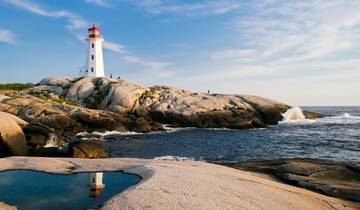
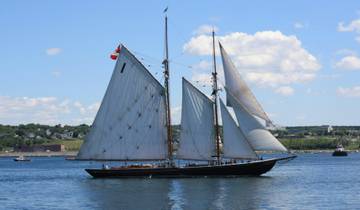
South of Halifax, the Lighthouse Route traces Nova Scotia’s Atlantic coast through UNESCO World Heritage Old Town Lunenburg, picturesque fishing villages, and iconic Peggy’s Cove lighthouse. Peggy’s Cove sits 45 kilometers from Halifax, representing Atlantic Canada’s most photographed site where red-white lighthouse perches atop smooth granite rocks pounded by Atlantic waves. The tiny fishing village draws summer crowds overwhelming the small parking area, making early morning or evening visits outside tour bus schedules most rewarding for experiencing the dramatic coastal setting without dense congestion. Continuing southwest 90 kilometers brings travelers to Lunenburg, the province’s best-preserved British colonial settlement designated UNESCO World Heritage Site in 1995 recognizing its grid layout, colorful wooden architecture, and fishing industry heritage. Lunenburg’s compact downtown rewards 2-3 hours wandering narrow streets lined with restored 18th and 19th-century buildings now housing galleries, craft shops, and seafood restaurants, with the Fisheries Museum of the Atlantic interpreting Lunenburg’s shipbuilding and Grand Banks fishing legacy through restored vessels including the schooner Bluenose II moored harborside during summer months.
The South Shore continues beyond Lunenburg through lesser-known villages maintaining authentic fishing community character without Peggy’s Cove and Lunenburg’s heavy tourism development. Mahone Bay, positioned between Halifax and Lunenburg, presents three distinctive waterfront churches creating signature views across the bay, plus over 20 art galleries and craft shops concentrated in downtown’s short main street. Liverpool provides access to the Mersey River watershed and Kejimkujik National Park and National Historic Site, preserving old-growth Eastern Hemlock forest and significant Mi’kmaq petroglyphs. Shelburne’s historic waterfront district preserves Canada’s third-oldest museum (1936) interpreting the town’s role receiving Loyalist refugees from post-Revolutionary America, while the harbor continues repairing wooden boats using traditional techniques. Practical Halifax and South Shore exploration typically allocates 2-3 days—one full day Halifax downtown and Citadel, one day Peggy’s Cove and Lunenburg including 3-hour roundtrip driving from Halifax, optional third day exploring additional South Shore communities or Halifax museums depending on pace preference. Summer accommodation in Halifax ranges CAD $140-220 ($100-155) per night mid-range hotels, CAD $90-130 ($65-95) budget options, and CAD $280-450+ ($200-320+) upscale properties, with advance summer booking essential particularly during peak July-August when major festivals increase demand.
Cape Breton Island and the Cabot Trail 2026
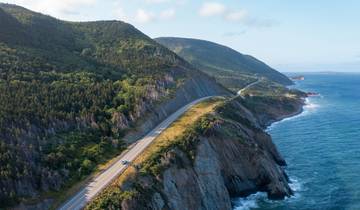
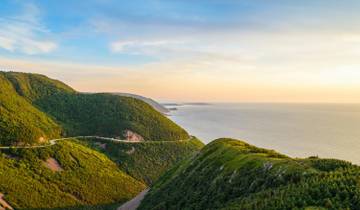
Cape Breton Island ranks among Atlantic Canada’s premier destinations, where the Cabot Trail coastal highway delivers 298 kilometers of spectacular ocean-cliff-highland scenery through Cape Breton Highlands National Park while Gaelic cultural traditions persist in communities settled by 19th-century Scottish emigrants. The Cabot Trail loop typically begins from Baddeck, positioned centrally on Cape Breton at the Canso Causeway connection point to mainland Nova Scotia, though the route functions equally starting from any point along the circuit. Most travelers complete the loop clockwise beginning north from Baddeck, ascending the coastal Cabot Trail’s western ascent for superior sightseeing views from the outside lane position, though counterclockwise routing reverses this advantage depending on personal preference and planned overnight stops. The trail’s first significant highlight emerges at Cape Smokey Provincial Park where cliffs plunge 300 meters to the Atlantic below, followed by continuous dramatic coastal views through Ingonish Beach resort area and into Cape Breton Highlands National Park’s northeastern entrance.
Within Cape Breton Highlands National Park, the Cabot Trail rises to its highest elevations offering sweeping highland-to-ocean vistas and access to hiking trails ranging from short coastal viewpoint walks to challenging backcountry treks. Skyline Trail represents the park’s most popular hike, a 7-kilometer loop requiring approximately 2-3 hours that culminates in dramatic clifftop boardwalk extending over Aspy Valley with frequent moose sightings in surrounding highlands particularly during early morning. The trail’s exposed headland position necessitates caution during high winds common throughout the season. Middle Head Trail near Ingonish provides easier 2-kilometer roundtrip coastal walking through boreal forest to windswept headland, while more ambitious hikers can tackle Franey Trail’s 7.4-kilometer loop ascending 440 meters for panoramic valley-ocean views requiring 3-4 hours. The Cabot Trail’s northwestern section between Pleasant Bay and Chéticamp continues spectacular coastal scenery while descending toward Chéticamp, the island’s Acadian cultural center where French language and traditions maintained since 18th-century settlement persist through restaurants serving Acadian dishes, music venues featuring traditional fiddling, and seasonal festivals celebrating French heritage.
Beyond the Cabot Trail loop, Cape Breton Island offers additional attractions warranting multi-day exploration particularly for those interested in historical sites and Celtic cultural immersion. Fortress of Louisbourg National Historic Site, positioned on Cape Breton’s eastern coast well south of the Cabot Trail route, recreates France’s largest 18th-century military fortification in North America through extensive reconstructed buildings staffed by costumed interpreters demonstrating daily life in this strategic North Atlantic stronghold before British capture in 1758. Visiting Louisbourg requires half-day minimum including 1-hour driving from Sydney and 2-3 hours exploring the reconstructed fortress complex. Baddeck village serves as Cape Breton’s convenient base offering Alexander Graham Bell National Historic Site interpreting the inventor’s extensive summer residence and experimental work conducting early aviation and marine engineering research in the area. The Bras d’Or Lake system, a massive inland sea occupying Cape Breton’s heart, attracts sailors and sea kayakers exploring sheltered waters while providing bald eagle viewing opportunities and seasonal boat tour options. Practical Cabot Trail planning typically requires 2-3 days driving the complete loop with overnight stops at Ingonish or Pleasant Bay and Chéticamp, plus optional additional days for Louisbourg visit, Baddeck cultural attractions, or extended hiking in Cape Breton Highlands National Park depending on outdoor recreation priorities and available time.
New Brunswick Bay of Fundy Experiences 2026
New Brunswick’s Bay of Fundy coastline delivers Atlantic Canada’s most distinctive natural phenomenon where the world’s highest tides create dramatic twice-daily transformations of coastal environments, extreme tidal bores forcing rivers to reverse flow, and opportunities to walk ocean floors exposed at low tide. The Bay of Fundy ecosystem owes its extreme 16-meter tidal range to the bay’s unique funnel shape concentrating Atlantic tidal forces as water rushes into the narrowing gulf between Nova Scotia and New Brunswick twice daily. This tidal action creates remarkable phenomena at multiple accessible locations along New Brunswick’s southern coast including Hopewell Rocks, Fundy National Park, and the Saint John River reversing falls. Understanding tidal schedules proves essential for Fundy exploration—most attractions post daily tide tables enabling visitors to time low-tide ocean floor walking or high-tide kayaking experiences, with optimal visiting strategy coordinating arrival approximately 2 hours before low tide allowing observation of the retreating water process followed by beach exploration at tide minimum before the returning flood tide.
Hopewell Rocks Provincial Park presents the Bay of Fundy’s most famous geological formations where extreme tidal erosion carved distinctive “flowerpot” rock pillars topped with vegetation, creating surreal landscapes accessible at low tide when visitors descend metal staircases to walk the exposed ocean floor surrounding these isolated towers. The park site charges entrance fees CAD $15 ($11) adults for single-day access (check official website for current rates), with admission covering interpretive center, viewing platforms, and beach access during low-tide windows. High tide transforms the scene completely as 12+ meters of water submerges the “flowerpots” to their tree-topped crowns, demonstrating the tidal range’s dramatic scale. Hopewell Rocks maintains greatest visitor concentrations during summer mid-day periods when tour buses arrive in volume, making early morning or late afternoon visits during low-tide windows more peaceful alternatives. The site requires 2-3 hours including interpretive displays, photography, and beach walking, positioned just 30 kilometers south of Moncton for easy half-day excursion. Accommodations in nearby Alma village offer guesthouse and inn options maintaining authentic fishing village atmosphere with dining focused on local Bay of Fundy seafood.
Fundy National Park protects 206 square kilometers of coastal temperate rainforest, dramatically carved valleys, and tidal mudflats along 13 kilometers of Bay of Fundy shoreline. The park concentrates visitor facilities around Alma village at the eastern entrance including campgrounds, interpretive center, and trail networks accessing dramatic coastal and interior landscapes. Dickson Falls trail provides easy 1-kilometer loop through moss-covered forest to multi-tiered waterfalls, while Point Wolfe-Herring Cove coastal trails deliver 7-10 kilometer options combining ocean views, covered bridge, and tide pool exploration opportunities at low tide. More ambitious backcountry hikers can tackle the Fundy Footpath extending 41 kilometers along undeveloped coastline beyond park boundaries, requiring 3-4 days for complete traverse and ranking among Atlantic Canada’s most challenging coastal treks given steep elevation changes and wilderness conditions. Fundy National Park charges entrance fees CAD $9 ($6) adults daily (verify current rates through Parks Canada), with annual Discovery Pass covering all national parks providing value for visitors exploring multiple Atlantic Canada national parks including Gros Morne in Newfoundland or Prince Edward Island National Park. The park requires half-day minimum for basic coastal trail sampling or full day for extended hiking combining multiple trail systems and beach exploration timed with tidal cycles.
Saint John city presents the Bay of Fundy’s urban attraction with the Reversing Falls Rapids where the Saint John River encounters incoming Fundy tides twice daily forcing dramatic flow reversals and whirlpool formation. The reversing phenomenon occurs at Fallsview Park where river narrows through rock gorge creating violent rapids and turbulent eddies depending on tidal phase—at low tide the river flows normally toward the bay creating downstream rapids, while at high tide the massive incoming tidal surge forces the river into reverse generating upstream rapids and whirlpools. Observation platforms enable viewing from safe vantage points above the gorge, with information displays explaining tidal mechanics and optimal viewing times varying daily according to tide tables. The Reversing Falls merit 1-2 hour visit best coordinated with tide transitions for most dramatic effects rather than mid-tide periods when flow appears relatively calm. Saint John’s port district, separate from the Reversing Falls location, offers waterfront boardwalk, Loyalist House Museum interpreting New Brunswick’s role receiving American Revolutionary War refugees, and diverse dining options particularly strong for seafood preparations. New Brunswick Bay of Fundy exploration typically requires 2-4 days depending on activity priorities—minimum itineraries combine Hopewell Rocks and Fundy National Park coastal trails in 2 days, while extended visits add Saint John’s Reversing Falls, interior park hiking, or seasonal whale watching tours operating from Deer Island and Grand Manan Island in the outer bay.
Prince Edward Island Beach Culture and Heritage Sites 2026
Prince Edward Island delivers concentrated Atlantic Canada experiences focused on red-sand beaches, agricultural countryside, and Anne of Green Gables literary heritage across Canada’s smallest province requiring just 2-4 days for comprehensive exploration. The island divides tourism promotion into three designated scenic drives circling different coastal regions, though visitors quickly recognize the island’s manageable scale eliminates requirement for rigid route following. Charlottetown, the provincial capital with 36,000 residents, occupies central position offering downtown heritage architecture concentrated around Province House National Historic Site where Fathers of Confederation met in 1864 initiating discussions leading to Canadian nationhood. The Confederation Centre of the Arts anchors downtown cultural life presenting Canada’s longest-running musical theater production, Anne of Green Gables – The Musical, performed summers since 1965 drawing audiences particularly strong among Japanese tourists for whom the Anne stories maintain extraordinary cultural significance. Charlottetown’s waterfront district extends north from downtown offering harbor boardwalk, seasonal restaurants emphasizing local seafood and island-grown produce, and boat tour departures for harbor seal viewing and coastal exploration. Victoria Row pedestrian mall concentrates additional dining and entertainment in repurposed heritage buildings just blocks from Province House.
North of Charlottetown, the island’s central coastline encompasses its most developed tourism zone anchored by Cavendish Beach within Prince Edward Island National Park, Green Gables Heritage Place literary site, and the highest concentration of accommodation, dining, and family attractions. Cavendish Beach represents PEI’s most famous shoreline where red sandstone cliffs frame white sand beaches extending for kilometers backed by wind-sculpted dune systems protecting nesting piping plovers. The beach attracts peak summer crowds when July-August temperatures reach 20-25°C (68-77°F) enabling comfortable swimming in Gulf of St. Lawrence waters warmer than Atlantic Ocean temperatures experienced along Nova Scotia’s exposed southern coastlines. Prince Edward Island National Park protects 60 kilometers of island north shore including multiple beach access points beyond Cavendish, with Greenwich section offering 4-kilometer dune hiking trail through rare parabolic dune system accessed via floating boardwalk across tidal channel. Park entrance requires daily passes CAD $9 ($6) adults or annual Discovery Pass covering all Canadian national parks (verify current rates through Parks Canada official site), with beaches offering lifeguards, washroom facilities, and boardwalk access June through September.
Green Gables Heritage Place occupies farm property inspiring Lucy Maud Montgomery’s 1908 novel Anne of Green Gables, preserving period-furnished farmhouse, heritage gardens, and woodland trails mentioned in the beloved children’s literature. The site operates as Parks Canada historic property charging admission CAD $8 ($6) adults (confirm current official pricing), with costumed interpreters providing farmhouse tours and grounds exploration requiring 1-2 hours. The literary connection proves remarkably strong particularly among Japanese visitors who constitute significant proportion of site attendance given Anne of Green Gables’ enormous popularity in Japan where the story became mandatory school reading material. Surrounding Cavendish area developed extensive tourism infrastructure serving beach and Green Gables visitors, including Sandspit amusement park, themed attractions, dining options, and high accommodation density ranging from campgrounds to resorts. The tourism development concentration sometimes overshadows PEI’s more authentic rural character better preserved in less-developed coastal sections and interior agricultural regions where potato farming dominates the island economy.
Beyond Cavendish’s tourism epicenter, Prince Edward Island rewards exploration of quieter coastal sections and cultural sites distributed across the Points East and North Cape regions. The eastern Points East drive encompasses Murray Head and Murray Harbour areas where offshore islands protect important seabird colonies, the coastal community of Souris serving as ferry departure point for Îles de la Madeleine (Quebec), and the East Point lighthouse marking PEI’s easternmost tip. Basin Head Provincial Park’s “singing sands” beach earned fame for unusual acoustic properties created when walking on specific sand composition, though the effect proves subtle and weather-dependent. Victoria-by-the-Sea, positioned on PEI’s southern shore west of Charlottetown, preserves Victorian-era seaport village atmosphere in carefully maintained heritage buildings now housing artists’ studios, theater company, and seafood restaurants without the commercial development density characterizing Cavendish. The North Cape region extending into PEI’s northwestern peninsula showcases working fishing villages, the Atlantic Wind Test Site demonstrating wind energy technology at Canada’s windiest location, and quiet beaches largely undiscovered by summer crowds concentrating further east. Practical PEI exploration typically dedicates one day to Charlottetown and surrounding central region, one day to Cavendish-Green Gables area including beach time, and optional additional days for Points East or North Cape depending on available time and desire to explore beyond primary tourism zones.
St. John’s and Newfoundland Avalon Peninsula 2026
St. John’s serves as Newfoundland and Labrador’s capital and primary urban center, where colorful row houses climb steep downtown streets above one of North America’s finest natural harbors sheltering since Basque fishing operations arrived in the 1500s. Downtown St. John’s centers on Water Street and Duckworth Street ascending the hillside parallel to the harbor, these narrow thoroughfares lined with heritage buildings now housing restaurants, pubs, craft shops, and boutique hotels creating walkable district requiring no vehicle for 1-2 days exploration. George Street, a single-block pedestrian entertainment district, concentrates live music venues presenting traditional Newfoundland folk music alongside contemporary performances, with multiple establishments offering nightly entertainment June through September. The Rooms provincial museum and art gallery crowns downtown’s highest point, the distinctive angular building housing Newfoundland cultural heritage exhibits, indigenous Mi’kmaq and Beothuk collections, and contemporary Atlantic Canadian art spread across three floors requiring 2-3 hours for thorough exploration. Admission costs CAD $8 ($6) adults (verify current rates through official website), with the institution’s prominent hilltop position providing panoramic harbor and city views from exterior observation decks even for non-museum visitors.
Signal Hill National Historic Site rises immediately east of downtown providing St. John’s most dramatic geographic landmark where 160-meter cliffs plunge to harbor narrows below, the strategic position defended by numerous fortifications from the 17th century through World War II. Cabot Tower crowns the hill’s summit, the stone tower constructed 1897-1900 commemorating both John Cabot’s 1497 Newfoundland landing and Queen Victoria’s Diamond Jubilee while serving as signal station for harbor shipping traffic. The site gained additional historical significance in 1901 when Guglielmo Marconi received the first transatlantic wireless signal at Signal Hill, proving radio communication feasibility across oceans. Extensive trail networks traverse Signal Hill connecting harbor overlooks, military battery positions, and ascending the dramatic Ladies Lookout and North Head trails offering coastal views and occasional iceberg sightings during late spring-early summer. Signal Hill requires no entrance fee as Parks Canada national historic site, accessible year-round though winter conditions bring extreme weather exposure on exposed ridgelines. The Battery neighborhood clings to hillside below Signal Hill, St. John’s most photographed district where brightly painted houses perch on impossibly steep streets descending toward harbor entrance, the village-like enclave creating Newfoundland’s most distinctive residential streetscape.
Cape Spear National Historic Site marks North America’s easternmost point just 15 kilometers south of downtown St. John’s, where restored 19th-century lighthouse overlooks dramatic cliff coastlines and World War II coastal defense batteries remain intact from wartime harbor protection duties. The cape serves as premier location for whale watching from shore particularly June through August when humpback whales, minke whales, and occasional fin whales feed in offshore waters within sight of clifftop vantage points. The lighthouse restoration presents period-furnished keeper’s residence depicting 1839 living conditions, while maintained modern lighthouse continues navigation duties. Cape Spear charges no entrance fees and maintains year-round access, though summer visits offer best whale viewing opportunities and touring of interior historic spaces operating seasonally June-September. Combining Signal Hill and Cape Spear requires half-day minimum with personal vehicle, creating ideal morning or afternoon St. John’s introduction when arriving via afternoon Argentia ferry or starting Avalon Peninsula exploration from St. John’s base.
Beyond St. John’s metropolitan area, the Avalon Peninsula supports multiple day-trip destinations highlighting Newfoundland’s natural and cultural heritage. Witless Bay Ecological Reserve protects four island seabird colonies hosting over 260,000 Atlantic puffins alongside hundreds of thousands of murres, kittiwakes, and other seabirds, accessible through boat tour operations departing Bay Bulls and Mobile 30 kilometers south of St. John’s. Tours typically operate May through August with July-early August providing peak puffin viewing as birds return frequently to nesting burrows during chick-rearing period. Tour operators charge CAD $80-120 ($55-85) per person for 1.5-2 hour excursions combining seabird viewing with potential whale and iceberg encounters during late spring-early summer. The Irish Loop circles the Avalon Peninsula’s southern extension accessing dramatic coastal scenery, tiny outport communities maintaining traditional architecture and fishing culture, and La Manche Provincial Park preserving abandoned resettled village accessible via forest trail. Ferryland, positioned along the Irish Loop’s eastern coast, offers Colony of Avalon archaeological site excavating 17th-century English settlement remains, while Ferryland’s Lighthouse Picnics gained fame providing gourmet meals served on lighthouse grounds overlooking dramatic Ferryland Head coastline. The Irish Loop requires full-day minimum for complete circuit covering approximately 300 kilometers from St. John’s, or overnight options enable slower pace exploring specific communities and hiking coastal sections of East Coast Trail long-distance path. Avalon Peninsula exploration typically allocates 3-5 days—1-2 days St. John’s downtown and Signal Hill-Cape Spear, 1 day Witless Bay boat tour, 1-2 days Irish Loop driving and optional Bay de Verde or Baccalieu Trail additions exploring northern Avalon communities.
Western Newfoundland and Gros Morne National Park 2026
Western Newfoundland concentrates around Gros Morne National Park, UNESCO World Heritage Site designated 1987 recognizing exceptional geological features and dramatic fjord-carved landscapes shaped by ancient continental collisions and subsequent glaciation. The park protects 1,805 square kilometers of Long Range Mountains, inland fjords, coastal lowlands, and the remarkable Tablelands where Earth’s mantle lies exposed at surface after tectonic uplift, creating Mars-like orange-brown landscape supporting minimal vegetation. Gros Morne requires 2-4 days for representative exploration depending on hiking ambitions and whether extending to L’Anse aux Meadows Viking site requiring additional 250-kilometer northward drive. Rocky Harbour serves as Gros Morne’s primary service center offering greatest accommodation density, dining options, and departure point for Western Brook Pond boat tours navigating the park’s most spectacular landlocked fjord. Bonne Bay splits the park into northern and southern sections, with the Tablelands accessed from Route 431 south of Bonne Bay while the Long Range traverse and Western Brook Pond anchor the northern district accessed from Deer Lake-Port aux Basques highway.
Western Brook Pond ranks among Atlantic Canada’s most dramatic natural features, a landlocked fjord where 600-meter cliffs plunge directly into glacier-fed waters creating Norwegian-quality scenery within Newfoundland’s interior. Despite its “pond” naming, Western Brook actually encompasses 16-kilometer-long fjord reaching 165-meter depths, accessible only via 3-kilometer walking trail from Route 430 trailhead to tour boat launch. Tour boat operations require advance booking particularly for peak summer July-August season, operating approximately 5 tours daily with 2-hour narrated cruises navigating the full fjord length beneath towering cliff faces and past dramatic seasonal waterfalls. Tours cost CAD $90 ($64) adults (verify current pricing through operator websites as rates vary), with bookings recommended 1-2 weeks ahead for summer peak travel. The Western Brook Pond experience consumes 4-5 hours total including parking to boat launch walking, 2-hour tour, and return walking, positioning this as full half-day commitment particularly for visitors combining with additional Gros Morne activities the same day. Alternative water-based exploration includes sea kayaking in Bonne Bay’s protected waters and chartered boat tours along Ten Mile Pond coastal section, though Western Brook Pond’s scale and dramatic vertical relief exceeds all park alternatives.
The Tablelands present Gros Morne’s most geologically significant feature where mantle rock normally buried deep beneath Earth’s crust lies exposed at surface after ancient continental collision forced uplift approximately 500 million years ago. The distinctive ochre-colored peridotite rock supports minimal vegetation owing to toxic heavy metal concentrations and lack of essential nutrients, creating barren landscape contrasting dramatically with surrounding lush boreal forest. The Tablelands Discovery Centre provides geological interpretation and serves as trailhead for Tablelands Trail, a 4-kilometer loop ascending into the mantle exposure gaining 300 meters elevation through increasingly barren terrain. Guided geology walks led by park interpreters operate regularly throughout summer, providing enhanced understanding of complex geological processes visible in the landscape. The Tablelands require 2-3 hours for basic trail completion, accessible year-round though winter conditions bring potential hazardous ice on exposed rocky surfaces. Combining Tablelands with Bonne Bay scenic drive including Trout River and Woody Point heritage communities creates excellent southern park exploration day.
Gros Morne’s extensive trail network ranges from short interpretive walks to challenging multi-day backcountry traverses, with the Gros Morne Mountain summit trail representing the park’s signature challenge. The 16-kilometer return trail ascends 806 meters to barren summit plateau, requiring 8-10 hours for fit hikers comfortable with steep ascents including exposed scrambling sections near the summit. The challenging effort rewards with panoramic views encompassing Western Brook Pond, the Long Range plateau, and Gulf of St. Lawrence coastline. More accessible options include the moderate 5-kilometer Lookout Hills trail gaining 255 meters for Western Brook Pond overlooks without requiring boat tour, or the easy 3-kilometer Bakers Brook Falls trail descending gorge beside multi-tiered waterfall. Winter hiking opportunities expand dramatically for adventurous visitors equipped for snow travel, with snowshoeing and backcountry skiing gaining popularity February-April when snow coverage enables reaching areas inaccessible during summer’s bogs and dense vegetation. Gros Morne National Park charges entrance fees CAD $11 ($8) adults daily or CAD $28 ($20) family/group rate (confirm current Parks Canada pricing), with annual Discovery Pass covering multiple national park visits representing value for comprehensive Atlantic Canada explorations including Prince Edward Island National Park and Cape Breton Highlands. Practical Gros Morne planning typically dedicates minimum 2 full days—one day Western Brook Pond tour plus short hikes, one day Tablelands and Bonne Bay exploration, with additional days enabling Gros Morne Mountain summit attempt, coastal kayaking, or extended backcountry hiking in Long Range Mountains.
Northern Newfoundland Viking Heritage and Iceberg Coast 2026
Northern Newfoundland’s Great Northern Peninsula extends 450 kilometers north from Deer Lake toward Labrador Strait, culminating at L’Anse aux Meadows National Historic Site preserving the only authenticated Viking settlement in North America. The drive north from Gros Morne National Park requires approximately 5 hours one-way covering 400 kilometers through increasingly remote landscapes punctuated by small coastal communities dependent on fishing and seasonal tourism. Most travelers tackling this northern extension base overnight in St. Anthony, the peninsula’s northernmost service center with adequate accommodation and dining options positioned 40 kilometers from L’Anse aux Meadows. The commitment required for northern peninsula exploration means many Newfoundland visitors skip this region entirely, particularly those with limited time selecting between southern Avalon Peninsula attractions and western Gros Morne priorities. However, those making the northern journey encounter authentic Newfoundland outport culture largely unaffected by tourism development while accessing remarkable Viking heritage site and prime iceberg viewing territory.
L’Anse aux Meadows National Historic Site preserves remains of Norse settlement constructed approximately 1000 CE by Vikings from Greenland, representing the earliest known European presence in North America predating Columbus by five centuries. Archaeological excavations uncovered eight buildings including dwellings, workshops, and smithy, with three reconstructed structures enabling visitors to experience Viking domestic spaces. The interpretation center presents archaeological evidence through artifacts, audiovisual presentations, and costumed interpreters demonstrating Norse activities including wool spinning, blacksmithing, and boat building techniques. Site admission costs CAD $12 ($9) adults (verify current Parks Canada pricing), with the site requiring 2-3 hours exploring reconstructed buildings, walking among archaeological remains, and understanding Norse voyaging history placing Newfoundland as western extent of Viking expansion from Scandinavia through Iceland and Greenland. The windswept coastal setting conveys Vikings’ challenging North Atlantic environment, with interpretive trails extending across heath landscape toward shoreline where Norse vessels likely beached over 1000 years ago.
The Northern Peninsula and St. Anthony area serve as Iceberg Alley headquarters where massive Arctic icebergs drift south via Labrador Current, passing Newfoundland’s northern coast during late spring and early summer creating spectacular viewing opportunities. Iceberg season typically spans late May through June with peak concentrations June when warming temperatures accelerate calving from Greenland glaciers, sending thousands of bergs southward where ocean currents funnel them past Newfoundland before melting in warmer Atlantic waters. The icebergs range dramatically in size from house-sized fragments to massive bergs extending 50+ meters above water with 90% of mass hidden beneath surface. St. Anthony and nearby communities offer boat tours operating May-June enabling closer iceberg approaches while simultaneously providing whale watching opportunities as humpback and minke whales follow caplin spawning runs along the coast. Shore-based viewing opportunities exist throughout the peninsula particularly from elevated headlands including lighthouse sites, though boat access enables closer approaches and better photography particularly when icebergs ground in shallow bays. The unpredictable nature of iceberg drift means timing visits for guaranteed viewing proves impossible—June provides statistically best odds though yearly variation depends on Arctic calving patterns, Labrador Current strength, and weather patterns directing berg drift. Twillingate, positioned along Newfoundland’s northeastern coast well south of the Great Northern Peninsula, serves as alternative iceberg viewing destination more accessible from Gander airport and positioned along route between Gros Morne and Avalon Peninsula, though northern peninsula communities generally report higher iceberg concentrations and longer season duration.
Atlantic Canada Transportation and Getting Around 2026
Transportation planning proves critical for Atlantic Canada travel given the region’s geographic scale, limited public transportation between provinces, and reliance on personal vehicles for accessing coastal attractions and national parks. Halifax Stanfield International Airport serves as Atlantic Canada’s primary aviation hub offering the greatest frequency of international connections including direct flights from United States, United Kingdom, and major Canadian cities. St. John’s International Airport provides secondary option with good Canadian connectivity and seasonal international service, while smaller regional airports at Charlottetown, Moncton, Fredericton, Saint John, and Sydney offer primarily Canadian domestic connections. Travelers arriving internationally typically begin Atlantic Canada exploration in Halifax, with those prioritizing Newfoundland potentially flying directly to St. John’s then working westward toward the Maritime provinces. Air Canada, WestJet, and PAL Airlines dominate Atlantic Canada routes with connecting service through Toronto, Montreal, or Halifax depending on origin points. Inter-provincial air connections exist—Halifax to St. John’s, Halifax to Charlottetown—though flights prove expensive relative to driving given short distances, making air travel between Maritime provinces impractical except for those extremely time-constrained.
Rental car represents essential transportation mode for comprehensive Atlantic Canada exploration beyond major city centers, with vehicle booking recommended well in advance of summer peak season when availability tightens and rates increase. Major international rental agencies including Enterprise, Budget, Hertz, and National operate locations at primary airports and downtown districts in Halifax, St. John’s, Charlottetown, and Moncton, offering one-way rentals enabling linear itineraries rather than requiring circuit returns. Compact car rentals cost approximately CAD $40-60 ($30-43) daily for economy models, CAD $55-75 ($40-54) for mid-size sedans, and CAD $80-100 ($57-72) for SUVs, with rates fluctuating by season and booking lead time. Unlimited mileage includes standard with most Atlantic Canada rentals, important given typical daily driving distances of 150-300 kilometers when exploring multiple regions. Insurance proves mandatory with minimum third-party liability coverage required by law, though travelers should carefully review collision damage waiver options and understand personal auto insurance or credit card coverage applicability before purchasing duplicate protection. Summer driving conditions generally prove excellent with paved highways throughout, though rural secondary roads accessing some coastal communities maintain gravel surfaces requiring cautious speeds. Winter driving November-March brings challenging conditions including snow, ice, and reduced daylight hours, making winter road trips suitable only for experienced winter drivers equipped with appropriate vehicles and flexible schedules accommodating weather delays.
Public transportation between Atlantic provinces exists through Maritime Bus coach service connecting Halifax to Moncton, Saint John, Fredericton, and Charlottetown, plus Newfoundland-specific DRL Coachlines operating St. John’s to Corner Brook and Gander routes. Maritime Bus fares range CAD $50-100 ($36-72) for major intercity routes with advance booking often providing modest discounts, though limited daily departure frequencies and journey durations significantly longer than personal vehicle driving reduce coach appeal for time-constrained travelers. Within cities, Halifax operates Halifax Transit bus and ferry services adequate for downtown and waterfront access, St. John’s offers Metrobus local routes, and Charlottetown provides limited city transit. However, none of these urban systems extend to surrounding coastal attractions requiring taxis, tour operators, or rental vehicles. Ride-sharing services including Uber operate in Halifax with limited presence in other Atlantic Canada cities, though availability proves unreliable outside urban cores.
Ferry services beyond Marine Atlantic’s Newfoundland routes include shorter crossings connecting mainland to islands and spanning Bay of Fundy. The Digby-Saint John ferry operated by Bay Ferries links Nova Scotia’s Annapolis Valley with Saint John, New Brunswick across Bay of Fundy, offering 2-3 sailings daily during summer season with 2.5-hour crossing time. This ferry enables circular Maritime itineraries avoiding retracing routes between provinces, though the CAD $60-80 ($43-57) per vehicle fare plus passenger costs exceed fuel expense for driving around the bay through New Brunswick. The Wood Islands-Caribou ferry provides an alternative to Confederation Bridge for reaching Prince Edward Island from Nova Scotia, operating year-round with 75-minute crossing time and CAD $80 ($57) approximate vehicle rate. Additional seasonal ferries include Grand Manan Island service from New Brunswick mainland and Fogo Island ferry from Newfoundland’s northeastern coast, both accessing remote island destinations appealing to adventurous travelers seeking isolation from mainstream tourism routes. All ferry routes require checking current schedules and rates through official operators, with summer advance booking recommended particularly for vehicle transport on smaller capacity routes.
Atlantic Canada Accommodation Strategies 2026
Accommodation planning significantly impacts Atlantic Canada travel budgets and requires advance booking for summer peak season when capacity constraints emerge in popular destinations. The region offers full spectrum from budget hostels and campgrounds through mid-range hotels, B&Bs, and vacation rentals to luxury properties concentrated primarily in larger cities and resort areas. Halifax provides greatest accommodation diversity with over 50 hotels ranging from CAD $90-140 ($65-100) budget options including chain properties near airport and universities, CAD $140-220 ($100-155) mid-range downtown hotels convenient to waterfront and Citadel, and CAD $280-450+ ($200-320+) upscale properties along harbourfront or in historic buildings. St. John’s accommodation similarly spans budget to luxury with downtown heritage B&Bs in colorful row houses providing distinctive character at CAD $120-180 ($85-130), while modern chain hotels near airport offer CAD $130-200 ($95-145). Charlottetown’s smaller size concentrates accommodation in heritage inns and downtown hotels ranging CAD $110-200 ($80-145), while Moncton and Fredericton primarily offer chain properties at budget-mid-range levels serving business and family travelers.
Coastal communities throughout Atlantic Canada developed accommodation infrastructure serving summer tourism though capacity limitations persist in highest-demand destinations during July-August peak. Cavendish and surrounding Prince Edward Island north shore communities offer greatest accommodation density outside provincial capitals including full-service resorts, cottage rentals, campgrounds, and motels, with advance summer booking essential as properties fill months ahead. Cape Breton Island communities along the Cabot Trail including Baddeck, Ingonish, and Chéticamp provide adequate summer accommodation though booking 2-3 months ahead for July-August proves prudent. Bay of Fundy coastal towns including Alma near Fundy National Park and St. Andrews-by-the-Sea offer limited accommodation requiring early booking during peak season. Remote Newfoundland communities often maintain just single hotel or handful of B&Bs creating genuine summer capacity constraints—Gros Morne’s Rocky Harbour area and Northern Peninsula communities absolutely require advance booking or risk finding no available rooms within 50+ kilometers.
Alternative accommodation types providing good value include vacation rentals, bed and breakfasts, and campgrounds distributed throughout Atlantic Canada. Vacation rental platforms including Vrbo and Airbnb offer extensive Atlantic Canada listings from coastal cottages to downtown apartments, with weekly rentals often providing better value than nightly hotel rates particularly for families or small groups sharing space. Typical vacation rental costs range CAD $130-250 ($95-180) nightly for 2-bedroom properties in coastal communities, CAD $180-350+ ($130-250+) for larger homes accommodating 4-6 guests, with premium waterfront properties commanding significantly higher rates. B&B accommodations provide personal service and hearty breakfasts included in rates typically CAD $120-180 ($85-130) for standard rooms in heritage properties, though shared bathroom facilities remain common in older B&Bs. The Atlantic Canada B&B sector maintains strong presence compared to chain hotel dominance in Central and Western Canada, offering authentic regional hospitality in residential neighborhoods and small communities where hotels don’t exist. Provincial and national park campgrounds provide budget accommodation ranging CAD $25-45 ($18-32) nightly for equipped sites with facilities, with Parks Canada reservation system requiring advance booking for summer weekends and popular locations. Private campgrounds often offer additional amenities including electrical hookups, recreational facilities, and sometimes cottage or cabin options ranging CAD $50-100+ ($36-72+) nightly.
Shoulder season accommodation hunting (May, September-October) offers substantially lower rates than peak summer with discounts typically 30-50% below July-August pricing. September provides particularly attractive shoulder season option delivering pleasant weather, fall foliage, reduced crowds, and readily available accommodation at discounted rates without requiring months-ahead booking. However, travelers must verify attraction operating schedules as some seasonal sites reduce hours or close entirely after Labour Day early September. Winter visits November-March bring lowest accommodation rates throughout Atlantic Canada with deep discounting, though most coastal attractions close and weather proves challenging with frequent storms, cold temperatures, and reduced daylight hours. Winter visits suit those seeking authentic local culture, winter activities including cross-country skiing and snowmobiling, or simply experiencing maritime winter ambiance, though require accepting significant activity limitations compared to summer season accessibility.
Atlantic Canada Food Culture and Dining 2026
Atlantic Canada’s culinary traditions center on seafood abundance from surrounding oceans, with lobster, mussels, scallops, cod, salmon, and shellfish featuring prominently on restaurant menus throughout the region. Traditional preparations emphasize fresh ingredients simply prepared, though contemporary Atlantic Canadian cuisine incorporates modern techniques while maintaining seafood focus. Lobster represents Atlantic Canada’s most iconic seafood, with summer season May-July bringing peak availability when lobster fishery opens producing sweetest, most tender meat. Lobster dinners range from casual lobster suppers in community halls—particularly popular on Prince Edward Island—to upscale preparations in Halifax and Charlottetown restaurants. Expect lobster supper prices CAD $35-50 ($25-36) per person for community hall-style meals including lobster, mussels, chowder, and sides, while restaurant lobster presentations range CAD $40-75+ ($30-54+) depending on preparation sophistication. Maritime lobster rolls, available at casual eateries and food trucks throughout coastal communities, typically cost CAD $18-28 ($13-20) representing more budget-friendly lobster option.
Beyond lobster, Atlantic Canada seafood offerings showcase regional abundance including steamed mussels served in white wine-garlic broth CAD $15-25 ($11-18) appetizer portion, pan-fried or battered fish and chips featuring haddock or cod CAD $18-28 ($13-20), fresh oysters CAD $3-5 ($2-4) each, and seafood chowders CAD $10-18 ($7-13) per bowl. Newfoundland specialties include fish and brewis—salt cod soaked and boiled with hardtack bread then served with scrunchions (fried salt pork)—toutons (fried bread dough served with molasses), and Jiggs dinner (traditional boiled salt beef with cabbage, root vegetables, and pease pudding). These traditional Newfoundland dishes appear on restaurant menus primarily in St. John’s and outport communities, offering insight into historical foodways developed during centuries when salt preservation proved essential. Atlantic Canada’s craft beer scene exploded over recent decades with excellent breweries throughout the region, with Halifax supporting Alexander Keith’s historic 1820 brewery alongside modern craft operations including Garrison Brewing and Propeller Brewing. Charlottetown’s Gahan House brewpub and St. John’s Quidi Vidi Brewery represent quality regional examples, while Fredericton and Moncton developed active craft beer scenes. Brewery tours typically cost CAD $15-25 ($11-18) including tastings, with casual brewery taprooms offering local beer flights CAD $12-18 ($9-13) enabling sampling multiple styles.
Budget dining options exist throughout Atlantic Canada particularly in larger cities, with casual restaurants, food trucks, and ethnic cuisine providing alternatives to seafood focus. Halifax offers greatest dining diversity including Vietnamese, Indian, Middle Eastern, and contemporary fusion cuisines alongside traditional Maritime fare, with casual meals typically CAD $15-25 ($11-18) and mid-range dinners CAD $25-45 ($18-32) per person before beverages. Smaller communities maintain limited dining options often restricted to single local restaurant, hotel dining room, or seasonal food truck, making flexibility and lowered expectations necessary particularly when exploring remote coastal areas. Grocery stores exist in all sizeable communities enabling self-catering particularly valuable for vacation rental or camping travelers, with major chains including Atlantic Superstore, Sobeys, and Dominion (Newfoundland) offering full grocery selection. Farmers markets operate summer weekends in most Atlantic Canada communities showcasing local produce, artisan foods, baked goods, and craft products, representing excellent breakfast or picnic supply sources while supporting local agriculture. Budget-conscious travelers can significantly reduce daily food expenses through grocery shopping and picnic lunches, keeping meal costs below CAD $50 ($36) per person daily versus CAD $70-100+ ($50-72+) daily when dining restaurants for all meals.
Atlantic Canada Daily Budget Planning 2026
Atlantic Canada travel costs vary substantially by accommodation choice, dining habits, and activity selection, though the region generally delivers better value than Central Canadian destinations like Toronto or Vancouver while still requiring careful budget planning particularly for multi-week explorations. This section provides detailed daily cost breakdowns across three budget tiers to assist trip planning and financial preparation.
Budget Tier Daily Costs 2026 (CAD $115-145 / $80-105 Per Person)
Budget travelers maintaining strict spending discipline can explore Atlantic Canada spending CAD $115-145 ($80-105) per person daily assuming two travelers sharing accommodation. Accommodation represents largest budget component with hostel dormitories CAD $35-50 ($25-36) per person nightly in Halifax, St. John’s, and occasional coastal hostels, budget motels or guesthouses CAD $80-120 ($57-85) per room nightly divided between two travelers yielding CAD $40-60 ($30-43) per person, or campground sites CAD $25-40 ($18-30) per night divided by two for CAD $13-20 ($10-15) per person. Food costs minimize through grocery shopping and picnic lunches supplemented by occasional casual restaurant meals, targeting CAD $35-50 ($25-36) daily including breakfast groceries CAD $8 ($6), packed lunch CAD $10 ($7), budget restaurant dinner CAD $15-25 ($11-18), and snacks-coffee CAD $5 ($4). Transportation assumes rental car shared by two travelers with compact vehicle CAD $50 ($36) daily plus fuel CAD $35 ($25) divided equally yielding CAD $43 ($31) per person daily. Activities and entrance fees minimize by focusing free attractions including coastal walking, beach time, and town exploration while selecting 1-2 paid attractions weekly averaging CAD $10 ($7) daily. Total daily costs: accommodation CAD $45 per person (two sharing budget lodging), meals CAD $40, transport CAD $43, attractions CAD $10, miscellaneous CAD $7. Total approximately CAD $145 ($105) per person daily.
Mid-Range Tier Daily Costs 2026 (CAD $180-225 / $130-160 Per Person)
Mid-range travelers balancing comfort with cost-consciousness typically spend CAD $180-225 ($130-160) per person daily for quality experiences without luxury pricing. Accommodation utilizes 3-star hotels or quality B&Bs ranging CAD $140-220 ($100-155) per room nightly, vacation rentals CAD $180-280 ($130-200) for 2-bedroom properties, divided equally between two travelers yielding CAD $70-140 ($50-100) per person including taxes. Food budget allows restaurant dining for most meals while incorporating some grocery purchases, allocating CAD $70 ($50) daily: breakfast CAD $12 ($9) coffee shop or hotel included, lunch CAD $18 ($13) casual restaurant, dinner CAD $35 ($25) mid-range restaurant, with remaining budget covering beverages and occasional upscale meal. Transportation maintains rental car sharing with mid-size vehicle CAD $65 ($47) daily plus fuel CAD $40 ($30) divided between two for CAD $53 ($38) per person daily. Activities expand to include multiple paid attractions, boat tours, and brewery visits averaging CAD $30 ($22) daily per person. Total daily costs: accommodation CAD $105 per person (two sharing mid-range hotel), meals CAD $70, transport CAD $53, attractions CAD $30, miscellaneous CAD $15. Total approximately CAD $273, rounded to CAD $275 ($195) per person daily for planning purposes.
Upscale Tier Daily Costs 2026 (CAD $400-600+ / $285-430+ Per Person)
Upscale travelers prioritizing premium accommodation, fine dining, and comprehensive guided experiences spend CAD $400-600+ ($285-430+) per person daily. Accommodation focuses on 4-5 star hotels CAD $350-550 ($250-395) per room, luxury B&Bs, or premium waterfront vacation rentals CAD $400-700+ ($285-500+), yielding CAD $175-350 ($125-250) per person when sharing. Dining emphasizes upscale restaurants and specialty food experiences allocating CAD $130-180 ($95-130) daily: quality breakfast CAD $20 ($15), lunch CAD $35 ($25), fine dining dinner CAD $60-100 ($43-72), wine and cocktails CAD $25 ($18). Transportation upgrades to SUV or premium vehicle CAD $100 ($72) daily plus fuel CAD $45 ($32), divided between two travelers yielding CAD $73 ($52) per person daily. Activities incorporate guided tours, boat excursions, specialty experiences like whale watching or helicopter tours averaging CAD $75-120 ($54-85) per person daily. Total daily costs: accommodation CAD $265 per person (two sharing luxury hotel), meals CAD $155, transport CAD $73, attractions CAD $100, miscellaneous CAD $25. Total approximately CAD $618, rounded to CAD $620 ($445) per person daily. Luxury travelers can significantly exceed these estimates through truly premium experiences including private guides, chartered boats, or elite dining establishments.
Sample Atlantic Canada Itineraries 2026
Atlantic Canada’s geographic scale and diverse provincial attractions support itineraries ranging from focused single-province explorations to comprehensive multi-week circuits. The following sample itineraries provide frameworks adaptable to personal interests and available time.
7-Day Maritime Provinces Circuit (Nova Scotia, PEI, New Brunswick)
Day 1-2: Arrive Halifax, explore downtown waterfront-Citadel-Public Gardens, evening dining-craft brewery sampling. Day 2 afternoon drive to Peggy’s Cove lighthouse, return via Mahone Bay. Day 3: Morning departure Halifax south to Lunenburg (90 minutes), explore UNESCO Old Town 2-3 hours, continue to Bay of Fundy via Digby (3 hours driving total), overnight near Fundy National Park. Day 4: Full day Hopewell Rocks at low tide, Fundy National Park coastal trails including Point Wolfe and Dickson Falls, overnight Moncton or continue to Prince Edward Island. Day 5: Drive to Prince Edward Island via Confederation Bridge (2 hours from Moncton), afternoon Charlottetown exploration including Province House, overnight Cavendish area. Day 6: Full day PEI north shore including Cavendish Beach swimming, Green Gables Heritage Place, Greenwich section Prince Edward Island National Park. Day 7: Morning PEI departure returning to Halifax via Confederation Bridge and New Brunswick (4-5 hours driving), afternoon Halifax return or evening departure. This compact itinerary covers Maritime highlights efficiently though requires accepting fast pace with limited flexibility for weather delays or spontaneous detours. Cost estimate per person: accommodation CAD $735 (7 nights × $105 mid-range per person), meals CAD $490 (7 days × $70), car rental CAD $455 (7 days × $65), fuel CAD $175, attractions CAD $210 (7 days × $30), miscellaneous CAD $105. Total approximately CAD $2,170 ($1,550) per person for seven days.
14-Day Complete Atlantic Canada Experience
Days 1-3: Halifax arrival and Nova Scotia south shore exploration matching Day 1-2 above, plus third day Cape Breton drive via Bras d’Or Lake scenic route (5-6 hours), overnight Baddeck. Days 4-5: Complete Cabot Trail loop with overnight Ingonish or Pleasant Bay, day hiking in Cape Breton Highlands National Park including Skyline Trail, afternoon Chéticamp Acadian culture. Day 6: Cape Breton to New Brunswick via Canso Causeway and Trans-Canada Highway (5 hours), afternoon Moncton arrival. Days 7-8: Bay of Fundy exploration including Hopewell Rocks, Fundy National Park hiking, Saint John Reversing Falls Rapids. Day 9: New Brunswick to Prince Edward Island via Confederation Bridge, Charlottetown afternoon arrival and heritage district exploration. Day 10: Full PEI north shore day matching Day 6 above. Day 11: Morning PEI departure, afternoon North Sydney, board overnight Marine Atlantic ferry to Argentia, Newfoundland (17 hours). Day 12: Morning Argentia arrival, drive to St. John’s (2 hours), afternoon Signal Hill-Cape Spear exploration. Day 13: St. John’s downtown walking tour, afternoon Witless Bay Ecological Reserve boat tour for puffins and whales. Day 14: Morning departure St. John’s, optional Irish Loop day drive and return evening flight, or continue Newfoundland exploration. Cost estimate per person: accommodation CAD $1,470 (14 nights × $105 mid-range per person), meals CAD $980 (14 days × $70), car rental CAD $910 (14 days × $65), Marine Atlantic ferry CAD $275 ($195), fuel CAD $560, attractions CAD $420 (14 days × $30), miscellaneous CAD $210. Total approximately CAD $4,825 ($3,450) per person for two weeks.
10-Day Newfoundland Focus Itinerary
Day 1: Arrive St. John’s, afternoon-evening downtown exploration including colorful row houses, George Street music venues. Days 2-3: Avalon Peninsula including full-day Witless Bay boat tour plus Irish Loop scenic drive accessing Ferryland, La Manche Provincial Park, and Bay Bulls. Day 4: Morning St. John’s departure, drive to Gros Morne National Park via Trans-Canada Highway (7-8 hours), overnight Rocky Harbour. Days 5-6: Gros Morne exploration including Western Brook Pond boat tour (half-day), Tablelands geological trail, Bonne Bay scenic drive, evening Green Gardens coastal trail or additional hiking. Day 7: Northern Peninsula drive to L’Anse aux Meadows (5 hours), afternoon Viking site exploration, overnight St. Anthony. Day 8: Morning iceberg viewing opportunities weather-dependent (late May-June optimal), afternoon return drive toward Gros Morne (4-5 hours), overnight Deer Lake area. Day 9: Morning Deer Lake departure, afternoon return St. John’s via Trans-Canada Highway (7 hours), or optional Twillingate detour adding 2-3 hours for additional iceberg-coastal scenery opportunities. Day 10: Morning St. John’s departure flight or optional additional Avalon exploration. Cost estimate per person: accommodation CAD $1,050 (10 nights × $105 mid-range per person), meals CAD $700 (10 days × $70), car rental CAD $650 (10 days × $65), Marine Atlantic ferry CAD $275 ($195), fuel CAD $480, attractions CAD $300 (10 days × $30), miscellaneous CAD $150. Total approximately CAD $3,605 ($2,575) per person for 10 days.
Atlantic Canada Seasonal Considerations 2026
Atlantic Canada experiences distinct seasonal patterns significantly impacting travel planning, activity accessibility, and visitor experience. Summer June-September dominates tourism with warmest temperatures, driest weather, longest daylight hours, and full attraction accessibility. July and August constitute absolute peak season when accommodation advance booking proves essential, beaches operate lifeguarded swimming, all seasonal attractions maintain full hours, and crowds concentrate at major sites including Peggy’s Cove, Cabot Trail overlooks, Cavendish Beach, and Signal Hill. Temperatures during summer months average 18-25°C (64-77°F) in Maritime provinces and slightly cooler in Newfoundland, creating comfortable conditions for outdoor activities including hiking, beach time, and coastal exploration. The extended summer daylight—sunset after 21:00 in southern regions and even later northward—enables long activity days particularly valuable when covering substantial driving distances between destinations. Summer precipitation occurs regularly though rarely persists for extended periods, with occasional Atlantic low-pressure systems bringing 1-2 days of rain, wind, and fog particularly affecting coastal areas.
Shoulder seasons May and September-October offer compelling alternatives to peak summer crowds and pricing, though require flexibility regarding attraction hours and acceptance of cooler temperatures. May brings spring conditions with temperatures 10-18°C (50-64°F), emerging foliage, and reduced tourism infrastructure as seasonal attractions begin opening gradually through the month. Early May proves particularly quiet with excellent accommodation availability and discounted rates, though limited ferry schedules to Newfoundland and some attraction closures reduce options. September delivers Atlantic Canada’s arguably finest weather combining warm temperatures maintained from summer, spectacular fall foliage particularly across Nova Scotia and New Brunswick hardwood forests, and substantially reduced crowds as schools resume and summer tourists depart. Accommodation rates drop 30-50% below peak summer, availability improves dramatically enabling last-minute booking flexibility, and attractions maintain full operations at least through Labour Day early September weekend. October extends fall foliage season though cooler temperatures 8-15°C (46-59°F) and reduced daylight limit some activities, while many seasonal attractions close after Canadian Thanksgiving mid-October. Both shoulder months deliver excellent value and crowd-free experiences appealing to flexible travelers comfortable with occasional weather challenges and reduced service availability in smaller communities.
Winter November-March brings harsh conditions limiting Atlantic Canada appeal except for specific winter activity pursuits or cultural immersion experiences. Temperatures regularly drop below freezing with January averages -5 to -10°C (14-23°F) in Maritime provinces and colder in interior Newfoundland, accompanied by frequent snowstorms, strong winds, and limited daylight—winter solstice brings just 8-9 hours sunlight at Atlantic Canada latitudes. Most seasonal attractions close entirely, many restaurants and accommodations in smaller communities reduce hours or close, and driving conditions prove challenging with snow, ice, and occasional blizzards. However, winter visits reward adventurous travelers seeking authentic local culture absent tourism influence, significantly discounted accommodation rates, winter activities including cross-country skiing and snowmobiling, and unique seasonal events. Quebec’s Winter Carnival in nearby Quebec City (February-March) draws some visitors who extend trips into New Brunswick, while ice fishing, snowshoeing, and winter photography attract specialized interests. Winter travelers must maintain flexible schedules accommodating weather delays, ensure appropriate cold-weather clothing and equipment, and accept significant activity limitations compared to summer season accessibility.
Safety and Practical Considerations 2026
Atlantic Canada maintains generally safe travel environment with low violent crime rates, though travelers should exercise normal precautions particularly in larger cities after dark and when leaving valuables in parked vehicles. Downtown Halifax, St. John’s, and Moncton experience occasional property crime with vehicle break-ins and theft from unlocked cars, making secured parking and removing visible valuables essential practices. Ocean safety requires attention throughout Atlantic Canada given powerful currents, cold water temperatures even during summer, and dramatic tides particularly along Bay of Fundy coastlines. Designated swimming beaches with lifeguard supervision June-September provide safest ocean access, though most Atlantic Canada beaches remain unguarded requiring personal risk assessment regarding wave conditions and water temperature tolerance. The Bay of Fundy tides demand particular respect—rising water moves rapidly during incoming tides and can strand beach walkers exploring at low tide who fail to time return before tide turns. Always check posted tide tables before beach exploration and maintain awareness of tide stage and water movement direction.
Wildlife encounters in Atlantic Canada rarely pose significant danger though black bears inhabit forested areas throughout all four provinces requiring food storage awareness when camping. Moose represent greater hazard given propensity to wander onto roads particularly at dawn and dusk, with vehicle-moose collisions causing serious injuries and vehicle damage annually. Exercise extreme caution driving at night on rural highways particularly in Newfoundland and Cape Breton where moose populations concentrate, reduce speed in areas with moose warning signs, and understand moose typically freeze rather than flee from vehicle headlights. Deer pose similar though less severe collision risk throughout the region. Atlantic Canada’s marine environment supports whale populations that occasionally approach boats and kayakers, though these encounters generally prove exciting rather than dangerous when maintaining respectful distance.
Weather monitoring proves important throughout Atlantic Canada given rapid changes common in maritime climates, with fog frequent along all coastlines particularly during summer when warm air masses meet cold ocean currents. Coastal fog can dramatically reduce visibility within minutes, affecting driving safety and limiting scenic viewing opportunities. Atlantic low-pressure systems bring rain, wind, and rough seas with 24-48 hours notice typically available through weather forecasts, enabling activity schedule adjustments. Summer severe weather occasionally includes thunderstorms though tornadoes remain extremely rare. Hurricane season September-November brings potential for tropical systems transitioning north from Caribbean, though these typically weaken to post-tropical storms before reaching Atlantic Canada delivering heavy rain and wind rather than catastrophic hurricane conditions. Winter weather November-March includes frequent snowstorms and occasional blizzards with significant accumulations, making winter driving hazardous for inexperienced winter drivers.
Medical services exist throughout Atlantic Canada with major hospitals in Halifax, St. John’s, Moncton, Charlottetown, and Fredericton providing full emergency and specialist services. Smaller communities maintain health clinics offering basic care though serious emergencies require ambulance transport to regional hospitals sometimes involving lengthy transport times in remote areas. Travel insurance proves essential for international visitors as Canadian healthcare does not cover non-residents, with medical costs potentially very expensive without insurance coverage. Prescription medications should travel in original containers with doctor’s prescriptions available if questioned at Canadian customs. Cell phone coverage reaches all major highways and communities though drops off in rural areas and particularly in Newfoundland’s interior regions where population density proves minimal. Download offline maps before venturing into remote areas and inform others of travel plans when exploring backcountry regions where emergency assistance requires satellite communication devices or reaching areas with cell coverage. Emergency services throughout Atlantic Canada operate on 911 system providing centralized dispatch for police, fire, and medical emergencies.
Frequently Asked Questions: Atlantic Canada Travel 2026
What documents do international visitors need for Atlantic Canada in 2026?
United States citizens visiting Canada need valid passport or NEXUS card when arriving by air, with enhanced driver’s license accepted for land and sea border crossings though passport recommended. All other international visitors require valid passport with minimum 6 months validity beyond planned departure date. Citizens of visa-exempt countries including United Kingdom, Australia, most European Union nations need electronic Travel Authorization (eTA) obtained online before departure, costing CAD $7 ($5) valid 5 years. Visitors from countries requiring visitor visas must obtain these through Canadian embassies before departure, with processing times varying by country. Check Government of Canada official website for specific country requirements and eTA application.
Do I need Canadian dollars or can I use US dollars in Atlantic Canada?
Canadian dollars (CAD) represent the only accepted currency throughout Atlantic Canada, with US dollars rarely accepted except at some tourist-focused businesses near borders at unfavorable exchange rates. Credit cards work universally at hotels, restaurants, and major attractions, with Visa and Mastercard most widely accepted while American Express sees more limited acceptance particularly in smaller communities. ATMs provide convenient Canadian dollar withdrawal throughout Atlantic Canada with international debit card access, though home bank foreign transaction fees apply. Exchange currency at Canadian banks or airport exchange services rather than accepting poor rates from merchants willing to take US dollars. Credit card purchases automatically convert to home currency at favorable exchange rates with 2-3% foreign transaction fees standard unless holding no-foreign-fee credit cards. Budget approximately USD $0.72 equals CAD $1 for 2026 planning purposes though exchange rates fluctuate.
Is Atlantic Canada family-friendly for traveling with children in 2026?
Atlantic Canada suits family travel excellently offering beaches, outdoor activities, museums, and attractions appealing across age ranges without overwhelming urban intensity. Prince Edward Island ranks as particularly family-friendly destination offering warm-water beaches safe swimming, Anne of Green Gables sites appealing to literature-loving children, Sandspit Amusement Park for carnival rides, and manageable driving distances between attractions. Nova Scotia’s Halifax Discovery Centre provides interactive science exhibits engaging children, while Cape Breton’s Cabot Trail delivers dramatic scenery viewable from vehicles without requiring extensive hiking unsuitable for young children. Newfoundland’s puffin boat tours create memorable wildlife encounters children love, while accessible historic sites including Signal Hill and L’Anse aux Meadows bring history to life through costumed interpreters and reconstructed buildings. Most Atlantic Canada accommodations welcome children with family rooms, suites, and vacation rentals offering space and kitchen facilities valuable for families. Restaurants generally accommodate children though high chairs and children’s menus prove less universal than in United States. Summer months June-August provide optimal family timing with warmest weather, beach swimming opportunities, and longest daylight hours enabling activity flexibility.
Can I visit Atlantic Canada without a car in 2026?
Visiting Atlantic Canada without personal vehicle proves challenging outside urban centers given limited inter-city public transportation and essential car access for reaching coastal attractions, national parks, and small communities where signature experiences concentrate. Travelers restricting exploration to Halifax, Charlottetown, or St. John’s city centers can rely on local transit, walking, and occasional taxis for downtown-area attractions. However, accessing Peggy’s Cove from Halifax, Cavendish Beach from Charlottetown, Cape Breton Island, Bay of Fundy highlights, or any Newfoundland attractions beyond St. John’s downtown proves impractical without car or organized tours. Organized multi-day tours from major cities offer car-free alternatives covering highlight routes including Cabot Trail tours from Halifax and Newfoundland excursions from St. John’s, though these typically cost CAD $200-400 ($145-285) per person daily and restrict spontaneous exploring. Budget-conscious travelers without cars can consider Maritime Bus coach services connecting Halifax-Moncton-Charlottetown though limited frequencies and lengthy travel times reduce appeal. Ultimately, rental car represents essential transportation mode for comprehensive Atlantic Canada exploration beyond single-city stays.
What are the best photography locations in Atlantic Canada?
Atlantic Canada’s most iconic photography subjects include Peggy’s Cove lighthouse with dramatic granite coastline and crashing waves, Old Town Lunenburg’s colorful waterfront architecture, Cabot Trail overlooks where forested highlands meet ocean cliffs, PEI’s red sand beaches contrasting with blue waters, Hopewell Rocks flowerpot formations at low tide, St. John’s colorful row houses ascending from harbor, Signal Hill with Cabot Tower silhouetted against sky, icebergs drifting past Newfoundland coast late spring, and Gros Morne’s Western Brook Pond towering fjord walls. Sunrise and sunset timing proves critical for optimal lighting particularly at coastal locations—Peggy’s Cove faces southeast receiving morning light best, while Signal Hill’s western exposure favors afternoon-sunset shots. Overcast days suit colorful subject photography including Lunenburg and St. John’s architecture where harsh midday sun creates challenging contrast. Northern lights occasionally appear in Atlantic Canada particularly during high solar activity periods though southern latitude limits frequency compared to northern territories. Bring polarizing filter for coastal photography reducing water glare and enhancing sky saturation, while neutral density filters enable long-exposure wave motion effects on rocky shorelines. Weather resistance proves valuable given frequent fog, mist, and occasional rain affecting coastal photography sessions.
When is iceberg season in Newfoundland and where should I go?
Newfoundland’s iceberg season typically spans late May through June with peak concentrations during June when warming temperatures accelerate calving from Greenland glaciers sending thousands of icebergs south via Labrador Current past Newfoundland’s northern and eastern coasts. Twillingate on Newfoundland’s northeastern coast earned “Iceberg Capital of the World” designation hosting prime viewing opportunities from shore-based vantage points and boat tour departures. St. Anthony on the Great Northern Peninsula’s northern tip provides alternative prime location with slightly longer season extending into early July owing to more northerly position. The Avalon Peninsula including St. John’s occasionally sees icebergs though less reliably than northern locations. Iceberg viewing remains inherently unpredictable depending on Arctic calving patterns, ocean currents, and weather directing berg drift, making guaranteed viewing impossible. June visits provide statistically best chances though yearly variation means some seasons deliver exceptional berg numbers while others prove disappointing. Boat tours enable closer approaches for photography while maintaining safe distances from potentially unstable bergs that can roll or calve unexpectedly. Shore viewing from coastal headlands and lighthouse sites provides free alternatives though obviously lacks boat proximity. Iceberg season coincides with whale migration and puffin nesting creating exceptional combined wildlife viewing opportunities late May-June.
Are there any UNESCO World Heritage Sites in Atlantic Canada?
Atlantic Canada protects three UNESCO World Heritage Sites offering exceptional cultural and natural heritage experiences. Old Town Lunenburg, Nova Scotia earned designation in 1995 recognizing the best-preserved British colonial settlement in North America, where original grid layout and colorful wooden architecture survive intact from 18th-century founding. The town requires 2-3 hours exploring compact historic district with waterfront, Fisheries Museum, and heritage buildings. L’Anse aux Meadows National Historic Site in northern Newfoundland gained World Heritage status in 1978 as the only authenticated Viking settlement in North America, preserving Norse structures from approximately 1000 CE and representing European presence 500 years before Columbus. The remote site demands significant travel commitment requiring 400+ kilometers from Deer Lake or ferry from Labrador. Gros Morne National Park, western Newfoundland, received UNESCO recognition in 1987 for exceptional geology where Earth’s mantle lies exposed at the Tablelands and dramatic fjord landscapes showcase plate tectonic processes and glacial carving. The park requires 2-4 days for representative hiking, boat tours, and geological exploration. These three World Heritage Sites alone justify Atlantic Canada visits for cultural and natural heritage enthusiasts, though reaching all three requires comprehensive itinerary covering multiple provinces.
What wildlife can I expect to see in Atlantic Canada in 2026?
Atlantic Canada wildlife viewing opportunities include marine mammals, seabirds, moose, black bears, and occasional caribou depending on regions explored. Humpback whales, minke whales, and fin whales feed in Atlantic waters off Nova Scotia, New Brunswick Bay of Fundy, and Newfoundland coasts from May through October, viewable from boat tours departing multiple ports and occasionally from shore particularly at Cape Spear. Harbor seals, grey seals, and harbor porpoises appear year-round in coastal waters. Atlantic puffins nest at Witless Bay Ecological Reserve and other Newfoundland offshore islands May-August, with boat tours from Bay Bulls providing close viewing opportunities during nesting season. Other seabirds including gannets, razorbills, murres, and kittiwakes nest at coastal colonies throughout Atlantic Canada particularly in Newfoundland. Moose inhabit Cape Breton Island and throughout Newfoundland where population density creates frequent roadside sightings particularly dawn and dusk—exercise extreme caution driving as vehicle-moose collisions prove dangerous. Black bears range throughout forested areas in all provinces though sightings prove less frequent than moose encounters. White-tailed deer occur widely particularly in Nova Scotia and Prince Edward Island. Bald eagles nest along coastlines throughout Atlantic Canada with Cape Breton’s Bras d’Or Lake hosting healthy populations. Caribou survive in small herds in Newfoundland’s interior and Gros Morne though viewing requires specific seeking and good fortune.
How much should I budget for a two-week Atlantic Canada trip in 2026?
Two-week Atlantic Canada trips require CAD $3,850-5,600 ($2,750-4,000) per person for mid-range travel assuming two travelers sharing accommodation, meals, rental car, Marine Atlantic ferry, fuel, and attractions. Budget breakdown includes: accommodation CAD $1,470 (14 nights × $105 per person two sharing mid-range hotels), meals CAD $980 (14 days × $70 per person), car rental CAD $910 (14 days × $65), fuel CAD $560 covering approximately 2,800 kilometers driving, Marine Atlantic ferry CAD $275 ($195) per person Argentia crossing including vehicle share, attractions and activities CAD $420 (14 days × $30), miscellaneous CAD $210. Total approximately CAD $4,825 ($3,450) per person for two weeks. Budget travelers reducing accommodation costs through hostels, camping, or budget motels while limiting restaurant meals and paid activities can achieve CAD $2,800-3,500 ($2,000-2,500) per person for two weeks. Luxury travelers prioritizing premium hotels, fine dining, and comprehensive guided tours easily spend CAD $8,400-12,600+ ($6,000-9,000+) per person. International travelers must add airfare to/from Atlantic Canada—expect approximately $400-800 roundtrip from eastern United States cities, $600-1,200 from western North America, $800-1,500 from United Kingdom depending on booking timing and route.
What makes Atlantic Canada different from the rest of Canada?
Atlantic Canada distinguishes itself from Central and Western Canadian provinces through maritime heritage shaping distinct cultural identity, geographic isolation limiting historical economic development compared to urban Central Canada, slower lifestyle pace emphasizing personal connections over efficiency, and landscapes dominated by ocean rather than prairie or mountains defining other regions. The four Atlantic provinces maintain strongest ties to British and French colonial heritage preserved through architecture, place names, and in Newfoundland’s case, distinct dialect and cultural practices. Maritime fishing traditions shaped economies for centuries creating fishing villages, seafood cuisine culture, and ocean-focused worldview uncommon in landlocked provinces. Atlantic Canada experiences higher unemployment, lower average incomes, and younger populations emigrating to Central Canada work opportunities, creating economic challenges balanced by lifestyle advantages including affordable housing, reduced urban stress, and strong community bonds. The region’s geographic position as Canada’s eastern extent creates time zone ahead of most North America—Atlantic Time runs 1 hour ahead of Eastern Time with Newfoundland maintaining unique 30-minute offset. Celtic musical traditions remain vibrant particularly in Cape Breton and Newfoundland, while Acadian French culture persists in New Brunswick and Nova Scotia distinguishing from Quebec French. Atlantic Canadians pride themselves on hospitality and friendliness extending to strangers in contrast to more reserved Central Canadian urban culture. These cultural, economic, and geographic distinctions create Atlantic Canada’s unique regional identity within broader Canadian nation.