Athens Walking Tours & Routes 2026: Self-Guided Walks
Key Takeaways
- Athens’ compact historic center allows 3-5km walking routes connecting major sites, completed in 3-6 hours at comfortable pace
- Early morning walks (7:00-10:00 AM) avoid summer heat (30-35°C) and afternoon crowds at Acropolis and Ancient Agora
- The Classic Acropolis Circuit covers Plaka, Ancient Agora, Acropolis, and Theater of Dionysus in 4-5 hours with 280 vertical meters climbing
- Neighborhood routes through Monastiraki, Psyri, and Koukaki reveal authentic Athens beyond tourist landmarks
- Free self-guided walking saves €20-40 per person compared to organized walking tours while offering complete schedule flexibility
- Download offline maps (Google Maps, Maps.me) before starting as WiFi availability varies in archaeological zones
Planning Your Athens Walking Routes in 2026
Athens reveals its layered history most intimately on foot, where 2,500 years of civilization compress into compact neighborhoods walkable in hours. The pedestrianized streets connecting Syntagma Square to the Acropolis create an uninterrupted archaeological corridor where ancient temples, Byzantine churches, Ottoman monuments, and neoclassical mansions coexist within minutes of each other. Unlike sprawling cities requiring extensive metro networks for sightseeing, Athens concentrates its essential experiences within a 3km radius, making walking the optimal exploration method.
The 2026 season brings enhanced pedestrian infrastructure with completed renovations of the Dionysou Areopagitou pedestrian promenade, extended Ermou Street car-free zones, and improved signage along archaeological routes. Spring (April-May) and autumn (September-October) provide ideal walking conditions with temperatures ranging 18-25°C, comfortable for 3-6 hour routes without heat exhaustion. Summer walking (June-August) requires strategic timing: start routes 7:00-8:00 AM before temperatures reach 30-35°C, take extended midday breaks in shaded cafes (1:00-4:00 PM), resume evening walks after 6:00 PM when temperatures moderate and golden light illuminates ancient marble.
Self-guided walking routes offer distinct advantages over organized tours: complete schedule flexibility allowing extended photography stops or spontaneous cafe breaks, zero cost for route following (saving €20-40 per person versus guided tours), personalized pacing matching individual fitness and interest levels, and freedom to deviate from planned routes when discovering unexpected neighborhoods or local tavernas. Organized tours provide expert historical commentary and insider stories enhancing understanding, but motivated independent walkers achieve excellent results combining detailed route descriptions with audio guide apps or guidebook reading.
Athens’ walkable neighborhoods each offer distinct character: Plaka’s labyrinthine lanes preserve 19th-century charm beneath Acropolis shadow, Monastiraki’s flea market energy pulses with vendors and street food, Anafiotika’s Cycladic-style houses create island atmosphere in city center, Psyri’s street art and mezze bars represent contemporary Athenian creativity, Koukaki’s residential authenticity shows daily life beyond tourist zones. Strategic route planning connects these neighborhoods efficiently, maximizing archaeological significance while experiencing authentic urban rhythms.
People Also Ask About Athens Walking Tours 2026
How long does it take to walk around Athens in 2026?
Walking Athens’ essential historic center requires 4-6 hours minimum covering approximately 5-7km at comfortable pace with regular stops for site visits, photographs, and refreshment breaks. The classic route from Syntagma Square through Plaka, Ancient Agora, Acropolis, and returning via Dionysou Areopagitou pedestrian walkway spans 6km with 280 vertical meters climbing (equivalent to 28-story building). This core itinerary includes 1-2 hours inside the Acropolis archaeological site, 30-60 minutes at Ancient Agora, and time for Plaka neighborhood exploration.
Extended walks incorporating additional neighborhoods (Monastiraki markets, Psyri street art, Anafiotika village, Kolonaki upscale district) reach 10-12km requiring full day commitment (7-8 hours). Thematic walks focusing on specific interests require less distance: Byzantine churches circuit (3km, 2-3 hours), neoclassical architecture tour (4km, 3-4 hours), street food trail (2km, 2-3 hours including eating time). Fitness level significantly impacts duration: average walkers complete standard routes in stated times, while slower paces or frequent photography stops extend duration 25-40%.
Is Athens a walkable city for tourists in 2026?
Athens ranks among Europe’s most walkable historic cities for tourists, with concentrated archaeological sites, extensive pedestrian zones, and compact downtown geography. The completed Unification of Archaeological Sites project connects major monuments via car-free marble walkways totaling 4km from Syntagma to Thisseio, eliminating vehicle traffic around Acropolis, Ancient Agora, Roman Agora, and Kerameikos. These wide pedestrian boulevards feature smooth surfaces suitable for all mobility levels, regular benches for rest stops, and wheelchair accessibility (though slopes and ancient site entrances present challenges).
Central neighborhoods (Plaka, Monastiraki, Psyri, Syntagma) offer flat to gently sloping terrain easily navigated by all ages and fitness levels. The Acropolis approach involves significant climbing: 280 vertical meters from Plaka to Parthenon summit via gradual Dionysou Areopagitou pedestrian path or steeper direct steps. Modern Athens neighborhoods beyond tourist center (Kolonaki, Exarcheia, Koukaki) feature steeper hills challenging for mobility-limited visitors. The city’s compact scale means taxis cost €5-10 for crosstown trips when walking becomes impractical.
Walking challenges include summer heat (30-35°C June-August) requiring early morning or evening timing, uneven ancient paving stones in Plaka (ankle-supporting shoes recommended), limited shade on Acropolis summit (bring sun protection), and aggressive motorcyclists on shared traffic zones (remain alert crossing streets). Overall, Athens’ pedestrian infrastructure, dense attraction concentration, and manageable distances create ideal conditions for walking-based tourism.
What is the best walking tour route in Athens?
The Classic Acropolis Circuit delivers Athens’ most comprehensive walking experience, connecting the city’s greatest hits in logical geographic sequence while revealing neighborhood character between monumental sites. This 6km route begins at Syntagma Square (metro-accessible central point), descends through Plaka’s neoclassical lanes to the Ancient Agora (birthplace of democracy), climbs Acropolis Hill for Parthenon and panoramic city views, circles the southern slope past Theater of Dionysus and Odeon of Herodes Atticus, and returns via the Dionysou Areopagitou pedestrian promenade. Total duration 4-5 hours including archaeological site exploration.
The route balances major monuments with atmospheric neighborhoods, combining historical gravitas (Parthenon, Ancient Agora) with lived-in authenticity (Plaka tavernas, Anafiotika residential streets). Walking direction (clockwise from Syntagma) optimizes morning light for Acropolis photography and positions Ancient Agora visit during cooler morning hours before midday heat. The pedestrian-only paths eliminate vehicle stress while archaeological site admission (€20 combined ticket covering Acropolis, Ancient Agora, Roman Agora, Kerameikos, Temple of Olympian Zeus, Aristotle’s Lyceum, Library of Hadrian) provides access to multiple monuments along the route.
Alternative “best” routes depend on specific interests: Byzantine Athens Walk (12 churches from 11th-14th centuries, 3km, 2-3 hours), Street Food Trail (mezze bars and souvlaki joints from Monastiraki to Psyri, 2km, 3 hours with eating), Contemporary Athens (Psyri street art, Gazi galleries, Metaxourgeio alternative scene, 4km, 3-4 hours). First-time visitors prioritize the Classic Acropolis Circuit capturing essential Athens elements, while repeat visitors explore thematic alternatives revealing deeper city layers.
Can you walk from the Acropolis to Ancient Agora?
Walking from Acropolis to Ancient Agora requires 20-25 minutes covering 1.5km via pedestrian-friendly routes with three main path options. The most scenic route follows the Dionysou Areopagitou pedestrian promenade descending from Acropolis South Slope exit, passing the Odeon of Herodes Atticus and Theater of Dionysus along marble walkway, continuing through Plaka’s southern edge past outdoor cafes and souvenir shops, then ascending slightly to reach Ancient Agora’s southeastern entrance on Adrianou Street. This route provides continuous Acropolis views while walking, with photo opportunities from below looking up at Parthenon columns.
The direct route cuts through central Plaka via Adrianou Street, Athens’ oldest continuously inhabited street (since classical period). This path passes Byzantine churches (Agios Nikolaos Rangavas, Metamorphosis Cathedral), neoclassical mansions now housing museums and galleries, and traditional tavernas with rooftop terraces. Walking time reduces to 15-18 minutes on this more direct but equally charming route. The northern alternative ascends through Anafiotika village’s Cycladic-style houses clinging to Acropolis slopes, then descends via Pnyx Hill past the Ancient Observatory, reaching Ancient Agora’s western entrance near the Temple of Hephaestus. This 25-30 minute route adds elevation gain but rewards with quieter paths and local residential character.
All routes feature pedestrian-priority streets (some shared with light local traffic), smooth surfaces suitable for standard walking shoes, and regular opportunities for cafe breaks or water purchases. Ancient Agora and Acropolis require separate admission tickets (€10 each individually, or €20 combined multi-site pass covering seven major sites valid five days). Strategic timing visits Acropolis early morning (8:00 AM opening) when crowds minimal and temperatures comfortable, then descends to Ancient Agora mid-morning (9:30-10:00 AM) after photographing Acropolis in optimal light.
Extended multi-day tours – 5+ days
Featured Athens Multi-Day Tour Packages

3 days
Athens 3-Day Discovery Tour
- ✓ Comprehensive Athens experience
- ✓ Expert local guides included
- ✓ All accommodation included
- ✓ Transportation provided
5 days
Athens 5-Day Highlights Experience
- ✓ Comprehensive Athens experience
- ✓ Expert local guides included
- ✓ All accommodation included
- ✓ Transportation provided
7 days
Athens 7-Day Cultural Journey
- ✓ Comprehensive Athens experience
- ✓ Expert local guides included
- ✓ All accommodation included
- ✓ Transportation provided

10 days
Athens 10-Day Complete Adventure
- ✓ Comprehensive Athens experience
- ✓ Expert local guides included
- ✓ All accommodation included
- ✓ Transportation provided
Multi-day tour packages powered by TourRadar. Prices and availability subject to change.
Classic Walking Routes for 2026
The Acropolis Circuit: Essential Athens Walk
Route Overview: Distance 6km, duration 4-5 hours, elevation gain 280m, difficulty moderate. Start/end point: Syntagma Square metro station. Best timing: Start 8:00-9:00 AM summer, 9:00-10:00 AM spring/fall/winter.
Syntagma Square to Plaka (20 minutes, 0.8km): Begin at Syntagma Square facing the Hellenic Parliament building, site of the Tomb of the Unknown Soldier with Evzone guards performing hourly change ceremonies (on the hour, every hour, with extended ceremony Sundays 11:00 AM). Descend Ermou Street, Athens’ main shopping boulevard, passing H&M, Zara, and international chains mixed with Greek jewelry stores and traditional shoe shops. After 400m, turn right onto Mitropoleos Street toward the Byzantine Metropolitan Cathedral, Athens’ principal Orthodox church featuring elaborate icon-covered interior (free entry, respectful attire required).
Continue past the tiny 12th-century Panagia Kapnikarea church (Byzantine gem marooned in modern street, free entry 8:00 AM-1:00 PM) into Plaka’s pedestrian labyrinth. The neighborhood’s neoclassical houses, painted ochre and terracotta, line cobblestone lanes too narrow for vehicles. Orient toward the Acropolis rising above rooftops, using it as constant navigation reference. Pass the Museum of Greek Folk Art (€4 admission, optional 30-minute visit showcasing traditional costumes and crafts) and descend toward Adrianou Street, Plaka’s main commercial spine.
Ancient Agora Exploration (1-1.5 hours): Enter the Ancient Agora archaeological site (€10 admission, or included in €20 combined ticket) via the southeastern entrance on Adrianou Street. The sprawling ruins represent Athens’ social, political, and commercial heart from 6th century BCE through Roman period. Follow the Panathenaic Way, the ancient processional route crossing the site from southeast to northwest, passing foundations of the South Stoa (shopping arcade), Middle Stoa (civic building), and various temples and civic structures.
The Temple of Hephaestus (best-preserved Doric temple in Greece, built 449 BCE) crowns the western hill, its columns and frieze sculptures intact creating powerful impression of original grandeur. Circle the temple for photographs from multiple angles, then descend to the reconstructed Stoa of Attalos, a 2nd-century BCE covered colonnade rebuilt in 1950s now housing the Agora Museum (included in site ticket). The museum displays artifacts from democratic Athens: bronze ballots, official weights and measures, ostracism pottery shards used to exile politicians, and red-figure pottery depicting daily life.
The Altar of the Twelve Gods marked the geographic center of Athens from which distances measured. The Odeon of Agrippa (Roman concert hall) survives in fragmentary state with giant statue foundations. The Tholos (circular building) served as headquarters for the executive committee governing Athens. Walk the ancient paths where Socrates questioned citizens, Demosthenes delivered orations, and merchants hawked goods, connecting tangibly with democratic civilization’s birthplace.
Plaka to Acropolis Ascent (30 minutes, 1.2km): Exit Ancient Agora’s northeastern gate into Adrianou Street, turning right toward Acropolis slopes. The route passes the Roman Agora (€8 admission separately, or combined ticket) with Tower of the Winds (1st-century BCE hydraulic clock and weather vane). Continue uphill via Dioskouron Street into Anafiotika, an extraordinary micro-neighborhood where 19th-century workers from Anafi island built Cycladic-style houses clinging to Acropolis cliffs, creating whitewashed island village atmosphere in Athens’ center.
Wind through Anafiotika’s tiny stepped lanes barely wide enough for single-file walking, past blue-shuttered houses with overflowing bougainvillea and resident cats lounging in sunny spots. The car-free zone rewards with tranquility and architectural charm. Emerge onto Theorias Street, then ascend the paved pathway toward Acropolis South Slope entrance. The gradient increases approaching the ticket office and security screening (airport-style bag check, no large backpacks, no tripods without permit).
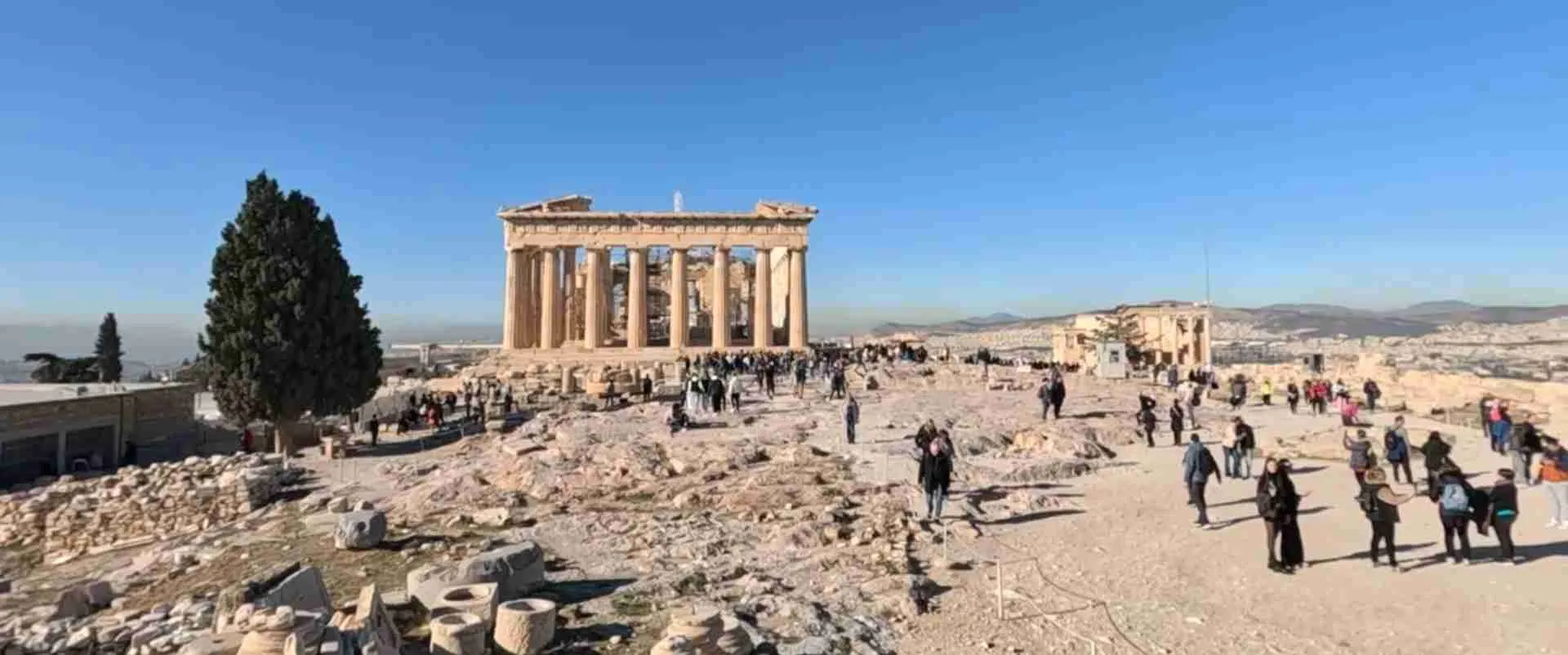
Acropolis Summit (2-2.5 hours): The Acropolis archaeological site (€20 admission May-October, €10 November-April, or combined ticket) crowns Athens’ sacred rock at 156m elevation. Enter via Propylaea monumental gateway (437-432 BCE), emerging onto the summit plateau where the Parthenon dominates. The temple to Athena Parthenos (447-432 BCE) represents classical Greek architecture’s pinnacle, its Doric columns and pediment sculptures (originals in British Museum and Acropolis Museum) creating proportional harmony studied by architects worldwide.
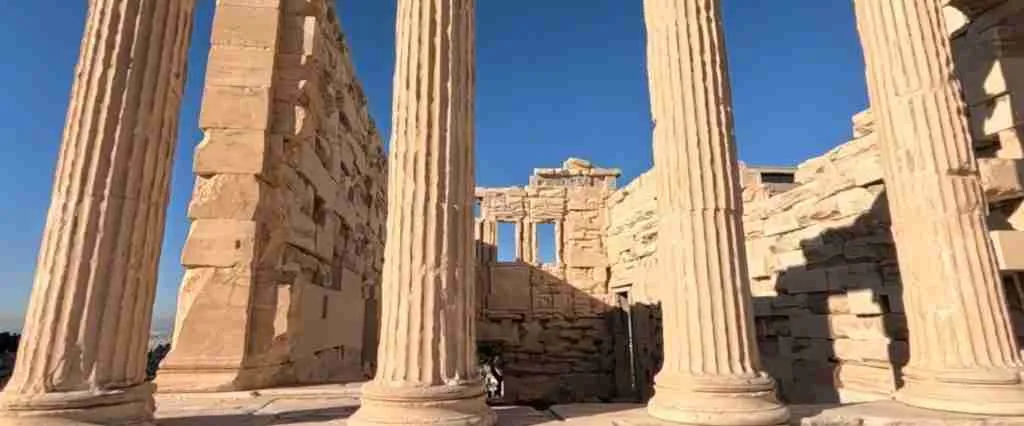
Circle the Parthenon on marble pavement worn smooth by millennia of footsteps, photographing columns from multiple angles as shifting sun changes their appearance. The eastern facade catches morning light beautifully. The Erechtheion temple (421-406 BCE) on the north side features the iconic Caryatid Porch where six maiden columns support the roof (five are copies, originals protected in Acropolis Museum). The Temple of Athena Nike (427-424 BCE) perches on the southwestern bastion, its delicate Ionic columns contrasting with Parthenon’s Doric massiveness.
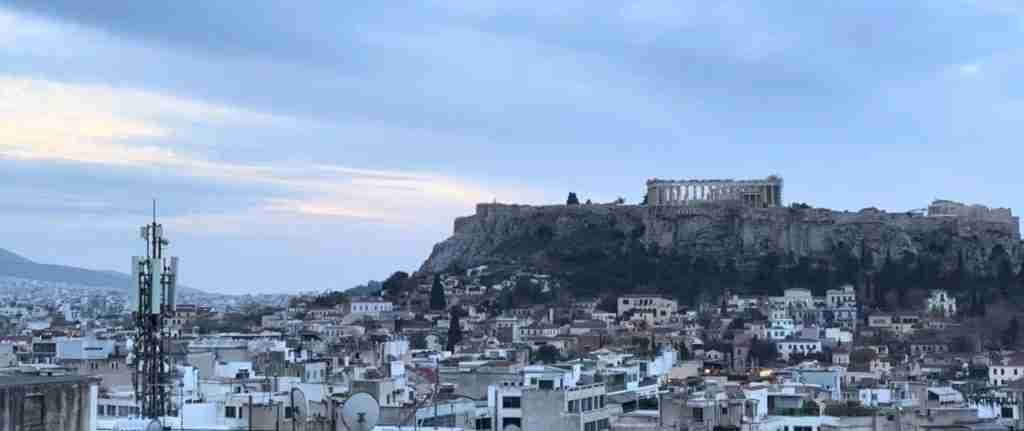
Walk the perimeter ramparts for 360-degree Athens views: Lycabettus Hill (Athens’ highest point at 277m) to northeast, Piraeus port southwest, Aegean islands visible on clear days. Identify Ancient Agora below, Temple of Olympian Zeus columns southeast, Panathenaic Stadium east. Information panels explain each monument’s historical context and architectural innovations. Summer crowds peak 11:00 AM-2:00 PM; early morning visits (8:00-9:30 AM) provide optimal photography light and manageable visitor numbers.
Southern Slope and Return (40 minutes, 1.8km): Exit Acropolis via southern slope path, passing the Theater of Dionysus (included in Acropolis ticket), birthplace of Western drama where Sophocles, Euripides, and Aristophanes premiered their plays in 5th century BCE. The marble seats (expanded in Roman period to hold 17,000 spectators) create dramatic semicircle against Acropolis cliffs. Continue past the Odeon of Herodes Atticus (2nd century CE Roman theater still hosting summer festival performances, exterior views only unless attending concert).
Descend the Dionysou Areopagitou pedestrian promenade, a wide marble walkway exclusive to pedestrians providing uninterrupted Acropolis views. This final kilometer passes outdoor cafes perfect for refreshment stops (freddo cappuccino €3-4, fresh orange juice €4-5), street performers, and souvenir vendors. The Acropolis Museum (€15 admission, optional 1.5-2 hour visit) houses original sculptures from Acropolis monuments displayed in light-filled modern galleries designed to mirror Parthenon’s dimensions. The museum’s glass floor reveals ancient Athens neighborhood excavations below, connecting visitors to layers of civilization.
Complete the circuit returning to Syntagma via Syngrou Avenue or exploring additional Plaka lanes, arriving full circle at starting point with comprehensive Athens introduction achieved entirely on foot.
Route Cost Summary: Combined archaeological ticket €20 (or separate: Ancient Agora €10, Acropolis €20), water/refreshments €5-10, optional Acropolis Museum €15. Total €25-45 per person for complete route (excluding meals).
Monastiraki to Psyri: Market and Mezze Walk
Route Overview: Distance 3km, duration 3-4 hours, elevation minimal, difficulty easy. Start: Monastiraki metro station, End: Psyri central square. Best timing: 10:00 AM-2:00 PM for markets, or 6:00 PM-10:00 PM for evening mezze scene.
Monastiraki Flea Market Exploration (1 hour): Exit Monastiraki metro onto the square dominated by Tzisdarakis Mosque (1759, now housing Ceramics Collection Museum, €4 admission). The flea market sprawls across Adrianou, Ifaistou, and surrounding streets with stalls selling antiques, vintage clothing, leather goods, traditional crafts, tourist souvenirs, and everything between. Sunday markets expand dramatically with vendors filling streets and squares, creating chaotic but energetic atmosphere.
Browse antique shops on Ifaistou Street for vintage Greek posters, old cameras, vinyl records, and curiosities. Leather workshops sell handmade sandals (€25-45), belts (€20-35), and bags (€40-80). Traditional spice vendors display pyramids of saffron, oregano, mountain tea, and specialty herbs. Olive oil shops offer tastings of regional varieties (Kalamata, Crete, Peloponnese). Negotiate prices politely for non-fixed-price items, aiming 10-20% below initial asking price.
Ancient Athens Overlay (30 minutes): Walk through Monastiraki Square past the tiny 10th-century Pantanassa Church (free entry), then cross toward the Library of Hadrian ruins (€8 admission, or combined ticket). The Roman-era library (132 CE) preserves massive Corinthian columns and wall fragments from building that housed 16,800 scrolls. The adjacent Roman Agora archaeological site includes the Tower of the Winds, an octagonal marble structure serving as hydraulic clock, compass, and weather station in 1st century BCE, its personified wind reliefs beautifully preserved.
Transition to Psyri (20 minutes, 0.8km): From Monastiraki, ascend Athinas Street (major commercial artery) past Athens Central Market (Varvakeios Agora, highly recommended detour: 200m covered market with meat, fish, produce stalls, and traditional tavernas serving workers’ lunches for €8-12). Turn left onto Evripidou Street (spice merchant row with shops selling herbs, nuts, dried fruits since 1920s), then right into Psyri’s main streets.
Psyri Street Art and Culture (1 hour): Psyri transformed from rundown warehouse district to Athens’ hippest neighborhood, walls covered in elaborate street art murals. The area between Karaiskaki, Aristofanous, and Agiou Anargyrou streets functions as open-air gallery featuring works by Greek and international artists. Notable murals include the “Old Man of Psyri” portrait on Aristofanous Street, abstract geometric patterns covering entire building facades, and politically charged pieces commenting on economic crisis and social issues.
Small galleries, design studios, and vintage shops occupy renovated neoclassical buildings. The neighborhood’s gritty authenticity contrasts sharply with Plaka’s tourist polish, revealing contemporary Athenian creativity and urban renewal. Weekday afternoons show quiet residential side, while evenings transform streets into packed outdoor mezze scene with tables spilling onto sidewalks.
Mezze and Drinks Circuit (1-1.5 hours): Psyri’s tavernas and mezze bars offer traditional Greek small plates and wines at neighborhood prices (versus tourist-inflated Plaka rates). Arrive 7:00-8:00 PM before crowds intensify, securing sidewalk tables. Order multiple mezze sharing plates: taramosalata (fish roe dip, €5-7), melitzanosalata (eggplant dip, €5-7), dolmades (stuffed grape leaves, €6-8), grilled octopus (€10-14), fava (yellow split pea puree, €5-7), saganaki (fried cheese, €7-9). Pair with retsina (traditional resinated white wine, €6-8 half-liter) or Greek craft beers (€4-6).
Recommended establishments: Oineas (traditional mezze, extensive wine list), Ta Karamanlidika tou Fani (charcuterie specialist, mastic-flavored meats), Taverna Psyrri (neighborhood stalwart, grilled meats), Gin Joint (craft cocktails, creative mezze fusion). Budget €25-40 per person for satisfying mezze meal with drinks. Conclude at rooftop bars overlooking Acropolis (A for Athens, 360 Cocktail Bar) for nightcap with views, cocktails €10-15.
Route Cost Summary: Optional museum/site admissions €12-20, lunch/snacks €10-15, mezze dinner €25-40. Total €35-75 per person depending on dining choices and site visits.
Coastal Athens: Faliro to Marina Zeas Walk
Route Overview: Distance 8km, duration 3-4 hours, elevation minimal (coastal flat), difficulty easy. Start: Faliro metro station, End: Marina Zeas (Piraeus). Best timing: Late afternoon (4:00-5:00 PM start) for sunset finish, or morning (8:00-9:00 AM) for cooler temperatures.
Faliro Coastal Promenade (45 minutes, 2km): Exit Faliro metro onto the renovated waterfront promenade, part of Athens’ Riviera development transforming former industrial coastline into recreational space. The Stavros Niarchos Foundation Cultural Center (SNFCC) complex dominates with Renzo Piano-designed National Library and Opera House (free admission to park and public spaces, €12-18 for opera/concerts). The extensive gardens feature Mediterranean plants, children’s playground, and hilltop viewpoint over Saronic Gulf.
Continue along seaside promenade past Flisvos Marina (yacht harbor with cafes and restaurants), catching Aegean breezes and watching windsurfers and kitesurfers in designated sports zones. The wide pedestrian/cycling path (4-5 meters width) accommodates leisurely walking, jogging, and cycling traffic comfortably. Public beach access points (Edem Beach, Batis Beach) allow swimming stops if carrying swimwear, free entry with basic facilities (showers, changing rooms).
Paleo Faliro to Kalamaki (40 minutes, 2km): Pass Paleo Faliro’s marinas and waterfront restaurants serving fresh seafood (grilled fish €15-25, seafood pasta €12-18, mezze plates €6-12). The coastline curves southward past small beaches and parks popular with local families. Kalamaki neighborhood features more residential character with apartment blocks set back from the sea, fronted by cafes and tavernas frequented by locals rather than tourists.
Ano Glyfada Bypass Option: Ambitious walkers extend route by continuing coastal path through Glyfada (Athens’ upscale southern suburb, 4km additional distance, 60-90 minutes) past beach clubs, upscale hotels, and designer shopping streets. This extension creates 12km total distance requiring 4.5-6 hours. Most walkers conclude at Marina Zeas, using Piraeus metro for Athens center return.
Approach to Marina Zeas (1.5 hours, 4km): The final stretch passes Piraeus’ western coast with views extending to cargo port facilities and cruise ship terminals. The path alternates waterfront promenade sections with brief urban stretches through Piraeus neighborhoods. Marina Zeas harbor appears around coastal bend, its semicircular basin filled with luxury yachts and traditional wooden sailing boats. Waterfront tavernas line the harbor serving Piraeus-style seafood specialties: kakavia (fisherman’s soup, €10-14), grilled sardines (€8-12), fried calamari (€10-14).
Marina Zeas Conclusion: Complete walk at harbor’s restaurants for reward meal with yacht-watching, or continue uphill (15 minutes) to Piraeus metro station for efficient return to Athens center (Line 1, €1.20, 25-30 minutes to Syntagma). Alternative concludes with sunset at Mikrolimano harbor (1km from Marina Zeas, 15 minutes walking), a smaller, more intimate yacht harbor with excellent seafood restaurants and romantic atmosphere.
Route Cost Summary: Metro to Faliro €1.20, optional SNFCC events €12-18, refreshments/snacks €5-10, optional seafood meal €20-35, return metro €1.20. Total €7.40-65.40 depending on dining and cultural choices.
Neighborhood Discovery Routes for 2026
Byzantine Athens: Church Circuit Walk
Route Overview: Distance 3.5km, duration 2.5-3 hours, minimal elevation, easy difficulty. Explores 12 Byzantine churches from 10th-14th centuries, showcasing Athens’ medieval Christian heritage often overshadowed by classical antiquity.
Route Highlights: Begin at Panagia Kapnikarea (11th century, Ermou Street), Athens’ most prominent Byzantine church surviving amid modern shopping district. The cruciform plan with central dome and decorative brickwork exemplifies middle Byzantine architecture. Continue to the Cathedral complex (Mitropoleos Square) combining the massive modern Metropolitan Cathedral (1862) with the tiny 12th-century Agios Eleftherios church (also called Mikri Mitropoli), its exterior walls embedded with ancient marble reliefs and inscriptions recycled from earlier buildings.
Descend into Plaka to discover hidden churches: Sotira Lykodimou (11th century, Athens’ oldest Byzantine church), Agios Nikolaos Rangavas (11th century, with original bell tower), Metamorphosis Cathedral (Byzantine core with later additions). Each church opens variable hours (generally 8:00 AM-12:00 PM and 5:00 PM-7:00 PM, free entry, modest dress required). The intimate scale, glowing icon-covered interiors, and incense-scented atmosphere provide counterpoint to grand ancient temples.
Advanced route extends to Kaisariani Monastery (5km east of city center via taxi or bus, 11th-century monastery complex in forest setting, €4 admission) or Daphni Monastery (11km northwest, UNESCO World Heritage site with extraordinary Byzantine mosaics, €6 admission, requires transport). These additions transform 3-hour walk into full-day Byzantine immersion.
Kolonaki Luxury: Upscale Athens Exploration
Route Overview: Distance 4km, duration 3-4 hours, significant uphill to Lycabettus, moderate difficulty. Explores Athens’ wealthiest neighborhood with designer boutiques, art galleries, and panoramic hilltop views.
Route Highlights: Begin Kolonaki Square (accessible via metro Line 3 to Evangelismos), the elegant tree-shaded plaza surrounded by cafe terraces frequented by Athens’ fashion-conscious set. Browse luxury shopping streets (Voukourestiou, Tsakalof, Skoufa) featuring Greek designers (Zeus+Dione, Ancient Greek Sandals, Parthenis) alongside international brands (Dior, Hermès, Louis Vuitton). The Benaki Museum (€12 admission, world-class Greek culture collection from prehistory to modern era) and Byzantine & Christian Museum (€8 admission, icons, religious art, ecclesiastical treasures) provide cultural depth.
Ascend Lycabettus Hill via funicular railway (€10 round-trip, 3-minute ride) or walking path (30-40 minutes uphill, 277m elevation gain, switchback trail through pine forest). The summit provides 360-degree Athens panorama: Acropolis and Ancient Agora below, Saronic Gulf and islands to southwest, Penteli and Hymettus mountains framing eastern horizon. The hilltop Agios Georgios chapel (19th-century tiny white church) creates quintessential Greek image. Sunset from Lycabettus ranks among Athens’ finest experiences, with city lights beginning to twinkle as sun sinks into Aegean.
Descend via alternate path into Dexameni neighborhood, dining at tavernas like Orizontes (hilltop restaurant with gourmet Greek cuisine, €35-55 per person) or more casual options in lower Kolonaki streets (mezze bars, sushi restaurants, international cuisine €20-40 per person).
Koukaki Authentic: Residential Athens Walk
Route Overview: Distance 3km, duration 2-3 hours, moderate elevation, easy-moderate difficulty. Reveals daily Athens life beyond tourist zones in residential neighborhood gaining hip reputation.
Route Highlights: Start near Acropolis Museum (metro Line 2 to Acropolis), exploring Koukaki’s tree-lined streets radiating from Syngrou-Fix metro. The neighborhood’s neoclassical apartment blocks house working Athenians, artists, and young professionals, creating authentic urban atmosphere. Traditional bakeries (artopoieia) sell sesame koulouri bread rings (€0.80-1.20), tiropita cheese pies (€2-3), and spanakopita spinach pies (€2-3) for breakfast or snacks.
Local tavernas on Drakou and Veikou streets serve neighborhood pricing: grilled meats (€9-14), fresh fish (€14-20), traditional stews (€8-12). The Veikou neighborhood park provides green space where locals gather for coffee and conversation. Weekend walking extends to the First Cemetery of Athens (Prota Nekrotafeia, peaceful neoclassical cemetery with elaborate tombs of Greek historical figures, archaeologists, poets, free entry) offering contemplative garden atmosphere and sculptural art.
Koukaki’s cafe culture centers on specialty coffee roasters and third-wave coffee shops (Little Tree Books & Coffee, Taf Coffee, Coffee Island) serving single-origin espresso drinks (€3-5) with intellectual atmosphere attracting laptop workers and book readers. Evening brings natural wine bars and contemporary mezze restaurants blending traditional recipes with creative presentations.
Practical Walking Information for 2026
Best Times for Athens Walking Tours
Seasonal Considerations: Spring (April-May) delivers ideal walking weather with temperatures 18-25°C, wildflowers blooming in parks and archaeological sites, and manageable tourist crowds. Easter week (varies annually, 2026 dates: April 12-19) sees increased local tourism but vibrant cultural atmosphere. Summer (June-August) requires strategic timing to avoid 30-35°C midday heat: start walks 7:00-9:00 AM when temperatures moderate (22-26°C) and morning light illuminates ancient marble beautifully, or defer to evening walks 6:00-9:00 PM after heat subsides.
Autumn (September-October) matches spring for comfortable conditions with clearer skies (less spring haze), warm sea temperatures (perfect for combining city walking with beach visits), and reduced crowds as school resumption decreases family tourism. September averages 25-30°C with occasional heat waves, moderating to 20-25°C in October. Winter (November-March) brings cooler temperatures (10-18°C) requiring light jacket but allowing daytime walking without heat concerns. Rain occurs irregularly (Athens averages only 50-60 rainy days annually), typically brief showers rather than all-day downpours.
Daily Timing Strategies: Archaeological sites open 8:00 AM (summer) or 8:30 AM (winter), creating optimal window for early access before crowds and heat. The Acropolis experiences lowest visitor numbers 8:00-9:30 AM and after 5:00 PM (final entry 30 minutes before closing). Plaka neighborhood shops and restaurants open 9:00-10:00 AM, making early morning walks restaurant-free but peaceful for photography. Museums typically open 8:00-9:00 AM, close 3:00-8:00 PM depending on season (Monday closures common, verify schedules).
Midday break strategy (June-August essential, optional spring/fall): complete morning walking segment 7:00-11:00 AM, retreat to air-conditioned museum or cafe 11:00 AM-4:00 PM during peak heat, resume evening walking 4:00-8:00 PM when temperatures drop and golden hour light enhances photography. This Mediterranean siesta pattern follows local rhythms, creating sustainable all-day exploration without heat exhaustion.
Safety and Navigation Tips
Street Safety: Athens ranks among Europe’s safest capitals for street crime, with violent crime rare and petty theft (pickpocketing, bag snatching) the primary concern in tourist areas. Plaka, Monastiraki, and metro stations see most pickpocketing incidents; maintain awareness of surroundings, secure valuables in front pockets or cross-body bags, avoid displaying expensive cameras and phones conspicuously. Motorcycle bag snatchers operate occasionally on quiet streets; walk on building side of sidewalk rather than street edge, wear cross-body bags on building-facing shoulder.
Traffic requires vigilance on shared streets where motorcycles use sidewalks and crosswalks as shortcuts. Athens drivers rarely yield to pedestrians despite legal requirement; make eye contact with drivers before crossing, use marked crosswalks, wait for clear gaps in traffic. The pedestrianized archaeological zone eliminates vehicle stress for major monument visits. Evening walking in central neighborhoods (Plaka, Syntagma, Monastiraki, Psyri) remains safe with crowds and businesses open late. Avoid poorly lit parks and deserted areas after midnight.
Navigation Technology: Download offline maps (Google Maps, Maps.me, Citymapper) before departure as WiFi availability varies. Most cafes, restaurants, and museums offer free WiFi (request password), but archaeological zones lack connectivity. Google Maps provides accurate walking directions, real-time location tracking, and business information (hours, reviews, photos). The Athens metro journey planner app (official OASA app) helps coordinate walking routes with public transport connections.
Smartphone battery conservation strategies: reduce screen brightness, disable background app refresh, use airplane mode when not needing connectivity (switching to regular mode only when checking directions), carry portable battery charger (10,000mAh capacity provides 2-3 full phone recharges, available Athens electronics shops €20-35). Paper maps from tourist information offices (Syntagma Square, Airport) provide backup navigation and neighborhood overview without battery dependence.
What to Bring on Walking Tours
Essential Items: Comfortable walking shoes with cushioned soles and ankle support (sneakers, walking shoes, or broken-in hiking shoes) handle 5-10km daily distances on mixed surfaces (marble promenades, cobblestone lanes, uneven ancient paving). Blister prevention: moisture-wicking socks, pre-emptive blister bandages on friction points, break in new shoes before trip. Avoid fashion sneakers with minimal cushioning, flip-flops (unsafe on uneven surfaces), or brand-new shoes (guaranteed blisters).
Sun protection: broad-spectrum SPF 50+ sunscreen (reapply every 2 hours during summer sun exposure), wide-brim hat or cap (baseball caps insufficient for neck protection), quality sunglasses (polarized lenses reduce marble glare, essential for photography). Athens’ Mediterranean sun intense year-round; even winter sunshine requires sunscreen for multi-hour outdoor exposure. Reusable water bottle (1-liter minimum capacity) for hydration; drinking fountains at archaeological sites and parks provide free refills, reducing plastic bottle costs (€0.50-1.50 each purchased from kiosks).
Seasonal Additions: Summer (June-August) requires cooling strategies: lightweight breathable fabrics (cotton, linen, performance synthetics), light-colored clothing reflecting heat, personal fan or cooling towel, hand sanitizer and tissues. Spring/fall (April-May, September-October) brings variable conditions: light jacket or cardigan for temperature swings, small umbrella for occasional rain showers, layered clothing allowing adjustments. Winter (November-March) demands: warm jacket, scarf, hat for morning coolness (10-15°C), although Athens rarely requires heavy winter coats unless northern European/North American standards.
Photography and Documentation: Smartphone sufficient for casual photography with excellent results using latest models (iPhone 14/15, Samsung S23/24, Google Pixel 8). Dedicated camera enthusiasts bring mirrorless or DSLR with wide-angle lens (16-35mm for architecture, landscapes) and normal zoom (24-70mm for general use). Extra batteries and memory cards essential (archaeological site photography generates hundreds of images). Lightweight backpack distributes camera weight comfortably; check archaeological site bag size restrictions (large backpacks prohibited, medium daypacks acceptable).
Sample 2026 Walking Itineraries
Full-Day Athens Immersion Walk
7:30 AM – Early Start at Acropolis: Begin at Acropolis entrance before opening time (8:00 AM), securing position among first visitors. Entry gates open punctually; purchased tickets beforehand (online at etickets.tap.gr) or arrive 20 minutes early for ticket window. The empty Acropolis at sunrise provides rare opportunity for Parthenon photography without crowds, magical golden light illuminating eastern facade, peaceful contemplation of ancient stones before tourist masses arrive.
Spend 1.5-2 hours circling monuments, photographing from multiple angles, reading information panels, and absorbing site’s spiritual atmosphere. Exit via southern slope path by 10:00 AM, descending past Theater of Dionysus and Odeon of Herodes Atticus on marble promenade toward Acropolis Museum.
10:00 AM – Acropolis Museum Visit: The €15 museum houses original Parthenon sculptures, Caryatid maidens, archaic statues discovered during excavations, displayed in naturally lit galleries mimicking temple proportions. The glass floor reveals ancient neighborhood ruins below, connecting visitors to multiple civilization layers. The Parthenon Gallery’s orientation matches actual temple, allowing sculpture viewing in original architectural context. Spend 1.5-2 hours, concluding by noon.
12:00 PM – Plaka Lunch Break: Walk through Plaka’s southern lanes to traditional taverna for lunch. Scholarhio Ouzeri serves authentic mezze and grilled meats (€18-28 per person) in vine-covered courtyard. Alternatively, Diogenes serves Cretan specialties (€15-25 per person) with Acropolis views from rooftop. Budget 1.5 hours for leisurely Mediterranean lunch and siesta during peak afternoon heat.
1:30 PM-3:30 PM – Museum or Indoor Break: Escape midday heat (30-35°C summer) in air-conditioned Museum of Cycladic Art (€7 admission, elegant private museum showcasing ancient Aegean civilization’s minimalist marble figures), National Archaeological Museum (€15 admission, Greece’s premier archaeological collection requiring 2-3 hours minimum), or Benaki Museum (€12 admission, comprehensive Greek culture from prehistory to modern). Alternatively, retreat to Plaka cafe for extended coffee break and people-watching.
3:30 PM – Ancient Agora Exploration: Visit Ancient Agora archaeological site during late afternoon when temperatures moderate. The €10 admission (or combined ticket) provides access to democracy’s birthplace, well-preserved Temple of Hephaestus, and Agora Museum in reconstructed Stoa of Attalos. Spend 1-1.5 hours walking ancient paths where Socrates taught and Athenian citizens debated governance.
5:00 PM – Monastiraki Market Browse: Wander Monastiraki flea market as shops reopen after afternoon break, browsing antiques, leather goods, and local crafts. The golden hour light creates beautiful shadows across ancient columns at Roman Agora and Library of Hadrian. Stop at rooftop bar (A for Athens) for freddo cappuccino (€4-5) with Acropolis sunset views.
6:30 PM – Psyri Mezze Dinner: Walk to Psyri neighborhood for traditional mezze dinner at neighborhood taverna. Order sharing plates family-style: taramosalata, grilled octopus, stuffed vegetables, saganaki cheese, accompanied by retsina wine or craft beer. Budget €30-40 per person for satisfying meal with drinks. The evening atmosphere buzzes with locals and travelers filling sidewalk tables.
8:30 PM – Evening Stroll and Conclusion: Walk back through illuminated Plaka to Syntagma Square, passing ancient monuments glowing under spotlights. The Acropolis illumination creates dramatic nighttime silhouette. Arrive Syntagma for final coffee or dessert at historic cafes (Zonar’s, Da Capo) before metro return to accommodation.
Day Cost Summary: Combined archaeological ticket €20, Acropolis Museum €15, additional museum €7-15, lunch €18-28, afternoon coffee €4-5, mezze dinner €30-40, drinks/snacks €8-12. Total day cost: €102-135 per person (excluding accommodation and transport).
Half-Day Morning Essentials Walk
8:00 AM-10:30 AM – Acropolis Priority Visit: Concentrate morning energy on Athens’ essential monument, arriving opening time for optimal light and minimal crowds. The 2-2.5 hour visit covers Propylaea gateway, Parthenon circumnavigation, Erechtheion temple with Caryatid Porch, Temple of Athena Nike, and panoramic viewpoint photography. Exit via southern slope, photographing Theater of Dionysus and Odeon of Herodes Atticus facades from exterior.
10:30 AM-11:30 AM – Plaka Exploration: Descend through Plaka’s photogenic lanes, discovering Byzantine churches (Agios Nikolaos Rangavas, Sotira Lykodimou), neoclassical mansions, and souvenir shops. The neighborhood’s authentic atmosphere (despite tourist density) rewards wandering without specific route. Coffee break at cafe with Acropolis views caps perfect morning (€3-5 for freddo cappuccino and pastry).
11:30 AM – Conclusion at Syntagma: Walk to Syntagma Square timing arrival for hourly Evzone guard change ceremony (on the hour). The formal ritual with traditional uniforms provides photo opportunity and cultural insight. Metro access from Syntagma connects to all Athens neighborhoods for afternoon activities or return to accommodation.
Half-Day Cost Summary: Acropolis admission €20, coffee and pastry €3-5. Total €23-25 per person for essential Athens morning walk.
FAQ: Athens Walking Tours 2026
Do I need a guide for Athens walking tours or can I self-guide?
Self-guided walking tours work excellently in Athens given abundant English signage at archaeological sites, widely available guidebooks and apps, and straightforward navigation in compact historic center. The pedestrianized archaeological zone, clear Acropolis visibility as orientation landmark, and numbered information panels at monuments allow independent exploration with good comprehension. Quality guidebooks (Lonely Planet, Rick Steves, DK Eyewitness) provide historical context, maps, and walking routes comparable to guide commentary. Free audio guide apps (Rick Steves Audio Europe, Athens Audio Guide) offer monument explanations via smartphone. Self-guiding saves €20-40 per person versus organized walking tours while allowing personalized pacing and route flexibility. However, licensed guides provide deeper historical insights, answer specific questions, share insider stories about ancient life, and point out architectural details easily overlooked. Groups or first-time visitors uncertain about independent navigation benefit from organized tours’ structured approach and expert knowledge. Solo travelers comfortable with maps and historical reading achieve excellent results self-guiding with downloaded routes and audio guides.
How much walking is required to see Athens main sites?
Seeing Athens’ essential sites (Acropolis, Ancient Agora, Plaka, Syntagma) requires 5-7km walking (3-4 miles) spread across 4-6 hours including site visits and rest breaks. The Classic Acropolis Circuit described earlier covers this distance with moderate elevation gain (280 vertical meters, equivalent to climbing 28-story building). Average fitness levels handle this comfortably with regular water breaks and leisurely pace. Add extended neighborhood exploration (Monastiraki markets, Psyri mezze district, Byzantine churches) and distance increases to 10-12km requiring full day. The beauty of Athens’ compact geography means core monuments cluster within 2km radius, allowing abbreviated 3km routes focusing exclusively on Acropolis and immediate surroundings (3 hours, minimal elevation beyond Acropolis climb). Mobility-limited visitors use taxis between major sites (€5-10 crosstown trips) reducing walking to site interiors and immediate vicinities. Public transport (metro, trams) connects outer neighborhoods when extending beyond historic center, mixing walking segments with efficient transit. Strategic planning balances walking exploration with rest periods in cafes, museums (indoor breaks during midday heat), and transportation shortcuts when fatigue develops.
What are the best free walking tours in Athens?
Free walking tours operate on tip-based model, technically free to join with guides working for gratuity (customary €10-15 per person for 2-3 hour tour, more for exceptional guides). Athens Free Tour offers daily 3-hour walks departing 10:00 AM and 6:00 PM from Syntagma Square, covering Plaka, Ancient Agora viewpoints (exterior, not interior), Constitution Square, and historical overview. Free Tour Athens provides similar routes plus specialized tours (food tour, street art tour) on different schedules. Alternative Free Tours Athens distinguishes itself with passionate guides and smaller groups (maximum 20 versus 30+ on other companies). Guides vary in quality; most are enthusiastic locals or expats with good historical knowledge, though occasional guides lack licensed guide credentials (requiring university-level archaeology study and government examinations in Greece). The free tour model suits budget travelers willing to invest time for potentially excellent experience (depending on guide quality that day) or disappointing generic overview. Reviews on TripAdvisor and Google help identify consistently high-rated guides by name (request specific guides when booking). Paid walking tours (€25-40 per person) guarantee licensed guides with deeper expertise and archaeology backgrounds, smaller guaranteed group sizes, and structured professional service. The value equation depends on budget priorities and knowledge expectations.
Can I visit the Acropolis on a walking tour?
Yes, most Athens walking tours include Acropolis visits as core component, though entry logistics vary by tour type. Full-day walking tours (€55-75 including admission) incorporate 1.5-2 hour Acropolis exploration within comprehensive Athens overview, handling ticket purchase and entry coordination. Half-day Acropolis-focused tours (€40-55 including admission) dedicate majority of time to the monument with expert archaeological commentary. Free walking tours typically exclude Acropolis interior (requiring €20 admission per person that free tour guides cannot afford including), instead covering Acropolis exterior viewpoints and historical context, leaving visitors to explore interior independently afterward. Skip-the-line Acropolis tours (€60-80) provide priority entrance avoiding ticket queues (particularly valuable summer peak season when waits reach 30-60 minutes), though solo travelers purchasing tickets online beforehand achieve same result without premium. Self-guided Acropolis visits work excellently using audio guides (available at entrance €5) or smartphone apps providing monument explanations. The site’s numbered information panels offer basic historical context. Photography opportunities abound with or without guide, and many visitors prefer wandering freely rather than following group commentary. Licensed guides do enhance understanding through detailed architectural analysis, historical anecdotes, and mythology connections explaining religious significance, making professional tours worthwhile for history enthusiasts seeking comprehensive Acropolis comprehension.
What is the Unification of Archaeological Sites project?
The Unification of Archaeological Sites represents Athens’ ambitious pedestrianization program creating 4km marble walkway network connecting major ancient monuments in car-free environment. Completed phases link Syntagma Square to Kerameikos ancient cemetery via wide pedestrian boulevards (Dionysou Areopagitou, Apostolou Pavlou streets) passing Acropolis South Slope, Odeon of Herodes Atticus, Ancient Agora, Roman Agora, and Kerameikos. The marble-paved paths feature smooth surfaces suitable for wheelchairs and strollers, regular benches for rest, street lighting for evening security, and elimination of vehicle traffic (except local resident access in limited zones). The project transformed Athens from traffic-choked chaos surrounding ancient sites to pedestrian-friendly archaeological park allowing uninterrupted walking between monuments. Current phases span approximately 4km; master plan envisions extending to Temple of Olympian Zeus, Panathenaic Stadium, and National Gardens, creating comprehensive 7km circuit connecting all major classical sites. The walkways feature especially beautifully on Dionysou Areopagitou promenade below Acropolis South Slope, where wide pedestrian boulevard (10-15 meters width) provides constant Acropolis views, outdoor cafe seating, and street performers. Walking this network provides pleasant traffic-free experience impossible in most European capitals, allowing focus on ancient civilization without dodging vehicles.
How difficult is walking around Athens for older travelers?
Athens walking difficulty for older travelers depends primarily on Acropolis navigation, as this essential monument involves significant challenges: 280 vertical meters elevation gain from Plaka to summit, uneven ancient marble surfaces (slippery when wet), irregular stone steps in some sections, minimal handrails, limited shaded rest areas, and exposure to summer heat (30-35°C). The main pedestrian path ascending Acropolis South Slope offers most gradual approach with switchback gradient, though still demanding 20-30 minute continuous uphill. Older travelers with good fitness manage successfully taking frequent rest breaks on benches provided along route. Those with mobility limitations, knee problems, or cardiovascular concerns find Acropolis extremely challenging, though rewarding for those achieving summit. Unfortunately, no elevator or cable car exists; wheelchair access reaches only lower slopes. Alternately, viewing Acropolis from surrounding viewpoints (Areopagus Hill, Filopappou Hill, Lycabettus Hill via funicular) provides impressive perspectives without summit climb. Remaining Athens attractions (Ancient Agora, Plaka neighborhood, Monastiraki market, museums) involve minimal elevation change on flat or gently sloping terrain manageable by most fitness levels. The Unification pedestrianized marble walkways provide smooth surfaces with gradual grades, benches every 50-100 meters, and elimination of stairs. Strategic planning combines walking segments with taxi shortcuts (€5-10 crosstown), metro use for neighborhood connections (€1.20 per ride, all stations have elevators), and timed rest breaks in cafes allowing multi-hour exploration without exhaustion. Summer visitors should avoid midday walking (11:00 AM-4:00 PM) when heat peaks, concentrating activities morning and evening. Many older travelers successfully explore Athens independently by acknowledging physical limitations, planning realistic routes, and balancing walking with rest periods and transportation assists.
What walking tours are best for photography?
Photography-focused walking routes prioritize optimal lighting times, viewpoint diversity, and landmark variety. Best overall: Early Morning Acropolis Circuit (start 7:00-8:00 AM) captures golden hour illumination on Parthenon’s eastern facade, empty monuments before crowds arrive, and clear morning atmosphere before midday haze. Continue to Ancient Agora 9:30-10:30 AM when Temple of Hephaestus receives beautiful sidelight. Conclude photographing Plaka’s colorful lanes and Byzantine churches before harsh midday sun. Sunset specialty: Lycabettus Hill to Acropolis begins ascending Lycabettus (via funicular or walking) arriving summit 60-90 minutes before sunset for panoramic Athens overview in warm light. Descend during blue hour (30-45 minutes after sunset) when twilight creates magical illumination, concluding at Acropolis viewpoint (Areopagus Hill or Filopappou Hill) for monument floodlighting against darkening sky. Architecture focus: Neoclassical Athens Walk explores 19th-century mansions and civic buildings in Plaka and Syntagma neighborhoods, photographing architectural details (balconies, doorways, decorative elements) that define Athens’ post-independence character. Street photography: Monastiraki-Psyri Circuit captures market vendors, flea market chaos, street art murals, and urban life authenticity. Photography walking tours benefit from: early start before crowds (7:00-9:00 AM), tripod for low-light work (check archaeological site restrictions, many prohibit tripods without permits), polarizing filter reducing marble glare and intensifying blue skies, wide-angle lens (16-35mm) for architecture and landscapes, telephoto zoom (70-200mm) compressing Acropolis perspectives from distant viewpoints. Golden hour (first/last hour of sunlight) provides warmest most flattering light; blue hour (twilight 30-45 minutes after sunset) creates dramatic monument illumination against colorful skies. Midday harsh light (11:00 AM-3:00 PM) produces unflattering shadows and contrast, better spent in museums or cafes.
Are Athens walking tours safe at night?
Athens walking tours in central tourist neighborhoods (Plaka, Syntagma, Monastiraki, Psyri) remain safe at night with crowds, operating businesses, and well-lit streets creating secure environment. The pedestrianized archaeological zone features strong lighting along Dionysou Areopagitou promenade and around illuminated monuments (Acropolis floodlit until midnight, creating dramatic nighttime photography opportunities). Evening walking (6:00 PM-11:00 PM) reveals different Athens character with locals dining at outdoor tavernas, mezze bars filling sidewalks, and cooler temperatures making summer exploration pleasant. Exercise standard urban precautions: remain aware of surroundings, secure valuables, avoid poorly lit deserted streets, stay in populated areas with commercial activity. Pickpocketing risk persists at night (though lower than daytime when tourist crowds peak), maintain same vigilance regarding bags and phones. Solo travelers, particularly women, should stick to main thoroughfares and well-trafficked neighborhoods; Plaka and Syntagma feel particularly safe with constant foot traffic and visible police presence. Avoid Omonia Square and surrounding streets at night (known for drug activity and rougher atmosphere). Parks close at sunset making after-dark park walking unsafe. Lycabettus Hill remains accessible via funicular until midnight (offering stunning nighttime city views) but walking trail closes at dusk due to absence of lighting. Most organized evening walking tours (Athens by Night tours, food tours) operate 6:00-10:00 PM covering safe central neighborhoods with groups, providing excellent way to experience evening Athens with guide security and local knowledge. Independent night walking works well for those comfortable in urban environments, following routes through populated restaurant/bar districts where Athenians themselves gather creating safe, lively atmosphere.