Arashiyama Complete Guide 2026: Bamboo, Temples, Monkeys
Arashiyama, Kyoto’s northwestern scenic district, delivers Japan’s most concentrated blend of natural wonder and cultural heritage within compact walkable geography—the iconic Bamboo Grove’s towering green stalks, UNESCO World Heritage Tenryu-ji Temple’s 14th-century Zen garden, and Iwatayama Monkey Park’s 120 wild Japanese macaques clustering within 2-kilometer radius accessible via 15-minute train ride from Kyoto Station. This comprehensive 2026 guide provides verified transportation costs (JR Sagano Line ¥240 one-way), admission pricing (Tenryu-ji ¥500 garden, Monkey Park ¥800 adults, Bamboo Grove FREE), strategic timing to avoid overwhelming crowds that transform peaceful bamboo paths into shoulder-to-shoulder tourist corridors during peak midday hours, detailed walking routes connecting major attractions through efficient circular itineraries, and practical planning for the district’s dramatic seasonal transformations from spring cherry blossoms to autumn crimson maples.
Key Takeaways Arashiyama 2026
- Compact walkable district design: Arashiyama concentrates premier attractions—Bamboo Grove, Tenryu-ji Temple, Monkey Park, Togetsukyo Bridge—within 2-kilometer walkable area requiring 3-6 hours comprehensive exploration, enabling efficient single-day Kyoto excursions without backtracking or complex navigation
- FREE iconic Bamboo Grove access: The internationally famous 300-meter bamboo path operates 24/7 with zero admission charges, though peak midday periods (10:00 AM-3:00 PM) generate shoulder-to-shoulder crowding requiring early morning (7:00-8:30 AM) or late afternoon (5:00-6:00 PM) strategic timing for peaceful atmospheric viewing
- Economical JR Sagano Line access: Direct trains from Kyoto Station to Saga-Arashiyama Station cost ¥240 one-way (15 minutes), providing most efficient cost-effective transportation versus bus alternatives (¥230, 50 minutes with traffic risks) or taxis (¥3,500-4,500, 25-30 minutes door-to-door)
- Seasonal transformation extremes: Spring cherry blossoms (late March-early April) and autumn foliage (mid-late November) deliver peak visual beauty generating 300-400% visitor volume increases versus standard season, requiring accommodation pre-booking 3-4 months ahead and acceptance of sustained crowding across all major attractions
- Monkey Park unique positioning: Iwatayama’s ¥800 admission includes 20-minute uphill forest hike reaching 160-meter summit where 120 wild macaques roam freely while visitors occupy enclosed feeding stations—distinctive reversal of traditional zoo dynamics requiring moderate physical fitness for slope navigation
- Tenryu-ji strategic dual benefits: The UNESCO temple’s ¥500 garden admission delivers both premiere 14th-century Zen landscape viewing and exclusive north gate access directly into Bamboo Grove’s less-crowded terminus, bypassing main entrance tourist concentration while experiencing cultural heritage before nature immersion
People Also Ask About Arashiyama 2026
How much time should I spend in Arashiyama in 2026?
Allocate 4-6 hours for comprehensive Arashiyama exploration covering the Bamboo Grove (30-45 minutes), Tenryu-ji Temple garden (45-60 minutes), Togetsukyo Bridge waterfront (20-30 minutes), and either Iwatayama Monkey Park (2-2.5 hours including 40-minute round-trip hike) or additional temple visits (Jojakko-ji, Gio-ji, Nison-in combined 90-120 minutes). Morning arrival 8:00-9:00 AM enables Bamboo Grove pre-crowd viewing, Tenryu-ji garden contemplation during optimal soft morning light, lunch in Arashiyama’s traditional restaurants (11:30 AM-1:00 PM), and afternoon Monkey Park hike before 4:00 PM final admission. Single focused visits targeting only Bamboo Grove plus Tenryu-ji require minimum 2-3 hours including transportation, while comprehensive full-day experiences incorporating Sagano Scenic Railway (¥880 one-way, 25-minute scenic train), Okochi Sanso Villa (¥1,000 admission, expansive actor’s estate gardens), and riverside walks extend to 7-8 hours. Budget travelers prioritizing free attractions (Bamboo Grove, Togetsukyo Bridge, riverside paths) complete satisfying 3-4 hour visits at zero admission costs. The compact walkable geography enables flexible time allocation—early-morning limited-time visitors efficiently experience Bamboo Grove and Tenryu-ji within 90-minute windows, while leisure-focused travelers linger throughout full days discovering neighborhood cafés, craft shops, and hidden temple corners beyond primary tourist circuits.
What is the best time of day to visit Arashiyama Bamboo Grove in 2026?
Arrive 7:00-8:30 AM for optimal Bamboo Grove experience combining empty pathways enabling unobstructed photography, soft horizontal morning light filtering through bamboo canopy creating magical ethereal atmosphere, and audible rustling wind sounds free from crowd noise—the forest’s inclusion in Japan’s “100 Soundscapes” designation specifically recognizes these natural audio elements best appreciated during quiet morning hours. Tour groups and independent travelers flood the grove 9:00 AM-4:00 PM, with peak density 11:00 AM-2:00 PM generating literal shoulder-to-shoulder pedestrian congestion preventing comfortable walking, photography clear shots, or contemplative atmosphere. The 300-meter primary path requires 10-15 minutes traverse at normal pace but extends to 30-45 minutes during midday crowds when human traffic jams force slow shuffle movement. Late afternoon 5:00-6:30 PM provides secondary optimal window as tour buses depart and day-trippers return to Kyoto proper, though visitor numbers remain higher than morning with diminished light quality for photography. Evening visits after 7:00 PM deliver near-empty conditions but darkness obscures the defining green bamboo coloration and towering height perspective—suitable only for atmospheric night walking or special illumination events (occasional seasonal programming, check Kyoto tourism calendar). Weekday mornings (Tuesday-Friday, 7:00-9:00 AM) provide absolute best conditions with 70-80% fewer visitors than weekend mornings, enabling private contemplation moments impossible Saturday-Sunday even during earliest hours. First JR Sagano Line train from Kyoto Station departs 5:30-6:00 AM, delivering arrival 6:00-6:30 AM for true solitude seekers willing to sacrifice sleep for extraordinary photography and meditative experience preceding mass tourism’s arrival.
How do I get from Kyoto Station to Arashiyama in 2026?
Take JR Sagano Line (also called JR San-in Line) from Kyoto Station Platform 32 or 33 to Saga-Arashiyama Station for most efficient transport costing ¥240 one-way (15-minute journey, departures every 10-15 minutes during daytime 6:00 AM-11:00 PM). This route provides fastest access, JR Pass coverage (free for pass holders), and direct Arashiyama main street arrival positioning travelers 10-minute walk from Bamboo Grove, 5-minute walk from Togetsukyo Bridge, and 7-minute walk from Tenryu-ji Temple. Purchase tickets at Kyoto Station green ticket machines (English language option available) or pass through ticket gates with IC card (Suica, Pasmo, Icoca). Alternative Keifuku Arashiyama Line (Randen streetcar) requires transfer: subway Karasuma Line from Kyoto Station to Karasuma Oike Station (¥220, 5 minutes), transfer to Tozai Line to Uzumasa Tenjingawa Station (¥260, 20 minutes), walk to Randen Tenjingawa Station (2 minutes), then Randen to Arashiyama Station (¥250, 15 minutes)—total ¥730 and 60 minutes with multiple transfers creating complexity versus direct JR option. Hankyu Railway serves Arashiyama via Hankyu Arashiyama Station but requires central Kyoto starting points (Kawaramachi or Karasuma) rather than Kyoto Station, making it suitable for travelers staying in downtown Kyoto hotels rather than station-area accommodations. City buses (routes 11, 28, 93) cost ¥230 from Kyoto Station but require 45-60 minutes travel time subject to traffic congestion, making them poor value versus faster JR trains. Taxis charge ¥3,500-4,500 for 25-30 minute rides, justifiable only for groups of 3-4 splitting costs (¥875-1,125 per person) or travelers with limited mobility requiring door-to-door service. Return transportation mirrors outbound options with final JR Sagano Line trains departing Saga-Arashiyama 10:30-11:00 PM, though earlier evening returns (7:00-9:00 PM) better align with typical day-trip visitor patterns.
Can I visit Arashiyama and Fushimi Inari in one day during 2026?
Yes, combining Arashiyama and Fushimi Inari within single day remains feasible through strategic early morning starts and efficient transportation, though both rank among Kyoto’s most time-intensive attractions requiring careful schedule management preventing rushed superficial visits. Optimal sequence: Arashiyama morning (6:30 AM departure Kyoto Station, 7:00 AM Bamboo Grove arrival for pre-crowd viewing, 3-hour comprehensive exploration including Tenryu-ji Temple and Togetsukyo Bridge, 11:00 AM Arashiyama departure), lunch in transit or at Kyoto Station (11:30 AM-12:30 PM), Fushimi Inari afternoon (1:00 PM arrival via JR Nara Line from Kyoto Station ¥150, 5 minutes to Inari Station, 3-4 hour complete torii gate trail through mountain summit and return, 5:00-6:00 PM departure). This 11-hour itinerary (6:30 AM-6:00 PM) delivers comprehensive experiences at both locations without excessive rushing but demands sustained walking stamina (combined 12-15 kilometers), early wake-up discipline, and compressed lunch timing. Budget 60-90 minutes Kyoto Station to Kyoto Station transit between locations including platform changes and potential train waiting. Alternative reversed sequence (Fushimi Inari morning starting 6:00-6:30 AM for empty shrine experience, Arashiyama afternoon 1:00-6:00 PM) sacrifices Bamboo Grove optimal morning light but spreads energy demands more evenly. Single-day combination eliminates both locations’ premium atmospheric windows—Bamboo Grove and Fushimi Inari torii gates both benefit from early morning solitude impossible when sharing single day. Travelers with flexible multi-day Kyoto itineraries should dedicate separate full mornings to each destination, enabling leisurely exploration, extended photography, spontaneous discoveries, and stress-free pacing versus compressed forced-march touring. However, limited-time visitors (2-3 days Kyoto total) find the combination reasonable compromise maximizing two premier attractions within constrained schedules, particularly when accepting that comprehensive experiences require sacrificing tertiary sites like Arashiyama’s Monkey Park or Fushimi Inari’s complete 2-hour mountain loop.
Extended multi-day tours – 5+ days
Featured Japan Multi-Day Tour Packages
9 days
9D Splendid Japan-Private 3 Star Hotels-Osaka to Tokyo
- ✓ Comprehensive Japan tour
- ✓ Expert local guides included
- ✓ All accommodation arranged
- ✓ Transportation provided
8 days
8D Splendid Japan-Private 3 Star Hotels-Osaka to Tokyo
- ✓ Comprehensive Japan tour
- ✓ Expert local guides included
- ✓ All accommodation arranged
- ✓ Transportation provided
10 days
Feudal Japan with Japanese Alps (11 destinations)
- ✓ Comprehensive Japan tour
- ✓ Expert local guides included
- ✓ All accommodation arranged
- ✓ Transportation provided
10 days
Japan Classic 10 Day – One Life Adventures
- ✓ Comprehensive Japan tour
- ✓ Expert local guides included
- ✓ All accommodation arranged
- ✓ Transportation provided
Multi-day tour packages powered by TourRadar. Prices and availability subject to change.
Transportation Access Arashiyama 2026
Arashiyama’s western Kyoto location 7 kilometers from city center generates multiple transportation approaches balancing cost, speed, convenience, and scenic value. Strategic route selection depends on accommodation location, time constraints, budget priorities, and whether travelers possess JR Pass coverage.
JR Sagano Line Direct Train Access 2026
JR Sagano Line (officially designated JR San-in Line within Kyoto city) provides Arashiyama’s primary transportation lifeline operating direct trains from Kyoto Station to Saga-Arashiyama Station at ¥240 one-way (¥480 round-trip, 15-minute journey each direction). Trains depart Platforms 32-33 at Kyoto Station’s far western end—follow “JR Lines” signage from central station areas, navigate through JR ticket gates, then proceed west through platform corridor to highest-numbered platforms. Departures occur every 10-15 minutes during peak daytime hours (7:00 AM-9:00 PM) with reduced frequency early morning and late evening (every 20-30 minutes 5:30-7:00 AM and 9:00-11:00 PM). Purchase tickets at green automated machines offering English-language interface—select destination “Saga-Arashiyama,” insert cash or IC card, receive paper ticket or tap IC card for fare deduction. JR Pass holders travel free by displaying pass to station attendants at manual gates adjacent to automated turnstiles.
Saga-Arashiyama Station positions visitors optimally for district exploration: 10-minute walk south to Bamboo Grove main entrance via Arashiyama main street lined with restaurants and souvenir shops, 5-minute walk southwest to Togetsukyo Bridge spanning Katsura River, 7-minute walk west to Tenryu-ji Temple primary entrance. The station provides coin lockers (¥300-700 depending on size) enabling luggage storage for travelers incorporating Arashiyama into broader Kyoto touring or arriving directly from other cities via Shinkansen connections. Adjacent Saga Torokko Station serves the Sagano Romantic Railway scenic train (separate ¥880 ticket) extending into mountain gorges—optional 25-minute scenic rail experience departing from same station complex. Return trains to Kyoto Station operate identical ¥240 fare with final departures 10:30-11:00 PM accommodating extended evening stays during illumination events or late dining.
This route delivers optimal balance across all factors: fastest travel time avoiding traffic delays inherent to buses, economical cost competitive with cheaper alternatives, simple navigation requiring no transfers, JR Pass compatibility benefiting many international tourists, and high frequency preventing schedule constraints or extended waiting. The primary disadvantage affects travelers staying in central Kyoto (Kawaramachi, Gion areas) who must first reach Kyoto Station before boarding Arashiyama trains, adding 15-25 minutes versus alternatives departing from downtown areas directly.
Alternative Private Railway Routes 2026
Keifuku Arashiyama Line (nicknamed “Randen”) operates charming vintage streetcars connecting central Kyoto with Arashiyama via scenic residential neighborhoods, appealing to train enthusiasts and travelers seeking atmospheric local transportation over pure efficiency. However, the route requires complex Kyoto Station connectivity: subway Karasuma Line to Karasuma Oike (¥220), transfer to Tozai Line to Uzumasa Tenjingawa (¥260), short walk to Randen Tenjingawa Station, then Randen streetcar to Arashiyama (¥250)—total ¥730 and 50-60 minutes versus JR’s ¥240 and 15 minutes. The tripled cost and quadrupled time justify selection only when already located near Randen connection points in central Kyoto or specifically desiring the vintage streetcar experience itself as sightseeing activity. Randen Arashiyama Station delivers superior positioning versus JR station, emerging directly at Arashiyama’s commercial heart 2-minute walk from Bamboo Grove.
Hankyu Railway provides third option via Hankyu Arashiyama Station, convenient for travelers staying along Hankyu Main Line corridor in downtown Kyoto (Kawaramachi, Karasuma areas) or transferring from Osaka. Take Hankyu Main Line to Katsura Station, transfer to Hankyu Arashiyama Line for final 7-minute segment to Arashiyama (total ¥230-240 depending on origin, 20-30 minutes from central Kyoto). This route saves Kyoto Station detour for downtown hotel guests and integrates seamlessly into Osaka-Kyoto-Arashiyama same-day excursions, though requires familiarity with private railway systems separate from JR network. Hankyu Arashiyama Station positions travelers south of Katsura River opposite main district, requiring 5-minute Togetsukyo Bridge crossing before accessing primary attractions—scenic riverside walk compensating for slightly indirect routing.
City Bus and Taxi Alternatives 2026
Kyoto City Bus routes 11, 28, and 93 serve Arashiyama from Kyoto Station at ¥230 one-way (¥230 return, covered by Kyoto Bus One-Day Pass at ¥700 providing unlimited rides). Buses depart from numbered platforms at Kyoto Station’s northern bus terminal—Route 28 from Platform D3 provides most direct service (check digital signage confirming “Arashiyama” destination as routes split to various endpoints). Travel time spans 45-60 minutes highly subject to traffic congestion, particularly during morning rush (8:00-9:30 AM), lunch period (12:00-1:30 PM), and evening rush (5:00-7:00 PM). Weekend and holiday traffic extends times to 60-75 minutes. The economic advantage (¥10 savings versus JR) disappears when accounting for time value—30-45 minute delays translate to significant opportunity costs for limited-schedule tourists.
Buses deliver advantages in specific scenarios: travelers already possessing Kyoto Bus One-Day Pass for broader city touring add Arashiyama at zero marginal cost, elderly or mobility-limited visitors appreciate direct station-to-destination service without walking or stair navigation inherent to train stations, and flexible schedules accommodate unpredictable journey duration. However, buses rank as least recommended Arashiyama transportation for typical tourists prioritizing efficiency, comfort, and schedule reliability. The crowding, traffic delays, and limited luggage space create frustrating experiences versus clean efficient trains.
Taxis charge ¥3,500-4,500 for 25-30 minute Kyoto Station to Arashiyama trips, varying by exact destination and traffic conditions. Groups of 3-4 passengers find reasonable per-person costs (¥875-1,125 each) competitive with train tickets when incorporating time savings and door-to-door convenience. Solo travelers or pairs absorb full ¥3,500+ costs justifiable only for early-morning departures preceding train service (before 6:00 AM), late-night returns after final trains (after 11:00 PM), mobility limitations requiring assistance, or heavy luggage incompatible with train navigation. Taxi apps (GO, Uber) enable English-language booking with upfront pricing eliminating communication barriers, though street-hailed taxis remain abundant at Kyoto Station’s designated taxi stands.
Arashiyama Bamboo Grove Comprehensive Experience 2026
The Sagano Bamboo Grove—Arashiyama’s globally iconic attraction featured in countless travel magazines, films, and social media posts—delivers otherworldly atmosphere where thousands of towering bamboo stalks create natural cathedral effect through interplay of vertical height, verdant coloration, and filtered sunlight dappling forest floor. The 300-meter paved pathway traverses 16-square-kilometer bamboo forest, providing accessible immersive experience requiring zero admission fees or operational hour restrictions.
Bamboo Grove Walking Routes and Access Points 2026
Two primary access routes serve the Bamboo Grove with strategic advantages. The northern Tenryu-ji Temple approach enters via the temple’s north gate after touring the famous Zen garden (¥500 admission), emerging directly into bamboo forest’s upper terminus—this route delivers dual benefits of cultural heritage experience preceding nature immersion while positioning travelers at the grove’s least-crowded end bypassing main entrance tourist concentration. Visitors completing Tenryu-ji garden contemplation (45-60 minutes) exit north gate, turn left, and immediately enter dense bamboo environment where pathway slopes gently downhill through towering green stalks. The southern main street entrance accessible free from Arashiyama’s commercial center attracts majority tourist volume, creating persistent crowding but requiring no temple admission fee—budget-conscious visitors prioritizing Bamboo Grove as standalone experience utilize this approach saving ¥500 Tenryu-ji costs.
The pathway itself measures approximately 400 meters total when including interconnecting side trails, though the primary famous corridor spans 300 meters. Walking the complete route requires 10-15 minutes at normal pace, extending to 20-30 minutes when pausing for photography, atmosphere absorption, and careful observation of bamboo grove’s unique acoustic properties—the wind creating distinctive rustling sounds recognized in Japan’s “100 Soundscapes” environmental audio preservation program. Side pathways branch from main corridor leading to Okochi Sanso Villa (former actor Denjiro Okochi’s estate, ¥1,000 admission including matcha tea and sweet), small neighborhood shrines, and residential areas offering escape routes when main path becomes overwhelmingly congested. These diversions extend exploration time to 45-60 minutes for comprehensive wandering.
The bamboo stalks tower 10-15 meters height, creating enclosed vertical environment distinctly different from typical forest canopy—the uniformity, density, and precise vertical orientation produce geometric patterns impossible to capture photographically in ways matching direct visual experience. Morning and late afternoon horizontal sunlight penetrates bamboo gaps creating dramatic light-and-shadow interplay, while midday overhead sun generates flat lighting reducing atmospheric quality. Wind conditions dramatically affect ambiance—calm days present static scenery whereas breezy conditions animate entire forest through synchronized bamboo swaying and continuous rustling audio.
Strategic Crowd Avoidance Bamboo Grove 2026
Crowd management represents Bamboo Grove’s paramount challenge—the pathway’s international fame combined with finite 300-meter length concentrates visitor density to oppressive levels during peak periods. Midday hours 10:00 AM-3:00 PM generate literal shoulder-to-shoulder conditions preventing comfortable walking, creating photography impossibility due to human presence in every frame, and eliminating the contemplative atmosphere defining the experience’s core appeal. Weekend midday periods achieve maximum density requiring 30-45 minutes traversing distance walkable in 10 minutes at normal pace, with portions devolving into complete pedestrian gridlock.
Early morning 7:00-8:30 AM delivers optimal conditions with 70-80% reduced visitor numbers enabling unobstructed pathway usage, clear photography backgrounds, and audible wind-bamboo acoustic experiences. First-light visits 6:30-7:00 AM achieve near-solitude for dedicated photographers willing to sacrifice sleep, though dawn darkness limits bamboo coloration visibility until sunrise (approximately 5:30-6:30 AM depending on season). Late afternoon 5:00-6:30 PM provides secondary optimal window as tour buses depart, though visitor numbers remain substantially higher than morning. Evening visits after 7:00 PM deliver empty conditions but darkness obscures defining visual elements—acceptable only for atmospheric night walking or during special illumination programming (seasonal events, check schedule).
Weekday visits (Tuesday-Friday) maintain 40-60% lower density than weekends even during midday hours, creating significant experience quality difference. The Tuesday-Thursday window particularly benefits business travelers with flexible schedules or retirees avoiding weekend crowds. Seasonal variations affect baseline congestion: spring cherry blossom season (late March-early April) and autumn foliage period (mid-late November) generate 300-400% visitor increases making crowd avoidance nearly impossible regardless of timing, while winter months (January-February) and summer rainy season (June-July) see reduced tourism enabling comfortable midday visits.
Alternative smaller bamboo groves exist throughout Kyoto offering similar aesthetics with fraction of visitor numbers, though none achieve Arashiyama’s scale or fame. Kodai-ji Temple’s bamboo garden (¥600 admission, evening illuminations), Fushimi neighborhood’s bamboo groves (free, local residential areas), and southern Kyoto rural bamboo forests provide options for photographers and contemplation-seekers frustrated by Arashiyama crowds. However, first-time Kyoto visitors typically prioritize the authentic famous grove despite congestion challenges.
Bamboo Grove Photography Strategies 2026
Capturing Arashiyama’s bamboo aesthetic requires specific technical approaches balancing unique vertical geometry, limited lighting conditions, and crowd management. Wide-angle lenses (16-35mm full-frame equivalent) work best for encompassing towering bamboo height and pathway depth, though normal focal lengths (35-50mm) better isolate individual stalk details and compress perspective emphasizing forest density. Telephoto lenses (70-200mm) extract specific bamboo groupings against blurred backgrounds but require substantial distance from subjects difficult to achieve on narrow pathway.
Vertical composition orientations naturally suit bamboo’s height emphasis, with frame edges cropping to remove ground and sky focusing exclusively on green stalk columns. Horizontal formats work when incorporating pathway perspective leading eyes through bamboo tunnel toward distant vanishing points. Exposure challenges arise from high contrast between bright gaps and shadowed bamboo understory—overcast days provide even lighting superior to harsh sunny conditions creating blown highlights and blocked shadows. Morning and late afternoon side-angled sunlight creates dimensional depth through strong shadows whereas midday overhead illumination flattens scene. Camera settings require balancing: ISO 400-800 compensating for forest shade, aperture f/5.6-8 maintaining sharpness across depth, shutter speeds 1/60-1/125 second handheld or slower with tripod support.
Crowd elimination techniques include extreme early arrival (6:30-7:00 AM), strategic positioning shooting away from main tourist flow directions, long-exposure blurring moving people into ghostly transparency (requires tripod use potentially prohibited during peak season), elevated shooting angles from slight rises eliminating foreground people, and patience waiting for momentary crowd gaps enabling 5-10 second clear-shot windows. Alternatively, embrace human presence as scale reference demonstrating bamboo’s imposing height—distant small figures dwarfed by towering stalks effectively communicate forest’s magnitude.
Tenryu-ji Temple UNESCO Heritage Site 2026
Tenryu-ji ranks first among Kyoto’s Five Great Zen Temples, designated UNESCO World Heritage Site in 1994 as component of “Historic Monuments of Ancient Kyoto.” Founded 1339 by Shogun Ashikaga Takauji honoring deceased Emperor Go-Daigo, the temple complex survived eight major fires destroying buildings multiple times while the Sogenchi Garden designed by Zen master Muso Soseki remained substantially intact across seven centuries—modern visitors experience the landscape garden in near-original 14th-century configuration despite rebuilt temple halls dating from Meiji Period (1868-1912).
Tenryu-ji Garden and Temple Buildings 2026
The Sogenchi Pond Garden demonstrates shakkei “borrowed scenery” technique integrating Arashiyama’s wooded mountains into deliberate landscape composition, creating seamless visual flow between cultivated garden and natural backdrop. The central pond reflects surrounding greenery, strategically positioned rocks, and meticulously pruned pine trees while seasonal variations transform atmosphere—spring cherry blossoms add pink highlights, summer’s intense green creates cooling visual effect, autumn’s crimson maple foliage provides spectacular November viewing drawing peak visitor numbers, and winter snow dusting generates serene minimalist aesthetic.
Admission costs ¥500 for adults and high school students (¥300 elementary and junior high, free for preschoolers) providing Sogenchi Garden access plus circumferential walking paths. The garden operates open-air format requiring outdoor walking but features wheelchair-accessible paved pathways enabling mobility-limited visitor participation. Entry includes viewing from Hojo (main hall) veranda where visitors traditionally sit contemplating garden views in meditative repose—this vantage point provides classic panoramic perspective with pond foreground, carefully composed rock formations middle ground, and Arashiyama mountain backdrop. Walking paths circle the pond enabling multiple viewing angles and intimate connection with landscape elements including stone bridges, waterfall features, and grove sections.
Temple building interiors require additional ¥300 admission (¥800 combined garden-buildings ticket), accessing interconnected halls including meditation rooms, drawing halls, and administrative buildings demonstrating traditional Zen temple architecture. The Hatto (Dharma Hall) houses ceiling painting “Cloud Dragon” created 1997 by artist Matazo Kayama—a massive dragon artwork symbolizing temple’s protective spirit, viewable during special opening periods (weekends, holidays, and designated spring/autumn dates) for separate ¥500 surcharge (¥1,300 total for garden-buildings-dragon comprehensive access). Most visitors find ¥500 garden-only admission sufficient, though architecture enthusiasts and comprehensive temple experience seekers justify the building supplement.
Operating hours run 8:30 AM-5:00 PM daily (last admission 4:50 PM) year-round, extended to 7:30 AM opening November 15-30 during peak autumn foliage though temple buildings maintain 8:30 AM start. The temple implements no advance reservations—tickets purchase at entrance gates upon arrival using cash or contactless payment. Autumn season (November) generates substantial crowding particularly weekends when combined garden beauty and UNESCO heritage status attract both domestic and international visitors—early morning weekday visits (8:30-10:00 AM Tuesday-Friday) provide optimal balance between crowd avoidance and complete operational access.
Tenryu-ji Strategic Touring Approach 2026
Integrate Tenryu-ji into broader Arashiyama circulation via intentional routing maximizing efficiency. Enter temple main entrance from Arashiyama main street (clearly signed, impossible to miss), purchase ¥500 garden admission, proceed through entrance courtyard to Hojo main hall, observe garden from traditional veranda seating positions (15-20 minutes contemplation), then walk exterior paths circumnavigating pond (20-30 minutes complete circuit at relaxed pace). The north gate exit emerges directly into Bamboo Grove’s upper section—this strategic routing delivers cultural heritage first then natural wonder second in complementary sequence while bypassing Bamboo Grove’s crowded main entrance.
Time allocation requires 45-60 minutes minimum for garden-only visits at contemplative pace enabling proper appreciation, extending to 90 minutes when including temple buildings exploration or extended meditation sessions. Photography enthusiasts benefit from morning visits (8:30-10:00 AM) when soft light enhances pond reflections and temple photographic atmosphere, though afternoon visits capture different lighting angles acceptable for varied compositions. The garden’s open-air nature remains accessible during light rain (bring umbrellas), with wet conditions creating enhanced reflection effects and reduced visitor numbers—heavy rain justifies postponement as waterlogged pathways compromise comfortable walking.
Alternative northern approach enters Tenryu-ji through north gate after Bamboo Grove walking, accessing garden from reverse direction then exiting main entrance to Arashiyama street. This reversed routing works when prioritizing Bamboo Grove empty morning access (7:00-8:00 AM) before Tenryu-ji 8:30 AM opening, though morning light quality specifically suits garden viewing making the temple-first sequence generally superior. Budget-conscious visitors skipping temple admission entirely still benefit from Bamboo Grove via public pathways, sacrificing only garden heritage experience while maintaining access to bamboo forest and surrounding district.
Iwatayama Monkey Park Wildlife Experience 2026
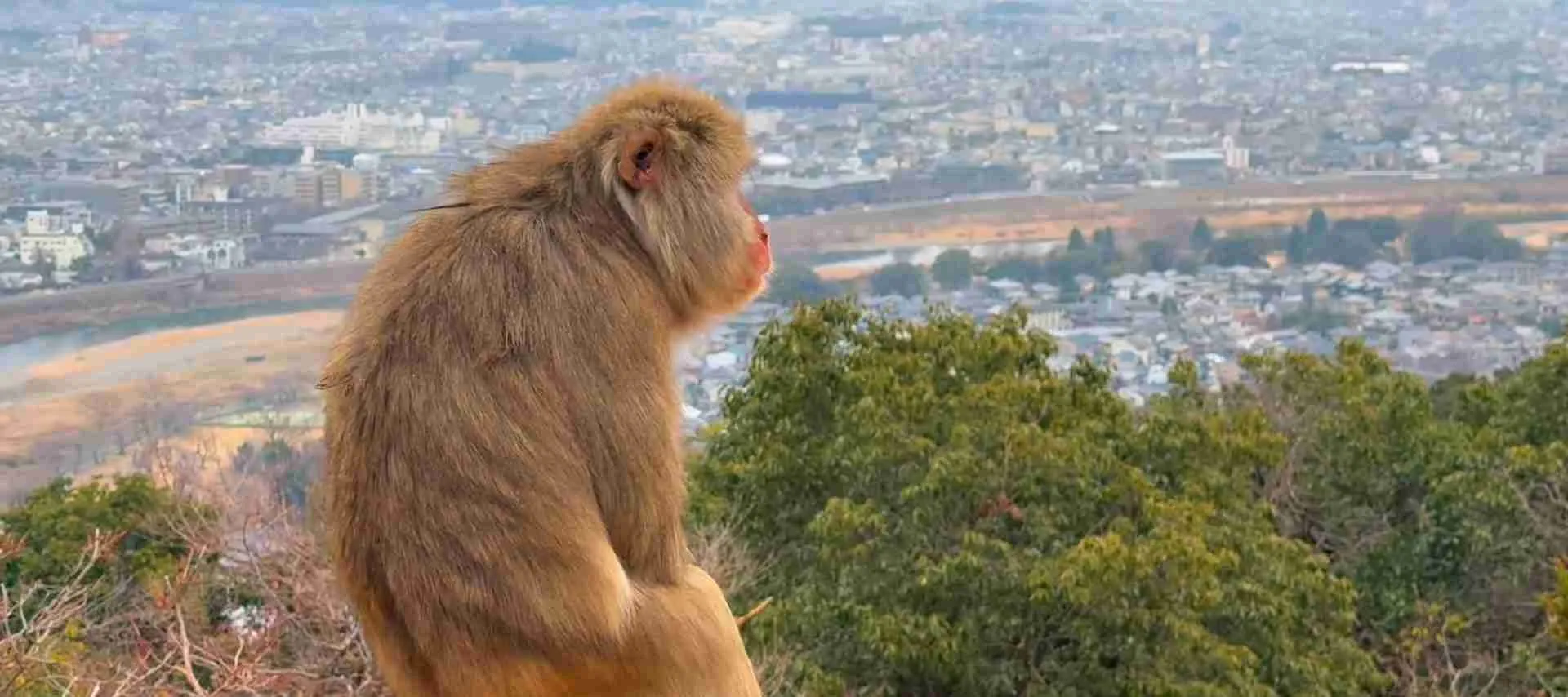
Iwatayama Monkey Park inverts traditional zoo dynamics—human visitors occupy enclosed feeding stations while 120 wild Japanese macaques (Macaca fuscata) roam freely across forested mountain slopes, approaching wire-mesh buildings seeking food treats from enclosed tourists. This unique arrangement enables close wild animal observation while maintaining safety separation and respecting macaque natural behaviors. The park occupies Mount Iwatayama’s 160-meter summit requiring steep 20-minute uphill hike from entrance to viewing area, delivering dual rewards of monkey interaction plus panoramic Kyoto city vistas.
Monkey Park Access and Admission 2026
The park entrance stands immediately south of Togetsukyo Bridge along Katsura River’s south bank, marked by distinctive signage and ticket booth collecting ¥800 adult admission (high school and older), ¥400 children ages 4-15 (younger than 4 free). The site operates cash-only payment—ATMs available at convenience stores along Arashiyama main street 5-minute walk from entrance. Operating hours span 9:00 AM-4:00 PM daily throughout year (4:00 PM final admission, park closes 4:30 PM), with potential temporary closures during extreme weather (heavy rain, snow, typhoons) when steep paths become hazardous or monkeys retreat to deeper forest avoiding harsh conditions. Phone ahead (075-872-0950) during questionable weather confirming operational status before making special trip.
The uphill trail climbs 160 vertical meters via combination of stairs (approximately 120 steps) and sloped pathway through natural forest, requiring 15-25 minutes ascent depending on individual fitness levels and pace. The route features intermediate rest benches and educational signage describing Japanese macaque ecology, behavior, and conservation—reading these informational panels extends ascent to 25-30 minutes while providing context enriching subsequent monkey viewing. Descent requires 15-20 minutes via same route. The trail surface alternates between paved sections, packed dirt, and occasional rough natural terrain—sturdy walking shoes essential, high heels or dress shoes wholly inappropriate. Moderate physical fitness suffices for most visitors though elderly individuals or those with mobility limitations should carefully assess capability before attempting ascent as no alternative access (no elevator, vehicle road, or cable car) exists.
Summit facilities include covered rest house with wire-mesh openings enabling food passing to monkeys, outdoor viewing platforms, restrooms, and vending machines. Monkey food (peanuts, apple pieces) sells for ¥100 per bag inside rest house—purchase enables direct monkey feeding through mesh windows where macaques eagerly reach through requesting treats. Staff monitor all feeding ensuring safety protocols adherence and answering visitor questions about troop social structure, individual monkey identities (staff track maternal lineages and name individual animals), and behavioral patterns.
Monkey Viewing and Interaction Guidelines 2026
The macaque troop comprises approximately 120 individuals across multiple generations, with documented maternal lineages tracked since park founding 1958 providing valuable scientific data for primate researchers. Visitors observe typical monkey social behaviors including grooming, playing, dominance displays, feeding, and mother-infant interactions as troops roam freely across outdoor spaces while humans remain in designated “cages” (the enclosed rest house and platforms). This reversal creates memorable perspective shift—being the “observed” rather than observer generates unique zoo experience impossible at traditional facilities.
Critical safety rules mandate strict adherence: never touch monkeys regardless of proximity or apparent tameness—these remain wild animals capable of scratching or biting if threatened; never stare directly into monkey eyes as sustained eye contact signals aggression triggering defensive responses; never approach closer than 2 meters to any individual monkey; keep cameras and phones at respectful distance as sudden movements or equipment thrust toward animals creates stress; never bring outside food into viewing areas as this attracts aggressive food-seeking behaviors; never attempt feeding outside designated mesh windows in rest house; supervise children continuously preventing rule violations through ignorance or excitement. Violation risks immediate ejection from park without refund plus potential injury from disturbed animals.
Baby monkeys (infants clinging to mothers) appear spring through summer creating particularly photogenic viewing opportunities, though monkeys remain present and active year-round. Winter months see thicker fur coats and closer human structure approaches as macaques seek supplemental feeding, while summer generates increased activity levels and dispersed ranging across mountain slopes. Optimal viewing windows span 10:00 AM-2:00 PM when troop concentrates near summit feeding areas, though arrival near opening (9:00 AM) or later afternoon (2:30-3:30 PM) reduces human visitor crowding enabling more relaxed observation.
Monkey Park Summit Panoramic Views 2026
The 160-meter summit elevation provides exceptional Kyoto cityscape panoramas impossible from valley floor, with sight lines encompassing downtown Kyoto (Kyoto Tower visible on clear days), surrounding mountains, Katsura River valley, and temple rooftops dotting forested hillsides. Photography captures both monkey subjects with city backdrops and pure landscape compositions demonstrating Arashiyama’s scenic geography. Telephoto lenses (70-200mm) work well for isolated monkey portraits plus compressed cityscape views, while wide angles (16-35mm) encompass combined monkey activity and background vistas.
Clear weather dramatically affects view quality—sunny days with minimal humidity deliver sharp distant visibility whereas hazy or overcast conditions obscure cityscape detail while maintaining satisfactory monkey viewing. Morning hours (9:00-11:00 AM) typically offer clearest atmospheric conditions before afternoon heat generates haze, though monkey activity levels remain consistent throughout operational hours. The dual attractions of wildlife observation plus photography opportunities justify ¥800 admission for most visitors, though those indifferent to primates or unable to complete steep hike should skip in favor of other Arashiyama attractions requiring less physical demand.
Togetsukyo Bridge and Riverside District 2026
Togetsukyo Bridge—literally “Moon Crossing Bridge”—spans 155 meters across Katsura River (locally called Hozu River in this section) connecting Arashiyama’s main commercial district south bank with quieter northern residential areas. The iconic wooden-style bridge reconstruction completed post-World War II maintains traditional aesthetic while utilizing modern concrete infrastructure supporting vehicle traffic alongside pedestrian walkways. The bridge’s scenic position framed by mountains creates quintessential Kyoto landscape composition featured in countless photographs, paintings, and films across centuries of Japanese artistic tradition.
Bridge Access and Photography Opportunities 2026
The bridge requires zero admission charges, accessible 24 hours daily to both pedestrians and vehicles (though vehicle traffic minimal during tourist season when congestion discourages automobile access). Walking the 155-meter span requires 3-5 minutes at tourist pace with frequent stops for river viewing and photography. Wide pedestrian walkways accommodate heavy foot traffic though weekend peak periods (10:00 AM-3:00 PM) generate shoulder-to-shoulder density compromising comfortable transit. The bridge’s traditional wooden railing and deck appearance (actually modern fire-resistant synthetic materials resembling wood) creates historical atmosphere while ensuring structural integrity and safety.
Photography opportunities concentrate on several vantage points: river’s edge on either bank shooting toward bridge with mountain backdrop, mid-bridge positions capturing river flow and surrounding scenery in both directions, and elevated perspectives from nearby temple grounds or hills overlooking bridge-river-mountain composition. Spring cherry blossoms line riverbanks creating pink frame, autumn foliage generates red-orange accents, summer’s intense green provides cooling color, and winter snow transforms scene into monochromatic ink painting aesthetic. Sunrise and sunset timing (golden hour 6:00-7:30 AM and 5:00-6:30 PM depending on season) delivers optimal lighting conditions with horizontal rays illuminating mountains and casting long shadows across river surface.
The northern bridge approach connects to Iwatayama Monkey Park entrance (50 meters east along river path), while southern approach opens to Arashiyama’s main commercial street filled with restaurants, souvenir shops, and traditional craft stores. Riverside paths extend both directions enabling extended walking—upstream (west) toward Hozu River gorges and Sagano Scenic Railway departure point (2 kilometers), downstream (east) toward urban Kyoto (continuous path not advisable for tourists as it transitions into industrial zones).
Riverside Park and Seasonal Activities 2026
Arashiyama Park (Nakanoshima section) occupies small island mid-river accessible via bridge, providing open lawns for picnicking, cherry blossom viewing, and riverside relaxation during pleasant weather months. The park charges zero admission, operating 24-hour open access though practical visiting hours align with daylight 6:00 AM-7:00 PM. Spring cherry blossom season (late March-early April) transforms park into hanami party venue with families and groups spreading blankets for traditional flower-viewing picnics accompanied by food and sake. Autumn foliage (mid-November) generates similar social gatherings celebrating koyo (autumn leaf viewing).
Summer months (July-August) feature traditional cormorant fishing demonstrations (ukai) on Katsura River where trained birds catch fish for fishermen handlers—ancient technique preserved as cultural heritage and tourist attraction. Evening boat cruises (¥3,000 per person, 1-hour duration) enable close viewing of cormorant fishing process with boat operators providing English-language narration explaining techniques and history. Advance reservations required during peak season (contact local tourism offices or hotels for booking assistance). The tradition operates limited season July 1-September 23, weather and river conditions permitting.
Additional Arashiyama Temples and Attractions 2026
Beyond the primary trio (Bamboo Grove, Tenryu-ji, Monkey Park), Arashiyama concentrates numerous secondary temples, gardens, and cultural sites within walkable territory. Comprehensive multi-day exploration uncovers these lesser-visited locations offering intimate experiences free from overwhelming crowds endemic to famous primary attractions.
Northern Sagano Temple Circuit 2026
Jojakko-ji Temple perches on hillside 10-minute walk north from Bamboo Grove, accessible via stepped approach climbing through maple forest particularly stunning during November autumn foliage (admission ¥500, hours 9:00 AM-5:00 PM). The temple’s elevated position provides Kyoto panoramic views rivaling Monkey Park vistas without steep hiking requirements, though approach stairs challenge mobility-limited visitors. Small intimate temple grounds receive fraction of Tenryu-ji visitor numbers enabling peaceful contemplation. Combined visit with nearby Nison-in Temple (5-minute walk, ¥500 admission) and Gio-ji Temple (8-minute walk, ¥300 admission) creates comprehensive northern Sagano cultural circuit requiring 2-3 hours total exploration.
Gio-ji Temple specializes in moss garden aesthetic with thatch-roofed main hall creating quintessential traditional Japanese scene. The tiny temple grounds (10-minute complete viewing) attract fewer visitors than famous neighbors, providing intimate contemplative space particularly appealing during light rain when moss luminosity increases and tourist numbers decline. Nison-in Temple features dual principal images (Shaka and Amida Buddhas) rare in Japanese Buddhism, plus extensive autumn foliage transforming precincts into crimson tunnel each November attracting seasonal visitors.
Okochi Sanso Villa and Gardens 2026
Okochi Sanso preserves estate of silent film actor Denjiro Okochi (1898-1962) as museum villa demonstrating early-20th-century wealthy Japanese residential architecture and garden design. The extensive 20,000-square-meter grounds encompass multiple gardens, tea houses, walking paths, and preserved residences commanding spectacular Hozu River gorge and Arashiyama mountain panoramas. Admission costs ¥1,000 including matcha green tea and traditional sweet served in villa tea house—essentially paying ¥600-700 garden entrance after accounting for ¥300-400 typical matcha set value elsewhere. Operating hours 9:00 AM-5:00 PM provide ample visitation windows.
The villa positions at Bamboo Grove’s northern terminus, accessed by walking complete bamboo path then continuing 3-5 minutes uphill to entrance gate. This location enables efficient combination: Tenryu-ji Temple garden → Bamboo Grove → Okochi Sanso sequential touring consuming 3-4 hours total. The estate’s relative obscurity (overshadowed by more famous Arashiyama attractions) maintains comfortable visitor density even during peak seasons. Photography enthusiasts appreciate diverse compositions combining traditional architecture, carefully groomed gardens, mountain vistas, and seasonal botanical changes. Autumn foliage and spring cherry blossoms generate peak beauty though garden’s meticulous maintenance ensures year-round visual appeal.
Sagano Scenic Railway Experience 2026
The Sagano Romantic Train operates vintage open-sided rail cars along 7.3-kilometer route from Saga Torokko Station (adjacent JR Saga-Arashiyama Station) through Hozu River gorge to Kameoka, requiring 25 minutes one-way (¥880 per segment, round-trip ¥1,760). The scenic railway primarily operates March-December with limited winter service January-February depending on weather and demand. Trains depart hourly 9:00 AM-4:00 PM peak season (more frequent during autumn foliage peak), with advance reservations recommended particularly autumn weekends when services sell out weeks ahead. Purchase tickets at Saga Torokko Station upon arrival or book online via JR West website.
The journey traces Hozu River through forested gorge featuring dramatic rock formations, rapids, and seasonal vegetation changes. Autumn foliage (November) ranks as premiere viewing period when mountain slopes explode in crimson and gold generating peak demand and highest ticket prices. Spring cherry blossoms (late March-early April) create alternative scenic peak. The open-window design enables unobstructed photography and immersive natural atmosphere though weather impacts comfort—rain creates wet conditions, summer heat generates sweltering car interiors, while spring and autumn provide optimal temperature comfort. Car 5 “Rich” coach features completely open sides (no windows) for photography enthusiasts willing to accept weather exposure.
The Kameoka terminus connects to return transportation: Hozu River boat cruise back to Arashiyama (2 hours, ¥4,100, operates March-November) providing downstream floating journey through rapids and scenic gorges, or return Sagano Railway train to Saga Torokko Station. Combined train-boat circuit consumes 4-5 hours total requiring dedicated half-day commitment extending beyond typical Arashiyama touring. Budget travelers skip this ¥4,980 combined experience (¥880 train + ¥4,100 boat) in favor of free or low-cost primary attractions, while comprehensive Arashiyama enthusiasts or return visitors seeking novel experiences find value in unique gorge perspectives.
Arashiyama Dining and Shopping 2026
Arashiyama’s main commercial street and surrounding lanes concentrate hundreds of restaurants, cafés, and specialty shops catering to tourist traffic while maintaining authentic local character through family-operated establishments and regional specialty foods. Strategic dining timing avoids peak lunch rush (12:00-1:30 PM) when popular restaurants generate 30-60 minute waits.
Traditional Kyoto Cuisine Dining Options 2026
Shigetsu, Tenryu-ji Temple’s on-site restaurant, specializes in shojin ryori (Zen Buddhist vegetarian cuisine) served in tatami room overlooking temple gardens. Multi-course set menus range ¥3,000-6,000 depending on elaboration, featuring seasonal vegetables, wild mountain plants, tofu preparations, and pickles arranged with aesthetic precision reflecting Zen philosophy. The restaurant received Michelin Bib Gourmand designation recognizing quality-to-value ratio. Advance reservations strongly recommended particularly during autumn foliage season (phone 075-882-9725, Japanese language). Operating hours 11:00 AM-2:00 PM daily.
Yudofu (tofu hotpot) restaurants cluster along Arashiyama streets, serving Kyoto’s signature simple yet elegant preparation featuring premium-quality tofu simmered in kelp broth accompanied by condiments. Set meals cost ¥1,500-3,000 at mid-range establishments (Togetsu, Shigetsu, Arashiyama Yoshimura) or ¥5,000-8,000 at high-end restaurants (Arashiyama Benkei) offering kaiseki-style expanded courses. Yudofu’s delicate flavors suit post-temple contemplative dining, though Western palates unaccustomed to subtle preparations may find the dish underwhelming—order cautiously first-time or supplement with additional items.
Soba noodle shops provide quick economical lunch options at ¥800-1,500 for filling bowls of buckwheat noodles in hot broth or cold presentation. Arashiyama Yoshimura specializes in hand-made soba with windows overlooking Togetsukyo Bridge enabling dining with scenic views. Street food stands along main commercial areas sell yakitori (grilled chicken skewers ¥300-500), dango (sweet rice dumplings ¥300-400), and seasonal specialties requiring no restaurant seating or reservation planning.
Cafés and Contemporary Dining 2026
% Arabica Kyoto Arashiyama, part of international specialty coffee chain, occupies riverside location with outdoor terrace seating commanding Katsura River and mountain views. Premium coffee drinks ¥500-800 attract Instagram-oriented crowds photographing minimal white-aesthetic cups against scenic backdrops—expect queues during weekend peak hours (11:00 AM-3:00 PM). Ebisubya Furui Roastery provides alternative coffee destination with traditional machiya townhouse setting and artisan roasting approach attracting coffee enthusiasts seeking authentic local atmosphere versus Instagram trends.
Contemporary restaurants and fusion cuisine options increasingly populate Arashiyama appealing to international palates: Italian trattorias, French bistros, and modern Japanese restaurants serving accessible preparations familiar to Western diners hesitant about traditional Kyoto cuisine’s subtle flavors and unfamiliar ingredients. These establishments charge ¥2,000-4,000 lunch sets and ¥5,000-8,000 dinner courses with English menus and credit card acceptance versus traditional restaurants’ cash-only policies.
Souvenir and Craft Shopping 2026
Bamboo products dominate souvenir offerings reflecting Arashiyama’s defining natural resource—baskets, kitchen utensils, chopsticks, tea whisks, decorative items, and accessories crafted from locally harvested bamboo. Traditional craft shops demonstrate artisan techniques and sell high-quality handmade goods at premium prices (¥3,000-30,000+ depending on item complexity), while tourist-oriented stores offer mass-produced imports at ¥500-2,000 price points. Discerning shoppers carefully examine quality and origin seeking authentic local crafts versus cheap imports.
Kyoto-style textiles, ceramics, tea products, and confectionery fill shop displays alongside bamboo goods. Yatsuhashi (cinnamon-flavored rice flour sweets, Kyoto’s signature omiyage souvenir) sell in beautifully packaged boxes at ¥500-2,000 suitable for gift-giving to family and colleagues. Green tea and matcha products including tea ceremony-grade powders, accessories, and sweets cater to tea enthusiasts seeking authentic Kyoto heritage items. Budget ¥2,000-10,000 for meaningful souvenir shopping depending on quantity and quality preferences.
Seasonal Considerations Arashiyama 2026
Arashiyama transforms dramatically across seasons, with distinct visual character, visitor density, and practical planning requirements varying from winter through autumn. Strategic seasonal selection balances aesthetic preferences against crowd tolerance and weather considerations.
Spring Cherry Blossom Season 2026
Late March through early April delivers Kyoto’s famous cherry blossom season when thousands of sakura trees lining Arashiyama’s riverbanks, temple grounds, and mountain slopes burst into ephemeral pink bloom lasting 7-10 days. Peak bloom timing varies yearly by 5-7 days depending on winter-spring temperature patterns—2026 forecasts predict late March peak (March 25-April 3 approximate window). The season generates maximum tourist volume (300-400% increases versus baseline) creating sustained crowding across all attractions, fully-booked accommodations requiring 3-4 month advance reservations, and premium pricing at hotels and restaurants.
Cherry blossom viewing combines with cultural tradition of hanami (flower viewing parties) where Japanese families and friends gather for outdoor picnics beneath blooming trees. Riverbank parks and temple grounds fill with blue tarps staking territory from early morning through evening, creating festive social atmosphere distinct from other seasons’ contemplative quiet. Photographers appreciate pink accent colors highlighting traditional architecture though human congestion complicates composition. Weather unpredictability (spring rain accelerates petal fall from 10 days to 4-5 days) requires flexible scheduling and acceptance that perfect timing remains impossible to guarantee.
Autumn Foliage Peak Season 2026
Mid-November through early December transforms Arashiyama’s deciduous forests into crimson, orange, and gold panorama rivaling cherry blossom season for visual spectacular and exceeding spring for sustained duration (3-4 weeks color versus 7-10 days sakura). Maple trees (momiji) provide primary autumn color concentrating around temples particularly Tenryu-ji, Jojakko-ji, and Gio-ji. Peak foliage timing centers on November 20-30 typically, though climate variations shift dates ±5-7 days yearly. The season attracts equal or greater tourist numbers versus spring, generating identical crowding, accommodation shortages, and premium pricing challenges.
Autumn’s unique advantage combines extended color duration enabling flexible scheduling less dependent on precise timing, cooler comfortable temperatures (10-18°C daytime versus spring’s 12-20°C), and generally stable weather (autumn ranks Kyoto’s driest season) reducing rain disruption risks versus spring’s precipitation volatility. Special illumination events (yozakura momiji) light temple grounds and gardens after sunset creating dramatic night viewing opportunities unavailable spring. The trade-off accepts cold morning and evening temperatures requiring layered clothing versus spring’s moderate conditions.
Summer Green Season and Winter Quiet Period 2026
June through August experiences Kyoto’s heaviest rainfall (June rainy season tsuyu) and peak heat-humidity (July-August highs 32-35°C with 70-80% humidity creating oppressive conditions). Tourist numbers decline 40-60% versus spring-autumn peaks, delivering uncrowded attractions and economical accommodation though visual beauty diminishes as monochromatic intense green replaces seasonal flower/foliage color. Early morning visits (6:00-9:00 AM) avoid worst heat while maintaining comfortable exploration temperatures. The Bamboo Grove provides natural shade and cooling atmosphere making it summer’s most pleasant Arashiyama attraction.
Winter months (December-February) bring cold temperatures (daytime 5-10°C, overnight below freezing) and occasional snow transforming Arashiyama into monochromatic ink painting aesthetic particularly atmospheric during snowfall events. Tourist numbers reach annual lows enabling unprecedented peaceful temple viewing and empty Bamboo Grove walking though visual beauty depends on personal preference for stark winter landscapes versus vibrant seasonal color. Budget travelers benefit from lowest annual accommodation pricing and zero crowding at major attractions. The Monkey Park occasionally closes during heavy snow when trail conditions become hazardous.
Arashiyama Multi-Day Itinerary Integration 2026
Single-day Arashiyama visits dominate typical tourist patterns, though the district rewards extended exploration through multi-day stays or repeated visits during Kyoto trips. Strategic integration into broader Kyoto touring balances Arashiyama’s suburban location against central city attractions.
Half-Day Arashiyama Essential Circuit 2026
Time-constrained visitors or those prioritizing central Kyoto sites complete essential Arashiyama touring within 3-4 hour morning or afternoon blocks. Morning arrival 7:00-8:00 AM enables Bamboo Grove empty walking (30 minutes), Tenryu-ji Temple garden contemplation during soft light (60 minutes), and Togetsukyo Bridge photography (15 minutes) before 11:00 AM central Kyoto return for afternoon touring elsewhere. This compressed schedule sacrifices Monkey Park, secondary temples, and leisurely dining but captures primary attractions’ essence. Afternoon alternatives arriving 2:00-3:00 PM enable same primary attractions touring though Bamboo Grove crowds intensify and Tenryu-ji lighting changes—suitable when morning hours committed to central Kyoto temples (Kinkaku-ji, Ryoan-ji) preceding western district transit.
Full-Day Comprehensive Arashiyama Experience 2026
Dedicated Arashiyama days enable complete district exploration including all primary attractions plus secondary temples, scenic railway, extended dining, and spontaneous discoveries along neighborhood lanes. Sample itinerary: 7:00 AM Kyoto Station departure arriving 7:15 AM Saga-Arashiyama Station, 7:30-8:15 AM Bamboo Grove empty walking and photography, 8:30-10:00 AM Tenryu-ji Temple garden visit, 10:15-10:45 AM Togetsukyo Bridge and riverside walking, 11:00 AM-12:30 PM early lunch avoiding rush, 1:00-3:30 PM Iwatayama Monkey Park hike and viewing, 4:00-5:30 PM northern Sagano temples (Jojakko-ji, Gio-ji), 5:45-7:00 PM dinner and shopping, 7:30 PM return Kyoto Station. This 12-hour itinerary delivers comprehensive coverage without rushing though demands sustained walking stamina (12-15 kilometers total distance). Flexibility enables activity order swapping or afternoon coffee breaks when fatigue develops.
Arashiyama Multi-Day Stay Alternative 2026
Overnight Arashiyama accommodation (traditional ryokan or hotels) enables early morning and evening district enjoyment after day-trippers depart to central Kyoto. Dawn bamboo grove walking (6:00-7:00 AM) achieves genuine solitude impossible during day-tripper windows, evening riverside strolling provides local neighborhood atmosphere versus tourist district daytime energy, and extended 2-day schedules permit both comprehensive primary attraction touring plus relaxed secondary site exploration without time pressure. Arashiyama accommodations command premium pricing (¥20,000-60,000+ per room nightly versus ¥12,000-30,000 comparable Kyoto Station area properties) and limited inventory requires advance booking, but location benefits and atmospheric advantages justify costs for travelers prioritizing serene experiences over budget optimization.
Practical Planning Information Arashiyama 2026
Strategic logistics management enhances Arashiyama experiences through advance planning, appropriate expectations, and prepared responses to common challenges.
Luggage Storage and Facilities 2026
Saga-Arashiyama Station provides coin lockers (¥300-700 depending on size) enabling luggage storage for travelers incorporating Arashiyama into multi-city itineraries or checking out from Kyoto accommodations before departure. Medium lockers (¥500) accommodate typical carry-on suitcases while large lockers (¥700) handle full-size checked luggage. Locker availability fluctuates throughout day—morning hours (7:00-9:00 AM) maintain good availability whereas afternoon periods (12:00-4:00 PM) often reach capacity particularly weekends and peak seasons. Alternative luggage forwarding services (takuhaibin) enable sending bags directly from Kyoto hotels to next destination (Tokyo, Osaka, airports) for ¥1,500-3,000 per bag arriving next-day, liberating travelers for comfortable day touring without luggage burden.
Public restrooms concentrate at train stations (Saga-Arashiyama, Keifuku Arashiyama, Hankyu Arashiyama), major temples (Tenryu-ji), tourist information centers, and riverside parks. Facilities maintain Japanese-style clean standards with mix of traditional squat toilets and Western seated options. Convenience stores (7-Eleven, Lawson) along main streets provide public restroom access typically without purchase requirements though courtesy purchases (drink, snack) demonstrate appreciation. Restaurants and cafés restrict restroom use to customers requiring meal or beverage purchase for access—plan strategic café stops when nature calls during extended walking tours.
Weather Preparation and Clothing Strategy 2026
Kyoto’s seasonal weather variations demand appropriate clothing planning. Spring (March-May) and autumn (September-November) require layered approaches: light jacket or cardigan for cool mornings (8-12°C), short sleeves for warm afternoons (18-25°C), and outer layer restoration for evening cooling (10-15°C). Comfortable walking shoes with good traction essential for temple grounds, Monkey Park hiking, and extended pavement walking—athletic sneakers or supportive walking shoes ideal versus dress shoes, heels, or flimsy sandals. Summer necessitates sun protection (hat, sunscreen, sunglasses), light breathable fabrics, and water bottle for hydration during 30-35°C heat. Winter demands warm coat, gloves, scarf for near-freezing temperatures though indoor heated restaurant and café breaks provide relief.
Rain gear remains advisable year-round but particularly spring (April-May) and rainy season (June) when precipitation probabilities increase. Compact folding umbrellas balance portability with protection—purchase at convenience stores (¥500-1,000) if unexpected rain develops. The Bamboo Grove’s dense canopy provides partial rain protection enabling continued visits during light precipitation though heavy rain creates slippery paths and diminished atmosphere justifying schedule adjustments. Temple gardens remain accessible during rain with covered viewing areas protecting visitors while observing natural scenery.
Accessibility and Mobility Considerations 2026
Arashiyama presents mixed accessibility. Bamboo Grove pathways feature smooth paved surfaces enabling wheelchair navigation though crowds during peak periods compress available width creating challenging conditions. Tenryu-ji Temple garden maintains wheelchair-accessible paths throughout pond circuit with no steps or steep grades, making it Arashiyama’s most mobility-friendly major attraction. Saga-Arashiyama Station provides elevator access and accessible restrooms. The Monkey Park explicitly excludes wheelchair access due to steep trail with stairs—mobility-limited visitors must skip this attraction. Secondary temples (Jojakko-ji, Gio-ji, Nison-in) feature stairs and uneven terrain creating accessibility challenges.
Elderly visitors with normal mobility but limited stamina should consider Arashiyama’s walking demands. The district touring covers 8-15 kilometers depending on attractions selected, concentrated within 3-6 hour windows. Strategic rest stops at cafés, temple benches, and riverside seating enable recuperation though extended standing and walking remains unavoidable. Electric wheelchairs or scooters navigate main streets successfully though narrower temple paths and Bamboo Grove crowding during peak periods create difficulties. Advance accessibility research and realistic capability assessment prevents frustrating experiences or safety issues during visits.
Frequently Asked Questions Arashiyama 2026
Is Arashiyama worth visiting if I only have 2-3 days in Kyoto during 2026?
Yes, Arashiyama justifies inclusion even in limited Kyoto itineraries, though evaluate priorities against alternatives. First-time Kyoto visitors typically prioritize central city temples (Kinkaku-ji, Fushimi Inari, Kiyomizu-dera, Gion district) consuming 2-3 days, leaving Arashiyama as secondary addition when 4+ days available. However, Arashiyama’s unique combination of UNESCO temple, iconic bamboo forest, and monkey park delivers distinctive experiences unavailable elsewhere in Kyoto, justifying half-day allocation (3-4 hours morning) within compressed schedules. The Bamboo Grove’s international recognition and photographic appeal specifically drives many travelers’ Kyoto visit motivations—if bamboo forest walking represents primary interest, Arashiyama becomes mandatory inclusion. Budget-conscious visitors appreciate the district’s free primary attraction (Bamboo Grove), economical admission costs (Tenryu-ji ¥500, Monkey Park ¥800), and abundant dining options across price ranges enabling comprehensive touring without premium expenditures. Weather disruptions or fatigue affecting other planned sites creates flexibility for spontaneous Arashiyama afternoon additions via quick 15-minute train access from Kyoto Station. The district’s compact geography enables efficient 3-hour essentials coverage (Bamboo Grove, Tenryu-ji Temple, Togetsukyo Bridge) without full-day commitment, making it reasonable squeeze-in for tight schedules. Skip Arashiyama only when disinterested in nature attractions, prioritizing pure temple/shrine cultural experiences, or visiting during summer heat when extended outdoor walking becomes uncomfortable—central Kyoto’s higher-density temple circuit then provides superior time efficiency.
Do I need to buy advance tickets for any Arashiyama attractions in 2026?
No advance ticketing required for primary Arashiyama attractions—Bamboo Grove charges zero admission with open 24-hour access, Tenryu-ji Temple sells tickets at entrance upon arrival, and Iwatayama Monkey Park operates walk-up admission only. This spontaneous accessibility contrasts with some Kyoto attractions (Nijo Castle, Kinkaku-ji during peak seasons) implementing advance reservation systems or timed entry, enabling flexible Arashiyama scheduling without pre-planning stress. The Sagano Scenic Railway (Romantic Train) represents the single exception requiring advance reservations during autumn foliage peak season (November) when scenic trains sell out days or weeks ahead—purchase tickets upon arrival at Saga Torokko Station for same-day travel or book online via JR West website for future dates. The railway operates hourly departures with substantial capacity, though November weekend slots fill quickly among domestic tourists planning autumn foliage viewing specifically. Spring cherry blossom season and summer green periods maintain walk-up availability even weekends. Temple restaurants (Shigetsu at Tenryu-ji) benefit from advance reservations particularly during peak lunch periods (12:00-1:30 PM) and autumn foliage season, though walk-in availability exists with potential wait times. The lack of advance ticketing requirements enables weather-dependent scheduling—visitors monitor morning conditions then decide same-day whether to proceed with Arashiyama plans versus alternative indoor activities during rain or adjust timing based on crowd predictions (weekday vs weekend patterns). Budget 30-60 extra minutes padding around entrance queues during absolute peak periods (autumn foliage season weekend midday) when even walk-up attractions experience temporary line congestion, though typical visiting windows maintain minimal delays.
Can I visit Arashiyama bamboo grove and temples while wearing kimono during 2026?
Yes, kimono wearing remains acceptable and increasingly common at Arashiyama attractions, though practical considerations affect comfort and mobility. Kimono rental shops concentrate in central Kyoto (Gion, Higashiyama) rather than Arashiyama itself, requiring visitors to rent downtown then transit to Arashiyama wearing traditional dress—the 15-minute train ride poses no issues though kimono’s restricted leg movement and formal footwear (zori sandals) create walking challenges over extended touring days. Arashiyama’s attractions involve substantial walking distances (8-15 kilometers complete touring) and Monkey Park specifically requires steep 20-minute uphill hiking wholly inappropriate for kimono wearing. Budget visitors wearing rental kimono should limit Arashiyama activities to Bamboo Grove walking (30-45 minutes, flat paved paths), Tenryu-ji Temple garden viewing (45-60 minutes, mostly paved with some stairs), and Togetsukyo Bridge photography (20-30 minutes standing/walking), skipping Monkey Park and extended northern temple hikes incompatible with formal attire mobility restrictions. The Bamboo Grove specifically attracts numerous kimono-wearing visitors creating quintessential “Japanese aesthetic” photographs combining traditional dress with natural bamboo backdrop—this Instagram-worthy combination drives many rental decisions despite practical limitations. Traditional dress photography significantly extends visit durations as kimono necessitates careful movement preventing rushed transit between attractions. Rental shop return deadlines (typically 5:00-6:00 PM same day) constrain Arashiyama duration requiring strategic time management and potential early departure sacrificing extended exploration. Comfortable modern clothing enables fuller Arashiyama experiences including Monkey Park hiking, extended walking, spontaneous route additions, and comfortable all-day touring versus kimono’s 3-4 hour comfortable limit before formal garment fatigue develops. Reserve kimono wearing for compact central Kyoto districts (Gion, Higashiyama temples) where walking distances remain minimal and aesthetic contexts match traditional dress versus Arashiyama’s nature-focused extended touring better suited to athletic casual attire.
What should I do if Arashiyama Bamboo Grove is too crowded when I arrive in 2026?
Implement strategic crowd management approaches when encountering overwhelming bamboo grove congestion. First, assess whether temporary peak explains current density—large tour bus arrivals create 30-45 minute congestion pulses followed by thinning as groups depart, making it worthwhile waiting 20-30 minutes at nearby cafés before reattempting entry. Second, explore less-trafficked alternative routes: continue through main Bamboo Grove to northern terminus then follow branching pathways toward Okochi Sanso Villa or northern Sagano temples where parallel bamboo groves receive 70-80% fewer visitors while delivering comparable aesthetic experiences. Third, leverage the grove’s 24-hour open access by returning during less-popular windows—late afternoon (5:00-6:30 PM) after tour buses depart or following morning (7:00-8:00 AM) if overnight Arashiyama accommodation enables pre-breakfast walking. Fourth, accept and embrace crowd reality as authentic Arashiyama experience rather than fighting impossible battles—many visitors cultivate philosophical acceptance that popular attractions inherently generate crowds, finding value in shared humanity versus demanding private solitude at world-famous sites. Fifth, redirect attention to equally worthy but less-crowded Arashiyama attractions: Tenryu-ji Temple’s garden delivers premium cultural heritage experience often less congested than free Bamboo Grove; Monkey Park’s 20-minute uphill hike filters casual visitors maintaining manageable summit crowding; secondary temples (Gio-ji, Jojakko-ji) north of tourist center offer serene contemplative spaces free from masses. Sixth, pivot entirely to alternative Kyoto bamboo forests delivering similar aesthetics without Arashiyama’s overwhelming fame—Kodai-ji Temple’s bamboo garden (evening illuminations particularly atmospheric), Fushimi neighborhood’s scattered bamboo groves (free, local residential areas), and rural southern Kyoto paths provide options for photographers and nature enthusiasts frustrated by tourist congestion. Seventh, reframe visit timing expectations recognizing that no amount of advance planning guarantees empty conditions at globally famous attractions during operating hours—accept trade-offs between convenient scheduling and crowd avoidance, with perfect balance rarely achievable. The most effective crowd avoidance strategy remains early morning timing commitment (7:00-8:30 AM arrivals, potentially 6:30-7:00 AM during peak seasons) when serious photographers and contemplative travelers outnumber casual tourists creating qualitatively different atmosphere worth wake-up sacrifice.
Is Arashiyama suitable for young children and families during 2026 visits?
Yes, Arashiyama accommodates family visits well through child-friendly attractions, though age-appropriate activity selection and realistic expectations optimize experiences. The Iwatayama Monkey Park ranks as premier family highlight combining outdoor hiking adventure (children appreciate 20-minute forest trail with wildlife signage), animal observation (monkeys’ natural behaviors fascinate young viewers), and interactive feeding experience (¥100 food bags enable direct engagement)—this attraction typically justifies 2-2.5 hours occupying substantial family itinerary portion. Safety rules require parental supervision ensuring children maintain appropriate distance from monkeys, avoid prohibited touching attempts, and stay within designated viewing areas. The 120-step steep trail challenges youngest children requiring parent assistance or carrier transport for toddlers unable to complete hike independently. Recommended minimum age 4-5 years for self-walking, though families with infant carriers successfully navigate terrain. The Bamboo Grove delivers immediate visual impact appealing to children’s sense of wonder through dense towering stalks creating natural tunnel effect, though interest duration remains limited for young ages—15-20 minute bamboo walking suffices before children seek new stimuli versus adults’ extended contemplative lingering. Toddlers enjoy path running free from vehicle traffic creating safe outdoor play space, though peak crowding eliminates this freedom requiring constant hand-holding preventing lost children scenarios. Togetsukyo Bridge’s river viewing, fish observation, and wide pedestrian walkways enable comfortable family walking and pause points allowing children to watch water flow and identify wildlife. Tenryu-ji Temple’s garden provides variable family value depending on children’s cultural interest levels and patience for quiet observation—elementary age children with Japan cultural studies appreciation engage meaningfully whereas preschoolers find formal gardens less stimulating preferring active playground environments. The Sagano Scenic Railway’s vintage open-window train carriages appeal strongly to transportation-enthusiast children combining movement, scenery, and novelty—families with train-loving children consider this ¥1,760 round-trip investment worthwhile whereas families with indifferent children skip in favor of park play or riverside walking. Practical family considerations include: abundant public restrooms at stations and major attractions preventing desperate bathroom situations; riverside park areas enabling picnic breaks and energy release between structured attractions; convenience stores providing snack and beverage replenishment; and reasonable distances between sites preventing excessive walking for short-leg children. Stroller accessibility remains limited—Bamboo Grove’s paved paths accommodate strollers though crowds during peak periods create navigation difficulties; Tenryu-ji Temple’s garden paths work for strollers; but Monkey Park’s steep stairs preclude stroller use requiring baby carriers for non-walking children. Recommended family visit duration 4-6 hours enabling comprehensive primary attractions coverage without overscheduling leading to child exhaustion and parental frustration—strategic planning positions Arashiyama as morning or afternoon focus rather than full-day marathon. Combine with central Kyoto child-friendly attractions (Kyoto Railway Museum, Kyoto Aquarium, Nijo Castle) creating balanced itineraries mixing nature, culture, and targeted children’s interests.
How much money should I budget for a full day in Arashiyama during 2026?
Full-day Arashiyama visiting requires ¥3,500-8,500 per person depending on attraction selections, dining choices, and souvenir purchasing priorities. Basic budget breakdown: JR Sagano Line round-trip transportation ¥480 (free for JR Pass holders), Bamboo Grove free access ¥0, Tenryu-ji Temple garden admission ¥500, Iwatayama Monkey Park admission ¥800 plus monkey feeding ¥100-200, lunch ¥1,500-3,000 (mid-range traditional restaurant set meal), afternoon café break ¥500-800 (coffee and snack), dinner ¥2,000-5,000 (depending on restaurant tier), souvenirs ¥1,000-3,000 (optional craft purchases)—totaling ¥6,880-13,980 for comprehensive experiences including all meals and moderate souvenir shopping. Budget-conscious travelers minimize costs through strategic choices: prioritize free Bamboo Grove as primary attraction, skip Monkey Park (saving ¥800), eat convenience store lunch (onigiri, sandwiches, drinks ¥800-1,200 versus ¥1,500-3,000 restaurant sets), avoid afternoon café stops (carry water bottle), early dinner return to central Kyoto for less expensive non-tourist dining (saving ¥1,000-2,000 versus Arashiyama premium pricing), and resist souvenir purchases—reducing expenditures to ¥2,500-4,000 range covering only transportation, Tenryu-ji admission, and budget meal. Mid-range visitors allocating ¥6,000-8,000 balance attraction admission (Tenryu-ji ¥500, Monkey Park ¥800), comfortable traditional restaurant lunch (¥2,000-2,500), afternoon café break (¥600-800), and early evening departure before dinner—this bracket covers comprehensive sightseeing without luxury dining or excessive souvenir expenditure. Premium experiences extend to ¥10,000-15,000+ through combinations of: shojin ryori at Shigetsu restaurant (¥3,000-6,000 kaiseki courses), Okochi Sanso Villa admission (¥1,000 including tea service), Sagano Scenic Railway plus Hozu River boat (¥4,980 combined), upscale dinner at riverside restaurants (¥5,000-8,000 courses), and quality bamboo craft purchases (¥3,000-10,000)—these comprehensive luxury experiences suit return visitors or travelers prioritizing culinary and cultural depth over budget constraints. Cash remains essential as many small restaurants, temples, and shops don’t accept credit cards—withdraw sufficient yen before Arashiyama departure at Kyoto Station ATMs or central Kyoto banks. Budgeting flexibility enables spontaneous decisions: discovering appealing restaurant requiring extra expenditure, encountering irresistible craft item, or adding secondary temple visit requiring admission—maintain ¥2,000-3,000 cash buffer beyond planned baseline enabling opportunistic spending without financial stress. Groups benefit from cost-sharing: families or friend groups splitting taxi fares (¥3,500-4,500 divided by 3-4 passengers), sharing restaurant dishes enabling broader menu sampling, and group souvenir purchases qualifying for bulk discounts at some shops. Solo travelers absorb full individual costs without sharing opportunities, making budget-conscious approaches particularly important for independent visitors managing limited finances.
What is the best photography strategy for Arashiyama Bamboo Grove during 2026?
Successful Bamboo Grove photography requires strategic timing, technical approaches, and realistic expectations regarding crowd management. Optimal timing spans early morning 6:30-8:30 AM when empty pathways enable unobstructed compositions, soft horizontal sunlight creates dimensional side-lighting highlighting bamboo texture, and cool temperatures minimize heat haze reducing image clarity—this narrow window delivers 80-90% of published professional Arashiyama imagery dominating travel media despite requiring significant wake-up sacrifice. Second-tier timing includes late afternoon 5:00-6:30 PM when tour group departures thin crowds though visitor numbers remain substantially higher than morning, and overcast days providing even diffused lighting superior to harsh midday sun creating extreme contrast between bright sky and shadowed bamboo understory. Avoid midday periods (10:00 AM-3:00 PM) when overwhelming crowds eliminate composition control and harsh overhead lighting flattens three-dimensional depth. Equipment selection prioritizes wide-angle lenses (16-35mm full-frame equivalent) capturing towering bamboo height and pathway depth, with vertical orientation compositions emphasizing forest’s vertical geometry. Normal focal lengths (35-50mm) work for tighter compositions isolating specific bamboo groupings. Telephoto lenses (70-200mm) compress perspective emphasizing density and work for detail shots but require substantial distance from subjects difficult to achieve on narrow pathway. Technical camera settings balance shade challenges: ISO 400-800 compensating for forest understory darkness even during bright days, aperture f/5.6-8 maintaining front-to-back sharpness across depth of stacked bamboo columns, shutter speeds 1/60-1/125 second for handheld shooting or slower speeds with tripod stabilization. Manual exposure mode prevents camera auto-exposure from overexposing bright sky patches visible through bamboo gaps. Crowd management techniques include: early arrival (6:30-7:00 AM) for genuinely empty conditions, strategic positioning shooting in directions away from main tourist flow, long-exposure blurring (2-10 seconds with neutral density filter) transforming moving people into ghostly transparency or complete invisibility while static bamboo remains sharp, elevated viewpoints from slight rises shooting over foreground people, and patient waiting for momentary crowd gaps creating 5-10 second clear-shot windows. Accept that perfect crowd-free midday photography remains impossible at world-famous locations during reasonable visiting hours—photographers demanding empty conditions must commit to extreme timing (dawn arrival) or visit alternative less-famous bamboo groves throughout Kyoto. Compositional strategies include: leading lines using pathway perspective drawing eyes through frame, symmetrical compositions emphasizing bamboo columns’ vertical repetition creating rhythm, detail shots of individual bamboo stalk intersections and joints, monochrome conversion emphasizing texture and form over color, and incorporating human figures intentionally as scale references demonstrating bamboo’s towering height. Post-processing enhance greens’ saturation emphasizing vibrant coloration, increase contrast separating individual bamboo stalks visually, and apply localized adjustments balancing exposure across highlight and shadow zones. The Bamboo Grove’s famous aesthetic paradoxically photographs more impressively than experiencing visually—camera’s single viewpoint creates flatter two-dimensional representation actually emphasizing geometric pattern whereas direct viewing’s binocular vision and peripheral awareness reduce visual impact compared to constrained photographic framing. This disconnect partially explains Instagram’s bamboo grove obsession despite some visitors’ underwhelming direct experience.
Should I visit Arashiyama from Osaka or stay in Kyoto during 2026 trips?
Base accommodation location significantly impacts Arashiyama access efficiency and overall convenience. Travelers staying in Kyoto hotels (Kyoto Station area, Gion, Higashiyama) enjoy simplest Arashiyama access via 15-minute ¥240 JR train ride from Kyoto Station or alternative private railways from downtown areas, enabling flexible spontaneous visiting without complex advance planning—morning departures 7:00-8:00 AM reach Bamboo Grove for optimal crowd avoidance, with easy same-day returns for afternoon central Kyoto temple touring. Osaka-based travelers face longer access requiring 60-75 minutes each direction: JR Special Rapid from Osaka Station to Kyoto Station (¥570, 30 minutes), transfer to JR Sagano Line to Saga-Arashiyama (¥240, 15 minutes), plus platform navigation and potential waiting time between connections—total ¥810 each direction (¥1,620 round-trip) versus Kyoto-based ¥240-480. This extended transit consumes 2-2.5 hours daily dedicated purely to transportation reducing effective Arashiyama exploration time and energy, particularly problematic for half-day visits where transit represents 40-50% of total time investment. However, Osaka accommodation pricing typically runs 20-30% lower than equivalent Kyoto hotels (¥10,000-15,000 versus ¥12,000-20,000 nightly for similar quality), potentially offsetting increased transportation costs across multi-night stays while providing vibrant Osaka nightlife and dining scenes as base entertainment versus Kyoto’s earlier-closing more reserved atmosphere. JR Pass holders traveling free on JR trains find Osaka basing more attractive as incremental Arashiyama transportation costs disappear, making extended commutes inconvenient but not financially penalizing. Strategic hybrid approaches position travelers in Kyoto 2-3 nights covering Arashiyama plus central Kyoto temples efficiently, then transferring to Osaka remaining trip duration for southern Kansai exploration (Osaka Castle, Dotonbori, Nara day trips, Himeji Castle)—this split-accommodation strategy optimizes each base location’s access advantages while sampling both cities’ distinct characters. First-time Kansai visitors prioritizing Kyoto’s concentrated cultural heritage typically benefit from Kyoto-based accommodation despite higher nightly rates, as day-after-day efficient access to Arashiyama, Fushimi Inari, Kinkaku-ji, Gion, and eastern temple districts justifies premium costs through time savings and reduced fatigue versus daily Osaka-Kyoto commuting. Return visitors or those specifically prioritizing Osaka exploration find Osaka basing acceptable when treating Kyoto/Arashiyama as dedicated full-day excursions accepting extended transit as trip cost rather than daily inconvenience. Evaluate individual priorities: travelers valuing convenience, flexibility, and maximized sightseeing time choose Kyoto basing; budget-conscious visitors willing to sacrifice some convenience for cost savings and Osaka’s urban energy find Osaka basing workable particularly with JR Pass coverage eliminating variable transportation costs.
How does Arashiyama compare to Nara for day trips from Kyoto in 2026?
Arashiyama and Nara represent Kyoto’s two premier day-trip destinations though delivering fundamentally different experiences requiring assessment against personal interests. Arashiyama emphasizes natural beauty (Bamboo Grove, riverside scenery, forested mountains) integrated with cultural heritage (Tenryu-ji UNESCO temple, traditional craft shops, Zen gardens), positioning as scenic nature-culture hybrid day trip within Kyoto city limits. Nara centers on historical significance (UNESCO temple complexes including Todai-ji’s massive Buddha statue), thousand-year-old shrines, and famous free-roaming deer population interacting with visitors in Nara Park—culturally heavier focus versus Arashiyama’s nature balance. Access time favors Arashiyama (15 minutes, ¥240 from Kyoto Station) versus Nara (45 minutes, ¥720 each way via JR Nara Line), enabling easier Arashiyama incorporation into half-day schedules whereas Nara demands full-day commitment consuming 8-10 hours total. However, Nara’s concentrated temple district enables comprehensive touring within compact walkable zone (Todai-ji, Kasuga Taisha shrine, Kofuku-ji temple, Nara Park deer feeding all within 2-square-kilometer area) whereas Arashiyama spreads across larger geography requiring strategic routing avoiding backtracking. Crowd dynamics differ: Arashiyama’s Bamboo Grove generates extreme tourist concentration along single 300-meter pathway creating oppressive congestion during midday, while Nara distributes visitors across broader temple grounds and expansive park areas maintaining manageable density except immediate deer-feeding zones. Photographic opportunities differ: Arashiyama delivers iconic nature-focused bamboo forest compositions while Nara provides historical architecture-wildlife combinations (ancient temples with roaming deer foregrounds) unavailable elsewhere. Arashiyama suits travelers prioritizing natural scenery, outdoor walking, and atmospheric forest experiences, particularly appealing during seasons emphasizing landscape beauty (spring cherry blossoms, autumn foliage). Nara better serves history enthusiasts, Buddhist art appreciators, and families with children who enjoy animal feeding interactive experiences (deer feeding ¥200 cracker packs sold throughout park). Budget considerations slightly favor Arashiyama: Bamboo Grove free access plus single ¥500 temple admission delivers core experiences versus Nara requiring multiple temple admissions (Todai-ji ¥600, Kofuku-ji ¥300-900 depending on halls) totaling ¥1,000-2,000+ for comprehensive coverage. Strategic visitors dedicate separate days to both destinations during Kyoto stays rather than forced either-or choices—3-4 day Kyoto itineraries comfortably incorporate both Arashiyama morning plus central Kyoto afternoon on one day, and full Nara day trip separately. Limited 2-day Kyoto visitors must prioritize: choose Arashiyama when bamboo forest represents primary Japan photography goal or when preferring intimate nature-focused experiences; select Nara when temple architecture, historical scale, and deer interaction create stronger appeal or when traveling with children likely to engage more with animal feeding than contemplative forest walking. Weather factors into decisions: Arashiyama’s outdoor-heavy nature makes it weather-sensitive (rain reduces enjoyment), whereas Nara’s covered temple complexes enable satisfying visits during inclement conditions. Both destinations merit inclusion in comprehensive Kansai region touring, rewarding visitors with distinct memorable experiences rather than duplicative temple-and-nature combinations.
Can I see Mount Fuji from Arashiyama during 2026 visits?
No, Mount Fuji remains invisible from Arashiyama due to geographic separation (approximately 300 kilometers), intervening mountain ranges, and Earth’s curvature preventing direct sight lines between Kyoto’s western districts and distant Shizuoka-Yamanashi mountain peaks. This frequent visitor misconception arises from confusion conflating Japan’s various mountain landscapes—Arashiyama’s scenic Hozu River gorges and forested Arashiyama Mountains create dramatic natural backdrops but bear zero relationship to Mount Fuji’s iconic snow-capped volcanic cone located four prefectures away. Kyoto’s entire region lacks Mount Fuji visibility, with nearest Fuji viewing opportunities requiring Shinkansen transit to Hakone area (2+ hours west), Lake Kawaguchiko (2.5 hours), or central Tokyo’s towers (3 hours) where clear-day distant horizons permit sightings. Arashiyama specifically frames compositions with local mountains (Arashiyama Mountain rising 382 meters, Ogura Mountain 296 meters) providing green forested skylines rather than dramatic volcanic peaks. The Iwatayama Monkey Park summit (160 meters elevation) commands excellent Kyoto cityscape panoramas looking east across urban sprawl to distant mountains encircling the basin, but these ranges comprise local Kitayama and Higashiyama ridges unrelated to Mount Fuji. Travelers specifically prioritizing Mount Fuji viewing must dedicate separate trip segments to Fuji Five Lakes region, Hakone, or Tokyo positioning rather than expecting casual Kyoto-area sightings. The misconception potentially stems from confusing travel brochure imagery combining multiple Japan highlights (Kyoto temples, bamboo forests, Mount Fuji) into single promotional materials suggesting geographic proximity despite actual substantial separation. Strategic trip planning positions Mount Fuji viewing during Tokyo-Kyoto transit days: Shinkansen routes between cities pass within viewing distance of Fuji’s northern slopes, with right-side seats (Tokyo-to-Kyoto direction) providing optimal sight lines approximately 45 minutes after Tokyo departure near Shin-Fuji Station—this brief window enables iconic snow-capped mountain photography through train windows on clear days (roughly 40-50% visibility probability depending on season, with winter offering best success rates). Alternatively, dedicated Mount Fuji day trips from Tokyo (Lake Kawaguchiko, Hakone loops) or multi-day Fuji area stays deliver guaranteed viewing opportunities combined with surrounding natural beauty and onsen hot springs. Arashiyama deserves appreciation for its distinct scenic qualities—the Bamboo Grove’s towering green stalks, riverside Togetsukyo Bridge compositions, and forested mountain backdrops create memorable Japanese landscape aesthetics without requiring Mount Fuji presence. Attempting to force-fit Fuji viewing into Kyoto itineraries generates logistical complications and time costs better invested in Kyoto’s abundant UNESCO temples, traditional districts, and natural attractions concentrated within the ancient capital region. Enjoy each region’s unique offerings rather than expecting all of Japan’s disparate geographical highlights to cluster conveniently together—strategic trip planning allocates appropriate time to distinct areas (Tokyo-Fuji-Hakone, Kyoto-Nara-Osaka, Hiroshima-Miyajima) rather than unrealistic assumptions about simultaneous access from single base locations.