Antigua Guatemala Walking Tour 2026: Colonial Churches & Ruins
This comprehensive 2026 walking guide presents detailed routes connecting major churches and ruins, entrance fee information with current pricing, optimal timing strategies for photography and crowd avoidance, architectural highlights warranting extended attention, and practical logistics including rest stops, refreshment options, and safety considerations for solo travelers and families exploring Antigua’s extraordinary colonial heritage independently.
Key Takeaways
- Antigua’s 1.5 km × 1.5 km colonial core contains 30+ colonial churches and convent ruins accessible via flat cobblestone streets requiring 4-6 hours comprehensive walking coverage in 2026
- Major churches including La Merced, San Francisco, and Cathedral remain free entry with Q40-60 ($5-7.75) fees applying only to convent ruins and cloister access behind main structures
- Morning departure 8-9 AM captures optimal photography lighting, avoids midday heat (11 AM-2 PM when temperatures peak 23-25°C), and precedes afternoon rainstorms during May-October season
- The comprehensive walking circuit covers 4-5 km total distance with 15-20 significant stops requiring moderate fitness levels but no special equipment beyond comfortable shoes and sun protection
- Self-guided exploration costs Q100-150 ($13-19.50) total including all entrance fees, while guided tours charge Q200-300 ($25-38) with historical context and architectural interpretation in 2026
- Earthquake-damaged baroque facades and preserved colonial ruins create unique architectural landscape where deliberate preservation maintains romantic decay rather than complete restoration typical of European heritage sites
Introduction to Antigua’s Walking Tour Experience in 2026
Antigua Guatemala’s UNESCO World Heritage status derives primarily from its exceptional concentration of Spanish colonial religious architecture spanning 1543-1773 construction periods before catastrophic earthquakes forced capital relocation to Guatemala City. The resulting architectural preservation creates Central America’s premier walking tour destination where cobblestone streets connect 30+ churches, convents, and monastery ruins showcasing baroque, renaissance, and colonial architectural styles within compact, pedestrian-friendly urban core.
The 2026 walking season benefits from ongoing restoration projects improving structural stability without compromising romantic ruin aesthetics that characterize Antigua’s unique preservation philosophy. Unlike European colonial sites emphasizing complete restoration, Antigua deliberately maintains earthquake-damaged facades, roofless naves, and collapsed bell towers as authentic historical testimony to 1773 Santa Marta earthquakes that devastated the city and prompted capital abandonment.
Self-guided walking tours empower independent travelers with freedom to explore at personal pace, photograph without group constraints, and allocate time according to individual architectural interests. The grid street layout (numbered avenidas running north-south, numbered calles running east-west) facilitates intuitive navigation with Parque Central serving as permanent orientation landmark. Volcanic peaks (Agua, Fuego, Acatenango) provide directional references visible from most streets when weather permits.
People Also Ask About Antigua Walking Tours 2026
How long does it take to walk all the churches in Antigua in 2026?
A comprehensive circuit visiting Antigua’s major churches and convent ruins requires 4-6 hours for thorough exploration including photography stops, architectural observation, and occasional rest breaks. Visitors prioritizing absolute completeness allocate 6-8 hours covering 30+ religious structures including lesser-known neighborhood churches beyond primary tourist circuit. Speed walkers focusing exclusively on UNESCO-highlighted monuments complete abbreviated routes in 2-3 hours though this pace sacrifices architectural appreciation for coverage efficiency. The recommended approach spans half-day morning session (8 AM-1 PM) visiting primary sites including La Merced, San Francisco, Cathedral, and Capuchinas ruins, with afternoon option adding secondary churches or returning to favorites under different lighting conditions. Multi-day visitors distribute walking tours across 2-3 separate morning sessions allowing deeper engagement with individual sites and reducing physical fatigue from extended cobblestone hiking.
Are Antigua’s colonial churches free to visit in 2026?
Main church sanctuaries remain free entry throughout Antigua with unrestricted access during daylight hours (typically 8 AM-6 PM) for prayer, quiet observation, and photography (flash prohibited, tripods discouraged during services). Entrance fees apply specifically to convent ruins, cloister areas, and monastery complexes behind main church structures where ticket sales fund ongoing preservation work. La Merced convent ruins charge Q40 ($5), Capuchinas convent Q60 ($7.75), San Francisco monastery Q40 ($5), and Cathedral museum Q50 ($6.50) for comprehensive access to these significant architectural complexes (check individual sites for current official rates as pricing may vary). Visitors interested exclusively in active worship spaces and baroque facades complete meaningful architectural tours at zero cost, while those seeking complete understanding of monastic life and colonial religious practices invest Q100-150 ($13-19.50) total for combined entrance fees accessing all major ruins. Many churches display voluntary donation boxes supporting maintenance and restoration efforts with Q5-10 ($0.65-1.30) contributions appreciated though not required.
What’s the best time of day for Antigua walking tours in 2026?
Morning departures between 8-9 AM deliver optimal conditions combining favorable lighting for photography, comfortable temperatures (15-20°C before midday heating), and minimal tourist crowds at major sites. Early timing positions photographers for east-facing facades receiving warm morning light while west-facing structures remain in shade for afternoon return visits capturing different lighting angles. Midday period (11 AM-2 PM) brings peak temperatures (23-25°C), harsh overhead sun creating unflattering shadows for photography, and maximum tour group congestion at primary churches. Late afternoon sessions (3-5 PM) offer renewed photography opportunities as lowering sun illuminates west-facing facades with golden light, though rainy season (May-October) afternoon thunderstorms disrupt outdoor walking during these precise hours. Sunset timing (5:30-6:30 PM varying seasonally) creates spectacular volcano silhouettes and illuminated church facades but limits interior visits as most churches close 5-6 PM. The recommended strategy combines morning primary circuit (8 AM-1 PM) with selective late afternoon returns to favorite sites for sunset photography, avoiding midday heat and optimizing lighting conditions for architectural documentation.
Can you walk Antigua’s colonial center safely alone in 2026?
Solo walking throughout Antigua’s colonial core proves exceptionally safe during daylight hours (6 AM-7 PM) with constant foot traffic, frequent police patrols, and security camera networks monitoring main streets and plazas. The compact 1.5 km × 1.5 km tourist zone maintains high visibility with shops, cafes, and other pedestrians present even on secondary streets creating natural surveillance discouraging theft or harassment. Standard urban precautions (securing valuables in front pockets or internal compartments, avoiding phone use while walking on empty streets, maintaining awareness of surroundings) provide adequate protection for typical tourism activities. Evening walking after dark remains safe on well-lit main streets (Arco de Santa Catalina, Parque Central, 5a Avenida Norte) though quiet residential areas warrant taxi use rather than isolated pedestrian routes. Solo women travelers report comfortable experiences throughout colonial areas with respectful local interactions and negligible harassment beyond occasional vendor solicitation. The concentration of international tourists, language schools, and expatriate residents creates cosmopolitan atmosphere where solo travelers blend seamlessly and tourist-oriented businesses provide English-speaking assistance when needed. Cerro de la Cruz viewpoint requires caution as isolated hilltop location attracts opportunistic theft, with group visits or taxi transport recommended over solo hiking particularly early morning or late afternoon.
Extended multi-day tours – 5+ days
Featured Antigua Multi-Day Tour Packages

4 days
4 days basic Guatemala
- ✓ Comprehensive Antigua tour
- ✓ Expert local guides included
- ✓ All accommodation arranged
- ✓ Transportation provided
6 days
Customized 6 Days Guatemala Trip with Lake Atitlan, Daily Depart (Private)
- ✓ Comprehensive Antigua tour
- ✓ Expert local guides included
- ✓ All accommodation arranged
- ✓ Transportation provided
3 days
Lake Atitlan & Chichicastenango Market 3D/2N
- ✓ Comprehensive Antigua tour
- ✓ Expert local guides included
- ✓ All accommodation arranged
- ✓ Transportation provided

5 days
5 days Mini Guatemala: living culture and colonial charm
- ✓ Comprehensive Antigua tour
- ✓ Expert local guides included
- ✓ All accommodation arranged
- ✓ Transportation provided
Multi-day tour packages powered by TourRadar. Prices and availability subject to change.
Essential Walking Tour Planning 2026
Route Planning and Navigation
Antigua’s grid street system simplifies navigation with north-south avenidas (avenues) numbered sequentially from Parque Central both east (Oriente) and west (Poniente), while east-west calles (streets) follow identical numbering convention north (Norte) and south (Sur) from the central plaza. This Spanish colonial urban planning creates predictable addressing where “5a Avenida Norte #10” indicates fifth avenue north, building number 10, eliminating ambiguity common in irregular European medieval street patterns.
Volcanic landmarks provide constant directional orientation visible from most streets. Agua volcano rising south of colonial center appears prominently from north-south streets creating natural compass. Fuego volcano’s occasional eruption plumes guide orientation west of city, while Acatenango’s massive presence west-northwest completes volcanic reference triangle. These natural landmarks prevent disorientation even when cobblestone streets wind unexpectedly or when focused photography disrupts directional awareness.
Smartphone GPS applications including Google Maps, Maps.me (offline capability), and OsmAnd function reliably throughout colonial core with accurate church locations, street names, and walking distance calculations. Downloadable offline maps prove valuable for data-conscious travelers or those experiencing spotty cellular coverage. Physical maps distributed free at tourist information booths (Parque Central, municipal palace) provide backup navigation though smartphone applications deliver superior real-time positioning particularly for visitors unfamiliar with Spanish street naming conventions.
The recommended comprehensive walking circuit follows clockwise pattern beginning Parque Central, proceeding north to La Merced and Santa Clara ruins, east to San Francisco complex, south through lesser-known neighborhood churches, west to Capuchinas convent, then returning north completing loop at Cathedral and central plaza. This route distributes major highlights throughout circuit preventing monument fatigue while interspersing significant sites with quieter residential walking allowing architectural observation rhythm preventing sensory overload from continuous baroque facade bombardment.
Physical Requirements and Accessibility
Antigua walking tours demand moderate fitness accommodating 4-5 km total walking distance over 4-6 hour duration with frequent stops reducing continuous walking to 15-20 minute segments between major sites. Flat terrain throughout colonial core eliminates elevation challenges except optional Cerro de la Cruz viewpoint hike requiring 15-20 minute uphill climb on paved road or stairs. Cobblestone streets create uneven walking surfaces requiring attention to footing but present minimal difficulty for travelers accustomed to urban hiking.
Footwear selection proves crucial for comfortable cobblestone navigation. Athletic shoes, hiking boots, or substantial walking shoes with thick soles and ankle support prevent foot fatigue and reduce injury risk from uneven stones. Sandals, flip-flops, and fashion shoes lack adequate support for extended cobblestone hiking creating unnecessary discomfort and potential twisted ankles. Experienced walkers emphasize broken-in shoes rather than new footwear to avoid blisters during extended tours.
Accessibility challenges limit wheelchair and mobility-impaired access throughout colonial areas as cobblestone streets, uneven sidewalks, and step entries characterize most churches and ruins. Some modern ramps provide Cathedral access, while La Merced includes limited accessibility features, but comprehensive barrier-free touring remains impossible given preservation requirements preventing extensive modern alterations. Travelers with mobility limitations focus efforts on accessible sites including Cathedral, Parque Central area, and select museums with level entries, accepting incomplete coverage as inherent limitation of authentic colonial urban preservation.
Rest stop planning prevents exhaustion during extended walking sessions. Cafes and restaurants concentrate along 5a Avenida Norte, around Parque Central, and on 4a Calle Oriente providing convenient refreshment options every 2-3 blocks. Colonial courtyard cafes including Café Sky, Café Condesa, and Doña Luisa Xicotencatl offer rooftop or garden seating with volcano views creating pleasant rest environments. Public benches throughout plazas and parks allow free rest stops though shade remains limited midday requiring strategic positioning under arcade overhangs or tree coverage.
Weather Considerations for 2026 Walking Tours
Dry season walking (November-April) delivers optimal conditions with morning temperatures 15-20°C warming to 23-25°C by midday before cooling to 18-20°C late afternoon. Clear skies prevail 80-90% of dry season days providing excellent visibility for volcano views and photography. Sunscreen, sunglasses, and wide-brimmed hats protect against intense high-altitude UV exposure at 1,500-meter elevation. Light jacket or long-sleeve shirt addresses morning coolness (particularly December-January when temperatures occasionally drop to 10-12°C overnight creating 15°C morning starts) with layering allowing temperature adjustment as day progresses.
Rainy season challenges (May-October) require modified strategies accommodating predictable afternoon thunderstorms (2-4 PM typical timing). Morning departures (8-9 AM) complete primary walking circuits before weather deterioration with most visitors returning accommodations or seeking indoor museum visits during afternoon storm periods. Compact rain jackets or travel umbrellas provide backup protection for unexpected showers outside normal afternoon timing. The rainy season advantage manifests in lush green vegetation, dramatic cloud formations around volcanoes, and remarkable light quality during storm clearing periods creating photographic opportunities unavailable during dry season monotonous blue skies.
Temperature stability year-round eliminates extreme heat or cold concerns affecting walking comfort. The eternal spring climate maintains 15-25°C range with minimal seasonal variation allowing similar clothing and preparation regardless of visit month. This predictability simplifies packing and planning compared to destinations experiencing dramatic seasonal temperature swings requiring extensive wardrobe adjustments.
Comprehensive Walking Route 2026
Northern Circuit: La Merced and Santa Clara
Begin walking tours at Parque Central (central plaza) observing municipal palace, cathedral facade, and volcano backdrop establishing architectural context. Proceed north on 5a Avenida Norte past artisan shops and cafes toward La Merced Church (1.5 blocks, 5-minute walk). La Merced’s brilliant yellow baroque facade (1767) represents Antigua’s most photographed church with elaborate stucco decoration, massive columns, and fountain courtyard creating picture-perfect colonial composition.
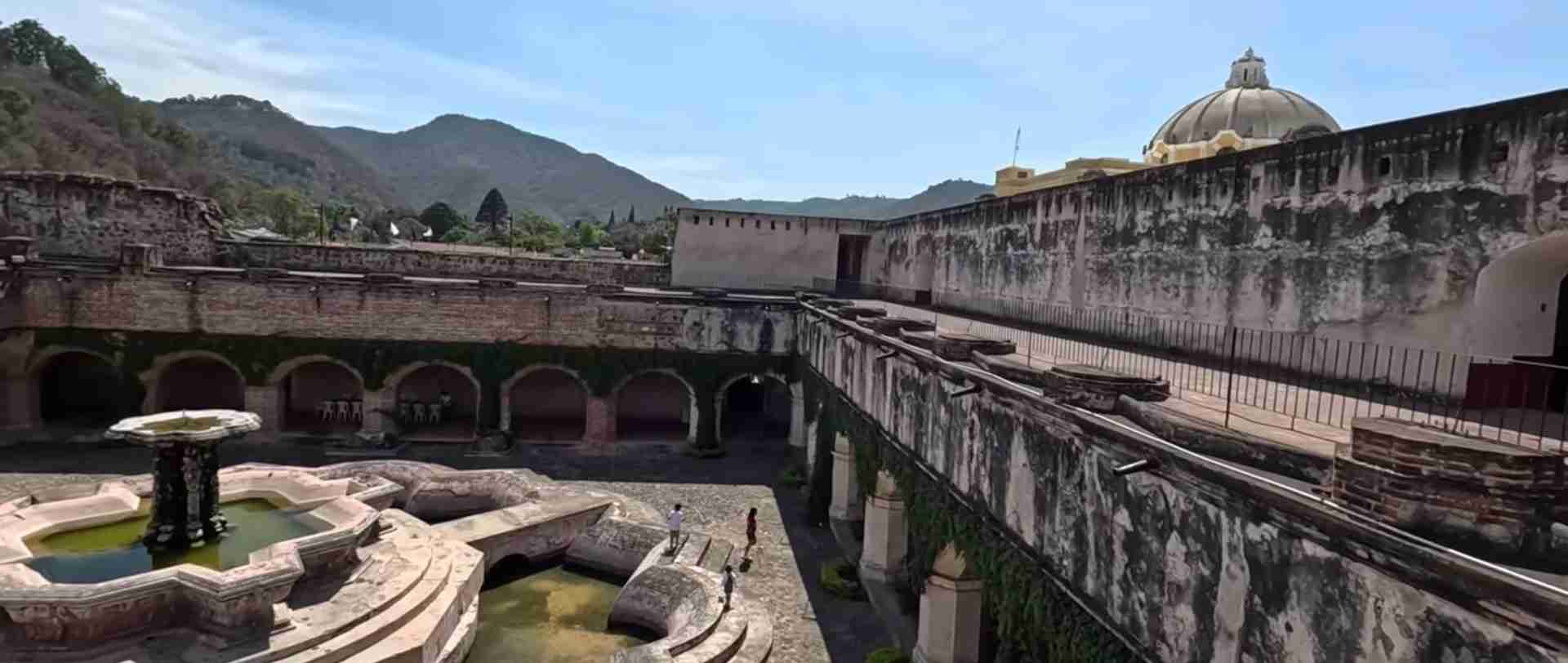
La Merced interior features original colonial altarpiece, side chapel gilding, and religious artwork spanning 250+ years. Free entry to main sanctuary allows unrestricted photography and architectural observation. The adjacent convent ruins (entrance Q40 / $5) reveal extensive cloister remains, fountain courtyard ranked among Central America’s most beautiful, and rooftop access providing comprehensive city and volcano views. Budget minimum 45-60 minutes for combined church and ruins exploration.
Continue north (1 block) to Santa Clara convent ruins showcasing typical Spanish colonial monastic architecture. The roofless nave preserves original arches, fountain remnants, and wall fragments illustrating earthquake damage and subsequent preservation philosophy. Free entry provides quieter alternative to La Merced’s tourist crowds with photography opportunities capturing romantic decay aesthetic central to Antigua’s UNESCO designation.
Walking north route total: 2 km, 90 minutes including site visits, La Merced ruins Q40 entrance. Morning light (8-11 AM) illuminates La Merced’s yellow facade optimally for photography with west-facing orientation creating harsh afternoon lighting less flattering for documentation purposes.
Eastern Circuit: San Francisco Complex
From Santa Clara proceed east on 3a Calle Oriente (6 blocks, 10-minute walk) crossing colonial residential neighborhoods toward San Francisco Church complex. This route passes neighborhood churches including El Carmen (ruins), Santa Teresa (active church), and residential examples of colonial domestic architecture illustrating broader urban context beyond monumental religious structures.
San Francisco Church (1702) combines active worship space with extensive monastery ruins creating dual-function heritage site. The baroque facade features earthquake damage maintained as historical testimony rather than repaired to original condition. Interior hosts Hermano Pedro shrine (Guatemalan saint) attracting pilgrims alongside tourists. Free main church access allows sanctuary observation and photography.
San Francisco monastery ruins (entrance Q40 / $5) reveal Central America’s largest colonial religious complex with multiple courtyards, cloister galleries, fountain remains, and rooftop viewpoints surveying city layout. The extensive ruins require 45-60 minutes thorough exploration with architectural photography opportunities spanning multiple lighting angles and compositional perspectives. Morning visits (9-11 AM) capture optimal lighting on east-facing elements while afternoon returns (4-5 PM) illuminate west-facing cloister galleries.
Optional cemetery extension adds 15-20 minutes visiting Hermano Pedro’s tomb and colonial-era gravesites illustrating historical burial practices and religious devotion patterns. The contemplative atmosphere provides quiet contrast to busier tourist areas while offering cultural insights beyond pure architectural tourism.
Eastern circuit total: 3 km, 2 hours including site visits, San Francisco ruins Q40 entrance. The extensive complex justifies extended allocation for visitors prioritizing comprehensive monastic architecture understanding over rapid site collection.
Southern Circuit: Cathedral and Plaza Area
Return west (6 blocks, 12-minute walk) via 1a Calle Oriente passing Palacio de los Capitanes Generales (colonial government palace) arriving Cathedral and Parque Central. The Cathedral (1680, rebuilt after earthquakes) presents Renaissance-influenced facade with paired bell towers (one collapsed and preserved as ruin, one maintained structurally sound) illustrating Antigua’s selective preservation philosophy.
Cathedral interior (free entry) features limited original decoration as earthquake damage destroyed baroque altarpieces and colonial artwork. Modern reconstruction maintains sanctuary functionality while preserving ruin authenticity in damaged sections. The adjacent Cathedral museum (entrance Q50 / $6.50) displays rescued colonial religious art, silver collections, and historical documentation explaining cathedral construction, earthquake destruction, and preservation decisions balancing worship needs with heritage authenticity.
Parque Central provides natural rest point with shade trees, public benches, and surrounding cafe options (Café Condesa, Café Mediterráneo) for refreshment breaks. The central location allows regrouping, route replanning, or concluding half-day tours before afternoon activities. Morning fountain area bustles with local life (vendors, students, residents) creating vibrant cultural atmosphere beyond pure tourism context.
Southern circuit addition: 1.5 km, 75 minutes including Cathedral museum, entrance Q50. Central plaza concentration creates efficient touring for time-limited visitors prioritizing maximum architectural exposure within compressed schedules.
Western Circuit: Capuchinas and Neighborhood Churches
Proceed north from Parque Central on 5a Avenida Norte then west on 2a Calle Oriente (4 blocks, 8-minute walk) to Capuchinas convent ruins (1736). This immaculately preserved complex showcases unique circular cloister design unprecedented in colonial Latin American architecture with 18 cells arranged around central fountain courtyard.
Capuchinas entrance (Q60 / $7.75) provides access to multi-level exploration including ground floor cloisters, upper level cells with volcano views, and rooftop terraces surveying colonial urban layout. The architectural innovation (circular rather than rectangular cloister) and exceptional preservation quality warrant extended 60-75 minute visits for comprehensive photography and spatial understanding. Explanatory signage (Spanish and English) details Capuchin order history, architectural significance, and daily monastic routines illuminating colonial religious life beyond pure architectural tourism.
Additional western circuit churches include San Agustín ruins (free entry, massive baroque facade remnants), Escuela de Cristo (active church with colonial details), and La Recolección monastery ruins (Q50 / $6.50, extensive complex requiring 45-60 minutes thorough exploration). These secondary sites distribute across western colonial districts requiring additional 2-3 km walking and 90-120 minutes added touring time.
Western circuit core (Capuchinas only): 2 km, 90 minutes, entrance Q60. Extended western circuit including San Agustín and La Recolección: 4 km, 3 hours, total entrances Q110 ($14.25). Time-limited visitors prioritize Capuchinas while comprehensive enthusiasts allocate full morning or separate day session for complete western area coverage.
Major Churches and Ruins Detailed Guide 2026
La Merced Church and Convent
La Merced (completed 1767) exemplifies late baroque colonial architecture with brilliant yellow facade featuring elaborate stucco decoration, monumental paired columns, and sculptural elements celebrating Mercedarian order founding dedicated to ransoming Christian prisoners from Muslim captivity. The facade’s exceptional preservation and photogenic quality establish La Merced as Antigua’s signature image appearing countless guidebook covers and tourist promotions.
Interior decoration includes original baroque altarpiece survived 1773 earthquakes, side chapel gilding, and processional floats (andas) used during Semana Santa (Holy Week) celebrations displaying Guatemala’s renowned religious artistry. Free entry allows photography and quiet observation though active worship services request visitor respect maintaining contemplative atmosphere.
Convent ruins (entrance Q40 / $5) contain Central America’s most beautiful fountain courtyard with central baroque fountain surrounded by deteriorating arched corridors creating romantic ruin aesthetic central to Antigua preservation philosophy. The fountain continues operating with colonial-era water system supplying constant flow. Rooftop access reveals comprehensive city views with Agua volcano framing southern horizon while Fuego’s smoking cone punctuates western skyline.
Photography tips: Morning light (8-10 AM) illuminates yellow facade optimally creating warm tones and minimal shadows. Fountain courtyard benefits from overcast lighting reducing harsh contrasts between sunlit areas and deep arcade shadows. Rooftop visits require sunrise (6-7 AM) or sunset (5-6 PM) timing for dramatic volcano lighting though conventional visiting hours (9 AM-5 PM) restrict access to these optimal photography windows.
Capuchinas Convent Complex
Capuchinas (1736) represents architectural innovation adapting Spanish colonial monastic design to new world context with unique circular cloister arrangement unprecedented in American colonial architecture. The 18 individual cells arranged around fountain courtyard created contemplative isolation for Capuchin nuns while maintaining communal proximity for religious observances.
The exceptional preservation (entrance Q60 / $7.75) allows detailed examination of monastic living conditions including cell dimensions (approximately 3m × 4m individual spaces), architectural details (barrel vaulted ceilings, window placements), and spatial organization illustrating cloistered religious life. Upper level preservation provides rare opportunity walking second-story corridors and accessing individual cells with volcano views through cell windows.
Architectural significance extends beyond Antigua context as circular cloister design influenced subsequent colonial monastic construction though remaining rare in colonial Latin American architecture. The innovation combining European Capuchin tradition with earthquake-resistant construction created hybrid architectural solution balancing Old World religious ideals with New World practical requirements.
Comprehensive exploration requires 60-75 minutes covering ground floor cloisters, upper galleries, individual cell visits, rooftop access, and museum displays documenting Capuchin order history and convent daily routines. Audio guides (included with entrance) provide English explanations though self-guided exploration allows personalized pacing and extended photography time without group constraints.
San Francisco Church and Monastery
San Francisco (1702) combines Central America’s largest colonial religious complex with active pilgrimage destination honoring Hermano Pedro (Brother Pedro de San José de Betancur, canonized 2002). The baroque facade shows earthquake damage maintained as historical evidence rather than restored to original condition following Antigua’s selective preservation philosophy.
Interior hosts elaborate Hermano Pedro shrine attracting Guatemalan pilgrims seeking miracle intercession alongside architectural tourists documenting colonial religious art. Free main church access allows sanctuary observation though active worship services request respectful visitor behavior. The combination pilgrimage site and tourist attraction creates unique cultural atmosphere where religious devotion and heritage tourism coexist requiring mutual respect between participant groups.
Monastery ruins (entrance Q40 / $5) sprawl across multiple courtyards revealing colonial Franciscan life scale and complexity. The extensive remains preserve original arches, cloister galleries, fountain elements, and wall fragments illustrating pre-earthquake grandeur. Rooftop access provides elevated city views comparable to La Merced perspective with different directional angles capturing eastern colonial districts and Agua volcano prominence.
The attached cemetery containing Hermano Pedro’s tomb and colonial-era graves adds cultural dimension beyond pure architectural tourism. Guatemalan pilgrims leave prayer petitions and thanksgiving offerings creating living religious tradition continuing colonial-era devotional practices into contemporary context. This active religious functionality distinguishes San Francisco from purely historical monument status characterizing some Antigua ruins.
Cathedral and Museum Complex
Cathedral (1680) represents Antigua’s most historically significant church as colonial capital’s primary religious authority and governmental ceremonial venue. The Renaissance-influenced facade differs from baroque extravagance characterizing other Antigua churches reflecting earlier construction period and administrative rather than purely devotional architectural priorities.
Asymmetric facade (one collapsed bell tower preserved as ruin, one maintained structurally sound) illustrates Antigua’s preservation philosophy balancing functional worship needs with authentic earthquake damage documentation. Free interior access reveals limited original decoration as 1773 earthquakes destroyed baroque altarpieces, colonial artwork, and decorative elements subsequently lost to theft and deterioration during capital abandonment period.
Cathedral museum (entrance Q50 / $6.50) displays rescued colonial religious art including paintings, sculpture, liturgical silver, and historical documentation explaining cathedral construction phases, earthquake damage assessment, and 20th-century restoration decisions. The collection provides context understanding broader Antigua colonial religious art traditions beyond individual church visits while documentary exhibits clarify preservation philosophy governing UNESCO site management.
Combined cathedral and museum visits require 60-75 minutes for comprehensive exploration though free sanctuary access allows brief architectural observation (15-20 minutes) for time-limited visitors prioritizing quantity over depth. Central plaza location facilitates convenient access during other touring activities or spontaneous visits between scheduled itinerary elements.
Self-Guided vs. Guided Walking Tours 2026
Self-Guided Tour Advantages
Independent exploration delivers maximum flexibility controlling pace, site selection, and time allocation according to personal interests rather than group consensus. Photography enthusiasts spend extended periods perfecting compositions without rushing groups, while history-focused visitors allocate time reading plaques and absorbing context without pressure maintaining tour schedules. The ability revisiting favorite sites, skipping less interesting locations, and spontaneously adjusting routes based on weather or fatigue creates personalized experiences impossible within structured group formats.
Cost advantages favor self-guided approaches significantly. Comprehensive walking circuits visiting all major churches and ruins cost Q100-150 ($13-19.50) total entrance fees compared to Q200-300 ($25-38) guided tour pricing delivering identical site access plus guide commentary. Budget-conscious travelers save 50-65% through independent exploration while maintaining complete architectural exposure and cultural context via guidebook research, smartphone applications, and on-site informational plaques.
Scheduling freedom eliminates departure time constraints and duration limitations inherent to commercial tour operations. Self-guided walkers begin early (sunrise photography opportunities), late (avoiding morning tour group crowds), or midday (off-peak timing) according to personal preference. The ability extending tours beyond standard 3-4 hour group durations allows comprehensive coverage enthusiasts or pausing for refreshments without group coordination.
Language flexibility benefits non-Spanish speakers using English guidebook resources and smartphone applications rather than depending on guide language proficiency potentially limiting explanation depth or clarity. Well-researched independent visitors often possess superior architectural knowledge from pre-departure reading compared to basic historical narratives delivered by commercial tour guides focusing on entertaining storytelling over scholarly accuracy.
Guided Tour Benefits
Professional guides provide historical context, architectural interpretation, and cultural insights transforming architectural observation into comprehensive understanding connecting visual elements with social history, religious practices, and colonial power dynamics. Expert narration reveals details invisible to casual observation including symbolic decorative elements, construction techniques, earthquake damage assessment, and preservation decision rationale enriching architectural appreciation beyond surface-level aesthetics.
Efficient routing optimizes site sequences considering lighting conditions, crowd patterns, and logical geographic progression eliminating backtracking and wasted motion common in first-time independent navigation. Guides know optimal timing visiting individual sites, shortcuts between locations, and alternative routes avoiding construction or temporarily closed areas maximizing productive touring time within fixed durations.
Group dynamics create social touring experiences facilitating traveler interactions, shared photography opportunities, and collective enthusiasm enhancing individual enjoyment through communal discovery. Solo travelers particularly benefit from guided tour social aspects meeting fellow tourists, sharing experiences, and creating travel connections impossible during solitary independent walking.
Safety advantages apply to solo travelers and those uncomfortable independent navigation in unfamiliar urban environments. Guide presence provides security reassurance, local knowledge avoiding problematic areas, and Spanish-language capabilities handling unexpected situations (medical emergencies, theft incidents, navigation problems) more effectively than unaccompanied tourists managing crises independently.
Hybrid Approach Recommendations
The optimal strategy combines initial guided orientation tour (2-3 hours covering major sites and establishing geographical context) followed by independent return visits to favorite locations allowing extended photography, contemplative observation, and personalized exploration. This hybrid approach costs Q200-300 ($25-38) guided tour plus Q40-80 ($5-10) additional independent entrance fees while delivering comprehensive coverage and interpretive depth.
Free walking tours departing Parque Central daily (10 AM typical timing) provide excellent orientation introducing major sites, historical narrative, and route familiarization at minimal cost (Q20-40 / $2.50-5 tips appreciated). Following free tour introduction, participants return independently to sites warranting extended attention while skipping less compelling locations, achieving cost-effective balance between guided interpretation and independent flexibility.
Audio guide rentals (available select sites including Cathedral museum, Q20-30 / $2.60-4) deliver professional narration benefits while maintaining self-guided flexibility. The recorded explanations provide expert interpretation without group pace constraints allowing pause, rewind, and selective listening according to individual interest levels. This technology-enabled compromise suits solo travelers wanting interpretive depth without social touring or schedule rigidity.
Photography Guide for Walking Tours 2026
Optimal Lighting and Timing
Morning golden hour (6:30-8 AM) delivers warm directional light ideal for baroque facade documentation, minimal tourist foot traffic allowing unobstructed compositions, and soft shadows creating dimensional depth on architectural relief. Early rising photographers capture La Merced’s yellow facade glowing with warm sunrise tones, San Francisco’s east-facing entrance illuminated optimally, and empty plaza shots impossible during later hours when crowds accumulate.
Midday harsh overhead light (11 AM-2 PM) creates unflattering high-contrast shadows unsuitable for architectural documentation though this timing suits interior photography when natural window light illuminates sanctuary spaces adequately. The problematic outdoor lighting combines with peak tourist crowds making midday least favorable timing for exterior facade photography while remaining acceptable for interior visits when external weather becomes uncomfortable.
Late afternoon golden hour (4:30-6 PM) illuminates west-facing facades with warm directional light while east-facing structures remain shaded creating different photographic opportunities than morning sessions. La Merced’s facade receives harsh afternoon light less flattering than morning orientation, while Capuchinas benefits from western exposure receiving optimal afternoon illumination. Sunset timing (5:30-6:30 PM seasonally variable) creates silhouetted church profiles against volcano backdrops and dramatic sky colors though most churches close 5-6 PM limiting interior access during peak light.
Overcast conditions benefit architectural photography through soft even lighting eliminating harsh shadow problems while maintaining adequate brightness for handheld photography. Rainy season cloud cover creates superior lighting conditions compared to dry season cloudless blue skies when harsh sun creates challenging contrast management. Post-storm lighting during cloud break periods produces spectacular dramatic lighting with moody atmospheric qualities impossible during stable weather conditions.
Essential Photography Equipment
Wide-angle lenses (16-35mm full-frame equivalent) capture complete baroque facades within narrow street constraints where physical distance limitations prevent using standard focal lengths. The compressed colonial urban density places streets immediately adjacent church facades creating perspective challenges solvable through wide-angle optics accommodating full facade composition within available shooting positions.
Standard zoom lenses (24-70mm) provide versatility capturing facade details, architectural elements, and environmental context switching between wide establishing shots and tighter compositional studies. This focal range suits majority architectural documentation needs balancing comprehensive coverage with detail capture without excessive lens changing disrupting touring flow.
Tripods prove impractical for walking tours given cobblestone navigation challenges, continuous movement between sites, and social awkwardness carrying bulky equipment through crowded streets. Image stabilization technology in modern cameras and lenses eliminates tripod necessity for most architectural photography allowing handheld shooting maintaining touring spontaneity and mobility. Serious photographers prioritizing maximum technical quality visit individual sites separately with dedicated tripod-based shooting sessions rather than incorporating unwieldy equipment into comprehensive walking circuits.
Smartphone cameras deliver acceptable architectural documentation quality for most travelers with wide-angle capabilities, HDR processing compensating for contrast challenges, and convenient portability eliminating dedicated camera equipment requirements. Panorama modes capture complete facades impossible with conventional lens constraints while computational photography advances narrow quality gaps between smartphones and dedicated cameras for architectural documentation purposes.
Composition and Perspective Techniques
Baroque facade complexity rewards detail-focused compositions isolating decorative elements, sculptural features, and ornamental patterns rather than complete building documentation. Close examination reveals stucco craftsmanship, symbolic religious imagery, and architectural details invisible in wide establishing shots creating portfolio diversity beyond repetitive full-facade documentation.
Ruin photography emphasizes romantic decay aesthetics through framing techniques incorporating vegetation growing from damaged walls, sky visible through roofless naves, and weathered stone textures communicating historical passage. These compositional approaches align with Antigua’s preservation philosophy celebrating authentic deterioration rather than pristine restoration creating atmospheric imagery transcending pure architectural documentation.
Volcano integration creates signature Antigua compositions unavailable elsewhere in Central America where colonial architecture and active volcanic landscapes combine uniquely. Church bell towers framing smoking Fuego cone, plaza fountains with Agua backdrop, and rooftop viewpoint compositions incorporating multiple volcanic peaks establish geographical context while creating visually dynamic images transcending standard architectural documentation.
Human scale inclusion provides dimensional context communicating baroque architecture’s monumental scale invisible in isolated building shots. People walking past facades, tourists photographing sites, and worship participants exiting churches establish comparative scale revealing massive column dimensions, doorway heights, and overall structural grandeur communicating architectural ambition through relatable human reference points.
Sample 2026 Walking Tour Day Plans
Half-Day Essential Churches Circuit
Morning Comprehensive Route (8 AM-1 PM): Depart hotel 7:45 AM for 8 AM arrival Parque Central. Coffee and breakfast pastry at Doña Luisa Xicotencatl bakery Q25-35 ($3-4.50) with rooftop seating. Proceed north (8:30 AM) to La Merced Church (free sanctuary entry) and convent ruins Q40 ($5) allocating 60 minutes comprehensive exploration including fountain courtyard photography and rooftop access. Continue north (10 AM) to Santa Clara ruins (free entry) spending 20-30 minutes before proceeding east to San Francisco complex (10:45 AM). Visit main church sanctuary (free) and monastery ruins Q40 ($5) with 75 minutes covering extensive cloisters and rooftop viewpoints. Return west via 1a Calle Oriente to Cathedral and Parque Central (12:30 PM) for Cathedral museum visit Q50 ($6.50) and plaza rest break. Conclude touring 1 PM with lunch at Rincon Típico Q40-60 ($5-7.75) nearby. Breakfast Q35, La Merced ruins Q40, San Francisco ruins Q40, Cathedral museum Q50, lunch Q60, coffee Q20. Total half-day cost: Q245 ($31.50) per person.
Walking Distance: 4.5 km total includes all major churches, rest stops, and circular routing returning accommodation areas. Moderate pace with frequent photography stops and architectural observation creates comfortable touring rhythm preventing exhaustion while maximizing cultural exposure within compressed timeline.
Best Timing: Morning departure captures optimal lighting on La Merced’s yellow facade, avoids midday heat during peak physical exertion, and completes major touring before potential afternoon rainstorms (May-October season). Early start positions photographers for best light while minimizing tourist crowds at popular sites creating superior photography conditions and contemplative observation opportunities.
Full-Day Comprehensive Walking Tour
Extended Circuit (8 AM-5 PM): Begin 7:30 AM breakfast at hotel or nearby café Q30-50 ($4-6.50). Depart 8 AM completing morning essential circuit (La Merced, Santa Clara, San Francisco, Cathedral) as detailed above reaching Parque Central 12:30 PM. Lunch break at San Martín restaurant Q60-80 ($7.75-10.50) with 60-minute rest and refreshment period. Resume touring 2 PM proceeding west to Capuchinas convent ruins Q60 ($7.75) allocating 75 minutes comprehensive exploration. Continue west (4 PM) to San Agustín ruins (free entry) and La Recolección monastery Q50 ($6.50) completing western circuit by 5:30 PM. Return accommodation via tuk-tuk Q15 ($2) avoiding exhausted evening walk on tired feet. Early dinner at Rainbow Café Q70-90 ($9-11.50) celebrating successful comprehensive coverage. Breakfast Q50, morning entrances Q130, lunch Q80, afternoon entrances Q110, transportation Q15, dinner Q90, snacks/coffee Q30. Total full-day cost: Q505 ($65) per person.
Walking Distance: 8-9 km covering all major churches and significant secondary ruins distributed throughout colonial core. This ambitious distance demands good physical conditioning and comfortable footwear as extended cobblestone hiking creates cumulative fatigue beyond short morning circuits.
Energy Management: Strategic lunch break timing allows physical recovery midway through extended tour preventing afternoon exhaustion compromising final site appreciation. The 60-minute seated rest with substantial meal replenishes energy reserves enabling afternoon continuation where shorter breaks prove insufficient for full-day touring sustainability.
Specialized Photography-Focused Route
Sunrise to Sunset Photography Mission: Pre-dawn departure (6 AM) capturing sunrise from Cerro de la Cruz viewpoint with city and volcano panorama. Return colonial core (7 AM) for golden hour La Merced facade photography with warm directional light. Breakfast break (8 AM) Q35-50 ($4.50-6.50) before continuing morning circuit emphasizing architectural detail photography at San Francisco and Cathedral. Midday break (11 AM-3 PM) avoiding harsh overhead light while reviewing morning images, resting, and planning afternoon session. Resume (3 PM) for late afternoon Capuchinas photography benefiting from western orientation receiving optimal golden hour illumination. Sunset session (5-6 PM) at Arco de Santa Catalina capturing volcanic silhouettes and illuminated archway creating signature Antigua twilight images. Extended evening (6:30-7 PM) photographing illuminated church facades and plaza scenes before concluding ambitious photography day. Breakfast Q50, entrance fees Q130 (La Merced, San Francisco, Capuchinas), lunch Q60, afternoon coffee Q25, dinner Q80, tuk-tuk transportation Q30. Total photography day cost: Q375 ($48.25) per person.
Equipment Considerations: Multiple camera bodies or lens changes accommodate varying focal length requirements from sunrise panoramas (wide-angle) through facade details (standard zoom) to sunset silhouettes (telephoto compression). Backup batteries prove essential for extended photography days when continuous shooting drains power faster than normal touring cadence.
Light Management: This specialized itinerary maximizes golden hour photography opportunities while strategically avoiding problematic midday lighting creating optimal conditions for serious architectural documentation. The approach sacrifices comprehensive site coverage for superior photographic quality at selected locations under ideal lighting conditions.
Practical Logistics and Safety for 2026
What to Bring on Walking Tours
Comfortable broken-in walking shoes represent single most important equipment choice for successful cobblestone touring. Athletic shoes, hiking boots, or substantial walking shoes with thick soles and ankle support prevent foot fatigue and reduce injury risk during 4-8 km walking sessions. New shoes create blister problems during extended tours as leather or fabric breaks in through wearing process best completed before significant walking tours begin.
Sun protection proves essential at 1,500-meter elevation where intense UV exposure creates rapid burning particularly among fair-skinned visitors unaccustomed to highland conditions. Sunscreen (SPF 30+ minimum), sunglasses (UV protection), and wide-brimmed hat provide adequate protection during extended outdoor exposure. Reapplication every 2-3 hours maintains effectiveness through perspiration and time degradation.
Hydration requirements increase during physical activity at altitude creating dehydration risk particularly among visitors arriving from sea-level environments. Reusable water bottles (1-liter capacity minimum) allow fountain refills at cafes, restaurants, and accommodations reducing single-use plastic consumption while maintaining adequate hydration during extended walking. Most establishments willingly refill bottles when purchasing refreshments or meals.
Day packs (15-25 liter capacity) carry water, sun protection, camera equipment, guidebooks, and purchased souvenirs without creating excessive burden during extended touring. Cross-body designs distribute weight ergonomically while maintaining security against opportunistic theft. Backpacks prove more comfortable than shoulder bags during extended walking though require vigilant monitoring in crowded areas.
Cash requirements include entrance fees (Q100-150 / $13-19.50 total for comprehensive circuits), refreshment purchases (Q50-100 / $6.50-13 for coffee, snacks, drinks), and optional donation box contributions (Q20-40 / $2.50-5 appropriate amounts). Most churches and ruins accept cash only with no credit card facilities, while cafes and restaurants increasingly accept card payments for larger meal purchases.
Safety Considerations
Cobblestone navigation demands constant attention to footing as uneven surfaces create trip and twisted ankle risks particularly when distracted by photography or architectural observation. Watching step placement while simultaneously observing facade details proves challenging requiring periodic pauses for photography allowing focused foot placement when resuming walking minimizing injury risk through divided attention.
Traffic awareness becomes critical when crossing streets as Antigua lacks systematic crosswalk infrastructure and drivers expect pedestrians yielding to vehicular traffic except at specific marked pedestrian zones. Colonial street narrowness creates proximity between sidewalks and vehicle paths reducing reaction time for inattentive pedestrians. Looking both directions before crossing and making eye contact with drivers prevents collision incidents.
Theft risk remains minimal within colonial core during daylight hours (6 AM-7 PM) with heavy tourist traffic and police presence creating natural surveillance. Standard urban precautions (securing valuables in front pockets or internal compartments, avoiding phone use while walking on empty streets, maintaining awareness of surroundings) provide adequate protection. Isolated areas including Cerro de la Cruz viewpoint require group visits or taxi transport rather than solo hiking reducing opportunistic theft targeting solitary tourists.
Emergency services contact (police, ambulance, fire) uses Guatemala’s 110 emergency number though English-speaking operators remain unavailable requiring Spanish language capability or assistance from bystanders, hotel staff, or tour guides. Tourist police units stationed near Parque Central provide English-speaking assistance for visitors experiencing theft, harassment, or medical emergencies requiring official intervention.
Frequently Asked Questions
What language skills do I need for self-guided walking tours in 2026?
Self-guided walking throughout Antigua’s colonial core operates successfully with minimal Spanish beyond basic greetings and numbers as major churches provide English informational plaques, smartphone applications supply translation capabilities, and visual architectural observation requires no language mediation. Church entrance situations requesting payment involve simple numerical Spanish (“cuarenta quetzales” = forty quetzales for Q40 fees) easily learned from guidebook phrase lists or spoken by attendants showing fingers for number communication transcending language barriers. Cafe and restaurant interactions throughout colonial tourist zone proceed in English at establishments catering to international visitors, though neighborhood comedores beyond primary tourist streets operate Spanish-only requiring basic food vocabulary or pointing at menu items. The self-guided format eliminates guide narration language dependencies while smartphone translation applications (Google Translate offline mode) provide emergency communication assistance for unexpected situations requiring Spanish capability. Overall, zero Spanish knowledge enables successful independent walking tours though basic phrase familiarity enhances interactions and demonstrates cultural respect appreciated by local residents encountering daily tourist influx.
Can children handle Antigua’s walking tours in 2026?
Family walking tours succeed with children ages 8+ possessing stamina for 2-3 hour modified circuits covering major highlights (La Merced, San Francisco, Cathedral) at reduced pace with frequent rest stops. Younger children (ages 4-7) manage abbreviated 60-90 minute plaza-focused walks visiting Parque Central, Arco de Santa Catalina, and nearby accessible sites before attention spans and physical endurance limitations require conclusion. Strollers navigate cobblestone streets with difficulty as uneven surfaces create constant jarring requiring rugged all-terrain models rather than lightweight umbrella strollers designed for smooth pavement. Baby carriers (front pack or backpack style) provide superior mobility for infants and toddlers eliminating stroller navigation challenges while maintaining parental proximity reassuring young children in unfamiliar environments. The flat terrain and compact distances between sites favor family touring compared to destinations requiring extensive uphill hiking or remote site access beyond comfortable child walking distances. Interactive elements including fountain observation, pigeon feeding at Parque Central, and ice cream breaks at frequent cafe stops maintain child engagement beyond pure architectural observation. Most churches welcome family visitors though quiet behavior expectations during active worship services create challenges for energetic young children requiring parental management preventing disruptive situations. Overall, Antigua’s family-friendly infrastructure, manageable distances, and cultural interest diversity enable successful multi-generational touring with appropriate itinerary modifications acknowledging child attention spans and physical capabilities differ significantly from adult architectural tourism stamina.
How much time should I allocate for each major church visit in 2026?
La Merced church and convent complex requires 45-60 minutes comprehensive exploration including free sanctuary visit (10-15 minutes), paid convent ruins with fountain courtyard (25-35 minutes), and rooftop access with photography opportunities (10-15 minutes). Rushed visitors complete abbreviated 30-minute tours covering highlights while photography enthusiasts and architecture scholars justify 75-90 minute extended sessions capturing multiple lighting angles and detail documentation. San Francisco church and monastery demands 60-75 minutes for combined free sanctuary visit (15-20 minutes) and extensive monastery ruins (40-50 minutes) with optional cemetery addition (15 minutes extra). Capuchinas convent represents single most time-intensive site requiring 60-75 minutes minimum exploring circular cloister innovation, multiple courtyard levels, individual cell visits, and comprehensive architectural appreciation impossible within rushed timeframes. Cathedral and museum combination allocates 60-75 minutes covering free sanctuary observation (15-20 minutes) and paid museum collection (40-50 minutes) though free-only visits manage brief 15-20 minute architectural surveys. Secondary churches and ruins (Santa Clara, San Agustín, neighborhood churches) require 15-30 minutes each for basic observation and photography. Total timing for comprehensive circuit visiting all major sites: 4-6 hours walking time plus 3-4 hours cumulative site visits equals 7-10 hours total commitment explaining why most visitors distribute coverage across multiple days or select prioritized sites rather than attempting single-day completism creating exhausting forced march contradicting leisurely architectural appreciation preferred by quality-focused travelers.
Are Antigua’s churches wheelchair accessible in 2026?
Wheelchair accessibility remains severely limited throughout Antigua’s colonial churches and ruins as authentic 16th-18th century architecture predating accessibility regulations creates inherent barriers including entrance steps, uneven floors, narrow doorways, and cobblestone surrounds preventing wheeled mobility. Cathedral provides most accessible option with ramped entrance allowing sanctuary access though museum areas include stair-only sections excluding wheelchair users from complete site touring. La Merced main church maintains level threshold enabling sanctuary entry but convent ruins include extensive stairs and uneven surfaces preventing comprehensive exploration. Parque Central area and surrounding commercial streets feature relatively flat terrain allowing wheelchair navigation though cobblestone surfaces create constant jarring requiring substantial upper body strength or electric wheelchair assistance managing rough textures. Modern accessibility retrofits prove impossible given UNESCO preservation requirements prohibiting extensive architectural modifications to historically significant structures. Travelers with mobility limitations accept incomplete access as inherent reality of authentic colonial preservation while focusing efforts on accessible sites including Cathedral sanctuary, Parque Central area, select museums with level entries, and cafe/restaurant venues with street-level access. Advance research identifying specific accessible locations prevents disappointing spontaneous arrival at sites requiring stair navigation or rough terrain mobility impossible for wheelchair users. Specialized accessibility tour operators offering adapted vehicles and pre-scouted accessible route planning serve mobility-limited visitors though availability remains limited compared to wheelchair-accessible touring common in modern cities with systematic accessibility infrastructure.
What is Antigua’s church photography etiquette in 2026?
Interior church photography receives general permission throughout Antigua’s colonial churches with specific restrictions requiring observation. Flash photography prohibition applies universally as bright light damages colonial artwork and disturbs worship participants requiring contemplative quiet rather than tourist photography disruption. Natural window light provides adequate illumination for most interior documentation though higher ISO settings or image stabilization technology compensates for lower light levels in dim sanctuary areas distant from windows. Tripod use faces prohibition during active worship services though empty church periods may permit tripod setup with attendant permission requested before installation. Photography during masses, weddings, and religious ceremonies requires discretion avoiding obtrusive positions, shutter noise disruption, and movement creating disturbance for worship participants whose religious observance takes precedence over tourist documentation desires. Some churches restrict photography entirely during special services or restrict certain areas (main altars, side chapels with active devotional use) creating boundaries between tourist zones and active worship spaces. Exterior facade photography operates without restrictions as public street photography includes building documentation though courtyard and cloister areas within paid entrance zones require ticket purchase before photography proceeds. Commercial photography and professional video production require special permissions from church authorities and often incur fees supporting church maintenance while amateur tourist photography proceeds freely within stated restrictions. Respectful behavior includes standing aside during procession passages, avoiding photography blocking doorways or pathways, and dressing appropriately (shoulders covered, long pants or skirts) demonstrating cultural awareness that churches serve religious functions beyond tourist attraction status requiring visitor adaptation to sacred space expectations rather than expecting sacred spaces accommodating tourist convenience priorities.
Which churches are most photogenic for architecture enthusiasts in 2026?
La Merced’s brilliant yellow baroque facade with elaborate stucco decoration ranks as Antigua’s most photographed church creating signature image appearing countless guidebooks and tourist promotions. The fountain courtyard within convent ruins provides additional photographic interest combining baroque fountain, deteriorating arched corridors, and partial roof collapse creating romantic ruin aesthetic central to Antigua preservation philosophy. Capuchinas convent delivers unique circular cloister architecture unprecedented in colonial Latin America with innovative design creating distinctive compositions unavailable elsewhere. The preserved upper level corridors and rooftop access provide elevated perspectives surveying circular cloister pattern and surrounding city views. San Francisco monastery ruins offer extensive cloister remains, multiple courtyard spaces, and partial dome collapse creating varied photographic opportunities spanning multiple architectural elements and ruin states. The active pilgrimage dimension adds human interest elements beyond pure architectural documentation as Guatemalan devotees interact with sacred space combining religious function and heritage tourism. Cathedral presents contrasting preservation approach with functional worship space maintained alongside deliberate ruin preservation (collapsed bell tower) illustrating selective preservation decisions balancing religious use and historical authenticity. The asymmetric facade creates visual interest absent from perfectly preserved or completely ruined alternatives. Santa Clara ruins emphasize pure decay aesthetic with roofless nave, fragmentary walls, and minimal consolidation intervention allowing nature reclaiming architecture creating atmospheric imagery celebrating temporal passage and architectural impermanence. Overall, serious architectural photographers allocate multiple days capturing different sites under varying lighting conditions as each location offers distinct photographic opportunities warranting repeated visits beyond single comprehensive circuit attempting quantity over quality documentation approaches.