
Amazon Jungle Day Trip from Manaus 2026: Full Day Experience
Key Takeaways:
- Full-day Amazon jungle tours from Manaus cost $80-150 per person including hotel transfers, boat transport, English-speaking guide, lunch, and 4-5 core activities
- Tours depart 7:30-8:30 AM and return 4:30-5:30 PM, providing 8-9 hours of rainforest immersion without overnight stays
- Standard activities include canoe trips through flooded forests, guided jungle walks, piranha fishing, wildlife spotting by boat, and swimming at safe river locations
- Dry season months (June-November 2026) enable better jungle hiking and wildlife tracking, while wet season (December-May) offers unique flooded forest canoe exploration
- Small group tours (8-12 people) provide the best balance of personalized attention and reasonable pricing compared to private expeditions costing $200-300 per person
- Booking 2-3 weeks ahead ensures preferred departure times and higher-quality operators with experienced English-speaking naturalist guides
Introduction to Amazon Day Trips from Manaus 2026
Amazon jungle day trips from Manaus offer the perfect introduction to rainforest ecosystems for travelers with limited time or budgets unsuitable for multi-day lodge stays. These carefully structured excursions compress essential jungle experiences into comprehensive 8-9 hour programs, departing from Manaus hotels in early morning and returning before dinner. The format allows combining rainforest exploration with city-based accommodation, maintaining comfort levels while still accessing authentic Amazon wilderness just 30-60 minutes by boat from urban Manaus.
What distinguishes quality day trips from tourist traps is the balance of activities, guide expertise, and access to genuine jungle environments rather than commercialized “eco-parks” near the city. The best operators travel 45-75 minutes by speedboat to reach less disturbed forest sections where wildlife populations remain robust and vegetation shows minimal human impact. Your guide’s knowledge transforms random forest walking into educational experiences, explaining medicinal plant uses, identifying bird calls, pointing out camouflaged wildlife, and sharing indigenous survival techniques impossible to appreciate without expert interpretation.
Planning your 2026 Amazon day trip requires understanding what single-day excursions can and cannot deliver. Day trips provide excellent wildlife introduction, basic jungle skills, cultural interactions with river communities, and sufficient immersion to determine if extended lodge stays appeal to you. However, they cannot match the depth of overnight experiences—dawn chorus awakening, nocturnal wildlife encounters, deep forest penetration, and the profound silence of sleeping in jungle darkness. Consider day trips as either complete experiences for time-constrained travelers or reconnaissance missions informing future extended Amazon adventures.
People Also Ask About Amazon Day Trips 2026
How much do Amazon jungle day trips from Manaus cost in 2026?
Standard full-day Amazon tours cost $80-120 per person for group departures with 8-15 participants. These prices include hotel pickup and drop-off, speedboat transportation to jungle access points, English-speaking naturalist guide, traditional lunch featuring regional fish and sides, drinking water, and 4-5 core activities like canoe trips, jungle walks, piranha fishing, and wildlife spotting. Check operator websites for current 2026 rates as pricing varies by season and specific package inclusions.
Enhanced day trips cost $120-150 per person, adding specialized activities like visits to wildlife rescue centers, deeper forest penetration, traditional fishing demonstrations with local experts, or sunrise departure options (5:30 AM) catching peak wildlife activity. Private tours for 2-4 people run $400-600 total ($200-300 per person), providing ultimate flexibility with customized itineraries, departure time control, and dedicated guide attention throughout the day.
What activities are included in typical Amazon day trips in 2026?
Morning programs begin with 45-60 minute speedboat rides from Manaus to jungle access points, followed by 1.5-2 hour canoe trips through narrow tributaries or flooded forest sections. Guides paddle silently through vegetation while pointing out wildlife—monkeys moving through canopy, kingfishers hunting from branches, caimans basking on banks, and sloths hanging motionless in trees. Canoe trips allow approaching wildlife closely as the quiet paddling doesn’t spook animals like motorboat engines.
Mid-morning jungle walks cover 2-3 kilometers over 90-120 minutes, introducing medicinal plants, survival techniques, and forest ecology. Guides demonstrate cutting vines for drinking water, identify trees producing rubber latex, explain how indigenous people extract toxins from manioc roots, and show you which leaves treat common ailments. Hands-on activities include climbing rope ladders to observation platforms, crossing suspended bridges over streams, and learning to identify animal tracks on muddy trails.
Afternoon activities focus on fishing and cultural experiences. Piranha fishing using simple bamboo poles and raw meat bait takes 30-45 minutes, with most participants catching 2-4 piranhas. Guides prepare fish for immediate consumption—some tour operators grill catches as lunch appetizers. Village visits to caboclo (mixed indigenous-European) communities demonstrate traditional lifestyles including manioc flour production, hammock weaving, and household organization in stilted river houses adapting to annual 10-meter water level fluctuations.
When is the best time for Amazon day trips in 2026?
Dry season months from June through November 2026 provide optimal conditions for comprehensive day trip experiences. Lower water levels expose trails for extended jungle hiking, beaches emerge for lunch stops and swimming, and reduced rainfall eliminates the need for constant rain gear. Wildlife concentrates around shrinking water sources, improving spotting opportunities. July and August represent peak months with the most stable weather—temperatures around 31°C (88°F), minimal rain, and excellent visibility for photography.
Wet season from December through May offers distinct advantages despite higher precipitation. Flooded forests become accessible by canoe, allowing paddling beneath tree canopies where terrestrial hiking occurs during dry months. This unique perspective reveals sloths, monkeys, and birds at eye level as the forest floor becomes waterway. Pink river dolphins enter flooded forests following fish, creating more frequent dolphin encounters. Morning departures avoid most rain as showers concentrate in afternoon hours—tours structure activities to maximize dry periods for walking while using rain times for boat-based exploration.
Do I need to book Amazon day trips in advance for 2026?
Booking 2-3 weeks ahead of your 2026 Manaus visit ensures securing spots with top-rated operators during dry season months (June-November). Popular companies like Amazon Gero Tours, Iguana Tour, and Amazon Explorers fill group tours 2-4 weeks in advance during July-August peak season. Early booking guarantees preferred departure times—8:00 AM departures offer cooler morning temperatures and better wildlife activity compared to 9:30 AM slots filling as fallback options.
Last-minute booking (1-3 days ahead) remains possible but risks settling for lower-quality operators with less experienced guides, overcrowded groups, or departure times that conflict with other planned activities. Wet season (December-May) provides more spontaneity with many quality operators accepting bookings 5-7 days ahead. However, advance planning always improves experiences by researching operator reputations, reading recent reviews, and communicating special interests or dietary requirements before tour dates.
Extended multi-day tours – 5+ days
Featured Manaus Multi-Day Tour Packages
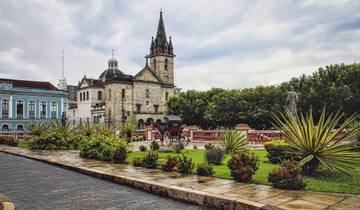
4 days
Manaus Amazon Express – 4 days
- ✓ Comprehensive Manaus tour
- ✓ Expert local guides included
- ✓ All accommodation arranged
- ✓ Transportation provided

5 days
Wild Amazon Escape
- ✓ Comprehensive Manaus tour
- ✓ Expert local guides included
- ✓ All accommodation arranged
- ✓ Transportation provided
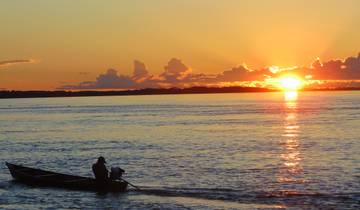
4 days
4 Days Brazilian Amazon: Juma River Jungle Lodge
- ✓ Comprehensive Manaus tour
- ✓ Expert local guides included
- ✓ All accommodation arranged
- ✓ Transportation provided
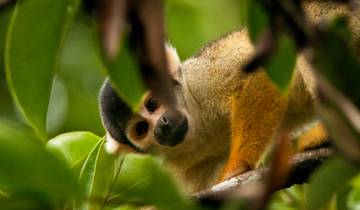
4 days
Stay at a lodge in the heart of the Brazilian Amazon rainforest
- ✓ Booking needs min. 2 travelers
Multi-day tour packages powered by TourRadar. Prices and availability subject to change.
Selecting the Right Amazon Day Trip for 2026
Comparing Operator Categories and Quality 2026
Premium operators charge $120-150 per person but deliver superior experiences through smaller group sizes (6-10 people), extensively trained naturalist guides, better boats with shade covers and comfortable seating, and access to less-visited forest sections. Companies like Amazon Antonio Jungle Tours and Iguana Tours maintain excellent reputations through consistent guide quality, equipment maintenance, and genuine environmental commitment. These operators employ local community members as guides, ensuring authentic cultural perspectives and supporting sustainable tourism models.
Standard mid-range operators cost $80-100 per person with acceptable quality for budget-conscious travelers. Groups contain 10-15 people, guides speak functional English with variable natural history knowledge, and boats meet basic safety standards without premium amenities. Activity quality remains good, though you might miss subtle wildlife observations or detailed ecological explanations provided by more experienced guides. Research recent reviews carefully—mid-range operator quality varies significantly with some delivering excellent value while others cut corners on guide training or safety equipment.
Budget operators advertising $50-70 tours deserve extreme caution. These rock-bottom prices often indicate large group sizes (20+ people), minimally trained guides with poor English, aging boats lacking proper safety equipment, and visits to commercialized eco-parks rather than genuine jungle environments. The “you get what you pay for” principle applies strongly to Amazon tours—the $20-30 savings translate to significantly degraded experiences, safety concerns, and missed wildlife opportunities that defeat the purpose of jungle visits.
Private Tours Versus Group Departures 2026
Private Amazon day trips cost $400-600 for 2-4 people ($200-300 per person for couples, $100-150 per person for groups of four), providing maximum flexibility and personalized attention. You control departure times, activity duration, hiking distance, and focus areas—spending extra time photographing birds, extending canoe trips, or diving deeper into botanical medicine if these interest you specifically. Guides tailor explanations to your knowledge level and interests, creating educational experiences matching your background whether you’re biologists seeking scientific detail or casual nature enthusiasts wanting accessible overviews.
Private tours enable better wildlife photography through patient waiting at promising locations without group pressure to maintain schedule. If you spot a sloth, harpy eagle, or dolphin pod, your guide focuses on that encounter as long as productive rather than rushing onward. Senior travelers, families with young children, or visitors with mobility limitations benefit from private tour’s adjusted pacing and difficulty modifications impossible in fixed-schedule group departures.
Group tours cost $80-150 per person, delivering 60-70% of private tour quality at 30-50% of the cost. The economics favor groups for budget travelers or solo visitors who find private tour costs prohibitive. Social dynamics benefit some travelers—sharing discoveries with others, learning from group questions you didn’t think to ask, and forming friendships with fellow adventurers. Guides rotate attention among participants, ensuring everyone receives explanations and pointing out wildlife visible from different boat positions. Most group tours maintain good energy with skilled guides managing pacing effectively.
Specialized Day Trip Options 2026
Wildlife photography tours cater specifically to serious photographers, operating with 4-6 person maximum groups allowing everyone access to boat railings for stable shooting positions. Departure times target optimal light—5:30 AM for sunrise and 3:00 PM for late afternoon golden hour. Guides understand photography needs, holding positions when wildlife appears, positioning boats for best angles, and allowing adequate time for exposure bracketing and composition refinement. These tours cost $150-180 per person, attracting participants with serious camera equipment and photographic ambitions beyond tourist snapshots.
Birdwatching-focused day trips appeal to serious birders seeking species additions to life lists. Specialized guides possess encyclopedic bird knowledge, identifying species by calls, recognizing distant flight patterns, and knowing seasonal occurrence patterns. Tours access specific habitats hosting target species—várzea flooded forests for hoatzins and horned screamers, terra firme upland forest for antbirds and woodcreepers, river edges for kingfishers and herons. Prices run $140-170 per person with 6-8 person groups containing fellow birding enthusiasts creating supportive atmospheres for shared sightings.
Indigenous culture-focused tours emphasize human Amazon relationships rather than pure wildlife viewing. Extended time in traditional communities demonstrates manioc processing, traditional fishing techniques, medicinal plant preparation, basket weaving, and blow gun hunting demonstrations. Guides translate conversations between visitors and community elders sharing knowledge about forest resource management, seasonal activity patterns, and how traditional lifestyles adapt to modern economic pressures. These tours cost $110-140 per person, providing deeper cultural context often missing from standard nature-focused itineraries.
Standard Amazon Day Trip Itinerary 2026
Morning Departure and Boat Transfer 2026
Your day begins with hotel pickup between 7:30-8:30 AM, with operators collecting guests from multiple properties across Manaus in 30-45 minutes. Vans transport groups to departure points at Marina Tauá-Tauá or Porto Manaus where you transfer to aluminum speedboats equipped with 60-90 horsepower outboard motors, shade covers, and comfortable bench seating for 8-12 passengers. Safety briefings cover life jacket use, boat boarding procedures, and general jungle safety protocols including avoiding swimming near caiman areas and staying with guides during forest walks.
The 45-60 minute boat ride to jungle access points travels up the Rio Negro or its tributaries, passing floating houses, fish farms, and riverside communities before vegetation density increases signaling undisturbed forest approach. Guides point out river dolphins surfacing near the boat, kingfishers perched on overhanging branches, and hawks soaring overhead hunting. The boat noise prevents quiet wildlife observation, but the transit provides excellent orientation to Amazon river systems and scale—traveling 20-30 kilometers while water seems endless in every direction.
Arrival at jungle access points occurs around 9:00-9:30 AM at small wooden docks serving individual lodges or designated tour operator stations. You transfer from speedboats to quieter canoes for forest penetration. Guides distribute life jackets again, organize seating for weight distribution, and establish communication protocols—hand signals for quiet wildlife observation, where to store cameras safely, and how to shift weight without capsizing narrow dugout canoes.
Canoe Exploration and Flooded Forest 2026
Canoe trips cover 3-5 kilometers over 90-120 minutes, paddling through narrow channels barely wider than the boat itself. During wet season (December-May), you paddle directly through flooded forest where terrestrial trails exist during dry months, gliding beneath canopy layers observing wildlife from water level. Guides paddle from stern positions, steering silently while pointing out animals with minimal vocalization to avoid startling creatures. The quiet approach allows reaching within 10-20 meters of monkeys, sloths, and birds—proximity impossible from motorboats.
Wildlife sightings concentrate along channel edges where forest meets water. Squirrel monkeys travel in groups of 20-40 individuals, moving through mid-canopy layers feeding on fruits and insects. Howler monkeys announce territorial boundaries with low-frequency vocalizations carrying several kilometers—locate them by sound then scan vegetation carefully as their dark fur camouflages effectively against shadowed branches. Three-toed sloths hang motionless in trees, visible only when guides point out specific locations—untrained eyes pass right over them mistaking animals for branch clusters or dead foliage.
Bird diversity explodes in transition zones between water and forest. Kingfishers—five species range from sparrow-sized pygmy kingfishers to jay-sized Amazon kingfishers—perch on snags watching for fish. Herons and egrets stalk shallow edges hunting frogs and small fish. Macaws fly overhead in pairs or family groups, their harsh calls audible before the bright plumage becomes visible. Guides demonstrate remarkable auditory identification skills, naming birds by calls alone then locating them visually to show guests. Bring binoculars for detailed observation—guides carry spotting scopes but 8×42 binoculars provide superior flexibility for self-directed scanning.
Jungle Walking and Forest Ecology 2026
Mid-morning jungle walks begin after beaching canoes at designated landing points. Walks cover 2-3 kilometers over 90-120 minutes on narrow trails cutting through primary rainforest. Trails show minimal improvement—exposed roots, muddy sections, small stream crossings, and occasional steep banks require attention with every step. Wear closed-toe shoes with good traction, long pants protecting from thorns and biting insects, and hats shielding from seed pods and insects dropping from canopy.
Guides transform random forest walking into structured learning experiences. They stop frequently explaining symbiotic relationships between strangler figs and host trees, demonstrating how leaf-cutter ants cultivate fungus gardens, showing you how to extract drinking water from specific vine species, and identifying trees producing valuable products—rubber latex, Brazil nuts, copaiba oil. Hands-on activities include tasting edible fruits, smelling aromatic leaves used as insect repellents, and examining giant tree buttresses serving as resonating chambers for tapping communication.
The jungle understory appears surprisingly open in mature rainforest as dense canopy blocks 95% of sunlight from reaching ground level. This limited light prevents thick undergrowth, enabling relatively easy walking once you adjust to root obstacles and muddy patches. However, you see little wildlife during midday walking as heat drives animals into canopy shade or burrows. The forest’s true value during walks lies in botanical diversity and ecological relationships rather than animal sightings—understanding these systems enhances afternoon boat-based wildlife viewing by explaining what you observe and why animals behave as they do.
Traditional Lunch and Midday Activities 2026
Lunch occurs around noon at covered pavilions near water edges, served buffet-style by tour operators or prepared by local families hosting groups. Typical meals feature grilled tambaqui or peacock bass (tucunaré), rice seasoned with vegetables, black beans, cassava flour (farinha) for sprinkling over food, fresh tropical fruit including watermelon and pineapple, and sweet tapioca desserts. Vegetarian options consist of rice, beans, grilled vegetables, and fruits—communicate dietary requirements when booking to ensure adequate preparation.
Swimming opportunities follow lunch at designated safe locations. Guides test current strength, scan for caiman presence, and verify no stingray risks before authorizing swimming. The dark Rio Negro water reaches 28-29°C (82-84°F) during wet season, slightly cooler at 26-27°C (79-81°F) during dry months. The acidic, tannin-rich water discourages mosquitoes and contains no dangerous parasites despite appearing murky. Piranhas exist but don’t attack swimmers—their notorious reputation stems from exceptional circumstances like injured fish attracting feeding frenzies, not normal behavior toward large animals.
Piranha fishing occupies 30-45 minutes using bamboo poles with hand-wound lines, simple hooks, and raw chicken or beef bait. Drop baited hooks 1-2 meters deep, wait for aggressive strikes, then yank upward quickly before piranhas strip bait without being caught. Most participants catch 2-4 piranhas ranging from 150-300 grams—impressive for 10-15 centimeter fish. Guides unhook catches and explain piranha ecology, demonstrating their sharp interlocking teeth adapted for shearing flesh. Some operators grill catches for sampling—the white meat tastes mild and slightly sweet, though numerous small bones require careful eating.
Afternoon Wildlife Viewing and Return 2026
Afternoon boat trips from 2:00-4:00 PM focus on active wildlife viewing as animals emerge from midday heat refuges. River dolphins become most active during afternoon hours, surfacing frequently in small groups or individually. Pink boto dolphins reach 2.5 meters and 180 kilograms, displaying remarkable flexibility allowing 90-degree head turns enabling precise fish chasing in flooded forests. Grey dolphins (tucuxi) are smaller at 1.5 meters and 50 kilograms, traveling in groups of 4-8 individuals coordinating hunting strategies for schooling fish.
Caiman spotting improves as afternoon progresses toward evening, with spectacled caimans hauling onto muddy banks or floating logs for thermoregulation. Adults reach 2-2.5 meters with females smaller than males. Guides approach caimans slowly in canoes, bringing groups within 5-10 meters for close observation and photography. The reptiles tolerate proximity as long as boats move slowly without sudden movements—revving motors or quick approach causes immediate escape into water.
Bird activity increases as afternoon temperatures moderate. Large flocks of parrots and parakeets fly overhead returning to roosting sites, creating spectacular aerial displays. Jabiru storks—standing 1.4 meters tall with 2.6-meter wingspans—wade in shallow areas hunting fish. Anhinga (water turkeys) perch on exposed branches drying wings after fishing dives. Guides position boats for optimal viewing angles, balancing between species observation and maintaining schedule for 4:30-5:30 PM return to Manaus.
The return boat ride provides reflection time and photo review, with guides answering remaining questions and offering recommendations for visitors considering future Amazon experiences. You arrive back at Manaus hotels between 5:00-6:00 PM, tired but exhilarated from comprehensive rainforest immersion condensed into single-day adventure.
Day Trip Costs Breakdown 2026
Tour Package Pricing Analysis 2026
Standard group day tours cost $80-120 per person covering core expenses and activities. This all-inclusive pricing includes hotel pickup and return transport ($15-20 value), speedboat transfers to jungle access points with fuel and boat operation ($25-30), English-speaking naturalist guide services ($30-40), traditional lunch with drinks ($12-15), canoe rental and paddling ($10-12), and entrance fees to forest reserves or indigenous territories ($8-10). The operator markup of 30-40% covers insurance, equipment maintenance, administrative costs, and profit margins supporting sustainable business operations.
Enhanced tours at $120-150 per person add specialized components justifying higher prices. Wildlife rescue center visits cost $15-20 in additional entrance fees and transport. Sunrise departure options require guide overtime pay increasing costs $20-25 per person. Deeper forest penetration accessing more pristine areas involves extra fuel costs ($10-15) and longer guide time ($15-20). Photography-focused tours with smaller groups and extended patient waiting distribute fixed costs across fewer participants, requiring higher per-person pricing to maintain profitability.
Private tours for 2-4 people at $400-600 total include identical physical expenses as group tours (boat, fuel, guide, lunch, fees) but spread costs across fewer participants rather than 10-15 people. A private tour for a couple costs $200-300 per person, while a family of four pays $100-150 per person—the same absolute amount as premium group tours but with exclusive guide attention and complete schedule flexibility. Solo travelers can book “private” tours but pay full 2-person minimum rates ($400-600) making group tours significantly more economical for single participants.
Additional Expenses for Day Trips 2026
Tips for guides range $10-20 per person depending on service quality and group size. Exceptional guides demonstrating superior wildlife spotting, clear explanations, and genuine enthusiasm deserve $15-20 tips. Adequate but unremarkable guides receive $8-12. Poor guides—frequently late, minimal English, short attention to safety—deserve minimal tips if any. Tips paid in Brazilian reais rather than US dollars go directly to guides rather than being converted through operators.
Photography equipment protection warrants consideration. Waterproof bags or dry sacks cost $15-30 from outdoor stores, protecting cameras and phones during boat trips and rain exposure. Cheap plastic bags from supermarkets provide minimal protection—invest in proper waterproof storage or risk $500-2,000 equipment damage from water spray or sudden rain. Memory cards fail occasionally, so carry backup cards ($15-30) enabling continuous shooting if primary cards malfunction during crucial wildlife encounters.
Insect repellent and sunscreen consumption exceeds typical daily use. Jungle conditions require reapplication every 3-4 hours, consuming significant product quantities. Budget $8-12 for repellent refills and $6-10 for sunscreen if you didn’t bring sufficient quantities from home. Manaus pharmacies and supermarkets stock these items at reasonable prices—buy locally rather than paying inflated hotel gift shop rates.
Full Day Cost Summary Example 2026
Budget day trip scenario: Standard tour $90, guide tip $10, lunch drinks $5, insect repellent $8. Total day cost: $113 per person (excluding accommodation).
Mid-range day trip scenario: Enhanced tour $135, guide tip $15, photography equipment protection $25, additional bottled water $6. Total day cost: $181 per person (excluding accommodation).
Premium day trip scenario: Private tour for couple $250 per person, guide tip $20, specialty equipment rental $30, additional activities $25. Total day cost: $325 per person (excluding accommodation).
Maximizing Your Amazon Day Trip Experience 2026
Pre-Trip Preparation Essentials 2026
Physical conditioning improves day trip enjoyment significantly. Jungle walks involve 2-3 hours of moderate hiking over uneven terrain with heat and humidity creating exertion levels exceeding similar-distance walks in temperate climates. Prepare by walking 5-8 kilometers daily for two weeks before your trip, including stairs or hills if available. Focus on building heat tolerance—exercise during warmest daily hours acclimating your body to working in 30°C+ temperatures with high humidity.
Equipment preparation starts with proper footwear. Closed-toe shoes with aggressive tread and quick-dry uppers work best—trail running shoes or light hiking boots excel, while heavy backpacking boots prove unnecessarily bulky. Break in shoes before the trip to prevent blisters during extended walking. Bring two pairs if possible—one for wet morning canoe activities, a dry pair for afternoon boat work. Sandals with heel straps serve as backup footwear and evening relaxation shoes.
Camera settings optimization prevents missed wildlife photos. Set cameras to aperture priority mode with ISO 800-1,600 enabling fast shutter speeds (1/500 second minimum) for moving wildlife. Continuous autofocus tracks animals as they move through frames. Shoot in RAW format preserving maximum editing flexibility for exposure and color correction. Bring extra batteries—heat drains power faster than temperate conditions, and you’ll shoot more photos than anticipated. Extended zoom lenses (200-400mm) capture distant canopy wildlife, while wide-angle lenses (16-35mm) suit landscape and canoe perspective shots.
Optimal Timing and Seasonal Considerations 2026
Within the dry season (June-November 2026), September and October deliver the best overall conditions. Water levels drop sufficiently for excellent jungle walking, but vegetation remains lush from earlier rains. Wildlife concentrates predictably around shrinking water sources. Temperatures moderate slightly from July-August peaks. Tourist numbers decline from peak season levels, meaning smaller group sizes and more personalized attention from guides.
Within the wet season (December-May 2026), January and February offer peak flooded forest conditions. Water rises 10-15 meters above dry season levels, transforming the forest into a maze of navigable channels. Canoe trips penetrate areas completely inaccessible by foot, revealing perspectives on forest structure impossible during dry months. Rainfall concentrates in afternoon hours, so morning departure tours avoid 70-80% of precipitation while experiencing unique wet season conditions.
Weekly timing affects crowds and guide availability. Tuesday through Thursday departures encounter fewer groups and secure better guides than weekend departures catering to short-term Manaus visitors. Sunday departures face particularly heavy demand from Brazilian domestic tourists taking weekend jungle trips. If flexible, schedule tours midweek for optimal guide-to-guest ratios and less-crowded forest access points.
Wildlife Photography Strategies 2026
Anticipation and readiness determine photography success more than equipment quality. Keep cameras accessible in hands or neck straps rather than packed in bags—guides spot wildlife seconds before it disappears, leaving no time for equipment retrieval. Settings should remain adjusted for wildlife photography throughout the day (fast shutter speeds, high ISO, continuous autofocus) rather than switching between settings modes.
Communicate photography interests to guides at tour beginning. Serious photographers benefit from guides who understand the need for patient waiting when wildlife appears, positioning boats for optimal angles, and holding positions while you adjust exposures rather than immediately moving to next activity. Most guides accommodate photography requests, but they need to know your priorities—casual tourists want quick sightings then moving onward, while photographers require extended observation time.
Stabilization techniques prove crucial in moving boats. Brace elbows against knees or boat rails for tripod-like stability. Use continuous shooting mode capturing 5-10 frame bursts increasing odds of perfectly sharp images. Digital stabilization in modern cameras reduces blur, but physical bracing provides superior results. Shoot more than you think necessary—digital storage costs nothing, while missing shots of rare wildlife creates lasting regret.
Booking Your Amazon Day Trip for 2026
Recommended Tour Operators 2026
Amazon Gero Tours maintains consistently excellent reputations across multiple review platforms. Owner Antonio Gero, a Manaus native with 25+ years guiding experience, personally trains all guides ensuring knowledge consistency and service quality. Tours cost $120-140 per person with 6-10 person maximum groups, English-speaking naturalist guides, and access to less-visited forest sections 60 minutes from Manaus. Book through their website (amazongero.com) or WhatsApp (+55 92 99123-4567) with 50% deposits securing reservations.
Iguana Tours specializes in small group departures (6-8 people maximum) at $125-150 per person. Their guides complete 6-month training programs covering natural history, English language, first aid, and customer service before leading trips. The company maintains high environmental standards including pack-in/pack-out waste policies, electric motor usage in sensitive areas, and financial support for forest conservation projects. Book at iguanaforest.com with full payment required 7 days before tour dates.
Amazon Eco Adventures offers the widest range of trip options from basic group tours ($85) to premium private expeditions ($500+ for specialized multi-day packages). This operator flexibility suits travelers with varying budgets and interests—standard tours for economical introduction, enhanced options adding specialized activities, or fully customized private programs. Reviews note variable guide quality depending on which individual leads your specific tour, so request their most experienced English-speaking guides when booking at amazonecoadventures.com.
Direct Booking Versus Third-Party Platforms 2026
Direct operator booking through company websites or WhatsApp saves 10-15% compared to third-party platforms like Viator or GetYourGuide. You pay operators’ actual prices rather than marked-up rates covering platform commissions. Direct communication enables clarifying specific questions, requesting dietary accommodations, and expressing special interests (photography, birding, culture) before tour dates. Operators appreciate direct bookings, sometimes providing small perks like extended tour hours or additional activities at no extra cost.
Third-party platform booking offers advantages despite higher costs. Customer service protections including refund policies, dispute resolution, and quality guarantees provide safety nets if operators fail to deliver promised services. Consolidated reviews from thousands of travelers across multiple operators enable informed comparisons. Credit card protection and platform booking insurance covers trip cancellations or changes more comprehensively than individual operator policies. Solo travelers and those unfamiliar with Brazilian booking customs often prefer platform security despite modest cost premiums.
Hotel tour desk booking represents a third option charging 15-25% markups over direct operator prices. The convenience factor suits travelers who prefer arranging everything through single points of contact without researching individual operators. Hotel staff typically partner with 2-3 reliable tour companies, eliminating worst operators but also limiting choices. This option works well for older travelers or those uncomfortable with online booking through unfamiliar websites.
Cancellation Policies and Weather Contingencies 2026
Standard cancellation policies allow full refunds for cancellations made 7+ days before tour dates, 50% refunds for 3-6 days notice, and no refunds for cancellations within 48 hours of departure. These policies protect operators from last-minute cancellations preventing rebooking tour slots while being fair to travelers whose plans change with reasonable advance notice. Purchase travel insurance covering trip cancellations if you face significant financial risks from non-refundable tour deposits.
Weather cancellations rarely occur even during wet season as light-moderate rain doesn’t prevent safe touring. Operators only cancel for severe storms creating dangerous river conditions or extreme flooding making forest access impossible. In these rare circumstances (2-3 times annually), operators offer full refunds or free rescheduling to alternate dates. Most tours operate year-round with activity adjustments for conditions—more canoe work during high water, extended hiking during dry season—rather than cancellations.
Operator no-shows or equipment failures sometimes occur despite reputation research and advance booking. If your scheduled pickup doesn’t arrive within 30 minutes of confirmed time, contact the operator by phone immediately. Reputable companies respond within minutes, explaining delays or sending alternative transport. If operators become unresponsive, contact your hotel for assistance and dispute charges through booking platforms or credit cards. This scenario occurs in less than 2% of bookings with established operators but remains possible with smaller or newer companies.
Frequently Asked Questions About Amazon Day Trips 2026
Are Amazon day trips safe for children and families in 2026?
Amazon day trips accommodate children ages 6+ with appropriate operator selection and activity modifications. Choose tours specifically marketing family-friendly programs with shorter walking distances, calmer water conditions, and guides experienced with children. Companies like Amazon Family Tours and Iguana Tours’ family programs limit group sizes to 2-3 families ensuring guides manage children’s needs without rushing adults. Children under 10 require close parent supervision during boat boarding, jungle walking, and swimming activities. Most operators offer 20-30% discounts for children under 12.
What wildlife can I realistically expect to see on a day trip in 2026?
Highly likely wildlife sightings (80-90% probability) include river dolphins (pink or grey species), caimans, various monkey species (squirrel, howler, capuchin), macaws, toucans, kingfishers, herons, and parrots. Moderately likely sightings (40-60% probability) include sloths, iguanas, anacondas, and river otters. Rare sightings (under 20% probability) include jaguars, tapirs, giant anteaters, and harpy eagles. Sighting frequencies vary by season—dry season offers better land-based wildlife tracking, wet season improves aquatic species encounters. Guides never guarantee specific animals as wild populations move unpredictably.
How physically demanding are Amazon jungle day trips?
Standard tours require moderate fitness levels equivalent to walking 5-8 kilometers over 3-4 hours in hot conditions. Jungle trails involve uneven surfaces, exposed roots, occasional steep sections, and stream crossings challenging compared to paved pathways. The 30°C+ heat and high humidity increase exertion levels. Most participants aged 12-65 with average fitness complete tours comfortably with periodic rest stops. Travelers with mobility limitations, significant health conditions, or very low fitness levels should book private tours allowing customized pacing and activity modifications.
What should I pack for an Amazon day trip in 2026?
Essential items include closed-toe shoes with good tread, long lightweight pants, long-sleeve shirt, sun hat, sunglasses, sunscreen SPF 50+, insect repellent with 25-30% DEET, 2-3 liters drinking water, small towel, waterproof bag for electronics, camera with extra batteries and memory cards, and small daypack carrying everything. Optional but useful items include binoculars (8×42 recommended), field guides for birds or plants, notebook for observations, snacks for energy boosts, and change of shirt for afternoon comfort.
Can I swim in the Amazon during day trips?
Yes, most tours include 30-60 minute swimming stops at safe locations where guides verify no strong currents, caiman presence, or stingray risks. The dark Rio Negro water is safe for swimming despite appearing murky—the acidic, tannin-rich water contains no dangerous parasites or bacteria harmful to humans. Water temperatures range 26-29°C (79-84°F) depending on season. Piranhas exist in Amazon waters but don’t attack swimmers under normal circumstances. Guides only authorize swimming at tested safe locations with calm water and verified absence of aggressive wildlife.
Do tours operate during rainy season months in 2026?
Yes, Amazon tours operate year-round with activity adjustments for conditions. Wet season tours (December-May) emphasize water-based exploration through flooded forests inaccessible during dry months. Rain gear and waterproof bags protect against afternoon showers, but mornings remain relatively clear for most activities. Some extreme flooding events (2-3 times annually) force temporary cancellations, but standard wet season conditions don’t prevent touring. Many travelers prefer wet season’s unique perspectives and lower costs despite slightly higher rainfall.
What languages do tour guides speak in 2026?
Quality operators provide English-speaking guides as standard service, though proficiency levels vary from functional communication to fluent English. Premium operators like Amazon Gero and Iguana Tours employ guides with advanced English skills enabling detailed natural history explanations and cultural discussions. Budget operators may provide guides with basic English covering essential information but limited vocabulary for complex topics. Verify English-speaking guide availability when booking—some operators charge small premiums ($10-20 per group) for English-speaking guides versus Portuguese-only options.
How do I choose between day trips and overnight jungle lodges?
Choose day trips if: your Manaus stay is 2-4 days total, budget limits prevent $200-400 per night lodge costs, you prefer city hotel comfort over rustic jungle accommodation, you want sampling Amazon environments before committing to extended stays, or you’re testing interest in rainforest experiences. Choose overnight lodges if: you have 5+ days in Manaus allowing meaningful forest immersion, budget accommodates all-inclusive lodge packages, you want dawn/dusk wildlife encounters impossible on day trips, you seek complete unplugging from urban environments, or photography/birding priorities benefit from extended observation time.
What’s the best time of day for Amazon wildlife viewing?
Dawn (6:00-8:00 AM) and late afternoon (4:00-6:00 PM) provide peak wildlife activity as animals avoid midday heat. However, standard day tours departing 7:30-8:30 AM miss true dawn activity. Sunrise departure tours (5:30-6:00 AM) cost slightly more but capture birds’ morning foraging, monkeys beginning daily movements, and mammals drinking at water edges before heat drives them to shade. Afternoon boat returns (3:00-5:00 PM) coincide with second daily activity peak as temperatures moderate. Midday hours (11:00 AM-2:00 PM) show minimal wildlife activity, so tours use this time for lunch, swimming, and village visits rather than active wildlife searching.
Are Amazon day trips worth the cost in 2026?
Yes, for most travelers, Amazon day trips deliver exceptional value as introductions to rainforest ecosystems. The $80-150 cost represents reasonable pricing for 8-9 hours of guided experiences impossible to organize independently without local knowledge, boat access, and forest permissions. The experience value exceeds costs when you witness river dolphins, canoe through flooded forests, learn medicinal plant uses, interact with local communities, and gain appreciation for rainforest complexity. Travelers consistently rate Amazon tours as trip highlights despite significant expense compared to other South American activities.