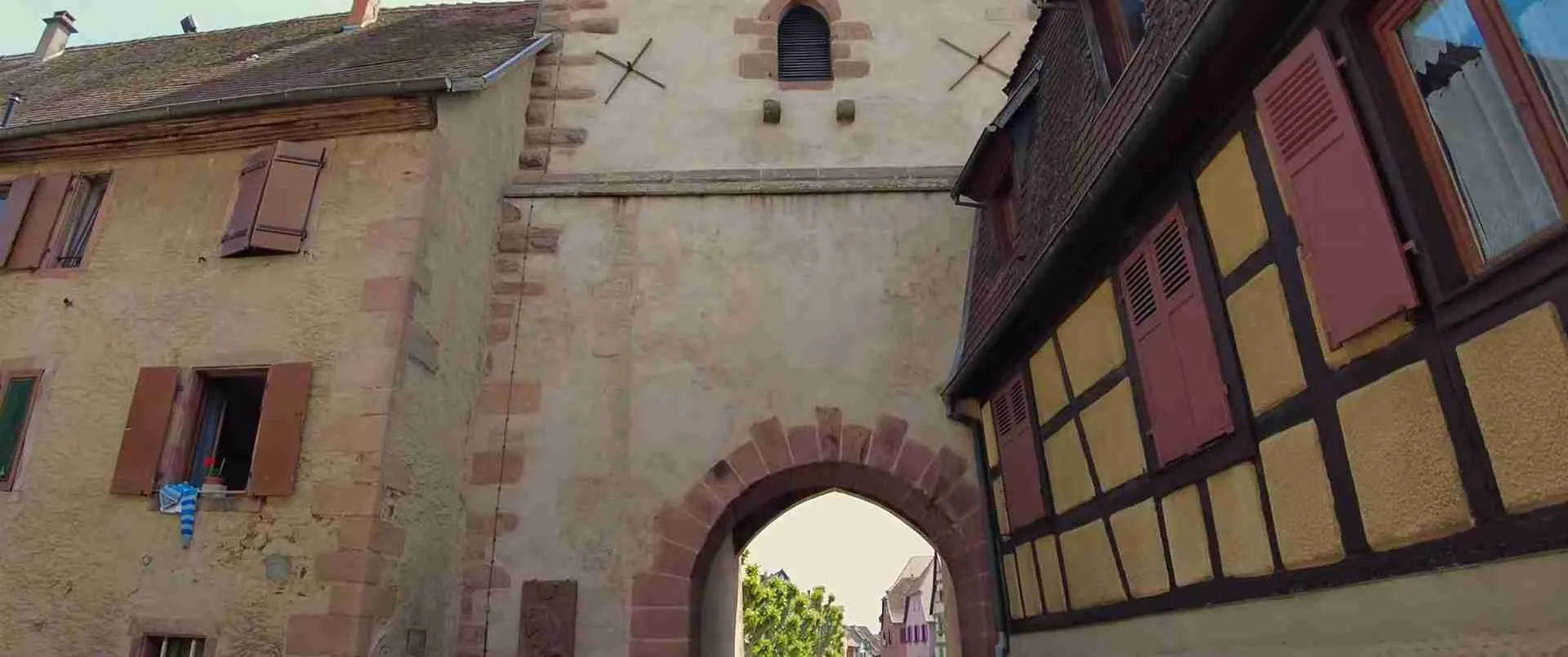
Alsace Without the Crowds: A Curated Guide to the Region’s Hidden Cultural Gems
Alsace rewards travelers who venture past the postcard-famous wine villages and linger long enough to find the region’s quieter face — the crumbling hilltop fortresses that no tour bus reaches, the abbey churches where Romanesque stonework glows in the afternoon light, the family cellars where three generations share a table. This guide moves beyond Colmar’s painted facades and Strasbourg’s cathedral square to reveal the places that locals consider their own: villages, ruins, sacred spaces, craft ateliers, and market tables that make Alsace one of Europe’s most layered and surprising destinations.
Key Takeaways
- Alsace has more than 70 ruined and standing castles, yet only a handful see significant tourist traffic. The hilltop fortresses of the northern Vosges — particularly those around Wissembourg and Niederbronn-les-Bains — offer dramatic medieval scenery with almost no crowds.
- The Route des Vins conceals extraordinary villages between its famous stops. Places like Mittelbergheim, Blienschwiller, and Itterswiller sit minutes apart from the tourist magnets yet receive a fraction of the visitors, offering identical half-timbered architecture with room to breathe.
- Alsace’s sacred heritage extends far beyond Strasbourg Cathedral. The Romanesque abbeys of Murbach and Marmoutier, the mountaintop chapel of Sainte-Odile, and the pilgrimage complex of Thierenbach represent some of the most moving religious architecture in France.
- Living craft traditions remain genuinely active. Soufflenheim and Betschdorf potters still work clay from the same local deposits their ancestors used, and the region’s kougelhopf mold makers, stained-glass studios, and luthier workshops welcome curious visitors.
- The Vosges foothills and northern Alsace plain offer landscapes entirely unlike the famous wine road. The Parc Naturel Régional des Ballons des Vosges, the Petite Pierre fortress town, and the hop-garden countryside around Haguenau reveal dimensions of Alsace that most itineraries miss completely.
- Alsatian table culture runs deepest away from tourist menus. The region’s winstubs — informal wine taverns — serve the most authentic choucroute, baeckeoffe, and flammekueche in settings that predate the tourism industry by centuries.
People Also Ask About Alsace Hidden Gems
Which villages in Alsace are worth visiting beyond Colmar and Riquewihr?
Several villages match or exceed the famous stops in architectural richness while receiving a fraction of the visitors. Mittelbergheim, north of Barr, is widely considered the most perfectly preserved wine village in Alsace and consistently draws fewer tourists than its reputation deserves. Hunawihr, sitting between Ribeauvillé and Riquewihr, surrounds a fortified churchyard with a panorama of vines and stork nests that rivals anything on the wine route. Eguisheim — technically well-known — remains undervisited on weekday mornings when the tour groups have moved on, and its perfectly circular medieval street plan is unlike anything else in the region. Bergheim, with its intact medieval walls and towers, and Dambach-la-Ville, whose ramparts enclose a tranquil old town, both reward explorers willing to step one village off the main route. In northern Alsace, Hunspach and Seebach display the distinctive whitewashed half-timbered architecture of the Outre-Forêt region — a style entirely different from the colorful facades of the wine road and recognized in 2021 among France’s Most Beautiful Villages.
What are Alsace’s most impressive castles that tourists miss?
The castles that tourists miss are often the most dramatic. Château du Haut-Barr, perched on three sandstone rocks above Saverne and reached by an iron bridge spanning a vertiginous gap, is called the “Eye of Alsace” by locals and sees only modest visitor numbers despite its extraordinary setting. The ruined trio of Wangenbourg, Nideck, and Hagelschloss in the northern Vosges can be linked on a single hiking day through beech forest. Château de Bernstein above Dambach-la-Ville stands in exceptional preservation for a ruin, its sandstone keep still rising several stories above the treeline. The twin castles of Grand and Petit Geroldseck near Niederbronn-les-Bains sit in landscape so wild it barely feels French. And the Château de Lichtenberg — fully restored and functioning as a museum and cultural center — receives a fraction of the attention lavished on Haut-Kœnigsbourg despite offering equally impressive views and a richer interpretive program.
Where do locals eat and drink in Alsace away from tourist menus?
The winstub is the authentic Alsatian institution that tourists often miss in favor of formal restaurants. These informal wine taverns — the name combines the German words for wine and room — serve regional dishes at shared tables in wood-paneled rooms that have changed little in a century. In Strasbourg, the winstubs around the Place du Marché-Gayot and in the Krutenau neighborhood serve locals as much as visitors. In the wine villages, the best addresses are often unmarked: a winemaker’s cave doubling as a tasting room and informal lunch table, open only on market days or by arrangement. The markets themselves reward early visitors — the Saturday morning market in Ribeauvillé, the Tuesday market in Saverne, and the weekly market in Haguenau sell direct-from-producer charcuterie, farmhouse munster, and artisan kougelhopf that no restaurant menu can match. The villages of the Kochersberg plateau northwest of Strasbourg — largely unknown to tourists — retain butchers, bakers, and small farm operations that supply the finest Alsatian tables in the capital.
What sacred and religious sites in Alsace reward visitors who go beyond Strasbourg Cathedral?
Mont Sainte-Odile, rising above the plain on a sandstone massif south of Obernai, is the spiritual heart of Alsace — a pilgrimage site, a convent in continuous monastic occupation, and a viewpoint over the Rhine plain that on clear days extends to the Black Forest. The abbey church at Murbach in the Guebwiller Valley is the finest piece of Romanesque architecture in the region: a roofless nave flanked by two intact towers, standing in forest solitude with no village attached and very few visitors. Marmoutier’s abbey church west of Saverne preserves a Romanesque facade of extraordinary refinement, combining pink sandstone reliefs with an interior that passes from Romanesque nave to Gothic choir in a single building. The basilica at Thierenbach near Issenheim — an active pilgrimage church drawing Alsatian Catholics for over three centuries — stands on a gentle hill surrounded by the kind of rural calm that makes a visit feel like genuine discovery rather than tourism. The chapel of Saint-Ulrich above Ribeauvillé, accessible only on foot, rewards the climb with a ruined castle immediately adjacent and a panoramic terrace over the wine plain.
Extended multi-day tours – 5+ days
Featured Alsace Lorraine Multi-Day Tour Packages

3 days
Alsace Lorraine 3-Day Discovery Tour
- ✓ Comprehensive Alsace Lorraine experience
- ✓ Expert local guides included
- ✓ All accommodation included
- ✓ Transportation provided
5 days
Alsace Lorraine 5-Day Highlights Experience
- ✓ Comprehensive Alsace Lorraine experience
- ✓ Expert local guides included
- ✓ All accommodation included
- ✓ Transportation provided

7 days
Alsace Lorraine 7-Day Cultural Journey
- ✓ Comprehensive Alsace Lorraine experience
- ✓ Expert local guides included
- ✓ All accommodation included
- ✓ Transportation provided

10 days
Alsace Lorraine 10-Day Complete Adventure
- ✓ Comprehensive Alsace Lorraine experience
- ✓ Expert local guides included
- ✓ All accommodation included
- ✓ Transportation provided
Multi-day tour packages powered by TourRadar. Prices and availability subject to change.
Introduction: Why Alsace Rewards the Curious Traveler
The problem with Alsace’s fame is that it concentrates visitors with remarkable efficiency. Colmar receives millions of visitors annually, most of them channeled through the same four streets of the Petite Venise quarter. Riquewihr and Eguisheim fill by mid-morning on summer weekends, their narrow lanes becoming exercises in patience rather than pleasure. Strasbourg’s cathedral square draws the eye so powerfully that travelers walk past a dozen lesser-known Gothic churches of equal beauty without noticing.
This concentration of tourist movement is, paradoxically, one of Alsace’s greatest gifts to the traveler who understands it. The infrastructure serving the famous villages — the signage, the tour operators, the restaurant menus in five languages — exists because visitor pressure demands it. Remove yourself ten minutes from those circuits and you find a region that has not constructed itself for outside consumption: winemakers who open their cellars because hospitality is a value, not a revenue strategy; castle ruins that crumble in forest privacy; Romanesque churches that stand in villages of five hundred people with no entry fee, no audioguide, and no gift shop.
Alsace is one of the most historically layered regions in Europe. The borderland between France and Germany for centuries — changing national identity four times between 1870 and 1945 — it developed an architecture, a cuisine, a dialect, and a cultural psychology that belongs fully to neither country and entirely to itself. The famous wine villages represent one face of this heritage, brilliantly preserved and fully commodified. The other face is available to anyone willing to walk an extra kilometer, arrive on a Tuesday rather than a Saturday, or follow a road that does not appear in the standard itineraries.
This guide organizes that alternative Alsace into navigable categories: the hidden villages, the overlooked castles, the sacred spaces, the living crafts, the secret landscapes, and the tables where the region’s food culture remains most genuine. It does not attempt to provide a comprehensive tour itinerary — Alsace is compact enough that a thoughtful traveler can adapt these suggestions to any length of visit. What it offers instead is a mental map of the region’s depth, designed to make the famous places more meaningful by surrounding them with the context that tourism infrastructure usually obscures.
Beyond Colmar and Strasbourg: Understanding Alsace’s Hidden Geography
Alsace occupies a narrow strip of territory between the Vosges mountains to the west and the Rhine plain to the east, roughly 190 kilometers long and rarely more than 50 kilometers wide. Within this compact geography, distinct sub-regions offer radically different experiences, and the tourist infrastructure covers only a fraction of them.
The Route des Vins d’Alsace — the wine road running from Marlenheim in the north to Thann in the south — concentrates most visitor attention. This is understandable: the road is beautiful, the villages extraordinary, and the wine among the finest in France. But the wine road passes through perhaps a third of Alsace’s territorial area. The remaining two-thirds divide into zones that most travelers never see.
Northern Alsace and the Outre-Forêt — the region north of Haguenau extending to the German border — is an agricultural plain punctuated by half-timbered villages that display an architectural vocabulary entirely different from the wine road. The whitewashed colombage of Hunspach and Seebach, the hop gardens stretching toward the Rhine, the modest Romanesque churches of the Outre-Forêt: this is a medieval landscape that survived both world wars with remarkable integrity and receives almost no tourist attention.
The northern Vosges — the forested sandstone massif west and north of Saverne — constitute a different world again. The Parc Naturel Régional des Vosges du Nord covers nearly 130,000 hectares of forest, moor, and sandstone outcrop, threaded with hiking trails that connect castle ruins, Romanesque chapels, and small spa towns with a past rooted in nineteenth-century German bourgeois culture. Niederbronn-les-Bains, Wissembourg — a perfectly preserved medieval town on the German border — and the walled hilltop town of La Petite Pierre are the anchors of a region that draws dedicated walkers and cyclists but very few general tourists.
The Kochersberg plateau northwest of Strasbourg is an agricultural area of rolling wheat fields and quietly prosperous villages that feeds the capital’s best restaurants. The plateau lacks dramatic scenery but rewards visitors who find pleasure in agricultural landscapes, small Romanesque churches, and the genuine rhythms of a region that has never needed to perform for outsiders.
The southern Alsace plain around Mulhouse and the Sundgau — the southernmost portion of the region bordering Switzerland — offers yet another face: an industrial heritage rooted in the textile industry, a landscape marked by glacial ponds and orchards, and a cuisine influenced by the Swiss border as much as by the wine villages to the north.
Understanding this geography is the prerequisite for genuine Alsace discovery. The wine road is a curated highlight reel; the rest of the region is the complete film.
The Forgotten Villages of the Route des Vins
The Route des Vins connects approximately seventy villages, of which perhaps fifteen receive the overwhelming majority of visitors. The remaining fifty-plus villages range from genuinely undiscovered to merely underappreciated, and several deserve to be known far better than they are.
Mittelbergheim: Alsace’s Best-Kept Wine Village Secret
Mittelbergheim sits on a gentle slope above Barr, its Renaissance fountain in the central square surrounded by winemakers’ houses that date from the sixteenth and seventeenth centuries. The village produces Zotzenberg, Alsace’s only premier cru designated specifically for Sylvaner — a fact that should make it famous but which, in a region obsessed with Riesling and Gewurztraminer, keeps it the preserve of knowledgeable wine travelers. The Place de l’Hôtel de Ville, with its elaborate sixteenth-century facades and carved doorways, rivals anything in Riquewihr without the crowds. Weekend visits bring local winemaker families to the village square in a sociability that tourism has not yet disrupted.
Hunawihr: The Stork Village Between Famous Neighbors
Hunawihr occupies one of the most visually perfect positions on the entire wine route — a hilltop church surrounded by a fortified cemetery wall, ringed by vines, with the towers of Ribeauvillé visible on one side and Riquewihr on the other. The churchyard fortifications, built in the fifteenth century as a refuge from mercenary armies, are among the best-preserved examples of their kind in Alsace. The village also houses a stork reintroduction center — the white stork, the emblematic bird of Alsace, was nearly extinct in the region fifty years ago and has been restored to the rooftops largely through the work of centers like this one. Arriving in Hunawihr between visits to Ribeauvillé and Riquewihr requires adding perhaps twenty minutes to the standard route; the reward is a village that feels like the wine road must have looked before it became the wine road.
Bergheim: Medieval Walls and an Intact Old Town
Bergheim’s intact medieval ramparts — three towers and significant sections of the original curtain wall — enclose an old town that receives perhaps five percent of the visitors who descend on Ribeauvillé, ten minutes to the south. The linden tree in the village square, said to be over three hundred years old, shades a space where locals actually sit rather than merely photograph. The sixteenth-century church of Saints-Pierre-et-Paul contains Gothic frescoes only recently restored. A small but thoughtful memorial museum at the village edge addresses the persecution of Bergheim’s Jewish community during the Black Death — a sobering historical counterpoint to the half-timbered prettiness.
Blienschwiller, Nothalten, and Itterswiller: The Quiet Trio
Three small villages between Dambach-la-Ville and Barr — Blienschwiller, Nothalten, and Itterswiller — sit so close together that a walking circuit connecting them takes less than two hours. Each maintains the essential wine village character — carved doorways, flower-laden windowsills, small family cellars offering tastings — without the tour groups. Itterswiller’s single main street, where an old auberge serves choucroute to a clientele that is primarily local, represents the authentic wine road experience that the famous villages once offered and now struggle to provide. These villages are not secrets in the local sense — Alsatians know them well — but they remain almost entirely absent from international travel itineraries.
Hunspach and Seebach: The Outre-Forêt Villages
Hunspach and Seebach, in the far north of Alsace near the German border, display an architectural style that startles travelers who associate Alsace with colored colombage. The houses here are whitewashed, their timber frames painted dark, their windows framed by carved shutters in the tradition of the Outre-Forêt. Hunspach carries the official designation of one of France’s Most Beautiful Villages (Les Plus Beaux Villages de France) — recognition that brought some additional attention after 2021 but has not fundamentally altered a village that remains genuinely residential and unhurried. The surrounding landscape of hop gardens, wheat fields, and scattered farmsteads extending to the Rhine provides a context entirely unlike the southern wine route.
Wissembourg: The Town That Tourism Forgot
Wissembourg, directly on the German border at the northern tip of Alsace, is one of the best-preserved medieval towns in the region and one of the least visited. Its Gothic church of Saints-Pierre-et-Paul contains the largest figurative fresco cycle in Alsace, covering over 100 square meters of the nave with fourteenth-century scenes that most visitors to the region never see. The town’s medieval street plan, with the Lauter river running through its center past tanneries converted to residences, is an intact example of the kind of urban fabric that larger towns have lost. Wissembourg receives some German day visitors from nearby Karlsruhe and Landau but almost no international tourism, making it perhaps the most accessible truly undiscovered destination in Alsace.
Alsace’s Lesser-Known Castles and Fortifications
Haut-Kœnigsbourg, the great castle above Sélestat, receives hundreds of thousands of visitors annually — with justification, since its early twentieth-century restoration under Kaiser Wilhelm II produced a monument of impressive theatrical power. But Alsace has more than seventy other castle ruins and standing fortifications, most of them accessible on foot from the wine road villages and most of them almost entirely without tourist infrastructure.
Château du Haut-Barr: The Eye of Alsace
Haut-Barr rises on three sandstone rocks above Saverne, its ruins connected by iron bridges spanning gaps that make the approach feel genuinely precarious. The view west across the Zorn valley and east over the Rhine plain — Alsatians call this vantage point the “Eye of Alsace” — is among the most dramatic in the region. The castle’s history extends from its twelfth-century foundation through occupation by the bishops of Strasbourg to its destruction during the Thirty Years’ War, and the ruins retain enough height and complexity to reward extended exploration. The drive from Saverne takes fifteen minutes; many visitors from the famous wine road towns never make it this far north.
Château de Lichtenberg: The Restored Hidden Gem
Lichtenberg, in the northern Vosges northwest of Niederbronn-les-Bains, is an anomaly among Alsatian castles: a fully restored medieval and Renaissance fortification that functions as a museum, exhibition space, and cultural center without having become a major tourist destination. The castle’s irregular plan — it incorporates Romanesque, medieval, and Renaissance additions across six centuries of construction — is more architecturally interesting than the monolithic Haut-Kœnigsbourg. The permanent exhibition on the castle’s history and the Alsace-German border region is among the most intelligently presented in the region. Visitor numbers remain modest enough that arriving without a reservation on a weekday virtually guarantees a private experience.
The Northern Vosges Ruins: Wangenbourg, Nideck, and the Falls
The forest above the village of Wangenbourg conceals a cluster of ruins — Château de Wangenbourg, Château du Nideck, and the neighboring remains of other medieval strongholds — that can be linked on a single hiking day. The waterfall at Nideck, reached by a short detour from the castle trail, is the most impressive waterfall in Alsace and appears in a famous poem by Chamisso. The landscape here — deep sandstone gorges, mixed beech and fir forest, occasional rock outcroppings — looks nothing like the wine road country forty kilometers to the east. The entire circuit from Wangenbourg village takes four to five hours at a comfortable pace and involves almost no other hikers outside summer weekends.
Château de Bernstein: The Well-Preserved Sandstone Keep
Above Dambach-la-Ville, the ruins of Bernstein retain their central keep to an impressive height — several stories of dark Vosges sandstone rising above the treeline with a solidity that most Alsatian ruins, reduced to foundations by the Thirty Years’ War, cannot match. The fortification dates from the twelfth century and was expanded over subsequent centuries by the noble families of the Bergbieten and Wangen. The approach trail from Dambach takes about forty minutes through vineyard and forest, and the ruins themselves occupy a rocky promontory with views over the wine plain that justify the climb entirely on their own terms. Most visitors to Dambach — itself an undervisited wine town with exceptional medieval ramparts — do not know the castle exists.
Châteaux de Geroldseck: Twin Ruins in Wild Landscape
The Grand and Petit Geroldseck, twin ruins above the village of Lemberg in the northern Vosges, occupy a landscape so forested and remote that it requires some imaginative effort to place them within an hour’s drive of Strasbourg. The larger ruin, the Grand Geroldseck, retains a circular keep and several curtain wall sections; the smaller Petit Geroldseck sits a short walk away on an adjacent ridge. No formal visitor infrastructure exists — no car park, no signage, no opening hours, because there is nothing to open. The ruins are public and freely accessible, reached by forest trails, and the absence of any commercial apparatus is precisely what makes them extraordinary.
The Trois Châteaux d’Eguisheim: Watching Over the Plain
Three ruined towers rise in silhouette above Husseren-les-Châteaux, directly above the village of Eguisheim, visible from the plain for twenty kilometers. Most visitors to Eguisheim look up at them from the village street but do not climb to them. The ascent takes under an hour from the village and the towers — Wahlenbourg, Weckmund, and Dagsbourg — stand near enough together that the three can be reached in a single circuit. The view from the highest tower across the entire Alsace plain, with the Vosges behind and the Black Forest visible in Germany across the Rhine, surpasses anything visible from the village far below.
Hidden Sacred Spaces: Abbeys, Chapels, and Pilgrimage Sites
Alsace’s sacred heritage is one of the densest in France. The region converted to Christianity in the Merovingian period and was one of the primary zones of monastic foundation in the early medieval era. The resulting landscape contains abbeys, pilgrimage chapels, fortified churches, and collegiate foundations that span fifteen centuries of continuous religious life.
Abbaye de Murbach: The Finest Romanesque Ruins in Alsace
Murbach, in the valley above Guebwiller, is the most important Romanesque monument in Alsace and among the most powerful religious ruins in France. The nave was demolished in the eighteenth century, leaving two towers and a choir of extraordinary refinement standing in forest solitude without a village, without a town, and — on a weekday morning in the off-season — without another visitor. The stones carry carved reliefs of exceptional quality. The proportions of the surviving east end achieve the kind of massive grace that only the best Romanesque architecture produces. Murbach was, in the Carolingian period, one of the wealthiest and most influential abbeys in the Holy Roman Empire; the wealth is gone, the influence dissolved, but the stones remain in a setting that seems designed to communicate precisely this combination of former grandeur and present silence.
Mont Sainte-Odile: The Mountain at the Heart of Alsatian Identity
Sainte-Odile is both a pilgrimage destination and the defining landmark of Alsatian spiritual geography. The convent, in continuous monastic occupation since the early eighth century, crowns a sandstone massif above the village of Ottrott and can be seen from points across the entire wine road. The convent church contains the tomb of Odile herself — the patron saint of Alsace, daughter of a seventh-century Alsatian duke, whose miraculous birth story and founding of the convent constitute the founding myth of Alsatian Christian identity. The pilgrimage to Mont Sainte-Odile draws hundreds of thousands of visitors annually — so calling it hidden would be misleading — but few visitors explore the full extent of the site. The “Pagan Wall” (Mur Païen), a pre-Roman megalithic enclosure of unknown function that circles the mountain for ten kilometers, is accessible on foot from the convent and represents one of the most mysterious archaeological monuments in Alsace.
Marmoutier: The Romanesque Facade Hidden in a Small Town
The abbey church at Marmoutier, fifteen kilometers west of Saverne on the road to Phalsbourg, preserves a Romanesque west facade of extraordinary quality — layered blind arcading in pink Vosges sandstone, three towers in differing styles, a carved portal that demonstrates the full repertoire of twelfth-century Alsatian sculptural invention. The town of Marmoutier itself is unremarkable; tourists passing through on the way to or from Strasbourg rarely stop. The church is open daily and free to enter, and the combination of the Romanesque facade with a Gothic and baroque interior that layers seven centuries of religious art represents a richer experience than many destinations that charge significant admission fees.
Thierenbach: The Pilgrimage Church in the Fields
The basilica of Our Lady of Thierenbach stands on a gentle hillside near Issenheim — best known internationally as the location of Grünewald’s Isenheim Altarpiece, now in the Unterlinden Museum in Colmar. Thierenbach itself, however, is rarely included on the same itinerary. The pilgrimage church, rebuilt in the early eighteenth century in a German baroque style unusual for Alsace, has drawn pilgrims from across the region for over three centuries and continues to function as an active devotional site. The interior contains an extraordinary collection of ex-votos — painted wooden tablets left by pilgrims in thanksgiving for answered prayers — that constitute a folk art record of Alsatian popular piety spanning several centuries. The surrounding landscape of gentle agricultural hills is entirely without tourist development.
Chapelle Saint-Sébastien de Dambach: Frescoes in the Forest
A short walk through the forest above Dambach-la-Ville leads to the fourteenth-century chapel of Saint-Sébastien, a small Gothic structure containing Romanesque and Gothic fresco fragments of considerable quality. The chapel is used for occasional services and festivals but is otherwise unwatched and freely accessible, its painted walls a direct encounter with medieval religious art unmediated by museum context. The combination of the walk through vineyard and forest, the chapel’s medieval interior, and the proximity of the Bernstein castle ruins above makes this one of the most rewarding half-days available in the wine road region.
The Fortified Churches of the Outre-Forêt
The plain of northern Alsace is scattered with fortified churches — Wehrkirchen — whose surrounding walls and towers were built in the fifteenth and sixteenth centuries as refuges against the mercenary armies that devastated the region during the Thirty Years’ War. The church at Hunawihr is the most photographed, but equally well-preserved examples stand at Avolsheim — where the Dompeter chapel is claimed as the oldest church in Alsace — at Valff, and at Westhoffen. These fortified churchyards, their walls still standing to crenellated height in some cases, represent a category of medieval military architecture almost unique to Alsace and the adjacent German borderland.
Craft Traditions and Living Heritage Off the Tourist Trail
Alsace maintains a range of artisanal traditions that remain genuinely active rather than merely performed for visitors. The region’s ceramics, glasswork, textile traditions, and food crafts are products of specific local conditions — clay deposits, silica sources, hop cultivation, wheat varieties — that have sustained regional industries for centuries.
Soufflenheim and Betschdorf: The Pottery Villages
Soufflenheim and Betschdorf, in northern Alsace near Haguenau, are the twin centers of Alsatian ceramics — two villages, twenty kilometers apart, each working clay from the same local deposits but producing entirely different aesthetic traditions. Soufflenheim produces the bright glazed earthenware — orange, yellow, and green — whose kougelhopf molds, tart dishes, and serving bowls appear in every Alsatian kitchen and most Alsatian souvenir shops. Betschdorf produces stoneware in salt glaze, grey-blue and austere, decorated with cobalt-blue motifs in a tradition unchanged since the eighteenth century. Both villages maintain active working studios where visitors can watch production, purchase directly from the makers, and in some workshops participate in demonstrations. The distinction between the two village traditions — the exuberant and the restrained — is itself a lesson in Alsatian cultural complexity.
The Kougelhopf Mold Makers
The kougelhopf — the fluted Bundt-cake form whose distinctive tall silhouette appears on every regional tourism logo — is baked in a mold specific to Alsace. The molds themselves are considered collectibles, their glazes and sizes varying by maker and era. Several Soufflenheim studios still produce molds by hand using traditional methods, and the oldest examples in private collections date to the eighteenth century. Tracking down the best contemporary kougelhopf molds — and the bakers who use them to produce the authentic butter-and-almond version of the cake rather than the simplified tourist-café edition — is a minor obsession among food-focused Alsace visitors and a genuinely rewarding one.
Alsatian Stained Glass: A Living Studio Tradition
The stained-glass tradition in Alsace runs from the medieval windows of Strasbourg Cathedral through the Art Nouveau workshops of the nineteenth century to the contemporary studios still operating in Strasbourg and the wine villages. The Studio Ott Frères in Strasbourg, founded in 1844 and still family-operated, has restored medieval windows across the region and accepts studio visits by appointment. Smaller ateliers in Molsheim and Guebwiller maintain similar traditions. The Musée de l’Œuvre Notre-Dame in Strasbourg — far less visited than the cathedral itself — preserves the finest collection of medieval Alsatian stained glass in existence, including windows removed from the cathedral for conservation. The combination of the museum’s holdings and a studio visit produces a comprehensive understanding of a craft that is simultaneously ancient and contemporary.
The Hop Gardens of the Haguenau Forest Region
Alsace is France’s primary hop-growing region, its tall trellis gardens covering the plain north of Haguenau and extending toward the German border. The hops — used primarily in Alsatian and German brewing — are harvested in September in a process that has changed less than most agricultural operations, and the landscape of the growing season, with the hop plants climbing four-to-five-meter poles in geometric rows, is entirely specific to this region of France. The hop harvest festivals in villages around Haguenau in late August and September are local celebrations rather than tourist events, drawing families from across the region for music, food, and the ritual marking of the season. Visitors who arrive during the hop harvest find an Alsace entirely disconnected from the wine road tourism economy.
The Luthiers of Mirecourt and Alsace’s Musical Heritage
The town of Mirecourt, just west of Alsace in the Vosges department, is France’s violin-making capital — a tradition established in the seventeenth century that continues in a cluster of workshops producing instruments for players worldwide. Mirecourt is technically outside Alsace but close enough to make a day trip from the wine road viable, and the combination of workshop visits with the small Musée de la Lutherie presents a craft of extraordinary precision in its genuine working environment. Within Alsace itself, the pipe organ tradition — nurtured by generations of Alsatian builders and documented in the playing career of Albert Schweitzer, who recorded the complete organ works of Bach on Alsatian instruments — connects the region’s sacred and musical heritages in ways that reward investigation.
Alsace’s Secret Natural Landscapes and Vosges Escapes
The natural landscape of Alsace is dominated, in tourist imagination, by vineyard slopes and the gentle agricultural plain. The Vosges mountains to the west — visible from every high point on the wine road — contain a different world: high moorland, glacial cirques, dense beech and fir forest, and a network of marked paths that constitutes one of France’s finest long-distance walking systems.
The Chaume Summits: High Moorland Above the Forest
The highest points of the Vosges — the chaumes, or high moorland summits — are rounded domes covered in bilberry, heather, and windswept grassland, rising above the treeline in a landscape that has more in common with the Scottish Highlands than with the pastoral Alsace of the plain. The Grand Ballon (1,424 meters), the highest point in the Vosges, can be reached by road in summer and offers a panorama extending in clear conditions to the Alps. But the more interesting walking lies in the approach routes through the forest — particularly from the village of Lautenbach-Zell in the Guebwiller Valley, which provides access to both the Murbach ruins below and the high summits above on a single day’s walk.
The Cascade de Nideck: Alsace’s Forgotten Waterfall
The waterfall at Nideck, in the forest above the village of Oberhaslach southwest of Molsheim, drops approximately 25 meters over a basalt ledge in a setting of such theatrical gloom that it inspired one of the canonical poems of German Romanticism (Chamisso’s “Der Riese von Nideck”). The path to the falls passes through beech forest above a deep gorge; the ruins of Château de Nideck are visible on a rocky promontory above the falls. The circuit from Oberhaslach takes two to three hours and encounters very few other walkers outside summer weekends, despite the waterfall being genuinely impressive by any standard.
The Sundgau: Glacial Ponds and Swiss Borderland
The Sundgau, the southernmost portion of Alsace bordering Switzerland, is an agricultural plateau marked by glacial ponds (étangs), orchards of cherry and mirabelle, and villages whose architecture and cuisine reflect the Swiss influence as much as the Alsatian wine culture to the north. The Sundgau is associated with carpe frite — fried carp from the local ponds, a regional specialty that appears on the menu of almost every village restaurant and nowhere else in France. The landscape here is soft and pastoral, without dramatic scenery, but the combination of the ponds, the orchards in bloom in spring, and the genuine rurality of villages that have no particular reason for outside visitors to stop creates a tranquility rare in a region as visited as Alsace.
The Forests of the Parc Naturel Régional des Vosges du Nord
The northern Vosges park, stretching west and north of Saverne toward the Moselle department and the German border, covers a landscape of dense sandstone forest punctuated by ruined castles, small spa towns, and a network of hiking paths rated among the finest in France. The park shares a designation with the adjacent Pfälzerwald in Germany as a UNESCO Biosphere Reserve — one of the largest such reserves in Western Europe. The village of La Petite Pierre, a walled hilltop town in the center of the park, makes an ideal base for exploration; the castle above the town houses the park’s visitor center and a museum of Alsatian folk traditions that provides valuable context for the regional heritage.
The Ried: The Disappearing Floodplain
The Ried — the ancient Rhine floodplain between Colmar and Strasbourg — is one of France’s most important wetland habitats and one of the least-visited landscapes in Alsace. Before the Rhine was channeled in the nineteenth century, this zone of seasonal flooding supported willow galleries, wet meadows, and a network of water channels that constituted a distinct ecosystem. Parts of the Ried have been restored and are accessible on marked walking and cycling routes; the area around Rhinau and Gerstheim retains sections of ancient Rhine forest that give a sense of the pre-industrial riverine landscape. The Ried is a destination for naturalists and those interested in ecological restoration, not for monument tourism — but its accessibility from the wine road towns, and the contrast it provides with the agricultural order of the vine-covered slopes, makes it a genuinely worthwhile alternative program.
Hidden Culinary Gems: Markets, Producers, and Local Tables
Alsatian food culture is among the most distinctive in France, shaped by the region’s German-influenced agricultural past, its specific climatic conditions, and a set of traditional preparations that differ fundamentally from French haute cuisine. The tourist infrastructure of the wine road has developed a version of this culture — often genuine, always accessible — but the deepest expressions of Alsatian culinary identity require more specific effort to find.
The Winstub: Alsace’s Original Informal Restaurant
The winstub is the fundamental Alsatian social institution: a wine tavern where local growers bring their wines, where the food is a set menu of regional dishes, where the tables are shared, and where the hours are dictated by the kitchen rather than by customer convenience. The best winstubs close when the food runs out and open only when the proprietor considers it worthwhile. They are not, primarily, tourist restaurants — though many welcome visitors who understand the format. In Strasbourg, the winstubs of the Krutenau quarter and around the market halls maintain a clientele that is predominantly local. In the wine villages, the institution has been commercialized in some cases, but genuine examples survive — typically characterized by their refusal to translate the menu, their limited opening hours, and their preference for cash.
The distinction between a tourist-oriented restaurant serving “traditional Alsatian cuisine” and an authentic winstub lies less in the food than in the atmosphere and the clientele. Choucroute, baeckeoffe (the slow-cooked meat-and-potato casserole traditionally prepared by village women who left it with the baker’s oven on Monday morning), tarte flambée, and roast pork with beer are available in both settings. The difference is whether you eat among Alsatians who consider the place their local, or among visitors like yourself.
The Markets of Secondary Towns
Alsace’s most rewarding food markets are not in Colmar or Strasbourg — both of which have excellent markets increasingly oriented toward visitors — but in the secondary towns that supply those cities. The Saturday market in Ribeauvillé, held in the main street below the medieval towers, draws producers from the surrounding villages who bring farmhouse munster, artisan charcuterie, seasonal vegetables, and fresh eggs in quantities and at prices that reflect local rather than tourist economies. The market at Saverne on Tuesday mornings, less famous and largely unvisited by wine-road tourists, serves the needs of a working regional town; the same is true of the Wednesday market at Molsheim and the Thursday market at Guebwiller. Arriving at these markets before nine in the morning, before the professional buyers have taken the best produce, requires a discipline that most leisure travelers cannot manage but rewards those who can.
Munster Cheese: The Valley Origin
Munster — the most important cheese of Alsace, a washed-rind cow’s milk cheese whose smell vastly exceeds its flavor in tourist reputation — carries an AOC designation that covers both the Alsatian valley of the Fecht river and the neighboring Lorraine. The cheese produced in the valley of Munster itself, aged in the valley caves and made from the milk of cows grazing the high pastures of the chaumes, is a different product from the industrial version available in every French supermarket. The town of Munster, twenty kilometers west of Colmar at the foot of the Vosges, has a weekly market on Monday mornings where valley producers sell directly — aged munster, fresh white cheese (bibeleskaes), fromage blanc — and a small but excellent cheese museum (the Écomusée d’Alsace has relevant exhibits at Ungersheim) that addresses the cheese’s production history.
Alsatian Foie Gras: A Tradition Few Visitors Find
Alsace is one of France’s two primary foie gras regions — a fact known to gastronomes but less visible on tourist menus than the Périgord tradition. The Alsatian tradition, based on geese rather than ducks (unlike the Périgord preference), produces a foie gras with specific textural and flavor characteristics. Producers are concentrated in the Strasbourg plain and in the villages around Haguenau and Sélestat. The annual Saint Catherine’s fair in Strasbourg in late November remains the traditional market for goose products; smaller farm sales in the villages around Geispolsheim and Lingolsheim, largely unknown outside the region, offer direct-purchase opportunities that the tourist infrastructure of the wine road does not replicate.
Alsatian Beer: The Brewery Towns Beyond Kronenbourg
Alsace is France’s primary brewing region, its hop culture, Rhineland yeast traditions, and nineteenth-century industrialization producing the major French lager brands (Kronenbourg, Heineken France, Meteor) alongside a growing craft brewery movement. The town of Saverne — already recommended for Château du Haut-Barr and the abbey church at Marmoutier — is home to the Licorne brewery, one of Alsace’s most interesting industrial heritage sites. The craft brewery movement has established itself in Strasbourg, Mulhouse, and several wine road villages, producing interpretations of traditional Alsatian wheat beer (bière de mars), pale ales influenced by the local hop varieties, and seasonal brews that appear in the town winstubs and at the autumn markets.
Overlooked Museums and Cultural Institutions
The Unterlinden Museum in Colmar — home to the Isenheim Altarpiece — and the historical museums of Strasbourg are among the finest in France and fully merit their reputations. But Alsace maintains a network of smaller museums and cultural institutions of extraordinary quality that operate with only modest visitor numbers.
The Écomusée d’Alsace at Ungersheim
The Écomusée d’Alsace, near Ungersheim in the Mulhouse plain, is one of the largest open-air museums in France — a reconstructed Alsatian village of over seventy historic buildings relocated from across the region and assembled into a working settlement with resident craftspeople, farm animals, and seasonal programming. The distinction between the Écomusée and a themed heritage attraction lies in the seriousness of its ambition: the buildings are genuine historic structures, the craftspeople are skilled practitioners, and the interpretive program addresses the full social complexity of Alsatian rural life rather than only its picturesque aspects. A full day is insufficient; the museum’s depth, particularly in its coverage of nineteenth-century industrial and agricultural life, rewards multiple visits.
Musée de l’Œuvre Notre-Dame: Medieval Art Without the Crowds
Directly adjacent to Strasbourg Cathedral — in a building that was itself the cathedral works office for much of the medieval period — the Musée de l’Œuvre Notre-Dame contains the finest collection of medieval Alsatian art in existence. The original sculptures from the cathedral’s west facade, replaced in the nineteenth century by copies that now weather in the open air while the originals rest in controlled conditions, are here: the famous “Church and Synagogue” allegories, the portal tympana, the figured columns. The medieval stained glass removed from the cathedral for conservation includes windows of the twelfth and thirteenth centuries in colors that have lost nothing of their original intensity. The museum shares its courtyard with a Renaissance garden of considerable beauty. Visitor numbers are a fraction of those at the cathedral itself, fifty meters away.
Musée Alsacien in Strasbourg: The Vernacular Heritage
The Musée Alsacien, housed in three interconnected sixteenth-century townhouses near the Ponts Couverts, documents the material culture of Alsatian daily life from the early modern period through the twentieth century. The collection includes exceptional examples of Alsatian furniture, painted ceramics, embroidered regional costume, devotional objects, and household equipment — the accumulated material of a distinctive regional culture assembled in a building whose interconnected courtyards and wooden galleries are themselves remarkable examples of Strasbourg’s bourgeois Renaissance architecture. The museum is serious, comprehensive, and consistently undervisited relative to the cathedral and the European Parliament visitor complex.
The Lalique Museum at Wingen-sur-Moder
The Musée Lalique at Wingen-sur-Moder, in the northern Vosges, is the official repository of René Lalique’s work — glass, jewelry, automobile mascots, architectural glass — produced at the factory he established in the village in 1921. The museum building, a contemporary glass pavilion by the architect Jean-Michel Wilmotte, complements rather than overpowers the historic factory complex still operating adjacent to it. The collection spans Lalique’s entire career from his fin-de-siècle jewelry through the Art Deco glass of his Alsatian period, with particular depth in the architectural glass commissions — railroad car interiors, church windows, ocean liner decorations — that represent his most ambitious work. The museum is the best Art Nouveau and Art Deco design collection in Alsace and among the best in France; it receives perhaps five percent of the visitors who tour the major Strasbourg museums.
The Château des Rohan in Saverne: Four Museums in One
The Château des Rohan at Saverne — the pink sandstone palace built by the prince-bishops of Strasbourg in the eighteenth century as their summer residence — contains four separate museum collections under one roof: Gallo-Roman archaeology, medieval stonework, regional fine arts, and a collection of Alsatian decorative arts. The building itself, a massive neoclassical structure facing the Zorn canal with a facade longer than any comparable residence in Alsace, is architecturally remarkable. The archaeology collection, drawing on Saverne’s position as the Roman fort of Tres Tabernae, contains exceptional bronzes and everyday objects from the Rhine crossing point. The combined visit occupies a full morning and provides one of the most comprehensive introductions to Alsatian history available outside Strasbourg, in a building almost entirely without international tourism.
The Quiet Towns Between the Vineyards
The wine road passes through villages, but Alsace also contains a series of small towns — administrative and commercial centers that have served the surrounding agricultural region for centuries — which offer architectural wealth and historical substance without attracting tourist infrastructure. These towns are not secrets within Alsace; local people know and use them. For international visitors, they represent some of the most accessible genuinely local experiences available in the region.
Barr: The Undervisited Capital of the Bas-Rhin Wine Country
Barr, the largest town in the central wine road of the Bas-Rhin department, has a Hôtel de Ville of exceptional elegance, a network of Renaissance and baroque townhouses, and a folie (an eighteenth-century pleasure garden and folly-house) that contains one of Alsace’s best small museums of decorative arts. The town functions as a working market center — its Armistice Day fair in November is a regional event rather than a tourist attraction — and its combination of architectural substance with genuine local commerce represents the best of the regional town tradition. Mittelbergheim, immediately above it on the slope, is reached by a five-minute drive.
Sélestat: The Humanist Town
Sélestat, between Colmar and Strasbourg, is one of the most historically important towns in Alsace and one of the most undervisited by tourists who pass through on the train line. The Bibliothèque Humaniste, housed in a former grain market, contains the library of Beatus Rhenanus — the sixteenth-century humanist scholar and friend of Erasmus — including one of the oldest known Christmas Tree references in the world (a household accounts book of 1521 that records the purchase of fir trees for decoration). The library, recognized as a UNESCO Memory of the World document heritage site, is genuinely extraordinary and genuinely empty of visitors on most mornings. The town also contains two major Gothic and Romanesque churches, an intact medieval street plan, and a regular Thursday and Saturday market of high quality.
Molsheim: The Bugatti Town
Molsheim, a walled town west of Strasbourg, is famous within the automotive world as the town where Ettore Bugatti established his factory in 1909 and produced the cars that defined performance motoring between the wars. The factory still operates — now producing the Bugatti Chiron under Volkswagen Group ownership — and a small but exceptional museum in the town chronicles the marque’s history. The old town of Molsheim, enclosed within surviving medieval walls, contains the Metzig — a Renaissance butchers’ guild house of exceptional quality, built in 1523 with an external staircase and arcaded gallery — and a large Jesuit church of the seventeenth century. The town is fifteen minutes from Strasbourg by train and almost entirely without tourism infrastructure despite its multiple points of interest.
Guebwiller: Southern Alsace’s Overlooked Gem
Guebwiller, at the mouth of the Lauch valley giving access to the Murbach ruins above, contains three major churches representing three different centuries of Alsatian ecclesiastical architecture: the Romanesque Saint-Léger, the Gothic Dominican church (now a museum of art), and the baroque Saint-Pierre, each within walking distance of the others in a compact old town. The town served as the administrative center for the Murbach abbey estates and retains the prosperity of that position in its eighteenth-century townhouses and market square. The Unterlinden Museum annex in the former Dominican church displays a collection of Gothic religious art second in Alsace only to the Colmar main collection. The town is entirely without international tourist infrastructure and provides a genuinely local experience of southern Alsatian urban culture.
Practical Wisdom for Independent Exploration
Exploring the hidden face of Alsace requires certain practical adjustments to the standard tourist approach — not major ones, but adaptations that make the difference between encountering the region on its own terms and finding only its tourist surface.
Transport: Why a Car Matters More Than Usual
Alsace has excellent public transport between its major towns and along the wine road, but the villages, ruins, and natural landscapes described in this guide are not accessible without a car or a bicycle. The train network connects Strasbourg, Colmar, Mulhouse, Sélestat, Saverne, and Haguenau efficiently; from those hubs, buses serve the wine road with varying frequency. But the Nideck waterfall, the Murbach ruins, the northern Vosges castles, and the Sundgau ponds are not on bus routes. Car rental from Strasbourg or Colmar airports is straightforward and relatively affordable; bicycle hire is available in many wine road towns and is entirely appropriate for the flat sections of the plain, less so for the castle approaches.
Timing: The Empty Hours and Empty Months
The wine road in July and August, on summer weekends, is crowded in the way that all European tourist infrastructure becomes crowded in summer. The same villages in November — bare vines, mist over the plain, woodsmoke from village chimneys — are a different experience entirely. The Christmas markets, beginning in late November, draw visitors back in number; the weeks between the end of the vendanges (grape harvest, typically October) and the beginning of the Christmas market season are the quietest of the year. Early mornings on any day of the week, before ten, allow the famous villages to be experienced with something approaching their normal scale and atmosphere.
Language: The Alsatian Advantage
Alsatian — the Alemannic German dialect historically spoken in the region — has declined sharply since 1945, but its influence on French-speaking Alsatian culture remains strong. Most Alsatians speak French as their primary language; many older residents and many in the wine trade also speak German or understand it. English is widely spoken in the tourist industry and in the cities. In the winstubs and village markets, French is expected and German is understood; English may or may not be available. A few words of French — and a demonstrated willingness to attempt communication — are the most powerful tools available to a visitor seeking genuine local interaction.
Winery Visits: The Direct Approach
The most authentic cellar visits in Alsace are not organized through tour operators but arranged directly with individual winemakers. Most wine road producers display a “Dégustation” (tasting) sign when they are available to receive visitors; stopping without an appointment at a sign-displaying cellar is entirely acceptable and often welcomed. The best producers in lesser-known villages — in Mittelbergheim, in Itterswiller, in the Kochersberg plateau villages — are not listed in the main wine guides and are found by driving the village roads and stopping where the signs appear. A purchase is expected after a tasting; arriving with the genuine intention of buying concentrates the mind appropriately and communicates respect for the producer’s time.
Seasons and the Agricultural Calendar
Alsace’s agricultural calendar provides a secondary itinerary for curious visitors. The asparagus harvest in the plain east of Haguenau runs from mid-April to June, when roadside stands and village restaurants offer white asparagus in preparations that are specific to Alsace and the Rhine plain. The strawberry season follows in June; the mirabelle plum harvest in August fills the Sundgau and the Vosges foothills with a yellow-gold fruiting that produces the region’s most distinctive eau-de-vie. The grape harvest in October brings the wine villages back to genuine agricultural function, the streets filled with tractors carrying full bins rather than tourists. Each season alters the region’s mood and material culture in ways that reward return visits.
Frequently Asked Questions
Is Alsace worth visiting beyond the wine road villages?
Alsace is substantially more rewarding when explored beyond the wine road. The northern Vosges park, the Sundgau, the secondary towns of Barr, Sélestat, and Molsheim, the Romanesque abbeys at Murbach and Marmoutier, and the overlooked museums of Strasbourg collectively represent a deeper and more varied experience of the region than the wine road itinerary alone provides. Visitors who allocate three or more days to Alsace should plan at least one full day away from the wine road villages.
What is the best time of year to visit Alsace for fewer crowds?
October and early November — after the grape harvest and before the Christmas market season — offer the quietest conditions on the wine road, with the vines turning gold and red and the cellar doors still open for post-harvest tastings. The weeks in late January and February are equally quiet and see the wine road in its most austere winter state. Summer weekdays are manageable; summer weekends in the famous villages (Riquewihr, Eguisheim, Colmar’s Petite Venise) are genuinely crowded. The northern Vosges and the Sundgau are less affected by seasonal visitor patterns than the wine road.
Can I visit Alsace without a car?
The major towns — Strasbourg, Colmar, Mulhouse, Sélestat, Saverne, Haguenau — are all accessible by train from Strasbourg’s TGV station, which connects directly to Paris (two hours ten minutes) and to several German cities. The wine road villages are served by bus from Colmar and Sélestat with reasonable frequency in summer. However, the castle ruins, the northern Vosges, the Sundgau ponds, and most of the natural landscapes described in this guide are not accessible by public transport. A car or a bicycle is required for genuine independent exploration of hidden Alsace. Electric bicycle hire, available in several wine road towns, extends the accessible range significantly for fit travelers.
What makes Alsatian cuisine different from standard French cooking?
Alsatian cuisine reflects the region’s centuries as a German-speaking borderland: it is richer, heartier, and more meat-and-starch-centered than the French culinary mainstream. The core dishes — choucroute garnie (sauerkraut with various pork products and sausages), baeckeoffe (a slow-cooked casserole of three meats with potatoes and onions marinated in white wine), tarte flambée (the thin-crust flatbread topped with crème fraîche, onions, and lardons), and kougelhopf (the yeasted ring cake) — have no close equivalents in French regional cooking outside Lorraine. The wine culture, based on Riesling, Gewurztraminer, Pinot Gris, and Pinot Blanc rather than the red-dominated traditions of Burgundy and Bordeaux, produces an entirely different relationship between food and wine pairing. The foie gras tradition, the quality of local charcuterie, and the use of beer and beer-based cooking distinguish Alsace further from the French culinary mainstream.
Which Alsatian museum is most underrated?
The Musée Lalique at Wingen-sur-Moder is the most significantly underrated museum in Alsace — a world-class collection of Art Nouveau and Art Deco design presented in an outstanding contemporary building, located in the northern Vosges where few wine road visitors venture. The Musée de l’Œuvre Notre-Dame in Strasbourg is the most underrated museum in the capital: its collection of original medieval cathedral sculptures, removed for conservation and replaced by copies, far exceeds in quality the painted medieval and Renaissance collection at the Unterlinden Museum in Colmar, yet it receives perhaps a tenth of the visitors.
How do I find genuine winstubs rather than tourist restaurants in Alsace?
Genuine winstubs tend to have short opening hours, limited menus, no multilingual signage, and a clientele that is predominantly local. In Strasbourg, the winstubs around the Place du Marché-Gayot, in the Krutenau quarter, and near the market halls on the rue du Vieux Marché aux Poissons are the most authentic. In the wine villages, ask the winemaker at whichever cellar you visit — they will reliably direct you to the local eating place rather than to the tourist restaurant. Reservations are often necessary, sometimes by telephone only, and the midday meal is typically more serious than the evening service in a genuine winstub.
What is the Pagan Wall (Mur Païen) on Mont Sainte-Odile?
The Mur Païen is a pre-Roman dry-stone wall that encircles the summit plateau of Mont Sainte-Odile for approximately ten kilometers. Its construction technique — large sandstone blocks laid without mortar in a distinctive “swallow-tail” method — is unique in Western Europe, and its date, purpose, and builders remain subjects of genuine archaeological debate. Estimates range from the late Bronze Age to the early Iron Age, with the most credible scholarship dating it to around 1000–600 BCE. The wall encloses the entire mountain plateau, suggesting a territorial or ritual rather than a purely defensive function. It is accessible on foot from the convent and from several points on the surrounding forest trails, and covering the full circuit takes the better part of a day.
Are the Alsatian Christmas markets still worth visiting?
The Christmas markets of Strasbourg — particularly the Christkindelsmärik on Place Broglie, one of the oldest Christmas markets in Europe — have grown into major tourism events that draw several million visitors across the season. The experience on a December weekend, with the Place de la Cathédrale and the surrounding squares illuminated and packed, is genuinely spectacular; the crush is also genuine. The smaller Christmas markets in wine road villages — Ribeauvillé, Kaysersberg, Eguisheim — retain more local character and manage visitor numbers more comfortably. The market at Sélestat, recalling the town’s connection to the earliest documented Christmas tree tradition, has a specific historical resonance. Visiting on weekday afternoons and evenings, rather than weekends, makes an enormous difference to the experience in all locations.
What hiking routes in the Vosges are accessible from the wine road?
The GR5 long-distance path runs the length of the Vosges crest, connecting a series of chaumes summits and passing through the Parc Naturel Régional des Ballons des Vosges. Day sections of the GR5 accessible from wine road villages include the ascent from Saint-Hippolyte to the Grand Ballon via the Trois Châteaux, the circuit of the Champ du Feu summit from Belmont, and the waterfall circuit at Nideck from Oberhaslach. The Club Vosgien, the regional walking club, maintains an excellent network of marked trails throughout the Vosges and publishes detailed topographic guides available in bookshops throughout Alsace. The northern Vosges trails are generally less demanding than the southern Ballons circuits and accessible to a wider range of walkers.
Is Alsatian German dialect still spoken in the region?
Alsatian — an Alemannic German dialect closely related to the dialects of Baden-Württemberg and Switzerland — is still spoken by a portion of the older population, particularly in rural areas, and is taught in some schools as a regional language. Its active use declined sharply after 1945, when French became the exclusive language of education and public life for a generation reacting against decades of enforced Germanization. Today, Alsatian is heard primarily among older villagers and in certain traditional contexts — the wine harvest, the winstub, the market. French is universally spoken; German is widely understood in commerce and tourism; Alsatian is a living but endangered language whose presence, when encountered, represents a genuine cultural encounter with the region’s layered identity.