
Alhambra & Andalusia UNESCO Sites 2026: Comprehensive Itinerary Guide
Andalusia preserves Spain’s richest concentration of UNESCO World Heritage Sites, showcasing 1,300 years of Islamic, Christian, and prehistoric Mediterranean cultures. Six designated sites span from Granada’s Nasrid palaces to Seville’s Gothic cathedral, Córdoba’s great mosque, ancient dolmens, and protected wetlands. These monuments form a cohesive cultural narrative accessible through well-connected cities and efficient regional transport.
Key Takeaways
- Andalusia contains 6 UNESCO World Heritage Sites spanning Islamic architecture, Christian monuments, prehistoric dolmens, and natural parks
- Optimal itinerary covers Granada’s Alhambra (2 days), Córdoba’s Mezquita (1 day), and Seville’s monuments (2 days) over 7-10 days total
- High-speed AVE trains connect Granada-Córdoba (2.5 hours, €35-50) and Córdoba-Seville (45 minutes, €25-35) with frequent daily service
- Budget €150-200 per day including accommodation (€80-120), meals (€40-50), site entries (€20-40), and local transport (€10-15)
- Spring (April-May) and fall (September-October) offer optimal weather and manageable crowds across all sites
- Advance booking required for Alhambra (3 months ahead) while other sites allow same-day or next-day visits
Introduction
US travelers discover Andalusia’s UNESCO sites offer exceptional value, manageable distances, and profound historical experiences concentrated in southern Spain. High-speed trains connect major cities in under 3 hours, while rental cars provide flexibility for remote sites including Medina Azahara and Antequera Dolmens. Accommodation ranges from budget hostels (€25-40) to luxury hotels (€150-300), with mid-range options (€80-120) abundant in all cities.
This comprehensive itinerary structures visits to maximize UNESCO site experiences while balancing travel time, budget considerations, and cultural immersion. The guide prioritizes practical logistics including transport connections, booking timelines, entrance procedures, and optimal visiting sequences. Whether planning 7 days or extended exploration, this framework ensures efficient coverage of Andalusia’s world heritage treasures.
People Also Ask About Andalusia UNESCO Sites 2026
How many UNESCO World Heritage Sites are in Andalusia?
Andalusia contains 6 UNESCO World Heritage Sites: Alhambra, Generalife and Albaicín in Granada; Historic Centre of Córdoba including the Mezquita-Cathedral; Cathedral, Alcázar and Archivo de Indias in Seville; Doñana National Park; Antequera Dolmens Site; and Caliphate City of Medina Azahara near Córdoba. These sites represent Islamic architecture, Christian monuments, prehistoric archaeology, and Mediterranean ecosystems recognized for outstanding universal value.
What’s the best route for visiting multiple Andalusia UNESCO sites?
The optimal route follows Granada (2 days for Alhambra and Albaicín) to Córdoba (1-2 days for Mezquita and Medina Azahara) to Seville (2 days for Cathedral and Alcázar). This west-moving progression uses efficient AVE high-speed trains with 45-minute to 2.5-hour connections. Add 1-2 days for Antequera Dolmens or Doñana National Park if interested in prehistoric archaeology or nature experiences.
How much does a multi-site Andalusia UNESCO trip cost in 2026?
Budget €150-200 per person daily for comfortable multi-site travel including mid-range accommodation (€80-120), three meals (€40-50), UNESCO site entries (€20-40), and local transport (€10-15). Add €100-150 for intercity train tickets across the complete circuit. A comprehensive 7-day itinerary covering Granada, Córdoba, and Seville costs €1,200-1,500 per person including all transport, accommodation, meals, and site entries.
Do I need advance tickets for all Andalusia UNESCO sites?
Only Alhambra requires advance booking, ideally 3 months ahead during peak season (April-October). Seville’s Alcázar benefits from 1-2 week advance booking to avoid long queues. Córdoba’s Mezquita-Cathedral, Seville Cathedral, and other sites allow same-day or next-day ticket purchases online or at entrance. Book online for all sites to skip ticket office lines even when advance booking is not mandatory.
Extended multi-day tours – 5+ days
Featured Andalucia Multi-Day Tour Packages
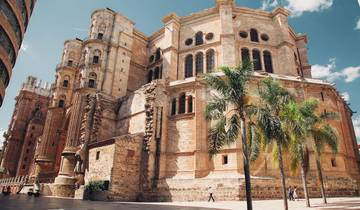
6 days
6 Day Malaga including visit to Gibraltar, Granada, Alhambra and Caminito del Rey
- ✓ Comprehensive Andalucia tour
- ✓ Expert local guides included
- ✓ All accommodation arranged
- ✓ Transportation provided
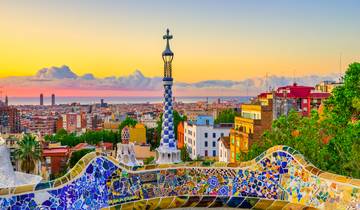
11 days
Flavors of Spain: A 11 Day Journey Through Madrid, Seville, Granada & Barcelona
- ✓ Comprehensive Andalucia tour
- ✓ Expert local guides included
- ✓ All accommodation arranged
- ✓ Transportation provided

11 days
A Taste of Spain: : 11 Days Across Madrid, Seville, Granada & Barcelona
- ✓ Comprehensive Andalucia tour
- ✓ Expert local guides included
- ✓ All accommodation arranged
- ✓ Transportation provided
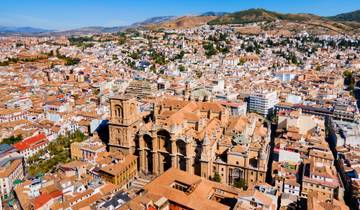
5 days
Granada: Crossroads of Arab and Christian Cultures
- ✓ Booking needs min. 2 travelers
Multi-day tour packages powered by TourRadar. Prices and availability subject to change.
Complete UNESCO Sites Overview
Understanding each UNESCO site’s significance, location, and visit requirements enables effective itinerary construction and realistic time allocation.
Major Architectural Sites
Alhambra, Generalife and Albaicín (Granada) represents the pinnacle of Islamic architecture in Western Europe. The 14th-century Nasrid palaces feature intricate stucco decoration, geometric tile work, and sophisticated water systems within fortress walls. Entry costs €19.09 for general daytime tickets, with timed entry to Nasrid Palaces. Budget 3-4 hours minimum for thorough exploration. The adjacent Generalife summer palace and gardens require additional 1-2 hours. Albaicín, the historic Moorish quarter, rewards 2-3 hours of walking exploration with whitewashed streets and Alhambra viewpoints.
Historic Centre of Córdoba centers on the Mezquita-Cathedral, an 8th-century mosque transformed into Christian cathedral while preserving its forest of 856 columns with horseshoe arches. Entry costs €13 for adults, €8 for children. The monument opens Monday-Saturday 10 AM-7 PM (March-October) or 10 AM-6 PM (November-February), Sundays 8:30-11:30 AM and 3-7 PM. Allow 1.5-2 hours for visit. The surrounding Judería (Jewish Quarter) with narrow streets, patios, and synagogue merits additional 2 hours exploration.
Cathedral, Alcázar and Archivo de Indias (Seville) encompasses three monuments. Seville Cathedral, the world’s largest Gothic cathedral, contains Christopher Columbus’s tomb and the Giralda bell tower with city views. Entry €12 adults, €6 reduced. The adjacent Alcázar palace combines Mudéjar architecture with extensive gardens. Entry €14.50 adults, requires 2-3 hours. Archivo de Indias, housing colonial-era documents, offers free entry but limited tourist interest compared to the cathedral and Alcázar.
Archaeological and Natural Sites
Caliphate City of Medina Azahara, 8 kilometers west of Córdoba, preserves ruins of a 10th-century palace-city built by Abd-ar-Rahman III. The archaeological site showcases Umayyad architecture with partially reconstructed salons featuring carved marble and intricate decoration. Entry costs €1.50, includes shuttle bus from visitor center. Budget 2.5-3 hours including transport and visit. Opening hours: Tuesday-Saturday 9 AM-6:30 PM (winter) or 9 AM-9 PM (summer), Sunday 9 AM-3:30 PM, closed Mondays.
Antequera Dolmens Site contains three megalithic monuments dating to 3rd millennium BCE: Menga and Viera dolmens (burial chambers) and El Romeral tholos (beehive tomb). Located in Antequera, 45 kilometers north of Málaga. Free entry, open Tuesday-Saturday 9 AM-6 PM, Sunday 9 AM-3:30 PM. The site requires 1.5-2 hours including visitor center and all three monuments. Combine with nearby El Torcal Natural Park for limestone formations.
Doñana National Park protects 543 square kilometers of Mediterranean wetlands, dunes, and forests at the Guadalquivir River delta. UNESCO recognition acknowledges biodiversity including endangered Iberian lynx and migratory birds. Located between Huelva and Cádiz provinces. Visits require guided tours (€30-35) departing from El Acebuche Visitor Center. Tours last 4 hours covering ecosystems by 4×4 vehicle. Advance booking recommended through park website. Accessibility limited compared to architectural sites.
Optimal Multi-Site Itineraries
Structured itineraries balance UNESCO site visits with travel days, cultural experiences, and energy management across varying trip durations.
7-Day Essential Circuit: Granada, Córdoba, Seville
Day 1-2: Granada – Arrive Granada, afternoon Albaicín exploration and Mirador de San Nicolás viewpoint. Day 2 morning Alhambra visit (pre-booked), afternoon Generalife gardens, evening tapas in Realejo neighborhood.
Day 3: Granada to Córdoba – Morning train to Córdoba (2.5 hours, €35-50). Afternoon arrival, check accommodation, explore Judería and Roman Bridge. Evening visit Mezquita-Cathedral if arriving before 3 PM, otherwise reserve for Day 4 morning.
Day 4: Córdoba – Morning Mezquita-Cathedral visit, explore Alcázar de los Reyes Cristianos gardens. Afternoon optional Medina Azahara excursion (half-day) or additional Córdoba neighborhood exploration. Evening train to Seville (45 minutes, €25-35) or overnight Córdoba.
Day 5: Seville – Morning Seville Cathedral and Giralda tower climb. Afternoon Alcázar palace and gardens (pre-booked). Evening Triana neighborhood for dinner and flamenco.
Day 6: Seville – Morning Archivo de Indias if interested in colonial history, otherwise Plaza de España and María Luisa Park. Afternoon shopping and Metropol Parasol (modern architecture). Evening tapas tour or river cruise.
Day 7: Departure – Morning flexibility for last-minute activities or direct departure from Seville airport or train station.
10-Day Comprehensive Circuit: All Six Sites
Follow 7-day essential circuit with these additions:
Day 4 Enhancement: Medina Azahara – Full morning dedicated to Caliphate City visit from Córdoba base. Afternoon return to Córdoba, evening exploration before next-day Seville transfer.
Day 7-8: Antequera Extension – Rent car in Seville or take bus to Antequera (1.5 hours). Visit Dolmens Site and El Torcal Natural Park. Overnight Antequera or return Seville same day if prefer city accommodation.
Day 9: Doñana National Park – Day trip from Seville to El Rocío (1.5 hours drive). Join guided park tour (4 hours), return Seville evening. Alternatively, overnight El Rocío for sunset and sunrise wetland photography.
Day 10: Departure Flexibility – Buffer day for weather contingencies, extended site visits, or early departure.
14-Day Leisurely Exploration: Deep Cultural Immersion
Expand 10-day itinerary with additional days in each major city for deeper cultural experiences including cooking classes, flamenco workshops, hammam visits, day trips to white villages (Ronda, Frigiliana), coastal excursions (Nerja, Cádiz), and flexible exploration without rushed schedule. This pace suits travelers prioritizing cultural immersion over site collection.
Transportation Strategy and Connections
Efficient transport planning minimizes travel time and maximizes UNESCO site exploration through smart mode selection and booking strategies.
High-Speed Train Network
Spain’s AVE trains provide the fastest connections between Andalusia’s major UNESCO cities. Granada to Córdoba takes 2 hours 30 minutes with 3-4 daily departures. Córdoba to Seville takes 45 minutes with hourly service throughout the day. Granada to Seville direct service (3 hours) offers alternative to Córdoba stop for travelers skipping that city.
Book train tickets through Renfe website (www.renfe.com) or mobile app 60 days in advance. Early booking yields Promo tickets (€25-35) versus standard Turista pricing (€40-55). Print tickets or save mobile QR codes for conductor scanning. Trains offer comfortable seating, power outlets, WiFi, and onboard café service. Arrive at stations 20 minutes before departure for security screening and platform location.
Major stations include Granada (Estación de Granada), Córdoba Central, and Seville Santa Justa. All stations connect to city centers via taxi (€8-15), local bus (€1.40), or metro (Seville only, €1.40). Store luggage at station lockers (€3-5) if arriving before hotel check-in or departing after check-out.
Car Rental Considerations
Rent cars for reaching Medina Azahara, Antequera Dolmens, and Doñana National Park where public transport is limited. Major rental companies (Europcar, Hertz, Enterprise) operate at airports and train stations with rates €35-60 daily for compact cars. Book online for better rates and guaranteed availability.
Parking challenges exist in historic centers of Granada, Córdoba, and Seville where narrow streets and pedestrian zones restrict access. Use hotel parking (€15-25 daily) or public lots near city centers. Avoid driving in historic districts, instead using cars for intercity connections and remote site access.
Spanish highways (autovías) offer free travel between cities. GPS navigation or smartphone maps (Google Maps, Waze) provide reliable directions. Fuel costs approximately €1.50-1.70 per liter. Speed limits: 120 km/h highways, 90 km/h secondary roads, 50 km/h urban areas. Police enforce speed limits with cameras and mobile units.
Local Transportation in UNESCO Cities
Granada’s compact center makes walking primary transport mode. Bus Line C3 connects city center to Alhambra (€1.40). Taxis cost €6-10 within center, €20-25 to/from airport. Download Granada’s taxi app (PideTaxi Granada) for convenient hailing.
Córdoba’s historic center is entirely walkable with Mezquita-Cathedral as central reference point. Bus Line 3 reaches Medina Azahara visitor center (€1.30). Taxis within center cost €5-8. Bicycle rentals (€10-15 daily) suit flat terrain and bicycle lanes along riverside.
Seville requires more extensive transport due to larger size. Metro Line 1 connects Santa Justa train station to center (€1.40). Buses serve all neighborhoods (€1.40 single, €5 day pass). Taxis between major points cost €8-12. Rental bicycles through Sevici system (€13.33 weekly pass) provide convenient transport with 250+ stations citywide.
Accommodation Strategy for Multi-Site Travel
Strategic accommodation selection balances location, budget, and booking flexibility across multiple cities with varying stays.
Granada Accommodation Options
Stay near Plaza Nueva for walking access to Albaicín and easy bus connections to Alhambra. Budget hostels (€25-40) include Generator Granada and Makuto Guesthouse. Mid-range hotels (€80-120) like Hotel Anacapri and Palacio de Santa Inés provide comfort and location. Luxury options (€150-300) include Parador de Granada (inside Alhambra complex, book months ahead) and Hotel Palacio de los Navas.
Realejo neighborhood offers quieter atmosphere with short walks to major sites. Albaicín itself provides atmospheric stays in traditional carmenes (historic houses) though steep streets challenge mobility-impaired travelers. Book Granada accommodation 2-3 months ahead for spring and fall peak seasons.
Córdoba Accommodation Strategy
Córdoba’s Judería (Jewish Quarter) puts you steps from Mezquita-Cathedral. Budget options (€40-60) include Hostal Alma de Córdoba and Hostal El Triunfo. Mid-range hotels (€90-130) like Hotel Mezquita and Balcón de Córdoba combine location with traditional architecture. Luxury boutique properties (€180-250) include Hospes Palacio del Bailío and Hotel Viento10.
Single-night Córdoba stays suit 7-day itineraries, making location prioritization essential over amenities. Two-night stays (recommended for 10-day itineraries including Medina Azahara) allow more accommodation flexibility. Book Córdoba lodging 1-2 months ahead as inventory is smaller than Granada or Seville.
Seville Accommodation Planning
Seville’s Santa Cruz neighborhood positions you near Cathedral and Alcázar with charming narrow streets and restaurant density. Budget hostels (€30-45) include Oasis Backpackers and Sevilla Inn. Mid-range hotels (€100-140) like Hotel Amadeus and EME Catedral Hotel balance location and quality. Luxury properties (€200-400) include Hotel Alfonso XIII and Hotel Palacio de Villapanés.
El Arenal and Triana neighborhoods offer alternatives with riverside locations and local atmosphere at slightly lower prices (€10-20 less per night). Seville’s 2-3 night stays justify investing in quality accommodation with rooftop pools valuable during warm months. Book Seville lodging 2-3 months ahead for spring (Semana Santa, Feria) and fall peak periods.
Budget Planning and Cost Management
Comprehensive budget planning prevents overspending while ensuring quality experiences across accommodation, meals, transport, and site entries.
Daily Budget Breakdown
Accommodation: Budget €25-40 hostel dorm, €60-80 budget hotel, €90-130 mid-range hotel, €150-300 luxury hotel per room nightly. Solo travelers pay full room rates making hostels more economical. Couples or friends sharing double rooms reduce per-person accommodation costs significantly.
Meals: Breakfast €3-8 (café con leche and toast), lunch menu del día €12-18 (three courses), dinner with drinks €20-30. Tapas crawls (€15-25) substitute formal dinners economically. Grocery supplies for picnic lunches reduce costs further. Daily meal budget €40-50 per person covers three meals with drinks and occasional splurges.
Site Entries: Alhambra €19.09, Mezquita-Cathedral €13, Seville Cathedral €12, Alcázar €14.50, Medina Azahara €1.50, Antequera Dolmens free. Budget €20-40 daily for site entries depending on itinerary. Combined tickets sometimes offer savings but compare carefully as flexibility often outweighs minimal discounts.
Local Transport: City buses €1.40 per ride, taxis €6-15 for typical center trips. Budget €10-15 daily for urban transport. Day passes (€5-10) save money on heavy public transport days. Walking reduces transport costs significantly in compact historic centers.
Intercity Transport: Budget €100-150 total for train tickets covering Granada-Córdoba-Seville circuit with advance Promo fares. Car rental €35-60 daily plus fuel (€20-40 daily) if visiting remote sites. Flight from US gateway to Spain costs €400-800 depending on season and booking timing.
Money-Saving Strategies
Travel shoulder seasons (April, May, September, October) for 20-30% lower accommodation rates versus summer peak. Book trains 60 days ahead for Promo discounts. Choose lunch menus del día (€12-18 for three courses) as main meal, supplementing with tapas for lighter dinner.
Free activities include Albaicín walking, Córdoba’s patios (May), Seville’s Plaza de España, and numerous church exteriors. Museums offer free entry periods (typically Sunday afternoons or late weekday evenings). Picnic lunches using market ingredients reduce meal costs €10-15 daily.
City tourist cards (Granada Card, Córdoba Card) bundle site entries and transport but calculate savings carefully as independent tickets often cost less for focused itineraries. Cards benefit travelers visiting multiple sites daily but provide minimal value for relaxed paces with selective site visits.
Booking Timeline and Reservation Strategy
Systematic booking approach secures availability, optimizes pricing, and reduces travel stress through properly timed reservations.
Critical Advance Bookings: 3 Months Out
Book Alhambra tickets immediately when planning multi-site Andalusia trip. Tickets release 90 days ahead at midnight Spanish time through official website (tickets.alhambra-patronato.es). Set calendar reminders for 90 days before intended visit date. Morning entry slots (8:30-9:30 AM) and late afternoon slots (4-5 PM) sell first during peak season.
Reserve Granada accommodation simultaneously with Alhambra tickets as room availability affects trip viability. Properties near Alhambra and in Albaicín fill earliest. Flexible booking policies allow changes if Alhambra tickets unavailable for preferred dates.
Standard Advance Bookings: 1-2 Months Out
Book Seville Alcázar tickets 1-2 months ahead through official website (www.alcazarsevilla.org) to avoid 1-2 hour queues during peak hours. Morning slots (9:30-11 AM) provide cooler temperatures and better light for photography. Skip-the-line tickets from third parties cost €5-10 more but offer convenience.
Reserve accommodation in Córdoba and Seville 1-2 months ahead for preferred properties and locations. Train tickets open 60 days before travel, allowing optimal route and schedule selection. Book rental cars 3-4 weeks ahead for better rates and vehicle selection, particularly during Spanish holiday periods (Semana Santa, August, Christmas).
Short-Notice Bookings: 1-7 Days Out
Purchase Mezquita-Cathedral tickets online 1-3 days ahead through official website to skip ticket office lines. Same-day purchase possible but online guarantees entry and saves 15-30 minutes queuing. Seville Cathedral allows same-day online purchase through 11:59 PM previous night.
Medina Azahara and Antequera Dolmens require no advance booking but online purchase convenient for printable tickets. Doñana National Park tours should be booked 1-2 weeks ahead during peak season as daily tour capacity limits to 100-150 visitors.
Seasonal Considerations for Multi-Site Visits
Seasonal variables impact weather, crowds, costs, and site accessibility, making timing selection crucial for optimal UNESCO experiences.
Spring Season: April-May 2026
Spring offers ideal Andalusia conditions with comfortable temperatures (15-25°C / 59-77°F), blooming gardens, and manageable crowds before summer peak. Alhambra’s Generalife gardens peak with roses and jasmine. Córdoba’s famous patios open for Festival de los Patios (May 6-18, 2026) when private courtyards showcase flower displays.
Semana Santa (Holy Week, April 13-20, 2026) brings processions, higher prices, and advance booking requirements across all cities. Hotel rates increase 30-50% with minimum stay requirements. Seville’s Feria de Abril (April 28-May 3, 2026) creates similar peak period. Avoid these specific weeks if seeking lower costs and easier logistics, or embrace festivals for cultural immersion.
Book spring travel 3-4 months ahead as this is Andalusia’s most popular season. Expect higher prices but optimal weather and garden conditions justify premium costs for most travelers.
Summer Season: June-August 2026
Summer brings intense heat (30-40°C / 86-104°F) in inland cities, particularly Seville and Córdoba. Alhambra’s gardens provide shade but Nasrid Palaces grow uncomfortably warm. Schedule site visits early morning (8-10 AM) or late afternoon (5-7 PM) with air-conditioned museum time during midday heat.
European vacation season (July-August) increases crowds but hotel prices drop 20-30% compared to spring as many Spaniards vacation elsewhere. Americans visiting summer find relative bargains despite higher temperatures. Adjust schedule to Spanish rhythm: late breakfast, extended lunch break with siesta, evening activities after 7 PM.
Summer extended hours at major sites (open until 8-9 PM) provide flexibility. Bring sun protection (hats, sunscreen, water bottles) and wear light, breathable clothing. Heat makes multi-site days more challenging than spring or fall equivalent schedules.
Fall Season: September-October 2026
Fall rivals spring for optimal conditions with comfortable temperatures (18-28°C / 64-82°F), diminishing crowds after school starts, and good availability. September sees fewer tourists than spring with similar weather. October brings occasional rain but usually brief showers rather than all-day weather systems.
Prices drop 15-25% compared to spring peak while maintaining excellent conditions. Gardens show less color than spring but comfortable walking temperatures compensate. Fall suits budget-conscious travelers seeking quality experiences at lower costs.
Book fall travel 1-2 months ahead for good selection without extreme advance planning pressure. Last-minute deals sometimes appear in September as summer season ends.
Winter Season: November-March 2026
Winter offers lowest prices (30-50% below spring peak) and minimal crowds with trade-offs of cooler temperatures (8-16°C / 46-61°F) and shorter daylight hours. Sites remain open with reduced hours. Rain increases but sunny days remain common, particularly in coastal areas.
Winter suits budget travelers and those preferring uncrowded experiences. Alhambra’s Nasrid Palaces feel more intimate with fewer visitors. Photography benefits from dramatic light and storm clouds. Pack layers and rain jacket while enjoying empty monuments and authentic local atmosphere.
Book winter travel 2-4 weeks ahead for adequate selection. Last-minute deals common as this is Andalusia’s true off-season outside Christmas and New Year periods when domestic tourism increases.
Site-Specific Visiting Strategies
Each UNESCO site requires different approaches for optimal experiences based on layout, crowd patterns, and highlight locations.
Alhambra: Timing and Route Optimization
Enter Alhambra through Justice Gate (Puerta de la Justicia) with printed or mobile tickets. Arrive 30 minutes before your assigned Nasrid Palaces entry time for security screening and walk to palace entrance. Missing your Nasrid time slot results in denied entry to this critical section.
Visit Alcazaba fortress first if you have morning Nasrid Palace entry, or save for after palaces if you have afternoon slot. Generalife gardens benefit from morning light for photography. Budget 4-5 hours total for comprehensive Alhambra exploration including breaks.
Nasrid Palaces require 60-90 minutes following one-way route through connected chambers and courtyards. Audio guides (€6) provide valuable context though signage offers basic information free. Photography allowed without flash. Crowds concentrate in Court of Lions and Court of Myrtles, creating bottlenecks midday.
Mezquita-Cathedral: Navigation and Highlights
Enter Mezquita-Cathedral through Puerta del Perdón into Patio de los Naranjos courtyard. Ticket office inside courtyard; buy online beforehand to proceed directly to entry. Free entry Monday-Saturday 8:30-9:30 AM for prayer time (no tourist activities, respectful observation only).
The monument’s vastness (23,000 square meters) allows spreading out despite crowds. Focus on original Islamic sections with horseshoe arches and columns. The Christian cathedral insertion at center provides dramatic architectural contrast. Climb bell tower (separate €3 ticket) for city views if open.
Visit duration 1.5-2 hours includes time absorbing atmosphere and architectural details. Audio guides (€4) worthwhile for understanding complex history. Best photography occurs morning when shafts of light penetrate through windows creating dramatic column shadows.
Seville’s Cathedral and Alcázar: Dual-Site Day
Visit Seville Cathedral first (morning entry recommended) for 60-90 minutes including Giralda tower climb (343 steps, moderate difficulty). The cathedral’s size and art collection warrant audio guide rental (€4). Skip Christopher Columbus tomb crowds by viewing from distance.
Walk 5 minutes to Alcázar for afternoon visit during your reserved time slot. The palace complex requires 2-3 hours for thorough exploration including extensive gardens. Cool palace rooms provide midday heat relief before garden exploration when temperatures moderate.
Alcázar crowds peak 11 AM-2 PM. Early morning (9:30-10:30 AM) or late afternoon (4:30-6 PM) slots offer better experiences. Gardens with fountains, pavilions, and peacocks reward slow exploration. Wear comfortable shoes for extensive walking on paths and stairs.
Cultural Context and Historical Connections
Understanding historical relationships between Andalusia’s UNESCO sites enriches appreciation and reveals interconnected narratives spanning centuries.
Islamic Al-Andalus Legacy
Córdoba served as capital of Al-Andalus from 711-1031 CE, reaching apex under Abd-ar-Rahman III who built both the Mezquita expansion and Medina Azahara palace-city. The Caliphate period represents Islamic civilization’s height in Western Europe with advances in mathematics, astronomy, medicine, and philosophy.
Granada’s Nasrid dynasty (1238-1492) ruled last Islamic kingdom in Iberia, creating Alhambra as defensive palace expressing Islamic aesthetic achievements. The conquest of Granada in 1492 ended 781 years of Islamic presence in Spain, coinciding with Columbus’s voyage and Inquisition establishment.
These sites preserve exceptional Islamic architectural heritage including geometric patterns, calligraphic decoration, water features, and garden designs reflecting paradise concepts. Visiting multiple sites reveals evolution from early Córdoba’s austere columns to Granada’s elaborate stucco work representing artistic refinement over centuries.
Christian Reconquista Transformation
Seville’s Cathedral replaced the city’s main mosque after 1248 Christian conquest, deliberately built as the world’s largest Gothic cathedral to demonstrate Christian triumph. Columbus’s tomb placement emphasizes Spain’s global Catholic expansion. The adjacent Alcázar showcases Mudéjar architecture where Christian rulers employed Islamic artisans, creating unique hybrid style.
Córdoba’s Mezquita-Cathedral insertion (begun 1523) within the mosque structure demonstrates architectural superimposition reflecting religious power shifts. The Renaissance cathedral nave contrasts dramatically with surrounding Islamic architecture, creating controversial but UNESCO-recognized monument to cultural layering.
Understanding these transformations reveals complex cultural exchanges, religious conflicts, and artistic cross-pollination defining Andalusian identity. The preservation of Islamic elements within Christian monuments demonstrates recognition of architectural and cultural value transcending religious differences.
Practical Tips for Multi-Site Success
Operational strategies ensure smooth multi-city travel while maintaining energy, budget control, and flexibility for unexpected situations.
Packing and Preparation
Pack lightweight luggage suitable for train travel and short hotel stays. Carry-on bags (22x14x9 inches maximum) simplify train boarding and eliminate checked luggage risks. Rolling suitcases navigate station platforms and hotel steps better than backpacks for multi-day itineraries.
Bring comfortable walking shoes with arch support for cobblestone streets and extensive site exploration (15,000-25,000 steps daily typical). Pack layers for variable temperatures and air-conditioned spaces. Sun hat, sunscreen (SPF 30+), and refillable water bottle essential for outdoor site visits.
Carry power adapters for European outlets (Type C and F plugs). Download offline maps (Google Maps, Maps.me) for navigation without data usage. Save important documents (passport copy, hotel confirmations, tickets) in cloud storage and printed backup.
Health and Safety Considerations
Andalusia ranks among Europe’s safest regions with low violent crime. Exercise standard precautions: watch belongings in crowded tourist areas, use hotel safes for passports and excess cash, avoid displaying expensive jewelry or cameras carelessly. Pickpockets target distracted tourists at major monuments and train stations.
Tap water is safe to drink throughout Andalusia. Pharmacies (farmacias) are abundant and can provide basic medications without prescription. Emergency number is 112 for police, ambulance, or fire. US citizens register trips through STEP (Smart Traveler Enrollment Program) for embassy assistance if needed.
Travel insurance recommended for trip cancellation protection, medical coverage abroad, and lost luggage compensation. Policies cost €40-80 for week-long trips covering €1,500-2,000 trip costs. Compare plans through aggregator sites (InsureMyTrip, Squaremouth) for best coverage and rates.
Communication and Language
English proficiency varies but major tourist sites have multilingual staff. Learning basic Spanish phrases enhances interactions: “Buenos días” (good morning), “Gracias” (thank you), “¿Cuánto cuesta?” (how much?), “La cuenta, por favor” (the check, please). Translation apps (Google Translate) bridge language gaps effectively.
Purchase Spanish SIM card at airport or carrier shop (Vodafone, Orange, Movistar) for €15-25 including 5-10GB data. Alternatively, verify US carrier international plans before departure. WiFi available at hotels, restaurants, and major sites but mobile data provides navigation and booking flexibility throughout travel.
Beyond UNESCO Sites: Complementary Experiences
Balancing UNESCO site visits with authentic local experiences, natural areas, and cultural activities creates richer Andalusia understanding.
Flamenco Experiences
Each major city offers authentic flamenco with distinct regional styles. Granada’s Sacromonte caves (€18-25) provide intimate cave venue atmosphere. Seville’s Triana neighborhood tablaos (€25-35) showcase birthplace of flamenco tradition. Córdoba’s peñas flamencas (flamenco clubs, €15-20) offer local gathering spaces where artists perform for community rather than solely tourists.
Book through venue websites directly to avoid markup. Shows run nightly 9-11 PM, lasting 60-75 minutes. Arrive 15 minutes early for optimal seating. Include one drink; additional beverages purchased separately. Flamenco provides essential Andalusian cultural experience complementing architectural heritage.
Culinary Experiences and Cooking Classes
Granada’s free tapas culture, Córdoba’s salmorejo (cold tomato soup), and Seville’s fried fish showcase regional specialties. Food markets (Mercado de San Agustín in Granada, Mercado de la Corredera in Córdoba, Mercado de Triana in Seville) offer ingredients and prepared foods revealing local food culture.
Cooking classes (€55-75 for 3-4 hours) teach traditional recipes while providing cultural context. Classes in each city focus on regional specialties. Book 1-2 weeks ahead through class websites or hotel concierge. These experiences provide break from monument visiting while deepening cultural understanding.
Day Trip Options
White villages (Ronda from Seville 1.5 hours, Frigiliana from Granada 1 hour) showcase traditional Andalusian mountain architecture. Coastal towns (Nerva from Granada 1 hour, Cádiz from Seville 1.5 hours) offer beaches and seafood. These excursions balance cultural immersion with natural scenery.
Sierra Nevada mountains near Granada provide hiking (summer) or skiing (winter) opportunities. Cabo de Gata Natural Park (2.5 hours from Granada) features protected Mediterranean coastline. Day trips suit extended itineraries (10+ days) when UNESCO site visiting pace allows breathing room.
2026 Planning Advantages and Updates
Planning 2026 Andalusia trips offers strategic advantages through advance booking access, seasonal optimization, and comprehensive preparation time.
Booking Window Benefits
Early 2026 planning allows securing Alhambra tickets immediately when 90-day booking windows open for spring and fall optimal seasons. Hotels release inventory 12-18 months ahead, providing access to preferred properties before peak season sellouts. Train tickets open 60 days ahead, but route planning now enables immediate booking when windows open.
Multi-city itinerary construction benefits from flexible date adjustment based on Alhambra availability. Build travel dates around secured Alhambra tickets rather than reverse approach often leading to disappointment when preferred dates are sold out.
Current Operating Standards
All UNESCO sites maintain standard operating hours and entry procedures. Advance online booking has become standard practice across major sites, with mobile tickets accepted universally. Audio guides available in multiple languages (English, Spanish, French, German, Italian, Portuguese) through rental devices or smartphone apps.
Accessibility accommodations available at all major sites including wheelchair access, reduced mobility routes, and assisted visiting programs. Request accommodations through official site websites when booking tickets. Service animals permitted with advance notification.
Sustainable Travel Considerations
UNESCO sites implement conservation measures including visitor capacity limits, restricted photography areas, and protected zones. Respect all barriers and signage protecting fragile architectural elements and artworks. Train travel between cities reduces carbon footprint compared to rental car alternatives.
Support local businesses through neighborhood restaurant choices, artisan purchases, and locally-owned accommodation selection. Sustainable tourism preserves Andalusia’s cultural heritage while providing economic benefits to communities maintaining these monuments and traditions.
Frequently Asked Questions
Is 7 days enough to visit all major Andalusia UNESCO sites?
Seven days suffices for Granada, Córdoba, and Seville’s architectural UNESCO sites with efficient itinerary planning. This timeline includes 2 days Granada (Alhambra and Albaicín), 1-2 days Córdoba (Mezquita), 2 days Seville (Cathedral and Alcázar), plus travel days between cities. Adding Medina Azahara, Antequera Dolmens, or Doñana National Park requires 10+ days. Seven-day itineraries feel rushed but accomplish comprehensive coverage of the three essential cities.
Which Andalusia UNESCO site should I prioritize if I can only visit one?
Prioritize Alhambra in Granada as the most architecturally significant and visually stunning Andalusia UNESCO site. The Nasrid Palaces represent Islamic architecture’s pinnacle in Western Europe with unmatched decorative artistry. Alhambra requires advance booking and half-day minimum visit, making it the essential single-site choice. Granada also offers Albaicín neighborhood exploration and tapas culture, maximizing value for limited-time travelers focused on one destination.
Can I visit Andalusia UNESCO sites without speaking Spanish?
Visit Andalusia comfortably with English-only language skills. Major UNESCO sites employ multilingual staff and offer English audio guides, signage, and printed materials. Hotels, restaurants, and transport services in tourist areas accommodate English speakers. Download translation apps for occasional communication gaps. Basic Spanish phrases enhance interactions but are not essential. Granada, Córdoba, and Seville have substantial international tourism infrastructure supporting non-Spanish speakers.
What’s the best base city for exploring multiple Andalusia UNESCO sites?
Córdoba serves as the optimal base for day trips to Granada (2.5 hours train), Seville (45 minutes train), and Medina Azahara (20 minutes drive). However, quality experiences require overnight stays in each major city rather than day-trip approach. Accommodation in Granada (2 nights), Córdoba (1-2 nights), and Seville (2 nights) provides better UNESCO site access and cultural immersion than single-base strategy with exhausting daily travel.
Are Andalusia UNESCO sites suitable for children and families?
Andalusia’s UNESCO sites welcome families though varying suitability based on children’s ages. Alhambra fascinates children with fortress walls, towers, and gardens but requires 3-4 hours walking with limited rest areas. Seville’s Alcázar gardens engage children through exploration and peacocks. Mezquita-Cathedral’s vast columns create maze-like atmosphere children enjoy. Museums and archaeological sites (Medina Azahara, Antequera Dolmens) suit teenagers more than young children. Family success depends on realistic expectations and flexible pacing.
Do I need travel insurance for Andalusia UNESCO heritage trip?
Purchase travel insurance protecting trip costs (€1,200-2,000 typical for 7-day itinerary) against cancellation, medical emergencies, and lost luggage. Alhambra tickets are non-refundable, making trip cancellation coverage valuable if unexpected circumstances prevent travel. Medical coverage supplements US health insurance which typically provides limited international protection. Insurance costs €40-80 for comprehensive week-long trip coverage. Compare policies through aggregator sites for optimal protection.
How physically demanding is multi-site Andalusia UNESCO travel?
Andalusia UNESCO sites require significant walking with 15,000-25,000 daily steps typical across uneven cobblestones, stairs, and hillside neighborhoods. Alhambra involves 3-4 hours walking with elevation changes. Córdoba and Seville are relatively flat but extensive monument complexes require sustained walking. Heat management essential during warm months. Travelers with mobility limitations should plan extra rest breaks, use available seating, and consider wheelchair-accessible routes offered at major sites.
Can I photograph freely inside Andalusia UNESCO monuments?
Photography permitted without flash in most areas of Alhambra, Mezquita-Cathedral, and Seville’s monuments. Specific restrictions apply in certain Alhambra sections preserving fragile decorations and in cathedral religious areas during services. Tripods prohibited universally. Commercial photography requires advance permission and fees. Drone photography banned within UNESCO site boundaries. Respect all posted signage regarding photography restrictions to support conservation efforts.
What should I do if Alhambra tickets are sold out for my dates?
If Alhambra sells out for preferred dates, check official website daily for cancellations releasing returned tickets. Book Granada anyway and purchase nighttime visit tickets (Alhambra de Noche, €10) offering partial access to Nasrid Palaces, or Generalife garden-only tickets. Tour operators occasionally have allocation access when official sales show sold out. Last resort involves adjusting entire itinerary dates to secure Alhambra availability, as this remains Andalusia’s essential UNESCO experience.
Are credit cards widely accepted at Andalusia UNESCO sites and surrounding areas?
Credit cards (Visa, Mastercard) accepted universally at UNESCO sites, hotels, restaurants, and shops. Contactless payment common in cities. Carry €50-100 cash for small purchases, tips, and occasional cash-only establishments in traditional neighborhoods. ATMs abundant in all cities with standard international withdrawal fees (€3-5 per transaction). Notify your bank of Spain travel dates to prevent security blocks on international transactions.