
Albania 7-Day Itinerary 2026: First-Time Visitor Complete Guide
Albania delivers ancient UNESCO cities, Ionian beaches, mountain villages, and Mediterranean cuisine at prices far below neighboring Greece and Croatia. This seven-day itinerary connects Tirana’s vibrant capital energy with Berat’s Ottoman architecture, Gjirokaster’s stone streets, and Saranda’s coastal beauty, using Albania’s reliable intercity bus network to move efficiently between regions while experiencing the country’s remarkable cultural and geographic diversity.
Key Takeaways: Albania 7-Day Itinerary 2026
- Budget Travelers in 2026: Expect €45-65 per person daily staying in hostel dormitories, eating at local restaurants, using public buses exclusively, and visiting free attractions. Seven-day total approximately €315-455 per person.
- Mid-Range Comfort 2026: Plan for €100-170 per person daily assuming two sharing mid-range hotels, dining at established restaurants, mixing buses with occasional taxis, and visiting all major paid sites. Seven-day total approximately €700-1,190 per person.
- Luxury Experience 2026: Invest €200-310+ per person daily for boutique accommodations, upscale dining, private transportation, and premium tour experiences. Seven-day total approximately €1,400-2,170+ per person.
- Optimal Route 2026: Tirana (2 days) → Berat (1 day) → Gjirokaster (1 day) → Saranda and Ksamil (3 days) covers Albania’s essential highlights efficiently using intercity buses that cost ALL 500-1,700 ($6-20) per route.
- Best Time Visit 2026: May-June and September offer warm weather, lower coastal prices, and fewer crowds compared to July-August peak season when Riviera accommodation costs rise 30-60% and beaches fill with European vacationers.
- Essential Logistics 2026: Albanian Lek (ALL) is the official currency with roughly 83 ALL equaling $1. Cash remains essential for buses, small restaurants, and attractions despite card acceptance growing in cities. Intercity buses run frequently but lack advance booking systems—arrive early and pay the driver’s assistant directly.
People Also Ask About Albania 7-Day Itinerary 2026
What’s the best 7-day Albania itinerary for first-time visitors in 2026?
The optimal first-timer route spends two days in Tirana exploring the capital’s museums and Blloku neighborhood, one day in Berat’s UNESCO castle district, one day in Gjirokaster’s stone Ottoman town, and three days on the southern coast splitting time between Saranda and Ksamil beaches. This north-to-south progression uses straightforward bus connections along the SH4 highway, requires no backtracking, and balances cultural sites with beach relaxation. The route covers Albania’s two UNESCO World Heritage cities, its vibrant capital, and its most accessible Ionian coast beaches while keeping bus journeys under five hours daily. Budget travelers complete this itinerary for €315-455 per person total, mid-range visitors spend €700-1,190, and luxury travelers invest €1,400-2,170+ including accommodation, meals, transport, and attractions.
How much does a 7-day Albania trip cost in 2026?
A seven-day Albania trip costs €315-455 per person for budget travelers staying in hostel dormitories, €700-1,190 for mid-range visitors sharing three-star hotels, and €1,400-2,170+ for luxury travelers in boutique properties. These totals cover accommodation, three daily meals, intercity bus transport, attraction admissions, and local transportation but exclude international flights. Budget daily costs of €45-65 include hostel beds at €18-25, restaurant meals totaling €16-25, bus fares €8-12, and minimal attraction fees €3-5. Mid-range daily expenses of €100-170 assume hotel rooms at €80-150 divided between two travelers, quality restaurant meals €40-60, mixed bus and taxi transport €12-20, and all major site admissions €8-15. Coastal prices in July-August run 30-60% higher than shoulder season months, making May-June or September substantially better value for the same experiences.
Can you visit Albania’s best places in one week in 2026?
A one-week Albania itinerary successfully visits the country’s essential highlights—Tirana’s capital culture, Berat and Gjirokaster’s UNESCO sites, and the Ionian Riviera beaches—but necessarily omits the northern Albanian Alps and Lake Ohrid region which require additional travel time. The Tirana-Berat-Gjirokaster-Saranda route keeps intercity bus journeys to 2-5 hours per move, allowing substantial exploration time at each destination rather than spending days traveling. First-time visitors prioritize this southern circuit over northern mountains because the south concentrates more diverse experiences (Ottoman architecture, ancient ruins, beaches, mountain views) in a compact geographic area with better transportation infrastructure. Travelers seeking Albanian Alps hiking around Theth and Valbona need a separate 10-14 day itinerary or must sacrifice coastal time, as the northern mountains sit 4-5 hours from Tirana in the opposite direction from the southern highlights.
What’s the transportation situation for a 7-day Albania trip in 2026?
Albania’s intercity bus network efficiently connects Tirana, Berat, Gjirokaster, and Saranda with frequent departures, comfortable vehicles, and fares of ALL 500-1,700 ($6-20) per route in 2026. Buses depart from designated terminals in each city throughout the day, particularly in morning hours, with travel times of 2 hours Tirana-Berat, 4 hours Berat-Gjirokaster via connecting bus, and 45 minutes Gjirokaster-Saranda. No advance booking exists—travelers arrive at the bus terminal, find their destination’s boarding area, and pay the driver’s assistant in cash after departing. Buses operate on fill-and-go schedules meaning departure happens when all seats sell rather than strict timetables, though major routes maintain reliable frequency. Within cities, taxis cost ALL 300-800 ($4-10) for typical rides while ride-hailing app Bolt operates in Tirana and increasingly in other cities at 30-40% below taxi prices. Car rental costs €30-50 daily but requires confidence navigating mountain roads and dealing with aggressive local driving styles.
Extended multi-day tours – 5+ days
Featured Albania Multi-Day Tour Packages
3 days
Albania 3-Day Discovery Tour
- ✓ Comprehensive Albania experience
- ✓ Expert local guides included
- ✓ All accommodation included
- ✓ Transportation provided

5 days
Albania 5-Day Highlights Experience
- ✓ Comprehensive Albania experience
- ✓ Expert local guides included
- ✓ All accommodation included
- ✓ Transportation provided

7 days
Albania 7-Day Cultural Journey
- ✓ Comprehensive Albania experience
- ✓ Expert local guides included
- ✓ All accommodation included
- ✓ Transportation provided

10 days
Albania 10-Day Complete Adventure
- ✓ Comprehensive Albania experience
- ✓ Expert local guides included
- ✓ All accommodation included
- ✓ Transportation provided
Multi-day tour packages powered by TourRadar. Prices and availability subject to change.
Introduction: Planning Your Albania 7-Day Adventure in 2026
Albania stands as Europe’s last great travel value, where seven days of UNESCO World Heritage exploration, Ionian beach relaxation, and exceptional Mediterranean dining costs less than three days in Croatia or Greece. The country’s compact geography allows first-time visitors to experience genuine cultural diversity—from Tirana’s colorful communist-turned-contemporary capital to Berat’s white Ottoman houses stacked on hillsides, from Gjirokaster’s imposing stone architecture to Saranda’s turquoise waters—without exhausting travel days or facing complicated logistics. This itinerary solves the first-timer’s essential question: which destinations deliver the most authentic Albanian experiences within a one-week timeframe.
The north-to-south progression from Tirana through the UNESCO cities to the coastal south follows Albania’s natural geography and tourism infrastructure. Starting in the capital provides immediate cultural immersion and logistical orientation before moving to the historic inland cities where traditional life continues within medieval walls. The itinerary concludes on the coast, rewarding days of cultural exploration with beach time and providing easy ferry or bus connections to Corfu, Greece for travelers extending their Balkans journey. Each destination offers distinct experiences that together represent Albania’s remarkable range: Tirana’s energy and creativity, Berat’s perfectly preserved Ottoman neighborhoods, Gjirokaster’s dramatic mountain setting, and Saranda’s access to both beach luxury and ancient ruins.
Transportation throughout this itinerary relies on Albania’s intercity bus network, which despite lacking sophisticated booking systems operates reliably between major tourist destinations at remarkably low cost. Buses connect every destination pair in this itinerary multiple times daily, with tickets purchased directly from drivers and schedules following a fill-and-go pattern that works surprisingly well once you understand the system. The longest single bus journey—Tirana to Saranda direct or via connections—takes approximately four to five hours, while most inter-city moves require just two to three hours of travel time. This efficiency means you spend more time exploring destinations and less time staring out bus windows, critical for maximizing a one-week trip.
Budget considerations favor Albania strongly. Mid-range travelers accustomed to spending €150-200 daily in Western Europe discover they can maintain similar comfort standards in Albania for €100-170 daily, while budget backpackers stretch €45-65 to cover dormitory beds, restaurant meals, bus transport, and attraction admissions—a daily rate impossible to match elsewhere in Mediterranean Europe. The Albanian Lek’s exchange rate against the Euro and US Dollar remained stable through 2025, and 2026 pricing shows moderate increases in coastal areas during peak summer months but continued exceptional value in inland cities year-round. Cash remains essential despite growing card acceptance, as buses, small restaurants, local attractions, and many guesthouses operate on cash-only basis.
This itinerary presents three budget tiers—budget, mid-range, and luxury—with specific daily cost breakdowns for each level, allowing travelers to calibrate their spending against actual accommodation, meal, transport, and attraction prices rather than vague generalities. The route works equally well for solo travelers, couples, and small friend groups, though accommodation costs favor pairs sharing rooms where per-person rates drop significantly. Each destination receives focused attention with day-by-day activity suggestions, practical logistics, money-saving strategies, and common mistakes to avoid, drawn from current 2026 travel patterns and firsthand reporting rather than recycled guidebook platitudes from years past.
Understanding Albania Travel Costs in 2026
Albania maintains its position as one of Europe’s most affordable travel destinations in 2026, though coastal areas during July-August peak season now approach prices in secondary Greek islands or less expensive Croatian coastal towns. The country operates on a clear seasonal pricing structure where inland cities like Tirana, Berat, and Gjirokaster maintain relatively stable year-round rates while coastal destinations like Saranda, Ksamil, and the Albanian Riviera beach towns implement summer surcharges of 30-60% above shoulder season pricing. Budget travelers who visit in May-June or September rather than July-August save substantial amounts while experiencing identical or superior weather conditions with dramatically fewer crowds.
The Albanian Lek (ALL) serves as the official currency with an exchange rate hovering around 83 ALL to 1 US Dollar and approximately 100 ALL to 1 Euro throughout 2025 and into 2026. While many tourism businesses in coastal areas quote prices directly in Euros, the Lek remains necessary for buses, small restaurants, local markets, attraction admissions, and anywhere outside major tourist zones. ATMs are widely available in all cities covered by this itinerary, dispensing Lek at fair exchange rates with fees ranging ALL 300-500 ($4-6) per withdrawal depending on your home bank’s policies. Credit cards gain acceptance in mid-range and upscale hotels, established restaurants, and modern shops, but cash-only operations still dominate small businesses, transportation, and budget accommodations.
Daily Budget Breakdown by Travel Style 2026
Budget travelers operating on €45-65 per person daily stay in hostel dormitories costing €18-25 per night, eat at local restaurants serving traditional Albanian dishes for €16-25 total across three meals (breakfast byrek or eggs €3-5, lunch at neighborhood restaurants €5-8, dinner at traditional tavernas €8-12), travel exclusively by intercity buses and city public transport for €8-12 daily, and visit primarily free attractions like old town neighborhoods, castle exteriors, and beaches while limiting paid museum and archaeological site entries to €3-5 daily. This budget level delivers authentic Albanian experiences with limited comfort sacrifices since even budget accommodations maintain cleanliness standards and hostel facilities often include kitchens allowing further food cost reduction.
Mid-range travelers spending €100-170 per person daily share three-star or boutique hotel rooms costing €80-150 per night (€40-75 per person), enjoy three restaurant meals daily at quality establishments totaling €40-60 (breakfast at hotel or café €8-12, lunch at recommended restaurants €12-18, dinner at well-reviewed venues €20-30), use mix of intercity buses with occasional taxis or ride-sharing for local movement costing €12-20 daily, and visit all major attractions including paid museums, archaeological sites, and castle interiors for €8-15 daily. This budget category provides comfortable beds, air-conditioned rooms, private bathrooms, central locations, and flexibility to upgrade transport or meals when convenient without destroying overall budget.
Luxury travelers investing €200-310+ per person daily book boutique hotels or restored Ottoman mansions costing €150-250+ per night (€75-125+ per person when sharing), dine at upscale restaurants and try regional wine specialties totaling €70-100+ daily, employ private drivers or rental cars for flexible transportation at €35-50 daily, and choose premium guided tours and exclusive experiences costing €20-35 daily. At this level, travelers access rooftop terraces, spa services, personalized concierge assistance, and freedom from any budget constraints on spontaneous upgrades, though even luxury prices in Albania remain substantially below equivalent Western European rates.
Specific Cost Examples for Albania 2026
Accommodation prices vary dramatically by location and season. Tirana hostels charge €12-18 for dormitory beds, €40-55 for private guesthouse rooms, and €80-130 for four-star hotels in the Blloku neighborhood year-round. Berat guesthouses in the historic Mangalem district cost €30-50 for traditional Ottoman houses, €60-90 for boutique properties inside the castle walls. Gjirokaster offers similar rates with stone house guesthouses at €35-55. Saranda and Ksamil show the widest seasonal variation: shoulder season April-May and September-October rates range €40-70 for mid-range hotels, but July-August prices jump to €80-150 for identical properties. Luxury boutique hotels on the Albanian Riviera command €150-250+ in peak season.
Restaurant meals deliver exceptional value throughout Albania. Traditional byrek from bakeries costs ALL 80-120 ($1-1.50) for breakfast. Local restaurants serving Albanian specialties—tavë kosi, fërgesë, grilled meat plates—charge ALL 400-800 ($5-10) for full meals including salad and bread. Mid-range restaurants in tourist areas run ALL 800-1,500 ($10-18) for main courses. Upscale dining in Tirana’s Blloku district or Saranda waterfront restaurants costs ALL 1,500-2,500 ($18-30) per person. Local beer runs ALL 150-300 ($2-4), Albanian wine bottles €10-15 in restaurants versus €25+ for imports. Street food including gyros and grilled meat costs ALL 250-400 ($3-5).
Transportation remains remarkably affordable. Intercity buses charge fixed rates: Tirana-Berat ALL 500 ($6), Berat-Gjirokaster ALL 800-1,000 ($10-12) via connection, Gjirokaster-Saranda ALL 400-500 ($5-6), Tirana-Saranda direct ALL 1,500-1,700 ($18-20). Airport shuttle from Tirana International Airport to city center costs ALL 400 ($5) versus ALL 2,500-3,000 ($30-36) for taxis. Local city buses run ALL 40 ($0.50). Taxi rides within cities cost ALL 500-800 ($6-10) for typical distances. Bolt ride-sharing in Tirana undercuts taxi prices by 30-40%. Rental cars cost €30-50 daily plus fuel at approximately €1.60 per liter.
Attraction admissions show Albania’s UNESCO and historical sites remain accessible. Berat Castle charges ALL 300 ($4), Onufri Museum ALL 200 ($2). Gjirokaster Castle ALL 400 ($5), interior museums ALL 200 ($2) each, Skenduli House ALL 500 ($6). Butrint National Park ALL 1,000 ($12). Blue Eye natural spring ALL 100 ($1). Many churches, mosques, and neighborhood wandering costs nothing, while Tirana’s major museums charge ALL 700-1,000 ($8-12) for comprehensive exhibits. Total entry fees for all major paid attractions across this seven-day itinerary run approximately €30-45 per person.
Day 1-2: Tirana Exploration and Orientation
Tirana serves as the perfect Albania introduction, offering a manageable city center that visitors explore primarily on foot while experiencing the energy, creativity, and contradictions that define modern Albania. The capital escaped the pristine historical preservation found in Berat and Gjirokaster, instead wearing its turbulent 20th century history—Italian occupation, communist dictatorship, post-communist chaos, contemporary development boom—in layers of architectural style and urban planning that range from coherent to bewildering. Two days allow thorough exploration of Tirana’s essential cultural sites, proper meals at quality restaurants introducing Albanian cuisine, and practical orientation to Albanian money, language, and social patterns before traveling to smaller cities.
Day 1 Morning: Skanderbeg Square and National History Museum
Begin at Skanderbeg Square, Tirana’s vast central plaza surrounded by the National History Museum, National Theatre of Opera and Ballet, Et’hem Bey Mosque, and the modernist Palace of Culture. The square’s scale and eclectic architecture immediately communicate Albania’s complex identity—Ottoman mosque beside Italian fascist-era buildings beside communist-era cultural palace beside contemporary high-rises. The National History Museum merits 2-3 hours exploring galleries covering Illyrian antiquity, medieval Albanian principalities, Ottoman period, national awakening, World War II partisan resistance, and communist era. The museum’s mosaic facade depicting Albanian historical figures and workers provides Tirana’s most photographed landmark. Admission costs ALL 700 ($8), open 10am-5pm Tuesday-Sunday, with English labeling adequate though not comprehensive.
The Et’hem Bey Mosque, one of Tirana’s oldest surviving Ottoman structures dating to 1794-1823, offers free entry outside prayer times for visitors dressed modestly. The mosque’s interior frescoes depicting trees, waterfalls, and bridges broke the Islamic artistic convention against representational imagery, making the decoration historically significant beyond its obvious beauty. The clock tower beside the mosque allows visitors to climb for ALL 200 ($2) to panoramic city views, though the tower’s cramped stairs and limited viewing platform accommodate only small groups simultaneously.
Day 1 Afternoon: Blloku Neighborhood and Communist Heritage Sites
Walk south from Skanderbeg Square along Bulevardi Dëshmorët e Kombit past the Prime Minister’s office to reach Blloku, Tirana’s trendiest neighborhood where communist-era restrictions limiting the area to party elites transformed into post-communist entrepreneurial creativity. Blloku now concentrates Tirana’s best restaurants, cocktail bars, coffee shops, boutiques, and street art within walkable blocks lined with low-rise buildings. Stop for lunch at traditional restaurants like Mullixhiu (contemporary Albanian cuisine with local ingredients, mains ALL 1,200-1,800 / $14-22) or Oda (classic Albanian dishes in traditional setting, mains ALL 800-1,200 / $10-14) to experience elevated Albanian cooking beyond basic taverna fare.
Bunk’Art 2 occupies a Cold War-era nuclear bunker beneath the Ministry of Internal Affairs, converted into a museum documenting Albania’s communist-era secret police surveillance state and political persecution. The museum’s underground tunnels, isolation cells, interrogation rooms, and extensive photograph archives present unflinching documentation of the Hoxha regime’s human rights abuses. Admission ALL 700 ($8), open 9am-7pm daily, typically requires 1.5-2 hours. The museum’s location in central Blloku makes it easily accessible while the subject matter provides essential context for understanding contemporary Albania’s rapid transformation.
Day 1 Evening: Pazari i Ri and Restaurant District
Return toward the city center via Pazari i Ri (New Bazaar), Tirana’s renovated market area where traditional food stalls, butchers, vegetable vendors, and fish markets occupy colorful buildings surrounding pedestrian squares. The market operates mornings through early afternoon for serious shopping but remains open into evening when surrounding restaurants and bars attract young Tirana residents. Traditional restaurants around Pazari i Ri serve authentic Albanian taverna food at fair prices—expect ALL 800-1,200 ($10-14) for full meals. Local beer costs ALL 200-300 ($2-4) in neighborhood bars versus ALL 400-600 ($5-7) in tourist-focused Blloku venues.
Dinner options range from traditional Albanian at Era (classic recipes, generous portions, mains ALL 600-1,000 / $7-12) to contemporary interpretations at Mulliri i Vjeter or Artigiano. Budget travelers find excellent value at mrizi i zanave’s Tirana location (traditional northern Albanian cuisine, mains ALL 700-1,200 / $8-14) or numerous small restaurants along side streets east of the market. Tipping remains optional though rounding up bills or leaving ALL 100-200 ($1-2) for good service is appreciated. Most Tirana restaurants accept cards, but cash provides flexibility at smaller venues.
Day 2 Morning: Mount Dajti Cable Car or City Museums
Day two offers choice between excursions. The Dajti Ekspres cable car climbs from eastern Tirana suburbs to Mount Dajti National Park at 1,200 meters elevation, providing spectacular Tirana views and access to hiking trails, restaurants, and escape from summer heat. The Austrian-built gondola costs ALL 1,000 ($12) roundtrip, operates 9am-7pm daily except Mondays, and requires 15-minute taxi ride ALL 500-700 ($6-8) from central Tirana to the base station or local bus #2 from Skanderbeg Square. The 15-minute ascent and mountaintop restaurant justify the excursion for clear weather days, while cloudy conditions make city museums more sensible.
Alternative morning activities include Bunk’Art 1, the larger original bunker museum located north of the city center documenting Albanian history from Illyrian times through communism within a massive five-story underground nuclear shelter built for communist leadership. The bunker’s 106 rooms required years to convert into museum space, resulting in Albania’s most ambitious historical exhibition. Admission ALL 700 ($8), open 9am-4pm daily, typically requires taxi access ALL 600-800 ($7-10) from center. The House of Leaves, former Sigurimi secret police headquarters, presents Albania’s surveillance state history through original equipment, documents, and testimony, with ALL 700 ($8) admission and downtown location making it easily accessible.
Day 2 Afternoon: Grand Park and Lake Tirana
Tirana’s Grand Park (Parku i Madh) stretches south of the city center around an artificial lake, providing green space, walking paths, cafes, and Saint Procopius Church. The park sees heavy local use for exercise, socializing, and family outings, offering glimpses of everyday Tirana life beyond tourist zones. Walk the 5-kilometer lake perimeter, rent pedal boats, or simply relax at lakeside cafes charging reasonable ALL 200-300 ($2-4) for coffee and ALL 800-1,200 ($10-14) for meals. The park requires 20-30 minutes walking from Skanderbeg Square or ALL 500 ($6) taxi ride.
Serious museum enthusiasts add the National Gallery of Arts (Albanian and international painting and sculpture, ALL 500 / $6 admission) or National Archaeological Museum (prehistoric through Roman artifacts, ALL 300 / $4). Budget-conscious travelers skip paid museums to maximize Tirana’s extensive free attractions—city center architecture, neighborhood exploration, market wandering, and people-watching from endless cafes cost nothing beyond coffee purchases. The colorful apartment buildings throughout central Tirana, painted in bright yellows, oranges, pinks, and blues during mayor Edi Rama’s architectural renewal campaign, provide unique urban photography opportunities simply walking residential streets.
Day 2 Evening: Departure Preparation for Berat
Spend the final Tirana evening organizing logistics for tomorrow’s Berat departure. The Tirana South/North Terminal (Terminali i Autobusave të Jugut dhe Veriut) sits approximately 1 kilometer northwest of Skanderbeg Square, reachable by 15-minute walk or ALL 400-500 ($5-6) taxi. Visit the terminal in late afternoon to identify the Berat departure area and confirm morning schedules—buses to Berat depart approximately every 30-60 minutes from 5:40am through 5:30pm, cost ALL 500 ($6), and require no advance booking. Arriving by 7:30-8am provides good seat selection for the 2-hour journey departing 8-8:30am.
Pack overnight bags efficiently as you’ll carry luggage onto buses without cargo storage beyond overhead racks and floor space. Large backpacks and rolling suitcases work equally well on Albanian buses, though smaller bags simplify navigating crowded terminals and tight seating. Withdraw sufficient Lek cash for Berat accommodation if staying at small guesthouses operating cash-only, as Berat offers fewer ATMs than Tirana. Final Tirana dinner recommendations include Pazari i Ri area for traditional Albanian, Blloku for upscale contemporary, or simple neighborhood restaurants along Rruga e Kavajës for budget meals.
Tirana Two-Day Cost Summary 2026
Budget travelers spend approximately €90-130 total for two Tirana days including hostel dormitory €36-50, meals €32-50, local transport and occasional taxis €16-24, and attraction admissions €6-6. Mid-range visitors invest €200-340 covering hotel accommodation €80-150, restaurant meals €80-120, mixed transport €24-40, and museum admissions €16-30. Luxury travelers budget €400-620+ including boutique hotel €150-250, upscale dining €140-200, private transport and Mount Dajti excursion €70-100, and comprehensive museum visits with guide €40-70. These ranges exclude international flights and Albania entry but include all in-country costs from arrival through Berat departure.
Day 3: Berat – UNESCO City of a Thousand Windows
Berat delivers Albania’s most visually striking Ottoman architecture, where hundreds of white-walled houses with large windows stack dramatically up hillsides on both sides of the Osum River beneath a castle that has protected the valley for over 2,000 years. The city earned UNESCO World Heritage status in 2008 for its exceptional preservation of Ottoman urban layout and traditional Balkan architecture spanning several centuries. One full day in Berat allows thorough exploration of the castle quarter and Mangalem neighborhood, museum visits, photography from multiple viewpoints, and meals at traditional restaurants, though visitors with extra schedule flexibility often extend Berat to 1.5-2 days to fully absorb the city’s peaceful atmosphere.
Morning: Tirana to Berat Bus Journey
Depart Tirana by 7:30-8am from the South/North Terminal where Berat buses gather in a designated area marked by destination signs and drivers calling “Berat! Berat!” Buses operate on fill-and-go schedules, typically departing when 25-30 passengers board or at approximate 30-60 minute intervals throughout morning hours. The ALL 500 ($6) fare pays directly to the driver’s assistant after the bus departs—no tickets, no advance booking, no assigned seats. Modern buses feature air conditioning, comfortable seating, and adequate legroom, making the 2-hour journey comfortable despite occasional aggressive driving on mountain roads.
The Tirana-Berat route follows the SH75 highway south through increasingly mountainous terrain, passing agricultural valleys, small villages, and occasional roadside restaurants where buses stop briefly for bathroom breaks. Arrive in Berat approximately 10-10:30am at the bus station located on the western edge of the modern city center, roughly 1.5 kilometers from the historic Mangalem quarter. Taxis from the bus station to Mangalem guesthouses cost ALL 300-500 ($4-6) or walk 20 minutes along Rruga Antipatrea, though uphill sections with luggage justify taxi expense. Most guesthouses accommodate early check-in or hold luggage if rooms aren’t ready.
Late Morning: Mangalem Neighborhood Exploration
Drop bags at your accommodation then immediately explore Mangalem, the historic Muslim quarter that cascades down the hillside beneath Berat Castle. The neighborhood’s distinctive architecture—white walls, red tile roofs, large multi-paned windows—creates the “city of a thousand windows” nickname and provides Albania’s most photographed urban landscape. Walk the steep cobblestone lanes photographing traditional houses, many converted to guesthouses, restaurants, or craft shops, while others remain private residences where laundry hangs from windows and residents maintain centuries-old buildings.
The neighborhood rewards wandering without specific destination as every lane offers architectural details and unexpected viewpoints. Traditional houses feature three-story construction with ground floor storage, second floor living quarters, and third floor guest rooms, each level distinguished by window size and decoration. The Turkish-era town planning placed mosques, hamams, and fountains at neighborhood centers with houses radiating outward, creating organic street patterns that contrast completely with Tirana’s broad boulevards and rigid communist-era planning.
Afternoon: Berat Castle and Onufri Museum
Climb to Berat Castle (Kalaja) following the steep stone path from Mangalem through the Gorica quarter or via taxi ALL 500 ($6) if carrying camera equipment or avoiding exertion in summer heat. The castle opens 24 hours with ALL 300 ($4) entrance fee collected at the main gate, though museums within keep shorter hours. Unlike most castle museums, Berat’s fortress remains a living neighborhood where families occupy Ottoman-era houses within defensive walls dating to the 4th century BC with major reconstruction under Byzantine, Bulgarian, and Ottoman rulers.
Explore the castle’s winding lanes, Byzantine churches, mosque ruins, and dramatic viewpoints over the Osum Valley before entering the Onufri Museum (ALL 200 / $2) housed within the Dormition of St. Mary Church. The museum presents Albania’s most important collection of medieval religious art, focusing on works by Onufri, the 16th century Albanian icon painter who developed a distinctive red pigment now called “Onufri red” recognizable across his surviving works. The church’s interior frescoes and iconostasis exemplify Albanian Orthodox artistic traditions. Museum hours run 9am-1pm and 4pm-7pm April-October, 9am-4pm November-March, closed Mondays.
Walk the castle perimeter walls for 360-degree views encompassing Mangalem’s white houses, the Osum River winding through the valley, Gorica quarter on the opposite bank, and surrounding mountains. Photography benefits from afternoon side-lighting that emphasizes house shadows and architectural details, though morning offers clearer mountain views. Several small restaurants within the castle serve lunch—expect ALL 600-1,000 ($7-12) for traditional Albanian dishes with spectacular views justifying slightly elevated prices compared to city center restaurants.
Late Afternoon: Gorica Neighborhood and Gorica Bridge
Descend from the castle to explore Gorica, Berat’s historic Christian quarter on the Osum River’s opposite bank. The neighborhood maintains similar Ottoman architecture to Mangalem but experiences fewer tourists, offering quieter street wandering and local restaurant options. The elegant seven-arch Gorica Bridge, rebuilt in 1780 after Ottoman original, connects the two historic quarters while providing Berat’s most iconic photo composition—the bridge in foreground with Mangalem houses and castle stacked dramatically behind.
The Mangalem-Gorica bridge crossing marks Berat’s perfect sunset photography moment as western light illuminates the white houses while the castle silhouette darkens against the sky. Dozens of visitors and local photographers gather at the bridge and riverbank each evening, creating a convivial atmosphere where tripods crowd the limited space and composition advice flows freely. Arrive 30-45 minutes before sunset for position staking, or shoot from the Gorica side where fewer photographers compete for space.
Evening: Traditional Albanian Dinner
Berat’s restaurant scene balances tourist-focused venues in prime Mangalem locations with neighborhood restaurants serving locals at lower prices. Antigoni Restaurant in central Mangalem offers elevated Albanian cuisine including slow-cooked lamb, stuffed peppers, and regional specialties for ALL 1,000-1,500 ($12-18) per main course with river views. Budget options include family-run restaurants along upper Mangalem lanes or across the river in Gorica where ALL 600-900 ($7-11) covers full traditional meals.
Berat specialties include çoçka me saç (slow-cooked meat and vegetables in traditional saj cookware) and tavë kosi (baked lamb with yogurt sauce), both representing Albanian home cooking translated to restaurant menus. Local Çobo and Kantina Berati wines cost €10-15 per bottle in restaurants, offering excellent value compared to imported wines at €20-30. Most Berat restaurants operate cash-only, though larger tourist venues accept cards. Service remains relaxed by Western standards—expect 30-45 minutes between ordering and receiving food as dishes prepare fresh rather than assembly-line style.
Berat Day Cost Summary 2026
Budget travelers spend €45-65 for the Berat day including guesthouse €30-40, meals €10-15, local transport €3-5, and castle/museum admissions €6. Mid-range visitors invest €100-170 covering boutique accommodation €60-90, restaurant meals €25-40, taxis €8-12, and comprehensive castle exploration €8. Luxury travelers budget €200-310+ including premium castle hotel €150-200, upscale dining €50-70, private transport €20-30, and guided tour €30-40. These costs cover the full day in Berat from morning arrival through evening, excluding the bus fare from Tirana paid on Day 3 morning departure.
Day 4: Gjirokaster – Stone City and Mountain Views
Gjirokaster rises dramatically from the Drino Valley where traditional stone houses cling to mountain slopes beneath an imposing hilltop fortress, creating Albania’s second UNESCO World Heritage city. The architecture contrasts completely with Berat’s white Ottoman houses—Gjirokaster’s distinctive slate-roofed stone towers provided defensive strength for wealthy merchant families who built increasingly elaborate multi-story kullas showcasing their prosperity. One day allows exploration of the castle, old bazaar, and ethnographic museums while absorbing the mountain town atmosphere that writer Ismail Kadare immortalized in his semi-autobiographical novels set in his birthplace.
Morning: Berat to Gjirokaster Bus Journey
The Berat-Gjirokaster route lacks direct buses, requiring connection through Fier on the main north-south highway. Depart Berat by 7-8am catching any southbound bus heading toward Vlora, Saranda, or intermediate destinations, asking the driver to stop at Fier intersection (ALL 300-400 / $4-5, approximately 45-60 minutes). At Fier, transfer to any bus continuing south toward Gjirokaster or Saranda—drivers expect this connection pattern and direct passengers to the correct waiting area. The Fier-Gjirokaster leg costs ALL 500-600 ($6-7) and requires approximately 2 hours through increasingly mountainous terrain.
Alternative routing goes Berat to Tirana (ALL 500 / $6, 2 hours) then Tirana to Gjirokaster (ALL 1,000 / $12, 4 hours), which provides more frequent departures and guaranteed seats but adds travel time. Budget-conscious travelers accept the Fier connection’s minor inconvenience to save time and money. Arrive in Gjirokaster approximately 10:30-11am at the bus terminal on the northern edge of the city, facing 15-20 minute walk or ALL 400-500 ($5-6) taxi ride uphill to the old bazaar area where most guesthouses and hotels cluster.
Late Morning: Old Bazaar and Skenduli House
Gjirokaster’s Old Bazaar occupies the historic commercial center where traditional crafts, souvenir shops, cafes, and restaurants line cobblestone lanes beneath stone houses showcasing defensive tower architecture. The bazaar operates as living commercial center rather than museum reconstruction, with locals shopping alongside tourists for produce, household goods, and services. The five-way intersection at the bazaar’s heart provides Gjirokaster’s postcard composition—patterned cobblestones radiating between traditional white commercial buildings with the castle looming above.
Skenduli House (ALL 500 / $6 admission, open 9am-6pm daily) offers Albania’s best-preserved example of wealthy Ottoman-era residential architecture. The 18th century kulla features elaborate frescoes, carved wooden ceilings, winter and summer guest chambers, an internal well for siege defense, and secret passages. Mandatory guided tours (included in admission) last 30-45 minutes, providing context for architectural features and family history through somewhat theatrical narration. Photography inside incurs additional ALL 300 ($4) fee. The house demonstrates how Gjirokaster’s merchant elite converted commercial wealth into residential prestige through ever-larger and more ornately decorated towers.
Afternoon: Gjirokaster Castle and Museums
Gjirokaster Castle dominates the city from its hilltop perch, with origins dating to the 6th century though most visible structure reflects 19th century Albanian Pasha Ali reconstruction and later 20th century use as political prison. The castle opens 9am-6pm daily charging ALL 400 ($5) admission covering the entire complex including ramparts, prison cells, weapons museum, and captured American military aircraft shot down during communist era.
The weapons museum displays an impressive though poorly documented collection of firearms, swords, and military equipment spanning several centuries of Balkan warfare. The communist-era prison section preserves isolation cells, torture rooms, and prisoner testimony creating disturbing documentation of political repression under the Hoxha regime. The castle’s size allows 2-3 hours of exploration including extensive rampart walks providing spectacular valley views and photography opportunities across Gjirokaster’s stone houses cascading down mountain slopes.
An unexpected highlight—a captured U.S. Air Force F-86 jet displayed in the castle courtyard—reflects a bizarre Cold War incident where Albania claimed shooting down an American spy plane in 1957, though historical details remain murky. The aircraft’s presence transforms what could be standard fortress ruins into peculiarly Albanian experience where ancient military architecture houses 20th century military hardware and political prison documentation.
Late Afternoon: Blue Eye Spring Excursion Option
Time and energy permitting, many Gjirokaster visitors add afternoon excursion to Blue Eye (Syri i Kaltër), a stunning natural spring located 30 kilometers toward Saranda where brilliant blue water bubbles from over 50 meters depth creating a circular pool surrounded by lush vegetation. The spring merits the detour for clear weather days when the water’s color and clarity reach maximum intensity.
Transport options include hiring private taxi ALL 4,000-5,000 ($48-60) roundtrip including 1-hour wait time at the spring, hitchhiking from the Saranda road (challenging but possible), or booking organized tour through Gjirokaster hotels at approximately ALL 3,000 ($36) per person. Saranda-bound buses pass the Blue Eye access road but rarely stop, and the 3-kilometer walk from highway to spring adds significant time. Admission to the Blue Eye costs ALL 100 ($1), with restaurant and parking facilities at the site. The excursion adds 3-4 hours including travel, making it feasible only with early Berat departure and flexible evening plans.
Evening: Traditional Gjirokaster Cuisine
Gjirokaster restaurants specialize in mountain cuisine reflecting the region’s pastoral economy—grilled lamb, roasted kid, qifqi (rice balls with eggs and mint), and hearty bean stews appear on most menus. Traditional restaurants around the bazaar serve these specialties for ALL 800-1,200 ($10-14) per person including bread, salad, and local wine. Taverna Kuka and Kujtimi Restaurant earn consistent recommendations from locals and visitors, offering authentic preparations in atmospheric stone house settings.
Budget meals find excellent value at simple restaurants along the lanes radiating from the bazaar where locals eat—expect ALL 500-800 ($6-10) for traditional dishes with generous portions. Gjirokaster operates even more cash-focused than Berat or Tirana, with most restaurants, shops, and guesthouses accepting only Lek. Evening atmosphere in the old town remains quiet compared to Tirana’s nightlife, with most visitors and locals gathering at cafes for conversation and rakia rather than loud bars or clubs.
Gjirokaster Day Cost Summary 2026
Budget travelers spend €45-65 including guesthouse €35-45, meals €8-12, local transport €3-5, and castle/museum admissions €8. Mid-range visitors invest €100-170 covering boutique stone house hotel €60-90, restaurant meals €20-35, taxis and possible Blue Eye excursion €15-30, and comprehensive site admissions €10. Luxury travelers budget €200-310+ including premium accommodation €120-180, upscale dining €45-65, private Blue Eye tour €50-70, and guided castle tour €25-35. Costs cover full Gjirokaster day from morning arrival through evening, excluding bus from Berat paid during Day 4 morning departure.
Day 5-7: Saranda, Ksamil, and the Ionian Coast
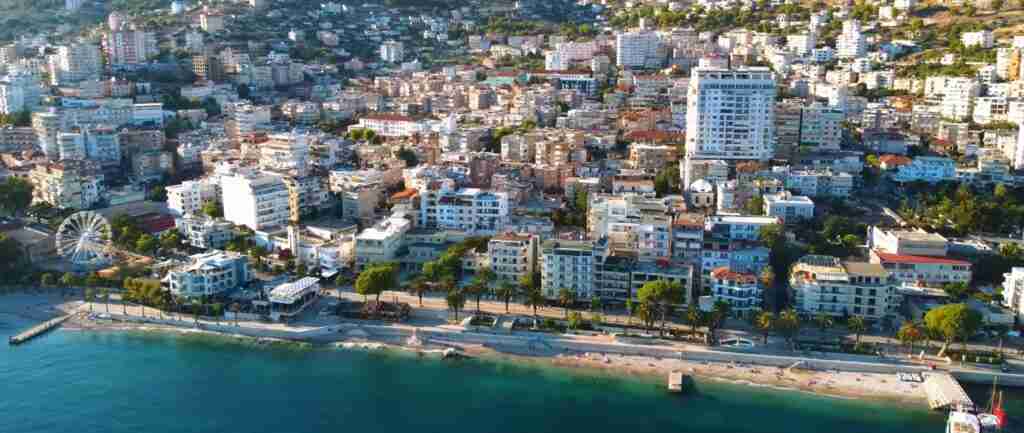
The final three days shift from cultural immersion to beach relaxation along Albania’s Ionian coast, where turquoise waters, rocky coves, and developing resort towns offer Mediterranean beach experiences at substantially lower prices than neighboring Greek islands visible across the strait. Saranda serves as base for exploring Ksamil’s stunning beaches, Butrint’s ancient ruins, and the coastal road north toward the Albanian Riviera, with flexibility to emphasize either beach lounging or archaeological/natural attractions depending on weather and personal preferences.
Day 5 Morning: Gjirokaster to Saranda Bus
The Gjirokaster-Saranda bus route operates frequently with departures approximately every hour from early morning through mid-afternoon, following the winding mountain road down from Gjirokaster through the Drino Valley toward the coast. Buses depart from the Gjirokaster terminal charging ALL 400-500 ($5-6) for the 45-minute to 1-hour journey depending on stops in intermediate villages. The route provides spectacular mountain and valley views as the elevation drops from Gjirokaster’s highland perch to Saranda at sea level.
Arrive in Saranda by mid-morning, with the bus terminal located on the northern edge of the waterfront promenade roughly 10-15 minutes walk from most hotels along the seaside. Saranda’s compact size makes taxis unnecessary for central accommodation—simply walk along the waterfront boulevard (Rruga Mitat Hoxha) to reach hotels, though uphill properties in the neighborhoods behind the waterfront justify ALL 300-500 ($4-6) taxi for luggage transport. Check into beachfront or sea-view accommodation, freshen up, and head immediately to the beach to maximize the afternoon’s beach time.
Day 5 Afternoon: Saranda Beach Introduction
Saranda’s main city beach stretches along the waterfront promenade, offering convenient access and basic facilities but experiencing crowds during July-August peak season when European vacationers fill every available lounge chair and umbrella. The beach consists of a mix of imported sand and natural pebbles with gradual water entry suitable for swimmers of all abilities. Public beach access remains free, though organized sections charge ALL 500-1,000 ($6-12) for lounge chair and umbrella rental depending on season and proximity to beach bars.
The water temperature reaches 24-26°C (75-79°F) in peak summer, remaining swimmable from June through October with May and November requiring more tolerance for cooler temperatures. Water clarity varies with wind conditions—calm days provide excellent visibility and snorkeling opportunities around rocky sections, while windy periods stir sediment reducing clarity. Beach bars serve food and drinks at elevated prices compared to street restaurants—expect ALL 400-600 ($5-7) for beer, ALL 800-1,200 ($10-14) for cocktails, and ALL 1,500-2,500 ($18-30) for light meals.
Day 5 Evening: Saranda Waterfront and Lekuresi Castle Sunset
Saranda’s waterfront promenade concentrates restaurants, bars, ice cream shops, and evening stroller traffic along the seaside boulevard where locals and tourists mingle during the evening passeggiata. The promenade restaurants offer seafood specialties including grilled fish, octopus, mussels, and shrimp at ALL 1,500-2,500 ($18-30) per person for full meals with sea views. Quality varies dramatically—establishments charging premium prices sometimes deliver mediocre food trading solely on location, while others justify costs with fresh fish and skilled preparation.
Budget-conscious diners walk one or two blocks inland from the waterfront where neighborhood restaurants serve identical dishes for 30-40% less. Traditional Albanian restaurants away from tourist zones charge ALL 800-1,200 ($10-14) for grilled meat and fish dishes with standard sides, providing satisfying meals without waterfront views but with authentic atmosphere and lower tourist density.
The evening’s highlight involves taxi or walk to Lekuresi Castle (ALL 300 / $4 entrance, castle restaurant operates no entrance fee for diners), the hilltop fortress overlooking Saranda Bay and Corfu island. The 6-kilometer distance from Saranda center requires taxi ALL 800-1,000 ($10-12) each way or organized tour, though energetic travelers hike the steep road in approximately 1 hour gaining 250 meters elevation. The castle restaurant serves traditional Albanian cuisine at ALL 1,200-1,800 ($14-22) per person with panoramic sunset views over the Ionian Sea—arrive 1 hour before sunset for optimal light and reasonable restaurant seating. The castle’s strategic position makes the military purpose immediately apparent while modern visitors appreciate the viewpoint for photography rather than defense.
Day 6: Ksamil Beach Day and Butrint Excursion
Day six combines Ksamil’s pristine beaches with Butrint’s UNESCO archaeological site, both located south of Saranda and easily accessible by local bus or rental car. Depart Saranda by 9am to maximize beach time while completing Butrint before afternoon heat peaks. Buses to Ksamil depart from Saranda’s main road (not the bus terminal) approximately every 30 minutes during summer months, cost ALL 100 ($1.20), and require 20 minutes for the 14-kilometer journey. Tell the driver “Ksamil” and they’ll indicate the village center stop where short walk reaches the beaches.
Ksamil’s beaches rank among Albania’s most beautiful—white sand, remarkably clear turquoise water, four small islands within swimming distance of shore, and backdrop of green hills create Caribbean-like setting that exceeds most Mediterranean beach destinations. The beaches operate semi-organized with lounge chair and umbrella rental costing ALL 1,000-1,500 ($12-18) during peak season at prime locations, though budget travelers spread towels on public sections between organized areas. Multiple beaches offer choices—the main Ksamil beach draws crowds, while beaches south of the village and the road toward Butrint provide more space and equally beautiful water.
Spend the morning swimming, snorkeling around the offshore islands, and relaxing on the beach before departing for Butrint around 12pm-1pm. Beach restaurants serve lunch ranging from simple sandwiches and grilled items ALL 500-800 ($6-10) to full seafood meals ALL 1,500-2,500 ($18-30), though carrying snacks from Saranda saves money for admission fees and dinner. Water and beverages cost ALL 200-400 ($2-5) at beach bars versus ALL 100-150 ($1-2) from Saranda supermarkets purchased in advance.
Day 6 Afternoon: Butrint National Park Archaeological Site
Butrint sits 3 kilometers south of Ksamil accessed by continuing on the coastal road, reachable by taxi ALL 800-1,000 ($10-12) from Ksamil, rental car, or 30-minute walk along the scenic coastal route. This UNESCO World Heritage archaeological site presents Greek, Roman, Byzantine, and Venetian layers spanning 2,500 years of Mediterranean history within a remarkably preserved ancient city surrounded by wetlands and forests. Admission costs ALL 1,000 ($12) including entrance to the museum housed in a Venetian castle within the site, open 9am-7pm April-September, 9am-4pm October-March.
The site requires 2-3 hours to explore properly, following a circular walking route through the ancient city that includes a 4th century BC Greek theater, Roman baths and gymnasium, early Christian baptistery with spectacular mosaic floor, Byzantine basilica remains, and Venetian tower commanding views over the Vivari Channel. The baptistery mosaic—geometric patterns and animal designs dating to the 6th century—represents Butrint’s most photographed feature and justifies admission alone. English signage throughout the site provides historical context though hiring a guide (arranged at entrance, approximately ALL 3,000 / $36 for groups) adds substantial understanding of the complex overlapping periods.
The site’s natural setting enhances the archaeological interest—ancient ruins emerge from forests, wetlands surround the city, and Lake Butrint creates a lagoon environment that supported the ancient port economy. Turtles sun on ancient stones, birds nest in Byzantine church ruins, and the atmosphere conveys timelessness absent from many heavily visited Mediterranean archaeological sites. Summer afternoon heat becomes intense, making morning visits preferable, though late afternoon light creates excellent photography conditions for the theater and castle.
Day 6 Evening: Return to Saranda and Seafood Dinner
Return to Saranda by late afternoon bus from Ksamil (departures approximately every 30 minutes until 7pm, ALL 100 / $1.20), shower off beach sand and Butrint dust, then enjoy a proper seafood dinner at one of Saranda’s better fish restaurants. Guvat Restaurant and Demetra earn consistent recommendations for fresh seafood preparation at moderate prices (ALL 1,800-2,500 / $22-30 per person), while Mare Nostrum offers upscale dining with excellent Greek-Albanian fusion cuisine at premium prices (ALL 2,500-3,500 / $30-42 per person).
Budget alternatives include the fish market area east of the marina where simple restaurants grill fresh-caught fish sold by weight—expect ALL 1,200-1,800 ($14-22) per kilogram with sides included, providing excellent value for the freshest possible seafood. Albanian coastal fish specialties include sea bass, sea bream, octopus, mussels, and shrimp prepared simply grilled or baked with olive oil, lemon, and local herbs. Skip elaborate sauces and preparations in favor of pristine fresh fish seasoned minimally—the Mediterranean approach that respects ingredient quality over chef manipulation.
Day 7: Flexible Beach Day or Albanian Riviera Exploration
The final full day offers complete flexibility to emphasize personal priorities. Option one repeats Ksamil beach time, exploring different beaches and perhaps hiring boat ALL 1,500-2,500 ($18-30) to visit the offshore islands for isolated swimming spots away from main beach crowds. Option two heads north along the Albanian Riviera toward villages like Lukove, Qeparo, and Borsh where dramatic mountain-meets-sea scenery, traditional villages, and less-developed beaches provide alternatives to Ksamil’s tourism growth.
The Riviera exploration requires rental car (€35-50 daily) or organized tour since public bus connections prove sporadic and time-consuming. The coastal road north from Saranda ranks among Europe’s most scenic drives, with dozens of viewpoint stops overlooking pristine coves and turquoise water framed by rugged mountains. Small beaches dot the route every few kilometers—simply pull over when a beach appeals, scramble down the access path, and enjoy relative solitude even during peak summer months when Ksamil experiences saturation.
Budget travelers emphasize free beach time over rental cars and tours, spending Day 7 at different Saranda city beaches north and south of the marina, walking the coastal path toward Kakome Beach (3 kilometers north, mix of sand and pebbles, restaurant facilities), or revisiting Ksamil via cheap local bus. The day’s simple pleasures—swimming in clear water, reading beach novels, afternoon naps under umbrellas, gelato from waterfront shops, and final sunset watching from the promenade—provide perfect wind-down before tomorrow’s departure logistics.
Day 7 Evening: Departure Planning and Final Dinner
Day eight involves returning to Tirana for international flights, requiring either direct Saranda-Tirana bus (ALL 1,500-1,700 / $18-20, 4-5 hours) or routing through Gjirokaster and Berat adding another day of travel with overnight stops. The direct bus provides most efficient solution, with departures from Saranda beginning at 5am and continuing through mid-afternoon. Booking early morning departure allows arrival in Tirana by early afternoon with time to connect to evening flights or spend final night in Tirana for next-morning departures.
Verify tomorrow’s bus schedule at the Saranda terminal on Day 7 afternoon or ask hotel reception for current departure times, as schedules adjust seasonally and occasional schedule changes occur without advance notice. Pack bags completely except morning essentials, organize cash for bus fare and any outstanding hotel bills, and enjoy a final Saranda dinner appreciating a week of Albanian experiences that delivered genuine Mediterranean culture, UNESCO heritage sites, mountain scenery, and beach relaxation at total costs substantially below equivalent Western European itineraries.
Saranda Three-Day Cost Summary 2026
Budget travelers spend approximately €135-195 for three Saranda days including hostel or budget hotel €54-75, meals €48-75, local transport including Ksamil buses and taxis €24-30, and Butrint plus beach costs €9-15. Mid-range visitors invest €300-510 covering sea-view hotel €120-225, restaurant meals including seafood €120-180, comprehensive transport including possible rental car €36-60, and all activities €24-45. Luxury travelers budget €600-930+ including beachfront boutique hotel €225-375, upscale dining €210-300, private transport and boat excursions €105-150, and premium experiences €60-105. These three-day totals cover arrival from Gjirokaster through evening of Day 7, excluding Day 8 departure to Tirana.
Alternative Itinerary Options and Extensions 2026
The core seven-day Tirana-Berat-Gjirokaster-Saranda route provides Albania’s essential highlights, but travelers with additional time or different priorities can modify the itinerary through substitutions, extensions, or reordering that better match personal interests while maintaining logistical efficiency. These alternatives assume the same seven-day timeframe unless noted, requiring trade-offs where adding one destination means reducing time in another.
Albanian Alps Extension – Theth and Valbona
Substitute Saranda beach days with Albanian Alps mountain villages by routing Tirana → Shkoder → Theth/Valbona → Berat → Gjirokaster. This mountain-focused alternative emphasizes hiking, traditional guesthouse stays, and dramatic alpine scenery but sacrifices beach time and Ionian coast experiences. The Albanian Alps require minimum 2-3 days for meaningful visits, with Theth-Valbona hiking trail demanding overnight stays in each village. Transport proves more challenging—buses run Tirana-Shkoder reliably, but Shkoder-Theth requires hiring jeep or furgon for rough mountain road access. Mountain guesthouses charge €25-35 per person including breakfast and dinner, representing excellent value though comfort standards remain basic with shared bathrooms and limited electricity common.
Vlora and Albanian Riviera Focus
Replace Tirana days with extended Albanian Riviera exploration by routing Tirana (1 day) → Vlora → Dhermi/Himara/Jale Beach → Saranda (2 days) → Gjirokaster → Berat. This maximizes beach time while visiting Riviera villages that offer different atmosphere than developed Saranda and Ksamil. Vlora serves as base for reaching Llogara Pass, one of Europe’s most dramatic coastal mountain drives, and provides access to quieter beaches north of the pass. Transport requires rental car or organized tours since public bus connections between Riviera villages remain limited. Accommodation costs along the Riviera match or exceed Saranda during peak season, with budget options around €40-60, mid-range €80-150, and luxury boutique beach hotels €150-300+.
Lake Ohrid and Eastern Border Region
Add Albania’s eastern border region by routing Tirana → Elbasan → Pogradec (Lake Ohrid) → Berat → Gjirokaster → Saranda. Lake Ohrid offers mountain lake scenery, access to North Macedonia across the border, and escape from coastal summer heat. The region sees fewer international tourists than the Tirana-coast route, providing more authentic local interactions. Pogradec accommodation ranges €30-60 for lakefront guesthouses to €80-120 for established hotels. The routing adds considerable travel time—Tirana-Pogradec requires 3-4 hours—making this extension sensible only with 9-10 day minimum itinerary allowing proper time at each destination.
Durres Beach and Port City Option
Incorporate Albania’s largest port and nearest beach city to Tirana by spending Day 1 afternoon in Durres (30 minutes from Tirana, ALL 150 / $2 bus) before continuing to Berat, or add Durres as Day 7-8 stopover between Saranda return and Tirana departure. Durres offers Roman amphitheater, archaeological museum, long sandy beach, and relaxed Adriatic atmosphere. The city suits travelers who want beach access without traveling to the southern Ionian coast or those breaking up the long Saranda-Tirana return journey. Accommodation costs €40-80 for mid-range hotels, with beach season running June-September.
Practical Travel Tips for Albania 2026
Albania’s rapid tourism development over the past decade means infrastructure improved dramatically, yet certain aspects remain distinctly different from Western European travel norms requiring mental adjustment and practical adaptations to navigate smoothly. Understanding these operational patterns before arrival prevents frustration while allowing appreciation for Albanian systems that work efficiently once you learn their logic.
Currency and Cash Management
The Albanian Lek (ALL) serves as sole legal tender with approximately 83 ALL equaling 1 US Dollar and 100 ALL equaling 1 Euro in 2026 exchange rates. While hotels, restaurants, and shops in major tourist areas increasingly accept Euros directly, paying in Euros typically results in unfavorable exchange rates—always calculate whether the Lek price converted at fair rate costs less than quoted Euro price. Cash remains king throughout Albania despite credit card acceptance growing in cities. Budget travelers should carry sufficient cash for 2-3 days of expenses, as small towns may lack reliable ATMs and many businesses operate cash-only.
ATMs appear throughout Tirana, Berat, Gjirokaster, and Saranda dispensing Lek at reasonable exchange rates with fees typically ALL 300-500 ($4-6) per withdrawal depending on your home bank’s policies. Withdraw larger amounts (ALL 20,000-30,000 / $240-360) to minimize fees rather than frequent small withdrawals. Notify your bank of Albania travel to prevent fraud alerts blocking legitimate transactions. Some Albanian ATMs fail to connect or run out of cash—if one machine rejects your card, try another bank’s ATM before assuming card problems.
Language and Communication
Albanian language proves challenging for visitors as it belongs to its own Indo-European branch sharing little vocabulary with familiar Romance, Germanic, or Slavic languages. English competency improved dramatically among younger Albanians and tourism workers, making communication manageable in hotels, restaurants, and tourist sites. Older generations and rural areas rely more on Italian, Greek, or basic gestures. Learn basic Albanian pleasantries—”Mirëmëngjes” (good morning), “Faleminderit” (thank you), “Sa kushton?” (how much?)—as even minimal effort earns appreciative responses from locals pleased foreigners attempt their language.
Restaurant menus in tourist areas provide English translations of varying accuracy ranging from perfectly translated to hilariously garbled. Point to menu items if pronunciation seems impossible. Numbers appear in both Arabic numerals and occasionally Albanian words—memorize basic numbers 1-10 to understand prices. Mobile data and WiFi have improved substantially, with most hotels, restaurants, and cafes offering free WiFi and 4G coverage reaching most tourist destinations allowing Google Translate assistance when needed.
Safety and Security Considerations
Albania ranks among Europe’s safest countries for travelers, with violent crime against tourists extremely rare and petty theft significantly less common than major Western European cities. The country’s traditional hospitality culture and recent tourism growth create environment where locals generally help lost foreigners rather than target them. Normal urban precautions apply—don’t flash expensive electronics unnecessarily, keep valuables secured, and avoid empty streets late at night—but paranoia proves unnecessary.
Driving presents the primary safety concern as Albanian road culture embraces aggressive overtaking, speed limit flexibility, and creative interpretation of traffic rules. Pedestrians must stay vigilant even in marked crosswalks as Albanian drivers rarely yield right-of-way automatically. Rental car drivers need defensive driving skills and acceptance that Albanian mountain roads feature narrow lanes, blind curves, and minimal guardrails. Walking remains safest for in-city exploration with taxis or buses for longer distances unless you’re specifically comfortable with challenging driving conditions.
Connectivity and Mobile Data
Albanian mobile networks (Vodafone, ALBtelecom, Eagle Mobile) provide excellent 4G coverage across tourist routes with affordable prepaid SIM cards available at airport kiosks, city phone shops, and some hotels. Tourist SIM packages typically cost ALL 800-1,500 ($10-18) for 7-15 days with 10-20GB data, unlimited domestic calls, and some international minutes. Buying SIM at Tirana airport immediately upon arrival proves convenient though city shops offer identical services at slightly lower prices. Bring unlocked phone and passport for registration—some providers require passport copy for SIM activation.
WiFi reaches Albanian hotels, restaurants, and cafes with quality varying from excellent to barely functional. Upscale accommodations provide reliable fast connections, budget guesthouses sometimes struggle with bandwidth when multiple guests connect simultaneously. Work-dependent travelers should verify WiFi quality before booking or maintain mobile data backup. Public WiFi security remains questionable—avoid sensitive financial transactions on cafe networks, use VPN for privacy-conscious activities, and assume public networks are monitored.
Cultural Norms and Etiquette
Albanian culture blends Mediterranean warmth with traditional Balkan hospitality, creating social environment where strangers readily help travelers and conversations flow easily. Dress standards prove relaxed in coastal areas where beach attire prevails, but modest clothing shows respect when visiting mosques, churches, and conservative mountain villages. Remove shoes when entering homes if invited to Albanian residences—hospitality remains central to Albanian identity and guests receive elaborate treatment including multiple food offerings that refusing proves difficult without causing offense.
Tipping practices remain inconsistent—upscale restaurants in Tirana and tourist areas expect 10% tips, neighborhood restaurants operate without tipping expectations, and rounding up bills or leaving small amounts (ALL 100-200 / $1-2) for good service is always appreciated but never mandatory. Taxi drivers don’t expect tips though rounding up to nearest ALL 500 simplifies payment. Hotel staff appreciate small tips for exceptional service though again no rigid standards apply. When uncertain, observe local behavior or ask hotel reception about appropriate tipping for specific services.
Money-Saving Strategies for Albania Travel 2026
Albania already ranks among Europe’s most affordable destinations, but strategic planning and local knowledge can reduce costs further without sacrificing experience quality. These money-saving techniques work across all budget levels, allowing backpackers to stretch limited funds and mid-range travelers to upgrade certain experiences while maintaining overall budget targets.
Timing and Seasonality
Visit during shoulder season months May-June or September-October when weather remains excellent but coastal accommodation costs run 30-60% below July-August peak rates. Saranda and Ksamil hotels charging €120-180 in August drop to €50-90 in May or September for identical rooms with identical beach access. Inland cities like Berat and Gjirokaster maintain year-round pricing, making the seasonal savings apply primarily to coastal portions of the itinerary. September offers particularly strong value as the Ionian Sea remains warm (22-24°C / 72-75°F) through October while tourist crowds depart after August school holiday conclusion.
Book accommodation without advance reservation when traveling off-season, as walk-in rates often beat online booking platform prices when hotels face empty rooms and no advance bookings. Peak season July-August requires advance booking to secure preferred properties, but shoulder season allows negotiation and last-minute flexibility. Skip Saranda entirely during August when prices peak and beaches overflow, substituting with Albanian Riviera villages that maintain reasonable rates and smaller crowds even during peak months.
Food and Dining Optimization
Eat Albanian dishes at local restaurants rather than international cuisine at tourist-focused establishments—traditional Albanian tavernas charge ALL 600-1,000 ($7-12) for generous portions while Italian restaurants in tourist areas run ALL 1,500-2,500 ($18-30) for similar quantities of mediocre pizza and pasta. The traditional dishes also represent actual Albanian culinary culture rather than imported Western expectations. Street food including byrek (ALL 100-150 / $1-2), grilled meat wraps (ALL 300-400 / $4-5), and market sandwiches provide filling meals at fraction of sit-down restaurant costs.
Buy snacks, fruit, and beverages from supermarkets rather than tourist shops and beach vendors where identical items cost 2-3 times higher. Tirana’s New Bazaar, Berat’s market near the bus station, and Saranda’s neighborhoods behind the waterfront host proper grocery stores charging local prices. Carry water bottles refilled from accommodation rather than buying bottled water constantly—Albania’s tap water proves safe in cities, and hotels provide filtered water when tap quality concerns exist. Breakfast at accommodations when included rather than paying €8-12 at cafes for identical coffee and pastries.
Transportation Efficiencies
Use intercity buses exclusively rather than private transfers or rental cars—the ALL 500-1,700 ($6-20) bus fares between major destinations prove impossible to beat even when factoring time value. Rental cars cost €30-50 daily plus €35-50 fuel for week-long coverage, totaling €455-700 compared to perhaps €50 total bus fares for the same routes. Groups of 4+ change the calculation as rental car costs divide four ways, but solo travelers and couples always save substantially using buses.
Walk within cities rather than taking taxis for short distances—Tirana’s center, Berat’s old town, Gjirokaster’s historic quarter, and Saranda’s waterfront all cover walkable areas where taxi use proves unnecessary except for luggage transport from bus stations. Use Bolt ride-hailing app in Tirana rather than street taxis which charge 30-40% higher fares. Negotiate taxi rates before entering vehicles when Bolt unavailable, as many drivers quote inflated tourist prices that drop 20-30% when challenged with “too expensive” and gesture toward walking away.
Accommodation Value Maximization
Book guesthouses directly via phone or email rather than through Booking.com or Airbnb which add 15-20% commission fees—many Albanian small guesthouses offer 10-15% discounts for direct booking paid in cash, making the effort worth several hundred Lek savings. Choose accommodations slightly outside prime tourist zones where identical quality costs 20-30% less—Berat properties 500 meters from the main Mangalem entrance run €30-40 versus €50-70 for equivalent rooms in the heart of the quarter.
Share rooms when traveling in groups, with triple and quadruple rooms costing just 20-40% more than doubles rather than doubling prices. Hostel dormitories deliver maximum savings for solo travelers comfortable with shared accommodations. Consider staying 2 nights minimum in each destination to avoid paying for accommodation you barely use—checking in at 2pm, sleeping, and checking out at 10am wastes money on just 20 hours of actual room occupation.
Attraction and Activity Optimization
Prioritize free attractions—Berat and Gjirokaster old town wandering costs nothing, beach access remains free except organized sunbed areas, Tirana’s colorful buildings and Skanderbeg Square require no admission, and countless viewpoints, churches, mosques, and neighborhoods offer exploration at zero cost. Paid museums and archaeological sites total just €30-45 for this entire itinerary when visiting selectively rather than completist approaches buying every ticket.
Skip guided tours in favor of self-guided exploration using free online resources and downloaded maps. Berat Castle, Gjirokaster Castle, and Butrint all provide adequate English signage for self-guided visits saving ALL 3,000-5,000 ($36-60) per location on unnecessary guide fees. Group together with other travelers for shared taxi costs to Blue Eye or Lekuresi Castle where per-person rates drop dramatically with 3-4 passengers splitting fares.
Common Mistakes to Avoid in Albania 2026
First-time Albania visitors frequently make predictable mistakes that compromise either budget targets, schedule efficiency, or experience quality. These errors rarely prove catastrophic but avoiding them improves the trip substantially with minimal additional planning effort.
Over-Scheduling and Geographic Overreach
Attempting to cover Albania’s Albanian Alps, central UNESCO cities, and southern Ionian coast in one week spreads time too thin while spending excessive hours on buses rather than experiencing destinations. The northern Alps sit 4-5 hours from Tirana in the opposite direction from the southern coast, making Tirana-Alps-Tirana-South routing waste two full days traveling between regions that don’t connect logically. Choose either Alps focus or southern circuit for one-week timeframes, adding the other region only with 10-14 day minimum itineraries allowing proper exploration without exhausting travel.
Related error involves single-night stays in multiple destinations where check-in and check-out timing consumes substantial portions of days. Spending 1 night each in Tirana, Berat, Gjirokaster, Kruja, Shkoder, and Saranda across 7 days means you’re essentially checking into hotels, sleeping, and departing rather than experiencing places. Minimum 2-night stays (except unavoidable transit situations) allow actual destination immersion with morning arrival, full day exploration, second day deepening understanding, and morning departure providing proper sense of place.
Coastal Timing and Peak Season Traps
Visiting Saranda and the Albanian Riviera during July-August peak season means paying 40-60% higher accommodation rates, facing crowded beaches where umbrella spaces sell out by 10am, and experiencing Albania at its least affordable. The weather advantage proves minimal since June and September offer near-identical temperatures and sunshine with dramatically fewer crowds and lower costs. August particularly concentrates European vacation schedules creating saturation where Albania’s small tourism infrastructure buckles under demand, causing advance booking requirements and inflated prices throughout coastal regions.
Failing to research beach conditions before committing multiple days to coastal stays creates disappointment when expecting Caribbean-style white sand beaches but finding Albanian beaches mix sand with pebbles and rocks. Ksamil offers the finest sand and clearest water, but most Albanian beaches require swim shoes for comfortable water entry. Come prepared with proper expectations and appropriate footwear rather than assuming Mediterranean means sandy beach paradise uniformly across the coast.
Transportation Misconceptions
Expecting Western European bus schedule systems with printed timetables, advance booking, and assigned seats causes confusion when Albanian buses operate on fill-and-go basis with flexible departure times and direct driver payment. The system works reliably once you understand it—frequent departures on major routes, pay-as-you-go pricing, and simple boarding procedures where you show up, find your destination, and wait for the next bus. Advance booking doesn’t exist except for a few premium international routes, making worrying about reservations completely unnecessary.
Underestimating driving challenges leads tourists to rent cars they’re not equipped to handle on narrow mountain roads with aggressive local traffic. Albanian drivers operate on assumption of vehicle might-makes-right where larger vehicles claim road space and passing on blind curves represents normal behavior. Tourist rental car drivers unfamiliar with these patterns create dangerous situations while adding stress to vacations meant for relaxation. Unless specifically confident with challenging driving or needing car access to remote areas poorly served by buses, stick with public transport and taxis for substantially safer travel.
Accommodation and Money Errors
Booking all accommodation through international platforms like Booking.com or Airbnb rather than contacting properties directly wastes 10-15% on commission fees that Albanian guesthouses gladly discount for direct bookings. Small family-run properties especially offer better deals when you email or call directly, often throwing in free airport transfers or room upgrades when booking bypasses platform fees. The language barrier proves minimal as most tourism-oriented properties have English-speaking staff or family members who handle reservations.
Failing to withdraw adequate cash from ATMs leads to frustrating situations where buses require exact Lek payment, restaurants don’t accept cards, and attraction admissions demand cash you don’t carry. Budget approximately ALL 5,000-8,000 ($60-95) cash daily for moderate spending covering meals, transport, admissions, and incidentals, keeping reserve ALL 10,000-15,000 ($120-180) for multi-day periods between ATM access. Card acceptance continues improving but cash remains essential for smooth Albania travel in 2026.
Cultural and Social Missteps
Refusing Albanian hospitality when invited to homes or offered food by friendly locals causes unintended offense in culture where guest treatment represents core value. If Albanian acquaintances invite you for coffee or meal, declining without compelling reason appears rude—better to accept even briefly than refuse completely. The generosity sometimes seems excessive by Western standards where every interaction isn’t business transaction, but represents authentic cultural practice where hosts prove generous and guests receive elaborate treatment.
Dressing inappropriately for mosque or church visits shows disrespect in country where both Muslim and Orthodox Christian traditions remain culturally significant. Cover shoulders and knees when entering religious sites, remove shoes when required, and observe silence and photography restrictions. The requirements stay less rigid than Middle Eastern mosques or Greek monasteries, but basic modesty and respect go far in conservative communities particularly in smaller cities and mountain villages where traditional values persist stronger than cosmopolitan Tirana.
Frequently Asked Questions: Albania 7-Day Itinerary 2026
Is 7 days enough time to see Albania’s highlights?
Seven days provides sufficient time to experience Albania’s essential southern circuit covering Tirana’s capital culture, Berat and Gjirokaster’s UNESCO heritage cities, and the Ionian coast beaches around Saranda and Ksamil. This itinerary delivers comprehensive introduction to Albanian history, architecture, cuisine, and natural beauty while maintaining reasonable pace with 2-3 night stays in most locations. The week necessarily omits northern Albanian Alps hiking around Theth and Valbona, Lake Ohrid region, and complete Albanian Riviera exploration, but covers enough diversity that first-time visitors leave with genuine understanding of Albania’s appeal. Travelers wanting comprehensive coverage including northern mountains need minimum 10-14 days, while those emphasizing just beaches or just cultural sites can compress this itinerary to 5-6 days by eliminating either coastal or inland portions.
What’s the best budget for 7 days in Albania in 2026?
Budget travelers complete this seven-day Albania itinerary for €315-455 per person total staying in hostel dormitories at €18-25 nightly, eating at local restaurants for €16-25 daily, using intercity buses exclusively for €8-12 daily transport, and visiting primarily free attractions with selective paid admissions at €3-5 daily. Mid-range visitors spend €700-1,190 per person assuming two sharing three-star hotels at €80-150 per night (€40-75 per person), dining at quality restaurants for €40-60 daily, mixing buses with occasional taxis for €12-20 daily transport, and visiting all major sites for €8-15 daily admissions. Luxury travelers invest €1,400-2,170+ per person for boutique accommodations at €150-250+ nightly (€75-125+ per person sharing), upscale dining at €70-100+ daily, private transportation at €35-50 daily, and premium experiences at €20-35 daily. All budgets exclude international flights but include accommodation, meals, in-country transport, and attraction admissions. Traveling in shoulder season May-June or September rather than July-August peak saves 20-30% on coastal accommodation costs.
How do you get around Albania without a car?
Albania’s intercity bus network efficiently connects all destinations in this itinerary with frequent departures, comfortable vehicles, and fares of ALL 500-1,700 ($6-20) per route. Buses operate on fill-and-go schedules from designated terminals in each city—show up at the terminal, locate your destination’s boarding area, and pay the driver’s assistant in cash after departure. No advance booking exists for domestic routes. Major routes like Tirana-Berat (2 hours, ALL 500), Tirana-Gjirokaster (4 hours, ALL 1,000), and Gjirokaster-Saranda (45 minutes, ALL 400-500) run multiple times daily particularly during morning hours. Within cities, walking covers most needs with taxis costing ALL 300-800 ($4-10) for typical rides or Bolt ride-sharing available in Tirana at 30-40% below taxi rates. Local buses around Saranda to Ksamil cost ALL 100 ($1.20) and run every 30 minutes during summer. The bus system works reliably once you understand informal scheduling and direct driver payment, eliminating any need for rental car unless specifically wanting to explore remote areas or Albanian Riviera villages poorly served by public transport.
Is Albania safe for solo female travelers in 2026?
Albania ranks among Europe’s safest countries for solo female travelers, with violent crime extremely rare and harassment less common than many Western European destinations. Albanian culture’s traditional hospitality extends to foreign visitors regardless of gender, and the country’s rapid tourism growth over past decade means locals are accustomed to independent travelers. Normal urban precautions apply—avoid empty streets late at night, don’t accept drinks from strangers, keep valuables secured, and trust instincts about uncomfortable situations—but excessive paranoia proves unnecessary. Albanian men may be more forward with conversation than typical Northern European reserve, but persistent unwanted attention remains uncommon and locals generally respect clear boundaries. Solo female travelers report feeling safer in Albania than in major Italian, Spanish, or French cities where pickpocketing, scams, and aggressive approaches create more concerning environment. Modest dress in conservative mountain villages and religious sites shows cultural respect, though coastal areas embrace casual beach attire without judgment.
What’s the best time to visit Albania in 2026?
May-June and September offer optimal conditions for this itinerary, combining warm weather (20-28°C / 68-82°F), lower coastal accommodation prices, and fewer crowds compared to July-August peak season. May brings blooming spring landscapes and perfect hiking temperatures, while September maintains summer warmth with beach-friendly sea temperatures of 22-24°C (72-75°F) continuing through early October. July-August deliver guaranteed hot weather and bustling beach atmosphere but raise coastal hotel rates 30-60% while filling beaches and popular restaurants to capacity. Budget-conscious travelers should absolutely avoid August when Saranda and Ksamil reach maximum expense and minimum availability. April and October work for UNESCO city exploration but prove too cool for comfortable beach swimming, making these months better for cultural-focused itineraries skipping coastal portions. Winter November-March sees substantially reduced tourism infrastructure with many coastal properties closed and mountain areas experiencing snow, though inland cities like Tirana, Berat, and Gjirokaster remain accessible and hotel prices reach annual lows.
Do you need visa for Albania?
Albania operates visa-free entry for citizens of the United States, Canada, European Union, United Kingdom, Australia, New Zealand, Japan, South Korea, and numerous other countries for stays up to 90 days within a 180-day period. Visitors from these countries need only valid passport with minimum 3 months validity beyond intended departure date—no advance visa applications, no entry fees, no complicated paperwork. Immigration processing at Tirana International Airport takes just minutes with passport stamp and occasional questions about accommodation and departure plans. Citizens of countries not on the visa-free list should check current Albanian Ministry of Foreign Affairs requirements, as visa-on-arrival and e-visa options exist for many nationalities not qualifying for automatic entry. Travelers combining Albania with neighboring countries should verify that multiple entries into Schengen zone (if applicable) don’t exhaust their 90-day Schengen allowance, as Albania sits outside Schengen area despite being candidate for European Union membership.
What should I pack for 7 days in Albania?
Pack versatile clothing suitable for city walking, beach days, and casual restaurant dining—lightweight breathable fabrics, comfortable walking shoes, sandals or flip-flops for beach, and one slightly nicer outfit for upscale restaurants if desired. Swim suits, beach towels, and sunscreen prove essential for coastal portions. Women should bring one modest outfit (covered shoulders and knees) for mosque and church visits, though carrying a lightweight scarf to throw over shoulders works equally well. Summer months May-September require sun protection including hat, sunglasses, and high-SPF sunscreen as Mediterranean sun proves intense. Modest first aid kit with basic medications, any prescription drugs, and stomach remedies for dietary adjustments. Universal power adapter for European two-pin plugs, though many Albanian outlets accept multiple plug types. Day pack for carrying water, snacks, and camera during sightseeing. Underwater camera or waterproof phone case for Ksamil beach and Butrint wetlands photography. Albanian cities maintain casual dress standards where t-shirts and shorts work fine for most situations except upscale restaurants where long pants and collared shirts show respect but aren’t strictly required.
Can you drink tap water in Albania?
Tap water quality varies across Albania—major cities like Tirana, Berat, Gjirokaster, and Saranda have municipal water systems considered safe to drink, though most travelers stick with bottled water to avoid any stomach adjustment issues. Hotels and guesthouses typically indicate if tap water is drinkable and provide filtered water when tap quality concerns exist. Mountain village water from natural springs often proves excellent, while older buildings in historic quarters sometimes have aging pipes creating taste or sediment issues despite source water being safe. Bottled water costs ALL 80-150 ($1-2) for 1.5-liter bottles at supermarkets versus ALL 200-300 ($2-4) at tourist shops and restaurants. Travelers with sensitive stomachs should default to bottled water, while those comfortable with Balkan travel report no issues drinking tap water in major cities. Restaurants serve bottled water automatically unless you specifically request tap water, which they’ll provide free but sometimes with confused looks as foreign tourists rarely choose tap when bottled costs so little.
Is Albania expensive compared to other Balkans countries?
Albania maintains similar or slightly lower prices than Bosnia, Montenegro, and North Macedonia while running substantially cheaper than Croatia and Slovenia, the Balkans region’s most expensive destinations. Daily costs in Albania range €45-65 budget, €100-170 mid-range, and €200-310+ luxury compared to Croatia where equivalent categories run €60-80 budget, €140-200 mid-range, and €300-450+ luxury. Montenegro’s coast approaches Croatian prices during summer but inland areas cost similar to Albania. Serbia and North Macedonia compete with Albania for regional lowest costs. Greece sits more expensive than Albania across all categories, making Albania particularly attractive to visitors combining countries who appreciate the price drop when crossing from Greece into Albania. Within Albania, coastal areas during July-August approach regional average Balkans pricing, but shoulder season coast and year-round inland cities maintain position as excellent value. The quality-to-price ratio in Albania often exceeds other Balkans countries where higher prices don’t necessarily translate to proportionally better accommodation, food, or service standards.
What language is spoken in Albania and do people speak English?
Albanian serves as the official language, a unique Indo-European language in its own branch sharing little vocabulary with neighboring languages. English competency among Albanians under 40 years old, particularly in tourism industry and major cities, improved dramatically over past decade making communication manageable for English-speaking visitors. Hotel reception, restaurant servers in tourist areas, tour operators, and younger Albanians generally speak workable English. Older generations and rural areas rely more on Italian (widely spoken due to proximity and television), Greek (particularly in southern regions), or basic gestures. German speakers find some comprehension in tourist zones from Albanian diaspora returnees. Menus in established restaurants include English translations, though accuracy varies wildly from perfect to hilariously wrong. Basic Albanian phrases—”Mirëmëngjes” (good morning), “Faleminderit” (thank you), “Sa kushton” (how much)—earn appreciative responses. Google Translate on phone bridges remaining gaps. Bus travel requires minimal language as destinations are shouted and drivers understand basic location names pronounced with attempted Albanian phonetics.