Akureyri Travel Guide 2026: Ultimate Planning Resource
Akureyri, Iceland’s northern capital nestled at the head of Eyjafjörður fjord, offers travelers an authentic Icelandic experience away from Reykjavik’s crowds. With approximately 19,000 residents, this vibrant town combines stunning natural beauty—from whale-rich fjord waters to nearby waterfalls and geothermal lagoons—with cultural attractions, excellent restaurants, and convenient access to North Iceland’s most spectacular landscapes including the Diamond Circle route.
Key Takeaways for Planning Your Akureyri Trip 2026
- Budget Planning 2026: Expect $170-280 daily per person for mid-range travel including accommodation ($70-150 nightly), meals ($50-80), whale watching ($90-100), and local activities, with domestic flights from Reykjavik ranging $170-195 round-trip. Budget travelers can manage $95-150 daily using hostels ($30-70), while luxury seekers invest $350-550+ daily.
- Transportation Strategy 2026: Domestic flights (45 minutes, $90-110 one-way) offer the fastest access from Reykjavik, while buses provide a scenic six-hour alternative for $90. Within Akureyri, all local buses operate completely free of charge, making the compact town center and nearby attractions highly accessible without taxi expenses ($15-22 per trip).
- Prime Whale Watching Season: Eyjafjörður fjord hosts exceptional humpback whale populations with 95-99% sighting success rates from May through September. Classic whale watching tours cost $90-100 for 2.5-3.5 hour experiences, while express RIB boat adventures offer closer encounters for similar pricing with smaller group sizes limited to 12 travelers.
- Best Time to Visit 2026: June through August delivers midnight sun, warmest temperatures (10-15°C/50-59°F), and optimal outdoor activity conditions, though this represents peak pricing for accommodation. December through March offers Northern Lights viewing, skiing at Hlíðarfjall (5 km from town), and winter adventure opportunities with accommodation costs dropping 30-40% below summer rates.
- Diamond Circle Base Camp: Akureyri’s strategic location provides easy day trip access to Goðafoss waterfall (45 minutes), Lake Mývatn geothermal area (90 minutes), Dettifoss Europe’s most powerful waterfall (2.5 hours), and Ásbyrgi canyon (2 hours). Car rental flexibility enables independent exploration, though organized tours from $100-150 daily include transportation and expert guides.
- Cultural Highlights: The town features Iceland’s most northerly botanical garden (free admission), the striking hilltop Akureyrarkirkja church (free), excellent museums including aviation and local history collections, cozy cafes, year-round swimming facilities, and a welcoming small-town atmosphere with heart-shaped red traffic lights symbolizing community spirit.
People Also Ask About Akureyri Travel 2026
How much does a trip to Akureyri cost in 2026?
A trip to Akureyri costs $95-550+ daily per person in 2026 depending on travel style. Budget travelers spending $95-150 daily combine hostel dormitories ($30-50 nightly), supermarket meals ($30-50 daily), free attractions like the botanical garden and church, and free local bus transportation. Mid-range travelers investing $170-280 daily stay in comfortable hotels ($70-150 nightly), dine at local restaurants ($50-80 daily for three meals), and participate in paid activities like whale watching ($90-100). Luxury travelers allocating $350-550+ daily book premium hotels ($200-350+ nightly), enjoy fine dining experiences, and take private tours. A typical five-day mid-range trip including round-trip domestic flights ($170-195), accommodation ($350-750 for five nights), meals ($250-400), whale watching ($90-100), and activities totals approximately $1,030-1,635 per person.
Is Akureyri worth visiting in 2026 versus just staying in Reykjavik?
Akureyri offers distinctly different experiences worth the journey from Reykjavik in 2026. The northern capital delivers exceptional whale watching with 95-99% success rates in the sheltered Eyjafjörður fjord, easier access to the Diamond Circle attractions (Goðafoss, Mývatn, Dettifoss, Ásbyrgi) than from Reykjavik, better Northern Lights visibility due to darker skies and fewer crowds, excellent skiing opportunities at Hlíðarfjall just 5 km from town, and an authentic small-town Icelandic atmosphere contrasting sharply with increasingly touristy Reykjavik. The compact, walkable town center features free museums, botanical gardens, swimming pools, and local bus service. For travelers seeking Iceland beyond the standard Golden Circle route or those interested in North Iceland’s unique volcanic landscapes and marine wildlife, Akureyri justifies the additional travel time and expense.
What are the best day trips from Akureyri in 2026?
The best day trips from Akureyri in 2026 target the Diamond Circle attractions within 45-120 minutes’ drive. Goðafoss waterfall (45 minutes east) showcases spectacular 12-meter falls where ancient chieftain Þorgeir threw pagan idols in 1000 AD, marking Iceland’s conversion to Christianity. Lake Mývatn area (90 minutes east) features the Mývatn Nature Baths geothermal lagoon, Dimmuborgir lava formations, Hverir geothermal area with bubbling mud pots, and Grjótagjá cave with thermal water. Dettifoss (2.5 hours east) delivers Europe’s most powerful waterfall experience. Ásbyrgi horseshoe canyon (2 hours northeast) offers forested hiking trails within 100-meter-high cliffs. Closer options include Laufás turf house museum (25 minutes north), Forest Lagoon geothermal spa (10 minutes from town), and Hauganes/Dalvík villages (30-35 minutes north) for alternative whale watching departures. Most day trips combine multiple sites efficiently.
When is the best time to see Northern Lights in Akureyri 2026?
The best time to see Northern Lights in Akureyri 2026 spans September through April when darkness returns to northern Iceland. Peak viewing months are December through February when nights extend longest (4-5 hours of daylight maximum), cloud cover decreases compared to autumn months, and solar activity typically increases. Akureyri’s location 100 km south of the Arctic Circle, combined with relatively low light pollution compared to Reykjavik, provides excellent aurora viewing directly from town when conditions align. The surrounding mountains create sheltered viewing spots accessible via short drives. Northern Lights tours from Akureyri operators chase optimal viewing locations and cost $90-130 for 3-4 hour experiences. Solar activity peaks during 11-year cycles, with 2024-2026 falling within an active period increasing sighting probability. Clear, dark nights from 10 PM to 2 AM offer best viewing windows, with aurora forecasts available through Icelandic Met Office websites and apps.
Extended multi-day tours – 5+ days
Featured Akureyri Multi-Day Tour Packages
3 days
Akureyri 3-Day Discovery Tour
- ✓ Comprehensive Akureyri experience
- ✓ Expert local guides included
- ✓ All accommodation included
- ✓ Transportation provided
5 days
Akureyri 5-Day Highlights Experience
- ✓ Comprehensive Akureyri experience
- ✓ Expert local guides included
- ✓ All accommodation included
- ✓ Transportation provided
7 days
Akureyri 7-Day Cultural Journey
- ✓ Comprehensive Akureyri experience
- ✓ Expert local guides included
- ✓ All accommodation included
- ✓ Transportation provided
10 days
Akureyri 10-Day Complete Adventure
- ✓ Comprehensive Akureyri experience
- ✓ Expert local guides included
- ✓ All accommodation included
- ✓ Transportation provided
Multi-day tour packages powered by TourRadar. Prices and availability subject to change.
Introduction to Akureyri: Iceland’s Northern Capital
Akureyri stands as Iceland’s second-largest urban area and the undisputed capital of North Iceland, offering travelers an authentic alternative to the increasingly crowded southwest tourist circuit centered on Reykjavik. Situated at the head of Eyjafjörður, Iceland’s longest fjord stretching 60 kilometers inland from the Greenland Sea, this charming town of 19,000 residents combines small-town Icelandic hospitality with big-city amenities including excellent restaurants, cultural venues, museums, and shopping districts.
The town’s dramatic setting surrounded by steep mountains reaching 1,000-1,500 meters creates a microclimate surprisingly mild for its 65°N latitude, just 100 kilometers south of the Arctic Circle. This positioning shields Akureyri from the Gulf Stream’s Atlantic storms affecting southwest Iceland, resulting in drier conditions, slower winds, and more stable weather patterns than Reykjavik experiences. Winter temperatures average -2°C colder than the capital, bringing reliable snow for skiing, while summers reach approximately 1°C warmer, extending the growing season enough to support Iceland’s most northerly botanical garden.
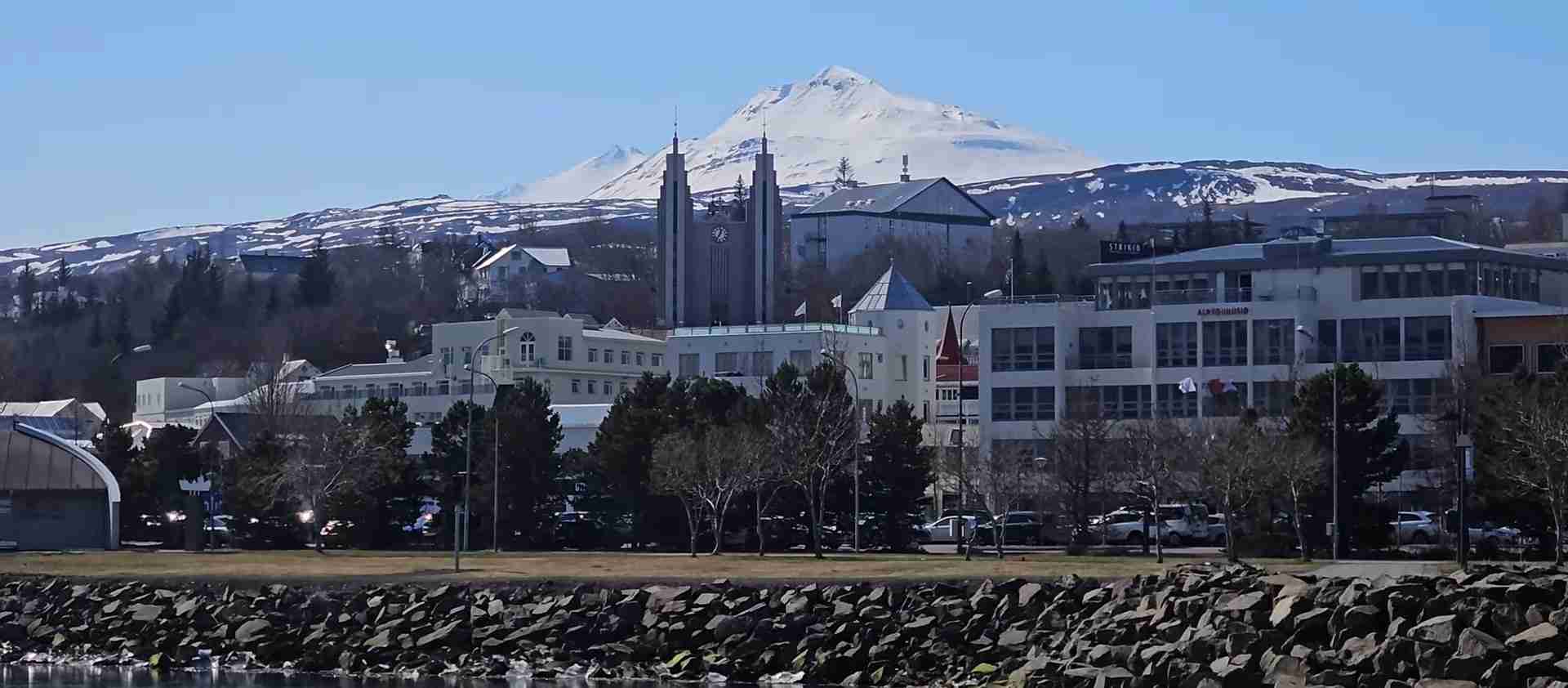
Akureyri’s compact, walkable town center features brightly painted wooden houses climbing steep streets from the fjord waterfront, creating an intimate European atmosphere distinct from Reykjavik’s sprawling modernity. The striking hilltop Akureyrarkirkja church dominates the skyline with its distinctive Gothic Revival architecture designed by Iceland’s state architect Guðjón Samúelsson, who also created Reykjavik’s famous Hallgrímskirkja. Local character shines through unique details like heart-shaped red traffic lights installed to brighten residents’ moods during dark winter months, symbolizing the community’s warm spirit.
The town serves dual roles as both a destination in its own right and the essential base camp for exploring North Iceland’s spectacular natural attractions. Eyjafjörður fjord supports rich marine ecosystems attracting humpback whales, minke whales, harbor porpoises, and white-beaked dolphins, making whale watching from Akureyri consistently rate among Iceland’s best with 95-99% success rates during summer months. The surrounding region hosts the Diamond Circle scenic route connecting Goðafoss waterfall, Lake Mývatn geothermal area, Dettifoss Europe’s most powerful waterfall, and Ásbyrgi horseshoe canyon—all accessible as day trips from Akureyri accommodations.
Akureyri’s history as a trading center dates to Iceland’s Settlement Age, though the modern town emerged during the 18th-19th centuries when Danish merchants established the region’s primary commercial hub. Today’s economy balances fishing heritage with education (University of Akureyri), services, and rapidly growing tourism supporting an expanding infrastructure of hotels, restaurants, tour operators, and cultural attractions. Despite tourism growth, Akureyri maintains authentic local character absent from Iceland’s overtouristed southwestern highlights, offering visitors genuine interaction with Icelandic daily life beyond the tourist circuit.
The town’s year-round appeal spans seasonal extremes from midnight sun (May-August) enabling late-night hiking and photography to polar night darkness (November-February) perfect for Northern Lights viewing and winter sports. Cultural events including music festivals, art exhibitions, and the popular August Town Festival celebrating Akureyri’s founding enliven the social calendar. Modern amenities include the striking Hof cultural center hosting concerts and theater, numerous cafes and restaurants ranging from traditional Icelandic cuisine to international options, craft breweries, excellent bakeries, and the year-round Christmas Garden shop celebrating Icelandic yuletide traditions including the legendary 13 Yule Lads.
Getting to Akureyri 2026: Transportation Options
Reaching Akureyri from Reykjavik in 2026 offers three primary methods balancing time, cost, and scenic value. Domestic flights provide the fastest connection at 45 minutes airborne time, while long-distance buses deliver six hours of dramatic Icelandic landscape viewing, and self-drive options via the Ring Road enable flexible exploration with intermediate stops at waterfalls, fishing villages, and natural attractions along the 388-kilometer northern route.
Domestic Flights Reykjavik to Akureyri 2026
Icelandair operates the Reykjavik-Akureyri domestic route with approximately four daily departures from Reykjavik Domestic Airport (RKV), located near downtown Reykjavik just 2 kilometers from the city center. Flight time averages 45 minutes covering the 249-kilometer distance. One-way fares range $90-110 booked in advance, with round-trip tickets costing $170-195 representing slight savings versus purchasing two separate one-way fares. Prices fluctuate seasonally, with January-April typically offering lowest fares ($90-100 one-way) and summer peak season (June-August) commanding premium rates ($105-115 one-way). Check official airline websites for current rates as pricing varies based on booking timing and seat availability.
Akureyri Airport (AEY) sits just 2 miles (3 kilometers) from the town center, making transfers quick and inexpensive. Airport buses coordinate with flight arrivals charging approximately 1,500 ISK ($11), while taxis cost 2,000-3,000 ISK ($15-22) for the short journey into town. Many Akureyri hotels offer complimentary airport transfers for guests booking directly, worth confirming when reserving accommodation. Flight schedules concentrate around morning and evening departures accommodating both day-trip travelers and those requiring full overnight stays.
Booking recommendations include purchasing tickets 28+ days in advance for optimal pricing, as domestic fares booked last-minute can increase 24% according to industry data. Sunday bookings typically cost 6-13% less than Friday reservations. Baggage allowances follow standard Icelandair domestic policies permitting one carry-on bag (maximum 10 kg) and one checked bag (20 kg) included in most fares, with additional or overweight luggage incurring supplementary fees. Free flight changes within 24 hours of booking provide flexibility for travelers uncertain about dates.
Bus Service Reykjavik to Akureyri 2026
Strætó bus route 57 operates the Reykjavik-Akureyri connection covering 388 kilometers via the shorter northern Ring Road route through West Iceland. Journey time averages 6 hours with intermediate stops at select towns and rest areas. Single tickets cost 12,540 ISK ($90), making bus travel price-competitive with budget domestic flights while offering superior scenic value viewing West Iceland’s dramatic coastlines, mountain passes, and rural settlements. Check current schedules and official pricing as service frequency varies seasonally and by weekday versus weekend.
Buses depart from BSÍ bus terminal in Reykjavik, located near the city center with easy access via local bus connections. The route traverses Iceland’s spectacular northern landscapes including views of Hvalfjörður fjord, Borgarfjörður district, and the Skagafjörður horse-breeding region before approaching Akureyri through Eyjafjörður. Comfort levels on modern coaches include reclining seats, Wi-Fi connectivity, and restroom facilities. Luggage allowances accommodate standard suitcases and backpacks without supplementary charges.
Bus advantages include zero baggage fees, no early airport arrival requirements, scenic journey value, environmental benefits versus air travel, and flexible ticketing. Disadvantages involve longer journey duration consuming valuable vacation daylight, limited schedule flexibility with typically 1-2 daily departures, reduced time for exploring Akureyri attractions upon arrival, and physical fatigue from extended sitting. Budget-conscious travelers prioritizing experience over speed find buses worthwhile, while time-limited visitors prefer flight efficiency.
Self-Drive Ring Road Route 2026
Driving the Ring Road Route 1 from Reykjavik to Akureyri covers 388-495 kilometers depending on route choice (northern route via Borgarfjörður or alternative route via South Iceland and East Iceland). The northern route averages 5-6 hours pure driving time without stops, extending to 7-10 hours when incorporating recommended attractions, photography breaks, and meal stops. This option suits travelers seeking maximum flexibility, access to remote attractions, photography opportunities, and the ability to explore at personal pace.
Rental car costs in Iceland typically range $60-120 daily for standard vehicles in 2026, with 4WD vehicles commanding $90-160 daily essential for winter driving or F-road access. Major international rental agencies operate from Keflavik International Airport and Reykjavik city locations. Booking 4-8 weeks advance secures best rates and vehicle selection. Comprehensive insurance coverage (CDW, gravel protection, sand/ash protection) adds $30-50 daily but provides essential security against Iceland’s unique driving hazards including unpredictable weather, gravel roads, and volcanic ash events.
Self-drive highlights between Reykjavik and Akureyri include Deildartunguhver hot spring (Europe’s most powerful), Hraunfossar and Barnafoss waterfalls, Grábrók crater, Víðimýri turf church, Glaumbaer turf farm museum, and Hólar historic site. Winter driving (November-March) requires studded tires, 4WD capability, weather monitoring via road.is and safetravel.is, and realistic planning accounting for reduced daylight (4-5 hours in December-January) and potential road closures during storms. Summer driving (May-September) offers 20+ hours daylight enabling leisurely exploration.
Fuel costs average $2.00-2.30 per liter ($7.50-8.70 per gallon) in Iceland. The Reykjavik-Akureyri drive consumes approximately 30-40 liters ($60-90) each direction depending on vehicle efficiency and driving conditions. Gas stations appear regularly along Ring Road with 24-hour automated credit card pumps, though rural stretches require planning to avoid running low. Download offline maps as mobile coverage gaps exist in mountainous and remote areas.
Organized Tours and Private Transfers 2026
Guided Ring Road tours and private transfers provide transportation alternatives combining professional driving with expert local knowledge. Multi-day Ring Road tours departing Reykjavik typically allocate 1-2 nights in Akureyri as part of 5-10 day Iceland circumnavigation itineraries costing $1,500-3,500 per person including accommodation, some meals, and attraction admissions. These packages suit travelers preferring organized logistics over independent planning.
Private transfers from Reykjavik to Akureyri accommodate small groups (2-6 passengers) with flexible routing incorporating requested stops and attractions. Costs range $600-1,000 total per vehicle depending on service level and customization, making private transfer economical for groups of 3+ splitting costs. Benefits include door-to-door service, luggage handling, local driver insights, and elimination of parking concerns in both cities.
Accommodation Options in Akureyri 2026
Akureyri offers diverse accommodation options in 2026 spanning budget hostels to luxury hotels, with approximately 200+ properties serving the town and immediate surroundings. Pricing reflects Iceland’s generally expensive accommodation market, though Akureyri typically costs 20-30% less than equivalent Reykjavik properties while delivering comparable quality and superior value. Location considerations center on proximity to the compact town center versus quieter fjord-view properties requiring short drives or free local bus connections to downtown restaurants and attractions.
Budget Accommodation Akureyri 2026 ($30-70 per night)
Budget accommodation in Akureyri costs $30-70 nightly in 2026, offering clean, comfortable options ideal for cost-conscious travelers prioritizing savings over amenities. Hostel dormitories represent the most economical choice at $30-50 per bed in 4-8 person rooms, with facilities including shared bathrooms, communal kitchens enabling self-catering meal preparation, common areas for socializing, free Wi-Fi, and often complimentary tea/coffee. Popular hostels like Akureyri Backpackers feature modern Scandinavian design, keypad access systems, and convenient downtown locations within 5-10 minutes’ walk of restaurants and attractions.
Guesthouses occupy the $45-70 range offering private rooms with shared or private bathrooms, typically in converted residential properties providing more intimate atmosphere than commercial hotels. These family-run establishments frequently include breakfast (simple continental spreads with bread, cheese, cereal, coffee), local host interaction providing insider Akureyri tips, and cozy common areas. Budget guesthouses cluster both in downtown locations and residential neighborhoods 10-15 minutes’ walk from center, with free local bus service connecting outer properties to town center every 20-30 minutes.
Budget travelers should note Iceland’s general absence of ultra-budget accommodation comparable to Southeast Asian or Eastern European hostel prices. The $30-70 range represents Akureyri’s entry-level pricing tier, with quality and cleanliness standards universally high across Icelandic properties. Booking platforms like Booking.com, Hostelworld, and Guide to Iceland aggregate options enabling price comparison and review verification. Summer season (June-August) sees budget properties book 4-8 weeks advance, requiring early reservation to secure best selections.
Mid-Range Hotels Akureyri 2026 ($70-150 per night)
Mid-range hotels costing $70-150 nightly deliver comfortable, well-appointed rooms with private bathrooms, modern amenities, and central locations convenient for exploring Akureyri on foot. This category encompasses the majority of Akureyri’s hotel inventory, providing excellent value for travelers seeking reliable comfort without luxury premiums. Hotels like Berjaya Iceland Hotels Akureyri, Hotel Akureyri, and Hotel Nordurland fall within this range, offering 3-3.5 star facilities in renovated properties featuring Icelandic design sensibilities.
Standard room amenities include comfortable beds (typically Icelandic double or twin configurations), en-suite bathrooms with excellent showers and complimentary toiletries, flat-screen TVs with satellite channels, free Wi-Fi throughout properties, hair dryers, blackout curtains essential during midnight sun season, and heating systems for winter comfort. Many properties provide breakfast buffets (included or $15-25 additional) featuring Icelandic specialties like skyr yogurt, smoked fish, dense rye bread alongside international options including eggs, bacon, cereals, fresh fruit, and quality coffee.
Location advantages within this tier include properties overlooking Eyjafjörður fjord offering stunning water and mountain views, hotels positioned on quiet residential streets providing peaceful rest while maintaining 5-10 minute walking proximity to restaurants and shops, and accommodations adjacent to cultural attractions like Hof concert hall or the botanical garden. Parking availability varies, with downtown hotels often providing dedicated parking lots or street parking recommendations, while newer properties on town periphery typically include ample free parking.
Service standards at mid-range Akureyri hotels emphasize friendly, personal attention reflecting Iceland’s small-town hospitality traditions. Reception staff provide expert local recommendations for restaurants, self-drive routes, tour operators, and hidden gems unknown to guidebooks. Many properties maintain partnerships with tour companies offering discounted whale watching, Northern Lights tours, and day trips bookable directly through hotel desks. Common areas often include lounges with fjord views, bars serving Icelandic beers and spirits, and sometimes saunas or hot tubs popular after long hiking days.
Booking strategies for mid-range hotels include reserving 6-12 weeks advance during peak summer season when Akureyri’s limited hotel inventory fills quickly, monitoring booking sites for periodic sales and last-minute deals during shoulder seasons (April-May, September-October), and comparing prices across multiple platforms as rate variations of 10-20% frequently occur between Booking.com, Hotels.com, Expedia, and direct hotel websites. Many properties offer free cancellation until 24-48 hours before arrival, enabling flexible booking with minimal risk.
Luxury and Premium Hotels Akureyri 2026 ($150-350+ per night)
Luxury accommodation in Akureyri costs $150-350+ nightly in 2026, representing the town’s premium tier featuring superior locations, upscale amenities, spacious rooms, and elevated service standards. While Akureyri lacks international luxury chain properties like Four Seasons or Ritz-Carlton, locally-owned premium hotels deliver authentic Icelandic hospitality combined with modern comfort and design excellence. Properties in this category include select suites at Hotel Kea, luxury rooms at newer boutique hotels, and premium options at established properties upgrading facilities to meet growing luxury traveler demand.
Premium room features distinguishing this tier include larger floor plans (25-45 square meters versus 15-20 in mid-range), priority room assignments ensuring optimal fjord or mountain views, upgraded bedding and linens, premium bathroom amenities, Nespresso machines or quality coffee makers, bathrobes and slippers, sitting areas with comfortable furniture, and superior soundproofing. Some properties offer Jacuzzi tubs, balconies overlooking Eyjafjörður, separate living areas in suites, and access to exclusive lounges or executive floors.
On-site amenities elevating luxury properties include full-service restaurants serving modern Nordic cuisine emphasizing local ingredients (fresh Arctic char, lamb, vegetables from nearby farms), well-stocked bars featuring Icelandic craft beers, premium spirits, and wine selections, breakfast buffets with extensive hot and cold options including made-to-order eggs and fresh pastries, spa services (massage, skin treatments) utilizing Icelandic geothermal water and natural ingredients, fitness facilities, and sometimes swimming pools or geothermal hot tubs.
Concierge services at premium Akureyri hotels arrange private tours with expert guides, secure difficult restaurant reservations at top local establishments, coordinate rental car delivery and return, book exclusive experiences like private whale watching charters or after-hours museum visits, and provide detailed self-drive itinerary planning incorporating insider knowledge of optimal photography timing, hidden hot springs, and scenic viewpoints. This personalized service appeals to luxury travelers seeking maximum experience value from limited Iceland time.
Value assessment for luxury Akureyri accommodation should account for Iceland’s generally expensive hospitality market where even basic properties command premium rates compared to international equivalents. The $150-350 range purchases genuinely superior experiences including prime locations, attentive service, and quality amenities justifying costs for travelers prioritizing comfort, convenience, and memorable stays. Shoulder season timing (April-May, September-October) sometimes offers luxury properties at mid-range pricing when demand softens, representing optimal value windows.
Alternative Accommodation: Vacation Rentals and Apartments 2026
Vacation rentals and self-catering apartments provide alternative accommodation for families, groups, and travelers preferring independent living over hotel services. Akureyri’s rental market includes studio apartments ($80-120 nightly), one-bedroom units ($100-150 nightly), and larger properties accommodating 4-8 guests ($180-300 nightly). Platforms like Airbnb, Booking.com, and VRBO aggregate hundreds of Akureyri rentals enabling filtering by price, location, amenities, and guest reviews.
Vacation rental advantages include full kitchens enabling grocery shopping and meal preparation significantly reducing dining costs (supermarket meals cost 50-70% less than restaurant equivalents), laundry facilities valuable for extended stays, more space than equivalent hotel room budgets, authentic neighborhood immersion in residential areas beyond tourist zones, and cost efficiency for groups where total rental price divided by 4-6 travelers undercuts multiple hotel rooms. Downtown apartments provide walking access to restaurants and attractions, while properties in residential neighborhoods offer quieter settings with free local bus connections.
Rental considerations include variable quality standards requiring careful review verification, lack of daily housekeeping and on-site staff assistance available at hotels, potential hidden costs (cleaning fees $50-100, damage deposits, tourist taxes), minimum stay requirements (2-3 nights common), and check-in/key collection logistics sometimes involving meeting property managers or accessing lockboxes. Thorough review reading, host communication clarifying questions before booking, and understanding cancellation policies (often less flexible than hotels) mitigate potential issues.
Dining and Restaurant Options in Akureyri 2026
Akureyri’s dining scene in 2026 reflects Iceland’s culinary evolution from traditional fish-and-lamb basics to creative Nordic cuisine incorporating local ingredients, international influences, and modern techniques. The compact town center concentrates approximately 40+ restaurants, cafes, and bars within easy walking distance, offering options spanning quick budget meals to elaborate multi-course fine dining experiences. Icelandic dining generally costs 30-50% more than North American or Western European equivalents, requiring budget planning and strategic meal choices to control expenses.
Budget Dining Options Akureyri 2026 ($10-25 per meal)
Budget dining in Akureyri costs $10-25 per meal in 2026, achievable through self-catering with supermarket purchases, fast-casual restaurants, bakeries, and strategic lunch specials. Bonus and Krónan supermarkets located near downtown sell groceries at Iceland’s most economical prices, with sandwich supplies (bread, cheese, deli meats, vegetables) costing $8-12 for lunch portions, instant noodles and soups $2-4, yogurt and snacks $3-6, and fresh fruit $4-8 per pound. Supermarket-prepared salads, sandwiches, and hot food counters offer grab-and-go meals at $8-15, providing substantial savings versus restaurant dining.
Akureyri bakeries serve excellent pastries, sandwiches, and coffee at reasonable prices ideal for breakfast or lunch. Classic Icelandic bakery items include kleinur (twisted donuts) $2-3 each, generous cinnamon rolls $4-5, hearty sandwiches on dense rye bread $8-12, and quality filter coffee $3-4. Bakari Sandholt and similar establishments provide cozy seating for enjoying purchases while people-watching through large windows facing pedestrian streets.
Fast-casual restaurants including pizza establishments, burger joints, and Asian takeaway offer main courses at $15-22, representing Akureyri’s affordable sit-down dining tier. Standard pizzas feed one person at $18-22, burgers with fries cost $15-18, Thai or Chinese noodle/rice dishes range $16-20, and Icelandic lamb soup (traditional hearty meal) averages $15-18 at casual restaurants. These options suit budget-conscious travelers seeking substantial meals without premium pricing.
Budget dining strategy combines supermarket breakfast provisions (yogurt, bread, coffee, fruit costing $5-8 total), bakery lunches ($10-12), and modest dinner restaurant meals ($18-25) totaling approximately $35-45 daily food costs per person. This approach requires accommodation with refrigeration for storing perishables, morning discipline preparing simple breakfasts, and willingness to eat casually rather than experiencing Akureyri’s upscale dining scene. Travelers following this pattern throughout Iceland trips achieve significant savings versus full restaurant dining averaging $70-90 daily.
Mid-Range Restaurants Akureyri 2026 ($25-50 per person)
Mid-range dining in Akureyri costs $25-50 per person for main courses in 2026, representing the town’s largest restaurant category offering quality Icelandic and international cuisine in comfortable casual-to-smart-casual settings. This tier delivers excellent food prepared by skilled chefs using fresh local ingredients—Arctic char from Eyjafjörður, lamb from nearby farms, vegetables from North Iceland’s surprisingly productive growing region—without fine dining formality or pricing.
Typical mid-range menus feature Icelandic fish dishes (Arctic char, cod, haddock) prepared grilled, pan-fried, or in creative preparations at $28-38, lamb courses (racks, shanks, slow-cooked preparations) $32-42, burgers using premium local beef $22-28, vegetarian options increasingly sophisticated beyond basic pasta $24-32, and international cuisine including Thai, Italian, and Mexican influences $25-35. Portion sizes lean generous by European standards, with most mains satisfying without requiring appetizers, though sharing starters adds $12-18 to meals.
Popular mid-range establishments include Strikið restaurant on Akureyri’s main street offering panoramic fjord views from its upper-floor location alongside creative Icelandic-international fusion cuisine, Bautinn serving traditional Icelandic dishes in cozy downtown setting since 1971, Rub23 specializing in sushi and Asian-fusion combining Iceland’s exceptional seafood with Japanese techniques, Brynja ice cream parlor legendary for generous soft-serve portions and unique flavors, and Kaffi Ilmur providing excellent coffee, light meals, and weekend brunch in artistic environment.
Three-course dinners at mid-range Akureyri restaurants average $45-65 per person including appetizer, main, and dessert but excluding wine (which adds $40-70 for two glasses given Iceland’s expensive alcohol). Lunch portions at the same restaurants often cost 20-30% less than dinner pricing for similar dishes, making midday dining strategically economical. Daily lunch specials at several establishments offer soup-and-sandwich combinations or simplified mains at $18-25, providing excellent value for budget-conscious food enthusiasts.
Beverage costs significantly impact total dining expenses in Iceland’s heavily-taxed alcohol market. Beer ($8-11 per pint), wine ($12-18 per glass), and cocktails ($15-20) quickly escalate meal costs, with full dinner for two including modest alcohol consumption reaching $120-160 at mid-range venues. Travelers controlling alcohol spending or choosing Icelandic tap water (excellent quality, free) reduce per-meal costs 25-40%.
Fine Dining and Special Occasion Restaurants 2026 ($50-90+ per person)
Fine dining in Akureyri costs $50-90+ per person for main courses in 2026, representing the town’s premium culinary experiences showcasing modern Nordic cuisine, tasting menus, exceptional service, and refined atmospheres. While Akureyri’s fine dining scene remains smaller than Reykjavik’s, several establishments deliver Michelin-quality cooking utilizing hyperlocal ingredients sourced from Eyjafjörður waters, nearby farms, and North Iceland’s unique growing conditions influenced by volcanic soil and midnight sun.
Premium tasting menus range $90-140 per person for 5-7 course experiences featuring seasonal ingredients like wild Arctic char, hormone-free lamb, foraged herbs and mushrooms, and creative desserts incorporating Icelandic dairy and berries. Wine pairings add $60-100 per person, with sommeliers selecting international bottles complementing each course’s flavors and Icelandic ingredients’ unique characteristics. Individual fine dining mains ordered a la carte cost $50-75, with appetizers $18-28, desserts $14-20, and side dishes $8-14.
Strikið’s upper-level dining room exemplifies Akureyri fine dining, offering panoramic Eyjafjörður views through floor-to-ceiling windows, sophisticated Nordic-inspired cuisine emphasizing local fish and lamb, professional service, and wine list spanning Old and New World selections. Reservations strongly recommended for prime dinner seating (7-9 PM) especially during summer peak season when advance booking 3-7 days secures preferred tables.
Fine dining strategy for budget-conscious travelers includes experiencing one special meal during Akureyri stays rather than daily premium dining, booking lunch when some establishments offer prix-fixe menus at 30% discounts versus dinner pricing, skipping wine pairings in favor of single carefully-selected glasses or local craft beers, and balancing expensive dinners with budget supermarket breakfasts and casual lunches maintaining overall daily food budgets. A single fine dining experience adds $100-180 per person but creates memorable highlights justifying costs for food-focused travelers.
Cafes, Coffee Culture, and Casual Spots 2026
Akureyri’s thriving cafe culture provides casual dining and excellent coffee experiences at $8-18 per visit, offering comfortable third spaces for morning coffee, afternoon snacks, laptop work, or social gatherings. Icelandic coffee culture emphasizes quality Nordic roasting traditions, with local cafes sourcing beans from respected Scandinavian roasters and preparing drinks with skilled barista technique rivaling Oslo or Copenhagen standards despite Akureyri’s small size.
Typical cafe offerings include filter coffee $3-4, espresso drinks (cappuccino, latte, flat white) $5-7, specialty single-origin pour-overs $6-8, fresh pastries and baked goods $4-7, sandwiches and light lunch items $10-15, soups $8-12, and desserts $6-9. Many cafes provide free Wi-Fi and power outlets, making them practical workspaces for digital nomads or travelers planning daily routes and researching attractions between outdoor adventures.
Popular Akureyri cafes include Kaffi Ilmur known for artistic vibe, weekend brunch menu, and excellent coffee sourcing, Blaa Kannan serving traditional Icelandic waffles with cream and jam alongside quality espresso, Te og Kaffi offering extensive tea selection and cozy atmosphere ideal for rainy afternoons, and Brynja ice cream parlor delivering legendary soft-serve ice cream in generous portions with creative toppings attracting both tourists and locals year-round despite North Iceland’s cool climate.
Cafe strategy for budget travelers involves utilizing cafes for breakfast (coffee and pastry $7-11 versus restaurant breakfast $15-22), taking advantage of free water refills and comfortable seating extending single-purchase cafe time to multiple hours, and treating cafes as mid-afternoon breaks rather than full meal replacements. Travelers working remotely or planning complex self-drive itineraries find Akureyri’s cafes provide essential laptop-friendly environments with reliable Wi-Fi and comfortable seating.
Top Attractions and Activities in Akureyri 2026
Akureyri’s attractions in 2026 combine free cultural sites accessible on foot from downtown accommodations with paid activities showcasing North Iceland’s spectacular natural features. The compact town enables exploring major highlights within 2-3 days, while surrounding region attractions including whale watching, geothermal lagoons, and Diamond Circle destinations extend visit duration to 4-7 days for comprehensive North Iceland experiences. Strategic activity planning balances budget by mixing free attractions with selective paid experiences delivering maximum value.
Akureyrarkirkja Church: Iconic Landmark
Akureyrarkirkja dominates Akureyri’s skyline from its hilltop perch 60 meters above the fjord, providing the town’s most recognizable landmark and essential photo opportunity. Designed by Iceland’s state architect Guðjón Samúelsson (who created Reykjavik’s famous Hallgrímskirkja) and consecrated in 1940, this Lutheran church exemplifies Nordic modernist interpretation of Gothic cathedral traditions through concrete construction, soaring vertical lines, and distinctive twin towers flanking the entrance.
Visitors access the church via steep streets climbing from downtown, with the uphill walk taking 10-15 minutes providing excellent town and fjord views along the route. The church interior features simple yet elegant Scandinavian design emphasizing natural light through tall windows, including a notable central window rescued from England’s Coventry Cathedral before German bombing during World War II. The pipe organ concerts held during summer months showcase the church’s exceptional acoustics in free public performances.
Akureyrarkirkja remains an active parish church with Sunday services, though visitors explore freely during daylight hours when services aren’t scheduled. Admission costs nothing, making this essential Akureyri attraction accessible to all budgets. Photography permitted inside and from exterior viewpoints offers panoramic Eyjafjörður and town vistas particularly striking during midnight sun season when evening light bathes the church in golden tones.
Akureyri Botanical Garden: Arctic Horticulture
Lystigarður Akureyrar (Akureyri Botanical Garden) holds distinction as Iceland’s original botanical garden and among the world’s most northerly, thriving at 65°N latitude despite proximity to the Arctic Circle. Established in 1912 and expanded through subsequent decades, the 3.6-hectare garden at 40-50 meters elevation showcases approximately 7,000 plant species from Iceland, Arctic regions, and surprisingly temperate zones benefiting from Akureyri’s sheltered microclimate and midnight sun growing season.
Garden collections include extensive Icelandic native flora demonstrating the island’s unique plant adaptations to volcanic soils and harsh climate, international alpine species from similar latitudes worldwide, ornamental flower beds reaching peak bloom during June-August when midnight sun enables extended photosynthesis, and historic trees representing successful acclimatization experiments introducing species previously unknown in Iceland. Meandering paths connect themed sections while benches provide rest spots for enjoying summer sunshine or autumn colors.
The garden operates free admission year-round, opening daily from early morning until evening during summer season (exact hours vary by month, check official Akureyri tourist information). Visitor facilities include limited parking near the entrance, well-maintained pathways suitable for wheelchairs and strollers on main routes (though some hillside paths involve steps), and occasionally special events like plant sales or guided tours during peak season. Plan 45-90 minutes for thorough exploration appreciating plant diversity, photography, and peaceful atmosphere away from town bustle.
Garden visiting strategy includes timing visits during June-July peak bloom when flower beds display maximum color, bringing picnic supplies for relaxed lunch among greenery (no designated picnic areas but informal eating permitted on lawns), and combining garden visits with nearby attractions like Akureyri Art Museum or walks along Kjarnaskógur forest trails extending from garden vicinity into surrounding nature.
Akureyri Swimming Pool: Geothermal Recreation
Akureyri Swimming Pool (Sundlaug Akureyrar) exemplifies Iceland’s beloved swimming pool culture, offering year-round outdoor geothermal pools, water slides, and saunas popular with both locals and tourists. Icelandic swimming pools function as essential community gathering spaces where residents socialize, exercise, and relax in naturally-heated water regardless of weather conditions—a tradition dating to Iceland’s abundant geothermal resources and long dark winters necessitating indoor recreation alternatives.
The facility features two 25-meter outdoor swimming lanes maintained at standard lap-swimming temperatures, multiple hot tubs at varying temperatures (38-44°C/100-111°F) ideal for post-hiking muscle relaxation, children’s pools with water features and slides appealing to families, steam rooms and saunas, and sun terraces for summer lounging. Water sourced from geothermal aquifers eliminates chlorine harshness while providing therapeutic mineral content beneficial for skin and joints.
Admission costs approximately 1,050 ISK ($7.50) for adults, with reduced rates for children and seniors. Rental swimsuits and towels available for supplementary fees if needed. Facility hours extend from early morning (6:30-7 AM) through evening (9-10 PM) daily, with specific timing varying seasonally. Lockers require 200 ISK coins (refundable), and strict Icelandic pool hygiene rules mandate thorough showering without swimsuit before entering pools—a cultural norm enforced to maintain pristine water quality given minimal chemical treatment.
Swimming pool strategy includes visiting during late afternoon/early evening (4-6 PM) when locals populate hot tubs creating authentic social atmosphere and opportunities for spontaneous conversations with friendly Icelanders happy to share local tips, bringing flip-flops for shower areas, and allocating 60-90 minutes for full experience including multiple hot tub temperatures, sauna sessions, and relaxation. Solo travelers find pools welcoming social environments; families appreciate dedicated children’s areas and affordable multi-person admission; couples enjoy romantic hot tub soaking under Northern Lights during winter visits.
Whale Watching from Akureyri 2026
Whale watching from Akureyri ranks among Iceland’s premier marine wildlife experiences, with Eyjafjörður fjord’s 60-kilometer length and nutrient-rich waters attracting humpback whales, minke whales, harbor porpoises, and white-beaked dolphins at exceptional sighting success rates of 95-99% during May through September peak season. The sheltered fjord waters typically remain calmer than open ocean whale watching locations like Húsavík or Reykjavik, reducing seasickness concerns while enabling closer approaches to feeding whales under strict wildlife protection guidelines.
Classic whale watching tours departing from Akureyri harbor cost $90-100 per person for 2.5-3.5 hour experiences aboard traditional-style vessels accommodating 40-80 passengers. These tours feature heated indoor cabins, outdoor viewing decks, onboard cafeterias selling coffee, snacks, and light meals, and expert guides providing running commentary on cetacean biology, behavior, and Eyjafjörður’s unique marine ecosystem. Multiple daily departures during peak season enable flexible scheduling around other Akureyri activities, with early morning and late afternoon tours often offering best lighting for photography.
Express RIB (rigid inflatable boat) whale watching represents an alternative experience costing similar prices ($90-100) but delivering more adventurous encounters aboard smaller vessels limited to 12 passengers. RIB boats travel faster reaching optimal whale locations more quickly, maneuver closer to wildlife within ethical guidelines, and provide exhilarating speed between sightings exciting adventure-oriented travelers. Tours supply full waterproof suits and safety equipment essential for open boat conditions. Minimum age restrictions (typically 10-12 years) and fitness requirements (ability to climb aboard and withstand boat motion) apply to RIB tours unsuitable for very young children or mobility-limited visitors.
Booking recommendations include reserving tours 2-5 days advance during peak season (June-August) when daily departures often fill to capacity, choosing morning tours if prone to seasickness when waters typically remain calmest, dressing in warm layers even during summer as on-water temperatures drop 5-10°C below land conditions, bringing cameras with zoom capabilities for distant whale shots, and reviewing cancellation policies as tours occasionally postpone due to adverse weather (customers typically offered rebooking or refunds). Most operators guarantee whale sightings or provide complimentary return tours if no whales observed—a rarely-invoked policy given high success rates.
Whale watching season extends May through September with peak sightings during June-August when humpback populations concentrate in Eyjafjörður feeding on abundant herring and krill. Spring (April-May) and autumn (September-October) shoulder seasons offer reduced crowds and lower prices with slightly decreased but still strong sighting probability around 85-90%. Winter whale watching (October-April) operates sporadically with specialized tours targeting occasional orca visits, though sightings drop to 40-60% success rates and harsh weather frequently cancels departures.
Museums and Cultural Attractions 2026
Akureyri’s museum scene provides rainy-day alternatives and cultural depth beyond natural attractions, with several specialized collections appealing to aviation enthusiasts, history buffs, art appreciators, and curious travelers seeking insight into North Iceland’s heritage. Museums cluster within walking distance of downtown accommodations, enabling easy integration into daily itineraries between outdoor activities or during weather unsuitable for hiking and sightseeing.
The Icelandic Aviation Museum occupies a large hangar at Akureyri Airport showcasing Iceland’s 100-year aviation history through restored aircraft, photographs, videos, and artifacts. Highlights include vintage planes in pristine condition allowing close inspection and occasional cockpit access, a full 747 cockpit where visitors sit in pilot seats operating controls, DC-3 aircraft in classic Icelandair livery, and extensive documentation of Iceland’s aviation pioneers who connected remote island communities beginning in the early 20th century. Admission costs approximately 2,000 ISK ($14) for adults with reduced rates for seniors and children. Plan 90-120 minutes for thorough exploration. The museum location near the airport requires transportation via free local bus route A6 (disembark at Skate Hall, then 15-20 minute walk to airport) or taxi ($15-22 from downtown).
Akureyri Art Museum (Listasafnið á Akureyri) displays rotating exhibitions of contemporary Icelandic art alongside permanent collections emphasizing North Iceland artists and craftspeople. The modern facility features bright galleries, sculpture gardens, and occasional performance spaces hosting lectures and cultural events. Admission typically ranges 1,500-2,000 ISK ($11-14) depending on special exhibitions. Museum shop sells unique Icelandic art books, prints, and handicrafts unavailable elsewhere. Allocate 60-90 minutes for comprehensive viewing.
Akureyri Museum (Minjasafnið á Akureyri) chronicles local history through extensive collections spanning Akureyri’s development from early settlement through fishing industry growth to modern times. Exhibits include thousands of artifacts from daily life across centuries, period room recreations, photographs documenting town transformation, and special displays on North Iceland’s unique cultural traditions. Admission costs approximately 1,500 ISK ($11). Located in historic buildings near town center enabling easy walk from most accommodations. Plan 60-90 minutes.
The Motorcycle Museum of Iceland (Mótorhjólasafn Íslands) appeals to motorcycle enthusiasts through collections spanning 100+ years of motorcycling history in Iceland. Exhibits showcase vintage bikes, racing memorabilia, and cultural artifacts relating to Iceland’s motorcycle community. Admission approximately 1,500 ISK ($11). This specialized museum attracts niche audiences rather than general tourists but delivers authentic insight into Icelandic mechanical culture.
Forest Lagoon Geothermal Spa 2026
Forest Lagoon (Skógarböðin) opened in 2022 as North Iceland’s answer to the famous Blue Lagoon, offering geothermal bathing in stunning natural setting just 10 minutes from Akureyri center. The facility features multiple outdoor pools at varying temperatures (38-44°C/100-111°F), infinity edges overlooking Eyjafjörður fjord, dramatic forest surroundings creating intimate atmosphere distinct from barren volcanic landscapes at Blue Lagoon, saunas, steam rooms, and relaxation areas with fjord-view sundecks.
Admission costs vary seasonally, typically ranging 5,900-7,900 ISK ($42-56) for standard entry including towel rental, with premium packages adding robes, private changing rooms, and complimentary drinks at higher prices $65-85. Advanced booking recommended especially during peak summer and winter Northern Lights seasons when capacity limits restrict walk-in availability. Online reservations typically offer 10-15% discounts versus gate prices, making advance purchase financially smart beyond guaranteeing entry.
The Forest Lagoon experience combines relaxation with stunning scenery, particularly during evening visits when sunset colors the sky (summer) or Northern Lights potentially appear overhead (winter). Onsite restaurant and bar serve light meals, snacks, and beverages at moderate prices enabling extended visits spanning 3-4 hours including dining breaks. Minimum age requirements typically restrict entry to ages 12+ due to romantic-relaxation atmosphere and alcohol service, making this attraction less family-friendly than Akureyri’s public swimming pool.
Strategic visiting includes timing arrival during less crowded mid-afternoon windows (2-4 PM) before evening rush, combining Forest Lagoon with nearby Laufás turf house museum for cultural-relaxation pairing, and budgeting 2-3 hours minimum for worthwhile experience (shorter visits feel rushed given entry costs). Transportation via rental car (10-minute drive), taxi ($20-30 each direction), or organized tour transfers simplifies access from Akureyri accommodations.
Day Trips from Akureyri 2026: Diamond Circle Exploration
Akureyri’s strategic location provides ideal base camp for exploring North Iceland’s Diamond Circle scenic route connecting the region’s most spectacular natural attractions within 45-150 minutes’ drive. This counterpart to South Iceland’s famous Golden Circle offers equally stunning but less crowded waterfalls, geothermal areas, volcanic landscapes, and geological wonders accessible as day trips returning to Akureyri accommodations each evening. Self-drive flexibility enables customized routing and timing, while organized tours provide expert guides and transportation logistics for travelers without rental cars.
Goðafoss Waterfall: Waterfall of the Gods
Goðafoss waterfall cascades 12 meters over a 30-meter-wide horseshoe formation creating one of Iceland’s most photographed natural features, located just 45 minutes east of Akureyri along Route 1 Ring Road. The falls’ name translates as “Waterfall of the Gods,” referencing the legendary moment around 1000 AD when Lawspeaker Þorgeir Ljósvetningagoði threw pagan idols into the falls after Iceland’s Alþingi parliament voted to adopt Christianity, symbolizing the nation’s religious transition.
Viewing platforms on both riverbanks provide different perspectives of Goðafoss’s thundering waters tumbling into the Skjálfandafljót river canyon. The eastern viewpoint accessed via short walk from large parking area delivers classic frontal views ideal for photography with rainbow formations during sunny afternoons. The western bank requires slightly longer walk but offers angle shots capturing the falls’ curved profile and surrounding volcanic landscape. Both viewpoints feature safety barriers and constructed paths suitable for most mobility levels, though slippery conditions during wet weather warrant caution.
No admission fees apply to Goðafoss, with free parking and 24/7 access enabling visits during optimal lighting conditions—early morning (6-8 AM) and evening (8-10 PM) during summer provide best photography light while avoiding midday tour bus crowds. Winter visits deliver dramatic icy formations when spray freezes on surrounding rocks creating natural ice sculptures, though shortened daylight (4-5 hours December-January) limits visiting windows. Plan 30-60 minutes at Goðafoss for photography, short walks to both viewpoints, and appreciating the falls’ power and historical significance.
Goðafoss combines efficiently with other Diamond Circle destinations in single-day itineraries. The falls’ Ring Road location makes it perfect first or last stop when driving between Akureyri and Lake Mývatn area (additional 45 minutes east), or as standalone half-day trip from Akureyri when time limits prevent full Diamond Circle completion.
Lake Mývatn Area: Geothermal Wonderland
Lake Mývatn region, located 90 minutes east of Akureyri, concentrates diverse volcanic and geothermal features within compact area enabling comprehensive exploration in single day. The shallow lake formed 2,300 years ago from lava damming creates rich ecosystem supporting abundant birdlife (lake name translates as “Midge Lake” referencing insect populations sustaining waterfowl). Surrounding attractions showcase Iceland’s active geology through lava formations, pseudo-craters, geothermal areas, and caves.
Dimmuborgir lava field features dramatic formations resembling ancient castle ruins, created when lava lake’s surface cooled while molten lava below drained away leaving hollow pillars and archways. Walking trails ranging 15 minutes to 2+ hours wind through formations, with the short Church Circle loop providing excellent introduction requiring minimal time investment. Folklore associates Dimmuborgir with trolls and hidden people (álfar) in Icelandic mythology, adding cultural dimension to geological interest.
Hverir (also called Námaskarð) geothermal area erupts with boiling mud pots, fumaroles blasting sulfurous steam, and brilliantly colored mineral deposits painting the landscape orange, yellow, and red. Constructed boardwalks enable close approach while protecting fragile thermal features and ensuring visitor safety near scalding temperatures. The overwhelming sulfur smell creates memorable if pungent experience. No admission fees apply. Allow 30-45 minutes for walking boardwalk loops and photography.
Grjótagjá cave hides beneath lava fields near lake’s eastern shore, featuring thermal water-filled fissure bathing space made famous by Game of Thrones filming. However, water temperatures now exceed safe bathing levels (48-50°C/118-122°F), making swimming dangerous and prohibited. Visitors descend stairs into the atmospheric cave viewing the azure water from platforms and appreciating geological forces creating the fissure during volcanic events. Free access, plan 15-20 minutes.
Mývatn Nature Baths offers geothermal spa experience rivaling Blue Lagoon at lower prices in less crowded setting. The facility features large outdoor lagoon at comfortable bathing temperature (38-40°C/100-104°F), steam baths, bar serving drinks, and mountain views. Admission costs approximately 5,500 ISK ($39), substantially less than Blue Lagoon’s $80-100+ entry. Advance booking recommended during peak season. Plan minimum 90-120 minutes for relaxing experience. The Nature Baths make excellent end-of-day relaxation after hiking and sightseeing in Mývatn area.
Lake Mývatn area requires full-day allocation (typically 8-10 hours including driving from Akureyri) for comprehensive exploration of main attractions. Self-drivers create customized itineraries hitting personal priorities while organized tours from Akureyri ($100-150 per person) provide transportation and guides covering highlights efficiently. Cafes and restaurants in Reykjahlíð village on lake’s northeastern shore provide lunch options, or pack picnic supplies from Akureyri supermarkets for budget savings and flexibility.
Dettifoss Waterfall: Europe’s Most Powerful
Dettifoss thunders as Europe’s most powerful waterfall by volume, releasing massive water flow from Vatnajökull glacier over 45-meter vertical drop creating ground-shaking force and mist plumes visible kilometers distant. Located approximately 2.5 hours drive east from Akureyri via Route 1 and Route 862/864 approach roads, Dettifoss delivers raw natural power on scale surpassing Iceland’s other waterfalls including more photogenic but smaller Goðafoss and Seljalandsfoss.
Two access routes lead to Dettifoss from Route 1: the eastern Route 864 (paved, suitable all vehicles year-round, leads to eastern bank parking and 15-minute walk to viewpoint) and western Route 862 (gravel, requires 4WD and not recommended for rental cars, leads to western bank and closer dramatic viewpoint where visitors feel waterfall’s spray and vibrations). Most visitors choose the eastern approach for reliability and safety, though western viewpoint delivers more impressive perspectives for those confident with gravel driving.
No admission fees apply to Dettifoss, operating 24/7 year-round though winter access (October-April) becomes challenging when roads close during storms and ice makes approaches treacherous. Summer visits (June-August) provide best accessibility and safety, with extended daylight enabling flexible timing. The falls’ dramatic mist often creates rainbows during sunny conditions, ideal for photography enthusiasts. Plan 45-90 minutes at Dettifoss for walking to viewpoint, photography from multiple angles, and experiencing the overwhelming power.
Dettifoss efficiently combines with Ásbyrgi canyon (additional 60 minutes north) for comprehensive northeastern Diamond Circle day trip from Akureyri. However, the long driving distances (5+ hours total driving for Akureyri-Dettifoss-Ásbyrgi-Akureyri circuit) create demanding full days requiring early starts and late returns. Alternatively, split Diamond Circle into two days: one covering Goðafoss and Mývatn, another tackling Dettifoss and Ásbyrgi at leisurely pace with extra time for photography and hiking.
Ásbyrgi Canyon: Horseshoe Wonder
Ásbyrgi canyon forms spectacular horseshoe shape measuring 3.5 kilometers long and 1.1 kilometers wide, with 100-meter-high vertical cliffs surrounding forested floor creating sheltered microclimate unusual for Iceland’s typically treeless landscapes. Geological formation resulted from catastrophic glacial floods during Ice Age when Jökulsá á Fjöllum river carried enormous water volumes from Vatnajökull glacier, carving the canyon through bedrock. Today the canyon floor supports birch and willow forest attracting birdlife and providing peaceful hiking environment.
Multiple hiking trails explore Ásbyrgi, ranging from easy 45-minute family-friendly loops around Botnstjörn pond to strenuous 5-6 hour climbs reaching canyon rim viewpoints overlooking the horseshoe formation. The most popular route follows the canyon floor through forest to Eyjan (The Island), a prominent rock formation in the canyon’s center, taking 2-3 hours round-trip at moderate difficulty level suitable for reasonably fit hikers. Trail surfaces vary from maintained paths to rough rocky sections requiring proper footwear.
Visitor facilities at Ásbyrgi include parking areas, campground for overnight stays, information center with ranger station providing trail maps and weather updates, and restroom facilities. No admission charges apply. The canyon location 2+ hours from Akureyri requires full-day commitment, with early departures (8-9 AM) enabling relaxed exploration before returning to Akureyri for dinner. Pack lunch supplies and water as services within canyon remain minimal.
Organized Day Tours from Akureyri 2026
Organized day tours from Akureyri provide alternative to self-drive exploration for travelers without rental cars, those uncertain about Iceland’s driving conditions, or visitors preferring expert guidance over independent navigation. Tour operators including Special Tours, Saga Travel, and Fox Adventures offer various Diamond Circle itineraries at $100-180 per person for 8-12 hour experiences including transportation, English-speaking guides, and sometimes lunch or refreshments.
Standard Diamond Circle tours typically combine Goðafoss, Lake Mývatn highlights (Dimmuborgir, Hverir, pseudo-craters), and Mývatn Nature Baths entry in single day, departing Akureyri around 9 AM and returning approximately 6-7 PM. Some variations add Dettifoss creating extended 10-12 hour days, or combine attractions with activities like lava cave exploration. Small-group tours (maximum 12-19 passengers) in minibuses provide more personal experience versus large coach tours seating 40+ passengers.
Private tours accommodate 2-6 passengers in SUVs or minivans, offering customized routing, flexible timing for photography and hiking, and personal attention from dedicated guides. Costs range $600-1,000 total per vehicle making private tours economical for groups of 4+ splitting expenses. Benefits include stopping at lesser-known sites, adjusting itinerary based on weather and interests, and avoiding large tour group crowds at popular attractions.
Seasonal Planning for Akureyri 2026
Akureyri’s seasonal variations dramatically affect visitor experiences, costs, and activity availability in 2026. Understanding these patterns enables strategic timing optimizing specific interests—midnight sun photography, Northern Lights viewing, winter sports, whale watching, hiking conditions, or budget considerations—while setting realistic expectations for weather, daylight hours, and operational limitations during chosen travel windows.
Summer Season: June-August 2026
Summer represents Akureyri’s peak tourist season with warmest temperatures (10-15°C/50-59°F average, occasionally reaching 20°C/68°F on exceptional days), midnight sun extending daylight from approximately 3 AM to midnight enabling flexible activity scheduling, optimal hiking conditions with snow-free trails and stable weather, best whale watching with 95-99% success rates, and full operational status for all attractions, tours, and restaurants. The season’s popularity drives accommodation prices to annual peaks with mid-range hotels averaging $110-170 nightly versus $70-120 during shoulder seasons.
Summer advantages include reliable weather patterns with minimal precipitation (though rain remains possible any day), comfortable outdoor temperatures requiring only light layers during midday with warmer clothing for evening and morning, long daylight enabling ambitious itineraries fitting multiple attractions daily without darkness constraints, vibrant botanical garden displays at peak bloom, numerous festivals and cultural events including August Town Festival, and maximum tour operator schedules offering multiple daily whale watching departures, Diamond Circle tours, and activity options.
Summer challenges involve elevated accommodation costs requiring earlier booking (8-12 weeks advance recommended for securing preferred properties), increased crowds at popular attractions particularly during cruise ship days when thousands of passengers visit Akureyri simultaneously, higher restaurant reservation difficulty especially at top venues, and midnight sun potentially disrupting sleep cycles for light-sensitive travelers (blackout curtains essential in accommodations). Budget travelers find summer months most expensive for overall trip costs, though free attractions and extended daylight enabling self-catering picnic meals partially offset accommodation premiums.
June delivers optimal balance of favorable weather, extended daylight, early summer bloom, and slightly lower crowds versus July-August peak. Late August transitions toward autumn with Northern Lights possibility emerging after August 20 when darkness returns to overnight hours, whale watching remaining excellent, and early autumn colors beginning in surrounding mountains.
Winter Season: December-February 2026
Winter transforms Akureyri into snow-covered wonderland offering Northern Lights viewing, skiing at Hlíðarfjall resort 5 kilometers from town, winter photography opportunities, and authentic Icelandic winter atmosphere with festive Christmas season, cozy cafes, and reduced tourist crowds creating intimate small-town experience. Temperatures average -5 to +2°C (23-36°F), cold but manageable with proper layering and insulated winter clothing. Daylight shrinks to 4-5 hours daily during December-January solstice period (10 AM to 3 PM approximate), extending to 6-7 hours by late February.
Winter advantages include Northern Lights viewing opportunities on clear nights with optimal viewing windows 10 PM to 2 AM when solar activity aligns with darkness, 30-40% lower accommodation prices versus summer peak with mid-range hotels averaging $70-100 nightly, minimal tourist crowds at attractions enabling peaceful exploration, excellent skiing conditions at Hlíðarfjall with night skiing under floodlights, authentic winter activities including snowmobiling, dog sledding, and ice fishing, and magical Christmas atmosphere during December with decorations, markets, and festive spirit.
Winter challenges involve limited daylight constraining activity timing and requiring efficient itinerary planning to maximize productive hours, weather unpredictability with storms potentially closing roads and canceling tours for days, reduced whale watching schedules with lower success rates (40-60%) and frequent cancellations, some Diamond Circle attractions difficult or impossible to access due to snow and ice, cold temperatures requiring significant winter gear investment, and potential for flights delays or cancellations during severe weather. Self-drive winter travel demands 4WD rental vehicles, studded tires, and confident winter driving skills handling ice, snow, and limited visibility conditions.
December delivers Christmas charm with decorations, holiday markets, and festive atmosphere, though shortest daylight hours limit sightseeing. January-February provide slightly longer days, established winter conditions, and often clearest skies for Northern Lights viewing. Late February shows increasing daylight (7-8 hours) beginning transition toward spring while maintaining snow cover for skiing.
Shoulder Seasons: April-May and September-October 2026
Shoulder seasons offer compelling middle ground between summer’s crowds/costs and winter’s limitations/savings. Spring (April-May) and autumn (September-October) deliver moderate pricing (mid-range hotels $80-120 nightly), fewer tourists versus peak summer, operational most attractions and tours with reduced frequency versus summer schedules, and transitional weather bringing mix of conditions requiring flexibility.
April-May spring season features rapidly increasing daylight from 10-12 hours in early April to 18-20 hours by late May approaching midnight sun, snow melting from lowlands though mountains retain winter conditions through May, temperatures rising from freezing in April to 5-10°C (41-50°F) by late May, early whale watching season beginning with April departures as whales return to Eyjafjörður, and budget-friendly accommodation before June price increases. Spring challenges include variable weather mixing sunny spells with rain, snow, and wind, some highland roads remaining closed until late May or early June, muddy hiking trails during snowmelt, and reduced tour schedules versus summer peak.
September-October autumn season delivers 12-16 hours daylight in early September decreasing to 8-10 hours by late October, temperatures cooling from 8-12°C (46-54°F) September to 0-5°C (32-41°F) October, spectacular autumn colors as Iceland’s limited foliage turns golden and red particularly in forested areas like Kjarnaskógur near Akureyri, excellent Northern Lights viewing from late September onward after darkness returns, continued whale watching through September with good success rates, and decreasing crowds as summer tourists depart. Autumn challenges involve increasing precipitation and wind, unpredictable weather requiring flexible planning, early snow in mountains by late October, and reduced tour schedules as operators transition toward winter programs.
Shoulder season strategy emphasizes flexibility with backup plans for weather-dependent activities, layering clothing accommodating temperature swings from sunny warmth to cold wind within single day, and appreciating unique transitional character—spring’s emerging growth and increasing light, autumn’s colors and returning darkness—rather than comparing unfavorably against summer ideal. Budget-conscious travelers find shoulder seasons deliver excellent value combining reasonable prices with operational most desired attractions and activities.
Practical Travel Tips for Akureyri 2026
Successful Akureyri travel in 2026 requires understanding Iceland’s unique practical considerations including currency, weather preparedness, safety protocols, cultural norms, and communication. These foundational details, while sometimes overlooked during initial trip planning focused on attractions and itineraries, significantly impact daily comfort, budget management, and overall experience quality.
Currency and Payment Methods 2026
Iceland uses the Icelandic króna (ISK) as official currency, with approximate exchange rates in 2026 averaging 140 ISK per 1 USD and 150 ISK per 1 EUR, though rates fluctuate daily based on foreign exchange markets. However, Iceland functions essentially cashless with credit and debit cards accepted universally including small shops, taxis, buses, public restrooms, and even roadside farm stands selling produce. This ubiquitous card acceptance means travelers can complete entire Iceland visits without withdrawing any cash, simplifying money management and eliminating exchange rate concerns at physical currency exchanges.
Major credit cards (Visa, MasterCard, American Express) work seamlessly throughout Akureyri and Iceland generally, with chip-and-PIN technology standard. Many transactions require PIN entry even for credit cards, so ensure knowledge of your card’s PIN before departure. Contactless payment via card tap or mobile wallet (Apple Pay, Google Pay) increasingly common and accepted at most merchants. Daily ATM withdrawal limits typically apply if cash needed, with machines widely available in Akureyri downtown and at the airport.
Tipping customs differ significantly from North American norms: service charges included in restaurant bills make additional tipping unnecessary and uncommon, though rounding up bills or leaving modest amounts (5-10%) for exceptional service remains appreciated but not expected. Tour guides sometimes receive tips from satisfied customers, though this remains optional rather than obligatory. Taxi drivers do not expect tips beyond fare amounts.
Currency strategy recommendations include notifying credit card companies of Iceland travel dates preventing fraud alerts blocking legitimate transactions, carrying at least two different cards (Visa and MasterCard) as backup if one encounters issues, understanding credit card foreign transaction fees (typically 1-3% per transaction unless using fee-free travel cards), and withdrawing modest ISK amounts from ATMs only if specific cash needs arise (some parking meters, small countryside properties). Dynamic currency conversion offered at ATMs and some merchants (option to charge in home currency versus ISK) typically delivers unfavorable exchange rates—always select ISK charging for best value.
Weather Preparation and Layering Strategy 2026
Icelandic weather famously changes rapidly with multiple seasons possible within single days, requiring layering strategies and quality gear rather than relying on daily forecasts. The saying “if you don’t like the weather, wait five minutes” captures Iceland’s meteorological unpredictability driven by North Atlantic location, Arctic influence, and mountainous terrain creating microclimates. Akureyri’s sheltered fjord position provides somewhat more stable conditions than exposed coastal areas, but visitors still encounter wind, rain, and temperature fluctuations demanding flexible clothing systems.
Essential clothing layers for Akureyri visits year-round include moisture-wicking base layers (synthetic or merino wool, not cotton which retains moisture), insulating mid-layers (fleece or lightweight down), waterproof-breathable outer shell jacket and pants for rain and wind protection, warm hat and gloves (even summer evenings can be cold), and sturdy waterproof hiking boots or shoes with good traction. Summer additions include lighter weight layers, sunglasses and sunscreen (UV radiation intense during midnight sun), and hat with brim for sun protection. Winter requires heavier insulation, insulated waterproof boots, thermal underwear, and face protection (balaclava or buff) for wind chill.
Weather checking resources include the Icelandic Met Office (en.vedur.is) providing detailed forecasts, precipitation radar, and warnings; road.is showing road conditions and closures essential for self-drivers; and SafeTravel.is offering comprehensive safety information and emergency contacts. Checking these resources daily enables informed activity planning and appropriate clothing selection. Aurora forecasts available through Icelandic Met Office and various apps help Northern Lights hunters identify optimal viewing nights.
Practical weather tips include expecting rain any time of year (waterproof layers essential), preparing for wind making temperatures feel significantly colder than thermometer readings suggest (wind-resistant outer layers critical), avoiding cotton clothing retaining moisture and losing insulation when wet, and packing clothes in waterproof bags inside luggage protecting against moisture during outdoor activities. Rental cars and tour vehicles provide warm refuges during poor weather, enabling strategic retreat when conditions deteriorate.
Safety Considerations and Emergency Protocols
Iceland ranks among the world’s safest countries with negligible violent crime, minimal theft, and well-maintained infrastructure, though natural hazards including weather, geological features, and isolation require awareness and preparation. Akureyri as town presents virtually zero safety concerns for typical tourist activities, while surrounding nature demands respect and caution regarding changing weather, volcanic activity, and emergency services coverage in remote areas.
Iceland’s emergency number 112 provides 24/7 access to police, medical, and rescue services with English-speaking operators. The SafeTravel app (safetravel.is) allows registering travel plans enabling emergency services to locate visitors if needed, while providing safety information, weather alerts, and direct emergency contact. Cell phone coverage in Akureyri and along main roads remains excellent, though remote areas may lack signal requiring satellite emergency beacons for serious backcountry travel.
Natural hazard awareness includes monitoring volcanic activity (Iceland experiences eruptions periodically, with recent Reykjanes peninsula activity unlikely to affect North Iceland but requiring awareness), respecting geothermal areas’ extreme temperatures (boiling water and steam cause severe burns if safety barriers ignored), avoiding glacier and ice cave access without professional guides (crevasses and collapse risks fatal), watching for sneaker waves at beaches (powerful unexpected waves can sweep victims into ocean), and recognizing changing weather signs (rapid cloud build-up, wind increases, temperature drops signaling storm approach).
Hiking safety protocols include telling someone your route and expected return time, carrying extra food and water, bringing charged phone plus portable battery, wearing high-visibility colors improving search-and-rescue visibility, and turning back if weather deteriorates rather than pushing through dangerous conditions. Winter hiking and glacier travel require additional equipment (crampons, ice axes, avalanche transceivers) and ideally professional guide accompaniment.
Medical services in Akureyri include the regional hospital (Sjúkrahúsið á Akureyri) providing 24/7 emergency care, plus pharmacies and medical clinics for non-emergency needs. European Health Insurance Card (EHIC) holders receive reciprocal healthcare, while non-European travelers should carry comprehensive travel insurance covering medical evacuation (potentially costing $50,000+ if helicopter rescue from remote locations necessary). Prescription medications should be brought in original containers with extra supply in case of travel delays.
Cultural Norms and Local Etiquette
Icelandic culture emphasizes equality, environmental respect, informality, and straightforward communication, with few rigid etiquette rules but several conventions enhancing visitor experiences and demonstrating cultural awareness. Akureyri residents generally welcome tourists warmly while appreciating respectful behavior toward local customs and natural environment.
Swimming pool etiquette requires thorough showering without swimsuit before entering pools, a strictly-enforced hygiene rule maintaining Iceland’s exceptional water quality given minimal chemical treatment. Locker rooms provide shower stalls with posted diagrams showing areas requiring soap and water—compliance monitored and violators corrected by pool staff. This custom initially surprises many visitors but represents essential cultural norm, not optional suggestion.
Environmental respect includes staying on marked trails protecting fragile vegetation, not disturbing rocks or taking souvenirs from natural sites, properly disposing all trash (many remote areas lack bins requiring pack-out everything), respecting private property signs even when landscapes appear open and unused, and leaving natural features undisturbed (stacking rocks, carving names, picking plants all discouraged). Iceland’s environment recovers slowly from damage given short growing seasons and delicate ecosystems.
Social interactions tend toward informality with first-name usage standard across all social levels, direct communication style without excessive small talk or formality, and minimal hierarchy in public interactions. Icelanders generally speak excellent English making communication easy, though learning basic Icelandic greetings (Góðan daginn – good day, Takk – thank you, Bless – goodbye) demonstrates effort and receives positive reception. Punctuality valued for tours and reservations, while casual lateness acceptable among friends.
Photography etiquette includes obtaining permission before photographing people, respecting private property and closure signs even if seeking perfect photo angle, avoiding dangerous positions for dramatic shots (cliff edges, glacier margins, near geothermal features), and refraining from drone usage without proper permits (strict regulations apply in Iceland with fines for violations). Social media sharing should consider geotagging impacts potentially overwhelming fragile or sacred sites with visitor influxes.
Sample Itineraries for Akureyri 2026
Strategic itinerary planning maximizes Akureyri experiences while balancing activity variety, rest periods, weather flexibility, and budget considerations. The following sample itineraries accommodate different trip lengths and priorities, providing frameworks for customization based on personal interests, fitness levels, and seasonal timing.
Three-Day Akureyri Itinerary: Essential Highlights
A three-day Akureyri visit enables experiencing town attractions plus one major Diamond Circle day trip, suitable for travelers combining North Iceland with broader Iceland itineraries or those with limited vacation time. This compressed schedule requires efficient planning and early starts maximizing daylight hours, particularly during shoulder seasons when days shorten.
Day 1 – Arrival and Town Exploration: Arrive Akureyri via domestic flight or bus from Reykjavik. Check into accommodation and explore compact town center on foot visiting Akureyrarkirkja church (30 minutes including uphill walk and interior viewing), Akureyri Botanical Garden (60-90 minutes), and downtown shopping streets with coffee break at local cafe. Evening whale watching tour departing 5-6 PM (2.5-3.5 hours) capturing beautiful evening fjord light and excellent whale sighting probabilities. Dinner at mid-range restaurant trying Icelandic fish or lamb. Accommodation $70-150. Day costs whale watching $90-100, meals $45-65. Total approximately $135-165 per person excluding accommodation.
Day 2 – Diamond Circle Day Trip: Early departure (8-9 AM) for self-drive or organized tour to Goðafoss waterfall (45 minutes east, allow 60 minutes for viewing and photography), continue to Lake Mývatn area exploring Dimmuborgir lava formations (45 minutes walking), Hverir geothermal area (45 minutes), and Grjótagjá cave (20 minutes). Lunch at Reykjahlíð village cafe or packed picnic. Afternoon relaxation at Mývatn Nature Baths (90-120 minutes) before return drive to Akureyri arriving early evening. Dinner at casual restaurant or supermarket meal if budget-focused. Day costs Mývatn Nature Baths $39, meals $35-55, plus either car rental share $50-75 and fuel $25-35 if self-driving OR organized tour $100-150 per person. Total approximately $150-245 per person excluding accommodation.
Day 3 – Local Activities and Departure: Morning visit to Akureyri Swimming Pool experiencing authentic Icelandic pool culture (90 minutes including changing and multiple hot tub temperatures) $7.50 admission. Museum visit based on interests—Aviation Museum for aircraft enthusiasts ($14, 90-120 minutes) or Art Museum for culture lovers ($11, 60-90 minutes). Light lunch at bakery or cafe. Afternoon free time for shopping Icelandic wool sweaters, souvenirs, and last-minute town wandering before departure flight or bus to Reykjavik. Day costs swimming pool $7.50, museum $11-14, meals $30-45 totaling approximately $50-70 per person excluding accommodation.
Three-Day Total Budget Estimate: Accommodation $210-450 for three nights. Daily costs total $335-480 (whale watching $90-100, Mývatn Nature Baths $39, swimming pool $7.50, museum $11-14, meals $110-165, transportation $75-150 varying by self-drive versus tour choice). Combined total approximately $545-930 per person excluding Reykjavik-Akureyri flights/bus. Budget travelers choosing hostels, supermarket meals, and free attractions manage toward lower range, while mid-range travelers selecting comfortable hotels and all activities approach upper estimates.
Five-Day Akureyri Itinerary: Comprehensive North Iceland
Five days in Akureyri area enables thorough Diamond Circle exploration, multiple whale watching opportunities, town immersion, and potential Northern Lights viewing (winter) or midnight sun experiences (summer) without rushed daily schedules. This duration suits travelers prioritizing North Iceland over classic South Iceland tourist circuit or those seeking deeper regional understanding.
Day 1 – Arrival and Initial Exploration: Afternoon arrival in Akureyri. Town center walking tour including Akureyrarkirkja church, downtown streets, harbor area, and botanical garden. Evening at Forest Lagoon geothermal spa (2-3 hours) unwinding from travel. Casual dinner at local restaurant. Day costs Forest Lagoon $42-56, meals $40-60 totaling approximately $82-116 per person excluding accommodation.
Day 2 – Western Diamond Circle: Full-day self-drive or tour to Goðafoss and Lake Mývatn area with relaxed timing allowing thorough exploration of Dimmuborgir, Hverir, Grjótagjá cave, and optional additions like Skutustaðir pseudo-craters or lake-shore viewpoints. Afternoon at Mývatn Nature Baths followed by dinner in Reykjahlíð before evening return to Akureyri. Day costs Mývatn Nature Baths $39, meals $45-70, plus either car rental $50-75 and fuel $25-35 if self-driving OR organized tour $100-150. Total approximately $160-260 per person excluding accommodation.
Day 3 – Dettifoss and Ásbyrgi: Early departure for northeastern Diamond Circle visiting Dettifoss waterfall (allow 90 minutes with driving from parking to viewpoints and photography), continue north to Ásbyrgi canyon for 2-3 hour hike to Eyjan formation or shorter family loop around Botnstjörn pond. Packed lunch at Ásbyrgi. Potential stop at Tjörnes fossil cliffs on return route. Long driving day (5+ hours total) arriving back to Akureyri early evening. Dinner at Akureyri restaurant. Day costs meals $35-55, plus either car rental $50-75 and fuel $40-50 if self-driving OR organized tour $130-180. Total approximately $125-235 per person excluding accommodation.
Day 4 – Local Experiences and Alternative Activities: Morning whale watching tour (2.5-3.5 hours) for second marine wildlife opportunity improving overall sighting diversity and photography chances. Afternoon museum visits (Aviation Museum highly recommended, 90-120 minutes, $14) or alternative activities like horseback riding tour ($80-120), skiing at Hlíðarfjall if winter ($40-60 including equipment rental), or relaxed town wandering and cafe hopping. Evening at Akureyri Swimming Pool experiencing locals’ daily ritual ($7.50). Dinner at premium restaurant celebrating penultimate Iceland night. Day costs whale watching $90-100, museum or activities $14-120, swimming pool $7.50, meals $55-85 totaling approximately $167-313 per person excluding accommodation.
Day 5 – Final Morning and Departure: Leisurely breakfast at hotel or favorite discovered cafe. Last-minute souvenir shopping for Icelandic wool products, books, or local foods. Visit any missed town attractions based on personal interests. Afternoon departure via domestic flight or bus to Reykjavik. Day costs meals and snacks $25-40, souvenirs variable totaling approximately $25-40+ per person excluding accommodation.
Five-Day Total Budget Estimate: Accommodation $350-750 (five nights at $70-150 nightly), activities and attractions $420-775, meals $200-310, transportation within itinerary $100-200 totaling approximately $1,070-2,035 per person excluding Reykjavik-Akureyri flights/bus. This comprehensive North Iceland experience delivers excellent value considering activity diversity, time for weather flexibility, and relaxed pacing avoiding exhausting rushed daily schedules.
Seven-Day North Iceland Explorer: Beyond Akureyri
Seven days based from Akureyri enables expanding into wider North Iceland region including Westfjords day trips, extended Mývatn exploration with overnight stay, Arctic Coast Way segments, and thorough town immersion with backup days for weather flexibility. This extended duration suits Iceland-focused trips, remote work travelers, or those seeking authentic experience beyond typical tourist timelines.
Itinerary flexibility becomes paramount over seven days, allowing weather-dependent activity rescheduling, spontaneous local event participation, rest days between intensive hiking or driving, and deeper cultural immersion through repeat visits to favorite cafes, conversations with locals, and unhurried exploration. Budget allocation should include contingency funds for extended restaurant dining, additional activities discovered locally, and potential itinerary changes adding tours or experiences not pre-planned.
Extended stay strategies include negotiating weekly accommodation rates (many properties offer 10-20% discounts for 7+ night bookings), developing favorite local restaurants and cafes for regular dining saving time researching options, befriending hotel staff or property managers who share insider tips unavailable in guidebooks, and timing activities based on local weather patterns learned through daily observation rather than following rigid advance schedules.
Budget Planning for Akureyri 2026
Comprehensive budget planning for Akureyri visits in 2026 requires understanding Iceland’s generally expensive cost structure while identifying strategic savings opportunities through accommodation choices, meal planning, activity selection, and seasonal timing. The following budget frameworks provide realistic daily cost estimates enabling accurate trip financial planning and preventing unexpected overspending.
Budget Traveler Daily Costs 2026 ($95-150 per day)
Budget-conscious travelers spending $95-150 daily in Akureyri combine hostel accommodations, self-catered meals, free attractions, and selective paid activities maximizing experience value while minimizing expenses. This approach requires flexibility, willingness to cook meals, and prioritizing nature over luxury comfort.
Accommodation $30-70 nightly using hostel dormitories or budget guesthouses. Meals $30-50 daily through supermarket purchases (breakfast $5-8 with yogurt, bread, coffee, fruit; lunch $10-15 packed sandwiches and snacks; dinner $15-27 preparing pasta, rice dishes, or simple meals using shared hostel kitchen). Transportation free utilizing Akureyri’s free local bus service plus walking for in-town activities. Activities $15-30 daily focusing on free attractions (Akureyrarkirkja church, botanical garden, town walks) plus occasional paid experiences like swimming pool ($7.50) or budget-friendly museums ($11-14). One major paid activity weekly (whale watching $90-100, Mývatn Nature Baths $39) averaged across stay.
Budget traveler weekly costs total approximately $525-1,050 for seven days (accommodation $210-490, meals $210-350, activities $105-210). Adding round-trip domestic flights Reykjavik-Akureyri ($170-195) brings total week-long North Iceland visit to approximately $695-1,245 per person, representing achievable budget travel within Iceland’s expensive context.
Budget maximization strategies include booking hostel private rooms versus dormitories when traveling as couples (private rooms cost $50-70 versus $30-50 per person in dorms, providing privacy and better sleep), joining supermarket loyalty programs for modest discounts on groceries, cooking group meals with fellow hostel guests splitting costs, and prioritizing spectacular free natural attractions (Goðafoss viewpoints, Akureyri church, botanical garden, town walks) over paid tourist experiences delivering similar impact.
Mid-Range Traveler Daily Costs 2026 ($170-280 per day)
Mid-range travelers investing $170-280 daily balance comfort with value through mid-range hotels, restaurant meals mixed with some self-catering, paid activities and tours, and rental car flexibility for Diamond Circle self-drive exploration. This budget tier represents Akureyri’s largest visitor segment, delivering satisfying experiences without luxury premiums.
Accommodation $70-150 nightly in comfortable mid-range hotels like Berjaya Iceland Hotels, Hotel Akureyri, or equivalent 3-star properties. Meals $50-80 daily combining bakery breakfast ($10-12), casual restaurant lunch ($18-25) or picnic if touring, mid-range dinner restaurant ($28-38 main course), plus cafes and snacks. Car rental $20-40 daily share if splitting among 2-4 travelers, or organized tours $100-150 for major Diamond Circle excursions. Activities $40-75 daily including whale watching ($90-100 amortized across multi-day stays), Mývatn Nature Baths ($39), museums ($11-14), Forest Lagoon ($42-56), and occasional premium experiences.
Mid-range traveler weekly costs total approximately $1,330-2,520 for seven days (accommodation $490-1,050, meals $350-560, car rental or tours $140-280, activities $280-525, fuel if self-driving $70-105). Adding round-trip flights ($170-195) brings total to approximately $1,500-2,715 per person. Five-day mid-range visit costs approximately $850-1,400 plus flights totaling approximately $1,020-1,595 per person.
Mid-range value optimization includes booking hotels with included breakfast eliminating morning meal costs ($15-22 daily savings), choosing lunch as main restaurant meal when many establishments offer lower-priced lunch menus versus dinner, self-driving Diamond Circle versus organized tours when traveling as group of 3-4 splitting car rental and fuel costs economically, and strategic selection of 2-3 major paid activities (whale watching, one geothermal spa, one museum) versus attempting every option.
Luxury Traveler Daily Costs 2026 ($350-550+ per day)
Luxury travelers allocating $350-550+ daily prioritize premium hotels, fine dining, private tours, and exceptional experiences maximizing comfort, service, and memorable moments while minimizing logistics stress and time efficiency. This tier delivers Iceland’s best accommodations and experiences within Akureyri’s context, though lacks international luxury chain properties found in major global destinations.
Accommodation $150-350+ nightly in premium hotels, suites with fjord views, or boutique properties offering superior service and amenities. Meals $90-150 daily featuring quality breakfast buffets ($20-30 if not included), excellent restaurant lunches ($35-50), fine dining dinners ($50-90 main courses plus wine), and premium cafes. Private tours and transportation $150-300 daily including private guides, SUV rentals, or chartered tours avoiding group schedules. Activities $80-150 daily selecting premium experiences like private whale watching charters, exclusive access tours, spa treatments at Forest Lagoon beyond basic entry, and helicopter tours when available.
Luxury traveler five-day costs total approximately $2,350-4,750 (accommodation $750-1,750, meals $450-750, private transportation and tours $750-1,500, activities $400-750). Adding flights ($170-195) brings five-day luxury Akureyri experience to approximately $2,520-4,945 per person. Seven-day luxury visits extend to approximately $3,300-6,650 excluding flights.
Luxury value optimization focuses on booking hotels offering genuine premium differentiators (dramatic fjord views, exceptional service, superior locations) versus merely expensive properties lacking distinguishing features, investing in private guides delivering insider knowledge and flexible itineraries versus premium-priced group tours, and selecting experiences impossible to replicate independently (private whale watching charters accessing remote feeding grounds, after-hours museum access, connections with local artists and craftspeople) versus expensive versions of standard tours.
Frequently Asked Questions About Akureyri Travel 2026
Do I need a car to visit Akureyri?
A car is not essential for visiting Akureyri town itself, as the compact center remains entirely walkable and free local buses connect neighborhoods to downtown. However, rental cars significantly enhance Diamond Circle exploration flexibility, enabling customized timing, photo stops, and access to remote attractions versus organized tour schedules. Travelers focusing only on whale watching, town attractions, and occasional organized day tours manage successfully without vehicles. Those planning multiple Diamond Circle destinations, photography priorities, or extended North Iceland exploration benefit substantially from car rental despite added costs ($60-120 daily plus fuel and insurance).
How many days should I spend in Akureyri?
Optimal Akureyri duration depends on priorities and broader Iceland itinerary. Minimum two nights (three days) enables experiencing town highlights plus one Diamond Circle day trip. Three nights (four days) allows town immersion plus two major excursions (example: Goðafoss and Mývatn one day, Dettifoss and Ásbyrgi second day). Five nights (six days) provides comprehensive North Iceland exploration including all Diamond Circle sites, multiple whale watching opportunities, rest days, and weather flexibility. Seven+ nights suits extended travelers, digital nomads, or those prioritizing depth over breadth. Most visitors allocate 3-5 nights balancing thorough exploration with time for other Iceland regions.
Is Akureyri good for families with children?
Akureyri offers excellent family-friendly experiences combining outdoor activities, educational attractions, and child-appropriate dining. Highlights include Akureyri Swimming Pool with children’s areas, slides, and fun hot tubs; whale watching tours fascinating for kids (classic vessels more family-friendly than RIB boats); botanical garden for running and exploring; Aviation Museum with interactive displays and cockpit access; safe, walkable town center; numerous cafes and casual restaurants welcoming families; and nearby attractions like Forest Lagoon (age 12+ restriction) and easy waterfall viewing at Goðafoss. Winter skiing at Hlíðarfjall suits families with ski experience. Accommodation options include family rooms at hotels and vacation rentals with kitchen facilities. Iceland’s low crime rate and generally child-friendly culture create comfortable family travel environment.
Can I see Northern Lights from Akureyri town?
Yes, Northern Lights viewing succeeds directly from Akureyri town during clear, dark nights with sufficient solar activity from September through April. The town’s small size creates limited light pollution compared to Reykjavik, while surrounding mountains provide sheltered viewing spots easily accessed via short drives. However, organized Northern Lights tours ($90-130) chase optimal viewing locations away from any residual town lights, improving success probability and providing expert guidance identifying aurora activity. Aurora forecast apps and Icelandic Met Office aurora predictions help determine promising viewing nights. Peak viewing windows occur 10 PM to 2 AM during high solar activity periods, requiring patience and warm clothing for extended outdoor waiting. December through February offer longest darkness and statistically highest viewing probability.
What should I pack for Akureyri in summer?
Summer Akureyri packing (June-August) requires layering system accommodating temperatures from 5-20°C (41-68°F) and potential rain any day. Essential items include waterproof jacket and pants, warm fleece or insulated jacket for evenings and boat tours, long pants (jeans or hiking pants), 2-3 short-sleeve and long-sleeve shirts, warm hat and gloves (yes, even summer), waterproof hiking boots or sturdy walking shoes, sunglasses and sunscreen (UV intense during midnight sun), swimsuit for pools and geothermal lagoons, day backpack for excursions, refillable water bottle, and sleeping mask or eye covers for midnight sun if light-sensitive. Avoid cotton clothing retaining moisture; choose synthetic or wool base layers. Camera with extra batteries and memory cards essential for capturing landscapes and wildlife.
Are there ATMs in Akureyri?
Yes, multiple ATMs operate in Akureyri downtown and at the airport, accepting major international debit and credit cards (Visa, MasterCard, Cirrus, Plus networks). However, Iceland’s virtually cashless payment culture means most travelers complete entire visits without withdrawing cash, as cards accepted everywhere including taxis, small shops, and even roadside stands. ATMs useful if specific cash needs arise (some parking meters, rare countryside establishments), but not essential for typical tourism. Withdrawal fees vary by home bank and ATM operator (typically $3-5 per transaction plus potential foreign transaction fees), making minimal cash withdrawals strategically smart if needed at all. Always select ISK charging versus home currency conversion for better exchange rates.
Is tap water safe to drink in Akureyri?
Yes, Akureyri tap water exceeds most bottled water quality standards, sourced from pristine glacial and mountain aquifers requiring no chemical treatment. Water emerges cold, clean, and delicious, making bottled water purchases unnecessary and environmentally wasteful. Bring refillable water bottles and fill freely from taps at hotels, restaurants, cafes, and public facilities. Some hot water taps carry slight sulfur smell from geothermal heating systems—perfectly safe but aesthetically less pleasant. Use cold water for drinking. Supermarkets sell bottled water, but tourists buying it represent classic tourist tax given free excellent-quality tap water alternative.
Can I visit Akureyri as a day trip from Reykjavik?
Technically possible but not recommended. Domestic flights enable 6-hour Akureyri visit (morning departure Reykjavik around 8 AM, evening return around 8 PM), but this rushed schedule wastes Akureyri’s potential, costs $170-195 round-trip flights plus activities, exhausts travelers with early morning and late evening airport commuting, and prevents experiencing Diamond Circle attractions requiring full days. Bus day trips prove even less practical given 6-hour each-direction journey consuming 12+ hours for minimal destination time. Travelers considering Akureyri deserve minimum overnight stay, ideally 2-3 nights enabling proper exploration. Those with severe time constraints better allocate single Iceland day toward Reykjavik area attractions (Golden Circle, South Coast) versus poorly-executed Akureyri rush.
What’s the best restaurant in Akureyri?
Akureyri lacks single “best” restaurant given varied cuisines, budgets, and preferences, but several stand out for quality and experience. Strikið offers upscale dining with panoramic fjord views, creative Nordic-inspired cuisine, and sophisticated wine selection ideal for special occasions ($50-90 mains). Rub23 delivers excellent sushi and Asian-fusion showcasing Iceland’s premium seafood in modern setting ($28-45 mains). Bautinn serves traditional Icelandic dishes (lamb, fish) in cozy historic atmosphere since 1971, representing authentic local dining ($28-38 mains). Kaffi Ilmur provides excellent coffee, weekend brunch, and artistic vibe perfect for casual meals ($18-28). Brynja ice cream parlor achieves legendary status among locals for generous soft-serve portions. Restaurant selection depends on desired experience—fine dining versus casual, traditional versus international, special occasion versus everyday meal.
Is Akureyri expensive compared to Reykjavik?
Akureyri costs generally run 20-30% lower than Reykjavik for accommodation while maintaining comparable quality, though restaurants, activities, and groceries show similar pricing between cities. Mid-range Akureyri hotels averaging $70-150 nightly compete favorably against equivalent Reykjavik properties at $90-200+, representing Akureyri’s primary cost advantage. Restaurant meals, whale watching tours, museum admissions, and supermarket groceries cost approximately same in both cities given nationwide standardized pricing. Overall trip budgets decrease slightly when basing in Akureyri versus Reykjavik, primarily through accommodation savings and potentially reduced tourist-trap dining prices that sometimes inflate Reykjavik’s most touristy restaurant districts. Both cities remain expensive by international standards given Iceland’s overall cost structure.