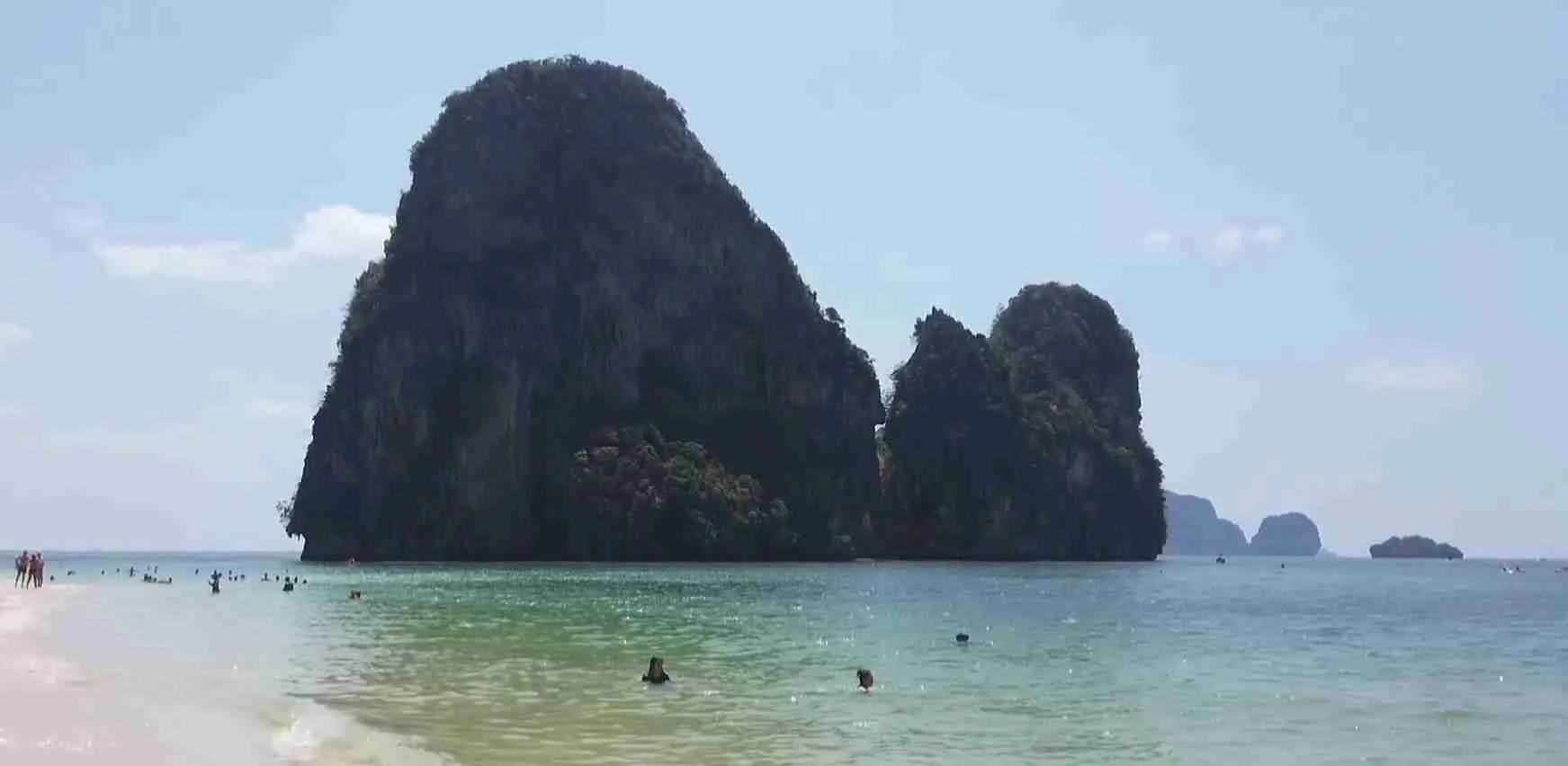
Railay Beach Guide: Thailand’s Rock Climbing Paradise
Railay Beach stands isolated from mainland Thailand by towering 200-meter limestone karsts, creating a peninsula accessible only by longtail boat where over 700 bolted climbing routes scale vertical walls rising directly from white-sand beaches. This unique geography has transformed Railay into Southeast Asia’s premier rock climbing destination, where dramatic overhangs, stalactite-studded cliffs, and routes graded from beginner 5.4 to expert 5.14a attract climbers worldwide to test their skills against some of the planet’s most spectacular limestone formations.
Key Takeaways About Railay Beach
- Geological Isolation: Massive limestone cliffs completely block road access to Railay, making longtail boats from Ao Nang the only entry method — this isolation preserves the peninsula’s pristine beaches and creates the vertical walls that define the climbing experience
- Climbing Diversity: Over 700 established routes span grades 5.4 to 5.14a (French 4a to 8c+), distributed across distinct areas including beginner-friendly Phra Nang Wall, intermediate 123 Wall, and advanced Tonsai Tower with its extreme overhangs
- Four Distinct Beaches: Railay West offers classic tropical beach perfection with sunset views, Phra Nang delivers pristine isolation with the famous fertility cave shrine, Railay East serves as the commercial hub with restaurants and boat docking, while Tonsai Beach attracts hardcore climbers with its laid-back backpacker atmosphere
- Climbing Culture: Multiple internationally-certified climbing schools including Hot Rock, Real Rocks, and Basecamp Tonsai provide instruction from absolute beginner courses through advanced multi-pitch training, with equipment rental and guided climbs available daily
- Beyond Climbing: The peninsula supports diverse activities — kayaking through mangrove channels, hiking to hidden viewpoint lagoons, exploring Diamond Cave’s limestone formations, and swimming in some of Thailand’s most photographed turquoise waters
- Accommodation Spectrum: Options range from budget backpacker bungalows on Tonsai Beach through mid-range Railay East resorts to ultra-luxury Rayavadee’s exclusive beachfront pavilions on Phra Nang, with no roads meaning all supplies arrive by boat
People Also Ask About Railay Beach Rock Climbing
What Makes Railay Beach Famous for Rock Climbing?
Railay Beach achieved world-class climbing status through its unique combination of vertical and overhanging limestone karst formations rising 100-200 meters directly from beach level, creating dramatic routes with breathtaking ocean views. The limestone quality proves exceptional — dense, heavily pocketed rock with natural holds, stalactite features, and the distinctive tufas (calcite formations) that characterize premium sport climbing. Unlike many climbing destinations requiring long approaches, Railay’s routes begin steps from beach sand, with some climbers literally starting climbs in swimwear. The isolation created by surrounding cliffs concentrates the climbing community, fostering a culture where beginners learn beside world-class athletes tackling cutting-edge routes.
Can Beginners Rock Climb at Railay Beach?
Railay welcomes complete beginners with extensive infrastructure designed specifically for first-time climbers. Multiple climbing schools offer half-day and full-day beginner courses covering safety systems, basic technique, equipment use, and supervised climbing on routes graded 5.4-5.7 (French 4a-5a). Phra Nang Wall and the lower sections of 123 Wall feature numerous beginner-appropriate routes with moderate angles, abundant holds, and top-rope setups that eliminate leading requirements. Instructors typically start complete novices on 10-15 meter routes, gradually progressing to 20-25 meter climbs as confidence builds. The tropical setting reduces intimidation factor — falling means safe catches by experienced guides rather than serious consequences, and warm year-round temperatures eliminate the cold-weather discomfort common at many climbing destinations.
How Difficult Are the Hardest Climbing Routes at Railay?
Railay’s most extreme routes reach 5.14a (French 8c+) difficulty, representing world-class challenges that test elite climbers’ limits. Routes like “Humanality” on Tonsai Tower feature severe overhangs requiring exceptional finger strength, technical footwork, and endurance to navigate 30-40 meter pitches where the wall angles past vertical. The Fire Wall sector contains multiple 5.13+ routes with sustained difficulty — climbs where even experienced 5.12 leaders struggle. These advanced routes typically involve dynamic movements between small crimps, powerful roof pulling, and sequences requiring specific beta (movement technique) to unlock cruxes. However, the route density at Railay means climbers at any level find appropriate challenges — the peninsula hosts more moderate 5.10-5.11 routes than extreme test pieces.
What Is the Best Time of Year for Climbing at Railay?
November through March delivers optimal climbing conditions with dry weather, cool mornings (20-25°C), manageable midday temperatures (28-32°C), and calm seas ensuring reliable boat access. These months attract peak crowds but provide perfect friction for limestone climbing, with minimal humidity keeping hands dry. April’s extreme heat (35-38°C) challenges even experienced climbers, as intense sun on exposed walls and high humidity sap energy quickly. May through October brings southwest monsoon rains — mornings often deliver climbable conditions, but afternoon downpours can strand climbers on walls or soak routes. However, Railay features extensive overhanging terrain and cave-like formations that remain dry during rain, allowing year-round climbing with route selection adjusting to conditions. The off-season dramatically reduces crowds and costs while still providing workable climbing windows.
Extended multi-day tours – 5+ days
Featured Krabi Multi-Day Tour Packages
3 days
Krabi 3-Day Discovery Tour
- ✓ Comprehensive Krabi experience
- ✓ Expert local guides included
- ✓ All accommodation included
- ✓ Transportation provided
5 days
Krabi 5-Day Highlights Experience
- ✓ Comprehensive Krabi experience
- ✓ Expert local guides included
- ✓ All accommodation included
- ✓ Transportation provided

7 days
Krabi 7-Day Cultural Journey
- ✓ Comprehensive Krabi experience
- ✓ Expert local guides included
- ✓ All accommodation included
- ✓ Transportation provided

10 days
Krabi 10-Day Complete Adventure
- ✓ Comprehensive Krabi experience
- ✓ Expert local guides included
- ✓ All accommodation included
- ✓ Transportation provided
Multi-day tour packages powered by TourRadar. Prices and availability subject to change.
Introduction: Railay’s Unique Geography and Climbing Heritage
Railay Peninsula occupies less than one square kilometer of limestone karst jutting into the Andaman Sea, separated from mainland Krabi by vertical 200-meter cliffs that make road construction impossible. This geological isolation creates a peninsula that functions like an island — accessible only by longtail boat, yet close enough to shore that the crossing from Ao Nang requires merely 15 minutes. The same limestone formations that isolate Railay from conventional access also create the vertical and overhanging walls that define its character as a climbing destination.
The limestone karsts forming Railay emerged over millions of years through coral reef buildup, tectonic uplift, and erosion by tropical rains. The resulting rock proves ideal for sport climbing — dense enough to hold bolts securely, featured enough to provide natural holds, and weathered into the distinctive pockets, tufas (calcite formations), and stalactites that make limestone climbing distinctive. Unlike granite’s smooth faces or sandstone’s often-fragile texture, Railay’s limestone delivers the perfect combination of sharp edges for crimping, deep pockets for secure grips, and overhanging terrain that rewards technical footwork and body positioning over brute strength.
Climbing development at Railay began in the late 1980s when pioneering climbers including Wee, Luang, and other Thai and Western climbers recognized the potential of the towering walls surrounding the beaches. Early development focused on accessible faces near Railay West and Phra Nang Beach, with climbers hand-drilling bolts and establishing classic routes that remain popular decades later. The 1990s saw exponential growth as word spread internationally about Railay’s combination of world-class climbing and tropical beach paradise setting. By the 2000s, development expanded to more remote areas including Tonsai Tower’s extreme overhangs and the north-facing walls that remain shaded during hot afternoons.
Today, Railay hosts over 700 bolted sport routes distributed across approximately 50 distinct climbing areas. The route density surpasses most comparable-sized climbing destinations — climbers can spend weeks exploring different walls without repeating routes. The majority of routes fall in the 5.9-5.12 range (French 5c-7b), providing abundant challenges for intermediate and advanced climbers, though significant quantities of easier (5.6-5.8) and harder (5.13+) routes ensure all ability levels find appropriate objectives.
What distinguishes Railay from other world-class climbing destinations like Kalymnos (Greece), El Chorro (Spain), or Red River Gorge (USA) is the immediate beach access. Climbers can literally walk from their hotel in swimwear, climb multi-pitch routes with ocean views, and jump into turquoise water to cool off between attempts — a combination unavailable at inland crags. The year-round warm temperatures eliminate seasonal closures common at higher-latitude destinations, and the international climbing community creates an atmosphere where sharing beta, celebrating sends, and socializing across language barriers defines the daily rhythm.
Beyond climbing infrastructure, Railay maintains the natural beauty that first attracted development. Strict regulations limit high-rise construction, preserve beaches from over-development, and protect the mangrove ecosystems on Railay East. The absence of roads means no vehicle noise, minimal light pollution enabling star visibility, and a walking-pace lifestyle that contrasts sharply with Thailand’s more developed beach resorts. This combination — world-class climbing integrated into pristine tropical beaches without roads or mass development — creates Railay’s unique appeal as both adventure destination and relaxation retreat.
The Four Beaches of Railay: Understanding the Peninsula’s Geography
Railay Peninsula divides into four distinct beach areas, each offering different atmospheres, facilities, and climbing access. Understanding these differences proves essential for choosing appropriate accommodation and planning daily activities, as the lack of roads makes beach selection significant for convenience and experience quality.
Railay West Beach: Classic Tropical Paradise
Railay West delivers the postcard-perfect tropical beach experience — 600 meters of white sand curving between towering limestone cliffs, facing west for spectacular sunset views, with warm shallow water ideal for swimming and the majority of tourist infrastructure concentrated behind the beach. This is where most visitors first encounter Railay, as longtail boats from Ao Nang typically dock here first.
The beach quality at Railay West exceeds most Thai beach destinations. Fine white sand (not the coarser texture common at some Andaman beaches) slopes gradually into turquoise water with sandy bottom and minimal rocks, creating safe swimming conditions even for children. The beach width varies with tides — high tide brings water to within 15-20 meters of the tree line, while low tide exposes 40-50 meters of sand. Limestone cliffs frame both ends of the beach, with the massive Thaiwand Wall dominating the northern end as a dramatic backdrop for photography and providing shade during late afternoon.
Behind Railay West, a pedestrian walking street concentrates restaurants, bars, massage shops, minimarkets, and mid-range to upscale hotels. Dining options range from budget Thai food at simple restaurants through beachfront seafood establishments to resort fine dining. The beach itself features beach chair rentals, longtail boat operators offering island tours, and vendors selling drinks and fresh fruit. This commercial development creates convenience but also crowds — December through February sees the beach genuinely busy midday, with finding preferred beach spots requiring early arrival.
For climbers, Railay West provides access to several important walls. The Thaiwand Wall at the beach’s northern end offers intermediate to advanced routes (5.10-5.12) with dramatic exposure and ocean views. Walking paths lead to 123 Wall (one of Railay’s most popular areas), Muay Thai Wall, and connections to Phra Nang Beach. The beach’s central location makes it practical for climbers wanting evening beach relaxation and restaurant access while maintaining proximity to major climbing areas.
Phra Nang Beach: Pristine Beauty and Sacred Cave
Phra Nang Beach represents Railay’s scenic pinnacle — 450 meters of powder-fine sand, crystal-clear shallow water, limestone cliffs providing natural shade, and the famous fertility cave shrine that gives the beach its name. Accessible via 10-minute walk from Railay East or direct longtail boat, Phra Nang delivers more pristine conditions than Railay West, with development limited to the ultra-luxury Rayavadee Resort discreetly integrated into the beachfront.
The beach curves gently between limestone formations, with two small karst islands (Koh Rang Nok and Koh Rang Nai) sitting 100 meters offshore creating iconic photography compositions. At low tide, a sandbar emerges allowing walking to these islands for exploration and snorkeling. The water clarity at Phra Nang typically surpasses other Railay beaches due to minimal boat traffic and the sheltered geography that reduces sediment disturbance. Swimming conditions remain excellent year-round, with gradual depth increases and sandy bottom.
Phra Nang Cave (Tham Phra Nang) occupies the beach’s eastern end, a limestone cavern housing a shrine dedicated to a mythical sea princess. Local legend tells of Princess Phra Nang, daughter of an Indian king, whose boat wrecked near Railay. Fishermen believe her spirit controls sea conditions and fishing success, leaving offerings including carved wooden phalluses seeking fertility blessings and safe ocean passages. The cave provides interesting cultural context and convenient shade during hot afternoons, plus serves as the starting point for popular climbing routes on Phra Nang Wall.
Climbing at Phra Nang centers on the wall adjacent to the cave, featuring extensive beginner and intermediate routes (5.6-5.10) on featured limestone with excellent holds and moderate angles. Climbing schools frequently use Phra Nang Wall for instruction due to its accessibility, variety of route difficulties, and spectacular setting. The beach’s isolation from commercial development creates quieter climbing atmosphere compared to busier areas near Railay West.
The beach experiences significant day-tripper traffic between 11:00 AM-3:00 PM when speedboat tours from Ao Nang and Phi Phi Islands stop as part of island-hopping circuits. During these hours, finding uncrowded beach space requires moving to the northern sections under the trees. Early morning (before 9:00 AM) and late afternoon (after 4:00 PM) deliver the quintessential Phra Nang experience — pristine beach, minimal crowds, and perfect light for photography.
Railay East Beach: Commercial Hub and Boat Landing
Railay East functions as the peninsula’s commercial center despite having the least appealing beach conditions. The “beach” consists primarily of mangrove-lined waterfront unsuitable for swimming, with muddy bottom exposed extensively at low tide. However, Railay East concentrates most budget-to-mid-range accommodation, restaurants, bars, shops, and boat landing facilities, making it the practical hub for daily activities.
A boardwalk promenade stretches along the waterfront, lined with restaurants serving Thai and international cuisine, bars with evening entertainment, minimarkets, massage shops, Muay Thai training gym, tour booking offices, and services including laundry and currency exchange. This concentration creates convenient one-stop access to daily needs without requiring boat trips or long walks. Prices generally run 10-20% lower than equivalent services at Railay West, and the local atmosphere proves more authentic than tourist-focused beachfront areas.
For climbers, Railay East provides several advantages. Budget accommodation concentrates here, with simple bungalows and guesthouses offering the peninsula’s lowest rates. Equipment rental shops supply climbing gear, guidebooks, and local beta (route information). The area’s central position provides easy walking access to both Railay West (5-minute walk through resort paths or jungle trails) and Phra Nang Beach (10-15 minute coastal path walk). Diamond Cave, featuring impressive stalactite and stalagmite formations, sits on the hill above Railay East, accessible via short but steep trail.
The East Railay Viewpoint trail begins near the boardwalk’s southern end, offering one of Railay’s most rewarding hikes. The challenging 45-60 minute climb involves steep sections with fixed ropes, genuine rock scrambling, and significant physical effort, but rewards with 360-degree views across the entire peninsula, surrounding islands, and the Andaman Sea. Beyond the main viewpoint, an additional 30-minute descent leads to a hidden tidal lagoon — a secluded swimming hole surrounded by vertical cliffs accessible only via this challenging trail.
Tonsai Beach: The Climber’s Hideaway
Tonsai Beach occupies Railay’s northern edge, separated from Railay West by jungle-covered hills and accessible via challenging 15-minute jungle trail with rope-assisted rock scrambling sections. This difficult access filters visitors, creating a distinctly different atmosphere focused almost exclusively on climbing and backpacker culture rather than general beach tourism.
The beach itself proves less suitable for swimming than other Railay beaches — rocky bottom, rougher water, and limited sand at high tide reduce its appeal for beach relaxation. However, Tonsai’s strengths lie elsewhere. The massive limestone karsts rising directly behind the beach include some of Railay’s most challenging climbing, particularly Tonsai Tower with its extreme overhangs and routes graded 5.12-5.14. The beach attracts serious climbers pursuing difficult projects, with many spending weeks or months climbing daily and living in budget accommodations.
Accommodation at Tonsai skews heavily budget, with simple bungalows, basic guesthouses, and even climber-friendly camping options creating the lowest-cost lodging on the peninsula. The walking street behind the beach (set back from water by concrete wall constructed for erosion protection) concentrates laid-back bars, reggae music venues, cheap Thai food stalls, and climbing shops. The atmosphere proves distinctly bohemian — dreadlocked climbers discussing beta, international backpackers sharing travel stories, and evening gatherings around beach bars create the antithesis of Railay West’s more polished tourist experience.
For committed climbers, Tonsai offers significant advantages. Immediate access to advanced climbing areas including Tonsai Tower, Fire Wall (featuring some of Railay’s hardest routes), and Dum’s Kitchen saves walking time to distant crags. The climbing community concentration means easy partner finding, beta sharing, and immersion in climbing culture. Budget costs enable extended stays — climbers can base at Tonsai for weeks on modest budgets, climbing daily without the financial pressure that shortens trips elsewhere.
However, Tonsai’s isolation creates challenges. Accessing Railay West requires the jungle trail scramble (difficult with heavy backpacks) or hiring private longtail boat. Evening power availability proves limited, with some accommodations offering electricity only after dark. Restaurant variety pales compared to Railay East or West. The swimming limitations mean climbers wanting beach relaxation must walk to other beaches. These factors make Tonsai ideal for climbers prioritizing route access and budget over creature comforts and beach quality.
Rock Climbing at Railay: Routes, Areas, and Difficulty Grades
Railay’s climbing landscape spans over 700 bolted sport routes distributed across approximately 50 distinct areas, with route concentrations around Railay West, Phra Nang, and Tonsai. Understanding the major climbing areas, route characteristics, and grading systems enables climbers to select appropriate objectives matching skill levels and climbing styles.
Understanding Climbing Grades and Route Difficulty
Railay routes use two primary grading systems. The YDS (Yosemite Decimal System) common in North America rates routes from 5.4 (easiest) through 5.15 (world’s hardest), with subdivisions (5.10a, 5.10b, etc.) providing finer difficulty distinctions. The French sport climbing system runs from 4a through 9c, with roughly parallel difficulty to YDS. Railay guidebooks and local beta typically reference both systems.
Approximate grade conversions: 5.6 = 4c, 5.7 = 5a, 5.8 = 5b, 5.9 = 5c, 5.10a-b = 6a, 5.10c-d = 6b, 5.11a-b = 6c, 5.11c-d = 7a, 5.12a-b = 7b, 5.12c-d = 7c, 5.13a-b = 8a, 5.13c-d = 8b, 5.14a = 8c. However, grade perceptions prove subjective — climbers accustomed to gym climbing or sandstone often find Railay limestone routes harder than equivalent gym grades, while experienced limestone climbers may find routes soft.
Route lengths at Railay typically range 15-40 meters for single-pitch climbs, with some multi-pitch routes extending 60-80 meters requiring 60-70 meter ropes. The predominance of single-pitch sport climbing means most routes involve leading 20-30 meters, clipping 8-12 bolts, reaching chain anchors, lowering back to ground, then moving to next route. This format proves ideal for working multiple routes in single session, attempting difficult moves repeatedly, and maximizing variety during limited climbing time.
Phra Nang Wall: Beginner-Friendly Classic
Phra Nang Wall occupies the limestone cliff adjacent to Phra Nang Cave, offering Railay’s highest concentration of beginner and lower-intermediate routes in spectacular beachfront setting. The wall features 30+ established routes ranging 5.6-5.11 (French 4c-6c), with the majority falling in the accessible 5.7-5.9 range perfect for climbers with 6-12 months experience.
The limestone quality at Phra Nang proves excellent — featured rock with abundant natural holds, pockets providing secure grips, and positive edges rewarding precise footwork. Route angles tend toward vertical to slightly overhanging (10-15 degrees past vertical), creating moderate pump factor without the extreme steepness that exhausts beginners. Route lengths average 20-25 meters, with bolting spaced 2-3 meters providing good protection without excessive clip frequency.
Popular beginner routes include several 5.6-5.7 climbs featuring large holds, straightforward sequences, and forgiving grades allowing climbers to move confidently. As ability increases, the wall offers natural progression — 5.8 routes introduce smaller holds and technical sequences, 5.9-5.10 routes require better footwork and endurance, while a few 5.11 test pieces provide challenges for climbers ready to push grades.
Climbing schools heavily utilize Phra Nang Wall for instruction due to the combination of route variety, easy beach access, spectacular scenery, and moderate angles reducing intimidation for first-time climbers. The wall can become crowded midday December-February when multiple schools operate simultaneously, but early morning or late afternoon sessions typically find less competition for routes. The beachfront location enables easy transitions between climbing and swimming, with ocean dips providing welcome cooling between attempts.
123 Wall: Classic Multi-Grade Sector
123 Wall represents one of Railay’s most popular and developed areas, featuring 40+ routes spanning 5.7-5.13 with exceptional route quality and variety. Located between Railay West and Phra Nang, accessible via 10-minute walk from Railay West Beach, the wall delivers concentrated climbing across all intermediate grades.
The sector’s name derives from “123,” a classic multi-pitch route originally climbed in three 50-meter pitches before modern 60-70 meter ropes enabled combining the first two pitches. The route’s lower pitches offer moderate climbing (5.8-5.9) on featured limestone, while the upper headwall delivers the technical crux sequences that make “123” a Railay classic. The route finishes 60 meters above ground in a cave with stunning views across Railay Bay.
Beyond the namesake route, 123 Wall hosts numerous quality single-pitch climbs. “Massage Secrets” (5.10c) delivers 30 meters of technical movement on vertical wall requiring precise footwork and endurance. Several 5.11-5.12 routes provide challenges for climbers pushing into advanced grades, with sustained difficulty, small holds, and sequences requiring specific beta to unlock. The wall’s sheltered position means many routes remain dry during light rain, enabling climbing during marginal weather when exposed walls run wet.
The approach to 123 Wall involves gentle uphill walk through jungle paths, with the wall situated slightly inland providing afternoon shade during hot season. This makes 123 Wall particularly valuable April-May when direct sun on beachfront crags creates uncomfortably hot conditions. Multiple guide services offer courses and guided climbs at 123 Wall, and the area’s popularity means finding climbing partners proves easy — simply arrive and observe which routes see active climbing.
Thaiwand Wall: Dramatic Exposure and Ocean Views
Thaiwand Wall dominates Railay West’s northern end as the massive limestone formation framing the beach, featuring 20+ routes ranging 5.9-5.12 with spectacular exposure and breathtaking ocean views. The wall’s seaside position creates dramatic climbing — routes ascend vertical to overhanging limestone directly above the beach, with climbers 40-60 meters up enjoying panoramic Andaman Sea vistas while working crux sequences.
Route character at Thaiwand emphasizes technical movement over raw power. The limestone features abundant pockets, edges, and tufas requiring precise foot placements, creative body positioning, and reading sequences to move efficiently. Multiple 5.10-5.11 routes deliver moderate endurance challenges, with continuous movement for 30-40 meters requiring fitness but remaining within intermediate climber capabilities. The few 5.12 routes introduce genuine difficulty — smaller holds, fewer rest stances, and sections demanding dynamic moves between distant grips.
The wall’s exposure proves simultaneously intimidating and exhilarating. Climbers 20 meters up already clear the tree line, with ocean and beach visible below. At 40+ meters on longer routes, the elevation creates genuine exposure sensation — though sport climbing safety systems (bolts every 2-3 meters, competent belayers) make falls safe, the height and air beneath climbers generates psychological challenge beyond the physical difficulty. This exposure attracts photographers, as climbers silhouetted against ocean and sky create dramatic images.
Thaiwand’s beachfront location creates both advantages and challenges. Easy access from Railay West Beach enables quick transitions between beach relaxation and climbing. However, direct afternoon sun during hot season makes the wall uncomfortably hot 1:00-4:00 PM, with limestone absorbing heat and radiating warmth that saps energy. Morning and late afternoon sessions prove optimal, with east-facing exposure catching morning sun and providing perfect afternoon shade.
Tonsai Tower and Fire Wall: Advanced Challenges
Tonsai Tower and the adjacent Fire Wall sector represent Railay’s most extreme climbing, featuring severely overhanging routes graded 5.12-5.14 that test elite climbers’ limits. These areas attract climbers pursuing project-level difficulties — routes requiring multiple attempts, specific beta refinement, and peak physical conditioning to complete.
Tonsai Tower’s signature route “Humanality” (5.13c) epitomizes the area’s character — 35 meters of continuous overhang with small crimps, powerful moves between distant holds, and technical sequences demanding precise body tension and footwork. The route sees climbers from worldwide hanging draws (pre-placing quickdraws on bolts) to work individual sections, spending days or weeks refining beta before clean ascents. Several other 5.13 routes provide similar challenges, with the common thread being sustained difficulty — no easy sections to rest, continuous movement through powerful terrain.
Fire Wall hosts multiple 5.13+ routes representing Railay’s cutting edge. These climbs feature tiny holds, desperate reaches between pockets, roof pulling requiring exceptional core strength, and sequences where beta proves essential — attempting wrong movement patterns results in frustrating failure regardless of strength. Advanced climbers spend weeks attempting Fire Wall projects, celebrating successful ascents as significant achievements validating months of training.
The physical demands of Tonsai Tower and Fire Wall climbing extend beyond individual route difficulty. The sustained overhanging angles create powerful pump (forearm fatigue), requiring climbers to climb efficiently, find rest positions, and manage energy carefully. The small holds demand finger strength developed through years of climbing progression. The technical sequences require movement vocabulary learned across hundreds of routes at lower grades. These factors make Tonsai’s hardest routes genuinely elite-level climbing accessible to very small percentages of climbers.
For climbers not pursuing 5.13+ objectives, Tonsai Tower and Fire Wall still offer value through spectating. Watching elite climbers work hard routes provides education in movement technique, beta reading, and what advanced climbing demands. The areas’ concentration of serious climbers creates community atmosphere, with international climbers sharing rest days, discussing training, and celebrating each other’s successes regardless of nationality or background.
Other Notable Climbing Areas
Beyond the major sectors, Railay features numerous smaller areas providing climbing variety and escape from crowds. Hidden World Wall contains 15+ routes (5.9-5.12) in a sheltered amphitheater accessible via 20-minute jungle trail, delivering excellent climbing with minimal crowds. Muay Thai Wall near Railay West offers moderate routes (5.8-5.10) ideal for climbers progressing beyond beginner grades. Diamond Cave sector above Railay East provides shaded afternoon climbing when other walls bake in sun.
Ao Nang mainland, reached via 15-minute longtail boat from Railay, hosts additional climbing areas including the North Wall and Chong Phli sectors. These areas receive less traffic than Railay proper, offering climbers seeking solitude alternatives to popular peninsula crags. However, mainland climbing requires separate boat transport and less convenient access compared to Railay’s walk-up areas.
Climbing Courses and Instruction: Learning to Climb at Railay
Railay’s climbing school infrastructure rivals world-class destinations like Kalymnos or Fontainebleau, with multiple internationally-certified operators providing instruction from absolute beginner through advanced technique courses. This comprehensive instruction network makes Railay ideal for learning to climb or improving existing skills in tropical paradise setting.
Beginner Climbing Courses: Introduction to Sport Climbing
Half-day beginner courses provide the most accessible entry point for people who have never climbed. These 4-5 hour sessions cover fundamental safety systems, basic movement technique, equipment use, and supervised climbing on beginner-appropriate routes. Typical course structure begins with ground-based instruction explaining harness fitting, knot tying (figure-eight follow-through, primary climbing knot), belay device operation, and communication commands between climber and belayer.
After safety instruction, courses move to the wall — typically Phra Nang Wall or lower sections of 123 Wall offering routes in the 5.6-5.8 range. Instructors demonstrate basic movement principles including using feet effectively (placing full foot sole on holds rather than tiptoeing), maintaining three points of contact, keeping hips close to wall for balance, and looking ahead to plan sequences. Complete beginners typically attempt 3-5 routes during half-day sessions, progressing from very easy climbs to moderately challenging routes as confidence develops.
The instructor-to-student ratio critically affects learning quality. Premium schools maintain 1:2 or 1:3 ratios (one instructor per 2-3 students), enabling personalized attention, immediate feedback, and rapid skill development. Budget operators may group 4-6 students per instructor, reducing individual attention but maintaining adequate safety supervision. Private instruction (1:1 ratio) maximizes learning efficiency but costs significantly more than group courses.
Full-day beginner courses extend the half-day curriculum, providing more time for route attempts, progression to harder grades, and introduction to additional techniques. After morning climbing sessions on easier routes, instructors typically move groups to different areas or slightly harder routes, enabling students to apply learned techniques across varied terrain. Lunch breaks provide opportunity to observe other climbers, discuss technique questions, and rest before afternoon sessions.
Advanced Courses: Multi-Pitch and Lead Climbing
For climbers with top-rope experience seeking to develop lead climbing skills, Railay’s schools offer specialized courses teaching rope management, clip technique, fall practice, and mental approaches to leading. Lead climbing — where climbers clip the rope through bolts as they ascend rather than being belayed from above — represents the standard format for sport climbing and opens access to routes where top-rope setup proves impractical.
Lead courses typically require students to demonstrate competence top-roping routes in the 5.8-5.10 range before attempting leads. Instruction begins with ground-based practice — clipping quickdraws correctly, managing rope drag, and understanding fall factors (how far climbers fall relative to last clipped bolt). Actual lead attempts start on very easy routes (5.6-5.7) where climbing difficulty poses no challenge, allowing complete focus on clip technique and rope management. As confidence builds, students progress to routes approaching their top-rope maximum grade.
Multi-pitch climbing courses teach techniques for climbing routes longer than single rope length, requiring climbers to build anchors, belay from the wall, and manage systems across multiple pitches. These courses typically use Railay’s classic multi-pitch routes including “123” and others offering 60-80 meter total climbing. Skills covered include efficient anchor building, rope management on ledges, communication in multi-pitch environment, and rappelling (abseiling) descent techniques.
Major Climbing Schools and Instruction Providers
Hot Rock Climbing School, established 1994 as Railay’s original climbing school, operates from Railay West Beach and maintains reputation for quality instruction and safety standards. The school offers complete beginner courses, advanced instruction, and guided climbing with experienced instructors including founding members who participated in Railay’s early climbing development. Equipment quality proves excellent, with well-maintained harnesses, shoes, and ropes replaced regularly for safety.
Real Rocks Climbing School distinguishes itself through international certification programs — instructors hold qualifications enabling them to issue Sport Climbing Certifications recognized globally. The school emphasizes small group sizes (maximum 3 students per instructor for beginner courses) and offers both standard courses and customized private instruction. Real Rocks operates from both Railay West and Railay East, providing convenient access regardless of accommodation location.
Basecamp Tonsai serves climbers staying at Tonsai Beach, specializing in courses for climbers pursuing advanced grades and multi-day skill development. The school’s Tonsai location provides immediate access to challenging routes, and instructors familiar with area’s harder climbs offer valuable beta for climbers working on project-level difficulties. Basecamp also offers equipment rental, guidebook sales, and serves as community hub for Tonsai’s climbing scene.
Highland Rock Climbing and King Climbers round out Railay’s instruction options, each offering beginner through advanced courses with qualified instructors. Comparing schools proves valuable — course prices, instructor-to-student ratios, equipment quality, and teaching approaches vary. Reading recent reviews, visiting schools in person to observe instruction quality, and asking questions about instructor certifications helps identify best fit for individual learning styles and budgets.
Equipment Rental and Guided Climbing
For experienced climbers visiting Railay without personal equipment, multiple rental shops provide complete climbing gear. Standard rental packages include harness, climbing shoes, chalk bag, belay device, and helmet, with prices typically covering full-day use. Rope rental and quickdraw sets available for climbers planning independent leading. Equipment quality varies between shops — inspect harnesses for wear, ensure shoes fit properly, and verify belay devices function smoothly before committing to rentals.
Guided climbing services suit experienced climbers wanting local knowledge, access to best routes for their grade, and convenience of professional guide handling logistics. Guides recommend appropriate routes matching ability levels, provide beta for difficult sequences, share local climbing culture knowledge, and handle equipment setup. For visiting climbers with limited time, hiring guide maximizes climbing quality by efficiently accessing best routes without time spent researching, getting lost, or attempting inappropriate climbs.
Beyond Climbing: Activities and Attractions at Railay
While rock climbing dominates Railay’s identity, the peninsula offers diverse activities for rest days, non-climbing partners, and visitors seeking tropical beach experiences beyond vertical limestone walls.
Beach Activities and Swimming
Railay’s beaches provide world-class swimming conditions from November through April when calm seas, warm water (28-30°C year-round), and minimal currents create safe environments for all swimming abilities. Railay West and Phra Nang Beach offer the best swimming — white sand, gradual depth increases, clear water visibility, and lifeguard presence during peak season. The shallow water extending 30-50 meters from shore proves ideal for children and non-confident swimmers.
Snorkeling around Railay delivers moderate quality — the immediate beachfront areas lack significant coral due to boat traffic and beach proximity, but swimming 100-200 meters offshore or kayaking to the small karst islands off Phra Nang Beach accesses better fish populations and coral formations. The two small islands (Koh Rang Nok and Koh Rang Nai) off Phra Nang feature coral around their bases supporting tropical fish including parrotfish, angelfish, and occasional barracuda. Bring personal snorkeling equipment or rent from beach vendors, as water clarity and fish populations reward the minimal effort.
Stand-up paddleboarding (SUP) and kayaking rentals operate from Railay West, offering peaceful exploration of the coastline’s limestone formations, hidden caves, and mangrove channels. Paddling around Railay Peninsula reveals perspectives impossible from land — sea caves, natural arches, and the dramatic scale of cliffs rising 200 meters directly from water. Early morning SUP sessions deliver glass-calm water and sunrise light painting cliffs gold-orange, creating meditative experiences contrasting sharply with climbing’s adrenaline.
Viewpoint Hike and Hidden Lagoon
The Railay East Viewpoint trail represents one of Thailand’s most rewarding short hikes, delivering extraordinary views for relatively brief effort. The trail begins near Railay East boardwalk’s southern end, marked by signs warning of steep terrain and requiring proper footwear. The 45-60 minute ascent involves genuine rock scrambling with fixed ropes assisting steepest sections, roots and rocks creating obstacles, and elevation gain approaching 200 meters.
The effort rewards with 360-degree panoramas encompassing all four Railay beaches, surrounding limestone karsts, nearby islands, and the Andaman Sea stretching to horizon. The viewpoint platform provides space for resting, photography, and absorbing the spectacular geography that makes Railay unique. Sunrise visits prove particularly magical, with early morning light illuminating beaches and islands while most tourists sleep, though the pre-dawn ascent requires headlamps and careful footing on dark trails.
Beyond the main viewpoint, an additional 30-minute descent leads to Railay’s hidden lagoon — a tidal pool surrounded by vertical cliffs, accessible only via this challenging trail or technical rock climbing from below. The descent proves more difficult than the ascent, with steeper sections, less secure footing, and exposure requiring careful movement. The lagoon itself offers unique swimming — brackish water (mixing fresh rainwater with seawater), 100% seclusion from other beach visitors, and the surreal experience of floating in a limestone amphitheater with sky visible only directly overhead. Low tide timing proves essential, as high tide fills the access paths making descent dangerous.
Princess Cave Cultural Experience
Phra Nang Cave provides cultural insight beyond typical beach tourism, housing the fertility shrine dedicated to the mythical sea princess. The cave occupies the cliff at Phra Nang Beach’s eastern end, accessible via short walk from beach. Inside, hundreds of carved wooden phalluses in various sizes create the shrine’s distinctive feature, left by fishermen and couples seeking fertility blessings and safe sea passages.
Local legend explains the offerings’ origins. Princess Phra Nang, daughter of an Indian king, suffered shipwreck near Railay while traveling to marry a prince. Drowning during the storm, her spirit took residence in the cave, becoming guardian of the sea and fishing grounds. Fishermen began leaving offerings — initially food and incense, later evolving to phallus carvings as symbols of life, fertility, and respect for the princess’s power over marine conditions. Today the tradition continues, with new offerings appearing regularly alongside weathered ancient carvings.
Beyond the shrine’s cultural interest, the cave provides geological education. The limestone formations reveal millions of years of coral reef buildup, tectonic uplift, and erosion creating the karst geography. Stalactites hang from ceiling, formed by mineral-rich water dripping over centuries. The cave mouth frames Phra Nang Beach perfectly, creating natural photography compositions and afternoon shade escaping midday heat.
Diamond Cave Exploration
Diamond Cave (Tham Phra Nang Nai) sits inland above Railay East, accessed via steep trail from the boardwalk requiring 15-20 minutes walking. The cave features extensive stalactite and stalagmite formations, calcite deposits sparkling in light (creating the “diamond” name), and multiple chambers connected by walkways and stairs. The cave depth extends 100+ meters into the limestone cliff, with electric lighting illuminating formations along the tourist path.
Geological formations inside Diamond Cave demonstrate millions of years of limestone deposition and erosion. Stalactites (hanging from ceiling) and stalagmites (growing from floor) form when mineral-rich water drips through limestone, leaving calcium carbonate deposits that build 1-2 centimeters per century. Some formations meet, creating columns spanning floor to ceiling. The cave’s various chambers display different formation stages, from young needles just beginning growth to massive ancient columns multiple meters diameter.
Small entrance fee charged at cave entrance funds maintenance and lighting system. The cave’s cool interior (23-25°C versus 30-35°C exterior temperatures) provides welcome relief during hot season afternoons, making it pleasant rest-day activity when climbing proves too hot. Photography inside requires flash or high ISO settings, as ambient lighting proves dim despite electrical illumination. The cave rarely sees crowds — visiting early morning or late afternoon ensures peaceful exploration.
Day Trips and Island Hopping
Railay’s location provides easy access to classic Krabi island tours, with longtail boats and speedboats departing Railay West for day trips to Phi Phi Islands, Hong Islands, and the famous 4 Islands circuit (Poda Island, Chicken Island, Tup Island, and returning via Phra Nang Beach). These tours operate year-round with best conditions November-April, providing variety for non-climbing days or when weather conditions prevent climbing.
The 4 Islands tour represents the most accessible option — half-day trips departing morning, visiting nearby islands for swimming and snorkeling, returning early afternoon. Phi Phi Islands require full-day commitments due to 45-kilometer distance, but reward with famous Maya Bay (The Beach film location), Viking Cave, Monkey Beach, and excellent snorkeling. Hong Islands tours explore the dramatic hidden lagoon accessible through narrow channel, stunning beaches, and superior coral reefs attracting serious snorkelers.
Booking island tours proves straightforward — multiple operators maintain booking offices on Railay West’s walking street, displaying tour options, prices, and departure times. Comparing offerings identifies best value, as tour quality and pricing vary. Group tours provide economical options but operate on fixed schedules with potential crowds. Private longtail charters cost more but enable customized itineraries, flexible timing, and avoiding tour group congestion at popular stops.
Practical Information: Getting to Railay and Daily Logistics
Railay’s boat-only access creates unique logistics requiring advance planning. Understanding transportation options, timing considerations, and daily practicalities ensures smooth experiences rather than frustrating complications.
Getting to Railay: Boat Access from Ao Nang
Longtail boats represent the exclusive transportation method to Railay, operating shared service from Ao Nang Beach covering the 15-minute crossing. The boats depart from Ao Nang’s eastern end near Nopparat Thara junction, marked by longtail boat service counters selling tickets. Standard daytime service operates approximately 8:00 AM-6:00 PM, with boats departing when 6-10 passengers fill or at regular intervals during busy periods.
Boat destinations matter significantly — request specifically “Railay West” or “Railay East” depending on accommodation location, as boats land at different beaches. Phra Nang Beach receives some direct service but less frequency than Railay West. Tonsai Beach requires specifically requesting Tonsai destination, as most boats default to Railay West without explicit instruction. Clarifying destination prevents arriving at wrong beach and requiring additional boat transfers or difficult jungle trail crossings with luggage.
After-hours boat service (approximately 6:00 PM-midnight) operates at premium pricing and less reliable schedules. Evening boats may charge per-person premiums or require private charter if passenger numbers insufficient. Planning activities to return before standard service ends avoids evening price premiums and potential waits for boats to fill. Truly late-night arrivals (after midnight) require arranging private boat transfers in advance, as no regular service operates deep into night.
Weather conditions significantly impact boat operations. Rough seas during monsoon season (May-October) sometimes prevent boat service entirely, with operators refusing crossings when swells exceed safe limits. Travelers should maintain flexibility during monsoon months, avoiding absolutely rigid schedules that cannot accommodate weather-related delays. Checking conditions with boat operators before committing to travel prevents showing up for boats that won’t operate.
Alternative Access: Boat from Krabi Town
Boats from Krabi Town’s Ao Nam Mao Pier reach Railay East Beach via 45-minute journey, providing alternative access particularly useful for travelers staying at Railay East accommodations. The longer crossing requires larger vessels, operating less frequent schedules than Ao Nang boats but covering greater distance directly without requiring intermediate transport to Ao Nang.
This route proves valuable for travelers arriving Krabi Airport late or departing early, as Krabi Town sits closer to airport than Ao Nang. However, the reduced frequency demands planning around boat schedules rather than flexible departure timing available from Ao Nang’s constant service. Clarifying schedule with hotels or pier operators before traveling prevents showing up for non-existent boats.
Getting Around Railay: Walking Paths and Jungle Trails
The absence of roads on Railay creates car-free environment navigated entirely on foot via beach paths, resort walking streets, and jungle trails. Walking between Railay West and Railay East requires 5-10 minutes through resort grounds (following established paths that resorts maintain for guest and visitor access) or slightly longer jungle trails avoiding resorts. Railay East to Phra Nang Beach involves 10-15 minute coastal path walk with some sections requiring rock hopping at high tide.
The Tonsai Beach connection presents the only genuinely difficult walking route — 15-20 minute steep jungle trail with rope-assisted rock scrambling sections unsuitable for flip-flops or with heavy luggage. The trail requires proper footwear (closed-toe shoes with grip), reasonable fitness, and careful attention to route-finding at several junctions. Travelers planning Tonsai stays should minimize luggage or arrange longtail boat transfer directly to Tonsai Beach rather than attempting the challenging overland route with backpacks.
Nighttime walking requires flashlights or phone lights, as paths receive no artificial lighting. The limestone terrain creates tripping hazards — roots, rocks, uneven surfaces — invisible in darkness. Late-night returns from restaurants or bars require caution, particularly after alcohol consumption increases fall risk. Headlamps prove superior to handheld flashlights, keeping hands free for balance on challenging sections.
Daily Logistics: Money, Food, and Essential Services
ATMs exist at several Railay locations but operate less reliably than mainland machines. Railay West’s Bobo’s Market contains ATM, and another near minimart on path between Railay West and East. However, machines sometimes run empty during peak season or experience technical problems. Bringing sufficient cash from Ao Nang or Krabi Town prevents ATM-related frustrations. Thai baht remains the exclusive currency — credit cards accepted at upscale restaurants and hotels but most shops, food vendors, and activities require cash.
Dining options span budget to luxury. Railay East’s boardwalk concentrates budget Thai food, with simple meals at small restaurants costing similar to mainland Thailand prices. Railay West’s beachfront establishments charge tourist premiums but deliver superior ambiance with ocean views and sunset backdrops. Phra Nang Beach features minimal dining — longtail boats anchored on sand operate floating kitchens at lunch serving Thai dishes and fresh fruit shakes, while Rayavadee Resort’s restaurants serve upscale cuisine at matching prices.
Minimarkets sell snacks, drinks, basic toiletries, and limited supplies at prices 20-40% above mainland 7-Eleven stores. The boat-only access and limited shelf space drive premiums. Travelers planning extended stays can save substantially by purchasing supplies (sunscreen, insect repellent, drinks, snacks) before boat transfers rather than paying Railay markups.
Laundry services operate from multiple shops, with typical pricing per kilogram and 24-hour turnaround. Water refill stations enable travelers with reusable bottles to avoid purchasing disposable bottles. Basic medical care available at small clinic on Railay East for minor injuries, sunburn treatment, and common medications, though serious conditions require boat transfer to Krabi hospitals.
Where to Stay at Railay: Accommodation Guide
Accommodation on Railay ranges from budget backpacker bungalows to ultra-luxury resort pavilions, with location choice (Railay West, East, or Tonsai) significantly affecting both atmosphere and daily convenience.
Budget Accommodation: Hostels and Simple Bungalows
Budget options concentrate at Railay East and Tonsai Beach, where simple bungalows and guesthouses provide basic shelter at accessible prices. These accommodations typically feature fan-cooled rooms (some offer air-conditioning at premium), shared or private bathrooms with cold-water showers, basic furnishings, and minimal amenities. Railay East budget properties often include small restaurants and common areas encouraging guest interaction, creating social atmosphere popular with backpackers and young climbers.
Tonsai Beach delivers Railay’s absolute budget accommodation, with very simple bungalows, camping options, and even hammock rentals creating ultra-low-cost bases for climbers on shoestring budgets. These properties sacrifice comfort for affordability and immediate climbing access. Expect basic conditions — irregular power (often evening-only), cold showers, thin walls, and minimal soundproofing. However, the trade-off enables extended stays for climbers wanting to spend weeks projecting routes without depleting savings.
Budget accommodation quality varies significantly — newer properties maintain better conditions than aging facilities showing wear. Reading recent reviews, visiting properties personally before committing, and clarifying amenities (air-conditioning status, hot water availability, WiFi access) prevents disappointment. During peak season (December-February), budget properties book solid despite basic conditions, requiring advance reservations. Low season (May-October) enables walk-up availability and often negotiated rates below posted prices.
Mid-Range Hotels: Comfort and Convenience Balance
Mid-range accommodation distributes across all three main areas (Railay West, East, and to lesser extent Tonsai), offering air-conditioned rooms, hot water, WiFi, swimming pools, on-site restaurants, and professional service at moderate pricing. These properties suit travelers wanting creature comforts without luxury resort costs, families needing reliable amenities, and climbers preferring relaxation after climbing days.
Railay West’s mid-range hotels provide beach proximity, sunset views, and walking access to restaurants and tour operators. Properties range from simple hotels with clean rooms and basic pools to more upscale establishments approaching boutique quality. The Railay West location enables easy evening beach walks, sunset watching, and socializing at beachfront bars. However, the area sees higher noise levels from restaurants and bars operating until late.
Railay East mid-range hotels trade beach views for lower costs and quieter atmospheres. Properties along the boardwalk overlook mangroves rather than swimming beaches, but the central location provides convenient access to restaurants, shops, and paths to other beaches. Some hotels on hillsides above Railay East deliver views across the bay while maintaining peaceful settings away from boardwalk activity.
Luxury Resorts: Premium Railay Experiences
Upscale resorts concentrate at Railay West, offering beachfront locations, spacious rooms with balconies, premium bedding, well-designed bathrooms, infinity pools, spa facilities, multiple restaurants, and attentive service. These properties cater to honeymoon travelers, families seeking hassle-free vacations, and visitors prioritizing relaxation over budget considerations.
Rayavadee Resort represents Railay’s pinnacle luxury, occupying exclusive peninsula between three beaches with private access to Phra Nang Beach. The resort’s pavilion-style accommodations feature contemporary Thai design, outdoor bathrooms, private terraces, and integration into coconut grove and tropical gardens. Multiple restaurants serve Thai and international cuisine, the spa offers comprehensive treatments, and the beachfront setting delivers absolute privacy. However, this exclusivity commands premium pricing significantly above other Railay accommodations.
Frequently Asked Questions About Railay Beach
How long should I stay at Railay Beach?
Three to five days enables meaningful Railay experience covering multiple climbing areas, visiting all beaches, attempting the viewpoint hike, and enjoying beach relaxation without rushing. Serious climbers often stay 1-2 weeks working on progression through different route grades, while casual visitors find 2-3 days sufficient for sampling climbing, exploring beaches, and experiencing the island atmosphere. The boat-only access and concentrated activities make Railay practical for short stays, unlike destinations requiring extensive travel between scattered attractions. However, the quality climbing and beach beauty often inspire extended stays beyond initial plans — travelers frequently add days after experiencing Railay’s appeal.
Is Railay Beach suitable for families with children?
Railay accommodates families well, particularly those staying at Railay West or East where beaches offer safe swimming, calm water, and gradual depth increases. The car-free environment eliminates traffic dangers, creating safe environment for children to roam. However, the challenging terrain (rocky paths, steep trails, limited flat areas for ball games or running) and climbing-focused atmosphere mean Railay suits families with children comfortable in natural settings rather than those wanting playgrounds and structured kids’ activities. Rock climbing schools offer beginner courses for children as young as 5-6 years, providing unique family activities beyond typical beach tourism. The boat access creates minor complication with young children and strollers — plan light packing and prepare for getting feet wet during beach landings.
Can you visit Railay Beach as a day trip?
Day trips from Ao Nang to Railay prove entirely practical and popular. Depart Ao Nang morning via longtail boat, spend 6-8 hours exploring Railay’s beaches, attempting beginner climbing course, hiking viewpoint trail, or simply relaxing at Phra Nang Beach, then return late afternoon. However, day-tripping limits Railay experience — the beaches empty after 4:00 PM when tour groups depart, sunset at Railay West proves spectacular, and staying overnight enables early morning climbing before heat and crowds. Consider day trips for initial reconnaissance before committing to overnight stays, or when Ao Nang accommodations prove significantly cheaper making day-trip economics favorable despite missing evening atmosphere.
What climbing equipment do I need to bring to Railay?
Experienced climbers planning extensive independent climbing benefit from bringing personal harness and climbing shoes, as repeated rentals cost adds up during multi-day stays and personal gear fits better than rental alternatives. Harnesses and shoes fit in carry-on luggage without excessive weight penalties. However, ropes, quickdraws, helmets, and chalk bags prove impractical to travel with — rental shops provide these items at reasonable daily rates. Complete beginners taking climbing courses receive all necessary equipment from schools, requiring no personal gear beyond athletic clothing and closed-toe shoes for approaches. Sunscreen, insect repellent, and reusable water bottles prove essential regardless of climbing plans, as tropical sun, mosquitoes, and dehydration challenge unprepared visitors.
Is Railay Beach crowded?
Crowding at Railay varies dramatically by season, time of day, and specific beach location. December-February peak season sees genuinely crowded conditions on popular beaches, particularly Phra Nang Beach and Railay West between 11:00 AM-3:00 PM when day-trippers join overnight guests. Popular climbing areas like Phra Nang Wall and 123 Wall can have queues for routes. However, early morning (before 9:00 AM), late afternoon (after 4:00 PM), and evening hours deliver much quieter experiences, as day-trippers depart and crowds disperse. May-October low season dramatically reduces visitor numbers — beaches that feel crowded in January sit nearly empty in June. Tonsai Beach maintains relatively quiet atmosphere year-round due to difficult access filtering casual visitors. Strategic timing and willingness to explore lesser-known beaches and climbing areas enable peaceful experiences even during busy seasons.
Can I swim at all Railay beaches?
Swimming quality varies significantly between Railay’s beaches. Railay West and Phra Nang Beach offer excellent swimming with white sand, clear water, gradual depth increases, and sandy bottoms ideal for swimming year-round. Railay East proves unsuitable for swimming — mangrove-lined shore, muddy bottom, and extensive low-tide exposure make it unappealing despite water access. Tonsai Beach presents swimming challenges due to rocky bottom, rougher water, and limited sandy beach at high tide, though strong swimmers occasionally venture in. For safe, enjoyable swimming, focus on Railay West and Phra Nang Beach, which deliver the quintessential tropical swimming experiences that attract visitors worldwide.
Are there ATMs on Railay Beach?
Several ATMs operate on Railay, with machines located at Bobo’s Market on Railay West and near minimarts on paths between beaches. However, ATM reliability proves inconsistent — machines run empty during peak season, experience technical problems, or charge higher withdrawal fees than mainland ATMs. Bringing sufficient Thai baht cash from Ao Nang or Krabi Town before boat transfers prevents ATM-related inconveniences. Most Railay vendors, restaurants, climbing schools, and tour operators accept only cash, not credit cards, making adequate cash supplies essential. Plan daily budgets accounting for dining, activities, boat transfers, and emergencies, bringing 20-30% more than calculated minimum to cover unexpected expenses.
What should I pack for climbing trip to Railay?
Essential climbing-specific items include comfortable athletic clothing (shorts, t-shirts, sports bras), athletic shoes for approaches and hiking, sunscreen SPF 50+ applied liberally and reapplied frequently, insect repellent containing DEET, reusable water bottles (2-3 liters capacity for full climbing days), and basic first-aid supplies for treating scrapes and blisters. Personal climbing shoes and harness prove valuable for extended stays but not essential given quality rental availability. Chalk bags and climbing-specific accessories can be purchased locally at reasonable prices. Beyond climbing gear, pack swimwear for beach time, lightweight rain jacket for monsoon season, headlamp for nighttime path navigation, and modest clothing for temple visits or cultural sites. Leave valuables, expensive jewelry, and excessive clothing at home — Railay’s casual atmosphere requires minimal wardrobe, and the boat-only access makes luggage weight considerations important.
Is Railay Beach safe for solo travelers?
Railay proves very safe for solo travelers, including solo women, with low crime rates, friendly local community, and international atmosphere fostering easy social connections. The climbing community particularly welcomes solo travelers, as routes require partners for belaying creating natural opportunities to meet people. Climbing schools’ group courses enable meeting fellow climbers, and hostel common areas facilitate social interaction. Standard travel safety practices apply — secure valuables, avoid excessive alcohol consumption, don’t walk alone on isolated jungle trails at night, and trust instincts about people and situations. The car-free environment eliminates traffic dangers, and the small size means travelers never find themselves genuinely isolated from help if needed. Solo climbing requires finding partners, which happens organically at popular walls or through climbing schools offering partner matching services.
What is the difference between Railay and Ao Nang?
Railay and Ao Nang represent opposite ends of Krabi’s tourism spectrum despite sitting only 15 minutes apart by boat. Ao Nang functions as conventional beach town with roads, cars, extensive restaurant variety, shopping, nightlife, mainstream tourism infrastructure, and direct beach access from accommodations. Ao Nang provides convenience, variety, and easy access to tours and transportation. Railay eliminates all roads, motors, and conventional development, creating isolated peninsula accessible only by boat where limestone cliffs frame pristine beaches and rock climbing dominates activities. Railay delivers dramatic scenery, world-class climbing, and escape from mass tourism at cost of higher prices, limited restaurant variety, and boat-dependency for all arrivals and departures. Choose Ao Nang for convenience, variety, and conventional beach vacation. Choose Railay for climbing, natural beauty, and escape from roads and vehicles.