
10 Free Things to Do in Milan 2026: Budget Travel Guide
This comprehensive guide details ten exceptional free activities available throughout 2026, organized by experience type with practical timing advice, insider access strategies, and contextual information that transforms casual visits into meaningful cultural encounters. Budget travel in Milan doesn’t mean compromising on experience quality—it means understanding where the city reveals itself most generously to observant visitors willing to walk, explore, and engage with authentic Milanese urban culture.
Key Takeaways
- Milan offers exceptional free cultural experiences in 2026, from the stunning Duomo exterior and Galleria Vittorio Emanuele II to neighborhood churches with masterpiece artworks
- Strategic timing maximizes free access: first Sunday of each month for state museums, aperitivo hours (6-9 PM) for complimentary buffets, and evening strolls through illuminated historic districts
- Budget-conscious travelers can experience Milan’s essence spending €0 on attractions while investing only in meals and accommodation, with free walking tours operating on tips of €10-15
- Hidden free treasures include Renaissance courtyards, contemporary street art districts, the Central Station’s architectural grandeur, and peaceful public gardens perfect for picnics
Experiencing Milan Without Spending in 2026
Milan challenges the perception that sophisticated European capitals require substantial budgets to enjoy. The city rewards curious travelers who explore beyond ticketed attractions, revealing layers of culture, art, architecture, and lifestyle accessible without admission fees. Your 2026 Milan experience can encompass Renaissance masterpieces, contemporary urban culture, historic architecture, and authentic Milanese lifestyle while maintaining a zero-euro attraction budget.
The Lombard capital offers free experiences spanning eight centuries of artistic and architectural heritage. From Leonardo da Vinci’s engineering innovations visible in naviglio canal systems to cutting-edge street art transforming industrial neighborhoods, Milan presents diverse cultural encounters that don’t require opening your wallet. Strategic planning allows you to witness world-class art in neighborhood churches, admire luxury fashion through historic gallery windows, and participate in Milan’s famous aperitivo culture with minimal expenditure.
People Also Ask About Free Milan Activities 2026
What can I do for free in Milan in 2026?
Milan offers ten major free activities in 2026: admiring the Duomo exterior and piazza, exploring Galleria Vittorio Emanuele II, visiting free-entry churches with Renaissance art (Sant’Ambrogio, Santa Maria delle Grazie exterior, San Maurizio), experiencing aperitivo culture with complimentary buffets, discovering Navigli canal district, viewing street art in Isola and NoLo neighborhoods, touring Sforza Castle courtyards, visiting Sempione Park, exploring Central Station architecture, and joining free walking tours. The first Sunday of each month grants free admission to state museums including Pinacoteca di Brera, adding significant value to budget travel strategies.
Is Milan expensive to visit in 2026?
Milan accommodation and dining can be expensive, with hotels ranging €100-250 per night and restaurant meals €15-35 per person in 2026. However, attraction costs can be eliminated entirely by focusing on the ten free activities detailed in this guide. Strategic aperitivo timing provides complimentary food buffets with drink purchases of €8-12, effectively combining dining and entertainment budgets. Budget travelers spending €0 on attractions, €25-40 daily on meals (including aperitivo strategy), and €100-120 on mid-range accommodation can experience Milan comprehensively for €125-160 daily per person excluding flights.
What is the first Sunday of the month in Milan 2026?
The first Sunday of each month in 2026 provides free admission to state museums throughout Milan, including Pinacoteca di Brera, Museum of the Twentieth Century, Archaeological Museum, and others. This initiative continues throughout 2026, offering substantial value for budget travelers who can schedule visits to coincide with these dates: January 5, February 2, March 2, April 6, May 4, June 1, July 6, August 3, September 7, October 5, November 2, and December 7. Museums open 10 AM with last entry at 5:30 PM. Expect larger crowds on these days, particularly at Pinacoteca di Brera where arrival before 11 AM secures better viewing conditions.
Can you see the Last Supper for free in Milan 2026?
Leonardo da Vinci’s Last Supper requires paid admission in 2026, with tickets costing €15 plus €2 booking fee (check official website for current rates). However, the exterior of Santa Maria delle Grazie church housing this masterpiece can be admired freely, and the church’s Renaissance architecture and Bramante-designed cloister provide significant cultural value without tickets. Alternative free Leonardo-related experiences include viewing his engineering designs at the free-access Navigli canal locks and exploring the historic Milanese streets where he lived and worked during his Milan period from 1482-1499 and 1506-1513.
Extended multi-day tours – 5+ days
Featured Milan Multi-Day Tour Packages
7 days
Two Cities & Two Lakes: From Como to Verona
- ✓ Comprehensive Milan tour
- ✓ Expert local guides included
- ✓ All accommodation arranged
- ✓ Transportation provided

5 days
5 Day Italy Tour Package with Bernina Express – Verona, Sirmione, Bellagio & Como
- ✓ Comprehensive Milan tour
- ✓ Expert local guides included
- ✓ All accommodation arranged
- ✓ Transportation provided
6 days
Lugano for All Ages: Adventures in the Alps
- ✓ Booking needs min. 2 travelers
7 days
Discover Italy end Milan
- ✓ Comprehensive Milan tour
- ✓ Expert local guides included
- ✓ All accommodation arranged
- ✓ Transportation provided
Multi-day tour packages powered by TourRadar. Prices and availability subject to change.
Essential Planning Information for 2026 Free Activities
Understanding Milan’s Free Cultural Access in 2026
Milan’s cultural accessibility stems from architectural and urban design principles placing beauty in public spaces rather than exclusively behind admission gates. The historic center concentrates free attractions within a 2-kilometer radius, easily covered on foot without transportation costs beyond your accommodation location. The city’s policy of maintaining open-access public spaces means most piazzas, galleries, courtyards, and gardens remain freely available during daylight hours, with extended access during summer months when parks stay open until 9-10 PM.
Free walking tour companies operate daily in 2026, offering 2-3 hour guided experiences on a tips-only basis where participants typically contribute €10-15 per person at tour conclusion. These tours provide historical context and local insights that transform independent sightseeing into educational experiences, with guides covering the Duomo, Galleria, La Scala exterior, Sforza Castle, and Brera district comprehensively. Tours depart from Duomo piazza at 10:30 AM and 3 PM daily, requiring no advance booking—simply arrive 10 minutes before departure.
Strategic Timing for Free Experiences in 2026
Seasonal timing affects the quality and accessibility of free Milan activities. Summer 2026 (June-August) offers extended daylight for evening strolls and aperitivo participation, with sunset around 9 PM creating magical golden-hour lighting in historic districts. However, August heat (temperatures reaching 30-35°C) can make midday walking uncomfortable, suggesting morning or evening scheduling for outdoor activities. Spring (April-May) and autumn (September-October) provide ideal conditions for walking-intensive free activities, with comfortable temperatures of 15-25°C and fewer tourists competing for space at free attractions.
Weekly timing matters significantly for church visits and cultural access. Most churches close Sunday mornings for services but reopen afternoon hours 3-6 PM. Monday closures affect some churches and the first-Sunday-free museum program, making Tuesday-Sunday optimal for comprehensive free cultural experiences. Aperitivo culture peaks Thursday-Saturday evenings when locals participate more actively, creating authentic social atmospheres that enhance the experience beyond mere complimentary food access.
The Ten Best Free Activities in Milan 2026
1. Duomo di Milano Exterior and Piazza del Duomo
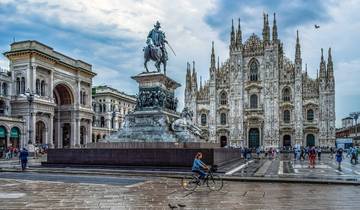
The cathedral exterior provides Milan’s most spectacular free experience—a Gothic masterpiece begun in 1386 and completed over six centuries, displaying 3,400 exterior statues, 135 spires, and 700 sculptural figures adorning its facade. The piazza offers unobstructed views of the entire western facade, best appreciated from the southern side (near Galleria entrance) where afternoon light illuminates the elaborate stonework. The madonnina statue atop the main spire, standing 108.5 meters above street level, has symbolized Milan since 1774 when the gilded copper Madonna was installed, establishing the traditional height limit for Milanese construction that lasted until the 1960s.
Architectural appreciation costs nothing but time and observation. The facade’s five bronze doors, installed between 1840-1965, depict scenes from Milan’s religious and civic history, with the central door showing Mary’s life in elaborate relief panels. The right transept’s exterior, visible from Via Carlo Maria Martini, displays the cathedral’s southern aspect with flying buttresses and Gothic pinnacles creating vertical emphasis that draws eyes skyward toward the elaborate spire forest crowning the structure. Early morning visits (7-8 AM) provide solitude for photography and contemplation, while evening illumination (activated daily at sunset) transforms the marble facade into a glowing architectural beacon visible throughout the historic center.
The Duomo piazza itself functions as Milan’s civic living room where locals and visitors converge throughout the day. The 19th-century equestrian statue of Vittorio Emanuele II anchors the piazza’s southern end, commemorating Italian unification while providing reference for the architectural scale surrounding it. Free WiFi coverage throughout the piazza allows real-time research on architectural details visible above, using smartphone apps to identify specific saints among the facade’s statue population. Spend 45-90 minutes exploring multiple viewing angles, photographing architectural details, and absorbing the human activity that makes this space Milan’s most dynamic public gathering point.
2. Galleria Vittorio Emanuele II
Italy’s oldest active shopping mall, completed in 1877, offers free access to one of architectural history’s most influential structures—the iron-and-glass gallery that inspired similar projects across Europe and America. The cruciform floor plan creates four arms meeting beneath an octagonal glass dome soaring 47 meters above the marble floor, where Giovannino Mayers’ mosaic emblems represent Turin (bull), Florence (lily), Rome (she-wolf), and Milan (white cross on red field). The Turin bull mosaic receives particular attention from visitors who spin three times on the bull’s testicles for good luck, a tradition creating noticeable wear patterns on the 19th-century artwork.
The gallery functions simultaneously as shopping arcade, architectural monument, and social space where Milanese pause for coffee at historic establishments charging premium prices for privileged location. Browsing luxury shop windows costs nothing, allowing observation of how Italy’s fashion capital presents Prada, Gucci, Louis Vuitton, and other luxury brands in architectural settings that compete with the merchandise for visual attention. The geometric floor mosaics, often overlooked by visitors focused on the dome above, display exceptional craftsmanship in stone inlay work that has survived 140+ years of foot traffic while maintaining artistic clarity.
Evening visits provide the best free entertainment as the gallery becomes Milan’s passeggiata route where locals promenade before dinner, creating people-watching opportunities that reveal authentic Milanese style and social customs. The gallery connects Duomo piazza with La Scala piazza, creating a climate-controlled pedestrian passage that served as prototype for American shopping mall design. Spend 30-45 minutes examining architectural details, window shopping, observing social dynamics, and appreciating how 19th-century engineering created spaces that remain socially vital 150 years after construction.
3. Renaissance Churches with Free Masterpiece Art
Milan’s neighborhood churches preserve Renaissance and Baroque masterpieces displayed in their original liturgical context, free from admission charges or viewing restrictions. Basilica di Sant’Ambrogio, Milan’s most historically significant church dating to 379 AD, offers free entry to its Romanesque interior where ancient columns support 11th-century vaulting above the altar containing Sant’Ambrogio’s relics. The atrium mosaic floor and carved capitals display early medieval artistic sophistication that predates the Gothic cathedral by 700 years, providing context for Milan’s architectural evolution from late antiquity through medieval period.
San Maurizio al Monastero Maggiore, called Milan’s “Sistine Chapel” for its comprehensive fresco coverage, opens free to visitors Tuesday-Sunday 10 AM-6 PM. Bernardino Luini’s 16th-century frescoes cover every wall surface with biblical narratives, creating an immersive artistic environment comparable to ticketed attractions but accessible without fees. The church’s division into public nave and former cloistered nuns’ choir provides unusual architectural interest, with the separation wall featuring a small window through which cloistered sisters viewed Mass while remaining invisible to the public congregation.
Santa Maria delle Grazie exterior, while housing the ticketed Last Supper, allows free viewing of Bramante’s Renaissance cloister and the church’s beautiful brick exterior displaying Lombard Gothic-Renaissance transitional architecture. The tribune Bramante added to the 15th-century church represents one of Renaissance architecture’s finest moments, with its proportional perfection and classical detailing marking the shift from medieval to modern architectural thinking. Other free-access churches worth visiting include San Bernardino alle Ossa (featuring an ossuary chapel decorated with human bones), Sant’Alessandro in Zebedia (Baroque masterpiece with trompe-l’oeil dome), and Santa Maria presso San Satiro (Bramante’s perspective trick creating the illusion of deep choir space in a shallow wall).
4. Aperitivo Culture Experience
Milan invented aperitivo culture in the early 20th century when bar owners began offering complimentary snacks with evening drinks to attract post-work customers. This tradition continues throughout 2026 in hundreds of establishments across the city, providing free food buffets with drink purchases that effectively combine dining and entertainment budgets. The typical aperitivo drink costs €8-12 and includes access to buffets ranging from simple chips and olives to elaborate spreads featuring pasta, risotto, pizza, salads, cheeses, and charcuterie that constitute a full meal for strategic diners.
Aperitivo hours run 6-9 PM daily, with Thursday-Saturday offering the most elaborate buffets and liveliest atmospheres as locals participate in this quintessentially Milanese ritual. The Navigli canal district concentrates dozens of aperitivo venues along Naviglio Grande and Naviglio Pavese, creating a festive atmosphere where outdoor seating fills the canalside promenades and the ritual becomes as much social theater as dining experience. Brera district offers more upscale aperitivo settings where artistic and intellectual crowds gather in historic surroundings, while Isola and Porta Venezia neighborhoods provide younger, more alternative scenes with DJ music and contemporary aesthetics.
Budget strategy transforms aperitivo from social tradition into practical meal replacement. A €10 Aperol Spritz or Negroni includes unlimited buffet access, meaning two rounds (€20) provides dinner for two people in social settings that enhance the dining experience beyond restaurant meals. The implicit etiquette requires drink purchase—arriving solely for free food violates social norms—but reasonable buffet participation with drink orders receives warm acceptance from staff and locals. Arrive around 7 PM for fresh buffet presentations and available seating, though 8 PM brings peak energy and people-watching opportunities that add entertainment value to the meal.
5. Navigli District Canal Exploration
Milan’s remaining navigli (navigable canals) provide free access to the city’s engineering heritage designed partially by Leonardo da Vinci, who improved the lock system allowing canal navigation between Milan and surrounding regions. The Naviglio Grande, completed in the 13th century, and Naviglio Pavese, finished in 1819, now serve as picturesque waterways lined with colorful buildings, antique shops, galleries, and restaurants creating bohemian atmosphere popular with artists, students, and visitors seeking alternatives to the polished historic center.
Daytime canal walks reveal architectural details and small-scale urban life often missed during evening aperitivo visits. Stone-arched bridges cross the canals at regular intervals, providing elevated viewpoints for photography and observation. The buildings lining the canals display 18th and 19th-century architecture with characteristic Milanese balconies, pastel facades, and occasional medieval tower remnants indicating the district’s ancient origins. Small churches, local markets, and neighborhood shops create authentic residential atmosphere contrasting with tourist-focused historic center, allowing observation of how contemporary Milanese live beyond the postcard zones.
Monthly antique markets (last Sunday of each month, 8 AM-6 PM) transform the Naviglio Grande into an outdoor flea market where vendors display furniture, books, vintage clothing, and collectibles along two kilometers of canalside promenade. While purchasing requires budget, browsing costs nothing and provides insight into Italian collecting culture and the material culture of previous generations. Evening visits offer romantic canal reflections and lively social scenes without requiring participation beyond walking and observing. Allocate 60-90 minutes for comprehensive exploration, or return multiple times to discover the district’s varied moods at different times and seasons.
6. Street Art and Contemporary Urban Culture
Milan’s post-industrial neighborhoods display world-class street art transforming former factory districts into outdoor contemporary galleries accessible 24/7 without admission fees. The Isola neighborhood north of Porta Garibaldi station features murals by internationally recognized artists including Blu, Pao, and Orticanoodles covering entire building facades with elaborate compositions addressing social, political, and aesthetic themes. Via Paolo Sarpi and surrounding streets concentrate multiple works within walking distance, creating self-guided street art tours requiring only observation and photography skills.
NoLo (North of Loreto) district continues the street art concentration with additional focus on community-engaged art projects where residents collaborate with artists to transform neglected spaces into colorful cultural statements. The area’s multicultural character—with significant Chinese, Egyptian, and Latin American populations—influences artistic themes addressing identity, migration, and urban transformation. Via Padova, historically stigmatized for social challenges, has become a street art destination where artistic intervention contributes to neighborhood revitalization while providing free cultural experiences for visitors willing to venture beyond traditional tourist zones.
Street art hunting requires no specific itinerary—wandering Isola and NoLo streets with observant eyes reveals new discoveries around unexpected corners. Smartphone mapping apps help navigate unfamiliar neighborhoods, while Instagram location tags (@igers_milano, #milanostreetart) identify specific murals worth seeking. The temporary nature of street art means works disappear periodically, replaced by new creations that keep the outdoor gallery perpetually fresh. Combined exploration of both neighborhoods requires 2-3 hours with photography stops, offering contemporary cultural experiences that complement Milan’s historic attractions while demonstrating the city’s ongoing artistic vitality.
7. Castello Sforzesco Courtyards and Exterior
The Sforza Castle’s massive courtyards, fortification walls, and exterior architecture provide free exploration opportunities even without museum admission. The Rocchetta courtyard, accessed freely through the main gate facing Foro Bonaparte, surrounds visitors with 15th-century military architecture where Francesco Sforza consolidated Milanese power during the Renaissance. The courtyard’s proportions and architectural details demonstrate defensive thinking merged with Renaissance aesthetic sensibilities, creating fortress space that also functions as civic square. The Ducal Court beyond, also freely accessible, displays more refined Renaissance architecture with loggias and decorative elements reflecting the castle’s evolution from military stronghold to ducal residence.
The castle’s exterior circuit can be walked freely, revealing the massive scale and sophisticated defensive engineering that made this fortress formidable during Milan’s turbulent Renaissance period. The Filarete Tower, reconstructed after World War II destruction, marks the main entrance with distinctive Renaissance detailing that Filarete designed in the 1450s. The Spanish ramparts surrounding the castle date to 16th-century Habsburg modifications, demonstrating how successive rulers adapted the fortress to evolving military technology while maintaining its imposing presence within Milan’s urban fabric.
The castle to Sempione Park axis creates Milan’s primary green corridor, with the castle’s rear gate (Porta del Barco) opening directly into parkland that extends to the Arch of Peace one kilometer distant. This relationship between fortification and recreational space provides urban planning lessons about repurposing military architecture for civic benefit. Allocate 30-45 minutes for courtyard exploration and exterior circumnavigation, or combine with Sempione Park visit for a 2-3 hour free cultural and recreational experience. Free WiFi throughout the castle courtyards enables research on architectural details and historical events that unfolded within these walls from 1450 through present day.
8. Parco Sempione and Arch of Peace
Milan’s largest central park, created in 1888 on former Sforza Castle parade grounds, provides 95 acres of landscaped recreational space free and open daily from 6:30 AM to 9 PM (summer) or 6:30 AM to 8 PM (winter). The park combines English landscape garden aesthetics with Italian formal elements, creating varied environments for passive recreation, picnicking, and observation of Milanese urban leisure culture. Tree-lined promenades, small lakes, sculptures, and lawn areas provide different atmospheric zones within the larger park structure, allowing visitors to choose between social activity centers and quieter contemplative spaces.
The Arch of Peace (Arco della Pace) terminates the park’s western axis with a Napoleonic triumphal arch completed in 1838, after Napoleon’s defeat ironically transformed its propaganda purpose into commemoration of restored peace. The arch’s classical proportions and sculptural program demonstrate neoclassical architecture at its most confident, with Corinthian columns, sculptural friezes, and bronze chariot groups (quadrighe) creating monuments that announced Milan’s recovered importance after years of foreign occupation. The surrounding Piazza Sempione hosts food trucks, street performers, and social gatherings that transform the monumental space into contemporary urban theater free to observe and enjoy.
Park amenities include free public bathrooms, drinking fountains, WiFi zones, and benches throughout the grounds. The Branca Tower (Torre Branca) offers paid views (€5) but the park-level experience costs nothing while providing comparable people-watching and architectural viewing opportunities. Seasonal activities vary from winter’s bare-branch tranquility through spring’s blooming gardens to summer’s crowded lawn gatherings and autumn’s golden foliage displays. Budget travelers can picnic using supermarket provisions (€5-8 per person for quality ingredients) while enjoying park surroundings that rival ticketed attractions for aesthetic and cultural value. Allocate 1-2 hours for comprehensive exploration or return multiple times to experience seasonal and time-of-day variations.
9. Milano Centrale Railway Station Architecture
Europe’s most architecturally bombastic railway station, completed in 1931 during Mussolini’s regime, provides free access to Art Deco and Fascist-era architecture at its most excessive and impressive. The main gallery stretches 200 meters in length with vaulted glass roof soaring 36 meters above the marble floor, creating interior space scaled for monumental propaganda rather than mere passenger convenience. Stone reliefs, sculptures, and decorative programs celebrate technology, labor, agriculture, and imperial ambition through artistic language that transforms transportation infrastructure into political statement.
The station’s second-level balconies and galleries offer elevated viewing positions where architectural details become visible and the human activity below creates social spectacle worth extended observation. The departures hall features elaborate ticket windows, period clocks, and information boards designed with the aesthetic attention typically reserved for museums or palaces. Outside, the facade stretches 200 meters wide with central arch crowned by winged horses (quadrighe), demonstrating how even external architecture served propagandistic purposes during the station’s construction period.
Photography enthusiasts spend hours capturing the play of light through the glass roof, the geometric patterns in the stone floor, and the contrast between 1930s architectural confidence and contemporary multicultural crowds rushing through spaces designed to induce awe in Depression-era travelers. The station functions as both transportation hub and unintentional museum of Fascist-era design, providing historical and architectural education without didactic presentation or admission requirements. Visit any time—the station operates 24/7—though morning light (8-10 AM) provides best illumination for photography. Allocate 30-45 minutes for comprehensive architectural appreciation or grab an espresso at platform-level bars to extend the observation period while refreshing yourself for further exploration.
10. Brera District Galleries and Courtyards
The Brera neighborhood surrounding the Pinacoteca di Brera preserves historic atmosphere where narrow cobblestone streets lined with galleries, boutiques, and ateliers create intimate urban environment contrasting with the monumental scale of the Duomo zone. The streets themselves constitute the free attraction—Via Fiori Oscuri, Via Madonnina, Via Formentini, and Via Brera display characteristic Milanese architecture with wrought-iron balconies, pastel facades, and glimpses through doorways into private courtyards that reveal unexpected Renaissance and Baroque spatial sequences.
The Brera Academy courtyard (Accademia di Belle Arti), accessible freely during daytime hours through the main entrance at Via Brera 28, features Antonio Canova’s bronze Napoleon statue and two-story arcade with classical proportions exemplifying 17th-century Jesuit college architecture. Art students working in courtyard studios or displaying portfolios add authentic artistic atmosphere that makes the space feel actively creative rather than merely historic. Additional courtyard discoveries wait throughout the district for explorers willing to pause at open doorways and peer into the hidden spatial layers that characterize Milan’s architectural organization.
The district transforms Thursday-Sunday when galleries host openings, artists sell work in Via Brera, and the area becomes epicenter of Milan’s contemporary art scene accessible to anyone willing to enter gallery spaces and engage with artistic production. While purchasing art requires substantial budget, viewing costs nothing and provides insight into Italy’s contemporary creative culture. Street performers, vintage clothing vendors, and cafe terraces complete the bohemian atmosphere that has attracted artists, intellectuals, and cultural tourists since the 1960s. Allocate 60-90 minutes for comprehensive Brera exploration, or return multiple times to discover galleries’ rotating exhibitions and the district’s varying moods at different times and seasons.
Planning Your 2026 Free Milan Experience
Creating a Strategic Daily Itinerary 2026
Optimal free activity sequencing maximizes energy and lighting conditions while minimizing redundant travel across the compact historic center. Morning hours (8-11 AM) suit church visits when interiors receive best natural light and tourist crowds remain minimal. The Duomo exterior photographs beautifully in morning light from the eastern (rear) side, while Galleria Vittorio Emanuele II receives optimal natural illumination through its glass roof before noon. Castello Sforzesco courtyards and Sempione Park combine well for late morning or early afternoon visits, creating a 2-kilometer walking circuit from castle through park to Arch of Peace and return.
Afternoon hours (2-5 PM) work well for street art exploration in Isola and NoLo when residential neighborhoods display active daily life and building shadows create interesting photography conditions. Navigli district visits time well for late afternoon (4-6 PM) when canal light becomes golden and the transition toward evening aperitivo begins. This timing allows seamless progression from afternoon sightseeing into 6-9 PM aperitivo participation, effectively structuring an entire day around free or low-cost activities that showcase Milan’s diverse cultural offerings.
Evening hours extend the free activity day through illuminated architecture viewing and passeggiata participation. The Duomo piazza, Galleria, La Scala exterior, and Brera district all activate lighting systems at sunset, transforming daytime architecture into nighttime spectacle visible and photographable without admission fees. The Milan tradition of evening strolling (passeggiata) peaks 7-9 PM as locals promenade through pedestrian streets displaying seasonal fashion and social customs in free public theater that teaches more about authentic Milanese culture than many ticketed attractions. Budget travelers can structure entire days around these free activities, investing accommodation and meal budgets while maintaining zero spending on sightseeing admissions.
First Sunday Free Museum Strategy 2026
The first Sunday of each month transforms Milan’s cultural value proposition by opening state museums free to all visitors. Strategic planning around these dates amplifies travel value significantly, particularly for multi-day visits that can dedicate one day to free outdoor activities and a first Sunday to major museum collections. The 2026 first-Sunday dates (January 5, February 2, March 2, April 6, May 4, June 1, July 6, August 3, September 7, October 5, November 2, December 7) should influence travel scheduling when possible, though advance accommodation booking around these dates often shows increased prices reflecting elevated demand.
Pinacoteca di Brera receives highest visitor priority on first Sundays, housing one of Italy’s finest painting collections with works by Raphael, Caravaggio, Mantegna, and Bellini displayed in the former monastery surrounding the courtyard mentioned in the Brera district section above. Arrival before 11 AM secures better viewing conditions as crowds increase throughout the day. The Museum of the Twentieth Century (Museo del Novecento) in Palazzo dell’Arengario facing Duomo piazza presents Italian modern art from Futurism through contemporary movements, with the building itself (Italo Rota’s 2010 renovation) constituting architectural interest comparable to the collection displayed within.
Smaller museums participating in first-Sunday free admission include the Archaeological Museum displaying Roman Milan remains, the Poldi Pezzoli Museum with decorative arts and paintings, and the Bagatti Valsecchi Museum preserving an aristocratic 19th-century residence. Strategic travelers visiting multiple museums on first Sundays can experience €40-50 worth of admission value free while structuring other visit days around the free outdoor activities detailed above. This combination creates comprehensive Milan cultural experiences on minimal budgets without compromising on quality or depth of engagement with the city’s artistic heritage.
Budget Optimization Strategies for 2026
Combining Free Activities with Strategic Spending
Maximum budget efficiency results from combining the ten free activities above with strategic spending on transportation, accommodation, and meals that enhance rather than replace the free cultural experiences. Milan’s historic center measures approximately 3 kilometers diameter, placing all major free attractions within comfortable walking distance for travelers maintaining moderate fitness levels. This walking capability eliminates public transportation costs (metro/tram single ride €2.20, day pass €7) beyond initial airport transfers, potentially saving €15-20 daily on movement costs while increasing street-level cultural observations impossible from underground metro networks.
Accommodation selection influences free activity access significantly. Hotels or hostels in or near Brera, Navigli, or Porta Venezia neighborhoods position you within 10-15 minute walks of multiple free attractions while placing you in residential areas where aperitivo and daily life observations become naturally integrated into your routine. Budget options exist in these neighborhoods: hostels €25-40 per bed, budget hotels €80-120 for doubles, and Airbnb apartments €60-100 for entire units sleeping 2-4 people. The accommodation investment pays dividends through eliminated transportation costs and enhanced ability to return to lodging for rest breaks during multi-activity days.
Meal budget optimization uses the aperitivo strategy detailed above, supplemented by market visits for picnic provisions. Mercato Metropolitano (Metro Stop Porta Genova) operates daily with food stalls selling prepared items €5-10 and raw ingredients for DIY meals in apartment accommodations. Supermarkets including Esselunga, Carrefour, and Coop provide quality Italian ingredients at prices substantially below restaurant charges: fresh bread €2, local cheese €4-6, salumi €5-8, fruit and vegetables €1-3 per kilo. Two people can assemble excellent picnic lunches for €8-12 total, consumed in Sempione Park, Navigli canalside, or Brera courtyard settings that enhance the dining experience beyond indoor restaurant meals.
Sample Zero-Admission Daily Budget 2026
A strategic budget traveler in Milan can structure days entirely around free activities while investing only in accommodation and meals. Sample daily cost breakdown: accommodation €50-60 per person (€100-120 double occupancy mid-range hotel divided by two), breakfast €5-8 (cafe cappuccino and cornetto), picnic lunch €6-10 (market provisions), aperitivo €10-12 (drink purchase with buffet access constituting dinner), snacks €3-5 (gelato, afternoon coffee). Total daily spending: €74-95 per person for comfortable travel without accommodation sacrifice or dining deprivation.
This budget supports comprehensive cultural experiences through strategic activity selection and timing. A representative zero-admission day might include: morning Duomo piazza and Galleria visit (free), mid-morning Sant’Ambrogio and San Maurizio churches (free), picnic lunch in Castello Sforzesco courtyard (€8), afternoon Sempione Park to Arch of Peace walk (free), late afternoon Navigli canal exploration (free), evening aperitivo with buffet dinner in Navigli (€10), evening passeggiata through illuminated historic center (free). This itinerary delivers seven distinct cultural experiences, three meals, and authentic Milanese lifestyle engagement while maintaining the €74-95 daily budget range.
Travelers prioritizing museum access on first Sundays adjust this budget minimally—zero admission cost but potentially increased meal expenses if museum visits extend through normal lunch hours and require cafe meals rather than planned picnics. The free-museum Sunday might reduce walking intensity compared to outdoor-activity days, potentially allowing budget reallocation toward a restaurant dinner (€15-25) as compensation for energy conserved during indoor viewing hours. Flexible budget management adapts spending to daily activity types while maintaining overall cost control that allows extended Milan visits on limited resources.
Seasonal Considerations for 2026 Free Activities
Spring and Autumn Optimal Conditions
April-May and September-October provide ideal conditions for the walking-intensive free activities detailed above. Spring temperatures of 15-23°C allow comfortable all-day pedestrian exploration without heat-related fatigue, while April garden blooms in Sempione Park and residential neighborhoods add visual beauty to urban walks. The Easter period (April 2026) brings both increased tourist numbers and special church services visible to non-participating observers, adding cultural content to free religious building visits. May’s longer daylight hours extend photography windows and allow evening activities to continue later without darkness limiting visibility or safety perceptions.
Autumn months offer comparable temperature benefits (September averaging 20-25°C, October 12-18°C) with additional advantages of reduced summer tourist crowds and September fashion week activities transforming Milan into heightened style showcase. Fashion week (late September 2026) fills the city with industry professionals, runway shows, and presentation events that spill into public spaces observable by anyone walking Brera, Corso Como, or Porta Nuova districts. The autumn light quality, praised by photographers for clarity and warmth, enhances architectural photography throughout the historic center and canal districts.
Summer Extended Hours and Winter Challenges
Summer months (June-August 2026) maximize daylight availability with sunset after 9 PM allowing extended evening activities including aperitivo, passeggiata, and illuminated architecture viewing in a single extended sequence. However, July-August heat (temperatures often 28-35°C) requires schedule adjustment: early morning activities 7-10 AM, midday rest break during peak heat 12-3 PM, resumed activity 4 PM continuing through extended evening hours. Many locals abandon Milan in August for coastal or mountain holidays, creating quieter city atmosphere that some travelers prefer while others miss the energy of full residential occupancy.
Winter months (December-February) present cold challenges (temperatures 0-8°C) but offer compensating advantages including Christmas market atmosphere in Duomo piazza (December), reduced accommodation costs, and winter light qualities favored by painters since Renaissance times. Churches remain fully heated making them attractive winter refuges between outdoor activities, while covered Galleria Vittorio Emanuele II provides climate-controlled walking space connecting major attractions without weather exposure. Museums participating in first-Sunday free admission become particularly attractive during winter visits when outdoor activities face weather limitations, making January 5, February 2, and December 7 first-Sundays strategically valuable for winter 2026 travel planning.
Beyond the Ten: Additional Free Milan Discoveries 2026
Hidden Courtyards and Renaissance Architecture
Milan’s courtyard architecture tradition creates hundreds of hidden spaces visible only to explorers willing to pause at open building entrances and investigate interior spatial sequences. Via Manzoni, Via Montenapoleone, and Via della Spiga in the luxury fashion district display Renaissance and Baroque courtyards attached to modern boutiques, providing architectural contrast between historic building shells and contemporary luxury retail programming. The courtyards themselves remain publicly accessible during business hours, offering peaceful retreats from crowded pedestrian streets while demonstrating how Milan integrates centuries of architectural heritage into contemporary urban functions.
Via Morone and Via Sant’Antonio near La Scala theater concentrate multiple historic buildings with courtyard architecture worth discovering. The Casa degli Omenoni (Via Omenoni 3) displays a sculptural facade by Leone Leoni from 1565 that influenced subsequent Milanese architectural fashion. These discoveries require no specific route—wandering historic center streets with observant eyes reveals architectural treasures around unexpected corners, creating exploration experiences that guidebooks cannot anticipate and crowds cannot diminish through over-visitation.
Contemporary Architecture and Urban Development
Milan’s contemporary architecture adds free discoveries for visitors interested in 21st-century urban design. The Porta Nuova district north of Garibaldi station showcases recent development including the Bosco Verticale (Vertical Forest) towers by Stefano Boeri, completed in 2014 with facade-integrated vegetation creating living building surfaces visible from surrounding streets and piazzas. The district’s public spaces, designed by international architects, demonstrate contemporary urban planning approaches combining residential, office, retail, and recreational functions in high-density mixed-use development patterns.
Fondazione Prada, while housing galleries requiring admission, offers free access to its Bar Luce designed by filmmaker Wes Anderson, creating surreal cafe environment worth visiting for architecture and atmosphere independent of exhibition programming. The complex’s Rem Koolhaas-designed buildings in a former distillery combine industrial preservation with contemporary insertions, demonstrating adaptive reuse strategies visible from public areas even without exhibition tickets. These contemporary additions to Milan’s architectural heritage show the city’s ongoing building culture beyond the historic monuments that dominate tourist attention.
Practical Tips for 2026 Free Activities
Physical Preparation and Comfort Strategies
The ten free activities above require substantial walking—comprehensive daily itineraries easily accumulate 12-15 kilometers of pedestrian movement. Comfortable footwear becomes essential equipment: walking shoes or broken-in sneakers rather than fashion-forward but uncomfortable options that create blisters and fatigue limiting activity capacity. Milan’s historic center paving includes cobblestones, stone slabs, and uneven surfaces that challenge high heels and poorly cushioned shoes. Pack or purchase (€10-15 from street vendors or low-cost chains) backup comfortable shoes if your primary footwear proves inadequate.
Hydration management matters significantly during summer months and extended walking days. Carry refillable water bottles (500ml-1L capacity) and use public drinking fountains throughout the city—marked with green “drinking water” symbols and concentrated in parks, piazzas, and near major monuments. This strategy eliminates convenience store water purchases (€1-2 per bottle) while ensuring proper hydration that prevents fatigue and headaches compromising activity enjoyment. Winter visits require layered clothing allowing adjustment to varying conditions between heated churches, outdoor walking, and indoor museum visits on first Sundays.
Photography and Documentation Equipment
Smartphone cameras provide adequate quality for documenting free Milan experiences, though travelers serious about photography consider portable backup battery packs (€15-25) ensuring device functionality throughout extended activity days. The combination of navigation apps, photography, research tools, and communication drains phone batteries significantly faster than normal usage, with complete discharge occurring midday during intensive urban exploration. Churches often prohibit flash photography but allow tripod-free shooting—respect these limitations while maximizing available light through smartphone camera HDR and night modes.
Architectural photography benefits from wide-angle perspectives capturing buildings’ full scale within urban settings where streets narrow to restrict viewing distances. Smartphone panorama modes create effective wide compositions, though full building capture sometimes requires crossing to opposite street sides or finding elevated viewpoints in adjoining squares. Early morning and evening golden hour light (first and last hour of daylight) provides warmth and contrast enhancing architectural photography beyond midday flat lighting conditions. The free nature of activities allows timing flexibility to return to locations when light conditions optimize for photography purposes.
Safety and Security Awareness
Milan maintains general urban safety comparable to other major European capitals, with violent crime remaining rare in tourist and residential areas. Pickpocketing represents the primary concern, particularly in crowded metro stations, at Duomo piazza during peak tourist seasons, and in crowded aperitivo venues. Standard precautions mitigate these risks: cross-body bags secured in front of body, wallets in front pockets, phones and cameras kept secure when not actively used, awareness maintained in crowded transportation and tourist spaces.
Solo travelers find Milan generally welcoming and safe, with well-lit streets, active evening social life, and residential presence in historic neighborhoods creating natural surveillance that enhances security perceptions. Women traveling alone report comfortable experiences in areas covered by the ten free activities above, though standard urban awareness applies during evening hours: stick to well-lit, populated routes; avoid isolated areas after dark; trust instincts about situations creating discomfort. The free walking tours mentioned earlier provide social opportunities for solo travelers seeking temporary companionship while exploring the city.
Frequently Asked Questions About Free Milan Activities 2026
Is the Duomo free to enter in 2026?
The Duomo exterior and piazza remain completely free to admire and photograph in 2026. Cathedral interior entry requires tickets (€5 for cathedral only, combination tickets €15-20 including rooftop terraces and museum, check official website for current rates). The exterior experience provides substantial cultural value including full facade viewing, piazza atmosphere, and architectural appreciation without requiring interior admission. Many budget travelers find the free exterior experience satisfying without interior entry, particularly when combined with other free churches like Sant’Ambrogio and San Maurizio that offer complete interior access at no cost.
Can you walk everywhere in Milan or do you need public transportation in 2026?
The ten free activities detailed in this guide all fall within Milan’s compact historic center and nearby neighborhoods, making comprehensive walking the most effective and economical transportation approach. The Duomo to Castello Sforzesco measures 1.2 kilometers, Castello to Navigli 2 kilometers, Duomo to Brera 800 meters—all comfortable walking distances for travelers with moderate fitness. Public transportation becomes beneficial primarily for trips to/from accommodation in outer neighborhoods or to Linate airport. Day passes cost €7 versus €2.20 per single ride, but strategic central accommodation placement eliminates daily transportation needs for free-activity itineraries.
What is the best free viewpoint in Milan 2026?
The Duomo rooftop offers Milan’s finest views but requires paid admission (€10-14 depending on elevator or stairs access). The best free viewpoint in 2026 comes from the upper level of the Galleria Vittorio Emanuele II, accessible by staircases at the gallery ends, providing elevated perspectives over the gallery floor below and views toward the Duomo through the gallery’s glass windows. Additionally, several multi-story shopping centers including La Rinascente department store (adjacent to Duomo) have upper-floor cafes and terraces that technically require purchase (€3-5 coffee) but provide elevated city views at costs dramatically below dedicated observation deck admissions.
Are Milan parks safe at night in 2026?
Sempione Park closes at official hours (9 PM summer, 8 PM winter) enforced by park guards who clear the space at closing time. The park vicinity remains well-lit and populated during evening hours, but the park interior becomes dark and isolated after closure. Stick to the Duomo piazza, Galleria, Navigli canalside, and Brera district for safe evening free activities where population density, commercial activity, and lighting create comfortable environments throughout typical tourist hours (until 11 PM-midnight). Solo travelers and families find these areas safe and welcoming during evening hours when locals participate in passeggiata and aperitivo traditions that activate public spaces with prosocial activity.
Can you see any Leonardo da Vinci works for free in Milan 2026?
Leonardo’s Last Supper requires paid admission (€15 plus booking fee) with advance reservations essential. However, Leonardo’s engineering contributions to Milan’s canal system remain visible free at the Conchetta lock on Naviglio Pavese (Via S. Domenico Savio) where his improved lock design enabled navigation between different water levels. The Santa Maria delle Grazie church exterior housing the Last Supper can be viewed freely, and the surrounding historic streets where Leonardo lived and worked from 1482-1499 and 1506-1513 provide atmospheric connections to the artist’s Milan period. The Castello Sforzesco courtyards where Leonardo maintained workshop space offer additional free historical connections, though specific Leonardo works in the castle’s museums require paid admission.
What free activities work best for families with children in 2026?
Sempione Park offers maximum appeal for families, providing lawn space for play, paths for walking/running, and visual interest through sculptures, the Arch of Peace, and castle views. The park’s safe, enclosed environment with bathroom facilities and nearby gelato vendors creates comfortable family settings. The Duomo piazza offers street performers and pigeons that attract children’s attention while parents appreciate architectural significance. Navigli canal district provides walking routes along water—inherently interesting to children—with small bridges, colorful buildings, and authentic neighborhood atmosphere. The Castello Sforzesco courtyards offer space for child activity without behavior restrictions common in formal museums, making these free activities family-appropriate compared to quiet church or gallery visits requiring sustained attention and behavioral control.
Is Milan worth visiting on a budget in 2026?
Milan rewards budget travelers more generously than its expensive reputation suggests, particularly for visitors prioritizing architectural, cultural, and lifestyle experiences over shopping and luxury dining. The ten free activities detailed above provide comprehensive introduction to Milan’s Renaissance heritage, contemporary urban culture, neighborhood diversity, and authentic lifestyle traditions. Combined with strategic aperitivo timing, first-Sunday museum access, and outdoor market meal sourcing, budget travelers experience Milan comprehensively for €75-100 daily including mid-range accommodation. This value proposition rivals or exceeds other European capitals where comparable cultural experiences require substantially higher admission, meal, and accommodation spending.
What areas should budget travelers avoid in Milan 2026?
Budget travelers should avoid the Montenapoleone luxury shopping district for purchasing activities (browsing window displays and courtyards remains free and interesting), restaurants immediately surrounding Duomo piazza where tourist-focused establishments charge premium prices for mediocre quality, and taxi services where Milan’s high rates (€15-25 for short trips) dramatically exceed metro/tram alternatives or walking costs. Areas like Porta Venezia, NoLo, Isola, and Navigli offer better value for meals and aperitivo while providing more authentic local atmospheres than tourist-focused historic center establishments. The free activities listed above concentrate in areas offering optimal budget/experience value ratios throughout 2026.
How much time do you need for free Milan activities in 2026?
A full day (8-10 hours) allows thorough engagement with 5-6 of the ten free activities listed above, including meals and rest breaks. Three days enables comprehensive coverage of all ten activities plus leisure time, aperitivo participation, and exploration of additional neighborhoods not detailed in this guide. First-time visitors spending 3-4 days discover Milan thoroughly while maintaining budgets under €300-400 total per person including accommodation, meals, and zero admission spending on the free activities forming the visit’s core experiences. Extended visits of 5-7 days allow repetition of favorite free activities, deeper neighborhood exploration, and strategic first-Sunday museum access that complements rather than replaces the outdoor cultural experiences detailed above.
Can you experience authentic Milan culture through free activities in 2026?
The ten free activities listed above provide more authentic Milan cultural exposure than many ticketed attractions, particularly the aperitivo tradition, Navigli neighborhood life, street art in residential areas, and passeggiata evening strolling. These practices reflect contemporary Milanese lifestyle rather than tourist-focused heritage presentations, allowing observation and participation in ongoing urban culture. Budget travelers walking rather than taxi-ing, dining via aperitivo rather than tourist restaurants, exploring residential neighborhoods rather than luxury shopping districts, and engaging with public spaces rather than exclusive venues often access more authentic cultural encounters than higher-budget travelers whose spending patterns place them in tourist-focused commercial environments. The free-activity approach enforces engagement with the public realm where authentic urban culture manifests most accessibly.