Zermatt Museums & Galleries 2026: Complete Cultural Guide
Zermatt’s cultural institutions reveal the dramatic transformation from alpine farming village to world-renowned mountain resort through meticulously preserved artifacts, contemporary art exhibitions, and multimedia storytelling. This car-free village beneath the Matterhorn offers travelers immersive experiences ranging from underground historical reconstructions to rotating gallery shows that complement the spectacular natural scenery.
Key Takeaways: Zermatt Cultural Attractions 2026
- Primary Museum: Matterhorn Museum – Zermatlantis forms Zermatt’s cultural centerpiece, offering underground access to reconstructed 19th-century village life and the tragic first Matterhorn ascent for CHF 12 ($13) adults or free with Swiss Travel Pass.
- Art Gallery Scene: The Art Gallery Zermatt and Kunsträume gallery showcase rotating contemporary exhibitions featuring Swiss and international artists, with seasonal programming changing between summer and winter periods.
- Swiss Travel Pass Advantage: Pass holders receive automatic free admission to Matterhorn Museum plus 500+ museums nationwide, representing significant savings for multi-destination cultural travelers throughout Switzerland.
- Seasonal Hours: Museum operating schedules vary substantially between summer high season (extended daily hours), winter ski season (afternoon opening), and shoulder periods (reduced days), requiring advance verification for specific travel dates.
- Budget-Friendly Access: Children under 9 enter Matterhorn Museum free when accompanied by adults, students pay reduced CHF 8 ($9) rates, and multiple discount cards provide complimentary entry beyond standard ticket pricing.
- Cultural Integration: Museums combine naturally with mountain railway excursions to Gornergrat or Glacier Paradise, allowing visitors to explore both Zermatt’s mountaineering heritage and alpine landscapes in coordinated full-day itineraries.
People Also Ask About Zermatt Museums & Galleries 2026
What museums and galleries can I visit in Zermatt in 2026?
Zermatt’s primary cultural institution is the Matterhorn Museum – Zermatlantis, an underground facility at Kirchplatz showcasing the village’s transformation from agricultural settlement to international alpine resort. The museum features original 19th-century houses reconstructed in subterranean spaces, artifacts from the fatal 1865 Matterhorn first ascent including the broken rope that cost four climbers their lives, and multimedia presentations documenting mountaineering history. Beyond this anchor institution, The Art Gallery Zermatt on Hofmattstrasse presents rotating contemporary art exhibitions changing seasonally, with main artist Lucas Davis hosting guest collaborators for summer and winter shows. Kunsträume Zermatt operates as an additional contemporary art space featuring international artists in sophisticated alternating exhibitions. The village also hosts occasional outdoor sculpture installations and augmented reality art experiences at selected locations, though these vary by season and year.
How much do Zermatt museums cost in 2026?
Matterhorn Museum admission costs CHF 12 ($13) for adults in 2026, with seniors aged 64 and over paying CHF 10 ($11), teenagers aged 10-16 charged CHF 7 ($8), and students assessed CHF 8 ($9). Children under age 9 accompanied by adults enter free. School groups receive reduced CHF 5 ($5) per child rates with maximum 25-person groups and complimentary teacher admission. Multiple free-entry options exist beyond standard pricing, including Swiss Travel Pass holders, Swiss Museum Pass holders, and Raiffeisen bank cardholders with Maestro, Visa, or Mastercard logos. Art galleries in Zermatt typically offer free admission to exhibition spaces, though some special events or private viewings may require advance booking or nominal fees depending on the specific programming.
Is the Matterhorn Museum free with Swiss Travel Pass in 2026?
Yes, the Matterhorn Museum – Zermatlantis provides completely free admission to Swiss Travel Pass holders throughout 2026, representing a CHF 12 ($13) per adult savings. The Swiss Travel Pass automatically includes the Swiss Museum Pass component, granting free entry to more than 500 museums across Switzerland during the pass validity period without requiring separate museum pass purchase or registration. Pass holders simply present their valid Swiss Travel Pass at the museum entrance along with passport or identification for verification. This benefit extends to all pass durations including 3-day, 4-day, 8-day, and 15-day consecutive options, as well as the flexible-day Swiss Travel Pass Flex variations. Children traveling free with the Swiss Family Card (ages 6-15 when accompanied by pass-holding parent) also receive complimentary museum admission under the same Swiss Museum Pass inclusion, creating substantial savings for families exploring Switzerland’s cultural institutions alongside transportation benefits.
When are Zermatt museums open in 2026?
Matterhorn Museum operates 11:00 AM to 6:00 PM during most of the year, though precise hours vary significantly by season requiring verification before visits. Summer high season from July through September typically features 2:00 PM to 6:00 PM afternoon opening, while October maintains the 11:00 AM to 6:00 PM schedule. Late November through mid-December sees reduced Friday-Sunday-only operation from 3:00 PM to 6:00 PM. The Christmas-New Year holiday week restores full daily schedules. Art galleries maintain different patterns, with Kunsträume Zermatt listing Monday-Sunday 5:00 PM to 11:00 PM evening hours year-round, while The Art Gallery Zermatt adjusts seasonal programming around major tourist periods. Museum closures, special event modifications, and holiday schedule changes occur throughout the year, making official website consultation or direct phone contact essential for confirming specific date availability during 2026 travel planning.
Extended multi-day tours – 5+ days
Featured Zermatt Multi-Day Tour Packages
7 days
Golf + Wellness Retreat Switzerland Edition 7 Days / 6 Nights
- ✓ Booking needs min. 2 travelers

5 days
5-Days in Genava : Scenic Switzerland Wonders of Annecy & Zermatt
- ✓ Comprehensive Zermatt tour
- ✓ Expert local guides included
- ✓ All accommodation arranged
- ✓ Transportation provided

7 days
Golf and Wellness Retreat in Switzerland 7Days/ 6 Nights (Luxury)
- ✓ Booking needs min. 2 travelers
7 days
Switzerland’s Ultimate Winter Experience (7 Days / 6 Nights)
- ✓ Booking needs min. 2 travelers
Multi-day tour packages powered by TourRadar. Prices and availability subject to change.
Introduction: Discovering Zermatt’s Cultural Heritage in 2026
Zermatt’s reputation as a world-class mountain resort extends far beyond skiing and alpine scenery into a rich cultural landscape that chronicles one of Switzerland’s most dramatic village transformations. The car-free community at 1,620 meters elevation evolved from isolated farming hamlet to international tourism destination in barely 150 years, driven primarily by the magnetism of the 4,478-meter Matterhorn and the pioneering mountaineers who attempted its formidable faces. This extraordinary transition from subsistence agriculture to luxury hospitality is preserved meticulously in the village’s cultural institutions, offering 2026 visitors immersive encounters with authentic artifacts, reconstructed historical environments, and multimedia storytelling that brings the alpine past into vivid contemporary focus.
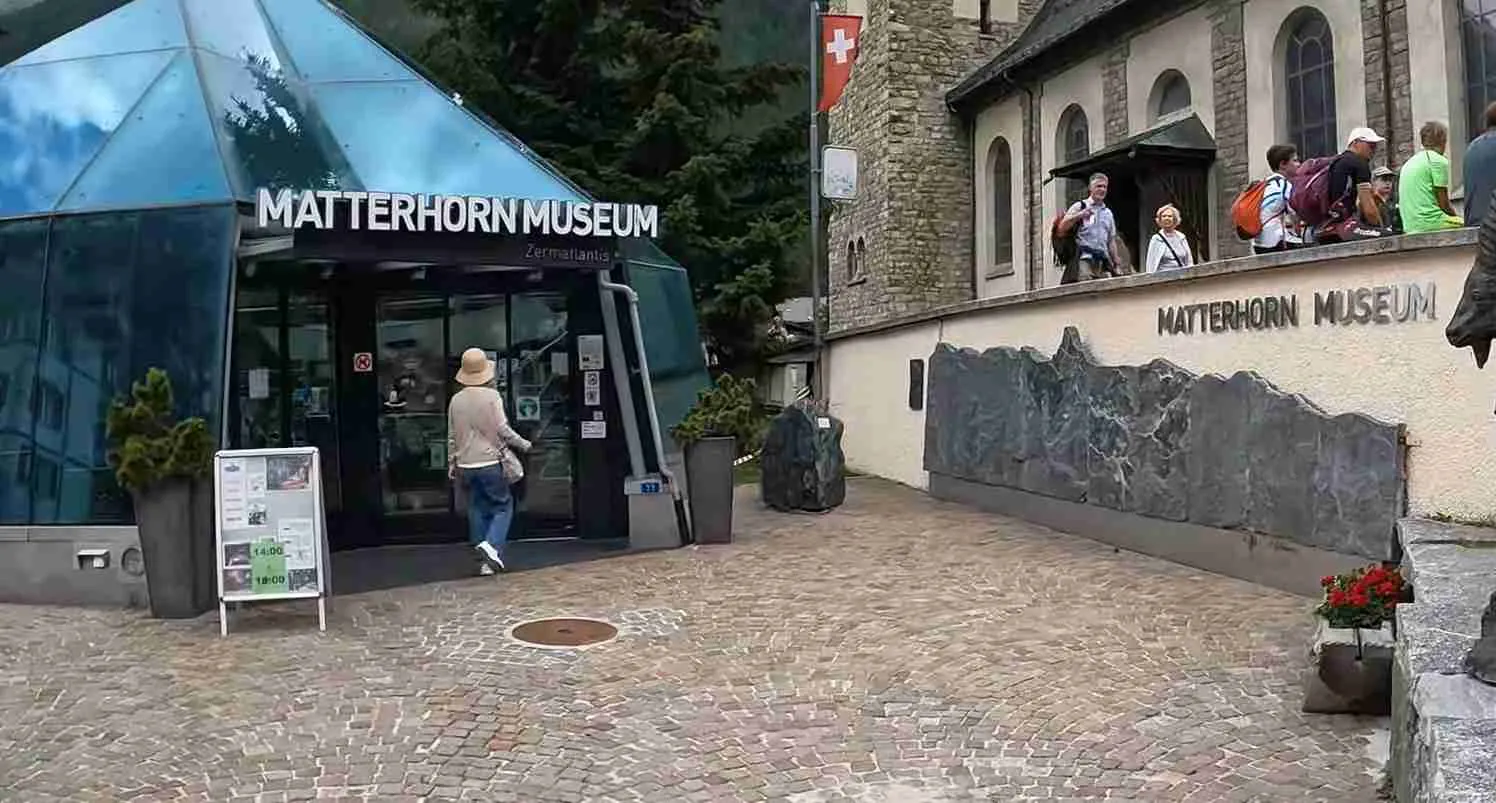
The cultural centerpiece remains the Matterhorn Museum – Zermatlantis, an architecturally innovative underground facility that literally descends beneath the village square into reconstructed 19th-century Zermatt. Here, original wooden houses stand preserved in subterranean chambers, their interiors furnished with authentic period implements and textiles that demonstrate the harsh realities of mountain life before tourism transformed the economy. The museum’s most powerful exhibits focus on the golden age of alpinism, particularly the tragic first ascent of the Matterhorn on July 14, 1865, when Edward Whymper’s seven-man party reached the summit only to lose four climbers on the descent when a rope snapped. The frayed original rope, displayed with solemn reverence, serves as tangible connection to that fateful day when triumph and tragedy became forever intertwined in mountaineering history.
Beyond historical preservation, Zermatt’s contemporary art scene has flourished in recent decades as the village attracts both established and emerging artists drawn to the dramatic alpine environment. Gallery spaces showcasing paintings, photography, sculpture, and mixed media installations provide cultural counterpoint to the natural spectacle visible from every corner of the car-free streets. These exhibitions rotate seasonally, with winter programming often featuring mountain-themed works that resonate with the ski season crowds, while summer shows explore broader contemporary themes that appeal to hiking and sightseeing visitors. The integration of art spaces into Zermatt’s luxury hospitality infrastructure creates sophisticated cultural experiences that complement rather than compete with the outdoor activities that draw most travelers to the region.
Planning museum visits within a Zermatt itinerary requires understanding both seasonal scheduling variations and the practical advantages of various admission passes. The Swiss Travel Pass emerges as particularly valuable for cultural travelers, providing not only unlimited train, bus, and boat transportation throughout Switzerland but also automatic free admission to more than 500 museums including Zermatt’s Matterhorn Museum. For visitors combining Zermatt with other Swiss destinations, this pass can deliver substantial savings while simplifying logistics and eliminating ticket purchase queues. Even travelers focused exclusively on Zermatt benefit from understanding the multiple free-entry options available through different discount cards and passes, as well as the reduced rates for students, seniors, and families that make cultural exploration accessible across budget levels.
The 2026 cultural calendar in Zermatt will likely maintain the established pattern of seasonal exhibition programming, with galleries launching new shows to coincide with peak visitor periods in late June through August and December through March. Special events, artist talks, and private viewings occasionally supplement the regular exhibition schedules, though these tend to target local collectors and seasonal residents rather than day-tripping tourists. The museum infrastructure remains compact enough to explore thoroughly in a single afternoon, yet substantive enough to reward multiple visits for those spending extended time in the village. Cultural institutions integrate naturally into broader Zermatt itineraries, providing ideal activities for weather-contingent days when mountain conditions preclude outdoor excursions, or serving as educational context-setting experiences before venturing onto the trails and peaks that define the region’s character.
Matterhorn Museum – Zermatlantis: The Cultural Heart of Zermatt 2026
The Matterhorn Museum – Zermatlantis stands as Zermatt’s premier cultural attraction, occupying a unique architectural space beneath the village square at Kirchplatz where visitors descend through glass-roofed entrance pavilion into an underground world preserving 19th-century alpine life. The museum’s innovative design concept creates the illusion of walking through an excavated village, with authentic wooden structures standing in subterranean chambers that protect the fragile historic materials while allowing unrestricted visitor movement through interconnected exhibition spaces. This approach transforms what could have been conventional display cases and wall text into an immersive environmental experience where the architecture itself becomes primary storytelling medium.
The permanent collection focuses on three interconnected narratives that define Zermatt’s identity. First, agricultural heritage exhibitions demonstrate the subsistence economy that sustained mountain communities for centuries before tourism arrived, displaying farming implements, cheese-making equipment, traditional costumes, and domestic furnishings that illustrate the harsh realities of alpine life. Second, mountaineering history galleries trace the evolution from early explorers and guides through the golden age of alpinism when British climbers funded expeditions to conquer virgin peaks, with particular emphasis on the technological progression from primitive equipment to modern safety gear. Third, tourism development sections document Zermatt’s transformation into an international resort destination, showing early hotel registers, vintage tourism posters, historic photographs, and economic records that chart the explosive growth following the first Matterhorn ascent.
The museum’s emotional centerpiece remains the 1865 first ascent exhibition, which presents artifacts from the tragic climb with extraordinary attention to historical detail and respectful solemnity. The display includes the infamous broken rope whose failure sent four climbers tumbling to their deaths, personal effects recovered from the victims, period newspaper accounts that spread news of the disaster worldwide, and contemporary documentation from survivor testimony. A dedicated multimedia room screens excerpts from “Der Berg ruft” (“The Mountain Calls”), Luis Trenker’s 1938 dramatic film about the ascent, providing cinematic context that helps visitors understand the climb’s impact on mountaineering culture and public consciousness. The combination of authentic artifacts, documentary evidence, and artistic interpretation creates powerful narrative that resonates even with visitors who have minimal prior knowledge of mountaineering history.
Architectural elements throughout the museum demonstrate remarkable attention to authentic reconstruction. Original timber houses rescued from demolition elsewhere in the valley were carefully dismantled, transported to the museum site, and reassembled in underground chambers with meticulous attention to period accuracy. Interior spaces feature authentic furnishings, textiles, religious icons, cooking implements, and personal possessions that create domestic tableaux frozen in time. The illusion of walking through actual 19th-century Zermatt becomes particularly powerful in narrow passages between structures where rough stone walls, wooden stairs, and dim lighting evoke the claustrophobic density of the original mountain settlement before modern urban planning created the spacious pedestrian zones that characterize contemporary village layout.
Visitor circulation through the museum follows a generally chronological path but allows flexible exploration based on individual interests. Entrance through the glass pavilion descends gradually into the underground chambers, with clear directional signage in multiple languages guiding movement through interconnected rooms. The main circuit typically requires 60 to 90 minutes for thorough exploration, though visitors genuinely engaged with the mountaineering history or agricultural heritage displays can easily extend this to two hours or more. Information panels appear in German, French, English, and Italian, accommodating Switzerland’s linguistic diversity and international tourism base. Audio guides are available for those preferring narrated interpretation, though the visual storytelling through architectural reconstruction and artifact display proves sufficiently compelling that many visitors forego recorded commentary.
The museum shop offers curated selection of books, maps, reproductions, and mountain-themed merchandise that extends beyond typical tourist souvenirs into serious mountaineering literature and historical documentation. Titles covering Matterhorn climbing history, Zermatt development, alpine photography, and Swiss cultural heritage provide valuable resources for visitors wanting to deepen their understanding beyond the exhibition visit. Vintage reproduction posters, photographic prints, and locally crafted items offer quality souvenir options that reflect actual museum content rather than generic alpine kitsch. The shop occupies a separate space near the exit, allowing browsing without backtracking through exhibition galleries.
Educational programming supplements the permanent exhibitions with periodic temporary shows, lecture series, and special events that explore specific aspects of Zermatt history or mountaineering culture in greater depth. These supplementary offerings tend to target German-speaking locals and seasonal residents rather than international tourists, though English-language programming occurs occasionally particularly during peak summer season. School groups from throughout the Valais canton visit regularly on educational excursions, with the museum offering specialized guided tours and educational materials tailored to different age groups. The museum’s role extends beyond tourism attraction into serious cultural institution serving the local community as repository of regional heritage and center for ongoing historical research and documentation.
Accessibility features accommodate visitors with mobility limitations despite the underground location, with elevator access connecting entrance level to exhibition chambers and wide corridors allowing wheelchair circulation through most display areas. A few narrow passages between reconstructed houses present challenges for wheelchair users, but alternative routes provide access to the same general exhibition content without requiring passage through constricted spaces. The museum provides complimentary storage lockers for bags and outerwear, with felt overshoes available for visitors wishing to protect historic flooring in certain areas. These practical accommodations enhance visitor comfort while protecting fragile historic materials from excessive wear.
The museum’s position literally beneath the village square creates symbolic connection between historical foundation and contemporary surface, with visitors descending into the past before returning to the present-day village above. This spatial metaphor reinforces the exhibition’s central theme of transformation and continuity, demonstrating how modern Zermatt rests upon and derives from its agricultural and mountaineering heritage. The underground location also provides practical benefits including climate control that protects sensitive artifacts, soundproofing that creates contemplative atmosphere despite the busy square above, and dramatic architectural impact that makes the descent into exhibition spaces feel like genuine journey into the past rather than mere entrance into a conventional museum building.
Art Galleries and Contemporary Spaces in Zermatt 2026
Zermatt’s contemporary art scene operates on a considerably more modest scale than the historical museum, yet provides meaningful cultural counterpoint to both the overwhelming natural scenery and the dominant mountaineering heritage narrative. The Art Gallery Zermatt serves as the primary venue for rotating exhibitions, featuring main artist Lucas Davis who curates seasonal shows that typically include guest collaborators from Switzerland and abroad. The gallery space occupies premises in the village center where accessibility and foot traffic ensure reasonable visitor numbers despite limited advance promotion. Exhibition programming changes between summer and winter seasons to align with the distinct tourist populations those periods attract, with winter shows often incorporating mountain themes that resonate with skiing visitors while summer exhibitions explore broader contemporary art movements.
Lucas Davis’s own artistic practice provides consistent through-line across the seasonal exhibition changes, with his work exploring themes of transition between material and spiritual realms, architectural integration of art into existing environments, and symbolic animal imagery drawing on historical cultural references. His installations often feature dimensional wall breaches or sculptural elements that interact with the gallery architecture itself rather than existing as freestanding objects in neutral white-cube space. This site-specific approach creates exhibitions that can only be fully experienced in person rather than through photographic documentation, encouraging actual gallery visits from both tourists and seasonal residents who might otherwise bypass cultural offerings in favor of outdoor activities.
Kunsträume Zermatt operates as the second significant contemporary art venue, located at Hofmattstrasse 4 with evening hours from 5:00 PM to 11:00 PM Monday through Sunday throughout the year. This unusual late schedule positions the gallery as après-ski or post-dinner cultural option rather than daytime tourist attraction, appealing to sophisticated international visitors seeking evening activities beyond restaurant dining and bar socializing. The gallery focuses exclusively on international contemporary art, presenting works by established and emerging artists in sophisticated alternating exhibitions that maintain professional curatorial standards comparable to urban galleries in Zurich, Basel, or Geneva. Previous exhibitions have featured photography, painting, installation art, and mixed media works exploring themes ranging from alpine landscapes to abstract conceptual investigations.
Exhibition turnover in Zermatt galleries typically occurs every few months, with major seasonal transitions coinciding with the November-December shift from autumn shoulder season to winter ski period and the June-July transition from spring to summer high season. These timing patterns reflect the reality that Zermatt’s cultural institutions serve a constantly changing audience rather than building sustained relationships with regular local visitors who might attend multiple times during a single exhibition run. The transient nature of tourism encourages galleries to maintain fresh programming that appeals to first-time visitors while occasionally presenting works of sufficient quality to attract repeat visits from the minority of travelers spending extended periods in the village.
Gallery admission typically remains free, with revenue models depending on artwork sales rather than ticket income. This approach removes barriers to casual browsing while maintaining professional presentation standards that signal serious artistic intent rather than tourist-oriented souvenir merchandising. Visitors comfortable with contemporary art can engage with challenging or experimental works without financial commitment, while those less familiar with current artistic practices can explore at no cost to determine whether the content resonates with their interests. The free-admission model also encourages spontaneous visits when weather discourages outdoor activities or during the evening hours when other cultural options close for the day.
Art openings and vernissages occur periodically when new exhibitions launch, typically featuring the artists, refreshments, and social interaction among the international seasonal community that includes second-home owners, long-term hotel guests, and Zermatt’s cosmopolitan permanent residents. These events provide rare opportunities for social engagement beyond the transactional tourist-service provider relationships that characterize most visitor interactions in the village. Announcements appear on gallery websites, social media channels, and occasionally through hotel concierge networks for properties catering to culturally engaged clientele. Attendance tends to be modest compared to urban art scene events, creating intimate gatherings where genuine conversation with artists and other visitors becomes possible.
Outdoor sculpture installations and augmented reality art projects supplement the indoor gallery scene irregularly, with specific projects varying year to year based on artist availability and funding. The Zermatt Art initiative has previously created augmented reality experiences allowing visitors to view virtual sculptures by artist Sarah Montani at selected village locations using smartphone GPS positioning to trigger digital artworks visible only through the mobile application. These technology-mediated art experiences appeal particularly to younger visitors accustomed to digital cultural engagement, while providing artists with exhibition opportunities unconstrained by physical gallery space limitations. The temporary and digital nature of such projects means availability cannot be assumed for any specific 2026 travel dates without advance research.
Photography exhibitions appear regularly in Zermatt galleries given both the region’s dramatic visual appeal and photography’s accessibility to audiences without specialized art knowledge. Mountain landscape photography, historical documentation of alpine culture, contemporary artistic investigations of tourism and landscape, and technical explorations of climbing photography all find receptive audiences among visitors already drawn to the region by its scenic qualities. These exhibitions often attract higher attendance than more conceptual contemporary art shows, reflecting the overlap between gallery visitors and the broader tourist population seeking any form of Matterhorn-related content.
The scale of Zermatt’s art scene should be understood in context as complement to rather than competitor with the village’s primary attractions. Visitors planning cultural activities should allocate time accordingly, with 30 to 60 minutes sufficient to view a single gallery exhibition thoroughly. The galleries serve their purpose most effectively as weather alternatives, evening activities, or brief cultural interludes between more time-intensive mountain excursions. Expectations calibrated to urban art institutions with multiple large galleries, extensive permanent collections, and ambitious temporary exhibition programs will find Zermatt’s offerings modest in comparison, yet the intimate scale and careful curation can provide surprisingly satisfying experiences for visitors genuinely interested in contemporary art rather than merely checking cultural boxes on tourism checklists.
Admission Prices and Free Entry Options for Zermatt Museums 2026
Matterhorn Museum admission pricing for 2026 follows a tiered structure that accommodates different visitor categories while generating revenue to support operations and preservation activities. Standard adult admission costs CHF 12 ($13), representing moderate pricing for a professionally curated museum with significant permanent collections and authentic historical artifacts. This rate positions the museum competitively within Swiss cultural tourism pricing, substantially below major urban institutions like Kunsthaus Zurich or Museum of Fine Arts Basel while reflecting the specialized nature and relatively compact scale of the Zermatt facility.
Seniors aged 64 and over receive reduced CHF 10 ($11) admission, acknowledging both the demographic reality that retirees form a significant portion of Zermatt’s non-skiing summer visitors and the Swiss cultural norm of providing discounts for elderly patrons across most commercial and cultural services. The senior rate applies regardless of nationality, requiring only presentation of identification documenting age at the admission desk. Teenagers aged 10 through 16 pay CHF 7 ($8), with the reduced rate recognizing that adolescents typically visit as part of family groups rather than independently. Students of any age showing valid student identification cards receive CHF 8 ($9) admission, extending savings to university students and adult learners beyond the teenage category.
The most significant pricing advantage applies to children under age 9, who enter completely free when accompanied by paying adults. This family-friendly policy removes financial barriers to cultural engagement for young children while acknowledging that museum content primarily targets older audiences capable of comprehending historical narratives and appreciating artifact significance. The policy effectively treats family admission as covering adults only, with children as cost-free additions to the family group. School groups receive further reduced CHF 5 ($5) per child rates for organized educational visits with maximum 25-person groups and complimentary teacher admission. These educational rates support the museum’s role as regional cultural institution serving valley schools in addition to tourist audiences.
Multiple free-entry pathways exist beyond the standard ticket pricing, creating substantial opportunities for budget-conscious travelers or those holding various Swiss tourism cards. Swiss Travel Pass holders receive automatic complimentary admission as the pass includes Swiss Museum Pass component providing free entry to more than 500 museums nationwide. This represents CHF 12 ($13) per adult savings for single museum visit, with cumulative savings increasing substantially for travelers visiting multiple museums across Switzerland during multi-day trips. The Swiss Museum Pass itself can be purchased separately as annual membership for CHF 199 ($215), becoming cost-effective for residents or extended-stay visitors planning numerous museum visits throughout the year.
Raiffeisen bank cardholders presenting cards with Maestro, Visa, or Mastercard logos receive free admission through a corporate partnership promoting cultural access. This benefit applies automatically without requiring separate museum pass purchase or registration, simply presenting the qualifying bank card at admission. Swiss residents holding these cards gain particular value from the arrangement, though international travelers using Raiffeisen banking services can also benefit if they carry appropriate cards during Switzerland visits. The partnership demonstrates how Swiss cultural institutions leverage corporate sponsorships to expand free access while maintaining revenue through ticket sales to visitors without qualifying cards or passes.
Art galleries in Zermatt generally operate on free-admission models, generating revenue through artwork sales rather than entry fees. The Art Gallery Zermatt and Kunsträume both welcome visitors without charge, allowing casual browsing without financial commitment. This approach aligns with commercial gallery practice worldwide where admission barriers would discourage potential buyers from entering spaces where art purchase represents the primary business model. Occasional special events, private viewings, or artist talks might carry nominal fees or require advance registration, but standard gallery visiting during regular hours occurs at no cost. This creates contrast with the museum ticketing model, making galleries attractive options for budget-conscious travelers or those seeking cost-free cultural activities.
Group rates beyond the school category exist for organized tour groups of minimum eight adults, with CHF 10 ($11) per person pricing matching the senior discount level. Tour operators booking visits in advance can coordinate group entry and potentially arrange guided tours for additional fees, though most groups simply purchase tickets at the group rate and allow participants to explore independently using information panels and audio guides. The group pricing provides modest savings versus individual admission while simplifying payment logistics for tour leaders managing multiple participants.
No advance booking requirement or timed-entry system exists for general museum admission, allowing visitors to arrive during operating hours and purchase tickets at the entrance without reservation. This spontaneous access model suits Zermatt’s tourism pattern where many visitors maintain flexible daily schedules dependent on weather conditions and make real-time activity decisions. The absence of capacity restrictions reflects the museum’s physical scale and visitor volume patterns, which typically avoid overcrowding except perhaps on rare peak-season rainy afternoons when outdoor-activity-seeking crowds redirect to indoor cultural options simultaneously.
Payment at museum admission accepts major credit cards, Swiss francs cash, and likely euro cash at prevailing exchange rates, accommodating international visitors who may not have obtained Swiss currency. The ticket purchase process occurs efficiently at the entrance pavilion before descending to underground exhibition spaces, with multilingual staff capable of processing transactions and answering basic visitor questions in German, French, English, and Italian. Audio guide rental represents an additional optional cost beyond base admission for visitors preferring narrated interpretation, though the comprehensive information panels in multiple languages make audio guides supplementary enhancement rather than essential component of the museum experience.
Opening Hours and Seasonal Variations for Zermatt Museums 2026
Matterhorn Museum operating hours demonstrate significant seasonal variation reflecting Zermatt’s distinct tourist periods and the realities of managing cultural institutions in communities where visitor volumes fluctuate dramatically throughout the year. The baseline schedule operates 11:00 AM to 6:00 PM daily, providing seven-hour access window that accommodates afternoon visits following morning mountain excursions or serving as full-afternoon cultural immersion for visitors prioritizing historical and cultural content over outdoor activities. This schedule applies during shoulder seasons and portions of the year when tourist volumes remain moderate and predictable staffing patterns can be maintained.
Summer high season from July through September modifies the schedule to 2:00 PM to 6:00 PM afternoon-only opening, reflecting both operational considerations and visitor behavior patterns during peak warm-weather months. The later opening acknowledges that most summer visitors prioritize outdoor hiking, sightseeing, and mountain railway excursions during optimal morning weather conditions, with museum visiting relegated to late-afternoon hours when energy levels decline or weather deteriorates. The compressed four-hour window concentrates staffing during periods of highest actual visitor traffic rather than maintaining morning hours that would see minimal attendance. October returns to the 11:00 AM to 6:00 PM extended schedule as autumn weather becomes less reliable and visitor volumes decline.
Late November through mid-December presents the most restrictive access period with Friday-Sunday-only operation from 3:00 PM to 6:00 PM, effectively closing the museum Monday through Thursday during this shoulder period between autumn hiking season and winter skiing period. This dramatic reduction reflects Zermatt’s quietest weeks when hotel occupancy drops substantially and maintaining full museum operations for minimal visitor numbers becomes economically inefficient. The three-day weekend schedule provides cultural access for the reduced number of travelers present while allowing museum staff reductions during the slowest period. Travelers planning Zermatt visits during late autumn should verify museum availability carefully as the limited schedule can eliminate museum visits from itineraries entirely depending on specific arrival dates.
Christmas through New Year holiday week restores full daily operations to accommodate the surge of holiday visitors filling hotels for the ski season launch and year-end celebrations. The museum recognizes that this week brings family travelers seeking diverse activities beyond skiing, including cultural options for children and weather-alternative programming when storms limit outdoor access. Extended hours during this premium-pricing travel week generate important revenue while serving visitors willing to pay peak-season hotel rates and deserving of full cultural programming access.
January through March winter ski season typically maintains consistent daily schedules, though precise hours should be verified through official channels as operational adjustments occur year-to-year based on staffing availability, building maintenance requirements, and management assessment of actual visitor patterns. Winter visitors generally arrive primarily for skiing rather than cultural tourism, creating different visitation patterns than summer hikers who often integrate museum visits more deliberately into their itineraries. The museum serves valuable role as weather alternative when storms close ski areas or fresh snowfall creates avalanche danger requiring temporary access closures to certain terrain.
Art gallery hours follow completely different patterns, with Kunsträume Zermatt maintaining year-round Monday-Sunday 5:00 PM to 11:00 PM evening schedule that positions gallery visiting as après-ski activity or evening entertainment rather than daytime cultural programming. This unusual schedule reflects both practical realities of gallery management where owner-operators may have daytime employment commitments and strategic positioning to capture visitors seeking evening activities in a village where nightlife options beyond restaurants and bars remain limited. The Art Gallery Zermatt hours vary more substantially based on seasonal exhibition schedules, with specific operating hours published when new shows open and potentially changing between exhibitions as programming evolves.
Holiday closures affect museum operations on certain Swiss national and cantonal holidays, though the specific dates vary by year and institution. Christmas Day, New Year’s Day, and Swiss National Day (August 1) represent likely closure dates, though even these can vary based on management decisions and visitor volume projections. The calendar of Swiss public holidays follows patterns unfamiliar to many international visitors, with regional variations between cantons adding further complexity. Easter Monday, Ascension Day, Whit Monday, and various cantonal holidays create irregular closure patterns throughout the year that cannot be predicted simply from international standard holiday calendars.
Verification of specific operating hours for precise 2026 travel dates requires consulting official museum websites, calling the museum directly at +41 27 967 41 00, or inquiring with Zermatt tourism information offices. This due diligence proves particularly critical for travelers with limited time in Zermatt who cannot afford to arrive at closed facilities or adjust itineraries around unexpected schedule variations. Hotel concierge services can typically provide current information for guests, though self-verification through official sources remains advisable given that even well-informed concierges occasionally rely on outdated information for facilities they don’t monitor daily.
Last admission typically occurs 30 minutes before official closing time, allowing final entrants adequate time to circulate through exhibition spaces without requiring extended staff overtime. Visitors arriving near closing should be prepared for staff gentle reminders about remaining time and potential light dimming or other signals indicating approaching closure. The 60 to 90 minute visit duration means that arrivals after 4:30 PM for a 6:00 PM closing face rushed experiences with insufficient time to appreciate collections thoroughly. Planning arrival at least 90 minutes before closing ensures comfortable pacing through galleries without time pressure compromising the cultural experience.
Planning Your Museum Visit in Zermatt 2026
Strategic integration of museum visits into Zermatt itineraries requires understanding how cultural programming complements the outdoor mountain activities that motivate most travelers to visit this alpine resort. The car-free village layout concentrates all attractions within walkable proximity, with the Matterhorn Museum located at Kirchplatz in the village center less than 10 minutes on foot from the main Zermatt train station. This central positioning makes museum visiting easily achievable as half-day activity, weather alternative, or evening program without requiring complex transportation logistics or significant time allocation for access and circulation.
Weather-contingent planning represents the most common approach, with many visitors maintaining museum visits as backup option for days when rain, snow, or poor visibility compromise outdoor excursion enjoyment. This reactive strategy works well given the no-reservation access model, though it creates unpredictable visitor volumes where occasionally many people arrive simultaneously when weather turns poor across the region. The museum capacity can accommodate moderate crowding, but exhibition quality suffers somewhat when dense groups make quiet contemplation difficult and movement through narrow passages between reconstructed houses becomes congested. Proactive scheduling for early afternoon visits during multi-day Zermatt stays can avoid weather-driven crowds while ensuring cultural programming receives adequate attention rather than being squeezed into whatever time remains after outdoor priorities are exhausted.
Morning mountain excursions combined with afternoon museum visits create natural daily rhythm, particularly during summer season when museum opens at 2:00 PM. Visitors can ride Gornergrat railway or cable car to Glacier Paradise during morning hours when visibility tends to be best, descend to village around midday for lunch, then spend late afternoon at the museum before dinner. This pattern maximizes outdoor opportunities during optimal conditions while using afternoon hours when mountain weather often deteriorates for indoor cultural programming. Winter visitors might ski morning runs, break for lunch and museum visit, then return to slopes for final afternoon runs if conditions and energy permit.
Combining museum visit with other village-center activities creates efficient time use, particularly for travelers on tight schedules or those visiting Zermatt as day trip from other Swiss destinations. The Mountaineers’ Cemetery adjacent to the church provides somber counterpoint to museum exhibitions on climbing history, with gravestones commemorating climbers who died on Matterhorn and other peaks surrounding Zermatt. A complete cultural circuit could include morning Gornergrat excursion for Matterhorn views, midday lunch in village center, afternoon museum visit, brief cemetery walk, and art gallery browse before returning to accommodations or departing village. This intensive schedule delivers substantial cultural and scenic value within single day while maintaining comfortable pacing without exhausting rushing between locations.
Families with children should calibrate expectations about museum engagement based on children’s ages and interests. The reconstructed village houses and mountaineering equipment displays offer visual interest that can engage younger children for 30 to 45 minutes, particularly if parents provide interpretive narrative connecting artifacts to contemporary life and explaining why people lived differently before modern technology. The 1865 ascent tragedy story carries emotional power but may prove too intense for sensitive children disturbed by death narratives. Parents know their children best and should make judgments about content appropriateness accordingly. The free admission for children under 9 removes financial pressure to extract maximum museum time to justify ticket cost, allowing families to depart when children’s interest wanes rather than forcing extended visits that breed resentment toward cultural programming.
Photography policies in the museum permit personal photography without flash or tripods, allowing visitors to document their experience and create visual records of exhibits that particularly interest them. Commercial photography, video production, or any photography intended for publication requires advance permission and potentially permission fees, protecting the museum’s intellectual property rights while allowing casual tourist photography. Art galleries may have more restrictive policies protecting artists’ copyrights, with some exhibitions prohibiting photography entirely particularly for works not yet published or documented extensively. Visitors should observe posted signage and ask staff when photography rules remain unclear rather than assuming permission and potentially creating conflicts.
Storage facilities at museum entrance provide complimentary lockers for bags, backpacks, and outerwear, encouraging visitors to store bulky items before entering exhibition spaces where narrow passages and delicate artifacts create practical and preservation concerns. Winter visitors with ski jackets, boots, and equipment can secure these items during museum visits rather than carrying them through galleries. Valuables should remain with visitors or in hotel safes rather than locker storage, applying standard security practices for any public facility.
Language considerations favor English speakers as most signage and information panels appear in English alongside German, French, and Italian to serve both Swiss residents and international tourists. Audio guides available in multiple languages provide narrated interpretation for visitors preferring spoken information over reading wall text. Staff at admission typically speak functional English sufficient for ticket purchase and basic visitor questions, though detailed historical or cultural inquiries might require German or French depending on specific staff member language capabilities.
Museum shop browsing adds 15 to 30 minutes beyond exhibition visit time for those interested in books, maps, reproductions, or quality souvenirs related to museum content. The shop offers more substantive products than typical tourist souvenir vendors in village streets, with serious mountaineering literature, historical documentation, and carefully curated items reflecting actual cultural heritage rather than generic alpine kitsch. Budget allocation for potential purchases should assume premium pricing for quality goods in an expensive Swiss resort environment, with books typically CHF 30-60 ($35-65) and other items priced according to their quality and authenticity.
Swiss Travel Pass Benefits for Cultural Travelers in Zermatt 2026
The Swiss Travel Pass delivers exceptional value for visitors combining cultural programming with mountain excursions during multi-day Switzerland trips, particularly those exploring multiple destinations beyond Zermatt alone. The pass provides unlimited train, bus, and boat travel throughout Switzerland for consecutive periods of 3, 4, 8, or 15 days, automatically including free admission to more than 500 museums through the integrated Swiss Museum Pass component. For cultural travelers planning museum visits in multiple cities alongside scenic railway journeys and mountain railway excursions, this combination of transportation access and cultural admission creates compelling value proposition that can deliver substantial savings versus purchasing individual components separately.
Zermatt-specific benefits include free train travel from gateway cities like Zurich, Geneva, or Basel directly to Täsch where shuttle trains complete the journey to car-free Zermatt village. This eliminates the need to purchase expensive individual rail tickets that can cost CHF 80-120 ($85-130) each way from major cities. The pass also covers the shuttle trains between Täsch and Zermatt that non-pass holders must pay CHF 8 ($9) each direction to access. Once in Zermatt, the pass provides free admission to Matterhorn Museum saving CHF 12 ($13) per adult, plus 50% discounts on mountain railways including Gornergrat cogwheel railway and the cable car systems to Matterhorn Glacier Paradise and Rothorn.
The museum component extends well beyond Zermatt to cover major institutions in every Swiss city. Pass holders can visit the Swiss National Museum and Kunsthaus Zurich in Zurich, the Olympic Museum in Lausanne, the Red Cross Museum in Geneva, Kunstmuseum Basel, Zentrum Paul Klee in Bern, and hundreds of smaller regional museums throughout the country without paying individual admission fees. For travelers spending 8 or 15 days in Switzerland with itineraries incorporating multiple cities and cultural interests, the cumulative museum admission savings alone can approach or exceed the pass cost before accounting for transportation value. A typical 8-day Switzerland trip visiting Zurich, Lucerne, Interlaken, Zermatt, and Geneva could include 6-8 museum visits representing CHF 120-200 ($130-215) in admission savings beyond the transportation benefits.
Mountain railway discounts represent another significant value component particularly relevant to Zermatt visitors. The 50% reduction on Gornergrat railway saves approximately CHF 55-65 ($60-70) on the CHF 110-130 ($120-140) full-fare ticket for the round-trip journey to the 3,089-meter viewpoint overlooking Matterhorn and surrounding peaks. The Klein Matterhorn Glacier Paradise cable car receives similar 50% discount providing CHF 55-65 ($60-70) savings on what ranks among Switzerland’s most expensive mountain transport tickets. Two mountain excursions in Zermatt alone can generate CHF 110-130 ($120-140) in savings before accounting for any train travel or museum visits, making the pass cost-effective even for visitors spending majority of their Switzerland time in Zermatt rather than touring multiple destinations.
Pass pricing for 2026 starts at CHF 245 ($265) for second-class 3-day consecutive travel, scaling to CHF 375 ($405) for 4 days, CHF 455 ($490) for 8 days, and CHF 495 ($535) for 15 days in second class. First-class passes cost approximately 60% more across all durations. The consecutive-day structure requires continuous validity from activation date, meaning an 8-day pass activates on arrival and expires exactly 8 days later regardless of whether the traveler actually uses it every single day. The Swiss Travel Pass Flex variation allows use on 3, 4, 8, or 15 non-consecutive days within one-month period for slightly higher cost, providing flexibility for travelers with extended Switzerland stays who won’t be traveling daily but want pass benefits for scattered excursion days.
Children aged 6-15 travel free when accompanied by at least one parent holding a valid Swiss Travel Pass through the Swiss Family Card program issued automatically and at no charge when adult passes are purchased. This family benefit extends to both transportation and museum admission covered by the pass, creating substantial savings for family travelers. A family of four (two adults, two children ages 8 and 12) purchasing 8-day passes would pay for two adult passes only while all four family members receive unlimited train travel and free museum admission, potentially saving CHF 900+ ($970+) versus purchasing individual tickets and admissions for all four family members across a week-long Switzerland trip.
Pass purchase occurs online through the official Swiss Travel System website with digital delivery as mobile ticket via email, or through Swiss rail ticket counters at major airports and train stations for travelers who prefer physical pass cards. The mobile ticket option provides convenience of immediate availability without waiting for physical pass delivery or pickup, though some travelers prefer tangible pass cards particularly for longer-duration passes where phone battery concerns or device malfunction could create access issues. Pass activation occurs automatically on the first use date rather than purchase date, allowing advance purchase without starting validity clock before arrival in Switzerland.
Limitations exist that cultural travelers should understand before assuming the pass covers everything. Special exhibitions at museums may require supplementary admission fees beyond the standard pass coverage, though permanent collections almost always receive full free access. Some mountain railways operate with reduced pass discounts rather than full coverage, requiring verification of specific routes before assuming costs. Private museums and galleries not affiliated with the Swiss Museum Pass network charge standard admission regardless of Swiss Travel Pass possession. The pass provides no value for activities beyond transportation and museum admission, meaning hotel accommodations, meals, shopping, and most mountain activities require separate payment.
Practical use involves simply presenting the pass (mobile app on phone or physical card) to ticket inspectors on trains, entry staff at museums, or ticket counters at discounted mountain railways, typically alongside passport or ID for verification that the pass belongs to the person presenting it. No advance reservations are required for most trains or museums, though certain premium panoramic trains like Glacier Express or Bernina Express require advance seat reservations with supplementary fees despite the pass covering base transportation costs. The pass holder simply boards standard trains, trams, and buses without purchasing tickets, making travel extraordinarily simple and eliminating language barriers or complexity of Swiss ticketing systems that confuse many international visitors.
Break-even analysis comparing pass cost versus individual component purchases depends entirely on specific itinerary details, but generally the pass delivers value for any trip involving three or more intercity train journeys, two or more mountain railway excursions, and four or more museum visits within the pass validity period. Travelers visiting only Zermatt without other Swiss destinations find less value as the pass primarily benefits multi-destination tourism, though even Zermatt-focused trips can justify passes if staying 4+ days and planning multiple mountain excursions alongside museum visits and potential day trips to nearby valleys. The Swiss Travel System website offers cost calculators where travelers can input planned routes and activities to estimate whether a pass saves money versus point-to-point tickets, though these calculators sometimes underestimate savings by missing minor local transport and museum visits that accumulate into substantial total value.
Combining Museums with Mountain Excursions in Zermatt 2026
The most satisfying Zermatt experiences integrate cultural programming with the outdoor mountain activities that define the region’s primary appeal, creating balanced itineraries that provide both scenic spectacle and historical context for understanding the landscape and community. The village’s compact walkable layout facilitates these combinations by positioning the Matterhorn Museum within 5-10 minutes on foot from mountain railway stations serving Gornergrat, Matterhorn Glacier Paradise, and Rothorn excursions. This proximity allows visitors to transition seamlessly between mountain adventures and cultural immersion without complex logistics or significant time consumption for circulation between locations.
A classic combination pairs morning Gornergrat railway journey with afternoon museum visit, creating thematic continuity between viewing Matterhorn from the 3,089-meter viewpoint and learning about the mountain’s climbing history and cultural significance to Zermatt’s development. The cogwheel railway departs from the main station where most visitors already congregate, making orientation straightforward for first-time visitors. Morning departure typically secures best weather and visibility for the 33-minute ascent to Gornergrat where panoramas encompass Matterhorn, Monte Rosa massif, Gorner Glacier, and dozens of surrounding 4,000-meter peaks. After 1-2 hours at the summit exploring viewpoints, hiking short trails, and experiencing the multimedia “Zooom the Matterhorn” exhibition, visitors descend to village arriving around midday for lunch before the museum’s 2:00 PM opening during summer season.
Matterhorn Glacier Paradise excursion to 3,883 meters via cable car provides more dramatic alpine experience with permanent snow, ice palace, viewing platform, and stunning high-altitude perspectives. The journey requires 45 minutes each direction with intermediate stations at Furi, Schwarzsee, and Trockener Steg before reaching the summit station. Most visitors allocate 3-4 hours total including ascent, summit time, and descent, making this excursion consume majority of a day and potentially relegating museum visiting to different day entirely. Those committed to combining both might ride cable car first thing at 8:30 AM opening, return to village by noon, grab quick lunch, and arrive at museum by 2:00 PM during summer schedule or 11:00 AM during seasons when museum opens earlier. This intensive schedule delivers maximum value within single day but requires energy and enthusiasm for sustained activity rather than leisurely pacing.
Weather creates natural decision points where morning mountain conditions determine whether to proceed with outdoor plans or redirect to museum as primary activity. Cloudy skies and poor visibility at valley level almost certainly mean worse conditions higher up, making expensive mountain railway journeys pointless when views remain obscured by clouds. These circumstances make museum visiting the logical choice, though arriving at the same conclusion simultaneously with dozens of other frustrated outdoor-activity seekers can create crowded museum conditions that diminish exhibition quality. Checking weather forecasts during multi-day stays allows strategic planning where museum visits occur on days with poorer predicted weather while saving optimal clear days for mountain excursions that depend on visibility for their appeal.
The 1865 Matterhorn first ascent narrative provides powerful storytelling that enhances subsequent mountain viewing by connecting contemporary visitors to the historical climbers who first gazed upon these peaks as challenges to be conquered rather than scenic backdrops for photography. Understanding that the broken rope display in the museum represents the actual artifact from the fatal descent creates visceral connection to mountaineering history that makes viewing Matterhorn from Gornergrat or Glacier Paradise more meaningful than simply admiring attractive scenery. The museum visit transforms mountain viewing from passive tourism into informed appreciation of the cultural and human drama these peaks represent beyond their geological magnificence.
Multi-day itineraries can structure museum and mountain experiences across several days rather than attempting to compress both into single intensive day. A suggested 3-day Zermatt cultural and scenic itinerary might organize as follows: Day 1 arrival and village orientation with evening gallery visit and gentle acclimatization walking; Day 2 full Gornergrat excursion with mountain hiking and afternoon descent for museum visit; Day 3 Glacier Paradise early morning ascent with afternoon departure or additional village exploration. This pacing distributes activities without exhausting rushed schedules while ensuring both cultural and outdoor priorities receive adequate attention and allowing weather flexibility to adjust specific days based on actual conditions.
Guided tours occasionally combine museum visits with mountain excursions into packaged experiences marketed to cruise ship passengers or tour group participants who want comprehensive Zermatt exposure without independent planning. These typically include coach travel from Täsch to avoid the train transfer, museum admission with brief guided tour, restaurant lunch, and afternoon Gornergrat railway excursion, delivering intensive Zermatt sampler within 6-7 hours suitable for day-trippers from other Swiss destinations. Independent travelers generally achieve better value and experience through self-planned combinations, but organized tours serve visitors uncomfortable with independent travel or those with limited time who want maximum exposure with minimum planning effort.
Photography opportunities span both museum and mountain contexts, with museum artifacts and reconstructed interiors providing historical documentation to complement scenic mountain images. Visitors creating comprehensive Zermatt photo essays benefit from including cultural imagery beyond the expected Matterhorn landscape photographs that dominate most amateur travel photography from the region. The broken rope, period costumes, mountaineering equipment, and reconstructed village interiors offer visual variety while documenting the human dimension of alpine life that pure landscape photography cannot capture.
Educational value particularly for younger visitors increases substantially when mountain viewing follows museum visiting that provides historical context. Children who first learn about the 1865 first ascent tragedy gain deeper engagement when subsequently viewing Matterhorn from various angles and understanding that the same peak visible from Gornergrat represents the mountain where the historical events occurred. The tangible connection between museum narrative and visible landscape transforms abstract history into concrete understanding that enhances both the cultural and outdoor components of the Zermatt experience.
Photography and Visitor Experience Guidelines for Zermatt Museums 2026
Personal photography receives permission throughout the Matterhorn Museum with specific restrictions protecting both artifact preservation and other visitors’ experiences. Flash photography prohibition represents the most important rule, as repeated flash exposure damages sensitive textiles, photographs, and painted surfaces in the collections while also disrupting other visitors’ contemplative engagement with exhibitions. Modern smartphone and camera capabilities allow excellent images in the museum’s ambient lighting without requiring flash, particularly in the brighter main chambers where skylights and designed lighting provide adequate illumination. Visitors should adjust camera settings for low-light photography or accept that some dimmer areas produce atmospheric images rather than technically perfect exposures.
Tripod prohibition keeps circulation pathways clear in the narrow passages between reconstructed houses where tripod legs would create tripping hazards and impede other visitors’ movement through confined spaces. Handheld photography remains perfectly feasible throughout the museum, with modern image stabilization technology in phones and cameras producing sharp results without requiring tripod support. Visitors wanting extended-exposure shots for artistic effect should use available railings, display cases, or wall surfaces as impromptu stabilization rather than attempting to bring tripods that staff will require removal upon entry.
Commercial photography, video production, or any image capture intended for publication, advertising, or commercial use requires advance written permission from museum administration regardless of equipment used. This protects the museum’s intellectual property rights over exhibition design and artifact arrangement while allowing management to negotiate appropriate fees for commercial use. Bloggers, social media influencers, and content creators often blur lines between personal and commercial photography in the digital age, but museum policy considers any photography intended for public distribution with commercial benefit as requiring permission rather than falling under personal-use exemption.
Respectful photography practices involve awareness of other visitors in the frame and consideration for those who may not wish to appear in strangers’ photographs shared on social media. Photography that captures other visitors as incidental figures in architectural shots of museum spaces generally creates no concerns, but deliberately photographing other visitors or composing shots where strangers become prominent subjects raises privacy issues. Conscientious photographers frame shots to minimize other visitors’ inclusion or wait for gaps in visitor circulation to capture artifact displays without people obstructing views or appearing unwillingly in published images.
The broken rope from the 1865 Matterhorn first ascent receives particular photographic attention as the museum’s most emotionally powerful artifact, with visitors often spending extended time photographing this display from multiple angles. The frayed hemp fibers preserved behind protective glass present challenging photography subject given the reflections from glass surface and the need to communicate both physical detail and emotional weight of the artifact. Side angles often minimize glass reflection better than direct frontal shots, while careful positioning relative to museum lighting reduces glare that obscures rope detail in final images. The photography challenges mirror the artifact’s significance as the rope’s appearance conveys both the primitive nature of 19th-century mountaineering equipment and the tragedy of lives lost when that equipment failed.
Art galleries maintain more variable photography policies depending on specific exhibitions and artists’ preferences. Some contemporary artists prohibit photography of their work to protect copyrights and maintain control over how their art appears in published contexts, while others welcome photography as free promotion that increases artwork visibility and potential sales interest. Posted signage at gallery entrances clarifies current policies, with staff available to answer questions when rules remain unclear. Visitors should default to asking permission rather than photographing first and apologizing later, respecting artists’ intellectual property rights regardless of personal views about photography restrictions.
Social media posting presents particular considerations as museums and artists maintain complex relationships with digital sharing that simultaneously provides valuable free promotion while potentially reducing motivation for actual visits or artwork purchases. Museum administrators generally accept that visitors will share highlights on Instagram, Facebook, or other platforms and build this reality into exhibition design that includes visually striking moments optimized for social sharing. The underground village reconstruction creates photogenic environments that work well for social media while also serving serious educational purposes, demonstrating how contemporary museums design for both in-person experience and digital afterlife through visitor-generated content.
Sketch artists and painters occasionally work in museum spaces creating their own artistic responses to historical collections, with this traditional museum practice generally receiving welcome from staff as legitimate creative engagement rather than commercial exploitation. Drawing or watercolor painting represents slow, contemplative activity that produces original creative work rather than mechanical reproduction, occupying different intellectual and emotional space than photography. Artists should verify permission before setting up materials, avoid blocking circulation or access to exhibitions, and understand that museum reserves right to limit or relocate artistic activity if it interferes with other visitors’ experiences or creates preservation concerns for collections.
Video recording follows similar rules to photography with personal documentation permitted without flash or tripods while commercial production requires advance permission and potentially location fees. The growing popularity of video blogs and YouTube travel content creates increasing numbers of visitors recording narrated museum tours for their channels, behavior that museums tolerate when conducted respectfully but prohibit when narration volume disturbs other visitors or when commercial nature becomes apparent through professional equipment or crew presence. Discrete smartphone video recording with minimal narration volume generally creates no issues, while elaborate production setups or multiple people functioning as videography team exceed personal-use boundaries.
Accessibility and Family-Friendly Features of Zermatt Museums 2026
The Matterhorn Museum demonstrates strong commitment to accessibility despite the inherent challenges of underground location and historical building preservation requirements. Elevator access connects the entrance pavilion at street level to the exhibition chambers below, allowing wheelchair users and visitors with mobility limitations to reach the main museum spaces without navigating stairs. This essential infrastructure ensures that the permanent collections remain accessible to all visitors regardless of physical capabilities, though some limitations persist in specific areas where architectural constraints resist complete barrier removal.
Exhibition chamber circulation generally accommodates wheelchairs through wide main corridors that provide passage between major display areas and reconstructed buildings. However, a few narrow passages between original timber houses present width restrictions that prevent wheelchair access to certain specific viewing angles or interior spaces. The museum design provides alternative routes that deliver access to essentially the same exhibition content without requiring passage through every constricted space, ensuring that wheelchair users can experience comprehensive museum programming even if specific physical paths remain inaccessible. Visitors with mobility concerns planning visits should contact museum staff in advance to discuss specific accessibility questions and receive detailed information about which areas remain challenging and which alternative routes provide equivalent content access.
Audio description services and tactile elements remain limited compared to leading accessibility-focused institutions, though information panel text appears in large readable fonts with good contrast that assists visitors with moderate vision impairment. The emphasis on spatial experience and architectural reconstruction provides content accessible through multiple sensory channels including visual observation, spatial perception, and atmospheric immersion that extends beyond pure text-based interpretation. Blind or severely vision-impaired visitors benefit less from the museum’s strengths in visual and spatial storytelling, though the multimedia room screening film excerpts and the narrated audio guide content provide some access to the Matterhorn first ascent narrative through non-visual channels.
Family amenities include the free admission for children under age 9 that removes financial barriers to cultural engagement while acknowledging that museum content primarily targets older audiences capable of comprehending historical narratives and appreciating artifact significance beyond surface visual appeal. The reconstructed village houses provide tangible historical environments that help younger children understand how people lived differently in previous eras, creating educational value through environmental immersion rather than requiring reading comprehension or abstract historical thinking. Parents can narrate simplified versions of the museum’s stories appropriate to children’s age levels while the visual environments provide concrete illustration of the concepts being discussed.
The 1865 Matterhorn first ascent tragedy presents content intensity that some parents may consider inappropriate for younger or sensitive children disturbed by death narratives and fatal accident imagery. The broken rope display and the narrative of four climbers plummeting to their deaths carries emotional weight intended to convey mountaineering’s serious dangers and the historic tragedy’s impact on alpine culture. Parents know their children best and should make individual judgments about whether this content suits their children’s maturity levels and emotional resilience, potentially previewing the ascent exhibition before bringing children through that section or providing contextual preparation that helps children process the tragic elements within appropriate emotional framework.
Interactive elements remain minimal as the museum emphasizes artifact authenticity and environmental reconstruction over hands-on educational programming. This approach reflects both preservation concerns about protecting fragile historical materials from handling damage and philosophical commitment to presenting serious cultural heritage content rather than entertainment-focused interactive experiences. Children accustomed to science centers with extensive hands-on stations or children’s museums designed explicitly for interactive engagement may find the Matterhorn Museum less entertaining, though educational value persists for children capable of learning through observation and listening rather than requiring tactile manipulation.
Stroller access faces practical challenges in the narrow passages between buildings and the historical authenticity emphasis that prevents major architectural modifications to accommodate modern convenience devices. Parents with infants in strollers should consider baby carriers as more practical solution for museum circulation, using complimentary storage lockers to secure collapsed strollers during the visit. Toddlers too large for carriers but not yet reliable walkers present particular challenges as the museum’s compact spaces and fragile artifacts create unsuitable environment for crawling or unstable walking, making these middle-stage ages potentially the most difficult for museum visiting with very young children.
Nursing mothers can use the museum’s quieter corners for discreet nursing, though no dedicated nursing room exists given the facility’s compact underground footprint and limited support space beyond exhibition areas. The village’s general public facilities include various cafes, restaurants, and hotel lobbies where nursing mothers might find more comfortable environments if preferred over museum spaces. Swiss culture generally tolerates and supports breastfeeding in public spaces without significant stigma, creating accepting environment for nursing mothers throughout Zermatt including in cultural institutions.
Family restrooms and changing facilities receive no specific mention in museum literature, suggesting reliance on standard restroom facilities that may lack changing tables or family-room configuration. Parents of very young children should plan accordingly, potentially handling diaper changes before entering the museum or using nearby public facilities in the village square area before museum admission. The relatively brief 60-90 minute visit duration makes pre-museum preparation feasible for most families with proper planning.
Educational materials specifically targeting children appear limited, with the museum’s interpretation primarily addressing adult audiences and older students capable of engaging with historical content at secondary or university level. School groups visiting from throughout the Valais canton receive specialized guided tours and educational programming tailored to specific grade levels, but these organized educational services differ from drop-in family visits where parents provide the interpretive narration for their own children. Families benefit from parents previewing museum content through official website materials or guidebooks before visiting, allowing preparation of age-appropriate narratives that help children engage meaningfully with exhibitions rather than experiencing museums as boring obligation that provokes resistance to future cultural experiences.
Special Exhibitions and Cultural Events in Zermatt 2026
Temporary exhibitions supplement the Matterhorn Museum’s permanent collections irregularly throughout the year, focusing on specific aspects of alpine culture, mountaineering history, or regional heritage that provide deeper exploration of specialized topics beyond the permanent exhibition’s broad overview. These temporary shows typically occupy dedicated gallery spaces within the museum complex, allowing simultaneous access to both permanent and temporary content during single visits. The temporary exhibition calendar varies year-to-year based on available traveling shows, collaborative partnerships with other institutions, and internally curated programs drawing on museum collections or regional resources not displayed in permanent galleries.
Exhibition themes range from historical documentation of specific climbing expeditions or mountain rescue operations to anthropological explorations of traditional alpine agriculture and domestic life, artistic investigations of mountain landscape imagery in Swiss visual culture, or technical analyses of mountaineering equipment evolution across different eras. The temporary exhibitions generally maintain academic rigor and curatorial standards comparable to the permanent collections, avoiding superficial tourist-oriented programming in favor of substantive cultural content that serves both visitors and local communities. Catalog publications sometimes accompany major temporary shows, providing scholarly documentation that extends educational value beyond the physical exhibition duration.
Special events including lecture series, book launches, film screenings, and curator talks occur occasionally in the museum’s multimedia room or in collaboration with other village cultural venues. These programs typically target German-speaking audiences given Zermatt’s position in German-speaking Valais canton, though occasional English-language programming serves the international community of seasonal residents and repeat visitors who maintain extended engagement with the village beyond typical tourist patterns. Event announcements appear on the museum’s official website, through Zermatt tourism office channels, and via hotel concierge networks for properties catering to culturally engaged clientele.
The anniversary of the 1865 Matterhorn first ascent on July 14 creates annual opportunity for commemorative programming, with some years receiving special attention when significant milestone anniversaries occur (160th anniversary in 2025, 165th in 2030). Commemorative exhibitions, special lectures, historical reenactments, or community gatherings might occur during these anniversary years, though programming varies based on available resources and institutional priorities. The July 14 date falls during summer high season when tourist volumes peak and outdoor activities dominate most visitors’ attention, potentially limiting attendance at indoor cultural events regardless of historical significance.
Art gallery exhibition calendars maintain more predictable seasonal turnover patterns, with The Art Gallery Zermatt and Kunsträume both launching new shows to coincide with major tourist season transitions. Summer exhibitions typically open in late June or early July as high hiking season commences, running through September or October before transitioning to autumn/winter programming. Winter exhibitions launch in late November or early December as ski season begins, continuing through March or April before spring shoulder period transitions. This seasonal programming rhythm reflects the gallery reality of serving constantly changing tourist populations rather than building sustained relationships with regular local visitors who might attend multiple times during extended exhibition runs.
Private view openings and vernissages for new gallery exhibitions create social events where artists, collectors, seasonal residents, and culturally engaged visitors gather for refreshments and conversation. These evening events typically occur on weekend nights to maximize attendance from the international community of second-home owners who arrive Friday evenings and depart Sunday afternoons. Invitations circulate through gallery mailing lists, social media channels, and hotel concierge recommendations for guests who have expressed cultural interests during check-in conversations. Attendance remains modest compared to urban art scene events, creating intimate gatherings where genuine engagement with artists and fellow attendees becomes possible rather than being lost in large impersonal crowds.
Musical performances occasionally occur in museum or gallery settings, with acoustic concerts in the Matterhorn Museum’s multimedia room or gallery spaces providing atmospheric venues for chamber music, folk traditions, or contemporary compositions. The underground museum chambers create distinctive acoustics that enhance certain musical styles while potentially overwhelming others, making curatorial selection of appropriate repertoire essential for successful programming. These cultural cross-programming efforts serve local communities by providing performance venues during tourist off-seasons when larger commercial venues close for lack of paying audiences, while also offering visitors unexpected cultural experiences that extend beyond the visual arts and historical exhibitions that form museums’ core missions.
Cultural festivals incorporating museum and gallery participation occur irregularly based on community organizing capacity and available funding rather than following predictable annual calendars. A hypothetical summer arts festival might coordinate gallery exhibition openings with outdoor sculpture installations, concert performances, and lecture series into multi-week program showcasing regional creative talent. Winter events could combine museum historical programming with ski mountaineering demonstrations, alpine film screenings, and avalanche safety education into comprehensive winter culture festival. The realization of such ambitious programming depends on volunteer coordination, municipal support, and commercial sponsorship that prove challenging to sustain year after year in small communities with limited permanent populations and constantly rotating tourist audiences.
Collaboration with international museums occasionally produces traveling exhibitions or shared programming that brings external collections to Zermatt or sends Zermatt materials to partner institutions abroad. These partnerships require significant advance planning and coordination, making them irregular occurrences rather than annual expectations. A traveling exhibition on alpine climbing history might include loans from Zermatt’s collections alongside materials from Chamonix, Courmayeur, Grindelwald, and other historic mountain centers, creating comprehensive survey impossible to assemble from any single institution’s holdings. Visitors benefit from these collaborative programs when they occur, but should not expect regular international exhibition programming given the logistical and financial challenges of organizing such ambitious projects.
Advance information about specific 2026 temporary exhibitions and special events requires monitoring official museum and gallery websites, subscribing to email newsletters where offered, following social media channels, or contacting institutions directly with inquiries about programming during specific travel dates. The relatively small scale of Zermatt’s cultural sector means that advance planning and publicity timelines remain shorter than major urban institutions that announce exhibition schedules 12-18 months in advance. Visitors hoping to time visits to coincide with specific exhibitions or events should check information sources beginning 2-3 months before intended travel dates rather than expecting annual calendars published far in advance.
Frequently Asked Questions About Zermatt Museums & Galleries 2026
What is the main museum in Zermatt and what does it focus on?
The Matterhorn Museum – Zermatlantis serves as Zermatt’s primary cultural institution, operating in innovative underground chambers beneath the village square at Kirchplatz. The museum focuses on three interconnected themes: the agricultural heritage of traditional alpine life before tourism, the golden age of mountaineering particularly the tragic 1865 Matterhorn first ascent, and Zermatt’s transformation from subsistence farming village to international luxury resort. Original 19th-century wooden houses stand reconstructed in subterranean spaces with authentic period furnishings and implements creating environmental immersion rather than conventional display cases. The museum’s most powerful exhibit presents artifacts from the fatal 1865 climb including the broken rope that snapped during descent sending four climbers to their deaths, displayed alongside multimedia presentations documenting mountaineering’s impact on alpine culture.
How much time should I allocate for visiting Zermatt’s museums in 2026?
The Matterhorn Museum requires 60 to 90 minutes for thorough exploration of the permanent collections, allowing adequate time to read information panels, view multimedia presentations, and absorb the reconstructed village environments without rushing. Visitors with deep mountaineering interests or those engaging carefully with historical artifacts can extend visits to two hours, while those making quick surveys might complete circulation in 45 minutes though this pace sacrifices educational depth. Art gallery visits typically consume 30 to 45 minutes per exhibition depending on the number of artworks displayed and visitor engagement level with contemporary art. A comprehensive cultural day in Zermatt combining Matterhorn Museum visit with two gallery exhibitions requires approximately 3 hours total including brief walks between locations, making half-day cultural programming feasible while leaving time for mountain excursions, meals, or other activities within the same day.
Can I visit Zermatt museums with young children in 2026?
Yes, families can visit Zermatt museums with children, though content and presentation primarily target adult audiences and older students rather than providing dedicated children’s programming or extensive interactive elements. The Matterhorn Museum offers free admission for children under age 9 when accompanied by paying adults, removing financial barriers to family cultural engagement. Reconstructed village houses provide tangible historical environments that help children understand past living conditions through visual observation rather than requiring abstract historical thinking, creating educational value accessible to elementary-age children when parents provide appropriate interpretive narration. The 1865 Matterhorn first ascent tragedy narrative includes death and fatal accident content that some parents may consider too intense for younger or sensitive children, requiring parental judgment about age-appropriateness. Stroller circulation faces practical challenges in narrow passages between buildings, making baby carriers more practical for infants while toddlers benefit from visits timed when they can walk reliably. Most families find 45-60 minute visits optimal for maintaining children’s engagement before attention wanes.
Are Zermatt museums accessible for visitors with mobility limitations in 2026?
The Matterhorn Museum provides elevator access from street-level entrance to underground exhibition chambers, ensuring that wheelchair users can reach the main museum spaces despite the subterranean location. Wide main corridors accommodate wheelchair circulation between major display areas, though some narrow passages between original reconstructed houses present width restrictions preventing access to certain specific viewing angles. Alternative routes provide equivalent content access without requiring passage through all constricted spaces, ensuring comprehensive programming remains available to wheelchair users even when specific physical paths prove challenging. Visitors with particular mobility concerns benefit from contacting museum staff at +41 27 967 41 00 in advance to discuss specific accessibility questions and receive detailed guidance about which areas remain most accessible. Art galleries generally operate in ground-level spaces with good accessibility, though specific configurations vary by venue. The village’s compact walkable layout with minimal elevation changes between cultural attractions creates generally accessible environment for visitors with mobility limitations willing to navigate some Alpine village streets that predate modern accessibility standards.
What are the best months to visit Zermatt museums in 2026?
Museum visiting in Zermatt works well throughout the year though weather patterns and seasonal schedules create distinct advantages in different periods. July through August summer high season guarantees daily museum operations with predictable afternoon hours, though these months also bring peak tourist crowds that can make exhibitions feel congested particularly on rainy days when outdoor activities become impossible. September and early October offer excellent conditions with stable weather, reduced crowds versus peak summer, and full museum schedules before November transition to limited operations. December through March winter ski season provides reliable daily access with museums serving as valuable weather alternatives when storms close ski areas, though cultural tourism remains secondary to skiing for most winter visitors. Late November and April-May shoulder seasons present the most challenging periods with reduced museum hours or closures during Zermatt’s quietest weeks between major tourism seasons. Travelers prioritizing cultural programming alongside outdoor activities find September or early winter ski season optimal for combining both interests without weather uncertainty or extreme crowding.
Is photography allowed in Zermatt museums in 2026?
Personal photography receives permission in the Matterhorn Museum without flash or tripods, allowing visitors to document their experience and create visual records of exhibits that particularly interest them. Flash photography prohibition protects sensitive artifacts from light damage while preventing disruption to other visitors’ contemplative engagement with exhibitions. Tripods remain prohibited to keep circulation pathways clear in narrow passages where equipment would create tripping hazards. Modern smartphone and camera capabilities allow excellent images in ambient museum lighting without requiring flash or tripod support. Commercial photography, video production, or any image capture intended for publication or commercial use requires advance written permission from museum administration regardless of equipment used, protecting intellectual property rights over exhibition design and artifact arrangement. Art galleries maintain variable photography policies depending on specific exhibitions and artists’ copyright preferences, with posted signage clarifying current rules or staff available to answer questions when policies remain unclear.
How does the Swiss Travel Pass work for Zermatt museums in 2026?
The Swiss Travel Pass provides automatic free admission to the Matterhorn Museum through the integrated Swiss Museum Pass component that covers more than 500 museums throughout Switzerland. Pass holders simply present valid Swiss Travel Pass at museum entrance along with passport or identification for verification, receiving complimentary entry without purchasing tickets. This benefit applies to all pass durations including 3-day, 4-day, 8-day, and 15-day consecutive options plus flexible-day Swiss Travel Pass Flex variations. Children traveling free with Swiss Family Card (ages 6-15 when accompanied by pass-holding parent) also receive complimentary museum admission under the same inclusion. The pass delivers additional value for Zermatt visitors through free train travel to the village, 50% discounts on mountain railways to Gornergrat and Glacier Paradise, and free admission to hundreds of museums in other Swiss cities for travelers visiting multiple destinations. Art galleries in Zermatt typically offer free admission regardless of pass possession, making the Swiss Travel Pass benefit specifically valuable for the admission-charging Matterhorn Museum.
What permanent exhibits can I see at the Matterhorn Museum in 2026?
The Matterhorn Museum’s permanent collection features three major thematic areas creating comprehensive narrative of Zermatt’s cultural evolution. Agricultural heritage exhibitions display farming implements, cheese-making equipment, traditional costumes, domestic furnishings, and religious artifacts demonstrating subsistence mountain life before tourism transformed the economy, with original wooden houses reconstructed in underground chambers providing environmental context for the artifacts. Mountaineering history galleries trace alpine exploration from early scientific expeditions through the golden age of peak-bagging British climbers, featuring climbing equipment evolution, guide culture documentation, rescue techniques, and detailed examination of famous ascents particularly the 1865 Matterhorn first ascent tragedy. Tourism development sections chart Zermatt’s transformation into international resort through vintage hotel registers, early tourism posters, historical photographs showing village growth, economic records documenting explosive development, and contemporary materials illustrating modern skiing and hospitality industries. The broken rope from the 1865 Matterhorn first ascent serves as emotional centerpiece, displayed with solemn reverence alongside climbers’ personal effects, period newspaper accounts, and multimedia presentations screening film excerpts dramatizing the historic climb and fatal descent.
Are there English-language resources at Zermatt museums in 2026?
Yes, the Matterhorn Museum provides comprehensive English-language resources serving international visitors alongside German, French, and Italian materials accommodating Switzerland’s linguistic diversity. Information panels throughout exhibitions appear in all four languages with English text typically matching or closely approximating the German original in content detail. Audio guides available for rental offer narrated interpretation in multiple languages including English, allowing visitors who prefer spoken information to receive full exhibition content without relying solely on reading wall text. Museum staff at admission typically speak functional English sufficient for ticket purchase, basic visitor questions, and practical assistance, though detailed historical or cultural inquiries might require German or French depending on specific staff member language capabilities. The museum shop stocks English-language books on mountaineering history, Zermatt development, and alpine culture alongside German-language materials. Art galleries operate with variable language resources depending on exhibition focus, though contemporary art often transcends language barriers through visual communication while any necessary interpretive text typically appears in English for international audiences.
What should I do if museums are closed during my 2026 Zermatt visit?
Museum closures can occur due to seasonal schedule reductions particularly during late November shoulder period, Swiss national and cantonal holidays, or unexpected circumstances requiring temporary closure. Visitors discovering museums closed upon arrival have several alternative cultural options: the Mountaineers’ Cemetery adjacent to the village church provides outdoor cultural experience commemorating climbers who died on surrounding peaks without requiring building access or operating hours; art galleries may maintain different schedules from the museum allowing gallery visiting when the museum closes; church interiors accessible during daytime hours offer architectural and religious art viewing; outdoor sculpture installations or augmented reality art projects operate independently of building hours when available. The village’s compact layout makes locating alternative activities straightforward without requiring complex replanning. Travelers can use unexpected free time for additional mountain excursions, extended shopping, café relaxation, or spontaneous hiking on valley trails. Advance verification of museum hours through official websites or phone contact before travel dates eliminates closure surprises, while multi-day Zermatt stays provide flexibility to adjust schedules based on actual operating hours discovered upon arrival.