
Yucatan UNESCO World Heritage Sites 2026: Complete Guide to Mexico’s Protected Treasures
Key Takeaways
- Five Distinct UNESCO Designations – Yucatan Peninsula protects three archaeological monuments (Chichen Itza, Uxmal, Calakmul), one colonial city (Historic Campeche), and one natural biosphere (Sian Ka’an), offering unprecedented heritage diversity
- Strategic 2026 Planning Required – Visiting all five UNESCO sites requires 8-10 days minimum with total costs ranging €850-1,400 per person depending on accommodation level and tour selections
- Archaeological Excellence – Yucatan’s Maya sites represent three distinct architectural periods and regional styles, from Chichen Itza’s Late Classic grandeur to Calakmul’s jungle-shrouded pyramids
- Advance Booking Essential – Chichen Itza requires 2-4 weeks advance reservation during peak season (November-March 2026), while other sites accept walk-in visitors with recommended early morning timing
- Budget Optimization Strategies – Combined UNESCO site admissions cost €88-115 in 2026, with guided tours adding €180-320 depending on group versus private options across all five locations
- Transportation Coordination – The five UNESCO sites span 800+ kilometers requiring strategic transportation planning via ADO buses (€70-95 for complete circuit) or rental cars (€350-500 for 8-10 day exploration)
Understanding Yucatan’s UNESCO Heritage in 2026
Yucatan Peninsula claims five UNESCO World Heritage designations representing the most concentrated collection of protected sites in Mexico and among the most diverse heritage concentrations globally. These designations span three categories: cultural properties (Pre-Hispanic City and National Park of Palenque, Pre-Hispanic Town of Uxmal, Pre-Hispanic City of Chichen Itza), mixed cultural-natural properties (Ancient Maya City of Calakmul protected within Calakmul Biosphere Reserve), and natural properties (Sian Ka’an Biosphere Reserve), plus Historic Fortified Town of Campeche as colonial cultural heritage.
UNESCO recognized these sites between 1987-2014, with evaluations emphasizing exceptional universal value across criteria including masterpieces of human creative genius, testimony to cultural traditions, outstanding natural beauty, and significant natural habitats. Chichen Itza additionally holds designation as one of the New Seven Wonders of the World (selected 2007), attracting 2.5-3 million annual visitors and representing Mexico’s most internationally recognized archaeological monument.
The Maya civilization flourished across Yucatan from approximately 2000 BCE through Spanish conquest in the 1500s CE, with the Classic Period (250-900 CE) producing the monumental architecture and artistic achievements visible at UNESCO-designated archaeological sites. Understanding these sites requires appreciating their interconnected histories: Calakmul and Tikal (Guatemala) dominated the Maya world through prolonged conflicts, Uxmal led the Puuc region alliance, while Chichen Itza rose to prominence during the Post-Classic period through Toltec cultural influences and militaristic expansion.
Planning comprehensive Yucatan UNESCO heritage exploration in 2026 demands strategic itinerary construction balancing geographical distances, site complexity requiring different time allocations, seasonal weather considerations, and budget management across varying cost categories. This guide provides detailed analysis of each UNESCO site including historical significance, architectural highlights, visiting strategies, and practical 2026 planning information enabling informed decision-making for heritage-focused Yucatan journeys.
People Also Ask About Yucatan UNESCO Sites 2026
How many UNESCO World Heritage Sites are in Yucatan Peninsula?
Yucatan Peninsula contains five UNESCO World Heritage Sites in 2026: Pre-Hispanic City of Chichen Itza (inscribed 1988), Pre-Hispanic Town of Uxmal (inscribed 1996), Ancient Maya City and Protected Tropical Forests of Calakmul, Campeche (inscribed 2002, extended 2014), Historic Fortified Town of Campeche (inscribed 1999), and Sian Ka’an Biosphere Reserve (inscribed 1987). These represent three Mexican states: Quintana Roo includes Sian Ka’an and portions of Calakmul Biosphere, Yucatan state contains Chichen Itza and Uxmal, while Campeche state encompasses Historic Campeche city and Calakmul archaeological site.
Beyond UNESCO-designated sites, Yucatan Peninsula contains dozens of significant Maya archaeological zones including Tulum, Coba, Ek Balam, Becan, Xpujil, and Mayapan, many eligible for future UNESCO consideration. The region’s archaeological density exceeds anywhere else in Mexico, with new discoveries occurring regularly through LIDAR technology revealing previously unknown structures beneath jungle canopy. Current UNESCO sites represent the peninsula’s most extensively studied, best preserved, and most architecturally significant monuments, though comprehensive Yucatan exploration extends far beyond these five primary destinations.
The concentration of UNESCO heritage in Yucatan creates unique opportunities for travelers prioritizing World Heritage Site visitation. Unlike many countries where UNESCO properties scatter nationally requiring extensive internal travel, Yucatan’s five sites cluster within 500 kilometers, enabling comprehensive visits during single 8-12 day trips. This accessibility combined with outstanding tourism infrastructure, comfortable climate (November-March), and reasonable costs establishes Yucatan as premier destination for heritage tourism in Latin America.
Which Yucatan UNESCO site is most important to visit in 2026?
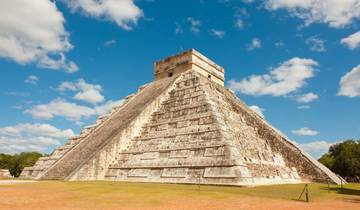
Chichen Itza ranks as the essential Yucatan UNESCO site for 2026 visitors due to its iconic status as New Seven Wonders of the World, architectural sophistication, and cultural significance as Late Classic-Early Post Classic Maya power center. The site’s centerpiece, El Castillo pyramid, represents Maya astronomy and calendar systems through 365 steps, serpent shadow phenomena during equinoxes, and precise astronomical alignments. Chichen Itza’s Great Ball Court, Temple of Warriors, Sacred Cenote, and Caracol observatory provide comprehensive Maya civilization introduction impossible to match elsewhere.
However, Calakmul offers the most authentic archaeological experience for serious heritage travelers, presenting massive structures emerging from pristine jungle, minimal restoration maintaining discovery-era atmosphere, and integration with Calakmul Biosphere Reserve supporting jaguars, pumas, howler monkeys, and 350+ bird species. Structure II rises 50 meters tall, rivaling Tikal’s tallest pyramids, while the ancient city’s geopolitical importance as Maya superpower competing with Tikal for regional dominance provides fascinating historical context rarely understood by general visitors.
For balanced recommendations in 2026: first-time Yucatan visitors should prioritize Chichen Itza (cultural icon and comprehensive introduction), Uxmal (finest Puuc architecture with fewer crowds), and Sian Ka’an (extraordinary biodiversity and coastal ecosystems). Travelers with extended time or return visits should add Calakmul (remote jungle pyramid adventure) and Historic Campeche (colonial heritage complementing Maya sites). This staged approach optimizes heritage experiences while respecting time constraints and travel logistics affecting most visitors.
What is the total cost of visiting all Yucatan UNESCO sites in 2026?
Admission costs for all five Yucatan UNESCO World Heritage Sites total €88-115 in 2026. Individual entrance fees include Chichen Itza €25, Uxmal €18, Calakmul €15 (plus €5 Biosphere Reserve access), Historic Campeche fortifications and museums €10-12 combined, and Sian Ka’an Biosphere €5 (included in authorized tour costs). Check official INAH website for archaeological sites and respective park websites for current rates as pricing may vary. These fees cover basic admission without guided tour services, which add substantially to total costs.
Guided tours increase UNESCO site visiting costs significantly but provide essential historical interpretation: Chichen Itza group tours from nearby cities cost €35-50 per person, Uxmal group tours €30-45, Calakmul full-day expeditions €110-140 (including transportation from Xpujil or Bacalar, guide, meals), Campeche walking tours €15-25, and Sian Ka’an biosphere boat tours €65-85. Total guided tour costs range €255-345 for all five UNESCO sites in group settings, rising to €500-700+ for private guide experiences throughout. These investments transform sites from impressive ruins to comprehensible historical narratives.
Complete 8-10 day itineraries visiting all Yucatan UNESCO sites cost €850-1,400 per person excluding international flights but including accommodation (€280-450 for mid-range hotels), admissions and tours (€340-460), meals (€150-250 at €20-30 daily average), and internal transportation via ADO buses (€70-95 for complete circuit). Budget travelers reduce costs to €650-850 through hostels and street food, while luxury travelers exceed €2,000-3,000 with boutique hotels, private guides, and premium experiences. The region’s cost structure enables UNESCO heritage exploration at virtually any budget level.
Do you need guides at Yucatan UNESCO sites or can you explore independently?
Archaeological UNESCO sites (Chichen Itza, Uxmal, Calakmul) allow independent exploration without mandatory guide requirements, though hiring certified guides dramatically enhances understanding and appreciation. These sites present complex architectural programs encoding astronomical knowledge, religious cosmology, dynastic histories, and social structures incomprehensible without expert interpretation. Hieroglyphic inscriptions, building orientations, sculptural programs, and spatial relationships reveal sophisticated meanings lost to casual observation without trained explanation.
Certified guides available at site entrances cost €40-60 for small groups (1-6 people) at Chichen Itza and Uxmal, offering 90-120 minute tours covering major structures and historical contexts. Quality varies significantly, with best guides holding archaeology degrees, INAH certification, and years of experience versus minimally trained individuals focusing on basic tourist information. Request guides affiliated with established tour companies or recommended by accommodations for higher quality assurance. Audio guides available at major sites (€5-8) provide acceptable alternatives when budget constraints prevent hiring live guides.
Sian Ka’an Biosphere requires authorized tour operators with government permits, making independent access impossible except for limited zones near Tulum accessible via Muyil archaeological site. This restriction protects fragile ecosystems while ensuring visitor safety in remote coastal environments. Historic Campeche allows independent walking exploration of fortifications and historic center, though joining walking tours (€15-25) provides colonial history, architecture analysis, and pirate attack narratives enriching the experience beyond casual wandering.
Extended multi-day tours – 5+ days
Featured Yucatan Multi-Day Tour Packages

14 days
Viva Mexico
- ✓ Comprehensive Yucatan tour
- ✓ Expert local guides included
- ✓ All accommodation arranged
- ✓ Transportation provided
5 days
Mini Wonders of the Maya with the Maya Train
- ✓ Comprehensive Yucatan tour
- ✓ Expert local guides included
- ✓ All accommodation arranged
- ✓ Transportation provided

8 days
Premium Mexico Yucatan Highlights (from Cancun to Tulum)
- ✓ Comprehensive Yucatan tour
- ✓ Expert local guides included
- ✓ All accommodation arranged
- ✓ Transportation provided
9 days
Mexico City & Merida City (Delight Mexican Cuisine)
- ✓ Comprehensive Yucatan tour
- ✓ Expert local guides included
- ✓ All accommodation arranged
- ✓ Transportation provided
Multi-day tour packages powered by TourRadar. Prices and availability subject to change.
Essential Planning Information 2026
Seasonal Considerations for UNESCO Site Visits in 2026
November through March 2026 provides optimal conditions for Yucatan UNESCO site exploration, offering comfortable temperatures (24-28°C), minimal rainfall, and lower humidity compared to summer months. Early morning archaeological visits (8:00-10:00 AM) deliver the best photography lighting, coolest temperatures, and fewest crowds before tour groups arrive from coastal resorts. Chichen Itza experiences peak visitation during this period, requiring advance booking 2-4 weeks ahead for guaranteed access within daily 8,000-visitor caps, while Uxmal, Calakmul, and other sites maintain manageable visitor numbers even during winter.
April through October constitutes Yucatan’s hot and rainy season, with significant implications for UNESCO site visits. Temperatures reach 32-35°C regularly, making midday archaeological exploration uncomfortable and potentially dangerous without adequate hydration and sun protection. However, this period offers substantial advantages: 30-40% lower accommodation costs, 40-50% fewer visitors at archaeological sites (except Mexican holiday periods), lush green jungle surroundings at Calakmul and Uxmal, and afternoon thunderstorms creating dramatic photography opportunities. Archaeological site visits require early morning timing (arriving at 8:00 AM opening) to complete exploration before peak heat.
Hurricane season (June-November) peaks September-October, requiring weather monitoring and flexible itinerary planning. While direct hurricane impacts occur infrequently, tropical storms bring heavy rainfall and wind affecting outdoor activities. Travel insurance covering weather disruptions costs €40-60 for comprehensive Yucatan trips and provides essential protection during summer-fall travel. The Calakmul access road becomes challenging during heavy rains, while Sian Ka’an boat tours may cancel due to wind and wave conditions. October-November shoulder season offers transitional weather with moderate temperatures, reduced storm risk, and beginning of optimal tourism conditions.
Accommodation Strategies for UNESCO Site Circuits in 2026
Strategic accommodation positioning optimizes UNESCO site access while minimizing backtracking and wasted travel time. Merida serves as the ideal base for western Yucatan, located 80 kilometers from Uxmal and 120 kilometers from Chichen Itza with excellent ADO bus connections. Allocate 3-4 nights in Merida enabling day trips to both archaeological sites, exploration of Merida’s colonial center and museums, and potential Puuc Route extension (Kabah, Sayil, Labna). Mid-range hotels in Merida cost €50-80 nightly, providing exceptional value compared to Caribbean coast equivalents.
Campeche City functions as the gateway for visiting Historic Campeche fortifications and launching Calakmul expeditions. Budget 2-3 nights: one day exploring the fortified colonial center and museums, one full day for Calakmul (departing 5:00-6:00 AM, returning 5:00-6:00 PM). Campeche accommodation ranges €25-60 for budget-to-mid-range properties, offering excellent restaurants, waterfront promenade, and authentic Mexican city atmosphere. Alternatively, stay in Xpujil (closer to Calakmul) for access to multiple archaeological sites in the Rio Bec region, though Xpujil offers limited services compared to Campeche’s urban amenities.
Tulum provides the base for Sian Ka’an Biosphere access and completes the UNESCO circuit. Most Sian Ka’an tours depart from Tulum (30-45 minutes to biosphere entrance), though some tours originate in Playa del Carmen (60-75 minutes). Budget 2-3 nights in Tulum allowing one day for biosphere tour, one day combining Tulum archaeological site with cenote swimming, and beach relaxation time. Tulum accommodation costs significantly more than interior cities: budget hotels start €50-70, mid-range properties €100-140, reflecting Caribbean beach proximity and international tourist demand. Complete UNESCO circuit accommodations over 8-10 days total €350-650 for mid-range options.
Transportation Logistics Between UNESCO Sites in 2026
ADO bus network connects major Yucatan destinations efficiently for UNESCO site circuits: Cancun to Merida costs €20-25 (4 hours, hourly departures), Merida to Campeche €12-15 (2.5 hours, hourly), Campeche to Xpujil €25-35 (5 hours, 2-3 daily), and Tulum to Playa del Carmen €5-8 (45 minutes, every 30 minutes). However, reaching Calakmul from Xpujil requires tour operators or rental cars, as no public transportation serves the 60-kilometer access road through Calakmul Biosphere Reserve. Total ADO bus costs for complete UNESCO circuit range €70-95 over 8-10 days.
Rental cars provide maximum flexibility for UNESCO site exploration, particularly valuable for visiting Uxmal, smaller Puuc Route sites (Kabah, Sayil, Labna), and maintaining schedule control. Compact cars cost €35-50 daily plus mandatory Mexican insurance (€15-25 daily) and gas (€10-15 for 200-300 kilometer days), totaling €60-90 daily. For 8-10 day UNESCO circuits, rental cars cost €480-720 total plus €60-80 gas, compared to €70-95 for ADO buses. However, rental cars eliminate tour costs for Uxmal and Chichen Itza (saving €65-100), partially offsetting higher transportation expenses.
Hybrid transportation strategies optimize costs and convenience: use ADO buses for intercity transfers between Merida, Campeche, and Tulum, join organized tours for Calakmul (required unless driving personally) and Sian Ka’an (permit requirements make tours mandatory), and rent cars for 1-2 day focused archaeological exploration around Merida (Uxmal, Puuc Route). This approach totals €280-380 for transportation over 10 days versus €550-800 for continuous rental cars or €450-600 for complete tour-based transportation, while maintaining comfort and flexibility throughout the UNESCO circuit.
Chichen Itza: Icon of Maya Civilization
Historical Significance and UNESCO Recognition
Chichen Itza represents one of Maya civilization’s most powerful and sophisticated urban centers, dominating northern Yucatan from approximately 600-1200 CE with peak influence during the Late Classic and Early Post-Classic periods (800-1200 CE). UNESCO inscribed Chichen Itza as World Heritage Site in 1988, recognizing its “exceptional testimony to the Maya-Toltec civilization” and masterpieces of Mesoamerican architecture synthesizing Maya, Central Mexican, and Puuc styles into unique artistic expressions. The site’s astronomical precision, urban planning sophistication, and artistic achievements demonstrate advanced mathematical, astronomical, and engineering knowledge rivaling any contemporary civilization.
The city controlled extensive trade networks connecting central Mexico to the Guatemalan highlands, with archaeologists identifying obsidian from central Mexico, turquoise from New Mexico, jade from Guatemala, and gold from Panama in excavations. Chichen Itza’s Sacred Cenote served as pilgrimage destination for Maya peoples throughout Yucatan, with offerings recovered including jade jewelry, gold disks, incense, textiles, and human remains associated with ritual sacrifices. This religious authority combined with military power and economic control established Chichen Itza as Maya world’s preeminent power during its dominance period.
The city’s decline around 1200 CE remains subject to archaeological debate, with theories including political fragmentation, environmental degradation, drought, and shifting trade routes all potentially contributing. However, the site maintained religious significance throughout Post-Classic period and even after Spanish conquest, with contemporary Maya communities continuing ceremonial activities at Chichen Itza into modern times. This cultural continuity spanning 1,400+ years demonstrates the site’s enduring importance beyond academic archaeological interest.
Architectural Masterpieces and Their Meanings
El Castillo (Temple of Kukulcan) stands 24 meters tall with nine platforms representing the nine levels of Maya underworld (Xibalba), four staircases with 91 steps each totaling 364 steps plus the temple platform reaching exactly 365 (solar year days). The pyramid’s northwestern corner creates serpent shadow effects during spring and autumn equinoxes when sunlight passing building edges produces the illusion of feathered serpent descending the staircase, demonstrating sophisticated astronomical knowledge and architectural precision. Recent discoveries using ground-penetrating radar revealed a smaller pyramid inside El Castillo’s structure, indicating multiple construction phases and continuous ritual importance.
The Great Ball Court measures 168 meters long and 70 meters wide, representing Mesoamerica’s largest ball court with stone rings mounted 8 meters high on opposing walls. Relief carvings depict ball game scenes with decapitation imagery, suggesting ritual sacrifice connections, though the exact rules and religious significance remain debated among scholars. The court’s acoustic properties allow whispers at one end to be heard clearly at the opposite end 168 meters distant, demonstrating intentional acoustic engineering unprecedented in ancient architecture.
The Temple of Warriors complex features hundreds of columns carved with warrior figures, supporting roof structures over extensive covered spaces. Adjacent Thousand Columns Group demonstrates urban planning organizing large populations through sophisticated architectural programs. The Sacred Cenote, located 300 meters from the main ceremonial center via sacbe (elevated white road), yielded thousands of ritual offerings during early 1900s dredging operations, with discoveries including jade, gold, incense, textiles, and human remains confirming Spanish colonial accounts of human sacrifice at this sacred water source.
Visiting Strategies for Chichen Itza in 2026
Chichen Itza requires advance booking during peak season (November-March 2026) due to daily visitor caps of 8,000 people, with reservations available through the official INAH platform at chichenitza.inah.gob.mx. Entry costs €25 for general admission in 2026 (check official website for current rates as pricing may vary). Early morning access (6:00-8:00 AM premium tours) provides optimal conditions with manageable crowds, cooler temperatures, and superior photography lighting before intense midday sun. These premium experiences cost €35-45 including early entry and guided tours, often requiring 3-4 weeks advance booking during winter months.
Standard arrival timing should target 8:00 AM opening when gates open to general visitors. Tour buses from Cancun and Playa del Carmen begin arriving 9:30-10:00 AM, transforming the site from contemplative exploration into crowded tourist spectacle by late morning. Plan 3-4 hours minimum for thorough Chichen Itza exploration: 90 minutes for main ceremonial center (El Castillo, ball court, Temple of Warriors), 60 minutes for outlying structures (Caracol observatory, Sacred Cenote, Platform of Skulls), and additional time for visitor center museum and gift shops. Certified guides cost €40-60 for small groups (1-6 people), offering 90-120 minute tours covering site highlights and historical contexts.
Bring minimum 2 liters water per person (limited expensive options inside), sun protection including hat and high-SPF sunscreen, comfortable walking shoes suitable for uneven limestone terrain, and small backpack for supplies (subject to security screening at entrance). The site lacks shaded rest areas beyond limited palapa structures near vendor zones, requiring stamina for extended exposure to intense Yucatan sun. Drone usage is strictly prohibited, tripods require special permits, and climbing pyramid structures is no longer permitted following fatal accidents and conservation concerns. Evening light shows (April-October, check current schedules) provide dramatic alternative visiting experiences with El Castillo and other structures illuminated while narrations describe Maya history.
Uxmal: Puuc Architectural Excellence
Puuc Regional Style and Historical Context
Uxmal represents the finest expression of Puuc architectural style, characterized by elaborate stone mosaic facades, masks of Chaac (rain god with distinctive long nose), geometric patterns, and columns decorating upper building sections while lower walls remain relatively plain. This distinctive style developed in the Puuc hills region of southern Yucatan during Late Classic period (600-900 CE), with Uxmal serving as the dominant political center within a regional alliance including Kabah, Sayil, Labna, and other nearby sites connected via sacbeob (white roads).
UNESCO inscribed Uxmal as World Heritage Site in 1996, recognizing its “outstanding universal value” as “testimony to the height of Maya art and civilization” during its Late Classic florescence. The designation criteria emphasized Uxmal’s architectural masterpieces representing “the culmination of Puuc architectural tradition,” though political histories, hieroglyphic texts, and detailed chronologies remain less well understood than sites like Tikal or Copan due to limited surviving inscriptions and discontinuous archaeological investigation compared to more extensively studied Maya centers.
Environmental factors significantly influenced Uxmal’s development, as the Puuc region lacks surface water sources (rivers, lakes, cenotes), forcing Maya inhabitants to develop sophisticated water management systems including chultuns (underground cisterns) and elaborate rainwater collection infrastructure. This water scarcity explains the proliferation of Chaac masks throughout Uxmal’s architecture, as rain god propitiation held existential importance for agricultural success and population survival. The city’s eventual abandonment around 1000 CE correlates with Terminal Classic drought periods affecting much of the Maya world.
Architectural Highlights and UNESCO Designation Features
The Pyramid of the Magician rises 35 meters tall with unique rounded corners distinguishing it from typical Maya pyramids’ sharp edges. Maya legend attributes the structure’s construction to a dwarf magician who built it overnight, though archaeological evidence indicates five construction phases spanning 600-900 CE, with each phase enclosing previous structures in typical Maya architectural practice. The pyramid’s western staircase features especially steep 60-degree incline, historically allowing visitors to climb to summit temple though currently closed for safety concerns. The eastern entrance showcases massive Chaac mask with doorway forming the rain god’s mouth, demonstrating Puuc style’s elaborate decorative programs.
The Governor’s Palace spans 100 meters in length, featuring facades decorated with over 20,000 individually carved stones forming intricate geometric lattices, serpent motifs, and 103 Chaac masks. This extraordinary decorative achievement represents hundreds of thousands of hours of skilled stone carving labor, demonstrating Uxmal’s ability to mobilize and support specialized artisan populations. The building’s astronomical orientation aligns with Venus rising positions over the Pyramid of Magician visible from the Governor’s Palace doorway, indicating sophisticated astronomical knowledge integrating architectural design with celestial observations essential to Maya calendar systems and agricultural timing.
The Nunnery Quadrangle (named by Spanish conquistadors who thought the complex resembled Spanish convents) surrounds a central plaza with four buildings featuring distinct decorative programs on their facades. The northern building displays the most elaborate ornamentation including lattice patterns, small temple models, and human figures, while other buildings show varying decorative densities. Modern archaeological interpretation suggests the quadrangle served as elite residential complex or administrative center rather than religious structures, demonstrating Puuc style’s application to secular as well as ceremonial architecture. The Great Pyramid provides panoramic views across Uxmal’s ceremonial center and surrounding landscape, offering perspective on the city’s spatial organization and relationship to surrounding Puuc hills environment.
Planning Uxmal Visits in 2026
Uxmal opens 8:00 AM-5:00 PM daily with admission costing €18 in 2026 (check official INAH website for current rates). The site attracts significantly fewer visitors than Chichen Itza (approximately 500,000 annually versus 2.5-3 million), creating more contemplative exploration atmospheres. Optimal arrival timing targets 9:00-10:00 AM when morning light enhances photography of the Governor’s Palace and other structures while temperatures remain comfortable. Plan 2.5-3 hours minimum for thorough exploration covering all major structures, with additional time for visitor center museum displaying artifacts and architectural models explaining construction techniques.
Evening sound and light shows operate March-October (confirm current schedules at uxmal.inah.gob.mx or through hotel concierges), projecting historical narratives onto building facades with dramatic lighting effects. These shows cost €10-15 additional beyond standard admission and provide unique nighttime experiences of Uxmal’s architectural grandeur. Spanish and English versions alternate days, requiring schedule verification to ensure comprehensible language. Shows begin after dark (approximately 7:00-8:00 PM depending on season), with gates opening 6:00 PM for show attendees to explore the site during golden hour lighting before darkness.
Combine Uxmal visits with Puuc Route exploration for comprehensive regional understanding. The route includes Kabah (elaborate arch spanning ancient sacbe, Palace of Masks), Sayil (Great Palace with 90+ rooms), Xlapak (small but well-preserved), and Labna (ornate arch, Palace, Mirador pyramid), all located within 30 kilometers of Uxmal. Guided tours from Merida covering Uxmal and 2-3 Puuc Route sites cost €55-75 including transportation, guide, and admissions, departing 8:00 AM and returning 3:00-4:00 PM. Independent travelers with rental cars can explore the Puuc Route at their own pace, with each smaller site requiring 30-45 minutes exploration and €5-8 individual admissions.
Calakmul: Hidden Jungle Pyramid Complex
Archaeological Significance and Biosphere Reserve Integration
Calakmul dominated the southern Maya lowlands from 250-900 CE as one of the region’s most powerful kingdoms, controlling vast territories and engaging in century-long conflicts with rival Tikal (northern Guatemala) for regional supremacy. UNESCO inscribed the Ancient Maya City and Protected Tropical Forests of Calakmul, Campeche in 2002 as mixed cultural-natural World Heritage Site, with 2014 extension expanding protected areas to 723,000 hectares. This designation recognized Calakmul’s “exceptional testimony to the long-lived Maya civilization” and its integration within “one of the largest remaining tropical forests in Mesoamerica” supporting extraordinary biodiversity.
Archaeological investigations revealed over 6,000 structures within Calakmul’s urban core and surrounding suburbs, housing an estimated 50,000-65,000 inhabitants at the city’s Late Classic peak (600-800 CE). Excavations uncovered 120+ carved stelae providing unprecedented hieroglyphic records of dynastic histories, military campaigns, and ritual activities spanning 500+ years. Royal tombs yielded spectacular jade masks, elaborate ceramics, shell ornaments, and hieroglyphic texts describing rulers’ lives and achievements. Particularly significant discoveries include Tomb 4 containing jade mosaic death mask of ruler Yuknoom Ch’een II (reigned 636-686 CE), demonstrating artistic sophistication rivaling any contemporary civilization.
Calakmul’s geopolitical importance stemmed from controlling strategic trade routes connecting Maya heartland with Gulf and Caribbean coasts, enabling accumulation of wealth funding monumental construction and military campaigns. The kingdom formed complex alliance networks, arranged elite marriages linking distant cities, and waged wars subjugating smaller polities throughout Peten region. However, Calakmul’s defeat by Tikal in 695 CE marked the beginning of decline, with the city eventually abandoned around 900 CE during Terminal Classic collapse affecting most Maya lowland centers. The subsequent 1,100+ years of jungle growth preserved structures in discovery-era condition, creating authentic archaeological atmosphere lost at heavily restored sites.
Natural Heritage and Wildlife Encounters
Calakmul Biosphere Reserve protects the largest remaining tropical forest in southern Mexico and northern Guatemala, forming part of the Maya Forest extending across three countries (Mexico, Guatemala, Belize). The reserve supports five of Mexico’s six big cat species (jaguar, puma, ocelot, jaguarundi, margay), over 350 bird species including ocellated turkey and ornate hawk-eagle, howler and spider monkeys, white-lipped peccaries, tapirs, and hundreds of reptile and amphibian species. This biodiversity concentration results from habitat diversity encompassing tropical forests, wetlands, and ancient Maya agricultural terraces now rewilded.
Wildlife encounters during Calakmul visits occur regularly for patient, observant visitors. Howler and spider monkeys inhabit trees surrounding archaeological structures, creating distinctive vocalizations echoing through the forest. Ocellated turkeys (Yucatan’s endemic turkey species with iridescent plumage) forage on forest floors, relatively habituated to human presence. Bird diversity peaks during early morning hours (6:00-9:00 AM), with mixed-species flocks including toucans, parrots, trogons, and motmots moving through canopy. Jaguar and puma sightings remain rare (occurring perhaps once yearly for frequent Calakmul visitors), though tracks visible on trails and roads confirm their presence.
The biosphere’s conservation success results from collaborative management between Mexican government agencies, international conservation organizations, and local communities benefiting from ecotourism revenues and sustainable forest product harvesting. Community-based tourism initiatives including guided tours, traditional cooking demonstrations, and craft sales provide economic alternatives to extractive activities threatening forest integrity. Visitors’ entrance fees and tour costs directly support conservation programs and community development projects, making heritage tourism essential for long-term protection of this irreplaceable natural and cultural landscape.
Access Strategies and Visiting Logistics for 2026
Reaching Calakmul requires significant planning as the archaeological site sits 60 kilometers from Highway 186 along a single-lane road passing through dense jungle. The access drive requires 75-90 minutes each direction at maximum 40 km/h speeds due to road conditions and frequent wildlife crossings requiring constant attention. Most visitors join guided full-day tours departing from Xpujil (closest town, 60 kilometers from site) or Bacalar (200 kilometers, but more established tourist infrastructure). Tours cost €110-140 in 2026 including round-trip transportation, certified archaeological guide, packed lunch, water, biosphere reserve entrance fee (€5), and archaeological site admission (€15).
Independent travelers with rental cars can drive to Calakmul, though 4WD vehicles provide greater confidence on occasionally rough road sections and during rainy season (June-October) when conditions deteriorate. Depart accommodations by 5:30-6:00 AM to reach the site by 8:00-8:30 AM, allowing 3-4 hours exploration before beginning return journey. Bring substantial water (3+ liters per person), snacks or packed lunch (no food services at site), insect repellent (mosquitoes numerous in shaded forest areas), and full-coverage clothing protecting against sun and insects. Gas stations exist in Xpujil and Escarcega, requiring fuel planning as no services operate along the access road or within biosphere.
Structure II, Calakmul’s tallest pyramid at 50 meters height, remains climbable in 2026 (check current policies as climbing restrictions expand at many Maya sites). The 120+ step ascent requires reasonable fitness and comfort with steep, narrow stairs, but rewards with spectacular jungle canopy views extending to Guatemala border visible 30+ kilometers distant on clear days. Structure I (45 meters) provides alternative viewpoint accessible via less strenuous climb. The archaeological zone encompasses multiple building groups connected by trails totaling 5+ kilometers, with comprehensive exploration requiring 3-4 hours walking on forest paths with moderate elevation changes and uneven terrain.
Historic Fortified Town of Campeche
Colonial Heritage and UNESCO Recognition
Historic Fortified Town of Campeche received UNESCO World Heritage designation in 1999 recognizing it as “an outstanding and characteristic example of a Baroque colonial town with a planned system of fortifications” protecting against 17th-18th century Caribbean pirate attacks. The designation emphasized Campeche’s exceptionally preserved fortifications, urban layout maintaining Spanish colonial grid patterns, and over 1,000 historic buildings spanning 1540-1850 demonstrating architectural evolution from simple vernacular structures to elaborate baroque and neoclassical mansions.
Spanish conquistador Francisco de Montejo founded Campeche in 1540 as San Francisco de Campeche, establishing Mexico’s first Spanish settlement in Yucatan Peninsula. The city developed as principal port connecting Yucatan with Cuba and Veracruz, exporting dyewood, salt, hardwoods, and silver while importing manufactured goods from Spain. This economic importance attracted pirates including Henry Morgan, Laurens de Graaf, and Diego el Mulato, who repeatedly sacked the city throughout the 1600s, killing inhabitants and destroying property despite fortification attempts.
Following particularly devastating 1663 attack, Spanish crown authorized construction of massive defensive walls and bastions surrounding the entire city center, completed 1686-1704. These fortifications successfully repelled subsequent attacks, with Campeche’s defensive architecture representing finest examples of Spanish military engineering in the Americas. The walls originally formed a hexagon 2.5 kilometers in perimeter with 8 bastions (defensive towers) connected by ramparts, though 19th century urban expansion demolished portions. Seven of eight bastions survive today, each housing museums covering topics from pirate history to Maya archaeology.
Architectural Features and Colonial Urban Landscape
Campeche’s fortifications demonstrate sophisticated military architecture adapted to tropical conditions and coastal defense requirements. The walls stand 8 meters high and 2.5 meters thick, constructed from limestone blocks and coral aggregate, with bastions projecting outward enabling defensive fire along wall faces. Four main gates (Puerto de Mar, Puerto de Tierra, San Román, and Guadalupe) controlled access to the city, with Puerto de Tierra (Land Gate) surviving complete with defensive mechanisms including drawbridge, portcullis, and cannon positions. Evening light shows at Puerto de Tierra (€8-10 admission) recreate colonial-era atmosphere with period music, historical narratives, and lighting effects.
The historic center’s urban layout follows Spanish colonial planning principles with grid pattern streets centered on main plaza (Plaza de la Independencia), Cathedral dominating the plaza’s east side, and principal buildings occupying blocks around this ceremonial core. The Cathedral of Campeche combines baroque and neoclassical elements in its facade, with construction spanning 1650-1850 reflecting changing architectural fashions. Surrounding streets contain merchant houses, government buildings, and churches painted in pastel colors (blues, pinks, yellows, greens) mandated by local regulations maintaining traditional aesthetic character.
Casa de Teniente del Rey (House of the King’s Lieutenant) and other mansions demonstrate colonial elite architecture with courtyards, arcades, high ceilings facilitating air circulation, and ornate facades displaying family crests and baroque ornamentation. Many converted to boutique hotels, restaurants, or museums, enabling visitors to experience colonial architectural interiors while supporting adaptive reuse preserving historic structures. The Malecon (waterfront promenade) extends several kilometers with monuments commemorating pirate attacks, maritime history, and prominent Campeche citizens, functioning as the city’s social center for evening paseos (walks) by local families.
Exploring Historic Campeche in 2026
Walking tours provide optimal Historic Campeche exploration, as the compact fortified center encompasses approximately 1 square kilometer fully walkable in 2-3 hours. Self-guided exploration using free maps available at tourism information office (Plaza Principal) works adequately, though guided walking tours (€15-25, departing 9:00 AM and 4:00 PM from main plaza) provide historical narratives about pirate attacks, fortification construction, and colonial daily life enriching the experience. Tours visit bastions, walk rampart sections, explore Cathedral interior, and enter colonial mansions now serving as museums or cultural centers.
Seven surviving bastions house different museums requiring combined admission of €10-12 covering all locations. Baluarte de San Carlos (Maya archaeology), Baluarte de la Soledad (stelae collection from Maya sites throughout Campeche state), Baluarte de San Pedro (handcraft museum), and Baluarte de Santiago (botanical garden) offer varied cultural experiences beyond military history. Allocate 3-4 hours exploring bastions and museums, with additional time for Cathedral visit (free admission), main plaza people-watching, and shopping for local crafts including Panama hats, hammocks, and jewelry featuring black coral (though purchase of black coral jewelry contributes to reef damage and should be avoided).
Evening activities in Campeche include sunset walks along the Malecon watching fishing boats return to harbor, dinner at restaurants serving Campeche specialties like pan de cazon (shark bread), seafood cocktails, and stone crab, and attending Puerto de Tierra light show. The historic center’s restaurant scene offers excellent value compared to Caribbean coast equivalents, with traditional Campeche cuisine at €10-18 per meal in atmospheric colonial settings. Campeche functions as an overnight stop between western Yucatan (Merida, Uxmal) and southern sites (Calakmul), though the city’s charm and authenticity justify 2-night stays for thorough exploration and appreciation of Mexico’s best-preserved colonial fortified town.
Sian Ka’an Biosphere Reserve: Caribbean Wilderness
Natural Heritage and Biodiversity Significance
Sian Ka’an Biosphere Reserve protects 528,000 hectares of pristine Caribbean coastal ecosystems designated by UNESCO in 1987 as one of Mexico’s first natural World Heritage Sites. The designation recognized Sian Ka’an’s “exceptional natural beauty” and “outstanding examples representing major stages of earth’s history,” with the reserve encompassing tropical forests, wetlands, mangroves, barrier reef systems, and 110+ kilometers of largely undeveloped coastline. The site’s name derives from Maya language meaning “origin of the sky,” reflecting the area’s spiritual significance to indigenous communities maintaining traditional relationships with these landscapes.
The reserve supports extraordinary biodiversity including over 300 bird species (roseate spoonbill, jabiru stork, frigatebirds, 15 heron species), five big cat species (jaguar, puma, ocelot, jaguarundi, margay though sightings remain rare), West Indian manatees in coastal lagoons, American crocodiles throughout wetlands, four sea turtle species nesting on protected beaches (loggerhead, green, hawksbill, leatherback), and hundreds of fish species in reef and lagoon ecosystems. Botanical diversity exceeds 1,200 plant species adapted to varied habitats from coastal dune vegetation to inland tropical forests.
Sian Ka’an’s conservation success results from collaborative management balancing protection with sustainable use by 20+ Maya communities residing within or adjacent to reserve boundaries. Communities participate in ecotourism operations, maintain traditional fishing practices in designated zones, and harvest forest products including chicle (chewing gum base) using sustainable techniques. This integrated conservation model demonstrates how protected areas can support both biodiversity preservation and local livelihoods, providing international examples for combining heritage protection with community development.
Ecosystem Diversity and Visiting Zones
Sian Ka’an encompasses five major ecosystem types requiring different access strategies. Coastal lagoons connected by channels offer the most accessible ecosystems through authorized boat tours departing from Tulum or Muyil. These shallow, crystal-clear lagoons support seagrass beds hosting manatees, dolphins, and abundant fish populations, while surrounding mangroves provide nesting habitat for waterbirds and juvenile fish nurseries. Boat tours navigate channels connecting lagoons, with opportunities for swimming in ultra-clear water and floating through ancient Maya canals constructed 1,000+ years ago for connecting inland settlements to coast.
Tropical forests in the reserve’s interior protect jaguars, pumas, spider monkeys, and resident bird communities including toucans, parrots, and motmots. However, forest zones remain largely inaccessible to tourists due to lack of trails and permit restrictions protecting wildlife from disturbance. Some specialized tour operators offer multi-day jungle trekking experiences (€300-500 for 2-3 day expeditions) with camping in the reserve, though these require advance arrangements with authorized guides and appeal primarily to serious nature enthusiasts rather than general visitors.
Barrier reef systems offshore protect coastal areas from wave action while supporting coral communities, reef fish, sea turtles, and nurse sharks visible during snorkeling excursions. Full-day tours (€110-140) combine lagoon boat journeys with reef snorkeling, beach time at Punta Allen fishing village, and traditional seafood lunch, providing comprehensive Sian Ka’an ecosystem experiences. Caribbean beaches within the reserve remain largely undeveloped except for Punta Allen, maintaining natural character increasingly rare along the heavily developed Riviera Maya corridor north of the reserve.
Access Strategies and Tour Options for 2026
Visiting Sian Ka’an requires joining authorized tour operators holding government permits for biosphere access, as independent entry is prohibited except for limited zones near Tulum accessible via Muyil archaeological site. Standard tours cost €65-85 in 2026 and depart 6:00-7:00 AM from Tulum hotels or meeting points (check specific tour operator pickup policies). Tours include round-trip transportation, boat journey through coastal lagoons and mangrove channels, swimming opportunities in crystal-clear channels, wildlife observation with guides identifying bird species and explaining ecosystem functions, and visits to Maya archaeological sites within reserve boundaries (particularly Muyil). Tours return 2:00-3:00 PM, making them compatible with other Tulum-area activities in morning or evening.
Full-day extended tours (€110-140) add barrier reef snorkeling at offshore sites, beach time at Punta Allen fishing village, and traditional seafood lunch included in pricing. These excursions depart earlier (5:30-6:00 AM) and return later (4:00-5:00 PM), requiring full-day commitment but providing more comprehensive Sian Ka’an experiences including both coastal lagoon and open Caribbean environments. Tour group sizes typically range 8-15 participants, maintaining manageable numbers for wildlife observation while keeping per-person costs reasonable through shared transportation and guide services.
The Muyil-Sian Ka’an route provides alternative access combining Muyil archaeological site (€5 admission) with boat tours into the biosphere. This option costs €55-75 and attracts fewer participants than standard Tulum-departure tours, creating more intimate wildlife experiences. The floating channel tour takes visitors through ancient Maya canal systems connecting coastal lagoons, with opportunities to float peacefully through crystal-clear waters surrounded by mangrove forests. Bird watching peaks during November-March with migratory species joining resident populations, while June-August offers authorized night tours for sea turtle nesting observation (limited availability, book well in advance through specialized tour operators).
Visiting Strategies for 2026
Sequential Routing: West to East UNESCO Circuit
The optimal UNESCO circuit route proceeds west to east: Merida base (Uxmal, Chichen Itza) → Campeche (Historic Campeche, Calakmul) → Tulum/Riviera Maya (Sian Ka’an), minimizing backtracking while following logical geographical progression. This routing totals approximately 800 kilometers over 8-10 days with 4-5 accommodation bases, allowing thorough exploration without rushed schedules. Begin in Merida (3-4 nights) for access to western archaeological sites, continue to Campeche (2-3 nights) for colonial heritage and Calakmul expedition, and conclude in Tulum (2-3 nights) for Sian Ka’an biosphere and Caribbean beach experiences.
Alternative routing proceeding east to west (Tulum → Campeche → Merida) functions equally well, particularly for travelers arriving Cancun Airport and departing from Merida or western Yucatan. The primary consideration involves matching major expenditure days (Calakmul full-day tour €110-140, Sian Ka’an tour €65-85, guided archaeological tours €35-60) with budget planning, as concentrated expensive activities strain daily spending targets if clustered. Distribute high-cost experiences throughout the itinerary, alternating with budget-friendly days exploring colonial cities independently, visiting smaller archaeological sites, or enjoying free beach time.
For travelers with limited time (5-7 days), prioritize three UNESCO sites representing diverse heritage types: Chichen Itza (iconic Maya city), Uxmal (architectural excellence with fewer crowds), and either Sian Ka’an (natural biosphere) or Historic Campeche (colonial heritage). This abbreviated circuit totals €450-650 per person over 5-7 days including accommodation (€175-280), tours and admissions (€160-240), meals (€100-140), and transportation (€55-75), delivering concentrated UNESCO heritage experiences without requiring extended vacation time.
Themed Itineraries: Archaeological Focus vs. Diverse Heritage
Archaeological-focused itineraries emphasize Maya civilization’s material remains, dedicating maximum time to Chichen Itza, Uxmal, and Calakmul with extensions to secondary sites along the Puuc Route (Kabah, Sayil, Labna) and Rio Bec region (Becan, Chicanna, Xpujil). This approach appeals to archaeology enthusiasts, history buffs, and travelers prioritizing ancient civilizations over natural or colonial heritage. Allocate 8-10 days: Merida 4 nights (Uxmal day, Chichen Itza day, Puuc Route day, Merida exploration day), Campeche 1 night, Xpujil 2 nights (Calakmul day, Rio Bec sites day), returning to Cancun via Bacalar.
Diverse heritage itineraries balance archaeological, colonial, and natural World Heritage components, providing comprehensive Yucatan UNESCO experiences without overwhelming emphasis on Maya ruins. This approach suits general travelers seeking varied experiences and families with children who might tire of repeated archaeological visits. Structure 10-12 days: Merida 3 nights (Uxmal, city exploration, cooking class or cultural activity), Campeche 2 nights (Historic Campeche, Calakmul), Bacalar 2 nights (lagoon relaxation, kayaking, cenote swimming), Tulum 3 nights (Sian Ka’an, Tulum ruins, beach time). This routing provides UNESCO site diversity while maintaining comfort and avoiding travel exhaustion.
For luxury travelers or those prioritizing unique experiences over comprehensive coverage, selective UNESCO site visits combined with premium accommodations and exclusive activities deliver high-quality heritage engagement. Visit only Chichen Itza (private dawn access), Uxmal (after-hours exclusive tour), and Sian Ka’an (private boat with naturalist guide), staying at Rosas & Xocolate (Merida), Hacienda Puerta Campeche, and luxury Tulum beach property. This approach costs €2,500-3,500+ per person over 8-10 days but provides exceptional experiences impossible to replicate through standard tourism, including private archaeological site access, expert guides, and premium accommodations in heritage properties.
Photography Considerations for UNESCO Site Documentation
Optimal photography timing at Yucatan UNESCO sites requires understanding sun positions and site orientations. Chichen Itza’s El Castillo photographs best during early morning (8:00-10:00 AM) when eastern sun illuminates the pyramid’s western face, or late afternoon (3:00-5:00 PM) for dramatic shadows though crowds complicate compositions. The Great Ball Court faces north-south enabling even lighting throughout the day, while Temple of Warriors benefits from afternoon sun highlighting column details. Bring wide-angle lens (16-35mm full-frame equivalent) for architectural compositions, telephoto zoom (70-200mm) for detail shots and crowd-free framing of distant structures.
Uxmal’s Governor’s Palace demands morning sun (8:00-11:00 AM) for optimal facade illumination showcasing intricate stone mosaic details. The Pyramid of the Magician photographs dramatically from multiple angles throughout the day, with sunrise providing pink-golden light and sunset creating silhouette opportunities. Puuc architecture’s elaborate upper zone decorations require careful exposure balancing bright sky against shadowed lower walls, suggesting bracketed exposures or HDR techniques for maximum detail retention. Polarizing filters help manage bright Yucatan sky while enhancing limestone’s warm tones.
Calakmul presents unique photography challenges due to jungle setting creating dappled lighting and contrast extremes. Climb Structure II for sunrise (requiring overnight near Xpujil and pre-dawn site access through specialized tour operators) capturing jungle canopy extending to Guatemalan border with atmospheric morning mist. Wildlife photography requires telephoto lenses (300mm+), fast shutter speeds for motion-freezing, and patience waiting for clear shots between foliage. Sian Ka’an water clarity enables underwater photography using waterproof cameras or housings, capturing crystal-clear lagoon channels and mangrove root systems. Historic Campeche’s pastel building facades photograph beautifully during golden hour (6:00-8:00 AM, 5:00-7:00 PM) when warm light enhances colonial architecture’s colors against Caribbean sky.
Budget Planning for 2026 UNESCO Circuit
Detailed Cost Breakdown by Category
UNESCO site admissions total €88-115 for all five locations: Chichen Itza €25, Uxmal €18, Calakmul €20 (€15 site + €5 Biosphere Reserve), Historic Campeche bastions and museums €10-12 combined, and Sian Ka’an included in mandatory tour costs (€65-85). These represent non-negotiable base costs applicable to all visitors regardless of budget level. However, optimal heritage experiences require guided tours substantially increasing total expenses: archaeological site guides cost €35-50 per site for group experiences (€150-200 across Chichen Itza, Uxmal, Calakmul), Calakmul full-day tour €110-140 (includes transportation, guide, meals), and Sian Ka’an tour €65-85 (includes transportation, guide, boat). Total guided tour costs reach €340-460 compared to €88-115 for admission-only self-guided approaches.
Accommodation costs over 8-10 day UNESCO circuits range €280-650 depending on comfort level. Budget travelers staying hostels (€15-25 nightly dormitories) or budget hotels (€35-50 private rooms) total €280-400 for complete circuit. Mid-range travelers choosing comfortable hotels (€50-80 interior cities, €80-120 Caribbean coast) spend €450-650 over 8-10 nights. Luxury travelers at boutique properties and beach resorts exceed €1,200-2,000 for equivalent duration. Strategic accommodation selection balances comfort with costs, potentially mixing budget options in interior cities (where quality-to-price ratios favor budget properties) with mid-range choices on coast (where budget accommodation quality declines more substantially).
Meals cost €15-45 daily depending on dining choices. Budget eating (street food, local fondas, market meals) totals €15-25 daily, mid-range restaurant dining €30-45, luxury dining experiences €60-100+. Over 8-10 days, food expenses range €150-250 (budget), €280-400 (mid-range), or €600-1,000+ (luxury). Many travelers find hybrid approaches optimal: breakfast at accommodations or self-catered (€5-8), lunch at local restaurants (€10-15), occasional upscale dinners (€25-40), maintaining daily food costs around €30-40 while enjoying culinary variety. This flexible strategy prevents both budget exhaustion from constant restaurant dining and culinary monotony from excessive budget constraint.
Money-Saving Strategies Without Compromising Heritage Experiences
Book accommodations during shoulder seasons (April-May, October-November) reducing nightly costs 25-35% compared to December-March peak season without significantly compromising weather conditions or site access. Interior city hotels (Merida, Campeche, Valladolid) offer particular value during shoulder season, often discounting to €40-60 for properties charging €65-90 in winter. Caribbean coast savings reach 30-40%, making shoulder season Tulum accommodation (€70-100) comparable to peak season interior city pricing while providing beach access and coastal amenities.
Join group archaeological tours rather than hiring private guides, saving 50-60% while receiving comparable expert interpretation. Standard Chichen Itza tours from Merida cost €45-60 for 8-12 participants versus €200-300 for private experiences, with the primary tradeoff being schedule inflexibility and shared guide attention. Solo travelers and couples find group tours particularly economical, while families or small groups should calculate private tour per-person costs (€200-300 divided by participants) against group tour pricing to identify optimal value. Many travelers book group tours for major sites (Chichen Itza, Uxmal) while allocating budget for one private experience at their favorite location.
Use ADO buses for intercity transportation (€70-95 complete UNESCO circuit) rather than rental cars (€480-720 plus €60-80 gas over 8-10 days), accepting reduced flexibility as reasonable tradeoff for substantial savings. However, consider rental cars for 1-2 day periods enabling independent Puuc Route exploration or flexible timing at Uxmal without tour group constraints. This hybrid transportation strategy totals €180-250 (buses + limited car rental) versus €550-800 for continuous rental cars or €450-600 for complete tour-based approaches. Save additional €80-150 eliminating guided tour costs for Uxmal and secondary sites explored independently, though this approach requires greater research and archaeological interest for rewarding experiences without expert interpretation.
Budget Templates: Three Spending Levels
Budget UNESCO Circuit (€650-850 per person, 8-10 days): Hostel dormitories €15-25 nightly (€150-225 total), street food and local restaurants €20-25 daily (€180-225 total), ADO buses for transportation (€70-95), admissions and essential tours €280-360 (Calakmul and Sian Ka’an full-service tours required, other sites self-guided with optional small-group tours for Chichen Itza and Uxmal). This budget enables comprehensive UNESCO coverage through strategic prioritization and cost consciousness without extreme deprivation. Expect shared accommodations, authentic local dining experiences, public transportation requiring patience and flexibility, and mixture of guided and self-guided archaeological exploration.
Mid-Range UNESCO Circuit (€1,200-1,600 per person, 8-10 days): Comfortable hotels €60-100 nightly (€540-800 total), quality restaurants €35-45 daily (€315-405 total), mixed ADO buses and occasional taxis (€90-120), comprehensive guided tours for all major sites (€380-480). This budget provides substantial comfort advantages including private rooms, air conditioning, swimming pools, diverse dining options from traditional Mexican to international cuisine, transportation convenience eliminating extended bus station waits, and expert archaeological interpretation at all UNESCO sites. Represents optimal balance for most travelers between comfort, convenience, and cost control.
Luxury UNESCO Circuit (€2,500-3,500+ per person, 8-10 days): Boutique hotels and luxury properties €150-300 nightly (€1,350-2,400 total), fine dining and culinary experiences €70-120 daily (€630-960 total), rental car or private driver (€500-800), private guides and exclusive experiences (€600-900). This budget delivers exceptional heritage engagement through premium accommodations in colonial haciendas and beach resorts, outstanding culinary experiences showcasing Yucatan’s gastronomic traditions, complete transportation flexibility, and private archaeological guides providing customized interpretation. Enables early morning exclusive site access, after-hours tours, specialized expert guides (archaeologists, naturalists), and luxury positioning throughout the UNESCO circuit.
2026 Updates & Current Information
Yucatan Peninsula’s UNESCO World Heritage Sites continue implementing visitor management strategies balancing heritage protection with tourism access in 2026. Chichen Itza’s daily visitor cap system initiated in 2024 continues expanding with refined time-slot booking enabling better crowd distribution throughout the day. The official booking platform at chichenitza.inah.gob.mx allows advance purchase 2-4 weeks ahead, with premium early morning access (6:00-8:00 AM) and evening experiences providing alternatives to standard 8:00 AM-5:00 PM general admission. These policies improve visitor experiences while protecting structures from excessive foot traffic and environmental stress.
Calakmul Biosphere Reserve implements enhanced conservation measures following 2022 IUCN monitoring recommendations, including trail restoration projects, wildlife monitoring expansion, and community development programs supporting sustainable livelihoods. Tour operator permits now require demonstrated environmental and social responsibility commitments, with preference given to locally-owned cooperatives employing community guides and distributing tourism revenues broadly. These initiatives strengthen conservation outcomes while ensuring heritage tourism benefits local Maya communities maintaining cultural connections to archaeological sites and surrounding forests.
Infrastructure improvements throughout 2025-2026 enhance UNESCO circuit accessibility. The Maya Train connecting Cancun, Playa del Carmen, Tulum, Bacalar, Campeche, and Merida provides alternative transportation to traditional ADO buses, though service frequency, pricing, and station locations continue evolving. Verify current schedules through official Maya Train channels before finalizing 2026 travel plans. New hotels opening throughout the peninsula, particularly in Merida and Campeche, increase accommodation supply potentially moderating peak season pricing, while Tulum’s continued development raises concerns about overtourism impacts on nearby archaeological sites and natural areas.
For current information on UNESCO site hours, admission fees, special access programs, and temporary closures, verify details through official sources in the weeks before travel. The INAH website (inah.gob.mx) maintains archaeological site updates, UNESCO World Heritage Centre (whc.unesco.org) publishes conservation status reports, and state tourism boards provide regional information. Reputable tour operators communicate operational changes affecting planned activities, while online forums (TripAdvisor, Lonely Planet Thorn Tree) offer recent visitor reports on current site conditions and access considerations. Flexibility in 2026 itineraries accommodates potential schedule adjustments while maintaining comprehensive Yucatan UNESCO World Heritage exploration opportunities.
Frequently Asked Questions: Yucatan UNESCO Sites 2026
Which Yucatan UNESCO site requires the most advance planning?
Chichen Itza requires the most advance planning due to daily visitor caps limiting entry to 8,000 people and advance booking requirements during peak season (November-March 2026). Book tickets 2-4 weeks ahead through the official INAH platform at chichenitza.inah.gob.mx, particularly for early morning premium access (6:00-8:00 AM) or evening light shows which sell out substantially in advance. All other Yucatan UNESCO sites accept walk-in visitors throughout 2026, though Calakmul and Sian Ka’an require joining authorized tour operators due to remote locations and permit requirements rather than capacity restrictions.
Can you visit multiple UNESCO sites in one day?
Visiting multiple UNESCO sites in a single day proves logistically difficult due to distances, individual site complexity, and operating hours. Chichen Itza and Uxmal sit 100+ kilometers apart requiring 90+ minutes driving plus 2-3 hours exploring each site, making same-day visits exhausting and rushed. Calakmul requires full-day commitment with 75-90 minute access drives each direction plus 3-4 hours on-site exploration. Only Historic Campeche’s compact size (explored thoroughly in 2-3 hours) combines reasonably with other activities, potentially pairing with Edzna archaeological site (60 kilometers from Campeche) or beginning/ending Calakmul expeditions. For optimal UNESCO heritage experiences, dedicate separate days to each site enabling thorough exploration without exhausting schedules.
Are Yucatan UNESCO sites accessible for people with disabilities?
Accessibility at Yucatan UNESCO sites varies significantly. Historic Campeche provides the best access, with flat historic center streets, rampart sections offering wheelchair access, and bastion museums generally accessible. Chichen Itza’s main plaza remains relatively flat enabling wheelchair access to El Castillo views and Great Ball Court, though uneven limestone pavement presents challenges. Uxmal’s terrain includes elevation changes and uneven surfaces limiting wheelchair mobility, while Calakmul’s jungle trails and Structure climbing prove impossible for visitors with significant mobility limitations. Sian Ka’an boat tours accommodate passengers with limited mobility (though boat boarding requires assistance), and some tour operators provide specialized equipment and itineraries for accessibility needs when arranged in advance.
What’s included in Calakmul and Sian Ka’an tour costs?
Calakmul full-day tours (€110-140) include round-trip transportation from Xpujil or Bacalar, certified archaeological guide, packed lunch and water, Biosphere Reserve entrance fee (€5), and archaeological site admission (€15). Tours depart 5:00-6:00 AM, reaching the site by 8:00-8:30 AM for 3-4 hours exploration before beginning return journey by 1:00-2:00 PM. The pricing reflects substantial transportation costs (150-180 kilometer round-trip on slow jungle road), specialized guides knowledgeable about archaeology and natural history, and permit requirements limiting daily visitor numbers. Sian Ka’an standard tours (€65-85) include transportation from Tulum, boat journey through lagoons and channels, swimming opportunities, guide interpretation, and visits to Maya sites within the reserve. Full-day Sian Ka’an tours (€110-140) add barrier reef snorkeling, Punta Allen village visit, and included seafood lunch.
Can you swim at UNESCO-designated beaches in Sian Ka’an?
Sian Ka’an Biosphere Reserve’s Caribbean beaches remain largely restricted to protect nesting sea turtles and preserve natural coastal ecosystems. Tour operators provide limited beach access at Punta Allen fishing village included in full-day excursions, though this represents a small developed section within the massive 528,000-hectare reserve. The reserve’s primary visitor experiences focus on lagoon boat tours, mangrove channel exploration, and wildlife observation rather than beach recreation. For Caribbean beach experiences, visit Tulum’s extensive public beaches immediately north of the Sian Ka’an boundary, where tourism infrastructure supports beach clubs, restaurants, and water sports while still offering the region’s characteristic white sand and turquoise water.
Why is Calakmul less visited than Chichen Itza despite comparable significance?
Calakmul receives approximately 30,000-40,000 annual visitors compared to Chichen Itza’s 2.5-3 million due to remote location, access challenges, and limited marketing to international tourists. Reaching Calakmul requires significant effort: the site sits 60 kilometers from nearest highway along slow jungle road requiring 75-90 minutes each direction, with full-day tours departing from Xpujil (limited tourist infrastructure) or Bacalar (200 kilometers distant). Most Caribbean coast tourists prioritize easily accessible Chichen Itza (2-hour tour bus trips from Cancun/Playa del Carmen) over challenging Calakmul excursions. However, Calakmul’s remoteness creates its appeal for serious heritage travelers: authentic discovery-era atmosphere, minimal crowds, pristine jungle setting, extraordinary wildlife encounters, and sophisticated archaeological interpretation impossible at heavily commercialized Chichen Itza.
What’s the best way to learn about Maya civilization before visiting UNESCO sites?
Prepare for Yucatan UNESCO site visits by reading “The Maya” by Michael Coe (comprehensive civilization overview), “Breaking the Maya Code” by Michael Coe (hieroglyphic decipherment history), or “Maya Cosmos” by David Freidel (cosmology and ritual). Watch documentaries including “Cracking the Maya Code” (hieroglyphic decipherment) and “Lost Kingdoms of the Maya” (National Geographic series) for visual introductions to Maya archaeology and history. Visit regional museums before archaeological sites: Merida’s Gran Museo del Mundo Maya provides excellent civilization overview with scale models and artifacts, while site museums at Chichen Itza and Uxmal display context-specific information. Consider hiring private archaeological guides for 1-2 sites providing in-depth interpretation exceeding group tour experiences, with accumulated knowledge enhancing subsequent self-guided exploration at other locations.
Are there UNESCO sites beyond the five primary designations in Yucatan?
The five UNESCO World Heritage Sites represent Yucatan’s only official designations as of 2026, though numerous additional archaeological sites merit UNESCO consideration. Tulum’s dramatic coastal setting combines Maya architecture with Caribbean views though its relatively small size and intense tourism diminish heritage integrity. Coba presents massive pyramids including Nohoch Mul (42 meters, Yucatan’s tallest climbable pyramid) and extensive site covering 70+ square kilometers, though visitor facilities and conservation remain less developed than UNESCO-designated properties. Ek Balam showcases extraordinarily preserved stucco facades but lacks the architectural scale and historical documentation supporting UNESCO nomination. Palenque (Chiapas state, not Yucatan Peninsula) holds UNESCO designation as one of Mexico’s premier Maya sites, though visiting requires extending travel beyond the Yucatan Peninsula into neighboring regions.
What’s the difference between Maya sites in Mexico versus Guatemala and Belize?
Maya civilization extended across southern Mexico (Yucatan Peninsula, Chiapas, Tabasco), Guatemala, Belize, western Honduras, and El Salvador, with architectural styles, urban organization, and historical trajectories varying by region and time period. Yucatan sites (Chichen Itza, Uxmal, Calakmul) demonstrate Late Classic and Post-Classic developments with Puuc and Toltec-Maya architectural styles, extensive chultun (cistern) systems reflecting water scarcity, and political fragmentation with numerous competing city-states. Guatemalan sites like Tikal and El Mirador represent Classic period peak with massive pyramid construction, sophisticated urban planning, and powerful centralized kingdoms dominating regional politics. Belize sites including Caracol and Lamanai show connections to both Peten (Guatemala) and Yucatan, with unique architectural features reflecting cultural exchange and regional innovation. Comprehensive Maya civilization understanding requires visiting sites across multiple countries, though Yucatan provides excellent introduction covering architectural traditions, historical periods, and contemporary Maya culture.
How does climate change affect visiting Yucatan UNESCO sites in 2026?
Climate change increasingly impacts Yucatan UNESCO site visits through rising temperatures, intensified hurricane patterns, and environmental stress affecting archaeological preservation. Summer temperatures (April-October) regularly exceed 35°C, making midday archaeological exploration uncomfortable and potentially dangerous without adequate hydration and sun protection. Hurricane season (June-November) demonstrates increased volatility with tropical storms developing more rapidly and following less predictable tracks, requiring flexible travel planning and comprehensive insurance. Archaeological sites face conservation challenges from temperature extremes, moisture fluctuations, and increased storm intensity stressing limestone structures and stucco decorations. These factors strengthen the case for November-March peak season travel when weather remains comfortable and predictable, though increased tourist volumes requiring advance planning represent the tradeoff for optimal conditions.