
Yosemite National Park Local Ecology Guide
Yosemite’s ecosystems operate through intricate networks of species interactions, energy flows, and nutrient cycles connecting every organism from microscopic bacteria to massive sequoias. Understanding these ecological relationships reveals how the park functions as living system rather than collection of individual species. Each organism plays roles in food webs, nutrient cycles, and evolutionary relationships spanning millions of years. The ecological knowledge preserved in Yosemite demonstrates principles governing all ecosystems while showcasing unique adaptations to Sierra Nevada conditions.
Key Takeaways
- Black oak acorns drive fall food webs, supporting black bears, acorn woodpeckers, western gray squirrels, and numerous other species
- Seasonal migration patterns move mule deer, butterflies, and birds between elevations following vegetation growth and weather
- Pollination networks connect wildflowers with specialized bees, butterflies, and hummingbirds adapted to specific flower structures
- Predator-prey relationships control population dynamics, with mountain lions regulating deer while coyotes control rodents
- Mycorrhizal fungi networks connect trees underground, sharing nutrients and water while supporting forest health
- Decomposition cycles return nutrients to soil, with fungi, bacteria, and invertebrates breaking down organic matter
Introduction
Local ecology examines relationships between organisms and their environment at scales from individual interactions to landscape processes. Yosemite’s dramatic elevation gradients compress ecological zones typically spanning hundreds of miles into vertical distances traversed in hours. This compression creates natural laboratories where ecologists study how temperature, moisture, and elevation influence species distributions and community composition. The protected status enabling long-term research provides insights impossible in landscapes experiencing rapid human modification.
People Also Ask About Yosemite Local Ecology
How Do Food Webs Work in Yosemite?
Yosemite food webs begin with primary producers including trees, shrubs, and herbaceous plants converting sunlight into chemical energy through photosynthesis. Herbivores including deer, ground squirrels, and countless insects consume plant materials, with different species specializing on specific plant parts, species, or growth stages. Predators occupy higher trophic levels, with species like mountain lions, coyotes, and hawks consuming herbivores. Decomposers including fungi, bacteria, and invertebrates break down dead organic matter, returning nutrients to soil where plants absorb them, completing the cycle.
Omnivores including black bears consume both plant and animal foods, occupying multiple trophic levels simultaneously. Bears eat berries, acorns, grasses, insects, small mammals, and carrion, with diet varying seasonally based on availability. This dietary flexibility enables bears to exploit resources as they become available, though it creates complex food web relationships defying simple classification. Scavengers including ravens, coyotes, and California condors consume dead animals, recycling nutrients that might otherwise remain locked in carcasses. These species provide essential services removing disease sources while recovering energy and nutrients.
What Keystone Species Exist in Yosemite?
Black oaks function as keystone species, with their acorns supporting exceptional wildlife diversity despite oaks comprising relatively small portions of forest cover. Over 300 vertebrate species use oak habitats, with many depending on acorns as crucial food source. Acorn woodpeckers store thousands of acorns in granary trees, creating resources used by multiple species. Western gray squirrels cache acorns throughout forests, inadvertently planting oaks through forgotten caches. Black bears consume vast quantities of acorns during fall, building fat reserves for winter dormancy. The loss of oaks would cascade through ecosystems, affecting species far beyond those directly consuming acorns.
Beavers, though less abundant in Yosemite than historically, demonstrate classic keystone species effects where they occur. Their dam building creates wetlands supporting diverse plant and animal communities. Ponds behind dams provide habitat for amphibians, aquatic insects, and fish while attracting waterfowl and other birds. Meadows form when abandoned ponds fill with sediment, increasing habitat diversity. The engineering work of individual beaver families transforms landscapes, creating conditions unavailable without their activities. Their historical extirpation from much of the Sierra Nevada removed these ecosystem engineering effects.
How Do Seasons Affect Yosemite’s Ecology?
Spring brings renewal as snow melts, temperatures warm, and plants begin growing. Wildflowers emerge following snowmelt, with different species flowering sequentially through the growing season. Migrant birds return from southern wintering grounds, timing arrival to coincide with insect emergence. Mule deer move upslope from winter range, following the “green wave” of fresh vegetation. Black bears emerge from winter dens, initially feeding on vegetation before diversifying diets. Amphibians breed in temporary pools created by snowmelt, with tadpoles racing to complete metamorphosis before pools dry.
Summer’s warm temperatures and long days enable maximum plant growth and animal activity. High-elevation meadows reach peak productivity, with lush vegetation supporting grazing mammals. Butterflies emerge in waves, with species specialized for different elevation bands appearing as conditions become suitable. Young animals born in spring grow rapidly, developing survival skills before fall. Trees and shrubs produce seeds and fruits consumed by wildlife, with different species maturing throughout summer and fall. The season’s abundance contrasts with winter scarcity, driving species to accumulate energy reserves.
Extended multi-day tours – 5+ days
Featured Park Yosemite National Park Multi-Day Tour Packages
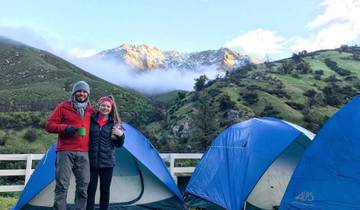
3 days
Yosemite Escape Camping – 3 Days
- ✓ Comprehensive Park Yosemite National Park tour
- ✓ Expert local guides included
- ✓ All accommodation arranged
- ✓ Transportation provided
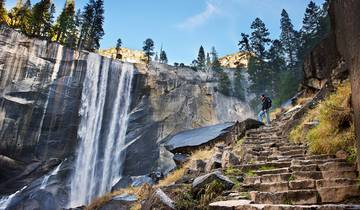
6 days
Hiking in Yosemite National Park
- ✓ Comprehensive Park Yosemite National Park tour
- ✓ Expert local guides included
- ✓ All accommodation arranged
- ✓ Transportation provided

3 days
Yosemite Escape Lodging – 3 Days
- ✓ Comprehensive Park Yosemite National Park tour
- ✓ Expert local guides included
- ✓ All accommodation arranged
- ✓ Transportation provided
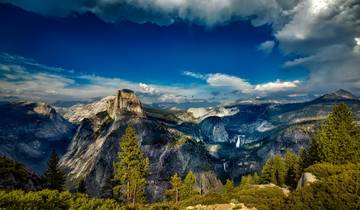
8 days
Hiking Sequoia, Kings Canyon, and Yosemite
- ✓ Comprehensive Park Yosemite National Park tour
- ✓ Expert local guides included
- ✓ All accommodation arranged
- ✓ Transportation provided
Multi-day tour packages powered by TourRadar. Prices and availability subject to change.
Acorn-Based Food Webs
California black oaks dominate mid-elevation forests in Yosemite Valley and surrounding areas, producing acorn crops varying dramatically between years. Mast years, occurring at irregular intervals, produce exceptional acorn abundance when weather conditions favor pollination and acorn development. Poor crop years see minimal production, creating boom-and-bust cycles affecting dependent wildlife. This variable production influenced indigenous peoples’ seasonal movements, with Ahwahneechee concentrating efforts during mast years to gather and store acorns supporting winter survival.
Acorn woodpeckers create granary trees riddled with thousands of holes, each sized precisely to hold individual acorns. These colonial birds harvest acorns and store them in granaries defended by family groups throughout winter. The stored acorns attract numerous other species attempting to raid granaries, creating complex interactions between woodpeckers and would-be thieves including squirrels, jays, and deer. Woodpecker colonies persist for decades, with new holes drilled as old ones become oversized through repeated use. Some granary trees contain over 50,000 holes accumulated across generations.
Western gray squirrels cache individual acorns throughout their territories, burying thousands during fall in scattered locations. The squirrels’ remarkable spatial memory enables recovering most caches during winter, though forgotten acorns sometimes germinate, dispersing oaks across landscapes. Gray squirrels face competition from ground squirrels, chipmunks, and deer mice also harvesting acorns. Predators including bobcats, hawks, and great horned owls hunt squirrels, with predation risk forcing squirrels to balance foraging efficiency against safety. This predator-prey dynamic influences where and when squirrels harvest acorns.
Black bears rely heavily on acorns during fall, consuming up to 20,000 calories daily while preparing for winter dormancy. Bears climb oaks to access acorn-laden branches, sometimes breaking branches to reach the most productive sections. A single bear may consume 15,000-20,000 acorns daily during peak availability, with acorns providing fats and proteins essential for surviving winter. Years with poor acorn crops force bears to range more widely seeking alternative foods, increasing human-bear conflicts as bears investigate developed areas. The correlation between acorn availability and bear behavior demonstrates the crop’s ecological importance.
Mule deer browse oak leaves and twigs during summer while consuming fallen acorns during fall and winter. Deer population dynamics respond to food availability, with good acorn years supporting higher fawn survival and population growth. Mountain lions prey selectively on deer, with predation affecting deer behavior, distribution, and population numbers. This three-way relationship between oaks, deer, and lions demonstrates trophic cascade effects where predators indirectly influence vegetation through effects on herbivores. Areas with active lion presence see different deer browsing patterns than areas where deer experience lower predation pressure.
Pollination Ecology
Yosemite’s flowering plants depend on diverse pollinators including native bees, butterflies, moths, hummingbirds, and other animals. Native bees including bumblebees, mason bees, and sweat bees visit flowers collecting pollen and nectar, transferring pollen between flowers while feeding. Different bee species show preferences for particular flower types based on color, shape, and nectar availability. Some plants evolved specialized relationships with specific bee species, with flower structures accessible only to appropriately sized and shaped pollinators. These relationships demonstrate coevolution between plants and pollinators occurring over millions of years.
Hummingbirds pollinate tubular red flowers including penstemons, columbines, and Indian paintbrush. These flowers’ shapes match hummingbird bill lengths, while red colors attract hummingbirds rather than bees, which perceive red poorly. The flowers’ nectar positions deep within tubes require hovering flight and long tongues to access, excluding most insects. Hummingbirds defend productive flower patches aggressively, chasing away competitors. Their high metabolic rates require constant feeding, with birds visiting thousands of flowers daily collecting nectar providing energy for sustained flight.
Butterflies pollinate many wildflowers while feeding on nectar, with different species showing preferences for different flower types. Monarchs, painted ladies, and numerous other species migrate through Yosemite during summer, feeding on flowers while building energy reserves for continued migration. Some butterfly species evolved specialized relationships with specific host plants, with caterpillars feeding exclusively on those plants. Adults may visit various flowers for nectar but must lay eggs on appropriate host plants for caterpillar survival. These dual requirements constrain butterfly distributions to areas containing both nectar sources and host plants.
Moth pollination, occurring primarily at night, supports flowers opening after dark. These flowers often display white or pale colors visible in low light while emitting strong fragrances attracting moths. Evening primrose and other night-blooming flowers evolved traits specifically attracting moth pollinators, demonstrating how different selective pressures shape flower characteristics. Moths receive less attention than day-flying butterflies and bees, yet they pollinate significant portions of flowering plant diversity, particularly species blooming during late evening and night.
Predator-Prey Dynamics
Mountain lions occupy apex predator positions, regulating deer populations through predation. Individual lions kill one deer every 7-10 days, with females feeding cubs requiring additional prey. Lions hunt primarily at dawn and dusk, using stalking and ambush techniques rather than sustained pursuit. Prey selection shows preferences for vulnerable individuals including young, old, or injured deer, removing animals less likely to survive and reproduce. This selective predation may improve prey population health by removing weaker individuals while preventing populations from exceeding habitat carrying capacity.
Coyotes demonstrate remarkable adaptability, consuming rodents, rabbits, carrion, fruits, and insects depending on availability. Their opportunistic feeding enables them to occupy diverse habitats from valley floor to high country. Coyotes control rodent populations including ground squirrels and voles, providing services reducing agricultural damage beyond park boundaries. They also scavenge deer carcasses killed by lions or vehicles, reducing disease risk and recycling nutrients. Coyote vocalizations including howls and yips serve communication purposes, with family groups maintaining contact across territories.
Raptors including red-tailed hawks, golden eagles, and great horned owls hunt from elevated perches or while soaring, using exceptional vision to detect prey. Hawks hunt primarily during day, using thermals to soar while scanning for ground squirrels, rabbits, and other small mammals. Owls hunt at night, using exceptional hearing to locate prey in darkness. Some owls hear well enough to catch mice moving beneath snow, with asymmetric ear placement enabling precise sound localization. These nocturnal predators occupy different temporal niches than diurnal hawks, reducing competition while maintaining predation pressure across day-night cycles.
Predator-prey cycles create population oscillations visible in rodent populations and their predators. Vole populations fluctuate with 3-4 year cycles, peaking then crashing before building again. Great gray owl breeding success tracks vole abundance, with owls producing larger clutches during vole peaks. When vole populations crash, owl breeding fails and adults may temporarily leave areas or reduce territories. These coupled dynamics demonstrate how predator populations depend on prey while predation influences prey population trajectories. The cycles continue indefinitely as long as both predator and prey populations persist.
Mycorrhizal Networks
Mycorrhizal fungi form symbiotic relationships with most Yosemite plants, with fungal hyphae colonizing root systems. The fungi extend far beyond root reaches, accessing water and nutrients from distant soil locations. Plants provide fungi with sugars from photosynthesis, while fungi provide plants with water and nutrients including phosphorus and nitrogen. This exchange benefits both partners, with most plants unable to survive without mycorrhizal associations. Different fungal species associate with different plant species, with some relationships showing specificity while others display generalist patterns.
Ectomycorrhizal relationships, common in conifers and oaks, feature fungal sheaths encasing fine roots. The fungi produce mushrooms visible above ground during appropriate seasons, with these fruiting bodies releasing spores that colonize other trees. Morel mushrooms, chanterelles, and boletes represent familiar ectomycorrhizal fungi, with mushroom hunters seeking these choice edibles. The mushroom harvest represents only fruiting structures, with vast networks of underground hyphae invisible to casual observation. Some mycorrhizal networks connect multiple trees, creating what researchers term “wood wide webs” enabling resource sharing between plants.
Recent research reveals that trees connected by mycorrhizal networks share resources including carbon, nutrients, and even chemical signals. Stressed trees may receive support from neighbors through fungal connections, with healthier trees providing resources to struggling individuals. Mother trees, large individuals with extensive mycorrhizal connections, may support offspring and neighboring seedlings, increasing survival rates. Warning signals about insect attacks or disease may travel through networks, enabling trees to activate defenses before experiencing direct attack. These discoveries revolutionize understanding of forest ecology, revealing community-level cooperation previously unsuspected.
Mycorrhizal fungi diversity influences forest resilience and productivity. Diverse fungal communities provide functional redundancy, with multiple species performing similar roles. If one species declines, others can compensate, maintaining ecosystem function. Monoculture plantations with limited fungal diversity prove more susceptible to stress than natural forests with rich fungal communities. This relationship demonstrates why biological diversity matters beyond simply counting species, with functional relationships and ecological redundancy critical for ecosystem stability. Conservation efforts increasingly consider belowground diversity equal in importance to visible plant and animal diversity.
Decomposition and Nutrient Cycling
Decomposers break down dead organic matter including fallen trees, leaf litter, and animal carcasses, returning nutrients to soil for plant uptake. Fungi lead decomposition in forest environments, with specialized species capable of breaking down cellulose and lignin in wood. Different fungal species colonize wood at different decay stages, with pioneer species initiating decay followed by species specializing on partially decomposed material. The succession of fungal species transforms solid wood into soil over decades, with old-growth forests containing logs at every decay stage from fresh falls to advanced decomposition merging into soil.
Invertebrates including beetles, termites, and millipedes contribute to decomposition through physical breakdown of organic matter. Wood-boring beetles tunnel through dead trees, creating channels allowing fungal colonization while producing frass (insect waste) falling to forest floor. Termites consume wood with help from gut bacteria, accelerating decomposition. Millipedes process leaf litter, creating fecal pellets with different chemical properties than original material. These invertebrates’ activities fragment organic matter, increasing surface area available for microbial colonization and accelerating overall decomposition rates.
Bacteria and other microorganisms complete decomposition at microscopic scales, breaking down complex organic molecules into simple nutrients absorbed by plants. Nitrogen-fixing bacteria in soil and root nodules convert atmospheric nitrogen into forms plants can use, providing this essential nutrient without which plants cannot build proteins and nucleic acids. Different bacterial species specialize in decomposing different compounds, with the microbial community’s diversity enabling breakdown of virtually any organic material given appropriate conditions. Temperature, moisture, and oxygen availability influence microbial activity, with decomposition proceeding faster in warm, moist conditions than cold, dry environments.
Nutrient cycling rates vary by elevation and ecosystem type. Valley floor forests with warm temperatures and moderate moisture experience relatively rapid decomposition, with fallen leaves decomposing substantially within one year. High-elevation forests with cold temperatures and extended snow cover see much slower decomposition, with needle litter accumulating over multiple years. Alpine environments with extreme cold experience extremely slow decomposition, with some organic matter persisting decades before fully breaking down. These differences in cycling rates influence soil development, with thin soils at high elevations reflecting slow nutrient cycling while deeper soils at lower elevations accumulate from faster cycling.
Aquatic Ecology
Stream ecosystems in Yosemite feature distinctive food webs adapted to flowing water. Aquatic insects including mayflies, caddisflies, and stoneflies dominate invertebrate communities, with different species occupying specific microhabitats based on current velocity, substrate type, and temperature. Mayfly nymphs graze algae from rock surfaces, while caddisfly larvae construct cases from sand grains or plant materials for protection. Stonefly nymphs prey on other invertebrates, occupying predator positions in stream food webs. These insects spend most of their lives underwater before emerging as winged adults to reproduce.
Native rainbow trout feed primarily on aquatic and terrestrial insects, with diet varying seasonally based on insect availability. Spring brings mayfly hatches, with trout feeding heavily during emergence periods. Summer terrestrial insects including grasshoppers and ants fall into streams, providing important food sources. Fall aquatic insect production declines, forcing trout to feed more selectively. Native fish face competition from introduced species including brown trout and brook trout, which often outcompete natives through aggressive behavior and different habitat preferences. Management efforts removing non-native fish aim to restore native rainbow trout populations.
Riparian vegetation provides critical inputs to stream ecosystems through leaf litter fall and terrestrial insects dropping from overhanging branches. Alders fix nitrogen through bacterial symbiosis, enriching riparian soils and stream waters. Willows stabilize streambanks while providing shade maintaining cool water temperatures essential for native fish and amphibians. The removal of riparian vegetation through historic grazing or development degrades stream ecosystems by eliminating shade, allowing water temperatures to rise beyond tolerances of native species. Restoration efforts replanting riparian zones demonstrate rapid ecosystem recovery once native vegetation re-establishes.
Mountain yellow-legged frogs, once abundant in high-elevation lakes and streams, experienced severe population declines due to introduced fish predation and chytrid fungus disease. These native amphibians evolved in fish-free environments, lacking defensive behaviors against fish predation. Introduction of trout to naturally fishless lakes for sport fishing devastated frog populations. Biologists removing fish from selected lakes have enabled frog population recovery, demonstrating that restoration remains possible despite severe historical declines. The frogs’ recovery requires fish-free habitats, as tadpoles require 2-4 years to metamorphose, making them vulnerable to fish predation throughout development.
Disturbance Ecology
Fire represents the most significant natural disturbance in Yosemite, with historical fire intervals of 5-25 years in lower and middle elevations. Low-intensity fires consumed surface fuels while leaving mature trees unharmed, maintaining open forest structure. Fire-adapted species evolved traits including thick bark, serotinous cones releasing seeds after fire, and rapid post-fire sprouting. Black oaks sprout vigorously from root crowns after fire kills aboveground portions, often producing multiple stems replacing the original tree. This resilience enables oaks to persist despite regular burning, while fire-sensitive species decline under natural fire regimes.
Fire suppression fundamentally altered forest composition and structure, enabling fire-sensitive white fir to invade oak woodlands and ponderosa pine forests. Without regular surface fires removing fir seedlings, dense stands developed with tree densities increasing 10-fold in many areas. This density increase stressed forests through competition while creating fuel loads supporting high-intensity fires. Management through prescribed burning and managed wildfire works to restore more natural fire regimes, though decades of suppression created conditions requiring careful reintroduction. Some areas require mechanical thinning before prescribed fire becomes feasible due to extreme fuel accumulation.
Wind storms topple trees, creating gaps in forest canopies that alter light conditions and forest structure. Gap dynamics drive forest regeneration, with different species colonizing gaps based on shade tolerance and dispersal capabilities. Shade-intolerant species including lodgepole pine establish in large gaps created by stand-replacing disturbances. Shade-tolerant species like white fir regenerate beneath canopies, gradually replacing pines as forests age. This succession process creates forests with different age structures reflecting disturbance history, with even-aged stands indicating past stand-replacing events while mixed-age forests reflect smaller-scale gap dynamics.
Bark beetle outbreaks kill extensive forest areas, particularly during droughts when trees experience stress reducing defensive resin production. Mountain pine beetles target lodgepole, ponderosa, and sugar pines, with females boring through bark to lay eggs while introducing blue-stain fungi. The fungi and beetle larvae feeding disrupt water transport, killing trees. Outbreaks create standing dead forests providing habitat for cavity-nesting birds while altering fire behavior as dead trees create elevated fuel loads. The ecological effects persist decades as dead trees fall, creating complex structural diversity in affected forests.
Climate Change Effects
Rising temperatures affect species distributions, with some species shifting upslope tracking suitable conditions. High-elevation specialists including pikas, whitebark pine, and Sierra Nevada bighorn sheep face shrinking suitable habitat as climate warms. These species evolved in cool conditions, lacking adaptations to warmer temperatures. As they move upslope following suitable conditions, mountaintops represent barriers beyond which no further movement is possible. This “escalator to extinction” threatens species already occupying high elevations with nowhere to move as conditions continue warming.
Snowpack declines affect aquatic ecosystems, plant communities, and wildlife populations. Reduced snow accumulation means less water stored for summer release, causing streams to dry earlier. Earlier snowmelt timing disrupts phenological relationships between plants and pollinators, with plants flowering before pollinators emerge or vice versa. These mismatches reduce reproductive success for both plants and animals. Meadow hydrology changes as reduced snowpack alters seasonal flooding patterns, potentially enabling tree encroachment into historically open meadows. These cascading effects demonstrate how climate change impacts extend beyond direct temperature effects.
Fire regimes change as climate warms and droughts intensify, with longer fire seasons and increased fire intensity. Historical fire intervals assumed certain climate conditions, but changing climate alters these relationships. More frequent and intense droughts stress forests, creating fuel conditions supporting high-severity fires. Even fire-adapted ecosystems may experience fires exceeding adaptive capacity, with mortality levels from which forests cannot recover. Management strategies developed under historical climate conditions may prove inadequate for future conditions, requiring adaptive approaches addressing climate-driven changes.
Invasive species benefit from climate change and disturbance, with warmer conditions often favoring non-natives over natives. Cheatgrass invades lower elevations, creating continuous fine fuels supporting frequent fires. Native plants adapted to infrequent fires cannot recover under altered fire regimes, allowing cheatgrass to dominate. White pine blister rust, an introduced disease, kills whitebark pine while warmer temperatures may expand disease range upslope. These interactive effects between climate change and biological invasions create novel challenges requiring coordinated responses addressing multiple stressors simultaneously.
Conservation Implications
Understanding ecological relationships informs conservation strategies protecting species and ecosystems. Protecting single species requires understanding their ecological roles and relationships with other species. Black bears require oak woodlands, berry-producing shrubs, and carnivore-free denning sites, with conservation requiring habitat protection rather than just managing bear populations. Umbrella species approaches protect entire ecosystems by focusing on species with large habitat requirements, with mountain lion conservation protecting landscapes supporting their prey populations and movement corridors.
Maintaining ecological processes including fire, flooding, and predation proves essential for ecosystem health. Active management restoring these processes counteracts historical suppression or elimination. Prescribed fire programs restore fire’s ecological role, while dam removal can restore natural flooding regimes in some drainages. Reintroducing extirpated species including Sierra Nevada bighorn sheep restores predator-prey and competitive relationships. These process-based approaches recognize that static preservation cannot maintain ecosystems requiring dynamic processes.
Connectivity between protected areas enables species movement and gene flow, maintaining genetic diversity and allowing range shifts in response to climate change. Wildlife corridors linking Yosemite with other protected areas facilitate movement of far-ranging species including mountain lions, allowing genetic exchange between populations. These corridors also enable species to track suitable climate conditions as they shift geographically. Fragmentation isolating protected areas threatens long-term conservation by preventing movement, requiring landscape-scale approaches crossing jurisdictional boundaries.
Long-term monitoring documents ecosystem changes, distinguishing natural variability from human-caused trends. Baseline data collected decades ago enables detecting changes that might otherwise pass unnoticed. Monitoring programs tracking vegetation, wildlife populations, and ecosystem processes provide early warning of problems requiring management intervention. These programs also evaluate management effectiveness, determining whether prescribed fires, invasive species control, or other actions achieve intended outcomes. Adaptive management uses monitoring data to refine approaches, creating iterative processes improving conservation effectiveness over time.
Frequently Asked Questions
What is a keystone species and why do they matter?
Keystone species exert disproportionate effects on their ecosystems relative to their abundance, with their removal causing cascading changes affecting multiple other species. Black oaks in Yosemite function as keystones by providing acorns supporting exceptional wildlife diversity. Removing oaks would devastate populations of acorn-dependent species including woodpeckers, squirrels, and bears. Keystone species identification helps prioritize conservation efforts, focusing resources on species whose protection provides broad ecosystem benefits. However, all species contribute to ecosystem function, making keystone species concepts useful but not justifying neglect of apparently less critical species.
How do mycorrhizal fungi benefit trees?
Mycorrhizal fungi extend far beyond root reaches, accessing water and nutrients from larger soil volumes than roots alone could exploit. The fungi provide plants with phosphorus, nitrogen, and other nutrients while receiving sugars from plant photosynthesis. This symbiosis benefits both partners, with most plants unable to survive without mycorrhizal associations. Recent discoveries reveal that mycorrhizal networks connect multiple trees, enabling resource sharing and possibly warning signals about threats. These underground networks represent critical components of forest ecosystems, with their protection important for maintaining forest health.
What happens when predators are removed from ecosystems?
Predator removal releases prey populations from predation pressure, often causing population explosions exceeding habitat carrying capacity. Overabundant herbivores may overconsume vegetation, causing ecosystem degradation. Historical wolf extirpation from Yellowstone allowed elk populations to explode, with overgrazing degrading riparian areas. Wolf reintroduction restored predation pressure, enabling vegetation recovery and cascading benefits for other species. While Yosemite never lost mountain lions completely, periods of intensive predator control affected deer populations and their ecological impacts. These examples demonstrate how predators maintain ecosystem balance through top-down control.
How does decomposition vary by elevation?
Decomposition proceeds faster in warm, moist conditions than cold, dry environments. Valley floor forests with moderate temperatures experience relatively rapid decomposition, with fallen leaves substantially decomposed within one year. High-elevation forests with cold temperatures and extended snow cover see much slower decomposition, with organic matter persisting multiple years. Alpine environments with extreme cold experience extremely slow decomposition, with some material persisting decades. These differences in decomposition rates influence soil development and nutrient availability, with implications for plant communities and ecosystem productivity.
What role do wildfires play in Yosemite ecology?
Fire maintained open forest structure, promoted diversity, enabled reproduction in fire-dependent species, and prevented fuel accumulation. Low-intensity fires burned at 5-25 year intervals historically, consuming surface fuels while leaving mature trees unharmed. Fire suppression disrupted these natural patterns, enabling fire-sensitive species to invade and fuel loads to accumulate. Contemporary management works to restore fire’s ecological role through prescribed burning and managed wildfire. However, decades of suppression created conditions requiring careful reintroduction, as accumulated fuels support high-intensity fires potentially causing damage beyond historical ranges.
How do seasonal changes affect animal behavior?
Seasonal resource availability drives migration, hibernation, reproduction, and other behaviors. Mule deer migrate between elevations following vegetation growth, with spring movements tracking the “green wave” of fresh forage. Black bears hibernate during winter when food becomes scarce, living on fat reserves accumulated during fall. Birds time breeding to coincide with peak insect availability for feeding young. These seasonal behaviors represent adaptations to predictable environmental cycles, with timing evolved over countless generations. Climate change disrupts these patterns by altering timing of seasonal events, potentially creating mismatches between resource availability and animal needs.
What are trophic cascades?
Trophic cascades occur when predators indirectly affect plant communities by controlling herbivore populations and behavior. Mountain lions preying on deer reduce browsing pressure on vegetation, allowing plants to grow larger and produce more seeds. Deer behavior changes in areas with active lion presence, with deer spending less time in risky areas and browsing less intensively. These indirect effects can restore degraded vegetation, demonstrating how carnivore conservation benefits entire ecosystems. Trophic cascades reveal that ecosystem management cannot focus solely on target species but must consider food web relationships connecting multiple trophic levels.
How do invasive species affect native ecosystems?
Invasive species compete with natives, alter ecosystem processes, and sometimes prey on or parasitize natives. Introduced fish prey on native amphibians that evolved without fish predators, causing population collapses. Invasive plants including cheatgrass alter fire regimes, creating conditions favoring invaders over natives. Once established, invasives prove difficult to eradicate, with control requiring sustained effort. Prevention through early detection and rapid response provides the most cost-effective approach. However, globalization ensures that invasive species introductions will continue, requiring ongoing vigilance and management to protect native biodiversity.
What is ecological succession?
Ecological succession describes predictable community changes following disturbance, with different species dominating at different stages. After intense fires creating large openings, shade-intolerant pioneer species including lodgepole pine establish quickly. These pioneers grow rapidly, creating forest canopy that shades understory. Shade-tolerant species including white fir establish beneath canopy, eventually replacing pioneers as they die. Without disturbance resetting succession, forests become increasingly dominated by shade-tolerant species. However, natural disturbances including fires and wind storms create gaps maintaining diverse age structures and species composition across landscapes.
How does climate change affect ecological relationships?
Climate change disrupts phenological relationships when interacting species respond differently to changing conditions. Plants may flower before pollinators emerge, reducing pollination success. Predators may miss prey population peaks if timing cues shift differently for each species. Species ranges shift as suitable climate conditions move, potentially separating species from mutualist partners or competitors regulating their populations. These disruptions create novel communities composed of species with no evolutionary history of interaction, making ecosystem responses to climate change difficult to predict. Management requires monitoring relationships, identifying disruptions, and intervening when critical interactions face breakdown.