
Yellowstone Complete History Guide
Yellowstone National Park stands as a testament to geological wonder, cultural significance, and conservation vision that transformed humanity’s relationship with wilderness. Spanning 2.2 million acres across Wyoming, Montana, and Idaho, this extraordinary landscape holds stories written in ancient lava flows, etched in Native American traditions, and preserved through pioneering legislative action. The park’s history encompasses millions of years of volcanic activity, thousands of years of human habitation, centuries of exploration, and over 150 years as a protected sanctuary that inspired the creation of national parks worldwide.
Key Takeaways
- Yellowstone sits atop one of Earth’s largest active volcanic systems, with geological activity spanning over 2 million years creating its iconic geothermal features
- Native American tribes inhabited and traversed the Yellowstone region for over 11,000 years before European exploration, developing deep cultural and spiritual connections to the land
- On March 1, 1872, President Ulysses S. Grant signed the Yellowstone National Park Protection Act, establishing the world’s first national park and pioneering the global conservation movement
- The park received UNESCO World Heritage designation in 1978, recognized for its exceptional natural phenomena and as the core of the Greater Yellowstone Ecosystem
- From military management to National Park Service stewardship, Yellowstone’s administrative evolution shaped modern park management practices worldwide
- The reintroduction of wolves in 1995 marked a landmark moment in ecological restoration, demonstrating the park’s ongoing commitment to preserving complete ecosystems
Introduction: The Living Chronicle of America’s Wonderland
Understanding Yellowstone’s history reveals not just the chronology of events, but the profound shift in human consciousness that recognized wild places as deserving permanent protection. The park’s establishment represented a revolutionary idea: that spectacular natural landscapes belonged to all people, present and future, rather than being subject to private exploitation. This concept, born at Yellowstone, spread across the globe, fundamentally changing how societies value and preserve their natural heritage.
From the catastrophic volcanic eruptions that shaped the Yellowstone Caldera to the careful ecosystem management practices of today, every chapter of this history contributes to our understanding of the delicate balance between human engagement and wilderness preservation. The geothermal features that inspired awe in early explorers continue to captivate millions of visitors, while the lessons learned through decades of wildlife management inform conservation efforts worldwide.
People Also Ask About Yellowstone History
When was Yellowstone formed and what created its unique features?
Yellowstone’s geological story begins approximately 2.1 million years ago with the first of three catastrophic volcanic eruptions that shaped the region. The Yellowstone hotspot, a massive plume of molten rock rising from deep within Earth’s mantle, positioned itself beneath the North American continental plate, creating conditions for extraordinary volcanic activity. The most recent major eruption occurred 640,000 years ago, ejecting approximately 1,000 cubic kilometers of material and forming the enormous Yellowstone Caldera that measures roughly 45 by 30 miles.
This volcanic activity created the foundation for Yellowstone’s most distinctive features: over 10,000 hydrothermal features including geysers, hot springs, mudpots, and fumaroles. The magma chamber that lies 3-8 miles beneath the surface continues to heat groundwater, which rises through fractured rhyolite rock to create these spectacular displays. Old Faithful, the park’s most famous geyser, erupts due to this precisely balanced system of underground chambers, narrow passageways, and superheated water.
The geological processes continue actively today, making Yellowstone one of Earth’s most dynamic volcanic systems. The caldera floor rises and falls in measurable amounts over periods of decades, demonstrating the living nature of the volcanic system. Thousands of small earthquakes occur annually, most too small to feel but instrumental in maintaining the fracture systems that allow hydrothermal circulation. This ongoing geological activity ensures that Yellowstone remains as dynamic and changing today as during its formation millions of years ago.
Who were the first people to inhabit Yellowstone?
Archaeological evidence demonstrates continuous human presence in the Yellowstone region for at least 11,000 years, with the earliest documented inhabitants being Paleoindian groups who followed large game animals through the high country as glaciers retreated at the end of the last Ice Age. These earliest peoples left behind distinctive Clovis and Folsom projectile points, evidence of their sophisticated hunting technologies and intimate knowledge of the landscape.
By the time European explorers arrived, multiple Native American tribes utilized the Yellowstone region, including the Shoshone, Bannock, Blackfeet, Crow, Flathead, Nez Perce, and others. The Shoshone people, particularly the Mountain Shoshone or “Sheepeaters,” maintained year-round or seasonal presence in the area, developing extensive knowledge of the geothermal features, wildlife patterns, and plant resources. These groups created sophisticated trail networks, many of which modern park roads follow today.
The tribes viewed the geothermal features with both practical and spiritual significance. Hot springs provided bathing and cooking opportunities, while the unique thermal areas held deep spiritual meaning. The tribes crafted tools from obsidian gathered from volcanic glass deposits, creating a trade network that extended across the Rocky Mountains. Evidence of their presence remains in the form of stone circles marking tipi rings, vision quest sites, and obsidian quarries that demonstrate sophisticated resource management spanning millennia.
Why did Yellowstone become the world’s first national park?
Yellowstone’s designation as the world’s first national park resulted from a convergence of factors: the extraordinary concentration of natural wonders, concerns about commercial exploitation, the vision of key advocates, and fortuitous timing in American history. The Washburn-Langford-Doane Expedition of 1870 played a crucial role, as members returned to Washington D.C. with detailed reports and sketches of the region’s wonders, contradicting earlier accounts that many had dismissed as tall tales.
Ferdinand V. Hayden led the official U.S. Geological Survey of Yellowstone in 1871, accompanied by photographer William Henry Jackson and artist Thomas Moran. Their visual documentation provided Congress with irrefutable evidence of Yellowstone’s unique features. Hayden argued persuasively that the region’s volcanic soil made it unsuitable for agriculture or mining, eliminating economic objections to preservation. This combination of documented natural wonders and perceived lack of economic value created political feasibility for protection.
The philosophical foundation came from the emerging conservation movement and the uniquely American idea that spectacular natural landscapes should belong to all citizens rather than wealthy individuals. Nathaniel P. Langford and others advocated that Yellowstone be preserved “for the benefit and enjoyment of the people,” language that appeared in the enabling legislation. Congress passed the Yellowstone National Park Protection Act in February 1872, and President Grant signed it into law on March 1, 1872, creating an unprecedented model for wilderness preservation that nations worldwide would eventually adopt.
How did the establishment of Yellowstone influence global conservation?
Yellowstone’s creation as a national park established a revolutionary precedent that fundamentally changed global approaches to conservation. The concept that governments should permanently protect spectacular natural areas for public benefit rather than private profit represented a paradigm shift in human relationship with wilderness. Within decades, other nations began establishing their own national parks, with Canada creating Banff National Park in 1885, Australia designating Royal National Park in 1879, and New Zealand protecting Tongariro National Park in 1887.
The Yellowstone model demonstrated that protected areas could balance preservation with appropriate public access, creating a template for sustainable tourism that generates economic benefits while maintaining ecological integrity. This balance addressed one of the primary obstacles to conservation: the perception that protection meant complete exclusion of human activity and economic value. Yellowstone proved that preserved landscapes could serve education, recreation, scientific research, and economic purposes simultaneously.
The international recognition of Yellowstone’s importance culminated in its 1978 designation as a UNESCO World Heritage Site, acknowledging its “outstanding universal value” and its role as the core of one of Earth’s last intact temperate ecosystems. This designation reinforced the principle that certain natural areas possess significance beyond national borders and warrant global protection efforts. Today, over 100 countries have established national park systems, with many explicitly citing Yellowstone as their inspiration and model.
Extended multi-day tours – 5+ days
Featured Park Yellowstone National Park Multi-Day Tour Packages
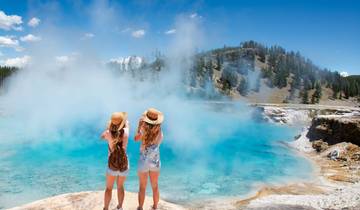
4 days
Yellowstone & Grand Teton 4 Day / 3 Night Wildlife Adventure
- ✓ Comprehensive Park Yellowstone National Park tour
- ✓ Expert local guides included
- ✓ All accommodation arranged
- ✓ Transportation provided
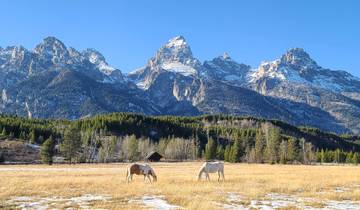
5 days
5 Day- Yellowstone and Grand Teton National Park in Depth- Hotel Based
- ✓ Comprehensive Park Yellowstone National Park tour
- ✓ Expert local guides included
- ✓ All accommodation arranged
- ✓ Transportation provided
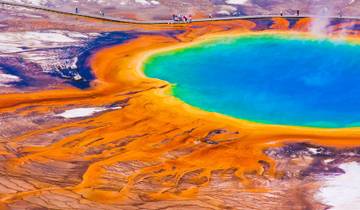
4 days
4 day Yellowstone and Tetons in depth tour from Salt Lake City Small Groups Tour
- ✓ Comprehensive Park Yellowstone National Park tour
- ✓ Expert local guides included
- ✓ All accommodation arranged
- ✓ Transportation provided
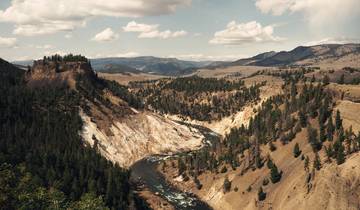
6 days
Yellowstone Camping Explorer
- ✓ Comprehensive Park Yellowstone National Park tour
- ✓ Expert local guides included
- ✓ All accommodation arranged
- ✓ Transportation provided
Multi-day tour packages powered by TourRadar. Prices and availability subject to change.
Ancient Geological Formation: The Birth of a Volcanic Wonderland
The Yellowstone region’s story begins not thousands but millions of years ago, rooted in one of Earth’s most powerful geological forces. The Yellowstone hotspot, a relatively stationary plume of superheated mantle material, has burned like a blowtorch beneath the North American continental plate for approximately 17 million years. As the plate moved southwest at about 2.5 centimeters per year, this hotspot created a chain of volcanic features stretching from southern Idaho to Yellowstone’s current location.
Three massive volcanic cycles shaped the modern Yellowstone region. The first major eruption occurred 2.1 million years ago, creating the Huckleberry Ridge Caldera and depositing ash across much of the western United States. The second eruption, 1.3 million years ago, formed the Henry’s Fork Caldera. The most recent and best-preserved eruption occurred 640,000 years ago, creating the Yellowstone Caldera that defines much of the park’s central plateau. Each of these eruptions dwarfed any volcanic event in recorded human history, with the Huckleberry Ridge eruption ejecting approximately 2,450 cubic kilometers of material—roughly 2,500 times the volume erupted by Mount St. Helens in 1980.
The volcanic activity didn’t end with caldera formation. Subsequent lava flows filled portions of the calderas, creating the relatively flat terrain of the Yellowstone Plateau. These flows, occurring as recently as 70,000 years ago, built up layers of rhyolite and basalt that characterize much of the central park area. The cooling and solidification of this volcanic rock created the fracture patterns that now channel heated groundwater toward the surface, enabling the park’s remarkable hydrothermal features.
Glaciation added another layer to Yellowstone’s geological story. During the Pleistocene epoch, massive ice sheets repeatedly advanced across the region, carving valleys, depositing moraines, and sculpting the landscape. The most recent glacial period, known as the Pinedale Glaciation, ended approximately 13,000 years ago, leaving behind the U-shaped valleys, glacial lakes, and polished granite surfaces visible throughout the park. These glaciers reached thicknesses of up to 3,000 feet in some areas, fundamentally reshaping the volcanic landscape beneath them.
The interaction between volcanic heat and glacial ice created unique features found nowhere else on Earth. Steam vents melted caverns within glaciers, while glacial meltwater interacted with hot springs to create deposits of travertine and geyserite. The erosive power of glaciers exposed deeper layers of volcanic rock, revealing the complex history of multiple eruptions and lava flows. This combination of fire and ice produced the distinctive landscape that would eventually captivate explorers and inspire the creation of the national park.
Native American Heritage: Millennia of Human Connection
Long before European explorers arrived, Native American peoples developed rich traditions and deep knowledge of the Yellowstone region. Archaeological sites throughout the park document human presence dating back over 11,000 years, making it one of the longest continuously inhabited regions in North America. These early peoples witnessed dramatic changes in climate and landscape, adapting their strategies and technologies to thrive in the challenging high-altitude environment.
The Shoshone people, particularly those known as “Tukudika” or Sheepeaters, maintained the most consistent presence in what would become Yellowstone National Park. Unlike other tribes who primarily used the region seasonally, the Sheepeaters lived year-round in the mountains, developing specialized knowledge of the area’s resources and dangers. They crafted distinctive bows from mountain sheep horns, harvested obsidian from volcanic deposits for tools and trade goods, and utilized hot springs for cooking and warmth during harsh winters.
Multiple tribes traversed Yellowstone along well-established trails, many following ancient routes created by bison and other large mammals. The Bannock Trail, crossing from Idaho to the Great Plains hunting grounds, passed through the park’s southern regions. The Crow people traveled from the east, the Blackfeet from the north, and the Nez Perce from the west. These trails facilitated not only hunting expeditions but also extensive trade networks that connected peoples across the Rocky Mountains and Great Plains.
The geothermal features held profound significance in Native American worldviews. Many tribes incorporated hot springs and geysers into their spiritual practices and oral traditions. Some tribal accounts describe changes in geyser activity over generations, demonstrating detailed long-term observation of these features. The tribes developed practical knowledge of safe approaches to thermal features and which hot springs provided ideal temperatures for cooking or bathing. They understood the seasonal movements of wildlife in relation to thermal areas, knowledge that guided their hunting and gathering activities.
The establishment of Yellowstone National Park fundamentally disrupted these ancient patterns of use. The park’s founding legislation made no provision for continued Native American access, despite millennia of occupation and use. The tribes faced forcible removal from their ancestral lands, with the last Sheepeater band evicted in 1879. This displacement represented a tragic chapter in American history, severing connections between indigenous peoples and landscapes they had shaped and been shaped by for countless generations. Recent decades have seen increased recognition of this injustice, with efforts to acknowledge Native American history within the park and, in some cases, restore certain traditional use rights.
European Exploration: From Fur Trappers to Official Expeditions
European knowledge of the Yellowstone region began filtering eastward in the early 1800s through the accounts of fur trappers and mountain men. John Colter, a member of the Lewis and Clark Expedition who remained in the Rockies after the expedition concluded, likely became the first European to explore the Yellowstone area in 1807-1808. His descriptions of spouting water and bubbling mud pots earned ridicule back east, with skeptics dubbing the region “Colter’s Hell.” These early accounts, often dismissed as exaggerations or fabrications, would later prove remarkably accurate.
Throughout the 1820s and 1830s, fur trappers working for companies like the Rocky Mountain Fur Company encountered Yellowstone’s wonders while pursuing beaver and other valuable pelts. Jim Bridger, perhaps the most famous mountain man, shared vivid descriptions of geysers, hot springs, and petrified forests, though his reputation as a storyteller caused many listeners to doubt his accounts. Osborne Russell, a trapper who kept detailed journals, provided more measured descriptions that documented the region’s extraordinary features and abundant wildlife. Despite these reports, the remoteness of the region and the lack of obvious economic resources prevented any systematic exploration or settlement.
The first official expeditions began in the 1860s as American territorial expansion reached the Rocky Mountain region. The Cook-Folsom-Peterson Expedition of 1869, though privately organized, produced the first credible published account of Yellowstone’s features. Charles Cook, David Folsom, and William Peterson spent a month exploring the region, documenting geysers, hot springs, Yellowstone Lake, and the Grand Canyon of the Yellowstone. Their published account in Western Monthly Magazine caught the attention of Montana Territory officials and sparked interest in official exploration.
The Washburn-Langford-Doane Expedition of 1870 marked a turning point in Yellowstone’s history. Led by Henry Washburn, surveyor general of Montana Territory, and escorted by Lieutenant Gustavus Doane with U.S. Army troops, this well-organized expedition spent 19 days systematically exploring and documenting the region. Nathaniel Langford kept detailed journals that would later support the park creation campaign. The expedition provided the first reliable measurements, naming many features including Old Faithful, which Lieutenant Doane timed erupting at intervals of approximately 60 minutes. Legend holds that expedition members, while camped near Madison Junction, conceived the idea of preserving Yellowstone as a national park, though historians debate the accuracy of this romantic tale.
The Hayden Expedition: Scientific Documentation and Photography
The scientific expedition led by Ferdinand V. Hayden in 1871 provided the crucial evidence needed to convince Congress to create Yellowstone National Park. Unlike earlier explorations, the Hayden expedition combined rigorous scientific methodology with visual documentation that could overcome skepticism about the region’s extraordinary features. As director of the U.S. Geological Survey, Hayden brought scientific credibility and governmental authority to the exploration effort.
Hayden assembled a team of 34 men, including photographer William Henry Jackson and artist Thomas Moran. Jackson hauled heavy glass-plate photography equipment across challenging terrain to capture the first photographic images of Yellowstone’s geothermal features and landscapes. His photographs provided irrefutable visual evidence that supplemented Hayden’s detailed written reports. Moran’s watercolors and sketches, particularly his monumental painting “Grand Canyon of the Yellowstone,” captured the region’s grandeur with artistic vision that photographs of the era could not fully convey. These combined visual records proved instrumental in convincing legislators who had never visited the region.
The expedition’s scientific work extended beyond documenting geothermal features. Hayden’s team collected botanical specimens, studied geological formations, measured thermal features’ temperatures and dimensions, and catalogued wildlife populations. Their findings demonstrated that Yellowstone contained not just curiosities but scientific phenomena worthy of preservation and study. The comprehensive nature of their documentation—geological, biological, hydrological, and topographical—established Yellowstone’s value across multiple scientific disciplines.
Hayden recognized that building political support for park creation required addressing potential economic objections. His reports emphasized that Yellowstone’s volcanic soil, high elevation, and short growing season made the region unsuitable for agriculture. He argued that the area held minimal value for mining or timber operations, removing the primary arguments against preservation. This strategic framing positioned park creation as preserving worthless land rather than locking away valuable resources, a pragmatic approach that secured crucial political support.
Upon returning to Washington D.C., Hayden immediately began lobbying for Yellowstone’s protection. He distributed copies of Jackson’s photographs and Moran’s watercolors to members of Congress, displayed them in the Capitol, and submitted detailed reports documenting the region’s unique features. His efforts, combined with advocacy from Langford and others, generated sufficient support for protective legislation. The speed of congressional action—from Hayden’s return in late 1871 to park creation in March 1872—demonstrated the compelling nature of the evidence and the growing conservation sentiment among American leaders.
Birth of a National Park: The 1872 Legislation
The Yellowstone National Park Protection Act represented revolutionary thinking about humanity’s relationship with wilderness. Introduced in Congress in December 1871, the legislation proposed setting aside over two million acres “as a public park or pleasuring-ground for the benefit and enjoyment of the people.” This language established principles that would define national parks worldwide: public ownership, preservation of natural features, and accessibility for citizen enjoyment.
The bill moved through Congress with remarkable speed, facing minimal organized opposition. Several factors contributed to this legislative success. The perceived lack of economic value in the volcanic landscape eliminated concerns about sacrificing valuable resources. The precedent of state parks, particularly Yosemite Valley and Mariposa Grove granted to California in 1864, demonstrated feasibility of preserving spectacular landscapes. The visual evidence provided by Jackson’s photographs and Moran’s artwork overcame skepticism about the region’s reported wonders. Additionally, the era’s growing conservation movement, influenced by writers like Henry David Thoreau and George Perkins Marsh, had begun shifting American attitudes toward wilderness preservation.
The House of Representatives passed the bill easily, with limited debate. The Senate proved more skeptical, with some members questioning whether the federal government possessed constitutional authority to withdraw such vast territories from potential settlement and development. However, the argument that Yellowstone lay within territories not yet organized as states, giving Congress broader authority over land disposition, addressed these constitutional concerns. The legislation passed both chambers with comfortable margins, and President Ulysses S. Grant signed it into law on March 1, 1872.
The enabling legislation established fundamental principles while leaving many practical questions unresolved. It prohibited settlement, occupancy, and sale of the land within the park. It authorized the Secretary of the Interior to make regulations preventing “wanton destruction of the fish and game” and preserving “timber, mineral deposits, natural curiosities, or wonders within said park.” However, the legislation provided no funding for park management, no staff positions, and no clear enforcement mechanisms. These oversights would create significant challenges in the park’s early decades.
The act designated Nathaniel Langford as the park’s first superintendent, though the position came with no salary or operating budget. Langford’s five-year tenure as superintendent proved largely ineffective due to the lack of resources and authority. He visited the park only twice during his superintendency, unable to prevent poaching, vandalism, and unauthorized commercial exploitation. This difficult beginning demonstrated that preservation required not just legislative designation but ongoing commitment of resources and effective management structures.
Early Management Challenges: Military Administration Era
The first 14 years of Yellowstone’s existence as a national park revealed the challenges of protecting vast wilderness areas without adequate resources or clear authority. Following Langford’s ineffective tenure, Philetus Norris served as superintendent from 1877-1882, becoming the first to receive a salary ($10,000 annually) and modest appropriations for park operations. Norris made significant improvements, constructing primitive roads, establishing a rudimentary trail system, and creating the first park headquarters at Mammoth Hot Springs. However, he lacked enforcement authority to prevent poaching and vandalism that threatened the park’s resources.
The situation reached crisis levels in the early 1880s. Commercial operators harvested timber without authorization. Poachers slaughtered wildlife, particularly bison, whose numbers in the park declined dramatically. Vandals broke formations off geysers and hot springs as souvenirs. Squatters established unauthorized homesteads. Superintendents lacked legal authority to arrest violators or levy meaningful penalties. The few prosecutions that occurred in local courts often resulted in minimal fines that failed to deter exploitation. By the mid-1880s, concerns mounted that Yellowstone might fail as a preservation experiment, potentially discrediting the entire national park concept.
Congress responded in 1886 by assigning the U.S. Army to manage Yellowstone, establishing a pattern that would continue for 32 years. The Army brought organizational capacity, discipline, and enforcement authority that civilian superintendents lacked. The first military contingent, Company M of the First United States Cavalry, arrived in August 1886 under Captain Moses Harris. The soldiers established Camp Sheridan at Mammoth Hot Springs (later renamed Fort Yellowstone), constructed buildings and infrastructure, and began patrolling the park to prevent poaching and vandalism.
Military management proved remarkably effective in protecting park resources. Soldiers patrolled on horseback and skis, apprehending poachers and unauthorized visitors. While they lacked formal arrest authority until Congress granted it in 1894, soldiers detained violators and escorted them from the park, confiscating equipment and imposing de facto penalties through equipment seizures. The military regime established the first systematic ranger patrol system, created detailed regulations governing visitor behavior, and began developing the road and trail infrastructure that would eventually serve growing tourist visitation.
The Army’s conservation work extended beyond law enforcement. Soldiers fought wildfires, constructed firebreaks, and developed the first systematic approach to fire management. They conducted wildlife censuses, protected spawning fish, and began the scientific documentation of park resources that would inform future management decisions. Military engineers designed and supervised construction of roads, bridges, and buildings that balanced visitor access with resource protection. The professionalism and discipline the Army brought to park management established standards that influenced creation of the National Park Service three decades later.
Wildlife Conservation: From Near Extinction to Ecological Restoration
Yellowstone’s history parallels the broader American experience of wildlife exploitation and conservation awakening. When the park was established in 1872, wildlife populations appeared abundant, with large herds of bison, elk, deer, and pronghorn visible throughout the region. However, decades of unregulated hunting had already reduced wildlife numbers significantly from pre-contact levels. The absence of effective protection during Yellowstone’s early years allowed poaching to reach crisis levels, particularly threatening species like bison and elk.
The plight of American bison epitomized the conservation challenges facing Yellowstone. Once numbering in the tens of millions across North America, bison faced near extinction by the 1880s. Yellowstone harbored one of the last wild populations, estimated at fewer than 25 individuals by 1902. Poachers continued killing bison for hides and mounted heads despite park regulations. The crisis came to national attention when poacher Ed Howell was captured in 1894 with six freshly killed bison, yet existing law allowed only his expulsion from the park. Public outrage over this incident spurred Congress to pass the Lacey Act of 1894, finally giving park authorities meaningful enforcement powers.
With legal protection in place, Yellowstone began active bison conservation efforts. The park purchased bison from private ranches, breeding them with the remaining wild population to rebuild herd numbers. By the 1920s, the herd had grown to several hundred animals, though this success came at a cost: the genetic mixing with ranch bison meant pure descendants of the original wild herd could no longer be identified with certainty. Despite this compromise, the bison recovery represented one of America’s first successful efforts to save a species from extinction, demonstrating that deliberate conservation action could reverse population declines.
Predator management policies revealed evolving understanding of ecological relationships. Following common practices of the era, park managers actively eliminated wolves, mountain lions, coyotes, and other predators believed to threaten “desirable” game species like elk and deer. Between 1914 and 1926, managers killed every wolf in Yellowstone, believing this would benefit elk populations. However, removing predators created unforeseen consequences. Elk populations grew beyond the range’s carrying capacity, overbrowsing willow and aspen communities crucial for ecosystem health. The absence of wolves allowed coyote populations to surge, affecting small mammal populations and bird communities.
Recognition of these mistakes came gradually through the mid-20th century as ecological science developed more sophisticated understanding of predator-prey relationships and ecosystem dynamics. By the 1960s, park management philosophy began shifting from manipulating wildlife populations toward allowing natural processes to operate with minimal human intervention. This new approach, influenced by the 1963 Leopold Report’s recommendations, set the stage for one of conservation’s most ambitious restoration projects: returning wolves to Yellowstone after a 70-year absence.
The Wolf Reintroduction: Ecological Restoration and Controversy
The reintroduction of gray wolves to Yellowstone National Park stands as one of the most significant and controversial wildlife restoration projects in American history. After decades of absence following their deliberate extermination in the 1920s, wolves returned to Yellowstone in 1995-1996 when biologists released 31 wolves captured in Canada into the northern Yellowstone ecosystem. This restoration aimed to repair the damaged ecological web created by the apex predator’s absence, testing whether ecosystems could recover from major disruptions through carefully managed intervention.
The wolf reintroduction faced fierce opposition from some ranching interests and local communities concerned about livestock depredation and impacts on hunting opportunities. Supporters, including conservation organizations and many scientists, argued that wolves were essential components of a complete ecosystem and their restoration represented fulfilling the national park’s mission of preservation. Years of environmental review, legal challenges, and political debate preceded the actual reintroduction, making the project a test case for ecosystem restoration efforts nationwide.
The ecological effects of wolf restoration exceeded many predictions, demonstrating the far-reaching influence of apex predators on ecosystem structure and function. Wolves began preying primarily on elk, the most abundant large herbivore in Yellowstone. This predation reduced elk populations from historically high levels and, more importantly, changed elk behavior. Elk became more vigilant and spent less time in vulnerable areas like valley bottoms near streams. This behavioral shift allowed willow and aspen communities, heavily browsed during the wolf-free decades, to begin recovering.
The ripple effects of willow and aspen recovery cascaded through the ecosystem, a phenomenon ecologists termed a “trophic cascade.” Beaver populations increased as willow, their primary food and building material, became more available. Beaver dams created wetlands that benefited amphibians, fish, and waterfowl. Songbirds that nest in willows became more abundant. Scavengers including ravens, magpies, and grizzly bears benefited from wolf-killed carcasses, with research showing grizzlies obtaining significant nutrition from wolf kills, particularly in spring. Even stream morphology changed as recovered riparian vegetation stabilized stream banks and reduced erosion.
The wolf population grew and stabilized at around 80-100 animals distributed among multiple packs with territories throughout the park. This population level appears to represent what the available prey base can sustainably support. The Yellowstone wolves became subjects of intensive scientific study, providing insights into wolf ecology, pack dynamics, and ecosystem effects that inform conservation efforts worldwide. The success of Yellowstone’s wolf reintroduction influenced similar restoration projects in other locations and reinforced the importance of maintaining complete predator communities for ecosystem health.
Tourism Development: From Elite Destination to Public Recreation
Yellowstone’s tourism history reflects broader patterns in American recreation and transportation technology. In the park’s earliest years, visiting required considerable expense, time, and physical endurance. Travelers reached the region by transcontinental railroad to stations in Montana or Utah, then continued by stagecoach over rough roads. Early hotels near thermal features charged premium prices, making Yellowstone primarily accessible to wealthy tourists. The park hosted only a few hundred visitors annually during the 1870s, with numbers slowly growing as transportation improved.
The arrival of the Northern Pacific Railroad to Gardiner, Montana, at the park’s north entrance in 1883 marked a crucial development, reducing travel time and cost significantly. The railroad company aggressively promoted Yellowstone tourism, recognizing the park as a destination that would generate passenger revenue. The company constructed the enormous National Hotel near Mammoth Hot Springs, establishing a pattern of commercial concessions providing visitor services within the park. Other transportation companies developed competing routes and services, with stagecoach roads connecting the park’s major features in a circuit that became known as the Grand Loop.
The automobile’s arrival in 1915 revolutionized Yellowstone tourism, despite initial resistance from the park administration. The military managers initially banned automobiles, citing concerns about safety, wildlife disturbance, and conflicts with horse-drawn traffic. However, the growing popularity of automobile ownership and demands from the public forced reconsideration. When cars were finally permitted, the transformation was dramatic. Annual visitation, which had reached about 20,000 in the pre-automobile era, surged to over 50,000 within a few years and continued climbing. Automobiles democratized park access, allowing middle-class families to visit without the expense of railroad fares and hotel accommodations.
The shift to automobile tourism necessitated massive infrastructure development. The park expanded and improved its road system, paving major routes that had previously been dirt tracks challenging even for early cars. New campgrounds accommodated visitors traveling with camping gear. Service stations, stores, and other automobile-oriented facilities appeared. The government built large parking areas near major features. This infrastructure development sparked debates about appropriate development levels in national parks—tensions between facilitating access and preserving wilderness character that continue today.
World War II temporarily reduced visitation dramatically as gasoline rationing and travel restrictions kept Americans home. Following the war, however, visitation exploded beyond all previous levels. Mission 66, a National Park Service program launched in 1956, funded major infrastructure improvements to accommodate growing crowds. New visitor centers, expanded campgrounds, upgraded roads, and improved facilities transformed the park experience. Annual visitation reached one million by 1948, two million by 1965, and exceeded three million by the 1990s. This growth brought economic benefits to surrounding communities while raising concerns about crowding, environmental impact, and the preservation of wilderness experiences.
Fire Management: Learning from the Fires of 1988
The summer of 1988 brought the most extensive fires in Yellowstone’s recorded history, burning approximately 793,000 acres—roughly 36% of the park—and fundamentally changing understanding of fire’s role in wilderness ecosystems. The fires sparked intense controversy about park management policies and generated valuable lessons about fire ecology, public communication, and the challenges of managing natural processes in protected areas.
Yellowstone’s fire management policy had evolved significantly over the decades. Early park administrators suppressed all fires aggressively, viewing them as destructive forces threatening park resources. By the 1970s, growing scientific understanding of fire’s ecological importance led to a “natural burn” policy allowing lightning-caused fires to burn under prescribed conditions when they posed no threat to developed areas or threatened nearby communities. This policy reflected recognition that fire had shaped Yellowstone’s ecosystems for millennia and that excluding fire caused unnatural accumulation of fuels and altered forest composition.
The 1988 fire season began with unusual drought conditions following a dry winter and spring. By mid-July, multiple lightning-caused fires were burning within the park under the natural burn policy. However, by late July, the fires’ rapid growth and spread prompted managers to begin suppression efforts on all fires, including those initially allowed to burn naturally. Despite massive firefighting efforts involving over 25,000 personnel and costs exceeding $120 million, the fires continued burning until autumn snowfall finally extinguished them in early November.
The fires generated intense media coverage and public concern. Dramatic images of flames near Old Faithful and other iconic locations sparked debates about whether the natural burn policy had failed and whether park managers had lost control. Some critics called for abandoning the natural fire policy and returning to complete fire suppression. However, post-fire assessments revealed more nuanced realities. Despite the fires’ extent, most trees in burned areas survived as crown fires passed quickly through the canopy. Many burned areas showed patchwork patterns with unburned islands scattered throughout. The fires created diverse habitat conditions beneficial for wildlife and plant communities.
Research in the years following 1988 demonstrated fire’s crucial ecological role in Yellowstone’s lodgepole pine forests. Lodgepole cones remain closed until heat from fire causes them to open and release seeds. Fire clears competing vegetation and creates mineral soil beds ideal for seedling establishment. Without periodic fire, these forests become overmature and decline. The 1988 fires initiated forest renewal across vast areas, with studies documenting vigorous regeneration in most burned areas. Wildlife populations generally recovered quickly, with some species like woodpeckers and elk benefiting from post-fire habitat changes.
The 1988 fires influenced fire management policies across all national parks and federal lands. While reaffirming fire’s ecological importance, the experience highlighted needs for better public communication, clearer criteria for transitioning from natural burn to suppression, improved coordination with neighboring jurisdictions, and recognition that some fire years exceed capacity for management regardless of policy or resources. Modern fire management integrates these lessons while acknowledging that climate change may be altering historical fire patterns and intensifying future fire seasons.
UNESCO World Heritage Designation: Global Recognition
In 1978, UNESCO designated Yellowstone National Park as a World Heritage Site, recognizing its “outstanding universal value” and global significance. Yellowstone became one of the first natural World Heritage Sites, joining an initial list of 12 sites designated that year. This designation acknowledged that Yellowstone’s importance transcended national boundaries and that the international community shared responsibility for ensuring its preservation.
The World Heritage designation recognized multiple criteria of outstanding universal value. Yellowstone contains superlative natural phenomena, including the largest concentration of geysers on Earth and one of the world’s largest active volcanic systems. The park preserves diverse ecosystems with exceptional beauty and aesthetic importance. Scientifically, Yellowstone provides crucial insights into geological processes, hydrothermal systems, and ecosystem dynamics. The site supports significant biodiversity, including threatened species like grizzly bears and gray wolves.
UNESCO emphasized Yellowstone’s role as the core of the Greater Yellowstone Ecosystem, one of Earth’s largest intact temperate ecosystems. The park forms the heart of a roughly 18-million-acre region encompassing national forests, wildlife refuges, and other protected areas. This extensive ecosystem supports complete wildlife assemblages including all native large mammals, providing a living laboratory for studying ecological processes in minimally disturbed conditions. The ecosystem’s intact predator-prey relationships and large-scale ecological processes make it globally unique among temperate zone protected areas.
The World Heritage designation brought both recognition and responsibility. Yellowstone gained international visibility and prestige, reinforcing its importance in global conservation. However, the designation also established expectations for maintaining the site’s outstanding universal value. UNESCO requires regular monitoring and reporting on World Heritage Sites’ condition. Threats to a site’s integrity can result in designation as “World Heritage in Danger,” bringing international attention to conservation concerns. This accountability framework adds an additional layer of protection beyond national laws and policies.
The Greater Yellowstone Ecosystem concept acknowledged in the World Heritage designation highlighted challenges of protecting ecosystems extending beyond park boundaries. Wildlife migrations cross park boundaries seasonally. Grizzly bears range across the entire ecosystem. Water quality in Yellowstone Lake and the Yellowstone River depends on conditions in upstream watersheds outside the park. Climate change effects operate at regional and global scales beyond any single park’s capacity to address. These realities emphasized needs for coordinated management across jurisdictional boundaries and consideration of external threats to park resources.
Modern Conservation Challenges: Climate Change and Beyond
Contemporary Yellowstone faces conservation challenges that would have been unimaginable to the park’s founders. Climate change represents perhaps the most significant long-term threat, with effects already visible in multiple park systems. Average temperatures in the Yellowstone region have increased approximately 2°F since the early 20th century. Spring snowmelt occurs earlier, reducing summer stream flows. Plant species migrate upward in elevation following suitable climate zones. These changes cascade through ecosystems, affecting everything from wildflower blooming times to grizzly bear food availability.
The park’s iconic cutthroat trout face multiple threats illustrating the complexity of modern conservation challenges. Native cutthroat trout populations have declined dramatically due to predation by non-native lake trout illegally introduced to Yellowstone Lake in the 1980s or 1990s. Lake trout, which spawn in deep water unlike the stream-spawning cutthroat, compete directly with cutthroat and prey on juvenile cutthroat. The cutthroat population decline affected grizzly bears and other predators that relied on spawning cutthroat as food sources. Additionally, whirling disease, a parasite affecting salmonids, has spread through park waters, causing further cutthroat mortality. Climate change exacerbates these threats by warming waters beyond optimal temperatures for cold-water trout species.
Park managers have undertaken aggressive efforts to suppress lake trout populations, employing gill-netting operations that remove hundreds of thousands of lake trout annually from Yellowstone Lake. This intensive effort has shown success in allowing cutthroat populations to stabilize and begin recovering. However, the project requires ongoing commitment of significant resources, illustrating how addressing invasive species often demands perpetual management rather than one-time solutions. The cutthroat situation also demonstrates the interconnectedness of conservation issues: an illegally introduced fish species affects not just fish populations but ripples through the ecosystem to affect terrestrial predators.
White pine blister rust, a non-native fungal disease, threatens whitebark pine forests across Yellowstone’s high elevations. Whitebark pine serves crucial ecosystem functions, stabilizing soils, regulating snowmelt, and producing large nutritious seeds that grizzly bears, Clark’s nutcrackers, and other wildlife depend upon. The fungus, introduced to North America over a century ago, has killed whitebark pines throughout western mountain ranges. Climate change stress increases tree vulnerability to the disease. Mountain pine beetles, experiencing expanded ranges and increased activity due to warmer temperatures, compound the threat to whitebark pine. Park scientists work with geneticists to identify and propagate rust-resistant trees, attempting to maintain the species through selective breeding—an intensive intervention that earlier park management philosophy would have rejected.
Tourism impacts present ongoing management challenges. Annual visitation exceeds 4 million people, with concentrated use during summer months creating crowding, traffic congestion, and strain on facilities. Popular areas like Old Faithful, Grand Prismatic Spring, and Lamar Valley experience crowding that degrades visitor experiences and threatens resources. Social media has amplified impacts by spreading images that attract crowds to previously less-visited locations. Park managers balance preservation and access mandates while addressing concerns about overcrowding, seeking solutions through reservation systems, facility improvements, and visitor education about responsible recreation.
Scientific Research: Yellowstone as Natural Laboratory
Yellowstone functions as one of Earth’s premier natural laboratories, hosting research across virtually every natural science discipline. The park’s protected status, diversity of ecosystems, and relatively intact ecological processes provide rare opportunities for studying natural systems without the confounding effects of intensive human modification common elsewhere. Research conducted in Yellowstone has produced fundamental advances in ecology, geology, microbiology, and conservation science while informing management decisions affecting the park and conservation areas worldwide.
Geological and geophysical research in Yellowstone advances understanding of volcanic systems, hydrothermal processes, and geohazards. The Yellowstone Volcano Observatory, a consortium of the U.S. Geological Survey, Yellowstone National Park, and the University of Utah, continuously monitors volcanic and seismic activity. Researchers deploy networks of seismometers, GPS stations, and other instruments tracking ground deformation, earthquake activity, and gas emissions. This monitoring documents the caldera’s breathing motion, with the ground surface rising and falling measurable amounts over periods of years. Scientists study the magma chamber’s size, depth, and thermal state using seismic tomography and other techniques, providing insights applicable to volcanic systems worldwide.
Microbiological research in Yellowstone’s hot springs has revolutionized understanding of life’s diversity and capabilities. In 1966, Thomas Brock discovered Thermus aquaticus, a bacterium thriving in hot spring waters at temperatures previously thought incompatible with life. Enzymes extracted from T. aquaticus, particularly Taq polymerase, became essential components of polymerase chain reaction (PCR) techniques that revolutionized molecular biology, genetics, and medicine. This discovery sparked intensive research into extremophile organisms—life forms thriving in extreme conditions of temperature, acidity, or salinity. Yellowstone’s hot springs harbor thousands of microbial species, many undescribed by science, living in conditions analogous to environments on other planets and early Earth.
Wildlife research in Yellowstone has produced landmark studies in animal behavior, population dynamics, and conservation biology. Long-term studies of Yellowstone’s grizzly bears, initiated in the 1960s, documented population recovery following protection measures and provided insights into grizzly ecology and conservation needs. Wolf reintroduction created unprecedented opportunities for studying wolf ecology, pack behavior, and predator-prey dynamics. Researchers have documented individual wolves and packs since reintroduction, creating detailed life histories and social networks. Studies of elk responses to wolf predation demonstrated behavioral changes in prey species and cascading effects through ecosystems, advancing ecological theory regarding trophic interactions.
Climate change research in Yellowstone documents ecological responses to shifting environmental conditions. Long-term monitoring tracks changes in snowpack depth and duration, stream temperatures, plant phenology, and species distributions. These datasets provide crucial baselines for understanding how ecosystems respond to climate shifts and help predict future changes. Research on climate-vegetation relationships informs management decisions about forest health, fire management, and species conservation in a changing climate.
Indigenous Peoples Reconnection: Acknowledging Historical Wrongs
Recent decades have brought growing recognition of the injustice of Native American dispossession from Yellowstone and efforts, however inadequate, to acknowledge this history and restore some connections between indigenous peoples and their ancestral lands. For over a century following park establishment, Native American relationships with Yellowstone remained largely severed, with indigenous history minimally acknowledged in park interpretation. This erasure perpetuated the harmful myth of Yellowstone as pristine wilderness untouched by human influence rather than recognizing millennia of indigenous stewardship and habitation.
Beginning in the 1990s, the National Park Service undertook initiatives to more accurately and respectfully represent Native American history at Yellowstone. Park interpretive materials began acknowledging indigenous peoples’ long history in the region, their forced removal, and their continued cultural connections to the landscape. Tribal consultation processes involve indigenous communities in management decisions affecting cultural resources and traditional use sites. These consultations recognize tribal expertise and perspectives while addressing legal obligations under laws like the National Historic Preservation Act and Native American Graves Protection and Repatriation Act.
Some tribes have reestablished presence within the park through various means. Annual tribal gatherings and ceremonies occur at culturally significant sites. Educational programs involve tribal members sharing traditional knowledge and cultural perspectives with park visitors. Cooperative projects between park scientists and tribal experts combine traditional ecological knowledge with contemporary scientific approaches, yielding insights neither could produce independently. These collaborations recognize that indigenous peoples accumulated detailed environmental knowledge over millennia, knowledge that remains relevant for contemporary conservation challenges.
The National Park Service has also worked to repatriate human remains and cultural items to affiliated tribes as required by law. These returns acknowledge the sacred nature of ancestral remains and cultural objects, respecting tribal wishes regarding their treatment. Though practical obstacles complicate repatriation—including questions about cultural affiliation and tribal disagreements about proper disposition—the process represents an important step toward addressing historical wrongs.
Despite progress, significant challenges remain in fully acknowledging and addressing the consequences of Native American dispossession from Yellowstone. Many indigenous people rightfully point out that acknowledgment without meaningful restoration of access rights represents incomplete justice. Some advocate for treaty rights allowing traditional hunting, fishing, gathering, or ceremonial activities within the park. Others argue for co-management arrangements giving tribes formal roles in park management decisions. These discussions continue evolving, testing whether the national park system can meaningfully reconcile its conservation mission with recognition of indigenous peoples’ prior and continuing relationships with these landscapes.
Conclusion: Living History and Ongoing Evolution
Yellowstone’s history encompasses timescales from millions of years of geological processes to daily struggles of individual animals navigating a dynamic landscape. The park embodies fundamental tensions in the American relationship with nature: between preservation and use, between human desires and ecological needs, between honoring the past and adapting to changing circumstances. Every feature visible in today’s Yellowstone—from the geysers and hot springs to the wildlife populations to the roads and visitor centers—reflects this complex, often contested history.
The park’s establishment represented revolutionary thinking that has shaped conservation worldwide. The principle that spectacular natural areas deserve permanent protection as public trust resources, radical in 1872, now underpins thousands of protected areas globally. However, Yellowstone’s history also reveals that designation alone insufficient; preservation requires sustained commitment, adequate resources, adaptive management, and willingness to learn from mistakes. The park’s trajectory from exploitation and wildlife decimation to relatively successful conservation demonstrates both the possibility of ecological recovery and the ongoing challenges of balancing competing values and interests.
Looking forward, Yellowstone faces challenges its founders could not have imagined: climate change altering ecosystems faster than species can adapt, invasive species disrupting ecological relationships, millions of visitors seeking connection with nature while potentially degrading what they came to experience, and questions about whether the park model designed in the 19th century adequately addresses 21st century conservation needs. Yet the park’s history provides reasons for optimism. From bison rescued from near-extinction to wolves restored to their ecological role to scientific discoveries emerging from thermal features, Yellowstone demonstrates that dedicated effort can achieve remarkable conservation successes.
The story of Yellowstone remains unfinished, continually being written through management decisions, scientific research, wildlife population dynamics, geological processes, and the experiences of millions of visitors who carry their Yellowstone memories into their lives and communities. Understanding this history—its triumphs and failures, its complexity and continuing evolution—enriches appreciation of this extraordinary place and informs the choices that will determine Yellowstone’s future. As the world’s first national park, Yellowstone bears special responsibility not just to preserve its own resources but to demonstrate that preservation and appropriate public access can coexist, providing inspiration and model for conservation efforts worldwide. The park’s next chapters will reveal whether this vision can endure in an increasingly crowded, rapidly changing world.
Frequently Asked Questions
When did Yellowstone become a national park?
President Ulysses S. Grant signed the Yellowstone National Park Protection Act on March 1, 1872, establishing Yellowstone as the world’s first national park. This unprecedented legislation protected over two million acres of wilderness “for the benefit and enjoyment of the people,” creating a model that inspired the global national park movement.
How old are Yellowstone’s geothermal features?
Yellowstone’s geothermal features originated from volcanic activity beginning approximately 2.1 million years ago, though the most recent major eruption occurred 640,000 years ago. The features continue forming and changing today as the volcanic system remains active beneath the park, with some geysers and hot springs appearing relatively recently in geological time while others have existed for thousands of years.
Why was the U.S. Army responsible for managing Yellowstone?
Congress assigned the U.S. Army to manage Yellowstone from 1886 to 1918 because civilian superintendents lacked authority and resources to protect park resources from poaching, vandalism, and unauthorized commercial exploitation. The military brought organizational capacity, enforcement capability, and discipline that proved highly effective in preserving the park during its vulnerable early decades.
What Native American tribes historically used Yellowstone?
Multiple Native American tribes utilized the Yellowstone region, including the Shoshone (particularly the Mountain Shoshone or Sheepeaters), Bannock, Blackfeet, Crow, Flathead, and Nez Perce. Archaeological evidence documents continuous human presence in the area for over 11,000 years, with tribes developing extensive knowledge of the geothermal features, wildlife, and plant resources.
How did Yellowstone survive without funding in its early years?
Yellowstone struggled significantly in its first decades due to lack of funding. The enabling legislation provided no appropriations, leaving superintendents without resources for protection or management. Poaching and vandalism threatened park resources until 1886 when the U.S. Army took over management, bringing organizational capacity and enforcement capability that civilian superintendents lacked.
What was the significance of the 1988 Yellowstone fires?
The 1988 fires, which burned roughly 36% of the park, fundamentally changed understanding of fire’s ecological role in wilderness ecosystems. Despite initial concerns about catastrophic damage, research showed the fires initiated forest renewal, created diverse habitats, and demonstrated fire’s crucial role in lodgepole pine forest ecology. The fires influenced fire management policies across all federal lands.
When did wolves return to Yellowstone?
Wildlife biologists reintroduced gray wolves to Yellowstone in 1995-1996, releasing 31 wolves captured in Canada after a 70-year absence. The reintroduction represented one of conservation’s most ambitious ecosystem restoration projects, aimed at repairing ecological damage caused by predator elimination and restoring natural ecological processes.
What led to Yellowstone’s UNESCO World Heritage designation?
UNESCO designated Yellowstone as a World Heritage Site in 1978, recognizing its outstanding universal value including the world’s largest concentration of geysers, exceptional natural beauty, globally significant geological phenomena, and role as the core of one of Earth’s last intact temperate ecosystems. The designation acknowledged that Yellowstone’s importance transcends national boundaries.
How did early explorers’ accounts influence park creation?
Early explorers’ accounts, particularly those of the Washburn-Langford-Doane Expedition (1870) and Ferdinand Hayden’s U.S. Geological Survey expedition (1871), provided crucial documentation that convinced Congress to create the park. William Henry Jackson’s photographs and Thomas Moran’s artwork offered visual proof of Yellowstone’s extraordinary features, overcoming skepticism about earlier reports.
What role did railroads play in Yellowstone’s development?
The arrival of the Northern Pacific Railroad at Gardiner, Montana in 1883 dramatically increased park accessibility by reducing travel time and cost. Railroad companies promoted Yellowstone tourism aggressively, recognizing the park as a destination generating passenger revenue. They constructed hotels and facilities, establishing patterns of commercial concessions providing visitor services that continue today.