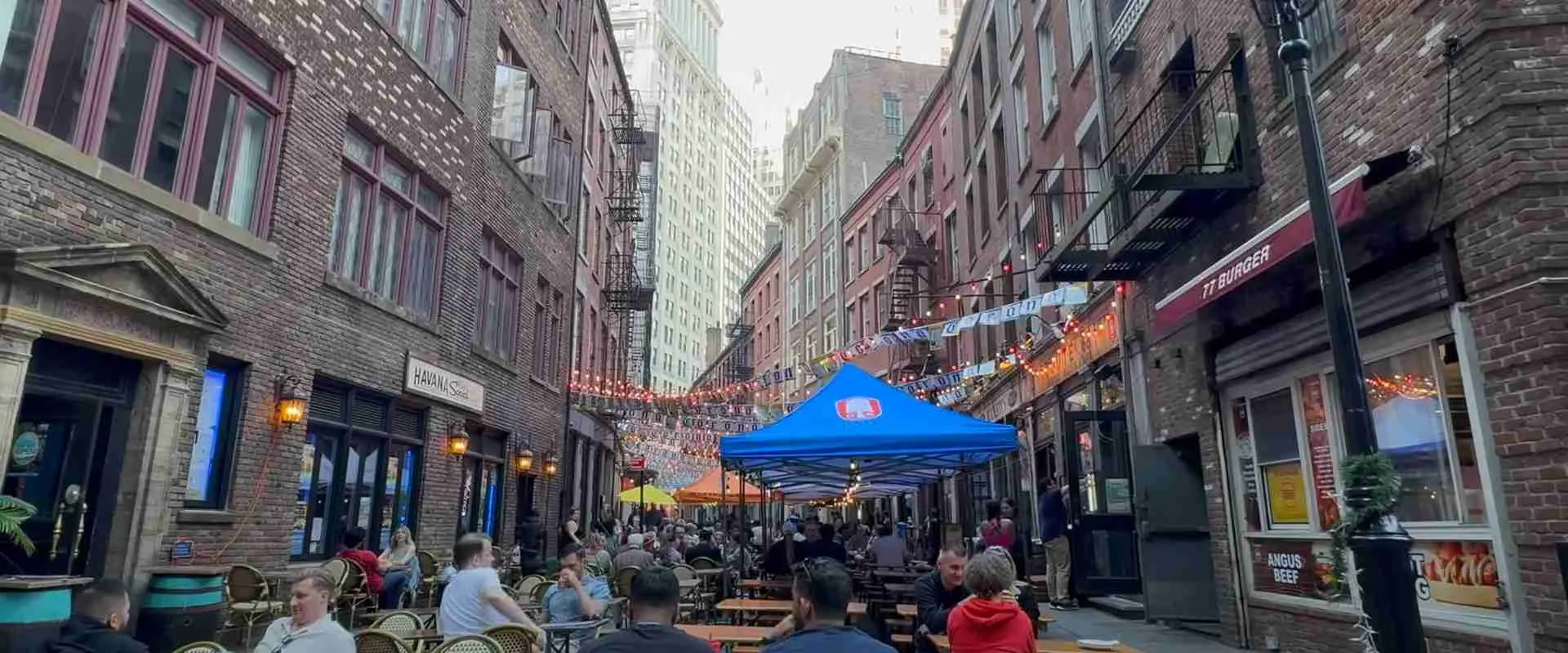
Where to Stay Near Statue of Liberty 2026: Accommodation Guide
Choosing where to stay dramatically affects your Statue of Liberty experience in 2026 through multiple factors: proximity to ferry departure points, transportation convenience, neighborhood character, accommodation costs, and access to other New York attractions. Manhattan offers closest proximity to Battery Park but commands premium pricing. New Jersey provides economical alternatives near Liberty State Park ferry departure. Brooklyn and Queens deliver budget options with subway connections. Understanding these trade-offs allows selecting accommodation matching your priorities, budget, and visit objectives.
Key Takeaways
- Financial District hotels offer walking distance to Battery Park ferry terminal with rates from $180-500+ per night depending on season
- Battery Park City provides waterfront location with statue views from some properties, ranging $250-600 per night
- Jersey City hotels near Liberty State Park cost 30-40% less than Manhattan with free parking and easy ferry access
- Brooklyn and Queens outer borough hotels offer budget options at $100-200 per night requiring 30-45 minutes subway to Battery Park
- Winter accommodation (January-February) costs $100-200 less per night than summer across all Manhattan hotel categories
- Book 2-3 months ahead for best selection and rates, especially for summer and holiday periods in 2026
Introduction: Strategic Accommodation Planning for Your Visit
Accommodation represents the largest variable expense for most Statue of Liberty visitors beyond transportation to New York. A three-night stay in Manhattan summer costs $900-1,800 for moderate hotels, while winter drops to $540-840 for identical properties—dramatic differences affecting overall trip affordability. Location choice impacts daily convenience and transportation costs. Hotels near Battery Park allow walking to ferries, while distant properties require subway rides or taxis adding time and expense. Strategic accommodation planning balances cost, convenience, and experience quality to optimize your visit.
This comprehensive accommodation guide analyzes all major lodging areas: Financial District and Battery Park City for maximum proximity, midtown Manhattan for central location, Jersey City for budget-conscious alternatives, and Brooklyn/Queens for economical outer borough options. Each section provides specific hotel recommendations across budget tiers, transportation connections to ferry terminals, neighborhood characteristics, and seasonal pricing patterns. The guide enables informed decisions aligning accommodation choices with individual priorities whether emphasizing convenience, cost savings, neighborhood experience, or luxury comfort.
People Also Ask About Accommodation Near the Statue of Liberty
What is the closest hotel to the Statue of Liberty ferry?
The Wagner Hotel at Battery Park (21 South William Street) sits closest to the Battery Park ferry terminal at approximately 0.3 miles—a 5-7 minute walk. Other very close options include the Ritz-Carlton New York, Battery Park and Conrad New York Downtown, both within 0.4 miles offering 8-10 minute walks. These Financial District properties provide maximum convenience, allowing guests to walk to morning ferries without subway or taxi needs. Rates range $300-700 per night depending on season and room category. The walking proximity saves transportation time and costs while allowing easy returns to hotels during the day. For visitors prioritizing convenience over all other factors, these closest properties deliver unmatched location despite premium pricing.
Should I stay in Manhattan or New Jersey for visiting the statue?
Manhattan offers convenience and proximity to Battery Park ferry terminal with easy walking or short subway rides, but accommodation costs $250-500+ per night for moderate hotels. New Jersey, particularly Jersey City near Liberty State Park, provides identical ferry access at 30-40% lower costs ($150-300 per night) with free parking making it superior for drivers. Manhattan suits visitors wanting to explore multiple city attractions, dining, nightlife, and classic New York experience. New Jersey works well for budget-focused travelers, families with cars, and those primarily interested in the statue without extensive Manhattan exploration. Both locations provide good ferry access—the choice depends on whether you value Manhattan’s urban experience enough to justify premium costs or prefer New Jersey’s savings and parking convenience.
What are the cheapest areas to stay near the Statue of Liberty?
Brooklyn and Queens outer boroughs offer the most economical accommodation at $100-200 per night for budget hotels and $150-250 for moderate properties—40-60% less than comparable Manhattan hotels. Specific affordable areas include Long Island City in Queens (15-20 minutes subway to Manhattan), Williamsburg and Downtown Brooklyn (20-30 minutes subway), and neighborhoods along the R train Brooklyn route providing direct service to Whitehall Street ferry terminal. Jersey City also provides budget options at $120-220 per night with Liberty State Park ferry access. These outer areas require 30-45 minutes transit to reach Battery Park but deliver substantial cost savings. The accommodations are legitimate hotels with standard amenities, not hostels or budget motels—genuine savings without extreme quality compromises.
How far in advance should I book hotels for 2026?
Book Manhattan hotels 2-3 months ahead for best selection and rates, particularly for summer visits (June-August) and holiday periods. Peak summer weekends require even earlier booking—3-4 months ahead ensures availability at preferred properties. Winter and shoulder season visits allow booking 4-6 weeks ahead with good availability. Last-minute bookings (within 2 weeks) face limited selection and higher rates. Major events including July 4th weekend, New Year’s Eve, Thanksgiving week, and UN General Assembly (September) require advance booking similar to peak summer. Early booking provides leverage for negotiating rates, ensures preferred neighborhoods and hotel tiers, and reduces stress. Refundable rate options allow booking early while maintaining flexibility to cancel if plans change, though refundable rates cost 10-20% more than non-refundable.
Extended multi-day tours – 5+ days
Featured New York Multi-Day Tour Packages

3 days
New York 3-Day Discovery Tour
- ✓ Comprehensive New York experience
- ✓ Expert local guides included
- ✓ All accommodation included
- ✓ Transportation provided

5 days
New York 5-Day Highlights Experience
- ✓ Comprehensive New York experience
- ✓ Expert local guides included
- ✓ All accommodation included
- ✓ Transportation provided

7 days
New York 7-Day Cultural Journey
- ✓ Comprehensive New York experience
- ✓ Expert local guides included
- ✓ All accommodation included
- ✓ Transportation provided

10 days
New York 10-Day Complete Adventure
- ✓ Comprehensive New York experience
- ✓ Expert local guides included
- ✓ All accommodation included
- ✓ Transportation provided
Multi-day tour packages powered by TourRadar. Prices and availability subject to change.
Financial District: Maximum Proximity to Battery Park Ferry
The Financial District encompasses lower Manhattan’s business district surrounding Wall Street, extending south to Battery Park. This area provides the closest accommodation to the Statue of Liberty ferry terminal with hotels within 0.3-0.8 miles allowing easy walks. The neighborhood combines historic architecture, modern skyscrapers, waterfront parks, and easy access to subway lines serving all of Manhattan. The district empties evenings and weekends when financial workers depart, creating quieter atmosphere than midtown. Dining and entertainment options concentrate in pockets rather than throughout the area. The Financial District suits visitors prioritizing ferry proximity and willing to accept more limited neighborhood dining compared to midtown or trendy Brooklyn areas.
Budget options in the Financial District remain limited—the area skews toward business and upscale properties. The few budget choices include Club Quarters World Trade Center ($180-280 per night depending on season), offering compact efficient rooms targeting business travelers. Membership in their club system (free to join) provides modest rate reductions. The property sits 0.6 miles from Battery Park—a 12-15 minute walk. Holiday Inn Express Wall Street ($200-320 per night) provides another budget option with free breakfast, located 0.7 miles from the ferry requiring 15-minute walks. These budget Financial District options cost more than outer borough hotels while offering smaller rooms and fewer amenities, but they deliver proximity value through walking access to ferries.
Mid-range Financial District hotels provide better value with more amenities and space. The Hilton Garden Inn Financial District ($250-400 per night) offers modern rooms, on-site restaurant, and location 0.5 miles from Battery Park—a comfortable 10-minute walk. Courtyard by Marriott New York Downtown ($220-380 per night) provides reliable Marriott quality with location near the 9/11 Memorial, approximately 0.6 miles from the ferry terminal. Hampton Inn Manhattan-Seaport-Financial District ($240-360 per night) includes free breakfast reducing daily food costs and sits 0.7 miles from Battery Park. These mid-range properties balance cost and quality, providing genuine value for visitors wanting proximity without luxury pricing. The free breakfasts at some properties save $15-25 per person daily.
Luxury Financial District hotels deliver premium experiences with exceptional service, upscale amenities, and often statue views. The Ritz-Carlton New York, Battery Park ($450-800 per night) offers true luxury steps from the ferry terminal with some rooms providing direct statue views across the harbor. The Conrad New York Downtown ($400-700 per night) provides sophisticated Hilton luxury with excellent location and harbor views from upper floors. The Beekman, a Thompson Hotel ($380-650 per night) occupies a beautifully restored 1881 building combining historic architecture with modern luxury. These properties cater to guests prioritizing comfort, service, and experience over economy. The premium pricing buys not just location but refined accommodations that enhance the overall New York visit beyond merely providing a place to sleep.
Financial District accommodation strategy depends on priorities and budget. The area’s primary advantage—walking distance to Battery Park ferry—matters most for visitors taking early morning ferries, those uncomfortable with subway navigation, families with young children making walking easier than transit, or anyone valuing maximum convenience. The neighborhood’s business orientation means fewer evening dining options than other areas, though nearby South Street Seaport and Stone Street offer restaurant clusters. Weekend visits find the district quieter than weekdays when business activity drives energy. For statue-focused visits with limited other Manhattan exploration, the Financial District provides logical base. For comprehensive New York visits including midtown attractions, theater, and diverse dining, midtown or other neighborhoods might serve better despite requiring subway rides to Battery Park.
Battery Park City: Waterfront Location with Statue Views
Battery Park City occupies landfill on Manhattan’s west side, creating a planned residential and commercial neighborhood directly adjacent to Battery Park itself. This waterfront district provides arguably the best statue viewing location in Manhattan with numerous vantage points along the Hudson River esplanade. The neighborhood features modern high-rise residential towers, parks, waterfront promenades, and family-friendly atmosphere. Battery Park City feels less dense and more open than typical Manhattan, with green spaces and water views creating appealing environment. Hotels here command premium prices justified by waterfront locations and statue views from many rooms. The area suits visitors wanting modern, clean, safe neighborhood with outdoor space and direct ferry access.
The Conrad New York Downtown technically sits at Battery Park City’s edge, overlapping with the Financial District. This Hilton luxury property ($400-700 per night) provides the area’s most prominent hotel with harbor views from upper floors and immediate proximity to both Battery Park and the waterfront esplanade. Rooms feature floor-to-ceiling windows maximizing views. The hotel’s position allows guests to walk to Battery Park ferry terminal in 8-10 minutes while enjoying the waterfront neighborhood amenities. The Ritz-Carlton, while technically in the Financial District, also serves Battery Park City visitors given its location immediately adjacent to the park and neighborhood.
Beyond dedicated hotels, Battery Park City offers apartment-style accommodations through vacation rental services. Numerous residential towers allow owners to rent units on Airbnb and VRBO. These apartments range $200-500 per night depending on size, views, and amenities. Studio apartments cost $200-300 per night, one-bedroom units $250-400, two-bedroom apartments $350-500. Many units feature statue views, full kitchens allowing meal preparation to save dining costs, washer-dryers, and separate living spaces providing more room than hotel rooms. The apartment option works particularly well for families, longer stays (5+ nights where nightly rate becomes more important than convenience), or visitors wanting residential neighborhood experience rather than hotel environment.
Battery Park City’s main appeal lies in its waterfront character and statue views. The Hudson River esplanade provides beautiful walking and cycling paths with unobstructed statue views. Multiple parks including Teardrop Park and Rockefeller Park offer green space where families can play while adults admire the statue across the water. The neighborhood includes Brookfield Place shopping center with restaurants, shops, and winter garden providing dining and entertainment options. Ferry access is immediate—Battery Park sits at the neighborhood’s southern tip. The area’s planned nature means wide sidewalks, modern infrastructure, and clean streets creating pleasant environment distinguishing it from older, denser Manhattan neighborhoods.
Battery Park City strategy considerations include recognizing that the neighborhood, while beautiful and convenient for the statue, sits somewhat isolated from other Manhattan attractions. Midtown theaters, Times Square, major museums, and shopping districts require subway rides or significant walking. The neighborhood works excellently for statue-focused visits or those planning to spend significant time in lower Manhattan exploring the Financial District, 9/11 Memorial, South Street Seaport, and Tribeca. The premium pricing reflects waterfront location and statue views—visitors should honestly assess whether these features justify costs versus staying in less expensive areas with quick subway access to Battery Park. For budget-conscious travelers, Battery Park City’s rates prove difficult to justify unless statue views from hotel rooms represent high priority.
Jersey City: Budget-Friendly Alternative with Liberty State Park Access
Jersey City sits directly across the Hudson River from lower Manhattan, providing affordable accommodation alternatives with easy access to Liberty State Park ferry terminal. The city has transformed dramatically in recent decades from industrial area to thriving residential and commercial center. The waterfront neighborhoods feature modern high-rise development with Manhattan skyline views. Jersey City offers all standard urban amenities—restaurants, shops, entertainment—at more affordable prices than Manhattan. The PATH train provides direct rapid transit to Manhattan’s World Trade Center station, making the city well-connected despite being in New Jersey. For statue visits, Liberty State Park ferry access provides identical service to Liberty and Ellis Islands as Battery Park.
Budget Jersey City hotels near Liberty State Park deliver exceptional value. Candlewood Suites Jersey City ($120-180 per night) provides apartment-style rooms with kitchenettes allowing meal preparation, located within 15-20 minutes drive of Liberty State Park. Hampton Inn & Suites Jersey City ($140-200 per night) offers free breakfast, modern rooms, and free parking—the parking alone saves $40-60 daily versus Manhattan. Comfort Suites Jersey City ($130-190 per night) provides similar amenities and value. These properties cost 40-50% less than comparable Manhattan hotels while offering equal or superior room size and amenities. The savings fund other trip expenses or allow upgrading from budget to moderate accommodation tier while spending less than Manhattan budget options would cost.
Mid-range Jersey City options provide excellent quality at reasonable prices. Hyatt Regency Jersey City on the Hudson ($180-320 per night) offers upscale accommodations with Manhattan skyline views, waterfront location, and PATH train access directly from the hotel. Doubletree by Hilton Jersey City ($160-280 per night) provides reliable Hilton quality at mid-range prices. The Westin Jersey City Newport ($200-340 per night) delivers upscale Westin experience at rates well below Manhattan Westin properties. These hotels offer business-class quality—comfortable rooms, good service, fitness centers, on-site dining—at prices that would buy only budget accommodations in Manhattan. The value proposition is compelling for visitors willing to cross the Hudson River.
Jersey City’s primary advantage for statue visitors is the Liberty State Park ferry access combined with free parking. Visitors staying in Jersey City drive to Liberty State Park (10-20 minutes from most Jersey City hotels), park free in the large lots, take the ferry to the statue, and return to their cars—seamless experience for drivers. This contrasts sharply with Manhattan where parking costs $40-60+ daily and driving in the city creates stress. The PATH train also provides excellent Manhattan access for visitors without cars—trains run every 10-15 minutes during daytime, reach World Trade Center in 15 minutes, and cost $2.75 per ride. Jersey City allows comfortable suburban-style hotels with free parking while maintaining easy city access.
Jersey City considerations include recognizing that you’re staying outside Manhattan proper. The city provides its own dining, entertainment, and urban experience but lacks Manhattan’s iconic character. Visitors spending most time in Manhattan might prefer staying there despite higher costs to maximize time in the city. However, visitors whose New York plans focus primarily on the statue, with perhaps one or two days exploring Manhattan attractions, find Jersey City’s savings substantial enough to justify the location. The PATH train’s efficiency means reaching Manhattan takes little more time than traveling from outer Manhattan neighborhoods to midtown. For families or groups traveling by car, Jersey City represents superior option through combination of lower accommodation costs, free parking, and direct Liberty State Park access.
Midtown Manhattan: Central Location for Comprehensive Visits
Midtown Manhattan encompasses the area from roughly 34th Street to 59th Street, including Times Square, Hell’s Kitchen, Murray Hill, and Midtown East neighborhoods. This area represents classic Manhattan energy with Broadway theaters, major attractions, diverse dining, shopping, and dense urban experience. Midtown provides central location for visitors planning comprehensive New York trips including the statue, museums, theater, shopping, and other activities. The 1 train runs directly from Times Square to South Ferry (Battery Park ferry terminal) in 25-30 minutes, making statue visits straightforward despite midtown’s distance from lower Manhattan. Midtown suits visitors wanting full New York experience beyond statue-focused visits.
Budget midtown options concentrate in the 30s and 40s, slightly north of Times Square proper. Pod Times Square ($180-280 per night) offers micro-rooms using efficient design to provide affordable Manhattan accommodation in prime location. YOTEL New York ($200-300 per night) provides similar compact-but-functional rooms with modern design near Times Square. Row NYC ($190-320 per night) offers larger traditional rooms at competitive rates, located on Eighth Avenue near theaters. These budget options provide genuine Manhattan location at costs approaching outer borough pricing. Rooms are smaller than suburban hotels, but location value compensates through time and transportation savings accessing attractions throughout the city.
Mid-range midtown hotels provide solid value balancing cost and quality. Hampton Inn Manhattan/Times Square Central ($240-380 per night) includes free breakfast and reliable Hampton quality in Times Square area. Hilton Garden Inn Times Square ($260-420 per night) offers modern rooms, on-site restaurant, and central location. Fairfield Inn & Suites by Marriott Times Square ($220-360 per night) provides good Marriott quality at mid-tier prices. These properties deliver comfort without luxury pricing, providing genuine value for comprehensive New York visits. The central locations allow walking to many attractions, reducing subway costs while maximizing sightseeing time. The mid-range category represents optimal balance for most visitors wanting quality without extreme spending.
Luxury midtown hotels deliver iconic New York experiences with exceptional service and amenities. The Plaza ($550-1,200 per night) offers legendary luxury overlooking Central Park. The St. Regis New York ($600-1,400 per night) provides refined elegance with personalized butler service. The Peninsula New York ($500-1,000 per night) delivers world-class hospitality in midtown location. These properties cater to luxury travelers for whom cost is secondary to experience. The hotels become attractions themselves with famous architecture, historic significance, and exceptional facilities. Luxury travelers visiting New York for special occasions often find these properties justify premium pricing through memorable experiences that define their trips.
Midtown strategy considerations recognize that this area provides optimal base for comprehensive New York visits including but not limited to the statue. Visitors planning 3-5 day trips with packed itineraries—statue one day, museums another, theater and shopping, dining experiences—benefit from midtown’s central location despite requiring subway rides to Battery Park. The neighborhood’s density means restaurants, entertainment, and energy immediately outside hotel doors. The trade-off is distance from the statue requiring 25-30 minute subway rides plus walking time. For visitors whose plans revolve primarily around the statue with limited other Manhattan exploration, midtown’s location advantages diminish while Financial District proximity becomes more valuable. Assess your complete itinerary before choosing—midtown works brilliantly for comprehensive visits but provides less value for statue-focused trips.
Brooklyn and Queens: Budget Outer Borough Options
Brooklyn and Queens provide economical accommodation options for budget-conscious visitors willing to accept 30-45 minute subway commutes to Battery Park. These outer boroughs have evolved into destinations themselves with diverse neighborhoods, excellent dining, cultural attractions, and authentic New York character distinct from Manhattan tourism. Brooklyn’s neighborhoods including Williamsburg, DUMBO, Park Slope, and Downtown Brooklyn offer varied experiences. Queens features Long Island City with growing hotel inventory, plus ethnic neighborhoods providing cultural immersion. Accommodation costs 40-60% less than comparable Manhattan properties while offering equal or superior room size and amenities. The outer boroughs suit budget travelers, visitors interested in neighborhood experiences beyond tourist Manhattan, and those comfortable with subway navigation.
Budget Brooklyn hotels concentrate in Downtown Brooklyn and along subway lines providing Manhattan access. Holiday Inn Express Brooklyn Downtown ($140-220 per night) offers free breakfast and good location near multiple subway lines. Fairfield Inn & Suites by Marriott Brooklyn Downtown ($130-210 per night) provides reliable Marriott quality at outer borough prices. Nu Hotel Brooklyn ($150-240 per night) delivers boutique style at accessible rates in Williamsburg near the L train. These properties cost less than Manhattan budget options while providing more space and often better amenities. The R train running through Brooklyn connects directly to Whitehall Street ferry terminal, making Battery Park access straightforward despite distance. A 30-45 minute subway ride represents small trade-off for substantial cost savings.
Queens hotels cluster in Long Island City, a neighborhood experiencing rapid hotel development due to proximity to Manhattan (one subway stop from midtown). Hyatt Place Long Island City/New York City ($160-280 per night) provides upscale accommodations at mid-range prices with Manhattan skyline views across the East River. Aloft Long Island City/Manhattan View ($140-240 per night) offers modern design and good value. Fairfield Inn & Suites Long Island City ($150-250 per night) delivers reliable quality at competitive rates. Long Island City’s position makes it particularly attractive—close to Manhattan yet significantly cheaper, with subway access to both midtown and downtown. The E train provides direct service from Long Island City to lower Manhattan’s World Trade Center area, requiring one transfer to reach Battery Park ferry terminal.
Mid-range outer borough options deliver exceptional value—business-class quality at budget prices compared to Manhattan. The William Vale in Williamsburg, Brooklyn ($220-380 per night) offers boutique luxury at rates below Manhattan mid-range hotels. Wythe Hotel Brooklyn ($240-400 per night) provides industrial-chic design in converted warehouse with rooftop bar featuring Manhattan views. These properties demonstrate how outer borough hotels increasingly offer style and quality rivaling Manhattan while maintaining price advantages. Visitors seeking genuine New York neighborhood experiences—eating at local restaurants, exploring residential areas, seeing how New Yorkers actually live—find Brooklyn and Queens more authentic than tourist-dominated Manhattan areas.
Outer borough strategy requires honestly assessing priorities and comfort with subway travel. The cost savings are substantial—$60-120 per night difference adds up to $180-360 savings over three nights, funding other trip expenses or enabling trip extensions. However, the 30-45 minute subway commutes to Battery Park require time and energy. Families with young children might find the commutes exhausting. Visitors with limited time might prefer Manhattan’s proximity despite higher costs. The optimal candidates for outer borough accommodation are budget-conscious travelers comfortable with public transit, younger visitors energized by neighborhood exploration, and those whose trips extend beyond 2-3 nights making cost savings more impactful. For very short visits (1-2 nights) where every hour matters, Manhattan proximity might justify premium pricing.
Seasonal Pricing Patterns and Booking Strategies
Manhattan hotel pricing varies dramatically by season, affecting overall trip budgets more than any other single factor. Summer (June-August) brings peak rates with moderate hotels costing $300-450 per night in Manhattan. Winter (January-February) drops rates to $180-280 for identical properties—savings of $120-170 per night. Shoulder seasons (April-May, September-October) fall between at $250-350 per night. A three-night moderate hotel stay costs $900-1,350 in summer versus $540-840 in winter—difference of $360-510. These enormous variations mean timing decisions dramatically affect affordability. Budget-conscious visitors should strongly favor winter or shoulder season visits, with accommodation savings dwarfing any other cost-reduction strategies.
Holiday periods create temporary price spikes during otherwise low seasons. Thanksgiving week sees summer-level rates despite November’s usual low season. Christmas through New Year’s brings premium pricing. Major events including New York Marathon weekend, Fashion Week, and UN General Assembly in September temporarily inflate rates. These event-driven spikes mean checking specific dates rather than assuming entire months follow seasonal patterns. Valentine’s Day weekend, Presidents’ Day weekend, and Easter weekend also show elevated pricing. Savvy travelers avoid these peaks, visiting during the quiet weeks surrounding holidays when rates drop back to normal seasonal levels while weather and conditions remain similar.
Booking timing affects both availability and rates. Manhattan hotels release inventory approximately 12 months ahead, though most travelers book 1-6 months before arrival. The optimal booking window is 2-3 months ahead for most travel periods—far enough to secure good selection, recent enough that hotels haven’t maximized prices for peak demand. Last-minute bookings (within 2 weeks) face limited selection and higher rates as hotels sell remaining inventory at premium. Very early bookings (6+ months ahead) sometimes secure lower rates but reduce flexibility if plans change. The 2-3 month window provides optimal balance for most visitors. Refundable rates cost 10-20% more than non-refundable but allow cancellation if plans change—the flexibility premium makes sense for travel plans with any uncertainty.
Rate comparison strategies maximize value through using multiple booking platforms. Compare rates across Booking.com, Hotels.com, Expedia, and hotel direct websites—prices for identical rooms vary 5-15% across platforms. Hotel loyalty programs sometimes provide member-only rates below public rates—joining programs (typically free) before booking can unlock savings. Package deals combining flights and hotels occasionally save 10-20% versus separate bookings. Use incognito browsing mode when comparing rates—some sites use cookies to track searches and increase prices on return visits. Check multiple dates if schedule flexibility exists—shifting travel by one day sometimes finds substantially better rates. These comparison tactics require time investment but deliver measurable savings on accommodation representing the largest trip expense.
Negotiation and upgrade strategies can enhance value beyond base rates. Joining hotel loyalty programs (free) provides benefits including potential room upgrades, late checkout, and accumulated points for future stays. Calling hotels directly sometimes secures better rates than online booking—properties have flexibility to match competitor rates or offer upgrades that online platforms don’t. Mentioning special occasions (anniversaries, birthdays) when booking sometimes results in complimentary upgrades or amenities. Politely requesting upgrades at check-in when hotels aren’t fully booked sometimes succeeds—loyalty status increases odds but general requests occasionally work. These strategies cost nothing beyond brief time investment and occasionally deliver significant value enhancements that make good hotels excellent and excellent hotels exceptional.
Alternative Accommodation: Hostels, Vacation Rentals, and Extended Stay
Hostels provide ultra-budget accommodation for solo travelers and backpackers willing to accept shared dormitory rooms and communal facilities. Manhattan hostels including HI NYC Hostel on Amsterdam Avenue ($40-80 per person in dorm rooms, $100-180 for private rooms), Jazz on the Park Hostel ($45-85 dorm, $110-190 private), and The Local Hostel NYC ($50-90 dorm, $120-200 private) deliver genuine budget options in Manhattan. Hostels provide kitchen facilities allowing meal preparation, common areas for socializing, and basic clean accommodation meeting travelers’ essential needs. The dorm room format suits young solo travelers comfortable with shared spaces. Families and couples typically find private hostel rooms provide less value than budget hotels offering similar rates with superior amenities and privacy.
Vacation rentals through Airbnb and VRBO offer apartment-style accommodation providing more space and kitchen facilities compared to hotels. Manhattan studio apartments rent for $150-300 per night, one-bedroom units $200-400, two-bedroom apartments $300-550. Brooklyn and Queens apartments cost 30-40% less—studios $100-200, one-bedrooms $150-300, two-bedrooms $200-400. Vacation rentals make particular sense for families or groups splitting costs across multiple people, longer stays (5+ nights) where nightly rate becomes more important, and visitors wanting to cook meals rather than dining out for every meal. Cleaning fees ($75-150) add to total cost, making rentals more economical for longer stays where the one-time fee spreads across multiple nights. Vacation rentals provide residential neighborhood experiences distinct from hotel environments.
Extended stay hotels cater to longer visits (7+ nights) with apartment-style suites including kitchens and separate living areas. Properties including Residence Inn and Homewood Suites by Hilton provide these formats at rates competitive with standard hotels when staying multiple nights. Weekly rates typically discount daily rates 15-25%—a seven-night stay might cost the equivalent of 5-6 nightly rates. Extended stay hotels work well for visitors planning comprehensive New York trips using the statue visit as one component of longer exploration. The kitchen facilities allow breakfast and some meal preparation, reducing dining costs over extended stays. The separate living areas provide space that single hotel rooms lack, particularly valuable for families or those working remotely during portions of their stays.
University housing during summer breaks occasionally provides budget accommodation when academic dorms open to travelers. New York University, Columbia University, and other institutions sometimes rent rooms during summer months at rates below commercial hotels. Availability is limited and booking processes differ from standard hotels—advance research and early booking are essential. The accommodations are basic dormitory rooms with shared bathrooms, suitable for budget travelers prioritizing cost over comfort. This option works mainly for summer visitors willing to accept student housing standards in exchange for Manhattan locations at outer borough prices. Availability and specific programs vary annually—check university housing websites in advance of summer travel.
Alternative accommodation strategy recognizes that standard hotels represent only one option among many. Solo budget travelers comfortable with hostel environments save substantially while meeting fellow travelers in communal spaces. Families or groups find vacation rentals provide space and flexibility that hotel rooms lack, particularly for longer stays where apartment living patterns emerge. Extended stay properties benefit week-long visits where discounted rates and kitchen facilities deliver value. The key is matching accommodation type to specific circumstances rather than defaulting to standard hotels without considering alternatives that might better serve particular needs at lower costs or with superior space and amenities for specific situations.
Frequently Asked Questions About Accommodation in 2026
What’s the best neighborhood to stay for visiting the Statue of Liberty?
The Financial District offers the best location for statue-focused visits with hotels within 0.3-0.8 miles allowing easy walks to Battery Park ferry terminal. Battery Park City provides similar proximity with waterfront character and statue views. These areas allow walking to morning ferries, easy returns to hotels during the day, and convenient access without subway navigation. For budget-conscious visitors or those driving, Jersey City near Liberty State Park provides excellent alternative with 30-40% lower costs, free parking, and identical ferry service. For comprehensive New York visits including the statue, midtown Manhattan offers central location for accessing attractions throughout the city despite requiring subway rides to Battery Park. The “best” neighborhood depends on priorities—convenience favors Financial District, budget favors Jersey City or outer boroughs, comprehensive exploration favors midtown.
How much should I budget per night for hotels near the Statue of Liberty?
Budget accommodation: $100-200 per night in outer boroughs (Brooklyn, Queens) or Jersey City, $180-280 for Manhattan budget options. Mid-range accommodation: $150-300 in outer areas, $250-400 in Manhattan. Upscale accommodation: $200-400 outer areas, $350-600 Manhattan. Luxury accommodation: $250-500 outer areas, $500-1,000+ Manhattan. These ranges reflect seasonal variation—winter rates at low end, summer at high end. Three-night stays cost $300-600 budget, $450-900 mid-range, $600-1,200 upscale, $750-1,800+ luxury for outer areas; Manhattan costs 40-60% more across all categories. Budget $800-2,000 total accommodation for typical three-night visit depending on location and hotel tier selected. Winter visits save $100-200 per night versus summer across all categories.
Is it better to stay near Battery Park or in midtown?
Stay near Battery Park (Financial District or Battery Park City) if your New York visit focuses primarily on the statue with limited other Manhattan exploration, if you prefer walking to ferries over subway rides, or if taking early morning ferries when walking beats subway convenience. Stay in midtown if planning comprehensive New York visit including theater, museums, shopping, and diverse dining, if comfortable with 25-30 minute subway rides to Battery Park, or if wanting central location for accessing attractions throughout Manhattan. Battery Park proximity matters most for statue-focused trips and early ferry departures. Midtown location provides better value for multi-day comprehensive visits where statue is one activity among many. Assess your complete itinerary—statue-focused visits favor Battery Park area, comprehensive city exploration favors midtown despite requiring ferry commute.
Can I find hotels with views of the Statue of Liberty?
Several hotels offer statue views from upper floors and specific rooms: Ritz-Carlton New York, Battery Park provides direct statue views from many rooms and public areas. Conrad New York Downtown offers harbor views including the statue from upper floors. Battery Park City apartment rentals often feature statue views depending on floor and orientation. The Wagner Hotel at Battery Park has some rooms with harbor views. However, statue-view rooms command premium pricing—expect to pay $100-200 more per night than standard rooms at the same properties. Request harbor or statue views when booking and confirm view availability. Not all rooms at these properties have views—building positions and room locations vary. For budget-conscious travelers, statue views from hotel rooms represent expensive luxury when the free waterfront esplanade provides excellent views steps from hotels without room premiums.
What’s the advantage of staying in Jersey City?
Jersey City provides multiple advantages: accommodation costs 30-40% less than comparable Manhattan hotels, free parking at hotels and Liberty State Park saves $40-60 daily, Liberty State Park ferry provides identical statue access as Battery Park, less crowded ferry terminal creates more relaxed boarding, PATH train offers easy 15-minute access to Manhattan World Trade Center area, and waterfront neighborhoods provide Manhattan skyline views. Jersey City works particularly well for visitors driving to New York, budget-conscious travelers willing to stay outside Manhattan, and families wanting more space at lower costs. The main trade-off is staying in New Jersey rather than Manhattan proper—visitors spend most time in Manhattan might prefer staying there despite higher costs. For statue-focused visits with limited other New York exploration, Jersey City’s combination of savings and direct ferry access creates compelling value.
Are there family-friendly hotels near the Statue of Liberty?
Several properties cater specifically to families: Hilton Garden Inn Financial District offers connecting rooms and location near South Street Seaport’s family attractions. Hampton Inn Manhattan-Seaport includes free breakfast helping family budgets and provides spacious rooms. Conrad New York Downtown offers suite options with separate living areas accommodating families. In Jersey City, Hampton Inn & Suites Jersey City and Homewood Suites provide apartment-style rooms with kitchenettes allowing meal preparation and separate sleeping areas. Vacation rentals in Battery Park City or Brooklyn offer full apartments with multiple bedrooms and living spaces. Family-friendly features include: rooms with two beds or suites, free breakfast reducing daily food costs, kitchenettes or full kitchens, locations near parks and family activities, and hotels with pools for children’s entertainment. Battery Park City neighborhood particularly suits families with its parks, playgrounds, and waterfront open space.
How far in advance do summer hotels in Manhattan book up?
Popular Manhattan hotels during peak summer (July-August) book up 2-4 months ahead for prime properties at good rates. July 4th weekend and last two weeks of August see particularly high demand. Booking 3-4 months ahead ensures selection at preferred hotels and neighborhoods. Last-minute bookings (within 4 weeks) face limited availability and premium rates. However, Manhattan’s enormous hotel inventory means some availability typically exists even weeks before travel—you just won’t have optimal selection or rates. Budget properties and less convenient locations maintain availability longer than premium hotels in prime areas. For guaranteed availability at preferred properties and rates, book summer accommodation by April-May for July-August visits. Less popular weeks (early June, late August post-Labor Day) allow booking 6-8 weeks ahead with good selection.
What hotels include breakfast to save money?
Several Manhattan chains include free breakfast: Hampton Inn properties (Hampton Inn Manhattan-Seaport, Hampton Inn Times Square) offer free hot breakfast saving $15-25 per person daily. Holiday Inn Express locations provide free breakfast bars. Homewood Suites and Residence Inn (extended stay properties) include breakfast with stays. In outer boroughs and Jersey City, more budget properties include breakfast: Hampton Inn Brooklyn, Fairfield Inn Long Island City, Hampton Inn Jersey City all provide free morning meals. The breakfast inclusion saves families of four $60-100 daily—substantial savings over multi-day stays. Properties without included breakfast sometimes offer discounted breakfast for guests ($10-15 per person versus $20-30 at outside restaurants). When comparing hotel rates, factor breakfast inclusion into value calculation—hotel costing $30 more per night but including $60 breakfast for a couple provides better value than cheaper hotel requiring paying for meals.
Can I walk from midtown hotels to the Statue of Liberty ferry?
Walking from midtown Manhattan to Battery Park ferry terminal is theoretically possible but impractical—the distance is approximately 3-4 miles requiring 60-75 minutes of walking each way. This represents 2-2.5 hours of walking time before even beginning your statue visit. The subway covers the same distance in 25-30 minutes for $2.90—the time and energy savings far outweigh the minimal cost. Walking makes sense only from lower Manhattan hotels—Financial District, Battery Park City, Tribeca, or SoHo where distances are 0.3-1.5 miles requiring 5-30 minutes. From midtown, take the 1 train from Times Square to South Ferry (direct service, no transfers) or alternative subway routes. Save your walking energy for exploring Liberty Island and Ellis Island rather than exhausting yourself with long Manhattan walks before your visit begins.
What’s the cancellation policy for New York hotels in 2026?
Hotel cancellation policies vary by property and rate type. Standard flexible rates typically allow free cancellation until 24-48 hours before arrival—cancel before the deadline and receive full refund. Non-refundable rates (often called “advance purchase” or “prepaid”) cost 10-20% less than flexible rates but cannot be cancelled for refund—full payment is required at booking and forfeited if you cancel. Some hotels offer moderate policies allowing cancellation with penalty (forfeiting first night or paying percentage of stay). During peak periods (summer, holidays), hotels may require longer cancellation notice (72 hours or more). Always verify specific cancellation policy when booking. Refundable rates make sense when travel plans have any uncertainty. Non-refundable rates work when plans are certain and savings justify the inflexibility. Travel insurance can cover cancellation costs for non-refundable bookings if illness or emergencies force cancellation, though insurance adds cost reducing savings from non-refundable rates.