For those looking for the ultimate Andean adventure, several tough paths lead to Machu Picchu. The hardest route is more than just a hike. It’s a test of your body and mind through the harsh Andes mountains.
Experienced hikers can choose from routes like Salkantay and Choquequirao. These paths offer intense experiences, unlike the classic Inca Trail. Each route has its own challenges, from tough terrain to stunning views that test your limits.
To tackle these routes, you need good planning, physical readiness, and a love for adventure. Our guide will dive into the most challenging paths to this famous site.
Key Takeaways
- Multiple challenging routes exist to reach Machu Picchu
- Physical fitness is crucial for mountain trekking
- Altitude acclimatization is essential for success
- Advanced planning prevents potential hiking challenges
- Different routes offer unique difficulty levels
- Contact us by filling out the trip planner form, our expert travel advisors will work closely with you to create your journey (Free Service)
Understanding the Routes to Machu Picchu
Planning a trip to Machu Picchu means knowing the different paths you can take. This ancient Incan city has many trails for all kinds of travelers. Each path offers a unique way to see the city, depending on your fitness level and what you enjoy.
Machu Picchu is split into three main paths. Each one gives a special experience to those who explore:
Popular Trail Options
There are many trails to choose from, each with its own features:
- Panoramic Circuit: Offers routes ranging from 1-4 hours
- Classic Circuit: Provides paths around 2.5 hours long
- Royalty Circuit: Features routes between 2-5 hours
Difficulty Levels Overview
The trails at Machu Picchu vary in difficulty. Some paths, like those to Huayna Picchu Mountain and Machu Picchu Mountain, are very tough. They need a lot of physical effort.
“Not all paths are created equal – each route demands its own level of fitness and determination.” – Andean Trekking Experts
Seasonal Considerations
The time of year you visit affects the trails. The best time is from June 1 to October 15. During this time, there are four special paths that are perfect for hiking.
- Dry season (May-September): Recommended for most trekkers
- Wet season (October-April): Challenging terrain, fewer crowds
Now, there are daily limits on some routes. This helps keep the site safe and controls the number of visitors.
The Choquequirao Trek – The Ultimate Challenge
The Choquequirao Trek is the top extreme trek in the Peruvian Andes. It’s a tough route that takes adventurers through the most challenging trails to Machu Picchu. Along the way, you’ll see stunning landscapes and historical sites in the Apurimac Canyon.
This trek is an 8-day journey over 100 kilometers of tough terrain. It’s not for the faint of heart, even for seasoned hikers. The elevation changes and physical demands are quite high.
- Total trek distance: 62 miles (100 km)
- Highest point: Yanama Pass at 4,627 meters
- Average daily visitors: 10-20 people
The trek follows old Qhapac Ñam trails from the Tawantinsuyo civilization, over 500 years ago. You’ll see different landscapes, from high mountains to lush areas.
| Trek Characteristic | Details |
|---|---|
| Trek Duration | 8-10 days |
| Elevation Range | 1,400 – 4,627 meters |
| Temperature Range | 0°C to 19°C |
Physical preparation is crucial for this extreme trekking experience. It’s advised to train for 3 months before starting. You’ll need both physical and mental strength.
The Choquequirao Trek is a rare and authentic wilderness adventure. It’s perfect for those looking for the ultimate Andean challenge.
What is the hardest route to Machu Picchu?
Exploring the toughest Machu Picchu trek means facing tough physical and environmental challenges. The path to this ancient Incan city is not easy. It tests your mental and physical strength.
Physical Demands of High Altitude Trekking
The hardest Machu Picchu trek needs top physical shape. Trekkers face tough terrain like:
- Steep mountain climbs
- Rugged stone paths
- Big changes in elevation
- Long hikes over several days
Technical Challenges of Mountain Routes
Getting through the toughest paths requires advanced hiking skills. The Choquequirao – Machu Picchu route is an 8-day trek with extremely high difficulty. Hikers must handle:
- Complex mountain pass navigation
- Unstable weather
- Little support infrastructure
- Technical terrain needing special gear
Altitude Considerations for Trekkers
High altitude trekking is a big challenge. The Salkantay Trek goes up to 4,645 meters, pushing your limits. Risks include altitude sickness, less oxygen, and extreme physical strain.
Only the most prepared and resilient hikers can successfully complete these challenging mountain routes.
The Salkantay Trek Experience
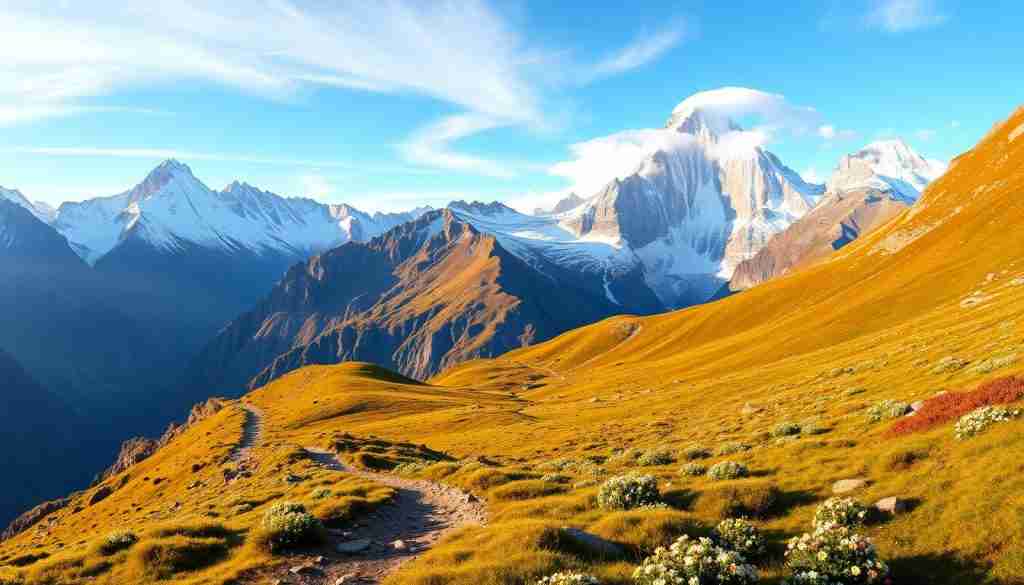
The Salkantay Trek is a top choice for those looking for an alternative to the Inca Trail. It takes you through Peru’s beautiful mountains. This trek is 74 kilometers long and covers many different landscapes.
It’s a tough journey, with the highest point at 4,360 meters. Trekkers need to be in good shape and have strong willpower. They usually hike for 6-8 hours a day, facing big changes in elevation.
- Total Trek Distance: 74 kilometers (46 miles)
- Highest Elevation: 4,360 meters at Salkantay Pass
- Typical Duration: 5-8 days
- Average Daily Hiking Time: 6-8 hours
Getting ready for this trek is key. You’ll need the right gear and should train your heart and lungs. It’s also important to spend 1-2 days in Cusco to get used to the altitude. The trek is rated moderate to difficult, so you must be very fit.
Even though it’s tough, the views and experiences are worth it. You’ll see mountains, forests, and more. This trek changes you in ways you can’t imagine.


Essential Equipment and Preparation
Getting ready for a trek to Machu Picchu needs careful planning and the right gear. Our guide will show you what equipment and physical prep are key to tackling these trails.
Required Gear List
Choosing the right gear is crucial for a successful mountain trip. Your trekking gear should be light and strong to handle the tough Andean terrain.
- Hiking boots with excellent ankle support
- Moisture-wicking clothing layers
- Waterproof outer shell
- Thermal base layers
- Compact sleeping bag rated for low temperatures

Physical Training Requirements
Getting fit is key for high-altitude treks. You need to acclimatize to altitude to avoid exhaustion and health issues.
| Training Focus | Recommended Activities | Frequency |
|---|---|---|
| Cardiovascular Endurance | Hiking, running, cycling | 3-4 times per week |
| Strength Training | Leg exercises, core workouts | 2-3 times per week |
| Altitude Conditioning | Gradual elevation training | 2 months prior to trek |
Medical Considerations
Knowing the medical needs is vital for a safe trek. Proper acclimatization can lower the risk of altitude sickness.
- Consult a travel medical professional
- Obtain necessary vaccinations
- Pack a comprehensive first aid kit
- Carry altitude sickness medication
- Stay hydrated and maintain proper nutrition
Pro tip: Start training three months before your trek to get fit and strong.
Trail Navigation and Safety Measures
Getting to Machu Picchu is tough and needs careful planning and safety tips. Guided treks are key to making it through the hard mountain paths. We make sure hikers are safe by teaching them how to navigate and prepare well.
Knowing how to navigate the Andean trails is vital. Hikers need both old and new ways to find their way. Important safety tips include:
- Carrying detailed topographical maps
- Using GPS devices with backup battery systems
- Understanding basic compass navigation
- Recognizing local terrain markers
Being in shape is also crucial for safety. Experts say you should exercise moderately for 150 minutes a week before tackling tough trails. Getting used to high altitudes is very important, as trails go up to 4,200 meters.
Guided tours make it safer by offering expert help. Most groups have 12 people, so everyone gets attention. Guides can spot and help with altitude sickness, like headaches and tiredness.
- Minimum water intake: 2 liters daily
- Recommended age for challenging treks: 18+ years
- Essential safety gear: First aid kit, emergency communication device
Being well-prepared makes the journey to Machu Picchu an amazing experience. By focusing on safety and learning to navigate, hikers can enjoy the stunning views of Machu Picchu.
Best Time to Attempt Challenging Routes
Planning a trek to Machu Picchu needs careful thought about the Andean weather. Choosing the right trekking season is key to a great hiking experience.
The Andes offer unique challenges for hikers. Weather patterns greatly affect trail conditions. Knowing these patterns is essential for a memorable trip.
Weather Patterns in the Andes
The Andean region has two main seasons that affect hiking:
- Dry Season (May to September)
- Clear skies
- Little rain
- Most tourists
- Wet Season (October to April)
- More rain
- Muddy trails
- Fewer people
Peak vs. Off-Season Hiking Benefits
Each season has its own perks for adventurers. Peak season means well-kept trails and steady weather. Off-season hiking offers quiet and possibly cheaper permits.
We suggest the dry season for the best trekking. It’s perfect for tough routes like the Salkantay Trek.
Permits and Logistics Planning
Getting trekking permits for Machu Picchu needs careful planning and timing. The Peruvian government has strict rules to protect this historic site. These rules affect how travelers can access the trails.
It’s important to understand the permit system for Machu Picchu. Key things to consider include:
- Daily access to the Inca Trail is strictly limited to 500 people
- Only 180 tourist permits are available during peak season
- Permits become available on October 1st of the preceding year
- Booking at least six months in advance is strongly recommended
Tour operators are key in getting trekking permits. Experienced companies can help navigate the intricate booking process. This process requires your personal information and is linked to your passport.
“Planning ahead is not just recommended, it’s essential for experiencing Machu Picchu’s legendary trails.”
The peak trekking season is from April to October, with July and August being the most popular. During this time, permits can sell out quickly. So, booking early is crucial.
| Trekking Season | Permit Availability | Recommended Booking Time |
|---|---|---|
| Peak Season (May-September) | Limited to 180 permits daily | 8-10 months in advance |
| Shoulder Season (April, October) | More availability | 6-8 months in advance |
A non-refundable deposit is usually needed when booking through tour operators. This shows commitment and helps manage the complex permitting system. It’s designed to preserve Machu Picchu’s delicate ecosystem.
Conclusion
Challenging Machu Picchu treks are more than just walks. They are journeys that push you to your limits and reward you with breathtaking views. Each path has its own set of challenges, from the Classic Inca Trail to the Salkantay Trek. These require careful planning and respect for nature.
Traveling to Machu Picchu is a test of your body and mind. You need to get used to high altitudes, like Cusco’s 3,400 meters. The toughest parts, like Dead Woman’s Pass at 4,215 meters, need good health and mental strength.
Planning is key for these amazing hikes. Knowing the route, packing the right gear, and setting realistic goals are essential. Whether you’re tackling the 26.7-mile Classic Inca Trail or the 46.59-mile Salkantay Trek, think about your abilities and the beauty of Peru.
These treks are not just about reaching a place. They connect you with history, nature, and your own potential. With good preparation and respect, you can turn a tough trek into an unforgettable journey.
