Machu Picchu is a marvel nestled in the Andes Mountains of Peru. It showcases the ancient Inca civilization’s engineering and culture. This 15th-century site, covering 5 miles with 150 buildings, amazes everyone with its history, design, and natural beauty.
It’s a UNESCO World Heritage Site and one of the New 7 Wonders of the World. Every year, over 1.4 million people visit Machu Picchu. They get to see the Inca people’s rich heritage and their amazing skills.
Key Takeaways
- Machu Picchu is a 15th-century Inca citadel in Peru, spanning 5 miles and featuring 150 buildings.
- The site is renowned for its historical significance, architectural marvels, and stunning mountain setting.
- Machu Picchu is a UNESCO World Heritage Site and one of the New 7 Wonders of the World, attracting over 1.4 million visitors annually.
- The Inca citadel offers insights into the rich cultural heritage and engineering prowess of the ancient Inca civilization.
- Machu Picchu’s recognition as a global wonder highlights its enduring significance and appeal as a top travel destination.
- Contact us for a comfortable and personalized itinerary (Free Service)
The Sacred Mountain City: An Introduction to Machu Picchu
In the Andes Mountains, 130 kilometers from Cusco, Machu Picchu stands. It was built around 1450 for the Inca Emperor Pachacuti. At 2,430 meters, its name means “old peak” in Quechua, showing its high and hidden spot.
Historical Significance and Location
Machu Picchu shows the Inca’s skill in engineering and architecture. It has plazas, temples, homes, and terraces. It was a special place for Inca nobles, both as a royal estate and a sacred site.
The Royal Estate of Emperor Pachacuti
During Inca Emperor Pachacuti‘s rule, Machu Picchu was built. It was a quiet place for the emperor and his family. The city had about 750 people and showed the Inca’s advanced farming skills.
| Key Facts | Details |
|---|---|
| Coordinates | 13°09′48″S 72°32′44″W |
| Altitude | 2,430 meters (7,972 feet) |
| Area designated as UNESCO World Heritage Site | 38,160.87 hectares |
| Estimated population during use as an estate | About 750 people |
| Terrace farming area | Approximately 4.9 hectares (12 acres) |
| Rainfall per year since AD 1450 | More than 1,800 mm (71 in) |
| Number of dogs recovered from the site | Six |
Machu Picchu’s spot in the Andes Mountains and the Peruvian Sacred Valley is key. It was a sacred site for the Inca, adding to their rich culture.


Architectural Marvel: The Engineering Genius of the Incas
Machu Picchu is a marvel of Inca architecture and engineering. It sits on a mountain ridge at almost 2,500 meters. This ancient city shows the Incas’ skill and precision in building.
The stone masonry is impressive. Buildings were made with stones cut to fit perfectly, without mortar. This technology helped the Incas build structures that last, even through earthquakes.
The agricultural terraces around Machu Picchu are also remarkable. Over 600 terraces were built. They show the Incas’ advanced farming skills and how they used the land wisely.
The buildings blend perfectly with the landscape. This shows the Incas’ skill in engineering and their respect for nature. The view is stunning, attracting visitors for centuries.
| Inca Architecture Highlights | Key Features |
|---|---|
| Stone Masonry | Precisely cut stones fitted together without mortar |
| Agricultural Terraces | Over 600 terraces constructed for efficient land use |
| Environmental Integration | Seamless blending of structures with natural landscape |
Machu Picchu’s architecture shows the Incas’ engineering genius and their understanding of nature. This ancient city still amazes and inspires people worldwide. It gives us a look into the achievements of a highly advanced civilization.
What Is So Special About Machu Picchu?
Machu Picchu is a marvel of the Inca civilization. It combines architectural, astronomical, and agricultural wonders. This ancient city, in the Andes Mountains, holds secrets and significance that fascinate people everywhere.
Religious and Ceremonial Importance
Machu Picchu was more than a city; it was a sacred site for the Inca Empire. The Temple of the Sun, dedicated to Inti, the sun god, was central. It showed the Incas’ deep respect for the sun. Rituals and ceremonies were held here, linking the Incas to their beliefs and nature.
Astronomical Alignments and Sacred Sites
The Incas were skilled astronomers, and Machu Picchu shows their knowledge of the heavens. The Intihuatana stone was aligned with the sun. This allowed the Incas to track solstices and equinoxes with great precision. These sites were key to their agriculture and religion, showing their connection to nature.
Agricultural Innovation Through Terracing
Machu Picchu’s agricultural terraces are impressive. These structures allowed the Incas to farm on steep Andes slopes. They maximized land and resources, showing the Incas’ agricultural expertise and adaptability.
| Inca Rituals | Sun Worship | Agricultural Terraces |
|---|---|---|
| The Incas performed various rituals and ceremonies at Machu Picchu, connecting with their religious beliefs and the natural world. | The Temple of the Sun was a central feature of Machu Picchu, dedicated to the Inca sun god Inti. | The extensive system of agricultural terraces allowed the Incas to cultivate crops on the steep slopes of the Andes, showcasing their innovative farming techniques. |
Machu Picchu’s mix of religious, astronomical, and agricultural wonders shows the Inca civilization’s advanced knowledge. It reflects their deep respect for nature. This ancient city continues to inspire and captivate people globally, showcasing human ingenuity and cultural heritage.
The Temple of the Sun and Sacred Structures
Machu Picchu is famous for its amazing religious buildings and sacred spots. At its center is the Temple of the Sun, a special place for the Inca sun god, Inti. This round building was only for the top Inca nobles and priests, showing its deep spiritual value.
The Temple of the Sun was more than a place to pray. It was also a spot to watch the sun during important times like solstices and equinoxes. This shows the Inca’s smart understanding of the stars and their love for the sun.
Machu Picchu also has other important buildings that show the Inca’s Inca religious architecture and sun worship. The Temple of the Three Windows was key for sacred rituals. The Intihuatana stone, known as the “Hitching Post of the Sun,” was likely used to track the sun’s path.
“The Temple of the Sun is one of the most iconic structures in Machu Picchu, showcasing the advanced astronomical knowledge of the Inca civilization.”
These amazing buildings draw in visitors and show the Inca’s deep connection to nature and the universe. As you walk through Machu Picchu, the Temple of the Sun and other sacred spots give a glimpse into the Inca’s Inca religious architecture and their lasting impact.
Construction Techniques That Withstood Time
Machu Picchu’s lasting legacy shows the Inca’s advanced building skills. Their Inca stonework is a key part of this. It proves their engineering talent and dedication to green building.
Drystone Wall Technology
The Inca’s drystone walls, built without mortar, have lasted through many earthquakes and storms. This special masonry, known for its seismic resistance, helped them build on the Andes’ steep slopes. They didn’t worry about their buildings falling down.
Local Material Usage and Sustainability
The Inca used local granite for their buildings, showing their green commitment. By using nearby resources, they lessened their environmental footprint. They also made Machu Picchu a part of the stunning Andean scenery. Sometimes, they even carved buildings right into the mountain.
| Inca Construction Techniques | Key Features |
|---|---|
| Drystone Wall Technology | – Precisely fitted stones assembled without mortar – Exceptional seismic resistance – Enabled construction on steep slopes |
| Local Material Usage | – Primary use of locally sourced granite – Sustainable approach to construction – Seamless integration with natural landscape |
“The Inca’s construction techniques were a marvel of their time, allowing them to build structures that have stood the test of centuries of earthquakes and weathering.”
Discovery and Recognition: From Hidden City to World Wonder
For centuries, Machu Picchu was hidden in the jungle. Yale historian Hiram Bingham found it in 1911. His rediscovery made the world take notice. National Geographic magazine featured it in 1913.
Exploring and restoring Machu Picchu has given us a peek into the Inca world. It became a UNESCO World Heritage Site in 1983. In 2007, it was named one of the New 7 Wonders of the World.
| Key Milestones in Machu Picchu’s Discovery and Recognition | Year |
|---|---|
| Machu Picchu rediscovered by Hiram Bingham | 1911 |
| National Geographic magazine dedicates an issue to Machu Picchu | 1913 |
| Machu Picchu designated a UNESCO World Heritage Site | 1983 |
| Machu Picchu named one of the New 7 Wonders of the World | 2007 |
Machu Picchu’s journey from hidden to famous shows the power of exploration. It still draws visitors from everywhere. It’s a symbol of history and wonder.
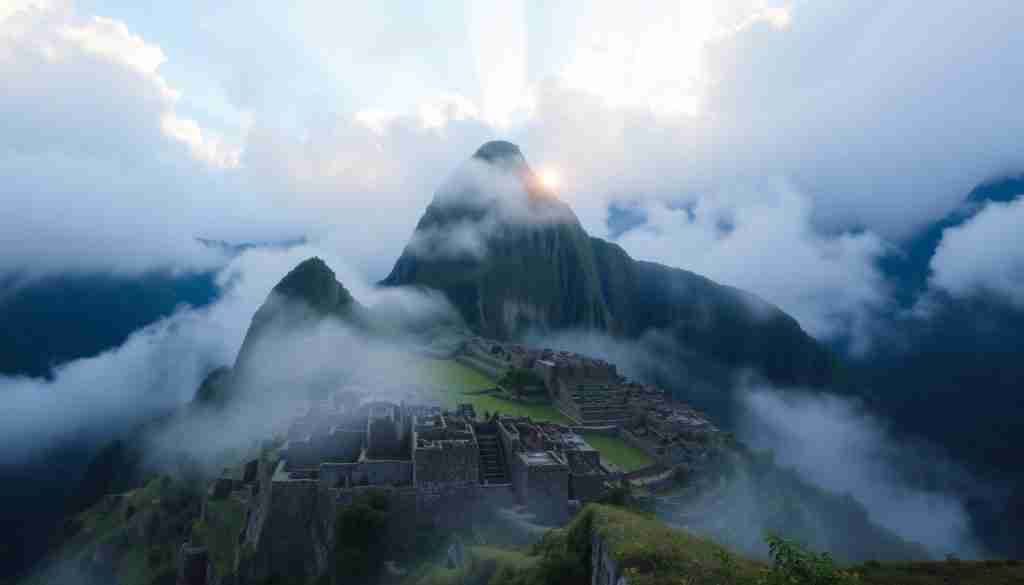
The Sacred Geography of Machu Picchu
Machu Picchu sits in the heart of the Andean landscape. It shows the Incas’ deep respect for nature. The city is on top of sacred mountains, showing their spiritual bond with the land.
Mountain Peaks and Natural Integration
Machu Picchu is close to Huayna Picchu and Machu Picchu Mountain. These sacred mountains were key in the Incas’ beliefs. They were used for rituals and ceremonies.
The city blends into the rough terrain. This shows the Incas’ skill in mixing their buildings with nature.
Water Systems and Engineering
The Incas were experts in Inca water management at Machu Picchu. They built a complex system of fountains, canals, and drains. This system used the area’s water well.
These systems were not just useful. They also had spiritual value. They showed the Incas’ respect for water.
Machu Picchu’s design was carefully planned. It aligns with important astronomical and geographical features. This highlights the site’s sacred geography and the Incas’ deep knowledge of their environment.
“Machu Picchu’s seamless integration with the Andean landscape is a testament to the Incas’ remarkable ability to harmonize their built environment with nature’s grandeur.”
Cultural Significance in Inca Civilization
Machu Picchu is a symbol of the Inca Empire’s greatness. It shows their skill in culture, technology, and spirituality. This ancient city was a royal home and a place of worship, giving us a peek into their lives and beliefs.
The site’s buildings, like the terraces and water systems, show the Inca’s engineering skills. They knew how to work with nature. The buildings also line up with the stars, showing the Inca’s knowledge of the universe.
Machu Picchu was also a spiritual center. The Temple of the Sun was used for sun worship and rituals. This shows the Inca’s deep bond with nature.
The Intihuatana stone is a key Inca artifact here. It’s thought to have tracked the sun, showing the Inca’s advanced astronomy. They used the stars in their buildings.
Machu Picchu is hard to reach, but the Inca built trails to get there. This shows their skill in building in tough places.
Now, we can learn about the Inca Empire through Machu Picchu. It’s a chance to see the culture of this amazing civilization.
“Machu Picchu is a sacred, spiritual place, a testament to the genius of the Inca people. It’s a window into their world, their beliefs, and their sophisticated understanding of the natural environment.”
Modern Recognition and World Wonder Status
Machu Picchu is known worldwide, thanks to its UNESCO World Heritage Site status since 1983. In 2007, it was named one of the New 7 Wonders of the World. This made it a top spot for cultural tourism fans everywhere.
UNESCO World Heritage Site Declaration
The UNESCO recognition highlights Machu Picchu’s unique value. It praises its architecture, history, and natural setting. This honor boosts awareness and conservation efforts to keep it safe for the future.
Tourism Impact and Preservation Efforts
Machu Picchu draws over 1.4 million visitors each year, making it Peru’s favorite spot. This growth has led to a focus on eco-friendly tourism and protecting the site. It aims to keep the site’s beauty and integrity while welcoming visitors from all over.

“Preserving the authenticity and integrity of Machu Picchu is crucial, as it not only safeguards this incredible cultural heritage site but also ensures a responsible and enriching experience for all who visit.”
| Statistic | Value |
|---|---|
| Machu Picchu Visitors Annually | 1.4 million |
| Machu Picchu Designated as UNESCO World Heritage Site | 1983 |
| Machu Picchu Chosen as New 7 Wonders of the World | 2007 |
| Machu Picchu Historic Sanctuary Plant Species | Over 1,200 |
| Machu Picchu Archaeological Site Area | 32,592 hectares |
Archaeological Treasures and Discoveries
Machu Picchu, the stunning Inca citadel, still shares its secrets with us. Archaeologists find pottery, tools, and jewelry, giving us a peek into the Inca’s lives. These finds show their skill and daily routines.
New tech like LiDAR scanning has revealed Machu Picchu’s hidden parts. It has uncovered structures and features we didn’t know about. This tech has helped us see the city’s true size and importance.
Excavations have also told us about Machu Picchu’s people. They found skeletons of both men and women. This shows the community was diverse and balanced.
Despite being smaller than other Inca cities, Machu Picchu had 500 to 750 people. The terraces around it weren’t enough for everyone. So, farming in the hills was key to feeding the community.
The research at Machu Picchu keeps growing our knowledge of the Inca civilization. It shows their amazing culture, architecture, and knowledge of the stars. As we learn more, Machu Picchu remains a symbol of the Inca’s creativity and resourcefulness.
| Discovery | Year | Significance |
|---|---|---|
| Machu Picchu discovered by Hiram Bingham | 1911 | Rediscovery of the Inca citadel |
| Machu Picchu named a World Heritage Site | 1983 | International recognition of its cultural and historical importance |
| Machu Picchu declared one of the New Seven Wonders of the World | 2007 | Global acknowledgment of its architectural and historical significance |
| Yale University agrees to return artifacts removed by Bingham to Peru | 2007 | Resolution of a century-long dispute over ownership of Inca artifacts |
The treasures and discoveries at Machu Picchu amaze everyone. They deepen our understanding of the Inca’s world and their lasting impact.
“Machu Picchu forms a cosmological, hydrological, and sacred geographical center for the region, according to Dr. Johan Reinhard.”
Environmental Conservation and Sustainability Challenges
Machu Picchu is a world-famous site facing big challenges. The rise of mass tourism and climate change threaten its ecosystem and culture. These issues make it hard to keep this ancient place safe for the future.
To solve these problems, steps are being taken. Visitor numbers are being limited, and tour paths are being controlled. The site’s unique cloud forest and the risk of erosion need careful attention. Sustainable tourism initiatives and teamwork between experts and locals are key to protecting Machu Picchu.
The tourism industry’s role in climate change impacts adds to the challenge. In 2021, Machu Picchu became carbon-neutral. It aims to cut its carbon emissions by 45% by 2030. This shows the site’s dedication to being green and preserving the environment.
| Sustainable Initiatives | Impact |
|---|---|
| REDD+ Brazil Nut Concessions project | Protects over 600,000 hectares of forests, avoids over 2.5 million tons of CO2 emissions annually, and benefits over 800 local families |
| Carbon-neutral certification for Machu Picchu | Reduced carbon footprint by 18.77% from 2019 baseline, aiming for 45% reduction by 2030 |
Keeping Machu Picchu’s culture, environment, and tourism sustainable is a big task. But with new ideas and teamwork, this amazing place can be enjoyed by many. It will also be protected for years to come.
“Sustainable tourism at Machu Picchu can create economic opportunities for local businesses adhering to sustainability principles.”
Conclusion
Machu Picchu is a symbol of the Inca civilization’s culture, architecture, and lasting impact. It is a UNESCO World Heritage site and one of the New 7 Wonders of the World. This ancient city draws millions of visitors and researchers every year.
The site’s design and layout show the Incas’ deep spiritual and scientific knowledge. Efforts to preserve Machu Picchu and support local tourism help keep its legacy alive. This ensures it will continue to inspire and teach people about the Inca culture.
Machu Picchu’s story is both mysterious and fascinating. It faces challenges like sustainable tourism today. Yet, it stands as a testament to human creativity and our connection to the past. Its beauty and importance remind us of the power of human ingenuity and the lasting impact of the Inca legacy.
