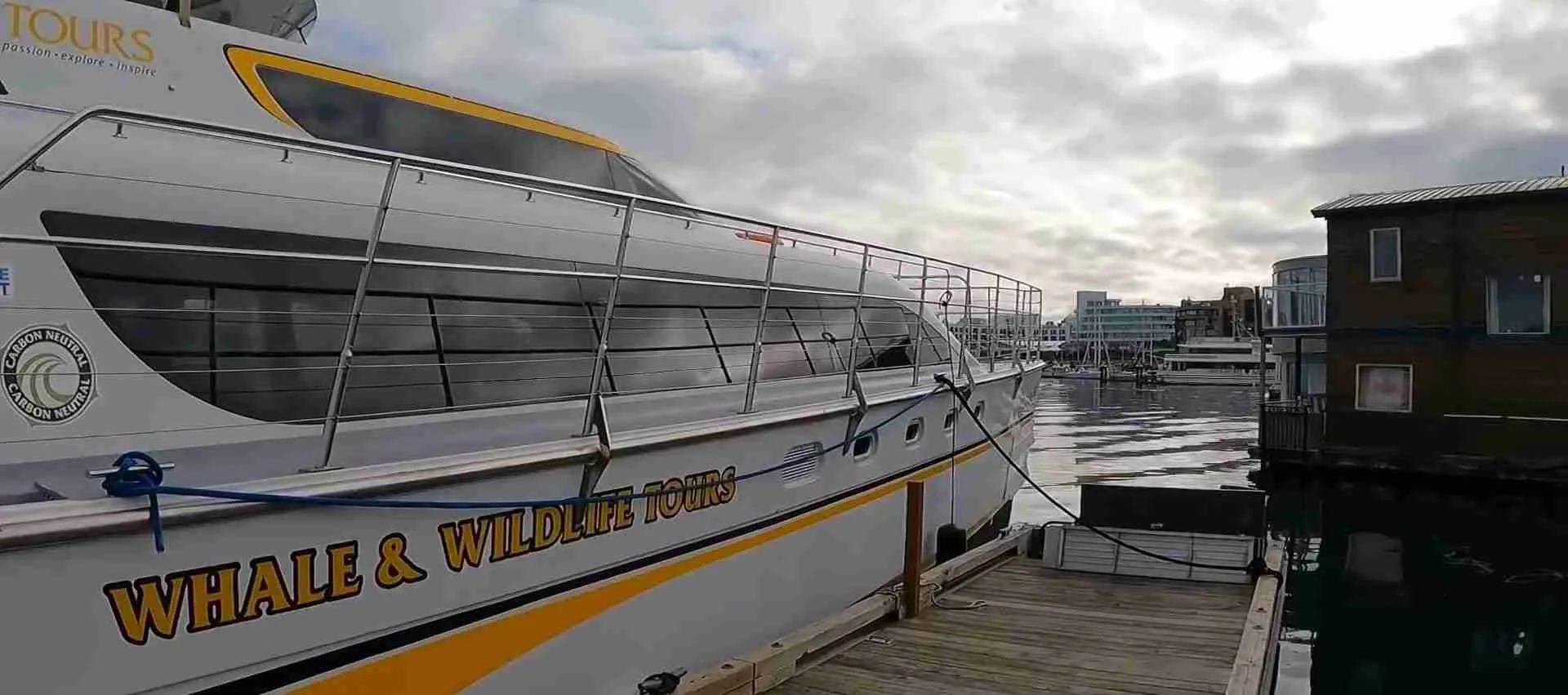
Whale Watching in Victoria BC 2026: Complete Guide
Victoria, British Columbia transforms into one of North America’s premier whale watching destinations each spring, where the protected waters of the Salish Sea host resident orcas, migrating humpbacks, and an extraordinary diversity of marine life. With industry-leading 95-98% whale sighting success rates and year-round tour availability departing directly from downtown Victoria’s Inner Harbour, this coastal capital delivers consistently exceptional wildlife encounters within minutes of the city center.
Key Takeaways
- Peak Season Success 2026: May through September delivers 95-98% whale sighting success rates, with all major operators offering lifetime whale guarantees providing free return tours if no whales appear on your first excursion.
- Tour Pricing 2026: Standard 3-hour whale watching tours range CAD $149-189 ($105-135 USD) depending on season and vessel type, with Zodiac adventures and covered catamaran cruises departing multiple times daily from Victoria’s Inner Harbour.
- Species Diversity: Victoria’s waters host transient orcas year-round, humpback whales June through October, gray whales during spring migration, plus abundant sea lions, harbour seals, porpoises, and bald eagles on every tour.
- Downtown Convenience: All major whale watching operators depart from Victoria’s Inner Harbour and Fisherman’s Wharf within walking distance of downtown hotels, eliminating transportation logistics and allowing same-day tour bookings.
- Year-Round Operations 2026: While peak season runs May-September, Victoria operators maintain year-round schedules with winter tours offering uncrowded wildlife viewing and competitive pricing CAD $149 ($105 USD) November through March.
- Weather Preparation: Ocean temperatures remain cool year-round requiring warm layers, windproof jackets, and closed-toe shoes even during summer tours, though all operators provide flotation suits and rain gear on Zodiac expeditions.
People Also Ask About Whale Watching Victoria BC 2026
What is the best month for whale watching in Victoria BC in 2026?
August and early September represent peak whale watching months in Victoria during 2026, combining maximum species diversity with optimal weather conditions. Humpback whales reach peak activity during this period, feeding intensively on krill and herring concentrations while displaying spectacular surface behaviors including breaching, tail slaps, and lunge feeding. Transient orcas hunt actively through the Salish Sea pursuing harbour seals, sea lions, and porpoises. Gray whales complete their northbound migration by this time, while minke whales patrol the deeper channels.
July and August deliver the warmest ocean crossing temperatures, calmest seas, and longest daylight hours extending tour viewing windows. September maintains excellent whale activity while offering reduced crowds and competitive pricing as peak summer season transitions to fall. May and June provide outstanding value with frequent orca sightings, returning humpback populations, and spring gray whale migrations, though ocean conditions prove cooler and occasionally rougher requiring additional warm layers.
How much does whale watching cost in Victoria BC in 2026?
Standard 3-hour whale watching tours in Victoria cost CAD $149-189 ($105-135 USD) during 2026, with pricing varying by season, vessel type, and departure time. Winter tours November through March cost CAD $149 ($105 USD), spring and fall shoulder seasons April-May and October range CAD $169 ($120 USD), while peak summer months June through September command CAD $179-189 ($125-135 USD). Zodiac boat tours and covered catamaran cruises maintain identical base pricing, though some operators charge premium rates for sunset departures or private charters.
All quoted prices exclude taxes and fees. Most operators add CAD $4 wildlife conservation fee supporting Pacific Salmon Foundation, Marine Education and Research Society, and local conservation initiatives. Tour costs include expert marine naturalist guides, whale sighting guarantees, and complimentary photo packages on select tours. Children typically receive 10-15% discounts, while seniors and students qualify for CAD $10-15 reductions. Private group charters accommodate 6-12 passengers starting CAD $1,200-1,800 total.
What are the chances of seeing whales in Victoria in 2026?
Victoria whale watching operators maintain 95-98% success rates during peak season May through October 2026, with sighting probabilities remaining strong April and November at 85-90%. Transient orcas hunt year-round through the Salish Sea making them the most reliably sighted species during any season. Humpback whales appear with 90%+ consistency June through October when hundreds return to traditional feeding grounds along the BC coast. Gray whales pass through during March-April northbound migration with 70-80% sighting rates during this compressed window.
All major Victoria operators including Prince of Whales, Springtide, Eagle Wing Tours, and Orca Spirit Adventures offer lifetime whale sighting guarantees. Tours encountering zero whales receive complimentary return vouchers valid indefinitely with no expiration date, though such occurrences remain rare. Winter months December through February reduce sighting probabilities to 60-75% as some species migrate and weather conditions limit tour frequency, though transient orcas maintain year-round presence hunting harbour seals and California sea lions.
Is whale watching better in Victoria or Vancouver in 2026?
Victoria delivers superior whale watching experiences compared to Vancouver through 2026 based on proximity to prime feeding grounds, species diversity, and operational convenience. Victoria’s southern Vancouver Island location positions tours within 15-30 minutes of Race Rocks Ecological Reserve, Haro Strait, and Juan de Fuca Strait where transient orcas hunt and humpback whales feed year-round. Vancouver tours require 60-90 minute transits through Strait of Georgia before reaching productive whale habitat, reducing actual wildlife viewing time significantly.
Victoria hosts larger concentrations of marine mammals throughout the season. Transient orca pods patrol the waters surrounding Victoria daily hunting abundant seal and sea lion populations, while Vancouver sees more sporadic orca activity. Humpback whale numbers prove substantially higher in waters accessed from Victoria, with 300-400 individual humpbacks catalogued in the Salish Sea region west and south of Victoria compared to smaller populations near Vancouver. Victoria operators also maintain higher tour frequencies with 6-12 daily departures year-round versus Vancouver’s more limited schedules.
Extended multi-day tours – 5+ days
Featured Victoria Multi-Day Tour Packages

3 days
3 Days Vancouver-Victoria, Duncan, Chemainus, Nanaimo Private Tour
- ✓ Comprehensive Victoria tour
- ✓ Expert local guides included
- ✓ All accommodation arranged
- ✓ Transportation provided

6 days
Geluxe: Vancouver Island: Victoria, the Broken Group Islands & Salt Spring
- ✓ Comprehensive Victoria tour
- ✓ Expert local guides included
- ✓ All accommodation arranged
- ✓ Transportation provided
7 days
Signature British Columbia: Vancouver, Victoria & Whistler
- ✓ Comprehensive Victoria tour
- ✓ Expert local guides included
- ✓ All accommodation arranged
- ✓ Transportation provided
7 days
Rockies to Rainforest Tour: Calgary to Vancouver
- ✓ Comprehensive Victoria tour
- ✓ Expert local guides included
- ✓ All accommodation arranged
- ✓ Transportation provided
Multi-day tour packages powered by TourRadar. Prices and availability subject to change.
Introduction
Victoria, British Columbia occupies a position unmatched in North America for accessible, reliable whale watching experiences combining urban convenience with wilderness encounters. The capital city’s location on the southern tip of Vancouver Island places it at the confluence of three major waterways: the Strait of Georgia, Haro Strait, and Juan de Fuca Strait. These nutrient-rich channels form the heart of the Salish Sea ecosystem, supporting one of the world’s most diverse and productive marine food webs stretching from microscopic plankton through apex predators including orcas, humpback whales, and great white sharks.
The Salish Sea hosts year-round populations of transient orcas, seasonal aggregations of humpback whales numbering in the hundreds, spring gray whale migrations, and resident minke whales alongside extraordinary supporting wildlife. Harbour seals haul out on rocky islets by the thousands. California sea lions and massive Steller sea lions bark from navigation markers and shoreline rocks. Dall’s porpoises race through ferry wakes at 35 miles per hour. River otters fish along kelp beds. Bald eagles patrol from towering Douglas firs. This marine wilderness begins mere minutes from Victoria’s Inner Harbour, where whale watching vessels depart throughout the day accessing prime habitat within 15-30 minute cruising distance.
Victoria’s whale watching industry evolved from pioneering operations in the 1980s into a sophisticated network of professional tour operators employing marine biologists, certified naturalists, and experienced captains operating purpose-built vessels ranging from 12-passenger Zodiac boats to 95-passenger covered catamarans. All major operators maintain Transport Canada certification, participate in Pacific Whale Watch Association best practices, and contribute portions of tour revenues to marine research and conservation programs. The industry achieved remarkable conservation success: humpback whale populations rebounded from near-extinction in the 1960s to current healthy populations exceeding 300 individuals regularly sighted in Victoria waters.
The 2026 whale watching season in Victoria promises exceptional opportunities. Climate patterns favor productive upwelling delivering nutrient-rich waters supporting dense plankton blooms feeding the entire marine food chain. Humpback whale populations continue expanding with new individuals joining traditional feeding aggregations annually. Transient orca populations remain stable with multiple pods including the T037As, T065As, T099s, and T124As regularly hunting through waters accessed from Victoria. Gray whale migration timing remains predictable with northbound movements peaking March through April. Tour operators expanded fleet capacities, upgraded vessels with enhanced viewing platforms, and extended operating seasons to meet growing demand while maintaining small group sizes and quality experiences.
This comprehensive guide covers everything required to plan successful whale watching adventures in Victoria during 2026. Detailed seasonal breakdowns identify optimal timing for specific species and weather conditions. Complete tour operator profiles compare vessel types, departure locations, pricing structures, and unique offerings. Practical sections address what to wear, what to bring, booking strategies, and how to maximize wildlife sighting opportunities. Budget planning guidance breaks down complete daily costs including tours, accommodation, meals, and transportation. First-time visitor tips ensure smooth logistics from arrival through departure. The guide draws exclusively from verified 2026 pricing, current operator schedules, and expert knowledge of Victoria’s marine ecosystems to deliver actionable planning information supporting memorable wildlife encounters.
Understanding Whale Watching Season Victoria BC 2026
Victoria’s whale watching season operates year-round with distinct seasonal characteristics influencing species presence, weather conditions, tour frequency, and pricing. The extended season reflects Victoria’s mild coastal climate and the Salish Sea’s exceptional marine productivity supporting resident and migratory species throughout the annual cycle. Understanding seasonal patterns allows strategic planning optimizing sighting opportunities, weather comfort, and value.
Peak season spans May through September when all species converge in Victoria waters. Transient orcas hunt actively pursuing abundant harbour seal pups born April through June. Humpback whales return from winter breeding grounds in Hawaii and Mexico, arriving in Victoria waters June through July and remaining through October feeding intensively to build blubber reserves. Gray whales complete northbound migrations by late May. Minke whales patrol throughout summer. Sea lion populations peak as California sea lions haul out on rocks and navigation markers. Weather conditions prove optimal with calm seas, moderate temperatures, and minimal precipitation. Tour operators run maximum schedules with 8-12 daily departures and extended sunset tours capitalizing on long summer daylight.
Shoulder seasons April-May and September-October deliver outstanding value combining strong whale activity with reduced crowds and competitive pricing. April brings gray whales on northbound migration and early orca activity as seal pupping begins. May sees humpbacks returning and orca activity intensifying. September and October feature peak humpback surface activity as whales feed voraciously preparing for southbound migration, with breaching, tail slaps, and lunge feeding occurring frequently. Fall weather remains mild though ocean conditions prove more variable requiring flexible scheduling. Pricing drops CAD $10-20 compared to peak summer rates while sighting success maintains 90%+ levels.
Winter months November through March offer specialized experiences for dedicated wildlife enthusiasts willing to embrace cooler conditions and reduced tour frequencies. Transient orcas remain active year-round hunting seals and sea lions, with some pods including the T065As and T037As regularly sighted during winter months. Humpback whale stragglers occasionally overwinter in productive feeding areas. Harbour seals, sea lions, bald eagles, and seabird populations maintain strong presence. Tours operate 2-4 times weekly weather permitting, with covered vessels providing heated cabins. Pricing reaches annual lows at CAD $149 ($105 USD). Sighting success drops to 60-75% as some species migrate and weather impacts operations, though whale guarantees ensure free return opportunities.
Species You Will See Whale Watching Victoria 2026
Victoria whale watching tours encounter extraordinary species diversity reflecting the Salish Sea’s position as one of North America’s richest marine ecosystems. Understanding species characteristics, behaviors, and seasonal patterns enhances appreciation and photography opportunities while setting realistic expectations for sightings.
Orcas (Killer Whales) Victoria BC 2026
Orcas represent Victoria’s most iconic whale watching species, with two distinct populations exhibiting completely different behaviors, diets, and social structures. Transient orcas, scientifically known as Bigg’s killer whales, hunt marine mammals including harbour seals, California sea lions, Steller sea lions, porpoises, and occasionally other whale species. These apex predators patrol Victoria waters year-round in matriarchal family pods typically numbering 3-8 individuals, though occasionally aggregating into larger groups exceeding 20 whales for coordinated hunts. Transient orcas vocalize sparingly while hunting to avoid alerting prey, using echolocation only intermittently and traveling in silence for extended periods.
Adult male transient orcas reach 8 meters (26 feet) length and 5,400 kilograms (12,000 pounds), distinguished by towering dorsal fins extending up to 1.8 meters (6 feet) tall standing perfectly erect like ship sails. Adult females measure 7 meters (23 feet) with smaller, curved dorsal fins. Each individual displays unique saddle patch patterns behind the dorsal fin and distinctive eye patch shapes allowing researchers and experienced naturalists to identify specific whales. Victoria naturalists recognize hundreds of individual transient orcas by sight, sharing pod genealogies and hunting behaviors with tour guests.
Transient orca populations around Vancouver Island number approximately 300-400 individuals organized into numerous pods. The T037As, T065As, T099s, T124As, and T036As represent frequently sighted family groups hunting regularly through Haro Strait, Juan de Fuca Strait, and waters surrounding Race Rocks Ecological Reserve accessed from Victoria. Sighting opportunities remain strong year-round with slight increases during spring and summer coinciding with seal pupping season May through July. Transient orcas display dramatic surface behaviors including breaching, tail slaps, and spy-hopping, particularly during social gatherings after successful hunts.
Southern resident orcas, a distinct population feeding exclusively on salmon, inhabit the Salish Sea but face critical endangerment with only 75 individuals remaining in three pods. Victoria tour operators strictly limit approaches to southern residents following enhanced protection regulations, rarely directing tours specifically to these endangered whales. Most orca sightings on Victoria tours involve transient/Bigg’s killer whales hunting marine mammals.
Humpback Whales Victoria 2026
Humpback whales return to Victoria waters each spring in one of the coast’s greatest conservation success stories. Commercial whaling nearly eliminated North Pacific humpbacks by the 1960s, reducing populations to a few hundred individuals. Following international protection in 1966, humpback populations rebounded dramatically with current estimates exceeding 20,000 across the North Pacific. Victoria waters host 300-400 catalogued individuals returning annually to traditional feeding grounds.
Adult humpback whales measure 12-16 meters (40-52 feet) length and weigh 25,000-40,000 kilograms (55,000-88,000 pounds), making them substantially larger than orcas. Distinctive features include extremely long pectoral fins extending up to one-third body length, unique black and white tail fluke patterns enabling individual identification, and pronounced bumps called tubercles covering the head and lower jaw. Humpbacks display remarkable surface behaviors earning them reputation as the ocean’s most acrobatic large whales. Full breaches launch entire bodies clear of the water in spectacular displays visible for miles. Tail slaps, pectoral fin slaps, and spy-hopping occur frequently, particularly during feeding frenzies.
Humpback whales migrate annually between winter breeding grounds in Hawaiian waters or coastal Mexico and summer feeding grounds along the British Columbia and Alaska coasts. Victoria represents a critical feeding stop where humpbacks consume 1,400-2,000 kilograms (3,000-4,400 pounds) of krill, herring, and small fish daily, building blubber reserves sustaining them through migration and breeding season when feeding ceases entirely. Humpbacks typically arrive in Victoria waters June through July, with peak numbers present August through October. Fall months feature intense feeding activity as whales prepare for southbound migration, producing dramatic surface displays including lunge feeding where whales burst through bait balls with mouths agape.
Individual humpback whales develop strong site fidelity, returning to the same feeding areas year after year. Victoria naturalists recognize numerous individuals by tail fluke patterns and behavioral quirks, including famous whales like BCY0995 “Smiley,” BCY1033 “Merlin,” and BCX1068 “Split Fluke.” Researchers photograph tail flukes during dives, uploading images to regional humpback catalogues documenting population health and movement patterns.
Gray Whales Spring Migration 2026
Gray whales undertake one of the longest migrations of any mammal, traveling 10,000-12,000 miles annually between winter breeding lagoons in Baja California, Mexico and summer feeding grounds in the Bering and Chukchi Seas. The northbound migration passes through Victoria waters March through May, providing reliable seasonal sighting opportunities as whales travel close to Vancouver Island’s shoreline. Some gray whales, primarily younger individuals and pregnant females, stop to feed along the BC coast rather than continuing to Arctic waters, remaining through summer and fall.
Adult gray whales measure 12-15 meters (40-49 feet) and weigh 15,000-35,000 kilograms (33,000-77,000 pounds). Unlike the sleek forms of orcas and humpbacks, gray whales appear robust and mottled with heavily scarred skin covered in barnacles and whale lice creating distinctive patterns. Gray whales lack dorsal fins, instead displaying a low dorsal hump followed by 6-12 knuckles along the tailstock. They blow spouts reaching 3-4 meters (10-13 feet) high in characteristic heart-shaped patterns.
Gray whales feed differently than other large whales, diving to the seafloor and rolling onto their sides to suck sediment, filtering amphipods, small crustaceans, and worms through baleen plates. This bottom-feeding behavior creates distinctive mud plumes visible at the surface. Victoria tours encounter gray whales most reliably during April when migration peaks, though sightings occur throughout March and May as well. Gray whales travel individually or in small groups of 2-3 animals, moving steadily northward at speeds of 4-5 knots.
Minke Whales and Other Species
Minke whales represent the Salish Sea’s smallest and most elusive baleen whales, measuring 7-9 meters (23-30 feet) and weighing 5,000-10,000 kilograms (11,000-22,000 pounds). These solitary whales patrol Victoria waters year-round, though sightings occur less frequently than orcas or humpbacks due to cryptic behavior and tendency to avoid boats. Minkes surface quietly with small, barely visible blows, diving for 6-8 minutes between breaths. They display distinctive white pectoral fin patches visible during brief surface intervals.
Victoria tours occasionally encounter fin whales, the second-largest animals on Earth reaching 18-24 meters (59-79 feet). These rare sightings generate excitement as fin whales typically inhabit deeper offshore waters, making appearances in the Salish Sea uncommon. Pacific white-sided dolphins occasionally travel through Victoria waters in energetic pods numbering 10-100 individuals, creating thrilling encounters as dolphins bow-ride and leap alongside tour vessels.
Marine Wildlife Beyond Whales
Every Victoria whale watching tour encounters abundant marine wildlife beyond whales. Harbour seals haul out on rocky outcrops, navigation markers, and log booms by the hundreds, with populations peaking during spring pupping season May through July. California sea lions bark from rocks and buoys, recognizable by lighter coloring and external ear flaps. Massive Steller sea lions, the world’s largest sea lion species with males reaching 1,100 kilograms (2,400 pounds), congregate at Race Rocks Ecological Reserve year-round.
Dall’s porpoises race through waves at remarkable speeds, creating distinctive rooster-tail spray patterns visible from great distances. Harbour porpoises, smaller and more timid cousins, surface quietly in small family groups. River otters fish along kelp beds and rocky shorelines. Bald eagles perch in massive Douglas fir and Garry oak trees lining the coast, diving to capture fish from the surface. Seabirds including cormorants, murres, pigeon guillemots, rhinoceros auklets, and various gull species crowd rocky islands and navigation structures.
Major Whale Watching Operators Victoria 2026
Victoria hosts numerous professional whale watching companies operating modern fleets staffed by certified marine naturalists and experienced captains. Selecting an operator involves considering vessel type preferences, departure locations, pricing, and specialized offerings. All major operators maintain excellent safety records, follow Pacific Whale Watch Association guidelines, and provide whale sighting guarantees.
Prince of Whales Victoria
Prince of Whales operates Victoria’s largest and most environmentally advanced whale watching fleet from a prime Inner Harbour location at 812 Wharf Street directly below the Fairmont Empress Hotel. The company pioneered eco-friendly vessel design, operating custom-built catamarans featuring hybrid diesel-electric propulsion systems reducing emissions and underwater noise pollution. These 95-passenger vessels provide three viewing levels, heated indoor cabins, full washroom facilities, onboard snack bar, and panoramic windows ensuring excellent sightlines regardless of weather conditions.
Standard 3-4 hour tours depart multiple times daily year-round, accessing Race Rocks Ecological Reserve, Haro Strait, and Juan de Fuca Strait prime whale habitat. Prince of Whales employs marine biologists and certified naturalists providing educational commentary throughout tours, explaining whale behaviors, individual identification, marine ecosystems, and conservation challenges. The company maintains a 95%+ whale sighting success rate with lifetime whale guarantees providing complimentary return tours if no whales appear. Tours cost CAD $169 ($120 USD) for adults in 2026 (check official website for current pricing as rates may vary seasonally).
Prince of Whales also operates 12-passenger Zodiac-style vessels providing more intimate, adventurous experiences. Zodiac tours cruise at higher speeds reaching distant whale sightings quickly while positioning low to the water for dramatic wildlife perspectives. All passengers receive flotation suits, rain gear, and personal instruction before departure. Zodiac tours maintain identical pricing to catamaran cruises, with selection based purely on experience preference rather than cost considerations.
Springtide Whale Watching
Springtide Whale Watching, a family-owned company serving Victoria for over 33 years, operates from downtown Inner Harbour with a fleet combining luxury covered catamarans and open Zodiac vessels. The company distinguishes itself through complimentary professional photo packages included on all Ocean Cruiser catamaran tours, with onboard naturalists capturing whale encounters and distributing high-resolution images to all passengers following tours, eliminating pressure to photograph wildlife while enjoying the experience.
Tour pricing for 2026 varies seasonally: winter months November through March cost CAD $149 ($105 USD), spring and fall shoulder seasons charge CAD $169 ($120 USD), and peak summer June through September reaches CAD $189 ($135 USD) (check official website for current rates). All tours include expert marine naturalist guides, whale sighting guarantees never expiring, and complimentary hot chocolate, coffee, and tea on covered vessels. Springtide maintains a 95%+ sighting success rate and offers Victoria’s Best Price Guarantee, matching any lower competitor pricing for comparable tours.
The Ocean Cruiser catamaran accommodates up to 65 passengers with spacious indoor heated cabin, outdoor viewing decks, washrooms, and comfortable seating. The vessel’s stability proves ideal for families with young children, seniors, and passengers concerned about seasickness. Zodiac adventures accommodate 12 passengers in open boats providing thrilling high-speed approaches and intimate wildlife encounters. Springtide’s experienced captains hold extensive local knowledge, often positioning vessels in optimal locations before whale sightings become obvious to other operators.
Eagle Wing Tours
Eagle Wing Tours has held the #1 ranking on TripAdvisor for Victoria whale watching since 2007, earning this distinction through consistently excellent naturalist commentary, strategic whale positioning, and commitment to marine conservation. The company operates from historic Fisherman’s Wharf, a colorful floating village featuring seafood restaurants, ice cream shops, and residential houseboats providing entertaining pre-tour exploration opportunities.
Eagle Wing operates a modern fleet of high-performance vessels including semi-covered boats combining open-air viewing with enclosed heated seating areas, and full open boats maximizing wind-in-your-hair adventure. All vessels feature specialized scarab hull designs delivering exceptional stability, speed, and comfort compared to traditional boat configurations. Tours run 3-4 hours accessing Race Rocks, San Juan Islands, and productive feeding areas throughout the Salish Sea. The company emphasizes conservation education, dedicating portions of every tour to discussing marine ecosystem challenges, whale population recovery, and individual roles in ocean protection.
Eagle Wing Tours provides all-weather flotation gear, gloves, hats, and rain pants on request, sanitizing equipment between every use. The company offers specialty sunset tours during summer months, timing departures to coincide with golden hour light creating spectacular photography opportunities and typically encountering whales during peak feeding activity. Eagle Wing maintains 98% whale sighting success rates and provides whale guarantees ensuring free return tours if sightings fail to materialize. Standard tour pricing aligns with industry rates (check official website for current 2026 pricing).
Orca Spirit Adventures
Orca Spirit Adventures operates Victoria’s largest whale watching fleet with multiple covered vessels and Zodiac boats departing from Coast Victoria Hotel & Marina. The company offers complimentary shuttle service collecting passengers from downtown Victoria hotels, eliminating transportation logistics for visitors staying away from the waterfront. Shuttles operate on coordinated schedules matching tour departure times, with pickup windows ranging from 30-90 minutes before sailing depending on hotel locations.
Orca Spirit employs marine naturalists holding advanced degrees in marine biology, ecology, and related sciences, providing exceptional educational experiences combining whale identification, behavioral interpretation, and ecosystem analysis. Many naturalists recognize individual whales by sight, sharing personal histories of specific orcas, humpbacks, and other marine mammals encountered during tours. The company contributes CAD $4 per passenger to marine conservation through partnerships with Pacific Salmon Foundation and Marine Education and Research Society supporting salmon habitat restoration and whale population research.
The fleet includes luxury 75-passenger covered vessels featuring heated indoor cabins, outside viewing decks, full galley offering snacks and beverages for purchase, and complete washroom facilities. These vessels prove ideal for families, seniors, and passengers prioritizing comfort over adventure. Orca Spirit also operates a large Zodiac fleet providing traditional open-boat experiences for thrill-seekers. Tours run 3 hours exploring Juan de Fuca Strait, Haro Strait, and surrounding islands. The company maintains 98% sighting success with lifetime whale guarantees and competitive 2026 pricing (check official rates).
Sidney Whale Watching
Sidney Whale Watching operates from Sidney, a charming seaside town 25 kilometers north of downtown Victoria near Swartz Bay ferry terminal. This First Nations owned and operated company has served the Saanich Peninsula for over 20 years, offering culturally enriched experiences incorporating Indigenous perspectives on marine ecosystems and traditional relationships with whales, sea lions, and other marine life. Tours explore the Gulf Islands archipelago, a spectacular region of protected channels, forested islands, and productive marine habitat distinct from Victoria Inner Harbour departures.
Sidney Whale Watching specializes in 3-hour wildlife tours and extended private charters. The company operates modern covered vessels accommodating up to 30 passengers, maintaining small group sizes ensuring personalized attention and unobstructed viewing. All tours include guaranteed whale sightings with free return vouchers if no whales appear. Sidney’s location provides access to eastern Salish Sea waters less visited by Victoria-based operators, occasionally yielding sightings unavailable from downtown departures including gray whales feeding in protected bays and transient orcas hunting through narrow channels.
Choosing Between Zodiac and Covered Vessel Tours 2026
Victoria whale watching operators offer two distinct vessel types delivering fundamentally different experiences. Understanding the advantages, limitations, and ideal passenger profiles for each vessel style guides selection matching personal preferences, physical capabilities, and weather tolerance.
Zodiac Boat Tours Victoria
Zodiac boats revolutionized whale watching when introduced to Victoria in the 1980s, combining rigid hulls with inflatable sides creating vessels capable of high speeds, sharp turns, and operation in shallow waters inaccessible to larger boats. Modern whale watching Zodiacs typically accommodate 12 passengers seated on padded benches along the exterior rails, positioning everyone at water level with unobstructed 360-degree sightlines. Operators provide full flotation suits, rain pants, gloves, and waterproof gear creating distinctive bright orange or red uniformed groups easily identified across the harbor.
Zodiac advantages include speed allowing rapid repositioning when whale sightings occur miles away, low profile providing intimate perspectives as whales surface mere feet from passengers, ability to navigate shallow kelp beds and rocky shorelines where marine mammals haul out, and thrilling ride quality appealing to adventure seekers. Zodiac tours deliver authentic expedition character with wind spray, wave action, and direct exposure to marine environment. Photographers appreciate Zodiac stability during stops and low shooting angles capturing dramatic whale perspectives impossible from elevated catamaran decks.
Zodiac limitations require consideration. Tours expose passengers to weather conditions directly with no protection from wind, rain, or sun beyond provided flotation suits. Ocean spray wets passengers regularly, particularly during high-speed transits or rough seas. Seating provides minimal back support with no ability to move around during the 3-hour tour. No washroom facilities exist on Zodiacs, requiring passengers to use shore facilities before departure. Engine noise at high speeds limits conversation and naturalist commentary compared to quiet covered vessels. Some passengers find continuous seating on exterior benches uncomfortable, particularly those with back problems or limited mobility.
Zodiac tours suit adventurous passengers seeking maximum thrill and intimacy with marine environment, physically capable of boarding via ladder and sitting on padded benches for extended periods, comfortable with weather exposure and ocean spray, and willing to trade amenities for authentic expedition character. Children must meet minimum age requirements, typically 6-7 years depending on operator. Passengers prone to seasickness should consider morning departures when seas prove calmest, though Zodiac’s rigid hull design actually reduces motion compared to traditional boats of similar size.
Covered Catamaran Vessels
Covered catamarans represent the premium whale watching platform, combining spacious indoor heated cabins with expansive outdoor viewing decks creating comfortable experiences suitable for all ages and weather conditions. These purpose-built vessels accommodate 60-95 passengers across multiple levels, featuring panoramic windows, cushioned seating, complete washroom facilities, snack bars, and expert naturalist commentary broadcast through high-quality sound systems audible throughout the vessel.
Catamaran advantages include all-weather comfort with heated cabins protecting passengers during cold, rainy, or windy conditions while outdoor decks remain accessible when weather permits, complete washroom facilities eliminating pre-tour anxiety, food and beverage services providing coffee, tea, hot chocolate, and snacks, stable platform reducing seasickness through twin-hull design and superior weight distribution, accessible boarding via gangways eliminating ladder climbing, and flexible viewing options allowing passengers to move between indoor comfort and outdoor perspectives throughout the tour. Families with young children, seniors, passengers with mobility limitations, and anyone prioritizing comfort over adventure find catamarans ideal.
Catamaran tours position passengers higher above water than Zodiacs, creating different photographic perspectives favoring telephoto lenses over wide-angle shots. Larger passenger capacity means less intimate experiences with increased voices and movement, though professional operators maintain respectful quiet during whale encounters. Catamarans cruise at moderate speeds, reaching distant whale sightings slower than Zodiacs though this rarely impacts wildlife viewing as whale locations update continuously via radio networks connecting all operators.
Covered vessels suit families with children of all ages, seniors preferring comfort and amenities, passengers with mobility challenges, anyone prone to seasickness or cold sensitivity, and travelers prioritizing photography over adventure. The heated cabins prove essential during shoulder season and winter tours when ocean temperatures and wind chill make outdoor viewing uncomfortable for extended periods.
What to Wear Whale Watching Victoria 2026
Victoria’s marine environment remains significantly cooler than land temperatures year-round, with ocean winds creating wind chill reducing perceived temperatures by 10-15 degrees Celsius even during summer. Proper clothing transforms potentially uncomfortable experiences into enjoyable adventures. Operators emphasize layering systems accommodating changing conditions as tours alternate between protected waters and open ocean, sunny skies and fog banks, stationary whale watching and high-speed transits.
Base layers should provide warmth and moisture management. Long underwear or thermal leggings under pants prove valuable even during summer tours. Moisture-wicking synthetic or merino wool fabrics outperform cotton, which loses insulating properties when damp from ocean spray or perspiration. Long-sleeve shirts in synthetic or wool fabrics create warm foundations under fleece layers and jackets.
Mid-layers deliver primary insulation. Fleece jackets or wool sweaters provide warmth adjustable by unzipping or removing entirely if conditions warm. Puffy down or synthetic insulated jackets add substantial warmth during spring, fall, and winter tours when ocean temperatures drop. Multiple lighter layers outperform single heavy layers, allowing precise temperature regulation as conditions change throughout 3-hour tours.
Outer layers must block wind and repel water. Waterproof/windproof jackets in Gore-Tex or similar breathable waterproof fabrics protect against ocean spray, rain, and wind chill while preventing overheating from trapped moisture. Avoid cheap rain jackets lacking breathability, which trap perspiration creating cold dampness worse than light water exposure. Zodiac tour operators provide flotation suits and rain pants creating complete waterproof barriers, though personal windproof jackets underneath remain advisable for comfort during stops.
Lower body protection requires long pants in thick, wind-resistant fabrics. Denim jeans work adequately, though hiking pants or synthetic windproof trousers prove superior. Avoid shorts, skirts, dresses, and thin linen pants allowing wind penetration. Waterproof rain pants over regular pants block spray and wind on Zodiac tours and during rough weather on covered vessels. Leggings alone prove insufficient, lacking wind resistance and appropriate thickness.
Footwear must provide closed-toe protection with non-slip soles. Running shoes or hiking boots work well. Waterproof boots prove ideal for Zodiac tours and rainy conditions. Avoid sandals, flip-flops, Crocs, and any open-toe footwear which operators prohibit for safety reasons. Boat decks become slippery from ocean spray, requiring shoes with good tread. Thick socks in wool or synthetic materials keep feet warm when shoes get wet.
Head protection proves essential. Warm wool or fleece beanies protect ears from wind chill and prevent heat loss through the head. Avoid baseball caps which fly off within minutes of departing protected harbor waters unless secured with chin straps. Neck gaiters or scarves add adjustable warmth protecting the neck and lower face from wind. Gloves or mittens keep hands warm and functional for camera operation, with waterproof shells recommended for Zodiac tours and rainy conditions.
Sun protection remains necessary year-round. Apply SPF 30+ sunscreen to face, neck, ears, and any exposed skin before tours. Ocean water reflects UV radiation increasing exposure compared to land. Polarized sunglasses reduce glare from water surfaces while protecting eyes from wind and spray. Glasses straps prevent loss overboard during excitement or wind gusts.
Summer tours June through August allow lighter layering with t-shirts, light fleece, and windproof shells often sufficient during calm sunny days, though bringing extra warm layers proves wise as conditions change rapidly. Spring and fall shoulder seasons April-May and September-October require full layering with base layers, fleece mid-layers, and waterproof/windproof shells mandatory. Winter tours November through March demand maximum warmth with thermal base layers, multiple insulating mid-layers, heavy winter jackets, and complete waterproof protection.
What to Bring on Victoria Whale Watching Tours 2026
Strategic packing enhances whale watching experiences without burdening passengers with excessive gear. Most operators prohibit large bags on Zodiacs due to limited storage, restricting passengers to small dry bags stowed beneath seats. Covered vessels accommodate backpacks and camera bags more easily, though keep belongings minimal to avoid managing excess gear during whale encounters.
Cameras represent primary photographic tools, with smartphone cameras proving increasingly capable for whale photography while requiring zero learning curve or specialized equipment. Dedicated cameras benefit from telephoto zoom lenses in the 100-400mm range for distant whale shots, though wide-angle lenses capture dramatic close approaches and vessel perspectives. Waterproof camera bags or rain covers protect equipment from ocean spray. Camera straps prevent devastating overboard losses during excitement. Many operators now provide complimentary professional photo packages eliminating photography pressure entirely, allowing passengers to experience whales directly rather than through viewfinders.
Binoculars enhance whale watching dramatically, revealing details invisible to naked eyes including eye patches on orcas, barnacle patterns on gray whales, and distant blows indicating whale locations miles away. Compact 8×40 or 10×42 binoculars balance magnification with field of view suitable for moving vessels. Waterproof or water-resistant models tolerate ocean spray. Attach binoculars to neck straps preventing drops overboard. Some passengers find image-stabilized binoculars valuable on moving vessels, though these cost significantly more than standard models.
Personal water bottles keep passengers hydrated during 3-4 hour tours. Fill bottles before boarding as Zodiac tours lack beverage services. Covered vessels sell water, soft drinks, coffee, and hot chocolate onboard, though bringing personal bottles proves more economical and environmentally responsible. Snacks including energy bars, trail mix, or sandwiches prevent hunger, particularly on morning tours departing before breakfast or afternoon tours extending through lunch hours.
Medications require consideration for susceptible passengers. Seasickness medication proves most effective when taken 30-60 minutes before departure rather than waiting for symptoms. Ginger tablets or wristbands provide natural alternatives. Prescription medications should remain accessible in waterproof containers or bags. Passengers with serious medical conditions should inform operators when booking.
Small waterproof dry bags protect phones, wallets, and other valuables from ocean spray on Zodiac tours. Ziplock bags provide budget alternatives for essential items. Avoid bringing unnecessary valuables or irreplaceable items on whale watching tours where water exposure and accidental loss risks run high.
Cash covers optional purchases including snacks, beverages, souvenirs, and gratuities for exceptional naturalist service. Most operators accept credit cards, though small cash amounts prove convenient for tips and minor purchases. ATMs exist throughout downtown Victoria near departure locations.
Booking Whale Watching Tours Victoria 2026
Strategic booking maximizes availability, secures preferred departure times, and occasionally yields discounts through advance purchase incentives. Victoria’s whale watching industry operates at near-capacity during peak summer months July and August, with popular morning and sunset departures selling out days or weeks in advance. Shoulder season and winter tours maintain more availability, often accommodating same-day bookings walk-up at operator offices.
Advance online booking through operator websites proves most reliable, displaying real-time availability, multiple departure times, and vessel options. Online reservations typically require full payment at booking, securing spaces through credit cards. Most operators allow free cancellations with 24-48 hour notice, though policies vary requiring careful reading before purchase. Check operator websites directly rather than third-party booking platforms, as direct bookings often yield better customer service and flexibility if issues arise.
Peak season July-August reservations should occur 2-4 weeks in advance for maximum departure time selection. Shoulder season April-May and September-October bookings can often wait until 3-7 days before desired dates, particularly for weekday departures. Weekend tours sell faster than midweek options year-round. Winter tours November through March typically accept walk-up bookings day-of, though calling ahead ensures tours actually operate as winter schedules adjust based on weather and demand.
Morning departures prove most popular, particularly 9:00-10:00 AM tours allowing visitors to complete whale watching by early afternoon with remainder of the day free for other Victoria activities. Afternoon departures 1:00-2:00 PM maintain strong demand. Sunset tours during summer months, typically departing 4:00-6:00 PM depending on daylight, create magical experiences with golden hour light and often encounter whales during peak evening feeding activity, though these specialty departures command premium pricing and sell out quickly requiring earliest possible booking.
Departure time selection matters less than passengers might expect regarding whale sighting success. Whales surface to breathe continuously throughout the day, making morning and afternoon sightings equally probable. Operator radio networks share whale locations constantly, directing all tours toward current sightings regardless of departure time. Some species exhibit temporal feeding patterns, with humpback whales often feeding more actively during afternoons, though these tendencies prove unreliable for tour planning purposes.
Group sizes favor smaller vessels when possible. Zodiac tours naturally limit capacity to 12 passengers ensuring intimate experiences. Covered catamarans accommodate 60-95 passengers, though operators typically fill boats partially outside peak season, maintaining uncrowded conditions. Private charters accommodate groups of 6-50 passengers depending on vessel size, with rates starting CAD $1,200-1,800 for exclusive use providing ultimate flexibility in departure times and itinerary.
Discounts occasionally apply for children, seniors, students, military personnel, and large groups. Children typically receive 10-15% reductions, with policies varying by age and operator. Some companies offer early booking discounts for reservations made months in advance. Last-minute discounts rarely exist given consistent demand, particularly during peak season. Package deals combining whale watching with other Victoria attractions including Butchart Gardens, seaplane tours, or museum visits sometimes yield marginal savings worth investigating for visitors planning multiple activities.
Whale Watching Day Costs Victoria 2026
Planning complete daily budgets incorporating whale watching tours, accommodation, meals, transportation, and incidental expenses provides realistic financial frameworks preventing surprises. Victoria costs prove moderate compared to major Canadian cities, with excellent value across all budget tiers when calculating American dollar conversions. All daily costs below are expressed per person, per day, assuming two people sharing hotel accommodation.
Budget Daily Costs Victoria 2026
Budget travelers staying in hostel dormitories or budget hotels outside downtown, eating primarily at casual restaurants or preparing some meals, using public transit, and selecting standard whale watching tours need CAD $230-320 ($165-230 USD) per person daily. Hostel dormitory beds cost CAD $35-55 ($25-40 USD), budget hotels in outlying neighborhoods run CAD $80-120 ($60-85 USD) per night, divided by 2 for per-person share: CAD $40-60 ($30-45 USD). Breakfast at coffee shops costs CAD $10-15 ($7-10 USD), lunch at casual restaurants CAD $18-25 ($13-18 USD), dinner CAD $25-35 ($18-25 USD). Public transit day pass CAD $5 ($4 USD). Standard whale watching tour CAD $149-169 ($105-120 USD) represents the largest single expense. Coffee and snacks CAD $8-12 ($6-8 USD). Total approximately CAD $255-320 per person daily in summer, dropping to CAD $240-300 in shoulder season when whale watching costs CAD $169, and CAD $230-280 in winter when tours cost CAD $149.
Mid-Range Daily Costs Victoria 2026
Mid-range travelers staying in downtown hotels, dining at good restaurants including at least one upscale meal, taking occasional taxis, and selecting premium whale watching departures need CAD $415-550 ($295-395 USD) per person daily. Downtown hotels range CAD $180-280 ($130-200 USD) per night, divided by 2 for per-person share: CAD $90-140 ($65-100 USD). Breakfast CAD $18-25 ($13-18 USD), lunch CAD $25-35 ($18-25 USD), dinner at nicer restaurants CAD $50-75 ($35-55 USD). Transportation via occasional taxis CAD $15-25 ($10-18 USD). Whale watching tour CAD $169-189 ($120-135 USD), museum or garden admission CAD $30-40 ($20-30 USD), coffee and drinks CAD $15-20 ($10-15 USD). Total approximately CAD $415-550 per person daily in peak season, less during shoulder season and winter when both accommodation and tour costs decline.
Luxury Daily Costs Victoria 2026
Luxury travelers staying at Fairmont Empress or equivalent properties, dining exclusively at Victoria’s finest restaurants, hiring private transportation, and selecting private whale watching charters spend CAD $850-1,400+ ($610-1,000+ USD) per person daily. Luxury hotels cost CAD $400-700+ ($285-500+ USD) per night, divided by 2 for per-person share: CAD $200-350+ ($145-250+ USD). Breakfast at hotel restaurants CAD $30-45 ($20-30 USD), lunch at upscale venues CAD $45-65 ($30-45 USD), dinner at fine dining establishments CAD $100-150+ ($70-105+ USD) including wine. Private car service CAD $80-120 ($60-85 USD) daily. Private whale watching charter (shared cost divided by group size) adds premium. Afternoon tea at Fairmont Empress CAD $95 ($70 USD), spa treatments CAD $150-250 ($105-180 USD). Total varies enormously based on specific luxury selections but typically exceeds CAD $850 per person daily.
Getting to Victoria for Whale Watching 2026
Victoria’s island location requires ferry, floatplane, or helicopter access from mainland British Columbia and Washington State. Multiple transportation options suit different budgets and time constraints, with scenic ferry crossings providing value while floatplanes deliver speed and aerial sightseeing.
BC Ferries from Vancouver 2026
BC Ferries operates the Tsawwassen (Vancouver area) to Swartz Bay (Victoria area) route with 8-16 sailings daily depending on season, providing the most economical Victoria access for travelers with vehicles or arriving from Vancouver. The 90-minute crossing traverses spectacular Gulf Islands waters often yielding whale sightings, sea lion colonies, and bald eagles visible from ferry decks. Standard foot passenger fares cost CAD $19 ($14 USD) one-way, vehicles add CAD $67-89 ($48-64 USD) depending on size. Reservations cost additional CAD $17-22 ($12-16 USD) per vehicle but guarantee space on specific sailings preventing hours-long waits during peak summer weekends.
Swartz Bay ferry terminal sits 32 kilometers north of downtown Victoria requiring onward transportation. BC Transit bus #72 operates hourly service connecting Swartz Bay to downtown Victoria for CAD $2.50 ($2 USD), though the 70-minute ride proves tedious with numerous stops. Rental cars, taxis, and ride-sharing services provide faster alternatives costing CAD $60-85 ($43-60 USD) one-way for the 35-40 minute drive. Many whale watching operators arrange Swartz Bay pickup for guests booking Sidney Whale Watching tours departing near the ferry terminal.
Alternative BC Ferries routes include Horseshoe Bay (North Vancouver) to Nanaimo departures for travelers approaching from northern routes, with bus connections from Nanaimo to Victoria requiring 2+ hours adding complexity. Direct Tsawwassen-Swartz Bay service proves most straightforward for Victoria-bound visitors.
Floatplane Service Vancouver to Victoria 2026
Harbour Air and Helijet operate frequent floatplane and helicopter services connecting downtown Vancouver harbours directly to Victoria’s Inner Harbour, eliminating ferry terminals entirely while providing spectacular aerial tours of Gulf Islands, Strait of Georgia, and southern Vancouver Island. Harbour Air floatplanes depart every 60-90 minutes during peak hours, completing the 35-minute flight between Vancouver Harbour and Victoria Harbour for CAD $180-220 ($130-160 USD) one-way. Helijet helicopters fly similar routes in 30 minutes charging comparable fares.
Floatplane advantages include downtown-to-downtown service landing passengers 200 meters from major whale watching operators, stunning aerial perspectives during flights, reliable schedules unaffected by ferry traffic or road congestion, and time savings compared to 3+ hour ferry journeys including terminal transit. Floatplanes accommodate 12-20 passengers in single-propeller aircraft flying at 2,000-3,000 feet altitude providing excellent sightseeing. Weight restrictions limit baggage to one small bag per passenger, making floatplanes ideal for overnight or weekend visits but impractical for lengthy vacations requiring substantial luggage.
Seattle to Victoria Transportation 2026
American visitors commonly access Victoria from Seattle via multiple options. Clipper Vacations operates high-speed passenger-only ferries departing Seattle’s Pier 69 arriving Victoria Inner Harbour 2 hours 45 minutes later. Service runs daily spring through fall with reduced winter schedules. Fares cost $100-160 USD one-way depending on season and advance purchase timing. The Clipper proves popular for day trips and overnight visits given downtown-to-downtown convenience, though rough Strait of Juan de Fuca crossings occasionally cause seasickness.
Washington State Ferries operates vehicle ferries from Anacortes to Sidney/Swartz Bay year-round, providing access for travelers with rental cars or RVs. These 3-hour crossings cost $21 USD foot passengers, $70-90 USD vehicles. Black Ball Ferry Line runs the Port Angeles to Victoria Inner Harbour route year-round in 90 minutes, charging $20 USD foot passengers, $71 USD vehicles. This Victoria Harbour arrival eliminates onward transportation requirements.
Kenmore Air and San Juan Airlines operate seasonal floatplane services from Seattle Lake Union and Lake Washington directly to Victoria Harbour, completing flights in 45-60 minutes for $170-240 USD one-way. Limited schedules and higher costs versus ferries restrict this option primarily to business travelers and visitors prioritizing time over money.
Where to Stay Victoria 2026
Victoria accommodation spans historic landmark hotels, modern downtown properties, charming bed and breakfasts, and budget motels. Selecting locations near Inner Harbour maximizes convenience for whale watching tours, dining, and sightseeing, while outlying neighborhoods offer value for budget-conscious travelers willing to use public transit or taxis.
Luxury Hotels Victoria Inner Harbour
Fairmont Empress dominates Victoria’s Inner Harbour waterfront as the city’s most iconic luxury hotel. This 1908 Edwardian landmark underwent extensive renovations maintaining historic character while modernizing amenities. The 431 rooms and suites range CAD $400-700+ ($285-500+ USD) nightly with harbour views commanding premium rates. Fairmont Gold level provides exclusive lounge access, complimentary breakfast, and evening canapés. The hotel’s legendary Afternoon Tea costs CAD $95 ($70 USD) requiring advance reservations. Location proves unbeatable, positioned 300 meters from major whale watching departure points.
The Magnolia Hotel and Spa offers boutique luxury one block from Inner Harbour with 64 elegant rooms priced CAD $300-450 ($215-320 USD) nightly. The property features full-service spa, 24-hour fitness center, and personalized service. Complimentary wine service each evening and gourmet breakfast buffet add value. Inn at Laurel Point provides contemporary west-coast luxury on quiet peninsula jutting into Inner Harbour, with rooms CAD $250-400 ($180-285 USD) featuring water views, Japanese-inspired gardens, and easy harbour access.
Mid-Range Downtown Hotels
Chateau Victoria Hotel and Suites occupies a high-rise tower one block from Inner Harbour offering excellent value CAD $180-280 ($130-200 USD) nightly. The 177 rooms include kitchenettes, the rooftop Vista 18 restaurant provides harbour views, and indoor pool, hot tub, and fitness facilities suit families. Location within 400 meters of whale watching operators proves convenient. Coast Victoria Hotel & Marina by APA hosts Orca Spirit Adventures whale watching operations, providing integrated packages combining accommodation and tours CAD $220-320 ($160-230 USD) nightly including shuttle service.
The Parkside Hotel & Spa sits across from Beacon Hill Park offering 124 rooms CAD $150-240 ($105-170 USD) with complimentary breakfast, fitness center, and spa services. Location requires 10-15 minute walk to Inner Harbour or short cab ride. Victoria Regent Waterfront Hotel & Suites provides all-suite accommodation directly on Inner Harbour for CAD $200-320 ($145-230 USD), with full kitchens, separate living areas, and private balconies ideal for extended stays or families.
Budget Accommodation Options
Red Lion Inn and Suites delivers solid value CAD $120-180 ($85-130 USD) nightly with spacious rooms, complimentary breakfast, free parking, outdoor pool, and convenient downtown location 10 minutes walk from Inner Harbour. The 87 rooms include microwaves and mini-refrigerators. Days Inn by Wyndham Victoria On The Harbour provides basic comfortable accommodation CAD $100-160 ($70-115 USD) with free parking and breakfast, located 1.5 kilometers from Inner Harbour requiring short bus ride or walk.
Royal Scot Hotel & Suites offers budget-friendly rooms CAD $110-170 ($80-120 USD) one block from Inner Harbour in quiet residential area. The 176 suites include full kitchens enabling meal preparation reducing dining costs. Ocean Island Inn operates Victoria’s premier backpacker hostel with dormitory beds CAD $35-55 ($25-40 USD), private rooms CAD $80-120 ($60-85 USD), communal kitchen, social lounges, and convenient downtown location. The hostel attracts international travelers creating social atmosphere.
Best Time to Visit Victoria for Whale Watching 2026
Optimal Victoria whale watching timing balances whale activity, weather conditions, crowds, and pricing. Peak season offers maximum convenience and highest sighting rates but brings summer crowds and premium pricing. Shoulder seasons deliver outstanding value while maintaining strong whale presence. Understanding seasonal tradeoffs enables strategic planning matching personal priorities.
Peak Summer Season June-August 2026
June through August represents traditional peak season when Victoria experiences warmest weather, calmest seas, longest daylight, and maximum tourist infrastructure. Humpback whales arrive in force by late June, with populations peaking in August. Transient orcas hunt actively pursuing abundant seal pups and sea lions. Gray whale stragglers and minke whales add species diversity. Weather proves most reliable with temperatures 15-25°C (59-77°F), minimal rainfall, and calm ocean conditions prevailing. Tour operators run maximum schedules with 8-12 daily departures accommodating demand.
Peak season drawbacks include crowds throughout Victoria with hotels, restaurants, and tours operating near capacity. Whale watching tours fill completely requiring advance booking. Accommodation prices reach annual highs. Tour pricing peaks at CAD $179-189 ($125-135 USD). Downtown streets, Inner Harbour, and popular attractions become congested. Despite crowds, peak summer remains ideal for first-time visitors prioritizing reliable weather and maximum sighting opportunities, families with children constrained to summer vacation schedules, and travelers from warm climates uncomfortable with cooler shoulder season conditions.
Shoulder Season Excellence April-May and September-October 2026
April through May and September through October represent shoulder seasons delivering exceptional value. Spring months feature gray whale migration peaking April, returning humpbacks arriving May, and increasing orca activity as seal pupping begins. Fall months showcase peak humpback feeding activity with dramatic breaching, tail slaps, and lunge feeding occurring frequently as whales build reserves before southbound migration. September and early October maintain warm pleasant weather with less rainfall than spring, while late October brings increasing precipitation and cooler temperatures.
Shoulder season advantages include reduced crowds allowing easier tour availability and more intimate experiences, discounted accommodation rates dropping 20-30% below peak summer, whale watching tours reducing to CAD $169 ($120 USD), and often superior whale behaviors as autumn feeding intensifies. Sighting success maintains 90%+ levels comparable to peak summer. Weather proves more variable requiring flexible scheduling and proper layered clothing. April and May experience more rainfall than summer months, though Victoria’s mild climate keeps conditions pleasant. Early mornings and evenings turn noticeably cooler requiring additional warm layers.
Shoulder seasons suit budget-conscious travelers, visitors seeking fewer crowds, experienced wildlife watchers prioritizing behavior over guaranteed sunshine, and flexible travelers able to adjust plans around weather. The combination of strong whale activity, reduced pricing, and manageable crowds makes shoulder season Victoria’s best value periods.
Winter Whale Watching November-March 2026
Winter months deliver specialized whale watching for dedicated enthusiasts willing to embrace cooler conditions and reduced frequency. Transient orcas remain active year-round hunting seals and sea lions, with pods including the T065As, T037As, and others regularly sighted even during winter. Some humpback whales overwinter rather than migrating to tropical breeding grounds, particularly younger individuals and pregnant females. Harbour seals, sea lions, bald eagles, and seabird populations maintain strong presence. Winter storms create dramatic ocean conditions and spectacular wave action when viewed from covered vessels.
Tour operators reduce schedules to 2-4 weekly departures weather permitting, focusing on covered catamarans providing heated cabin refuge. Pricing drops to annual lows at CAD $149 ($105 USD). Sighting success declines to 60-75% as some species migrate and weather impacts operations, though whale guarantees ensure free return opportunities. Victoria experiences coolest temperatures 4-10°C (39-50°F), frequent rainfall, and occasional snow. Ocean crossings prove rougher with higher waves and stronger winds.
Winter whale watching suits dedicated wildlife enthusiasts prioritizing uncrowded authentic experiences over comfort, photographers seeking dramatic storm light and wave action, locals making repeat visits covered by whale guarantees, and budget travelers maximizing value. The combination of low pricing, minimal crowds, and year-round orca presence delivers rewarding experiences for properly prepared visitors.
Whale Watching Photography Tips Victoria 2026
Capturing excellent whale photographs from moving vessels presents technical challenges requiring specific camera settings, lens selection, and composition strategies. Understanding whale behavior, predicting surface timing, and positioning relative to light optimize success rates while many operators now provide complimentary professional photo packages eliminating pressure to photograph during magical wildlife moments.
Camera equipment requires balancing portability against capability. Smartphone cameras prove increasingly competent for whale photography, particularly newer models with telephoto capabilities and computational photography features. Their advantages include zero learning curve, instant sharing, and weatherproof construction on many models. Limitations include limited zoom range restricting distant shots and reduced low-light performance. Dedicated cameras benefit from interchangeable lenses, superior autofocus tracking whales through sequences, and better low-light capabilities during overcast days or sunset tours.
Lens selection critically impacts results. Wide-angle lenses 16-35mm capture dramatic close approaches showing whales relative to vessel and passengers, creating environmental context. Standard zoom lenses 24-105mm provide versatility for various distances and compositions. Telephoto zoom lenses 100-400mm enable frame-filling distant shots revealing whale details and behaviors. For dedicated whale photography, 100-400mm or 150-600mm telephoto zooms prove ideal, though these large lenses challenge stability on moving vessels. Image stabilization technology helps counteract vessel motion, though fast shutter speeds prove more important.
Camera settings prioritize freezing whale motion while maintaining proper exposure. Shutter priority or manual modes work best, setting shutter speeds 1/1000 second or faster stopping whale breaches and tail slaps. ISO adjusts upward automatically in shutter priority maintaining proper exposure, typically running 400-1600 depending on light conditions. Continuous autofocus tracking modes follow whales through sequences as they surface, blow, and dive. Continuous high-speed drive modes capture 6-10 frames per second ensuring at least some images catch peak action during breaches or tail slaps.
Composition techniques elevate whale photographs beyond simple documentation. Fill frames with whales during close encounters rather than showing tiny subjects in vast oceans. Include environmental elements like mountains, lighthouses, or other boats establishing location and scale. Shoot from low angles emphasizing whale size and power. Capture behavioral sequences showing whales surfacing, blowing, and flukes during dives. Photograph from vessel stern during approaches when whales surface behind creating dramatic perspective. Time shots during optimal light when sun illuminates whales from side or three-quarter angles revealing texture and color.
Whale behavior knowledge enables predicting surface timing. Humpback whales typically show flukes during deep dives following 4-8 minute surface sequences, with flukes appearing 3-5 seconds after the final blow providing brief composition window. Orcas rarely show flukes during normal travel, instead rolling smoothly beneath the surface, though they occasionally breach or tail slap unpredictably. Gray whales diving show characteristic knuckle sequence along their backs before flukes appear. Watch breathing patterns indicating impending dives when flukes become likely.
Practical photography tips improve field success. Pre-focus on expected whale locations rather than waiting for whales to surface. Shoot bursts during any whale activity rather than single frames. Keep cameras ready at all times as whales appear unpredictably. Use lens hoods preventing lens flare from ocean glare. Bring spare batteries and memory cards as cold conditions drain batteries quickly. Protect cameras from ocean spray using rain covers or waterproof housings on Zodiac tours. Accept that many encounters produce few excellent images due to distance, angles, or timing, focusing on experiencing whales directly rather than obsessing over photography.
Many Victoria operators now include complimentary professional photo packages with tours. Expert naturalists and crew photograph whales throughout tours using professional cameras and superior positioning knowledge, distributing high-resolution images to all passengers via email following tours. These services eliminate photography pressure, allowing passengers to watch whales with eyes rather than viewfinders while still obtaining excellent images documenting their experience.
Marine Conservation and Responsible Whale Watching 2026
Victoria’s whale watching industry pioneered responsible wildlife viewing practices now adopted globally. Operators follow strict guidelines protecting marine mammals while enabling meaningful encounters. Understanding regulations and conservation challenges enhances appreciation for Victoria’s marine ecosystems.
Pacific Whale Watch Association establishes voluntary best practices exceeding legal requirements. Member operators maintain 200-meter minimum approach distances to orcas and other marine mammals, reducing vessel speeds to 7 knots within 400 meters of whales, limiting viewing duration to 30 minutes per encounter allowing whales to resume normal activities, avoiding sudden course or speed changes startling whales, never positioning vessels directly ahead of traveling whales forcing route alterations, and shutting engines completely when whales approach voluntarily. Victoria operators contributed decades of research funding supporting humpback whale cataloguing, orca population studies, and marine ecosystem monitoring.
Southern resident orcas face critical endangerment with only 75 individuals remaining in three pods. These fish-eating orcas depend exclusively on Chinook salmon populations themselves depleted by overfishing, habitat loss, and climate change. Canadian regulations now prohibit vessel approaches within 400 meters of southern residents, up from previous 200-meter limits. Victoria operators generally avoid directing tours specifically to southern residents given their endangered status, instead focusing on transient/Bigg’s killer whales hunting marine mammals and currently maintaining stable populations.
Climate change impacts Victoria’s marine ecosystems through ocean acidification, temperature increases, and altered upwelling patterns affecting primary productivity. Humpback whale recovery demonstrates conservation success following commercial whaling prohibition, though ongoing threats including vessel strikes, fishing gear entanglements, and ocean noise require continued vigilance. Tour operators contribute to conservation through passenger education, research support, and advocating for marine protected areas expansion.
Passengers support responsible whale watching by choosing operators maintaining Pacific Whale Watch Association membership, avoiding operators encouraging aggressive whale approaches or harassing wildlife, respecting quiet during whale encounters allowing clear listening for whale vocalizations through hydrophones, never throwing objects overboard or littering, and sharing whale watching experiences inspiring others to support marine conservation. Every tour supports broader conservation by demonstrating economic value of living whales compared to historical whaling extracting resources only once.
Other Victoria Activities Complementing Whale Watching 2026
Victoria offers exceptional attractions and activities beyond whale watching, allowing multi-day visits incorporating cultural, culinary, and outdoor experiences. Strategic planning creates balanced itineraries preventing wildlife-watching-only trips while exploring Victoria’s British colonial heritage, spectacular gardens, and vibrant food scene.
Royal BC Museum ranks among Canada’s finest museums, presenting British Columbia’s natural and human history through engaging exhibitions. The First Peoples galleries showcase Indigenous cultures through art, artifacts, and multimedia presentations. Natural history dioramas recreate BC ecosystems from coastal rainforests to Fraser River canyon. Admission costs CAD $30 ($20 USD) adults. The adjacent IMAX theatre screens nature documentaries on BC’s largest screen for CAD $15 ($10 USD). Combined museum and IMAX visits require 3-4 hours.
Butchart Gardens showcases 55 acres of immaculate themed gardens transforming a former limestone quarry into horticultural masterpiece. Spring displays feature 300,000+ tulips and daffodils. Summer Rose Garden peaks June through September with 280 varieties. Japanese Garden and Italian Garden provide year-round interest. Evening illumination and fireworks displays occur Saturday nights July through September. Admission costs CAD $39-45 ($28-32 USD) depending on season. Located 20 kilometers north of downtown requiring rental car, taxi, or tour bus transportation. Allow 2-3 hours minimum for comprehensive garden exploration.
Victoria’s Inner Harbour waterfront promenade provides free entertainment featuring street performers, artists, musicians, and buskers creating carnival atmosphere. The iconic Parliament Buildings offer free 45-minute guided tours showcasing British Columbia’s legislative chambers, rotunda, and architecture daily except when legislature sits. Evening illumination transforms Parliament Buildings into glowing landmarks visible across harbour. Fisherman’s Wharf features colorful floating homes, seafood vendors selling fresh fish and chips, and playful harbour seals begging from docks.
Afternoon Tea at Fairmont Empress represents quintessential Victoria experience combining British tradition with west coast hospitality. The Tea Lobby serves traditional afternoon tea featuring finger sandwiches, scones with clotted cream and preserves, and pastries paired with premium teas. Reservations required weeks in advance for peak summer dates. Cost CAD $95 ($70 USD) per person. Dress code enforces smart casual standards prohibiting athletic wear.
Craigdarroch Castle, a Victorian-era mansion built 1887-1890 for coal baron Robert Dunsmuir, preserves authentic 19th-century grandeur through original furnishings, stained glass windows, and elaborate woodwork. Self-guided tours explore four floors including servants’ quarters, family bedrooms, and ballroom. Admission CAD $16 ($11 USD) adults. Located 2 kilometers from downtown requiring brief bus ride or walk. Allow 60-90 minutes for complete castle exploration.
Frequently Asked Questions About Whale Watching Victoria BC 2026
How long are whale watching tours in Victoria?
Standard whale watching tours departing from Victoria run 3 to 4 hours from dock departure through return. Tours typically allocate 30-40 minutes transit each direction accessing productive whale habitat in Haro Strait, Juan de Fuca Strait, or Race Rocks Ecological Reserve, leaving 90-150 minutes for actual whale watching and wildlife viewing. Extended private charters and specialty tours occasionally run 4-6 hours exploring more distant locations including San Juan Islands or western Strait of Juan de Fuca, though standard 3-hour tours access excellent whale habitat satisfying most visitors. Half-day tours departing Sidney or Sooke exploring different departure points maintain similar 3-4 hour durations. Operators provide estimated return times when booking, though actual tour length varies slightly depending on whale locations, weather conditions, and wildlife activity encountered during specific departures.
Can you see whales from shore in Victoria?
Shore-based whale watching succeeds occasionally along Victoria’s coastline and nearby parks, though boat tours dramatically increase sighting frequency and proximity. Cattle Point in Oak Bay, located 6 kilometers east of downtown, provides elevated views over Haro Strait where transient orcas and humpback whales sometimes appear. Clover Point offers similar Strait views with seating and paths suitable for extended watching. Whiffin Spit in Sooke, 40 kilometers west of Victoria, extends into Juan de Fuca Strait creating prime shore viewing particularly during gray whale migration March through April when whales travel close to shore. East Sooke Park’s coastal trails access rocky headlands overlooking productive whale habitat. Island View Beach north of Victoria occasionally yields distant whale sightings across Haro Strait. Shore watching requires patience, binoculars, and willingness to accept that hours may pass without sightings. Scan for blows appearing as brief white vapor columns 2-4 meters high against dark water, indicating whale locations up to several kilometers away. Boat tours guarantee proximity and expert guidance unavailable from shore.
What should I do if I get seasick on a whale watching tour?
Preventing seasickness proves more effective than treating symptoms after onset. Take motion sickness medication 30-60 minutes before tour departure rather than waiting for nausea. Dramamine, Bonine, or prescription scopolamine patches work for most people, though medications cause drowsiness affecting some passengers. Natural alternatives include ginger tablets or candies consumed before and during tours. Acupressure wristbands provide drug-free options working for some individuals. Once aboard, position yourself near vessel centers where motion proves minimal, avoiding bows and sterns experiencing maximum pitching. Focus vision on distant horizons rather than reading or viewing phone screens. Stay on deck breathing fresh air rather than remaining in enclosed cabins. Eat light meals before tours avoiding heavy, greasy, or spicy foods. Stay hydrated drinking water throughout tours. If nausea develops, inform crew immediately as they carry additional remedies and can position you in optimal locations. Covered catamarans prove more stable than Zodiacs for seasickness-prone passengers. Morning tours typically encounter calmer seas than afternoon departures when winds increase. Select peak summer months when ocean conditions prove calmest.
Are children allowed on whale watching tours?
Children are welcome on Victoria whale watching tours with age restrictions varying by operator and vessel type. Covered catamaran tours typically accept children of all ages including infants, providing family-friendly comfortable platforms with washrooms, heated cabins, and protected seating. Parents should bring warm layers, snacks, and activities entertaining children during transit periods between whale encounters. Zodiac boat tours impose minimum age requirements, typically 6-7 years depending on operator, given exposure to weather, ocean spray, and extended periods sitting on exterior benches. Some operators restrict Zodiac tours to ages 10+ during rough weather or winter months. Children must wear properly fitted flotation suits provided by operators on all Zodiac tours. Tour duration of 3-4 hours challenges attention spans of very young children; parents should assess whether their children can remain engaged throughout. Whale sightings excite children enormously, though transit periods prove less interesting requiring parental management. Most Victoria operators offer children’s discounts reducing adult fares by 10-15% for ages 12 and under. Families should book covered vessel tours over Zodiacs when traveling with children under 10, selecting morning departures when children prove freshest. Bringing tablets, books, or quiet toys helps occupy children during slower periods, though many parents find the marine environment, sea lions, eagles, and vessel operations sufficiently interesting preventing boredom.
What is the difference between resident and transient orcas?
Resident and transient orcas represent distinct populations exhibiting completely different behaviors, diets, vocalizations, and social structures despite identical appearance. Resident orcas feed exclusively on fish, particularly Chinook salmon, traveling in large stable family pods numbering 15-50 individuals, vocalizing constantly using unique dialects specific to each pod, and inhabiting specific territories including the Salish Sea, Alaska, and coastal British Columbia. Southern resident orcas, the endangered population of 75 individuals, historically inhabited waters around Victoria and San Juan Islands but now face critical threats from Chinook salmon depletion. Northern resident orcas, a separate population of 300+ individuals, inhabit waters north of Campbell River and southeast Alaska, occasionally ranging into waters accessed from Victoria. Transient orcas, scientifically termed Bigg’s killer whales, hunt marine mammals including seals, sea lions, porpoises, and occasionally other whale species, traveling in small matriarchal pods typically 3-8 individuals, maintaining near-silence while hunting to avoid alerting prey, and ranging widely across the entire North Pacific rather than maintaining specific territories. Transient populations number 300-400 individuals in the BC and Washington waters, with pods including T037As, T065As, T099s, and others regularly sighted from Victoria. Most Victoria whale watching tours encounter transients hunting through the Salish Sea rather than residents, though operators cannot predict which population appears on specific tours as whales move unpredictably. Regulations now restrict approaches to southern residents to 400 meters given their endangered status, while transient orcas receive standard 200-meter approach distances. The populations remain genetically distinct, never interbreeding despite occupying overlapping ranges, representing evolution occurring within recorded human history.
When do humpback whales arrive in Victoria waters each year?
Humpback whales begin returning to Victoria waters and the broader Salish Sea in late March and early April following winter breeding season in Hawaiian waters and coastal Mexico. Initial arrivals typically include non-breeding adults and sub-adults eager to access productive feeding grounds. Main populations arrive May through July as whales complete 3,000-5,000 kilometer migrations from tropical breeding lagoons to temperate feeding areas along the British Columbia and Alaska coasts. Peak humpback numbers occur August through October when hundreds of individuals concentrate in traditional feeding areas surrounding Victoria including Haro Strait, Juan de Fuca Strait, and offshore banks. Some humpbacks remain through November and occasionally into December, delaying southbound migration to maximize feeding opportunities before returning to breeding grounds. A small percentage of humpbacks, typically younger individuals and pregnant females avoiding breeding activities, overwinter in BC waters rather than migrating to tropical regions, hunting through winter months when prey remains available. Victoria operators report year-round humpback sightings though numbers drop dramatically December through March compared to peak season. Individual humpbacks display strong site fidelity, returning to the same feeding areas year after year. Researchers photograph tail flukes during dives, identifying hundreds of individual humpbacks by unique black and white patterns, documenting return dates and movement patterns across decades. Climate change and ocean condition variations influence exact arrival and departure timing by 2-4 weeks between years, with warmer ocean temperatures occasionally delaying arrivals or extending fall residency.
Can I bring my own food and drinks on whale watching tours?
Passengers may bring personal food and non-alcoholic beverages on whale watching tours, with specific policies varying by operator and vessel type. Covered catamaran tours typically permit and encourage personal snacks, water bottles, and light meals particularly on morning departures extending through lunch hours or afternoon tours running past dinner time. Most covered vessels operate small galleys selling coffee, tea, hot chocolate, soft drinks, water, granola bars, and chips for CAD $3-5 per item, though bringing personal supplies proves more economical. Covered vessels provide indoor seating areas with tables accommodating meals during transit periods. Zodiac boat tours allow personal food and drinks though storage proves limited with small waterproof compartments beneath seats. Passengers should pack items in waterproof bags or containers as ocean spray wets everything on Zodiac tours. Avoid bringing excessive food creating litter or requiring refrigeration. All operators prohibit alcoholic beverages on tours for safety and licensing reasons, though some private charters accommodate alcohol with advance arrangements. Operators encourage staying hydrated during 3-4 hour tours, particularly summer departures when sun exposure and wind increase water needs. Bringing reusable water bottles proves environmentally responsible while reducing onboard purchases. Light snacks including energy bars, trail mix, fruit, or sandwiches prevent hunger without creating heavy meals increasing seasickness risk. Dispose of all food waste and packaging properly using provided receptacles rather than littering. Some operators provide complimentary coffee and snacks on covered vessel tours, particularly during shoulder season and winter when amenities help attract passengers during slower periods.
Is whale watching suitable for people with mobility issues?
Covered catamaran whale watching tours accommodate passengers with mobility limitations including wheelchair users, those using walkers or canes, and anyone with difficulty climbing stairs or standing for extended periods. Victoria operators employ accessible gangways connecting docks to vessels eliminating step-climbing requirements during boarding. Covered vessel interiors feature level floors, accessible washrooms meeting ADA standards, and spacious indoor seating allowing wheelchair maneuvering and parking. Outdoor viewing decks accessible from indoor cabins provide step-free wildlife viewing. Some covered vessels offer elevator access between deck levels though most require stair climbing to reach upper observation decks, with ground-level decks providing excellent viewing without climbing requirements. Passengers should notify operators of specific mobility needs when booking, allowing crew to prepare appropriate assistance and positioning. Zodiac boat tours prove unsuitable for passengers with significant mobility limitations given boarding via ladders, seating on exterior benches lacking back support, exposure to weather and motion, and absence of washroom facilities. Passengers requiring assistance should select covered catamaran tours, book during calm weather periods when vessel motion minimizes, and consider private charters providing maximum flexibility and personalized attention. Victoria’s major operators including Prince of Whales, Springtide, Eagle Wing, and Orca Spirit maintain accessible covered vessels and experienced crews trained in assisting passengers with diverse mobility needs. Passengers should communicate specific requirements clearly when booking, discussing boarding procedures, seating arrangements, and any special accommodations necessary ensuring comfortable enjoyable experiences.
How far from Victoria do whale watching boats travel?
Victoria whale watching tours typically range 15-40 kilometers from Inner Harbour departures accessing productive marine habitat in Haro Strait, Juan de Fuca Strait, and Race Rocks Ecological Reserve. Race Rocks, located 20 kilometers southwest of Victoria at the southern tip of Vancouver Island, hosts one of Canada’s richest marine protected areas featuring massive Steller sea lion colonies, abundant harbour seals, dramatic underwater kelp forests, and frequent orca and humpback whale sightings making it a primary tour destination. Haro Strait, separating southern Vancouver Island from San Juan Islands, extends 25-35 kilometers south of Victoria providing deep channels where transient orcas hunt marine mammals and humpback whales feed on baitfish. Juan de Fuca Strait, the 100-kilometer waterway connecting the Salish Sea to the Pacific Ocean, offers productive whale habitat accessed 15-30 kilometers west of Victoria. Operators adjust destinations daily based on current whale sightings shared through radio networks connecting all tour companies. Whale locations vary unpredictably with some days featuring sightings within 10 kilometers of harbour requiring minimal travel time and maximizing wildlife viewing, while other days require 30-40 kilometer transits accessing distant whale aggregations. High-speed Zodiac boats cover distances more quickly than covered catamarans, reaching distant locations in 20-30 minutes compared to 40-60 minute catamaran transits, though both vessel types access identical whale habitat. Extended private charters and specialty tours occasionally range 50-70 kilometers exploring San Juan Islands or western Strait of Juan de Fuca, though standard 3-hour tours maintain conservative range circles ensuring adequate viewing time after transit. Operators prioritize whale viewing duration over transit distance, selecting closest quality sightings rather than pursuing distant whales reducing actual wildlife watching time.
Do whale watching tours operate in rain?
Victoria whale watching tours operate in rain and most weather conditions except severe storms creating unsafe sea states. Pacific Northwest marine climates produce frequent light to moderate rainfall year-round particularly spring and fall, with complete tour cancellations rare. Covered catamaran vessels provide heated indoor cabins, panoramic windows, and weatherproof outdoor viewing decks allowing comfortable touring regardless of precipitation. Passengers simply retreat to indoor spaces during heavy rain while maintaining excellent wildlife viewing through large windows, emerging to outdoor decks when rain subsides or whale encounters justify brief weather exposure. Covered vessels operate year-round in all but the most severe storm conditions. Zodiac boat tours operate in light rain though operators may cancel or postpone during heavy sustained precipitation creating poor visibility and uncomfortable conditions. All passengers receive waterproof flotation suits and rain gear creating effective barriers against precipitation, though heavy rain reduces enjoyment despite weather protection. Moderate rainfall often improves whale watching by creating calm wind conditions with flat seas enhancing whale spotting, while clearing storms produce spectacular atmospheric lighting ideal for photography. Operators monitor weather forecasts continuously, contacting passengers several hours before departures if cancellations become necessary due to severe conditions. Tour cancellations trigger full refunds or free rescheduling to alternative dates. Passengers should pack proper rain jackets, waterproof pants, and water-resistant footwear regardless of forecasts as Pacific weather changes rapidly with rain possible even during summer. Victoria’s temperate maritime climate produces less precipitation than Vancouver or Seattle, with July and August featuring minimal rainfall averaging 2-3 rain days monthly compared to 15-20 rain days during November through March. Passengers concerned about rain should book peak summer months, select covered vessels over Zodiacs, and maintain flexible scheduling allowing weather-based rescheduling.