Washington DC Day Trip from New York City 2026: Complete Travel Planning Guide
Washington DC sits just three hours south of New York City by train, making it America’s most accessible same-day excursion to explore world-class museums, iconic monuments, and the nation’s political heart. This compact capital delivers extraordinary experiences without requiring an overnight stay, from free Smithsonian collections to presidential landmarks along the National Mall, all connected by an efficient Metro system that simplifies navigation for first-time visitors.
Key Takeaways: Washington DC Day Trip Planning 2026
- Transportation Efficiency 2026: Amtrak Northeast Regional trains connect Penn Station to Union Station in approximately 3 hours and 35 minutes, with round-trip fares typically ranging $60-140 per person. Early morning departures maximize sightseeing time while evening returns accommodate full-day exploration without overnight accommodation costs.
- Zero-Cost Museum Access 2026: All 17 Smithsonian museums offer free general admission daily, including the National Air and Space Museum, National Museum of Natural History, and National Museum of American History. Some popular museums require free timed-entry passes reserved in advance, particularly the National Museum of African American History and Culture and the Air and Space Museum on the National Mall.
- Compact Geographic Layout 2026: The National Mall stretches approximately two miles from the Capitol Building to the Lincoln Memorial, concentrating monuments, memorials, and major museums within comfortable walking distance. DC Metro’s Red, Blue, Orange, and Silver lines connect Union Station directly to National Mall attractions, with single rides costing $2-7 depending on distance and time of day.
- Day Trip Budget Planning 2026: A comfortable Washington DC day trip from New York costs approximately $125-165 per person including round-trip train fare, Metro transportation, lunch, and optional museum special exhibits. Budget-conscious travelers using early booking discounts and packed snacks can complete the excursion for $85-115 per person, while those adding guided tours or dining upgrades should plan $210-275 per person.
- Seasonal Timing Considerations 2026: Spring (March-May) and fall (September-November) offer ideal weather and lighter crowds compared to summer peak season, though spring brings famous cherry blossoms that intensify visitor numbers late March through mid-April. Winter months provide the emptiest museums and monuments but require layered clothing for outdoor monument visits.
- Strategic Itinerary Balance 2026: Successful day trips prioritize either indoor museum exploration or outdoor monument touring rather than attempting comprehensive coverage of both categories. Museum-focused visitors typically explore 2-3 Smithsonian institutions thoroughly, while monument enthusiasts can visit 8-12 landmarks along the Mall with strategic Metro connections and moderate walking pace.
People Also Ask About Washington DC Day Trips from New York 2026
Can you realistically do a Washington DC day trip from New York City in 2026?
Washington DC day trips from New York City are highly practical and popular in 2026, with approximately 3 hours and 35 minutes of train travel each way leaving 8-9 hours for sightseeing between early morning departure and evening return. Amtrak Northeast Regional trains depart Penn Station as early as 6:00 AM, arriving Union Station by 9:35 AM, while return trains run until 9:00 PM or later, providing sufficient daylight hours to explore 2-3 major museums or visit 8-12 monuments along the National Mall. The compact geography of Washington’s core tourist district concentrates attractions within a two-mile radius, allowing efficient movement between sites via Metro or walking without wasting time on lengthy commutes. Day trippers who prioritize either museum exploration or monument touring achieve satisfying experiences without the rushed feeling that plagues attempts to see everything.
How much does a day trip to DC from NYC cost in 2026?
A typical Washington DC day trip from New York City costs $125-165 per person in 2026, covering round-trip Amtrak Northeast Regional train tickets, DC Metro transportation, lunch at a mid-range restaurant, and optional museum special exhibits or tours. Round-trip train fares represent the largest expense at $60-140 depending on booking timing and train selection, while Metro day passes cost approximately $14 for unlimited rides. Lunch in downtown Washington ranges $15-35 per person at casual to mid-range establishments, with fast-casual options like food trucks and museum cafes offering budget-friendly alternatives. Budget travelers using advance booking discounts, packed snacks, and free museum experiences can complete the trip for $85-115 per person, while those adding guided tours, sit-down dinners, or upgrading to faster Acela trains should allocate $210-275 per person.
What’s the best train option from NYC to Washington DC in 2026?
The Amtrak Northeast Regional train offers the best value for Washington DC day trips in 2026, balancing reasonable fares with direct service and comfortable amenities including free WiFi, power outlets, and spacious seating with extra legroom. Round-trip Northeast Regional tickets typically cost $60-140 when booked 1-3 weeks in advance, significantly less than the premium Acela service which charges $160-250 round-trip for only 50 minutes of time savings. The Northeast Regional operates hourly departures throughout the day from Penn Station to Union Station, providing schedule flexibility for customizing day trip timing, while onboard cafe cars serve coffee, snacks, and light meals for travelers skipping hotel breakfast. The marginal time difference between Northeast Regional and Acela becomes negligible for day trips since sightseeing hours matter more than arrival time variations, making the budget-friendly Regional service the practical choice for most visitors.
How do you get around Washington DC during a day trip in 2026?
The Washington Metro subway system provides the most efficient transportation for day trippers in 2026, connecting Union Station directly to all major National Mall attractions, monuments, and museum clusters via the Red, Blue, Orange, Silver, and Green lines. Single Metro rides cost $2-7 depending on distance and time of day, though day visitors benefit from purchasing unlimited day passes at $14 that cover all rides without tracking individual fares. The National Mall itself is highly walkable, with monuments and memorials concentrated along a two-mile stretch from the Capitol to Lincoln Memorial, allowing visitors to explore outdoor landmarks on foot while using Metro strategically for longer distances like Georgetown or Dupont Circle. Most day trippers combine Metro transit from Union Station to initial destinations with walking tours of the compact Mall area, avoiding rental cars and rideshares that complicate navigation in DC’s complex street grid and expensive parking zones.
Extended multi-day tours – 5+ days
Featured Eastern Usa Multi-Day Tour Packages
3 days
Eastern Usa 3-Day Discovery Tour
- ✓ Comprehensive Eastern Usa experience
- ✓ Expert local guides included
- ✓ All accommodation included
- ✓ Transportation provided
5 days
Eastern Usa 5-Day Highlights Experience
- ✓ Comprehensive Eastern Usa experience
- ✓ Expert local guides included
- ✓ All accommodation included
- ✓ Transportation provided
7 days
Eastern Usa 7-Day Cultural Journey
- ✓ Comprehensive Eastern Usa experience
- ✓ Expert local guides included
- ✓ All accommodation included
- ✓ Transportation provided
10 days
Eastern Usa 10-Day Complete Adventure
- ✓ Comprehensive Eastern Usa experience
- ✓ Expert local guides included
- ✓ All accommodation included
- ✓ Transportation provided
Multi-day tour packages powered by TourRadar. Prices and availability subject to change.
Introduction: Planning Your Washington DC Day Trip from New York City 2026
The 225-mile corridor between New York City and Washington DC represents one of America’s most traveled routes, connecting the nation’s financial capital with its political heart through convenient rail service that makes same-day exploration surprisingly practical. Unlike cross-country day trips that sacrifice depth for mileage, Washington visits from New York deliver genuine immersion in world-class museums, presidential monuments, and living history without requiring overnight stays or significant time zone adjustments. The compact geography of Washington’s tourist core concentrates attractions within walking distance of Metro stations, while Amtrak’s frequent departures provide schedule flexibility that accommodates early risers seeking maximum sightseeing time alongside relaxed travelers preferring later starts.
Washington DC distinguishes itself from typical day trip destinations through its remarkable concentration of free attractions, particularly the 17 Smithsonian museums that would cost hundreds of dollars at comparable private institutions. The National Mall functions as an outdoor museum two miles long, lined with monuments from the Washington Monument to the Lincoln Memorial, interspersed with world-renowned museums housing everything from the Hope Diamond to the original Star-Spangled Banner. This density of significant sites within a confined geographic area transforms what could be logistically challenging into an achievable same-day experience, provided travelers establish clear priorities rather than attempting comprehensive coverage.
The Northeast Corridor rail connection between Penn Station and Union Station has evolved into one of Amtrak’s busiest routes, with hourly service carrying business travelers, tourists, and government officials along tracks that parallel Interstate 95. Northeast Regional trains complete the journey in approximately 3 hours and 35 minutes at fares significantly lower than premium Acela service, while both options deliver passengers directly into the heart of downtown Washington without airport security delays or highway traffic unpredictability. This downtown-to-downtown convenience eliminates the suburban airport-to-city commuting that plagues air travel on short routes, making trains overwhelmingly superior for trips under 250 miles.
Successful Washington day trips in 2026 require strategic planning that acknowledges the physical impossibility of comprehensive museum and monument coverage in eight hours of sightseeing time. Visitors must choose between museum-intensive itineraries exploring 2-3 Smithsonian institutions thoroughly or monument-focused routes visiting 8-12 outdoor landmarks along the Mall with shorter museum stops. The free admission model at Smithsonian museums encourages flexible touring that allows visitors to sample exhibitions briefly before moving to next destinations, while advance reservation requirements at popular museums like the Air and Space Museum necessitate planning weeks ahead for spring and summer visits.
This guide addresses every practical dimension of Washington DC day trips from New York City in 2026, from train booking strategies and Metro navigation to museum selection priorities and realistic time budgeting for various attraction types. Beyond logistics, the following sections explore how to maximize free experiences, identify which paid attractions justify their costs, and structure itineraries that deliver satisfying immersion rather than rushed checkbox tourism. Whether pursuing presidential history, Smithsonian treasures, architectural landmarks, or political institutions, understanding how to navigate Washington efficiently transforms what might feel overwhelming into an achievable and memorable same-day adventure.
Transportation Options from New York to Washington DC 2026
Amtrak trains dominate the New York to Washington corridor in 2026, carrying the majority of travelers who prioritize downtown-to-downtown convenience and reliable scheduling over alternative transportation modes. The Northeast Regional and Acela services depart from Penn Station in Manhattan and arrive at Union Station in Washington, eliminating the suburban airport commutes and highway traffic variables that complicate bus and car travel. Trains operate approximately hourly throughout the day from early morning through late evening, providing schedule flexibility for customizing departure and return times around personal preferences and sightseeing priorities.
The Amtrak Northeast Regional represents the best value for day trippers, with round-trip coach tickets typically ranging $60-140 when booked 1-3 weeks in advance (check official Amtrak website for current rates). These trains complete the journey in approximately 3 hours and 35 minutes, making intermediate stops in Newark, Philadelphia, and Baltimore before reaching Union Station. Coach seating includes free WiFi, power outlets at every seat, and spacious leg room superior to airline economy class, while onboard cafe cars sell coffee, snacks, sandwiches, and beverages for travelers who skip hotel breakfast or need midday refreshments. Early morning departures around 6:00-7:00 AM maximize Washington sightseeing hours by arriving before 10:00 AM, while evening returns departing 8:00-9:00 PM accommodate full days without overnight stays.
The premium Acela service offers faster travel times of approximately 2 hours and 45 minutes through higher speeds and fewer stops, arriving Union Station roughly 50 minutes earlier than Northeast Regional trains. Business Class tickets on Acela typically cost $80-150 one-way, with round-trip fares reaching $160-250 depending on demand and booking timing. The time savings become less significant for day trips since the difference between arriving 9:15 AM versus 10:00 AM rarely justifies double the ticket cost, particularly when most Smithsonian museums open at 10:00 AM regardless of train arrival time. Acela appeals primarily to business travelers on tight schedules or visitors willing to pay premium for enhanced comfort, while budget-conscious day trippers achieve equivalent experiences aboard Northeast Regional trains.
Intercity bus services from Port Authority Bus Terminal to Union Station represent the most economical transportation option, with companies like Peter Pan, Greyhound, and Megabus operating frequent departures at fares ranging $30-130 round-trip. Bus travel times extend to approximately 4 hours and 25 minutes due to intermediate stops and highway traffic variability, reducing available Washington sightseeing time by roughly two hours compared to trains. The downtown bus terminal locations in both cities provide convenience similar to train stations, though buses lack the spacious seating, power outlets, and WiFi reliability that make trains more comfortable for working or relaxing during travel. Budget travelers willing to sacrifice time and comfort for savings find buses viable, particularly for midweek trips avoiding weekend traffic congestion.
Driving from New York to Washington covers approximately 225 miles via Interstate 95, requiring 4-5 hours each direction depending on traffic conditions, time of day, and route variations. The round-trip journey consumes 8-10 hours of driving time that could otherwise be spent sightseeing, while Washington’s complex street grid, limited parking, and expensive garage fees ($20-40 daily) complicate downtown navigation for unfamiliar visitors. Gas costs, tolls, and parking expenses typically total $80-120 for round trips, approaching train ticket prices without the ability to rest, work, or relax during travel. Driving makes sense primarily for groups of 3-4 people splitting costs or visitors planning to explore suburban attractions beyond Metro accessibility, but solo travelers and couples find trains overwhelmingly superior for day trips.
Flight connections between New York area airports and Reagan National Airport operate hourly through multiple carriers, with flight times of approximately 1 hour and 15 minutes gate-to-gate. However, when accounting for airport arrival requirements 90 minutes before departure, security screening, boarding, deplaning, and ground transportation from airports to downtown destinations, total travel time extends to 3-4 hours each direction, matching or exceeding train durations. Airfare costs typically range $95-650 round-trip depending on booking timing and airline, while airport-to-downtown taxi or Metro rides add $15-75 each direction. The lack of any time advantage combined with higher costs and airport hassles makes flying impractical for day trips, with virtually all experienced travelers choosing trains for this route.
Best Times to Visit Washington DC from NYC 2026
Spring months from March through May deliver Washington DC’s most celebrated season in 2026, when cherry blossoms transform the Tidal Basin into a pink canopy that draws international visitors and local residents alike. The famous Yoshino cherry trees typically bloom late March through mid-April, creating spectacular photo opportunities around the Jefferson Memorial, Martin Luther King Jr. Memorial, and Washington Monument, though exact bloom dates fluctuate based on winter temperatures and early spring weather patterns. Spring temperatures range 50-70°F, providing comfortable conditions for outdoor monument touring without summer heat intensity, while longer daylight hours extend sightseeing time into early evening. Cherry blossom peak season brings the year’s largest crowds to the National Mall and Tidal Basin area, requiring advance museum pass reservations and strategic timing to avoid weekend congestion, but the visual spectacle justifies the increased visitor density for first-time spring travelers.
Summer months from June through August represent Washington’s peak tourist season, characterized by hot, humid weather with temperatures regularly reaching 85-95°F and high humidity levels that make outdoor monument touring physically demanding during midday hours. The summer school vacation period brings families with children to museums and memorials, creating the year’s longest lines, fullest Metro trains, and most competitive museum pass availability, particularly at child-friendly institutions like the National Air and Space Museum and Natural History Museum. Summer advantages include extended museum hours at some institutions, outdoor concerts and festivals on the National Mall, and the greatest variety of special exhibitions and temporary displays. Day trippers visiting in summer should plan museum-intensive itineraries focused on air-conditioned Smithsonian buildings during peak heat hours from 11:00 AM to 4:00 PM, reserving early morning and evening periods for outdoor monument exploration when temperatures moderate.
Fall months from September through November provide Washington’s second premium season, combining comfortable temperatures in the 55-75°F range with diminished summer crowds and beautiful autumn foliage around the National Mall and Rock Creek Park. September maintains summer warmth without humidity intensity, while October and November bring crisp air ideal for walking tours between monuments and museums. Fall shoulder season creates favorable conditions for spontaneous museum visits without the advance reservations essential during spring and summer peak periods, though popular weekend dates still warrant booking museum passes 1-2 weeks ahead. The autumn period also coincides with congressional sessions and Supreme Court terms, offering opportunities to observe American government in action through Capitol tours and Court proceedings not available during summer recess.
Winter months from December through February deliver Washington’s quietest season, with significantly reduced crowds at museums and monuments creating optimal conditions for unhurried exploration and photography without tourist congestion. Daytime temperatures typically range 35-50°F, requiring layered clothing for outdoor activities but remaining milder than New York City’s winter conditions. Indoor museum touring becomes particularly appealing during winter, with empty galleries at world-class institutions like the National Gallery of Art and Smithsonian museums allowing intimate viewing of masterpieces typically surrounded by crowds. Winter disadvantages include shorter daylight hours limiting evening sightseeing and occasional snow or ice events that can disrupt train schedules, though major storms affecting both New York and Washington simultaneously are relatively rare. Budget-conscious travelers benefit from winter’s lower hotel rates and restaurant availability, relevant for visitors converting day trips into overnight stays.
Weekday visits versus weekend trips create significant experience differences in 2026, with Tuesday through Thursday delivering the lightest crowds at museums and monuments compared to Saturday and Sunday peak congestion. Many federal buildings and government institutions offer public tours exclusively on weekdays, including the White House, Capitol Building, and State Department, expanding sightseeing options unavailable to weekend visitors. Weekday Amtrak trains typically offer more seat availability and occasionally lower fares compared to weekend departures, while DC Metro operates on weekday schedules with more frequent trains serving tourist destinations. Weekend visits appeal to working visitors unable to take weekday time off, but those with schedule flexibility find Tuesday and Wednesday optimal for combining minimal crowds with full museum hours and government building access.
Amtrak Train Travel from Penn Station to Union Station 2026
Penn Station in Manhattan serves as the departure point for all Amtrak trains to Washington DC, located in Midtown Manhattan at 33rd Street between 7th and 8th Avenues, accessible via multiple subway lines including the 1, 2, 3, A, C, E, and Long Island Rail Road. The station operates 24 hours daily, though the adjacent Moynihan Train Hall closes between 1:00 AM and 5:00 AM, requiring early morning and late evening passengers to access platforms through Penn Station’s traditional entrances. Arriving 20-30 minutes before scheduled departure time provides sufficient buffer for finding the correct track, purchasing last-minute snacks or coffee, and boarding without rushing, as Amtrak does not require the extended pre-departure arrivals necessary for airport travel. Track numbers for departing trains typically post 10-15 minutes before departure on electronic display boards throughout the station, with announcements directing passengers to appropriate platforms.
Ticket purchasing options include the Amtrak mobile app, Amtrak website, station kiosks, and staffed ticket windows, with mobile tickets offering the greatest convenience through digital boarding passes that eliminate paper tickets. Booking 2-4 weeks in advance typically secures the lowest available fares, as Amtrak uses demand-based pricing that increases costs for last-minute purchases and peak travel periods. Round-trip tickets cost approximately the same as two one-way fares, providing flexibility to book return trips separately if schedule uncertainty exists, though some promotional fares require round-trip purchases. Saver fares offer the deepest discounts but include restrictions on changes and cancellations, while Flexible fares cost more but allow unlimited no-fee modifications up to departure time, appealing to travelers with uncertain schedules.
Northeast Regional coach class provides comfortable seating arranged in 2-2 configuration with significantly more legroom than airline economy seats, plus power outlets at every seat enabling laptop work or phone charging during the 3.5-hour journey. Free WiFi connectivity aboard all Northeast Regional trains supports email, web browsing, and video streaming, though connection speed and reliability vary depending on the train’s location along the route, with service strongest in urban areas and weakest in rural Maryland sections. The cafe car located midway through most trains serves Amtrak’s standard menu including coffee, soft drinks, beer, wine, snacks, sandwiches, and hot items like burgers and pizza, though prices exceed grocery stores and many travelers bring their own food and beverages aboard. Quiet Cars designated on most trains prohibit phone conversations and loud electronic device use, providing peaceful environments for reading, working, or resting during travel.
Business Class upgrade on Northeast Regional trains costs an additional $20-40 one-way, providing 2-1 seating configuration with increased legroom, complimentary non-alcoholic beverages, and guaranteed seating in less crowded cars, worthwhile for travelers prioritizing comfort or requiring productive work environments during travel. First Class service exists exclusively on Acela trains, not Northeast Regional, including meal service, enhanced seating, and access to Metropolitan Lounges in stations, but the premium pricing rarely justifies benefits for leisure day trippers. Luggage allowances on all Amtrak trains include two carry-on bags up to 50 pounds each plus one personal item up to 25 pounds, more generous than airline restrictions and eliminating checked bag fees or size concerns for day trip essentials.
Union Station arrival in Washington places passengers directly in the heart of the nation’s capital, just blocks from the Capitol Building and connected to the Red Line Metro plus numerous bus routes. The Beaux-Arts terminal building constructed in 1908 serves as an architectural landmark itself, featuring a grand hall with ornate coffered ceiling and numerous shops and restaurants if arrival time allows brief exploration. Metro entrance within Union Station provides immediate access to the entire subway network without outdoor walking, particularly convenient during rainy or extremely hot weather. The station also houses Amtrak Metropolitan Lounge for Business Class and First Class passengers, offering comfortable seating, complimentary beverages, and private restrooms, though day trippers typically proceed directly to Metro connections rather than lingering in station amenities.
Return train timing from Union Station requires strategic planning to balance maximum sightseeing time against seat availability and pricing variations. Trains departing Washington between 8:00-9:00 PM arrive Penn Station between 11:30 PM-12:30 AM, providing 10-11 hours of Washington exploration time for travelers taking early morning southbound trains around 6:00-7:00 AM. Later return trains departing after 9:00 PM exist but arrive New York after midnight, potentially complicating late-night subway connections or requiring taxi rides home. Booking return tickets when purchasing outbound travel locks in preferred departure times and usually secures better pricing than last-minute same-day purchases, though Flexible fare options allow schedule changes if sightseeing plans run longer or shorter than anticipated. Electronic ticket boarding passes remain active on phones without cell service, eliminating concerns about spotty WiFi or dead batteries preventing train access, though downloading passes before departing New York provides backup security.
Navigating Washington DC Metro System 2026
The Washington Metropolitan Area Transit Authority operates six color-coded Metro rail lines serving downtown DC, suburban Maryland, and Northern Virginia, with the Red, Blue, Orange, Silver, Yellow, and Green lines converging at transfer stations that enable cross-system travel. Union Station connects directly to the Red Line, which runs north-south through the city’s core, while Metro Center station provides transfers between Red, Blue, Orange, and Silver lines for reaching most tourist destinations. The system operates Monday-Thursday 5:00 AM-11:30 PM, Friday 5:00 AM-1:00 AM, Saturday 7:00 AM-1:00 AM, and Sunday 7:00 AM-11:30 PM, with extended Friday and Saturday evening hours accommodating dinner and entertainment but closing earlier than New York City’s 24-hour subway.
Metro fares use distance-based pricing calculated between entry and exit stations, ranging $2.25-6.75 for weekday travel and $2.25-3.85 for weekend and holiday travel when flat-rate pricing applies regardless of distance. Day visitors benefit from purchasing 1-Day Unlimited Passes at $14, covering unlimited Metro rides until midnight on activation date without tracking individual trip costs (check official WMATA website for current rates). The pass activates upon first use at any Metro station faregate, making it ideal for tourists planning multiple stops between Union Station, Smithsonian museums, monuments, and Georgetown or Dupont Circle destinations. Travelers making fewer than 4-5 Metro trips during a day trip may find individual SmarTrip card payments more economical than unlimited passes, particularly when concentrating sightseeing within the walkable National Mall area.
SmarTrip cards represent Metro’s primary payment method, available for purchase at vending machines in every Metro station at $2 per card plus desired fare value ($10-30 typical). Recent updates allow contactless credit and debit card tapping directly at Metro faregates and bus fareboxes, eliminating SmarTrip card purchases for visitors comfortable using bank cards for transit payment. Mobile wallet options including Apple Pay and Google Pay also function at all Metro access points, providing entirely contactless payment without physical cards. SmarTrip cards offer advantages including balance protection through online registration, automatic fare calculation for complex trips, and acceptance on regional bus systems beyond Metro, appealing to visitors planning extended exploration or return trips to Washington.
Key Metro stations for day trippers include Union Station (Red Line) for Amtrak arrival, Smithsonian (Blue/Orange/Silver) for National Mall museums, Archives-Navy Memorial (Yellow/Green) for National Archives and Penn Quarter, Metro Center (Red/Blue/Orange/Silver) for downtown shopping and dining, and Foggy Bottom (Blue/Orange/Silver) for Georgetown access via short walk or DC Circulator bus. The Smithsonian station exits directly onto the National Mall between the Washington Monument and Capitol, providing optimal starting points for museum and monument touring. Most Smithsonian museums cluster within 0.25-0.5 miles of either Smithsonian or Archives-Navy Memorial stations, making Metro plus brief walks the fastest approach for museum-hopping itineraries.
Metro safety and etiquette follows standard subway protocols, with passengers standing right on escalators to allow passing on the left, removing backpacks in crowded trains, and offering seats to elderly, disabled, and pregnant riders. Metro stations and trains feature security cameras and emergency intercoms, while Metro Transit Police patrol stations and respond to safety concerns. Rush hour periods from 7:00-9:30 AM and 4:30-7:00 PM bring packed trains on routes serving federal office buildings and commuter suburbs, particularly the Red, Orange, and Blue lines, with day trippers benefiting from mid-morning departures after 9:30 AM to avoid crush conditions. Most Metro stations include elevators for accessibility, though elevator outages occur periodically, with real-time status available on WMATA’s website and mobile app for travelers requiring step-free access.
Free Smithsonian Museums and Attractions 2026
The Smithsonian Institution operates 17 museums in the Washington DC area offering free general admission daily, representing the world’s largest museum complex and one of Washington’s most remarkable visitor experiences. This unprecedented access to world-class collections costs nothing beyond the modest effort of advance planning, though some popular museums require free timed-entry passes reserved online weeks ahead for spring and summer visits. The Smithsonian museums collectively house more than 155 million objects, artworks, and specimens, though only a fraction appear in public galleries at any time, with rotating exhibitions ensuring return visitors encounter different displays even at familiar institutions.
The National Air and Space Museum on the National Mall recently completed major renovations in 2026, reopening galleries dedicated to aviation history, space exploration, and planetary science that showcase iconic artifacts including the Wright Brothers’ 1903 Flyer, Lindbergh’s Spirit of St. Louis, and the Apollo 11 Command Module. Free timed-entry passes required for all visitors regardless of age reserve 45-minute entry windows throughout operating hours from 10:00 AM-5:30 PM daily except December 25. The museum’s IMAX theater and flight simulators charge admission fees of $9-15 per experience, though the core galleries contain sufficient highlights for 2-3 hours of exploration without paid additions. The companion Steven F. Udvar-Hazy Center near Dulles Airport houses larger aircraft and spacecraft including the Space Shuttle Discovery and B-29 Enola Gay, though day trippers from New York rarely have time for this suburban facility.
The National Museum of American History documents the nation’s social, political, cultural, and military evolution through artifacts including the Star-Spangled Banner flag that inspired the national anthem, First Ladies’ gowns, Lincoln’s top hat, and cultural icons from Julia Child’s kitchen to Dorothy’s ruby slippers from The Wizard of Oz. The museum operates 10:00 AM-5:30 PM daily with free admission and no advance passes required for general entry, making it accessible for spontaneous visits when nearby Smithsonian or Metro Center Metro stations. Three floors of exhibitions cover transportation, democracy, military history, innovation, and American culture, with most visitors spending 2-3 hours exploring highlights. The museum café serves lunch and snacks with prices comparable to mid-range casual restaurants, providing convenient refueling without leaving the building.
The National Museum of Natural History displays the Hope Diamond, complete dinosaur skeletons, the Sant Ocean Hall, and exhibits spanning human origins, ancient Egypt, mammals, geology, and biodiversity across three floors and numerous permanent galleries. The museum ranks as the Smithsonian’s most visited facility, receiving approximately 7-8 million visitors annually, creating crowds during peak hours and seasons that require patience at popular exhibits like the Hall of Fossils and the Butterfly Pavilion. Free general admission includes all permanent exhibitions, though the Butterfly Pavilion charges $8 timed tickets for entry to the live butterfly habitat. Operating hours run 10:00 AM-5:30 PM daily, with early arrival before 11:00 AM recommended during summer and weekends for viewing major galleries before crowds intensify.
The National Museum of African American History and Culture chronicles African American history and culture through comprehensive exhibitions spanning slavery, civil rights, military service, cultural achievements, and contemporary issues, housed in a distinctive bronze-colored building completed in 2016. Free timed-entry passes required for all visitors release online monthly at 6:30 AM Eastern on the first Wednesday of each month for the following month, typically claimed within minutes for peak season weekends, though weekday availability persists longer. Same-day walk-up passes distribute weekdays starting 6:30 AM at the museum entrance, limited to 1,000 passes and usually exhausted by 8:00-9:00 AM during busy seasons. The museum’s popularity demands planning 4-6 weeks ahead for guaranteed access during March-August peak periods, while fall and winter months offer easier pass availability. Visitors typically spend 3-4 hours exploring five floors of exhibitions, making this museum a full morning or afternoon commitment.
The National Gallery of Art operates two connected buildings housing Western European and American art from the Middle Ages through modern era, including works by Leonardo da Vinci, Rembrandt, Monet, and Vermeer plus extensive American collections. The neoclassical West Building displays classical and Renaissance masters, Impressionists, and American art through the 19th century, while the modern East Building designed by I.M. Pei houses 20th-21st century works and special exhibitions. Free admission applies to both buildings and the outdoor Sculpture Garden, with no advance passes required except for occasional special exhibitions. Operating hours run 10:00 AM-5:00 PM Monday-Saturday and 11:00 AM-6:00 PM Sunday, with the Gallery closed December 25 and January 1. The underground concourse connecting both buildings contains a cafe and gift shop, while the Sculpture Garden features an ice skating rink in winter months (admission charged for skating).
The National Museum of the American Indian explores Native cultures across the Western Hemisphere through exhibitions developed in collaboration with indigenous communities, housed in a curved limestone building designed to evoke natural rock formations. Permanent exhibitions cover Native identity, treaties and government relations, spirituality, and contemporary Native life, supplemented by rotating temporary shows highlighting specific tribes or cultural topics. The Mitsitam Native Foods Café serves indigenous-inspired cuisine from five regional stations representing different Native food traditions, offering unique lunch options not available elsewhere in Washington. Operating 10:00 AM-5:30 PM daily with free admission and no advance passes required, the museum accommodates spontaneous visits when exploring other National Mall attractions.
Additional Smithsonian museums within day trip reach include the National Portrait Gallery and American Art Museum (sharing a building near Metro Center station), the Hirshhorn Museum and Sculpture Garden (modern and contemporary art on the Mall), the Freer and Sackler Galleries (Asian art collections), and the National Postal Museum (near Union Station). Each institution maintains free admission policies and 10:00 AM-5:30 PM operating hours with variations, providing overwhelming variety that makes comprehensive coverage impossible during single visits. Strategic museum selection based on personal interests produces more satisfying experiences than attempting to visit numerous facilities superficially, with most day trippers thoroughly exploring 2-3 museums rather than rushing through five or six institutions.
National Mall Monuments and Memorials 2026
The National Mall extends approximately 2 miles from the Capitol Building at its eastern terminus to the Lincoln Memorial at the western edge, forming the ceremonial and symbolic heart of the nation through its collection of monuments, memorials, museums, and open green spaces. This historic landscape designed by Pierre L’Enfant and refined by 20th-century planners concentrates presidential monuments, war memorials, and iconic landmarks within walkable proximity, though the distances between sites total several miles for visitors exploring the full length. The National Park Service maintains the Mall and its monuments with free access 24 hours daily year-round, though staffed visitor centers and interior monument access observe specific operating hours typically 9:00 AM-10:00 PM with seasonal variations.
The Washington Monument rises 555 feet as the world’s tallest stone structure and capital’s most recognizable landmark, offering observation deck views from 500 feet after elevator rides to the top. Free timed-entry tickets required for all visitors distribute through two channels: advance reservations at $1 per ticket plus $1 processing fee via recreation.gov, and same-day tickets released at 9:00 AM through the monument’s online reservation system. The modest $2 per ticket fees represent convenience charges rather than admission costs, maintaining the monument’s technically free status while managing visitor flow. Operating hours run 9:00 AM-5:00 PM daily with last entry tickets at 4:00 PM, and advance reservations open 30 days prior to visit dates, recommended for spring and summer when same-day tickets often exhaust by mid-morning. The 10-15 minute elevator ride to observation level provides 360-degree views across Washington, Maryland, and Virginia, with indoor exhibits documenting monument construction and restoration projects.
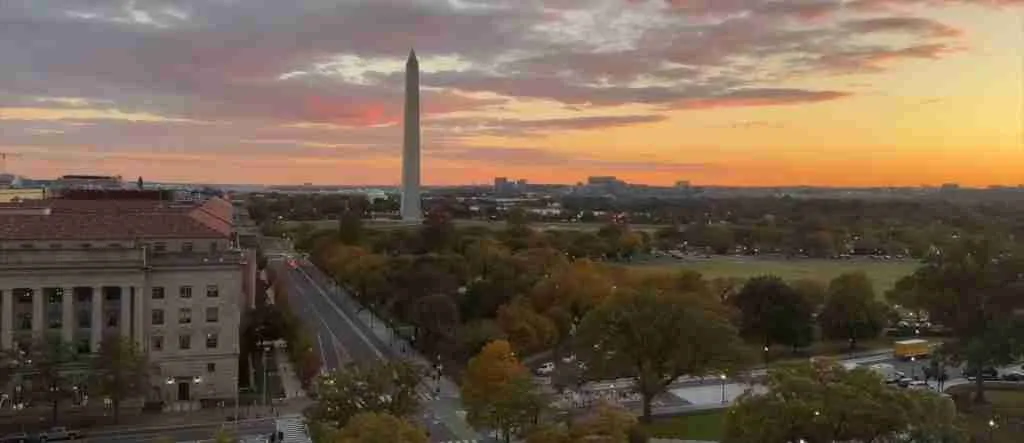
The Lincoln Memorial stands at the Mall’s western terminus, accessed via broad steps leading to the massive seated Lincoln statue surrounded by inscriptions of the Gettysburg Address and Second Inaugural Address. The memorial operates 24 hours daily with free admission and no tickets or passes required, providing spontaneous access despite ranking among Washington’s most visited sites. National Park Service rangers staff the memorial 9:00 AM-10:00 PM daily, answering questions and presenting interpretive programs about Lincoln’s legacy and the memorial’s role in civil rights history, including Martin Luther King Jr.’s famous 1963 “I Have a Dream” speech delivered from its steps. The memorial’s elevated position offers spectacular views back across the Reflecting Pool toward the Washington Monument and Capitol dome, particularly photogenic at sunrise and sunset when lighting enhances the vista.
The Vietnam Veterans Memorial consists of two black granite walls inscribed with names of more than 58,000 Americans who died or remain missing from the Vietnam War, designed by Maya Lin and completed in 1982. The memorial operates 24 hours daily with ranger programs typically offered 10:00 AM-10:00 PM, providing context about the war and memorial’s controversial design that eventually won widespread acceptance. The reflective surface of the polished granite allows visitors to see their faces alongside the engraved names, creating powerful emotional experiences that make this memorial among Washington’s most moving sites. The adjacent Three Servicemen statue and Vietnam Women’s Memorial complement the wall with figurative sculptures honoring specific service categories.
The Korean War Veterans Memorial features 19 stainless steel statues of soldiers advancing through juniper bushes, plus a granite wall etched with photographic images of support personnel, creating haunting representations of the “Forgotten War.” The memorial operates 24 hours daily with free access and ranger interpretive programs during daylight hours, located near the Lincoln Memorial and accessible via short walks from Constitution Avenue or along the Mall pathway. Nighttime illumination creates particularly striking effects as lights reflect off the steel statues and polished granite, making evening visits atmospheric additions to sunset Lincoln Memorial viewing.
The Martin Luther King Jr. Memorial stands on the Tidal Basin shore, featuring a 30-foot statue of King emerging from the Stone of Hope, surrounded by excerpts from his speeches and writings inscribed on a 450-foot curved wall. The memorial maintains 24-hour free access with staffed ranger programs typically 9:00 AM-10:00 PM daily, positioned to create a symbolic “line of leadership” with the Jefferson and Lincoln memorials. Cherry blossom season in late March and early April provides spectacular settings when trees surrounding the Tidal Basin bloom pink and white, though crowds intensify during this two-week peak period. The memorial’s relatively recent construction in 2011 means many repeat Washington visitors encounter it for the first time, making it among the capital’s newest major additions.
The Jefferson Memorial sits directly south across the Tidal Basin from the Washington Monument, designed as a neoclassical rotunda housing a 19-foot bronze statue of Jefferson surrounded by excerpts from the Declaration of Independence and other writings. Free access continues 24 hours daily with staffed visitor services 9:00 AM-10:00 PM, and the memorial’s position on the Tidal Basin makes it a prime cherry blossom viewing location during late March and early April blooms. The circular interior design creates acoustic effects where whispers carry across the dome, providing entertainment for visitors exploring the memorial’s architecture. Evening illumination transforms the white marble rotunda into a glowing landmark visible across the Tidal Basin, making sunset visits particularly photogenic.
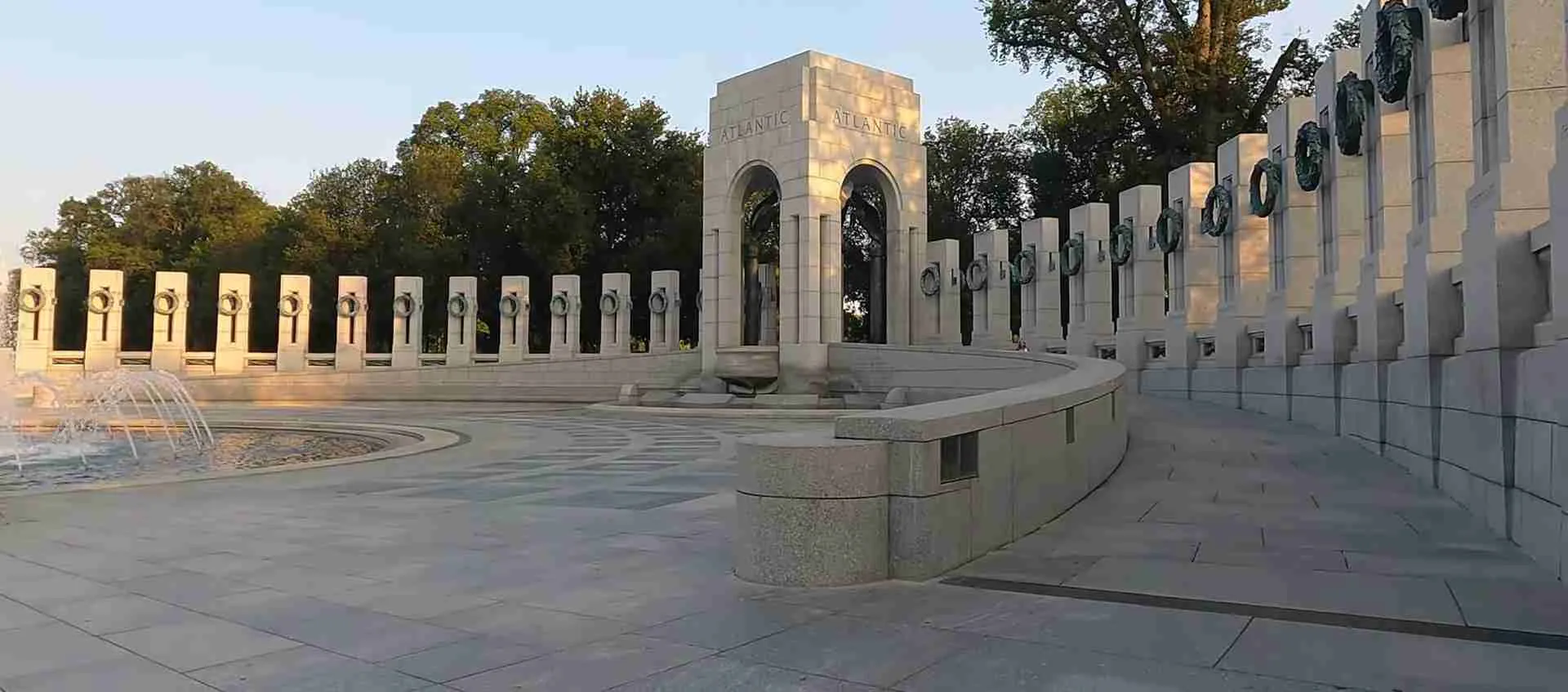
The World War II Memorial honors 16 million Americans who served during the war through a circular plaza design featuring 56 pillars representing states and territories, dual victory pavilions, and a fountain with bronze bas-relief panels depicting wartime scenes. Located centrally on the Mall between the Washington Monument and Lincoln Memorial, the memorial maintains 24-hour free access with peak staffing 9:00 AM-10:00 PM daily. The memorial’s 2004 completion makes it among Washington’s newer major monuments, and its open plaza design allows wheelchair access superior to monuments requiring stair climbing. The Rainbow Pool at the memorial’s center provides cooling relief during summer heat and serves as a gathering point for veteran groups and tour operators.
Additional monuments and memorials accessible during day trips include the Franklin Delano Roosevelt Memorial (series of outdoor rooms documenting FDR’s four terms), the George Mason Memorial (small tribute to the Constitution’s primary author), and various military memorials honoring specific conflicts and branches. The concentrated geography along the Mall makes monument touring efficient through walking or strategic Metro use, with most visitors comfortably visiting 8-12 major sites during a full day when combining outdoor landmarks with 1-2 museum stops. Early morning and late afternoon provide optimal monument photography when low sun angles create dramatic lighting and shadows, while midday hours suit museum exploration when outdoor summer heat becomes oppressive.
Budget Planning for Washington DC Day Trips 2026
Washington DC day trip costs from New York City in 2026 divide into three primary expense categories: round-trip transportation between cities, DC Metro and local transit, and food and optional attraction fees. Transportation represents the largest fixed cost ranging $60-140 for round-trip Amtrak Northeast Regional tickets depending on booking timing and availability, while DC Metro expenses add $10-20 for day passes or individual fares (check official Amtrak and WMATA websites for current rates). The Smithsonian museums’ free admission eliminates major attraction costs that would dominate budgets in other cities, allowing visitors to allocate more resources toward quality dining experiences or optional tours rather than entrance fees.
Budget-conscious day trips totaling $85-115 per person prioritize advance Amtrak booking for securing lowest available fares around $60-80 round-trip, packed snacks and beverages eliminating meal purchases, and exclusive focus on free Smithsonian museums and outdoor monuments without paid attractions. This approach combines early morning train departures with strategic route planning that minimizes Metro use through concentrated walking tours of the National Mall area, where monuments and many museums cluster within 1-2 miles. Budget travelers bringing reusable water bottles and trail mix from home avoid museum cafe markups and restaurant minimum charges, while public restrooms throughout Smithsonian facilities and Metro stations eliminate concerns about needing to purchase items for facility access. The budget approach works particularly well for solo travelers or couples prioritizing maximum museum time over dining experiences, achieving full-day Washington exploration for costs comparable to local New York activities.
Mid-range day trips costing $125-165 per person balance advance-booked Amtrak tickets around $80-100 round-trip with one sit-down lunch at a casual restaurant, Metro day passes for unlimited rides, and occasional paid museum experiences like IMAX films or special exhibitions charging supplemental fees. This comfort level allows spontaneous Metro use without tracking individual fares, lunch in Penn Quarter or Capitol Hill neighborhoods experiencing local dining culture, and flexibility to add paid attractions if time and interest align. Mid-range budgets accommodate coffee purchases during morning arrival and afternoon energy maintenance, plus museum gift shop souvenirs documenting favorite exhibitions. Most day trippers from New York operate in this mid-range category, finding it provides satisfying experiences without constant budget monitoring while avoiding unnecessary premium expenses.
Premium day trips ranging $210-275 per person incorporate faster Acela train service saving 50 minutes each direction at higher ticket costs, guided tours providing expert interpretation of monuments or museums, and quality sit-down meals at well-regarded Washington restaurants. Premium budgets might include lunch at The Hamilton near Ford’s Theatre or dinner at Founding Farmers before evening return trains, plus afternoon coffee breaks at Capitol Hill cafes between monument visits. Optional guided experiences like White House tours arranged through congressional offices, behind-the-scenes museum programs, or private tour guides elevate standard sightseeing into curated experiences with enhanced historical context. Premium spending makes sense for special occasions, repeat visitors seeking deeper engagement beyond self-guided touring, or travelers prioritizing comfort and convenience over budget optimization.
Typical day trip cost breakdowns per person in 2026 for mid-range travelers include round-trip Amtrak Northeast Regional tickets $80-100 booked 2-3 weeks advance, DC Metro 1-Day Unlimited Pass $14, lunch at casual restaurant $15-25 including tax and tip, coffee or snacks $5-10 for morning or afternoon refreshment, and optional paid museum attractions like IMAX films $9-15. Combined total approximately $125-165 per person represents median spending for comfortable day trips without budget stress or excessive splurging. Weekend pricing on some trains runs slightly higher than midweek fares, while Restaurant Week periods in January and August offer fixed-price lunch specials at $25-35 for multi-course meals at quality establishments, providing value alternatives to standard menu pricing.
Money-saving strategies for Washington day trips include booking Amtrak tickets 3-4 weeks in advance when Saver fares remain available, traveling Tuesday-Thursday when train demand drops below weekend levels, packing substantial snacks reducing meal purchases to single sit-down lunch rather than three meals, walking the National Mall rather than using Metro between Smithsonian station and Lincoln Memorial (2-mile distance), and prioritizing free Smithsonian museums over paid attractions like the International Spy Museum or Museum of the Bible. Amtrak Night Owl fares offer discounted tickets for overnight trains departing New York 7:00 PM-5:00 AM, though day trip logistics make these schedules impractical for most visitors. The DC Metro’s weekend flat-rate fares cap trip costs at lower levels than weekday distance-based pricing, benefiting Saturday and Sunday visitors making multiple long-distance rides. Water fountains throughout Metro stations and Smithsonian museums eliminate bottled water expenses for travelers carrying refillable bottles.
Sample Washington DC Day Trip Itineraries 2026
Museum-intensive itineraries prioritize indoor Smithsonian exploration with limited outdoor monument time, ideal for hot summer days, rainy weather, or visitors fascinated by specific collections and exhibitions. A typical museum-focused day begins with 6:15 AM Amtrak departure from Penn Station arriving Union Station 9:50 AM, Metro Red Line to Metro Center transferring to Blue/Orange/Silver Line to Smithsonian station arriving approximately 10:20 AM. First stop National Museum of American History opening 10:00 AM allows 2 hours exploring Star-Spangled Banner, First Ladies, and American culture exhibitions before 12:30 PM break for lunch at museum cafe or nearby Penn Quarter restaurants. Afternoon continues with National Museum of Natural History from 1:30-3:45 PM viewing Hope Diamond, dinosaur fossils, and ocean hall, followed by brief walk to National Gallery of Art West Building for 1.5 hours examining European masters and American collections 4:00-5:30 PM. Metro return to Union Station allows dinner at Union Station food court before 8:00 PM Amtrak departure arriving Penn Station 11:35 PM, completing a museum-rich day with minimal outdoor exposure.
Monument-focused itineraries emphasize outdoor landmark touring with brief museum stops, best suited for spring and fall weather when comfortable temperatures support extensive walking. The monument route begins with 6:45 AM Amtrak departure arriving Union Station 10:20 AM, immediate walk to Capitol Building for exterior photos and grounds exploration 10:30-11:00 AM, then walk west along the Mall past Smithsonian museums and Air and Space Museum (exterior appreciation without entry) to Washington Monument 11:30 AM-12:00 PM. Quick lunch at food truck or museum cafe near the monument precedes afternoon monument circuit visiting World War II Memorial 12:30-1:00 PM, Lincoln Memorial and Reflecting Pool 1:15-2:00 PM, Korean War and Vietnam Veterans memorials 2:15-3:00 PM, then Tidal Basin walk past Martin Luther King Jr. Memorial and Jefferson Memorial 3:15-4:15 PM. Metro from Smithsonian station to Union Station allows relaxation and refreshment before 7:00 PM Amtrak departure arriving Penn Station 10:35 PM, covering major monuments without museum queue time.
Balanced itineraries combine 1-2 museum visits with condensed monument touring, providing variety while acknowledging impossibility of comprehensive coverage. The balanced approach starts with 7:00 AM Amtrak departure arriving 10:35 AM Union Station, Metro to Smithsonian station for National Air and Space Museum 11:00 AM-1:00 PM (advance timed-entry pass required), outdoor National Mall lunch at food truck 1:00-1:30 PM, then walk to Washington Monument with advance tickets for 2:00 PM ascent and observation deck time until 2:45 PM. Afternoon monument walk visits World War II Memorial 3:00-3:30 PM, Lincoln Memorial 3:45-4:30 PM, and brief Vietnam Veterans Memorial stop 4:45-5:00 PM before Metro return to Union Station. Evening departure options include 7:30 PM train for leisurely Union Station dinner or 8:30 PM departure after light refreshments, arriving Penn Station 11:05 PM or 12:05 AM respectively. This balanced structure provides satisfying museum depth plus essential monument coverage without feeling rushed.
First-time visitor priorities emphasize iconic institutions and landmarks over specialized museums or obscure monuments, recognizing that debut trips should cover undeniable highlights before exploring niche interests. Essential first-visit targets include the National Air and Space Museum (Wright Flyer, Apollo 11 module), Lincoln Memorial (sunset timing ideal), Washington Monument (advance tickets critical), National Museum of American History (Star-Spangled Banner), and World War II Memorial, with secondary additions like the National Museum of Natural History, Vietnam Veterans Memorial, and Capitol Building exterior depending on available time. First-timers benefit from guided tours providing historical context at key sites, though free National Park Service ranger programs at major monuments offer expert interpretation without paid tour costs. Photography priorities for first visits include Lincoln Memorial from Reflecting Pool, Washington Monument from World War II Memorial, Capitol dome from the Mall, and personal photos at famous sites for documentation and social media sharing.
Repeat visitor itineraries shift focus toward previously unexplored Smithsonian institutions like the National Museum of African American History and Culture, Hirshhorn Museum, or National Portrait Gallery, plus secondary monuments including the Franklin Delano Roosevelt Memorial, George Mason Memorial, or National Japanese American Memorial. Repeat visitors with advance congressional arrangements can access White House tours, Capitol Building interior tours, or Supreme Court proceedings, elevating experiences beyond public monument viewing. Neighborhood exploration beyond the National Mall becomes viable for repeat visitors, with Georgetown, Dupont Circle, or Capitol Hill offering dining, shopping, and residential architecture contrasting with downtown’s government focus. Seasonal considerations like cherry blossom viewing (late March-early April) or holiday decorations (December) provide repeat visitors with cyclical reasons for return trips experiencing familiar sites under different conditions.
Dining Options and Restaurant Recommendations 2026
Washington DC dining in 2026 reflects the city’s evolution from government cafeterias to internationally recognized culinary destination, with options ranging from $10 food trucks to $100+ tasting menus at celebrated chef-driven restaurants. Day trippers from New York typically budget one sit-down lunch during Washington exploration, strategically timed around late morning museum visits or early afternoon monument touring, with breakfast handled at home before train departure and dinner aboard return Amtrak trains or at Union Station before boarding. The concentration of restaurants around the National Mall, Penn Quarter, Capitol Hill, and Georgetown neighborhoods provides convenient options within short walks or single Metro stops from primary tourist attractions.
Food trucks and street vendors cluster around the National Mall and major Metro stations, offering quick $10-15 lunches including tacos, sandwiches, halal plates, and local specialties without sit-down time commitment. These mobile vendors provide authentic ethnic cuisines from vendors representing DC’s international communities, often matching or exceeding restaurant quality at fraction of prices. Food trucks require cash or card payment with varying acceptance, and lunch service typically runs 11:00 AM-2:00 PM when workers from nearby government offices create peak demand. The food truck concentration near the Washington Monument and along Constitution Avenue makes these vendors particularly convenient for monument-touring itineraries where restaurant detours waste precious sightseeing time.
Museum cafes within Smithsonian institutions serve lunch, snacks, and beverages at prices typically $12-25 per person for full meals, offering convenience without leaving museum buildings but rarely achieving remarkable culinary quality. The National Museum of the American Indian’s Mitsitam Native Foods Cafe represents the notable exception, serving indigenous-inspired regional cuisines from five stations featuring items like buffalo chili, fry bread tacos, and cedar-plank salmon at $15-25 per entree. Museum cafes suit time-constrained visitors prioritizing sightseeing over dining experiences, plus travelers with young children appreciating familiar options and relaxed atmospheres. The National Gallery of Art cafes and National Air and Space Museum food courts provide basic American fare suitable for quick refueling between galleries.
Penn Quarter restaurants between Metro Center and Archives-Navy Memorial stations offer the greatest concentration and variety of dining options, from casual chains to acclaimed independent establishments, all within 0.25-0.5 miles of the National Mall. Founding Farmers near Metro Center serves American comfort food emphasizing farm-to-table ingredients and sustainable sourcing, with lunch entrees ranging $15-28 for items like burgers, salads, and seasonal specials. Jaleo by chef José Andrés delivers Spanish tapas in vibrant atmosphere, with lunch small plates $8-18 allowing customized meal assembly, though costs accumulate quickly when ordering multiple plates per person. Rasika modern Indian restaurant offers lunch specials around $25-35 for multi-course meals showcasing regional Indian flavors with sophisticated presentations, earning acclaim as among Washington’s finest Indian restaurants.
Capitol Hill neighborhood restaurants east of the Capitol Building provide authentic local dining away from tourist concentrations, though accessing this area requires Metro to Capitol South or Eastern Market stations adding 15-20 minutes each direction from the National Mall. Eastern Market area features independent cafes, bistros, and weekend farmers market with prepared food vendors, creating neighborhood atmosphere contrasting with Penn Quarter’s business lunch scene. Restaurants along Pennsylvania Avenue near Capitol South Metro include casual American, Mexican, and Italian options at $12-25 per person for lunch, with outdoor sidewalk seating available during pleasant weather. Capitol Hill dining makes sense for visitors including Capitol Building tours in itineraries, though day trippers concentrating on the Mall typically find Penn Quarter more convenient.
Union Station food court offers chain restaurants including Chipotle, Potbelly, and Five Guys serving quick $10-15 meals ideal for arrival breakfast or pre-departure dinner before boarding return Amtrak trains. The Beaux-Arts terminal building also houses full-service restaurants like Thunder Grill and America on the upper level, providing sit-down dining at $20-35 per person without leaving the station complex. Union Station dining suits travelers with tight schedules or those arriving on early trains wanting breakfast before museum opening times at 10:00 AM. The food court stays open later than many restaurants, accommodating evening dining before 8:00-9:00 PM return trains without rushing through meals.
Restaurant Week DC occurs biannually in winter (January) and summer (August), featuring prix-fixe lunch menus at $25-35 and dinner menus at $40-65 at 200+ participating restaurants, providing exceptional value at establishments normally charging significantly more. Day trippers visiting during Restaurant Week periods can experience acclaimed restaurants like Fiola Mare, RPM Italian, or Gravitas at accessible prices, though advance reservations become essential as these promotions sell out popular venues weeks ahead. The fixed-price menus typically include three courses plus occasional beverage pairings, creating satisfying meal experiences that exceed typical day trip dining without premium pricing. Restaurant Week timing makes January and August attractive months for food-focused Washington visits.
Practical Tips and Essential Information 2026
Weather preparedness requires checking Washington forecasts before departing New York, as conditions can vary significantly between cities despite their 225-mile separation, particularly during transitional spring and fall seasons. Summer temperatures in Washington regularly reach 85-95°F with high humidity making outdoor monument touring physically demanding, requiring sunscreen, hats, and frequent hydration breaks at shaded locations. The National Mall offers limited natural shade between monuments, with museums providing air-conditioned refuges during peak heat hours from 12:00-3:00 PM. Winter visits require layered clothing for outdoor activities combined with indoor museums, as temperature swings between freezing monuments and heated Smithsonian galleries reach 40-50°F extremes. Comfortable walking shoes prove essential for any season, as even museum-focused itineraries involve substantial walking through gallery spaces and Metro station corridors.
Advance planning essentials include booking Amtrak tickets 2-4 weeks ahead for optimal pricing, reserving required timed-entry passes for popular Smithsonian museums, and reviewing museum hours and special closures that might affect itineraries. The National Museum of African American History and Culture requires advance timed-entry passes secured weeks ahead for spring and summer visits, with monthly releases at 6:30 AM Eastern on first Wednesdays claimed rapidly. The National Air and Space Museum on the Mall similarly requires advance passes, though availability remains better than African American History museum. Creating backup museum options accommodates spontaneous itinerary changes due to weather, energy levels, or unexpected closures, with most Smithsonian facilities operating similar 10:00 AM-5:30 PM hours allowing flexible substitutions.
Luggage and personal items should minimize unnecessary weight and bulk, as Amtrak allows generous two carry-on bags plus personal item but day trippers rarely need more than small backpack for water bottle, snacks, phone charger, and light jacket or raincoat. Metro stations include lockers at some facilities but not universally, making bag checking impractical for most visitors who prefer carrying essentials throughout the day. Many Smithsonian museums restrict bag sizes or require security screening, though typical daypacks and purses pass inspection without issues. Leaving laptops and valuable jewelry at home reduces security concerns and checkpoint delays, while keeping phones charged remains essential for mobile tickets, maps, and photography throughout extended days.
Photography opportunities abound throughout Washington, from grand monument exteriors to intimate museum gallery details, though Smithsonian facilities prohibit flash photography, tripods, monopods, and selfie sticks for protecting artwork and ensuring visitor safety. Natural light through museum windows provides sufficient illumination for most photography, while outdoor monuments photograph best during golden hours around sunrise (6:00-8:00 AM) and sunset (6:00-8:00 PM seasonal variations) when low sun angles create dramatic lighting. The Lincoln Memorial at sunset, Washington Monument from World War II Memorial, and Capitol dome from the Mall represent classic photo opportunities that justify schedule adjustments for optimal lighting. Smartphone cameras prove adequate for most day trip documentation, eliminating weight and complexity of DSLR equipment for casual visitors.
Accessibility considerations include Metro elevator access at all stations for wheelchair users, though elevators occasionally experience outages tracked on WMATA’s real-time status website. Smithsonian museums provide comprehensive wheelchair access including ramps, elevators, and accessible restrooms, while many monuments feature alternative routes avoiding stairs such as the Washington Monument elevator eliminating 897 steps. Reserved seating areas in museums and benches along the Mall offer resting points for visitors with limited mobility, though the extensive walking required for comprehensive touring challenges those with significant mobility restrictions. Accessible tour options through companies specializing in adaptive equipment and customized pacing provide alternatives to self-guided exploration for visitors requiring additional support.
Safety in Washington compares favorably to other major cities, with National Park Service rangers, Capitol Police, Metro Transit Police, and DC Metropolitan Police maintaining visible presence throughout tourist areas. The National Mall and popular museum corridors experience heavy foot traffic during daylight hours creating safety through numbers, while evening hours after 10:00 PM see diminished crowds requiring standard urban awareness. Keeping valuables secured and monitoring backpacks in crowded Metro trains prevents opportunistic theft, while avoiding isolated side streets after dark follows prudent practices applicable in any major city. Emergency services respond quickly to tourist areas, and museum security guards plus Metro station managers provide immediate assistance for concerns or questions.
Rest and recharge strategies combat inevitable fatigue from early Amtrak departures, extensive walking, and stimulation overload across multiple museums and monuments during compressed timelines. Strategic sitting breaks in air-conditioned Smithsonian lobbies or shaded National Mall benches prevent exhaustion, while late afternoon returns to Union Station allow relaxation before evening trains rather than rushing from final monuments directly to platforms. Hydration maintains energy levels during summer heat or winter indoor-outdoor temperature swings, with water fountains throughout Metro stations and museums providing free refills for reusable bottles. Accepting that comprehensive coverage impossible during single days reduces stress, allowing quality engagement with selected attractions over frantic rushing between excessive numbers of sites.
Additional Attractions Beyond Smithsonian Museums 2026
The International Spy Museum relocated to larger quarters near L’Enfant Plaza in 2019, displaying the world’s largest collection of espionage artifacts through interactive exhibits covering intelligence gathering, covert operations, and famous spies throughout history. Admission costs $27-30 for adults depending on booking method, with advance online tickets providing modest discounts over walk-up purchases (check official museum website for current rates). The museum operates 10:00 AM-6:00 PM daily with extended summer hours, and typical visits last 2-3 hours exploring four floors of exhibitions including hands-on activities and immersive experiences. The paid admission represents significant expense compared to free Smithsonian museums, justified primarily for espionage enthusiasts or visitors seeking interactive displays beyond traditional museum formats. Metro L’Enfant Plaza station provides direct access via short walk, making the museum convenient for National Mall itineraries.
The United States Holocaust Memorial Museum documents the Holocaust through permanent exhibitions covering Nazi rise to power, concentration camps, resistance efforts, and liberation, using artifacts, photographs, and survivor testimonies. Free timed-entry passes required March-August distribute online beginning 10:00 AM two weeks before visit dates, while September-February operates on first-come, first-served basis without advance reservations. The museum recommends allowing 2-3 hours for permanent exhibition viewing, though the emotionally challenging content means some visitors complete tours more quickly. Located near Smithsonian Metro station one block south of the Mall, the Holocaust Museum provides powerful educational experiences complementing but distinctly different from uplifting Smithsonian collections. The museum’s bookstore and cafe offer resources for visitors seeking additional information or requiring breaks during exhibition viewing.
The Library of Congress, the world’s largest library housing more than 170 million items, opens the magnificent Thomas Jefferson Building for public tours of the Great Hall, Main Reading Room, and rotating exhibitions from permanent collections. Free admission and no advance tickets required for general access Monday-Saturday 8:30 AM-4:30 PM, though special exhibitions occasionally require timed passes. The Beaux-Arts architecture and ornate interior decoration rival many European palaces, making the building itself a major attraction beyond book collections. Located across from the Capitol Building near Capitol South Metro station, the Library combines conveniently with Capitol grounds visits or Supreme Court viewing. Visitors cannot access books without research credentials, but touring public spaces requires no special permissions and provides impressive experiences rarely included in typical Washington itineraries.
Georgetown neighborhood along the Potomac River northwest of downtown offers historic architecture, upscale shopping, waterfront parks, and dining options contrasting with the National Mall’s monuments and museums. No Metro station serves Georgetown, requiring bus connections from Foggy Bottom Metro or Dupont Circle, adding 15-20 minutes transit time from central tourist areas. The C2 DC Circulator bus provides frequent connections between Georgetown and Metro stations for $1 per ride. Georgetown’s cobblestone streets, Federal-period townhouses, and M Street shopping district appeal to visitors seeking neighborhood exploration beyond government landmarks, though day trippers from New York rarely allocate sufficient time for thorough Georgetown touring while maintaining museum and monument priorities. The Georgetown Waterfront Park offers pleasant Potomac views and seasonal kayak rentals for active visitors with extra time.
The National Archives displays the original Declaration of Independence, Constitution, and Bill of Rights in climate-controlled rotunda open 10:00 AM-5:30 PM daily with extended summer hours. Free admission and no advance tickets required for rotunda viewing, though spring and summer crowds create 30-60 minute waits during peak midday hours. Located between Archives-Navy Memorial Metro station and the National Mall, the Archives fits conveniently into museum-hopping itineraries between the National Gallery of Art and Smithsonian facilities. The Charters of Freedom viewing typically takes 15-30 minutes, making this a focused stop rather than multi-hour museum commitment. Additional research rooms and changing exhibitions require more time but interest primarily history scholars rather than casual tourists.
Ford’s Theatre, where Abraham Lincoln was assassinated in 1865, operates as both working theater and museum with free admission to museum spaces and theater viewing when performances not scheduled. Advance timed-entry tickets required year-round distribute online beginning 8:30 AM for same-day visits or at $3.50 per ticket for advance reservations. The theater museum displays artifacts related to Lincoln’s assassination and the ensuing investigation, while tours sometimes include actual theater seating viewing the presidential box. Afternoon performance schedules often close theater viewing, limiting museum access to morning hours particularly during touring Broadway show runs. Located in Penn Quarter near Metro Center station, Ford’s Theatre combines easily with nearby restaurant lunch breaks or National Portrait Gallery visits.
Day Trip Extensions and Overnight Options 2026
Converting day trips into overnight stays unlocks additional attractions and experiences impossible within compressed timelines, particularly evening activities like Kennedy Center performances, moonlit monument touring, or Georgetown nightlife. Washington hotel rates range $150-300 per night for mid-range properties in downtown locations, with higher costs during peak cherry blossom season and major political events. Overnight stays eliminate early morning Amtrak departures and late evening returns, allowing relaxed pacing across two days that covers more attractions without exhausting rush between sites. Extended visits enable access to suburbs-based attractions like Mount Vernon, the Udvar-Hazy Air and Space annex near Dulles Airport, or Annapolis naval heritage requiring rental cars and full-day commitments impossible during same-day trips.
Evening monument illumination creates dramatically different experiences from daylight viewing, with the Lincoln Memorial, Jefferson Memorial, Washington Monument, and Capitol dome lit after dark year-round. The monuments remain accessible 24 hours daily, allowing sunset to evening transitions that showcase transformation from sunlit marble to glowing landmarks. Summer evenings extend usable daylight to 8:30-9:00 PM, providing sufficient time for monument tours after museum closures at 5:30 PM, while winter darkness by 5:00-5:30 PM requires choosing between afternoon museum time and evening monument viewing. Overnight visitors can plan sunset monument walks followed by restaurant dinners, returning to hotels without rushing to Union Station for departing trains.
Additional museums requiring 2-3 hours each become accessible across two days, including the National Portrait Gallery, Hirshhorn Museum, Renwick Gallery, National Museum of Asian Art, and specialty Smithsonian facilities beyond the most famous institutions. Overnight schedules allow starting one day with early timed-entry museum passes at 10:00 AM, dedicating mornings to intensive gallery viewing before afternoon monument touring during optimal weather windows. Second days can target neighborhoods beyond the National Mall like Georgetown, Dupont Circle, or Capitol Hill, experiencing residential districts and local dining scenes unavailable during compressed day trips. The reduced time pressure transforms sightseeing from logistics exercise into immersive cultural experience.
Capitol Building tours and White House tours require advance arrangements through congressional representatives, with booking windows opening months ahead and limited daily availability. These insider experiences become more practical for overnight visitors who can dedicate specific morning hours to government building tours while maintaining backup plans if schedules change. Supreme Court proceedings occur weekdays during term sessions typically October-June, with public seating available first-come basis when Court hears oral arguments, most feasible for overnight visitors rather than day trippers with inflexible return train reservations. Congressional sessions in the House and Senate chambers occasionally allow public viewing from galleries, again requiring weekday visits and flexible schedules.
Multi-day Washington trips benefit from alternative transportation like rental cars for Mount Vernon visits, Annapolis explorations, or Shenandoah National Park excursions that showcase regions beyond urban Washington. Great Falls Park along the Potomac River 15 miles northwest offers dramatic waterfalls and hiking trails, while Alexandria’s Old Town provides historic seaport atmosphere and restaurant scene distinct from DC proper. These regional destinations require full days or half-days, impossible during compressed day trips but rewarding for extended visits revealing Mid-Atlantic landscapes beyond monuments and museums. Rental car costs of $50-80 daily plus parking fees add substantially to trip budgets but unlock suburban and rural attractions enhancing metropolitan Washington experiences.
Frequently Asked Questions About Washington DC Day Trips from New York 2026
Is one day enough time to see Washington DC from New York?
One day provides sufficient time to meaningfully explore either 2-3 Smithsonian museums thoroughly or visit 8-12 major monuments along the National Mall, but not comprehensive coverage of both categories plus neighborhoods beyond the tourist core. The approximately 8-9 hours of sightseeing time between early morning train arrival and evening departure accommodates focused itineraries prioritizing personal interests over attempting to see everything Washington offers. Day trippers achieve satisfying experiences by establishing clear priorities before arrival, whether concentrating on indoor museum collections, outdoor presidential monuments, or balanced combinations, then accepting that comprehensive Washington exploration requires multiple visits. The compact geography and free Smithsonian admission make returning for additional day trips practical, allowing visitors to tackle different attractions during subsequent visits rather than exhausting rushed coverage during single days.
What’s the best day of the week for a DC day trip from NYC in 2026?
Tuesday through Thursday represent optimal day trip timing in 2026, offering lighter museum crowds, easier timed-entry pass availability, and access to weekday-only government building tours unavailable on weekends. Amtrak trains typically show better seat availability and occasionally lower fares on midweek days compared to Friday through Sunday when leisure travelers intensify demand. Many federal office workers telework Mondays and Fridays in 2026, creating midweek concentration that fills Metro trains during rush hours but leaves museums less crowded during 10:00 AM-4:00 PM prime sightseeing periods. Weekend visits work fine for visitors without weekday flexibility, but those able to take Tuesday or Wednesday trips benefit from substantially improved museum viewing conditions and restaurant lunch availability without advance reservations. Major events like inaugurations, State of the Union addresses, or cherry blossom festival peaks override normal weekday advantages, requiring specific date research when planning trips during these exceptional periods.
Can you visit the White House during a Washington DC day trip in 2026?
White House tours require advance reservations submitted through your congressional representative or embassy for international visitors, with requests accepted up to 3 months ahead and as little as 21 days before visit dates, making spontaneous day trip access impossible. The free self-guided tours operate Tuesday-Thursday 7:30-11:30 AM and Friday-Saturday 7:30 AM-1:30 PM, though available dates and times vary based on presidential schedule and building events. Approval typically arrives 1-2 weeks before requested tour date, creating uncertainty that complicates day trip planning from New York where train tickets and museum passes require earlier booking. Day trippers determined to include White House tours should submit requests immediately upon planning trips, establish backup itineraries if requests denied, and schedule tours for mid-morning allowing sufficient buffer after early Amtrak arrivals. Exterior White House viewing from Pennsylvania Avenue and Lafayette Square requires no reservations and provides photo opportunities of the iconic North Portico facade, though experiencing interior rooms necessitates the advance tour arrangement process.
How much walking is involved in a typical Washington DC day trip?
Typical Washington day trips involve 5-8 miles of walking when combining Metro station navigation, museum gallery touring, and outdoor monument visits, with monument-focused itineraries reaching 8-10 miles for visitors exploring the full two-mile National Mall length multiple times. Museum-intensive days reduce walking to 3-5 miles through concentrated time in single buildings, though Smithsonian facilities like Natural History and American History museums contain extensive gallery spaces requiring substantial interior walking. Metro stations include long underground corridors and escalators adding distance beyond platform-to-train segments, particularly at transfer stations like Metro Center where changing lines involves considerable walking. Visitors with mobility concerns should plan museum-focused itineraries, use Metro strategically for longer distances, and schedule frequent sitting breaks in museum lobbies or monument benches rather than attempting continuous walking throughout full days. Comfortable, broken-in walking shoes prove essential regardless of itinerary type, as even short distances on marble museum floors or concrete monuments cause foot fatigue in inadequate footwear.
What should I pack for a Washington DC day trip from New York in 2026?
Essential day trip packing includes small backpack or daypack for carrying items, refillable water bottle for hydration at free fountains throughout museums and Metro stations, phone charger or portable battery for all-day navigation and photography, snacks like granola bars or trail mix avoiding expensive museum cafe prices, light jacket or sweater for air-conditioned museums even during summer, and comfortable walking shoes with proven all-day performance. Seasonal additions include sunscreen and hat for summer outdoor monument touring, umbrella or rain jacket during spring and fall when weather shifts unpredictably, and layered clothing for winter’s temperature extremes between freezing monuments and heated museums. Download mobile Amtrak tickets, museum timed-entry passes, and Washington Metro maps before departing New York to ensure access without depending on spotty cell service or WiFi connections. Minimize unnecessary items like laptops, valuable jewelry, or bulky camera equipment that add weight and security concerns without enhancing day trip experiences, as smartphone cameras prove adequate for casual photography while occupying minimal backpack space.
Are restaurants in Washington DC more expensive than New York in 2026?
Washington DC restaurant prices in 2026 generally match New York City levels at comparable establishments rather than offering significant savings, with mid-range lunch entrees typically costing $15-28 and upscale dinners reaching $40-70 per person before tax and tip. The District applies 10% sales tax on restaurant meals compared to New York’s 8.875%, while standard gratuity expectations of 18-20% remain identical between cities. However, Washington’s food truck scene offers greater value than New York’s with quality ethnic cuisines at $10-15 for substantial lunches, and the prevalence of free Smithsonian museums means dining budgets aren’t competing with attraction admission costs that dominate other city visits. Restaurant Week promotions in January and August provide exceptional value with $25-35 fixed-price lunches at quality establishments, making strategic trip timing around these events worthwhile for food-focused visitors. Budget-conscious day trippers can maintain New York-comparable food spending through museum cafes, food trucks, and fast-casual chains while allocating splurges toward one quality sit-down meal experiencing Washington’s evolved culinary scene.
Can you see cherry blossoms during a Washington DC day trip in 2026?
Cherry blossom viewing during late March through mid-April day trips from New York remains possible but requires flexible scheduling and advance bloom forecasting to time visits during the brief 7-10 day peak bloom period when trees display maximum blossoms. The National Park Service issues official bloom predictions beginning mid-February with updates as spring weather patterns clarify, typically targeting peak bloom dates plus or minus several days based on temperature fluctuations. Peak bloom brings Washington’s largest crowds to the Tidal Basin where the famous Yoshino cherry trees concentrate, requiring patience for popular photo locations like the Jefferson Memorial backdrop and willingness to share pathways with thousands of other visitors. Early morning visits before 8:00 AM or late afternoon after 5:00 PM reduce crowds slightly while maintaining quality lighting for photography, though weekday timing helps more than hour selection during peak bloom. Day trippers should establish backup museum itineraries for blossom trips since predicting exact peak bloom weeks ahead remains imperfect, avoiding disappointment if blooms arrive early or late relative to booked train dates.
Is it worth upgrading to Amtrak Acela for Washington DC day trips?
The 50-minute time savings Acela provides over Northeast Regional trains rarely justifies the $80-100 premium for day trip purposes, as arriving Washington 9:15 AM versus 10:00 AM seldom enables meaningful additional sightseeing when museums open at 10:00 AM regardless of arrival time. The Acela Business Class seating offers enhanced comfort with 2-1 configuration, complimentary beverages, and quieter cars, appealing primarily to business travelers or those prioritizing travel experience itself over destination activities. Day trippers maximizing value should invest premium spending in quality Washington dining, guided tours, or overnight hotel stays rather than incremental train comfort, as Northeast Regional coach provides adequate seating, WiFi, and amenities for the 3.5-hour journey at significantly lower cost. The exception emerges for visitors booking last-minute trips when Northeast Regional sells out or prices comparably to Acela due to demand-based pricing, making the upgrade essentially free while securing preferred schedule timing. Time-sensitive travelers requiring latest possible DC arrival or earliest possible return might justify Acela for schedule flexibility, though typical day trippers find Northeast Regional the clear value choice.
What’s the best way to avoid crowds at popular DC museums in 2026?
Arriving at museums during their 10:00 AM opening times before late-morning crowds build provides optimal viewing conditions, particularly at the National Museum of Natural History and National Air and Space Museum where tour groups and families typically arrive 11:00 AM-1:00 PM. Weekday visits, especially Tuesday-Thursday, substantially reduce crowds compared to Saturday-Sunday when local families and weekend tourists fill galleries, while winter months from December-February see the lightest overall traffic despite holiday closures on December 25. Strategic museum selection avoiding the most famous facilities helps, with the National Portrait Gallery, Hirshhorn Museum, and National Museum of Asian Art delivering world-class collections with fraction of crowds overwhelming Natural History and American History museums. Advance timed-entry pass reservations for museums requiring them guarantee entry but don’t prevent crowds inside, making early entry windows around 10:00-10:30 AM preferable to midday slots when congestion peaks. Rainy weather ironically creates better museum experiences by driving visitors indoors away from monuments, though increased museum traffic from weather refugees still results in lighter crowds than sunny weekend days.
Should you rent a car for a Washington DC day trip from New York?
Renting cars for Washington DC day trips creates more logistical complications than transportation benefits, as downtown parking costs $20-40 daily, DC’s complex street grid confuses unfamiliar drivers, and Metro provides superior access to tourist destinations compared to driving and parking near attractions. The time required to rent cars at Union Station, navigate to parking near museums or monuments, find available spaces, and return vehicles before train departures consumes hours better spent sightseeing, while rental costs plus parking fees approach or exceed Metro day pass expenses. Washington’s excellent public transportation through Metro, walkable National Mall geography, and concentrated museum district eliminate car necessities for typical day trip itineraries focused on Smithsonian museums and monuments. The exception emerges for visitors planning suburban destinations like Mount Vernon, Great Falls Park, or Shenandoah National Park requiring vehicles, though these attractions demand full days or overnight trips rather than compressed day trip timing. Groups of 4-5 people splitting rental and parking costs occasionally find driving economical compared to individual train tickets, but must honestly assess whether driving time and parking logistics justify modest savings over Amtrak’s downtown-to-downtown convenience.