
Visiting Siena Cathedral: Complete Guide
Siena Cathedral stands as one of Italy’s most magnificent examples of Romanesque-Gothic architecture, housing treasures by Michelangelo, Donatello, Bernini, and Pinturicchio within its black-and-white striped marble walls. This comprehensive guide provides everything you need to plan an unforgettable visit to the Duomo di Siena and its extraordinary monumental complex, from ticket options and opening hours to the cathedral’s spectacular marble floor and hidden artistic masterpieces.
Key Takeaways
- The OPA SI PASS provides comprehensive access to seven sites within the cathedral complex for €16, valid for three consecutive days, making it the most economical option for exploring beyond just the cathedral interior
- Siena Cathedral’s marble inlay floor, described by Vasari as “the most beautiful ever made,” is fully uncovered only from late June through July and mid-August through mid-October each year
- The cathedral complex contains masterpieces by some of history’s greatest artists including Michelangelo’s sculptures, Donatello’s works, Bernini’s creations, and Pinturicchio’s Renaissance frescoes in the Piccolomini Library
- The Gate of Heaven experience offers exclusive access to the cathedral’s rooftop areas and provides breathtaking views both inside above the vaulted ceiling and outside across Siena’s medieval cityscape
- Strategic planning of your visit timing can significantly enhance the experience—early morning arrivals mean shorter queues, while the floor uncovering period requires advance booking but offers incomparable artistic rewards
- The cathedral remains an active place of worship with daily masses, and visitors must respect dress codes covering shoulders and knees while maintaining appropriate behavior during liturgical celebrations
People Also Ask About Visiting Siena Cathedral
How much does it cost to visit Siena Cathedral?
The OPA SI PASS costs €16 and provides access to the cathedral, Piccolomini Library, Baptistery, Crypt, Museo dell’Opera, and Facciatone viewpoint, valid for three consecutive days. During the floor uncovering periods from late June through July and mid-August through mid-October, the pass increases to €18. Children ages 7-11 pay €5, while children under 7 enter for €2. The pass includes a multilingual audio guide accessible via smartphone app. The Gate of Heaven rooftop experience requires a separate ticket priced at approximately €23 when combined with the OPA SI PASS. Visitors born or residing in Siena receive free access to the entire monumental complex.
What are the opening hours for Siena Cathedral?
Siena Cathedral operating hours vary by season. From March through October, the cathedral opens from 10:00 AM to 7:00 PM Monday through Saturday, with Sunday and public holiday hours from 1:30 PM to 6:00 PM. From November through late December, hours shift to 10:30 AM to 5:30 PM on weekdays, maintaining the same Sunday schedule. During the late December through early January holiday period, hours return to 10:00 AM to 7:00 PM. During floor uncovering periods, Sunday hours extend from 9:30 AM to 6:00 PM. Last admission occurs 30 minutes before closing time. The cathedral remains accessible for prayer through the Door of Forgiveness, with daily masses at 9:30 AM on weekdays and multiple services on Sundays and holidays at 8:00 AM, 11:00 AM, 12:15 PM, and 6:00 PM (6:30 PM in summer).
When is the Siena Cathedral floor uncovered?
The magnificent marble inlay floor of Siena Cathedral is fully uncovered during two periods annually: from June 27 through July 31 and from August 18 through October 15. During the remainder of the year, protective masonite sheeting covers two-thirds of the floor to prevent wear from visitor foot traffic. The uncovering periods allow visitors to view all 56 panels created between the 14th and 19th centuries, featuring biblical scenes, pagan allegories, and philosophical themes executed in marble commesso and graffito techniques. The OPA SI PASS price increases by €2 during these periods to reflect the enhanced access. Advanced booking is strongly recommended during floor uncovering dates as visitor demand increases significantly.
What is included in the Siena Cathedral OPA SI PASS?
The OPA SI PASS provides comprehensive access to seven locations within the Siena Cathedral monumental complex. The pass includes the Cathedral itself with its spectacular marble floor, the Piccolomini Library with Pinturicchio’s Renaissance frescoes, the Baptistery of San Giovanni featuring its magnificent baptismal font by Donatello and Ghiberti, the recently discovered Crypt with 13th-century frescoes, the Museo dell’Opera del Duomo housing Duccio’s Maestà and other masterpieces, the Facciatone panoramic terrace atop the unfinished cathedral extension, and the Oratory of St. Bernardino. The pass also includes a smartphone audio guide available in Italian, English, French, German, and Spanish. The pass does not include the Gate of Heaven rooftop tour or Santa Maria della Scala museum, which require separate tickets.
Extended multi-day tours – 5+ days
Featured Siena Multi-Day Tour Packages

3 days
The Essence of Tuscany: Florence & Tuscany in 3 Days
- ✓ Comprehensive Siena tour
- ✓ Expert local guides included
- ✓ All accommodation arranged
- ✓ Transportation provided
3 days
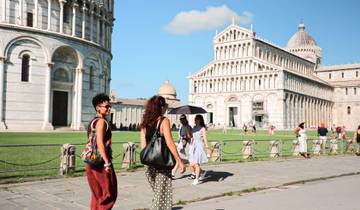
3-Day Tuscany Highlights Tour: Explore Pisa, San Gimignano, Siena, and Florence
- ✓ Booking needs min. 2 travelers
4 days
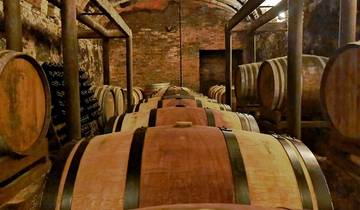
Siena & Wine
- ✓ Comprehensive Siena tour
- ✓ Expert local guides included
- ✓ All accommodation arranged
- ✓ Transportation provided

6 days
Timeless Tuscany: A Tuscan Villa Experience
- ✓ Comprehensive Siena tour
- ✓ Expert local guides included
- ✓ All accommodation arranged
- ✓ Transportation provided
Multi-day tour packages powered by TourRadar. Prices and availability subject to change.
Introduction
Rising majestically above Piazza del Duomo in the heart of medieval Siena, the Cathedral of Santa Maria Assunta represents one of the supreme achievements of Italian Romanesque-Gothic architecture. Construction began in 1215 and continued through 1264, though ambitious expansion plans in the 1300s to create what would have been Christianity’s largest church were halted by the Black Death of 1348, leaving the dramatic unfinished façade that visitors can still climb today for panoramic views across Tuscany’s rolling hills.
The cathedral’s distinctive appearance—horizontal bands of white and black marble representing Siena’s civic colors and the legendary founders Senius and Aschius riding white and black horses—creates an immediate visual impact that prepares visitors for the artistic treasures within. The west façade blends French Gothic elements with Classical and Tuscan Romanesque architecture, adorned with sculptures by Giovanni Pisano, though most originals now reside safely in the Cathedral Museum with replicas displayed externally.
What distinguishes Siena Cathedral from Italy’s other magnificent churches is the extraordinary concentration of masterworks spanning six centuries within a single monumental complex. Nicola Pisano’s pulpit, carved between 1265 and 1268, stands as a masterpiece of medieval sculpture. Donatello contributed bronze panels to the baptistery’s font and marble statues throughout the complex. Michelangelo created four sculptures for the Piccolomini Altar early in his career. Bernini designed the Madonna del Voto chapel and crafted the Golden Rose. Pinturicchio’s luminous frescoes transform the Piccolomini Library into a Renaissance jewel box. And beneath visitors’ feet lies what Giorgio Vasari called “the most beautiful, largest and most magnificent floor ever made”—56 marble inlay panels created by approximately forty artists between the 14th and 19th centuries.
The cathedral complex extends far beyond the main church building, encompassing the Baptistery built directly beneath the choir, the Crypt hidden for seven centuries before its 20th-century archaeological discovery, the Museo dell’Opera housing works too precious or fragile to remain in situ, the Facciatone viewpoint atop the abandoned cathedral expansion, and the Oratory of St. Bernardino celebrating Siena’s beloved 15th-century preacher. Together, these spaces form an integrated artistic and spiritual journey that typically requires two to three hours to experience comprehensively, though the three-day validity of the OPA SI PASS allows for multiple visits and unhurried contemplation.
Visiting Siena Cathedral demands more than simply purchasing a ticket and walking through. Understanding the ticketing system, planning your visit timing to coincide with the floor uncovering if possible, knowing which areas require advance booking, respecting the building’s continuing function as an active place of worship, and navigating the physical layout efficiently all contribute to transforming a cathedral visit from a checkbox tourist activity into a profound encounter with Western art and spirituality. This guide provides the practical knowledge and contextual understanding to maximize your experience at one of Italy’s most extraordinary artistic and architectural achievements.
Understanding Siena Cathedral’s Architectural Marvel
Siena Cathedral’s architectural significance extends beyond its immediate visual beauty to represent a pivotal moment in the evolution of Italian Gothic style. The building occupies a site with deep historical roots—tradition holds that a 9th-century church dedicated to the Virgin Mary stood here, replacing an earlier Roman temple to Minerva. While the consecration date of 1179 in the presence of Sienese Pope Alexander III remains historically uncertain, documentary evidence from 1259 confirms that the great sculptor Nicola Pisano worked on the cathedral, establishing the building’s role as a magnet for major artistic talent from its inception.
The cathedral’s ground plan follows a Latin cross configuration with a central nave flanked by two side aisles, a crossing beneath the hexagonal dome, and three apses. The nave measures approximately 89 meters in length, while the dome rises 48 meters above the floor. The distinctive black and white marble banding creates powerful horizontal lines that emphasize the building’s length and draw the eye toward the high altar. This chromatic scheme carries deep civic meaning for Siena, evoking the city’s founding legend and creating instant visual recognition of the building’s civic-religious dual identity.
The west façade represents one of the finest examples of Italian Gothic architecture, completed in two distinct phases. Giovanni Pisano designed and executed the lower section between 1284 and 1297, creating deeply carved sculptures of prophets, philosophers, and biblical figures that project dramatically from their niches, designed to be viewed from street level below. The façade’s innovative use of polychrome marble—white from Carrara, red from Siena, green from Prato, and black from local quarries—creates a jewellike effect enhanced by golden mosaic work in the three gables. The upper section, added in the late 1300s, continues the decorative scheme with smaller-scale details and the addition of the three bronze doors with panels narrating New Testament scenes.
Inside, the architectural experience shifts from the façade’s vertical emphasis to the horizontal sweep of the nave. Six massive compound piers support semicircular arches that carry the clerestory walls punctuated by oculi and Gothic windows. The ceiling features blue backgrounds with golden stars, creating a celestial canopy above worshippers and visitors. This cosmic symbolism extends throughout the cathedral’s decorative program, from the floor’s philosophical and biblical narratives to the dome’s representation of the heavenly Jerusalem.
The hexagonal dome rises above the crossing on a drum supported by clustered columns. Six ribs spring from corbels decorated with heads of prophets and evangelists, meeting at a central keystone. The interior surface features blue and gold decoration with representations of the four evangelists and church doctors. This dome represents one of the earliest examples of Gothic dome construction in Italy, predating Florence’s Duomo by over a century and demonstrating Sienese builders’ technical sophistication.
The unfinished New Cathedral expansion provides one of architecture’s most dramatic “what might have been” stories. In 1339, Siena’s government approved an audacious plan to expand the cathedral to unprecedented scale—the existing building would have become merely the transept of a vastly enlarged structure. Construction began, with massive walls rising to define the new nave. However, the project faced both technical challenges regarding foundation stability and economic catastrophe when the Black Death of 1348 killed perhaps half of Siena’s population. Work stopped permanently, leaving the incomplete walls and columns standing as both memorial and viewpoint—today’s Facciatone panoramic terrace.
The cathedral’s architectural details reward close examination. Clustered columns feature capitals carved with vegetal motifs and figural scenes. The triforium level displays intricate geometric tracery. Corbels supporting ribs and arches bear carved heads representing prophets, saints, and allegorical figures. These details demonstrate the extraordinary craftsmanship invested in every surface, from the grandest structural elements to the smallest decorative touches. Taken together, they create an architectural experience that balances monumentality with intimacy, structural clarity with decorative richness, and innovative Gothic forms with Italian spatial traditions.
The Marble Floor: Siena’s Hidden Masterpiece
The marble inlay floor of Siena Cathedral represents one of the most extraordinary artistic achievements in Western art, a project spanning nearly six centuries and involving approximately forty artists working in the unique techniques of marble commesso and graffito. Giorgio Vasari, the 16th-century artist and art historian, called it “the most beautiful, largest and most magnificent floor ever made,” and four centuries later his assessment remains valid. The floor transforms the entire nave, aisles, transepts, and crossing into an immersive visual narrative covering 3,000 square meters with 56 individual panels.
The floor’s creation began in the 14th century under the direction of the Opera del Duomo, the cathedral’s building committee. Early panels employed the graffito technique, where designs were incised into white marble and the lines filled with black stucco or pitch, creating dramatic linear compositions. As technical skills evolved, artists developed the marble commesso technique, assembling panels from precisely cut pieces of colored marble—whites from Carrara, blacks and grays from Sienese quarries, reds from Caldana, yellows and greens from various sources—fitted together like a giant jigsaw puzzle to create images with subtle chromatic variations.
The iconographic program follows a complex philosophical and theological scheme centering on the theme of wisdom. Beginning at the entrance with representations of pagan sibyls and ancient philosophers—Hermes Trismegistus holds a place of honor near the main door—the narrative progresses through allegorical representations of virtue and vice, Old Testament scenes, and culminates under the dome with biblical subjects. The program reflects Renaissance humanism’s integration of classical learning with Christian revelation, presenting pagan wisdom as a preparation for the Gospel.
Among the most celebrated individual panels, the She-Wolf Suckling Romulus and Remus occupies a prominent position in the nave, connecting Siena’s legendary founding to Rome’s origins. The Wheel of Fortune, designed by an unknown artist around 1372, shows figures rising and falling on fortune’s wheel with Latin inscriptions warning of worldly instability. The Hill of Wisdom, designed by Pinturicchio in 1505, depicts a symbolic mountain topped by Wisdom with allegorical figures representing virtue and learning ascending its slopes while others fall away into vice. The Slaughter of the Innocents, designed by Matteo di Giovanni in 1481, demonstrates the graffito technique at its most dramatic with dozens of figures arranged in a horrifying yet artistically brilliant composition.
The technical complexity of creating these panels cannot be overstated. Artists first prepared full-scale cartoons—preparatory drawings—which were then translated onto the floor by specialized marble workers called tarsieri. For graffito work, outlines were incised into white marble slabs already set in place, then filled with black material. For commesso panels, each piece of colored marble was individually cut, shaped, and fitted, with tolerances measured in fractions of millimeters. The finished panels were then set into the floor using traditional techniques, creating a surface that has withstood five centuries of foot traffic while retaining its visual impact.
Several panels deserve particular attention for their artistic or historical significance. The Seven Ages of Man, designed by Antonio Federighi around 1475, shows seven figures representing life stages from infancy to old age in a circular composition. The Story of Fortune, created by various artists between 1504 and 1506, presents an elaborate allegory occupying multiple panels. The Sacrifice of Isaac, attributed to Domenico Beccafumi and created between 1547 and 1551, demonstrates the commesso technique’s potential for subtle chromatic modeling approaching the effects of painting. Each panel reveals new details upon repeated viewing—background elements, subsidiary figures, symbolic objects, inscriptions in Latin, Greek, or Hebrew.
The floor uncovering occurs during two periods annually: from late June through the end of July, and from mid-August through mid-October. These dates align with the period following the Palio dell’Assunta, Siena’s famous horse race held August 16. During the uncovering, all panels become visible, whereas for the remainder of the year protective sheeting covers approximately two-thirds of the floor to prevent wear. The uncovered sections visible year-round include panels near the entrance and in the transepts, providing a preview of the full floor’s magnificence while protecting the most heavily trafficked areas.
Viewing the floor requires specific strategies to maximize the experience. Morning light through the east-facing windows illuminates different panels than afternoon light from the west, and the changing angle of sunlight throughout the day reveals different details in the carved and inlaid surfaces. Standing back to view entire compositions provides a different understanding than kneeling close to examine technical details. The audio guide included with the OPA SI PASS provides valuable context for individual panels’ symbolism and historical background, enhancing visual appreciation with narrative understanding.
The floor continues to require conservation work, with specialized restorers working on panels during the covered periods when visitor access is restricted. Modern conservation techniques including laser cleaning, consolidation of unstable tesserae, and climate monitoring ensure the floor’s preservation for future generations. The delicate balance between public access and conservation represents an ongoing challenge, making the uncovering periods simultaneously a celebration of artistic achievement and a calculated risk to the artwork’s longevity.
Masterpieces and Artistic Treasures Throughout the Cathedral
Beyond its celebrated floor, Siena Cathedral contains an extraordinary concentration of artistic masterpieces that span medieval, Renaissance, and Baroque periods. These works are not merely decorative additions but integral components of the cathedral’s spiritual and civic identity, commissioned by wealthy families, guilds, and the Opera del Duomo itself to glorify God while demonstrating Siena’s artistic patronage and economic power.
Nicola Pisano’s marble pulpit, created between 1265 and 1268 with assistance from his son Giovanni and Arnolfo di Cambio, stands as one of medieval sculpture’s supreme achievements. The octagonal pulpit rests on nine columns of varying materials—porphyry, granite, and African marble—with the central column supported by allegorical figures representing the Liberal Arts and Philosophy. Seven relief panels carved in white Carrara marble depict scenes from Christ’s life: the Nativity, Adoration of the Magi, Presentation in the Temple, Massacre of the Innocents, Crucifixion, Last Judgment, and Elect in Paradise. The compositions pack dozens of figures into each panel with overlapping forms creating complex spatial depth unprecedented in medieval sculpture. Individual figures demonstrate classical influence in their drapery and proportions, reflecting Nicola Pisano’s study of ancient Roman sarcophagi. The pulpit’s position at the crossing ensures visibility from throughout the church while its elevated height allows close examination of the sculptural details.
The Piccolomini Altar occupies the left aisle near the cathedral entrance, commissioned by Cardinal Francesco Todeschini Piccolomini in 1481. The altar’s architectural framework, designed by Andrea Bregno, features classical Renaissance forms with Corinthian pilasters, a carved frieze, and an elaborate entablature. Four niches in the lower register contain sculptures by a young Michelangelo—St. Paul, St. Peter, St. Pius, and St. Gregory—created between 1501 and 1504 when the artist was still in his twenties. These figures demonstrate Michelangelo’s emerging sculptural genius in their powerful anatomies, complex contrapposto poses, and psychological intensity. The altar’s upper register contains additional sculptures by other artists and a central painting of the Madonna and Child. Cardinal Piccolomini, who briefly served as Pope Pius III in 1503, commissioned both this altar and the adjacent library celebrating his uncle Pope Pius II.
Donatello’s contributions to the cathedral appear in multiple locations, demonstrating his versatility across different scales and materials. His bronze relief of The Feast of Herod, created for the Baptistery’s font, revolutionized narrative sculpture with its use of linear perspective to create the illusion of deep architectural space receding behind the foreground drama. His marble statue of St. John the Baptist, originally created for the cathedral’s façade and now in the museum, shows the emaciated saint with shocking realism. His wooden crucifix, carved around 1457, hangs in the Piccolomini Chapel demonstrating his ability to work expressively in different materials.
Gian Lorenzo Bernini, the supreme sculptor of the Roman Baroque, created the Chapel of the Madonna del Voto between 1659 and 1662. The chapel’s architecture features twisted columns, gilded stucco decoration, and polychrome marble creating a theatrical setting for devotional practice. Bernini designed two sculptures flanking the altar—St. Jerome and Mary Magdalene—showing elderly saints in states of penitential ecstasy with dramatic poses and emotionally charged expressions. The chapel’s centerpiece, a revered medieval icon of the Virgin, is surrounded by Bernini’s elaborate marble frame incorporating angels, festoons, and symbolic elements. The chapel demonstrates Baroque art’s integration of architecture, sculpture, and painting into unified theatrical environments designed to inspire religious emotion.
The cathedral’s stained glass windows create jewel-like effects as sunlight streams through colored glass. The great rose window in the west façade, created in 1549, depicts the Last Supper with Christ and the apostles arranged around a circular table. This window represents one of Italy’s finest Renaissance examples of stained glass art. Additional windows throughout the nave and transepts feature saints, biblical scenes, and heraldic symbols, though many are later replacements of medieval originals damaged over centuries.
The wooden choir stalls occupy the apse behind the high altar, featuring elaborate intarsia work—inlaid wood creating illusionistic images through precise cutting and fitting of different wood species. These stalls originally belonged to the Abbey of Monte Oliveto Maggiore and were created between 1503 and 1505 by Fra Giovanni da Verona. In 1813, Archbishop Antonio Felice Zondadari ordered their transfer to the cathedral. The intarsia panels depict architectural views, still lifes, scientific instruments, books, musical instruments, and religious symbols with remarkable trompe-l’oeil effects making flat surfaces appear three-dimensional. The craftsmanship demonstrates Renaissance mastery of perspective applied to decorative arts.
Numerous chapels line the cathedral’s side aisles, each containing altarpieces, frescoes, and sculptures by important artists. The Chapel of St. John the Baptist features bronze sculptures by Donatello and other 15th-century masters. The Chapel of San Vittore contains frescoes depicting the saint’s martyrdom. The Chapel of Sant’Ansano houses an altarpiece by Francesco Vanni. Each chapel represents the patronage of specific families or confraternities who maintained them and commissioned their decoration, creating artistic variety within the cathedral’s unified architectural framework.
The cathedral’s collection of reliquaries, liturgical vessels, vestments, and manuscript illuminations, largely housed in the Museo dell’Opera, represents centuries of commissioning and gifting by popes, nobles, and wealthy citizens. The Golden Rose by Bernini, presented by Pope Alexander VII, demonstrates the goldsmith’s art at its finest. Medieval reliquaries containing saints’ remains feature elaborate Gothic architectural forms in gilded silver. Renaissance chalices and monstrances display virtuoso metalworking and gem setting. These objects remind visitors that the cathedral functioned not just as architectural and artistic achievement but as active liturgical space where these precious items served in daily worship.
Piccolomini Library: Renaissance Jewel
The Piccolomini Library represents one of the Renaissance’s most perfectly preserved interior spaces, a room where architecture, fresco painting, sculpture, and illuminated manuscripts combine to create an immersive aesthetic experience. Cardinal Francesco Todeschini Piccolomini commissioned the library in 1492 to honor his uncle Enea Silvio Piccolomini, who had served as Pope Pius II from 1458 to 1464. The library’s stated purpose was to house Pope Pius II’s extensive book collection, preserving both the physical manuscripts and the memory of the humanist pope’s intellectual achievements.
The library occupies a rectangular room accessed from the cathedral’s left aisle through an elaborately carved marble portal. The entrance features classical architectural elements—pilasters, entablature, arch—decorated with delicate relief carvings of grotesques, putti, and heraldic symbols. Passing through this portal creates a transition from the cathedral’s medieval Gothic atmosphere to the Renaissance world of the library interior.
Pinturicchio and his workshop painted the library’s fresco cycle between 1503 and 1508, depicting ten episodes from the life of Pope Pius II. The frescoes occupy the walls in a continuous narrative sequence, framed by painted architectural elements that create the illusion of windows opening onto scenes from the 15th century. Each scene shows multiple figures in contemporary dress within landscapes or architectural settings rendered with careful attention to perspective and naturalistic detail. The fresco cycle begins with Pius II’s early career as a diplomatic envoy and progresses through his elevation to the papacy, his role in organizing a crusade against the Turks, and his canonization of Catherine of Siena.
The artistic quality of Pinturicchio’s frescoes lies in their brilliant color, decorative richness, and narrative clarity. Unlike earlier medieval narratives that compressed multiple moments into single compositions, Pinturicchio presents each episode as a unified scene occurring in a specific place and time. The figures demonstrate Renaissance idealization in their proportions and poses while the backgrounds feature identifiable Italian landscapes and architecture. Gold highlights on drapery, armor, and architectural details catch the light, creating a luminous effect enhanced by the room’s windows.
The library’s ceiling features elaborate grotesque decoration—a Renaissance decorative vocabulary borrowed from ancient Roman wall painting discovered in underground ruins (grotte). Delicate painted garlands, fantastic creatures, candelabra, and geometric patterns cover every surface in vibrant colors against white backgrounds. This decoration style, which influenced Raphael’s work in the Vatican Palace, creates visual complexity and rhythmic movement across the ceiling’s surface.
At the room’s center stands the Three Graces, a Roman marble copy of a Hellenistic original. The sculpture shows three nude female figures embracing in a pyramidal composition that represents beauty, charm, and joy. Its placement in a library celebrating humanist learning demonstrates Renaissance integration of classical form with Christian context—pagan sculpture serving as inspiration for Christian contemplation. The sculpture’s smooth white marble contrasts with the colorful frescoed walls, creating a focal point for the space.
The library originally housed Pope Pius II’s manuscript collection, which included classical texts, theological works, and humanist writings. While many manuscripts have been dispersed to other collections, some illuminated choir books remain on display in wooden cases along the walls. These manuscripts feature elaborate decorated initials, border decorations, and miniature paintings demonstrating the art of manuscript illumination at its peak. The combination of monumental wall frescoes and intimate manuscript illuminations creates dialogue between public and private artistic expressions.
The library floor features geometric marble inlay patterns in black, white, and red creating visual anchoring for the painted walls above. These patterns reference ancient Roman decorative traditions while maintaining visual simplicity that doesn’t compete with the walls’ narrative complexity. The floor’s design demonstrates Renaissance architects’ understanding of spatial composition where each element—floor, walls, ceiling—contributes to unified aesthetic effect.
Natural light enters through windows in the external wall, creating changing illumination throughout the day. Morning light emphasizes different frescoes than afternoon light, and the quality of illumination affects the perception of the painted architectural elements’ three-dimensionality. This changing light creates different experiences of the same space, rewarding multiple visits at different times.
The Piccolomini Library requires no separate entrance fee beyond the OPA SI PASS or basic cathedral ticket. Its position along the cathedral’s circulation route means most visitors pass through naturally, though many hurry through without fully appreciating the space’s artistic achievement. The library rewards slow viewing, allowing time for eyes to adjust to the color saturation and narrative complexity. The audio guide provides valuable context about Pope Pius II’s life and the frescoes’ historical details, enhancing visual appreciation with biographical and historical understanding.
Baptistery of San Giovanni: Underground Renaissance Masterpiece
The Baptistery of San Giovanni occupies a remarkable architectural position—built directly beneath the cathedral’s choir and apse, utilizing the sloping hillside terrain to create a separate building accessed from the lower Piazza San Giovanni. This underground location creates a symbolic connection between baptism as spiritual death and rebirth and the physical descent into and ascent from the baptistery’s subterranean space. A grand staircase descends from street level to the baptistery entrance, creating a processional approach that enhances the building’s ceremonial function.
The baptistery’s interior follows a rectangular plan with three aisles divided by columns supporting Gothic vaults. The ceiling surfaces are completely covered with 15th-century frescoes forming the most extensive religious fresco cycle of the Sienese Renaissance. These frescoes, created by various artists including Vecchietta, Benvenuto di Giovanni, and others between 1447 and 1450, depict the Apostles’ Creed articles, prophets, sibyls, and scenes from Christ’s life. The frescoes’ brilliant colors and gold highlights create a celestial atmosphere despite the underground location, transforming the vaulted ceiling into a vision of heavenly glory.
The baptistery’s central treasure is the hexagonal baptismal font, a collaborative masterpiece created by the greatest sculptors of the early 15th century. Jacopo della Quercia designed the font’s overall structure between 1417 and 1431, creating a Gothic architectural framework with a hexagonal marble basin raised on steps. Six gilded bronze relief panels decorate the font’s sides, depicting scenes from the life of St. John the Baptist. These panels represent a watershed moment in Renaissance sculpture as different sculptors competed to create the most innovative and artistically advanced compositions.
Lorenzo Ghiberti, fresh from his triumph with the Florence Baptistery’s bronze doors, contributed two panels—The Baptism of Christ and John the Baptist Before Herod. His reliefs demonstrate the International Gothic style’s elegance with graceful figures in flowing drapery and atmospheric landscape backgrounds. Ghiberti’s mastery of bronze casting allowed unprecedented surface detail and subtle modeling effects.
Donatello created The Feast of Herod panel, revolutionizing relief sculpture through his use of linear perspective to create the illusion of deep architectural space. The composition shows the moment when Salome presents John the Baptist’s severed head to Herod during the feast. Donatello organized the scene in receding architectural planes—foreground figures react with horror, middle-ground musicians continue playing unaware, background servants bring more food—creating psychological narrative depth matching the spatial depth. This relief influenced generations of Renaissance artists in its demonstration of how perspective could enhance storytelling.
Giovanni Turini and other sculptors completed the remaining panels depicting the Angel Announcing the Baptist’s Birth to Zacharias, The Birth of the Baptist, and The Baptist’s Arrest. The font’s upper section features six statuettes of prophets in niches and six seated Virtues, all in gilded bronze. The font’s crown displays a marble tabernacle by Jacopo della Quercia housing the consecrated oil and chrism used in baptisms. The entire ensemble demonstrates early Renaissance sculpture’s evolution from Gothic decorative traditions toward humanistic naturalism and spatial innovation.
The baptistery’s apse contains a marble statue of St. John the Baptist by Donatello, showing the desert prophet as an emaciated ascetic with wild hair and intense expression. This sculpture demonstrates Donatello’s psychological realism and his ability to capture spiritual intensity through physical form. The baptistery’s side chapels contain additional altarpieces and frescoes by Sienese painters, creating artistic richness throughout the space.
The baptistery functioned as Siena’s primary location for the sacrament of baptism for centuries, and occasional baptisms still occur here during special liturgical celebrations. The building represents the cathedral complex’s integration of practical liturgical function with artistic patronage—creating a space that serves worship while simultaneously demonstrating artistic innovation and civic pride.
Visiting the baptistery requires descending the external staircase from Piazza San Giovanni, creating a physical journey that mirrors baptism’s spiritual journey. The interior’s relatively dim lighting, punctuated by strategic illumination of the font and ceiling frescoes, creates an atmosphere of mystery and revelation. The space rewards careful viewing as eyes adjust to the lower light levels and details emerge from the vaulted shadows. The OPA SI PASS includes baptistery access, and the audio guide provides context for the font’s sculptural program and the ceiling frescoes’ iconography.
The Crypt: Hidden Medieval Treasure
The Crypt beneath Siena Cathedral remained unknown for more than seven centuries before archaeological investigations in 1999 discovered this extraordinary space hidden beneath later construction. The crypt’s rediscovery ranks among the most important archaeological finds in Italian art history, revealing a complete cycle of 13th-century frescoes in remarkable condition, protected by their centuries of concealment from light, moisture, and human contact.
The crypt occupies the space beneath the cathedral’s choir and high altar, built as part of the original 13th-century construction but subsequently filled with rubble and buried when later building campaigns raised floor levels and restructured the apse area. The decision to fill rather than demolish the crypt preserved its frescoed walls intact, creating an accidental time capsule that survived while many contemporary frescoes in accessible spaces were destroyed, painted over, or deteriorated from environmental exposure.
The crypt follows a rectangular plan divided into three aisles by columns supporting low groin vaults. The modest scale creates an intimate atmosphere contrasting with the cathedral’s monumental spaces above. Every surface—walls, vaults, columns—is covered with frescoes depicting biblical scenes, saints, prophets, and decorative patterns. The frescoes date to approximately 1270-1280, making them contemporary with the cathedral’s completion and Nicola Pisano’s pulpit.
The fresco cycle’s iconographic program presents Old and New Testament scenes emphasizing Christ’s Passion and Resurrection. The east wall shows the Crucifixion with the Virgin and St. John at the cross’s foot. Side walls depict scenes including the Deposition, Entombment, Resurrection, and Christ’s appearances to the disciples. These scenes follow Byzantine iconographic traditions while demonstrating emerging Gothic naturalism in figure poses and emotional expressions. The artists remain anonymous, though stylistic analysis suggests connections to painters working in Siena and Umbria during the late 13th century.
The frescoes’ colors retain extraordinary vibrancy—rich blues, deep reds, golden yellows, and pure whites create chromatic intensity rarely seen in medieval painting. This preservation results from the crypt’s complete darkness and stable temperature and humidity during its centuries of burial. The pigments—natural minerals and organic materials—appear as fresh as when first applied, providing rare evidence of how medieval frescoes originally looked before centuries of candle smoke, incense, and environmental degradation dulled most surviving examples.
The vault surfaces feature decorative patterns including geometric designs, stars, and foliage motifs creating visual richness that complements the narrative scenes on the walls. Column capitals are painted with foliate designs in contrasting colors. The overall effect creates a jewel-box intensity where every surface contributes to the decorative and iconographic program. The crypt demonstrates medieval artists’ horror vacui—the impulse to fill every available surface with meaningful decoration rather than leaving blank spaces.
The crypt’s archaeological discovery generated significant scholarly interest and posed conservation challenges. The sudden exposure to light, atmospheric moisture, and visitor-generated carbon dioxide threatened the frescoes after centuries of stable conditions. Conservation specialists implemented climate control systems, limited visitor numbers, and installed specialized lighting to protect the paintings while allowing public access. Ongoing monitoring ensures the frescoes’ preservation for future generations while maintaining the space’s accessibility.
Visiting the crypt creates a time-travel experience, descending into a medieval world preserved intact. The space’s intimacy and the frescoes’ brilliant colors create powerful aesthetic impact despite the modest architectural scale. The crypt rewards close examination, revealing details in figure painting, drapery rendering, and decorative patterns that demonstrate medieval artists’ technical skills and spiritual devotion. The audio guide provides context for the biblical scenes and explains the crypt’s discovery and conservation, enhancing visual appreciation with historical understanding.
The crypt entrance is accessed from the cathedral’s right transept via a descending stairway, creating a physical journey into the building’s foundations. The temperature drops noticeably underground, and the lighting is intentionally low to protect the frescoes, creating atmospheric conditions that enhance the sense of discovering a hidden treasure. The OPA SI PASS includes crypt access as one of its seven included sites, making this extraordinary space accessible to all cathedral complex visitors.
Museo dell’Opera del Duomo: Cathedral Museum Treasures
The Museo dell’Opera del Duomo houses artworks originally created for Siena Cathedral but removed for conservation, safety, or liturgical reasons. The museum occupies the right side of the unfinished New Cathedral’s nave, utilizing medieval walls begun for the abandoned expansion to create exhibition galleries. The building itself represents architectural history—the massive columns and walls intended for a cathedral that would have rivaled St. Peter’s in scale, repurposed centuries later to protect and display the artistic treasures they would have adorned.
The museum’s supreme masterpiece is Duccio di Buoninsegna’s Maestà, painted between 1308 and 1311 for the cathedral’s high altar. This enormous double-sided altarpiece measures over four meters high and represents one of the landmarks in European painting’s transition from Byzantine conventions toward Renaissance naturalism. The front face shows the Virgin and Child enthroned surrounded by angels and saints in a hierarchical composition that emphasizes Mary’s role as Queen of Heaven and Siena’s patron. The reverse face originally contained 26 scenes from Christ’s Passion arranged in narrative sequence.
The Maestà’s artistic significance extends beyond its scale to its revolutionary approach to painting. Duccio retained Byzantine tradition’s gold backgrounds, hieratic figure arrangements, and decorative surface patterns while introducing unprecedented emotional expressiveness in faces and gestures, spatial coherence in architectural settings, and narrative clarity in compositional arrangements. Individual figures demonstrate psychological characterization—the Virgin’s tender gaze at her child, the saints’ varied expressions of devotion, the narrative panels’ dramatic moments rendered with emotional intensity and spatial logic. The painting influenced Sienese art for generations and represents the foundation of the city’s distinctive painting tradition.
The Maestà originally stood on the cathedral’s high altar, creating the visual and spiritual focus for liturgical celebrations. In 1506, the altarpiece was moved to make way for a new altar design, and over subsequent centuries the panel was disassembled, with predella scenes and side panels separated and dispersed to various collections. The museum’s reconstruction reunites as many original components as possible while displaying photographs indicating the missing sections’ locations in museums worldwide. This fragmentation represents one of art history’s tragedies, though the surviving portions retain their power to move viewers seven centuries after their creation.
The museum’s collection includes Giovanni Pisano’s original sculptures from the cathedral façade, removed during 20th-century restoration and replaced with replicas to protect the originals from weathering and pollution. These marble statues of prophets, sibyls, and biblical figures demonstrate Giovanni Pisano’s revolutionary sculptural style—figures twist dramatically, projecting from their niches with physical and emotional intensity. The prophets’ beards and hair stream as if blown by divine wind, and their gestures suggest urgent communication with the viewer below. Designed to be viewed from street level, the sculptures feature exaggerated proportions and deeply carved details that read clearly from a distance while revealing new subtleties when examined at museum eye level.
The museum displays the cathedral’s original rose window, created in the mid-14th century and replaced with a replica during restoration. The window’s stained glass depicts the Last Supper with Christ and the apostles arranged around a circular table. The colored glass retains its jewel-like intensity after six centuries, and the close viewing made possible in the museum reveals details of painting and leading impossible to see when the window was installed high in the façade.
Numerous altarpieces, sculptures, reliquaries, and liturgical objects fill the museum’s galleries. Pietro Lorenzetti’s Birth of the Virgin triptych, painted in 1342, demonstrates Sienese painting’s distinctive approach to narrative and spatial representation. Donatello’s Madonna and Child relief shows the sculptor’s ability to create tender emotion through subtle modeling and psychological characterization. The Golden Rose by Bernini demonstrates baroque goldsmithing at its most exquisite. Medieval illuminated manuscripts display the art of book decoration. Gothic reliquaries feature elaborate architectural forms housing saints’ relics.
The museum’s upper floor provides access to the Facciatone—the panoramic terrace atop the unfinished New Cathedral’s façade wall. Climbing the narrow medieval stairs leads to a spectacular viewpoint overlooking Siena’s rooftops and the Tuscan countryside beyond. From this elevation, the cathedral’s dome, the Torre del Mangia tower in Piazza del Campo, and the city’s medieval street pattern spread below, while distant hills mark the horizon. The climb requires moderate physical fitness but rewards effort with one of Tuscany’s most memorable vistas.
The museum building itself deserves attention as architectural artifact. The massive Gothic columns rising from the ground floor demonstrate the New Cathedral’s intended scale—each column would have supported vaults soaring above the current museum ceiling. Walking among these truncated columns creates poignant awareness of the ambition and tragedy embodied in Siena’s failed cathedral expansion. The building represents urban palimpsest—medieval architecture repurposed for contemporary use while retaining visible evidence of its original purpose.
The Museo dell’Opera is included in the OPA SI PASS and represents essential viewing for understanding Siena Cathedral’s artistic and historical significance. The museum’s climate-controlled galleries allow close examination of works too precious or fragile to remain in the cathedral’s uncontrolled environment. Audio guides provide context for major works and explain the museum’s layout and the relationship between displayed objects and their original cathedral locations. Typical museum visits require one to two hours, though art enthusiasts could spend considerably longer examining the collection’s depth and quality.
Gate of Heaven: Rooftop Cathedral Experience
The Gate of Heaven experience, known in Italian as Porta del Cielo, offers exclusive access to Siena Cathedral’s rooftop areas and upper-level spaces never previously open to the public. This specialized tour allows visitors to walk above the cathedral’s vaulted ceilings, explore narrow medieval passages, and experience the building’s structure from perspectives that even most Sienese have never seen. The tour’s name references the biblical story of Jacob’s ladder, where Jacob awakens from his vision of angels ascending and descending to heaven and exclaims “This is none other but the house of God, and this is the gate of heaven.”
The tour begins with access to spaces above the cathedral’s star-spangled vaults, where visitors can look down into the nave from walkways built into the ceiling structure. This reverse perspective transforms the familiar cathedral view—instead of looking up at vaulted ceilings, visitors look down at the floor and furniture from above. The experience reveals the cathedral’s construction techniques, showing how the vaults were built with rubble-filled haunches supporting the decorated surfaces visible from below. The structural system’s ingenuity and the medieval builders’ engineering solutions become visible in these hidden spaces.
The tour continues through narrow passages and staircases built into the cathedral’s walls and piers. These service routes, originally used by maintenance workers and clergy accessing upper-level spaces, now provide visitors with intimate encounters with the building’s fabric—rough stone walls bearing mason’s marks, medieval timber work, and structural elements never intended for public viewing. The passages are narrow and include steep stairs requiring reasonable physical fitness and mobility. Claustrophobic individuals or those with difficulty climbing stairs should consider carefully before booking.
The rooftop portion offers spectacular views across Siena’s medieval cityscape and the surrounding Tuscan countryside. From this elevation, the cathedral’s relationship to the city’s topography becomes clear—how it crowns the hilltop, how the medieval streets radiate from the cathedral and Piazza del Campo, how later Renaissance and baroque additions contrast with the medieval core. Looking outward, the view extends to cypress-lined hills, vineyard-covered slopes, and distant towns—the quintessential Tuscan landscape that has inspired artists for centuries.
The tour provides unique photographic opportunities impossible to obtain from ground level. The cathedral’s dome from roof level reveals its structural system and decorative details. The west façade’s upper portions, including the Gothic pinnacles and mosaic work, can be examined closely. The unfinished New Cathedral’s walls extend upward, and the structural relationship between the completed cathedral and the abandoned expansion becomes visually comprehensible. These perspectives enhance architectural understanding while creating memorable images.
Gate of Heaven tours operate with limited group sizes and specific time slots to manage visitor flow through narrow passages and ensure safety. Advance booking is strongly recommended, particularly during peak tourist seasons and the floor uncovering periods when overall visitor numbers increase significantly. The tour is not included in the standard OPA SI PASS and requires a separate ticket priced at approximately €23 when purchased in combination with the pass or around €8 as a supplement to an existing pass.
The tour operates on seasonal schedules. From March through October, tours run from 10:00 AM to 7:00 PM on weekdays and with reduced hours on Sundays and public holidays. From November through late December, hours shift to 10:30 AM to 5:30 PM. During the floor uncovering periods, extended hours accommodate increased visitor demand. Last admission occurs 30 minutes before closing time. The tour typically lasts 30-45 minutes depending on group size and pace.
Safety requirements include appropriate footwear—no high heels, flip-flops, or open-toed sandals, as the medieval stairs and passages can be uneven and steep. Visitors must be able to climb approximately 100 stairs and navigate narrow passages. Children under age seven are not permitted for safety reasons. The tour includes outdoor sections on the roof level, so weather-appropriate clothing is essential, particularly sun protection in summer and warm layers in winter when rooftop winds can be chilly.
The Gate of Heaven experience transforms cathedral visiting from passive viewing to active exploration. Walking above spaces normally seen from below creates new understanding of the building’s scale, construction, and relationship to its urban setting. The combination of interior structural spaces and exterior rooftop views provides comprehensive architectural appreciation impossible to achieve from ground-level touring alone. For visitors with serious interest in architecture or those seeking unique perspectives on familiar landmarks, the Gate of Heaven represents worthwhile investment of time and additional ticket cost.
Planning Your Visit: Hours, Tickets, and Timing Strategies
Successful Siena Cathedral visits require advance planning regarding ticket options, timing strategies, and logistical considerations. Understanding the ticketing system, seasonal variations in hours and crowds, and the relationship between different sites within the complex allows visitors to maximize their experience while minimizing frustration.
The OPA SI PASS represents the most comprehensive and economical ticket option for visitors planning to explore beyond just the cathedral interior. Priced at €16, the pass includes access to seven locations: the Cathedral itself, the Piccolomini Library, the Baptistery, the Crypt, the Museo dell’Opera, the Facciatone panoramic viewpoint, and the Oratory of St. Bernardino. The pass remains valid for three consecutive days from the date of first use, allowing visitors to spread their exploration across multiple visits rather than rushing through all sites in a single session. This multi-day validity proves particularly valuable for visitors staying in Siena overnight, permitting thoughtful pacing and return visits to spaces that reward repeated viewing.
During the floor uncovering periods from late June through July and mid-August through mid-October, the OPA SI PASS price increases to €18 to reflect the enhanced access to all 56 marble floor panels. This €2 surcharge represents exceptional value considering the floor’s artistic significance and the limited viewing window each year. However, floor uncovering periods also attract significantly higher visitor numbers, making advance online booking essential to guarantee entry during preferred time slots.
Children ages seven through eleven pay reduced rates of €5 for the OPA SI PASS, while children under seven enter for €2. Students at Siena’s universities, residents and those born in Siena, and visitors with disabilities plus one caregiver receive free admission upon presenting appropriate documentation at the ticket office. These discounts do not apply to advance online bookings through third-party vendors, so eligible visitors should purchase tickets directly from the official Opera del Duomo website or on-site ticket office to receive the reduced rates.
The Gate of Heaven rooftop experience requires a separate ticket not included in the standard OPA SI PASS. The combined ticket including both the pass and Gate of Heaven costs approximately €23. Alternatively, visitors who have already purchased the OPA SI PASS can add the Gate of Heaven for an additional €8 supplement. The Gate of Heaven operates with limited capacity and specific time slots, requiring advance reservation particularly during peak periods.
Opening hours vary by season following a pattern designed to accommodate both tourist demand and liturgical schedules. From March through October, the cathedral and most complex sites open from 10:00 AM to 7:00 PM Monday through Saturday, with Sunday and public holiday hours from 1:30 PM to 6:00 PM. November through late December brings earlier closings with 10:30 AM to 5:30 PM weekday hours. The late December through early January holiday period returns to 10:00 AM to 7:00 PM schedules. During floor uncovering periods, Sunday hours extend from 9:30 AM to 6:00 PM to accommodate increased visitor demand. Last admission occurs 30 minutes before stated closing times across all sites.
Individual sites within the complex maintain slightly different hours. The Museo dell’Opera typically opens 30 minutes earlier than the cathedral at 9:30 AM and closes 30 minutes later at 7:30 PM, providing flexibility for visitors preferring to begin or end their visit at the museum. The Oratory of St. Bernardino opens later in the day, typically from 1:30 PM to 7:00 PM. These hour variations allow strategic visit planning—beginning at the museum when it opens before cathedral crowds arrive, or ending with the oratory’s late afternoon hours.
Timing strategies significantly impact visit quality. Early morning arrivals immediately at opening time mean minimal queues for ticket collection and cathedral entry. The cathedral’s east-facing windows admit beautiful morning light that illuminates the right aisle and transept, creating optimal viewing conditions for sculptures and paintings on that side. Late afternoon visits benefit from western light streaming through the façade’s rose window, illuminating the nave with golden light particularly beautiful in the hour before closing.
Weekdays generally prove less crowded than weekends, particularly outside the summer peak season. Tuesday through Thursday typically see the lowest visitor numbers, while Friday, Saturday, and Sunday bring increased crowds including weekend tourists from Florence and day-trippers from cruise ships docked at nearby ports. Visiting on weekdays during shoulder seasons—May, early June, September, and October—provides the optimal balance of good weather, manageable crowds, and the possibility of experiencing the uncovered floor during the fall period.
Floor uncovering periods demand special planning. The limited annual viewing window means these dates attract visitors specifically traveling to see the floor, significantly increasing overall visitor numbers. Online booking becomes essential rather than optional during these periods, as walk-up ticket availability cannot be guaranteed. The booking system assigns specific entry time slots, so visitors should select morning times if possible to avoid afternoon crowds. The uncovering schedule typically runs from late June through July, pauses during the first half of August (when much of Italy vacations and Siena prepares for the August 16 Palio), then resumes mid-August through mid-October.
The three-day validity of the OPA SI PASS enables strategic multi-visit planning. A recommended approach for serious cathedral enthusiasts: Day one focuses on the cathedral interior, floor, and Piccolomini Library, allowing several hours for careful viewing. Day two explores the Baptistery, Crypt, and climbing the Facciatone for views. Day three visits the Museo dell’Opera when fresh for appreciating Duccio’s Maestà and the Pisano sculptures, potentially adding the Gate of Heaven experience if pre-booked. This pacing prevents museum fatigue while allowing the flexibility to return to favorite spaces.
The cathedral’s continuing function as an active place of worship means certain times are restricted for liturgical celebrations. Daily masses occur at 9:30 AM on weekdays in the Madonna del Voto Chapel. Sundays and public holidays feature multiple masses at 8:00 AM, 11:00 AM, 12:15 PM, and 6:00 PM (6:30 PM in summer). During these times, the cathedral remains accessible for prayer through the Door of Forgiveness, but tourist visiting is restricted. Major feast days including Christmas, Easter, and the Assumption (August 15, Siena’s patron feast) involve extended liturgical celebrations that affect tourist access. Checking the cathedral’s calendar for special events before planning visits prevents scheduling conflicts.
Practical Information and Visitor Guidelines
Siena Cathedral maintains specific visitor guidelines balancing public access with the building’s religious function and artwork conservation requirements. Understanding and respecting these rules ensures smooth visits while protecting both the cathedral’s sacred purpose and its irreplaceable artistic heritage.
Dress codes follow standard Italian church requirements—shoulders and knees must be covered for entry. Tank tops, short shorts, miniskirts, and clothing revealing midriffs are not permitted. In summer heat, visitors should bring light shawls or scarves to cover shoulders, and skirts or pants extending below the knee. Cathedral staff stationed at entrances enforce dress codes strictly, denying entry to inappropriately dressed visitors without refund of purchased tickets. Planning appropriate attire before arrival prevents disappointment and wasted time returning to hotels to change.
Photography is permitted throughout the cathedral complex with specific restrictions. Flash photography is prohibited as repeated flash exposure damages pigments in paintings and frescoes. Tripods and professional lighting equipment are not allowed without special permission arranged in advance. Selfie sticks are prohibited in all areas due to safety concerns in crowded spaces and potential damage to artworks. Video recording for commercial purposes requires advance authorization and payment of fees. Personal non-flash photography and smartphone photos are welcomed, allowing visitors to capture memories while protecting the artworks.
Appropriate behavior expectations reflect the cathedral’s religious function. Speaking in moderate tones rather than loud conversation shows respect for both worshippers and other visitors. During masses and liturgical celebrations, tourists must remain quiet and observe from designated areas without approaching the altar or moving through the church. Eating and drinking (except water bottles) are prohibited inside all complex buildings. Smoking is not permitted anywhere in the complex. These guidelines parallel expectations at any active religious site and should pose no difficulty for considerate visitors.
Accessibility varies across the complex’s different buildings. The cathedral itself is wheelchair accessible via a dedicated ramp on the building’s left side, allowing level entrance into the nave. The main floor is navigable for wheelchair users and visitors with limited mobility. However, the Baptistery, Crypt, and Museo dell’Opera present accessibility challenges due to the historic buildings’ age and configuration. The Baptistery requires descending a steep external staircase. The Crypt involves stairs and narrow passages. The museum’s upper floors including the Facciatone viewpoint require climbing stairs. The Gate of Heaven tour is entirely inaccessible to wheelchair users due to narrow passages and stairs. Visitors with mobility limitations should focus their visits on the cathedral main floor, Piccolomini Library, and museum ground floor, all of which provide extraordinary artistic experiences without stair navigation.
Security screening occurs at the cathedral entrance during peak periods. Bags larger than standard backpack size are not permitted and no storage facilities are available, so visitors should avoid bringing large luggage, shopping bags, or oversized backpacks. Small bags and purses undergo visual inspection but not x-ray screening. Dangerous items including knives, tools, or anything that could damage artworks are prohibited. These security measures protect both visitors and the cathedral’s treasures while adding minimal time to entry procedures.
The OPA SI PASS audio guide is included with tickets and provides valuable enhancement to visits. The guide operates via smartphone app, available in Italian, English, French, German, and Spanish. Visitors download the app before or upon arrival, and the guide’s numbered stops correspond to markers throughout the complex. Each stop provides 2-4 minutes of narration combining historical context, artistic analysis, and symbolic interpretation. The audio guide transforms casual viewing into informed understanding, revealing layers of meaning invisible to unaided observation. WiFi is not consistently available throughout the complex, so downloading offline versions of desired language guides before entry ensures uninterrupted access.
Restroom facilities are available near the ticket office and museum but not within the cathedral itself. Visitors planning extended exploration should use facilities before entering the cathedral or plan their route to exit and re-enter at the museum. The cathedral’s medieval construction predates modern plumbing infrastructure, making restroom installation structurally impossible without damaging the building.
Ticket offices and visitor centers are located at several points around the complex. The main ticket office operates near the Crypt entrance on the Piazza San Giovanni side. A visitor information center occupies a storefront on Via di Città. Online ticket purchasers must exchange printed vouchers for physical entrance tickets at these offices before accessing sites, so allow 10-15 minutes for this exchange process during busy periods. The ticket exchange requirement enables verification of reduced-rate eligibility and provides opportunities to ask questions or adjust visit plans.
Luggage storage is not available at the cathedral complex. Visitors arriving in Siena with suitcases or large bags should utilize luggage storage services at the train station or private storage facilities in the city center before attempting cathedral visits. Attempting to enter with large bags results in denied access without refund, making advance storage arrangements essential for visitors with luggage.
Weather considerations affect outdoor portions of visits particularly the Facciatone viewpoint and Gate of Heaven rooftop sections. These exposed areas can be extremely hot in summer sun with no shade, requiring sun protection, hats, and water. Winter visits mean cold winds at elevation, necessitating warm clothing. Rain closes outdoor viewpoints for safety, and tickets are not refunded for weather closures, though visitors can usually access indoor portions of the complex. Checking weather forecasts before booking Gate of Heaven tours prevents disappointment from weather-related closures.
Guided tours operate separately from the audio guide included with tickets. Private guides can be hired through the Opera del Duomo or independent guide services. Group tours with English-speaking guides run at scheduled times, purchasable at the ticket office or online. These guided tours provide deeper context than audio guides and allow questions, though they follow set routes and schedules that may not align with individual visitors’ interests. The included audio guide provides excellent context for most visitors, with guided tours representing worthwhile upgrades for those seeking expert interaction or having specific research interests.
Siena Cathedral in Historical and Cultural Context
Understanding Siena Cathedral requires situating it within the city’s historical development, political struggles, religious devotion, and artistic patronage. The cathedral represents far more than accumulated architectural and artistic achievements—it embodies Siena’s civic identity, competitive relationship with rival Florence, devotion to the Virgin Mary, and economic power translated into cultural expression.
Medieval Siena existed as an independent city-state and banking center, one of Europe’s wealthiest cities during the 13th and 14th centuries. Sienese bankers financed popes, kings, and international trade, accumulating fortunes that funded ambitious building projects. The cathedral’s construction during Siena’s economic and political zenith reflects the city’s desire to create a monument equal to its international importance. The decision to dedicate the cathedral to the Virgin Mary—Santa Maria Assunta—expressed Siena’s special devotion to the Madonna, who the city regarded as its spiritual protector and whom citizens credited with military victories over Florence and other rivals.
The cathedral’s construction coincided with intense rivalry between Siena and Florence, Tuscany’s two dominant city-states. This competition extended beyond military and economic spheres into cultural and artistic patronage. Each city sought to demonstrate superiority through architectural and artistic achievement. When Florence began construction on Santa Maria del Fiore (the Duomo) in 1296, Siena responded with the ambitious 1339 plan to expand its cathedral to unprecedented scale. The project’s failure due to the Black Death of 1348 represented not just architectural catastrophe but civic trauma—Siena’s population declined by perhaps half, its economy collapsed, and its political power waned. Florence eventually absorbed Siena in 1559, ending the city’s independence and transforming the cathedral from a symbol of civic pride into a reminder of lost glory.
The cathedral’s artistic patronage reflects both civic and private investment. The Opera del Duomo, a lay organization established in 1196 to oversee cathedral construction and maintenance, commissioned major works and managed ongoing decoration. Wealthy families funded specific chapels, altarpieces, and decorative programs, gaining both spiritual merit and public recognition. Powerful individuals including popes, cardinals, and nobles contributed relics, liturgical vessels, and architectural additions. This complex patronage network created artistic richness while embedding the cathedral in Sienese social and political structures.
The marble floor’s iconographic program reveals Renaissance humanist thought integrating classical philosophy with Christian theology. The inclusion of Hermes Trismegistus, pagan sibyls, and ancient philosophers alongside biblical prophets and saints reflects humanist belief that pagan wisdom prepared the way for Christian revelation. This theological syncretism, controversial to some medieval observers, received official approval from successive popes and archbishops who commissioned and blessed the floor panels. The cathedral thus became a vehicle for Renaissance intellectual currents while maintaining its orthodox Christian purpose.
The cult of the Virgin Mary shaped not only the cathedral’s dedication but its decorative program and liturgical practices. Numerous chapels honor Mary under different titles and miraculous images. The Madonna del Voto chapel houses a revered medieval icon credited with protecting Siena during wars and plagues. Annual processions and feast day celebrations center on the cathedral, particularly the Assumption (August 15) when Siena’s famous Palio horse race occurs. These Marian devotions distinguish Sienese religious culture and find physical expression in the cathedral’s art and architecture.
The cathedral’s role in Sienese civic ritual extended beyond religious functions. Government officials attended state masses, military victories were celebrated with processions, and important civic decisions received divine blessing through cathedral ceremonies. The building functioned as the intersection of sacred and secular authority, where God’s blessing sanctified earthly power while civic patronage glorified divine worship. This interdependence between cathedral and city-state characterized medieval Italian urbanism, creating monuments that served simultaneously as churches and civic monuments.
The cathedral’s artistic innovations influenced subsequent art history beyond Siena. Duccio’s Maestà established Sienese painting’s distinctive characteristics—elegant linear rhythms, brilliant color, and emotional expressiveness—that continued through Simone Martini, the Lorenzetti brothers, and later Sienese painters. Nicola and Giovanni Pisano’s sculptures demonstrated how classical forms could express Christian narratives, influencing the Renaissance recovery of ancient art. The marble floor’s elaborate commesso technique inspired subsequent decorative arts. These artistic achievements position Siena Cathedral as a creative laboratory whose innovations shaped Italian and European art.
The cathedral’s modern role balances heritage preservation with active religious function. The Opera della Metropolitana, successor to the medieval building committee, continues overseeing conservation and restoration. International funding supports ongoing maintenance of artworks and architecture. The cathedral welcomes approximately one million visitors annually, generating revenue that funds conservation while creating management challenges regarding crowd control and artwork protection. Balancing public access, religious function, and preservation requirements represents ongoing negotiation between competing legitimate interests.
The cathedral’s UNESCO World Heritage designation, awarded to Siena’s historic center in 1995, recognizes its outstanding universal value and obligates preservation for future generations. This international recognition brings both benefits—increased tourism revenue and global attention to conservation needs—and responsibilities—adherence to UNESCO guidelines and regular reporting on preservation efforts. The designation situates Siena Cathedral within global heritage protection frameworks while acknowledging its importance transcends national or local significance.
Beyond the Cathedral: Exploring Siena’s Historic Center
While Siena Cathedral represents the city’s supreme artistic achievement, the surrounding historic center offers extraordinary rewards for visitors with time to explore beyond Piazza del Duomo. The entire medieval city center, inscribed as a UNESCO World Heritage Site, maintains its 13th and 14th-century character with remarkable integrity, creating an immersive experience of medieval urbanism.
Piazza del Campo, Siena’s shell-shaped main square, lies a five-minute walk from the cathedral via Via di Città’s shopping street. The Campo represents one of Europe’s finest medieval public spaces, its distinctive sloping pavement divided into nine sections representing the Council of Nine who governed Siena during its 14th-century zenith. The Palazzo Pubblico (Town Hall) dominates the square’s lowest point, its soaring Torre del Mangia bell tower rising 88 meters and offering panoramic views rivaling the cathedral’s Facciatone. The Palazzo’s interior houses the Museo Civico with important frescoes including Ambrogio Lorenzetti’s Allegory of Good and Bad Government, one of medieval secular painting’s masterpieces.
The famous Palio horse race occurs in Piazza del Campo twice annually on July 2 and August 16. This bareback race around the square’s perimeter pits Siena’s seventeen contrade (neighborhoods) against each other in a tradition dating to medieval times. The Palio represents far more than tourist spectacle—it embodies Sienese identity, neighborhood loyalty, and historical continuity. Visitors fortunate to be in Siena during Palio days witness medieval pageantry, intense neighborhood rivalry, and genuine local celebration, though securing viewing positions requires either expensive tickets or arrival many hours early for free standing areas.
Santa Maria della Scala, the medieval hospital complex directly across from the cathedral in Piazza del Duomo, now functions as a museum and cultural center. The vast complex includes the Pellegrinaio (Pilgrim’s Hall) with magnificent 15th-century frescoes depicting hospital scenes, the Oratory of Santa Caterina della Notte with its shadowy spiritual atmosphere, the National Archaeological Museum’s Etruscan collections, and contemporary art exhibitions. The complex’s labyrinthine medieval and Renaissance spaces reward exploration, and the entrance ticket is separate from the cathedral’s OPA SI PASS, allowing visits to be spread across different days.
The Basilica of San Domenico, Siena’s largest church after the cathedral, occupies a dramatic hilltop position west of the historic center. This massive Gothic brick church houses relics of St. Catherine of Siena, including her preserved head displayed in a reliquary chapel. The austere Dominican architecture contrasts with the cathedral’s decorative richness, while important frescoes by Sodoma and other Sienese painters adorn the interior. The church’s terrace provides beautiful views across the historic center to the cathedral.
The Pinacoteca Nazionale (National Picture Gallery) houses one of Italy’s finest collections of Sienese painting from the 13th through 16th centuries. The collection traces the distinctive evolution of Sienese art through works by Duccio, Simone Martini, the Lorenzetti brothers, Sassetta, and numerous other masters. The gallery occupies a 15th-century palace with frescoed ceilings and period furnishings creating atmospheric viewing conditions. Serious students of Italian art consider the Pinacoteca essential viewing for understanding Sienese painting’s unique characteristics and historical development.
Siena’s contrade museums offer intimate glimpses into neighborhood identity and Palio traditions. Each of the seventeen contrade maintains a museum displaying Palio victory banners (palii), historic costumes, photographs, and memorabilia. These small museums, usually open only on weekends or by appointment, provide authentic encounters with living traditions rarely accessible to tourists. Visiting a contrade museum and encountering members’ pride in their neighborhood’s history and Palio victories reveals dimensions of Sienese culture that major monuments cannot convey.
The city’s medieval street network rewards aimless wandering. Narrow lanes follow medieval patterns, opening unexpectedly into small piazzas with neighborhood fountains. Brick façades bear medieval windows, ceramic plaques marking contrade boundaries, and iron torch holders once illuminating nighttime streets. Small shops sell traditional foods—ricciarelli cookies, panforte confections, pici pasta—while wine bars offer Tuscan wines including the famous Brunello di Montalcino. This everyday urban texture, largely unmarked in guidebooks, provides authentic experiences of contemporary Siena’s continuity with its medieval past.
Siena’s surrounding countryside, visible from the Facciatone and cathedral viewpoints, contains remarkable destinations accessible by bus or car. The Chianti wine region spreads north toward Florence with medieval castles, vineyard-covered hills, and wine estates offering tastings. San Gimignano’s medieval towers rise dramatically from a hilltop 40 kilometers northwest. Montalcino, source of Brunello wine, occupies a fortress-crowned hill an hour south. The Abbey of Sant’Antimo, one of Tuscany’s finest Romanesque churches, sits in a pastoral valley near Montalcino. These excursions provide contrast to Siena’s urban intensity while revealing the broader Tuscan landscape and culture.
Siena’s distinctive cuisine deserves attention equal to its art and architecture. Traditional dishes including pici cacio e pepe (thick hand-rolled pasta with cheese and pepper), pappardelle al cinghiale (wide noodles with wild boar sauce), and bistecca alla fiorentina (massive grilled T-bone steak) represent Tuscan cooking at its finest. Local restaurants ranging from simple trattorie to sophisticated fine dining establishments serve these traditions with local wines. The combination of culinary and artistic tourism creates comprehensive cultural experiences that engage all senses.
Frequently Asked Questions
Can you visit Siena Cathedral for free?
No, Siena Cathedral does not offer free general admission. The basic ticket costs €7 and includes access to the cathedral interior and Piccolomini Library. The more comprehensive OPA SI PASS at €16 provides significantly better value by including the Baptistery, Crypt, Museum, and Facciatone viewpoint in addition to the cathedral. During floor uncovering periods, prices increase by €2. However, specific groups receive free admission upon presenting documentation at the ticket office—children under seven, visitors born or residing in Siena, students at Siena’s universities, and visitors with disabilities plus one caregiver. The cathedral remains accessible for prayer through the Door of Forgiveness outside general visiting hours, but this access does not include tourist viewing of artworks. Religious function takes precedence during masses, when tourist visiting is restricted.
How long does it take to visit Siena Cathedral?
A focused visit to just the cathedral interior examining the floor, pulpit, and major artworks requires approximately 45-60 minutes with audio guide. Adding the adjacent Piccolomini Library extends the visit to 75-90 minutes total. The complete OPA SI PASS itinerary including the cathedral, library, Baptistery, Crypt, Museum, and Facciatone viewpoint typically requires 2.5 to 3.5 hours for thorough exploration. Serious art and architecture enthusiasts often spend considerably longer, particularly in the museum examining Duccio’s Maestà and the Pisano sculptures. The three-day validity of the OPA SI PASS allows spreading visits across multiple sessions rather than rushing through all sites in one exhausting marathon. The Gate of Heaven rooftop tour adds 30-45 minutes to total visit time and requires separate ticket reservation.
What is the best time of day to visit Siena Cathedral?
Early morning immediately at opening time provides the best experience for several reasons. Visitor numbers are lowest, allowing unhurried viewing without crowds. The ticket exchange process is quickest. Morning light through east-facing windows beautifully illuminates the right aisle and transept. Early arrival is particularly crucial during floor uncovering periods when afternoon visitor numbers increase significantly. Late afternoon in the hour before closing also offers advantages—crowds thin as tour groups depart, and western light streaming through the rose window creates dramatic illumination of the nave. However, late arrivals must rush to see everything before closing time. Midday visits between 11:00 AM and 2:00 PM coincide with peak tourist arrivals and should be avoided if possible. The cathedral’s spiritual atmosphere is most palpable during quiet early morning hours before mass tourism’s intensity dominates the space.
Is photography allowed inside Siena Cathedral?
Yes, photography is permitted throughout Siena Cathedral and the entire monumental complex with specific restrictions protecting the artworks. Flash photography is strictly prohibited as repeated flash exposure damages pigments in paintings and frescoes over time. Natural light and high ISO settings on modern cameras and smartphones allow successful photography without flash. Tripods and professional lighting equipment are not permitted without advance authorization. Selfie sticks are prohibited for safety reasons in crowded spaces and to prevent accidental contact with artworks. Video recording for commercial purposes requires special permission and fees. Personal non-flash photography and smartphone photos are welcomed, and photography opportunities abound—the marble floor, Nicola Pisano’s pulpit, the Piccolomini Library’s frescoes, and panoramic views from the Facciatone all reward photographic documentation of your visit.
Do I need to book Siena Cathedral tickets in advance?
Advance booking is strongly recommended but not always essential. During the floor uncovering periods from late June through July and mid-August through mid-October, advance online booking is crucial as these limited viewing windows attract significantly increased visitor numbers and walk-up ticket availability cannot be guaranteed. The booking system assigns specific entry time slots ensuring manageable crowd levels. Outside floor uncovering periods, particularly on weekdays during shoulder seasons, walk-up ticket purchase is usually possible though may involve queuing during busy midday hours. Online booking through the official Opera del Duomo website or authorized vendors provides guaranteed entry at chosen times, allows comparison of available slots, and enables advance trip planning. The minimal booking fees represent worthwhile investment for peace of mind and time savings. The Gate of Heaven rooftop experience requires advance reservation regardless of season due to limited capacity and specific tour times.
What should I wear to visit Siena Cathedral?
Siena Cathedral enforces standard Italian church dress codes requiring covered shoulders and knees for entry. Tank tops, sleeveless shirts, short shorts, miniskirts, and clothing revealing midriffs are prohibited. Both men and women must comply with these requirements. In summer heat, light long pants or skirts extending below the knee combined with shirts covering shoulders are appropriate. Visitors can bring light shawls or scarves to cover shoulders if needed. Cathedral staff at entrances strictly enforce dress codes, denying entry to inappropriately dressed visitors without ticket refunds. Planning appropriate attire before arrival prevents disappointment. Comfortable walking shoes are essential as the cathedral visit involves standing on marble floors for extended periods, and exploring the full complex including the Baptistery, Crypt, and Museum requires walking and stair climbing. Heels are permitted in most areas but impractical for extended museum touring and prohibited during Gate of Heaven rooftop tours.
Is Siena Cathedral wheelchair accessible?
Siena Cathedral’s main floor is wheelchair accessible via a dedicated entrance ramp on the building’s left side, allowing level access into the nave. The cathedral floor, Piccolomini Library, and ground floor areas are navigable for wheelchair users and visitors with limited mobility. However, significant accessibility limitations exist for other complex sites due to the historic buildings’ age and original medieval construction. The Baptistery requires descending a steep external staircase from Piazza San Giovanni. The Crypt involves stairs and narrow passages. The Museo dell’Opera’s upper floors including the Facciatone panoramic viewpoint require climbing stairs without elevator access. The Gate of Heaven rooftop tour is completely inaccessible to wheelchair users due to narrow medieval passages and approximately 100 stairs. Visitors with mobility limitations should focus their visits on the cathedral main floor and Piccolomini Library, both offering extraordinary artistic experiences without stair navigation. The Opera del Duomo can provide specific accessibility information for individual needs when contacted in advance.
Can I visit Siena Cathedral during mass?
The cathedral remains accessible during mass for worshippers through the Door of Forgiveness, but tourist visiting is restricted during liturgical celebrations. Daily masses occur at 9:30 AM on weekdays in the Madonna del Voto Chapel. Sundays and public holidays feature multiple services at 8:00 AM, 11:00 AM, 12:15 PM, and 6:00 PM (6:30 PM in summer). During these times, respectful observance from designated areas is permitted but tourists cannot move freely through the church, use audio guides, or take photographs. The cathedral’s continuing function as an active place of worship means liturgical celebrations take precedence over tourist access. Major feast days including Christmas, Easter, and the Assumption (August 15) involve extended celebrations affecting tourist visiting hours. Visitors wishing to attend mass rather than tour as tourists are always welcome and should follow normal mass etiquette—arriving before the service begins, dressing respectfully, participating in responses and hymns as comfortable, and remaining throughout the entire celebration.
What is included in the Siena Cathedral audio guide?
The OPA SI PASS includes a comprehensive multimedia audio guide accessible via smartphone app in five languages—Italian, English, French, German, and Spanish. The guide provides 2-4 minutes of narration at numbered stops throughout the complex corresponding to markers in each location. Content includes historical context explaining the cathedral’s construction and patronage, artistic analysis of major works including the marble floor, Nicola Pisano’s pulpit, Duccio’s Maestà, and Pinturicchio’s library frescoes, symbolic interpretation of iconographic programs, and architectural explanations of building techniques and stylistic evolution. The guide enhances visual experience by revealing meanings invisible to casual observation and connecting individual artworks to broader historical and cultural contexts. WiFi is not consistently available throughout the complex, so downloading offline versions of desired language guides before entry via the official app ensures uninterrupted access. The audio guide represents significant value included with ticket price and transforms tourist viewing into informed understanding.
How far is Siena Cathedral from Florence?
Siena Cathedral is located approximately 70 kilometers (43 miles) south of Florence in the heart of Siena’s historic center. The journey between cities takes 75-90 minutes by car via the Raccordo Autostradale Firenze-Siena (Florence-Siena motorway) or scenic SR222 Chiantigiana road through Chianti wine country. Regular bus service operates between Florence’s main bus station and Siena’s Piazza Gramsci, with journey times of approximately 75 minutes and tickets costing €8-10. Buses arrive near Siena’s historic center, requiring a 10-15 minute walk to the cathedral. Train service exists but is less convenient, requiring changes and taking 90-120 minutes total travel time. Many visitors staying in Florence make Siena a day trip, allowing 4-6 hours for cathedral complex touring and lunch before returning. However, Siena rewards overnight stays, enabling evening exploration of the historic center after day-trippers depart and morning cathedral visits before crowds arrive. The cathedral makes an excellent base for exploring southern Tuscany including Montalcino, Montepulciano, and Pienza, all within an hour’s drive.