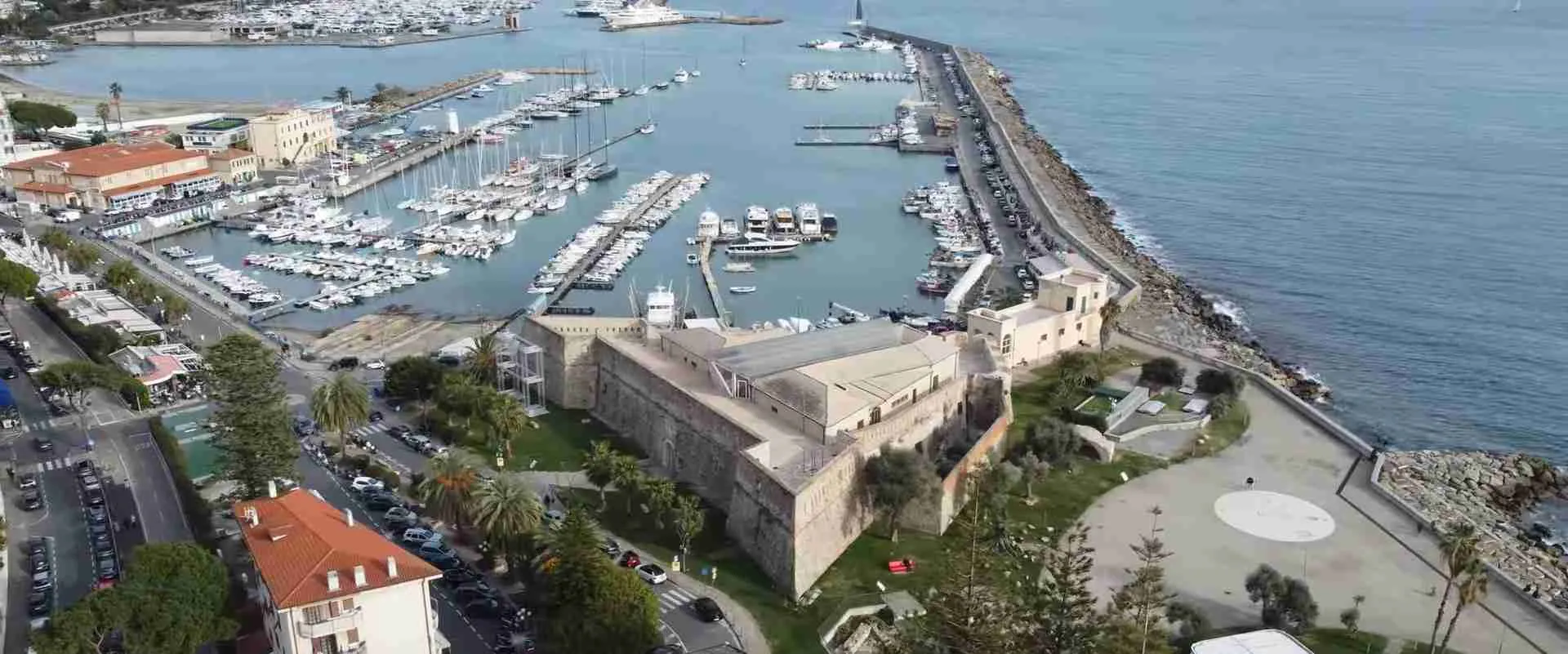
Visiting Sanremo: Ultimate Planning Resource & Travel Guide 2026
Sanremo sits at the western edge of the Ligurian Riviera, a city of year-round sunshine, fragrant flower markets, Art Nouveau boulevards, and one of Italy’s most storied musical traditions. As the City of Flowers and the permanent home of the annual Sanremo Music Festival, it blends genuine resort charm with history spanning a medieval hilltop labyrinth and Alfred Nobel’s final home. This guide covers daily costs by budget tier, transport connections from Milan, Genova, and Nice, the best day trips across the border into France, and the practical detail every 2026 visitor needs.
Key Takeaways
- Sanremo is the largest city on the western Ligurian Riviera (the Riviera dei Fiori, or Riviera of Flowers), reachable in roughly one hour forty-two minutes by Intercity train from Genova or around three and a half hours direct from Milan.
- The Sanremo Music Festival runs in late February each year at the Teatro Ariston — the 2026 edition was held 24–28 February; book accommodation at least six months ahead for festival week, when prices spike sharply at every tier.
- Entry to the Sanremo Casino is free; Villa Nobel entry costs approximately €7; La Pigna, the coastal cycling path, the seafront promenade, and Bussana Vecchia are all free to explore.
- Budget travellers sharing accommodation spend approximately €80–125 per person daily; mid-range visitors €145–235; luxury travellers €295–515. All figures assume two people sharing a room and include accommodation, all meals, transport, and attractions.
- Sanremo is an excellent base for day trips into France: Monaco is roughly fifty to seventy-five minutes by train via Ventimiglia, Menton is similarly close, and the Italian-French border formalities are minimal for Schengen-area travellers.
- The Milan-Sanremo cycling classic — one of professional road cycling’s five Monuments and the longest one-day race in the sport — arrives at its finish in Sanremo each March and draws large crowds to the coastal boulevard.
People Also Ask About Visiting Sanremo 2026
How much does it cost to visit Sanremo in 2026?
A day in Sanremo in 2026 costs approximately €80–125 per person for budget travellers (two sharing a guesthouse or B&B), €145–235 for mid-range visitors (two sharing a three-star hotel), and €295–515 for luxury travellers (two sharing a four- or five-star property). These figures include accommodation, all meals, local transport, and typical attraction costs. Sanremo’s main draws — La Pigna, the coastal cycling path, and the Sanremo Casino — are free to enter, making it genuinely possible to keep activity costs low. The critical exception is Music Festival week in late February, when every accommodation tier rises sharply; budget for 30–100% premiums on normal rates during those five nights, and book rooms many months in advance.
When is the best time to visit Sanremo in 2026?
May, June, September, and October offer the best balance in 2026: comfortable walking temperatures, moderate hotel prices, and manageable crowds. July and August deliver peak beach weather but also peak prices and the fullest hotels. The late-February Music Festival fills the city completely for five nights — transformative as an experience, but logistically demanding and expensive. Spring is particularly rewarding: the flower-growing hillsides around the city turn vivid with carnations and roses, the coastal cycling path is at its most pleasant, and sea temperatures are rising toward swimming range. Winter outside the festival window offers the cheapest rates and a mild Mediterranean climate, with January averages rarely below 8–10°C — warm enough for seafront walking in a light jacket.
How do I get to Sanremo in 2026?
The most practical approach from within Italy is by train. Trenitalia’s Intercity services from Genova Piazza Principe reach Sanremo in approximately one hour forty-two minutes; regional trains take around two hours. Tickets start at approximately €10–15 for regional services and €15–30 for Intercity booked in advance — check trenitalia.com for current pricing. From Milan Centrale, direct Intercity services take around three and a half to four hours; fares start from approximately €15–30 with advance purchase. From Nice in France, the standard rail route is a French TER service to Ventimiglia (about thirty-five to forty minutes) followed by an Italian regional train to Sanremo (about fifteen to twenty minutes more), giving a total Nice–Sanremo journey of roughly sixty to seventy-five minutes. The nearest major airport is Nice Côte d’Azur, approximately fifty kilometres away and well connected by rail.
What are the top things to do in Sanremo in 2026?
The top priorities are La Pigna — Sanremo’s medieval hilltop old town, whose winding lanes and stone archways reward at least two hours of unhurried exploration — and the Sanremo Casino on Corso Inglesi, which charges no admission and runs guided tours through its Art Nouveau rooms, where the Music Festival was held until 1976. Villa Nobel, Alfred Nobel’s final home on Corso Cavallotti, is a compact museum open Tuesday to Friday where the scientist’s study, bedroom, and original equipment are on display. The coastal cycling path, a converted railway line running roughly twenty-three kilometres along the sea through Sanremo and neighbouring towns, is excellent for cycling or walking. Day trips to Monaco, Menton, and Bussana Vecchia — the earthquake-abandoned village turned international artists’ community — complete a rich itinerary.
Extended multi-day tours – 5+ days
Featured Liguria Multi-Day Tour Packages
3 days
Liguria 3-Day Discovery Tour
- ✓ Comprehensive Liguria experience
- ✓ Expert local guides included
- ✓ All accommodation included
- ✓ Transportation provided

5 days
Liguria 5-Day Highlights Experience
- ✓ Comprehensive Liguria experience
- ✓ Expert local guides included
- ✓ All accommodation included
- ✓ Transportation provided
7 days
Liguria 7-Day Cultural Journey
- ✓ Comprehensive Liguria experience
- ✓ Expert local guides included
- ✓ All accommodation included
- ✓ Transportation provided
10 days
Liguria 10-Day Complete Adventure
- ✓ Comprehensive Liguria experience
- ✓ Expert local guides included
- ✓ All accommodation included
- ✓ Transportation provided
Multi-day tour packages powered by TourRadar. Prices and availability subject to change.
Sanremo in 2026: Italy’s Festival City and the City of Flowers
Sanremo occupies a privileged position on the Riviera dei Fiori — the “Riviera of Flowers” — the westernmost stretch of the Ligurian coast, tucked between the Maritime Alps and the Mediterranean Sea roughly forty-five kilometres east of Nice. With approximately fifty-five thousand residents and a coastline that transitions from rocky coves to long sandy beaches, it is the largest city on the Ponente (western) Ligurian Riviera and the commercial and cultural hub of the Province of Imperia.
The city has two very different faces. The upper town is La Pigna, a dense medieval nucleus that climbs the hillside above the modern city in a tight spiral of lanes, vaulted passages, and ancient stairways — a Genoese-influenced urban fabric that has changed relatively little since the Middle Ages. Below and along the coast runs the modern resort city: grand Belle Époque hotels, the ornate Casino, a palm-lined seafront promenade, a working fishing harbour, a modern marina at Portosole, and Corso Matteotti, the pedestrianised main shopping street. This contrast — medieval solidity above, nineteenth-century resort glamour below — gives Sanremo a layered character unusual even on a riviera already rich in architectural ambition.
What brings visitors from across Italy and much of Europe is the Sanremo Music Festival (Festival della Canzone Italiana), the annual song contest that has been held in the city since 1951 and represents one of the most-watched television events in Italy. Every late February, the Teatro Ariston becomes the focal point of Italian popular culture for five nights. The 2026 edition — the 76th festival — ran from 24 to 28 February, with Carlo Conti as artistic director and co-host alongside Laura Pausini, and was won by Sal Da Vinci with the song “Per sempre sì.” The dates were pushed later than the usual early-February window to avoid overlap with the Milan-Cortina Winter Olympics broadcasts on RAI.
Beyond the festival, Sanremo is a working year-round resort with a genuine urban character: a daily municipal market, a professional football club, a yacht harbour, and a hinterland of hilltop villages that produce the taggiasca olives and Rossese di Dolceacqua wine that define western Ligurian cooking. The city’s other famous title — City of Flowers — reflects a flower-cultivation industry that once made this stretch of the Riviera one of Europe’s primary sources of cut flowers, a legacy still visible in the aromatic hillside terracing above the coast. For the international visitor, Sanremo offers an unusual combination of authentic Italian urban life, easy access to France and Monaco, distinctive architecture, and a climate mild enough for outdoor activity in every month of the year.
Getting to Sanremo in 2026
Trains to Sanremo in 2026: From Genova, Milan, and Turin
Trenitalia is the principal rail operator for arrivals from Italian cities. From Genova Piazza Principe, the fastest Intercity services cover the 112-kilometre coastal route in approximately one hour forty-two minutes; regional Regionale Veloce trains take around two hours on the same route. Standard Intercity tickets start at approximately €15–25 booked in advance, with on-the-day fares rising to €25–30. Regional trains cost approximately €10–15. Around sixteen to nineteen direct trains operate per day, providing roughly hourly departures throughout the service day. The coastal scenery between Genova and Sanremo — a succession of tunnels, rock-cut cuttings, and sudden framed views of the sea — is among the most dramatic rail scenery in Liguria, particularly on sections where the line is still exposed to the coast.
From Milan Centrale, direct Intercity services reach Sanremo in around three hours thirty minutes to four hours; fares start at approximately €15–30 with advance purchase on trenitalia.com and rise toward €40 for on-the-day or peak-hour tickets. About five to six direct Intercity services operate daily. An alternative, particularly useful if high-speed Frecciarossa timing aligns better, involves taking a fast train to Genova and picking up a connection there. From Turin Porta Nuova, the natural route is via Genova: approximately forty minutes on Frecciarossa or Intercity to Genova, then a further one hour forty-two minutes or so to Sanremo. Always check trenitalia.com for current timetables, as prices change with booking date and season and promotional fares can occasionally undercut the standard tariff significantly.
Arriving from France: Nice to Sanremo in 2026
Sanremo’s position just forty-five kilometres from the French border makes it one of Italy’s most accessible destinations from the Côte d’Azur. The standard rail route from Nice Ville station involves the French SNCF TER regional service to Ventimiglia — the last station served by the TER on the Italian side of the border — taking approximately thirty-five to forty minutes, followed by an Italian Trenitalia regional train from Ventimiglia to Sanremo, adding another fifteen to twenty minutes. The complete Nice–Sanremo rail journey typically takes sixty to seventy-five minutes. Purchase French TER tickets at sncf-connect.com or at Nice station; Italian Trenitalia tickets at trenitalia.com or Ventimiglia station. Holders of EU or Schengen-area documents cross the border without formal checks. French TER and Italian Trenitalia tickets are sold separately for their respective national segments.
Direct coaches also connect Nice Airport and central Nice to the western Ligurian Riviera through several operators; journey times are comparable by road when traffic is light but can lengthen significantly on summer weekends and during the Music Festival period. By car, the French A8 motorway connects to the Italian A10 (Autostrada dei Fiori) at the border crossing near Ventimiglia, covering the distance from Nice in around forty-five to fifty minutes without traffic. The old Via Aurelia coastal road (SS1) is far more scenic and passes through every coastal town, but is significantly slower — useful for leisurely day drives but impractical as a primary arrival route.
Driving to Sanremo in 2026
Arriving by car from Genova, the A26 southward connects to the A10 motorway, covering around 140 kilometres in roughly ninety minutes without traffic; expect tolls in the range of €8–12 each way. From Milan, the A7 south toward Genova and onward via A26/A10 covers approximately 220 kilometres in two and a half to three hours in normal conditions. From Nice, the French A8 to the Italian A10 is entirely motorway, making the Ventimiglia–Sanremo leg a fifteen to twenty-minute drive. Parking in Sanremo’s centre is genuinely limited: the city operates several paid car parks and metered surface zones on the edges of the historic centre, from which the seafront and Corso Matteotti are walkable in ten to fifteen minutes. For visitors planning to base themselves in Sanremo and take day trips primarily to Monaco and the French Riviera, a car becomes less useful than the rail network once you have arrived; parking in Monaco is both scarce and expensive, and the train takes barely more time.
Flying to Sanremo in 2026: Nearest Airports
No commercial scheduled airport serves Sanremo directly. Nice Côte d’Azur Airport (NCE) at approximately fifty kilometres is by far the most convenient hub, with extensive connections across Europe, the Middle East, and North America; the airport connects to Sanremo via the Nice–Ventimiglia TER and the Trenitalia regional from Ventimiglia, as described above. Genova Cristoforo Colombo Airport (GOA) at roughly 140 kilometres operates a smaller selection of European routes; connection to Sanremo involves a shuttle or bus to Genova’s Brignole or Piazza Principe stations and then the Trenitalia service. Albenga’s Riviera Airport, about seventy kilometres east, handles general aviation and seasonal charters. For most international visitors arriving from beyond Europe, Nice is the optimal entry point: it is served by more carriers, handles transfer connections more smoothly, and is physically closer to Sanremo.
Getting Around Sanremo in 2026
Walking Sanremo in 2026
The flat modern city is almost entirely walkable. From the railway station to the Sanremo Casino is under fifteen minutes on foot along Corso Matteotti; from the station to the Old Port is twenty to twenty-five minutes; Villa Nobel on Corso Cavallotti is twenty minutes walking and also reachable directly from the coastal cycling path. The seafront stretch between Portosole marina and the Old Port covers roughly two kilometres — a pleasant thirty-minute promenade past Belle Époque facades and palm trees. The exception is La Pigna: the old town climbs steeply from street level, and its internal lanes demand comfortable footwear with grip. Cars are effectively excluded from La Pigna’s core, and all internal movement is on foot. Within the upper town itself, gradient is unrelenting; plan rest stops and approach it as a moderate hike rather than a flat stroll.
Local Buses and Public Transport in Sanremo 2026
Riviera Trasporti operates the local bus network covering Sanremo and surrounding municipalities. Urban routes connect the railway station, Corso Matteotti, the seafront, residential zones, and the hillside neighbourhoods around La Pigna. Tickets are purchased from tabaccherie (tobacco shops displaying the T sign) or, where installed, from machines at bus stops; single journey tickets and day passes are both available. Check current fares at rivieratrasporti.it, as prices update periodically. For excursions to Bussana Vecchia, Taggia, and Arma di Taggia without a car, local buses are the practical choice. Regional Trenitalia trains from Sanremo station serve neighbouring coastal towns efficiently: Bordighera is approximately fifteen to twenty minutes east and Ventimiglia — the gateway to France — about twenty to twenty-five minutes, with departures at least hourly throughout the day.
The Coastal Cycling Path in 2026
The coastal cycling path — converted from an old railway line that once hugged the shoreline — is one of Sanremo’s most celebrated assets and a compelling reason to rent a bicycle. The traffic-free, paved route runs approximately twenty-three kilometres from Ospedaletti, just west of Sanremo, to San Lorenzo al Mare to the east, passing directly through the city and traversing several tunnels originally blasted through coastal rock by railway engineers. The path is flat throughout, surfaced in smooth tarmac, and open year-round to cyclists and pedestrians alike, making it accessible to all fitness levels and families with children. Multiple bicycle hire points operate along the route, offering half-day and full-day rentals; Villa Nobel sits directly on the path’s Sanremo stretch, making it easy to combine cycling with a museum visit. In July and August, the path becomes very busy by mid-morning; early-morning or early-evening rides are considerably more relaxed. The tunnels are lit and carry a distinctive coolness in summer that makes the path especially enjoyable during heatwaves.
Top Attractions and Things to Do in Sanremo 2026
La Pigna: Sanremo’s Medieval Old Town
La Pigna — whose name, meaning “the pine cone,” traditionally refers to the tight spiral that the old town traces on the hillside when seen from above — is the most historically compelling quarter of Sanremo and a world away from the resort city below. Climbing the ridge above Corso Matteotti in a dense mass of stone archways, narrow caruggi (the Ligurian word for the dark, often roofed lanes typical of the region), ancient staircases, and interconnected passages, La Pigna formed Sanremo’s original urban nucleus and retains a largely residential, non-commercialised atmosphere that many Italian coastal old towns have shed. Washing lines cross between buildings; elderly residents sit on doorsteps; small vegetable gardens occupy terraced niches in the walls.
Exploration rewards at every turn: stone archways frame sudden views of the sea far below; medieval towers have been absorbed into later residential buildings; flowering plants spill from window ledges onto the walls of narrow passages. Allow at least two hours for a leisurely walk, and navigate on instinct rather than GPS, which struggles with the layered street plan and frequent dead ends. The highest point of La Pigna is the Sanctuary of the Madonna della Costa, a Baroque church whose panoramic terrace overlooks the modern city, the coast, and in clear conditions the Maritime Alps to the north; the climb is steep but the view is considerable. La Pigna is free to enter and accessible at all hours; the sanctuary has its own posted opening times.
Sanremo Casino: Art Nouveau Glamour and Free Admission
The Sanremo Casino at Corso Inglesi 18 is one of Italy’s most significant historic gaming establishments and a landmark of the city’s Belle Époque heritage, in operation since 1905. The building is an imposing Art Nouveau-Liberty composition — ornate facades facing formal gardens, and interior rooms whose period decoration sets the Sanremo Casino decisively apart from the anonymous aesthetic of modern casino architecture. Between 1951 and 1976, the casino was also the venue for the Sanremo Music Festival before the event transferred to the Teatro Ariston; visiting it connects both threads of the city’s cultural identity in a single building.
Admission to the Sanremo Casino is free of charge, and the management organises guided tours through the historic rooms — the most appropriate experience for visitors interested in the architecture and cultural history rather than gaming. The gaming floor operates slot machines from 10:00 to 02:30 and live table games — French Roulette, Blackjack, Chemin de Fer, and Poker — from 14:30 to 02:30. Valid identity documents are required for the gaming rooms and the minimum age for entry is eighteen. Smart-casual dress is appropriate for the general spaces; a jacket is expected in the live table games area. The casino also houses restaurants and a Roof Garden dining space, making it a viable destination for an evening meal regardless of whether you play. Verify current gaming hours, guided tour schedules, and any events at casinosanremo.it before visiting.
Villa Nobel: Alfred Nobel’s Final Home
Alfred Nobel — the Swedish chemist and industrialist who invented dynamite and whose 1895 will directed the greater part of his fortune toward the prizes that bear his name — spent the final years of his life in the villa at Corso Cavallotti 116, where he died on 10 December 1896. Nobel chose Sanremo, as did many wealthy Europeans of his era, partly for the mild winter climate and partly because the property offered laboratory space to continue his scientific research. The museum at Villa Nobel describes the will, which founded the Nobel Prizes, as having been drafted in the villa’s study — a copy of the document is among the museum’s most important exhibits.
The villa itself was built in 1871 in an eclectic Moorish style, its distinctive silhouette a local landmark on Corso Cavallotti. The museum spreads across three floors, reconstructing the rooms as Nobel used them: his study with original furniture, his bedroom, his scientific instruments, and a permanent exhibition on the major scientific discoveries of the nineteenth century — the context in which Nobel’s own work on explosives was conducted. Entry costs approximately €7 for adults; verify current prices at villanobel.it before visiting, as admission can vary for special events. The museum opens Tuesday through Friday, 9:30 to 12:30, though hours may be affected by private events; booking ahead by phone or email is advisable, particularly in winter. An annual Nobel Days celebration each December brings a programme of lectures, concerts, and special events around the anniversary of Nobel’s death.
Russian Orthodox Cathedral
Sanremo’s Russian Orthodox Cathedral, dedicated to Christ the Saviour, stands as a reminder that the western Ligurian Riviera was, in the late nineteenth and early twentieth centuries, a significant winter destination for Russian aristocratic society. The cathedral was built in the early twentieth century to serve this community, and its architecture — featuring the onion domes and decorative Byzantine-influenced elements characteristic of Russian Orthodox ecclesiastical buildings — is distinctly foreign to the surrounding Ligurian and Baroque religious landscape. The cathedral functions as a working Orthodox church; visitors are welcome at appropriate times but are expected to observe the standard dress code (shoulders and knees covered, head covering for women). It is within walking distance of the seafront promenade and makes a natural inclusion in any walking itinerary around the western part of the modern city.
Beaches in Sanremo 2026
Sanremo’s beaches extend along several kilometres of coastline, divided between private concession establishments (lidi) with sun loungers and umbrellas for hire, and free public beach sections. Private beach establishments typically charge €15–30 per person per day for a sun lounger and umbrella in high season; standards range from basic facilities to well-equipped operations with bars and changing rooms. The best free beach access is found east of the city centre and in the area below the Old Port. Sea temperatures peak at 24–26°C in July and August; September and October retain warm swimming conditions (22–24°C) with noticeably lighter crowds. The beaches around Ospedaletti, directly accessible from the western end of the coastal cycling path, are among the more pleasant options for a quieter beach day without the full intensity of Sanremo’s peak-summer atmosphere.
The Seafront Promenade and Old Port
The Lungomare Imperatrice — the seafront promenade named for Empress Maria Alexandrovna of Russia, whose connection to the city reflected the broader Russian aristocratic interest in the western Riviera — runs along the western seafront and is lined with palm trees, Belle Époque hotels, and nineteenth-century villas. It is one of the most pleasant evening walking routes in the city, particularly during the passeggiata hour before dinner, and passes the casino building and continues toward the Old Port. The Old Port, Sanremo’s historic fishing harbour, retains a working character alongside the café and restaurant establishments that have grown up along the quayside; traditional Ligurian gozzi fishing boats can still be seen moored alongside pleasure craft. East of the Old Port, the modern Portosole marina accommodates a substantial sailing fleet and has restaurants and bars in the surrounding complex that are popular with both boat owners and visitors from the city.
Bussana Vecchia: The Artists’ Ghost Village
About eight kilometres east of central Sanremo along the old Via Aurelia, Bussana Vecchia is one of Liguria’s most unusual destinations. The original hilltop village was severely damaged by the 1887 earthquake, which caused catastrophic destruction across the western Ligurian coast, and its population was relocated and never returned. The ruined settlement remained essentially abandoned for decades until an international group of artists began occupying the crumbling buildings from the 1960s, converting damaged structures into studios, galleries, and residences. Today Bussana Vecchia is a living artists’ community: no cars penetrate the lanes, cobbled paths wind between earthquake-fractured buildings and restored workshops, ceramics and paintings are visible through studio doorways, and a small central space occasionally serves as an informal gathering point. A visit takes one to two hours and is free; the village is accessible on foot from the main road below (a steep but short climb), and local buses from Sanremo serve the surrounding area.
Where to Stay in Sanremo 2026
Budget Accommodation in Sanremo 2026
Budget travellers in Sanremo find guesthouses, B&Bs, and two-star hotels at approximately €70–100 per room per night in the shoulder seasons (spring and autumn); peak summer rates push these upward by 20–40%, and Music Festival week in late February sees even basic accommodation priced significantly above normal levels and often sold out months in advance. Room-sharing and apartment platforms offer additional options, and small apartments can work out cheaper per person for groups of two or more. The best-value budget properties tend to cluster around the railway station and in residential streets a few blocks inland from the seafront, rather than in the front-row seafront positions that command a premium at every tier. Book at least six to twelve months ahead for Music Festival week; for any other period, one to three months in advance is sufficient for a good selection.
Mid-Range Hotels in Sanremo 2026
A strong concentration of three-star and comfortable four-star hotels operates in Sanremo, with well-located options near Corso Matteotti, on the seafront boulevard, and adjacent to the coastal cycling path. Mid-range room rates in 2026 run approximately €120–190 per room per night in shoulder season and €180–260 in July–August, with breakfast typically included at many properties, which reduces daily food costs. Several historically interesting buildings house mid-range hotels in Sanremo — the period architecture and location often deliver considerably more character than the price suggests. Online booking platforms are the most reliable way to compare current prices and availability; filter for free cancellation options whenever possible, given how sharply demand fluctuates between festival week and normal periods.
Luxury Hotels in Sanremo 2026
Sanremo’s top-tier properties include the Royal Hotel Sanremo — a landmark Belle Époque hotel set in its own terraced gardens above the sea, with one of the most celebrated hotel pools on the Italian Riviera — and the Grand Hotel & des Anglais and other historic seafront properties that have anchored the city’s upscale reputation since the Victorian era. Rates at five-star and prestigious four-star hotels start at approximately €250–420 per room per night in shoulder season, rising to €400–600 or more in July–August; suites and sea-facing rooms push prices considerably higher. The Royal Hotel in particular books far in advance for summer; reservations made four to six months ahead are advisable for peak-season dates. During Music Festival week, top-tier suites are sometimes priced at multiples of their standard rates and are reserved by returning guests and industry insiders who book a year ahead.
Dining in Sanremo 2026
Ligurian Cuisine and Local Specialties in Sanremo
Sanremo’s food identity sits within western Ligurian cuisine, a tradition shaped by the olive groves, herb gardens, fishing harbours, and hillside farms of the Province of Imperia. The dominant olive is the taggiasca — a small, richly flavoured variety cultivated primarily around the nearby town of Taggia — which produces an olive oil prized across Italy for its mild, fruity character and low bitterness. Taggiasca olives appear as antipasto, in pasta sauces, on focaccia, and as a condiment throughout Sanremo’s restaurants and grocery shops, and their oil is used for almost everything.
The local flatbread most firmly associated with Sanremo is the sardenaira — the city’s version of a tomato-and-olive flatbread that closely resembles the French pissaladière found just across the border. Sardenaira is topped with a thick, slow-cooked tomato sauce, taggiasca olives, salted anchovies, and capers, then baked in rectangular trays and sold by the slice in bakeries and focaccerie throughout the city. At €2–4 per generous portion, it is the quintessential Sanremo street food, genuinely local and far less known outside the western Riviera than pesto or standard Ligurian focaccia. Standard Ligurian focaccia — the oily, slightly chewy bread that Ligurians eat at all hours — is also universally available and freshly baked across the city.
For pasta, trofie al pesto — the hand-rolled short pasta with Genoese basil pesto — and pansoti (large herb-filled pasta served in a creamy walnut sauce) are the regional standards. Fish dishes dominate the second courses: buridda is a Ligurian fish stew with tomatoes, olives, and pine nuts; brandacujun is a creamy whipped salt cod preparation with potatoes, a dish associated with the Ponente Ligurian coast; and the daily fresh catch from local boats appears as simply grilled or baked whole fish in most portside trattorie. The local wines to seek out are Vermentino — a crisp, aromatic white wine made across Liguria and Sardinia — and Rossese di Dolceacqua, a light, elegant red from the Dolceacqua valley about fifteen kilometres inland, produced in small quantities and rarely seen beyond the region.
Budget Eating in Sanremo 2026
The most economical way to eat in Sanremo is to embrace the bar and focacceria culture that defines Italian coastal mornings. A stand-up espresso and cornetto at a bar costs €2–4; a generous slice of sardenaira or focaccia from a bakery provides a satisfying lunch for €3–5 and is baked fresh throughout the morning. Neighbourhood trattorie one or two blocks from the seafront — the places serving a daily changing set lunch for local workers — offer a pasta course, a main with side, water, and a glass of house wine for €12–18. The daily market on Piazza Colombo supplies fresh produce for self-catering at grocery-store prices; supermarkets are well represented on and around Corso Matteotti. A budget day’s total food cost, combining a bar breakfast, a focacceria lunch, and a trattoria dinner, can be held to €30–45 per person without sacrificing genuine local flavour.
Mid-Range and Fine Dining in Sanremo 2026
Mid-range restaurants in Sanremo — a full evening meal with a local wine selection — run approximately €35–55 per person. The Old Port area and Portosole marina have a concentration of fish-forward restaurants where the evening catch is the primary point, and prices are at the mid-range upper end; restaurants inland from the seafront tend to offer equivalent quality for slightly less. Aperitivo culture is well established in Sanremo; arriving at a wine bar for a Vermentino and complimentary snacks at 18:30–19:30 is a pleasant and relatively affordable way to hold dinner costs down. Fine dining options — including the casino’s own Roof Garden restaurant and the dining rooms of major hotels — begin at approximately €60–100 per person for a full menu with wine. Reservations are advisable for higher-end addresses throughout summer and essential during Music Festival week, when restaurants are booked solid for all five evenings.
Sanremo Budget Guide 2026: Daily Costs by Tier
Budget Travel in Sanremo 2026
Budget travellers in Sanremo 2026 — two people sharing a guesthouse or basic hotel room — can manage comfortably on approximately €80–125 per person daily. The breakdown: accommodation approximately €35–50 per person (based on a €70–100 room split between two), all meals approximately €30–45 (bar breakfast, focacceria lunch, neighbourhood trattoria dinner), coffee and snacks approximately €4–7, local transport approximately €3–6, and attractions approximately €8–17. The attractions figure is deliberately modest because Sanremo’s headline draws — La Pigna, the coastal cycling path, the Sanremo Casino, the seafront, and Bussana Vecchia — all cost nothing to enter; the €8–17 allows for Villa Nobel entry, occasional bus tickets, and bicycle hire on the coastal path. Staying outside the festival window, eating at bars and focaccerie rather than sit-down restaurants for most meals, and choosing accommodation in the residential districts rather than the seafront reliably delivers the lower end of this range.
Mid-Range Travel in Sanremo 2026
Mid-range visitors — two sharing a three-star or comfortable four-star hotel — spend approximately €145–235 per person daily in 2026. Hotel contribution: approximately €60–95 per person (based on a €120–190 room rate). Meals across all three: approximately €55–80, combining hotel or café breakfast, a proper restaurant lunch, and a full trattoria or mid-range restaurant dinner with local wine. Coffee, aperitivi, and gelato: approximately €8–15. Local transport, including an occasional taxi: approximately €8–15. Attractions and experiences — casino guided tour, museum entries, a boat trip or day excursion: approximately €15–30. This range delivers genuine comfort: a well-located hotel, restaurant meals at appropriate times, and the freedom to take day trips and guided experiences without calculating every purchase. The upper end of the range reflects July–August peak-season hotel premiums and a full-day Monaco excursion with paid attraction entry.
Luxury Travel in Sanremo 2026
Luxury travellers sharing a four- or five-star property invest approximately €295–515 per person daily in Sanremo 2026. Hotel accounts for approximately €125–210 per person (based on a €250–420 room at top-tier properties). Meals at fine-dining level — hotel breakfast, a restaurant lunch, and a full evening meal with wine at a high-end address — run approximately €100–155 per person. Cocktails, aperitivi, and wines add approximately €20–40. Transport including taxis, private transfers, and occasional car hire: approximately €20–50. Premium experiences — private guided tours, casino gaming, spa treatments at the hotel, a charter sailing excursion: approximately €30–60. The Royal Hotel and Grand Hotel des Anglais occupy the top of this market; their dining rooms, pool terraces, and concierge services extend the daily total accordingly. For Music Festival week, the luxury tier is a market of its own: top suites carry rates that make the standard luxury range look modest, and the experience is qualitatively different from the rest of the year.
Sample Weekly Costs in Sanremo 2026
A full week in Sanremo — seven nights, seven days of sightseeing and day trips, all meals and transport included — breaks down as follows for each tier. Budget travellers (two sharing) should plan on approximately €560–875 per person for the week. Mid-range visitors face approximately €1,015–1,645 per person. Luxury travellers should budget approximately €2,065–3,605 per person. These figures cover in-destination costs; international travel to Sanremo, travel insurance, and pre-departure expenses are additional. A five-night base — long enough to cover the main city attractions and two or three day trips — scales proportionally from the daily figures. The most cost-efficient multi-destination structure for visitors combining Sanremo with Monaco, Nice, and the French Riviera is to base in Sanremo (lower accommodation costs than Monaco or Nice) and use the rail connections for daily excursions into France.
Best Neighborhoods in Sanremo for Visitors 2026
La Pigna and the Historic Centre 2026
Staying in or immediately below La Pigna places visitors in the most historically authentic part of the city: a short uphill walk from the seafront and Corso Matteotti, but immersed in the stone character of the medieval town. Accommodation here tends toward small guesthouses, B&Bs, and apartments rather than large hotels. The neighbourhood is genuinely quiet in the evenings, almost entirely free of car traffic at its core, and offers a very different experience from the resort-hotel seafront. The practical tradeoff is constant uphill and downhill movement when accessing the rest of the city; comfortable footwear is essential. This neighbourhood suits visitors who prioritise character and authenticity over conventional resort comfort, and particularly suits solo travellers and couples staying for more than two or three nights.
The New Town: Corso Matteotti and the Casino Area 2026
Corso Matteotti, Sanremo’s pedestrianised main shopping street, runs through the heart of the new town between the casino complex and the railway station. Staying in this zone provides the most convenient access to restaurants, shops, supermarkets, transport connections, and the main concentration of mid-range hotels. The Sanremo Casino and its gardens are a two-minute walk from most properties in this area; the railway station is ten to fifteen minutes on foot; the seafront is five to ten minutes. This is the practical default location for first-time visitors, festival attendees, and anyone prioritising ease of movement over ambience. The area is lively in the evenings and quietens down after midnight.
The Seafront and Portosole 2026
The seafront zone along the Lungomare Imperatrice and extending east toward Portosole marina concentrates Sanremo’s luxury and upper-mid-range hotels, delivers the best sea views, and provides the most direct access to the beaches and the coastal cycling path. It is also the most expensive area for accommodation and dining. The walk from the seafront to the casino takes about fifteen minutes and to La Pigna about twenty to twenty-five minutes. Portosole’s surrounding restaurants and marina atmosphere give this eastern end of the seafront a slightly different character from the grander Belle Époque boulevard to the west — more nautical, slightly more casual. For visitors centring their trip around beach access, sunrise and sunset sea views, and the grand hotel experience, the seafront is the natural choice.
Day Trips from Sanremo 2026
Monaco Day Trip from Sanremo 2026
Monaco — the small principality of approximately 2.2 square kilometres on the French Riviera — is approximately forty-five kilometres from Sanremo and the most popular day trip from the city. The rail route: regional Trenitalia service from Sanremo to Ventimiglia (approximately fifteen to twenty minutes, around €3–5), then the French SNCF TER to Monaco-Montecarlo (approximately thirty to thirty-five minutes; purchase at sncf-connect.com or Ventimiglia station). Total travel time each way: sixty to seventy-five minutes. No border formalities apply for EU and Schengen-area documents; all travellers should carry valid identification. Within Monaco, admission to the principality itself is free. The main paid attractions are the Prince’s Palace, the Oceanographic Museum, and the Casino de Monte-Carlo’s gaming rooms; check palais.mc, oceano.mc, and casino-monte-carlo.mc respectively for current admission prices. The palace’s Changing of the Guard at 11:55 daily costs nothing to watch from the square outside. Plan to arrive by mid-morning to allow four to five hours of sightseeing before returning to Sanremo for the evening.
Menton and the French Riviera from Sanremo 2026
Menton, the last French town before the Italian border at approximately fifty kilometres from Sanremo, is reachable in about forty-five to sixty minutes by rail (change at Ventimiglia). Famous for its lemon festival in February and an exceptionally sheltered microclimate that allows citrus trees to grow at sea level year-round, Menton offers the relaxed atmosphere of a small Riviera resort town, a well-preserved old town (la Vieille Ville) on a hillside above a colourful harbour, and a series of notable gardens including the Jardin Serre de la Madone — a former Riviera garden now managed by the municipality. Menton’s beaches are pleasant and considerably quieter than those of Nice or Antibes. A half-day or full-day trip pairs well with a stop at Ventimiglia’s large Friday market, one of the western Liguria’s busiest, which draws shoppers from both sides of the border for its produce, clothing, and general merchandise stalls.
Bordighera and Taggia: Ligurian Neighbour Towns 2026
Bordighera, roughly fifteen to twenty minutes east of Sanremo by regional train (approximately €3–5), is a smaller resort town historically famous for its palm trees — Bordighera is documented as having supplied palm fronds to the Vatican for Palm Sunday from the sixteenth century onward — and for a long tradition of British and Northern European winter visitors. The French painter Claude Monet stayed in Bordighera in 1884 and produced a significant series of paintings of the town and its surrounding vegetation, which remain among his most vivid colour explorations of Mediterranean light. The town has its own historic centre, good beaches, and a comfortable seafront. It makes an easy half-day excursion from Sanremo that adds context to the wider western Riviera landscape without the logistical complexity of crossing into France.
Taggia, about eight kilometres east of Sanremo in the lower Arroscia valley, is the town most closely associated with the taggiasca olive variety and with western Ligurian gastronomic culture more broadly. The medieval centre of Taggia has a well-preserved historic layout, a significant Dominican church and convent complex, and a local market. The town gives its name to the olive variety that defines the region’s cooking and oil production, and the surrounding terraced hillsides are planted extensively with taggiasca trees. A half-day visit from Sanremo involves a regional train to Arma di Taggia station (about fifteen minutes) and a short bus or taxi connection to the upper historic town.
Cervo: The Pearl of the Ligurian Coast 2026
Cervo, approximately thirty-five kilometres east of Sanremo, is widely regarded as one of the most beautiful small villages on the entire Ligurian coast — a tightly packed hilltop settlement perched above the sea with its historic fabric almost entirely intact. The village is dominated by the parish church of San Giovanni Battista, whose distinctive convex Baroque facade is a set piece of Ligurian late-Baroque architecture and one of the most photographed elevations on the coast. Cervo is almost entirely pedestrianised, faces almost no tourist commercialisation, and commands sweeping views across the Gulf of Diano. In summer, the village hosts an internationally recognised chamber music festival in its hillside square, with concerts performed against a backdrop of the sea — one of the more extraordinary performance settings in Italy. Cervo is most conveniently reached by car or taxi; regional train to Andora or Cervo-San Bartolomeo al Mare station followed by a local bus or taxi is possible but involves more planning.
Imperia and the Western Riviera dei Fiori 2026
Imperia, the provincial capital approximately twenty kilometres east of Sanremo, is a working harbour city with a dual historic identity: the Oneglia district on the eastern bank of the Impero river, historically associated with olive oil production, and the Porto Maurizio district to the west, a historic fishing port with a hilltop old town that predates the unification of the two towns into a single municipality in 1923. Imperia is less touristified than its neighbours, giving it an authentic Ligurian character that rewards visitors interested in everyday Italian coastal life beyond the resort strip. The Museo dell’Olivo in Oneglia chronicles the olive oil industry of the region from antiquity to the present in a collection that is unexpectedly absorbing for anyone with an interest in Ligurian food culture and agricultural history. Imperia is approximately twenty minutes by regional train from Sanremo.
Seasonal Events and Festivals in Sanremo 2026
The Sanremo Music Festival: Italy’s Annual Song Contest
The Sanremo Music Festival — officially the Festival della Canzone Italiana — is the most significant event in Sanremo’s annual calendar and one of the oldest continuously held music competitions in the world. First staged in 1951, it takes place each year at the Teatro Ariston over five consecutive evenings, typically in early to mid-February, and selects — through a combined jury and public televote — the Italian song that will represent Italy at the Eurovision Song Contest. The festival’s broadcasts regularly attract viewing audiences counted in the tens of millions across Italian television.
The 2026 edition, the festival’s 76th, ran from 24 to 28 February — later than usual because RAI shifted the dates to avoid overlap with the Milan-Cortina Winter Olympics broadcasting. Carlo Conti served as artistic director and co-host, alongside Laura Pausini, with thirty artists competing in the main section. The winner was Sal Da Vinci with “Per sempre sì.” For 2027 and subsequent years, the festival is expected to return to its more typical early-February slot; exact dates are announced by RAI in the preceding autumn and confirmed on the official festival and RAI websites. Attending the festival in person requires entering a ballot system via Vivaticket for Teatro Ariston seats — a competitive process that has no guaranteed outcome. However, the city during festival week is itself the event: outdoor screens in the piazze, overflow performances, the crew of the television production visible throughout the centre, and an atmosphere of Italian popular culture that permeates every bar, restaurant, and hotel lobby.
Milan-Sanremo Cycling Classic 2026
La Classicissima — the Milan-Sanremo cycling classic — is one of professional road cycling’s five Monuments, the sport’s most prestigious single-day races, and at approximately 293 kilometres the longest one-day race in the professional calendar. First staged in 1907, it runs from Milan south and then west along the Ligurian coast each March, finishing on Via Roma in Sanremo in the mid-to-late afternoon. The final kilometres — the coastal sprint from Capo Berta, the Cipressa climb, and the decisive Poggio di Sanremo — take place above and through the city before the peloton descends to the finish on the avenue parallel to Corso Matteotti. Spectators line the Via Roma and the surrounding streets for the finale; admission along the route is free. The Milan-Sanremo finish has historically produced some of the most dramatic moments in spring cycling, and the combination of the coastal backdrop and the post-winter timing gives the race a festive quality that amateur cycling tourists have embraced enthusiastically — organised sportive rides on roads used by the professional race take place in the days around the event.
Spring, Summer, and Winter Events in Sanremo 2026
Sanremo’s spring and summer calendar fills progressively from April onward. The city’s festival of flowers — reflecting the floral identity of the Riviera dei Fiori — typically involves events in the late winter and spring months that draw on the cultivated hillside landscape above the coast. The Sanremo Casino operates a regular calendar of concerts, themed evenings, and gaming tournaments year-round; check casinosanremo.it for the current programme, which changes seasonally. Summer brings outdoor music events to the seafront and to various municipal venues; the Teatro Ariston and other city stages host programming outside the festival window. The Nobel Days in December — a week of lectures, concerts, literary events, and scientific discussions held at Villa Nobel around the 10 December anniversary of Alfred Nobel’s death — is a smaller but genuinely distinctive cultural calendar entry that suits visitors interested in science history and cultural programming. Check villanobel.it for the current year’s Nobel Days programme, announced several months in advance.
Money-Saving Tips for Visiting Sanremo 2026
The most effective single cost-reduction is timing. Hotel rates outside July, August, and Music Festival week are substantially lower than peak figures — visiting in May, June, September, or October cuts accommodation costs by 20–40% relative to summer peaks and delivers a more relaxed city. November through January (excluding festival week) offers the lowest hotel rates of the year and a Mediterranean climate that is genuinely mild enough for comfortable outdoor sightseeing.
Build the itinerary around Sanremo’s free attractions. The Sanremo Casino’s admission is free and its guided tour programme is free; La Pigna requires only time; the coastal cycling path is free to walk and charges only for bicycle hire; the seafront, the Old Port area, and Bussana Vecchia all cost nothing to explore. A full and satisfying day in Sanremo using only free attractions is entirely achievable and covers some of the city’s most rewarding experiences.
Eat at bars and focaccerie rather than sit-down restaurants for at least two meals per day. A bar breakfast (espresso, cornetto) at €2–4 and a focacceria lunch (sardenaira, focaccia, local snacks) at €4–7 cover morning and midday for €6–11 total — a fraction of sit-down alternatives. Reserve the restaurant spend for one evening meal per day, where the experience genuinely justifies the price. The daily market on Piazza Colombo provides market-price fresh produce and local specialties for self-catering in apartments.
Book trains well ahead. Trenitalia’s promotional fares for Intercity services from Genova and Milan reward advance purchase — buying several weeks or more ahead consistently saves €5–15 per ticket compared to day-of purchase. The same applies in the other direction: TER tickets from Nice to Ventimiglia are cheaper bought online than at the station on the day.
Day trip to Monaco and Menton on rail rather than by taxi or tour. The rail route to Monaco involves two modest train tickets and delivers essentially the same Monaco experience as any private transfer, at a fraction of the cost. Within Monaco, focus on the free elements — the old quarter, the harbour views, the Changing of the Guard — and select one or two paid attractions rather than the full tour-operator package.
Consider Sanremo as a base for the French Riviera rather than basing in Monaco or Nice. Accommodation in Sanremo is consistently cheaper than equivalent properties in Monaco or Nice, and the rail connections in both directions are fast enough to make Sanremo a practical base for exploring the entire western end of both the Italian and French Riviera.
Practical Information for Visiting Sanremo 2026
Weather and Climate in Sanremo 2026
Sanremo’s Mediterranean climate is one of the mildest in Italy. January and February average 8–10°C, with frost essentially absent; July and August average 25–28°C, rarely reaching the oppressive heat of inland Italian cities at the same latitude. Rainfall concentrates in autumn and winter, with October and November the wettest months; the period May through September is typically very dry. The Riviera dei Fiori’s name reflects the consequence of this mild-winter climate: carnations, roses, and mimosa bloom through the coldest months in the surrounding agricultural terraces, and palm trees line the seafront year-round. For beach visits, July and August are warmest but most crowded; September and October remain genuinely warm (sea temperatures 22–24°C) with noticeably lighter crowds and more pleasant conditions for walking and cycling.
Language and Communication
Italian is the language of daily life throughout Sanremo. English is understood in most hotels, larger restaurants, and tourist-facing businesses, and French is widely comprehensible given the proximity to the border and the longstanding French visitor presence on this part of the Riviera. In smaller neighbourhood bars, market stalls, and traditional trattorie, Italian is the working language; a few standard Italian phrases — buongiorno, grazie, un caffè per favore — are appreciated and go a long way. Mobile connectivity is excellent throughout the city, on the coastal cycling path, and on all rail routes to Monaco and Nice; EU-issued SIM cards operate at no extra roaming cost across Italy and France under EU regulations. Public Wi-Fi is available in some municipal areas; most hotels provide Wi-Fi as standard.
Currency and Payments in Sanremo 2026
Italy uses the euro (€). Card payments by contactless or chip-and-PIN are widely accepted in hotels, supermarkets, larger restaurants, and shops along Corso Matteotti. Smaller bars, market vendors, some focaccerie, and traditional trattorie may still prefer or require cash, particularly for small transactions under €5. Carrying €30–50 in cash covers smaller daily purchases, bus tickets, market produce, and focacceria spending without difficulty. ATMs are plentiful on and around Corso Matteotti and near the railway station; standard bank ATMs carry lower fees than those in hotels or tourist centres. Monaco also uses the euro, so no currency exchange is required for day trips across the border; France uses the euro as well, making the entire day-trip network currency-simple.
Health, Safety, and Practical Tips
Sanremo is a safe city by Italian and European standards, with no particular security concerns for visitors. Standard Italian urban precautions apply: keep belongings attended on the beach, in crowded areas on Corso Matteotti during busy summer evenings, and at the railway station. EU visitors should carry a valid European Health Insurance Card (EHIC) for access to the Italian public health system; non-EU visitors require comprehensive travel insurance. The city has a hospital — Ospedale di Sanremo on Via Giovanni Borea — and multiple pharmacies throughout the centre (pharmacies display the green cross sign and keep extended hours, with at least one duty pharmacy open for overnight emergencies). The Italian emergency number is 112; 118 is the dedicated medical emergency line. The main post office and municipal administrative services are centrally located on and around Corso Matteotti. The local tourist information office can supply maps, event programmes, and accommodation assistance, and the official visitor website is visitsanremo.com.
Frequently Asked Questions About Visiting Sanremo 2026
Is the Sanremo Casino free to visit in 2026?
Yes. Admission to the Sanremo Casino at Corso Inglesi 18 is free of charge. Visitors can enter the building’s historic Art Nouveau interiors and join the guided tour programme — which covers the historic rooms where the Music Festival was held from 1951 to 1976 — without any entry fee. To access the live gaming tables, a valid identity document is required, the minimum age is eighteen, and a jacket is expected in the table games area. Slot machines operate from 10:00 to 02:30 daily; live table games from 14:30 to 02:30. The casino also houses restaurants, making it a viable destination for dinner independent of gaming. Verify current hours, guided tour availability, and special events at casinosanremo.it, as programming changes seasonally.
How far is Sanremo from Monaco in 2026?
Monaco is approximately forty-five kilometres from Sanremo by road, and the most practical connection is by rail: a regional Trenitalia train from Sanremo to Ventimiglia (about fifteen to twenty minutes) followed by a French SNCF TER to Monaco-Montecarlo (about thirty to thirty-five minutes). Total travel time each way: sixty to seventy-five minutes. No border formalities apply for EU and Schengen-area travellers; all visitors should carry a valid passport or EU identity card. Purchase the Italian segment at trenitalia.com and the French segment at sncf-connect.com or at Ventimiglia station. Monaco uses the euro, so no currency exchange is required. The day trip is best structured to arrive in Monaco by 10:00–10:30 and return to Sanremo by early evening, leaving four to five hours for sightseeing.
When is the Sanremo Music Festival held each year?
The Sanremo Music Festival is held annually in late winter, typically in early to mid-February. The 2026 edition (the 76th festival) ran from 24 to 28 February — later than the usual early-February slot, due to RAI’s decision to avoid overlap with the Milan-Cortina Winter Olympics broadcasts. For subsequent editions, dates are confirmed by RAI in the preceding autumn and published on the official festival and RAI websites. Festival week causes Sanremo hotels to book out months in advance and prices to rise significantly at every accommodation tier; any visitor hoping to attend or experience the festival atmosphere should book accommodation at least six months ahead, and twelve months for anything above budget tier. Tickets for the Teatro Ariston are allocated through a ballot via Vivaticket, with registration windows opening in December of the preceding year.
Is Sanremo worth visiting outside the Music Festival?
Emphatically yes. The festival is a remarkable event, but Sanremo functions as a well-rounded resort and cultural destination across all twelve months. La Pigna, the coastal cycling path, Villa Nobel, the Sanremo Casino, the seafront, and the day-trip reach to Monaco, Menton, and Bordighera are all independent of the festival calendar. The spring months (April–June) are arguably the finest time to visit: the flower-growing hillsides above the city are at their most vivid, accommodation is in the moderate mid-range, and the city is pleasant and relaxed. The Milan-Sanremo cycling classic in March adds another reason to visit in the season before summer, and the December Nobel Days at Villa Nobel offers a quieter but genuinely interesting cultural event in the low season. Sanremo out of festival season is significantly cheaper, more liveable, and arguably more itself.
What is the best way to get from Nice to Sanremo in 2026?
The most practical route is by train: the French SNCF TER regional service from Nice Ville to Ventimiglia (about thirty-five to forty minutes), followed by a Trenitalia regional from Ventimiglia to Sanremo (about fifteen to twenty minutes). Total journey time: sixty to seventy-five minutes. French TER tickets are available at sncf-connect.com or at Nice station; Italian Trenitalia tickets at trenitalia.com or at Ventimiglia station — the two segments are sold separately and can be purchased independently. By car, the French A8 motorway to the Italian A10 covers the distance in around forty-five to fifty minutes without traffic. Coaches also connect Nice and its airport to the western Ligurian Riviera through several operators; check current schedules and prices for the 2026 season, as route availability varies.
Are there hidden costs to budget for in Sanremo 2026?
Several costs surprise first-time visitors. Italian restaurants add a coperto (cover charge) of €1.50–4 per person automatically to the bill; it covers bread, the tablecloth, and place setting, is legitimate, and is distinct from a service charge. Private beach establishments (lidi) charge €15–30 per person per day for a sun lounger and umbrella, on top of any food or drink ordered — free public beach sections exist but are narrower and can be busy in summer. The A10 motorway tolls for drivers from Genova or France amount to approximately €8–12 each way. Parking in the city centre costs €1.50–3 per hour in metered zones. During Music Festival week, every service in Sanremo — accommodation, restaurants, taxis, and even bars — operates with a significant premium. Taxis are metered; confirm the fare for longer transfers (Nice Airport, for instance) before boarding.
What local food should I try in Sanremo?
The priority is sardenaira — Sanremo’s distinctive flatbread topped with tomato, taggiasca olives, anchovies, and capers — sold by the slice in bakeries and focaccerie throughout the city for €2–4 per portion. It is as genuinely local as Ligurian food gets and is far less known outside the western Riviera than the pesto or standard focaccia that the region is known for internationally. Beyond sardenaira, seek out trofie al pesto (hand-rolled short pasta with Genoese basil pesto); fresh grilled fish at a portside trattoria; and taggiasca olives as an antipasto starter. For drinks, Vermentino white and Rossese di Dolceacqua red are the wines produced within an hour of the city and rarely found beyond the western Riviera; both are worth ordering specifically. A glass of Vermentino with a plate of fresh seafood at a table beside the Old Port is the most characteristically Sanremo eating experience the city offers.
Is Sanremo good for cycling?
Sanremo is excellent for leisure cycling, specifically along the coastal path. The approximately twenty-three-kilometre traffic-free path from Ospedaletti to San Lorenzo al Mare — converted from a coastal railway line and entirely flat — is suitable for all fitness levels, including families with children and visitors with no regular cycling practice. Bicycle hire is available at multiple points along the route. For more demanding cycling, the surrounding hills above the city provide sport routes on gradients used in training by professional teams who prepare for the Milan-Sanremo race; the Cipressa and Poggio di Sanremo climbs that feature in the professional race are within range of fit recreational cyclists. The cycling culture in Sanremo is genuine and strong, particularly in March around the race, and the city’s road network is experienced and accustomed to sharing space with cyclists.
Is there a city tourist pass for Sanremo in 2026?
Sanremo does not operate a comprehensive city tourist card comparable to the museum passes found in Florence or Rome. This is partly because the city’s headline attractions — La Pigna, the coastal cycling path, the seafront, and the casino’s general admission — cost nothing. Paid attractions are few enough that individual purchase at each site is practical and typically cheaper than a bundled pass would need to be. For day trips to Monaco, admission at the palace, the museum, and the casino gaming rooms is paid separately at each venue; no Sanremo-issued pass covers French or Monégasque attractions. Check the official Sanremo tourism website for any newly introduced seasonal discount schemes or combination offers, as these are occasionally introduced for the summer or shoulder seasons.
What is La Pigna and is it worth visiting in Sanremo?
La Pigna is Sanremo’s medieval old town, a densely built hillside quarter of narrow lanes, stone archways, vaulted passages, and ancient stairways perched above the modern resort city. Its name — meaning “the pine cone” — traditionally describes the tight spiral shape the settlement traces when seen from above. It is very much worth the visit: the contrast with the Belle Époque boulevards below is dramatic, the atmosphere is authentically residential rather than staged for tourism, and the highest point at the Sanctuary of the Madonna della Costa delivers panoramic views across the city, the coast, and the Maritime Alps on a clear day. Plan at least two unhurried hours; wear footwear with grip; and navigate by exploration rather than GPS, which works poorly in the layered street fabric. Entry is free, the quarter is accessible at all hours, and it is the single most historically distinctive part of Sanremo.