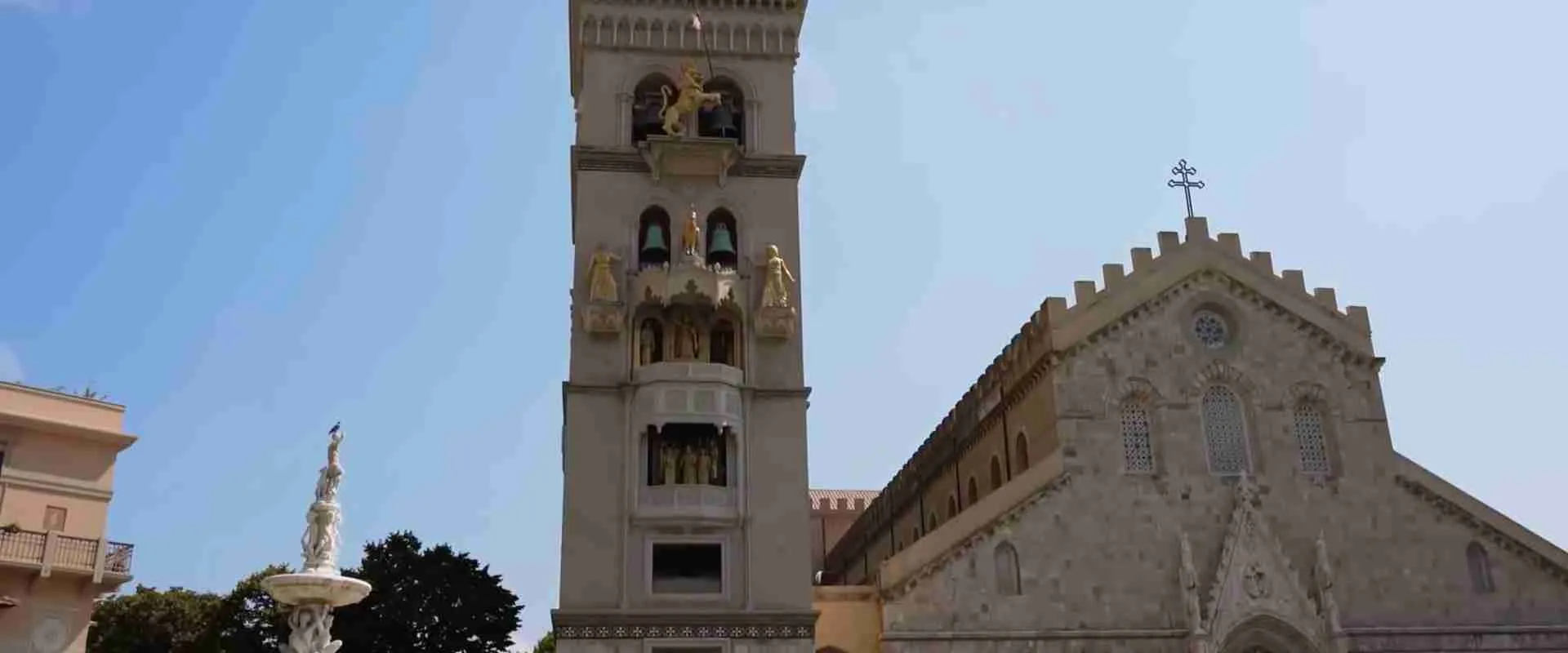
Visiting Messina: Ultimate Planning Resource & Travel Guide 2026
Messina stands at Sicily’s northeastern tip, separated from mainland Italy by the Strait of Messina — a channel barely 3 kilometres wide at its narrowest point. Far more than the transit stop many travellers make it, Messina holds one of the world’s most astonishing mechanical clocks, a museum with two monumental Caravaggio canvases, and a culinary tradition shaped by centuries of maritime trade. This guide provides verified costs, transport options, and everything needed to plan a rewarding 2026 visit to a city that consistently rewards those who stay.
Key Takeaways
- Mid-range visitors spend approximately €100–160 per person daily in 2026 (two sharing a 3-star hotel); budget travellers manage €60–90, and those seeking comfort invest €175–285.
- The Messina Astronomical Clock delivers a 12-minute mechanical theatre show every day at noon — watching from Cathedral Square is free; climbing inside the bell tower costs €5 adults, €2.50 under 18.
- The Messina Regional Museum houses two of Caravaggio’s largest surviving canvases, alongside key works by Antonello da Messina, for just €9 full admission (free on the first Sunday of each month).
- Foot passengers cross the Strait of Messina to the mainland by ferry in approximately 20 minutes for roughly €2–5 per trip; the route runs around the clock, every day of the year.
- Taormina is reachable in under an hour by train from €6; Mount Etna and the Aeolian Islands are practical day-trip targets, making Messina an excellent base for broader Sicilian exploration.
- The Vara procession on 15 August is Messina’s unmissable annual spectacle; advance accommodation booking is essential if your dates overlap with this or any summer festival period.
People Also Ask About Visiting Messina 2026
How much does it cost to visit Messina in 2026?
Messina is one of Sicily’s more affordable cities for travellers. Budget visitors sharing a modest B&B or guest house spend approximately €60–90 per person daily in 2026, covering accommodation, meals at local trattorias, bus transport, and entrance to a museum or two. Mid-range travellers staying at a 3-star hotel and eating at a mix of restaurants and street-food spots spend €100–160 per person daily (two sharing). Those choosing the best available accommodation and dining more freely should budget €175–285 per person daily. For a 3-day trip, mid-range costs come to approximately €300–480 per person; a 5-day stay runs €500–800 per person at the same comfort level. The city’s headline attraction — the noon clock performance — is free from the street, and several churches and fountains cost nothing to admire, so even budget travellers can experience the heart of Messina without stretching their spending.
When is the best time to visit Messina in 2026?
April through June and September through October offer the most comfortable conditions: temperatures hover between 17°C and 26°C, crowds are manageable compared to summer, and accommodation rates are lower than peak season. July and August bring heat (often above 30°C) and the highest visitor numbers, particularly from cruise ships docking in the port; hotel prices rise noticeably. The high point of summer, however, is the Vara procession on 15 August, which is worth planning around if the spectacle appeals. December through February sees the lowest hotel prices and very few other tourists, making it ideal for city-focused cultural visits, though some coastal activities are seasonal. Spring is widely considered the sweet spot for first-time visitors.
How do I get to Messina from mainland Italy in 2026?
The most common and efficient approach is by train from mainland Italy: Trenitalia operates services from Rome (approximately 8–9 hours, including the train ferry crossing), Naples, and other mainland cities. The train itself boards a ferry at Villa San Giovanni and crosses the Strait of Messina, arriving at Messina Centrale station. Foot passengers can also take independent ferries operated by Caronte & Tourist or Blu Jet from Villa San Giovanni; the crossing takes approximately 20 minutes and costs about €2–5 as a foot passenger. Hydrofoil services connect Messina with Reggio Calabria in under 20 minutes. Catania Fontanarossa Airport, approximately 90 kilometres south, is the nearest major international airport; buses and trains connect Catania to Messina in roughly 90 minutes. Reggio Calabria Airport is closer still (around 10 km from Messina as the crow flies across the Strait) but has fewer international connections.
What are the top things to do in Messina in 2026?
The noon performance of the Messina Astronomical Clock — set in the Cathedral Bell Tower in Cathedral Square — is the experience most visitors recall most vividly. The Messina Regional Museum ranks among Sicily’s finest art collections, with Caravaggio’s monumental “Resurrection of Lazarus” and “Adoration of the Shepherds” as headline works. Messina Cathedral itself, rebuilt after the 1908 earthquake on its Norman foundations, is worth visiting both for its interior and for the medieval-derived gold mosaic above the main apse. The Orion Fountain in Cathedral Square is a 16th-century sculptural masterpiece. Beyond the city centre, the drive or bus ride to Capo Peloro at the tip of Sicily gives panoramic views across to Calabria and reveals Ganzirri Lake, famous for mussel and clam farming. Day trips to Taormina, Mount Etna, and the Aeolian Islands are all highly practical from Messina’s central position at the northeast tip of Sicily.
Extended multi-day tours – 5+ days
Featured Sicily Multi-Day Tour Packages
8 days
8 days Small Group Sicily Food & Wine Tour (max 8 Guests)
- ✓ Comprehensive Sicily tour
- ✓ Expert local guides included
- ✓ All accommodation arranged
- ✓ Transportation provided
10 days
New Tour of Sicily from Palermo 10 Days
- ✓ Comprehensive Sicily tour
- ✓ Expert local guides included
- ✓ All accommodation arranged
- ✓ Transportation provided
8 days
Splendor of Sicily 8 Days Tour – from Catania
- ✓ Comprehensive Sicily tour
- ✓ Expert local guides included
- ✓ All accommodation arranged
- ✓ Transportation provided
10 days
Journey of Charming Sicily – 10 Days
- ✓ Comprehensive Sicily tour
- ✓ Expert local guides included
- ✓ All accommodation arranged
- ✓ Transportation provided
Multi-day tour packages powered by TourRadar. Prices and availability subject to change.
Why Messina Rewards Visitors in 2026
Messina occupies a position unlike any other city in Sicily. It stands at the point where the island almost touches the Italian peninsula — the Strait of Messina narrows to approximately 3 kilometres here — and this geographic reality has shaped everything about the city’s character: its food, its architecture, its psychology, and its extraordinary resilience. Ancient Greek colonists who settled the site in the 8th century BCE called it Zankle, a word that refers to the curved shape of the natural harbour. By the Roman period it had become Messana, and through the subsequent centuries — Byzantine, Arab, Norman, Hohenstaufen, Aragonese, and Spanish — successive waves of rulers each left marks on the city’s culture and built environment.
What most visitors learn first about modern Messina is the earthquake. On 28 December 1908, at 5:20 in the morning, one of the most devastating seismic events in European history struck the Strait zone, reducing Messina and the Calabrian city of Reggio Calabria to rubble within seconds. Estimates of the death toll vary widely in historical sources — figures cited range from around 75,000 to more than 100,000 lives lost in Messina alone — and the city that visitors see today is almost entirely the product of the reconstruction that followed. The pre-earthquake Messina, with its centuries of layered urban fabric, was lost. What replaced it is a city designed under early 20th-century planning principles, with wider streets, earthquake-resistant reinforced construction, and a waterfront layout that many subsequent planners have admired. Buildings display the rationalist and Liberty (Art Nouveau) influences fashionable in the 1910s and 1920s, giving the city a distinct aesthetic coherence rarely found in Italy’s older urban centres.
This history of destruction and rebuilding gives Messina a particular character: it is simultaneously ancient (its founding mythology reaches back to the dawn of Magna Graecia, and its Norman cathedral traces its origins to the 12th century) and modern (most of what you walk through dates from 1908 onwards). Visitors who understand this duality find far more depth in the city than those who pass through only to board a ferry. The art rescued from collapsed churches before and after the earthquake fills the Messina Regional Museum with works that would otherwise have been lost. The Cathedral Bell Tower, built in 1933, contains a mechanical clock designed to mark the city’s rebirth. Even the waterfront promenade, with its wide walkway facing Calabria, speaks of a city that rebuilt itself facing outward, towards the mainland it was so violently cut off from.
In practical terms for 2026, Messina is an excellent base for exploring northeast Sicily. The train network radiates from Messina Centrale, putting Taormina under an hour away, Catania under 90 minutes, and the departure point for Aeolian Island ferries at Milazzo barely 45 minutes. Ferry services to Reggio Calabria and Villa San Giovanni are available around the clock, making day trips to Calabria entirely feasible. Within the city, distances are walkable, costs are reasonable by Sicilian standards, and — outside August — crowds at the main attractions remain manageable. Messina also offers something genuinely rare: a major cultural collection and a world-class mechanical wonder that most international visitors have not seen.
The food culture deserves early mention. Messina sits at a culinary crossroads, and the local table reflects it. The swordfish (pesce spada) landed in the Strait is exceptional and appears on almost every fish restaurant menu in forms ranging from grilled fillets to pasta sauces. Granita — the Sicilian iced drink made from real almond, lemon, coffee, or fruit — reaches particular refinement in the northeast of the island, and the Messinese tradition of pairing it with a soft brioche for breakfast is non-negotiable. Street food is robust: arancini (rice balls), focaccia with local caciocavallo cheese, and fried or stuffed vegetables are widely available and inexpensive. These elements, taken together, make Messina a destination with genuine substance rather than merely a transit port.
Getting to Messina in 2026: All Transport Options
Messina is one of the most accessible cities in Sicily, served by multiple land, sea, and air connections. Understanding the options helps in choosing the most efficient and cost-effective route for your particular itinerary.
By train from mainland Italy: Trenitalia operates direct intercity and regional services from Rome Termini, Naples Centrale, and other major mainland stations. The journey from Rome takes approximately 8–9 hours (Intercity services) and includes the remarkable experience of boarding a train ferry at Villa San Giovanni station on the Calabrian coast; the carriages are driven onto a ferry, cross the Strait, and pull into Messina Marittima station before continuing to Messina Centrale. Tickets from Rome start at approximately €30–55 for advance-purchase economy fares; full-flexibility tickets cost considerably more. Services from Naples take around 5–6 hours. The Intercity Notte (overnight sleeper) from Rome to Messina makes this an efficient option for those wanting to avoid losing a day of travel.
By ferry (foot passenger): The most frequent crossing is between Villa San Giovanni (Calabria) and Messina, operated primarily by Caronte & Tourist with dozens of departures daily around the clock. The crossing takes approximately 20 minutes. As a foot passenger, the fare runs approximately €2–5; check the current tariff at the ticket office or booking platform, as prices may vary by operator and booking method. Foot passengers do not require advance booking and can present themselves at the port for the next available departure. A hydrofoil service operated by Blu Jet also runs between Villa San Giovanni and Messina in approximately 20 minutes. From Reggio Calabria city centre, a hydrofoil reaches Messina in under 20 minutes and is particularly useful if arriving via Reggio Calabria Airport.
By air: The nearest major international airport is Catania Fontanarossa (Catania, approximately 90 km south of Messina). A direct Trenitalia train runs from Catania Centrale to Messina Centrale in roughly 90 minutes; check current prices at the time of booking. Alternatively, buses serve this route and are typically marginally cheaper. Reggio Calabria Airport on the mainland is geographically closer to Messina but has fewer long-haul connections; from there a hydrofoil or ferry completes the crossing. Palermo Airport is a viable option if combining Messina with western Sicily, with bus and train connections taking approximately 2.5–3 hours.
By car: Drivers arriving from mainland Italy can bring their vehicle onto the ferry at Villa San Giovanni. Vehicle ferry fares depend on car size and operator; expect approximately €20–45 one-way for a standard car with passengers; check the Caronte & Tourist and Bluferries websites for current vehicle tariffs. Within Messina itself, parking in the city centre is limited and can be frustrating; unless you are planning extensive day trips into the Sicilian interior or along the coast, arriving without a car and renting one only for specific excursions is often more practical.
By long-distance bus: FlixBus and SAIS Autolinee operate coach services connecting Messina with Palermo, Catania, Rome, and other Italian cities. These services are typically the most economical option, though journey times are longer than the train. The main intercity bus terminal is adjacent to Messina Centrale station, making onward connections straightforward.
Getting Around Messina in 2026
Central Messina is compact and walkable. The main attractions — Cathedral Square, the Cathedral Bell Tower, the Orion Fountain, and the historic centre — cluster within a relatively tight radius around the port and the central street grid. From Messina Centrale station to Cathedral Square is a pleasant 15-minute walk along the seafront promenade or through the main commercial streets. Visitors spending two or three days in the city can reasonably manage without using public transport at all within the centre.
Local buses: ATM Messina operates an urban bus network covering the city and extending into the suburbs and the northern cape area (Capo Peloro, Ganzirri Lake, Torre Faro). A standard single bus ticket costs approximately €1.50–2; tickets are purchased at tobacconists (tabacchi) or kiosks before boarding. Tickets should be validated on boarding. The tram line (Line 1) runs along the seafront from Messina Centrale northward towards Ganzirri and is useful for reaching the city’s northern tip without a car.
Taxis: Taxis are available and metered, and useful for reaching areas not well-served by buses or for travelling with luggage. Approximate fares within the city centre run €8–15 for short journeys. Ride-hailing apps operate in Messina, providing an alternative with pre-set pricing.
Rental car: If planning day trips into the Peloritani Mountains, to inland Sicilian villages such as Savoca (associated with scenes from The Godfather films), or along the Ionian coast beyond Taormina, a rental car provides flexibility. Several international agencies operate from Catania Airport; picking up and returning there rather than in Messina city centre often provides better value. For the city itself and train-accessible day trips, a rental car is unnecessary.
Cycling: Messina is not a city commonly navigated by bicycle, given its hills and traffic patterns; most visitors find walking and occasional bus use the most practical combination.
Where to Stay in Messina 2026: Accommodation by Budget
Messina’s accommodation market is dominated by small family-run hotels, B&Bs, and guest houses rather than large international chains. The city has developed a reputation among slow travellers for warm hospitality, particularly at independent properties near the train station and the waterfront. Prices vary considerably by season: December through February brings the lowest rates; March and the peak summer weeks of July and August see the highest.
Budget accommodation (approximately €60–85 per room per night): Messina has a good selection of guest houses and B&Bs in the €60–85/room range, which translates to €30–43 per person when two share. These properties are typically located near the train station (convenient for early departures on day trips) or within walking distance of the main sights. Most include or offer a simple breakfast at additional cost. The Liberty-style Hotel S. Elia near the port and several well-reviewed B&Bs around the Via Garibaldi area provide solid budget-tier options. Budget travellers should check booking platforms about a month in advance rather than last minute; winter rates in this tier can drop to €40–55/room.
Mid-range accommodation (approximately €90–140 per room per night): Three-star hotels and boutique B&Bs in this bracket offer air conditioning (essential in summer), private bathrooms with good fittings, and often a proper breakfast spread. Properties in Messina’s mid-range tier are genuinely good value compared with Taormina or Cefalù, where comparable rooms cost significantly more. Hotel Royal Palace, a 4-star property, represents the upper end of this range at quieter periods. Several Liberty-style hotels built after the 1908 reconstruction provide a sense of architectural character rarely found in generic chains. At €45–70 per person (two sharing), this is the tier that provides the most comfortable base for a multi-day Messina stay.
Luxury and upper-tier accommodation (approximately €150–240+ per room per night): Messina does not have 5-star international chain hotels, and the luxury tier is represented by outstanding boutique properties, renovated villas, and upmarket B&Bs. Villa Pulejo, set in a historic villa with gardens and a pool, is among the most celebrated options in the broader Messina area and regularly appears on best-of-Sicily lists. For those prioritising luxury amenities, staying at one of Taormina’s celebrated hotels (45 minutes by train) and treating Messina as a day trip is an alternative configuration; however, basing yourself in Messina itself gives more direct access to the city’s morning rhythms and the noon clock performance without the crowds that Taormina attracts. At €75–120 per person (two sharing), this tier covers all comfort needs.
Neighbourhood choices: The area around Messina Centrale station is practical for those making day trips, as the first morning trains to Taormina and Catania depart early. The seafront area near the port offers views across the Strait and is within easy walking distance of Cathedral Square. The Via Garibaldi corridor, the main commercial artery, is convenient and central. For a quieter stay away from occasional port noise, properties a few streets inland from the waterfront offer better conditions.
Booking advice for 2026: Book accommodation roughly four to six weeks in advance for shoulder season (April–June, September–October) visits and at least two to three months ahead for July and August. If your visit coincides with the Vara procession on 15 August, book as far in advance as possible; this event draws significant crowds and accommodation fills well before the date. The first Sunday of each month, when the Messina Regional Museum is free, can also see a slight uptick in day visitors.
Top Attractions and Things to Do in Messina 2026
The Messina Astronomical Clock and Cathedral Bell Tower: This is the experience that no visitor should miss. The Cathedral Bell Tower — a 60-metre-tall campanile in Cathedral Square — contains what multiple authoritative sources, including the official Italian tourism portal, describe as the world’s largest and most complex astronomical and mechanical clock. The mechanism was designed by the Ungerer Company of Strasbourg and inaugurated in 1933, commissioned to mark the city’s reconstruction after the 1908 earthquake. Every day at noon, a 12-minute animated performance begins: the crowned Lion of Messina waves the city’s flag and roars three times, a golden rooster spreads its wings and crows, and the heroines Dina and Clarenza — figures from a local medieval legend — strike the bells. Allegorical scenes representing the ages of life, the liturgical calendar, and the founding of the nearby Montalto Sanctuary all animate in sequence, accompanied by Schubert’s “Ave Maria.” Watching this from Cathedral Square is completely free. For €5 (adults), you can enter the tower and climb approximately 230 steps to view the inner workings of the mechanism — counterweights, gears, cables, and levers — and reach a panoramic lookout over the city, the Strait, and the Calabrian coast. A combined bell tower and Cathedral Treasury ticket is available for €7.50. Arrive by 11:30 AM to secure a good position in the square; the performance draws cruise-ship groups and can become crowded at the front. Check current opening hours before visiting, as the tower closes without warning in adverse weather.
Messina Cathedral: Immediately adjacent to the bell tower in Cathedral Square, the Cathedral of Santa Maria Assunta stands on Norman foundations laid in the 12th century; it was consecrated, according to tradition, toward the end of that century. The original Norman structure was substantially altered and augmented over subsequent centuries, largely destroyed by the 1908 earthquake, and rebuilt — with reference to documented earlier forms — in the decades following. The interior retains striking elements: the mosaic programme in the central apse reflects medieval antecedents, and a monumental pipe organ (with approximately 15,700 pipes) is among the largest in Sicily. The façade, with its Gothic portal and rose window, gives the square its architectural anchor. Admission to the Cathedral is free; the Cathedral Treasury, accessible for a small fee (€5 adults, combined with bell tower at €7.50), contains goldsmith work and liturgical objects spanning several centuries, including pieces rescued from the earthquake.
Orion Fountain: The Orion Fountain, positioned in Cathedral Square in front of the Cathedral, is among the finest 16th-century sculptural ensembles in Sicily. It was commissioned to celebrate the construction of a new aqueduct that brought fresh water to the city; the attribution is to Giovanni Angelo Montorsoli, a sculptor with strong connections to the circle of Michelangelo. The fountain was completed around 1547 and features a central figure of the mythological hunter Orion surrounded by allegorical river deities representing the Nile, the Tiber, the Ebro, and the Camaro (the local Messina river). The original Neptune statue by Montorsoli, associated with a related fountain, is now housed in the Messina Regional Museum; a cast replacement stands in its historical position near the harbour. Viewing the Orion Fountain is free.
Messina Regional Museum: This is the city’s cultural crown jewel and arguably one of the most rewarding art museums in southern Italy. The Messina Regional Museum (formally the Museo Interdisciplinare Regionale di Messina, also known by the dedicated name Accascina) holds works rescued from collapsed or damaged buildings after the 1908 earthquake as well as the older civic collections. Two monumental Caravaggio canvases dominate the Baroque section: the “Resurrection of Lazarus” and the “Adoration of the Shepherds,” both painted during Caravaggio’s documented stay in Sicily between 1608 and 1609, a period when he was a fugitive from Malta. These are among the largest and most intensely dramatic works of his final years. The Renaissance section includes works by Antonello da Messina (active c. 1430–1479), a painter of Sicilian birth who is widely credited with introducing oil painting techniques from Flemish sources into the Italian artistic tradition; his polyptych of San Gregorio (signed and dated 1473) and other panel paintings are among the rarest survivals of his work anywhere. The museum also displays the original Neptune statue by Montorsoli, medieval goldsmith work, and an extensive collection spanning several centuries of Sicilian art. Admission is €9 (full), €4.50 (reduced); free on the first Sunday of each month. Opening hours are 9:00 AM to 7:00 PM, Tuesday through Sunday (closed Monday). Check museum.messina.it for any updates before visiting. The museum is located at Viale della Libertà 465, approximately a 15-minute walk or short bus ride from Cathedral Square along the northern waterfront.
Church of the Annunciation of the Catalans: This small Norman church — one of the few pre-earthquake religious buildings to survive, at least partially, in its original structural form — stands near the waterfront not far from Cathedral Square. Built in the 12th–13th centuries under Norman and Angevin patronage, it features an apsidal composition with blind arcading and interlacing arches reflecting the distinctive Sicilian Norman architectural synthesis. Admission is free; the church is not always open, so if the doors are closed, the exterior is worth the brief detour. This is one of the few places in Messina where pre-1908 architecture can be read at close range.
Capo Peloro and Ganzirri Lake: The northern tip of Sicily, Capo Peloro, is reachable by local tram or bus from the city centre. This narrow land spit separates the Ionian Sea from the Tyrrhenian, with the Strait of Messina to the east and the broader Tyrrhenian opening to the west. The area includes Ganzirri Lake, a shallow lagoon well-known in Messina for its mussel and clam farming; the lakeside is lined with restaurants specialising in these shellfish, and lunch here is a local institution. The area also offers clear views of the Messina Pylons — the enormous electricity transmission towers (one on each shore) that were among the tallest structures in the world at the time of their construction and now stand as engineering landmarks visible from much of the northern city.
The Temple of Christ the King: A large 20th-century votive church visible on the hillside above the city, built in the years following the 1908 earthquake as an act of collective thanksgiving. The views from the hill encompass the Strait, the northern city, and the Calabrian coast. A local bus serves the area, or the climb on foot rewards with increasingly wide panoramas.
Day Trips from Messina 2026: The Best Excursions
Messina’s position makes it one of Sicily’s best bases for day-trip exploration. The following destinations are all achievable in a single day by train, bus, ferry, or a combination.
Taormina (45–70 minutes by train; approximately €6–12 one-way): Taormina is the most visited town in northeast Sicily and one of the most beautiful in Italy, perched on a steep hillside above the Ionian Sea with views that take in both the coast and Mount Etna. The Ancient Theatre of Taormina — a Greco-Roman structure originally built in the 3rd century BCE and substantially expanded in the Roman period — is the centrepiece, offering outstanding views from its upper tiers. The town’s medieval streets, Palazzo Corvaia, and the gardens of the Villa Comunale are also worth exploring. Trains run hourly from Messina Centrale; the station is at the base of the hill, with a cable car (funicular) to the town centre. Taormina becomes extremely crowded in July and August; spring and autumn visits are far more comfortable. Book train tickets through the Trenitalia website for the best prices (check the latest fares at booking, as prices may vary).
Mount Etna (approximately 2 hours by train + bus; variable excursion costs): Europe’s largest active volcano is visible from Messina on clear days and is reachable as a day trip, though the logistics require planning. Trains from Messina reach Catania in approximately 90 minutes (from €6–14 depending on service); from Catania, buses and organised excursions head to the Etna Sud (south-side) crater area. Official excursion vehicles serve the higher reaches of the volcano from the Rifugio Sapienza (approximately 1,900 m). Cable car services and 4×4 jeep excursions to the upper observatory craters are available at additional cost (check current cable car and excursion tariffs before travelling, as prices and operational status vary seasonally and by volcanic activity conditions). A standalone Catania day trip works well in combination with Etna; allow a full day to do both justice.
Reggio Calabria (15–20 minutes by hydrofoil; approximately €5–10 one-way): The Calabrian city directly across the Strait from Messina is a day trip that many visitors overlook but should consider, particularly for the National Museum of Magna Graecia (Museo Nazionale della Magna Grecia), which holds the Riace Bronzes — two monumental ancient Greek bronze warrior statues recovered from the seabed in 1972, widely regarded as among the finest surviving examples of ancient Greek bronze sculpture. The museum also contains an extraordinary collection of material from Greek colonial settlements across Calabria and southern Sicily. The hydrofoil crossing from Messina takes under 20 minutes; combined with the museum visit and a walk along Reggio’s seafront promenade, it fills a morning or afternoon comfortably. Check current hydrofoil schedules and prices at the Messina port ticket offices.
Aeolian Islands (45 minutes to Milazzo + ferry; day trip feasible in summer): The Aeolian Islands — Lipari, Vulcano, Stromboli, Salina, and three smaller islands — are a UNESCO World Heritage Site, celebrated for their volcanic landscapes, clear waters, and archaeological heritage. The main ferry and hydrofoil port for the islands is Milazzo, approximately 45 minutes from Messina by train (€3–6). From Milazzo, Liberty Lines and Carmar operate hydrofoil and ferry services to the various islands. A day trip to Lipari or Vulcano (with its famous mud baths and volcanic crater) is feasible in summer when services are most frequent. Stromboli, famous for its near-continuous eruptions visible at night, typically requires an overnight stay to appreciate properly. Book island ferries in advance during July and August.
Savoca and Forza d’Agrò (car or bus; approximately 45 minutes): These two medieval hill villages south of Messina along the Ionian coast will be familiar to The Godfather film enthusiasts: exterior scenes representing Corleone were filmed in Savoca, including in the famous Bar Vitelli. Both villages retain remarkably intact historic fabric — stone streets, Norman-era churches, hilltop castle ruins — and are rarely crowded outside summer weekends. Access is easier by rental car; bus services are limited.
Tyndaris (approximately 1 hour by train to Patti, then local transport): The archaeological site of Tyndaris, on a dramatic promontory overlooking the Tyrrhenian coast, includes the remains of a Greek theatre, Roman villas, and a museum with local finds. The adjacent Sanctuary of Tyndaris — housing a revered Byzantine icon of the Black Madonna — is a major pilgrimage destination. The area also offers views of the Laghetti di Marinello, a coastal lagoon of exceptional scenic quality.
Eating and Drinking in Messina 2026
Messina’s food culture is distinctly Sicilian but carries its own emphases, shaped by the Strait’s fishing tradition and the city’s history as a commercial crossroads.
Swordfish (pesce spada): The Strait of Messina is one of the most celebrated swordfish fishing grounds in the Mediterranean, and the fish is central to the local table. In season (broadly May through August), swordfish appears as grilled steaks (pesce spada alla griglia), stuffed and rolled (involtini di pesce spada), baked, or incorporated into pasta sauces. Restaurants along the waterfront and in the city centre offer this as a signature dish; expect to pay approximately €15–22 for a main course at a mid-range restaurant.
Granita and brioche: The Sicilian granita reaches particular refinement in Messina and the surrounding area. Made from real ingredients — crushed almonds, freshly squeezed lemons, jasmine, strawberry, mulberry (mora), or espresso — it is consumed as a morning ritual, paired with a soft, slightly sweet brioche roll for dipping. A granita con brioche at a good bar costs approximately €3–5. This is non-negotiable as an experience; quality varies considerably, and the best bars use artisanal recipes without artificial flavourings.
Street food and quick meals: Arancini (rice balls filled with ragù, cheese, or spinach), sfincione (thick Sicilian pizza with tomato and onion), and fried or stuffed vegetables are widely available and inexpensive. A lunch of street food and a coffee in Messina costs €7–12. Local markets — particularly the morning market around the Via Campo Fiera area — sell fresh produce, cheeses, and prepared foods at very reasonable prices.
Restaurants and trattorias: Messina’s restaurant scene is anchored by seafood, with mussels and clams from Ganzirri Lake appearing on nearly every menu. A full sit-down dinner at a mid-range trattoria including a starter, pasta or fish main, house wine, and water costs approximately €25–40 per person. Higher-end restaurants on the waterfront or in the historic centre charge €45–70 per person for multi-course meals with better wine. Many of the most reliably good meals are found at modest, unfussy places — look for restaurants where the day’s catch is written on a chalkboard rather than a laminated tourist menu.
Cafes and aperitivo: Italian café culture is strong in Messina. A standard espresso costs approximately €1–1.50; a cappuccino €1.50–2.50. Evening aperitivo culture (typically starting around 6–7 PM in summer) offers a drink with light snacks at most bars in the city centre for €5–8.
Messina Budget Breakdown 2026: Complete Cost Guide
The following cost breakdowns are calculated per person, per day, assuming two people sharing accommodation. All hotel rates are divided by two before being combined with individual expenses, as per standard per-person calculation methodology.
Budget tier (approximately €60–90 per person daily): Budget travellers sharing a guest house or modest B&B (€60–85/room, equating to €30–43 per person) who eat granita breakfasts, lunch at street-food counters, and dinner at unpretentious neighbourhood trattorias (€18–28 daily on food), use local buses (€2–5/day), and visit one paid attraction per day (€8–12) spend approximately €60–90 per person daily. Over three days, this totals approximately €180–270 per person; over five days, approximately €300–450 per person. This tier is entirely comfortable for experiencing Messina’s highlights, as the main attraction (the noon clock performance) is free, and the major museum charges just €9.
Mid-range tier (approximately €100–160 per person daily): Mid-range travellers sharing a well-reviewed 3-star hotel (€90–140/room, equating to €45–70 per person) who eat at a mix of good trattorias and one dinner at a proper restaurant (€35–55/day), use buses and occasional taxis (€5–12/day), and budget for a museum, tour element, or boat trip (€12–20/day) spend approximately €100–160 per person daily. A 3-day Messina stay at this tier costs approximately €300–480 per person; a 5-day stay with day trips approximately €500–800 per person. This is the tier that offers the most satisfying balance of comfort, flexibility, and access to everything the city offers.
Luxury tier (approximately €175–285 per person daily): Travellers sharing the best available accommodation in and around Messina (€150–240/room, equating to €75–120 per person) who dine at upscale restaurants and include seafood specialities (€60–95/day), use taxis and private transfers (€15–30/day), and book guided experiences, boat excursions, or private tours (€25–40/day) spend approximately €175–285 per person daily. A 3-day luxury stay costs approximately €525–855 per person; a 5-day visit approximately €875–1,425 per person. It is worth noting that Messina’s luxury ceiling is lower than Taormina’s — the city has excellent boutique properties but not the five-star resort infrastructure of the more tourist-intensive coastal towns.
Sample day cost breakdown (mid-range, two sharing): Hotel per person share €50–70, granita breakfast €4–5, morning attraction entry (e.g. Messina Regional Museum) €9, lunch at trattoria €15–22, afternoon transport and gelato €5–8, dinner at restaurant €28–40, evening coffee or drink €2–4. Total: approximately €113–158 per person, consistent with the mid-range daily range of €100–160.
Day trip budget additions: Day trips add transport costs to the daily total. Taormina adds approximately €12–24 in train fares (return, two persons); the Taormina Ancient Theatre ticket costs around €10 per person. A Reggio Calabria hydrofoil day return adds approximately €10–20 per person. Budget these additions on top of the base daily costs above.
Hidden Costs and Practical Expenses in Messina 2026
Several costs are easy to underestimate when planning a Messina visit. Being aware of them prevents budget surprises.
City tax (tassa di soggiorno): Messina, like most Italian cities, levies a per-person, per-night accommodation tax. Rates vary by accommodation category; for a 3-star hotel, the rate is typically €1.50–3 per person per night. This tax is collected directly by the accommodation and is not included in most online booking prices. For two people sharing for three nights, expect approximately €9–18 in additional cost.
Water and bread covers (coperto): Sit-down restaurants in Italy commonly charge a coperto — a cover charge for bread, cutlery, and table service — of approximately €1.50–3 per person. This appears as a line item on the bill and is not optional at restaurants that apply it. Budget for it when estimating meal costs.
Museum photography fees: Some Italian museums, including the Messina Regional Museum, may restrict photography of certain works or charge for photography permits; check current policy at the ticket desk.
ATM and card fees: While cards are widely accepted in hotels and larger restaurants, some small trattorias and street-food vendors in Messina remain cash-preferred. Carry some cash (€20–50) for small purchases. ATMs (Bancomat) are widely available in the city centre. Foreign transaction fees charged by your bank or card provider are a hidden cost worth checking before departure.
Luggage storage: If arriving by train and needing to store bags before hotel check-in, luggage storage (deposito bagagli) is available at Messina Centrale station for approximately €5–8 per piece per day. This is a worthwhile expense if your morning train arrives significantly before check-in time.
Tips and service: Tipping in Italy is appreciated but not obligatory. Rounding up a bill or leaving €1–2 per person at a restaurant is customary for good service; there is no standard percentage expectation as in some other countries.
Best Time to Visit Messina in 2026: Seasonal Guide
Spring (April–June): Widely regarded as the optimal period. Temperatures are comfortable (17°C–25°C), the city is active without summer crowding, hotel prices remain below peak levels, and the noon clock performance takes place in pleasant conditions. The sea is not yet warm enough for sustained swimming, but coastal walks and day trips to Taormina are excellent. The Feast of the Crucifix in May is a significant local religious observance.
Summer (July–August): Temperatures regularly exceed 30°C, and the city sees the highest visitor numbers of the year, driven substantially by cruise-ship arrivals and Italian domestic holiday-makers. August is particularly busy around the 15th: the Vara procession on the Feast of the Assumption is Messina’s largest annual celebration. This spectacular event involves a giant mechanical float (the Vara), representing the Assumption of the Virgin Mary, pulled through the streets by white-robed devotees, preceded by the festival giants Mata and Grifone in a procession of considerable size and spectacle. The experience is genuinely extraordinary, but accommodation must be booked months in advance and prices peak. For general sightseeing without the event, summer is the least comfortable season due to heat and crowds.
Autumn (September–October): September sees a rapid drop in heat, prices, and visitor numbers while retaining good weather (20°C–27°C in September, cooling through October). Sea temperatures remain pleasant for swimming into October. This is an excellent period for combining city exploration with coastal day trips. The Aeolian Islands remain accessible and less crowded than in summer.
Winter (November–March): Temperatures drop to 10°C–15°C, rainfall increases, and the city becomes quiet. This is the most affordable period for accommodation, and the city’s cultural sites are experienced without any crowds. The noon clock performance continues daily year-round (weather permitting). Winter suits visitors primarily motivated by art and culture rather than outdoor activities; the Museum, Cathedral, and clock tower are all open and relaxed in this season. December can have genuinely cold days; a light coat is sufficient for most winter visits.
Money-Saving Tips for Messina 2026
Attend the clock performance for free: Watching from Cathedral Square costs nothing. Position yourself by 11:30 AM and allow the performance to come to you; there is no benefit to paying any unofficial guide or purchasing a viewing package from a street tout.
Visit the Messina Regional Museum on the first Sunday of the month: The museum waives its €9 admission fee on the first Sunday of each month. If your travel dates align, this saves €18 for a couple and is one of the most significant free cultural experiences available in Sicily on any given day.
Use regional trains for day trips: Trenitalia’s Regionale services to Taormina (from approximately €6 each way) are significantly cheaper than taxis or tour buses. The journey is pleasant, following the Ionian coastline with sea views.
Eat where locals eat: Look for trattorias without English-language menus prominently displayed at the entrance; these typically offer better value and more authentic cooking. The fixed-price lunch menu (menù del giorno or menù fisso) — typically €10–15 for a two-course meal with water and bread — is available at many local restaurants on weekdays and represents exceptional value.
Walk the centre: Messina’s main attractions are walkable from one another. Avoiding taxis for in-centre movements saves meaningfully over multiple days. The waterfront promenade is a pleasant free activity in the evening.
Book trains in advance: Trenitalia’s lowest-fare tickets on longer-haul routes (Rome to Messina, Naples to Messina) sell out quickly. Booking four to six weeks in advance typically secures a 30–50% discount versus walk-up fares.
Visit in shoulder season: April through June and September through October offer the same cultural experiences as summer with hotel prices typically 20–40% lower and no need for advanced booking weeks in advance.
Practical Tips for Visiting Messina 2026
The noon clock performance and timing: Plan your morning around being at Cathedral Square by 11:45 AM. Cruise ship tour groups often fill the square between 11:00 AM and 1:00 PM on days when ships are in port. Arriving slightly before 11:30 AM gives you time to find a position with a clear view of the upper clock faces before the crowd assembles. The bell tower itself (€5 to climb) closes at 1:30 PM or earlier; check current hours at the messinarte.it website before your visit.
Language: English is spoken at hotels and major tourist sites but less commonly at smaller restaurants and local shops; a few words of Italian (or a translation app) are helpful for interactions outside the tourist core. Menu Italian is worth learning for a few key terms: pesce (fish), frutti di mare (seafood), carne (meat), verdure (vegetables), senza (without).
Currency and payments: Italy uses the Euro. While cards are increasingly accepted, carry approximately €30–50 in cash for small purchases, markets, taxis, and occasional cash-only restaurants. ATMs are plentiful in the city centre; note any foreign transaction fees your bank charges.
Health and safety: Messina is a normal Italian city with no specific safety concerns for tourists. Standard urban awareness applies: be mindful of bags and belongings in crowded areas such as Cathedral Square during the noon performance and around the ferry terminals. The Italian emergency number is 112.
Connectivity: Wi-Fi is available at virtually all hotels and most cafes. Italian SIM cards (available from TIM, Vodafone, WindTre, and ILIAD outlets with a valid passport) provide affordable local data if you need reliable connectivity away from hotels.
Church dress code: As at all active Italian churches, bare shoulders and knees are inappropriate for entry. Carry a light scarf or layer to cover up if visiting Messina Cathedral or the Church of the Annunciation of the Catalans.
Heat precautions in summer: If visiting July through August, carry water, apply sunscreen before the noon clock performance (you may stand for 15–20 minutes in full sun), and plan more active sightseeing for early morning and evening hours. The Messina Regional Museum is air-conditioned and provides excellent refuge from afternoon heat.
Port logistics: If arriving by ferry (from Villa San Giovanni or Reggio Calabria), the ferry terminal is approximately 10–15 minutes’ walk from Cathedral Square along the waterfront. Heavy luggage can be managed on this route; taxis are available immediately outside the terminal building for those who prefer not to walk with bags.
Frequently Asked Questions About Visiting Messina 2026
How much does a day in Messina cost in 2026?
A day in Messina costs approximately €60–90 per person for budget travellers (two sharing a modest B&B), €100–160 per person at mid-range (two sharing a 3-star hotel with sit-down meals), and €175–285 per person for those choosing the best available accommodation and dining. These figures include accommodation (split two ways), all meals, local transport, and typical attraction entry fees. Several of Messina’s key experiences — the noon clock show from Cathedral Square, the Orion Fountain, and the waterfront promenade — are free, which helps keep costs manageable across all tiers. The Messina Regional Museum charges €9 (free on the first Sunday of the month). Adjust upward on days when you add a day trip; return train fares to Taormina add approximately €12–14 per person to the daily total.
Is Messina worth visiting for more than one day in 2026?
Yes, emphatically. Visitors who treat Messina only as a ferry stop miss one of Sicily’s finest art collections, a genuinely unique mechanical wonder, and a food culture of real distinction. A minimum of two full days is needed to see the Cathedral Bell Tower and its clock, visit the Messina Regional Museum at a proper pace, explore the Church of the Annunciation of the Catalans, walk to Capo Peloro, and eat well. Three to four days allows a day trip to Taormina and a relaxed pace for in-city exploration. Messina also functions as an excellent base for a week-long Sicilian stay: Taormina, Etna, the Aeolian Islands, Reggio Calabria, and historic inland villages are all within practical day-trip range.
How do I get from Messina to Taormina in 2026?
The train is the easiest and most economical option. Trenitalia runs approximately 20–40 services daily from Messina Centrale to Taormina-Giardini station; the fastest services take 34–38 minutes and the average journey is around 45–60 minutes. Tickets start at approximately €6 one-way and are available at the station ticket office, the Trenitalia website, or from ticket machines. Note that Taormina’s historic centre is on the hill above the station; the cable car (funivia, approximately €3–4 one-way) connects the station to the town. Walking up the steep path is also possible but takes 30–40 minutes. Taxis and tour coaches also run this route but cost considerably more than the train.
What food should I try in Messina in 2026?
Granita con brioche for breakfast is the non-negotiable starting point — an iced drink in flavours such as almond, lemon, or mulberry, served with a soft brioche roll, consumed at a café counter like a local. Swordfish (pesce spada) is the signature fish of the Strait and appears on all fish restaurant menus; try it grilled, in involtini (stuffed rolls), or as a pasta sauce. Mussels and clams from Ganzirri Lake are another local speciality, typically prepared in a wine and garlic broth or with pasta. Arancini (deep-fried rice balls) are the essential street food. For dessert, cannoli — crisp pastry shells filled with sweetened ricotta — and the local cassata (a layered sponge and ricotta cake decorated with marzipan) represent the Sicilian sweet tradition at its most developed.
Is it easy to get from Messina to the Aeolian Islands in 2026?
Yes, with a short extra step. The primary departure point for ferries and hydrofoils to the Aeolian Islands is Milazzo, approximately 45 minutes from Messina by train (€3–6 one-way). From Milazzo, Liberty Lines operates fast hydrofoils to Lipari (approximately 1 hour) and other islands; Carmar runs conventional ferries. In July and August, services are most frequent and a day trip to Lipari or Vulcano is entirely feasible; in spring and autumn, fewer services operate but day trips remain possible. Stromboli is best experienced with an overnight stay to see the volcano’s eruptions at night. Book island ferries from Milazzo in advance during peak season; walk-up availability diminishes quickly in high summer.
What is the Vara procession and when does it take place in 2026?
The Vara is Messina’s most important and visually spectacular annual tradition, held on 15 August (the Feast of the Assumption of the Virgin Mary) each year. The procession involves an enormous baroque float — a towering multi-tiered structure representing the Assumption — pulled through the city streets by hundreds of white-robed devotees called “nudi.” The procession is preceded by the “giants” of Messina, Mata and Grifone — two enormous papier-mâché figures representing, by local tradition, the mythical progenitors of the Messinese people — on their own processional circuit through the city the day before. The event draws tens of thousands of participants and spectators and is one of the most theatrical popular religious festivals in southern Italy. Accommodation for 15 August in Messina books out months in advance; plan accordingly if visiting for this event.
Is the Messina Astronomical Clock really the world’s largest?
Multiple authoritative sources — including the official Italian tourism portal (Italia.it), the Messina monument cooperative (Messinarte), and the tourist platform Visit Sicily — consistently describe the Messina Astronomical Clock as the world’s largest and most complex astronomical and mechanical clock. The mechanism was inaugurated in 1933 and was designed by the Ungerer Company of Strasbourg; the clock encompasses 54 gilded bronze automata that animate during the daily noon performance, along with a perpetual calendar, planetarium display, and moon-phase indicator. While “world’s largest” is a designation that can depend on measurement criteria, the clock’s complexity and the scale of its animated figurative programme are genuinely exceptional. The mechanism that generates the noon performance — a 12-minute automated theatrical sequence — uses counterweights, levers, gears, and cables, all visible to visitors who climb the tower for €5.
What are the opening hours of major Messina attractions in 2026?
The Messina Regional Museum opens Tuesday through Sunday from 9:00 AM to 7:00 PM and is closed on Mondays; it is free on the first Sunday of each month (verify any changes at museo.messina.it before your visit). The Cathedral Bell Tower, home to the Astronomical Clock, opens in the mornings and closes around 1:30 PM (exact hours vary; always check messinarte.it or call ahead, and note that the tower closes without warning in adverse weather). The Messina Cathedral is open daily with typical church hours; confirm at the site. The noon clock performance occurs every day of the year, regardless of whether the tower itself is open for climbing. Operating hours for all attractions are subject to change; verify with official sources in the period before your visit.
Do I need to book anything in advance for Messina in 2026?
For most periods, Messina requires very little advance booking compared to heavily touristed Sicilian destinations. The Messina Regional Museum does not require advance ticket reservation for standard visits; walk-in admission is the norm. The Cathedral Bell Tower can be visited as a walk-in during opening hours. Accommodation should be booked four to six weeks in advance for spring and autumn visits and two to three months ahead for July and August; the period around 15 August requires maximum advance notice given the Vara procession crowds. Train tickets to Taormina, Catania, and on longer-haul routes from the mainland should be purchased in advance (online via the Trenitalia website) to secure the best economy fares. Island ferry tickets for the Aeolian Islands in high summer should be booked ahead via Liberty Lines or the ferry operators.
What is the cheapest way to reach Messina from northern Italy in 2026?
The most economical option for most travellers from northern Italy is an advance-purchase Trenitalia or FlixBus ticket. Trenitalia’s economy fares on the Rome–Messina route (approximately 8–9 hours, including the train ferry) start at around €30–40 when booked four to six weeks in advance; full-flexibility fares are considerably higher. Overnight Intercity Notte sleeper services add the value of saving a night’s accommodation. FlixBus coaches from Rome or Milan reach Messina at the lowest headline prices but with longer journey times. Low-cost flights to Catania (with EasyJet, Ryanair, and others from many European cities) followed by a train to Messina (€6–14, approximately 90 minutes) are often the fastest and sometimes the cheapest overall option from northern Europe. Compare total journey cost and time across these options for your specific origin and travel dates.